

JOMO: The Power of the "Joy of Missing Out" for Your Fitness
In our modern world, we are taught to fear FOMO (the Fear of Missing Out). We feel like if we aren't everywhere at once, we are losing.

This image was created using AI to avoid copyright issues while conveying the context of this article.
By the final week of February, the "social pressure" we discussed earlier often reaches a boiling point. The initial excitement of your new routine is being tested by late-night invitations, office happy hours, and the general busyness of life. In our modern world, we are taught to fear FOMO (the Fear of Missing Out). We feel like if we aren't everywhere at once, we are losing.
But if you want to protect your health, your sleep, and your legacy, you need to master a different skill: JOMO—the Joy of Missing Out.
JOMO is the intentional choice to say "no" to things that don't serve your goals so that you can say a bigger "yes" to the things that do. It is the realization that missing a late-night party in favor of eight hours of sleep isn't a sacrifice; it is a high-level performance strategy.
The Science of Stress and Decision Fatigue
Every time you say "yes" to a social obligation that you don't actually want to attend, you add to your "allostatic load," the cumulative wear and tear on your body from stress. When this load gets too high, your cortisol levels stay elevated, which makes it harder for your body to burn fat and easier for it to crave sugar.
By practicing JOMO, you reduce decision fatigue. You stop negotiating with yourself. When you have a clear set of priorities, saying "no" becomes an act of self-respect rather than a struggle of willpower.
Why Missing Out is a Win
In the moment, JOMO might feel like you are being "boring," but let’s look at what you are actually gaining:
Deep Recovery: Choosing a quiet night at home allows your nervous system to recover from a week of training.
Hormonal Balance: Sleep is the most powerful performance-enhancing "drug" we have. When you skip the late night, you are naturally boosting your growth hormone and testosterone.
Mental Clarity: Taking time for yourself allows you to reflect on your wins for the month and plan for March with a clear head.
How to Practice JOMO This Week
Audit Your Invitations: Before saying yes to a mid-week event, ask yourself: "Will this make me feel better or worse tomorrow morning?"
The "Early Exit" Strategy: JOMO doesn't always mean staying home. It can mean going to the event for an hour, enjoying the connection, and then leaving before the "late-night" food and drinks begin. You get the social benefit without the fitness cost.
Create an "Evening Sanctuary": Turn your home into a place you actually want to be. Dim the lights, put on a podcast, and enjoy the peace of not being "busy."
Fueling the Quiet Night
A JOMO night is the perfect time to double down on your 4:1 Protein-to-Fiber ratio. Instead of eating whatever is available at a social gathering, you can prepare a high-quality meal that supports your gut health and muscle repair.
Try this: A slow-cooked beef stew with plenty of root vegetables (fiber) and lean beef (protein). It’s comfort food that actually moves the needle toward your goals.
The Legacy View
At Legacy Fitness, we know that the most successful people are those who are comfortable with being "different." You cannot build a legendary life by following the crowd into burnout. JOMO is about choosing your future self over the immediate, fleeting approval of others.
This week, find one thing to say "no" to. Experience the joy of a rested body and a focused mind. You aren't missing out; you are moving forward.
The Pelvic Floor & Power: The Missing Link in Your Core
Pelvic floor health is about dignity, power, and long-term spinal safety.
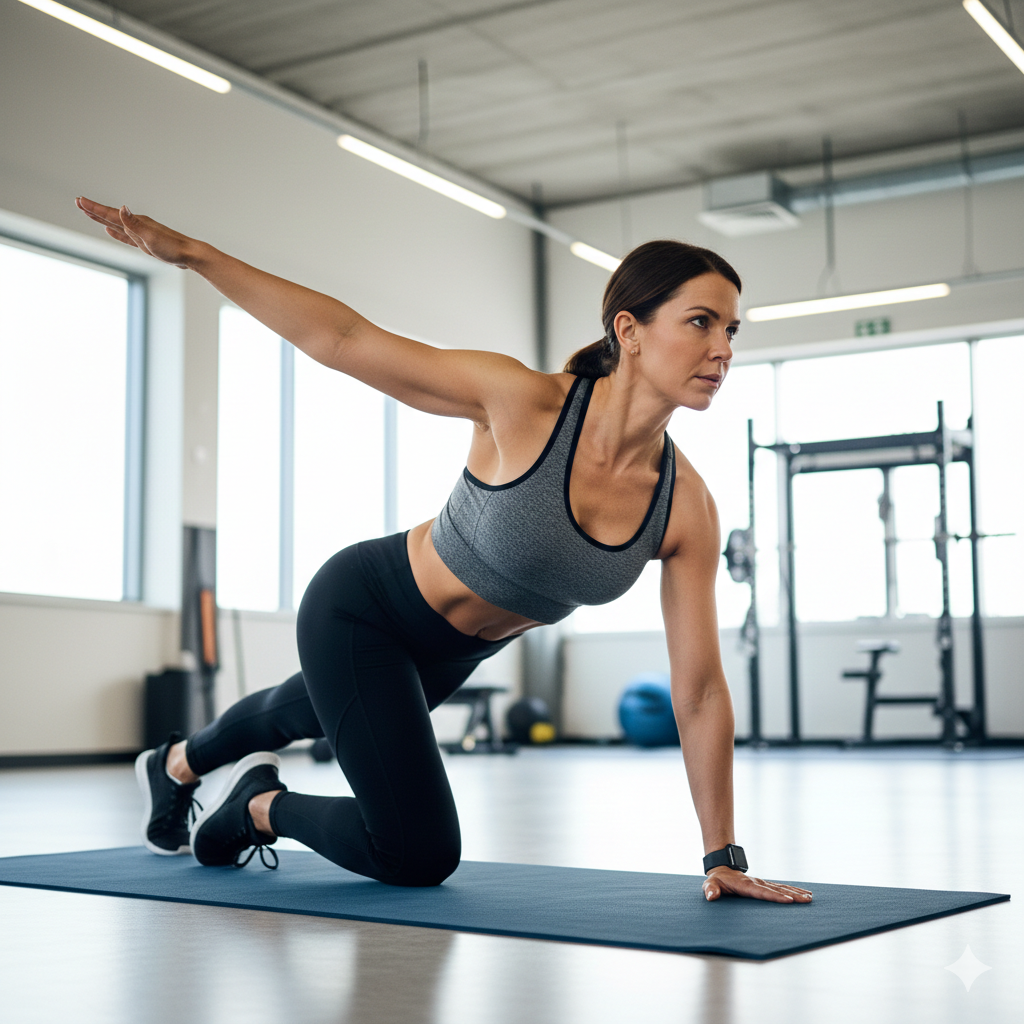
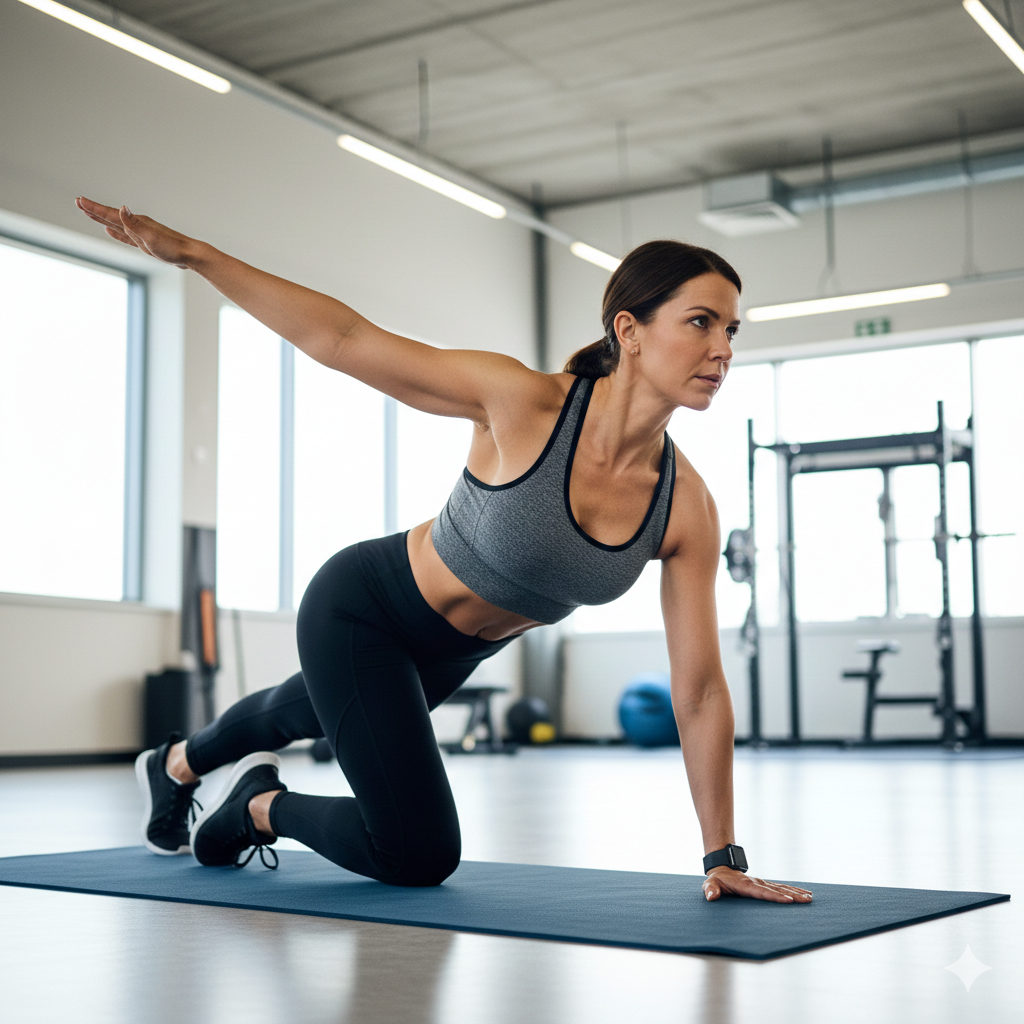
This image was created using AI to avoid copyright issues while conveying the context of this article.
When we talk about "core strength," most people immediately think of a six-pack. We picture sit-ups, planks, and leg raises. But your core is actually a 3D canister, and the most important part of that canister isn't the front, it’s the bottom.
Welcome to the Pelvic Floor. For a long time, pelvic floor health was only discussed in the context of women’s health after pregnancy. But in the world of high-performance fitness, we now know that a strong, functional pelvic floor is the secret to true power for both men and women. If you want to lift heavier, run faster, and protect your spine, you need to stop ignoring the floor of your core.
The Canister Concept
Think of your torso as a soda can.
The Top: Your diaphragm (your breathing muscle).
The Sides: Your abdominal muscles and back muscles.
The Bottom: Your pelvic floor.
If the bottom of that can is weak or "leaky," you cannot create internal pressure. Without that pressure, your spine isn't stable. When you go to lift a heavy grocery bag or a barbell, a weak pelvic floor can lead to lower back pain, hernia issues, or even "accidents" during high-impact movements like jumping or heavy squatting.
Power Starts from the Bottom Up
Your pelvic floor muscles are responsible for supporting your organs and controlling internal pressure. When you brace your core for a big movement, the pelvic floor should lift and contract to meet the pressure coming down from your diaphragm.
If this timing is off, your power "leaks" out. You might find that your strength has plateaued, or that you feel "unstable" even when your abs feel tight. By learning to engage the pelvic floor, you create a solid foundation that allows your bigger muscles (like your glutes and legs) to produce maximum force.
How to Train Your Floor
Training the pelvic floor isn't about doing a thousand "Kegels" while sitting at a red light. It’s about integration.
360-Degree Breathing: Instead of breathing into your chest, practice breathing into your ribs and belly. As you inhale, feel your pelvic floor relax and drop. As you exhale, feel a gentle lift.
The "Pre-Lift" Engagement: Before you start a heavy lift, exhale slightly and imagine "lifting" the muscles between your sit-bones. This creates a solid base before the weight even moves.
Core Integration: Movements like Dead Bugs or Bird-Dogs are perfect for learning how to keep the pelvic floor active while your arms and legs are moving.
Nutrition for Muscle Integrity
Just like every other muscle we’ve discussed this February, your pelvic floor requires the right fuel. The 4:1 Protein-to-Fiber ratio is vital here.
Protein: Provides the collagen and amino acids needed for the connective tissues and muscles of the pelvic bowl to stay resilient.
Fiber: This is a secret pelvic floor hack! Chronic constipation and straining are the #1 enemies of pelvic floor health. By hitting your fiber goals, you ensure smooth digestion, which prevents the unnecessary pressure that weakens these muscles over time.
The Legacy View
At Legacy Fitness, we don't just care about the muscles people can see. We care about the muscles that keep you functional for life. Pelvic floor health is about dignity, power, and long-term spinal safety.
This week, stop thinking of your core as just your "abs." Start thinking of it as a complete system. Breathe deep, lift from the bottom, and build a foundation that is truly unbreakable.

The "Active Aging" Secret: Why Strength is Your Fountain of Youth
There is a common misconception that as we get older, we should "slow down" or switch to "easier" exercises like light water aerobics or gentle stretching.

This image was created using AI to avoid copyright issues while conveying the context of this article.
There is a common misconception that as we get older, we should "slow down" or switch to "easier" exercises like light water aerobics or gentle stretching. While any movement is better than none, the science of 2026 tells a different story. If you want to maintain your independence, keep your metabolism firing, and stay vibrant well into your 70s and 80s, the secret isn't slowing down, it’s lifting heavy.
This is the core of Active Aging. It is the shift from just "living longer" to "living better." And it all starts with your muscles.
The Muscle-Loss Cliff
After the age of 30, the human body begins to lose muscle mass at a rate of about 3% to 5% per decade if you aren't actively working to keep it. This process is called "sarcopenia." By the time someone reaches 60, they could have lost a significant portion of their functional strength.
This loss of muscle is the "hidden" cause of many problems we associate with aging: a slower metabolism, brittle bones, and an increased risk of falls. But here is the good news: your muscles are incredibly resilient. You can build strength and muscle at 40, 60, or even 80 years old. Your body never loses the ability to respond to a challenge; it only loses what you stop using.
Strength as "Skeletal Armor"
When you perform resistance training, you aren't just building bigger biceps. You are building skeletal armor. * Bone Density: Lifting weights puts healthy stress on your bones, signaling your body to deposit more minerals. This is the single best way to prevent osteoporosis.
Joint Protection: Strong muscles act like shock absorbers for your joints. If your quads and glutes are strong, they take the pressure off your knees and lower back.
Metabolic Health: Muscle is your body’s primary "glucose sink." The more muscle you have, the better your body handles carbohydrates and manages insulin.
The "Active Aging" Strategy
You don't need to train like a competitive bodybuilder to see these benefits. For most adults over 40, the goal is Functional Strength.
Prioritize Compound Moves: Focus on movements that mimic real life. Squats (sitting in a chair), Deadlifts (picking up a grocery bag), and Overhead Presses (putting something on a high shelf).
The 4:1 Protein-to-Fiber Ratio: As we age, our bodies become less efficient at processing protein (a condition called anabolic resistance). This means hitting your protein goals is more important now than it was in your 20s. Pair that protein with fiber to keep inflammation low.
Balance and Power: Don't just move slowly. Incorporate some "power" moves, like a fast step-up or a controlled medicine ball toss. Power is the first thing we lose as we age, and it’s what helps us catch ourselves if we trip.
The Mindset of a Lifelong Athlete
The biggest obstacle to active aging is the "Old Man" (or "Old Woman") mindset. If you decide that you are "too old" to lift weights, your body will follow that command. But if you view yourself as an athlete who is simply in a different season of training, you change the trajectory of your health.
At Legacy Fitness, we see 50-year-olds who are stronger than they were at 25. That isn't luck; it’s the result of choosing strength over surrender.
The Legacy View
A legacy is something that stands the test of time. Your body is the vessel that carries that legacy. By prioritizing strength training today, you are ensuring that you can pick up your grandkids, travel the world, and stay independent for decades to come.
This February, don't let the calendar tell you what you can do. Get under the bar, lift something heavy, and claim your fountain of youth.

The "Tech Neck" Fix: Restoring Posture in a Digital World
If you are reading this right now, chances are your head is tilted forward, your shoulders are rounded, and your upper back is curved.

This image was created using AI to avoid copyright issues while conveying the context of this article.
If you are reading this right now, chances are your head is tilted forward, your shoulders are rounded, and your upper back is curved. In the fitness world, we call this "Postural Kyphosis," but most people know it by its modern name: Tech Neck.
By mid-February, many people notice that their new gym routine is causing a bit of unexpected discomfort in their neck and shoulders. This often isn't because the exercises are bad, but because they are stacking "hard work" on top of a "poor foundation." If you spend eight hours a day hunched over a laptop or a smartphone, your body begins to adapt to that shape.
At Legacy Fitness, we believe that true health includes how you carry yourself outside the gym. Here is how to undo the damage of the digital grind and restore your posture.
The Heavy Head Problem
The human head weighs about 10 to 12 pounds when it is perfectly balanced over your shoulders. However, for every inch you tilt your head forward, the effective weight on your neck muscles doubles. By the time you are looking down at a phone in your lap, your neck is supporting the equivalent of a 60-pound weight.
Over time, this constant strain causes the muscles in the front of your neck and chest to become "short and tight," while the muscles in your upper back and rear shoulders become "long and weak." This imbalance doesn't just look bad; it can lead to chronic headaches, reduced lung capacity, and even shoulder injuries when you try to lift weights at the gym.
The "Three-Move" Daily Fix
You don't need a chiropractor or expensive gadgets to fix Tech Neck. You just need to be consistent with a few "corrective" movements that reverse the hunched position.
The Chin Tuck: Sit up tall and imagine a string pulling the top of your head toward the ceiling. Without tilting your head up or down, pull your chin straight back as if you are trying to make a "double chin." Hold for three seconds and repeat ten times. This strengthens the deep muscles that hold your head up.
The Wall Slide: Stand with your back flat against a wall. Try to keep your heels, butt, shoulders, and the back of your head touching the wall. Raise your arms to a "W" shape and slowly slide them up and down. This opens up your chest and wakes up your rear deltoids.
The Doorway Stretch: Stand in a doorway with your forearms on the frame. Lean forward gently until you feel a stretch across your chest. Hold for 30 seconds. This releases the tight muscles that pull your shoulders forward.
Ergonomics and "Movement Snacks"
Fixing your posture isn't just about doing exercises; it is about changing your environment.
Eye Level is Buy Level: Raise your monitor so the top third of the screen is at eye level. If you are on a phone, bring the phone up to your face instead of dropping your face to the phone.
The 30-Minute Reset: Set a timer. Every 30 minutes, stand up, reach your arms behind your back, and take three deep breaths. These "movement snacks" prevent your fascia from "setting" into a hunched position.
Nutrition and Structural Support
Believe it or not, your 4:1 protein-to-fiber ratio matters for posture too. Connective tissues like ligaments and tendons are made of collagen, which requires adequate amino acids (protein) and Vitamin C (found in high-fiber fruits and veggies) to stay strong and elastic. If your nutrition is poor, your tissues become more "brittle," making it harder to recover from the strain of sitting all day.
The Legacy View
A fitness legacy isn't just about how much you can bench press; it’s about how you move through the world. Good posture projects confidence, improves your breathing, and keeps you pain-free so you can stay consistent with your training.
This week, pay attention to where your head is. Pull your shoulders back, tuck your chin, and stand tall. You’ve worked hard for your fitness—don't let your smartphone take it away from you.

Biological Age vs. Chronological Age: Are You Getting Younger?
Birthdays usually make us think about our chronological age, the number of years we have been on this earth. But as we celebrate this "Double Birthday," I want to talk about a much more important number: your biological age.

This image was created using AI to avoid copyright issues while conveying the context of this article.
Every year on February 18th, two very important things happen at Legacy Fitness. First, it marks another year on the calendar for me personally. Second, it is the official anniversary of the day Legacy Fitness & Nutrition was registered as a business.
Birthdays usually make us think about our chronological age, the number of years we have been on this earth. But as we celebrate this "Double Birthday," I want to talk about a much more important number: your biological age.
Your biological age is a measurement of how well your cells and organs are functioning compared to your years. While you cannot change the date on your birth certificate or your business registration, your biological age is flexible. With the right habits, you can actually "turn back the clock."
The Markers of Vitality
In the past, people looked at "weight" as the primary marker of health. Today, we use functional markers to determine how "young" a body really is. If you want to know your true biological age, look at these three key areas:
1. Grip Strength
Your ability to squeeze something tightly is one of the strongest predictors of longevity. It is a "proxy" for your overall muscle mass and nervous system health. A strong grip is linked to a lower risk of heart disease and a more resilient brain.
2. The "Sit-to-Stand" Test
Can you sit down on the floor and get back up without using your hands or knees for support? This simple test measures your mobility, balance, and core strength. It is a powerful indicator of your "functional age."
3. VO2 Max
As we discussed earlier this month, your cardiovascular "engine size" is a vital sign of aging. A "young" heart is resilient and can handle high-intensity work without crashing.
How to Reverse the Clock
Biological aging is largely driven by "senescence" (the buildup of old cells) and inflammation. You can combat both by sticking to the principles we’ve focused on this month:
Strength Training: Building muscle is the ultimate anti-aging therapy.
The 4:1 P:F Ratio: High-quality protein provides the raw materials for cellular repair, while fiber reduces systemic inflammation.
Consistency: Small, frequent "B-grade" movements keep your nervous system in a state of repair.
Mindset and Longevity
There is a massive psychological component to aging. People who believe they are "getting old" tend to stop moving and stop challenging themselves. At Legacy Fitness, we encourage you to stop saying "I'm too old for that." Instead, say "I haven't trained for that yet."
The Legacy View
Today isn't just a celebration of years passed; it is a celebration of the legacy we are building together. Whether it’s been one year or ten, the goal of Legacy Fitness & Nutrition is to ensure that your biological age allows you to enjoy every single chronological year to the fullest.
So, here is to getting older on paper, but staying younger in the gym, in the kitchen, and in life. Happy Birthday to us!

The "Strength-First" Fat Loss Secret: Why Muscle is Your Metabolic Engine
Step off the treadmill for a moment and head to the weight rack. Build the engine that burns fat for you.

Photo by Anastase Maragos on Unsplash
When most people decide they want to lose weight, their first instinct is to head straight for the treadmill. They think of fat loss as a simple math problem: "How many calories can I burn in this hour?" While cardio is great for your heart, if you want to change your body composition and keep the weight off forever, you need to flip the script. You need a Strength-First approach.
In the fitness world, we often say that "cardio burns calories while you're doing it, but muscle burns calories while you're sleeping." As we move into the third week of February, it’s time to understand why lifting weights is the most efficient way to "fix" a slow metabolism and achieve lasting fat loss.
The Engine Analogy
Think of your metabolism like the engine of a car. A small, four-cylinder car doesn't need much gas to sit idling in the driveway. But a large, powerful V8 engine burns a lot of fuel even when it isn't moving.
Muscle tissue is metabolically "expensive." It takes a lot of energy just to maintain muscle on your frame. By lifting weights and building even a small amount of lean muscle, you are essentially "upgrading your engine." You increase your Basal Metabolic Rate (BMR), which means you burn more calories every single hour of the day, whether you are at your desk or watching TV.
The Cardio Trap
The problem with a cardio-only approach to fat loss is that your body is incredibly adaptive. If you do the same 30-minute run every day, your body becomes more efficient at it. Eventually, you burn fewer calories doing the same amount of work.
Even worse, if you are in a large calorie deficit and only doing cardio, your body may actually break down muscle tissue for energy. You might weigh less on the scale, but you end up with a higher body fat percentage and a slower metabolism. This is the "skinny fat" trap that leads to the inevitable weight regain.
EPOC: The Afterburn Effect
When you lift heavy weights or perform intense resistance training, you create a state called Excess Post-exercise Oxygen Consumption (EPOC).
Because strength training causes micro-tears in the muscle and stresses your central nervous system, your body has to work overtime for hours, sometimes even days, to repair itself and return to balance. This "afterburn" means your metabolism stays elevated long after you’ve left the gym.
The Strength-First Nutrition Strategy
To build the "metabolic engine" of muscle, you have to feed it. This is where our 4:1 Protein-to-Fiber ratio becomes your best friend.
Protein: Provides the amino acids necessary to repair and build the muscle tissue you challenged during your workout.
Fiber: Keeps your digestion efficient and prevents the inflammation that can sometimes come with a high-intensity lifting program.
By prioritizing strength, you stop "dieting" and start "fueling." You'll find that you can actually eat more food while getting leaner, because your new muscle mass is using those calories for repair instead of storing them as fat.
How to Transition to Strength-First
Prioritize the Lift: If you have 60 minutes, spend 45 minutes on resistance training (squats, presses, rows) and 15 minutes on cardio.
Focus on Progressive Overload: Don't just pick up the same pink dumbbells every week. You must give your body a reason to change. Try to add a little more weight or do one more rep than you did last time.
Don't Fear "Bulking": For most people, building enough muscle to look "bulky" takes years of dedicated, specific effort. For the average person, strength training simply leads to a tighter, firmer, and more "toned" appearance.
The Legacy View
At Legacy Fitness, we want you to be strong and capable. Strength is the foundation of longevity. It protects your joints, improves your bone density, and keeps your metabolism young.
This February, step off the treadmill for a moment and head to the weight rack. Build the engine that burns fat for you. When you put strength first, the fat loss becomes a side effect of becoming a more powerful version of yourself.
Zone 4 "VO2 Max" Training: The Longevity Secret
This week, find your "top gear." Push yourself for just a few minutes, feel your heart beat, and know that you are building a legacy of a strong, capable heart.
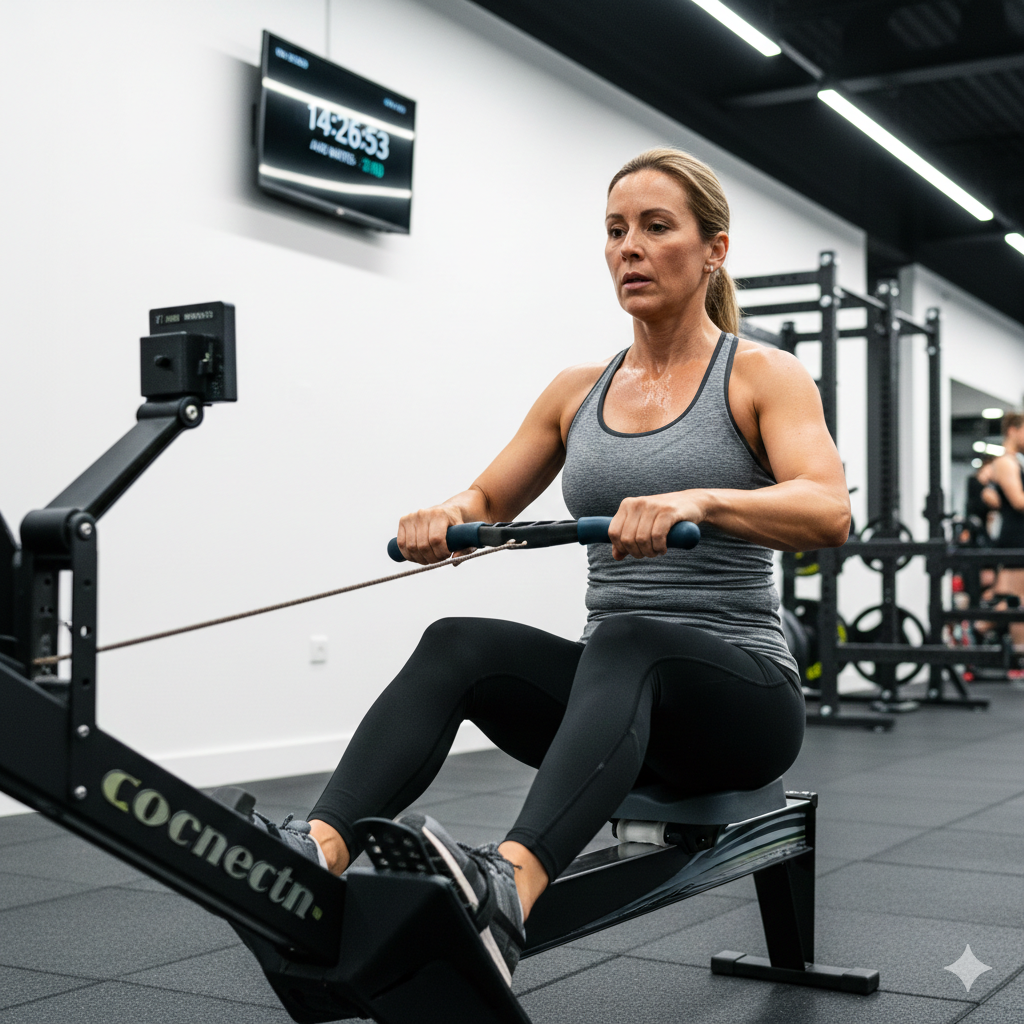
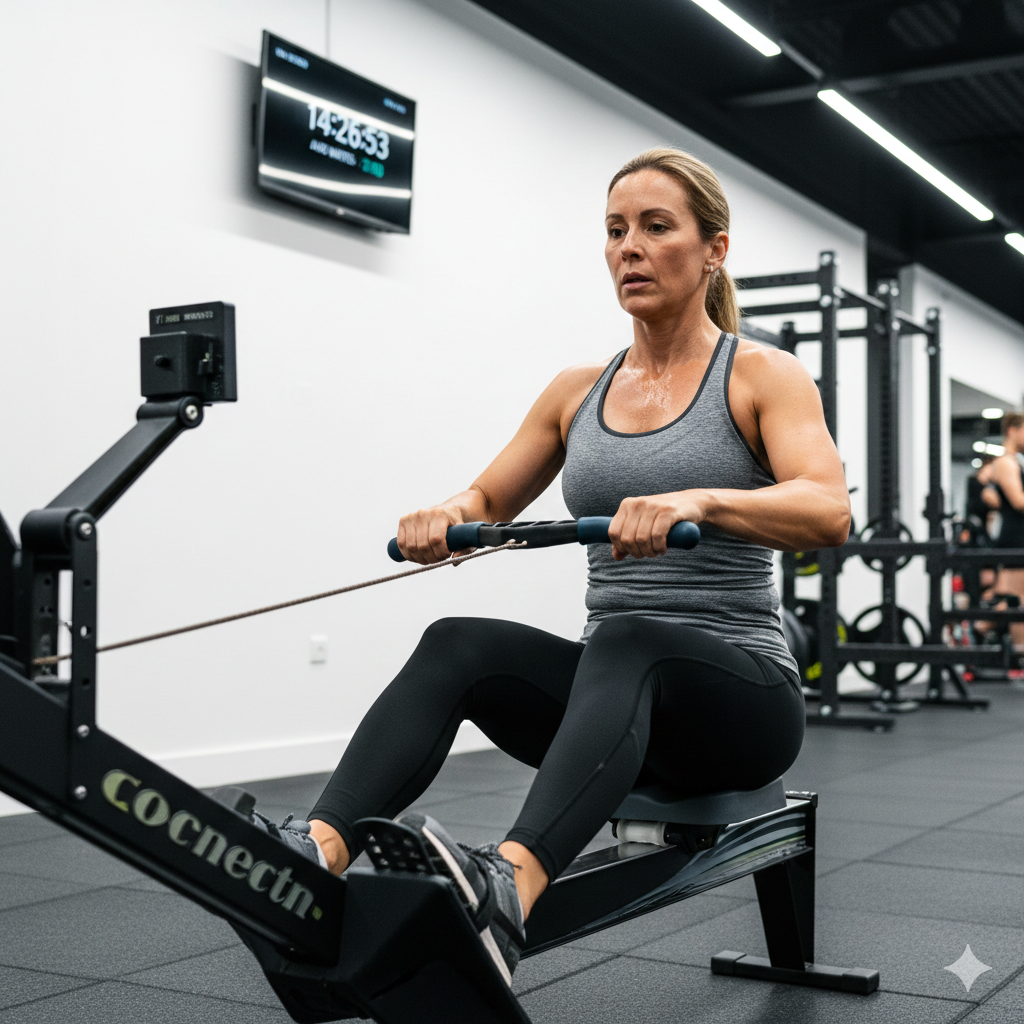
This image was created using AI to avoid copyright issues while conveying the context of this article.
When we talk about cardio, we usually think of two extremes. There is the slow, steady pace of a long walk (Zone 2) or the all-out, heart-pounding sprint of a HIIT class. But there is a specific type of training that falls right in the middle, at the edge of your comfort zone, that is becoming the gold standard for long-term health.
This is Zone 4 training, and its primary goal is to improve your VO2 Max.
If you want to live a long, vibrant life, your VO2 Max is perhaps the most important number you’ve never tracked. In the fitness world today, we view it as a "crystal ball" for longevity. Here is why you need to find your "top gear" once a week.
What is VO2 Max?
VO2 Max is a measurement of the maximum amount of oxygen your body can use during intense exercise. Think of it like the engine size of a car. A car with a larger engine can go faster and handle hills with less strain than a car with a tiny engine.
As we age, our VO2 Max naturally declines. However, the higher your starting point is, the more "functional reserve" you have as you get older. Research has shown that individuals with a high VO2 Max have a significantly lower risk of nearly all chronic diseases. It isn't just about being a better runner; it is about being a more resilient human.
Entering Zone 4
To improve this "engine size," you have to push into Zone 4. This is an intensity level where you are breathing hard, hard enough that you can only speak in one or two-word bursts. You aren't sprinting as fast as you can, but you are moving with purpose.
In Zone 4, your heart is beating at roughly 80% to 90% of its maximum. This level of stress forces your heart to become more efficient at pumping blood and your muscles to become better at extracting oxygen.
The "One Hard Session" Rule
The best part about VO2 Max training is that you don't need to do it every day. In fact, you shouldn't. Because it is high-intensity, it requires significant recovery time.
For most people, one "hard" session per week is enough to see incredible gains. This fits perfectly into a busy February schedule. You do your strength training, you get your daily NEAT, and once a week, you open up the throttle for a short period.
How to Do a VO2 Max Workout
You don't need a track or a fancy treadmill. You can do this on a bike, a rowing machine, or even a steep hill. A classic, proven protocol is the "4x4" method:
Warm-up: 5-10 minutes of easy movement.
The Work: 4 minutes of Zone 4 effort (hard but sustainable for the full 4 minutes).
The Rest: 3 minutes of very easy walking or pedaling.
Repeat: Do this for a total of 4 rounds.
This workout takes less than 40 minutes, but the impact on your cardiovascular age is massive.
Nutrition for the High-Intensity Hit
High-intensity work like Zone 4 training burns through glycogen (the sugar stored in your muscles). This is the one time when having a "clothed carb" meal about 90 minutes before your session is incredibly helpful.
Afterward, return to your 4:1 protein-to-fiber ratio to help your heart and muscles recover. The protein repairs the tissue, while the fiber ensures your blood sugar stays stable after the intense effort.
The Legacy View
At Legacy Fitness, we aren't just training for how you look next month; we are training for how you move twenty years from now. Improving your VO2 Max is like putting money into a high-interest savings account for your future self.
This week, find your "top gear." Push yourself for just a few minutes, feel your heart beat, and know that you are building a legacy of a strong, capable heart.

Recovery as an Appointment: Why "Doing Nothing" is a Vital Skill
Professional athletes don't just train hard; they recover harder. If you want your fitness legacy to last for decades, you have to stop seeing rest as "lazy."

Photo by Artem Beliaikin on Unsplash
By mid-February, your body has likely been under a fair amount of stress. You’ve been pushing through new workouts, managing a busy schedule, and resisting the mid-winter blues. Most people view recovery as something that happens only if they have extra time. But if you want to see progress in your strength, your mood, and your hormones, you have to treat recovery as a non-negotiable appointment.
In the fitness world, we don't actually grow while we are at the gym. We grow while we are resting. The gym is where we "break down" the body; recovery is where we "build it back" stronger.
The Science of Overreaching
When you exercise, you create micro-tears in your muscle fibers and temporarily increase your cortisol (stress hormone) levels. If you stack workout after workout without proper rest, those cortisol levels stay high. This can lead to "overreaching," which causes poor sleep, increased hunger, and a plateau in fat loss.
By scheduling recovery, you allow your nervous system to switch from "Fight or Flight" (Sympathetic) to "Rest and Digest" (Parasympathetic). This is the state where your body repairs tissues, balances blood sugar, and restores your energy.
What a "Recovery Appointment" Looks Like
A recovery appointment doesn't mean you have to sit on the couch for three hours. It means choosing an activity that lowers your stress and helps your body heal. Here are three ways to "book" your recovery:
The 20-Minute Mobility Flow: Instead of a high-intensity session, spend 20 minutes on a yoga mat. Focus on deep breathing and slow stretches for your hips and back. This improves blood flow to your muscles without adding more stress.
The "Digital Sunset": Book a recovery appointment for your brain. One hour before bed, turn off all screens. This allows your natural melatonin to rise, ensuring you get the deep, restorative sleep required for muscle repair.
Active Recovery Walks: A low-intensity walk in nature (without a podcast or music) is one of the best ways to clear metabolic waste from your muscles while lowering your heart rate.
Recovery Nutrition
Your 4:1 protein-to-fiber ratio is just as important on rest days as it is on training days. Protein provides the building blocks (amino acids) to repair the muscles you worked earlier in the week, while fiber keeps your digestion moving and prevents the inflammation that can come from a sedentary day.
The Legacy View
At Legacy Fitness, we want you to be a "long-term athlete." Professional athletes don't just train hard; they recover harder. If you want your fitness legacy to last for decades, you have to stop seeing rest as "lazy."
This week, look at your calendar. Find one 30-minute window and label it "Recovery Appointment." Don't skip it, don't move it, and don't feel guilty about it. Your body will thank you by performing even better in your next workout.

Sweet Rewards: Healthier Valentine’s Treats for Your Legacy
Valentine’s Day is often seen as the ultimate "diet buster." Between the heart-shaped boxes of chocolate and the decadent multi-course dinners, it is easy to feel like you have to choose between celebrating with your loved ones and staying on track with your fitness goals.

This image was created using AI to avoid copyright issues while conveying the context of this article.
Valentine’s Day is often seen as the ultimate "diet buster." Between the heart-shaped boxes of chocolate and the decadent multi-course dinners, it is easy to feel like you have to choose between celebrating with your loved ones and staying on track with your fitness goals.
But at Legacy Fitness, we believe that health is not about deprivation; it is about making better choices that actually make you feel good. You can absolutely enjoy a "sweet reward" without the sugar crash, the brain fog, or the regret the next morning.
The secret lies in shifting your focus from processed sugars to high-quality ingredients that honor our 4:1 protein-to-fiber goal, even when we are indulging.
The Sugar Crash Cycle
Most Valentine’s treats are a combination of refined sugar and unhealthy fats. When you eat these, your blood sugar spikes (remember the "Glucose Curve" we discussed earlier?), causing a massive release of insulin. This is usually followed by a "crash" that leaves you tired, irritable, and craving even more sugar.
By choosing "smarter" sweets, we can keep those pleasure centers in the brain happy while keeping our energy levels stable.
Three Strategies for Healthy Indulgence
1. The Darker, The Better
If you are a chocolate lover, the simplest upgrade is to move toward dark chocolate (at least 70% cocoa or higher). Dark chocolate is actually a fermented food that contains significant amounts of fiber and antioxidants called polyphenols.
The Bonus: High-quality dark chocolate has much less sugar than milk chocolate, meaning you can satisfy your craving with just one or two squares rather than the whole bar.
2. Protein-Powered Puddings
One of the most popular healthy treats right now is "Pro-Yo" (Protein Yogurt) or blended cottage cheese bark. By mixing a high-quality protein source with a natural sweetener like stevia or a handful of berries, you are hitting that satiety double-whammy. You get the "sweet" fix your brain wants, while the protein and fiber keep your hunger hormones quiet.
3. Nature’s Candy with a Twist
Fruits like raspberries and strawberries are low in sugar and high in fiber. To make them feel like a Valentine’s treat, try dipping them in melted dark chocolate and topping them with crushed walnuts or hemp hearts. This adds healthy fats and a bit of protein, creating a "clothed carb" that won't wreck your energy.
Valentine’s Recipes for Two
The "Legacy" Lava Cake: Instead of flour and sugar, use a base of mashed black beans (trust us!), cocoa powder, and eggs. The beans provide the fiber and structure, while the cocoa provides the rich flavor. It’s a high-fiber, high-protein dessert that tastes like a decadent brownie.
Chia Seed Parfait: Mix chia seeds with almond milk and a touch of vanilla. Let it set overnight to create a pudding-like texture. Top it with raspberries and a few cacao nibs. With 10g of fiber per serving, this is a "Fibermaxxing" dream that feels like a reward.
The Mindful Indulgence
The most important part of Valentine’s Day isn't the food; it's the connection. If you do decide to have a traditional treat, practice mindful eating. Don't eat while watching a movie or scrolling on your phone. Sit down, look at your partner (or enjoy your own company), and savor every single bite. When you eat mindfully, you’ll find that a small portion is often more than enough to satisfy you.
The Legacy View
We want you to build a life you don't need a "vacation" or a "cheat day" from. True health is being able to navigate a holiday like Valentine’s Day with confidence. You don't need to be perfect; you just need to be intentional.
Choose a treat that loves you back, one that tastes great in the moment and makes you feel energetic the next day. That is the ultimate act of self-love.

The "Tallow" Comeback: Why Traditional Fats are Trending
This February, consider a pantry audit. Swap out the plastic bottle of yellow vegetable oil for a jar of high-quality, grass-fed tallow.

This image was created using AI to avoid copyright issues while conveying the context of this article.
If you walked into a health food store twenty years ago, you would have seen shelves lined with "fat-free" cookies and vegetable oil spreads. Fat was the enemy, and animal fats like lard and tallow were considered the worst of the bunch. But as our understanding of nutrition has evolved, the tide has turned.
In recent months, one of the most surprising trends in the fitness and "ancestral health" space is the return of beef tallow. From professional athletes to home cooks looking for stable cooking oils, people are ditching the highly processed seed oils and returning to the traditional fats our ancestors used for generations.
But is this just a social media fad, or is there a real benefit to bringing tallow back into your kitchen?
What Exactly is Tallow?
Tallow is rendered beef fat. To make it, the fat (usually the "suet" found around the kidneys) is cooked down slowly to remove impurities. What remains is a shelf-stable, nutrient-dense fat that is solid at room temperature.
Unlike lard, which comes from pigs, tallow has a very high smoke point (around 400°F). This makes it one of the safest fats to cook with, as it doesn't break down or become toxic when exposed to high heat.
The Science of Saturated Fat
For decades, we were told that saturated fat was the primary cause of heart disease. However, modern research has shown that the relationship between fat and heart health is much more complex than we once thought. While we still want to avoid "trans fats" (the man-made fats found in fried fast foods), naturally occurring saturated fats like those in tallow play several vital roles in the body:
Hormone Production: Your body needs fat to produce essential hormones, including testosterone and estrogen.
Vitamin Absorption: Vitamins A, D, E, and K are "fat-soluble." If you don't eat enough healthy fats, your body cannot absorb these vitamins, no matter how many vegetables or supplements you take.
Brain Health: Your brain is roughly 60% fat. Saturated fats provide the structural integrity your brain cells need to communicate effectively.
Why Tallow is Winning Over Vegetable Oils
The main reason tallow is making a comeback is the growing concern over highly processed vegetable oils (like soybean, corn, and canola oil). These oils are often high in Omega-6 fatty acids, which can be pro-inflammatory when eaten in large amounts.
Because tallow is mostly saturated and monounsaturated fat, it is much more stable. When you cook with it, you aren't dealing with the oxidation (damage) that happens to fragile vegetable oils. Furthermore, tallow contains Conjugated Linoleic Acid (CLA), a type of fat that has been linked in some studies to improved fat burning and immune function.
Tallow for Your Skin?
The comeback isn't just happening in the kitchen. "Tallow balm" has become a massive trend in the skincare world. Because the fatty acid profile of tallow is very similar to the "sebum" (the oil our own skin produces), it is incredibly moisturizing and soothing for people with sensitive skin or eczema. It is a "whole food" approach to beauty that avoids the chemicals found in modern lotions.
How to Use Tallow at Home
If you want to try tallow, you don't need to overthink it. It has a very mild, slightly savory flavor that enhances almost anything it touches.
Roasting Veggies: Toss your Brussels sprouts or broccoli in melted tallow before roasting. The high smoke point gives them a perfect crunch.
Searing Steak: Use a small amount of tallow in a cast-iron skillet to get a restaurant-quality crust on your protein.
The "Legacy" Breakfast: Fry your eggs in tallow instead of butter or oil for a nutrient-dense start to your day.
The Legacy View
At Legacy Fitness, we often find that the "old ways" were better than the "modern fixes." We moved away from traditional fats in favor of processed oils, and our collective health suffered. Bringing tallow back into your routine isn't about eating a high-fat "keto" diet; it’s about choosing stable, natural, and nutrient-dense fuel for your body.
This February, consider a pantry audit. Swap out the plastic bottle of yellow vegetable oil for a jar of high-quality, grass-fed tallow. It’s a small change that honors the traditions of the past while building a stronger future.

GLP-1 Style Eating: How to Trigger Natural Fullness
When you feed your body the right combination of protein, fermentable fibers, and healthy fats, you are essentially "hacking" your own internal system for success.
Medical Disclaimer: The following information is for educational and informational purposes only and is not intended as medical advice. Always consult with a qualified healthcare professional before making significant changes to your diet or lifestyle, especially if you are taking prescription medications or have a pre-existing medical condition. This article is not a substitute for professional medical treatment for weight loss or metabolic disorders.

This image was created using AI to avoid copyright issues while conveying the context of this article.
If you have watched the news or scrolled through social media lately, you have likely heard of medications like Ozempic or Wegovy. These drugs have changed the conversation around weight loss by mimicking a hormone in your body called GLP-1 (Glucagon-like Peptide-1). This hormone tells your brain that you are full and tells your stomach to slow down digestion.
While these medications are important tools for many people, there is a fascinating side to the story that often gets ignored. You can actually influence your body’s own production of GLP-1 through the way you eat. By choosing specific foods and following a few simple habits, you can trigger these "fullness signals" naturally.
What is GLP-1 and Why Does It Matter?
GLP-1 is a hormone produced in your gut in response to food. It has three main jobs:
Brain Signal: It tells your hypothalamus (the hunger center of your brain) that you have had enough to eat.
Stomach Speed: It slows down "gastric emptying," meaning food stays in your stomach longer so you feel satisfied for a greater amount of time.
Insulin Response: It helps your pancreas release the right amount of insulin to manage your blood sugar.
When people say they have a "raging appetite" or can't stop snacking, it is often because their GLP-1 signals are quiet. The goal of "GLP-1 style eating" is to turn the volume up on those signals using whole foods.
The Three Pillars of Natural Fullness
1. High-Quality Protein
Protein is the strongest trigger for GLP-1. When you eat protein, your gut cells recognize the amino acids and immediately begin releasing satiety hormones. This is why a breakfast of eggs or Greek yogurt keeps you full much longer than a bagel. To maximize this effect, aim for the 4:1 protein-to-fiber ratio we have been practicing.
2. Fermentable Fibers
Not all fiber is created equal when it comes to GLP-1. "Fermentable" fibers are those that your gut bacteria love to eat. When these bacteria break down fiber, they produce short-chain fatty acids (SCFAs) like butyrate. These SCFAs are direct triggers for your gut to release GLP-1.
Top sources: Oats, barley, beans, lentils, leeks, and slightly under-ripe bananas.
3. Healthy Fats
Specific types of fats, particularly oleic acid (found in olive oil and avocados), have been shown to stimulate GLP-1 release. Adding a healthy fat to your meal acts like an "anchor," keeping the food in your stomach longer and signaling to your brain that the "hunt" for food is over.
The "Fullness" Routine
It isn't just what you eat, but how you eat it. To give your body time to release these hormones, you have to slow down. It takes about 20 minutes for the GLP-1 signal to travel from your gut to your brain. If you finish your entire meal in five minutes, you will finish before your brain even knows you are full.
Try the "Chew and Pause" method. Take a bite, put your fork down, and actually taste your food. This simple habit allows your natural chemistry to catch up with your appetite.
Bitters and Digestion
In many cultures, it is common to start a meal with something bitter, like a small salad of arugula or radicchio. There is science behind this! Bitter compounds can stimulate "bitter taste receptors" in the gut, which have been linked to an increase in GLP-1 secretion. Starting your dinner with a few bitter greens might be the secret to naturally eating less during the main course.
The Legacy View
At Legacy Fitness, we are all about working with your biology instead of against it. You don't have to rely on sheer willpower to reach your goals. When you feed your body the right combination of protein, fermentable fibers, and healthy fats, you are essentially "hacking" your own internal system for success.
This week, focus on these natural signals. Slow down your meals, prioritize your fiber-protein "Power Couple," and listen to your body. When you learn to trigger your own fullness, the "struggle" of dieting starts to disappear.
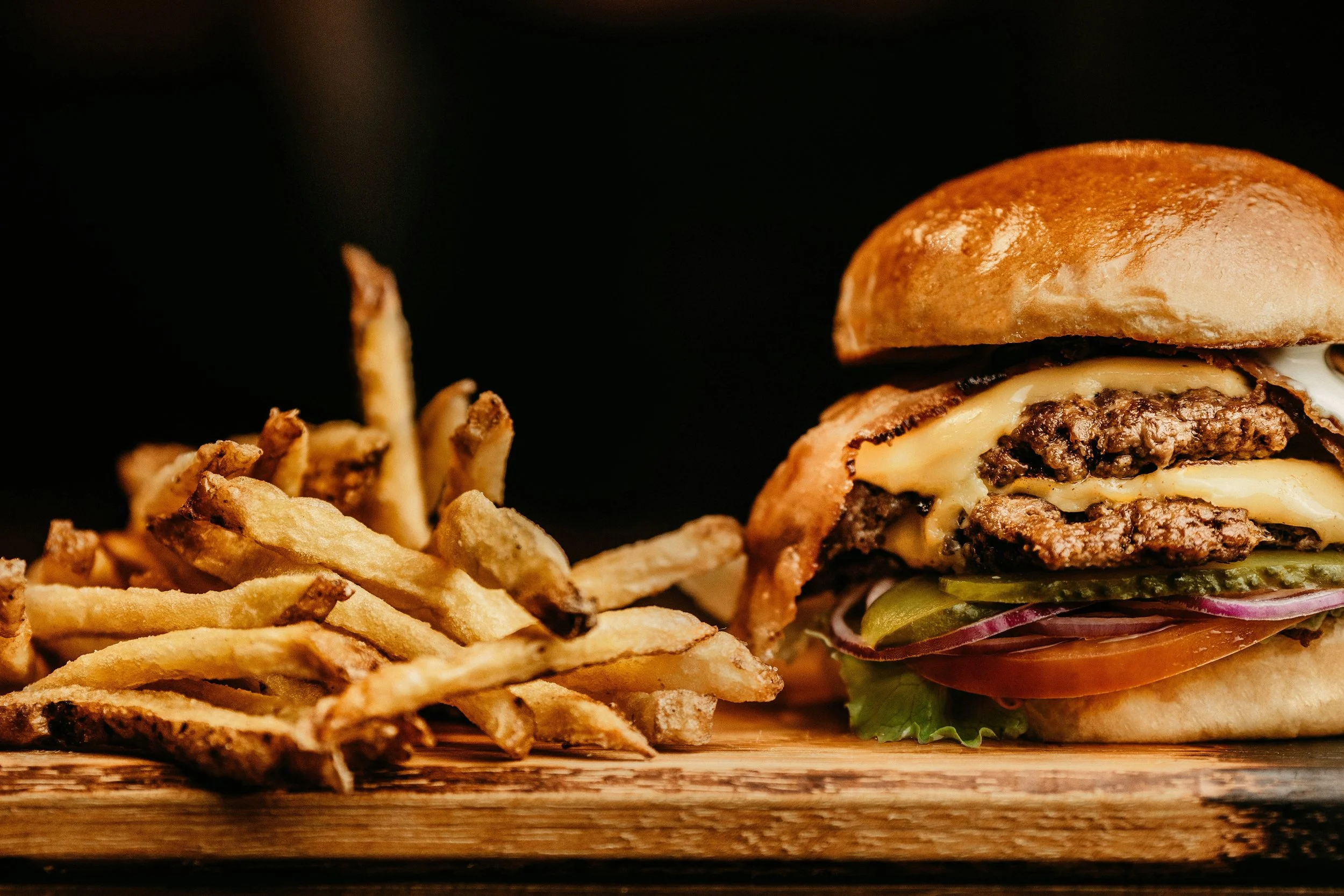
The Glucose Spiking Myth: Understanding the "Carb Curve"
You don't need a monitor on your arm to tell you that you feel better when you eat balanced meals. Don't let the "glucose myth" make you afraid of healthy foods.
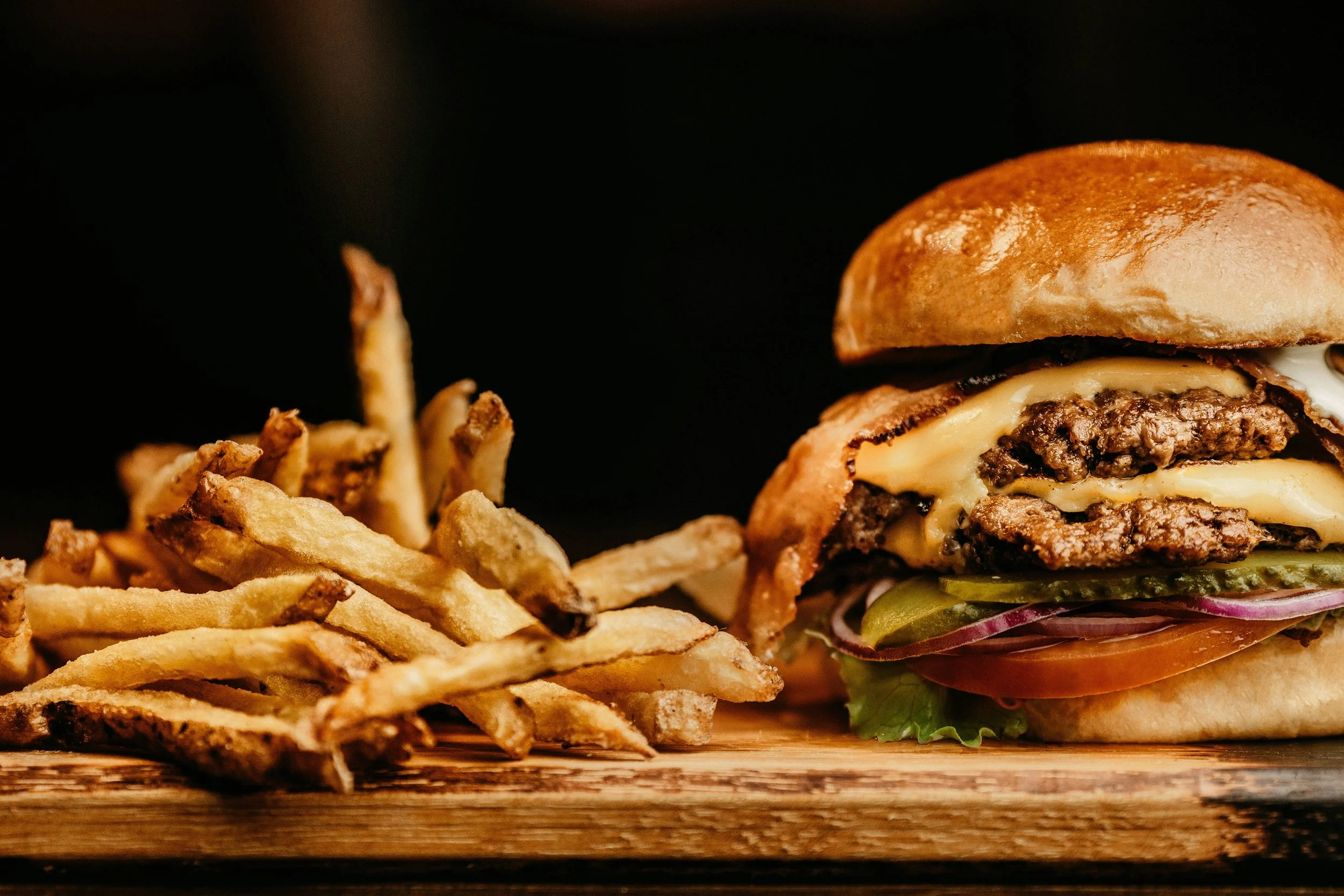
Photo by Jonathan Borba on Unsplash
If you have spent any time on social media lately, you have probably seen people wearing small white circles on their arms. These are Continuous Glucose Monitors (CGMs). Originally designed for people with diabetes, they are now being used by fitness enthusiasts to track how their blood sugar reacts to different foods.
This has led to a lot of fear around "glucose spikes." Many people are now afraid to eat an apple or a bowl of oatmeal because they are worried a spike in blood sugar will lead to instant fat storage or health problems. But it is time to clear the air: glucose spikes are not always the villain.
What is a Glucose Spike, Anyway?
When you eat carbohydrates, your body breaks them down into glucose (sugar), which enters your bloodstream to provide energy. A "spike" is simply a rapid rise in that sugar level. This is a natural, healthy process. If your blood sugar never rose, you would have no energy to walk, think, or lift weights.
The problem isn't the spike itself; it is the uncontrolled roller coaster. When you eat "naked" carbs, like a sugary soda or a piece of white bread on its own, your blood sugar shoots up too fast and then crashes. This crash is what leaves you feeling shaky, hungry, and irritable.
The "Clothed Carb" Strategy
The secret to a healthy metabolism isn't avoiding carbs; it’s learning how to "clothe" them. Think of your carbohydrates as the "fuel" and your protein and fiber as the "insulation."
When you eat a carbohydrate by itself, the fuel burns hot and fast (a spike). But when you pair that carb with protein and fiber (the 4:1 ratio we’ve been discussing), you slow down the absorption. The fuel burns slowly and steadily, giving you energy for hours without the crash.
Why Context Matters
A glucose spike isn't a "one size fits all" event. Your body’s reaction depends on what you are doing.
The Sedentary Spike: If you eat a large bowl of pasta and then sit on the couch for four hours, that glucose has nowhere to go. Your body will likely store it as fat.
The Active Spike: If you eat that same pasta before a heavy lifting session or a long run, your muscles will soak up that glucose like a sponge and use it for performance.
In this case, the spike is actually your friend. It powers your workout and helps with recovery.
Three Ways to Flatten the Curve (Without Cutting Carbs)
Change the Order: Research shows that if you eat your vegetables (fiber) and your protein first, and save your carbohydrates for the end of the meal, you can reduce the glucose spike by up to 70%.
Add Acid: Adding a little vinegar to your salad or lemon juice to your water before a meal can help improve how your body handles the incoming sugar.
The Post-Meal Walk: Remember our talk about NEAT? A simple 10-minute walk after you eat allows your muscles to use that glucose immediately, preventing a massive spike and the subsequent "food coma."
Don’t Fear the Fruit
Lately, fruit has been getting a bad reputation because it contains sugar. But fruit is a whole food. It comes with built-in fiber and water, which naturally slows down the sugar absorption. Unless you are drinking fruit juice (which removes the fiber), an apple or a bowl of berries is a fantastic, healthy choice that your body knows exactly how to handle.
The Legacy View
At Legacy Fitness, we believe in using data to empower you, not to scare you. You don't need a monitor on your arm to tell you that you feel better when you eat balanced meals. Don't let the "glucose myth" make you afraid of healthy foods.
Focus on the 4:1 ratio. Pair your carbs with protein and fiber. Move your body after you eat. When you stop worrying about the "spikes" and start focusing on the "balance," you create a metabolism that is flexible, strong, and built to last.

Beans & Budgeting: High-Protein, High-Fiber Meals for Less
You don't need a massive salary to have a massive legacy. True fitness is about being resourceful.

This image was created using AI to avoid copyright issues while conveying the context of this article. (I couldn’t get it to fix the jar and lid situation going on here…lol)
In the fitness world, there is a common myth that eating healthy has to be expensive. We see influencers touting $15 smoothies, $40 grass-fed steaks, and exotic "superfoods" that require a second mortgage just to stock the pantry. By the middle of February, many people are tempted to quit their new habits simply because their grocery bill has skyrocketed.
But in 2026, the real "insider" secret to metabolic health isn't expensive, it is found in the humble, dry goods aisle. Welcome to the world of Beans & Budgeting.
If you want to hit your 4:1 protein-to-fiber ratio while keeping your bank account full, the bean is your best friend. It is the ultimate "dual-threat" food that builds muscle and feeds your gut without breaking the bank.
The Economic Power of the Legume
Let’s look at the math. A pound of dry black beans or lentils usually costs less than $2.00 and contains roughly 10 servings. Compare that to a pound of organic chicken breast or lean beef, which can range from $7.00 to $12.00.
While animal protein is an excellent tool for building muscle, using legumes as a "protein extender" or a primary base a few times a week can slash your food budget by 30% to 50%. In 2026, being "frugally fit" is the new status symbol. It shows you understand how to fuel your body efficiently without falling for the marketing traps of the "health food" industry.
The 4:1 Gold Standard in a Single Food
One of the hardest parts of nutrition is finding foods that naturally hit the balance we’ve been talking about all week. Most meats have zero fiber. Most vegetables have very little protein.
Beans, however, are nature’s perfect package.
Lentils: One cup provides about 18g of protein and 15g of fiber.
Black Beans: One cup provides about 15g of protein and 15g of fiber.
While these are higher in carbohydrates than a chicken breast, they are "complex" carbohydrates. Because they are packed with fiber, they don't cause the glucose spikes that white rice or pasta do. They keep you full, energized, and within your metabolic goals for pennies on the dollar.
How to Use Beans Without the "Side Effects"
The biggest complaint people have about beans is digestive discomfort. If you aren't used to high fiber, your gut bacteria need an "on-boarding" process.
Start Small: Don't eat a giant bowl of chili on day one. Add a quarter-cup of chickpeas to your regular salad or mix some lentils into your ground beef.
Rinse Thoroughly: If using canned beans, rinse them under cold water until the bubbles disappear. This removes the sugars that cause gas.
The "Soak and Simmer": If using dry beans, soak them overnight and cook them with a piece of seaweed (kombu) or ginger to help break down the difficult-to-digest starches.
Three Budget-Friendly "Legacy" Meals
The "Protein Extender" Taco: Mix one pound of lean ground beef with two cans of black beans. You’ve just doubled your meal prep for only an extra $2.00, and you’ve massively increased the fiber content.
Red Lentil "Dahl": Red lentils cook in just 15 minutes and turn into a creamy, satisfying porridge. Season with turmeric and ginger for an anti-inflammatory meal that costs about $0.50 per serving.
The Mediterranean Chickpea Bowl: Toss canned chickpeas with cucumbers, tomatoes, feta, and a little olive oil. It is a high-protein, high-fiber lunch that stays fresh in the fridge for days.
The Legacy View
At Legacy Fitness, we believe that health should be accessible to everyone. You don't need a massive salary to have a massive legacy. True fitness is about being resourceful. It’s about knowing that a bag of lentils and a rotisserie chicken can feed you better, and longer, than any expensive "meal replacement" shake.
This week, challenge yourself to a "Budget Day." Skip the expensive cuts of meat and lean into the power of the bean. Your wallet and your waistline will thank you.
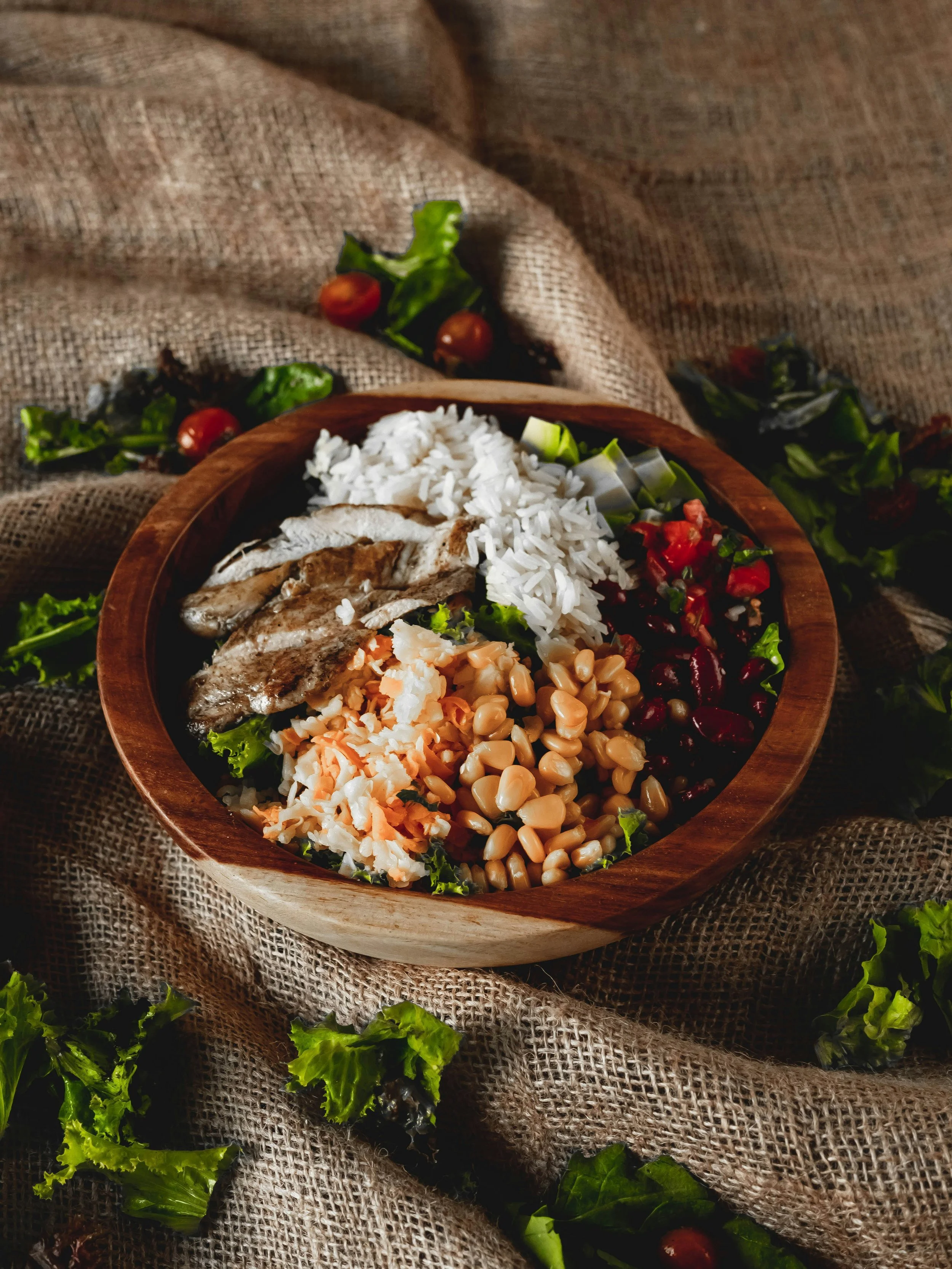
The Power Couple: Why Protein and Fiber are Better Together
If you are constantly hungry and tired, you can’t build a legacy of health. By mastering the Power Couple of protein and fiber, you take control of your biology.
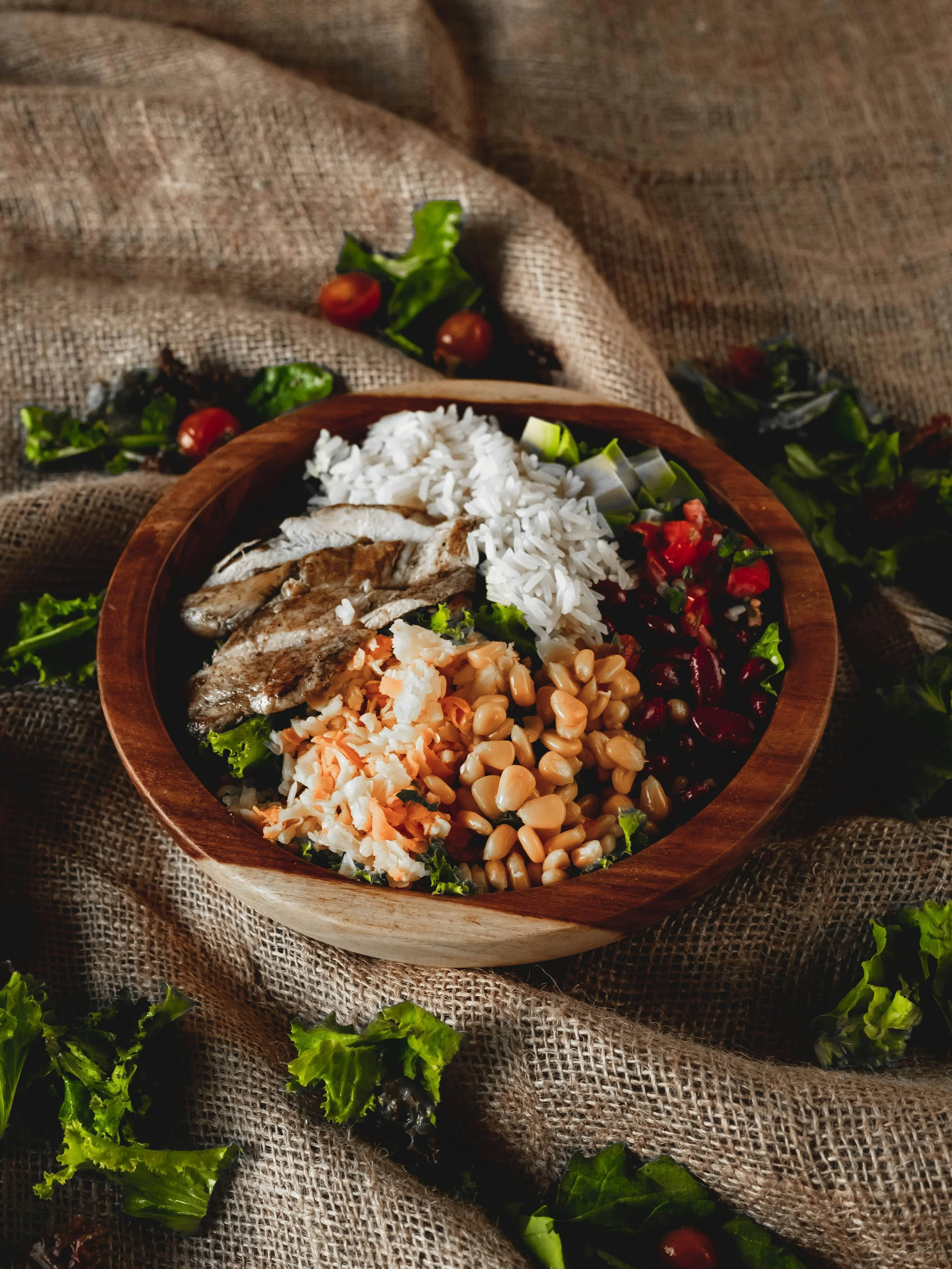
Photo by joe boshra on Unsplash
In the world of nutrition, we often talk about nutrients as if they work alone. We focus on "hitting our protein" or "getting our fiber" as separate tasks on a checklist. But in 2026, the most effective way to manage your weight and energy isn't just about the total amount of these nutrients, it is about the synergy between them.
Individually, protein and fiber are great. But when you eat them together in the same meal, they become a "Power Couple" that transforms your metabolic health. As we continue through our February focus on long-term habits, understanding this partnership is the key to making healthy eating feel effortless rather than like a chore.
The Science of the Synergy
To understand why they work so well together, we have to look at how your body processes them.
Protein is highly "thermogenic," meaning your body burns a lot of calories just trying to digest it. It also keeps your muscles fed and triggers "fullness" hormones in your gut. Fiber, on the other hand, provides physical bulk and slows down the speed at which food leaves your stomach.
When you combine them, you create a "slow-release" energy system. The fiber acts like a gatekeeper, ensuring that the amino acids from the protein and any carbohydrates in the meal enter your bloodstream at a steady, manageable pace. This prevents the "spike and crash" cycle that leads to brain fog and sugar cravings at 3:00 PM.
Flattening the Glucose Curve
One of the biggest health trends of 2026 is monitoring blood sugar (glucose) levels. Even if you aren't diabetic, large spikes in blood sugar can lead to increased fat storage and inflammation.
Eating a carbohydrate (like a piece of fruit or a slice of toast) by itself causes a sharp spike in glucose. But when you "clothe" those carbs with the Power Couple of protein and fiber, you flatten that curve. This is why a snack of an apple (fiber) and string cheese (protein) is infinitely better for your fat-loss goals than eating the apple alone.
The Satiety "Double Whammy"
Hunger is the number one reason people quit their fitness plans in February. Most people try to fight hunger with willpower, but willpower is a limited resource. The Power Couple fights hunger with biochemistry.
Protein tells your brain you are satisfied chemically.
Fiber tells your stomach you are full physically.
When you hit both of these signals at the same time, your "hunger switch" stays off for much longer. This allows you to go from meal to meal without feeling like you are starving, which makes choosing healthy options much easier.
Practical "Power Couple" Pairings
You don't need a complicated recipe book to use this strategy. You just need to look for opportunities to pair a lean protein with a high-fiber plant.
The Breakfast Swap: Instead of just eggs (protein), add a side of black beans (fiber) or half an avocado.
The Lunch Upgrade: Instead of a chicken salad with just lettuce, add chickpeas or lentils (fiber) to your chicken (protein).
The Snack Fix: Instead of a protein shake, blend that protein powder with a tablespoon of ground flaxseeds or psyllium husk (fiber).
The Dinner Strategy: Instead of steak and a potato, try steak (protein) and a double serving of roasted Brussels sprouts or asparagus (fiber).
The 4:1 Goal in Action
As we’ve discussed throughout the week, aiming for a 4:1 or 5:1 Protein-to-Fiber ratio is the "Gold Standard." By ensuring that every time you reach for protein, you also reach for a little bit of fiber, you are training your body to be metabolically flexible. You are teaching your system to burn fuel steadily rather than constantly looking for the next "sugar hit."
The Legacy View
At Legacy Fitness, we believe that "food is fuel," but it’s also the foundation of your daily experience. If you are constantly hungry and tired, you can’t build a legacy of health. By mastering the Power Couple of protein and fiber, you take control of your biology.
This week, don't let your protein travel alone. Give it a partner. Every time you have a meal, ask yourself: "Where is my protein, and where is my fiber?" When you find that balance, you find the secret to lasting consistency.
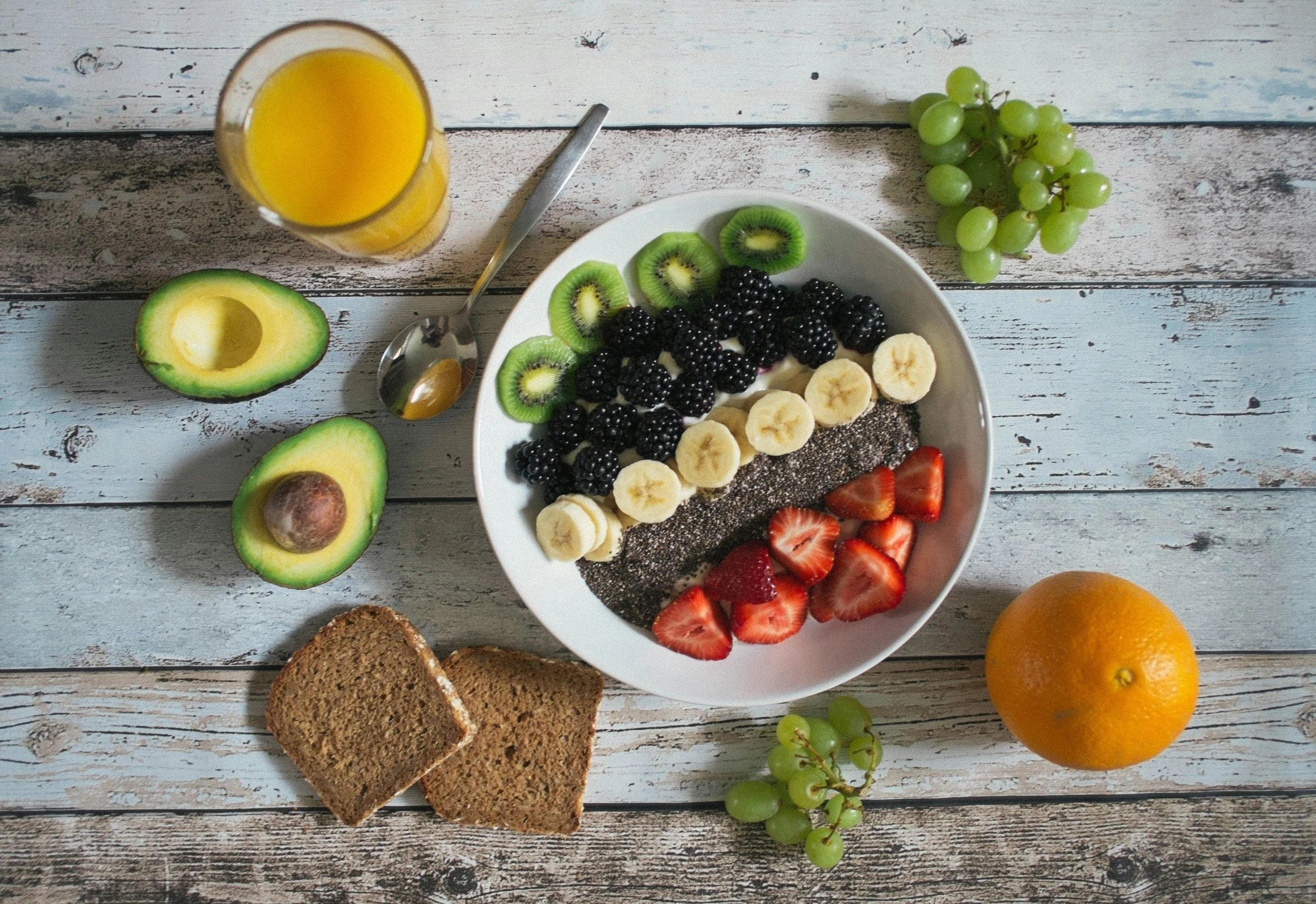
Fibermaxxing 101: Why Fiber is the New Protein for 2026
Gut health is the foundation of almost everything from your mood and brain clarity to how your body stores fat. Fiber acts like a "scrubbing brush" for your insides, but more importantly, it helps regulate GLP-1
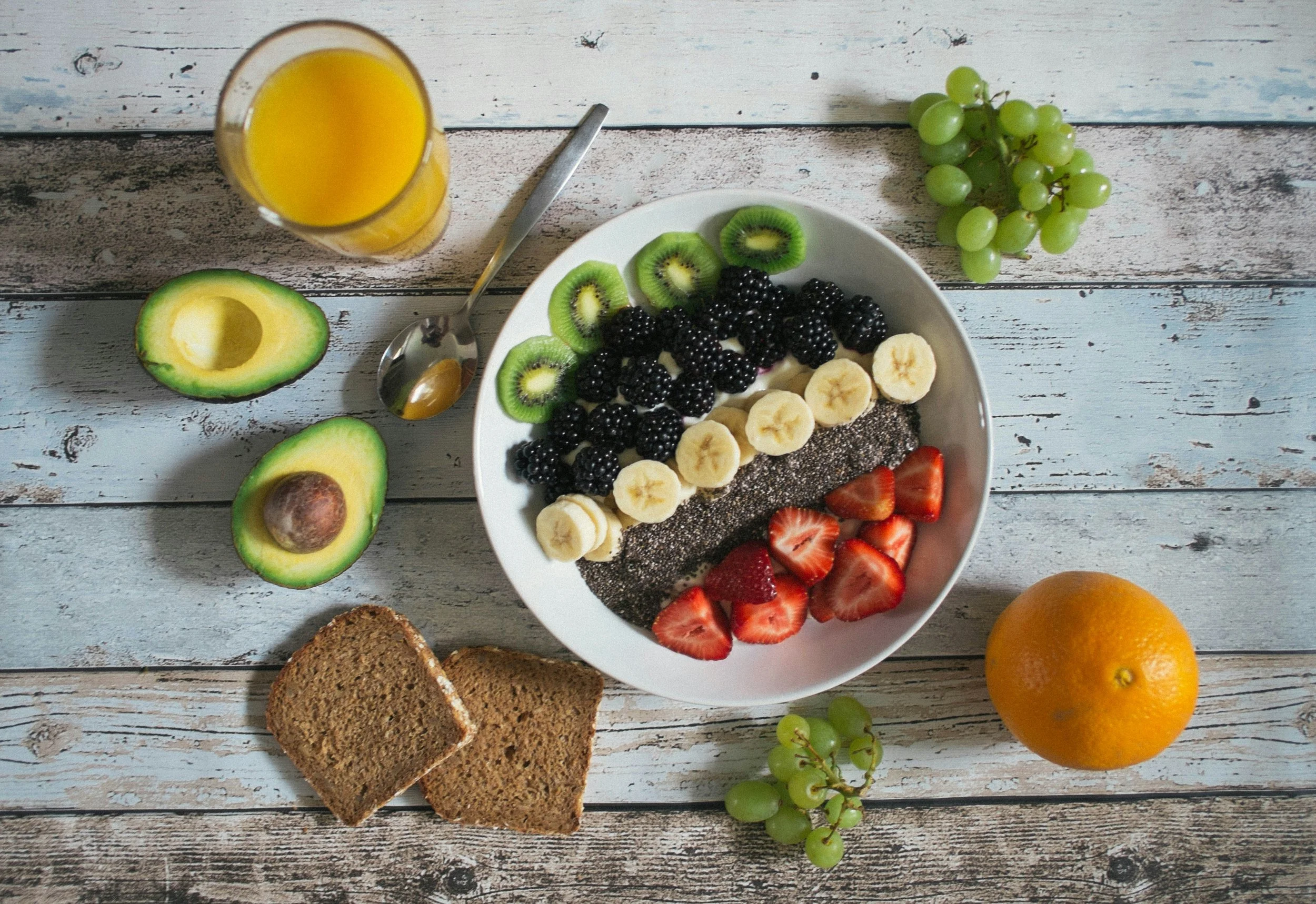
Photo by Jannis Brandt on Unsplash
For years, protein has been the undisputed king of the fitness world. We’ve been told to drink shakes, eat bars, and center every meal around a lean animal source. While protein is still vital for building muscle, there is a new heavy hitter in the nutrition space that is taking over the conversation in 2026.
Welcome to the era of "Fibermaxxing."
If you want to optimize your metabolism, flatten your glucose spikes, and finally feel "naturally full," fiber is the missing link. As we kick off the second week of February, we are diving deep into why fiber is no longer just something your grandparents worry about, it is the ultimate performance tool for the modern athlete.
What is Fibermaxxing?
"Fibermaxxing" is the intentional practice of maximizing your fiber intake to improve metabolic health and digestive efficiency. In a world of processed "keto" snacks and "high-protein" junk food, our gut microbiomes have become starved for real, complex plant fibers.
Fiber is a type of carbohydrate that your body cannot digest. While that might sound useless, it is actually its greatest strength. Because it passes through your system undigested, it provides bulk, slows down the absorption of sugar, and feeds the beneficial bacteria in your gut.
The 2026 Longevity Secret
In 2026, we’ve realized that gut health is the foundation of almost everything from your mood and brain clarity to how your body stores fat. Fiber acts like a "scrubbing brush" for your insides, but more importantly, it helps regulate GLP-1, a hormone that signals to your brain that you are full.
By "fibermaxxing," you are essentially giving your body a natural version of the satiety signals that people are currently seeking through expensive medications. When your fiber intake is high, your hunger levels stay low, making it much easier to maintain your February fitness goals.
Soluble vs. Insoluble: Know Your Tools
To be a pro at Fibermaxxing, you need to understand the two types of fiber:
Soluble Fiber: This turns into a gel-like substance in your gut. It’s found in oats, beans, and apples. It’s the "metabolic anchor" we’ve discussed, slowing down digestion and lowering cholesterol.
Insoluble Fiber: This is the "bulker." It’s found in whole grains and vegetables. It keeps things moving through your digestive tract and prevents the heavy, bloated feeling that often comes with high-protein diets.
How to "Fibermaxx" Safely
If you currently eat very little fiber, do not try to hit 50 grams tomorrow. Your digestive system needs time to adapt. If you go too fast, you will experience bloating and discomfort. Follow the "Low and Slow" rule:
Add 5 grams a week: Start by adding one extra serving of berries or a handful of leafy greens to your daily routine.
Hydrate, Hydrate, Hydrate: Fiber needs water to move through your system. If you increase fiber without increasing water, you’ll feel like you swallowed a brick.
The 4:1 Rule: Remember our goal of 1 gram of fiber for every 4-5 grams of protein. This ensures your high-protein diet doesn't "clog the pipes."
The Best Sources for 2026
Fibermaxxing isn't about eating cardboard. It’s about choosing nutrient-dense, delicious whole foods. Some of the best "bang for your buck" sources include:
Chia Seeds: Two tablespoons pack a massive 10 grams of fiber.
Raspberries: One cup gives you 8 grams and is low in sugar.
Lentils and Beans: These are the ultimate dual-threat, providing both high protein and high fiber.
Avocado: Half an avocado provides about 7 grams of healthy fats and fiber.
The Legacy View
At Legacy Fitness, we stay ahead of the curve. We know that fitness isn't just about how you look in the mirror; it’s about how your internal "engine" is running. Fiber is the fuel for a healthy gut, a steady mind, and a lean body.
This week, challenge yourself to look beyond the protein label. Start "Fibermaxxing" by adding one more plant-based fiber source to every meal. Your gut, your energy levels, and your waistline will thank you.

Weekend Warrior 2.0: How to Stay on Track Without Staying Home
This weekend, don't go into "hiding." Go out. Have fun. But do it as the 2.0 version of yourself.

This image was created using AI to avoid copyright issues while conveying the context of this article.
You’ve made it through the first full week of February. You’ve mastered the "Maintenance Mindset," boosted your NEAT, dialed in your P:F ratio, and even hit a "B-grade" workout on a day you didn't feel like it. But now, the weekend is here.
For many, the weekend is where the fitness "wheels fall off." We often view the weekend as a reward for surviving the week, which leads to a cycle of "strict dieting" on Monday and "total freedom" on Saturday. This creates a plateau that can last for years.
At Legacy Fitness, we want to upgrade you to Weekend Warrior 2.0. This isn't about being a hermit or skipping the social fun. It’s about learning to stay on track while you’re out living your life.
The "Leisure" Trap
The biggest difference between your Tuesday and your Saturday is structure. On Tuesday, you have a schedule. You have a job to go to, meals that are likely planned, and a bedtime. On Saturday, that structure disappears.
When we have no structure, we tend to make "impulse decisions." We eat because we are bored, or we drink more than we planned because "everyone else is doing it." Weekend Warrior 2.0 is about creating a "loose structure" that allows for fun without the fitness hangover.
Strategy 1: The "One-Meal" Rule
Instead of declaring the whole weekend a "cheat," choose one specific meal where you are going to enjoy yourself. Maybe it’s Saturday night dinner or Sunday brunch.
For every other meal, stick to your 4:1 P:F ratio. If you know you are having a heavy dinner, make sure your breakfast and lunch are high-protein and high-fiber. This "anchors" your metabolism and ensures that one indulgent meal doesn't turn into a 3,000-calorie day.
Strategy 2: Social Movement
In 2026, the coolest way to socialize is through movement. Instead of meeting a friend for drinks, suggest a "walk and talk." If your family wants to do something together, skip the movie theater and head to a local park, a bowling alley, or a pickleball court.
By turning your social time into "active time," you are boosting your NEAT without it feeling like a chore. You’re having fun, building relationships, and keeping your body moving all at once.
Strategy 3: The "Two-Drink" Limit or Swap
Alcohol is one of the biggest saboteurs of February progress. Not only are the calories high, but alcohol lowers your inhibitions, making you much more likely to order the late-night nachos.
If you choose to drink, try the "spacer" method: one glass of water for every alcoholic beverage. Better yet, try a 2026 favorite: the mocktail. Many places now offer sophisticated drinks made with functional ingredients like magnesium or adaptogens that help you relax without the sugar crash or the morning headache.
Strategy 4: The Sunday "Re-Entry"
Sunday evening is the most important time of the week. This is when you "re-enter" your routine. Take 20 minutes on Sunday night to look at your calendar for the coming week. Review your "Mid-Week Hump" plan and make sure you have the basics ready for Monday morning.
When you win Sunday night, you win Monday morning. And when you win Monday morning, you set the tone for the entire week.
The Legacy View
A legacy isn't built in a dark room away from people. It is built in the real world. Being fit shouldn't make your life smaller; it should make it bigger. It should give you the energy to hike with your kids, the confidence to go out with friends, and the health to enjoy your downtime.
This weekend, don't go into "hiding." Go out. Have fun. But do it as the 2.0 version of yourself. Choose your indulgences wisely, move your body, and stay consistent. You’ll wake up Monday morning feeling proud, not regretful.

Consistency Over Intensity: Why the "B Grade" Workout Wins
At Legacy Fitness, we aren't looking for a six-week transformation. We are looking for a sixty-year legacy.

This image was created using AI to avoid copyright issues while conveying the context of this article.
In the world of fitness, we are often sold the image of the "perfect" workout. We see videos of people drenched in sweat, pushing their absolute limits, and collapsing on the floor after an hour of high-intensity training. While that kind of intensity has its place, it is actually the biggest reason people quit in February.
When you believe that a workout only "counts" if it is a 10 out of 10 in intensity, you set yourself up for failure. Life is messy. Some days you are tired, some days the kids are sick, and some days work runs late. If your only option is "perfect intensity" or "nothing," you will eventually choose nothing.
At Legacy Fitness, we advocate for a different path: The "B Grade" Workout.
The Math of the Long Game
Let’s look at the math. If you do a "perfect" 10/10 workout once a week because that is all the energy you have, but you skip the other six days, your total volume is low.
However, if you do a "B Grade" workout—maybe a 6/10 or 7/10 effort—four or five times a week, you win. Consistency creates a compounding effect. Just like saving money, it isn't the one big deposit that builds wealth; it is the small, frequent deposits made over decades. In fitness, a 20-minute walk on a day you "don't feel like it" is worth more than a 90-minute gym session once a month.
The "All-or-Nothing" Trap
The "All-or-Nothing" mindset is a psychological trap. In January, your motivation is high enough to climb over that wall. But by February 6th, that motivation starts to dip. If you feel like you can't give 100%, you might feel like there is no point in trying at all.
This is where the "Consistency" mindset saves you. Your goal shouldn't be to have the best workout ever; your goal should be to not break the chain. If you planned to lift weights for an hour but only have twenty minutes, do ten minutes of squats and push-ups. You kept the habit alive. You proved to your brain that you are the kind of person who shows up, regardless of the circumstances.
Intensity is the Topping, Consistency is the Cake
Think of your fitness journey like a cake. Consistency is the actual cake: the foundation, the substance, and the part that actually feeds you. Intensity is the frosting. Frosting is great, and it makes the cake better, but you cannot have a meal made of only frosting. You will get sick and burn out.
If you focus on showing up consistently, your "base level" of fitness rises. Eventually, your "easy" days will be more productive than your "hard" days used to be. But this only happens if you stay in the game long enough to see the results.
How to Practice Consistency This Week
Lower the Bar: If you are feeling overwhelmed, give yourself permission to do a "half-workout." Just get to the gym or put on your shoes. Usually, once you start, you’ll do more than you planned.
Focus on the "Show Up" Goal: Make your goal for the week "I will move for 20 minutes every day," rather than "I will burn 500 calories."
Celebrate the "B Grade": Be proud of the days you worked out even when you were tired. Those are the workouts that actually build your character and your legacy.
Maintaining the Momentum
We’ve spent the last few days talking about NEAT and the P:F Ratio. These are tools designed to help you stay consistent. NEAT keeps you moving without the stress of a "workout," and the 4:1 P:F ratio keeps your energy stable so you don't feel too exhausted to train.
When you combine smart nutrition with the habit of simply showing up, you become unstoppable. You stop being a "seasonal" athlete and start becoming a "lifetime" athlete.
The Legacy View
At Legacy Fitness, we aren't looking for a six-week transformation. We are looking for a sixty-year legacy. That legacy is built on the days when you did a "mediocre" workout instead of sitting on the couch. It is built on the walks you took when it was cold outside.
This February, stop chasing perfection. Chase the streak. Stay consistent, stay moving, and let the intensity take care of itself when the time is right.

The Mid-Week "Hump" Meal Prep: Why Thursday is Your Most Important Day
We want you to be efficient. Sunday prep is for the strategy, but Thursday prep is for the win.

This image was created using AI to avoid copyright issues while conveying the context of this article.
By the time Wednesday night or Thursday morning rolls around, even the best-laid plans for February fitness can start to wobble. This is the "Mid-Week Hump." You probably spent Sunday afternoon prepping meals, but by now, the fridge is looking a little empty, the chicken is smelling a bit "leftover," and your willpower is starting to fade.
Most people think meal prepping is something you only do on Sundays. But at Legacy Fitness, we’ve found that the secret to a successful month isn’t a giant Sunday marathon; it is the Thursday Refresh.
The Psychology of the Thursday Fade
There is a reason why Friday night pizza and Saturday morning drive-thrus are so common. Decision fatigue is a real scientific phenomenon. By Thursday, you have made thousands of decisions at work, with your family, and in your workouts. Your brain is tired.
When you are tired, you don’t choose the meal that helps your goals; you choose the meal that is easiest. If the only thing in your fridge is a raw head of broccoli and a frozen block of meat, you are going to order takeout. The Thursday Refresh stops this cycle before it starts.
What is a "Mid-Week Hump" Prep?
Unlike a Sunday prep, which might take two hours, a Mid-Week Hump prep should take no more than 20 to 30 minutes. The goal isn't to cook five brand-new meals. The goal is to "bridge the gap" between Thursday and Monday morning.
Think of it as a pit stop. You aren't building a new car; you are just refilling the tank so you can finish the race.
The 3-Step Thursday Refresh
The Protein Pivot: Most Sunday meal preps run out of protein by Thursday. Take 15 minutes to air-fry some salmon, brown some lean ground beef, or grab a fresh rotisserie chicken from the store. Having a "ready-to-go" protein in the fridge for Thursday and Friday night is the difference between staying on track and giving up.
The "Crunch" Factor: By Thursday, pre-cut salads are often wilting. Spend 5 minutes chopping fresh peppers, cucumbers, or carrots. Having something crunchy and fresh makes a healthy meal feel more appealing when you are bored with your Sunday leftovers.
The Weekend Defense: Look at your calendar for Friday, Saturday, and Sunday. If you see a social event or a busy kids' sports schedule, prep one specific "emergency meal." This could be a high-protein, high-fiber wrap that you can eat in the car.
Building Your 4:1 Ratio on the Fly
In our previous discussion, we talked about the 4:1 Protein-to-Fiber ratio. Thursday is when this ratio usually falls apart. People start eating "protein-only" snacks or "carb-only" convenience foods.
During your Mid-Week Hump prep, make sure you have your anchors ready. If you have your protein (like that rotisserie chicken), make sure you also have a quick fiber source (like a bag of frozen cauliflower rice or pre-washed spinach). This ensures your blood sugar stays stable through the weekend.
Why the Weekend Matters More Than Monday
Most people treat Monday through Thursday like a "perfect" fitness window and then let Friday through Sunday become a free-for-all. This "on-again, off-again" cycle keeps you in a plateau.
By prepping on Thursday, you are sending a signal to your brain that the weekend is part of the plan, not an escape from it. You are choosing to be a person who stays consistent even when the "New Week" excitement has worn off.
The Legacy View
At Legacy Fitness, we don't expect you to be a kitchen slave. We want you to be efficient. Sunday prep is for the strategy, but Thursday prep is for the win. If you can master the 20-minute refresh, you will stop "restarting" your diet every Monday morning.
This Thursday, take thirty minutes. Refresh your protein, crisp up your veggies, and plan your weekend defense. Your Monday-morning self will thank you for the head start.

Social Support vs. Social Pressure: Navigating Your Circle
Your social circle can be your greatest superpower or your biggest obstacle. Understanding the difference between social support and social pressure is key to making sure your fitness legacy lasts longer than a few weeks.

This image was created using AI to avoid copyright issues while conveying the context of this article.
By the first week of February, your new habits are starting to become visible to the people around you. You might be the one bringing a healthy dish to the Super Bowl party, or the one heading home early to get a workout in the next morning.
This is usually when you realize that your social circle can be your greatest superpower or your biggest obstacle. Understanding the difference between social support and social pressure is key to making sure your fitness legacy lasts longer than a few weeks.
The "Crab in a Bucket" Effect
Have you ever heard the story of the crabs in a bucket? If one crab tries to climb out to freedom, the other crabs will reach up and pull him back down. Sometimes, humans do the same thing.
When you start improving your life, it can unintentionally make others feel self-conscious about their own habits. They might say things like, "Oh, come on, one drink won't kill you," or "Why are you being so boring lately?" This is social pressure. It isn't necessarily because they want you to fail; it’s often because they are afraid of losing the version of "you" they are comfortable with.
Finding Your Support Squad
On the other hand, social support feels like a wind at your back. These are the friends who ask how your training is going, the spouse who helps prep the high-fiber veggies, or the co-worker who joins you for a "movement snack" walk during lunch.
Support doesn't mean everyone has to do exactly what you are doing. It just means they respect your goals and don't try to sabotage your progress.
How to Handle the "Saboteurs"
If you find yourself facing social pressure this month, you don't need to cut everyone out of your life. You just need a strategy.
The "Non-Negotiable" Statement: Instead of saying "I can't eat that," try saying "I don't eat that right now." It sounds small, but "I don't" is a statement of identity, while "I can't" sounds like you are being forced. People argue with "can't," but they tend to respect "don't."
Eat Before the Event: If you know you are going to a social gathering with very few healthy options, eat a high-protein, high-fiber meal before you go. This keeps your "hunger brain" quiet so you can make logical choices.
Be the Leader: Often, people are waiting for someone else to make the healthy choice first. Be the one who suggests the activity-based hangout (like bowling or hiking) instead of just sitting at a bar.
Building a New Layer of Community
If your current social circle is purely focused on sedentary habits, it might be time to add a new layer to your community. This is why fitness coaching and group classes are so effective. When you surround yourself with people who have the same "North Star" as you, the social pressure disappears and is replaced by collective momentum.
In 2026, we see "Social Fitness" as a top trend. People are realizing that loneliness is as bad for your health as smoking, and finding a community that moves together is the ultimate "biohack."
The Legacy View
At Legacy Fitness, we know that no man or woman is an island. Your environment dictates your behavior. If you want to change your life, you have to be willing to have some uncomfortable conversations with the people around you.
Explain your "why" to those you love. If they care about you, they will transition from being a source of pressure to being a source of support. And for those who won't? Well, you might just have to lead the way until they are ready to follow.

The P:F Ratio: Your New Secret Weapon for Fullness
This week, look at your plate. Do you have your protein? Is it anchored by fiber?

This image was created with AI to avoid copyright issues while conveying the context of this article.
If you have ever finished a large meal only to feel hungry again an hour later, you have experienced a "satiety gap." In the past, people focused solely on calories to lose weight. Then, the trend shifted to focusing only on protein. But in 2026, the most successful fitness enthusiasts are looking at a different metric: The P:F Ratio.
P:F stands for the Protein-to-Fiber Ratio. This simple math trick is the secret weapon for anyone who wants to feel full, stay lean, and stop the constant "pantry grazing" that often ruins fitness goals in February.
The Problem with "Empty" Protein
Protein is essential for building muscle and keeping you full, but protein alone isn't always enough. Have you ever eaten a plain chicken breast and felt "full" but still unsatisfied? That is because your digestive system also needs bulk and slow-digesting nutrients to tell your brain that the meal is over.
On the other hand, if you eat a bowl of pasta, you might feel very full for twenty minutes, but because it lacks protein and fiber, your blood sugar spikes and then crashes. This leaves you tired and looking for a sugary snack by mid-afternoon.
Why Fiber is the "Other Half" of the Equation
Fiber is often called the "forgotten nutrient." It doesn't build muscle like protein does, but it does something equally important: it slows down digestion. When you eat fiber, it expands in your stomach and slows the rate at which food enters your bloodstream.
When you combine high protein with a strategic amount of fiber, you create a "metabolic anchor." This combination keeps your blood sugar steady and ensures that the energy from your food lasts for hours instead of minutes.
How to Calculate the P:F Ratio
You don't need a calculator or a degree in nutrition to use this secret weapon. In 2026, health experts suggest aiming for a 4:1 or 5:1 ratio of protein to fiber. This means for every 4 or 5 grams of protein on the label, you want at least 1 gram of fiber.
This is the "Sweet Spot" for satiety. It provides enough fiber to slow down digestion without causing the bloating or discomfort that comes from overdoing it too quickly.
The "Bad" Snack: A processed protein bar with 20g of protein but 0g of fiber. This is a 20:0 ratio—you’ll be hunting for more food in thirty minutes.
The "Great" Snack: A serving of Greek yogurt (20g protein) paired with a handful of raspberries (5g fiber). This is a perfect 4:1 ratio. You will feel energized and satisfied until your next meal.
Simple Swaps for a Better Ratio
Improving your P:F ratio doesn't mean you have to change what you eat entirely. It just means you need to "clothe" your protein with a little bit of fiber.
At Breakfast: If you love eggs (high protein), add a half-cup of sautéed spinach or a few slices of avocado (fiber).
At Lunch: If you’re having a turkey wrap, ensure the tortilla is whole-grain or sprouted (fiber) rather than white flour.
At Dinner: If you’re having a lean steak or chicken, make sure half your plate is filled with colorful vegetables like roasted Brussels sprouts or broccoli.
The "Fullness" Advantage in February
February is a tricky month. The weather is often cold, and we naturally crave "comfort foods" that are usually high in carbs and low in nutrients. By focusing on a 4:1 P:F ratio, you can still eat satisfying, hearty meals without the weight-gain "side effects."
When you are physically full because of the protein-fiber synergy, you have more willpower. It is much easier to say "no" to the office donuts or the late-night ice cream when your body is actually satisfied from your last meal.
The Legacy View
At Legacy Fitness, we want to move away from "starvation diets." We believe in fueling your body so that it performs at its best. Learning the P:F ratio is like learning a new language for your health. Once you start seeing food in terms of how it makes you feel and how long it keeps you full, you’ll never go back to mindless calorie counting again.
This week, look at your plate. Do you have your protein? Is it anchored by fiber? If you hit that 4:1 mark, you have a winning legacy.