
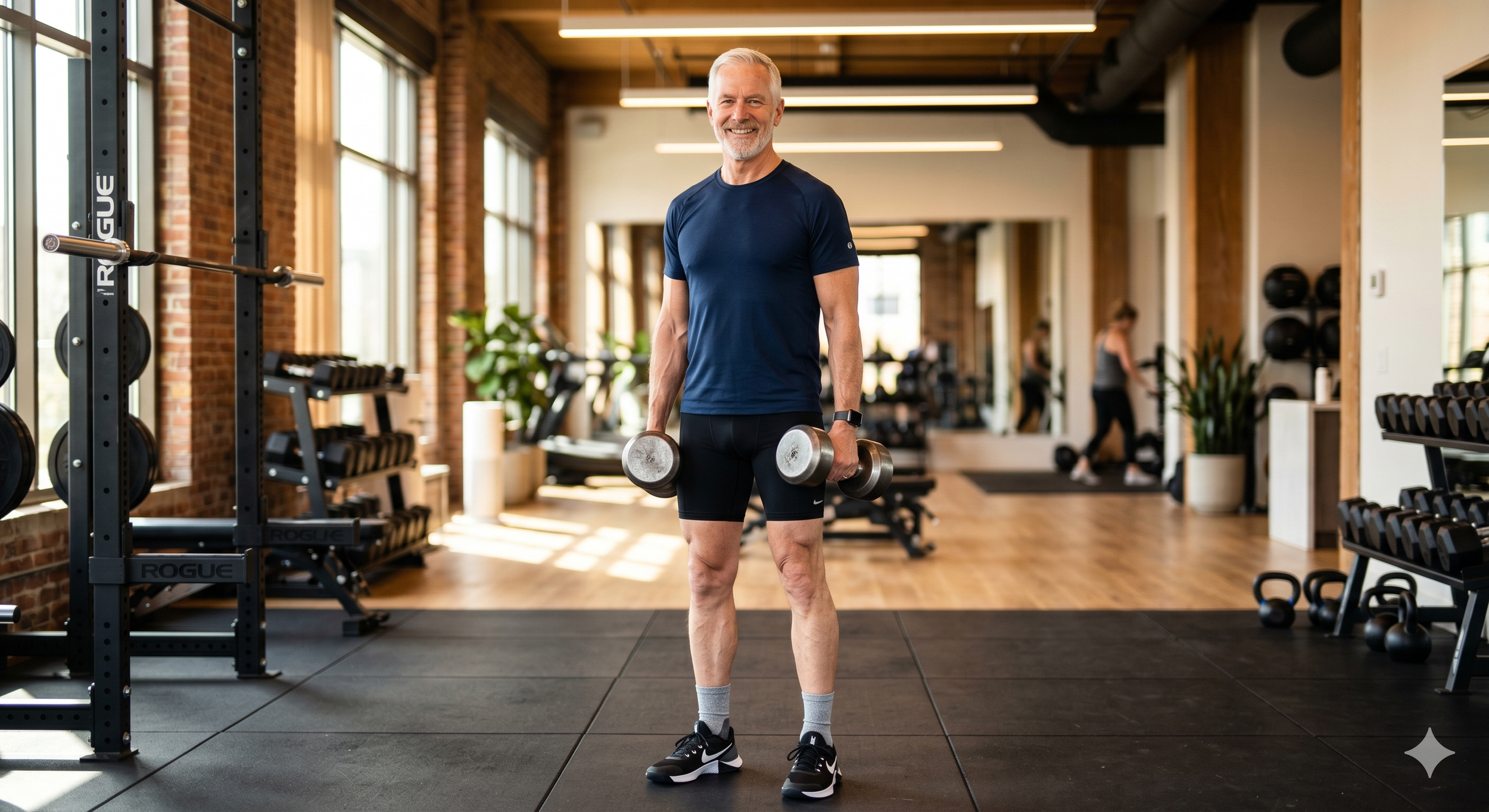
Active Aging: Why 60 is the New 40 in the Weight Room
Functional Strength keeps you independent; independence is the ultimate currency as we get older.
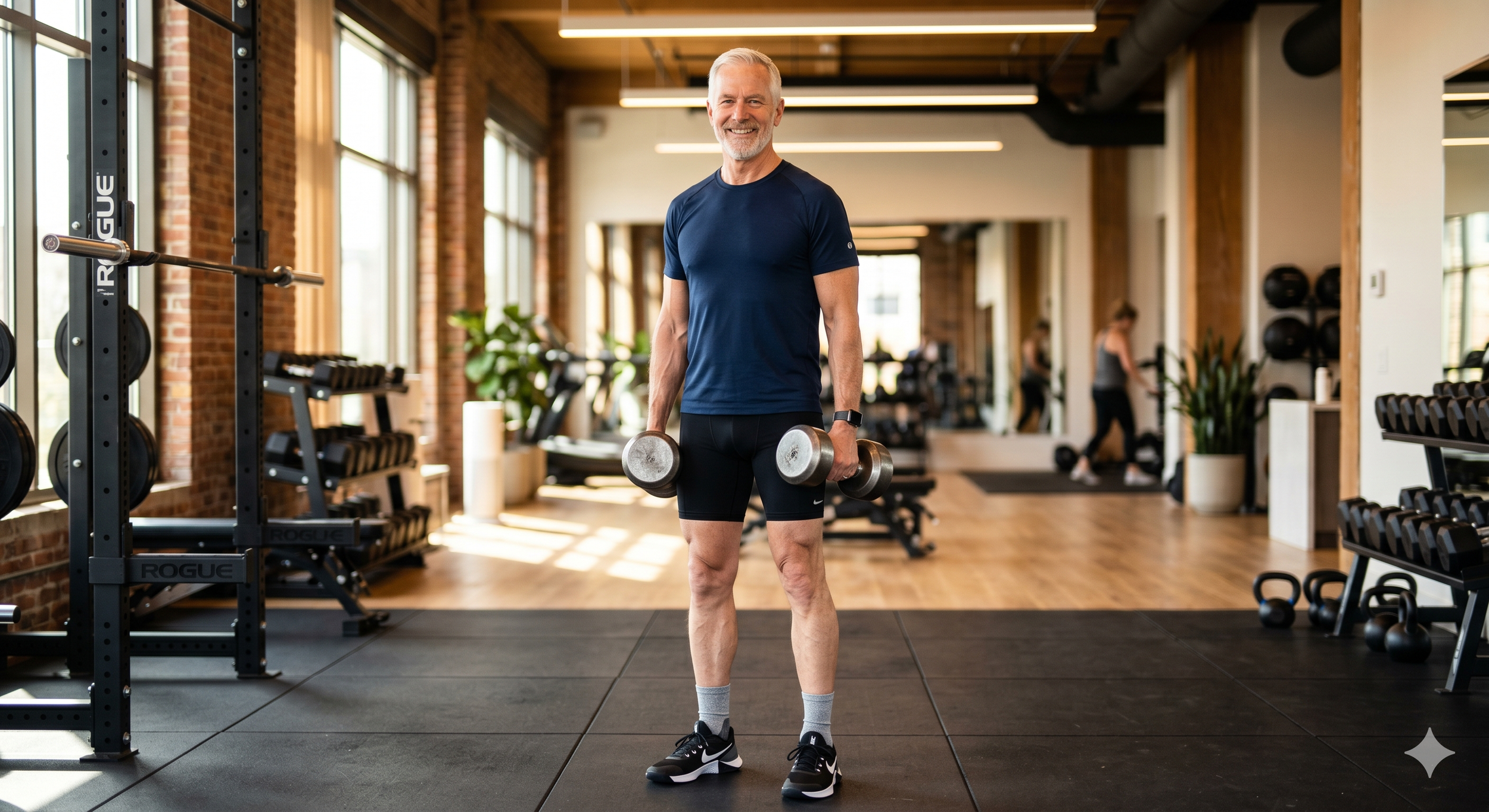
This image was created using AI to avoid copyright issues while conveying the context of this article.
There was a time when "fitness for seniors" meant light water aerobics or a gentle stroll around the mall. The general advice was to "be careful" and avoid anything strenuous. While any movement is better than none, we now know that the older we get, the more we actually need the "heavy stuff."
In 2026, we are seeing a massive shift in the gym. People in their 60s and 70s aren't just showing up; they are picking up dumbbells, using the squat rack, and out-performing people half their age. They have discovered the secret to "Active Aging": your muscles don't know how old you are, they only know how much you challenge them. By treating the weight room as a fountain of youth, this generation is redefining what it means to grow older.
Understanding the Enemy: Sarcopenia and Anabolic Resistance
To understand why lifting is so important, we have to look at what happens to the body naturally as the candles on the birthday cake add up. The medical term for age-related muscle loss is sarcopenia. Starting in our 30s, we begin to lose about 3% to 5% of our muscle mass per decade. By the time someone reaches 60, this loss can accelerate, leading to balance issues, joint pain, and a slower metabolism.
But there is another hurdle called anabolic resistance. As we age, our bodies become less efficient at turning protein from our food into new muscle tissue. A 20-year-old can grow muscle just by looking at a protein shake, but a 60-year-old has to work harder for it. To overcome this "resistance," the stimulus needs to be stronger. This is why "light" weights often don't work for older adults; you need a load that is heavy enough to force the body to pay attention and trigger the muscle-building process.
Muscle: The Armor of Longevity
Strength training acts like armor for your body. When you build muscle in your 60s, you aren't just "toning up" for the beach. You are building a physical shield that protects you from the most common risks of aging.
First, muscle protects your joints. When the muscles around your knees, hips, and spine are strong, they take the "impact" of daily life. Instead of your bones and cartilage grinding together, your muscles act as shock absorbers. This is why many people find that their chronic back or knee pain disappears once they start a structured lifting program.
Second, muscle is your metabolic insurance. Muscle is active tissue, meaning it burns calories even when you are sleeping. Sarcopenia is often the reason people "gain weight as they age" even if they aren't eating more food. Their "engine" has shrunk. By reclaiming that muscle, you are essentially "upgrading" your metabolism to that of a much younger person.
The Power of "Functional" Strength
When we talk about lifting weights for active aging, we are talking about Functional Strength, the kind of power that keeps you independent. Independence is the ultimate currency as we get older.
Training in your 60s is about ensuring you can always carry your own groceries, get up off the floor without help, and play with your grandkids without your back acting up. We focus on "The Big Patterns":
The Squat: This is the ability to get on and off a chair or a toilet without needing to grab a rail.
The Hinge: This is the ability to pick up a heavy box (or a toddler) off the ground using your hips instead of your lower back.
The Carry: This is the ability to maintain balance and core strength while moving weight from point A to point B.
These aren't just gym exercises; they are life skills. A 60-year-old who can deadlift 100 pounds is a 60-year-old who is unlikely to ever need a walker.
It Is Never Too Late to Start (The Science of Plasticity)
One of the biggest myths in fitness is that if you haven't been an athlete your whole life, the "ship has sailed." Science says the opposite. Your body remains "plastic" meaning it can change and adapt well into your 80s and 90s.
In fact, research has shown that previously sedentary people in their 70s can see a 10% to 20% increase in muscle size and a massive jump in strength in as little as 12 weeks. You don't need a history of athletics; you just need a willingness to start. The key is starting at the right level and focusing on "progressive overload," which simply means doing a little bit more this week than you did last week.
Recovery and the "New 40" Mindset
The reason we say "60 is the new 40" is that our understanding of recovery has changed in 2026. We used to think that older people needed weeks to recover from a hard workout. We now know that with high protein intake and proper sleep, the recovery gap between a 40-year-old and a 60-year-old is much smaller than we thought.
Lifting weights doesn't make you "worn out." It makes you more resilient. It gives you the energy to say "yes" to adventures, travel, and hobbies that others might have to give up. At Legacy Fitness, we don't look at your age on a calendar; we look at your capability in the gym. We are here to help you build a body that serves you for the rest of your life, ensuring that your "golden years" are spent in the squat rack, not the waiting room.
The Energy Audit: Fueling Your Workouts on Low Calories
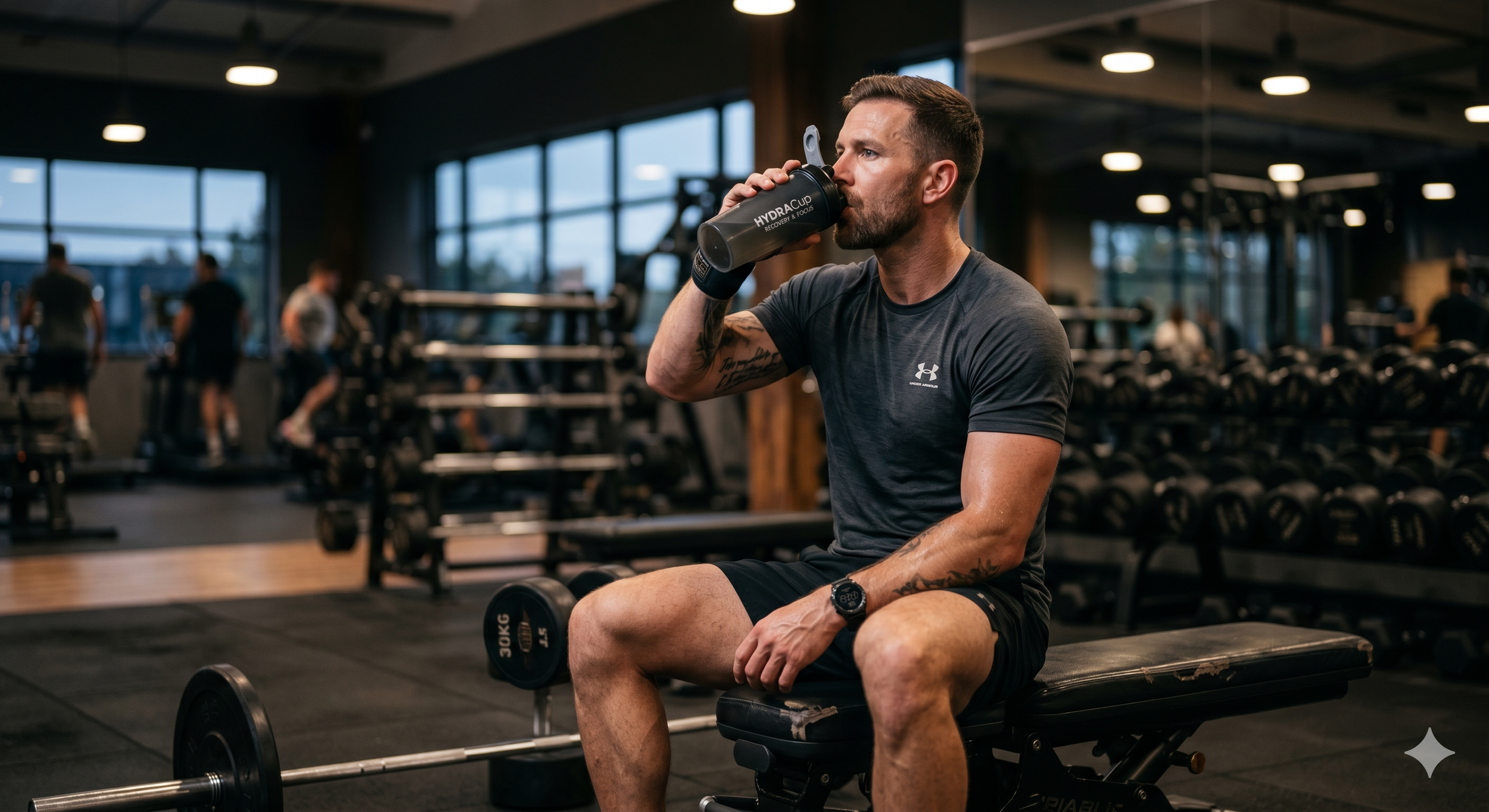
You want to hit the gym and get your workout done, but your "battery" feels like it is at 5%.
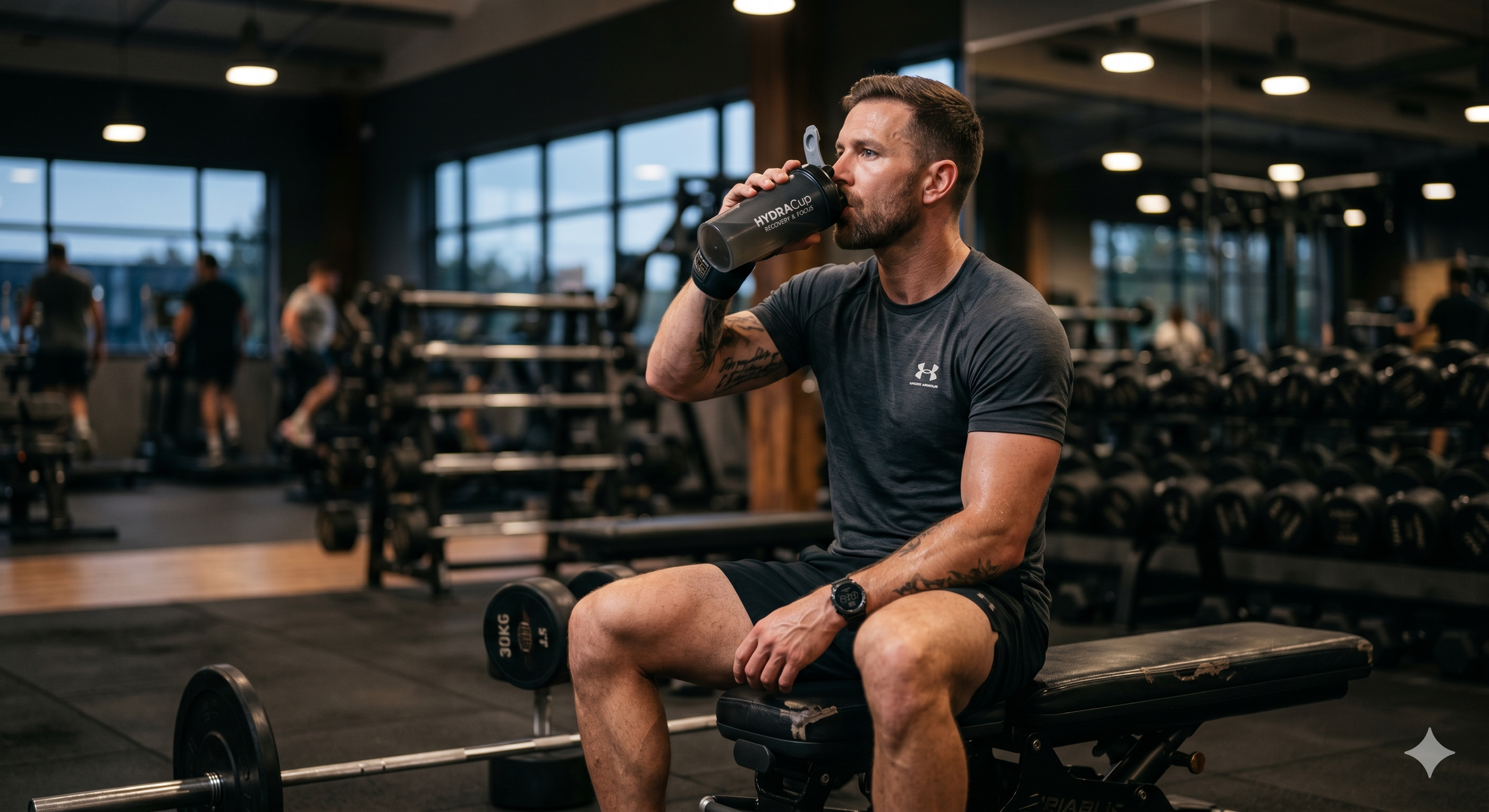
This image was created using AI to avoid copyright issues while conveying the context of this article.
One of the most common complaints people have when they start a new nutrition plan is a sudden drop in energy. This is especially true for those using GLP-1 medications or anyone in a significant calorie deficit. You want to hit the gym and get your workout done, but your "battery" feels like it is at 5%.
This is often referred to as the "energy gap." When you consume fewer calories and carbohydrates, your body has less immediate "fuel" in the bloodstream to power high-intensity movement. However, skipping your workouts will only slow down your progress. To stay on track, you need to perform an "Energy Audit" and adjust how you fuel your body.
Understanding Your Fuel Sources
Your body primarily uses two types of fuel for exercise: fats and carbohydrates.
Fats are like a giant log on a campfire. They burn slowly and provide energy for a long time (like during a long walk).
Carbohydrates are like kindling or paper. They burn hot and fast, providing the "explosion" you need to lift heavy weights or do a sprint.
When you are on a low-calorie plan, your "kindling" is low. This is why a heavy set of squats might feel twice as hard as it used to. Your body is trying to figure out how to do "expensive" work on a "budget" income.
Timing is Everything
When calories are limited, timing becomes your best friend. Since you don't have a lot of fuel to go around, you need to make sure it is in your system right when you need it most.
Instead of spreading your small amount of carbohydrates evenly throughout the day, try "clustering" them around your workout. Eating a small amount of easy-to-digest carbs (like a piece of fruit or a rice cake) about 30 to 60 minutes before you lift can provide just enough "kindling" to get you through the session without feeling like you’re dragging.
The Role of Electrolytes and Hydration
Sometimes, what feels like "low energy" is actually a lack of minerals. When you eat fewer processed foods and lower carbs, your body tends to flush out water and salt more quickly. This can lead to brain fog, muscle cramps, and a general feeling of weakness.
Before you reach for a third cup of coffee, try adding a high-quality electrolyte mix to your water. Ensuring your sodium, potassium, and magnesium levels are balanced can often "wake up" your nervous system more effectively than caffeine ever could.
Adjusting the Volume
If your energy is low, you might need to change how you train, not if you train. On low-calorie days, focus on "Quality over Quantity."
Instead of doing five sets of ten reps, you might do three sets of five reps with a bit more rest in between. The goal is to keep the intensity high enough to protect your muscle, but the total "volume" low enough that you don't burn out. Remember, the goal of training during a fat-loss phase is muscle preservation, not necessarily setting a world record in endurance.
Listen to the "Check Engine" Light
There is a difference between being "diet tired" and being "system exhausted." If you are consistently feeling dizzy, cold, or unable to recover between sessions, your calorie deficit might be too steep.
As coaches, we look for the "Sweet Spot", the place where you are losing body fat but still have enough vigor to live your life and lift your weights. If you find yourself consistently hitting a wall, it’s time to audit your intake and perhaps add a small amount of "functional fuel" to keep the engine running.

Walking vs. Training: Which One Saves Your Metabolism?
We often hear that "movement is medicine, but you might be wondering: "Is my daily walk enough, or do I really need to lift weights?"

This image was created using AI to avoid copyright issues while conveying the context of this article.
We often hear that "movement is medicine," and it’s true. In a world where many of us sit at desks for eight hours a day, getting up and moving is vital. However, when it comes to your metabolism, the internal engine that burns calories, not all movement is created equal.
If you are trying to lose weight or maintain your health, you might be wondering: "Is my daily walk enough, or do I really need to lift weights?" The answer depends on whether you want to just be "active" or if you want to actually change how your body burns energy.
Walking: The Heart’s Best Friend
Walking is one of the best things you can do for your overall health. It lowers stress, improves your heart health, and helps with digestion. In terms of "burning calories," walking is great because it is something you can do every single day without needing a lot of recovery time.
However, walking is a "steady-state" activity. While it burns calories while you are doing it, the burn stops almost the moment you sit back down on the couch. Walking keeps you healthy, but it doesn't do much to increase your Resting Metabolic Rate (RMR)—the number of calories your body burns just to stay alive.
Strength Training: The Metabolic Engine
Strength training, or resistance training, works differently. When you lift weights, you aren't just burning calories during the workout. You are actually damaging tiny muscle fibers so they can grow back stronger.
This process of building and maintaining muscle is very "expensive" for your body. Muscle is active tissue. Even when you are sleeping, your muscles are burning calories. If you have more muscle mass, your "engine" is bigger. A person with more muscle will burn more calories while watching TV than a person with less muscle, even if they weigh the exact same.
Why "Saving" Your Metabolism Matters
As we age, or when we lose weight quickly, our metabolism tends to slow down. If you only do cardio (like walking) while eating fewer calories, your body may actually get "smaller," but it also gets "slower." It becomes more efficient at surviving on fewer calories.
This is why many people hit a plateau where the weight stops coming off. Their metabolism has adapted to the walking and the lower food intake. Strength training "saves" the metabolism by forcing the body to keep its muscle. It signals to your system that it cannot slow down because it has to support the strength you are building.
The Perfect Partnership
You don't have to choose one over the other. In fact, the best results come from a combination of both.
Walking should be your daily baseline. It keeps your joints moving and your heart strong.
Strength Training should be your metabolic insurance. Two to three days a week of lifting weights ensures that your body stays a "fat-burning machine" rather than a "calorie-storing machine."
If you only have 30 minutes to exercise, and your goal is long-term weight management, you should prioritize the weights. You can always find ways to "sneak" in more steps throughout the day, but you have to be intentional about building muscle.
Don't Just Move, Build!
At Legacy Fitness, we see walking as a vital part of a healthy lifestyle, but we see strength training as the foundation of a healthy body. We want you to have a metabolism that works for you, not against you. By focusing on your strength, you are ensuring that your results last long after the walk is over.

The "Protein First" Rule for GLP-1 Success
Navigating nutrition while on medication can feel like a balancing act. You want to lose weight, but you also want to feel vibrant and strong.
Medical Disclaimer: The information provided in this article is for educational and informational purposes only and should not be considered medical advice. Always seek the advice of your physician or other qualified health provider with any questions you may have regarding a medical condition or the use of medications. Never disregard professional medical advice or delay in seeking it because of something you have read here.

This image was created using AI to avoid copyright issues while conveying the context of this article.
When you are using a GLP-1 medication, your relationship with food changes. For many, the constant "food noise" in their head finally goes quiet. While this is a massive relief, it creates a new challenge: when you aren't hungry, how do you make sure you are eating enough of the right things?
The most important rule for anyone on this journey is simple: Protein First. On these medications, you are likely eating much smaller portions than you used to. Because your "real estate" for food is limited, you have to be strategic. If you fill up on crackers or salad before you get to your protein, you are missing out on the most important building block your body needs.
Why Protein is Non-Negotiable
As we have discussed before, rapid weight loss can lead to a loss of muscle mass. Your body needs amino acids, the building blocks found in protein, to maintain your muscles, your immune system, and even your hair and skin.
When you are in a large calorie deficit, your body is looking for energy. If you aren't eating enough protein, your body will literally "eat" its own muscle tissue to get the amino acids it needs. This is why some people on GLP-1s end up feeling weak or looking "frail." By putting protein at the center of every meal, you are giving your body the raw materials it needs to keep your metabolism running and your muscles strong.
The "Protein First" Strategy
So, what does this look like in real life? It means changing the order in which you eat. Most of us were raised to eat a bit of everything on our plate at once. When you have a suppressed appetite, you need to be more tactical:
Eat your protein first. Whether it’s chicken, lean beef, fish, eggs, or tofu, make sure that is the first thing you finish.
Move to fiber. Once your protein goal for that meal is met, reach for your vegetables.
Finish with starches. If you still have room, you can have your rice, potatoes, or bread.
By following this order, you ensure that even if you get full after only five or six bites, those bites were packed with the nutrients that protect your lean tissue.
How Much Do You Actually Need?
While everyone is different, a good rule of thumb for those on GLP-1 medications is to aim for roughly 0.8 to 1 gram of protein per pound of your goal body weight.
For many, this sounds like a lot of food, especially when you don't feel hungry. This is where liquid nutrition can become a lifesaver. High-quality protein shakes or collagen peptides can help you hit your numbers without making you feel uncomfortably full.
Managing Energy and "The Wall"
It is common to feel a drop in energy when you start eating less. Protein helps here, too. Unlike simple sugars that give you a quick spike and a crash, protein provides a steady "burn." It helps stabilize your blood sugar and keeps you feeling satisfied for longer.
However, don't ignore your carbs entirely. While protein is the priority, your brain and muscles still need some glucose to function. Think of protein as the "bricks" of your house and carbs as the "electricity." You need the bricks to stay standing, but you need the electricity to keep the lights on.
Professional Nutrition Support
Navigating nutrition while on medication can feel like a balancing act. You want to lose weight, but you also want to feel vibrant and strong. At Legacy Fitness, we help you create a "nutrient-dense" plan that works with your suppressed appetite rather than against it. We make sure every bite counts.
Train for the Body You Want to Keep
The goal isn't just to be lighter, it’s to be more capable. Ensure your weight loss journey leads to lasting metabolic health rather than frailty.
Click below to grab a free 15-minute consultation and learn how our targeted strength and nutrition coaching can safeguard your results.
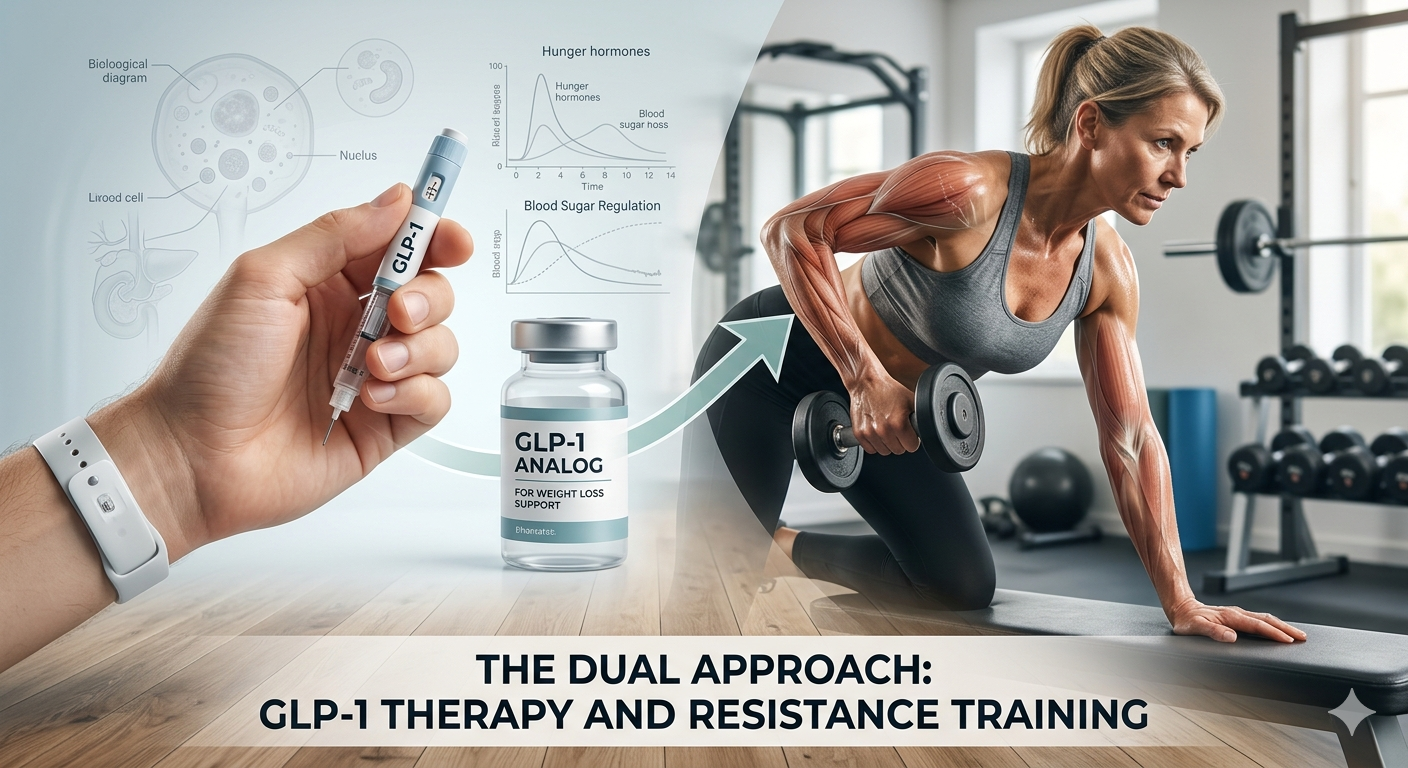
The GLP-1 Muscle Gap: Why Weights are Non-Negotiable
Clinical data from recent GLP-1 trials has shown a concerning trend: without specific lifestyle interventions, as much as 40% of the weight lost can be lean muscle mass.
Medical Disclaimer: The information provided in this article is for educational and informational purposes only and should not be considered medical advice. Always seek the advice of your physician or other qualified health provider with any questions you may have regarding a medical condition or the use of medications. Never disregard professional medical advice or delay in seeking it because of something you have read here.
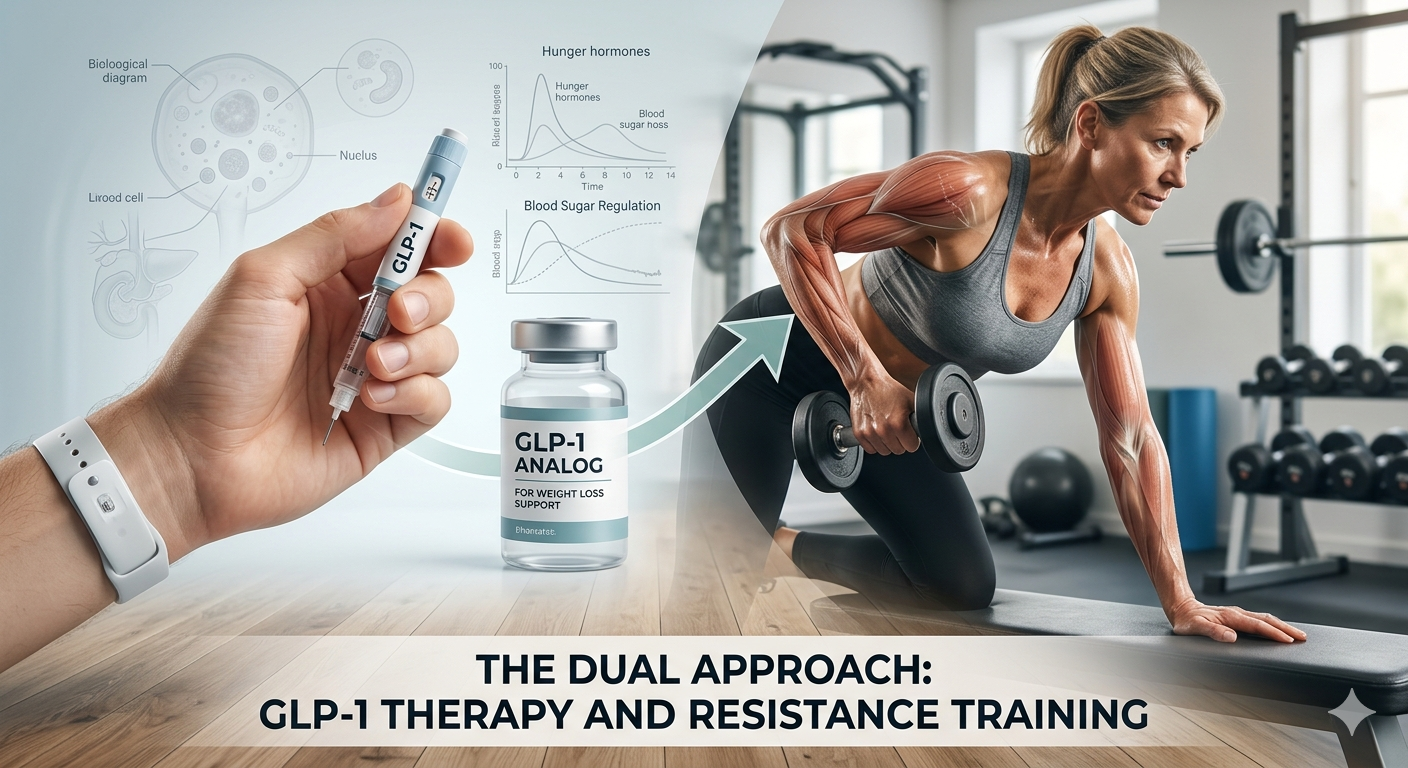
This image was created using AI to avoid copyright issues while conveying the context of this article.
The landscape of weight management changed forever with the rise of GLP-1 receptor agonists like semaglutide and tirzepatide. These medications have provided a powerful tool for those struggling with metabolic health and chronic obesity. However, as with any major medical advancement, they come with a specific set of challenges that must be managed strategically. The most significant of these is what researchers and coaches call the "Muscle Gap."
While the scale moving down is often seen as a victory, not all weight loss is created equal. The goal of any healthy transformation is to lose body fat while preserving the tissue that keeps us functional: muscle and bone. Unfortunately, the rapid weight loss triggered by GLP-1s can lead to a disproportionate loss of lean mass if the patient is not following a structured resistance training program.
The 40% Risk: Understanding Lean Mass Loss
In traditional weight loss through diet and exercise, it is normal for about 20% to 25% of the total weight lost to come from lean tissue. However, clinical data from recent GLP-1 trials has shown a more concerning trend. Some studies indicate that without specific lifestyle interventions, as much as 40% of the weight lost can be lean muscle mass.
This is a staggering number. If a person loses 50 pounds, but 20 of those pounds are muscle, they haven't just become smaller; they have become physically weaker and metabolically less efficient. Muscle is the primary driver of your resting metabolic rate. When you lose that much muscle, your body requires fewer calories to function. This creates a "rebound" trap where, if the medication is ever discontinued, the weight returns much faster because the body’s "engine" has been downsized.
The Impact on Bone Density
Beyond the muscles you see in the mirror, there is the skeletal system to consider. As we discussed in our previous look at bone health, bones are living tissue that require "loading" to remain dense and strong. Rapid weight loss is historically associated with a decrease in bone mineral density.
When body weight drops quickly, there is less mechanical load on the skeleton. If this is coupled with the decreased nutrient intake common on GLP-1s, the risk of developing osteopenia or osteoporosis increases. For older adults, this can be particularly dangerous. Losing 40% muscle mass while also decreasing bone density is a recipe for frailty and a loss of independence. Strength training is the only way to counteract this by creating the mechanical tension necessary to keep bones "charging" with new minerals.
Why the Body "Harvests" Muscle
When you are on a GLP-1 medication, your appetite is significantly suppressed. You are often in a massive calorie deficit. In this state, the body is looking for immediate energy to keep the heart beating and the brain functioning. If the body is not receiving enough energy from food, and it isn't being "reminded" that muscle is necessary through heavy lifting, it may begin to break down muscle tissue for energy.
Muscle is "expensive" for the body to keep. It requires a lot of energy to maintain. In a state of perceived starvation (the calorie deficit), the body will gladly shed muscle to save energy unless you give it a reason not to. Resistance training, specifically lifting weights that challenge you, sends a neurological signal that says the muscle is vital for survival. This signal, combined with adequate protein, tells the body to burn fat for fuel instead of your bicep or quadriceps tissue.
Overcoming the "Energy Crisis"
One of the most reported side effects of GLP-1 therapy is profound fatigue. Because users are often eating fewer carbohydrates and total calories, their "gas tank" feels empty. It is very easy to fall into a sedentary lifestyle because the motivation to move is low.
However, this inactivity accelerates the muscle loss. We recommend a "Quality over Quantity" approach to training while on these medications. You do not need to spend two hours in the gym doing high-intensity cardio. In fact, too much cardio can sometimes worsen the muscle-wasting effect. Instead, focus on 30 to 45 minutes of heavy, compound resistance training two to three times per week. Moves like squats, deadlifts, and presses provide the most "bang for your buck" and ensure the body prioritizes muscle preservation.
The Role of Professional Support
As certified personal trainers and nutrition coaches, we specialize in the "other half" of the GLP-1 journey. While the medication handles the hormonal and appetite side of the equation, we handle the structural and metabolic side.
Our role is to ensure that your transformation results in a body that is not just lighter, but stronger and more resilient. We focus on nutrient density, making sure every calorie you eat is working toward your goal, and progressive resistance training to bridge the muscle gap. The goal is to reach your target weight with a robust metabolism and a skeletal system that is built to last for decades.
Train for the Body You Want to Keep
The goal isn't just to be lighter, it’s to be more capable. Ensure your weight loss journey leads to lasting metabolic health rather than frailty.
Click below to grab a free 15-minute consultation and learn how our targeted strength and nutrition coaching can safeguard your results.

The "Shadow" Benefit of Strength: Why Bone Density is Your 401(k)
If you don't "deposit" enough strength training now, you may find yourself "bankrupt" when you need your mobility the most.

This image was created using AI to avoid copyright issues while conveying the context of this article.
When we think about hitting the weight room, most of us picture bigger biceps or a leaner waistline. We focus on the muscles we can see in the mirror. However, there is a "shadow" benefit happening deep inside your body that is arguably more important for your future than the size of your chest or the tone of your legs. That benefit is bone density.
If you think of your physical health like a financial plan, your muscles are your checking account. You use them every day, they fluctuate, and they provide immediate value. Your bone density, however, is your 401(k). It is the long-term investment that determines your quality of life in your later years. If you don't "deposit" enough strength training now, you may find yourself "bankrupt" when you need your mobility the most.
The Silent Decline
Starting around age 30, most people begin a slow and steady decline in bone mass. For women, this process can speed up significantly during and after menopause. The scary part is that you cannot feel your bones getting weaker. There are no "weak bone" aches or pains to warn you. Often, the first sign of a problem is a fracture from a simple fall that should have only resulted in a bruise.
This is why bone health is often ignored until it is too late. We focus on the scale or our clothing size because those are visible. But the density of your skeletal system is the foundation upon which everything else sits. Without strong bones, even the strongest muscles have no leverage to move your body safely.
How Strength Training Makes Deposits
Your bones are living tissue. Just like your muscles, they respond to stress by getting stronger. This is known as Wolff’s Law. When you lift weights, the tendons pull on the bones. This tension signals your body to send minerals, specifically calcium, to those areas to reinforce the structure.
Walking and light cardio are great for your heart, but they often aren't enough to build significant bone density. To really "fill the account," you need resistance. This means lifting weights, using resistance bands, or performing bodyweight exercises like push-ups and squats. These movements put a healthy amount of "stress" on the skeleton, forcing it to adapt and harden.
Why This Matters in 2026
We are living longer than any generation in history. In 2026, the goal is no longer just "living long," but "living well." This is often called your "healthspan." There is a massive difference between being 80 years old and confined to a chair versus being 80 and able to play with your grandkids or go for a hike.
The leading cause of a loss of independence in older adults is a fall leading to a hip fracture. For many, this is the beginning of a downward spiral. By prioritizing strength training today, you are essentially buying an insurance policy against that future. You are ensuring that your "frame" is sturdy enough to carry you through the second half of your life.
Nutrition: The Raw Materials
If strength training is the construction crew that builds your bone density, nutrition provides the bricks and mortar. You cannot build a strong structure without the right supplies.
Calcium: This is the primary mineral found in bones. While dairy is a common source, leafy greens and fortified foods are also excellent.
Vitamin D: Think of Vitamin D as the "gatekeeper." Without it, your body cannot properly absorb the calcium you eat.
Protein: Bones are actually about 50% protein by volume. A high-protein diet supports the collagen matrix that gives bones their flexibility and strength.
Starting Your Investment Today
The best time to start building bone density was ten years ago. The second best time is today. You do not need to be a professional bodybuilder to see results. Consistently lifting weights two to three times a week can make a massive difference.
Focus on "compound movements." These are exercises that use multiple joints and muscle groups at once, such as squats, deadlifts, and overhead presses. These moves put the most beneficial load on your spine and hips, which are the most common areas for bone loss.
At Legacy Fitness, we don't just train for how you look this summer. We train for how you move twenty years from now. Your future self will thank you for the deposits you make in your "Skeletal 401(k)" today.
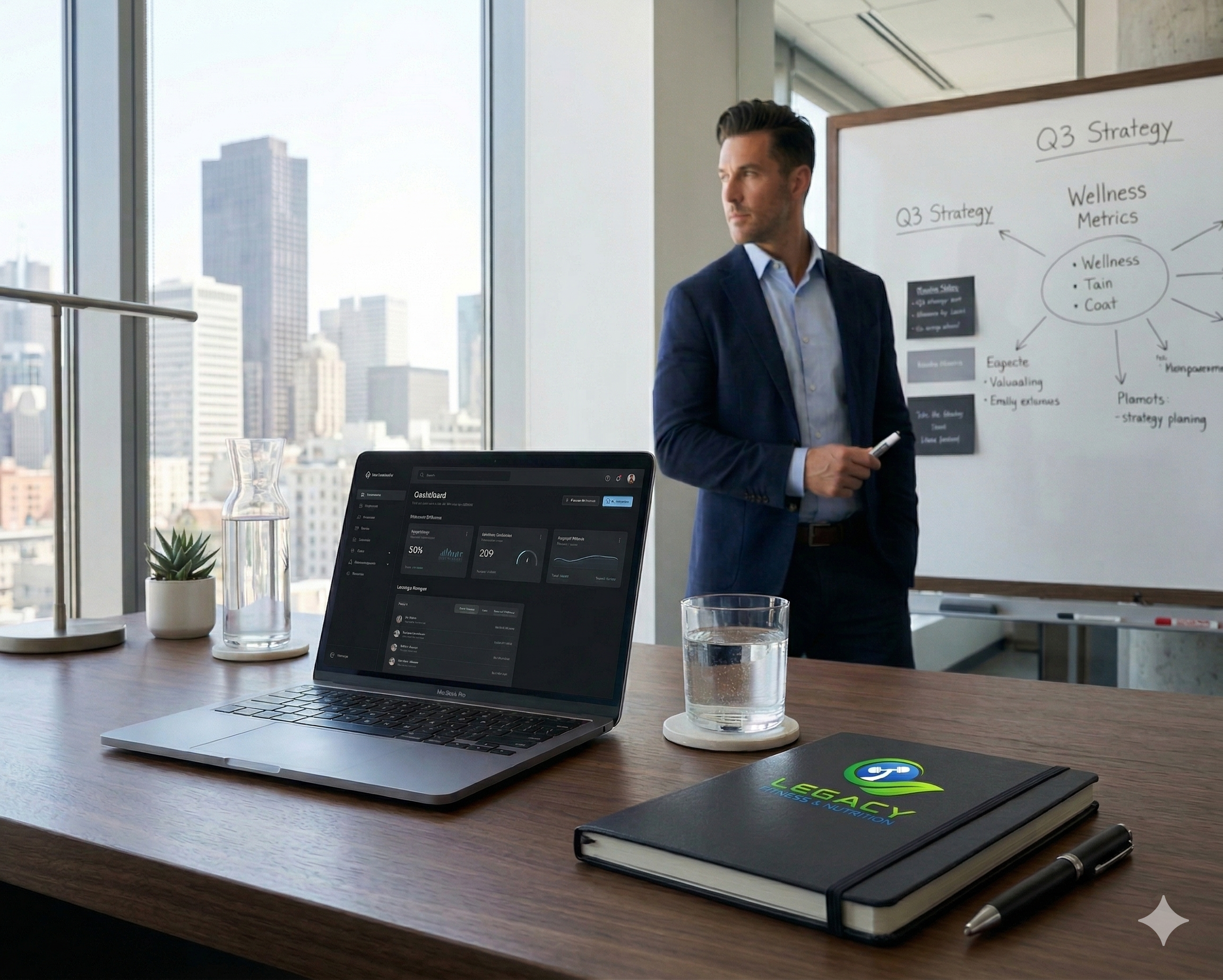
Scaling Your Health Like a Business: Systems, Metrics, and Consistency
By applying the principles of systems, metrics, and consistency, you ensure that your body remains your greatest asset, not your biggest liability.
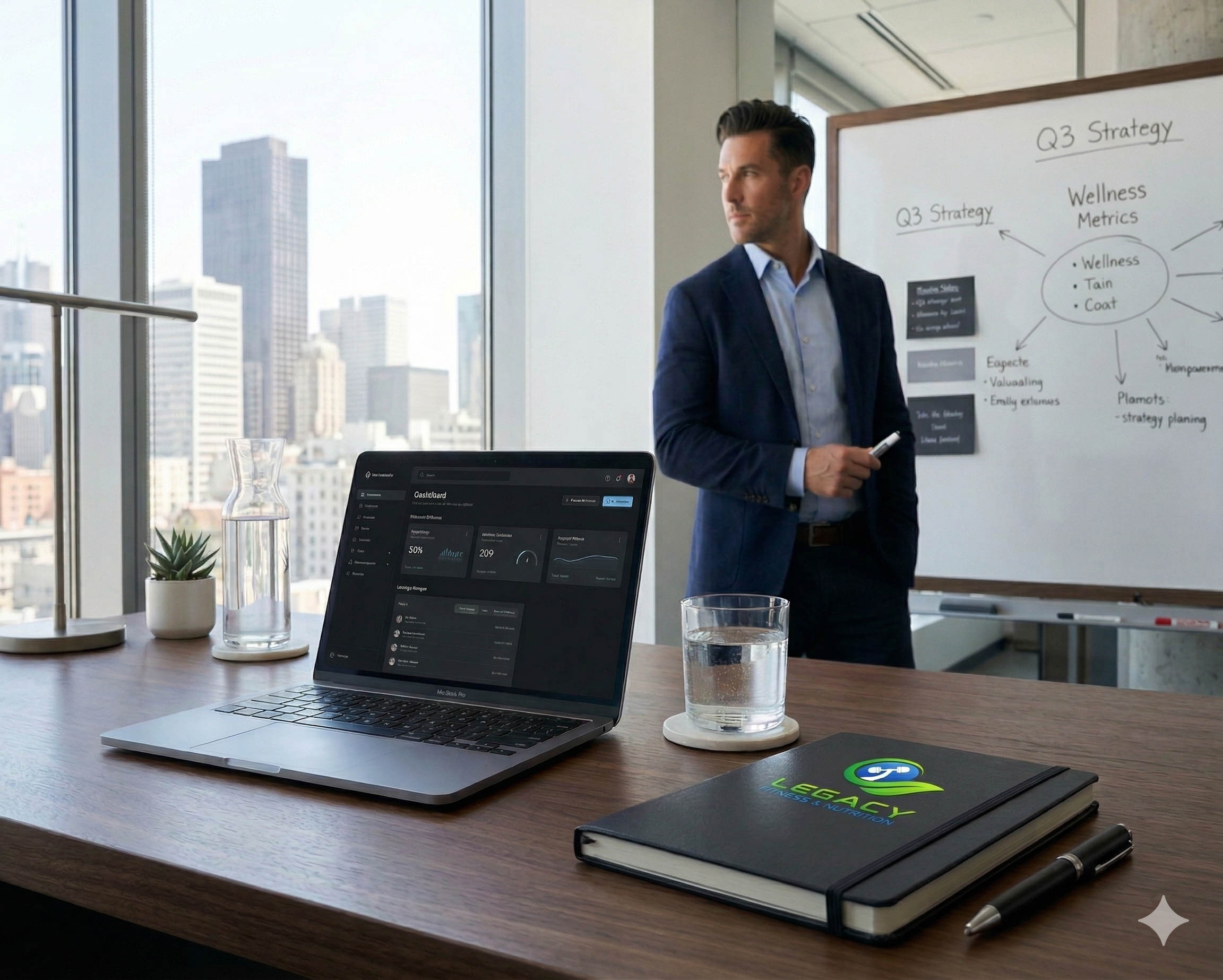
This image was created using AI to avoid copyright issues while conveying the context of this article.
As an executive, you know that a business cannot grow on "vibes" or "good intentions." To scale a company, you need robust systems, reliable metrics, and absolute consistency. You wouldn't manage your P&L by "guessing" how much revenue came in, yet this is exactly how most people manage their health. They guess their calorie intake, they guess their effort in the gym, and they wonder why they aren't seeing an ROI.
At Legacy Fitness, we believe that your health is the ultimate business venture. It is the infrastructure that allows every other part of your life to function. If you want to achieve elite-level fitness without sacrificing your professional output, you have to stop treating your health like a hobby and start treating it like a high-growth organization.
Here is how to scale your physical performance using the same logic you use in the boardroom.
1. Build Systems, Not Just Goals
In business, a goal without a system is just a dream. If you want to increase revenue by 20%, you build a sales funnel, a marketing strategy, and a CRM. You don't just "hope" it happens.
The same applies to your body. "Losing 20 pounds" is a goal; having a pre-planned meal delivery service, a blocked-out 7:00 AM training slot, and a "sleep hygiene" checklist is a system. Systems remove the need for willpower. When your healthy choices are automated, just like your payroll, you stop making emotional decisions based on how "tired" or "busy" you feel.
A scaled health system ensures that even on your most stressful days, your baseline habits remain intact.
2. Identify Your Key Performance Indicators (KPIs)
You cannot manage what you do not measure. In the weight room and the kitchen, we need to identify the lead measures that actually drive results.
Most people focus only on the "lag measure," the number on the scale. But by the time the scale moves, the work has already been done. To scale your health, you need to track your Lead Measures:
Protein Intake: Are you hitting your daily target to protect your metabolic insurance?
Step Count (NEAT): Are you maintaining a baseline level of movement?
Training Volume: Are you progressively getting stronger over time?
Sleep Quality: Is your recovery keeping pace with your output?
When these KPIs are in the green, the lag measure (fat loss/muscle gain) takes care of itself.
3. The Power of "Marginal Gains"
In the 1990s, the British Cycling team was mediocre at best. They changed their trajectory by focusing on "the aggregation of marginal gains," the idea that if they improved every tiny detail by just 1%, the cumulative effect would be massive.
When scaling your health, don't look for a "magic pill." Look for the 1% improvements.
Can you improve your hydration by adding minerals?
Can you improve your sleep by 15 minutes?
Can you improve your "Mind-Muscle Connection" by slowing down your reps?
In business and in biology, small, consistent improvements compound into a legacy of success.
4. Delegate to Experts
The most successful CEOs know when to hire a specialist. They don't try to be their own CFO, CTO, and Head of HR. They delegate those roles to experts so they can focus on their "Zone of Genius."
The "DIY" approach to fitness is often the most expensive choice an executive can make. It costs you time spent in "analysis paralysis" and energy spent on ineffective strategies. Scaling your health means hiring a "Chief Health Officer," a coach who manages the strategy, analyzes the data, and provides the accountability. This allows you to stay focused on your professional legacy while your physical legacy is built in the background.
The Annual Report: Looking Back to Move Forward
As we wrap up April, it is time for your "Monthly Health Review."
What systems worked this month?
Which KPIs moved in the right direction?
Where did the "operational friction" occur?
Your health is not a project with a finish line; it is a company that requires constant optimization. By applying the principles of systems, metrics, and consistency, you ensure that your body remains your greatest asset, not your biggest liability.
Wondering how many calories you actually burn?
You can't manage what you don't measure. Mastering your health starts with knowing your baseline. Use my BMR Calculator to find your personalized daily calorie and macro targets so you can scale your health with the precision of a business plan. Use the BMR Calculator Here

Building a "Legacy" Body: Why the Goal is Health for the Next 40 Years, Not 4 Weeks
Build a body that reflects the strength of your character and the depth of your ambition. Build a Legacy Body.

This image was created using AI to avoid copyright issues while conveying the context of this article.
In the world of business, we are taught to think in decades. We build five-year plans, we consider the long-term sustainability of our models, and we ask ourselves what our organizations will look like long after we are gone. We understand that "short-termism," chasing a quarterly spike at the expense of long-term stability, is a recipe for failure.
Yet, when most people approach their fitness, they do the exact opposite. They fall into the trap of the "six-week challenge" or the "beach body" deadline. they push themselves to the point of injury or burnout just to hit a number on the scale by a certain date.
At Legacy Fitness, we believe this approach is fundamentally flawed. Your body is not a short-term project; it is the most important piece of biological infrastructure you will ever own. If you want to be a high-performer in your 60s, 70s, and 80s, you have to stop training for the next 4 weeks and start building for the next 40 years. This is the shift from "fitness" to "Legacy."
The Danger of the "Sprint" Mentality
Sprinting has its place, but you cannot live your life in a constant state of emergency. Many high-performers treat their health like a crisis management task. They ignore their bodies for months, realize they feel terrible, and then embark on an extreme, unsustainable regime to "fix" it.
The problem with the sprint mentality is that it often leads to "System Failure." Extreme calorie deficits, excessive cardio, and lifting without a foundational plan create chronic stress. You might lose ten pounds in a month, but if you lose five pounds of muscle and wreck your sleep in the process, you haven't moved closer to health. You have simply mortgaged your future for a short-term win.
Defining the 40-Year Metric
When we shift our focus to the next 40 years, our metrics for "success" change. We stop obsessing over daily fluctuations in weight and start looking at the markers of long-term vitality:
Skeletal Muscle Mass: Muscle is your longevity currency. It protects your joints, manages your blood sugar, and keeps you independent. A Legacy Body prioritizes muscle maintenance over rapid weight loss.
Functional Mobility: Can you still get off the floor without using your hands? Can you reach overhead without pain? Longevity is about the quality of your movement, not just the absence of disease.
Metabolic Flexibility: Can your body easily switch between burning fat and burning carbohydrates? A resilient metabolism allows you to navigate social dinners and high-stress workdays without crashing.
Structural Integrity: Are your tendons, ligaments, and bones strong enough to handle the demands of your life? Building a Legacy Body means training in a way that strengthens your "chassis," not just the "engine."
The "Compound Interest" of Health
In finance, we know that the earlier you start and the more consistent you are, the more your wealth compounds. Health works the same way. A 30-minute walk today might not feel like much, but when done 300 days a year for 20 years, it is the difference between a healthy heart and a surgical bill.
Consistency is the "interest rate" of your fitness. It is better to do a moderate workout three times a week for a decade than it is to do a perfect workout five times a week for three months and then quit. A Legacy Leader values the "boring" basics: protein, steps, sleep, and strength, because he knows they are the only things that compound.
Training for the "Grandkid" Standard
I often ask my clients to visualize their "Ultimate Goal." For many, it isn't a certain weight; it’s a specific activity. It’s being 75 years old and being able to pick up a grandchild without thinking about their back. It’s being 80 and being the person who can still carry their own luggage through an airport.
This is the "Grandkid Standard." When you train with this vision in mind, your workouts become more intentional. You stop doing "ego reps" that might hurt your shoulders, and you start focusing on the foundational movements, the squats, hinges, and presses, that will keep you capable for life.
Beyond the Physical
Building a Legacy Body isn't just about the physical tissues. it’s about the mindset. It’s about viewing yourself as an elite athlete in the game of life. An athlete doesn't just train to "be thin"; he or she trains to perform.
When you treat your body with respect, your career, your relationships, and your leadership all improve. You become a person of higher capacity. You become a person who can lead others because you have successfully led yourself.
Your Health is Your Greatest Legacy
At the end of the day, your professional achievements will be recorded in ledgers and LinkedIn profiles, but your personal legacy will be felt by the people who love you. Being present, energized, and capable for your family is the highest ROI you can achieve.
Don't settle for a 4-week transformation. Build a body that reflects the strength of your character and the depth of your ambition. Build a Legacy Body.
Stop Chasing Deadlines. Start Building a Legacy.
Most fitness programs are designed to end. We design our programs to last. Whether you are an individual executive or a leader looking to transform your organization, we provide the systems for lifelong performance.
For the Individual: Ready for a strategic approach to your health that lasts for decades? Book My Individual Discovery Call
For the Organization: Empower your leadership team with the durability of a Legacy Body. Explore Corporate Wellness Packages

Fiber: The Unsung Hero of Weight Management: Why 30g a Day is the Magic Number
There is a nutrient that is important for your health, your hunger, and your waistline, yet it is often completely ignored.

This image was created using AI to avoid copyright issues while conveying the context of this article.
In the world of fitness and nutrition, protein usually gets all the glory. We talk about it constantly; how much we need, when to eat it, and which sources are best. But there is another nutrient that is just as important for your health, your hunger, and your waistline, yet it is often completely ignored.
That nutrient is fiber.
Most people think of fiber as something only their grandparents need to worry about for "regularity." But at Legacy Fitness, we view fiber as a secret weapon for weight management and metabolic health. If you are struggling with hunger, energy crashes, or stubborn body fat, there is a high probability that you are not hitting the "magic number" for fiber: 30 grams per day.
What is Fiber, Exactly?
Fiber is a type of carbohydrate found in plant foods, vegetables, fruits, beans, and whole grains, that your body cannot digest. Unlike sugar or starch, which are broken down into energy, fiber passes through your system relatively intact.
Because your body can't "use" it for calories, fiber acts like a broom for your digestive tract. But its benefits go far beyond just keeping things moving.
The "Volume" Secret to Weight Loss
One of the biggest hurdles to losing weight is hunger. This is where fiber shines. Fiber adds "bulk" or "volume" to your meals without adding extra calories.
When you eat high-fiber foods, they take up more space in your stomach. This triggers the stretch receptors in your stomach wall, which send a signal to your brain that says, "I am full." This is why it is very easy to overeat on a bag of low-fiber chips, but nearly impossible to overeat on a giant plate of roasted broccoli or a large bowl of berries.
By hitting your 30g goal, you are essentially "crowding out" the junk food and making it much easier to stay in a calorie deficit without feeling deprived.
Stabilizing Your Energy and Mood
For the busy professional, the most important benefit of fiber might be its ability to regulate blood sugar. When you eat carbohydrates (like fruit or a piece of whole-grain toast), the fiber acts like a "speed bump." It slows down the absorption of sugar into your bloodstream.
Instead of a massive spike in energy followed by a "foggy" crash an hour later, fiber provides a slow, steady release of energy. This keeps your brain sharp and your mood stable throughout a long day of meetings. If you find yourself reaching for a third cup of coffee at 3:00 PM, you might actually just need more fiber in your lunch.
The Gut-Health Connection
As we’ve discussed before, your gut microbiome is a major player in your overall health. Your healthy gut bacteria feed on fiber. When you don't eat enough of it, you are essentially "starving" your internal army.
A fiber-rich diet supports a diverse microbiome, which reduces inflammation, improves your immune system, and even helps regulate your hormones. A healthy gut is a prerequisite for a healthy, lean body.
How to Hit the "30g Goal"
The average adult gets only 10 to 15 grams of fiber per day. Jumping to 30g overnight can be a shock to your system, so it is best to increase your intake gradually. Here is how to do it:
The "Two-Cup" Rule: Aim to have at least two cups of non-starchy vegetables (like spinach, peppers, or broccoli) at both lunch and dinner.
Switch Your Snacks: Replace processed snacks with high-fiber options like raspberries, blackberries, or a handful of almonds. Berries are particularly powerful because they are very high in fiber but low in sugar.
Beans and Legumes: Adding just a half-cup of black beans or lentils to a salad can add 7 to 8 grams of fiber in one shot.
Hydrate: Fiber needs water to work. As you increase your fiber, make sure you are following our mineral-rich hydration strategies!
Building Your Legacy
At Legacy Fitness, we believe that true health is found in the "unsexy" fundamentals. You don't need a complicated supplement stack to lose weight; you need protein, movement, and fiber.
Hitting your 30g of fiber per day is a simple, measurable habit that pays massive dividends for your energy and your longevity. It is about building a body that is fueled, efficient, and resilient from the inside out.
Wondering how many calories you actually burn?
Mastering your nutrition starts with knowing your numbers. Use my BMR Calculator to find your personalized daily calorie and macro targets so you can hit your fiber goals with precision. Use the BMR Calculator Here

The Mind-Muscle Connection: Why "Squeezing" Matters More Than Moving the Weight
By mastering the mind-muscle connection, every single rep counts.

Photo by Bandan Mohammed on Unsplash
Have you ever finished a set of exercises and felt like you were just "going through the motions"? You moved the weight from point A to point B, but you didn't really feel the specific muscle working. Many people think that as long as the weight is moving, they are getting a good workout. However, there is a big difference between moving weight and training a muscle.
The secret to better results, and fewer injuries, is something called the Mind-Muscle Connection.
At Legacy Fitness, we teach our clients that the brain is the most important tool in the gym. If your brain isn't talking to your muscles, you are leaving a lot of progress on the table. By learning how to "feel" the muscle work, you can get better results with less weight and in less time.
What is the Mind-Muscle Connection?
The Mind-Muscle Connection is the ability to consciously and deliberately contract a specific muscle during an exercise. It is the bridge between your nervous system and your physical body.
When you lift a weight, your brain sends an electrical signal through your nerves to your muscle fibers. If you are just trying to move the weight as fast as possible, your body will take the path of least resistance. It will use momentum and other "helper" muscles to get the job done. But when you focus on the muscle you are trying to target, you force that specific muscle to do the heavy lifting.
Quality Over Quantity
Many people get caught up in the "ego" of lifting. They want to put as much weight on the bar as possible, even if their form starts to slip. This is often a recipe for injury.
When you focus on the mind-muscle connection, you realize that the weight is just a tool. The goal is to create tension in the muscle. If you can create a massive amount of tension with a 20-pound dumbbell by "squeezing" the muscle, that is often more effective than swinging a 40-pound dumbbell using momentum.
By slowing down and focusing on the contraction, you ensure that the work is going exactly where it belongs. This leads to better muscle growth, better definition, and much safer joints.
How to Build the Connection
If you struggle to "feel" your muscles working, don't worry. This is a skill that can be practiced and improved just like any other.
The "Internal" Focus: Before you start a set, close your eyes for a second and visualize the muscle you are about to use. If you are doing a row, think about your back muscles pulling your elbows back.
Slow Down the Negative: Most people drop the weight quickly after the "hard" part of the lift. Instead, take 2 or 3 seconds to lower the weight. This "eccentric" phase is where a lot of the mind-muscle connection is built.
The Peak Contraction: At the top of the movement, pause for a split second and "squeeze" the muscle as hard as you can. This "peak" is when the electrical signal from your brain is at its strongest.
The "Touch" Technique: If you are doing a one-handed exercise, use your free hand to touch the muscle that is working. This physical feedback helps your brain locate the muscle and fire the right fibers.
Why It Matters for Your Legacy
As we build a Legacy Body, we want to be efficient. We don't want to spend two hours in the gym doing "junk reps" that don't lead to results. By mastering the mind-muscle connection, every single rep counts. You become more in tune with your body, which helps you notice when something feels "off" before it turns into an injury.
It also makes the gym more engaging. Instead of just counting to ten, you are actively participating in the science of your own body. You are learning the language of your muscles.
Start Today
During your next workout, pick one exercise and forget about the weight on the bar. Focus entirely on the "squeeze." Feel the muscle stretch, feel it contract, and feel it work. You might find that you have to lower the weight, but you will also find that the pump and the results are better than ever before.
Master your mind, and your muscles will follow.
Next Steps:
Learning to feel the muscle work is a game-changer, but it's only one piece of the puzzle. If you're ready to see how the Mind-Muscle connection fits into a complete transformation strategy, Access my Beginner's QuickStart Guide. Let’s stop "going through the motions" and start building a body that performs. Get My Free Quickstart Guide

Cortisol and the "Stressed" Belly: How Chronic Stress Halts Fat Loss
You are doing everything "right." Yet, you feel like you are gaining weight specifically around your midsection, even though your diet hasn't changed.

This image was created using AI to avoid copyright issues while conveying the context of the article.
You are doing everything "right." You are hitting the gym four days a week. You are tracking your protein. You are avoiding the office donut box. Yet, when you look in the mirror or step on the scale, nothing is moving. Even worse, you feel like you are gaining weight specifically around your midsection, even though your diet hasn't changed.
If this sounds familiar, the problem might not be your calories or your cardio. The problem might be cortisol.
At Legacy Fitness, we often work with high-performing executives who are under immense pressure. They have mastered the "hustle," but their bodies are paying the price. When you are chronically stressed, your body enters a survival mode that makes fat loss almost impossible. Understanding the link between your stress and your stomach is the first step to breaking the cycle.
What is Cortisol?
Cortisol is often called the "stress hormone." It is produced by your adrenal glands, which sit right on top of your kidneys. In small bursts, cortisol is actually a good thing. It is part of your "fight or flight" response. If a car swerves toward you, cortisol spikes to give you the energy and focus you need to react.
The problem in the modern world is that our bodies can't tell the difference between a life-threatening emergency and a stressful email from a client. When you are constantly worrying about deadlines, finances, or family schedules, your cortisol stays high all day long.
Why Stress Targets Your Belly
When cortisol levels are chronically high, it tells your body to do two things that are disastrous for your fitness goals:
Redistribute Fat: Cortisol triggers the body to store fat specifically in the abdominal area. This is known as "visceral fat." This isn't just the fat you can pinch; it is the fat that deepens around your internal organs. Your body does this because it thinks it needs "quick energy" close to your vital organs for a long-term survival situation.
Increase Appetite: High cortisol levels increase your cravings for "comfort foods," specifically those high in sugar and fat. It literally changes your brain chemistry to make high-calorie foods look more attractive as a way to "soothe" the stress.
The Muscle-Wasting Effect
Cortisol is also "catabolic," which means it likes to break things down. While we want to break down fat, chronically high cortisol actually prefers to break down muscle tissue.
Your body views muscle as "expensive" to maintain. If it thinks you are in a high-stress, survival situation, it will break down your muscle to create quick energy. This is a double whammy for your metabolism. You lose the muscle that burns calories, and you gain the fat that stores them. This is how people end up "skinny fat" where they don't weigh a lot, but they have a high percentage of body fat around their waist.
How to "Lower the Alarm"
You cannot eliminate stress from a high-level career, but you can change how your body responds to it. To fix a "stressed belly," you have to stop trying to "punish" your body with more exercise and start focusing on recovery.
Prioritize Sleep: As we discussed in a previous article, sleep is where cortisol goes to die. If you are stressed and sleep-deprived, your cortisol will never drop.
Stop "Over-Cardio": If you are already stressed at work, doing 60 minutes of high-intensity cardio can actually make your cortisol levels worse. Switch to Zone 2 walking or strength training, which helps regulate hormones rather than spiking them further.
The 5-Minute Reset: Practice deep, diaphragmatic breathing. Just five minutes of "box breathing" can tell your nervous system that the "threat" is over, allowing your cortisol levels to begin to drop.
Building a Resilient Legacy
At Legacy Fitness, we don't just look at your workout log; we look at your life. A "Legacy Body" is a balanced body. You cannot out-train a lifestyle of chronic, unmanaged stress.
By taking steps to manage your cortisol, you aren't just losing belly fat, you are protecting your heart, your brain, and your future. This week, instead of adding another "hard" workout, try adding a "recovery" session. Listen to your body, lower the alarm, and watch as your hard work in the gym finally starts to show.

Resilience: Lessons from the Weight Room for the Boardroom
A strong body is the foundation for a strong mind and a successful career.

This image was created using AI to avoid copyright issues while conveying the context of this article.
In the business world, we talk about "resilience" as a mental trait. We define it as the ability to bounce back from a lost contract, a failed product launch, or a difficult quarter. We read books on grit and attend seminars on mindset, searching for the "secret" to staying calm under pressure.
But as someone who has spent years both in the corporate trenches and under a heavy barbell, I have come to realize that resilience isn't something you just "think" into existence. It is something you build.
The weight room is the ultimate laboratory for leadership. The lessons we learn when we are pushing through a difficult set or carrying a weighted pack around the block are the exact same lessons required to lead a company through a crisis. Here is why the "Physical Lead" is the most resilient leader.
1. The Skill of Voluntary Discomfort
Modern life is designed for comfort. We have climate-controlled offices, food delivered to our doors, and chairs that support us for eight hours a day. While this is convenient, it makes us "soft" to stress. When a professional crisis hits, we feel overwhelmed because our bodies and minds have forgotten how to handle discomfort.
When you step into the weight room or put on a rucking pack for a three-mile walk, you are choosing voluntary discomfort. You are intentionally placing a stressor on your body and forcing it to adapt.
This practice builds a "stress threshold." When you are used to the physical strain of a heavy deadlift, a difficult email or a tense negotiation doesn't feel like an emergency anymore. Your nervous system has been "tempered" by the iron. You have learned that you can be uncomfortable and still perform. That is the definition of resilience.
2. The Logic of Incremental Progress
In the gym, you don't walk in on day one and squat 405 pounds. You start with the bar. You add a plate. Then another another plate. You learn that success is the result of "boring" consistency and small wins that compound over time.
Many leaders fail because they look for "Quantum Leaps." They want the massive win today. But the weight room teaches you that the "Legacy" is built in the increments.
When you apply this to the boardroom, you stop panicking during slow quarters. You realize that as long as the "plan" is sound and the "reps" are being done, the result is inevitable. Physical training removes the emotional "highs and lows" of business and replaces them with a steady, disciplined focus on the process.
3. Recovery is a Professional Requirement
In fitness, we know that if you train at 100% intensity every single day without rest, you will eventually break. You will get injured, your hormones will crash, and your progress will stop. This is a law of biology.
Yet, in the corporate world, we often praise the person who works 80 hours a week without a break. We view "burnout" as a badge of honor.
A resilient leader knows that recovery is not a luxury; it is a requirement. Just as a muscle grows during the rest period after a workout, your best ideas and clearest strategies emerge during periods of recovery. Whether it’s a walk around the block during a meeting or a dedicated "reset" on the weekend, the ability to step away and recharge is what allows you to stay in the game for the long haul.
4. Integrity Under Tension
When you have a heavy weight on your back, your "form" matters more than anything. If your technique breaks down under tension, you get hurt. You have to maintain your integrity, your physical alignment, to complete the rep.
Leadership is the same. It is easy to have "values" and "integrity" when things are going well. The real test of a leader’s character is when the pressure is high.
Physical training teaches you how to maintain your "center" when things get heavy. It teaches you to breathe, to stay focused, and to hold your ground. If you can keep your form during a grueling set of squats, you are much more likely to keep your values during a grueling business negotiation.
Building the Resilient Leader
At Legacy Fitness, we don't just coach "fitness." We coach durability. We believe that a strong body is the foundation for a strong mind and a successful career.
Your health is not a "hobby" that you do in your spare time. It is the very infrastructure that allows you to lead. When you invest in your physical resilience, you are investing in your professional future. You are building a body—and a legacy—that can withstand anything.
Are You Ready to Lead from a Position of Strength?
Resilience is built, not born. At Legacy Fitness & Nutrition, we provide the roadmap for high-performers to build the physical and mental durability required for long-term success.
For the Individual Leader: Ready to stop reacting to stress and start leading through it? Let’s talk about your physical roadmap. Book My Individual Discovery Call
For the Organization: Want to build a culture of resilience and high performance in your team? Explore Corporate Wellness Packages

Walking Meetings: The Executive’s Secret Weapon: Combining Productivity with Movement
A "Legacy Leader" understands that their health and their team's health are vital to the company's success. By initiating walking meetings, you are signaling to your organization that you value movement and well-being.

This image was created using AI to avoid copyright issues while conveying the context of this article.
In the modern corporate world, the "meeting" is the default unit of work. We bounce from one conference room to another, or from one Zoom call to the next, often spending six to eight hours a day tethered to a chair. We know that sitting for long periods is detrimental to our health, yet we feel like we have no choice. The work has to get done, and the work happens in meetings.
But what if you could change the venue without losing the value?
Enter the Walking Meeting.
At Legacy Fitness, we often talk about "NEAT" (Non-Exercise Activity Thermogenesis), which is the movement you do outside of the gym. For a busy executive, the walking meeting is the ultimate "two-birds-one-stone" strategy. It allows you to maintain your professional output while simultaneously investing in your physical health. It is a secret weapon that can improve your creativity, your connection with your team, and your waistline.
Breaking the "Stagnant" Mindset
When we sit in a traditional meeting room, our bodies enter a state of stagnation. Our heart rate slows, our posture slumps, and our blood flow to the brain decreases. It is no wonder that by the third meeting of the day, we feel sluggish and uninspired.
When you stand up and start walking, everything changes. Your heart rate increases slightly, sending more oxygenated blood to your brain. This physical "spark" leads to better cognitive function. In fact, a study from Stanford University found that creative output increased by an average of 60% when people were walking versus sitting. If you are trying to solve a complex problem or brainstorm a new strategy, the best thing you can do is get moving.
The Power of Side-by-Side Communication
There is also a psychological benefit to walking meetings. In a traditional meeting, you are often sitting across a table from someone. This can sometimes feel confrontational or overly formal. It creates a "me vs. you" dynamic.
When you walk together, you are moving in the same direction, side-by-side. This shift in physical orientation changes the tone of the conversation. It feels more collaborative and less hierarchical. Many leaders find that their team members are more open, honest, and relaxed during a walk than they are in a sterile office environment. It builds a deeper level of trust and rapport that is hard to replicate in a cubicle.
How to Implement the Walking Meeting
You don't need to hike a mountain to have a productive walking meeting. Here are a few practical ways to start:
The 1-on-1 Walk: This is the easiest place to start. If you have a weekly check-in with a direct report, suggest doing it while walking around the block or through a nearby park.
The "Internal" Call: If you have a conference call where you are mostly listening or don't need to share your screen, put on your wireless headphones and take the call while walking. You don’t need to be at your desk to be present.
The "First 15" Rule: If a full walking meeting isn't possible, try spending the first 15 minutes of a meeting walking and then head back to the office to wrap up the "paperwork" or technical details.
Overcoming the "Logistics" Hurdle
Many people worry about taking notes. If a meeting requires heavy data entry, a walk might not be the best choice. However, for 80% of business conversations, brainstorming, status updates, and relationship building, you don't need a laptop.
Use the "Voice Memo" feature on your phone to capture key takeaways as you walk, or spend three minutes at your desk immediately after the walk to type up your notes while the ideas are still fresh.
Leading by Example
A "Legacy Leader" understands that their health and their team's health are vital to the company's success. By initiating walking meetings, you are signaling to your organization that you value movement and well-being. You are giving your employees "permission" to step away from their desks and take care of their bodies without feeling guilty.
This April, look at your calendar. Find one or two meetings each day that can be taken on the move. You will be amazed at how much better you feel, how much sharper you think, and how much your team appreciates the fresh air.
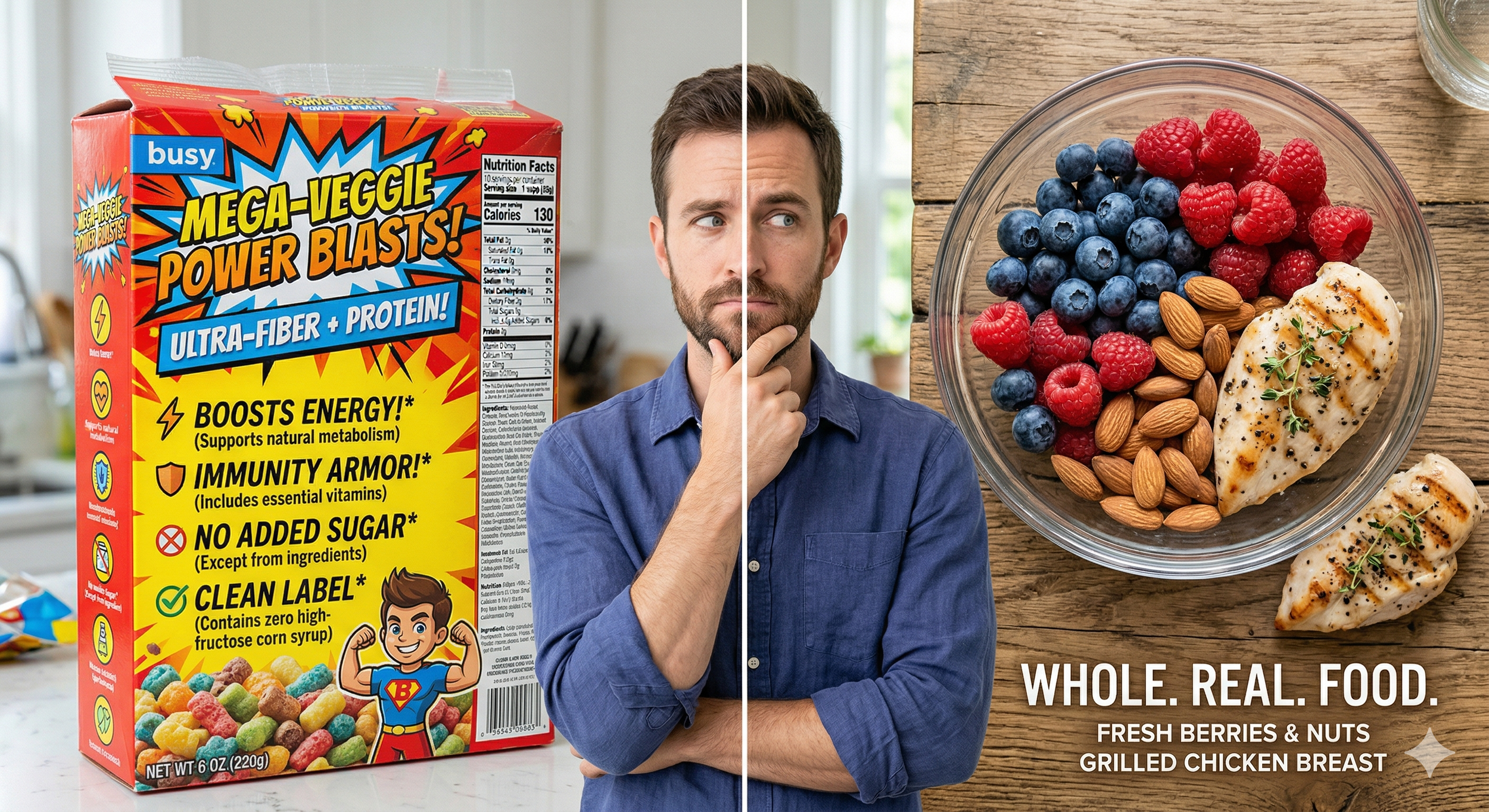
Ultra-Processed Foods, The "Hidden" Addiction: How to Spot "Healthy" Labels That Lie
The quality of your fuel determines the quality of your life.
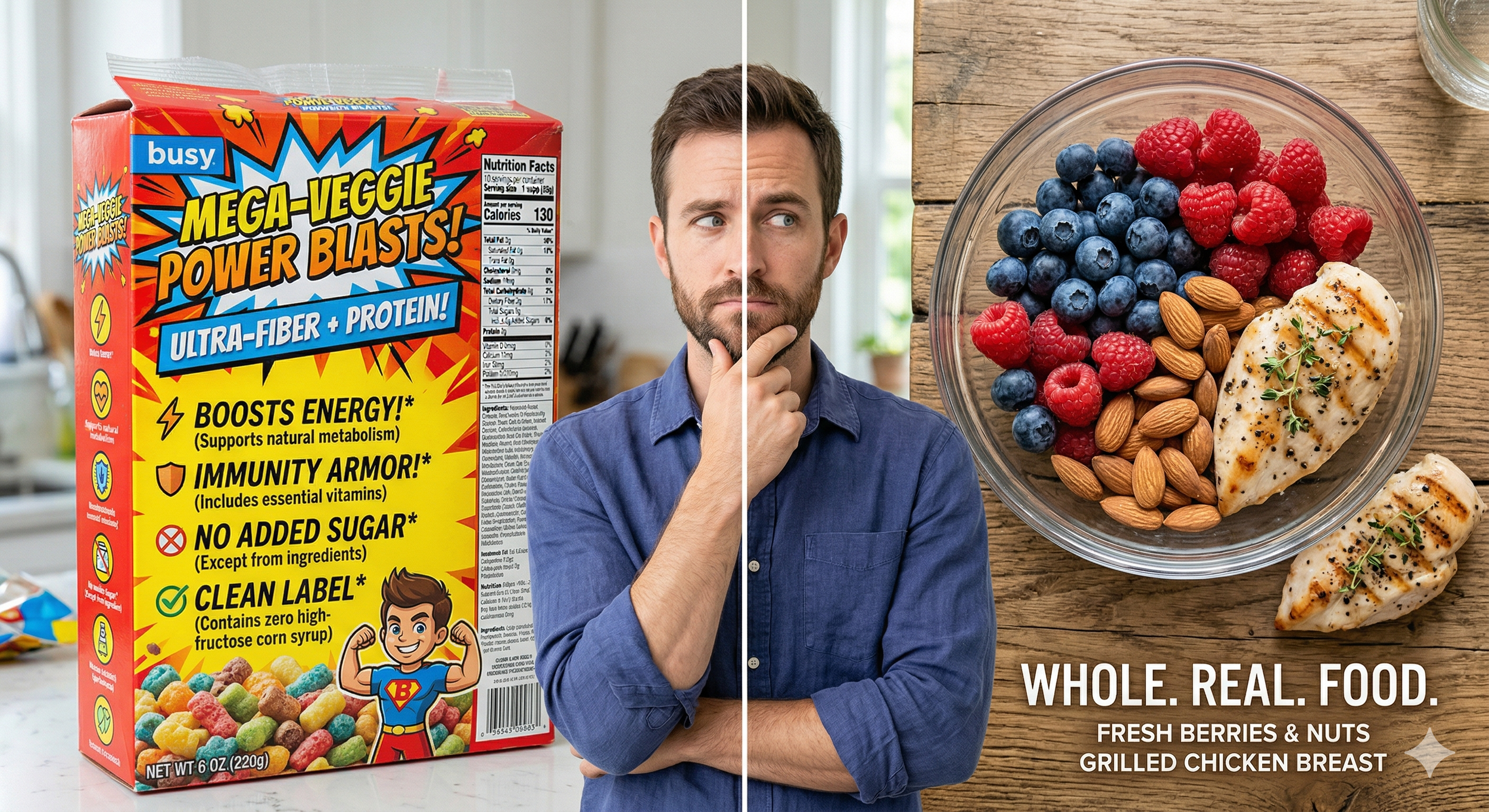
This image was created using AI to avoid copyright issues while conveying the context of this article. (Personally I think the image is hilariously AI, but I’m keeping it. 🤣)
When you walk down the aisles of a modern grocery store, you are surrounded by thousands of products designed to make your life "easier." Boxes of crackers, rows of colorful granola bars, and "healthy" frozen meals promise to save you time while keeping you fit. But beneath the bright packaging and the bold health claims, many of these products are actually ultra-processed foods (UPFs).
In recent years, scientists have begun to realize that these foods are doing more than just providing calories. They are engineered to bypass your body’s natural "fullness" signals and keep you coming back for more. In fact, many experts now believe that UPFs are closer to an addictive substance than they are to actual food. If you want to build a legacy of health, you have to learn how to see past the marketing and spot the ingredients that are holding you back.
What is an Ultra-Processed Food?
To be clear, almost all food is "processed" in some way. Cutting a head of lettuce or cooking a piece of chicken is processing. The problem arises with ultra-processed foods. These are items that are made mostly from substances extracted from foods, such as fats, starches, added sugars, and hydrogenated fats.
They often contain additives like flavor enhancers, colors, and emulsifiers that you would never find in a home kitchen. A simple rule of thumb: if you look at the ingredient list and it looks like a chemistry experiment, it is likely ultra-processed.
The "Hyper-Palatable" Trap
Have you ever wondered why it’s easy to eat an entire bag of flavored chips but impossible to eat ten plain boiled potatoes? It is because UPFs are "hyper-palatable."
Food scientists work in labs to find the perfect combination of salt, sugar, and fat—often called the "bliss point." This combination triggers a massive release of dopamine in your brain, the same chemical associated with reward and addiction. Because these foods are so soft and easy to chew, you can eat them very quickly. By the time your stomach realizes it’s full, you have already consumed twice as many calories as you needed.
Don't Fall for the "Healthy" Label
The most dangerous UPFs are the ones that pretend to be healthy. Companies use specific words on the front of the box to make you feel safe:
"All Natural" (This has no legal definition and means very little.)
"Heart Healthy" (Often found on sugary cereals that are highly processed.)
"High Protein" (Look closely, it might have 10g of protein but 25g of sugar and processed oils.)
"Gluten-Free" (Many gluten-free snacks are more processed than the original versions to make up for the change in texture.)
If you want the truth, ignore the front of the box. Flip it over and look at the ingredient list and the "Added Sugars" line. If the first three ingredients are a type of sugar or a refined oil (like soybean or corn oil), put it back on the shelf.
The Impact on Your Energy and Focus
For the busy professional, the biggest cost of a diet high in UPFs isn't just weight gain, it is the loss of cognitive performance. These foods cause rapid spikes and crashes in your blood sugar. This leads to that "foggy" feeling in your brain by 2:00 PM.
Furthermore, the chemicals and emulsifiers in these foods can disrupt your gut health. As we discussed in our article on the Gut-Muscle Axis, a damaged gut leads to chronic inflammation, which makes it harder for your muscles to recover and harder for your brain to stay sharp.
How to "De-Process" Your Life
You don't have to be perfect, but you should aim to get at least 80% of your calories from "whole" foods, things that had a face or grew out of the ground.
The 5-Ingredient Rule: Try to avoid products with more than five ingredients, especially if you can’t pronounce half of them.
Shop the Perimeter: Most whole foods (meat, produce, eggs, dairy) are found on the outer edges of the grocery store. The middle aisles are where the UPFs live.
Cook Once, Eat Twice: The best way to avoid processed "convenience" food is to have your own whole-food leftovers ready to go.
Building Your Legacy
At Legacy Fitness, we believe that the quality of your fuel determines the quality of your life. You are building a body that needs to last for decades. Feeding it highly engineered, addictive chemicals is a short-term solution that leads to long-term problems.
This week, take a closer look at your "healthy" snacks. Are they really supporting your legacy, or are they just a hidden addiction in a shiny wrapper? Real food doesn't need a marketing department. Start choosing the ingredients that actually choose you back.

The Protein Leverage Hypothesis: Why Your Body Keeps Eating Until It Gets Enough Protein
When you give your body the protein it needs, it rewards you with steady energy, a sharper mind, and a body that reflects your hard work.

This image was created using AI to avoid copyright issues while conveying the context of this article.
Have you ever sat down with a large bag of chips or a box of crackers and realized you finished the whole thing without ever feeling "full"? Compare that to a large steak or a piece of grilled salmon. It is almost impossible to overeat on high-quality protein because your body eventually sends a loud signal that says, "I’m done!"
This isn't just a matter of willpower. It is a biological law known as the Protein Leverage Hypothesis.
This theory, developed by scientists in the early 2000s, suggests that your body has a "protein target" it must hit every single day. Until you hit that target, your brain will keep your hunger signals turned on. If you understand this one concept, you can stop fighting your appetite and start working with your biology to stay lean and energized.
Your Body’s Internal Protein Sensor
Think of your appetite like a fuel gauge in a car. Most people think the gauge is measuring "calories." They believe that once they eat enough calories, the gauge will hit "Full" and they will stop eating.
But the Protein Leverage Hypothesis tells us that the gauge is actually measuring protein.
Your body needs amino acids (the building blocks of protein) to repair your muscles, create hormones, and keep your immune system strong. Because protein is so vital for survival, your brain prioritizes it above everything else. If you eat foods that are low in protein, like chips, bread, or sugary snacks, your body will drive you to keep eating more and more of them in a desperate attempt to find the protein it needs.
The "Hidden" Reason for Overeating
This explains why it is so easy to gain weight on a modern diet. Many processed foods are engineered to be high in fats and carbs but very low in protein.
When you start your day with a sugary cereal or a bagel, you might be taking in 400 or 500 calories, but you are only getting a few grams of protein. Your brain realizes the "protein target" hasn't been met yet, so it keeps the hunger alarm ringing. This leads to you reaching for a mid-morning snack, a large lunch, and an afternoon treat.
You aren't "weak-willed." You are simply a human being with a brain that is searching for protein in a world filled with empty calories.
How to Use "Leverage" to Your Advantage
The secret to effortless weight management is to "leverage" this system. By eating high-quality protein early in the day and at every meal, you hit your protein target faster. Once that target is met, your brain naturally turns down the hunger dial. This makes it much easier to say no to the office donut or the late-night snack.
At Legacy Fitness, we often see that when clients increase their protein intake, their total calorie intake goes down automatically. They aren't "dieting" in the traditional sense; they are simply satisfied.
What is the Target?
While every person is different, a good rule of thumb for active adults is to aim for about one gram of protein per pound of ideal body weight. For a person who wants to weigh 180 pounds, that means aiming for roughly 180 grams of protein spread throughout the day.
When you hit this target, amazing things happen:
Your metabolism stays high because protein requires more energy to digest than fats or carbs.
Your muscles are protected, ensuring that the weight you lose is fat, not muscle.
Your "food focus" disappears, allowing you to concentrate on your work and your family instead of your next meal.
Building Your Nutritional Legacy
Mastering your health doesn't have to be a battle against your own hunger. By understanding the Protein Leverage Hypothesis, you can take control of your appetite and fuel your body for performance.
The goal is to stop eating for "fullness" and start eating for "fuel." When you give your body the protein it needs, it rewards you with steady energy, a sharper mind, and a body that reflects your hard work.
This week, try to make protein the center of every plate. Watch how your cravings change when your body finally feels "heard."
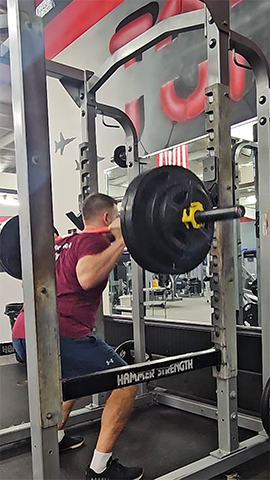
The "Big 3" Lifts for Longevity: Why the Squat, Hinge, and Press Keep You Young
Consistency in these three patterns is the foundation of a Legacy Body. You don't need a hundred different exercises.
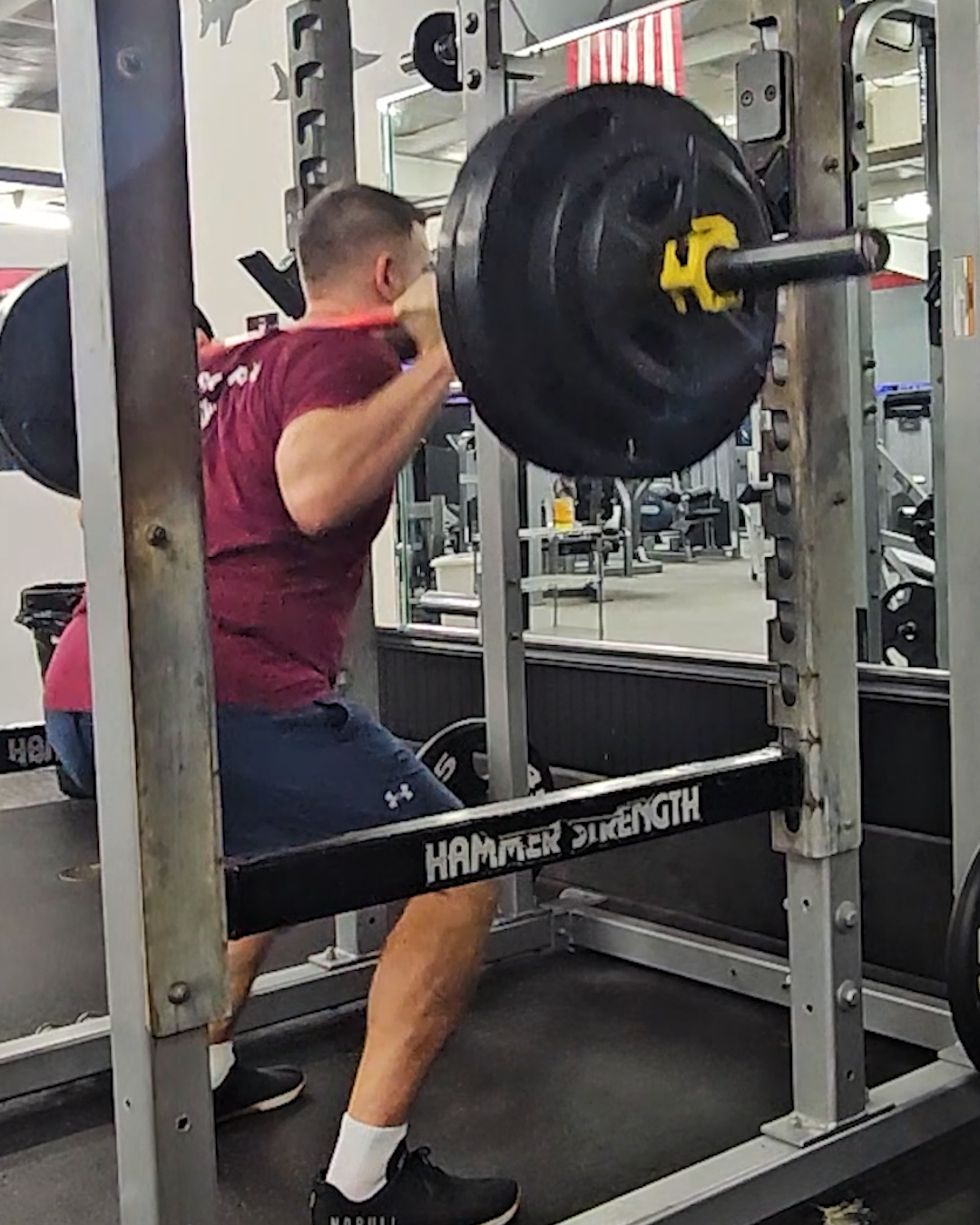
Demonstrating a back squat. Not AI or stock image this time.
If you walk into a modern gym, you will see rows of complicated machines, colorful bands, and high-tech gadgets. It is easy to think that you need a complex program to get results. But as we get older, the most important movements aren't the newest ones; they are the oldest ones.
At Legacy Fitness, we believe in "Minimum Effective Dose" training. We want you to spend your time on the movements that give you the biggest return on your investment. When it comes to staying strong, capable, and independent for the next 40 years, three specific movements stand above the rest: The Squat, The Hinge, and The Press.
These are not just "gym exercises." They are the foundational patterns of human life. If you master these three, you aren't just building a better physique; you are building a body that is "bulletproof" against the aging process.
1. The Squat: Your Independence Movement
The squat is often called the "King of Exercises," and for good reason. From a functional standpoint, the squat is simply the act of sitting down and standing back up. It uses almost every muscle in your lower body, including your quads, glutes, and hamstrings.
Why does this matter for longevity? Because the loss of leg strength is one of the primary reasons people lose their independence as they age. If you can't stand up from a chair or a toilet without help, your quality of life changes dramatically.
By practicing the squat, whether it’s with a barbell, a kettlebell, or just your own body weight, you are keeping your "internal engine" strong. You are telling your bones to stay dense and your nervous system to stay sharp. A strong squat is the ultimate insurance policy against the frailty that often comes with getting older.
2. The Hinge: Protecting Your Back
The "hinge" is the movement where you push your hips back while keeping your spine straight. The most common version of this is the deadlift. Many people are afraid of the deadlift because they think it will hurt their back. In reality, a properly performed hinge is the best way to protect your back.
Think about how many times a day you bend over to pick something up. Maybe it’s a bag of groceries, a laundry basket, or even a child. If you "round" your back to do this, you are putting a lot of stress on your spine. But if you know how to "hinge" at the hips, you use your powerful glutes and hamstrings to do the heavy lifting instead.
Learning to hinge teaches you how to move weight with your "posterior chain" (the muscles on the back of your body). These are the strongest muscles in your body, and keeping them active is the secret to a pain-free lower back and a powerful stride.
3. The Press: Maintaining Your "Reach"
The press refers to pushing a weight away from your body. This can be a horizontal press (like a push-up or bench press) or a vertical press (pushing something over your head).
As we age, we often lose "overhead mobility." We stop reaching for things on high shelves, and our shoulders begin to round forward. This leads to poor posture and neck pain. By intentionally practicing the press, you are maintaining the health of your shoulders and the strength of your upper body.
A strong press ensures that you can still manage your own luggage, put things away in the garage, and maintain an upright, confident posture. It is about staying "big" and capable in a world that often tries to make us smaller and weaker as we age.
How to Start
The beauty of the "Big 3" is that they can be scaled to any ability level.
The Squat: You can start by simply sitting down into a chair and standing back up ten times. As you get stronger, you can hold a small weight at your chest.
The Hinge: Start by standing with your back a few inches from a wall and reaching your hips back until they touch the wall. Once you master that, you can move to kettlebell deadlifts.
The Press: Start with push-ups against a kitchen counter. As you progress, move to the floor, and eventually to overhead dumbbell presses.
The Legacy Mindset
At Legacy Fitness, we aren't training you for a "six-week challenge." We are training you for the "40-year challenge." We want you to be the person who is still squatting, hinging, and pressing well into your 80s.
Consistency in these three patterns is the foundation of a Legacy Body. You don't need a hundred different exercises. You just need to master the basics, do them with great form, and never stop moving.
Mentorship in Health: Why a Coach is an Investment, not an Expense
Your health deserves the same level of strategic investment as your business.
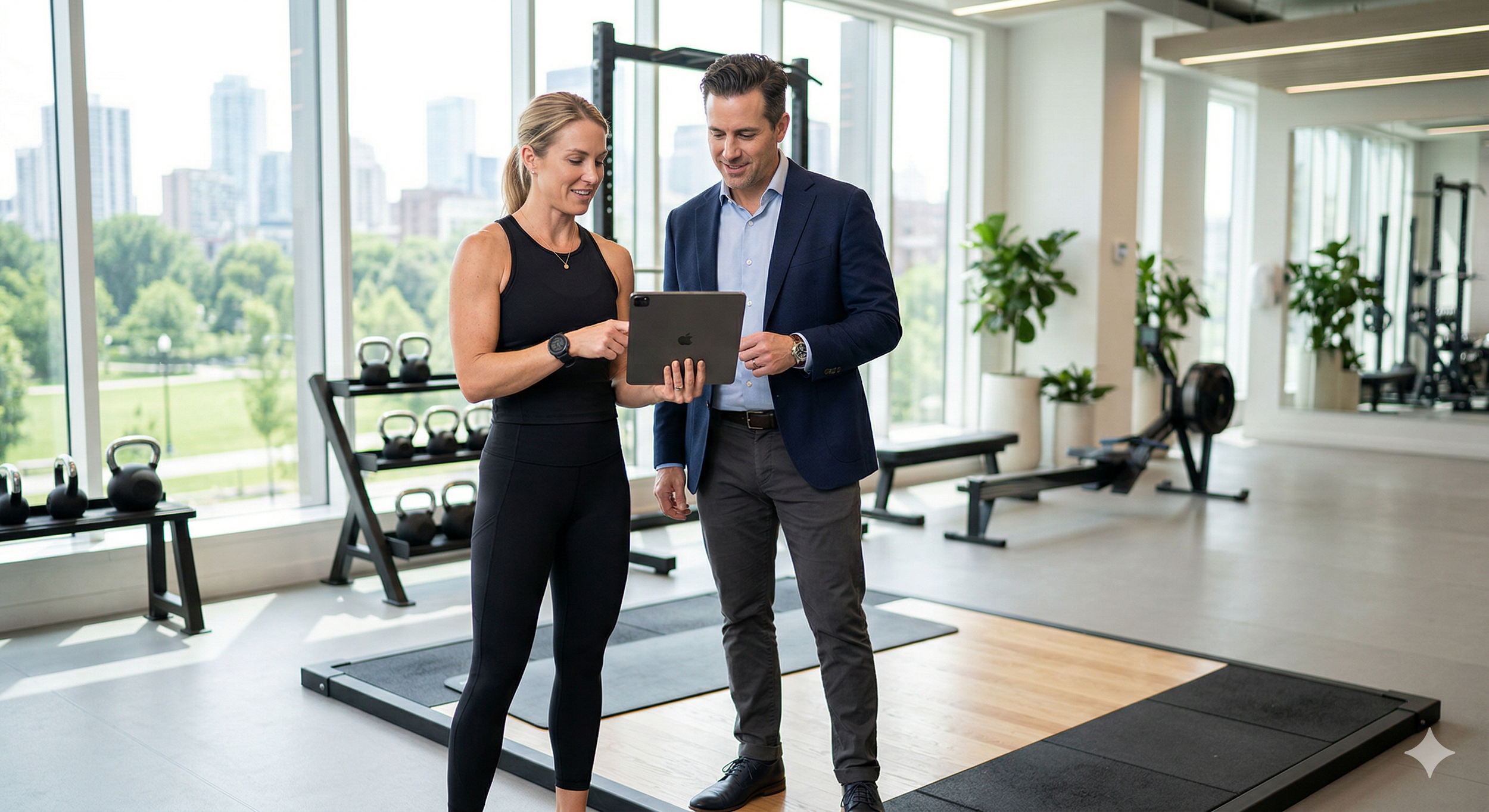
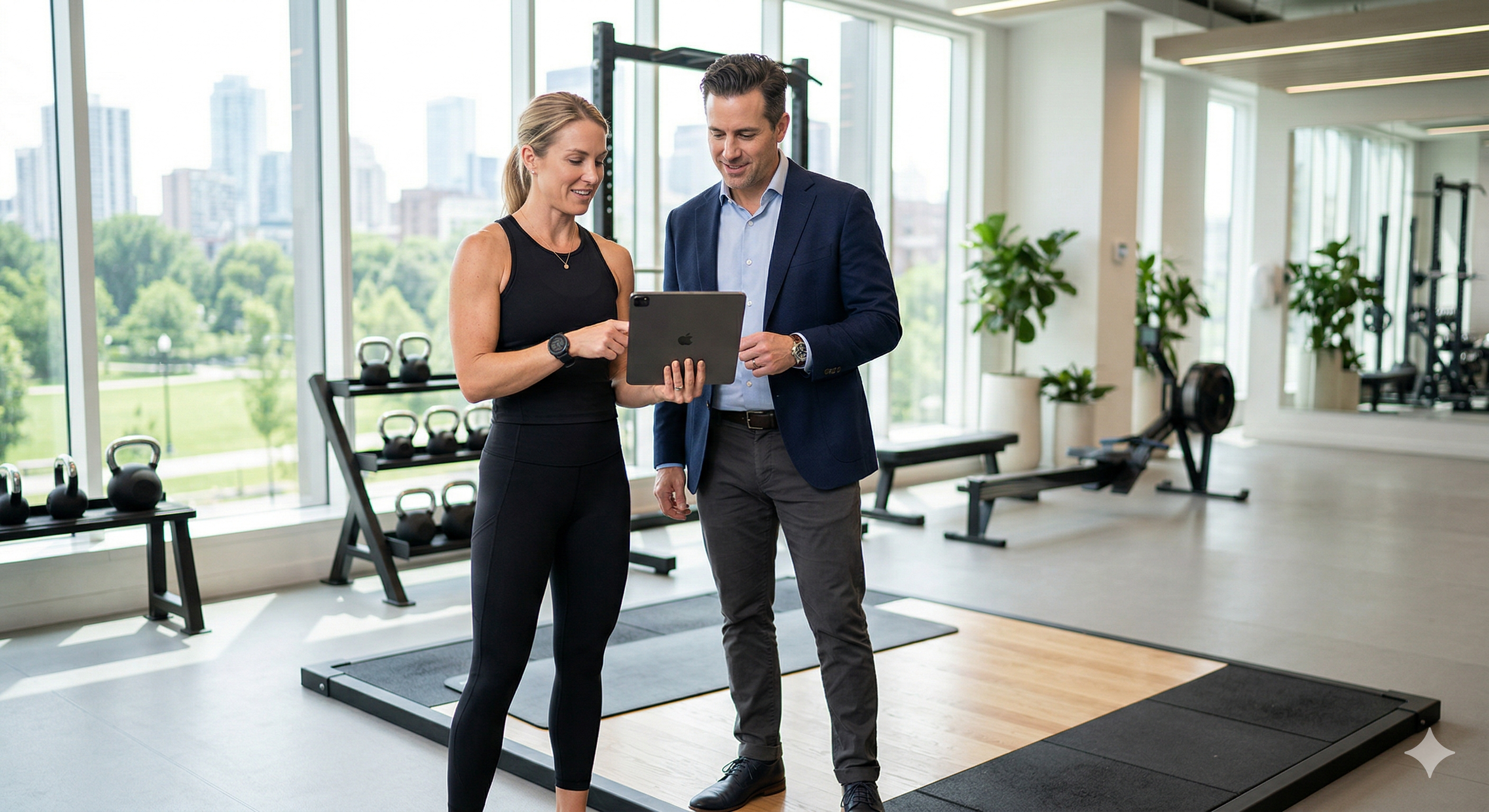
This image was created using AI to avoid copyright issues while conveying the context of this article.
In the world of business, we understand the value of a mentor. We seek out advisors, consultants, and executive coaches because we know that a single piece of expert advice can save us years of trial and error. We don't view these professional services as a "cost" that drains our bank account; we view them as an investment that multiplies our time and our results.
Yet, when it comes to the most important asset we own, our physical health, many people revert to a "DIY" (Do It Yourself) mindset. They try to piece together a fitness plan from random social media posts, or they jump from one fad diet to the next, hoping something finally sticks.
The reality is that your health deserves the same level of strategic investment as your business. A health coach or mentor isn't an "expense" like a luxury car or a high-end watch. A coach is a strategic partner who ensures your biological infrastructure can support your professional ambitions. Here is why mentorship is the missing link in your long-term health legacy.
The Problem with "Information Overload"
We live in an age where information is free and infinite. You can find ten different "perfect" workout plans and twenty "ideal" diets in a five-minute search. The problem isn't a lack of information; it is a lack of clarity.
When you try to go it alone, you spend your mental energy trying to decide which information is correct. Is coffee good for you today? Should you be doing keto or low-fat? Are you lifting too heavy or not heavy enough? This "decision fatigue" is the number one reason why high-performers quit their health routines. They are already making thousands of decisions a day at work; they don't have the "bandwidth" to manage the complexity of their own biology.
A coach removes the guesswork. A mentor provides a filtered, direct path to your goals based on your specific life, your specific stress levels, and your specific body. You aren't paying for "information"; you are paying for the curation of that information.
The Value of "Outside-In" Perspective
Even the best athletes in the world have coaches. It isn't because they don't know how to play the game; it’s because they cannot see their own "blind spots."
In business, you hire an auditor to find the holes in your finances. In fitness, a coach is the auditor for your lifestyle. You might think you are eating enough protein, but a coach looks at the data and sees that you are consistently falling short. You might think your squat form is perfect, but a coach sees the slight shift in your hips that is going to lead to a back injury in six months.
That "outside-in" perspective is what prevents plateaus and injuries. It ensures that every minute you spend in the gym is actually moving the needle. For a busy executive, wasting time on an ineffective workout is more than just frustrating, it is a poor use of a valuable resource.
Accountability: The Secret to Consistency
We have all had a "Monday Morning" where we were supposed to hit the gym, but a late-night email or a stressful meeting made it easy to hit the snooze button. When you are only accountable to yourself, it is easy to negotiate with yourself. You tell yourself you'll "make it up tomorrow."
But when you have a mentor, the dynamic changes. Accountability is the "force multiplier" of consistency. Knowing that someone is waiting for your check-in or looking at your data creates a level of psychological commitment that "willpower" alone cannot match.
A mentor doesn't just tell you what to do; they hold the standard for who you said you wanted to become. They are the guardian of your goals when your motivation is low.
Collapsing the Timeframe
The most valuable asset an executive has is time. You can always make more money, but you can never get back a year spent in "mediocre" health.
Mentorship "collapses" the timeframe. A journey that might take you three years of trial and error to figure out on your own can often be accomplished in six months with an expert guide. A coach has already seen the pitfalls, the common mistakes, and the metabolic "potholes" that stop most people. By following their lead, you are buying back your time. You are choosing the fast lane to a body that performs.
The ROI of Energy
Finally, we must look at the Return on Investment. If a coach helps you improve your sleep, optimize your nutrition, and build a stronger body, your "output" in every other area of life increases.
You are more patient with your family.
You are more focused during high-stakes meetings.
You have the energy to work a full day and still have "gas in the tank" for your personal life.
When you view it through this lens, the "cost" of a coach is actually one of the highest-yielding investments you can make. It is an investment in your career longevity and your personal happiness.
Building Your Team
No great legacy was ever built alone. Success is a team sport. Whether it is in the boardroom or the weight room, the right mentorship changes everything.
At Legacy Fitness, we aren't just trainers; we are strategic partners in your health. We provide the systems, the accountability, and the expertise so that you can focus on what you do best: leading.
Ready to Invest in Your Most Important Asset?
The DIY approach to health is the most expensive path you can take because it costs you time and energy. It’s time to move toward a strategic, expert-led plan.
For the Individual Leader: Ready to stop the guesswork and start the transformation? Let’s talk about your roadmap. Book My Discovery Call
For the Organization: Give your high-performers the support they need to stay at the top of their game. Explore Corporate Wellness Packages

Why Sleep is Your Best Supplement: The "Anabolic Window" That Happens While You Dream
Hard work in the gym is only half the battle. The other half is giving your body the rest it needs to rebuild.

This image was created using AI to avoid copyright issues while conveying the context of this article.
We spend hundreds of dollars a year on protein powders, vitamins, and pre-workout drinks. We look for the "secret ingredient" that will help us lose fat faster or build muscle easier. But there is a supplement that is more powerful than anything you can buy in a bottle. It is free, it is available to everyone, and most of us aren't getting enough of it.
That supplement is sleep.
In the fitness world, we often focus on what we do while we are awake. We focus on the intensity of our workouts and the precision of our meals. But the truth is that you don't actually "get fit" in the gym. You "break down" in the gym. You "get fit" while you sleep.
The Real Anabolic Window
You might have heard of the "anabolic window," the idea that you need to eat protein right after a workout to grow muscle. While that matters, the real anabolic window happens during deep sleep.
When you enter deep sleep, your body releases a massive wave of Growth Hormone. This is the hormone responsible for repairing your tissues, building muscle, and burning body fat. If you cut your sleep short, you are cutting your results short. You are essentially doing the work in the gym but refusing to collect the paycheck.
Sleep and Your Hunger Hormones
Have you ever noticed that after a late night, you crave junk food the next day? That isn't a lack of willpower; it is biology.
Lack of sleep disrupts two key hormones:
Ghrelin: This is your "hunger" hormone. When you are tired, ghrelin goes up, telling your brain you need quick energy (usually in the form of sugar).
Leptin: This is your "fullness" hormone. When you are tired, leptin goes down, meaning your brain doesn't get the signal that you are satisfied.
Basically, being sleep-deprived makes you a "hunger machine." No matter how perfect your diet plan is, it is incredibly hard to stick to it if your hormones are screaming at you to eat.
The Performance Edge
For the busy professional, sleep is a cognitive performance enhancer. While you sleep, your brain flushes out metabolic waste, literally "cleaning" itself so you can think clearly the next day. A well-rested leader is more patient, more creative, and better at solving complex problems.
If you view sleep as "wasted time," you are looking at it the wrong way. View it as a high-level recovery protocol that ensures you show up as your best self.
How to Master Your Sleep
You don't need a 10-step bedtime routine, but you do need a few "non-negotiables":
The Cool Down: Your body needs to drop its temperature to fall asleep. Keep your bedroom cool (around 68°F or 20°C).
The Dark Out: Even a small amount of light can disrupt your sleep cycle. Use blackout curtains or a sleep mask.
The 3-2-1 Rule: Stop eating 3 hours before bed, stop working 2 hours before bed, and stop looking at blue-light screens 1 hour before bed.
Building Your Legacy
At Legacy Fitness, we believe in a balanced approach. Hard work in the gym is only half the battle. The other half is giving your body the respect and the rest it needs to rebuild.
This week, treat your sleep like your most important appointment. Don't cancel it, don't show up late, and give it your full attention. Your body, and your results, will show the difference.

The Executive’s Guide to Eating Out: How to Stay Social and Stay Lean
Building a legacy means being a leader in every room you enter including the dining room.

This image was created using AI to avoid copyright issues while conveying the context of this article.
In the world of business, some of the most important work happens away from a desk. Client dinners, networking lunches, and celebratory drinks are part of the job. But for many high performers, these social obligations feel like a trap for their fitness goals.
You want to close the deal and enjoy the meal, but you don't want to wake up the next morning feeling sluggish or seeing the scale move in the wrong direction.
The good news is that you don't have to choose between your career and your health. At Legacy Fitness, we teach our clients that "perfection" isn't the goal; "navigation" is. Here is how to navigate any menu like a pro.
1. The "Protein First" Rule
When the waiter arrives, your mission is simple: find the protein foundation. Whether it is a steak, a piece of grilled fish, or roasted chicken, make that the star of your plate.
Protein is the most satiating macronutrient, meaning it tells your brain you are full faster than anything else. By prioritizing a high-quality protein source, you naturally reduce the urge to overeat on the bread basket or the appetizers.
Pro Tip: Look for words like "grilled," "blackened," "roasted," or "poached." Avoid words like "breaded," "crispy," or "creamy," as these are usually code for hidden fats and calories.
2. Negotiate Your Sides
Most restaurant meals are designed for "palatability," which usually means they come with a heavy side of fries or pasta. You are the customer; don't be afraid to ask for a swap.
Ask the server to replace the fries with a double serving of steamed vegetables or a side salad. Most high-end restaurants are happy to accommodate this. This simple switch can save you 400 to 600 calories without making you feel like you are "depriving" yourself.
3. Navigate the "Liquid Calories"
Alcohol is often the biggest "hidden" hurdle during business dinners. It lowers your inhibitions, which makes you more likely to reach for the dessert menu later.
If you choose to drink, stick to "clean" options. A glass of dry wine or a spirit with soda water and lime is a much better choice than a sugary cocktail or a heavy beer.
The 1-for-1 Rule: For every alcoholic drink you have, drink one full glass of water. This keeps you hydrated and slows down your pace, keeping you sharp for the conversation.
4. The Power of "Half-Way"
Restaurant portions are often twice as large as what you actually need. A great strategy is to decide how much you are going to eat before you take the first bite.
Eat slowly, engage in the conversation, and stop when you are 80% full. You don't have to clean the plate to show respect to your host. In fact, leaving a bit behind shows that you are a person of discipline and intentionality.
5. Research the "Venue" Ahead of Time
If you are the one picking the restaurant, choose one that you know has healthy options. If someone else is picking, look at the menu online an hour before you go.
When you make your decision while you are calm and not hungry, you are much more likely to stick to it than when you are smelling the bread basket and feeling the pressure of the moment.
Leading Your Own Health
Building a legacy means being a leader in every room you enter including the dining room. When you make healthy choices at a business lunch, you aren't just taking care of your body; you are demonstrating the same discipline and clarity that makes you successful in business.
Staying lean doesn't mean staying home. It means having a plan.

Muscle: Your Metabolic Insurance Policy
You wouldn't leave your financial future to luck. Don't leave your physical future to luck either.

This image was created using AI to avoid copyright issues while conveying the context of this article.
In the world of finance, we buy insurance to protect ourselves against the unexpected. We pay into a policy so that if a crisis hits, we have a safety net. In the world of health, most people wait until the "crisis" happens, a bad blood test, a back injury, or a loss of energy, before they try to fix the problem.
But what if you could build a physical insurance policy that protected you from those things before they happened?
That policy is your muscle mass.
At Legacy Fitness, we don't just view muscle as something that looks good in the mirror. We view it as "Metabolic Insurance." It is the primary engine that keeps your blood sugar stable, your hormones balanced, and your body resilient as you age.
The "Sponge" for Blood Sugar
One of the most important jobs your muscle has is acting as a "glucose sink." When you eat carbohydrates, they are broken down into sugar (glucose) in your blood. Your body has to put that sugar somewhere.
If you have very little muscle, your body struggles to manage that sugar, which can lead to energy crashes and long-term health issues. But if you have healthy, active muscle mass, your muscles act like a giant sponge. They pull that sugar out of the blood and use it for fuel. This is why people with more muscle can often enjoy more flexibility in their diet without losing progress.
Muscle and the Aging Process
As we get older, we naturally begin to lose muscle, a process called sarcopenia. If you aren't intentionally building or maintaining muscle, you are losing your insurance policy.
Loss of muscle is the leading cause of "metabolic slowdown." When people say their metabolism "died" at 40, what usually happened is they lost the muscle that was burning those calories. By keeping your strength high, you are essentially keeping your metabolic "engine" young, regardless of the date on your birth certificate.
Resilience Against Injury
Muscle isn't just for metabolism; it is armor for your joints. A strong set of glutes and hamstrings protects your lower back. Strong shoulders protect your neck. When you have a solid foundation of muscle, you aren't just "fit", you are durable. You can play a weekend game of golf, pick up your grandkids, or go for a hike without the fear that your body is going to "snap."
The Data That Actually Matters
We live in an age where gadgets can track every heartbeat, but the most important data point isn't on a watch. it’s on the bar.
Are you getting stronger over time?
Is your body composition improving?
Do you have more energy at 3:00 PM than you did last month?
This is where the expertise of a coach comes in. Technology can provide the numbers, but a coach provides the context. We use data to see how your body is responding to the work, ensuring that we aren't guessing, but rather making informed adjustments based on how you feel and perform in the real world.
Your Most Important Investment
You wouldn't leave your financial future to luck. Don't leave your physical future to luck either. Every strength session is a "premium" paid into your metabolic insurance policy. It is an investment that compounds over time, ensuring that the "Legacy" you build is one of strength, energy, and independence.
Ready to Build Your Insurance Policy?
Strength is the foundation of everything we do at Legacy Fitness & Nutrition. We help you cut through the noise and focus on the habits that actually move the needle.
For the Individual: Ready to build a body that lasts? Let's start your transformation. Book My Discovery Call
For the Organization: Give your team the ultimate edge with our health leadership workshops. Explore Corporate Wellness Packages