
The GLP-1 Muscle Gap: Why Weights are Non-Negotiable
Medical Disclaimer: The information provided in this article is for educational and informational purposes only and should not be considered medical advice. Always seek the advice of your physician or other qualified health provider with any questions you may have regarding a medical condition or the use of medications. Never disregard professional medical advice or delay in seeking it because of something you have read here.
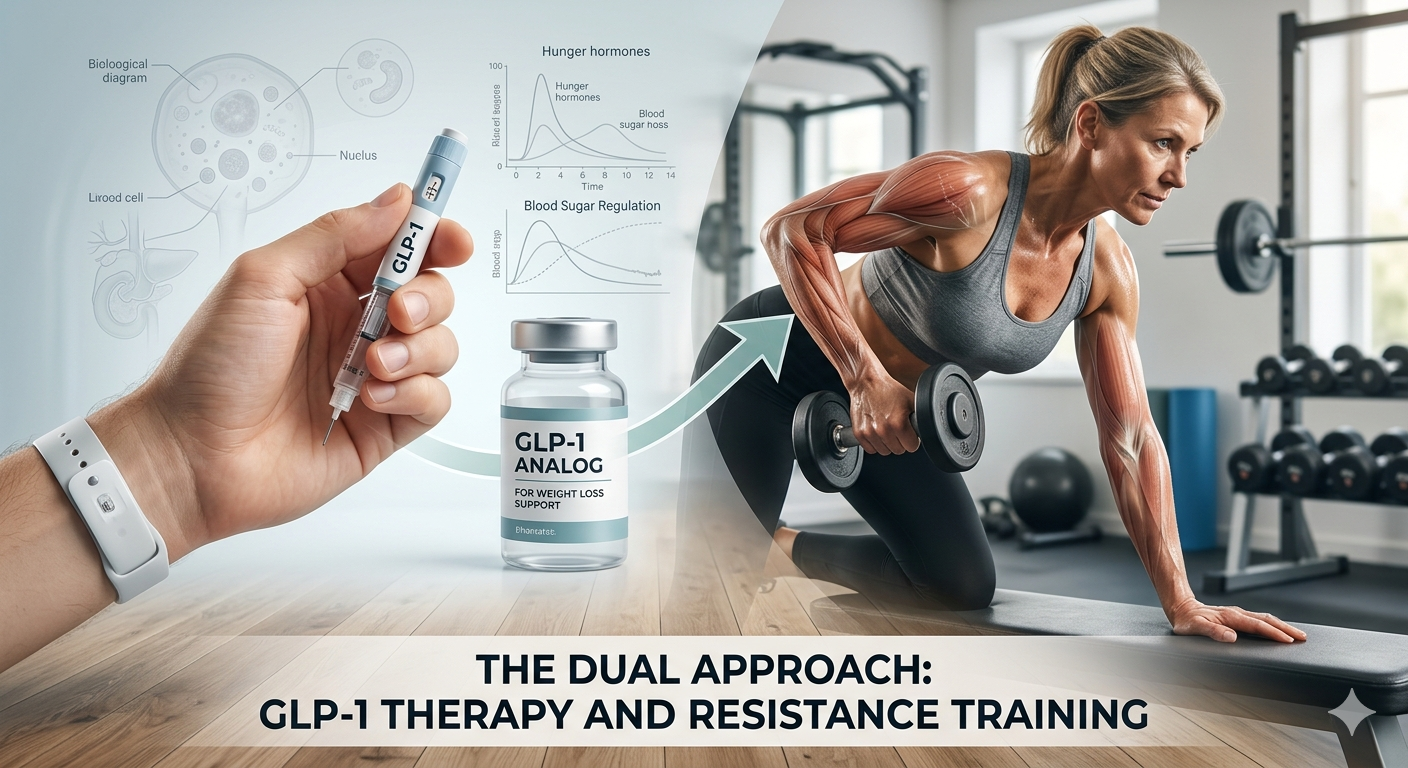
This image was created using AI to avoid copyright issues while conveying the context of this article.
The landscape of weight management changed forever with the rise of GLP-1 receptor agonists like semaglutide and tirzepatide. These medications have provided a powerful tool for those struggling with metabolic health and chronic obesity. However, as with any major medical advancement, they come with a specific set of challenges that must be managed strategically. The most significant of these is what researchers and coaches call the "Muscle Gap."
While the scale moving down is often seen as a victory, not all weight loss is created equal. The goal of any healthy transformation is to lose body fat while preserving the tissue that keeps us functional: muscle and bone. Unfortunately, the rapid weight loss triggered by GLP-1s can lead to a disproportionate loss of lean mass if the patient is not following a structured resistance training program.
The 40% Risk: Understanding Lean Mass Loss
In traditional weight loss through diet and exercise, it is normal for about 20% to 25% of the total weight lost to come from lean tissue. However, clinical data from recent GLP-1 trials has shown a more concerning trend. Some studies indicate that without specific lifestyle interventions, as much as 40% of the weight lost can be lean muscle mass.
This is a staggering number. If a person loses 50 pounds, but 20 of those pounds are muscle, they haven't just become smaller; they have become physically weaker and metabolically less efficient. Muscle is the primary driver of your resting metabolic rate. When you lose that much muscle, your body requires fewer calories to function. This creates a "rebound" trap where, if the medication is ever discontinued, the weight returns much faster because the body’s "engine" has been downsized.
The Impact on Bone Density
Beyond the muscles you see in the mirror, there is the skeletal system to consider. As we discussed in our previous look at bone health, bones are living tissue that require "loading" to remain dense and strong. Rapid weight loss is historically associated with a decrease in bone mineral density.
When body weight drops quickly, there is less mechanical load on the skeleton. If this is coupled with the decreased nutrient intake common on GLP-1s, the risk of developing osteopenia or osteoporosis increases. For older adults, this can be particularly dangerous. Losing 40% muscle mass while also decreasing bone density is a recipe for frailty and a loss of independence. Strength training is the only way to counteract this by creating the mechanical tension necessary to keep bones "charging" with new minerals.
Why the Body "Harvests" Muscle
When you are on a GLP-1 medication, your appetite is significantly suppressed. You are often in a massive calorie deficit. In this state, the body is looking for immediate energy to keep the heart beating and the brain functioning. If the body is not receiving enough energy from food, and it isn't being "reminded" that muscle is necessary through heavy lifting, it may begin to break down muscle tissue for energy.
Muscle is "expensive" for the body to keep. It requires a lot of energy to maintain. In a state of perceived starvation (the calorie deficit), the body will gladly shed muscle to save energy unless you give it a reason not to. Resistance training, specifically lifting weights that challenge you, sends a neurological signal that says the muscle is vital for survival. This signal, combined with adequate protein, tells the body to burn fat for fuel instead of your bicep or quadriceps tissue.
Overcoming the "Energy Crisis"
One of the most reported side effects of GLP-1 therapy is profound fatigue. Because users are often eating fewer carbohydrates and total calories, their "gas tank" feels empty. It is very easy to fall into a sedentary lifestyle because the motivation to move is low.
However, this inactivity accelerates the muscle loss. We recommend a "Quality over Quantity" approach to training while on these medications. You do not need to spend two hours in the gym doing high-intensity cardio. In fact, too much cardio can sometimes worsen the muscle-wasting effect. Instead, focus on 30 to 45 minutes of heavy, compound resistance training two to three times per week. Moves like squats, deadlifts, and presses provide the most "bang for your buck" and ensure the body prioritizes muscle preservation.
The Role of Professional Support
As certified personal trainers and nutrition coaches, we specialize in the "other half" of the GLP-1 journey. While the medication handles the hormonal and appetite side of the equation, we handle the structural and metabolic side.
Our role is to ensure that your transformation results in a body that is not just lighter, but stronger and more resilient. We focus on nutrient density, making sure every calorie you eat is working toward your goal, and progressive resistance training to bridge the muscle gap. The goal is to reach your target weight with a robust metabolism and a skeletal system that is built to last for decades.
Train for the Body You Want to Keep
The goal isn't just to be lighter, it’s to be more capable. Ensure your weight loss journey leads to lasting metabolic health rather than frailty.
Click below to grab a free 15-minute consultation and learn how our targeted strength and nutrition coaching can safeguard your results.
