

Muscle Preservation: The New Goal for Weight Loss in 2026
Muscle preservation is not a niche concern for bodybuilders. It is the framework every serious weight loss protocol should be built around, whether you are using medication or not.

This image was created using AI to avoid copyright issues while conveying the context of this article.
Somewhere along the way, weight loss became synonymous with the number on the scale. Smaller number, better results. That was the goal, and most people chased it without asking what, exactly, they were losing.
In 2026, that conversation has changed. Muscle preservation is now the central priority in serious weight loss protocols, and the rise of GLP-1 medications has made this more urgent than ever. If you are using one of these drugs, considering them, or simply trying to lose fat without destroying your body composition in the process, this is the most important shift in thinking you can make right now.
What GLP-1 Medications Actually Do to Your Body
GLP-1 receptor agonists like semaglutide and tirzepatide work by suppressing appetite and slowing gastric emptying. The result is that most people eat significantly less, often without much effort. For someone who has struggled with portion control or constant hunger, this can feel like a revelation.
But here is the problem no one talks about at the pharmacy counter: when you eat less, your body does not automatically pull its energy from fat stores. It pulls from whatever is most available, and in a large calorie deficit with inadequate protein and no resistance training, a substantial portion of what you lose is muscle. Some studies following GLP-1 users without structured exercise protocols have shown lean mass losses accounting for 25 to 40 percent of total weight lost. That is not a minor footnote. That is a significant portion of your metabolic engine leaving your body.
Why Muscle Loss Is a Bigger Problem Than Most People Realize
Muscle is metabolically active tissue. It burns calories at rest, supports insulin sensitivity, protects your joints, and allows you to function physically as you age. Losing a meaningful amount of it while chasing a lower scale number creates a cascade of downstream problems.
Your resting metabolic rate drops. You feel weaker. The weight you regain after stopping the medication, or after any period of undereating, tends to come back as fat rather than muscle. This is sometimes called body recomposition in reverse, and it leaves people in a worse metabolic position than when they started.
For busy professionals in their late 30s through 50s, this matters even more. You are already at an age where preserving muscle requires intentional effort. The natural decline of muscle mass, called sarcopenia, begins in your 30s and accelerates with age. A poorly managed weight loss protocol during this window can set you back years in terms of physical capacity and long-term health.
The Shift: From Scale Weight to Body Composition
The more useful question is not "how much weight am I losing?" but "what am I losing it from?" This is the lens that serious coaches, sports medicine physicians, and endocrinologists are now using with GLP-1 patients and general weight loss clients alike.
Body composition tracking, whether through DEXA scans, InBody assessments, or even consistent circumference measurements, gives you a clearer picture. If you are dropping pounds but your waist measurement is not changing and your strength is declining, you are losing muscle, not fat. That is a signal to adjust.
What Muscle Preservation Actually Requires
There are three non-negotiable inputs for preserving muscle during a calorie deficit. They are not complicated, but they do require consistency.
Protein intake must remain high. The general recommendation for active adults is at least 0.8 to 1 gram of protein per pound of bodyweight. For someone using a GLP-1 medication and eating significantly less overall, hitting this target becomes harder, not easier. It requires prioritizing protein at every meal rather than treating it as one option among many.
Resistance training must be present. Not optional, not occasional. Two to three sessions per week of compound movements, whether that is barbell work, machine training, or well-structured bodyweight progressions, provides the stimulus your muscles need to remain in a state of maintenance rather than atrophy. Without that signal, your body has no reason to hold onto the muscle. Calories are low; it will shed what it does not perceive as necessary.
Calorie deficits must be managed, not maximized. The instinct for most people is to eat as little as possible to speed up results. This is where the most damage happens. A moderate deficit of 300 to 500 calories below your maintenance level is far more protective of lean mass than a crash deficit of 1,000 or more. Slower fat loss with muscle intact beats rapid weight loss followed by a metabolic slowdown every time.
This Is Not a Trend. It Is a Correction.
The fitness industry spent decades optimizing for scale weight. The GLP-1 era has exposed how incomplete that model was, because now millions of people are losing weight faster than ever before, and the question of what they are losing it from has become impossible to ignore.
Muscle preservation is not a niche concern for bodybuilders. It is the framework every serious weight loss protocol should be built around, whether you are using medication or not.
At Legacy Fitness, we work with clients navigating all of this, from GLP-1 support to nutrition coaching to strength programming designed around your schedule and your body. If you are losing weight and want to make sure you are doing it in a way that holds up long-term, we can help you build the structure that makes that happen.

Supplements for GLP-1 Users: What Actually Helps?
Don't let a smaller appetite lead to a weaker body.
Medical Disclaimer: The information provided in this article is for educational and informational purposes only and should not be considered medical advice. Always seek the advice of your physician or other qualified health provider with any questions you may have regarding a medical condition or the use of medications. Never disregard professional medical advice or delay in seeking it because of something you have read here.

This image was created using AI to avoid copyright issues while conveying the context of this article.
When you are on a GLP-1 medication, your body is undergoing significant metabolic changes. These medications work incredibly well to quiet "food noise" and reduce your appetite. However, this success creates a new challenge. Because you are eating much less than you used to, your "nutrient real estate" is limited. While the scale is moving in the right direction, your body may be struggling to get the vitamins and minerals it needs to keep your hair, skin, and muscles healthy.
In this scenario, supplements move from being "optional extras" to being a vital part of your health management system. The goal of supplementation on this journey should be very specific. You are not looking for a "fat burner" or a magic pill. You are looking to protect your muscle, support your digestion, and fill in the nutritional gaps created by a suppressed appetite.
The Critical Need for Protein Support
As we have discussed in previous articles, protecting your lean muscle mass is the most important part of long-term weight loss. If you lose weight but lose your muscle along with it, your metabolism will slow down significantly. When your appetite is low, eating a large steak or a chicken breast can feel like a chore. This is where protein supplementation becomes a practical necessity.
A high-quality whey or plant-based protein powder allows you to get the amino acids your muscles need without the "volume" of a full meal. This helps you hit your daily protein targets without feeling uncomfortably full. By using protein shakes as a tool, you are ensuring that your body has the "bricks and mortar" it needs to maintain your strength while the medication helps you lose the fat.
Creatine and Collagen: The Structural Foundation
Two supplements that have moved to the forefront of longevity science are Creatine and Collagen. Despite old myths, Creatine is not just for young bodybuilders. It is one of the most researched substances for muscle preservation and brain health.
When you are in a large calorie deficit, your muscles can lose their "fullness" and energy. Creatine helps your muscle cells hold onto hydration and energy (ATP). This allows you to maintain your strength in the gym, even when your food intake is low. Think of it as a battery backup for your muscles.
Collagen is equally important because it acts as the "glue" for your body. Rapid weight loss can put a strain on your connective tissues, joints, and skin. Supplementing with collagen peptides provides the specific amino acids that help keep your joints moving smoothly and your skin resilient. For those on a GLP-1 journey, combining Creatine and Collagen provides a strong internal structure that supports your new, lighter frame.
Managing Micronutrients and Energy
When you eat fewer total calories, you are also getting fewer micronutrients. It is very common for people on these medications to feel "foggy" or tired. Often, this isn't because they lack calories, but because they lack minerals.
The Electrolyte Balance: GLP-1 medications can change how your body handles water and salt. If you lose too much sodium, potassium, or magnesium, you will feel exhausted and may experience muscle cramps. A high-quality electrolyte mix added to your water can "wake up" your nervous system and keep your energy levels steady throughout the day.
Fiber and Digestion: Because these medications slow down the digestive process, staying "regular" can become an issue. When you eat less, you naturally get less fiber from your diet. A gentle, non-bloating fiber supplement can help your system move smoothly and prevent the discomfort that some users experience.
The "Insurance" Multivitamin: A high-quality multivitamin acts as a safety net. It ensures that on the days when you barely feel like eating anything at all, your body still receives the basic co-factors it needs to run its metabolic processes. It’s a simple way to avoid the hidden hunger of a nutrient-depleted body.
Cutting Through the Marketing Hype
The supplement industry is notorious for making big promises with very little evidence. You do not need twenty different bottles on your counter to be successful. In fact, taking too many unnecessary supplements can actually put extra stress on your liver and kidneys.
The most effective strategy is a "targeted" approach. You should focus on high-quality products that have been tested for purity. You are looking for ingredients that support your specific needs: muscle protection, joint integrity, and digestive health. By ignoring the "fad" supplements and focusing on the science-backed basics, you can save money and get better results.
Your Health is a System
At Legacy Fitness, we help educate our clients on which supplements work best with their lifestyle and their specific health goals. We believe that supplements are a piece of a larger puzzle. When they are combined with smart resistance training and a protein-first diet, they help you reach your goal weight with your health and vitality intact.
Don't let a smaller appetite lead to a weaker body. By being intentional with your supplementation, you are investing in the quality of your weight loss. You are ensuring that you don't just become a smaller person, but a more resilient and capable one.

GLP-1s and the "Skinny Fat" Trap
There is a hidden danger in losing weight too fast without a structured plan; that danger is the "skinny fat" trap.
Medical Disclaimer: The information provided in this article is for educational and informational purposes only and should not be considered medical advice. Always seek the advice of your physician or other qualified health provider with any questions you may have regarding a medical condition or the use of medications. Never disregard professional medical advice or delay in seeking it because of something you have read here.

This image was created using AI to avoid copyright issues while conveying the context of this article.
When people start taking GLP-1 medications, they are usually focused on one thing: the number on the scale. Seeing that number drop quickly feels like a major win, especially if they have struggled with their weight for years. However, there is a hidden danger in losing weight too fast without a structured plan. That danger is the "skinny fat" trap.
The term "skinny fat" describes a body that looks smaller in clothes but still has a high percentage of body fat and very little muscle. When you are on a medication that suppresses your appetite, you are in a massive calorie deficit. This means your body is receiving much less energy from food than it needs to function. If you do not give your body a reason to keep its muscle, it will harvest that muscle for energy right along with the fat.
The Science of Body Composition
Your total weight is just a number, but your body composition is the real story of your health. Body composition is the ratio of fat to lean muscle in your body. This is a much more important metric than your Body Mass Index (BMI). Two people can weigh 150 pounds, but their health profiles can be completely different. The person with more muscle will have a tighter physical appearance, more daily energy, and a significantly higher resting metabolism.
When you fall into the "skinny fat" trap, you might reach your goal weight, but you will not feel or look the way you expected. You may feel soft, weak, and tired even after a full night of sleep. This happens because muscle is what gives your body its shape and its structural strength. Without muscle, you are essentially becoming a smaller, less powerful version of your previous self. More importantly, you are losing the very tissue that helps you manage your blood sugar and keep the weight off for good.
Why Your Body "Eats" Its Own Muscle
Our bodies are survival machines. In a state of a large calorie deficit, your body looks for the easiest ways to save energy. Muscle is "metabolically expensive" tissue. This means it takes a lot of calories just to keep muscle on your frame. If your body thinks it is in a period of food scarcity, it will gladly get rid of that expensive muscle to lower its "monthly bills."
Resistance training is the only way to override this survival instinct. When you lift weights, you create mechanical tension. This tension sends a signal to your nervous system that your muscle is vital for your daily survival. Even if you are eating very few calories, that signal tells your body to burn stored fat for fuel instead of breaking down your muscle. Without this signal, research shows that a high percentage (up to 40%!) of weight lost on GLP-1s can come directly from your lean tissue, which is a metabolic disaster in the long run.
The Problem with "Cardio Only" Programs
A common mistake many people make is trying to "speed up" their weight loss with excessive cardio. While walking or cycling is excellent for your heart and your mood, it does not do much to build or protect muscle. In some cases, doing too much cardio while on a GLP-1 can actually make the "skinny fat" problem worse.
Your body is highly adaptive. If you do hours of cardio every week without lifting weights, your body tries to become as efficient as possible. It may decide to shed muscle mass to make you "lighter" for those walks or runs. This leads to a body that is smaller, but also has a much lower metabolic rate. To stay out of the trap, you must prioritize strength over endurance. You should focus on lifting weights that challenge you at least two or three times a week. This ensures that the weight leaving your body is fat, not the strength you need to live an active life.
The Long-Term Metabolic Rebound
The biggest risk of the "skinny fat" trap isn't just how you look in the mirror; it is what happens if you ever stop taking the medication. If you lose 40 pounds but 15 of those pounds are muscle, you have effectively downsized your internal "engine." Your body now requires fewer calories to maintain its new weight.
If your appetite returns or you stop the medication, you are now eating with a broken metabolism. This is why many people experience a rapid "rebound" in weight gain. Because they lost their muscle, they have no place to "store" the extra energy from food. By protecting your muscle through resistance training now, you are building a metabolism that is resilient. You are ensuring that you have a strong foundation that can support you whether you are on medication or not.
Professional Guidance for Quality Weight Loss
At Legacy Fitness, we focus on what we call "Quality of Loss." We are not interested in just making you a smaller person. We want to make you a more capable, more energetic, and more durable person. Our job is to help you navigate the nutrition and training required to bridge the muscle gap.
By combining your medical journey with a smart strength system, you can reach your goal weight with a body you are proud to show off. Muscle is the fountain of youth, and it is the only permanent solution to weight management. Don't just settle for being a lighter version of yourself; aim to be the strongest version of yourself.
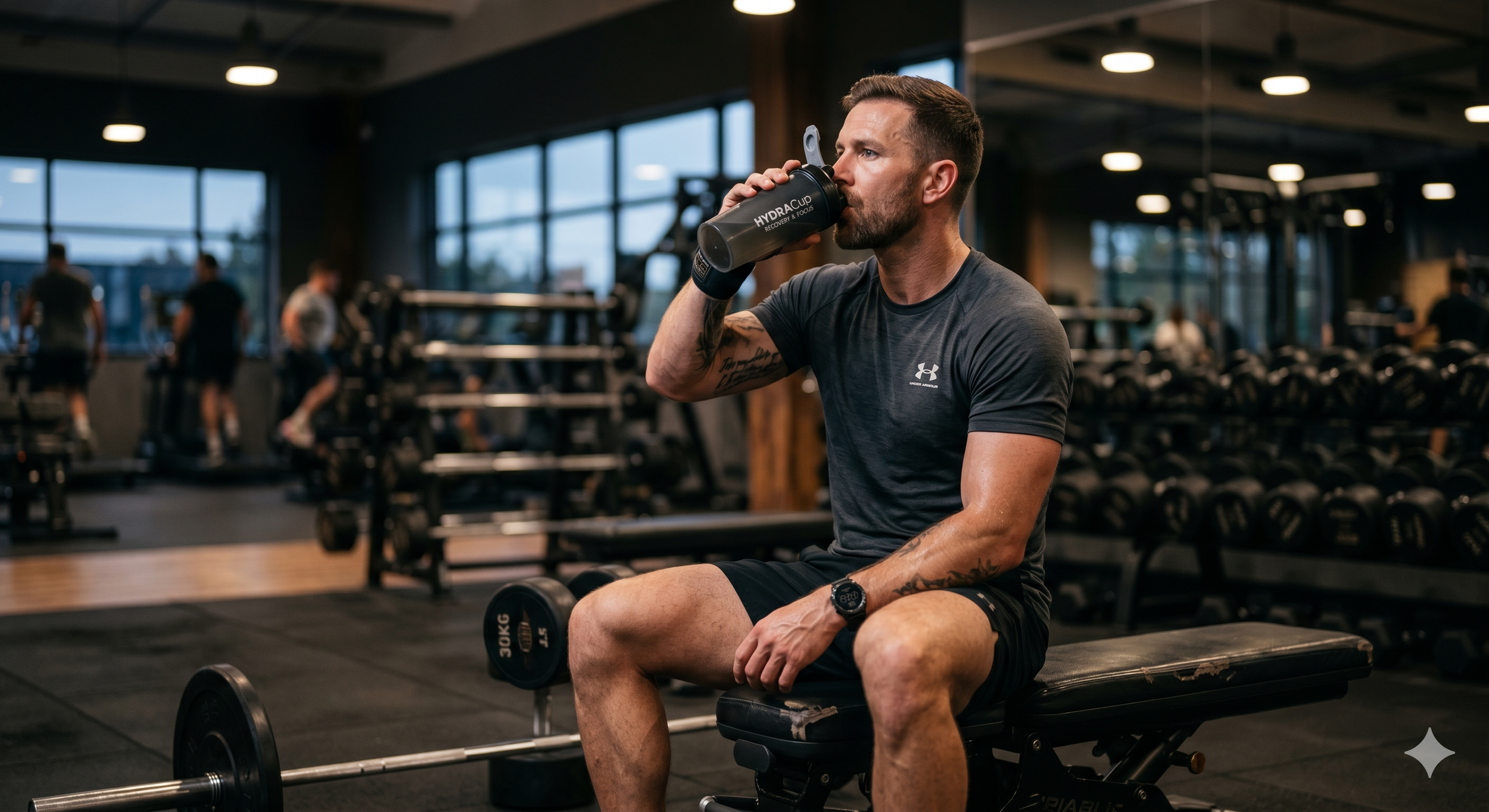
The Energy Audit: Fueling Your Workouts on Low Calories
You want to hit the gym and get your workout done, but your "battery" feels like it is at 5%.
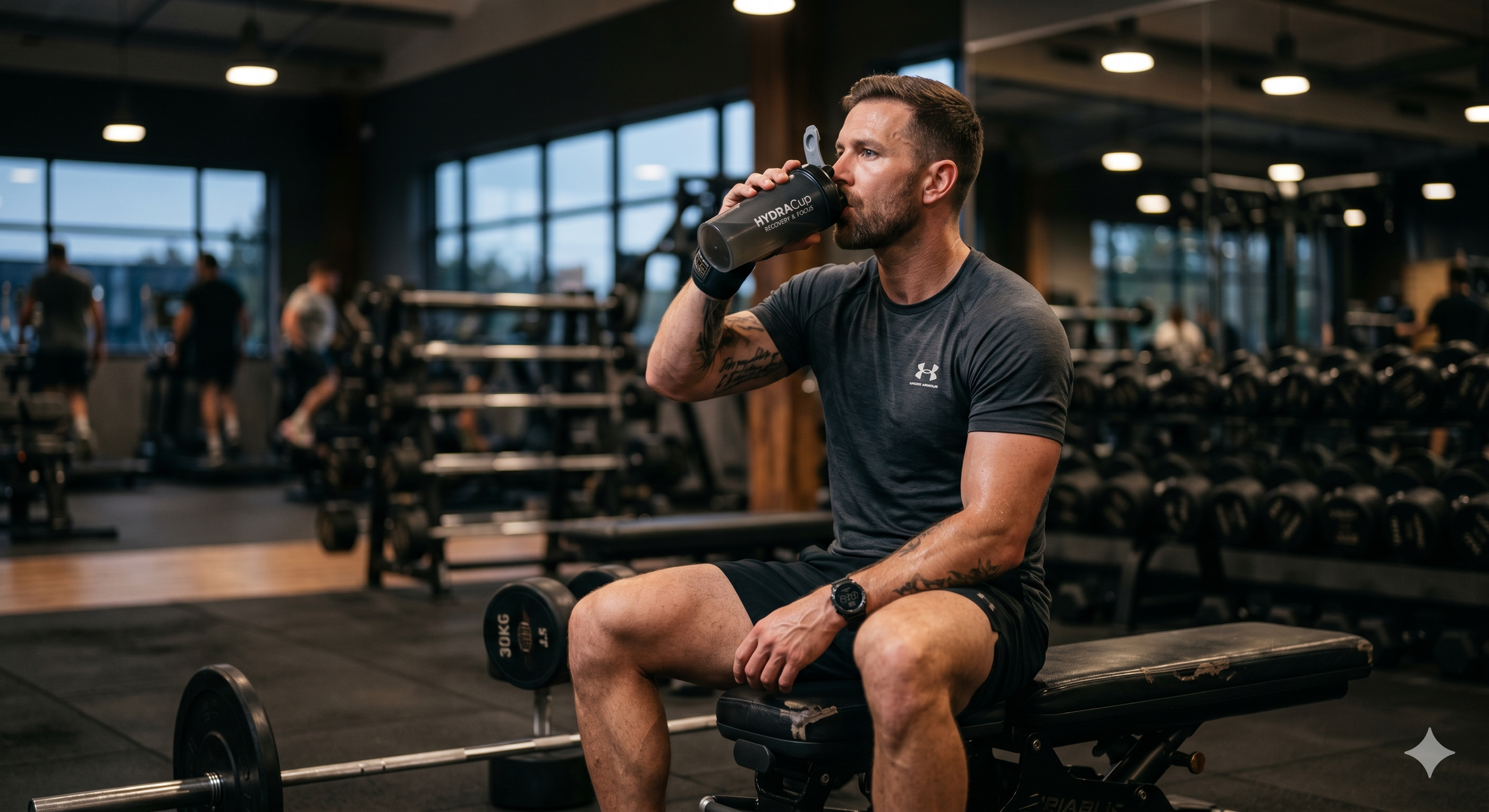
This image was created using AI to avoid copyright issues while conveying the context of this article.
One of the most common complaints people have when they start a new nutrition plan is a sudden drop in energy. This is especially true for those using GLP-1 medications or anyone in a significant calorie deficit. You want to hit the gym and get your workout done, but your "battery" feels like it is at 5%.
This is often referred to as the "energy gap." When you consume fewer calories and carbohydrates, your body has less immediate "fuel" in the bloodstream to power high-intensity movement. However, skipping your workouts will only slow down your progress. To stay on track, you need to perform an "Energy Audit" and adjust how you fuel your body.
Understanding Your Fuel Sources
Your body primarily uses two types of fuel for exercise: fats and carbohydrates.
Fats are like a giant log on a campfire. They burn slowly and provide energy for a long time (like during a long walk).
Carbohydrates are like kindling or paper. They burn hot and fast, providing the "explosion" you need to lift heavy weights or do a sprint.
When you are on a low-calorie plan, your "kindling" is low. This is why a heavy set of squats might feel twice as hard as it used to. Your body is trying to figure out how to do "expensive" work on a "budget" income.
Timing is Everything
When calories are limited, timing becomes your best friend. Since you don't have a lot of fuel to go around, you need to make sure it is in your system right when you need it most.
Instead of spreading your small amount of carbohydrates evenly throughout the day, try "clustering" them around your workout. Eating a small amount of easy-to-digest carbs (like a piece of fruit or a rice cake) about 30 to 60 minutes before you lift can provide just enough "kindling" to get you through the session without feeling like you’re dragging.
The Role of Electrolytes and Hydration
Sometimes, what feels like "low energy" is actually a lack of minerals. When you eat fewer processed foods and lower carbs, your body tends to flush out water and salt more quickly. This can lead to brain fog, muscle cramps, and a general feeling of weakness.
Before you reach for a third cup of coffee, try adding a high-quality electrolyte mix to your water. Ensuring your sodium, potassium, and magnesium levels are balanced can often "wake up" your nervous system more effectively than caffeine ever could.
Adjusting the Volume
If your energy is low, you might need to change how you train, not if you train. On low-calorie days, focus on "Quality over Quantity."
Instead of doing five sets of ten reps, you might do three sets of five reps with a bit more rest in between. The goal is to keep the intensity high enough to protect your muscle, but the total "volume" low enough that you don't burn out. Remember, the goal of training during a fat-loss phase is muscle preservation, not necessarily setting a world record in endurance.
Listen to the "Check Engine" Light
There is a difference between being "diet tired" and being "system exhausted." If you are consistently feeling dizzy, cold, or unable to recover between sessions, your calorie deficit might be too steep.
As coaches, we look for the "Sweet Spot", the place where you are losing body fat but still have enough vigor to live your life and lift your weights. If you find yourself consistently hitting a wall, it’s time to audit your intake and perhaps add a small amount of "functional fuel" to keep the engine running.

The "Protein First" Rule for GLP-1 Success
Navigating nutrition while on medication can feel like a balancing act. You want to lose weight, but you also want to feel vibrant and strong.
Medical Disclaimer: The information provided in this article is for educational and informational purposes only and should not be considered medical advice. Always seek the advice of your physician or other qualified health provider with any questions you may have regarding a medical condition or the use of medications. Never disregard professional medical advice or delay in seeking it because of something you have read here.

This image was created using AI to avoid copyright issues while conveying the context of this article.
When you are using a GLP-1 medication, your relationship with food changes. For many, the constant "food noise" in their head finally goes quiet. While this is a massive relief, it creates a new challenge: when you aren't hungry, how do you make sure you are eating enough of the right things?
The most important rule for anyone on this journey is simple: Protein First. On these medications, you are likely eating much smaller portions than you used to. Because your "real estate" for food is limited, you have to be strategic. If you fill up on crackers or salad before you get to your protein, you are missing out on the most important building block your body needs.
Why Protein is Non-Negotiable
As we have discussed before, rapid weight loss can lead to a loss of muscle mass. Your body needs amino acids, the building blocks found in protein, to maintain your muscles, your immune system, and even your hair and skin.
When you are in a large calorie deficit, your body is looking for energy. If you aren't eating enough protein, your body will literally "eat" its own muscle tissue to get the amino acids it needs. This is why some people on GLP-1s end up feeling weak or looking "frail." By putting protein at the center of every meal, you are giving your body the raw materials it needs to keep your metabolism running and your muscles strong.
The "Protein First" Strategy
So, what does this look like in real life? It means changing the order in which you eat. Most of us were raised to eat a bit of everything on our plate at once. When you have a suppressed appetite, you need to be more tactical:
Eat your protein first. Whether it’s chicken, lean beef, fish, eggs, or tofu, make sure that is the first thing you finish.
Move to fiber. Once your protein goal for that meal is met, reach for your vegetables.
Finish with starches. If you still have room, you can have your rice, potatoes, or bread.
By following this order, you ensure that even if you get full after only five or six bites, those bites were packed with the nutrients that protect your lean tissue.
How Much Do You Actually Need?
While everyone is different, a good rule of thumb for those on GLP-1 medications is to aim for roughly 0.8 to 1 gram of protein per pound of your goal body weight.
For many, this sounds like a lot of food, especially when you don't feel hungry. This is where liquid nutrition can become a lifesaver. High-quality protein shakes or collagen peptides can help you hit your numbers without making you feel uncomfortably full.
Managing Energy and "The Wall"
It is common to feel a drop in energy when you start eating less. Protein helps here, too. Unlike simple sugars that give you a quick spike and a crash, protein provides a steady "burn." It helps stabilize your blood sugar and keeps you feeling satisfied for longer.
However, don't ignore your carbs entirely. While protein is the priority, your brain and muscles still need some glucose to function. Think of protein as the "bricks" of your house and carbs as the "electricity." You need the bricks to stay standing, but you need the electricity to keep the lights on.
Professional Nutrition Support
Navigating nutrition while on medication can feel like a balancing act. You want to lose weight, but you also want to feel vibrant and strong. At Legacy Fitness, we help you create a "nutrient-dense" plan that works with your suppressed appetite rather than against it. We make sure every bite counts.
Train for the Body You Want to Keep
The goal isn't just to be lighter, it’s to be more capable. Ensure your weight loss journey leads to lasting metabolic health rather than frailty.
Click below to grab a free 15-minute consultation and learn how our targeted strength and nutrition coaching can safeguard your results.
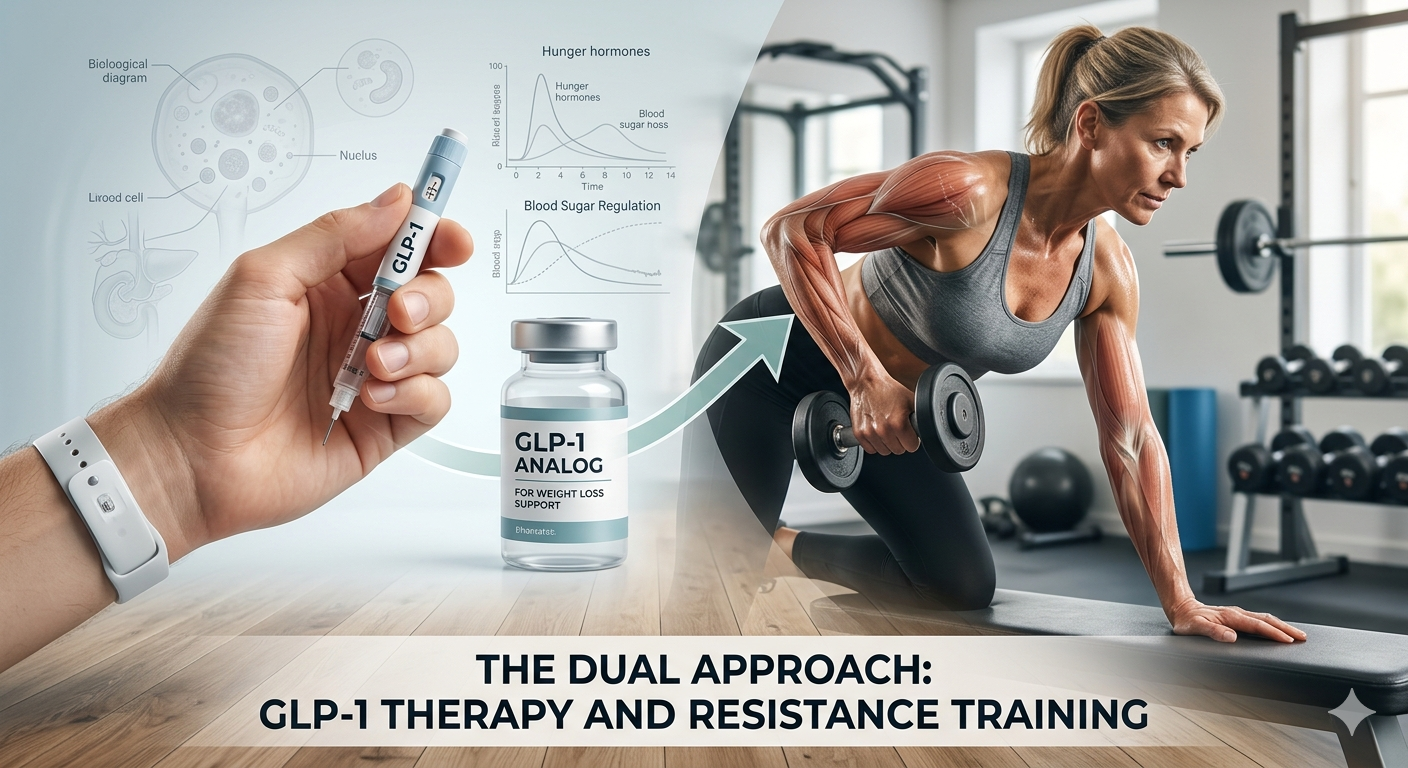
The GLP-1 Muscle Gap: Why Weights are Non-Negotiable
Clinical data from recent GLP-1 trials has shown a concerning trend: without specific lifestyle interventions, as much as 40% of the weight lost can be lean muscle mass.
Medical Disclaimer: The information provided in this article is for educational and informational purposes only and should not be considered medical advice. Always seek the advice of your physician or other qualified health provider with any questions you may have regarding a medical condition or the use of medications. Never disregard professional medical advice or delay in seeking it because of something you have read here.
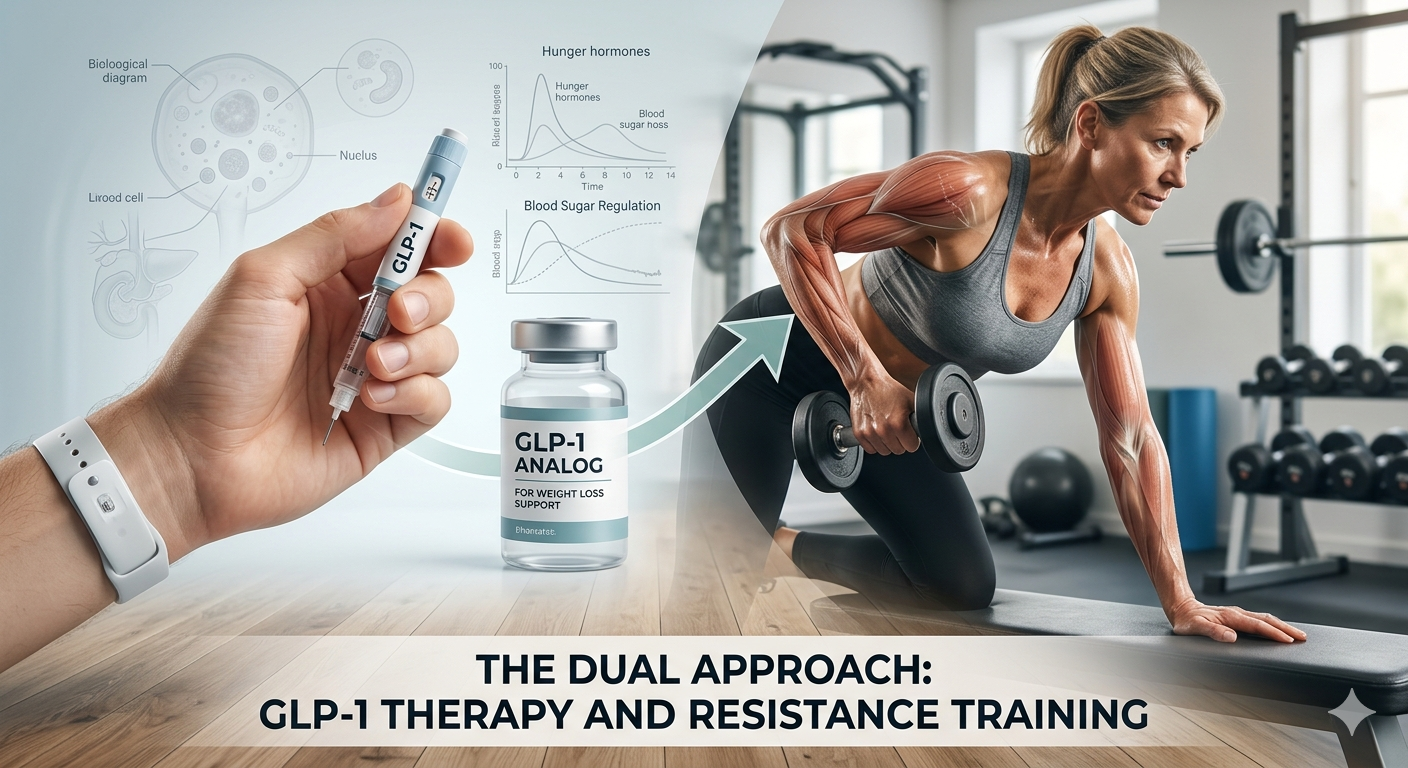
This image was created using AI to avoid copyright issues while conveying the context of this article.
The landscape of weight management changed forever with the rise of GLP-1 receptor agonists like semaglutide and tirzepatide. These medications have provided a powerful tool for those struggling with metabolic health and chronic obesity. However, as with any major medical advancement, they come with a specific set of challenges that must be managed strategically. The most significant of these is what researchers and coaches call the "Muscle Gap."
While the scale moving down is often seen as a victory, not all weight loss is created equal. The goal of any healthy transformation is to lose body fat while preserving the tissue that keeps us functional: muscle and bone. Unfortunately, the rapid weight loss triggered by GLP-1s can lead to a disproportionate loss of lean mass if the patient is not following a structured resistance training program.
The 40% Risk: Understanding Lean Mass Loss
In traditional weight loss through diet and exercise, it is normal for about 20% to 25% of the total weight lost to come from lean tissue. However, clinical data from recent GLP-1 trials has shown a more concerning trend. Some studies indicate that without specific lifestyle interventions, as much as 40% of the weight lost can be lean muscle mass.
This is a staggering number. If a person loses 50 pounds, but 20 of those pounds are muscle, they haven't just become smaller; they have become physically weaker and metabolically less efficient. Muscle is the primary driver of your resting metabolic rate. When you lose that much muscle, your body requires fewer calories to function. This creates a "rebound" trap where, if the medication is ever discontinued, the weight returns much faster because the body’s "engine" has been downsized.
The Impact on Bone Density
Beyond the muscles you see in the mirror, there is the skeletal system to consider. As we discussed in our previous look at bone health, bones are living tissue that require "loading" to remain dense and strong. Rapid weight loss is historically associated with a decrease in bone mineral density.
When body weight drops quickly, there is less mechanical load on the skeleton. If this is coupled with the decreased nutrient intake common on GLP-1s, the risk of developing osteopenia or osteoporosis increases. For older adults, this can be particularly dangerous. Losing 40% muscle mass while also decreasing bone density is a recipe for frailty and a loss of independence. Strength training is the only way to counteract this by creating the mechanical tension necessary to keep bones "charging" with new minerals.
Why the Body "Harvests" Muscle
When you are on a GLP-1 medication, your appetite is significantly suppressed. You are often in a massive calorie deficit. In this state, the body is looking for immediate energy to keep the heart beating and the brain functioning. If the body is not receiving enough energy from food, and it isn't being "reminded" that muscle is necessary through heavy lifting, it may begin to break down muscle tissue for energy.
Muscle is "expensive" for the body to keep. It requires a lot of energy to maintain. In a state of perceived starvation (the calorie deficit), the body will gladly shed muscle to save energy unless you give it a reason not to. Resistance training, specifically lifting weights that challenge you, sends a neurological signal that says the muscle is vital for survival. This signal, combined with adequate protein, tells the body to burn fat for fuel instead of your bicep or quadriceps tissue.
Overcoming the "Energy Crisis"
One of the most reported side effects of GLP-1 therapy is profound fatigue. Because users are often eating fewer carbohydrates and total calories, their "gas tank" feels empty. It is very easy to fall into a sedentary lifestyle because the motivation to move is low.
However, this inactivity accelerates the muscle loss. We recommend a "Quality over Quantity" approach to training while on these medications. You do not need to spend two hours in the gym doing high-intensity cardio. In fact, too much cardio can sometimes worsen the muscle-wasting effect. Instead, focus on 30 to 45 minutes of heavy, compound resistance training two to three times per week. Moves like squats, deadlifts, and presses provide the most "bang for your buck" and ensure the body prioritizes muscle preservation.
The Role of Professional Support
As certified personal trainers and nutrition coaches, we specialize in the "other half" of the GLP-1 journey. While the medication handles the hormonal and appetite side of the equation, we handle the structural and metabolic side.
Our role is to ensure that your transformation results in a body that is not just lighter, but stronger and more resilient. We focus on nutrient density, making sure every calorie you eat is working toward your goal, and progressive resistance training to bridge the muscle gap. The goal is to reach your target weight with a robust metabolism and a skeletal system that is built to last for decades.
Train for the Body You Want to Keep
The goal isn't just to be lighter, it’s to be more capable. Ensure your weight loss journey leads to lasting metabolic health rather than frailty.
Click below to grab a free 15-minute consultation and learn how our targeted strength and nutrition coaching can safeguard your results.