
Active Aging: Why 60 is the New 40 in the Weight Room
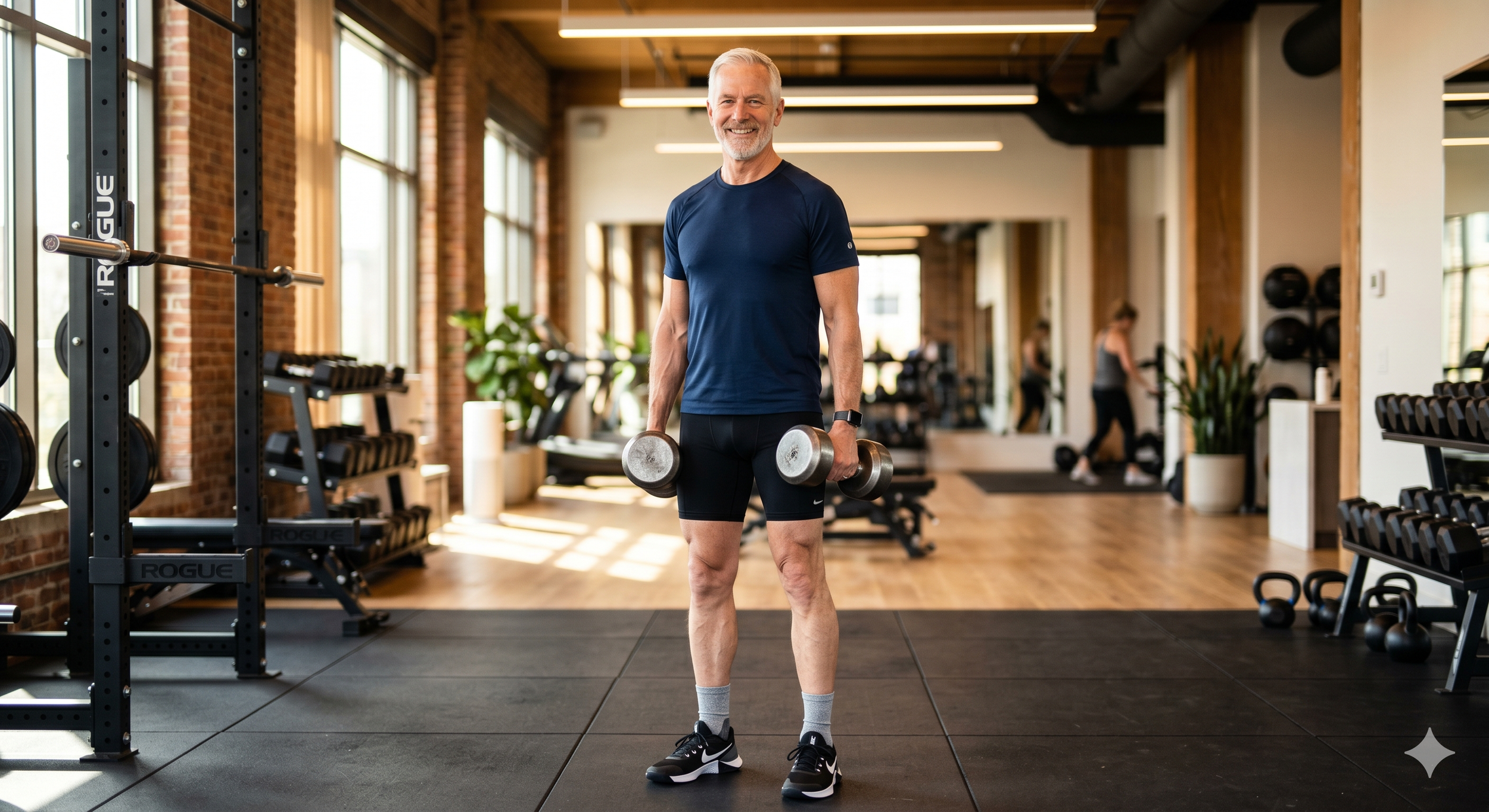
This image was created using AI to avoid copyright issues while conveying the context of this article.
There was a time when "fitness for seniors" meant light water aerobics or a gentle stroll around the mall. The general advice was to "be careful" and avoid anything strenuous. While any movement is better than none, we now know that the older we get, the more we actually need the "heavy stuff."
In 2026, we are seeing a massive shift in the gym. People in their 60s and 70s aren't just showing up; they are picking up dumbbells, using the squat rack, and out-performing people half their age. They have discovered the secret to "Active Aging": your muscles don't know how old you are, they only know how much you challenge them. By treating the weight room as a fountain of youth, this generation is redefining what it means to grow older.
Understanding the Enemy: Sarcopenia and Anabolic Resistance
To understand why lifting is so important, we have to look at what happens to the body naturally as the candles on the birthday cake add up. The medical term for age-related muscle loss is sarcopenia. Starting in our 30s, we begin to lose about 3% to 5% of our muscle mass per decade. By the time someone reaches 60, this loss can accelerate, leading to balance issues, joint pain, and a slower metabolism.
But there is another hurdle called anabolic resistance. As we age, our bodies become less efficient at turning protein from our food into new muscle tissue. A 20-year-old can grow muscle just by looking at a protein shake, but a 60-year-old has to work harder for it. To overcome this "resistance," the stimulus needs to be stronger. This is why "light" weights often don't work for older adults; you need a load that is heavy enough to force the body to pay attention and trigger the muscle-building process.
Muscle: The Armor of Longevity
Strength training acts like armor for your body. When you build muscle in your 60s, you aren't just "toning up" for the beach. You are building a physical shield that protects you from the most common risks of aging.
First, muscle protects your joints. When the muscles around your knees, hips, and spine are strong, they take the "impact" of daily life. Instead of your bones and cartilage grinding together, your muscles act as shock absorbers. This is why many people find that their chronic back or knee pain disappears once they start a structured lifting program.
Second, muscle is your metabolic insurance. Muscle is active tissue, meaning it burns calories even when you are sleeping. Sarcopenia is often the reason people "gain weight as they age" even if they aren't eating more food. Their "engine" has shrunk. By reclaiming that muscle, you are essentially "upgrading" your metabolism to that of a much younger person.
The Power of "Functional" Strength
When we talk about lifting weights for active aging, we are talking about Functional Strength, the kind of power that keeps you independent. Independence is the ultimate currency as we get older.
Training in your 60s is about ensuring you can always carry your own groceries, get up off the floor without help, and play with your grandkids without your back acting up. We focus on "The Big Patterns":
The Squat: This is the ability to get on and off a chair or a toilet without needing to grab a rail.
The Hinge: This is the ability to pick up a heavy box (or a toddler) off the ground using your hips instead of your lower back.
The Carry: This is the ability to maintain balance and core strength while moving weight from point A to point B.
These aren't just gym exercises; they are life skills. A 60-year-old who can deadlift 100 pounds is a 60-year-old who is unlikely to ever need a walker.
It Is Never Too Late to Start (The Science of Plasticity)
One of the biggest myths in fitness is that if you haven't been an athlete your whole life, the "ship has sailed." Science says the opposite. Your body remains "plastic" meaning it can change and adapt well into your 80s and 90s.
In fact, research has shown that previously sedentary people in their 70s can see a 10% to 20% increase in muscle size and a massive jump in strength in as little as 12 weeks. You don't need a history of athletics; you just need a willingness to start. The key is starting at the right level and focusing on "progressive overload," which simply means doing a little bit more this week than you did last week.
Recovery and the "New 40" Mindset
The reason we say "60 is the new 40" is that our understanding of recovery has changed in 2026. We used to think that older people needed weeks to recover from a hard workout. We now know that with high protein intake and proper sleep, the recovery gap between a 40-year-old and a 60-year-old is much smaller than we thought.
Lifting weights doesn't make you "worn out." It makes you more resilient. It gives you the energy to say "yes" to adventures, travel, and hobbies that others might have to give up. At Legacy Fitness, we don't look at your age on a calendar; we look at your capability in the gym. We are here to help you build a body that serves you for the rest of your life, ensuring that your "golden years" are spent in the squat rack, not the waiting room.
