
The Truth About "Anti-Aging" vs. Longevity Science
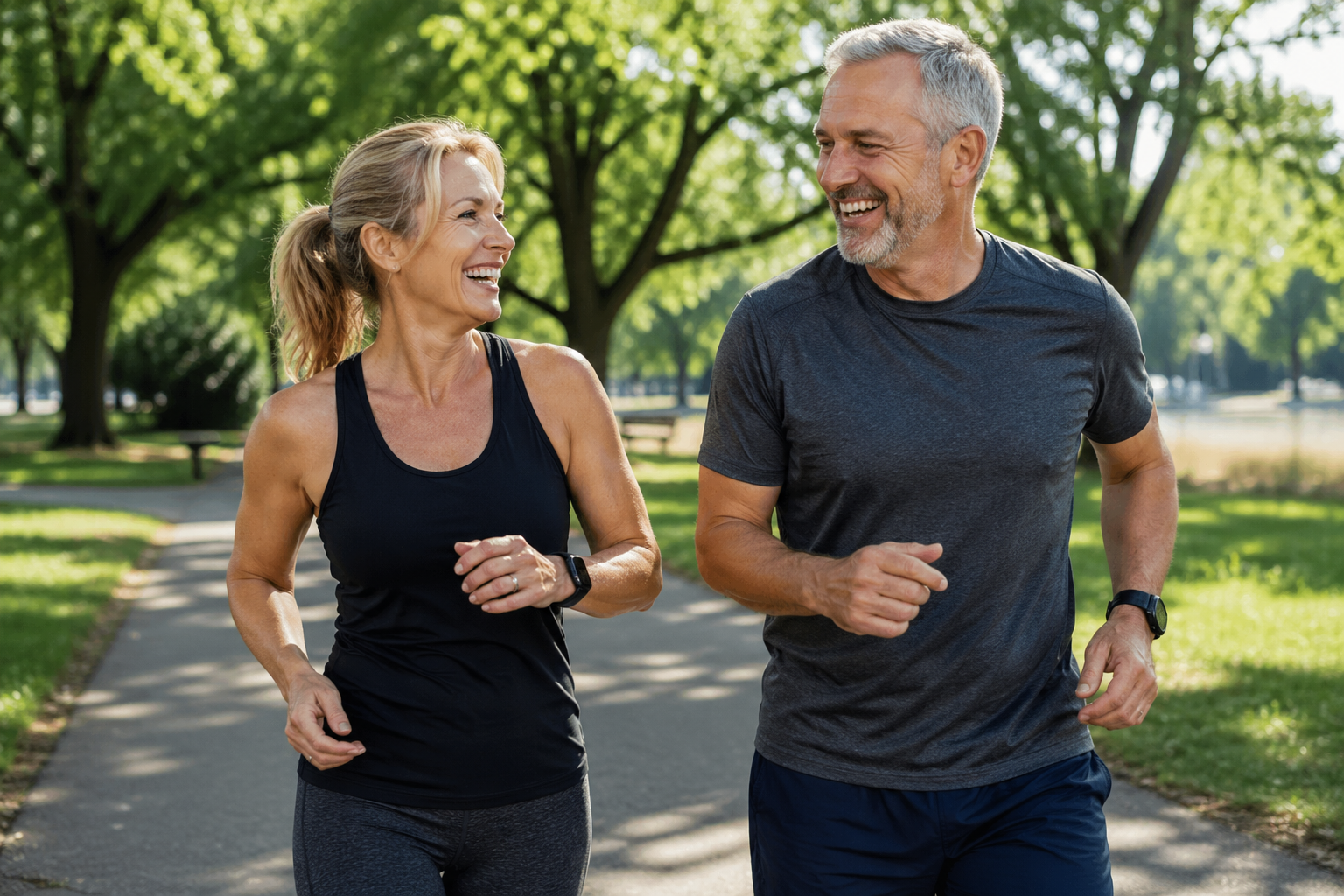
In the world of high-performance fitness, we aren't just trying to turn back the clock; we are trying to build a body that doesn't care what the clock says.
This image was created using AI to avoid copyright issues while conveying the context of this article.
If you walk down the health aisle of any store, you will see hundreds of products promising "anti-aging" miracles. Usually, these products focus on the outside, creams to hide wrinkles or dyes to cover gray hair. While there is nothing wrong with wanting to look your best, there is a massive difference between anti-aging and longevity science.
Anti-aging is often about the appearance of youth. Longevity science is about the function of youth. It is the study of "healthspan", how long we can live while remaining strong, sharp, and independent. In the world of high-performance fitness, we aren't just trying to turn back the clock; we are trying to build a body that doesn't care what the clock says.
The Problem with "Anti-Aging" Marketing
Most anti-aging trends are "passive." They ask you to buy a pill, a lotion, or a special tea. These things are easy to sell because they don't require any effort. However, true longevity is "active." It requires a lifestyle that tells your cells to stay resilient.
The hard truth is that no cream can fix a weak metabolic system, and no pill can replace the strength required to stand up off the floor without help. To truly move the needle on how long you live and how well you feel, you have to move past the surface-level fixes and look at your internal biology.
Muscle: The Ultimate Longevity Drug
If there were a pill that could lower your risk of heart disease, improve your brain health, stabilize your blood sugar, and protect your bones, it would be the most expensive drug on earth. That "drug" exists, but you can't buy it in a bottle. You have to build it in the weight room.
Muscle mass is one of the strongest predictors of how long you will live. As we age, our risk of "all-cause mortality" (the risk of dying from anything) drops significantly as our strength levels go up. This is because muscle is more than just a tool for movement; it is a metabolic organ. It helps your body manage inflammation and clear glucose from your blood. When you have more muscle, you have a larger "buffer" against the diseases of aging.
The "Healthspan" vs. "Lifespan" Gap
Lifespan is simply the number of years you are alive. Thanks to modern medicine, we are very good at keeping people alive for a long time. Healthspan, however, is the number of years you are healthy and capable.
The goal of longevity science is to close the gap between these two. We don't want to spend the last twenty years of our lives in a state of physical decline. We want to be the 80-year-old who is still hiking, traveling, and lifting weights. This is achieved by prioritizing "Metabolic Resilience", the ability of your body to bounce back from stress.
The Longevity Pillars for 2026
To shift your focus from anti-aging to longevity, focus on these three pillars:
Resistance Training: This is the non-negotiable foundation. You must challenge your muscles to maintain your "Skeletal 401(k)" and metabolic health.
Protein Density: As we discussed earlier this month, protein is the raw material for longevity. It maintains the tissues that keep you functional.
Stress Management (Hormesis): True longevity comes from "good stress." This includes things like challenging workouts, which force your cells to clean themselves up and become stronger.
Changing the Goal
Stop trying to "anti-age" and start trying to "out-live" the average. When you focus on your strength, your energy, and your metabolic health, the "looking younger" part often happens as a side effect. At Legacy Fitness, we train for the long game. We want you to be the most capable version of yourself, not just today, but for decades to come.
Active Aging: Why 60 is the New 40 in the Weight Room
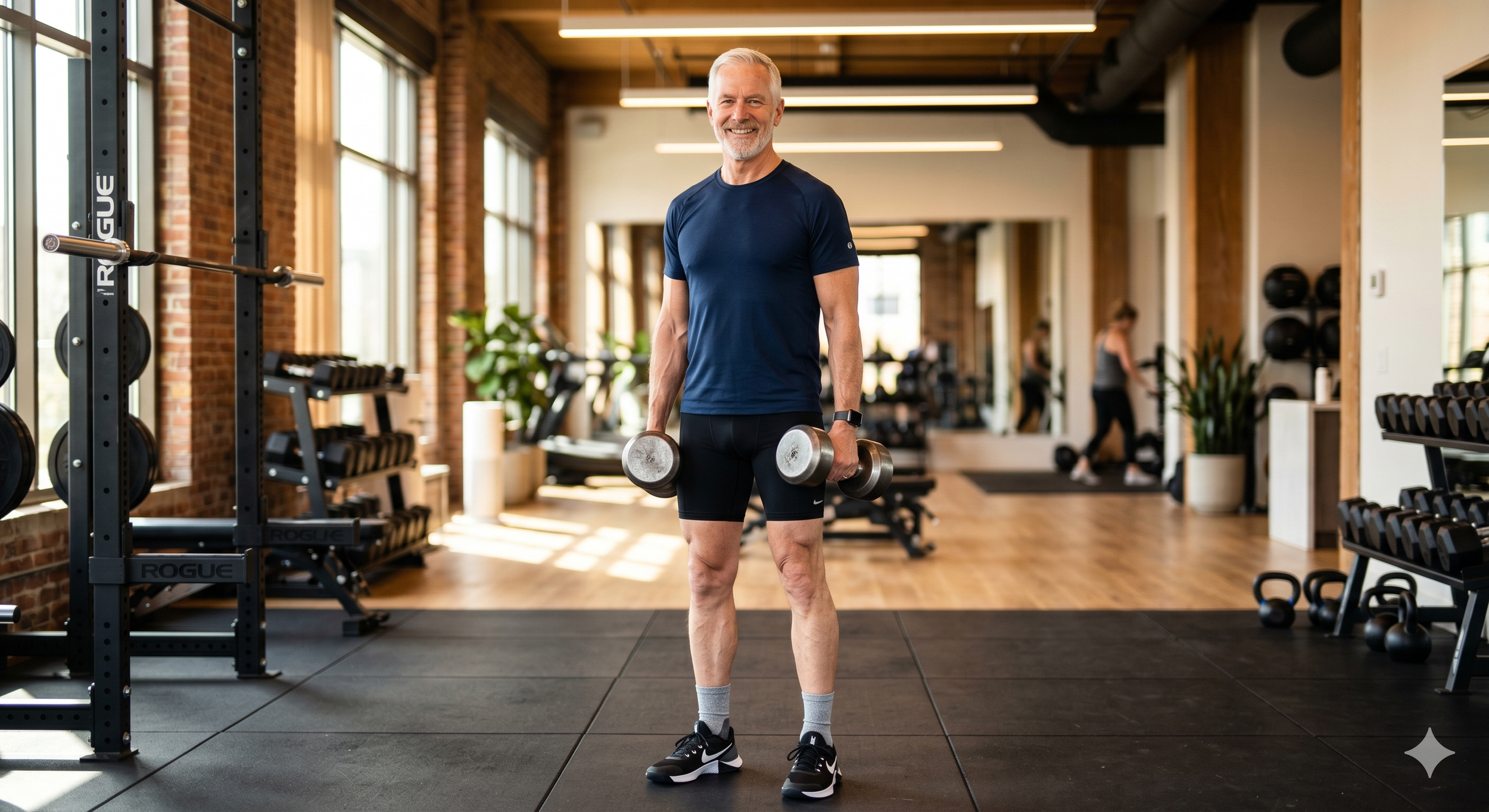
Functional Strength keeps you independent; independence is the ultimate currency as we get older.
This image was created using AI to avoid copyright issues while conveying the context of this article.
There was a time when "fitness for seniors" meant light water aerobics or a gentle stroll around the mall. The general advice was to "be careful" and avoid anything strenuous. While any movement is better than none, we now know that the older we get, the more we actually need the "heavy stuff."
In 2026, we are seeing a massive shift in the gym. People in their 60s and 70s aren't just showing up; they are picking up dumbbells, using the squat rack, and out-performing people half their age. They have discovered the secret to "Active Aging": your muscles don't know how old you are, they only know how much you challenge them. By treating the weight room as a fountain of youth, this generation is redefining what it means to grow older.
Understanding the Enemy: Sarcopenia and Anabolic Resistance
To understand why lifting is so important, we have to look at what happens to the body naturally as the candles on the birthday cake add up. The medical term for age-related muscle loss is sarcopenia. Starting in our 30s, we begin to lose about 3% to 5% of our muscle mass per decade. By the time someone reaches 60, this loss can accelerate, leading to balance issues, joint pain, and a slower metabolism.
But there is another hurdle called anabolic resistance. As we age, our bodies become less efficient at turning protein from our food into new muscle tissue. A 20-year-old can grow muscle just by looking at a protein shake, but a 60-year-old has to work harder for it. To overcome this "resistance," the stimulus needs to be stronger. This is why "light" weights often don't work for older adults; you need a load that is heavy enough to force the body to pay attention and trigger the muscle-building process.
Muscle: The Armor of Longevity
Strength training acts like armor for your body. When you build muscle in your 60s, you aren't just "toning up" for the beach. You are building a physical shield that protects you from the most common risks of aging.
First, muscle protects your joints. When the muscles around your knees, hips, and spine are strong, they take the "impact" of daily life. Instead of your bones and cartilage grinding together, your muscles act as shock absorbers. This is why many people find that their chronic back or knee pain disappears once they start a structured lifting program.
Second, muscle is your metabolic insurance. Muscle is active tissue, meaning it burns calories even when you are sleeping. Sarcopenia is often the reason people "gain weight as they age" even if they aren't eating more food. Their "engine" has shrunk. By reclaiming that muscle, you are essentially "upgrading" your metabolism to that of a much younger person.
The Power of "Functional" Strength
When we talk about lifting weights for active aging, we are talking about Functional Strength, the kind of power that keeps you independent. Independence is the ultimate currency as we get older.
Training in your 60s is about ensuring you can always carry your own groceries, get up off the floor without help, and play with your grandkids without your back acting up. We focus on "The Big Patterns":
The Squat: This is the ability to get on and off a chair or a toilet without needing to grab a rail.
The Hinge: This is the ability to pick up a heavy box (or a toddler) off the ground using your hips instead of your lower back.
The Carry: This is the ability to maintain balance and core strength while moving weight from point A to point B.
These aren't just gym exercises; they are life skills. A 60-year-old who can deadlift 100 pounds is a 60-year-old who is unlikely to ever need a walker.
It Is Never Too Late to Start (The Science of Plasticity)
One of the biggest myths in fitness is that if you haven't been an athlete your whole life, the "ship has sailed." Science says the opposite. Your body remains "plastic" meaning it can change and adapt well into your 80s and 90s.
In fact, research has shown that previously sedentary people in their 70s can see a 10% to 20% increase in muscle size and a massive jump in strength in as little as 12 weeks. You don't need a history of athletics; you just need a willingness to start. The key is starting at the right level and focusing on "progressive overload," which simply means doing a little bit more this week than you did last week.
Recovery and the "New 40" Mindset
The reason we say "60 is the new 40" is that our understanding of recovery has changed in 2026. We used to think that older people needed weeks to recover from a hard workout. We now know that with high protein intake and proper sleep, the recovery gap between a 40-year-old and a 60-year-old is much smaller than we thought.
Lifting weights doesn't make you "worn out." It makes you more resilient. It gives you the energy to say "yes" to adventures, travel, and hobbies that others might have to give up. At Legacy Fitness, we don't look at your age on a calendar; we look at your capability in the gym. We are here to help you build a body that serves you for the rest of your life, ensuring that your "golden years" are spent in the squat rack, not the waiting room.

Building a "Legacy" Body: Why the Goal is Health for the Next 40 Years, Not 4 Weeks
Build a body that reflects the strength of your character and the depth of your ambition. Build a Legacy Body.

This image was created using AI to avoid copyright issues while conveying the context of this article.
In the world of business, we are taught to think in decades. We build five-year plans, we consider the long-term sustainability of our models, and we ask ourselves what our organizations will look like long after we are gone. We understand that "short-termism," chasing a quarterly spike at the expense of long-term stability, is a recipe for failure.
Yet, when most people approach their fitness, they do the exact opposite. They fall into the trap of the "six-week challenge" or the "beach body" deadline. they push themselves to the point of injury or burnout just to hit a number on the scale by a certain date.
At Legacy Fitness, we believe this approach is fundamentally flawed. Your body is not a short-term project; it is the most important piece of biological infrastructure you will ever own. If you want to be a high-performer in your 60s, 70s, and 80s, you have to stop training for the next 4 weeks and start building for the next 40 years. This is the shift from "fitness" to "Legacy."
The Danger of the "Sprint" Mentality
Sprinting has its place, but you cannot live your life in a constant state of emergency. Many high-performers treat their health like a crisis management task. They ignore their bodies for months, realize they feel terrible, and then embark on an extreme, unsustainable regime to "fix" it.
The problem with the sprint mentality is that it often leads to "System Failure." Extreme calorie deficits, excessive cardio, and lifting without a foundational plan create chronic stress. You might lose ten pounds in a month, but if you lose five pounds of muscle and wreck your sleep in the process, you haven't moved closer to health. You have simply mortgaged your future for a short-term win.
Defining the 40-Year Metric
When we shift our focus to the next 40 years, our metrics for "success" change. We stop obsessing over daily fluctuations in weight and start looking at the markers of long-term vitality:
Skeletal Muscle Mass: Muscle is your longevity currency. It protects your joints, manages your blood sugar, and keeps you independent. A Legacy Body prioritizes muscle maintenance over rapid weight loss.
Functional Mobility: Can you still get off the floor without using your hands? Can you reach overhead without pain? Longevity is about the quality of your movement, not just the absence of disease.
Metabolic Flexibility: Can your body easily switch between burning fat and burning carbohydrates? A resilient metabolism allows you to navigate social dinners and high-stress workdays without crashing.
Structural Integrity: Are your tendons, ligaments, and bones strong enough to handle the demands of your life? Building a Legacy Body means training in a way that strengthens your "chassis," not just the "engine."
The "Compound Interest" of Health
In finance, we know that the earlier you start and the more consistent you are, the more your wealth compounds. Health works the same way. A 30-minute walk today might not feel like much, but when done 300 days a year for 20 years, it is the difference between a healthy heart and a surgical bill.
Consistency is the "interest rate" of your fitness. It is better to do a moderate workout three times a week for a decade than it is to do a perfect workout five times a week for three months and then quit. A Legacy Leader values the "boring" basics: protein, steps, sleep, and strength, because he knows they are the only things that compound.
Training for the "Grandkid" Standard
I often ask my clients to visualize their "Ultimate Goal." For many, it isn't a certain weight; it’s a specific activity. It’s being 75 years old and being able to pick up a grandchild without thinking about their back. It’s being 80 and being the person who can still carry their own luggage through an airport.
This is the "Grandkid Standard." When you train with this vision in mind, your workouts become more intentional. You stop doing "ego reps" that might hurt your shoulders, and you start focusing on the foundational movements, the squats, hinges, and presses, that will keep you capable for life.
Beyond the Physical
Building a Legacy Body isn't just about the physical tissues. it’s about the mindset. It’s about viewing yourself as an elite athlete in the game of life. An athlete doesn't just train to "be thin"; he or she trains to perform.
When you treat your body with respect, your career, your relationships, and your leadership all improve. You become a person of higher capacity. You become a person who can lead others because you have successfully led yourself.
Your Health is Your Greatest Legacy
At the end of the day, your professional achievements will be recorded in ledgers and LinkedIn profiles, but your personal legacy will be felt by the people who love you. Being present, energized, and capable for your family is the highest ROI you can achieve.
Don't settle for a 4-week transformation. Build a body that reflects the strength of your character and the depth of your ambition. Build a Legacy Body.
Stop Chasing Deadlines. Start Building a Legacy.
Most fitness programs are designed to end. We design our programs to last. Whether you are an individual executive or a leader looking to transform your organization, we provide the systems for lifelong performance.
For the Individual: Ready for a strategic approach to your health that lasts for decades? Book My Individual Discovery Call
For the Organization: Empower your leadership team with the durability of a Legacy Body. Explore Corporate Wellness Packages
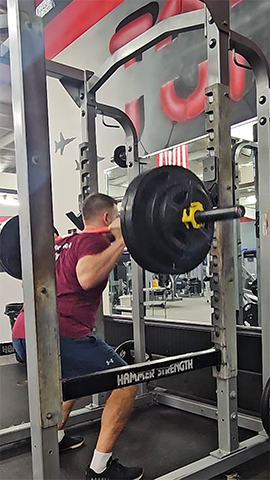
The "Big 3" Lifts for Longevity: Why the Squat, Hinge, and Press Keep You Young
Consistency in these three patterns is the foundation of a Legacy Body. You don't need a hundred different exercises.
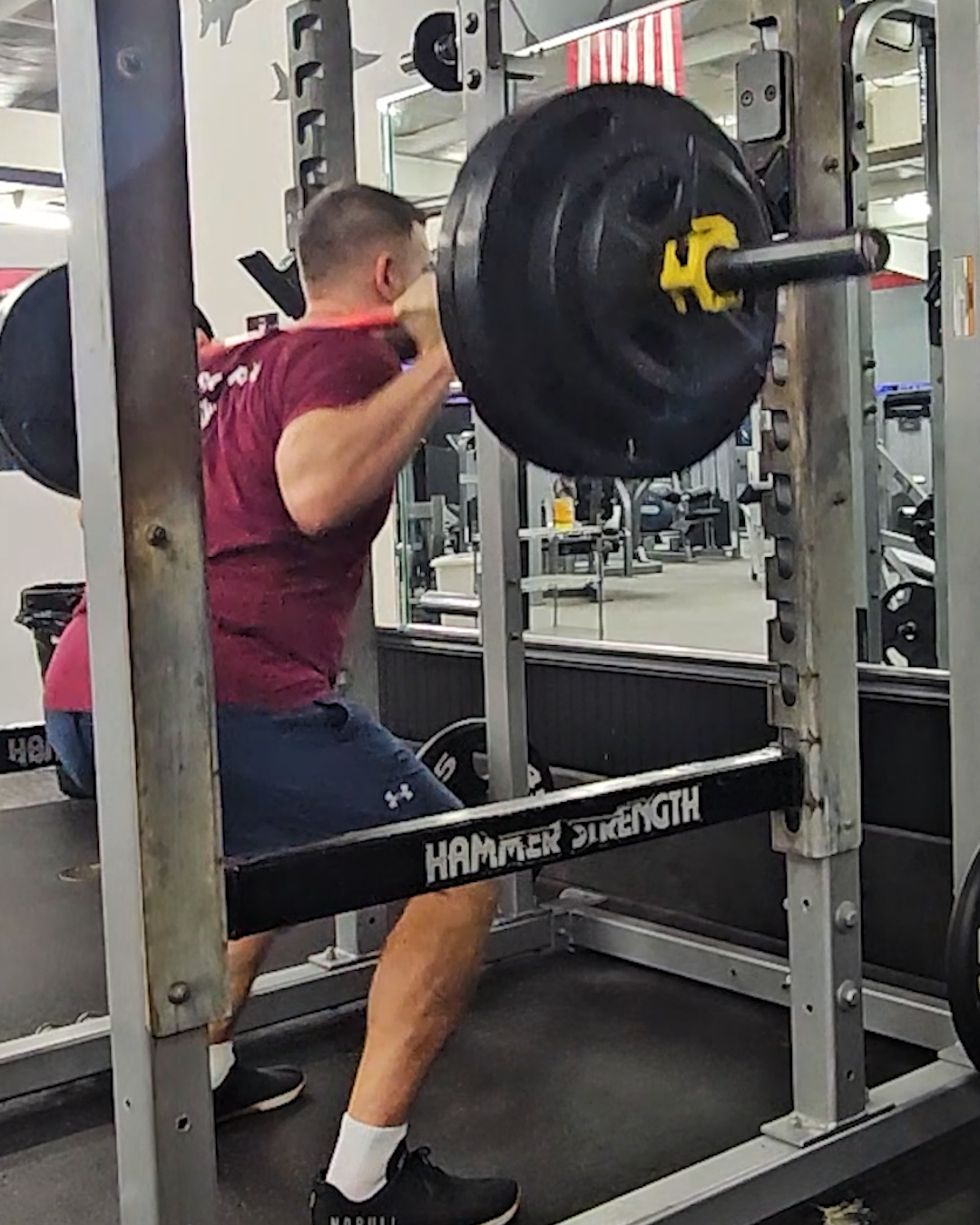
Demonstrating a back squat. Not AI or stock image this time.
If you walk into a modern gym, you will see rows of complicated machines, colorful bands, and high-tech gadgets. It is easy to think that you need a complex program to get results. But as we get older, the most important movements aren't the newest ones; they are the oldest ones.
At Legacy Fitness, we believe in "Minimum Effective Dose" training. We want you to spend your time on the movements that give you the biggest return on your investment. When it comes to staying strong, capable, and independent for the next 40 years, three specific movements stand above the rest: The Squat, The Hinge, and The Press.
These are not just "gym exercises." They are the foundational patterns of human life. If you master these three, you aren't just building a better physique; you are building a body that is "bulletproof" against the aging process.
1. The Squat: Your Independence Movement
The squat is often called the "King of Exercises," and for good reason. From a functional standpoint, the squat is simply the act of sitting down and standing back up. It uses almost every muscle in your lower body, including your quads, glutes, and hamstrings.
Why does this matter for longevity? Because the loss of leg strength is one of the primary reasons people lose their independence as they age. If you can't stand up from a chair or a toilet without help, your quality of life changes dramatically.
By practicing the squat, whether it’s with a barbell, a kettlebell, or just your own body weight, you are keeping your "internal engine" strong. You are telling your bones to stay dense and your nervous system to stay sharp. A strong squat is the ultimate insurance policy against the frailty that often comes with getting older.
2. The Hinge: Protecting Your Back
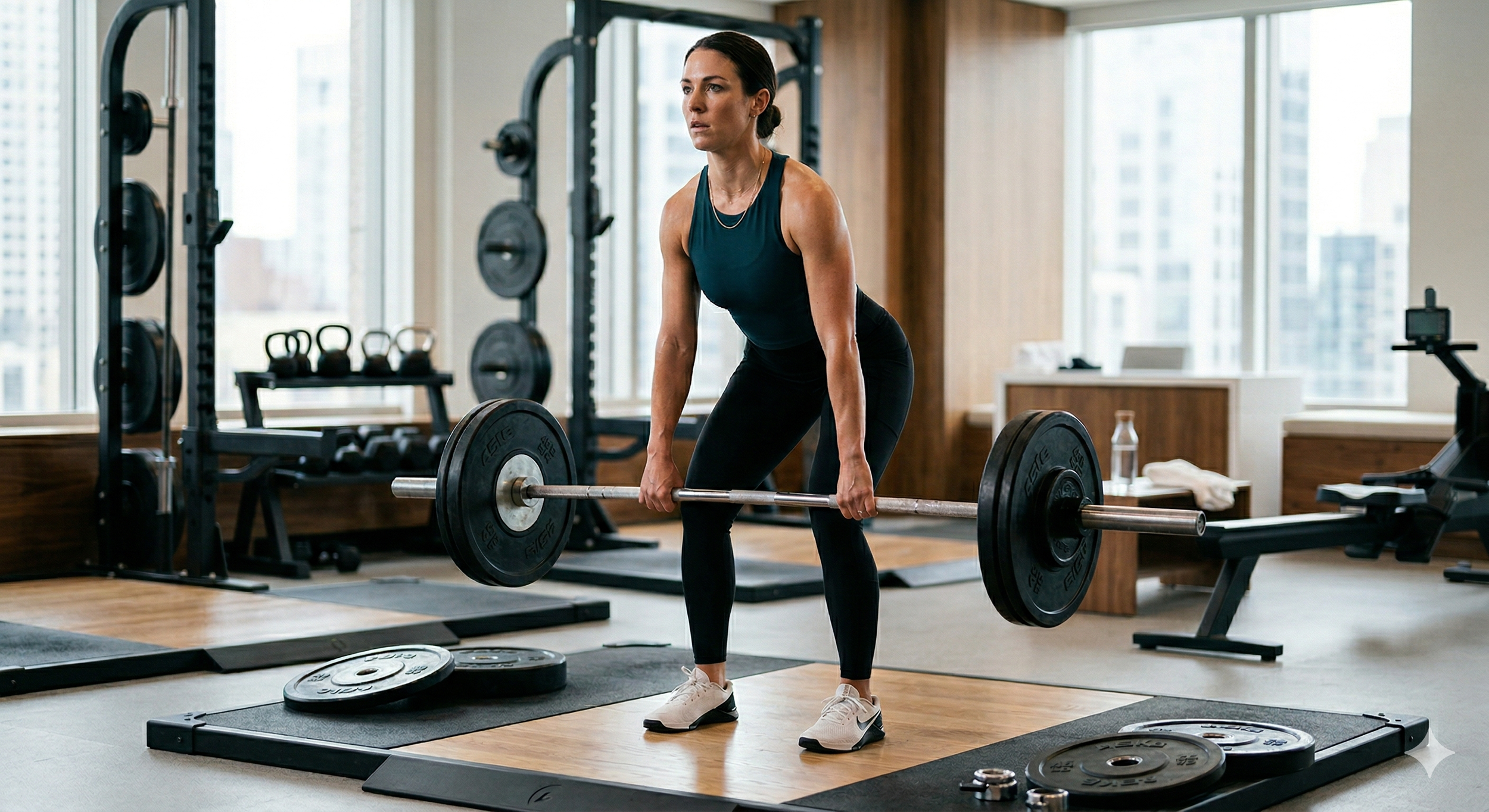
The "hinge" is the movement where you push your hips back while keeping your spine straight. The most common version of this is the deadlift. Many people are afraid of the deadlift because they think it will hurt their back. In reality, a properly performed hinge is the best way to protect your back.
Think about how many times a day you bend over to pick something up. Maybe it’s a bag of groceries, a laundry basket, or even a child. If you "round" your back to do this, you are putting a lot of stress on your spine. But if you know how to "hinge" at the hips, you use your powerful glutes and hamstrings to do the heavy lifting instead.
Learning to hinge teaches you how to move weight with your "posterior chain" (the muscles on the back of your body). These are the strongest muscles in your body, and keeping them active is the secret to a pain-free lower back and a powerful stride.
3. The Press: Maintaining Your "Reach"
The press refers to pushing a weight away from your body. This can be a horizontal press (like a push-up or bench press) or a vertical press (pushing something over your head).
As we age, we often lose "overhead mobility." We stop reaching for things on high shelves, and our shoulders begin to round forward. This leads to poor posture and neck pain. By intentionally practicing the press, you are maintaining the health of your shoulders and the strength of your upper body.
A strong press ensures that you can still manage your own luggage, put things away in the garage, and maintain an upright, confident posture. It is about staying "big" and capable in a world that often tries to make us smaller and weaker as we age.
How to Start
The beauty of the "Big 3" is that they can be scaled to any ability level.
The Squat: You can start by simply sitting down into a chair and standing back up ten times. As you get stronger, you can hold a small weight at your chest.
The Hinge: Start by standing with your back a few inches from a wall and reaching your hips back until they touch the wall. Once you master that, you can move to kettlebell deadlifts.
The Press: Start with push-ups against a kitchen counter. As you progress, move to the floor, and eventually to overhead dumbbell presses.
The Legacy Mindset
At Legacy Fitness, we aren't training you for a "six-week challenge." We are training you for the "40-year challenge." We want you to be the person who is still squatting, hinging, and pressing well into your 80s.
Consistency in these three patterns is the foundation of a Legacy Body. You don't need a hundred different exercises. You just need to master the basics, do them with great form, and never stop moving.
Muscle: Your Metabolic Insurance Policy
You wouldn't leave your financial future to luck. Don't leave your physical future to luck either.
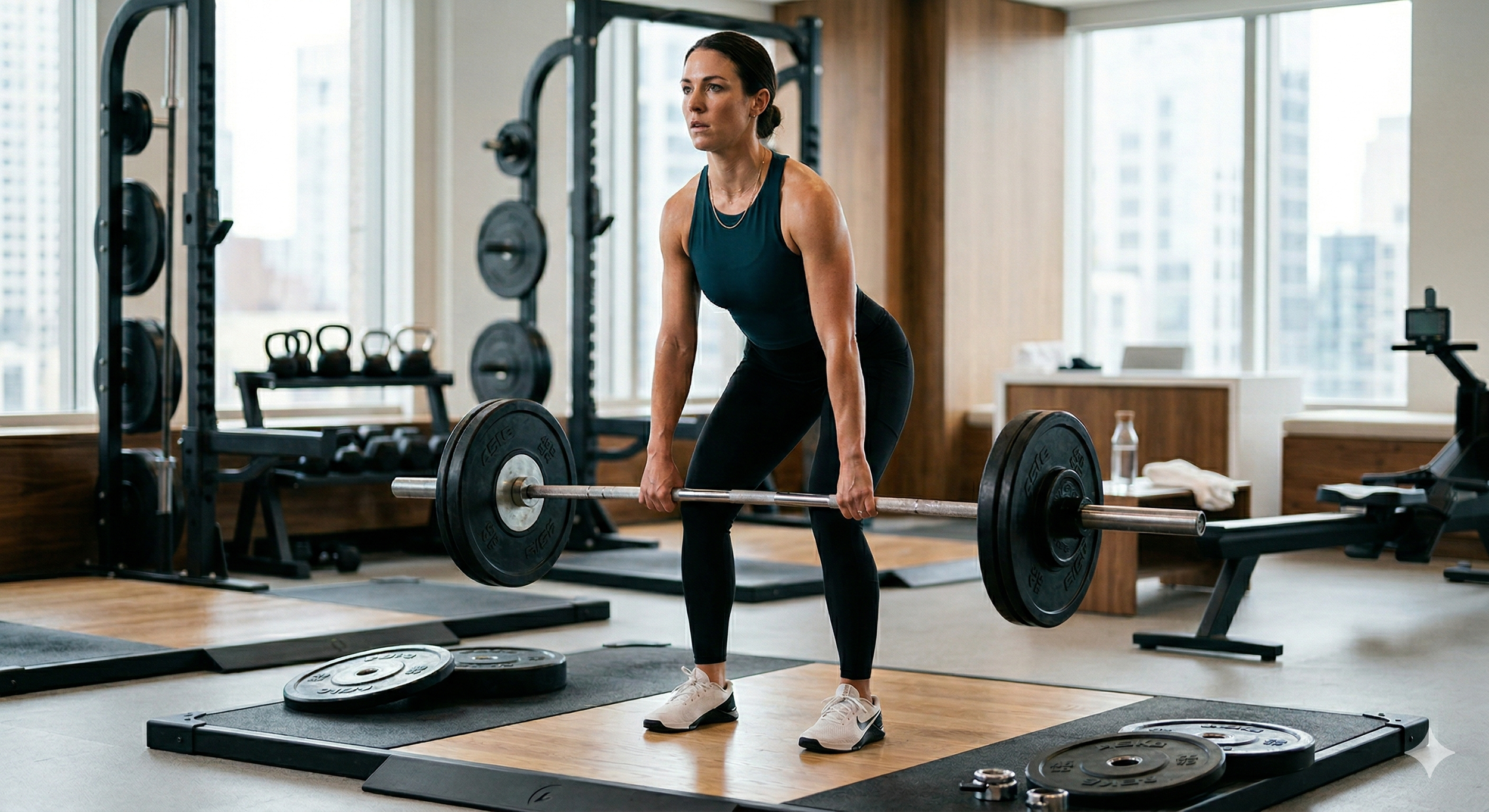
This image was created using AI to avoid copyright issues while conveying the context of this article.
In the world of finance, we buy insurance to protect ourselves against the unexpected. We pay into a policy so that if a crisis hits, we have a safety net. In the world of health, most people wait until the "crisis" happens, a bad blood test, a back injury, or a loss of energy, before they try to fix the problem.
But what if you could build a physical insurance policy that protected you from those things before they happened?
That policy is your muscle mass.
At Legacy Fitness, we don't just view muscle as something that looks good in the mirror. We view it as "Metabolic Insurance." It is the primary engine that keeps your blood sugar stable, your hormones balanced, and your body resilient as you age.
The "Sponge" for Blood Sugar
One of the most important jobs your muscle has is acting as a "glucose sink." When you eat carbohydrates, they are broken down into sugar (glucose) in your blood. Your body has to put that sugar somewhere.
If you have very little muscle, your body struggles to manage that sugar, which can lead to energy crashes and long-term health issues. But if you have healthy, active muscle mass, your muscles act like a giant sponge. They pull that sugar out of the blood and use it for fuel. This is why people with more muscle can often enjoy more flexibility in their diet without losing progress.
Muscle and the Aging Process
As we get older, we naturally begin to lose muscle, a process called sarcopenia. If you aren't intentionally building or maintaining muscle, you are losing your insurance policy.
Loss of muscle is the leading cause of "metabolic slowdown." When people say their metabolism "died" at 40, what usually happened is they lost the muscle that was burning those calories. By keeping your strength high, you are essentially keeping your metabolic "engine" young, regardless of the date on your birth certificate.
Resilience Against Injury
Muscle isn't just for metabolism; it is armor for your joints. A strong set of glutes and hamstrings protects your lower back. Strong shoulders protect your neck. When you have a solid foundation of muscle, you aren't just "fit", you are durable. You can play a weekend game of golf, pick up your grandkids, or go for a hike without the fear that your body is going to "snap."
The Data That Actually Matters
We live in an age where gadgets can track every heartbeat, but the most important data point isn't on a watch. it’s on the bar.
Are you getting stronger over time?
Is your body composition improving?
Do you have more energy at 3:00 PM than you did last month?
This is where the expertise of a coach comes in. Technology can provide the numbers, but a coach provides the context. We use data to see how your body is responding to the work, ensuring that we aren't guessing, but rather making informed adjustments based on how you feel and perform in the real world.
Your Most Important Investment
You wouldn't leave your financial future to luck. Don't leave your physical future to luck either. Every strength session is a "premium" paid into your metabolic insurance policy. It is an investment that compounds over time, ensuring that the "Legacy" you build is one of strength, energy, and independence.
Ready to Build Your Insurance Policy?
Strength is the foundation of everything we do at Legacy Fitness & Nutrition. We help you cut through the noise and focus on the habits that actually move the needle.
For the Individual: Ready to build a body that lasts? Let's start your transformation. Book My Discovery Call
For the Organization: Give your team the ultimate edge with our health leadership workshops. Explore Corporate Wellness Packages
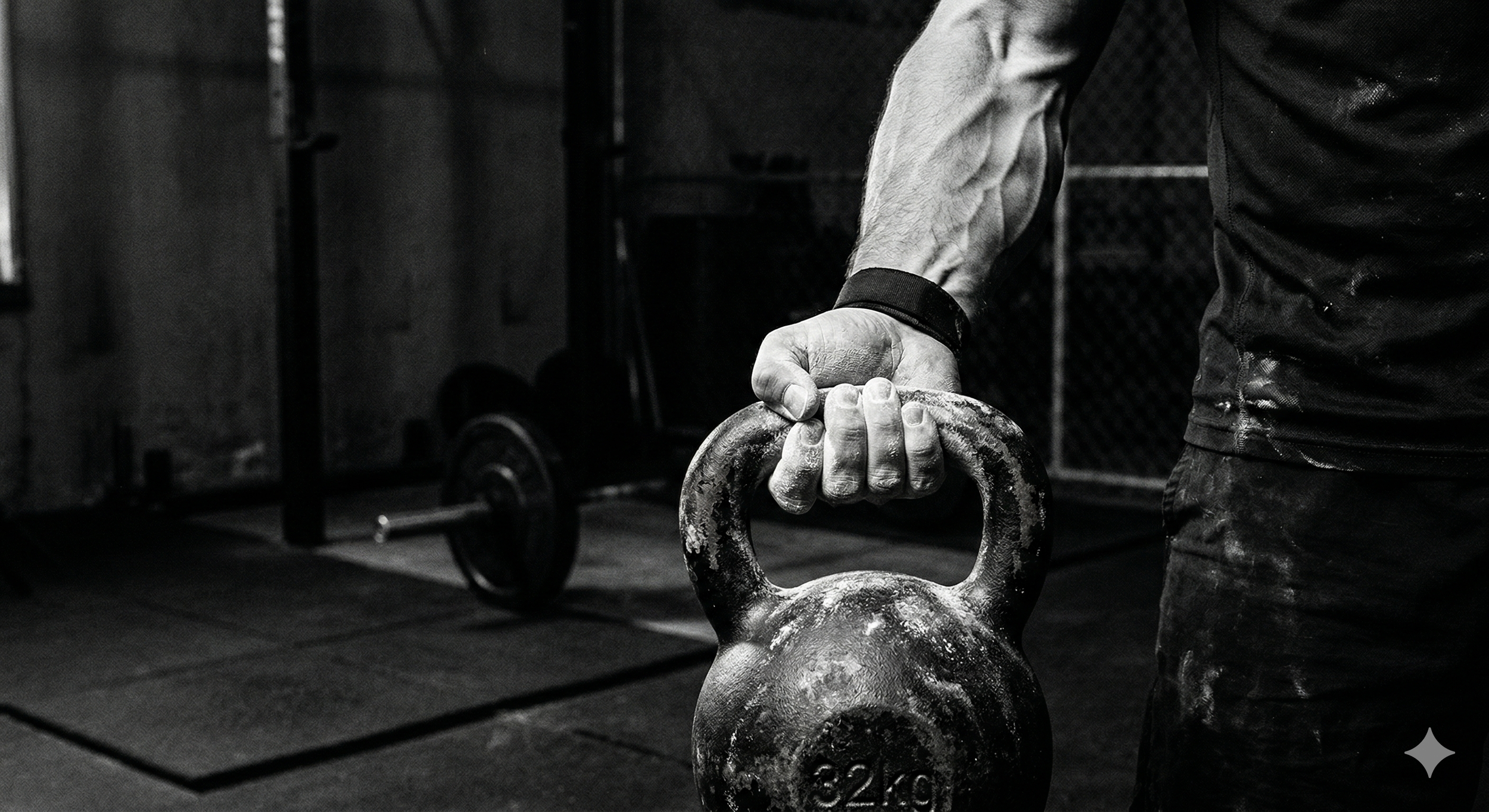
Grip Strength: The Longevity Metric You Can’t Ignore
Science has shown that the strength of your hands is one of the most powerful "crystal balls" we have for predicting how long (and how well) you will live.
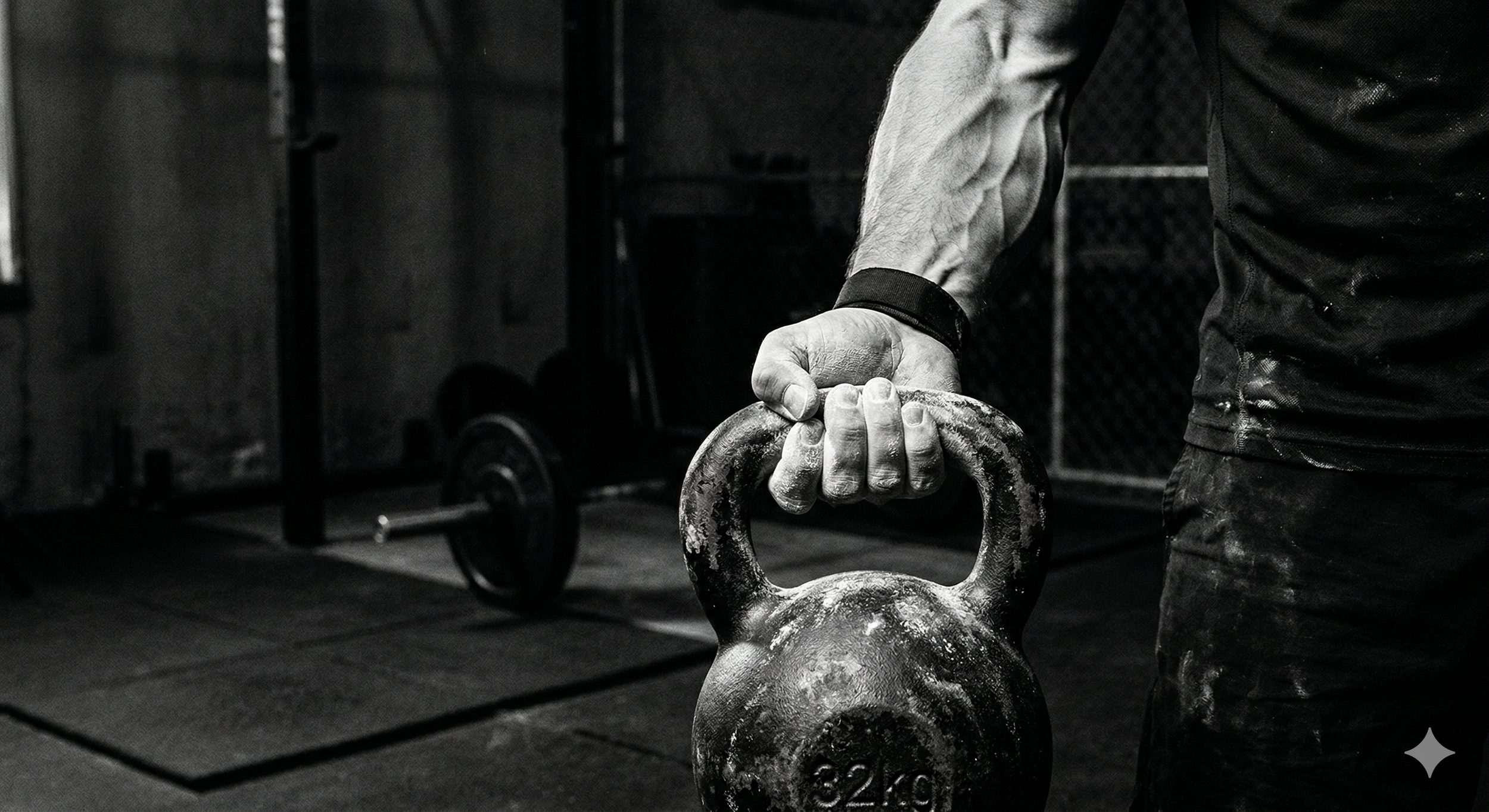
This image was created using AI to avoid copyright issues while conveying the context of this article.
If you walked into a doctor’s office for a check-up, you would expect them to take your blood pressure and check your heart rate. But there is another test that many experts believe is just as important for predicting your long-term health: how hard you can squeeze a handle.
This is your grip strength. While it might seem like a small detail, science has shown that the strength of your hands is one of the most powerful "crystal balls" we have for predicting how long (and how well) you will live.
Why Your Hands Tell Your Health Story
Your grip strength is a "proxy" for your overall muscle mass and the health of your nervous system. To have a strong grip, your brain has to send a powerful signal through your nerves to the muscles in your forearms and hands.
If that signal is weak, or if those muscles have wasted away, it’s often a sign that the rest of your body is struggling, too. Large-scale studies have found that people with higher grip strength tend to have:
Lower Risk of Heart Disease: A stronger grip is linked to a healthier heart.
Better Brain Health: There is a direct connection between hand strength and cognitive function as we age.
Increased Independence: Being able to carry your own groceries, open jars, and lift yourself up prevents the "frailty" that leads to many problems later in life.
It’s Not Just for Seniors
While grip strength is a major focus for longevity in older adults, it’s something we should be mindful of at every stage of life. Whether it’s a toddler learning to climb and carry weighted objects or an adult in the prime of their career, developing that "crushing power" pays dividends.
In fact, if you find that your grip is the "weak link" during your workouts, meaning your hands give out before your legs do during a deadlift, it is a sign that your body has more potential than your hands are currently allowing you to use.
The "Deadlift" Connection
One of the best ways to improve grip strength is through "big" movements like deadlifts and lat pull-downs. When you hold onto a heavy barbell or a pull-down bar, you aren't just training your back and legs; you are forcing your hands and forearms to adapt to a high level of tension.
For many, the simple act of holding a heavy weight for 30 to 60 seconds is enough to trigger massive improvements in hand health.
How to Build a "Legacy" Grip
You don't need fancy machines to improve your grip. You can build world-class hand strength with just a few simple habits:
Farmer’s Carries: This is the king of grip exercises. Pick up two heavy dumbbells or kettlebells and walk for 40 yards. Keep your chest up and your grip tight. This mimics "real-world" strength better than almost anything else.
Dead Hangs: Find a pull-up bar and simply hang from it for as long as you can. Aim for 30 seconds at first, and work your way up to a full minute. This decompresses your spine while building incredible forearm endurance.
Plate Pinches: Take two weight plates and pinch them together with just your fingers and thumb. Hold them for time. This builds "pinch" strength, which is vital for dexterity.
Stop Using Straps (At First): If you use lifting straps for every set in the gym, your grip never has to work. Try to do your "warm-up" and "moderate" sets without straps to give your hands a chance to grow stronger.
A Metric for Life
At Legacy Fitness, we talk a lot about "Muscle for Life." We want you to be the person who can still carry their own luggage at 75 and still play with their grandkids on the floor at 80.
Grip strength is the foundation of that independence. It is a simple, measurable way to track your vitality. So, the next time you pick up a heavy weight, don't just think about your muscles, think about your grip. It’s the literal handle on your long-term health.
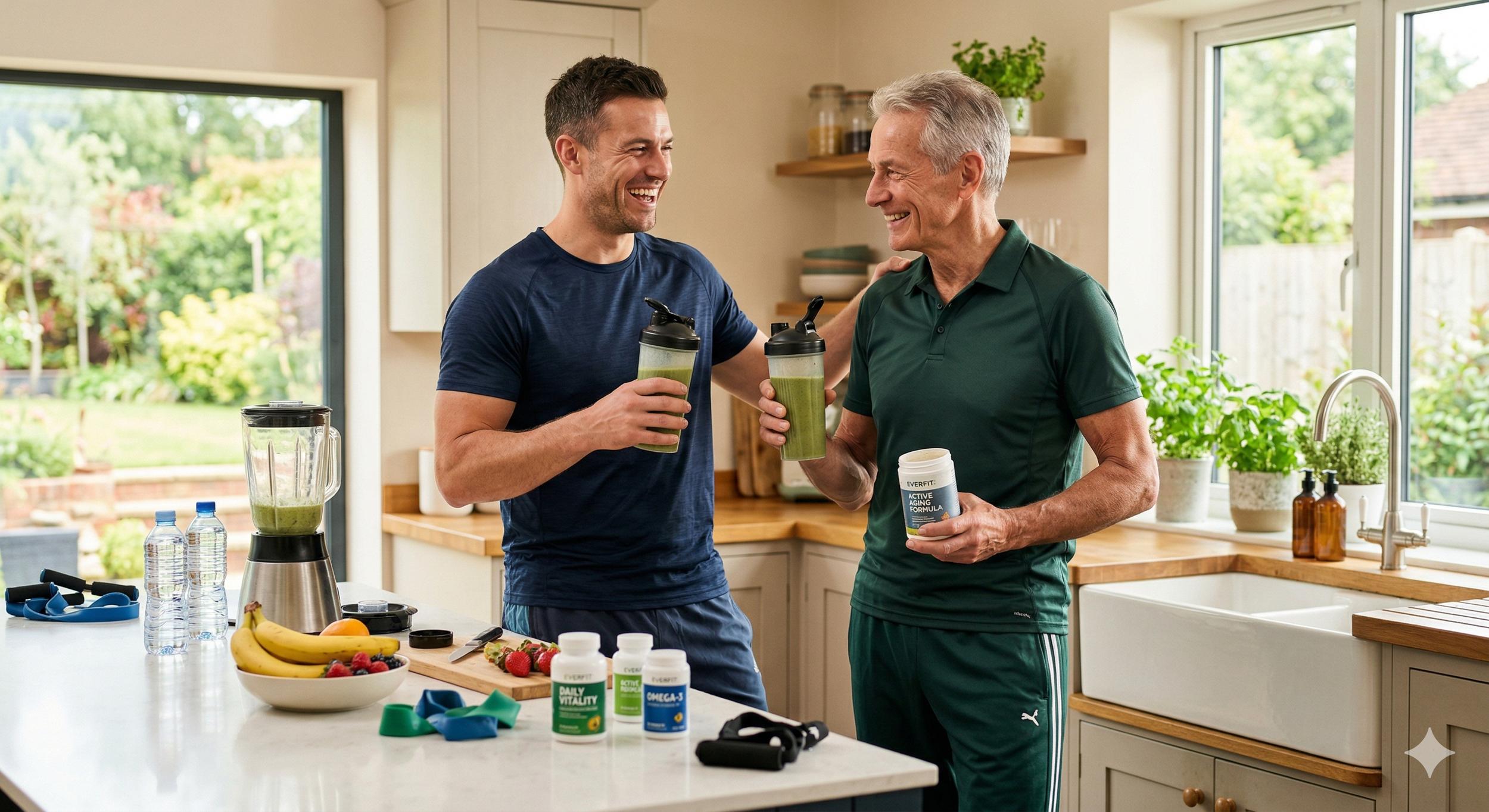
The Truth About Creatine for Every Age
Whether you are a 25-year-old athlete or a 65-year-old looking to stay active, creatine has something to offer.
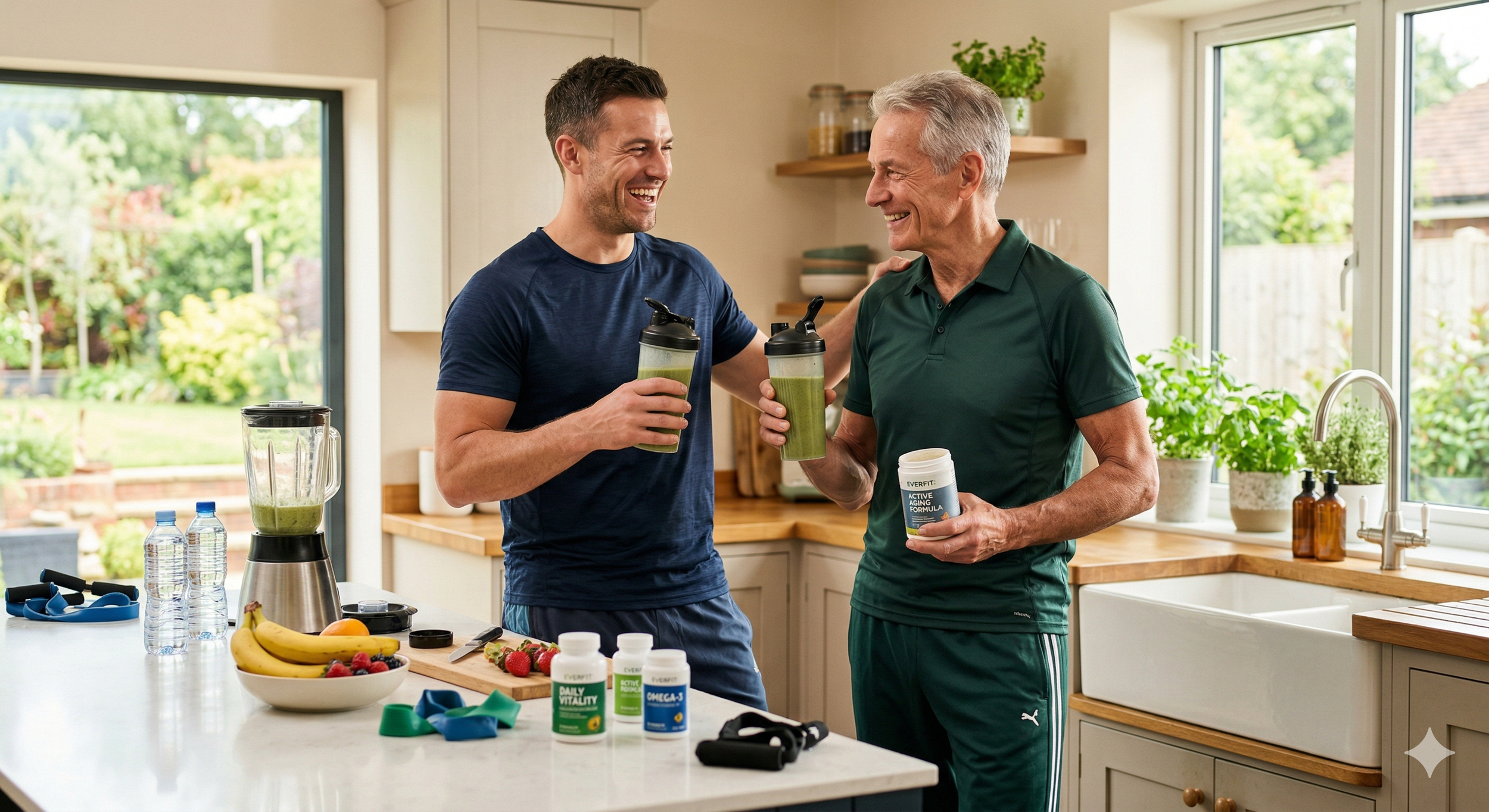
This image was created using AI to avoid copyright issues while conveying the context of this article.
If you walked into a gym twenty years ago and asked about creatine, most people would tell you it was only for bodybuilders who wanted to "bulk up." Fast forward to today, and the conversation has completely changed. Scientists now consider creatine to be one of the most researched and effective supplements in the world, not just for muscle, but for your brain and long-term health.
Whether you are a 25-year-old athlete or a 65-year-old looking to stay active, creatine has something to offer. It is time to clear up the myths and look at why this simple supplement is becoming a staple for people of every age.
What is Creatine, Anyway?
Creatine is a natural compound found in your muscle cells. It helps your muscles produce energy during heavy lifting or high-intensity exercise. Your body produces some of it naturally, and you get more from eating red meat and fish. However, to get enough to see a real health benefit, many people choose to take a small daily dose of "creatine monohydrate."
It isn't a steroid, it isn't a stimulant, and it won't make you look like a bodybuilder overnight unless you are doing the extreme training required to get there.
The Benefit for the Younger Athlete
For younger people, the benefits of creatine are well-known. It helps you recover faster between sets in the gym. It allows you to push for that extra rep, which leads to better strength gains over time. It also helps with "cell hydration," which means it pulls water into your muscle cells. This doesn't just make them look fuller; it actually helps the muscles repair themselves more efficiently.
The "Secret" Benefit: Brain Health
This is where the research gets really exciting. Your brain, just like your muscles, uses a lot of energy. Recent studies have shown that creatine can help with "mental fatigue." If you have a job that requires intense focus, or if you feel "brain fog" after a long day, creatine might help.
There is even evidence that it can help with memory and cognitive processing. As we age, keeping our brains sharp is just as important as keeping our bodies strong, and creatine is proving to be a powerful ally for both.
Why Seniors Should Consider It
As we get older, we naturally begin to lose muscle mass and bone density. This is a process called sarcopenia. Maintaining muscle is one of the best ways to prevent falls and stay independent as you age.
Creatine, when combined with even light resistance training, has been shown to help older adults maintain their strength better than training alone. It helps keep your muscles "responsive." For a senior, the benefit isn't about a bench press record; it’s about having the leg strength to get out of a chair easily or carry groceries without struggle.
Is It Safe?
Creatine is one of the most tested supplements in history. Thousands of studies have shown that it is safe for long-term use in healthy individuals. The old myths about it damaging the kidneys have been debunked many times over.
The most common "side effect" is a slight increase in water weight, but remember: that water is going inside the muscle cells where you want it, not just sitting under the skin.
How to Take It
You don't need fancy "loading phases" or expensive "buffered" versions. Simple creatine monohydrate is the gold standard.
The Dose: Most people see full benefits with just 3 to 5 grams a day (about one small scoop).
The Timing: It doesn't matter when you take it, as long as you take it consistently. Mix it with your morning water, coffee, or a protein shake.
A Tool for Your Legacy
At Legacy Fitness, we are about longevity. We want you to be the strongest version of yourself at every stage of life. Creatine is a simple, affordable, and safe tool that helps bridge the gap between "getting older" and "staying strong."
Whether you want to hit a new personal best or just want to stay sharp for your grandkids, it might be time to give creatine a second look.
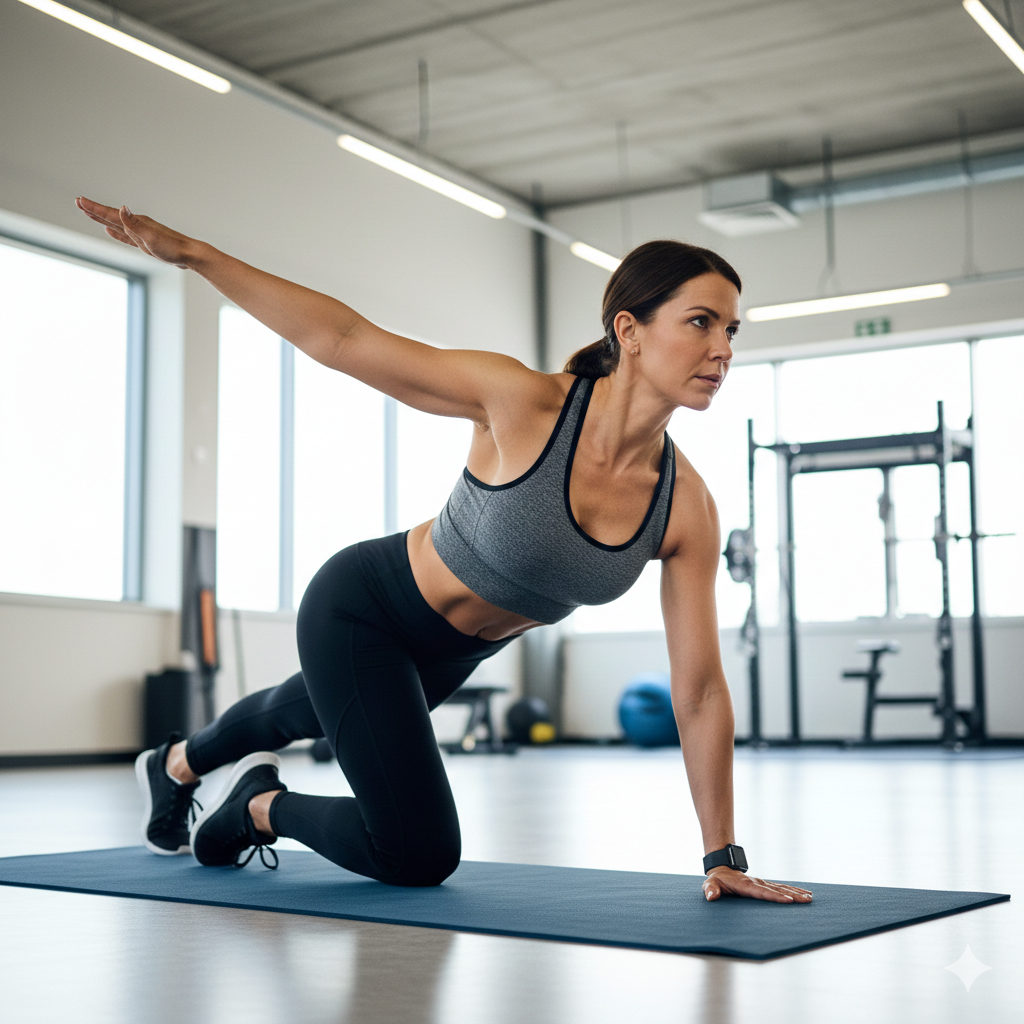
The Pelvic Floor & Power: The Missing Link in Your Core
Pelvic floor health is about dignity, power, and long-term spinal safety.
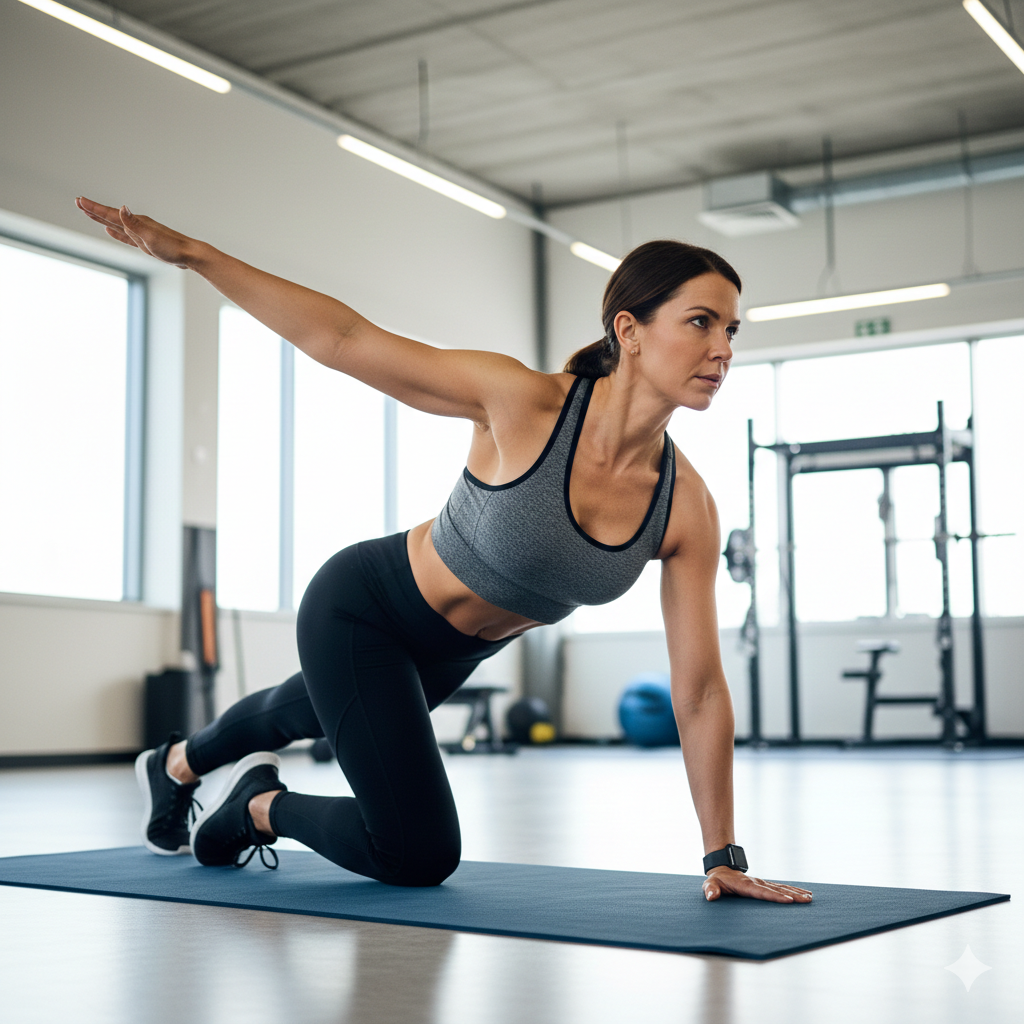
This image was created using AI to avoid copyright issues while conveying the context of this article.
When we talk about "core strength," most people immediately think of a six-pack. We picture sit-ups, planks, and leg raises. But your core is actually a 3D canister, and the most important part of that canister isn't the front, it’s the bottom.
Welcome to the Pelvic Floor. For a long time, pelvic floor health was only discussed in the context of women’s health after pregnancy. But in the world of high-performance fitness, we now know that a strong, functional pelvic floor is the secret to true power for both men and women. If you want to lift heavier, run faster, and protect your spine, you need to stop ignoring the floor of your core.
The Canister Concept
Think of your torso as a soda can.
The Top: Your diaphragm (your breathing muscle).
The Sides: Your abdominal muscles and back muscles.
The Bottom: Your pelvic floor.
If the bottom of that can is weak or "leaky," you cannot create internal pressure. Without that pressure, your spine isn't stable. When you go to lift a heavy grocery bag or a barbell, a weak pelvic floor can lead to lower back pain, hernia issues, or even "accidents" during high-impact movements like jumping or heavy squatting.
Power Starts from the Bottom Up
Your pelvic floor muscles are responsible for supporting your organs and controlling internal pressure. When you brace your core for a big movement, the pelvic floor should lift and contract to meet the pressure coming down from your diaphragm.
If this timing is off, your power "leaks" out. You might find that your strength has plateaued, or that you feel "unstable" even when your abs feel tight. By learning to engage the pelvic floor, you create a solid foundation that allows your bigger muscles (like your glutes and legs) to produce maximum force.
How to Train Your Floor
Training the pelvic floor isn't about doing a thousand "Kegels" while sitting at a red light. It’s about integration.
360-Degree Breathing: Instead of breathing into your chest, practice breathing into your ribs and belly. As you inhale, feel your pelvic floor relax and drop. As you exhale, feel a gentle lift.
The "Pre-Lift" Engagement: Before you start a heavy lift, exhale slightly and imagine "lifting" the muscles between your sit-bones. This creates a solid base before the weight even moves.
Core Integration: Movements like Dead Bugs or Bird-Dogs are perfect for learning how to keep the pelvic floor active while your arms and legs are moving.
Nutrition for Muscle Integrity
Just like every other muscle we’ve discussed this February, your pelvic floor requires the right fuel. The 4:1 Protein-to-Fiber ratio is vital here.
Protein: Provides the collagen and amino acids needed for the connective tissues and muscles of the pelvic bowl to stay resilient.
Fiber: This is a secret pelvic floor hack! Chronic constipation and straining are the #1 enemies of pelvic floor health. By hitting your fiber goals, you ensure smooth digestion, which prevents the unnecessary pressure that weakens these muscles over time.
The Legacy View
At Legacy Fitness, we don't just care about the muscles people can see. We care about the muscles that keep you functional for life. Pelvic floor health is about dignity, power, and long-term spinal safety.
This week, stop thinking of your core as just your "abs." Start thinking of it as a complete system. Breathe deep, lift from the bottom, and build a foundation that is truly unbreakable.
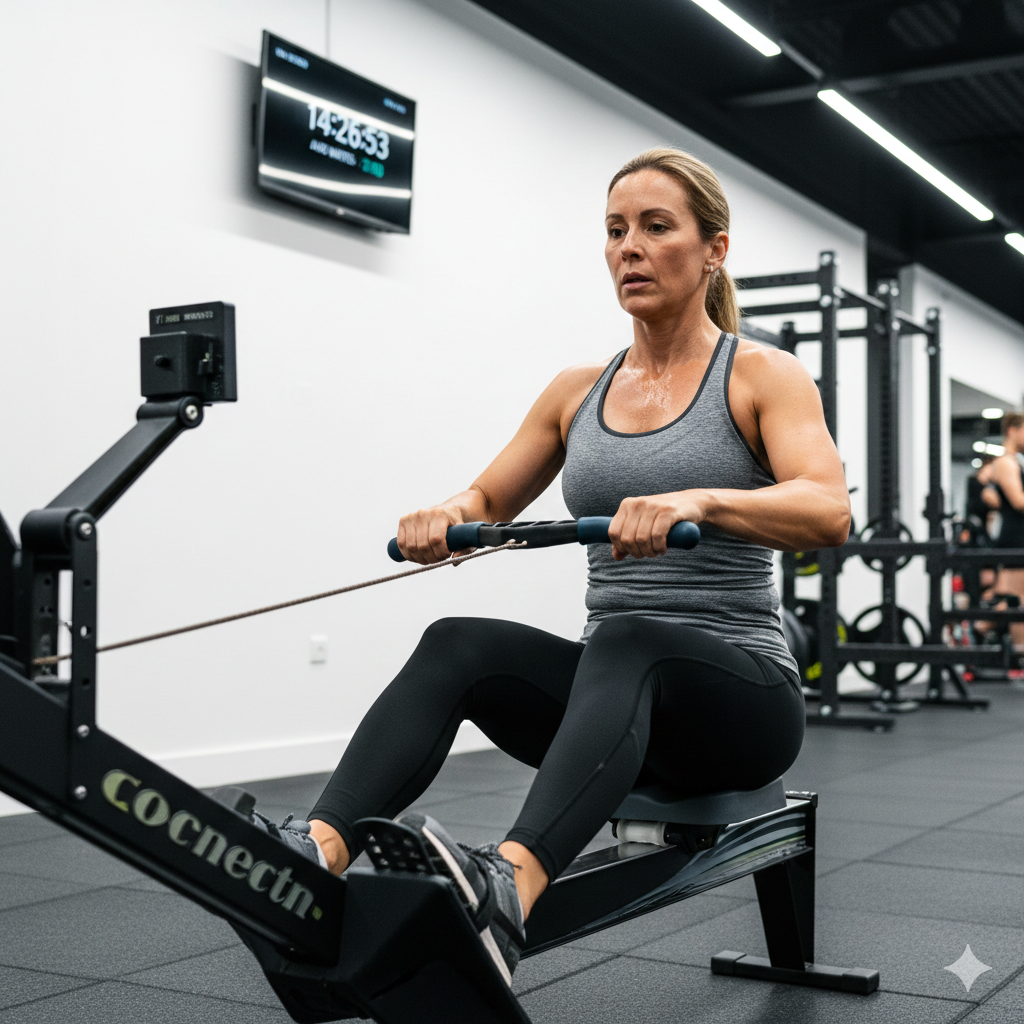
Zone 4 "VO2 Max" Training: The Longevity Secret
This week, find your "top gear." Push yourself for just a few minutes, feel your heart beat, and know that you are building a legacy of a strong, capable heart.
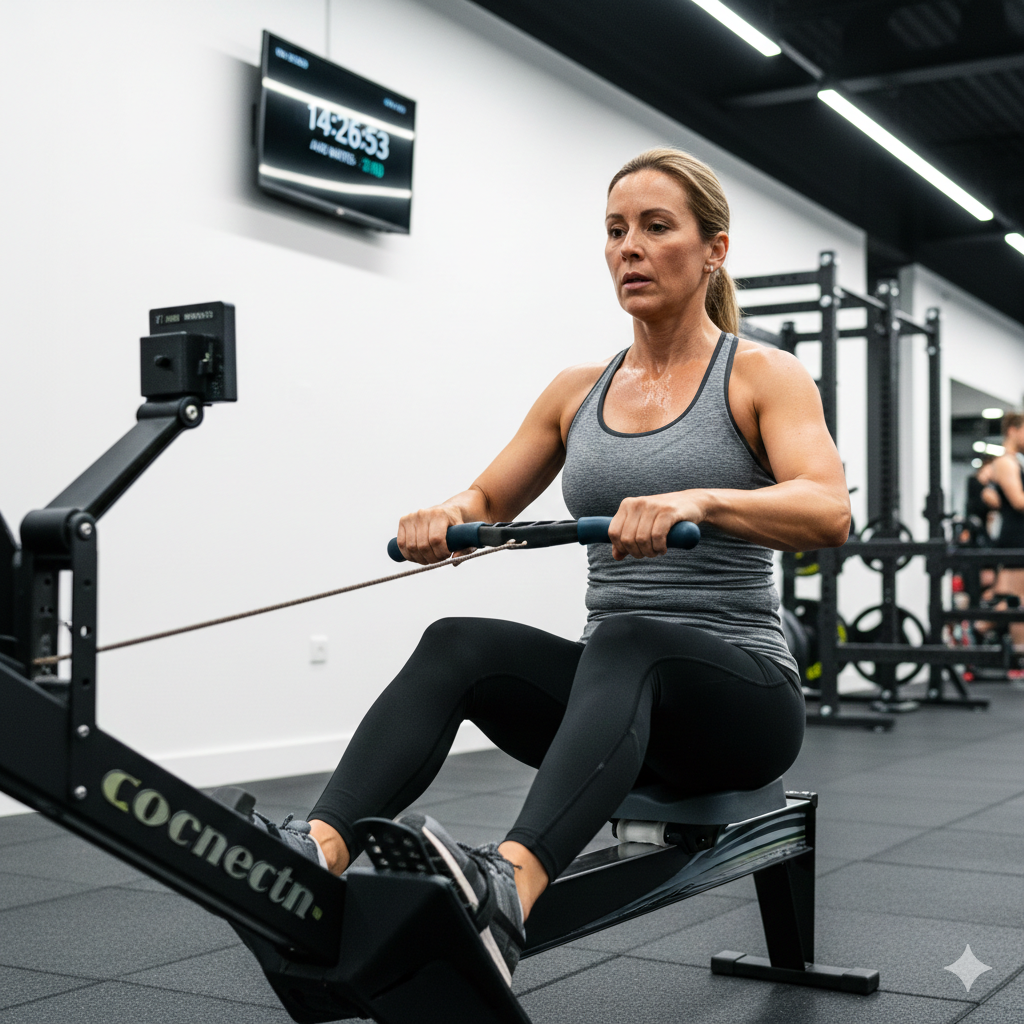
This image was created using AI to avoid copyright issues while conveying the context of this article.
When we talk about cardio, we usually think of two extremes. There is the slow, steady pace of a long walk (Zone 2) or the all-out, heart-pounding sprint of a HIIT class. But there is a specific type of training that falls right in the middle, at the edge of your comfort zone, that is becoming the gold standard for long-term health.
This is Zone 4 training, and its primary goal is to improve your VO2 Max.
If you want to live a long, vibrant life, your VO2 Max is perhaps the most important number you’ve never tracked. In the fitness world today, we view it as a "crystal ball" for longevity. Here is why you need to find your "top gear" once a week.
What is VO2 Max?
VO2 Max is a measurement of the maximum amount of oxygen your body can use during intense exercise. Think of it like the engine size of a car. A car with a larger engine can go faster and handle hills with less strain than a car with a tiny engine.
As we age, our VO2 Max naturally declines. However, the higher your starting point is, the more "functional reserve" you have as you get older. Research has shown that individuals with a high VO2 Max have a significantly lower risk of nearly all chronic diseases. It isn't just about being a better runner; it is about being a more resilient human.
Entering Zone 4
To improve this "engine size," you have to push into Zone 4. This is an intensity level where you are breathing hard, hard enough that you can only speak in one or two-word bursts. You aren't sprinting as fast as you can, but you are moving with purpose.
In Zone 4, your heart is beating at roughly 80% to 90% of its maximum. This level of stress forces your heart to become more efficient at pumping blood and your muscles to become better at extracting oxygen.
The "One Hard Session" Rule
The best part about VO2 Max training is that you don't need to do it every day. In fact, you shouldn't. Because it is high-intensity, it requires significant recovery time.
For most people, one "hard" session per week is enough to see incredible gains. This fits perfectly into a busy February schedule. You do your strength training, you get your daily NEAT, and once a week, you open up the throttle for a short period.
How to Do a VO2 Max Workout
You don't need a track or a fancy treadmill. You can do this on a bike, a rowing machine, or even a steep hill. A classic, proven protocol is the "4x4" method:
Warm-up: 5-10 minutes of easy movement.
The Work: 4 minutes of Zone 4 effort (hard but sustainable for the full 4 minutes).
The Rest: 3 minutes of very easy walking or pedaling.
Repeat: Do this for a total of 4 rounds.
This workout takes less than 40 minutes, but the impact on your cardiovascular age is massive.
Nutrition for the High-Intensity Hit
High-intensity work like Zone 4 training burns through glycogen (the sugar stored in your muscles). This is the one time when having a "clothed carb" meal about 90 minutes before your session is incredibly helpful.
Afterward, return to your 4:1 protein-to-fiber ratio to help your heart and muscles recover. The protein repairs the tissue, while the fiber ensures your blood sugar stays stable after the intense effort.
The Legacy View
At Legacy Fitness, we aren't just training for how you look next month; we are training for how you move twenty years from now. Improving your VO2 Max is like putting money into a high-interest savings account for your future self.
This week, find your "top gear." Push yourself for just a few minutes, feel your heart beat, and know that you are building a legacy of a strong, capable heart.
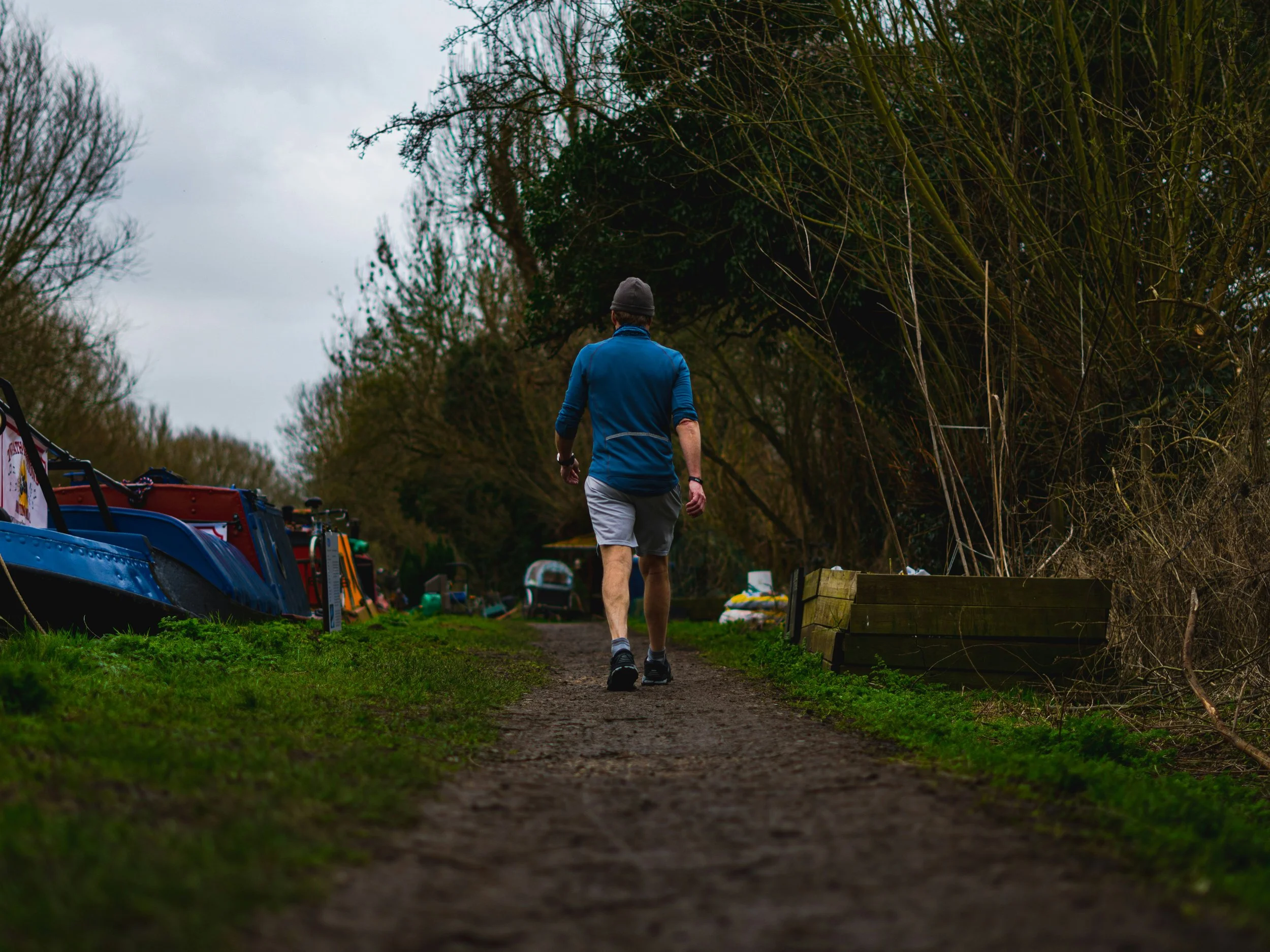
The Longevity Walk: Putting Your 10,000 Steps to Work
The "Longevity Walk" isn't just about moving from point A to point B. It’s about using specific techniques to turn a simple walk into a full-body health treatment.
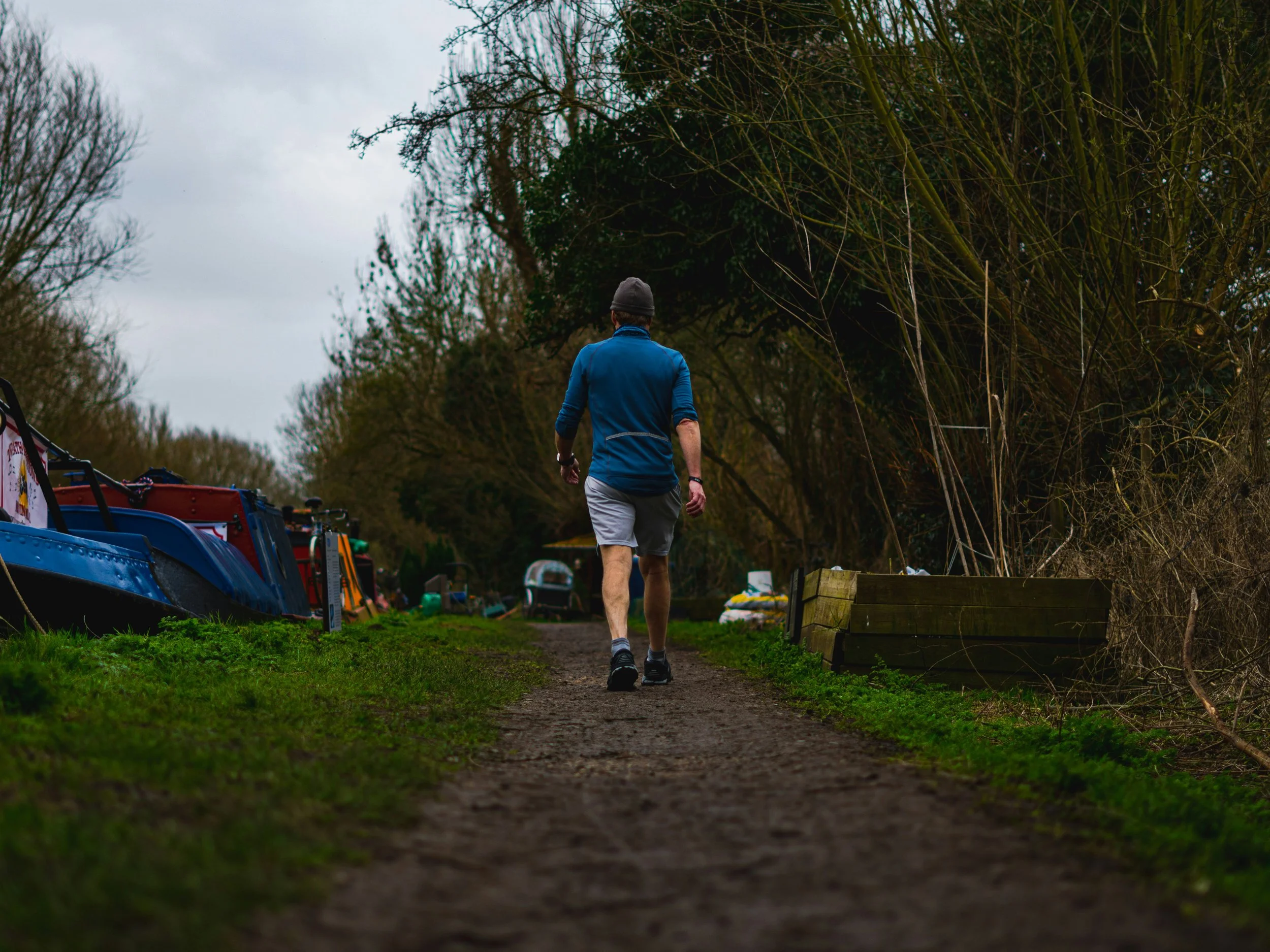
Photo by Caspar Rae on Unsplash
As January comes to a close, you might be feeling the urge to "level up" your fitness. We’ve talked about the "Zone 2" trend in Walking for Longevity: The 2026 'Zone 2' Trend, but now it is time to look at how to make every single step count toward your future self. For years, we’ve been told that "10,000 steps" is the magic number for health. While that is a great goal, the quality of those steps matters just as much as the quantity.
In 2026, the "Longevity Walk" isn't just about moving from point A to point B. It’s about using specific techniques to turn a simple walk into a full-body health treatment. To build a legacy of mobility and independence, you need to treat your daily walk with the same intention as a session in the gym. When done correctly, walking is the ultimate "maintenance" tool for your heart, your joints, and your mind.
The "Power Stride" Technique
Most people walk with a "shuffling" gait, especially when they are tired or looking at their phones. Shuffling doesn't engage your muscles and can actually lead to tight hips and back pain. The "Longevity Walk" requires a Power Stride.
Heel-to-Toe: Focus on landing softly on your heel and "rolling" the foot forward to push off with your toes. This engages the muscles in your arches and calves.
The Glute Squeeze: As your leg goes back, give your glute a small squeeze. This helps open up the front of your hips, which get tight from sitting.
The Arm Swing: Don't keep your hands in your pockets. Swing your arms from the shoulders. This cross-body movement helps "massage" your spine and increases the calories you burn.
The "Interval" Secret
You don't have to walk at a fast pace the entire time. In fact, research shows that "intermittent" walking is even better for your metabolism. Try the 3-2-1 Method during your next 20-minute walk:
3 Minutes: Normal, comfortable pace.
2 Minutes: Brisk walk (you should be breathing a little harder).
1 Minute: As fast as you can walk without running.
Repeating this cycle three or four times "wakes up" your heart and forces your body to adapt to different levels of stress. It turns a boring walk into a mini-cardio session that is easy on your joints but great for your heart.
Walking for Brain Health
One of the most powerful benefits of the Longevity Walk is what it does for your head. Walking has been shown to increase "BDNF" (Brain-Derived Neurotrophic Factor). Think of BDNF like "Miracle-Gro" for your brain cells. It helps you learn faster and protects against memory loss as you age.
To get the most brain benefit, try to walk in a "complex" environment like a park or a trail rather than a treadmill. Navigating uneven ground and looking at nature forces your brain to stay "engaged" and improves your balance. In a world where we spend so much time looking at screens (as we discussed in Why Your 'Smart Ring' Might Be Lying to You), this "unplugged" movement is vital for your mental health.
The Consistency Milestone
As we move into February, the Longevity Walk is your "safety net." Even on the days when you can't get to the gym or your meal prep falls apart, you can always walk. It is the one habit that requires no equipment and no cost, but pays the highest dividends for your health. This January, don't just "get your steps in." Put them to work. Walk with purpose, walk with power, and walk for the person you want to be thirty years from now.
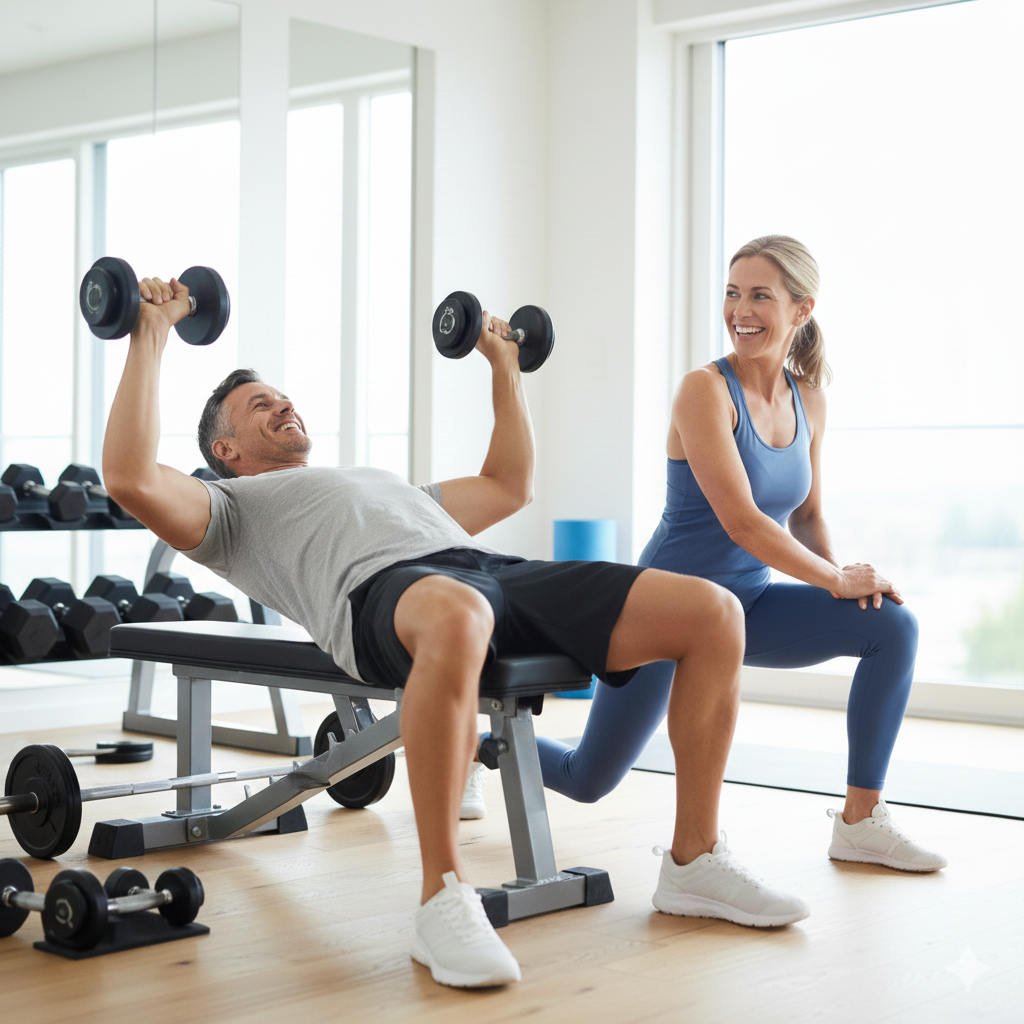
The Mid-Life Muscle Gap: Fitness for Men and Women 40+
If you are over the age of 40, you have probably noticed that things feel a little different than they did in your 20s. The best reason to train in your 40s isn't how you look in the mirror today, it’s how you will feel 20 years from now.
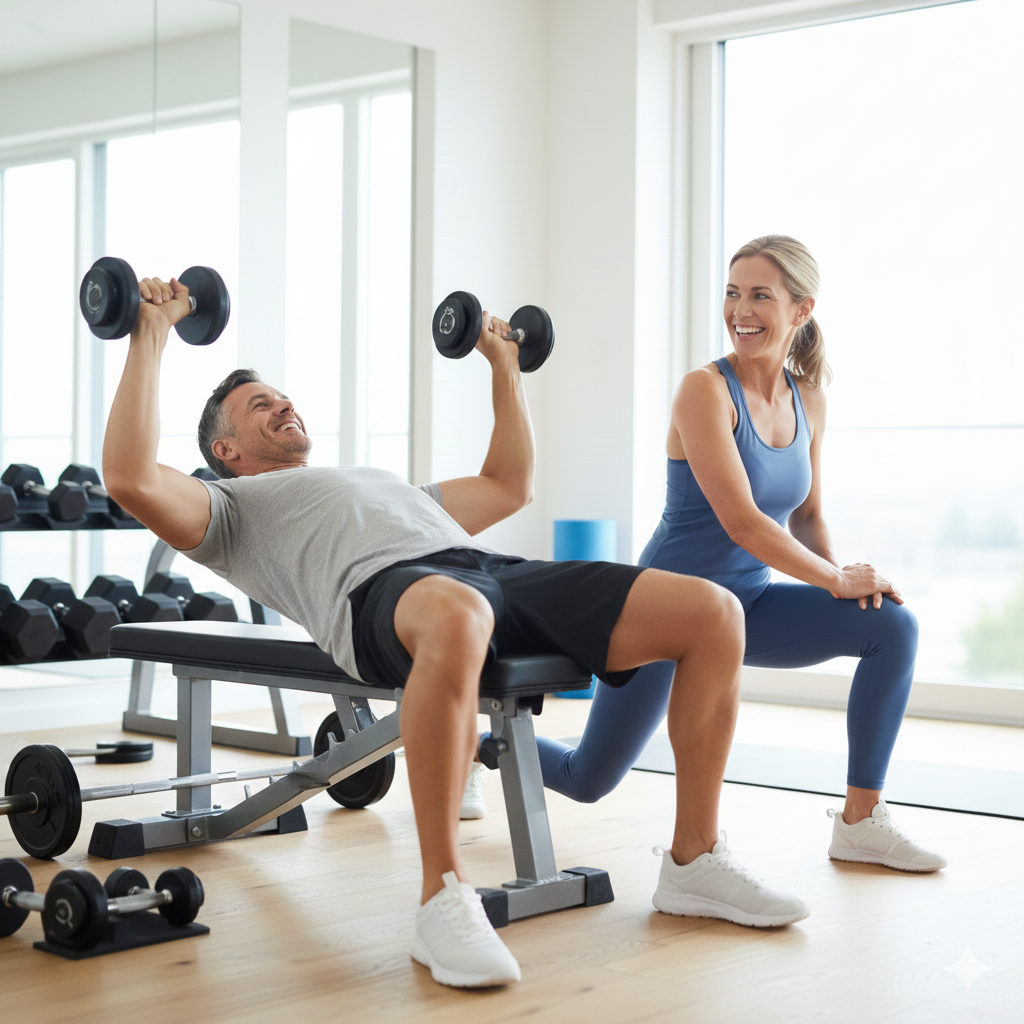
This image was created using AI to avoid copyright issues while conveying the context of this article.
If you are over the age of 40, you have probably noticed that things feel a little different than they did in your 20s. Maybe your back is a bit stiffer in the morning, or perhaps you’ve noticed that it is harder to lose those five extra pounds. Many people assume this is just an unavoidable part of "getting old." They start to believe that they should "slow down" or avoid heavy weights to stay safe.
In 2026, the science tells us the exact opposite. If you are over 40, you don't need less exercise; you need smarter exercise. This stage of life is where the "Muscle Gap" begins to happen. If you don't actively work to keep your muscle, your body will naturally start to lose it. But with the right strategy, your 40s, 50s, and 60s can actually be the strongest years of your life.
The Science of Sarcopenia
Starting around age 30, we begin to lose 3% to 5% of our muscle mass every decade. This is called sarcopenia. By the time someone reaches 60, they may have lost a significant amount of the strength they need to stay active and independent.
But here is the good news: muscle is "plastic," which means it can be built at any age. Strength training is the only "medicine" that can stop and even reverse this process. For the 40+ athlete, lifting weights isn't about getting "bulky" for a bodybuilding stage; it is about protecting your joints, keeping your metabolism high, and ensuring you can stay active for decades to come.
The "Perennial" Athlete
In 2026, we call this the "Perennial" movement. Just like a perennial flower that blooms year after year, you can stay vibrant and strong regardless of your age. The key is to shift your focus from "exhaustion" to "stimulation."
When you were 22, you could probably recover from a workout that left you feeling crushed. At 45, your goal is to stimulate the muscle enough to grow, but leave enough energy to recover.
Prioritize Protein: As we age, our bodies become less efficient at using protein. This means a 50-year-old actually needs more protein than a 20-year-old to build the same amount of muscle. Aim for a high-quality protein source at every single meal.
Focus on Mobility, Not Just Stretching: Tightness in your 40s often comes from joints that haven't moved through their full range in a long time. Use "active" mobility moves like the ones we’ve discussed in previous articles to keep your "oil" flowing.
Lift Heavy-ish: Don't be afraid of weights. You need enough resistance to tell your bones and muscles to stay strong. You don't need to be a powerlifter, but you should be challenged.
The Mental Shift: Training for Your Future Self
The best reason to train in your 40s isn't how you look in the mirror today, it’s how you will feel 20 years from now. Every squat you do now is an investment in your ability to stand up from a chair when you’re 80. Every row you do is an investment in your posture.
This January, don't let your age be an excuse to do less. Let it be the reason you do more of the right things. Your 40s are the perfect time to double down on your health legacy. You aren't "getting old"; you are getting stronger, wiser, and more resilient.
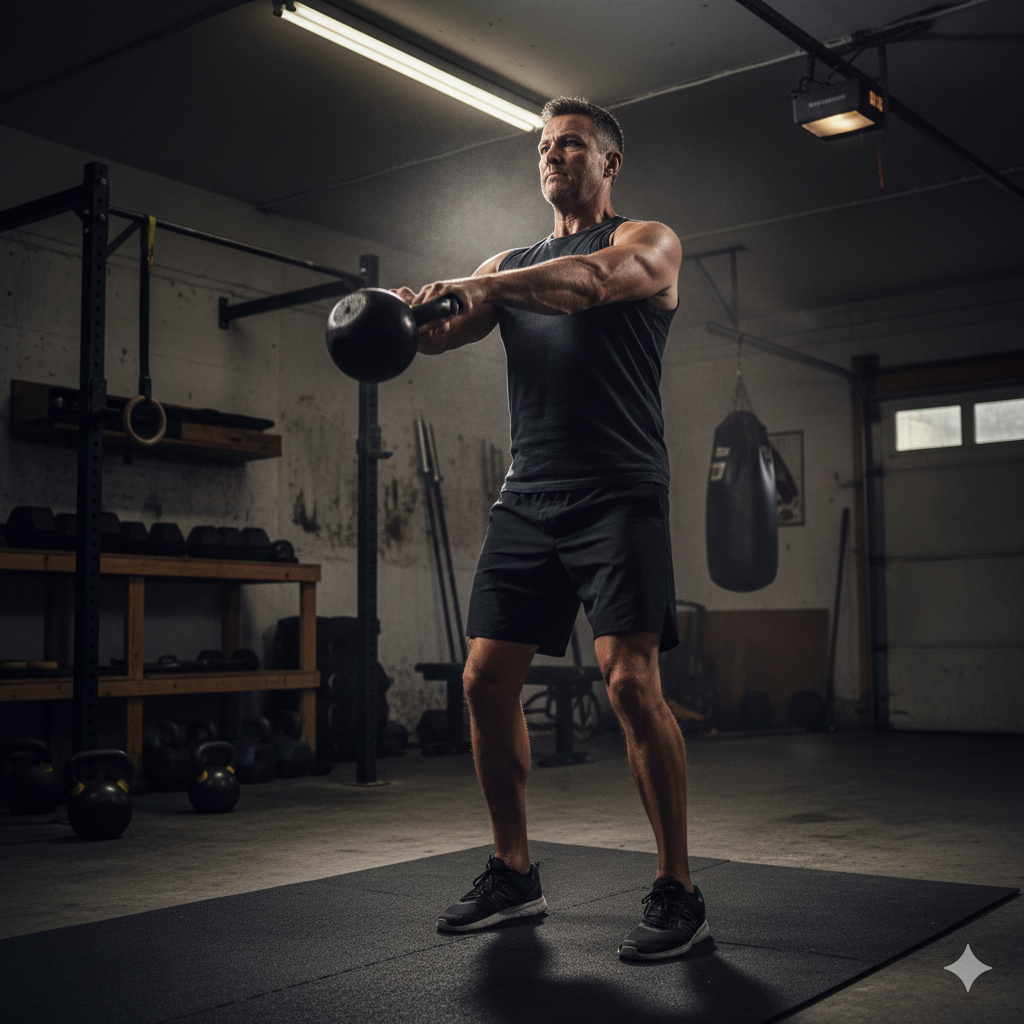
Strength Training for Longevity (The 'Power' Phase)
Train for how you want to move when you’re 80. Your future self is counting on you to build that strength now.
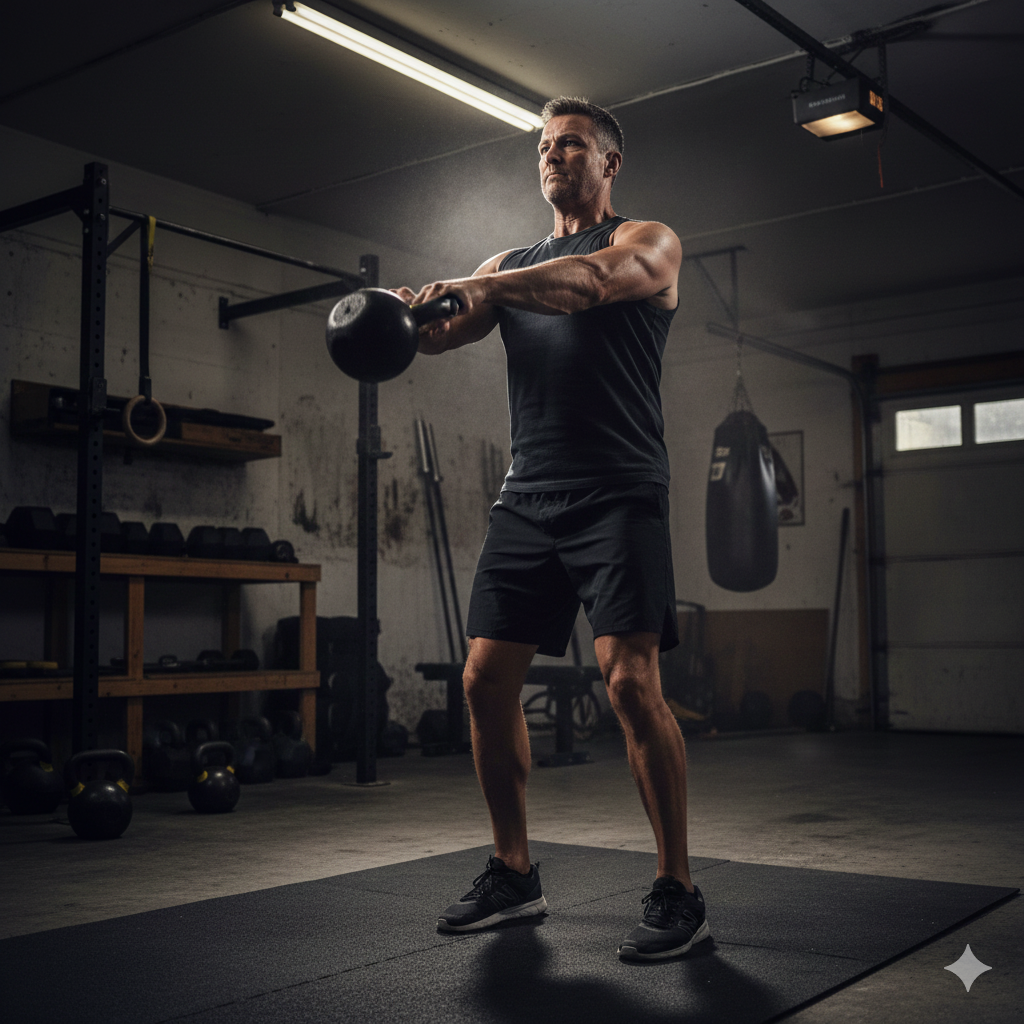
This image was created using AI to avoid copyright issues while conveying the context of this article.
When we think about aging, we often think about slowing down. We imagine getting "frail" or losing our balance. But what if I told you that you have more control over that process than you think?
As we get older, we naturally lose muscle mass, a process called sarcopenia. But even more important than muscle "size" is muscle power. Power is your ability to move a weight quickly. It’s what helps you catch yourself if you trip on a curb or stand up quickly from a low chair. In 2026, the best way to protect your future self is through a specific type of strength training focused on longevity.
Use It or Lose It
Your body is very efficient. If you don't use your "fast-twitch" muscle fibers (the ones responsible for power and speed) your body will stop maintaining them. Strength training isn't just for bodybuilders; it is the "fountain of youth" for your skeletal system.
Lifting weights puts a healthy stress on your bones, making them denser and stronger. It also improves your "insulin sensitivity," which means your body is better at processing the food you eat.
The Power Move: Multi-Joint Exercises
You don't need to spend hours doing "bicep curls." For longevity, you want to focus on "compound movements" that use multiple joints at once. These moves mimic how you move in real life:
The Squat: Sitting down and standing up.
The Hinge: Picking a heavy bag up off the floor (like a deadlift).
The Push/Pull: Opening a heavy door or pushing a grocery cart.
How to Train for the Long Haul
You don't have to lift the heaviest weight in the gym. The key to the "Power Phase" is controlled speed. When you stand up from a squat, try to do it with a bit of "pop" or speed. When you lower the weight, do it slowly. This combination trains your nervous system to stay sharp and your muscles to stay responsive.
Consistency Over Intensity
The goal of longevity training isn't to be "sore" every day. It’s to be able to train again in two days. If you can lift weights twice a week for the rest of your life, you will be ahead of 90% of the population.
This January, don't just train for how you look in the mirror today. Train for how you want to move when you’re 80. Your future self is counting on you to build that strength now.
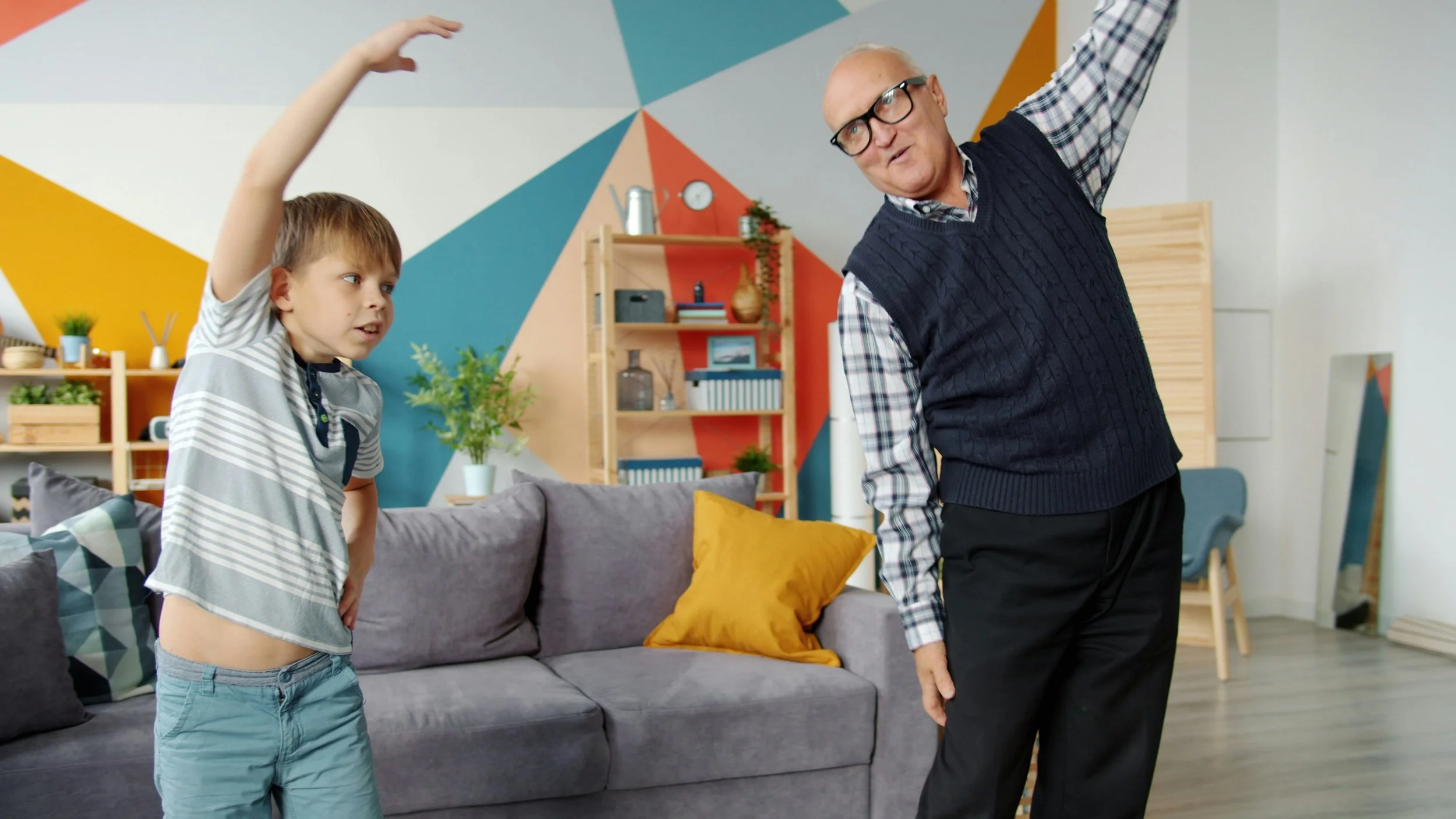
Strength Training for Longevity: Why Lifting Weights is Your Retirement Plan
Lifting weights is not just for bodybuilders or young athletes; it is a non-negotiable insurance policy against frailty, injury, and dependence in your later years.
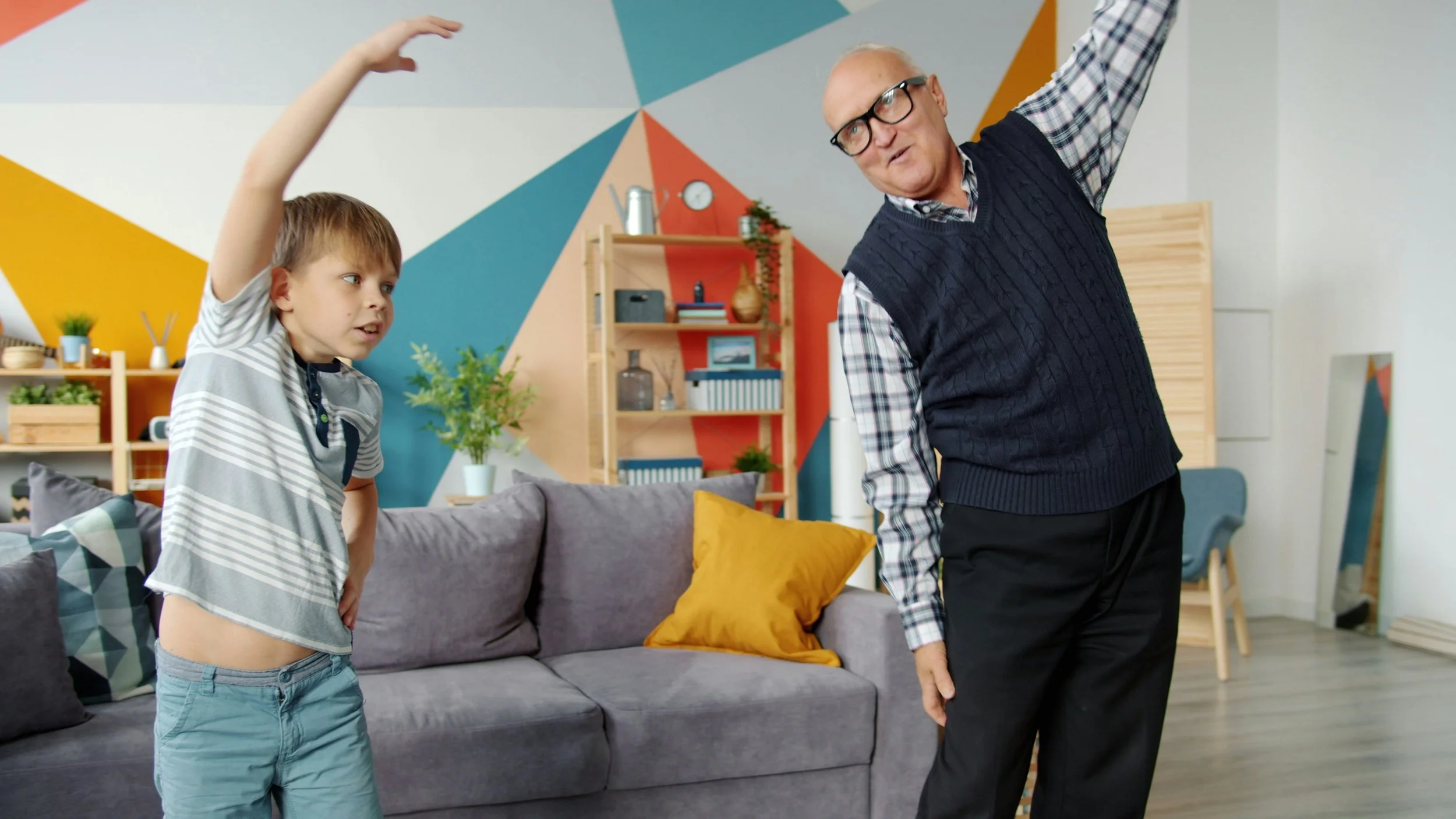
Image courtesy of Vitaly Gariev via Unsplash
When most people think of retirement planning, they think of money, stocks, and savings accounts. They focus on financial legacy. But what good is a large bank account if you don't have the health or physical capacity to enjoy it?
At Legacy Fitness & Nutrition, we encourage a holistic view: Your strength training routine is your most powerful, essential physical retirement plan.
Lifting weights is not just for bodybuilders or young athletes; it is a non-negotiable insurance policy against frailty, injury, and dependence in your later years. In short, strength training is the key to longevity, independence, and an active healthspan.
If you want to maintain your ability to travel, play with grandchildren, carry groceries, or simply get up off the floor without assistance well into your 70s and 80s, you need to be lifting weights right now.
The Muscle Loss Crisis (Sarcopenia)
The single biggest threat to independence as we age is a process called sarcopenia; the natural, age-related loss of muscle mass.
Starting around age 30, we can begin to lose 3% to 5% of our muscle mass per decade if we do not actively train it. This loss is not just aesthetic; it is functional. Less muscle means:
Slower Metabolism: Muscle is metabolically active, burning calories even at rest. Less muscle means a slower metabolism, making weight management much harder.
Increased Fall Risk: Muscle acts as a shock absorber and stabilizer. Weak muscles lead to poor balance and coordination, making falls (which can be life-threatening later in life) much more likely.
Bone Density Loss: Muscle pulls on bone. This tension is the signal that tells the body to strengthen the bone. Without resistance training, bones become brittle (osteoporosis), and the risk of fracture is high.
Strength training is the only effective defense against sarcopenia and its dangers. It is the key to maintaining your physical independence.
Your Strength Retirement Strategy: 3 Pillars
You don't need to train like an Olympic powerlifter. You need a consistent routine that focuses on maintaining and building functional, foundational strength.
1. Focus on Compound Lifts
Compound lifts are exercises that use multiple joints and muscle groups simultaneously. These are the most efficient and functional exercises for longevity because they mimic real-life movements.
Actions: Squats (sitting and standing), Deadlifts or RDLs (bending and picking things up), Presses (pushing overhead or away from you), and Rows (pulling things toward you).
Strategy: Perform these movements using weights that challenge you, aiming for 8 to 12 repetitions per set.
2. Prioritize Lower Body Strength
Falls are the number one danger to aging independence. Falls are primarily prevented by strong legs, hips, and core.
Actions: Prioritize exercises like squats, lunges, and glute bridges. These build the stability and power needed to quickly react, maintain balance, and get up off the floor after a fall. Your legs are the engine of your independence.
3. Maintain Mobility and Flexibility
Muscle strength is useless if you do not have the range of motion to use it. A strong muscle that is also tight increases your risk of injury.
Actions: Dedicate 10 minutes before and after every session to dynamic and static stretching. Incorporate mobility movements like light hip circles, T-spine rotations, and ankle movements (as discussed in Article 4, The 3 Rules of Recovery).
Strategy: Strong and flexible is the goal. Never pursue strength at the expense of your range of motion.
Your future self will thank you for the health you invest in today. Stop viewing strength training as a way to get a six-pack, and start viewing it as the non-negotiable investment in a long, active, and independent life. Start funding your physical retirement plan today.

Beyond the Gym: Embracing Low-Impact Workouts for Sustainable Health
When we think about exercise, our minds often jump to high-energy activities like running, jumping, or intense weightlifting. But what if there was a way to stay fit, strong, and healthy that was gentler on your body? Enter low-impact workouts.

When we think about exercise, our minds often jump to high-energy activities like running, jumping, or intense weightlifting. But what if there was a way to stay fit, strong, and healthy that was gentler on your body? Enter low-impact workouts. These exercises are gaining popularity, and for good reason!
What Are Low-Impact Workouts?
Simply put, low-impact workouts are exercises where at least one foot (or hand) stays on the ground, or where there's less stress put on your joints. This means less pounding and jarring motion compared to activities like jumping jacks or running.
Examples of Low-Impact Workouts:
Walking: The simplest and most accessible low-impact exercise. A brisk walk is great for your heart, muscles, and mind.
Swimming: A full-body workout that's incredibly gentle on your joints because the water supports your weight.
Cycling: Whether on a stationary bike or outdoors, cycling builds leg strength and cardio fitness without heavy impact.
Yoga: Improves flexibility, strength, balance, and helps with stress reduction.
Pilates: Focuses on core strength, muscle control, flexibility, and posture.
Elliptical Machine: Mimics running or walking without the impact, providing a great cardio workout.
Resistance Band Exercises: Can build strength without needing heavy weights or high impact.
Why Choose Low-Impact? The Benefits are Huge!
Gentle on Your Joints: This is the biggest advantage. If you have joint pain (knees, hips, ankles), are recovering from an injury, or simply want to protect your joints for the long term, low-impact is ideal.
Sustainable for Life: These activities are often easier to keep doing as you get older, or if you have specific health conditions. They allow you to stay active consistently, which is key for long-term health.
Reduces Risk of Injury: Less pounding means less stress on your bones, muscles, and joints, lowering your chances of sprains or strains.
Great for All Fitness Levels: Whether you're just starting your fitness journey or are a seasoned athlete looking for active recovery, low-impact options can fit your needs.
Mental Well-being: Many low-impact activities like walking, yoga, and swimming are also fantastic for reducing stress, improving mood, and boosting mental clarity. They can be meditative and calming.
Builds Strength and Endurance: Don't think low-impact means low intensity! You can still get a fantastic workout that builds muscle, improves heart health, and boosts your stamina.
Make it Part of Your Routine:
You don't have to give up all your high-impact activities. Low-impact workouts can be a great addition to your current routine. Maybe you walk on your "rest" days, or try a yoga class to improve your flexibility. They offer a balanced approach to fitness, helping you build a healthy, strong body that lasts. Embrace the gentle power of low-impact exercise and feel the difference!