
The "Big 3" Lifts for Longevity: Why the Squat, Hinge, and Press Keep You Young
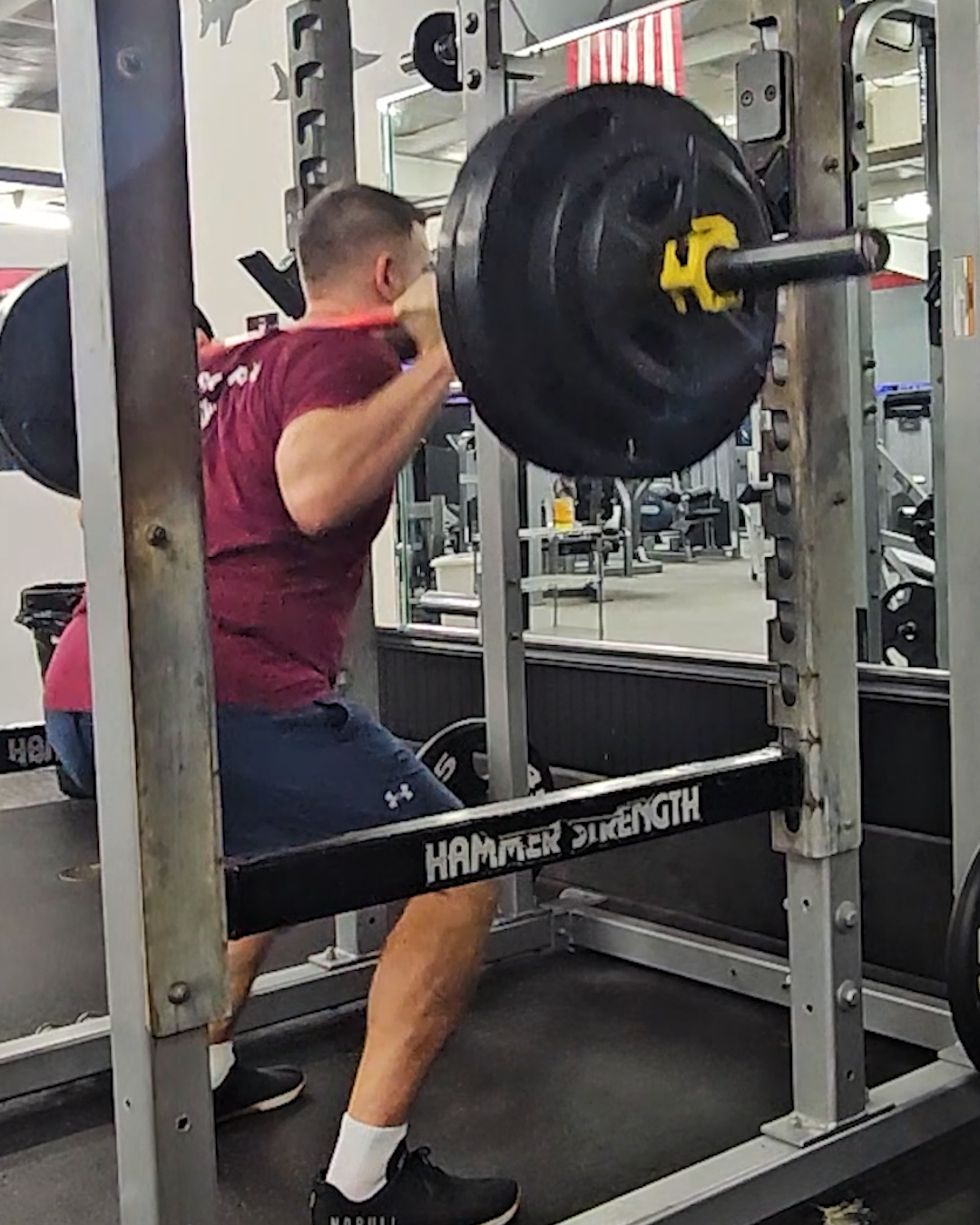
Demonstrating a back squat. Not AI or stock image this time.
If you walk into a modern gym, you will see rows of complicated machines, colorful bands, and high-tech gadgets. It is easy to think that you need a complex program to get results. But as we get older, the most important movements aren't the newest ones; they are the oldest ones.
At Legacy Fitness, we believe in "Minimum Effective Dose" training. We want you to spend your time on the movements that give you the biggest return on your investment. When it comes to staying strong, capable, and independent for the next 40 years, three specific movements stand above the rest: The Squat, The Hinge, and The Press.
These are not just "gym exercises." They are the foundational patterns of human life. If you master these three, you aren't just building a better physique; you are building a body that is "bulletproof" against the aging process.
1. The Squat: Your Independence Movement
The squat is often called the "King of Exercises," and for good reason. From a functional standpoint, the squat is simply the act of sitting down and standing back up. It uses almost every muscle in your lower body, including your quads, glutes, and hamstrings.
Why does this matter for longevity? Because the loss of leg strength is one of the primary reasons people lose their independence as they age. If you can't stand up from a chair or a toilet without help, your quality of life changes dramatically.
By practicing the squat, whether it’s with a barbell, a kettlebell, or just your own body weight, you are keeping your "internal engine" strong. You are telling your bones to stay dense and your nervous system to stay sharp. A strong squat is the ultimate insurance policy against the frailty that often comes with getting older.
2. The Hinge: Protecting Your Back
The "hinge" is the movement where you push your hips back while keeping your spine straight. The most common version of this is the deadlift. Many people are afraid of the deadlift because they think it will hurt their back. In reality, a properly performed hinge is the best way to protect your back.
Think about how many times a day you bend over to pick something up. Maybe it’s a bag of groceries, a laundry basket, or even a child. If you "round" your back to do this, you are putting a lot of stress on your spine. But if you know how to "hinge" at the hips, you use your powerful glutes and hamstrings to do the heavy lifting instead.
Learning to hinge teaches you how to move weight with your "posterior chain" (the muscles on the back of your body). These are the strongest muscles in your body, and keeping them active is the secret to a pain-free lower back and a powerful stride.
3. The Press: Maintaining Your "Reach"
The press refers to pushing a weight away from your body. This can be a horizontal press (like a push-up or bench press) or a vertical press (pushing something over your head).
As we age, we often lose "overhead mobility." We stop reaching for things on high shelves, and our shoulders begin to round forward. This leads to poor posture and neck pain. By intentionally practicing the press, you are maintaining the health of your shoulders and the strength of your upper body.
A strong press ensures that you can still manage your own luggage, put things away in the garage, and maintain an upright, confident posture. It is about staying "big" and capable in a world that often tries to make us smaller and weaker as we age.
How to Start
The beauty of the "Big 3" is that they can be scaled to any ability level.
The Squat: You can start by simply sitting down into a chair and standing back up ten times. As you get stronger, you can hold a small weight at your chest.
The Hinge: Start by standing with your back a few inches from a wall and reaching your hips back until they touch the wall. Once you master that, you can move to kettlebell deadlifts.
The Press: Start with push-ups against a kitchen counter. As you progress, move to the floor, and eventually to overhead dumbbell presses.
The Legacy Mindset
At Legacy Fitness, we aren't training you for a "six-week challenge." We are training you for the "40-year challenge." We want you to be the person who is still squatting, hinging, and pressing well into your 80s.
Consistency in these three patterns is the foundation of a Legacy Body. You don't need a hundred different exercises. You just need to master the basics, do them with great form, and never stop moving.
