

The Art of the Sunday Meal Prep (Without the Stress)
Stop trying to be a gourmet chef every night. Meal prep isn't about being perfect; it’s about being prepared.

We have all seen the photos on social media: thirty identical plastic containers filled with chicken, broccoli, and brown rice, perfectly lined up on a kitchen counter. For many people, this version of "meal prep" looks like a nightmare. It looks like a whole Sunday spent in a hot kitchen and a whole week of eating boring, repetitive food. If that is what you think meal prep has to be, it is no wonder you haven’t started yet.
The truth is that meal prep is the single most powerful tool for fitness success, but it doesn't have to be stressful. In 2026, the trend is moving away from "The Batch Cook" and toward "The Component Prep." This method allows you to save hours of time during the week while still enjoying fresh, varied meals every single day. To build a legacy of health, you need a system that works for your busy life, not a second job as a chef.
Why Decision Fatigue is Your Enemy
The reason most people fail their diet on a Wednesday evening is "Decision Fatigue." Throughout the day, you use your brain to make hundreds of choices at work and with your family. By the time you get home at 6:00 PM, your "decision muscle" is exhausted. If you have to ask yourself, "What should I make for dinner?" you are much more likely to choose the easy path: takeout or a bowl of cereal.
Meal prep solves this by making the decision for you when your brain is still fresh. When the food is already partially ready, the "friction" of eating healthy disappears. You aren't "cooking dinner"; you are just "assembling" it.
The Component Method: How it Works
Instead of making full meals, you spend 60 to 90 minutes on Sunday preparing the building blocks of your week. Think of it like a "Lego set" for your nutrition. You want to prepare four main categories:
Two Proteins: Roast a large tray of chicken thighs and brown two pounds of lean ground beef or turkey. These are your "anchors" for the week.
Two Carbs: Boil a large pot of quinoa or roast a few pans of sweet potatoes. Having these ready prevents you from reaching for bread or pasta when you’re in a rush.
The "Veggie Wash": Chop your peppers, wash your spinach, and roast some broccoli. If the vegetables are ready to eat, you will actually eat them.
The "Flavor Booster": This is the secret to not getting bored. Make one or two simple sauces, like a lemon-tahini dressing or a fresh salsa. Using different sauces makes the same chicken and rice feel like a completely different meal every night.
The "Power Hour" Workflow
You don't need all day. You just need one focused hour. Start by putting your longest-cooking items in the oven (like potatoes). While those roast, start your grains on the stove. While the stove is humming, chop your vegetables. By the time the timer goes off for the potatoes, your kitchen is cleaned, and your fridge is stocked.
Winning the Week
This January, stop trying to be a gourmet chef every night. Give yourself the gift of a stocked fridge. When you remove the stress of "What's for dinner?" you gain back your time and your health. Meal prep isn't about being perfect; it’s about being prepared. Your future self on a tired Wednesday night will thank you.

Fiber: The Unsung Hero of Weight Management
If protein is the "builder" of your body, fiber is the "manager." It manages your hunger, your digestion, and your blood sugar.

Photo by Iñigo De la Maza on Unsplash
In the world of nutrition, protein gets all the glory. We see "high protein" labels on everything from cereal to ice cream. While protein is very important for building muscle, there is another nutrient that is just as important, but much less famous. That nutrient is fiber. If protein is the "builder" of your body, fiber is the "manager." It manages your hunger, your digestion, and your blood sugar.
As we move through January, many people are struggling with hunger as they try to eat better. The secret to staying full without overeating isn't willpower; it is fiber. In 2026, the most successful nutrition plans are focusing on "Fiber Density" to help people reach their goals without the "starvation" feeling.
What is Fiber Exactly?
Fiber is a type of carbohydrate that your body cannot digest. Most carbs are broken down into sugar molecules, but fiber passes through your system relatively untouched. It comes in two types:
Soluble Fiber: This turns into a "gel" in your stomach. it slows down digestion, which helps you feel full longer and lowers your cholesterol.
Insoluble Fiber: This adds "bulk" to your stool and helps things move through your digestive tract. It is the "broom" that keeps your gut clean.
Because your body can't digest fiber, it doesn't provide many calories. However, it takes up a lot of space in your stomach. This is the "Fullness Hack" that most people are missing.
The "Volume" Trick
Imagine eating a tablespoon of olive oil. That is about 120 calories, but it won't make you feel full at all. Now, imagine eating two large heads of broccoli. That is also about 120 calories, but you would be incredibly stuffed! That is the power of fiber and volume.
When you eat high-fiber foods like beans, lentils, berries, and leafy greens you are stretching the walls of your stomach. This sends a signal to your brain that says, "We are full, you can stop eating now." If you find yourself wanting to snack an hour after lunch, it is usually because your meal was low in fiber. By adding just one cup of black beans or a large salad to your lunch, you can often stay full until dinner.
Fiber and Your "Second Brain"
In an earlier article, we talked about the Gut-Brain connection. Your gut bacteria (your microbiome) actually "eat" fiber. When you feed them enough fiber, they produce short-chain fatty acids. These are special chemicals that reduce inflammation in your body and even help your brain regulate your appetite.
When you don't eat enough fiber, your "good" bacteria starve. This can lead to cravings for sugar and processed foods because your gut environment is out of balance. By eating more fiber, you are literally training your gut to want healthier foods.
How to Boost Your Fiber (Without the Gas!)
The biggest mistake people make is trying to go from "zero to sixty" with fiber. If you don't eat much fiber now and you suddenly eat a giant bowl of beans, you will probably feel bloated and uncomfortable. Your gut needs time to adjust.
The "Slow and Steady" Rule: Add about 5 grams of fiber to your daily total each week. Start by swapping white bread for whole-grain bread, or adding a handful of raspberries to your morning yogurt.
The Hydration Rule: Fiber needs water to work! If you increase your fiber but don't increase your water, you might get constipated. Think of fiber like a sponge; it needs to be wet to move smoothly.
The "Bean" Strategy: Lentils and chickpeas are fiber superstars. Try adding them to soups, salads, or even smoothies (you won't even taste them!) to boost your "manager" nutrient.
The Legacy of a Full Belly
Weight management doesn't have to be a battle against hunger. By focusing on fiber, you are working with your body's natural signals instead of against them. This January, stop focusing on what you need to "remove" from your diet and start focusing on what you can "add." Add fiber, add volume, and add water. You’ll find that the "cravings" start to take care of themselves.

Functional Fitness for Everyday Life: The Squat & Carry
Why do we go to the gym? For the "Legacy" athlete, the gym is a training ground for real life.

This image was created using AI to avoid copyright issues while conveying the context of this article.
Why do we go to the gym? For some, it is to look better in a t-shirt. For others, it is to hit a specific number on a lift. But for the "Legacy" athlete, the gym is a training ground for real life. There is no point in being able to bench press 225lbs if you throw your back out trying to lift a heavy bag of mulch in your garden. There is no point in having "six-pack abs" if you can't carry your toddler up a flight of stairs without getting out of breath.
This is the core of Functional Fitness. It is about training movements, not just muscles. In 2026, we are moving away from fancy machines that isolate one muscle at a time. Instead, we are focusing on the two most important movements for human survival and independence: The Squat and The Carry.
The Squat: Your Body’s Foundation
The squat is often called the "King of Exercises," but it is much more than a leg workout. It is a fundamental human movement. Think about how many times a day you squat: getting out of a chair, sitting down on the toilet, or bending down to pick up a dropped set of keys.
As we age, the ability to squat is the difference between independence and needing help. When you practice squats in the gym, whether with a kettlebell or just your bodyweight, you are strengthening your hips, knees, and ankles. But more importantly, you are teaching your core how to stabilize your spine. A functional squat isn't about how deep you can go; it’s about how well you can move under control so that you can navigate the world with confidence.
The Carry: The "Missing Link" of Fitness
If the squat is the king, the "Loaded Carry" is the secret weapon. A loaded carry is exactly what it sounds like: picking up something heavy and walking with it. This might be a pair of dumbbells (called a Farmer’s Carry), a single weight held at your chest (a Goblet Carry), or even just a heavy suitcase.
Why is this so important? Because life is a series of loaded carries. You carry groceries from the car. You carry a laptop bag through an airport. You carry a child to bed. Carrying heavy things builds "functional core strength" that a sit-up can never match. It teaches your body how to stay upright and stable while you are moving. It also builds incredible grip strength, which scientists have found is one of the best predictors of how long you will live.
Blending Gym Work with Real Life
To build a functional body this January, you don't need a complicated program. You just need to prioritize these "Big Two" movements.
The "Grocery Bag" Challenge: Next time you have to carry bags into the house, try to stand as tall as possible. Keep your shoulders back and down. Don't let the bags pull you to one side. This is a workout!
The "Chair Squat": If you work at a desk, every time you stand up, do it without using your hands. Then, sit back down halfway, hold it for three seconds, and stand back up. You’ve just done a functional rep.
The "Suitcase Carry": Pick up a heavy kettlebell or a gallon of water in one hand. Walk 50 feet. Switch hands and walk back. This trains the muscles on the sides of your body that protect your spine from twisting injuries.
The Legacy of Movement
The goal of functional fitness is to make your "outside life" easier. When you are strong in the squat and the carry, you stop worrying about getting injured during daily tasks. You move with more grace, more power, and less pain. This January, don't just train to look a certain way. Train so that you can say "yes" to every adventure, whether it is a hiking trip or just playing with your grandkids on the floor. Your body was built to move; make sure you’re giving it the right practice.
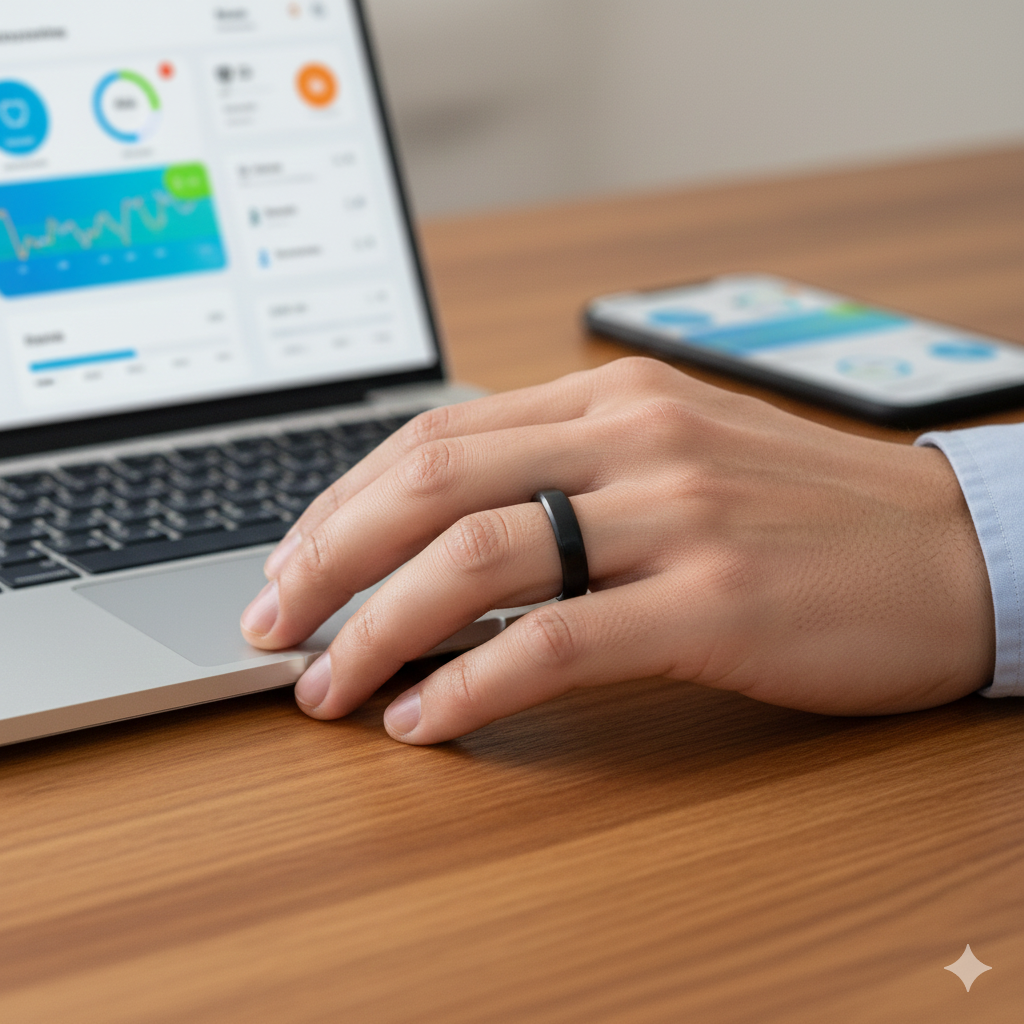
Why Your 'Smart Ring' Might Be Lying to You
Even the most expensive smart rings and watches are making educated guesses. They are not medical-grade machines. Technology should be a tool that supports your intuition, not a replacement for it.
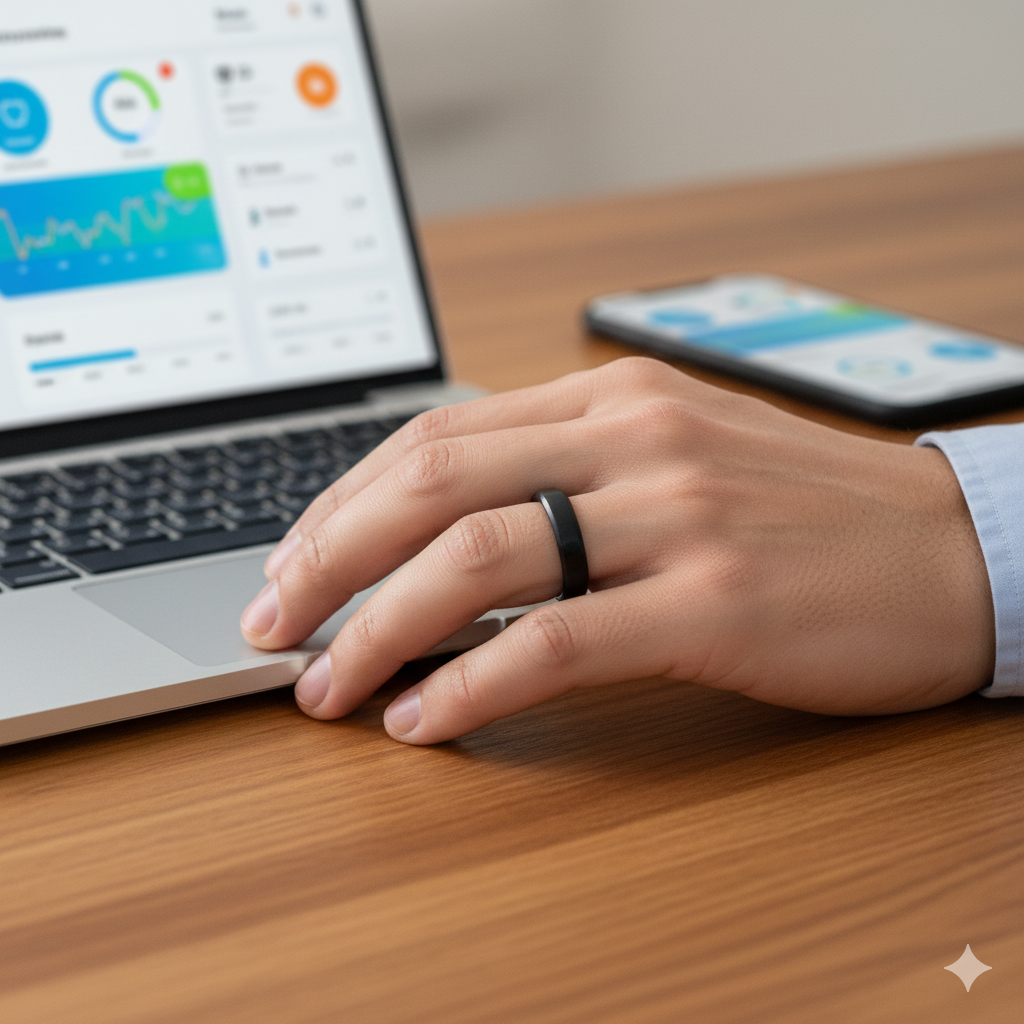
This image was created using AI to avoid copyright while conveying the context of this article.
In 2026, it seems like everyone is wearing a piece of "smart" technology. Whether it is a watch on your wrist, a ring on your finger, or a patch on your arm, we are obsessed with data. We want to know exactly how many steps we took, how many calories we burned, and, most importantly, how well we slept. These tools are incredible for building awareness, but there is a danger in trusting them too much. If you have ever woken up feeling great, only to see a "low readiness score" on your phone and suddenly feel tired, you are a victim of the "Tracker Trap."
The truth is that even the most expensive smart rings and watches are making educated guesses. They are not medical-grade machines. While they can be a great partner in your fitness journey, you need to know when to listen to the data and when to listen to your own body. To build a lasting legacy of health, you have to be the boss of your data, not the other way around.
How Trackers Actually Work
Most wearable devices use a technology called photoplethysmography (PPG). This is the little green or red light you see on the back of your device. It shines light into your skin to measure your blood flow. By looking at these patterns, the device can estimate your heart rate and your Heart Rate Variability (HRV).
However, many things can interfere with these sensors. If your ring is too loose, if your skin is cold, or even if you have a certain skin tone or tattoos, the sensor might struggle to get an accurate reading. When the sensor fails, the software "fills in the gaps" using algorithms. In other words, your device is often guessing what your heart is doing. If you rely on these numbers to tell you if you are "fit" or "healthy," you might be getting a skewed version of reality.
The Calorie Counting Myth
One of the biggest ways smart devices "lie" is in calorie tracking. Studies have shown that most fitness trackers can be off by as much as 20% to 40% (or even more!) when estimating how many calories you burn during a workout. If your watch says you burned 500 calories, you might have actually burned 300.
If you use that data to decide how much extra food you can eat, you might accidentally end up in a "calorie surplus" even though you think you are working hard. The best way to use a tracker for calories is to look at trends over weeks and months, rather than the specific number for one single day. Use it as a compass to see if you are moving more than last week, not as a calculator for your dinner.
The "Placebo Effect" of Sleep Scores
Sleep tracking is the most popular feature of smart rings in 2026. These devices track your movement and heart rate to tell you if you were in "Deep Sleep" or "REM Sleep." While this is helpful for spotting patterns (like how alcohol ruins your sleep) it can also create a problem called "orthosomnia." This is a real condition where people become so anxious about getting a "perfect" sleep score that the anxiety actually keeps them awake.
Your body is much smarter than an app. If you wake up, feel energized, and are ready to tackle the day, that matters more than a "62% Sleep Quality" notification. On the flip side, if your ring says you are 100% recovered but your joints feel sore and your brain feels foggy, you should trust your feelings over the screen. Your device doesn't know if you have a cold starting or if you are under a lot of mental stress at work.
How to Use Tech Like a Pro
To make the most of your smart tech without letting it run your life, follow these "Legacy Tech" rules:
Check Your Body Before Your Phone: When you wake up, take 30 seconds to "scan" how you feel. Are you rested? Are you sore? Make your own "score" before you look at the app.
Focus on Trends, Not Totals: Don't worry if you missed your step goal by 500 steps today. Look at your weekly average. Is it going up over time? That is where the real progress happens.
Use it for "Behavior Cues": Use your tracker to remind you to stand up every hour or to prompt you to take three deep breaths. Use it as a coach, not a judge.
Technology should be a tool that supports your intuition, not a replacement for it. This January, use your data to learn about yourself, but never let a "red" score on an app stop you from showing up for your life. You are the one doing the work, not the ring.

Mindful Muscle: Using Breathwork During Your Lift
"Mindful Muscle" is changing how we think about strength training. It is the practice of connecting your internal state, your nervous system, to your external movements.

This image was created using AI to avoid copyright issues while conveying the context of this article.
When you walk into a crowded gym, the atmosphere is usually loud and chaotic. You hear the clanging of metal, the thumping of music, and the sounds of people grunting through heavy repetitions. From the outside, it looks like a test of pure "will" and physical force. But if you look closely at the most elite athletes in the room, you will notice something different. They are calm. They are focused. And most importantly, they are in total control of their breath.
In 2026, a new trend called "Mindful Muscle" is changing how we think about strength training. It is the practice of connecting your internal state, your nervous system, to your external movements. If you have been holding your breath while you exercise or gasping for air between sets, you are missing out on a massive amount of strength and safety. Your breath is the "remote control" for your body, and it is time to learn how to use it.
The Physics of the "Human Soda Can"
To understand why breathing matters for lifting, think about an unopened can of soda. Because it is full of liquid and pressurized gas, you can stand on that can and it won't crush. It is incredibly strong. Now, imagine opening that can and pouring the soda out. If you step on it now, it collapses instantly.
Your torso is exactly like that soda can. Your spine is the structure, but your core muscles and your breath provide the "internal pressure" that keeps the structure safe. Many people make the mistake of "sucking in" their stomach when they lift. This is like emptying the soda can! Instead, you want to use a technique called "bracing." By breathing deep into your belly and holding that air against your abdominal wall, you create a "shield" for your lower back. This allows you to lift heavier weights with much less risk of injury.
The "360-Degree" Breath
Most of us are "chest breathers." When we take a deep breath, our shoulders shrug up toward our ears. This is a "stress breath." It tells your brain that you are in a "fight or flight" situation, which can make your muscles feel tight and guarded.
In the "Mindful Muscle" approach, we practice the "360-degree breath." Instead of the air going up into your chest, imagine it going down into your waistband. You should feel your belly move forward, but you should also feel your sides and your lower back expand outward. This creates total pressure all the way around your spine. Before you start a squat, a deadlift, or even a heavy overhead press, take this 360-degree breath. "Pack" the air down, perform the move, and then exhale as you finish the hardest part.
Breathing for Maximum Power
There is a specific rhythm to "Mindful Muscle" that helps you generate more power. As a general rule, you want to Inhale during the "eccentric" phase (the lowering of the weight) and Exhale during the "concentric" phase (the pushing or pulling of the weight).
For example, if you are doing a chest press:
Inhale slowly as you lower the bar to your chest, creating that "internal pressure" we talked about.
Pause for a split second at the bottom.
Exhale sharply as you push the bar back up.
This sharp exhale acts like a "release valve" that allows your muscles to contract with more force. It also keeps your blood pressure from spiking too high, which can happen if you hold your breath for too long during a heavy lift.
The Nasal Recovery Reset
What you do between your sets is just as important as what you do during them. After a hard set of exercises, most people stand around with their mouths open, gasping for air. This keeps your heart rate high and keeps your body in a "stressed" state.
To recover faster, try the "Nasal Reset." As soon as you finish your set, close your mouth and breathe only through your nose. It might feel difficult at first, but nasal breathing sends a signal to your "Vagus Nerve" (the body's internal brake pedal) to calm down. By lowering your heart rate faster, you ensure that you have more energy for your next set. This allows you to do more work in less time, which is the key to seeing results in January.
The Mind-Muscle Connection
The final benefit of "Mindful Muscle" is mental. When you focus on your breath, you cannot worry about your emails, your chores, or your stress. You are forced to be "present" in your body. This connection allows you to actually feel the muscles you are trying to work. Instead of just "moving the weight from point A to point B," you are intentionally contracting your chest, your glutes, or your back.
This January, don't just go through the motions. Stop being a passive observer of your workout and start being an active participant. Your breath is the bridge between your mind and your muscles. Master the bridge, and you will master your legacy.

Alcohol-Free & Thriving: The 'Sober Curious' Benefit
For many high-performers, alcohol is the "silent disruptor." It is the one thing that prevents a good workout program from becoming a great one.

This image was generated using AI to avoid copyright issues while conveying the context of this article.
January has become synonymous with "Dry January," a time when millions of people around the world decide to put down the glass and pick up a healthier habit. But as we move into 2026, we are seeing this move beyond a simple 31-day challenge. A new movement called "Sober Curiosity" is taking over. This isn't necessarily about quitting forever; it’s about being curious about how much better your life could be without the regular presence of alcohol.
For many high-performers, alcohol is the "silent disruptor." It is the one thing that prevents a good workout program from becoming a great one. It is the one thing that turns a productive morning into a foggy one. If you have been working hard in the gym and eating well but still feel "stuck," taking a break from alcohol might be the most powerful move you make this year.
The Sleep-Alcohol Trap
The most common myth about alcohol is that it helps you sleep. While a glass of wine or a beer might help you "fall" asleep faster because it is a sedative, it actually destroys the quality of that sleep. Sleep is divided into different stages, and the most important stage for your brain is called REM (Rapid Eye Movement) sleep. This is when your brain cleans out toxins, processes the day's emotions, and stores memories.
Alcohol significantly cuts your REM sleep short. This is why, after a few drinks, you might wake up at 3:00 AM with your heart racing or feeling dehydrated. Even if you stay in bed for eight hours, your brain hasn't actually rested. When you go alcohol-free, one of the first things you will notice is "vivid dreams" and a feeling of genuine freshness in the morning. This is your brain finally getting the deep cleaning it has been missing.
How Alcohol Blocks Your Gains
In the world of fitness and nutrition, we talk a lot about "protein synthesis." This is the process where your body repairs the tiny tears in your muscles caused by exercise. Alcohol is a toxin, and your liver treats it as a priority. When you have alcohol in your system, your body stops almost everything else, including burning fat and repairing muscle, to get that toxin out of your blood.
If you hit a heavy leg day on Friday and then have three or four drinks on Friday night, you have essentially cancelled out a large portion of your recovery. Furthermore, alcohol is a "vasodilator," which can increase inflammation in your joints. If you find that your knees or back feel extra stiff the day after a few drinks, it isn’t just "getting older"; it is the inflammatory response to the alcohol. By removing it, you allow your body to stay in an "anabolic" or building state rather than a "catabolic" or breaking-down state.
Mental Health and the "Dopamine Reset"
Alcohol is a "borrowed happiness" tool. It artificially spikes your dopamine levels, which is why you feel relaxed and happy while drinking. However, the next day, your brain tries to balance itself out by lowering your natural dopamine levels. This leads to what many call "Hangxiety," a feeling of unexplained anxiety, low mood, or dread the day after drinking.
For the modern professional, this "dopamine dip" is a disaster for productivity. It makes difficult tasks feel impossible and kills your motivation to go to the gym. When you go alcohol-free, your brain's natural chemistry begins to reset. After about two weeks, you’ll find that you find more joy in small things, like a good cup of coffee or a sunset, because your brain is no longer waiting for a chemical spike to feel "normal."
Navigating the Social Scene in 2026
One of the biggest fears people have about going alcohol-free is that they will be "boring" or that their social life will end. In 2026, the opposite is true. The market for non-alcoholic (NA) options has exploded. You can now go to almost any high-end restaurant or lounge and find sophisticated NA spirits, botanical tonics, and "functional" drinks that contain adaptogens to help you relax without the buzz.
When you go to a social event and stay sober, you are choosing to be fully present. You remember the conversations. You don't say things you regret. And best of all, you own your Sunday morning. While everyone else is sleeping off a hangover, you are at the park, in the gym, or enjoying a quiet breakfast. That is the ultimate "Legacy" move.
Your 31-Day Experiment
This January, don't look at "Dry January" as a punishment. Look at it as a data-gathering mission. Pay attention to your skin, is it clearer? Pay attention to your waistline, is the bloating gone? Pay attention to your workouts, are you stronger? Most people find that the benefits are so great that they don't want to go back to their old habits. Whether you decide to stay alcohol-free forever or just be more mindful about when you drink, the "Sober Curious" path is a shortcut to your best self.
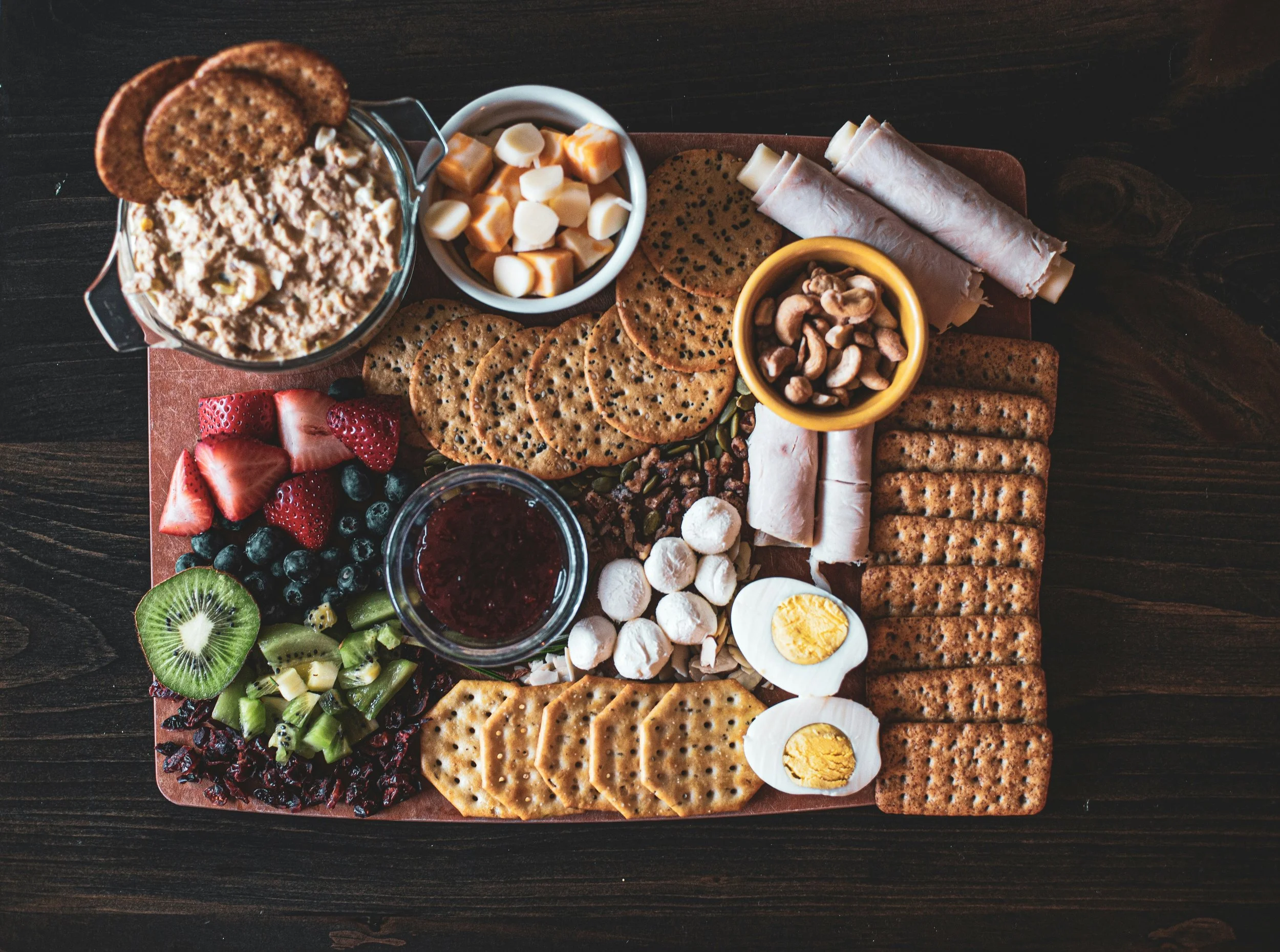
The Rise of Savory Snacks: Ditching the Sugar Crash
For decades, the "healthy snack" market has been dominated by sweet things.
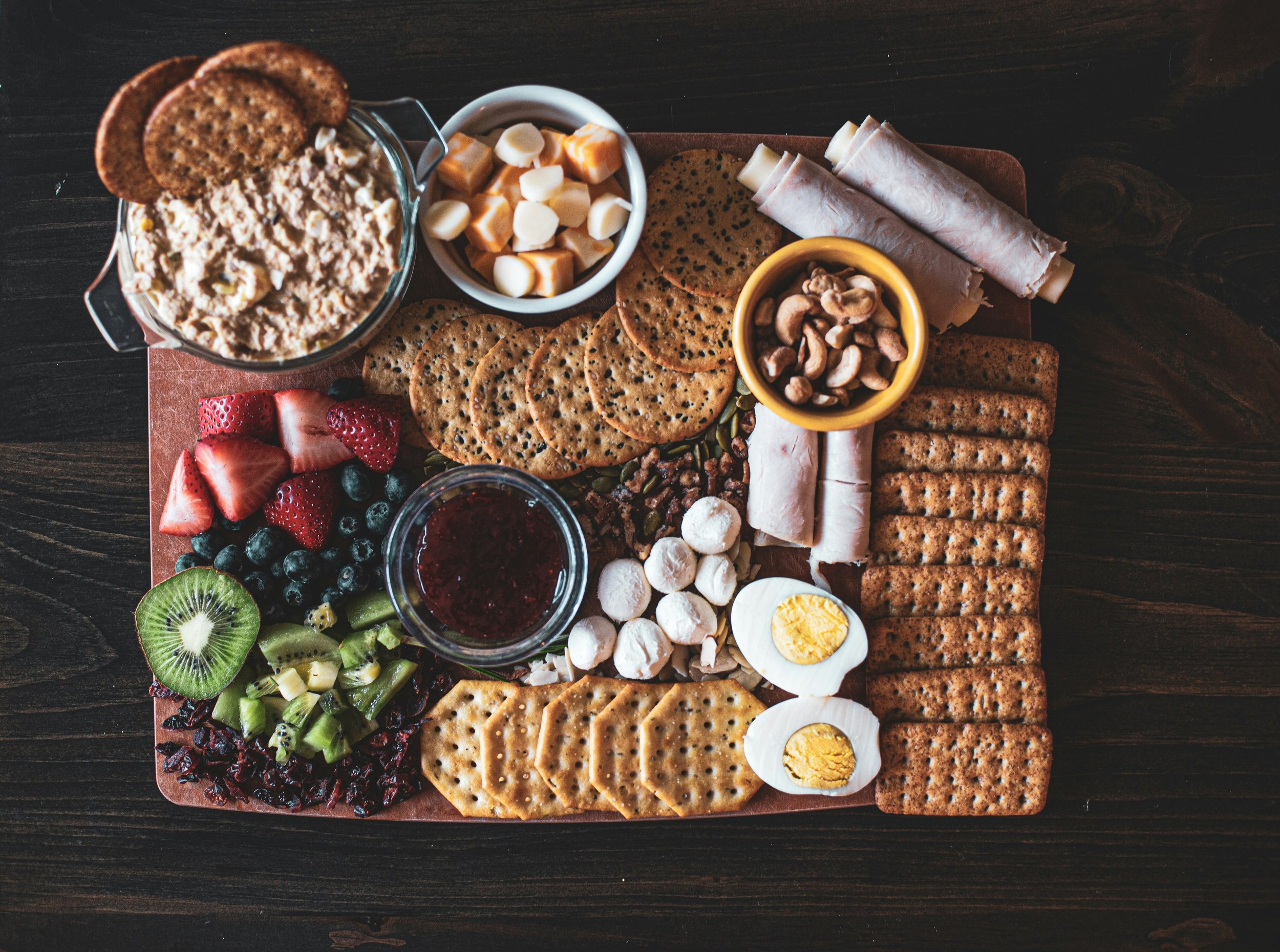
Photo by Leilani Angel on Unsplash
For decades, the "healthy snack" market has been dominated by sweet things. If you walk into any grocery store, you will see aisles filled with granola bars, protein cookies, fruit smoothies, and "low-calorie" brownies. These were the go-to choices for active people for a long time. However, as we move through 2026, we are seeing a massive shift in how people fuel their afternoons. People are finally realizing that even "healthy" sweets can trigger a physical rollercoaster that leaves them tired, irritable, and hungry an hour later.
The new gold standard for energy and focus is the Savory Snack. By choosing savory over sweet, you change the chemical signal you send to your brain. Instead of a quick spike of sugar, you prioritize protein, fiber, and healthy fats. This keeps your blood sugar stable and helps you stay focused during a long afternoon of work or a late-day workout.
The Hidden Danger of "Healthy" Sugar
The problem with the modern snack world is that the word "healthy" is often used loosely. Many protein bars on the market today have as much sugar as a standard candy bar. Even if they contain a high amount of protein, that hit of sweetness, whether from real sugar, honey, or even certain sugar alcohols—tells your brain to stay in "sugar-seeking mode."
When you eat something sweet, your body releases insulin to handle the sugar. Once that insulin does its job, your blood sugar levels drop. This is the "crash" we all know too well. It’s that 3:00 PM feeling where you can’t seem to keep your eyes open and you start looking for a second cup of coffee. By choosing a savory snack, you bypass this rollercoaster entirely. Savory foods, like nuts, seeds, jerky, and vegetables, provide "slow-burning" energy. They take longer for your stomach to break down, which means the energy is released into your bloodstream slowly over several hours.
Why Savory is the Ultimate "Brain Fuel"
If you are a professional or a busy parent, your brain is your most important tool. Your brain runs on glucose, but it prefers a steady stream rather than a flood. When you flood your system with sugar from a sweet snack, it can actually cause inflammation in the brain that leads to "brain fog." You might find it harder to remember names, focus on a spreadsheet, or stay patient in a meeting.
Savory snacks often contain higher levels of amino acids and minerals like magnesium and zinc. These are the building blocks of focus. For example, a handful of pumpkin seeds provides magnesium, which helps regulate your stress response. A piece of high-quality beef jerky provides iron and B-vitamins, which help your blood carry oxygen to your brain. When you make the switch to savory, you aren't just eating to stop being hungry; you are eating to perform better at your job and in your life.
The "Satiety" Secret: Why You Can’t Stop at One
Have you ever noticed that you can eat a whole box of crackers or a large bag of "healthy" fruit snacks and still feel like you could eat more? This is because sweet and highly processed snacks don't trigger your body's "fullness" hormones very well.
Savory foods are different. They often contain a combination of salt, fat, and protein that triggers a hormone called cholecystokinin (CCK). This hormone sends a clear signal to your brain that says, "Stop, we are full." This is why it is much easier to eat a sensible portion of hard-boiled eggs or almonds than it is to eat a sensible portion of cookies. If you struggle with "mindless snacking" while you work or watch TV, the flavor profile of your snacks is likely the problem, not your willpower.
Top Savory Swaps for your Legacy Kitchen
If you’re ready to ditch the sugar crash and reclaim your afternoon, try these practical swaps:
The Crunch Swap: Instead of pretzels or pita chips (which are just processed flour), try roasted edamame or chickpeas. You get the same satisfying crunch and salt, but you add a massive hit of protein and fiber.
The Creamy Swap: Instead of fruit-flavored yogurt (which can have 20 grams of sugar), try plain Greek yogurt or cottage cheese with a sprinkle of "everything bagel" seasoning and some sliced cucumbers.
The Portable Swap: Instead of a chocolate-coated protein bar, keep a few sticks of grass-fed beef or turkey jerky in your bag. Look for brands that have zero sugar on the label.
Making the Transition
This January, try a "Savory Week." For seven days, commit to only eating snacks that are salty or savory. Pay close attention to your energy levels around 4:00 PM. Most people find that their cravings for sweets actually disappear once they stop feeding the "sugar monster" in the afternoon. You’ll find that you have more energy for your evening workout and more patience for your family when you get home. It’s a simple change that builds a powerful legacy of health.

Strength Training for Longevity (The 'Power' Phase)
Train for how you want to move when you’re 80. Your future self is counting on you to build that strength now.

This image was created using AI to avoid copyright issues while conveying the context of this article.
When we think about aging, we often think about slowing down. We imagine getting "frail" or losing our balance. But what if I told you that you have more control over that process than you think?
As we get older, we naturally lose muscle mass, a process called sarcopenia. But even more important than muscle "size" is muscle power. Power is your ability to move a weight quickly. It’s what helps you catch yourself if you trip on a curb or stand up quickly from a low chair. In 2026, the best way to protect your future self is through a specific type of strength training focused on longevity.
Use It or Lose It
Your body is very efficient. If you don't use your "fast-twitch" muscle fibers (the ones responsible for power and speed) your body will stop maintaining them. Strength training isn't just for bodybuilders; it is the "fountain of youth" for your skeletal system.
Lifting weights puts a healthy stress on your bones, making them denser and stronger. It also improves your "insulin sensitivity," which means your body is better at processing the food you eat.
The Power Move: Multi-Joint Exercises
You don't need to spend hours doing "bicep curls." For longevity, you want to focus on "compound movements" that use multiple joints at once. These moves mimic how you move in real life:
The Squat: Sitting down and standing up.
The Hinge: Picking a heavy bag up off the floor (like a deadlift).
The Push/Pull: Opening a heavy door or pushing a grocery cart.
How to Train for the Long Haul
You don't have to lift the heaviest weight in the gym. The key to the "Power Phase" is controlled speed. When you stand up from a squat, try to do it with a bit of "pop" or speed. When you lower the weight, do it slowly. This combination trains your nervous system to stay sharp and your muscles to stay responsive.
Consistency Over Intensity
The goal of longevity training isn't to be "sore" every day. It’s to be able to train again in two days. If you can lift weights twice a week for the rest of your life, you will be ahead of 90% of the population.
This January, don't just train for how you look in the mirror today. Train for how you want to move when you’re 80. Your future self is counting on you to build that strength now.

Mastering the 'Pantry Audit'
Your environment should reflect the person you are becoming, not the person you used to be. A clean pantry leads to a clean plate and a clear mind.

Photo by Annie Spratt on Unsplash
Willpower is a finite resource. It’s like a phone battery; it starts full in the morning, but as you make decisions throughout the day, it drains. By 8:00 PM, after a long day of work and stress, your "willpower battery" is at 5%. If you open your pantry and the first thing you see is a bag of cookies, you are probably going to eat them.
The secret to a successful fitness legacy isn't having more willpower than everyone else. It is about designing an environment where you don't need willpower. This is why we perform a Pantry Audit.
The "Visibility" Rule
Humans are visual creatures. We eat what we see. If your healthy foods, like nuts, seeds, and whole grains, are hidden in the back, and the processed snacks are at eye level, you are fighting a losing battle.
During your audit, move your "Legacy Foods" to the front. Put your fruit bowl on the counter. Hide the "indulgence" foods in a high cabinet or a drawer that is hard to reach. If you have to work for it, you are less likely to do it mindlessly.
Decoding the Label
A pantry audit is also about education. Take five minutes to look at the ingredients of your favorite snacks. Look for the "Big Three" disruptors:
Added Sugars: Often hidden under names like "high fructose corn syrup" or "maltodextrin."
Seed Oils: Highly processed oils (like soybean or canola) can increase inflammation.
Ultra-Processed Grains: Flour that has been stripped of all its fiber.
If a food has more than five ingredients and you can't pronounce half of them, it might be time to find a "Legacy Swap." For example, swap crackers for air-potted popcorn or swap sugary granola for raw walnuts.
Set Your Environment for Success
Don't think of this as "throwing away money" if you toss out junk food. Think of it as "investing in your health." If the food isn't in your house, you can't eat it at 9:00 PM when your battery is low.
This January, take 30 minutes to clean out the clutter. Your environment should reflect the person you are becoming, not the person you used to be. A clean pantry leads to a clean plate and a clear mind.

The Gut-Brain Connection: Foods for Mental Clarity
If you want to think faster, stay calm under pressure, and avoid the afternoon "brain fog," you have to feed your second brain (i.e. your gut) correctly.

This image was creating using AI to avoid copyright issues while conveying the context of this article.
Have you ever felt "butterflies" in your stomach when you were nervous? Or perhaps you’ve noticed that you feel "cranky" when you’re hungry? This isn't a coincidence. Scientists now call your gut your "second brain." There is a constant conversation happening between your digestive system and your head through a massive nerve called the Vagus nerve.
In the fitness world, we often talk about food in terms of "abs" or "weight loss." But in 2026, the real trend is eating for cognition. If you want to think faster, stay calm under pressure, and avoid the afternoon "brain fog," you have to feed your second brain correctly.
The Microbiome: Your Internal Pharmacy
Inside your gut live trillions of tiny bacteria called the microbiome. These little guys are responsible for making about 90% of your body’s serotonin, the chemical that makes you feel happy and relaxed. They also help produce GABA, which helps you stay calm.
When you eat a diet high in processed sugars and "junk" fats, you feed the "bad" bacteria. This can lead to inflammation that travels straight to your brain, making you feel anxious, tired, or unfocused. To fix your focus, you have to fix your food.
The Best Foods for Brain Power
To improve your mental clarity, you want to focus on "Prebiotics" and "Probiotics."
Probiotics (The Good Bugs): These are found in fermented foods like Greek yogurt, sauerkraut, and kimchi. They add healthy bacteria to your system.
Prebiotics (The Food for the Bugs): These are high-fiber foods that "feed" your healthy bacteria. Think of things like onions, garlic, asparagus, and bananas.
The "Anti-Fog" Shopping List
If you have a big presentation or a high-stress week coming up, prioritize these three things:
Fatty Fish: Salmon and sardines are packed with Omega-3 fatty acids, which are like oil for the "gears" of your brain.
Berries: Blueberries and raspberries are full of antioxidants that protect your brain cells from stress.
Dark Leafy Greens: Spinach and kale are high in folate, which helps your brain process information faster.
The 80/20 Legacy Rule
You don’t have to be perfect to see results. If you can make 80% of your meals "gut-friendly," your brain will have the stability it needs to handle the other 20%. This January, stop asking "Will this make me thin?" and start asking "Will this help me think?" When you fuel your brain, the body follows.
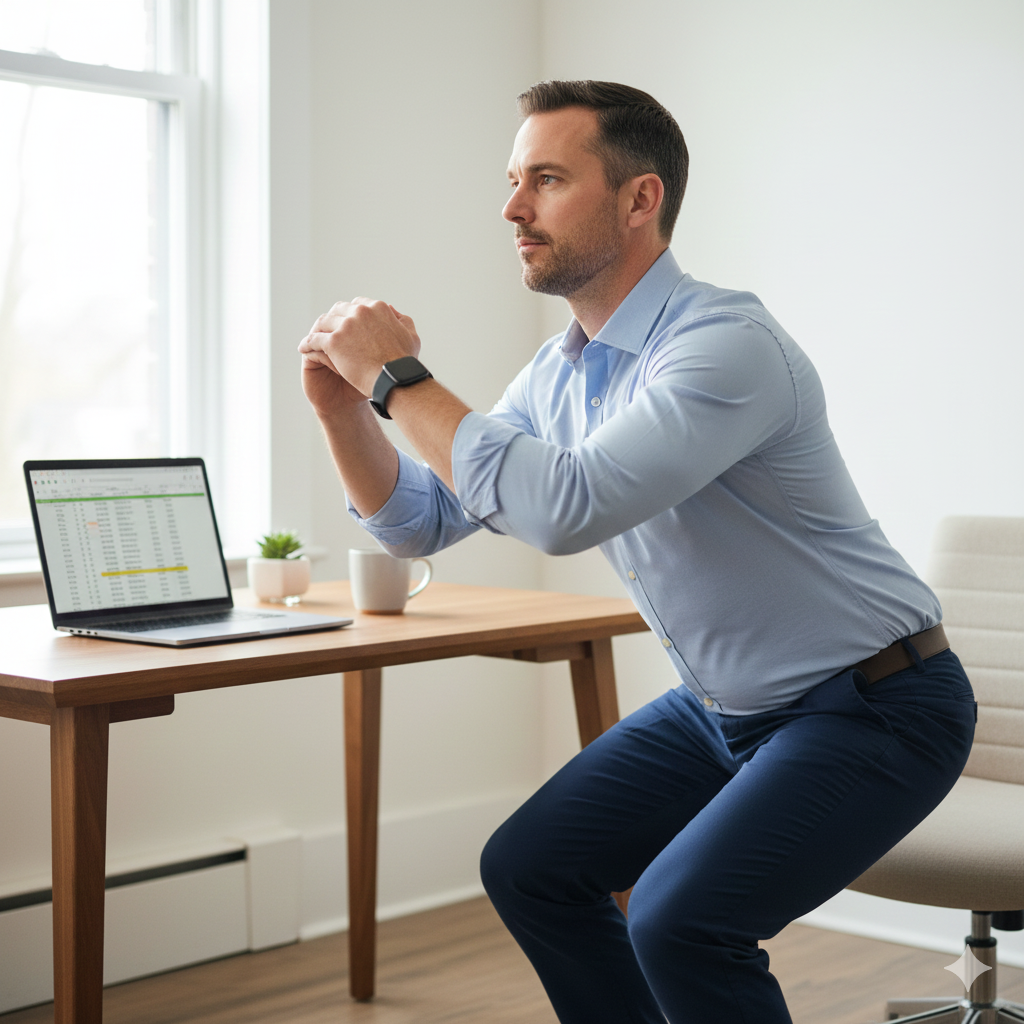
Micro-Workouts: How 10 Minutes Saves Your Day
If your plan requires 60 perfect minutes to be successful, your plan is fragile. The secret to January success isn't intensity; it's consistency.
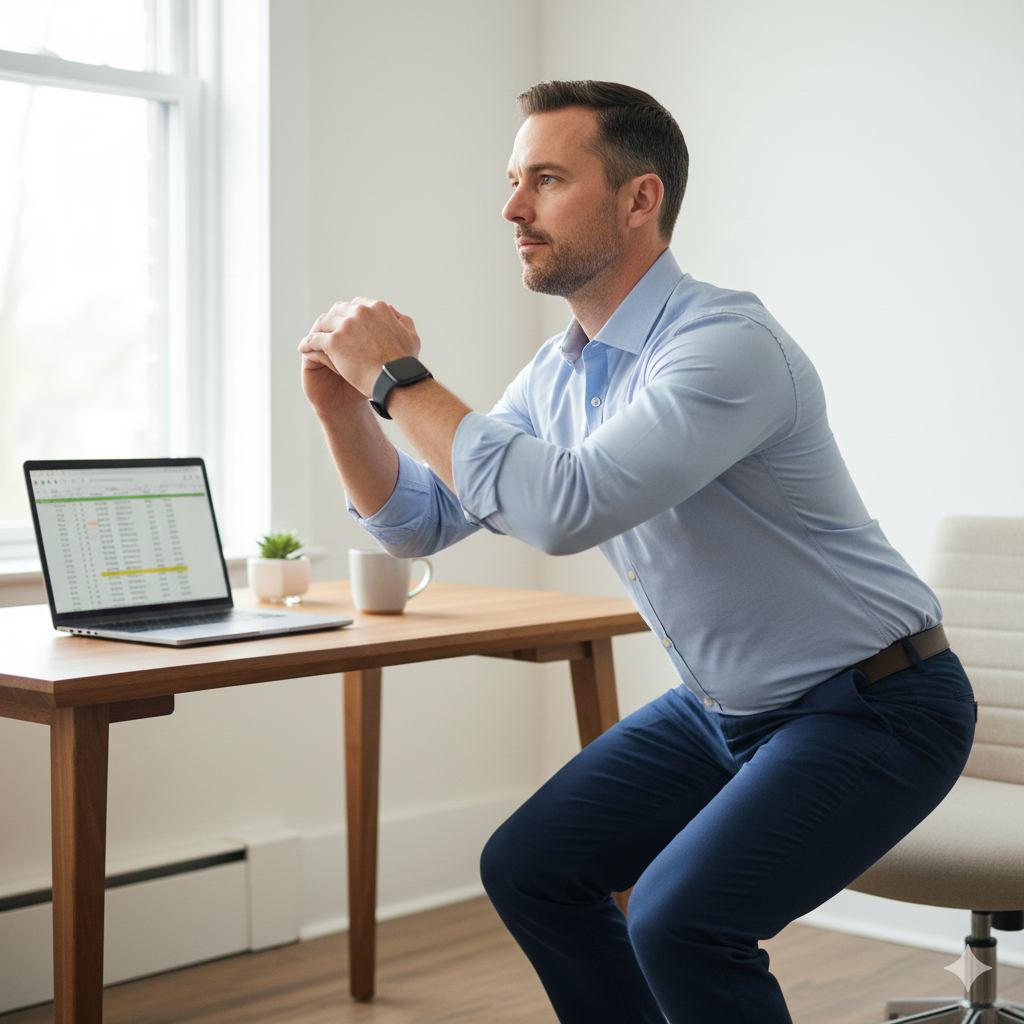
This image was created using AI to avoid copyright issues while still conveying the context of this article.
One of the biggest lies we tell ourselves is: "If I don't have an hour to work out, it isn't worth doing." This "all or nothing" mindset is the reason most people quit their fitness journey by February. Life happens. Meetings run late, kids get sick, and traffic jams occur.
If your plan requires 60 perfect minutes to be successful, your plan is fragile. To build a lasting legacy, your fitness needs to be "anti-fragile." It needs to work even when your day is falling apart. Enter the Micro-Workout.
What is a Micro-Workout?
A micro-workout is a short burst of physical activity, usually lasting between 5 and 10 minutes. It is not meant to replace your long gym sessions entirely, but it is meant to "save the day" when a full session isn't possible.
Think of it like a "fitness snack." While a full meal is better, a snack keeps you going until you can sit down for that meal. Recent studies show that these small "snacks" of exercise can improve your metabolism, lower your blood pressure, and—most importantly—keep your habit streak alive.
The Power of "Greasing the Groove"
In the fitness world, there is a concept called "Greasing the Groove." This means that doing a movement frequently makes your body more efficient at that movement.
If you do 10 push-ups every time you go to the kitchen to get water, you will have done 50-60 push-ups by the end of the day. You never got sweaty, and you never had to change your clothes, but you did more work than the person who planned to go to the gym for an hour but never made it out the door.
Three Ways to Use Micro-Workouts
The "Meeting Reset": After a long Zoom call, set a timer for 5 minutes. Do 2 minutes of bodyweight squats and 3 minutes of stretching. This clears the "stale" feeling in your legs and resets your brain.
The "Commercial Break": If you are watching TV in the evening, use the breaks to do a plank or some lunges.
The "Commuter Walk": Park at the very back of the parking lot or get off the bus one stop early. That 7-minute brisk walk counts as a micro-workout.
Why "Small" is Actually "Big"
The secret to January success isn't intensity; it's consistency. When you use micro-workouts, you stop being a person who "misses" workouts. Even on your busiest day, you can find 5 minutes.
By the end of the month, those 5-minute sessions add up to hours of extra movement. More importantly, they reinforce your identity as an active person. You are proving to yourself that your health is a priority, no matter what. Don't let the "perfect" hour get in the way of a "good" ten minutes.
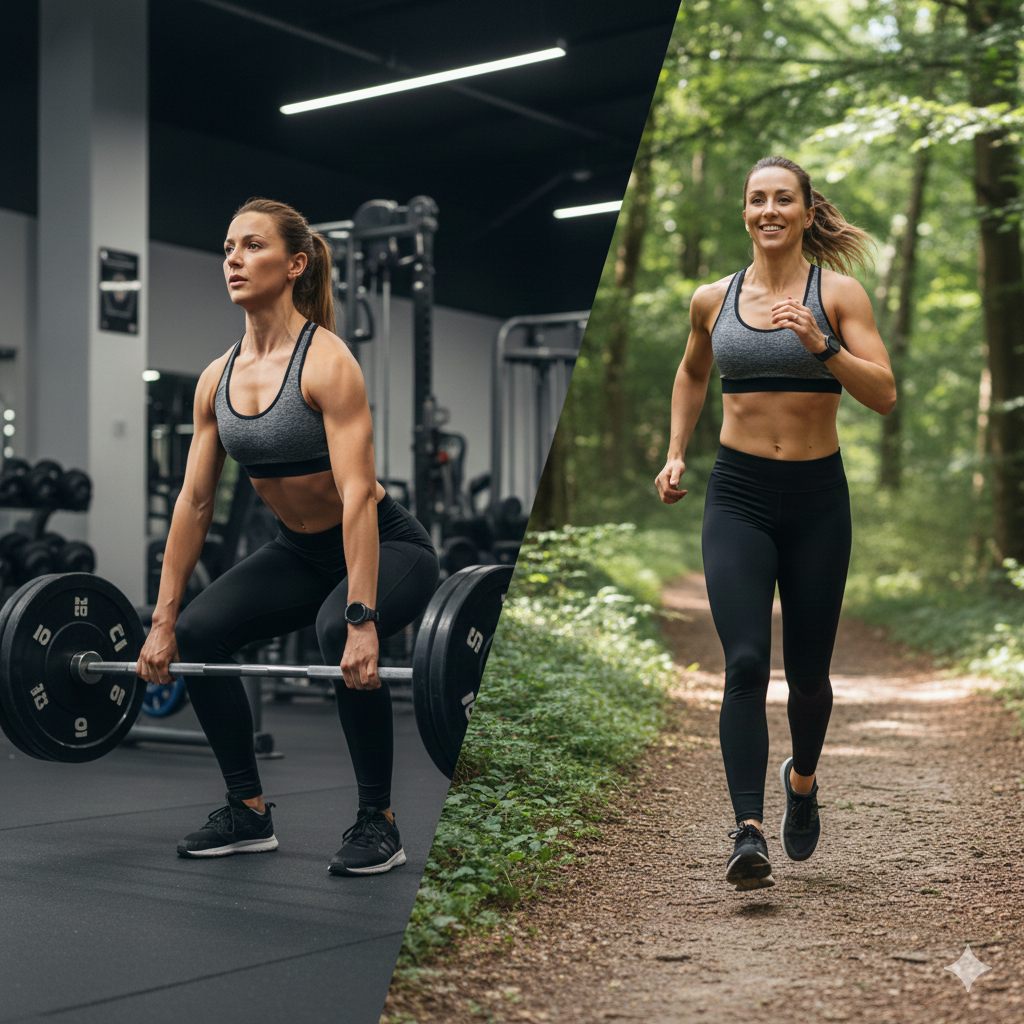
The Hybrid Athlete: Balancing Strength and Running
A hybrid athlete is someone who wants the best of both worlds: the strength of a lifter and the endurance of a runner. This isn't just about looking good; it is about building a body that is truly "functional" for the real world.
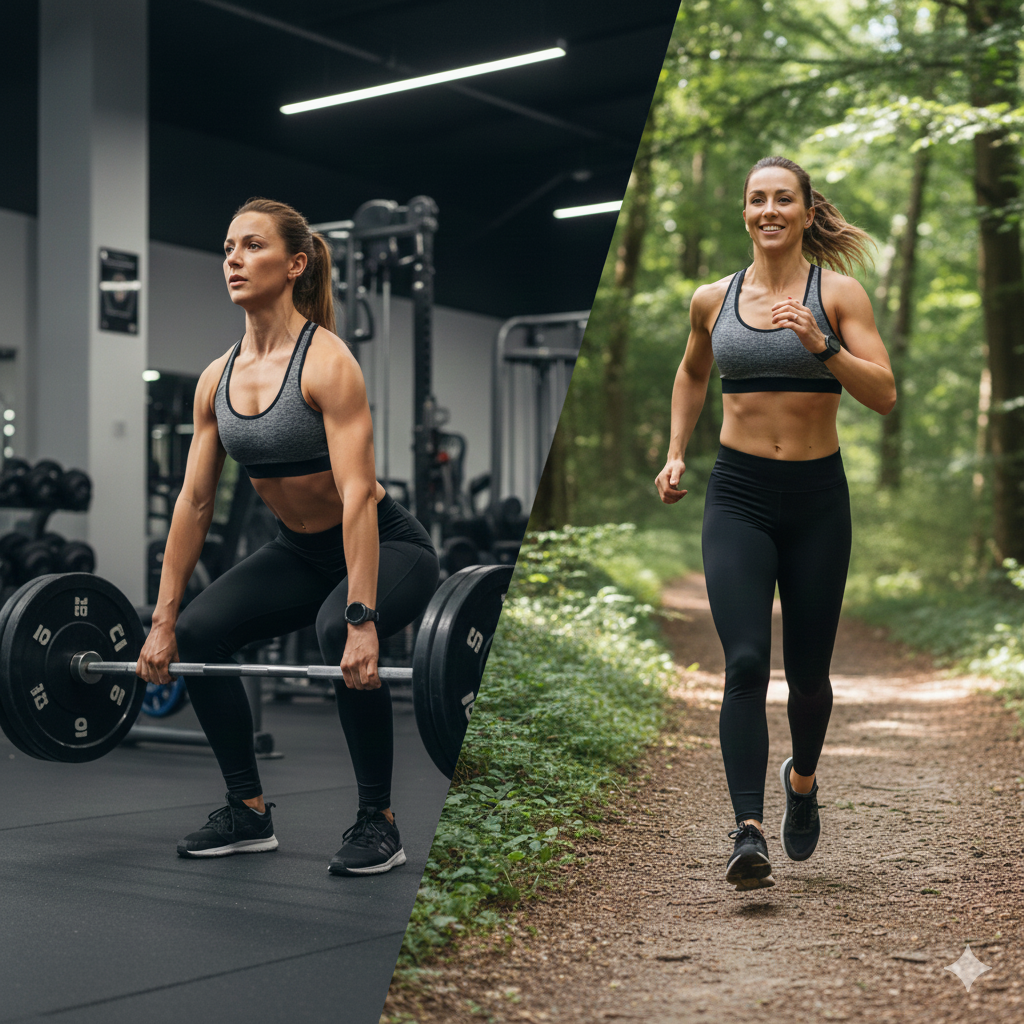
This image was created using AI to avoid copyright issues while still conveying the context of this article.
For a long time, the fitness world was divided into two camps. You were either a "weightlifter" who stayed in the gym, or you were a "runner" who stayed on the road. The lifters were afraid that running would "burn off" their muscle, and the runners were afraid that lifting would make them too "bulky" and slow.
In 2026, those walls have crumbled. The most popular trend in fitness is the "Hybrid Athlete." A hybrid athlete is someone who wants the best of both worlds: the strength of a lifter and the endurance of a runner. This isn't just about looking good; it is about building a body that is truly "functional" for the real world.
Why You Should Be Hybrid
Life doesn't ask you to pick one. You might need to lift a heavy box into the attic one day and chase your dog down the street the next. When you only train one way, you leave "gaps" in your physical legacy.
Strength training protects your bones and keeps your metabolism high. Cardio, like running or cycling, strengthens your heart and improves your lung capacity. When you combine them, you become harder to "break." You are building a body that is as resilient as it is strong.
The Myth of "Muscle Loss"
Let’s clear up a big fear: running will not make your muscles disappear. Unless you are running ultra-marathons every day while not eating enough, your body is very good at keeping its muscle. In fact, having a stronger heart helps you recover faster between sets of heavy squats. The two types of training actually help each other.
How to Build a Hybrid Schedule
The key to being a hybrid athlete is "recovery management." You can't go 100% on a heavy leg day and then try to run a personal best the next morning. Your body needs time to adapt.
Here is a simple way to structure your week:
Monday: Heavy Strength (Upper Body)
Tuesday: Moderate Run (Zone 2)
Wednesday: Heavy Strength (Lower Body)
Thursday: Rest or Light Walk
Friday: Full Body Strength / Functional Move
Saturday: Long, Easy Run or Hike
Sunday: Rest
Eat for the Work
Hybrid training requires more "fuel" than just lifting alone. You need protein to repair your muscles and carbohydrates to power your runs. This is not the time for a low-carb diet. Think of your body like a high-performance engine; you wouldn't put cheap fuel in a race car, and you shouldn't under-fuel a hybrid body.
Whether you want to compete in a "Hyrox" event or you just want to be able to carry all the groceries in one trip and not be out of breath, the hybrid approach is the future. It’s about being a "Jack of all trades" and a master of your own health.
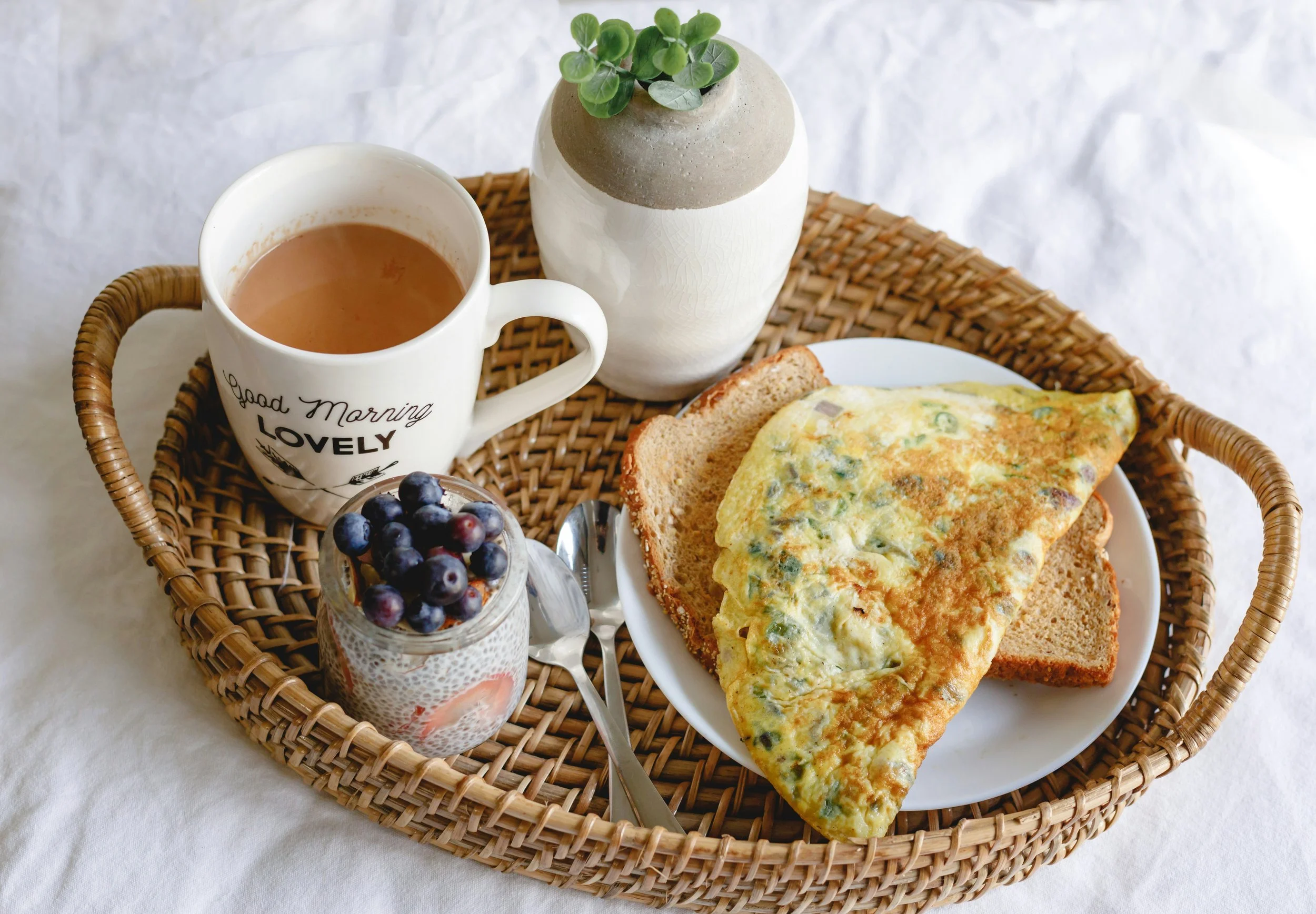
Protein-First Breakfasts: Ending Morning Brain Fog
This January, try a one-week experiment. Swap your usual carb-heavy breakfast for a protein-focused one. Pay attention to how you feel at 11:00 AM.
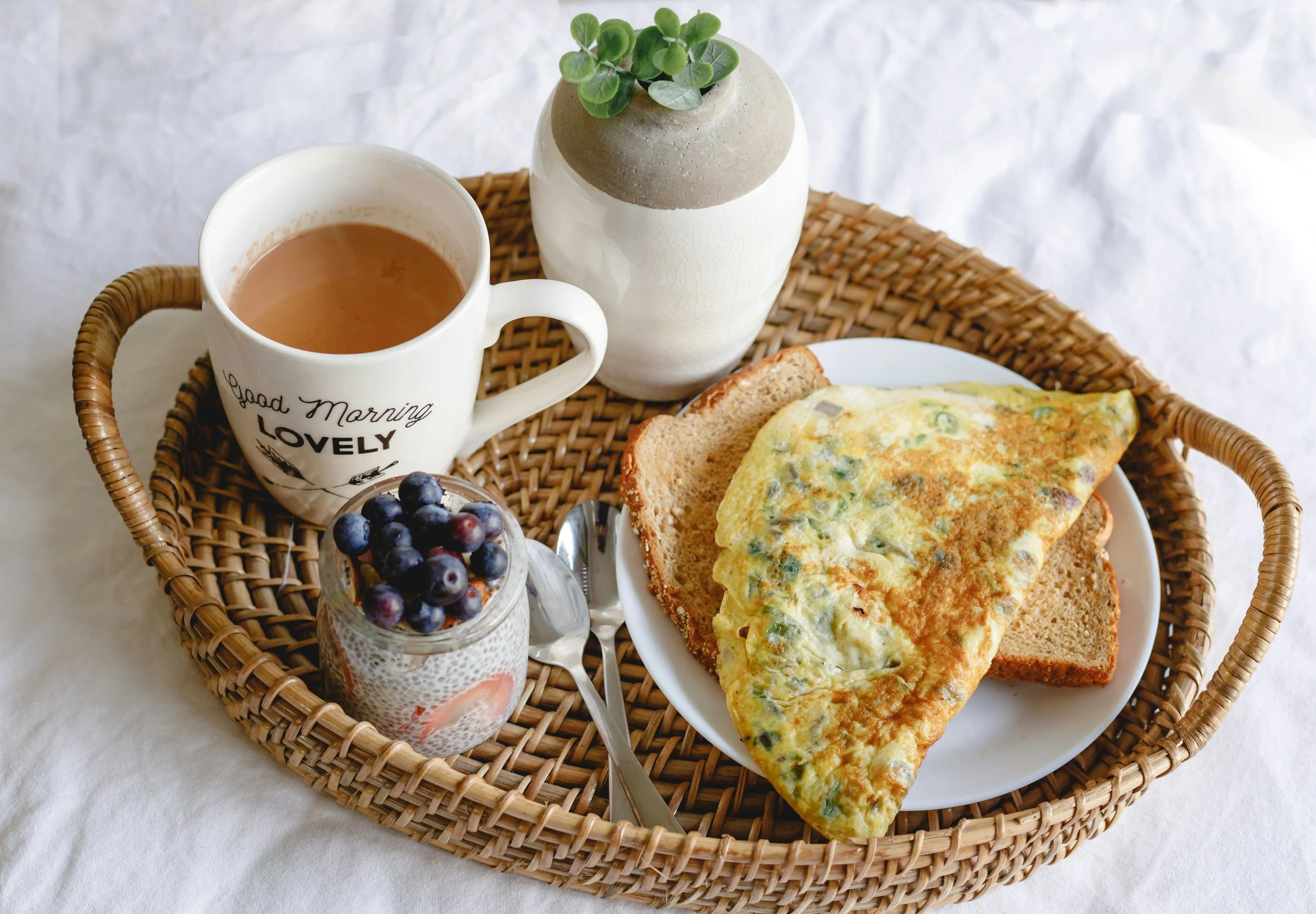
Photo by Shashi Chaturvedula on Unsplash
We have all heard that breakfast is the "most important meal of the day." But for many of us, breakfast is actually the meal that sets us up for an afternoon crash. If your morning routine involves a bagel, a bowl of sugary cereal, or just a large coffee with flavored creamer, you are essentially asking your body to ride a blood-sugar rollercoaster.
By 10:30 AM, you find yourself staring at your computer screen, unable to focus. This is "brain fog," and it is often caused by what you ate (or didn't eat) three hours earlier. To build a legacy of high energy, we need to change the priority of your first meal. In 2026, the rule is simple: Protein First.
The Science of the "Protein Anchor"
When you eat carbohydrates alone, like toast or fruit, your body breaks them down into sugar very quickly. This causes a spike in insulin. What goes up must come down; when that sugar level drops, your energy and focus go with it.
Protein acts like an anchor. It takes longer to digest and keeps your blood sugar stable. Even better, protein triggers the release of hormones that tell your brain you are full. When you start your day with at least 30 grams of protein, you aren't just feeding your muscles; you are protecting your focus for the entire morning.
The Dopamine Connection
Protein contains amino acids, which are the building blocks of brain chemicals like dopamine. Dopamine is what gives you the drive and motivation to tackle your "to-do" list. A high-protein breakfast provides the "raw materials" your brain needs to stay sharp and motivated from the moment you sit down at your desk.
Easy "Protein-First" Ideas
You don't need to cook a five-course meal to get this right. Here are three simple ways to hit that 30-gram goal:
The Scramble: Three eggs and a side of turkey sausage or black beans.
The Greek Bowl: One cup of plain Greek yogurt (which has about 20-25g of protein) topped with a scoop of protein powder or a handful of hemp seeds.
The Power Shake: A high-quality whey or plant-based protein powder mixed with water or unsweetened almond milk and a tablespoon of almond butter.
Stop the "Cereal Cycle"
This January, try a one-week experiment. Swap your usual carb-heavy breakfast for a protein-focused one. Pay attention to how you feel at 11:00 AM. If you find that you are more focused, less irritable, and not reaching for a second (or third) cup of coffee, you’ve found your new secret weapon. Your brain (and your coworkers) will thank you.
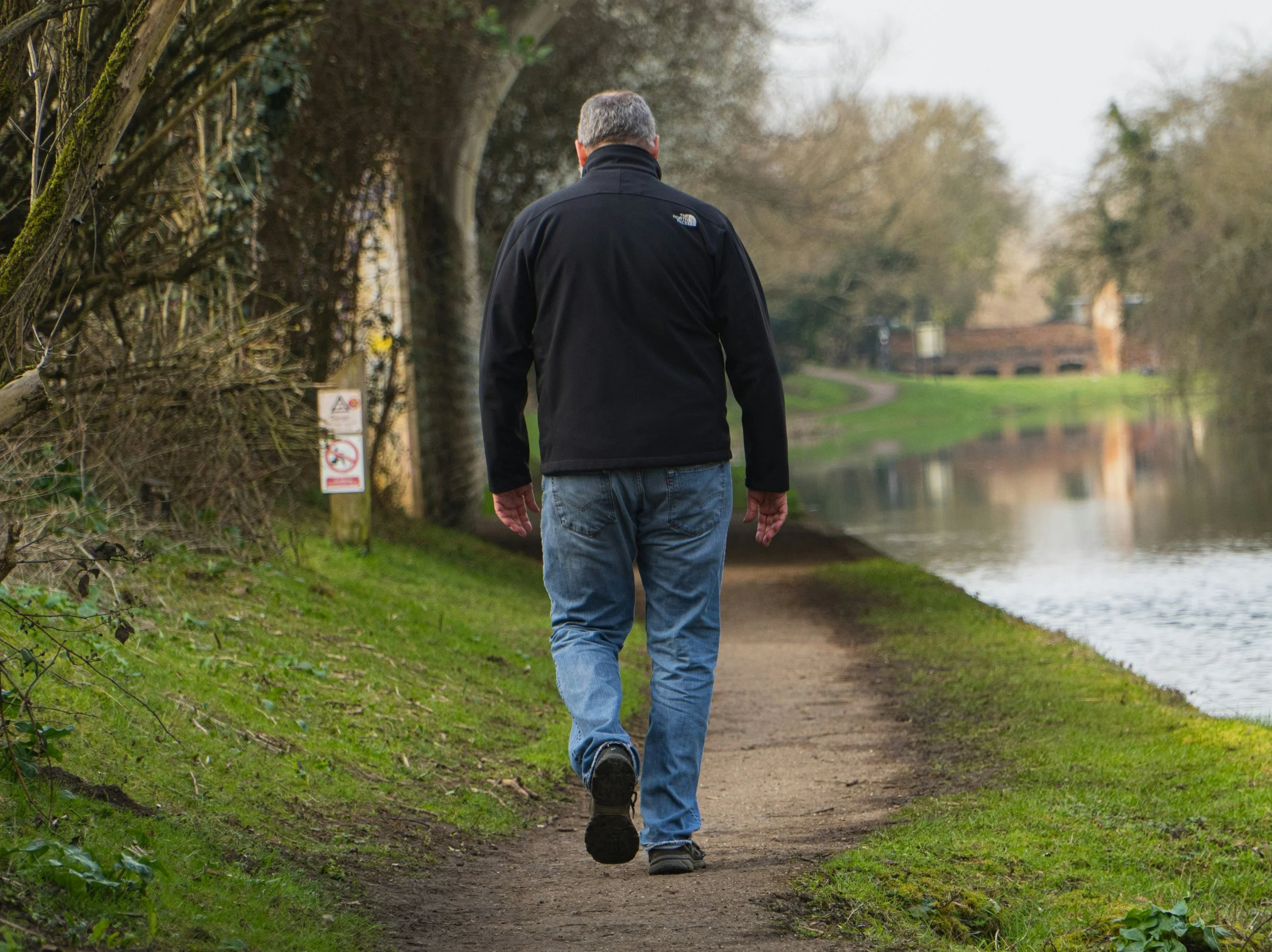
Walking for Longevity: The 2026 'Zone 2' Trend
This January, don't feel like you have to punish yourself with a workout you hate. Put on your shoes, step outside, and start walking.
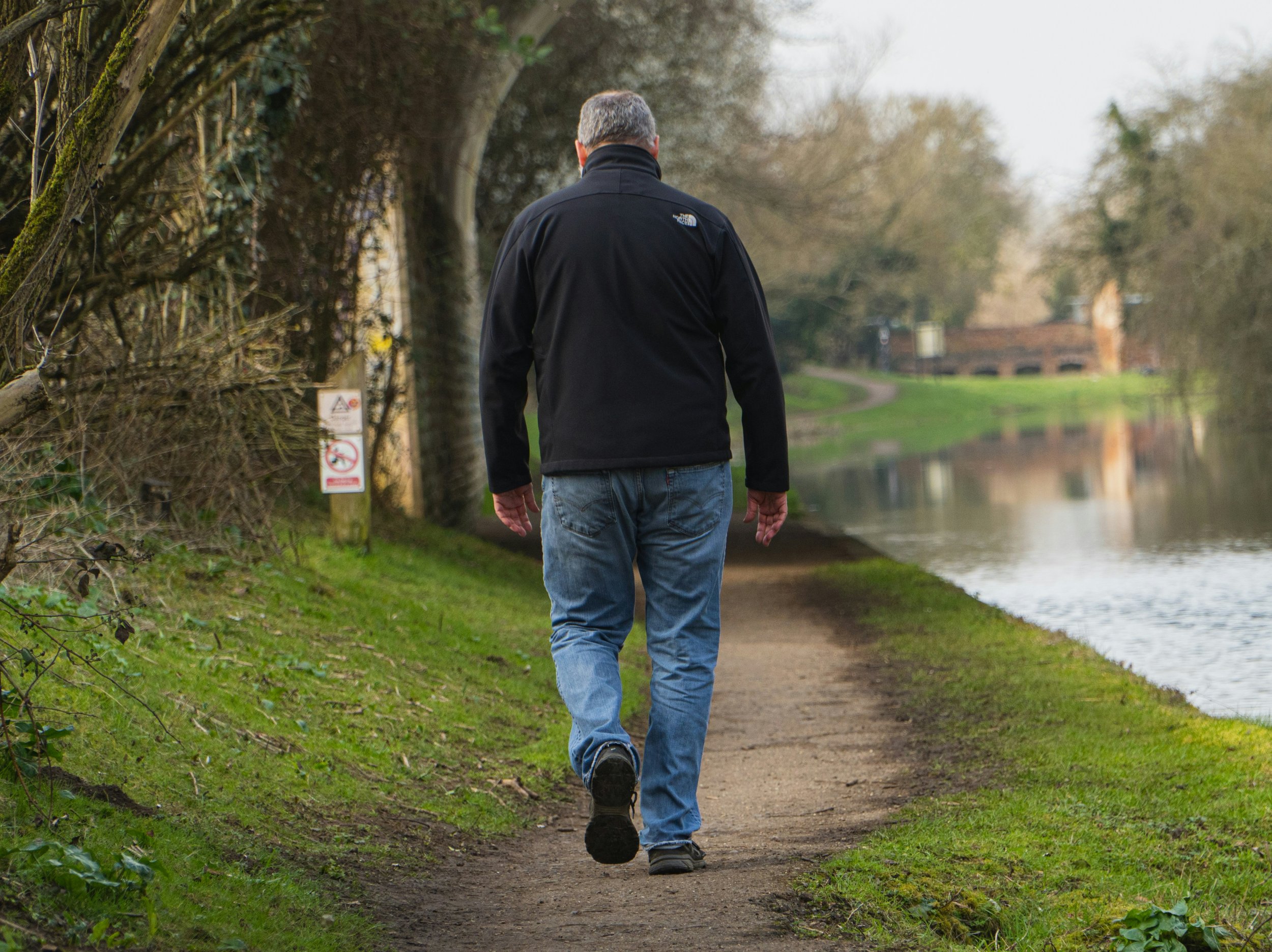
Image courtesy of Caspar Rae via Unsplash
If I told you there was a "miracle drug" that could lower your risk of heart disease, improve your mood, and help you live longer, you would probably want to buy it. What if I told you that this drug is free and you already know how to do it?
I’m talking about walking. But not just a slow stroll to the mailbox. I’m talking about a specific type of movement called "Zone 2 Training." In 2026, the biggest trend in fitness isn't a new high-intensity bootcamp. It is the return to simple, steady walking.
What is Zone 2?
Your heart rate can be divided into five zones. Zone 1 is sitting on the couch. Zone 5 is sprinting as fast as you can. Zone 2 is that "sweet spot" in the middle. It is a pace where you are moving fast enough to breathe a little harder, but you can still hold a full conversation without gasping for air.
Scientists love Zone 2 because it is the best way to train your "mitochondria." You might remember from school that mitochondria are the powerhouses of your cells. When they are healthy, you burn fat more efficiently and have more energy. As we get older, our mitochondria tend to get "rusty." Walking in Zone 2 is like polishing them so they work like new.
Why Walking is Better Than Running (Sometimes)
Many people think that if a workout isn't "hard," it isn't working. This is a myth. While high-intensity interval training (HIIT) is great for power, it puts a lot of stress on your joints and your nervous system.
Walking in Zone 2 gives you all the heart-health benefits without the "wear and tear." It is something you can do every single day without needing a long recovery time. This is why walking is the ultimate "longevity" exercise. It is the type of movement that allows you to stay active well into your 80s and 90s.
How to Do It Right
You don't need a fancy heart rate monitor to find Zone 2, though a smart watch can help. Use the "Talk Test." If you are walking and you can speak in full sentences, but you couldn't sing a song, you are in Zone 2.
To see the best results for your health legacy, try to get at least 150 minutes of this type of walking per week. That sounds like a lot, but it is just 22 minutes a day. You can break it up! A 10-minute brisk walk after lunch and another 10 minutes after dinner is a perfect way to start.
The Mental Health Bonus
Walking isn't just for your heart; it is for your head. Walking outdoors—what some call "Green Exercise"—has been proven to lower cortisol (the stress hormone). In a world that is always "on," a 20-minute walk is often the only time we have to unplug and let our brains rest.
This January, don't feel like you have to punish yourself with a workout you hate. Put on your shoes, step outside, and start walking. You aren't just burning calories; you are building a longer, healthier life, one step at a time.
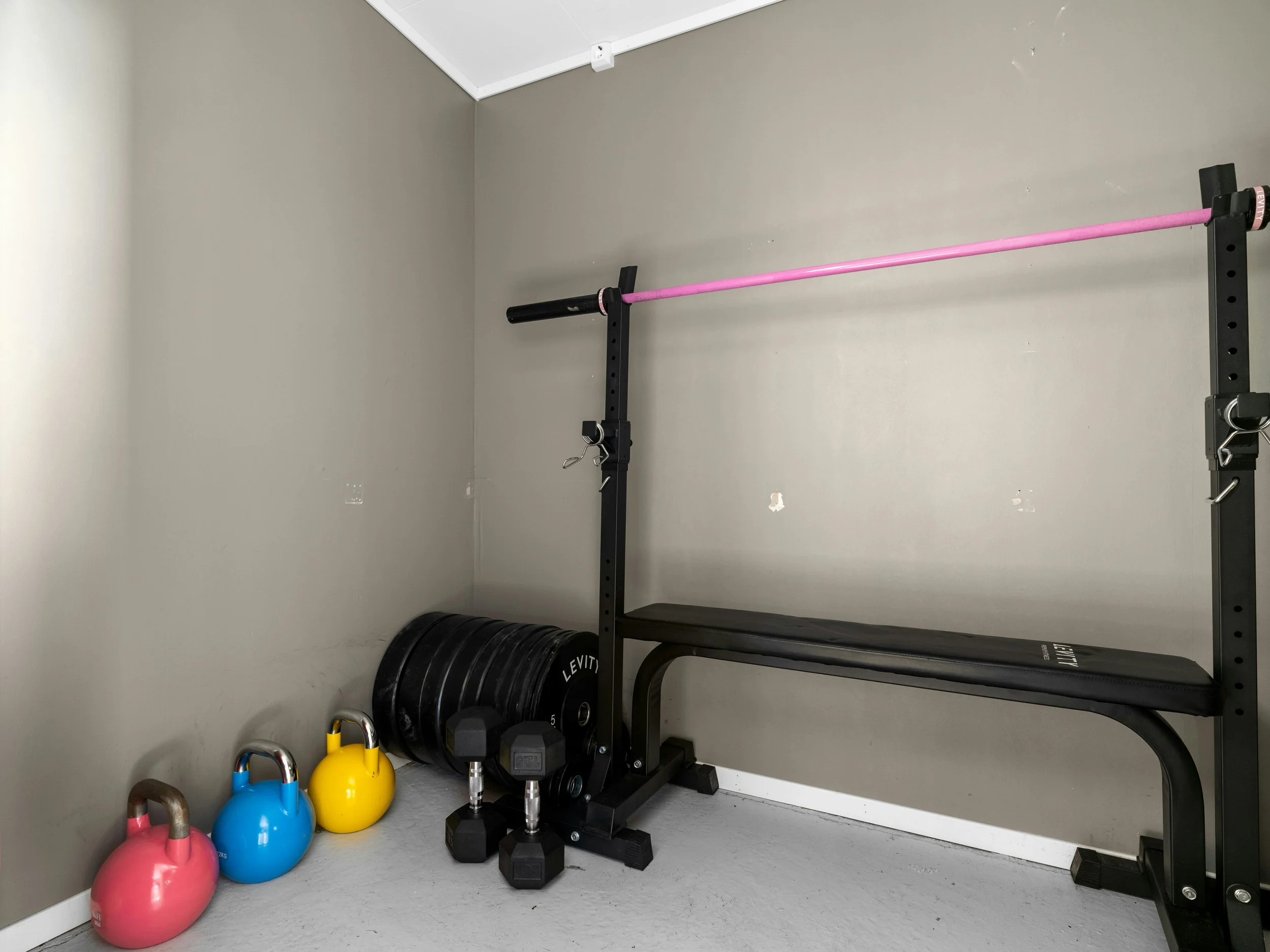
Home Gym Essentials for Under $100
You don't need a $2,000 treadmill or a smart mirror to see results. You need a plan and a few simple tools.
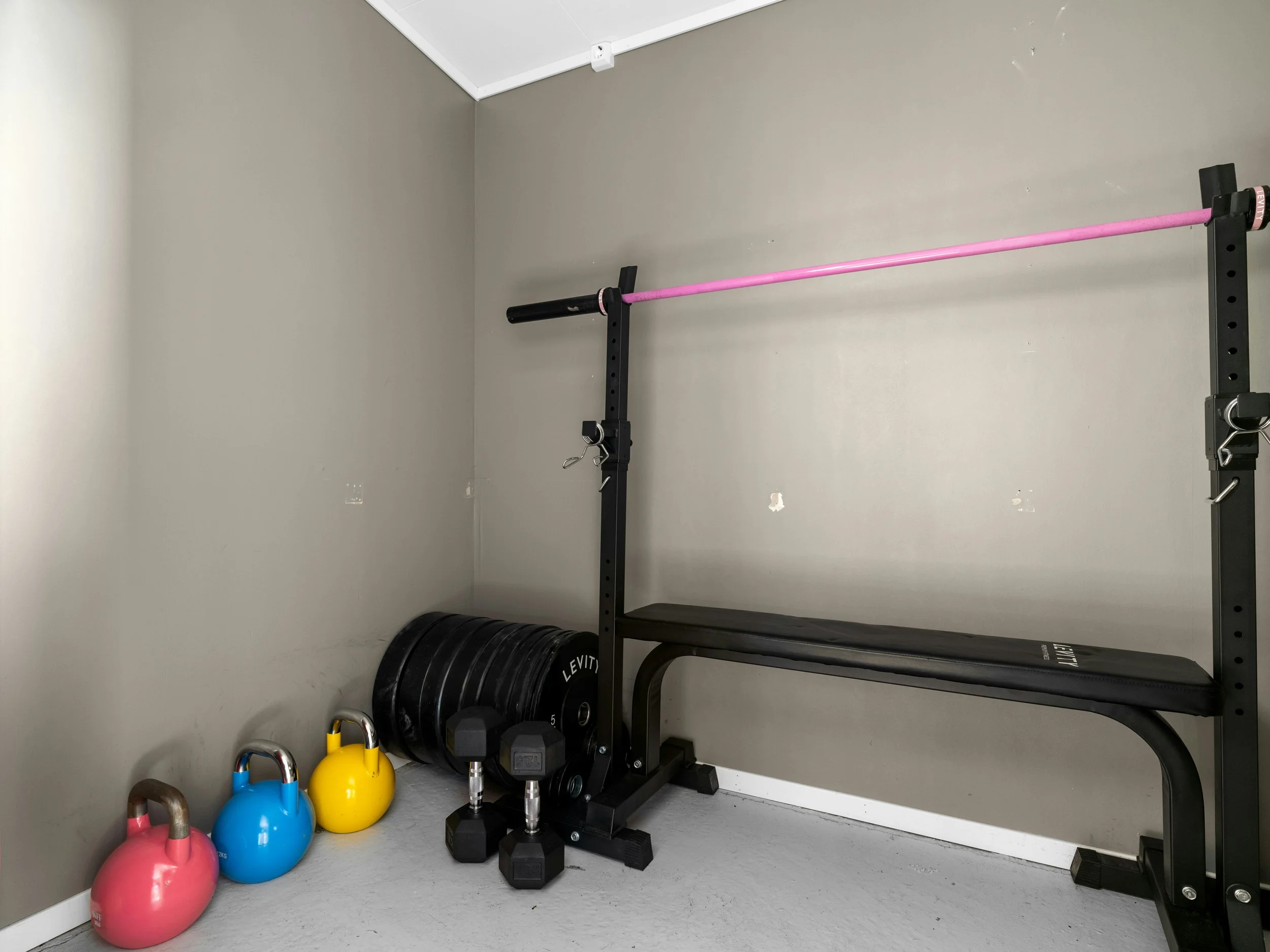
Image courtesy of Alex Tyson via Unsplash
January is the busiest month for big-box gyms. The parking lots are full, there is a line for every treadmill, and the weight room can feel a bit overwhelming. Many people decide to stay home instead, but they worry they can’t get a "real" workout without expensive machines.
I have some good news for you. You can build a highly effective "Legacy Home Gym" for less than the cost of a single pair of high-end sneakers. If you have $100 and a small corner of your living room, you have everything you need to get into the best shape of your life.
The "Big Three" of Budget Equipment
When you are on a budget, you want tools that are "versatile." This means you can use them for dozens of different exercises. Here are the three things I recommend for every home setup:
A Set of Resistance Bands ($25 - $35): These are the most underrated tool in fitness. Unlike weights, bands provide tension through the entire movement. You can use them for squats, rows, chest presses, and even stretching. They weigh almost nothing and can be tucked into a drawer when you’re done.
A Single Kettlebell ($35 - $50): If you can only buy one "heavy" thing, make it a kettlebell. The off-balance handle makes your core work harder than a standard dumbbell. A 15-pound or 25-pound kettlebell is enough to start with for swings, lunges, and overhead presses.
A Doorway Pull-Up Bar ($20 - $30): Building a strong back is hard with just bodyweight. A simple bar that hooks onto your doorframe allows you to do pull-ups or "dead hangs," which are great for shoulder health and grip strength.
Using What You Already Have
You don't have to buy everything. Your home is already full of "gym equipment" if you look closely.
The Bench: A sturdy kitchen chair or the edge of your couch is perfect for tricep dips or elevated lunges.
The Weights: A backpack filled with books or a gallon jug of water (which weighs about 8 pounds) can serve as extra resistance for squats.
The Floor: Never underestimate the power of a push-up. It is one of the best upper-body exercises ever invented, and it costs zero dollars.
Why Home Workouts Win in January
The biggest barrier to fitness is "friction." Friction is anything that makes it harder to start. Having to drive 20 minutes to a crowded gym is high friction. Rolling out of bed and grabbing a kettlebell in your pajamas is low friction.
When you remove the excuses, you increase your consistency. You don't need a $2,000 treadmill or a smart mirror to see results. You need a plan and a few simple tools. Start small, build your collection over time, and focus on the work. Your body doesn't know how much you spent on your equipment; it only knows that you showed up.
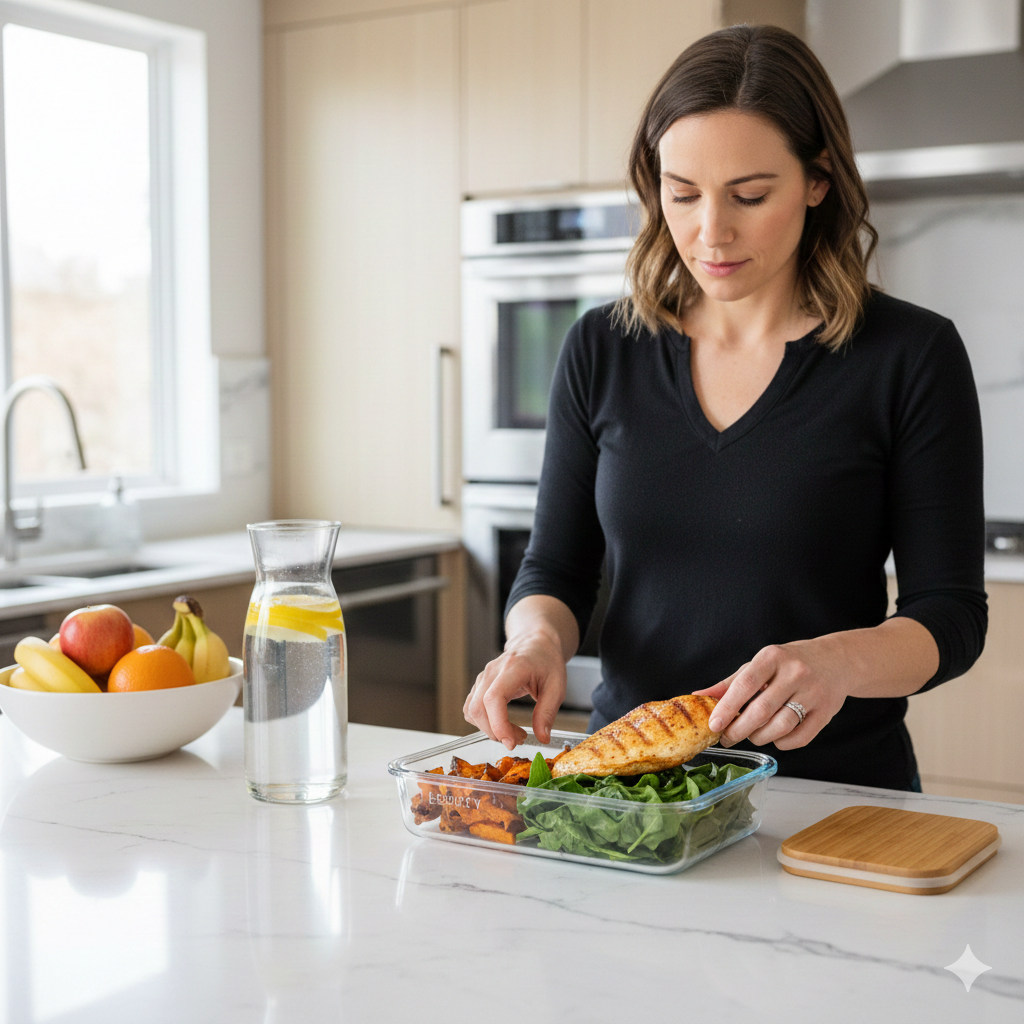
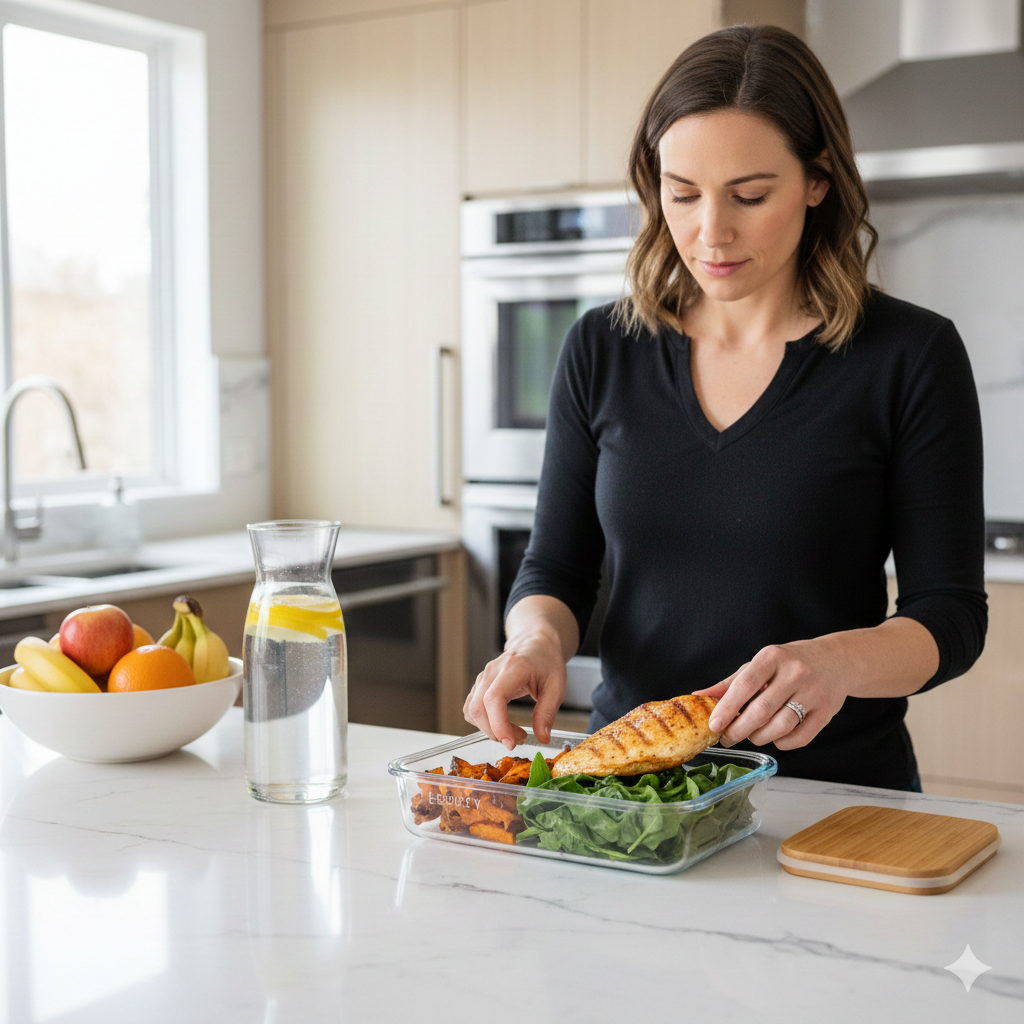
Cleaning the Slate: A Gentle 3-Day Nutrition Reset
After the holidays, many people feel like they need to "punish" themselves for eating too much sugar or heavy food. You don't need a magic potion to reset your nutrition. You just need to give your body the right fuel and a little bit of a break.
This image was created using AI to avoid copyright issues while still conveying the meaning of this article.
After the holidays, many people feel like they need to "punish" themselves for eating too much sugar or heavy food. You might see ads for juice cleanses or detox teas that promise to wash away your mistakes. Here is the truth: your body already has a detox system. It is called your liver and your kidneys. You don't need a magic potion to reset your nutrition. You just need to give your body the right fuel and a little bit of a break.
This 3-day reset is not about starving yourself. It is about "cleaning the slate" by removing the foods that make you feel sluggish and replacing them with high-quality, whole foods.
Why Three Days?
Three days is the perfect amount of time to break a sugar craving cycle and reduce bloating. It is long enough to see a difference in your energy, but short enough that it doesn't feel impossible. The goal here is to stabilize your blood sugar. When your blood sugar is steady, you don't get those "hangry" crashes that lead to overeating.
The Ground Rules
For the next 72 hours, we are going to focus on three simple rules:
Whole Foods Only: If it comes in a box with a long list of ingredients, skip it. Stick to things that grew in the ground or walked on it.
The Hydration Goal: Aim for half your body weight in ounces of water. If you weigh 200 pounds, drink 100 ounces of water. This helps flush out excess sodium that causes bloating.
The 12-Hour Gap: Try to give your digestive system a 12-hour break overnight. If you finish dinner at 7:00 PM, don't eat breakfast until 7:00 AM.
A Simple 3-Day Framework
You don't need a complicated recipe book. Just follow this "Legacy Plate" model for every meal:
Protein: A palm-sized portion of chicken, fish, eggs, or lentils.
Healthy Fat: A thumb-sized portion of avocado, olive oil, or raw nuts.
Fiber: Fill the rest of your plate with colorful vegetables like spinach, peppers, or broccoli.
What to Expect
On Day One, you might feel a little tired, especially if you usually drink a lot of soda or eat a lot of bread. This is your body adjusting. By Day Two, the "brain fog" usually begins to lift. By Day Three, most people report feeling "lighter" and having more steady energy throughout the afternoon.
This reset isn't a permanent diet. It’s a tool you can use whenever you feel like you’ve lost your way. It reminds your body how good it feels to be fueled by real food. Once the three days are over, don't go right back to the junk. Use this new sense of clarity to make better choices for the rest of the month.

The Identity Shift: Why This Year is Different
This year, don't just set a resolution. When you trust yourself to show up, your identity changes. When your identity changes, your life changes.

Image courtesy of Alex Avalos via Unsplash
Every January, millions of people make the same mistake. They set a goal to "lose weight" or "go to the gym five times a week." These are good goals, but they are missing the most important piece of the puzzle. They focus on what you want to do, rather than who you want to be.
This is what experts call an "Identity Shift." If you want your fitness results to last longer than a few weeks, you have to change how you see yourself. Most people see themselves as someone who is "trying" to be healthy. When life gets busy or they have a bad day, they go back to their old self. This year, we are going to change the operating system of your life.
What is an Identity Shift?
Think about two people who are offered a cigarette. The first person says, "No thanks, I’m trying to quit." The second person says, "No thanks, I’m not a smoker."
Do you see the difference? The first person still believes they are a smoker who is trying to change. The second person has changed their identity. Being a non-smoker is now part of who they are. In 2026, we want you to stop being someone who is "trying to get fit" and start being someone who "values their health."
Why Habits Snap Back
Your brain loves patterns. It wants to keep you doing what you have always done because it is safe and easy. This is why you might start strong in January but find yourself back on the couch by February. Your habits are snapping back to match the identity you believe is true.
If you believe "I am just not a morning person," it won't matter how many alarms you set. You will eventually hit snooze. To make a change stick, you have to prove to yourself that your new identity is real. You do this with small wins.
How to Build Your New Identity
You don't change your identity by thinking about it. You change it through your actions. Every time you choose a healthy snack, you are casting a vote for the person you want to become. Every time you put on your walking shoes, you are reinforcing the idea that you are an active person.
Here is how to start your shift this January:
Pick a Word: Choose one word that describes who you want to be. It could be "Athlete," "Resilient," or "Consistent."
Lower the Stakes: Don't try to be perfect. If your goal is to be a "Runner," and you only have ten minutes, go run for ten minutes. A runner is someone who runs, even if it is just a little bit.
Audit Your Language: Stop saying "I'm lazy" or "I have no willpower." Start saying "I am learning to prioritize my energy" or "I am someone who follows through on my promises."
The Power of the Identity Bridge
An identity bridge is a small behavior that connects your old self to your new self. It should be so easy that you can't fail. If you want to be someone who eats well, your bridge might be "drinking one full glass of water before my morning coffee."
These small acts are not just about the water or the walk. They are about building trust with yourself. When you trust yourself to show up, your identity changes. When your identity changes, your life changes. This year, don't just set a resolution. Build a legacy by becoming the person who makes those results happen naturally.

Happy New Year! Start with a Single, Perfect Push-Up (The Power of 1)
Happy New Year! Today, you do not need to do two hours of exercise. You do not need to cut every single thing you love. You simply need to execute The Power of 1.

Image courtesy of Soumitra Sengupta via Unsplash
Happy New Year! The calendar flips to to January 1st tomorrow. The pressure is on, the gyms will be packed, and the enthusiasm for change is high.
Many people feel they must launch their new routine with a massive, punishing two-hour workout, an immediate, drastic diet overhaul, or an aggressive five-mile run. They believe the sheer size of the effort must match the size of the goal.
At Legacy Fitness & Nutrition, we encourage the opposite approach for the single most important day of the year: Start with a single, perfect action.
Today, you do not need to do two hours of exercise. You do not need to cut every single thing you love. You simply need to execute The Power of 1. That first small, perfect action is the signal that you are committed, in control, and ready for a consistent year.
The Power of 1: Momentum Beats Effort
The goal of January 1st is not to prove how strong you are; it is to prove how consistent you can be. Consistency is the true currency of a lasting health legacy.
The first action of the year should be so easy that you cannot logically skip it.
1. The Single, Perfect Push-Up
The push-up is a great, foundational functional movement. It is a full-body exercise that requires core stability, arm strength, and chest engagement.
The Action: Perform one perfect push-up. If you cannot do a floor push-up yet, do one perfect push-up against a wall or an elevated surface (like a kitchen counter).
The Goal: The goal is not exhaustion; the goal is perfection and completion. You are not trying to build muscle in that one rep; you are sending a powerful signal to your brain: "The year has started, and the workout is done." This creates immediate momentum.
2. The Single, Perfect Meal
Do not use January 1st for extreme fasting or cutting. Use it to establish a strong nutritional anchor for the day.
The Action: Eat one meal that is perfectly structured: high in protein, packed with fiber-rich vegetables, and clean. (See article, Protein Power for the New Year).
The Goal: You are demonstrating control and intention. That one clean meal proves that your system is back online and that the indulgence of the holidays is over. You are establishing the baseline for the rest of the week.
3. The Single, Perfect Habit Stack
As we discussed in The Micro-Habit Playbook, habits need an anchor. The first day of the year is when you set that anchor firmly in the ground.
The Action: Commit to starting one single micro-habit that you will attach to an existing routine.
Example: "Right after I finish my first cup of coffee, I will drink a full glass of water."
The Goal: This creates immediate structure. You are automating a positive action so it is not reliant on willpower. This small action will carry you through the rest of the year.
Forget the Overhaul, Focus on the Launch
The trap of the New Year is feeling overwhelmed by the size of the challenge ahead. A single, perfect action breaks that feeling of overwhelm into manageable chunks.
When you finish that one perfect push-up, you have already won the day. You have proven that you are in control. You have built immediate momentum that makes the second action easier, and the third even easier.
Today, forget the resolutions that require massive effort. Focus on The Power of 1. Start small, start perfect, and build your legacy of health one powerful, consistent action at a time. Happy New Year from Legacy Fitness & Nutrition!
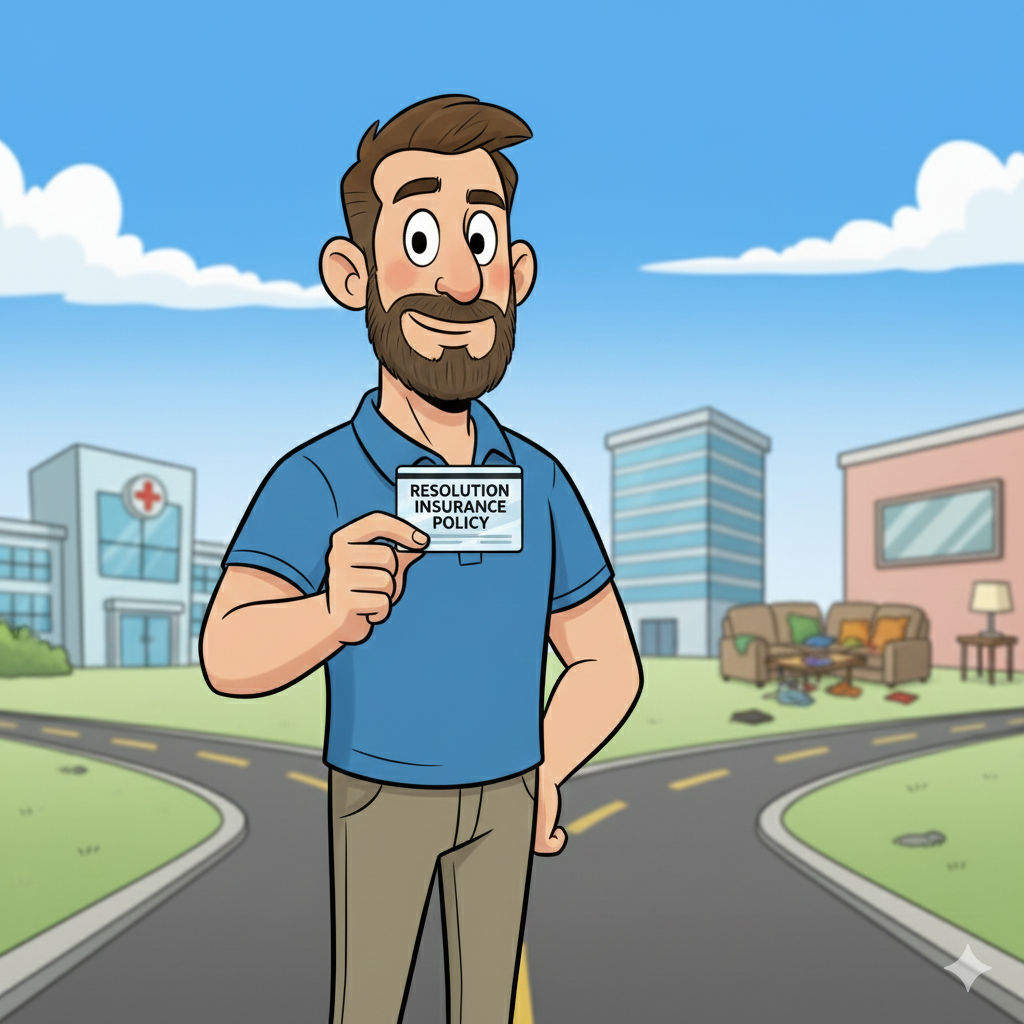
The "Resolution Insurance" Policy: How to Protect Your Goals from Life's Obstacles
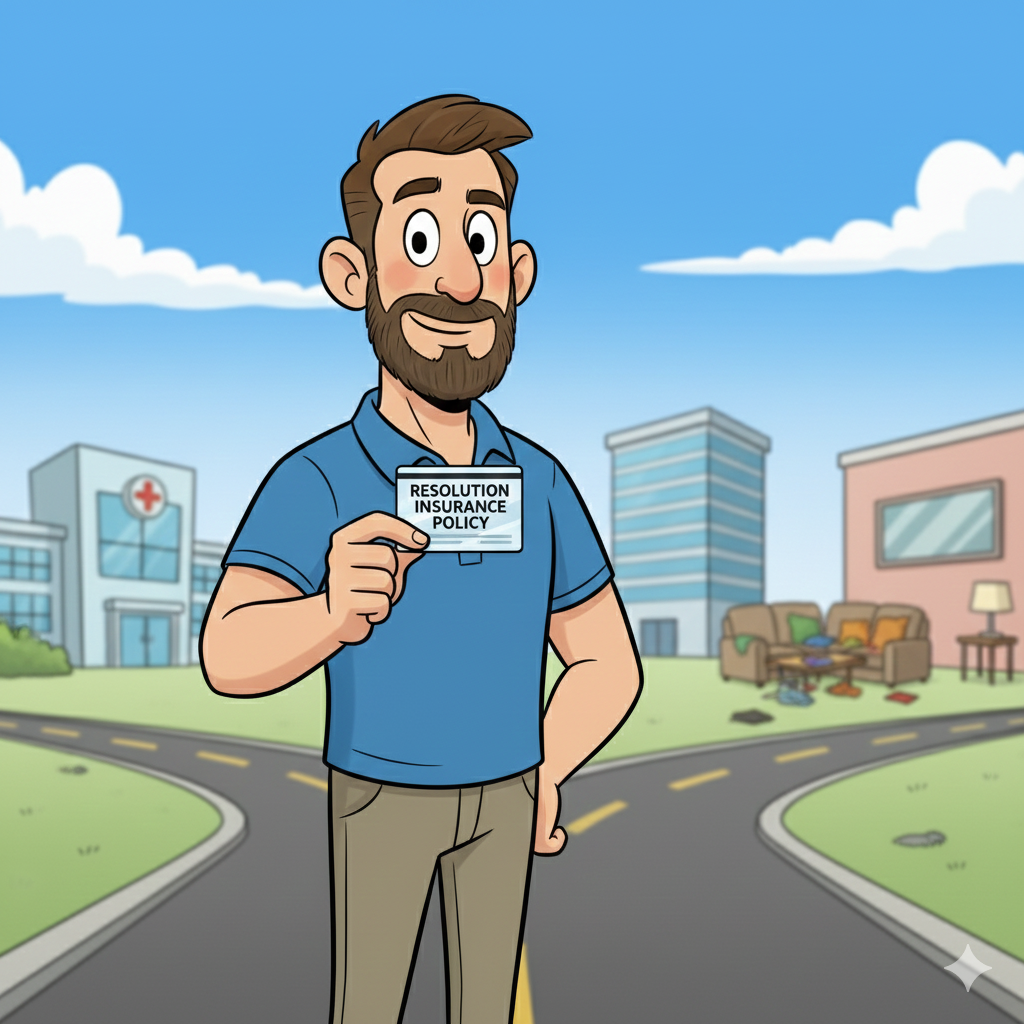
Life happens. Being successful on your fitness journey is not avoiding these obstacles; it is having a plan for them. You need to put a "Resolution Insurance" Policy in place right now.
You've done the work. You've created your detailed Fitness Roadmap (see article, Setting Your GPS), you've focused on essential habits (as discussed in The Micro-Habit Playbook), and you're launching into the New Year feeling energized.
But here is the simple truth: Life happens. You will get sick, a child will need attention, a work project will demand late nights, or you will simply have a terrible, low-motivation day. These obstacles are not a sign of failure; they are an inevitable part of the journey.
The difference between a successful, lasting fitness legacy and one that crashes in February is not avoiding these obstacles; it is having a plan for them. You need to put a "Resolution Insurance" Policy in place right now. This policy gives you clear, pre-planned actions to take when things go wrong, ensuring a detour never becomes a dead end.
The Three Policy Clauses (Pre-Planned Solutions)
Your insurance policy needs to cover the three main types of disruptions that derail most New Year's resolutions:
1. The Time and Energy Policy (When Life Is Chaotic)
This policy protects you when your schedule is shredded and you have zero mental energy for complex tasks.
The Problem: You have 15 minutes and you feel too mentally exhausted to figure out what to do.
The Policy Action: Implement the "Anchor 5." You commit to doing only the five easiest, most non-negotiable health habits.
Examples: 10 push-ups, 10 minutes of walking, preparing a protein shake, and drinking 2 glasses of water.
Why it Works: This action removes the friction of decision-making. You do not worry about the "perfect" workout or meal; you simply hit the Anchor 5. This maintains the streak of consistency, which is the most valuable thing you own. (This is a simplified version of the principles in The Power of the 15-Minute Home Workout).
2. The Nutritional Policy (When You're Forced to Eat Out)
This policy protects you from food environments that are designed to make you fail, like last-minute business dinners or unexpected travel.
The Problem: You are unexpectedly eating at a fast-food restaurant or a chain restaurant with a heavy menu.
The Policy Action: Apply the "Protein-Vegetable First" Rule.
Commitment: Always choose the leanest protein source on the menu (grilled chicken, fish, or sirloin), and order a double side of vegetables or salad to replace the fries or heavy starches.
Why it Works: By prioritizing protein and fiber, you ensure maximum satiety and nutrient density (as taught in Protein Power for the New Year). This simple rule gives you a clear win, regardless of the menu, and prevents the "well, I've already messed up" spiral.
3. The Mental Policy (When Motivation Disappears)
This is the most critical policy. It protects you when you feel emotionally low, physically sore, and have zero desire to continue.
The Problem: You've missed two workouts, the scale is up a pound, and you feel like quitting everything.
The Policy Action: Invoke the "Why Check." Immediately stop focusing on the missed workouts or the number on the scale. (See article, Your "Why" is Not a Number).
Commitment: Contact your accountability partner or coach (see article, The Power of Accountability). Spend 5 minutes reviewing your deeper "Why" (e.g., "I want to be strong enough to hike with my family when I'm 70").
Why it Works: This shifts your focus from the emotion of failure to the long-term purpose of the journey. A coach or partner can filter the setback as data (as outlined in The "Failure Filter"), not personal weakness, helping you adjust your roadmap and restart immediately.
Do not wait for January 1st to be perfect. Create your Resolution Insurance Policy now. By planning for the detours, you guarantee that you always have a simple, strategic path back to your legacy destination.
Rethinking Cardio: Why Steady State is Better Than HIIT for Long-Term Fat Loss
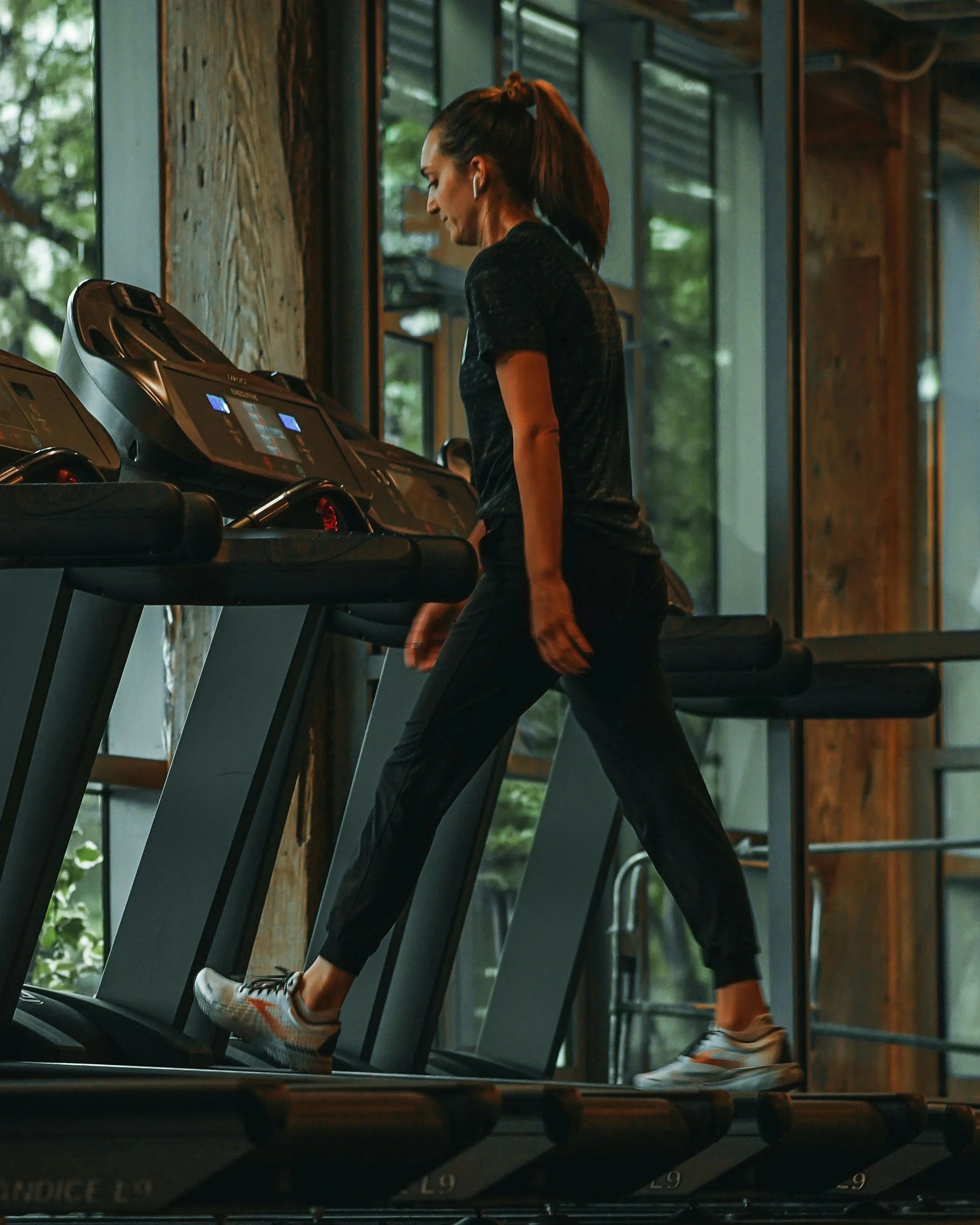
While HIIT is a valuable tool, it is often misunderstood and overused. Low-Intensity Steady State (LISS) cardio, like brisk walking or cycling, is a more effective, safer, and less stressful tool for consistent fat loss
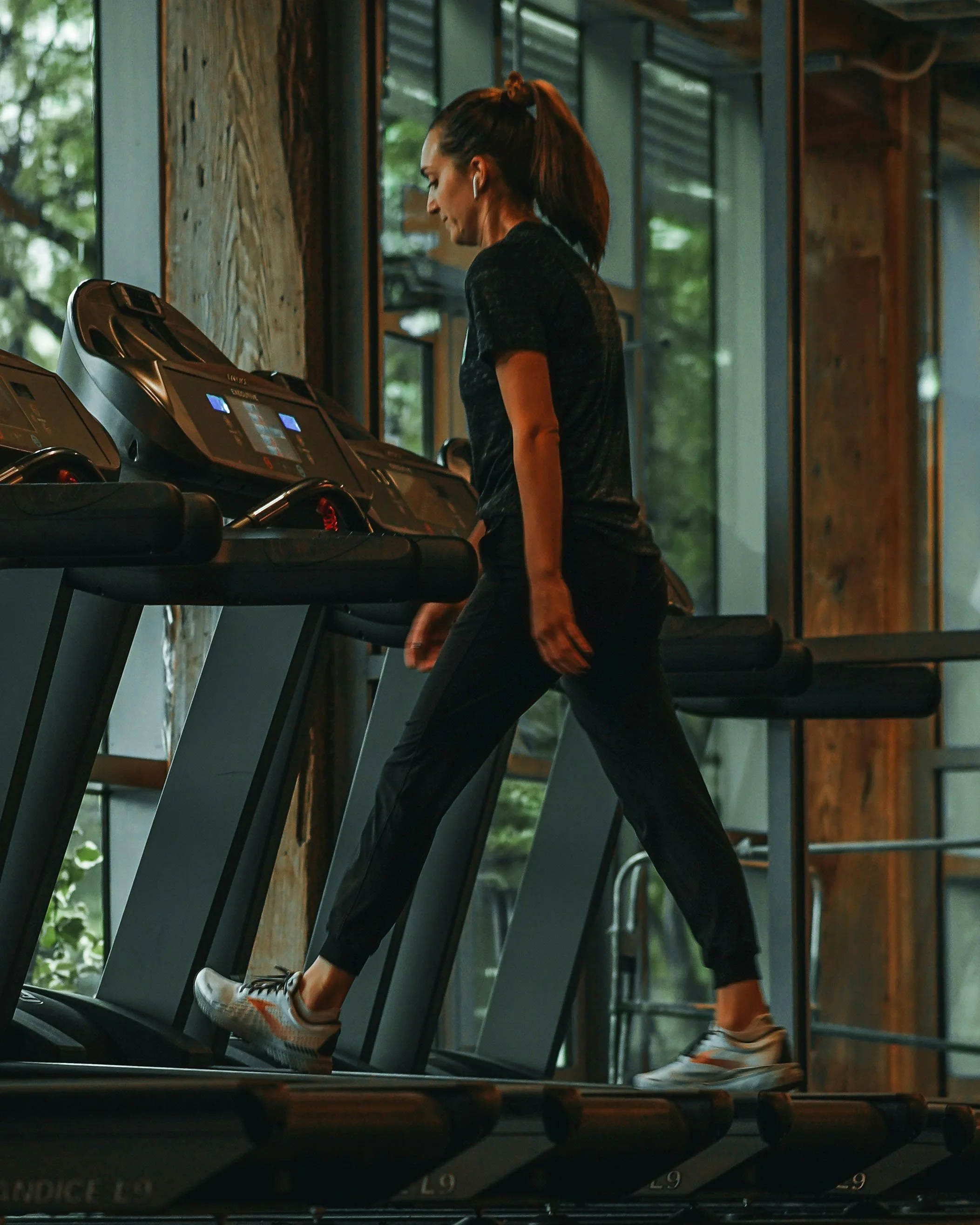
Image courtesy of Mike Cox via Unsplash
High-Intensity Interval Training (HIIT) has been a massive trend for years. It is fast, efficient, and promises maximum calorie burn in minimal time. When setting ambitious New Year's goals, many people feel they must punish themselves with relentless, breathless bursts of effort.
While HIIT is a valuable tool, it is often misunderstood and overused, making it a poor choice for the average person seeking sustainable, long-term fat loss and building a health legacy.
At Legacy Fitness & Nutrition, we encourage a strategic approach: For most people, Low-Intensity Steady State (LISS) cardio, like brisk walking or cycling, is a more effective, safer, and less stressful tool for consistent fat loss. It is time to rethink your cardio.
The Hidden Cost of Too Much HIIT
The issue with HIIT isn't that it doesn't burn calories; it is that it places immense stress on your system, which can work against the goals of fat loss and recovery.
It Spikes Cortisol: HIIT is a massive stressor. When you push yourself to the limit, your body floods your system with cortisol (as discussed in Your Secret Fitness Weapon). Chronic, elevated cortisol signals your body to store fat, particularly around the midsection, and also ramps up sugar cravings, undermining your diet.
It Kills Recovery: Constantly pushing high-intensity effort depletes your glycogen stores and delays muscle recovery, forcing you to skip lifting or feel too exhausted to work out the next day (see article, The 3 Rules of Recovery). This creates inconsistency, which is the enemy of all progress.
It Increases Injury Risk: When you are pushing intensity, your form often breaks down, making you much more prone to joint and soft tissue injuries, which halts all training.
The Power of Steady State (LISS) Cardio
LISS cardio involves maintaining a comfortable, conversational pace for a longer duration (30 to 60 minutes). This means you should be able to talk easily while moving.
1. The Low-Stress Fat Burn
LISS keeps your heart rate comfortably elevated but crucially, keeps your body out of the high-stress, cortisol-spiking zone. LISS is often performed at a heart rate where your body naturally prefers to use stored fat as its primary fuel source. Your body isn't in panic mode; it is in efficiency mode.
2. The Recovery Accelerator
Unlike HIIT, LISS actually aids in recovery. The gentle, sustained movement increases blood flow to your muscles, helping to flush out waste products and transport nutrients for repair. It is active recovery that is easy to stick with daily.
3. The Consistency Builder
LISS is easy to do every day and requires no special equipment; you can simply take a brisk walk (as discussed in The Power of the 15-Minute Home Workout). This ease of entry ensures you maintain the consistency that is the true driver of long-term fat loss.
How to Strategically Use Cardio
For the most effective health legacy, integrate both types of cardio strategically:
LISS (The Foundation): Perform 3 to 5 times per week for 30 to 60 minutes. Use LISS on your rest days or active recovery days.
HIIT (The Accelerator): Use only 1 to 2 times per week, primarily on days when your stress level is low, your sleep was optimal, and your recovery is complete.
For long-term fat loss, resilience, and stress management, prioritize the gentler, more strategic effort of steady state cardio. It is the sustainable path to building an enduring fitness legacy.