

The Power of Accountability: Why a Coach is a Long-Term Investment, Not a Short-Term Fix
A coach is not a short-term fix; a coach is a long-term investment in your human potential and the resilience of your health legacy.

This image was created using AI to avoid copyright issues while conveying the context of this article.
As people plan their New Year's resolutions, many will decide they need to hire a trainer or a coach. They often view this relationship as a short-term fix: "I need a coach for six weeks to lose 10 pounds," or "I'll hire one until I know all the exercises."
At Legacy Fitness & Nutrition, we encourage a different, more powerful perspective: A coach is not a short-term fix; a coach is a long-term investment in your human potential and the resilience of your health legacy.
The true power of a coaching relationship lies not in the exercise plan they write, but in the Accountability and Strategy they provide. This is the difference between achieving a temporary weight loss goal and establishing a health legacy that endures decades of change and challenge.
Why Willpower Fails, But Accountability Works
We have discussed why willpower is a finite resource (ref article, The "Failure Filter"). When life gets stressful, that willpower disappears, and you default back to old, comfortable habits. This is where accountability steps in as your most powerful tool.
A Coach Creates a System: A coach removes the burden of constant decision-making. You do not wake up wondering what to eat or how to train; you simply follow the system that has been proven to work for you.
A Coach Provides the "External Spine": When your internal motivation sags (and it will), your coach is the external spine that reminds you of your deeper "Why" (see our article, Your "Why" is Not a Number). Knowing that someone is checking in and expecting your results prevents that 5-minute skip from becoming a 5-week breakdown.
A Coach Filters Failure: A coach applies the Failure Filter to your setbacks objectively. When you see a plateau as personal failure, a coach sees it as data and immediately adjusts the roadmap (see our article, Setting Your GPS: Creating a Fitness Roadmap). This eliminates emotional quitting.
The 3 Ways Coaching Secures Your Legacy
The value of a coach extends far beyond the gym floor and impacts your overall healthspan:
1. The Expert Guide to Longevity
Longevity is built on precision: specific movement patterns, targeted metabolic conditioning, and tailored nutrition. A coach is an expert guide who can quickly identify the subtle errors in form, the hormonal imbalances (ref article, Why You Can't "Out-Train" a Bad Sleep Schedule) you are facing, or the nutritional gaps (see article, "Protein Power" for the New Year) that are stalling progress. You do not pay for their time; you pay for the tens of thousands of hours of expertise that prevents costly mistakes and accelerates results.
2. The Investor in Your Identity
The most profound shift in fitness is changing your identity from "someone who tries to work out" to "someone who is an athlete." A coach treats you like an athlete, and their consistent belief in your potential slowly forces you to internalize that identity. This identity shift is the ultimate guarantee of long-term consistency.
3. The Planner for Life Changes
Life is unpredictable. You will deal with injuries, job changes, family needs, and travel. A relationship with a coach means you never have to scrap your fitness plan. Instead, the coach is there to adapt the plan to your current circumstances, ensuring that your health legacy continues to be built during busy, stressful, or low-energy periods.
View hiring a coach not as a cost center, but as an investment in your long-term independence, resilience, and vitality. It is the most direct path to securing a lifelong legacy of health.
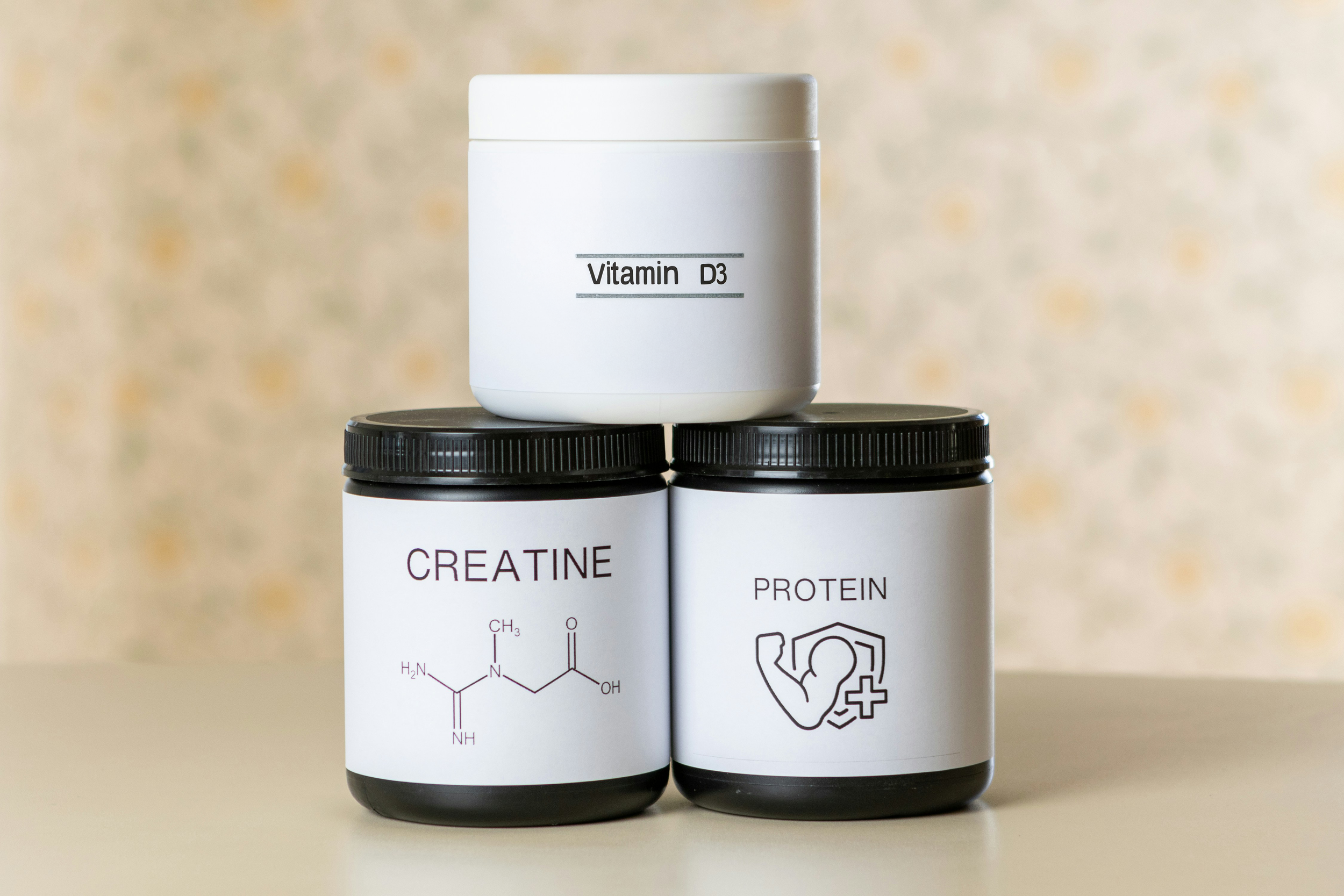
The 3 Supplements Worth Your Money in 2026 (And 3 to Skip)
Build your legacy on sound nutrition and consistent training first. Once that foundation is solid, use the evidence-based supplements to give you a small, safe edge.
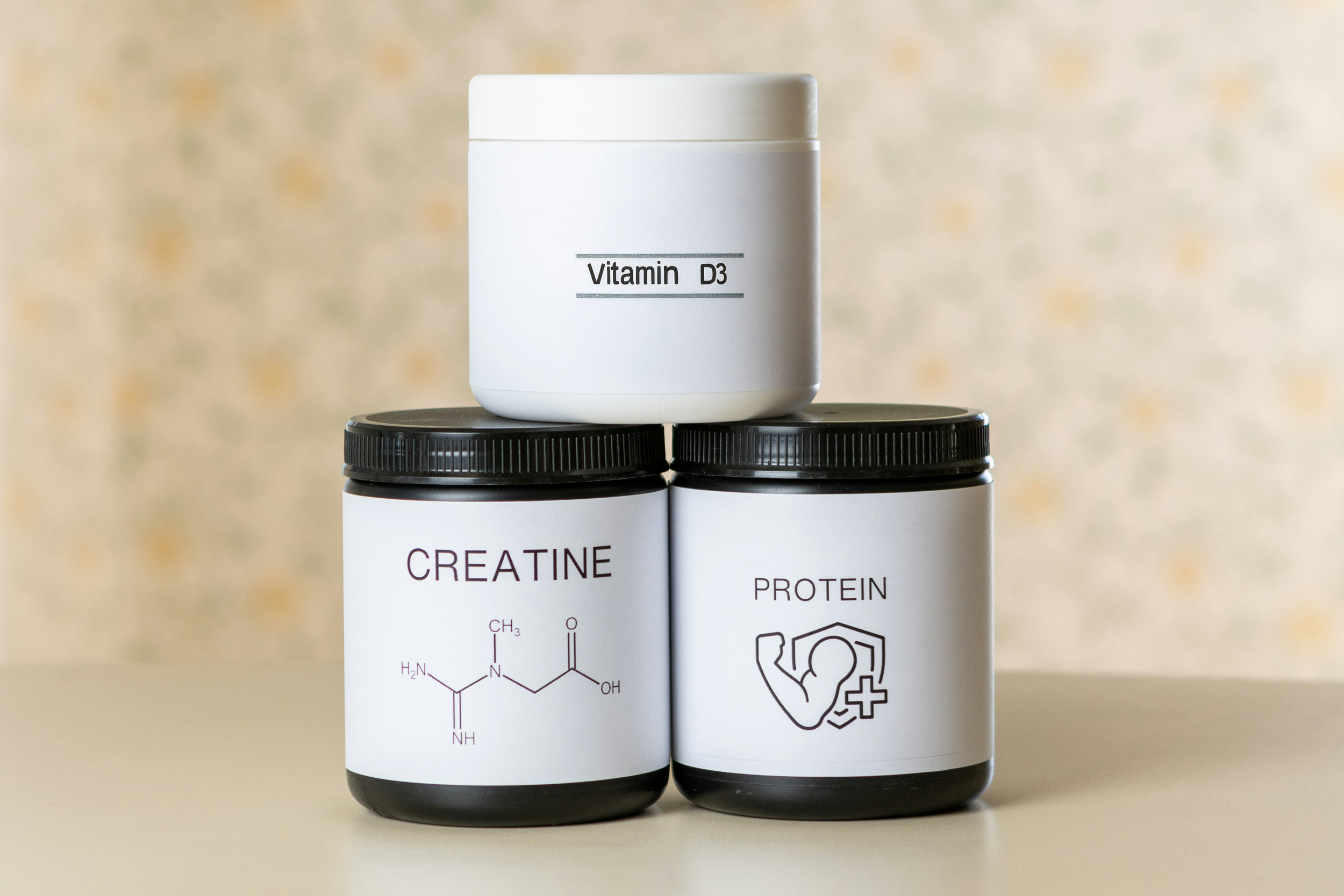
Image courtesy of Aleksander Saks via Unsplash; however it was edited to change “Pre-Workout” in the original image to “Vitamin D3” to better fit this article.
The supplement aisle is a confusing place. Every bottle promises the world, claiming to magically melt fat, build muscle overnight, or give you boundless energy. For someone trying to build a lasting fitness legacy, it is hard to know what is science and what is simply expensive hope.
At Legacy Fitness & Nutrition, we operate on a clear principle: No supplement can ever fix a bad diet, poor sleep, or inconsistent training. Supplements are exactly what the name implies; they supplement a solid foundation, they do not replace it.
Important Disclaimer: Your individual needs for vitamins, minerals, and supplements can vary widely based on your diet, health history, and blood markers. The information provided here is general knowledge. The only reliable way to determine if you have a deficiency or need a specific supplement is through medical testing, such as a blood test. We strongly recommend consulting with a qualified healthcare professional, registered dietitian, or certified nutrition coach before starting any new supplement regimen.
To help you navigate this confusing market and protect your wallet in 2026, here are the 3 supplements that have robust scientific evidence to support your goals, and 3 that you should skip entirely.
Supplements Worth Your Money (The Evidence-Based 3)
These supplements are highly researched and can effectively support a consistent training and nutrition program:
1. Creatine Monohydrate
What it is: A naturally occurring compound that helps muscles produce energy during heavy lifting or high-intensity exercise.
What it does: Creatine increases muscle power and volume, allowing you to lift slightly heavier or get one or two more reps per set. Over time, this small increase in performance translates to significant muscle and strength gains (see article, Strength Training for Longevity). It is also highly studied and safe.
Legacy Tip: Take 3-5 grams daily, every day, regardless of your workout schedule. Consistency is key.
2. Protein Powder (Whey or Plant-Based)
What it is: A convenient, cost-effective source of protein (ref article, "Protein Power" for the New Year). Whey is fast-digesting; plant blends are great for dairy sensitivities.
What it does: It helps you easily hit your daily protein goal (e.g., the 30-gram breakfast rule). This is crucial for satiety, preserving muscle mass, and maximizing recovery after exercise (see article, The 3 Rules of Recovery).
Legacy Tip: Use it as a convenient tool to fill nutritional gaps, not as a replacement for real, whole-food meals.
3. Vitamin D3
What it is: A fat-soluble vitamin the body primarily produces when skin is exposed to sunlight. Most people, especially in winter (see article, Move for Mood) or those who work indoors, are deficient.
What it does: Vitamin D is crucial for bone health (which works alongside resistance training) and plays a key role in immune function, mood regulation, and even hormone balance. Deficiency is linked to fatigue and muscle weakness.
Legacy Tip: Get your blood levels checked first, but supplementing 2,000–5,000 IUs daily is often necessary, especially in the winter months.
Supplements to Skip Entirely (The Expensive Hope)
These supplements are often highly marketed but lack the consistent scientific backing to justify the cost or the hype:
1. Fat Burners (Thermogenics)
What they are: Pills claiming to raise your metabolism to burn fat at rest. They usually contain high doses of caffeine and a blend of unproven herbs.
Why to Skip: The small metabolic boost they might offer is usually minor compared to the side effects (jitters, anxiety, heart rate spike). They do nothing to address the core issues of poor diet, low protein, or high cortisol (ref article, Your Secret Fitness Weapon). They create dependence and stress the body.
2. Branched-Chain Amino Acids (BCAAs)
What they are: Three specific amino acids (leucine, isoleucine, valine) often marketed as a way to prevent muscle breakdown during workouts.
Why to Skip: They are largely unnecessary if you are already consuming enough daily protein (either from whole food or a complete protein powder). A complete protein source, like whey, already contains BCAAs and the other essential amino acids your body needs, making BCAAs redundant and wasteful for most people.
3. "Detox" or "Cleanse" Teas/Pills
What they are: Products claiming to flush "toxins" from your body, often containing strong laxatives or diuretics.
Why to Skip: This is pure marketing fiction (see article, The Myth of "Detox"). Your liver and kidneys handle detoxification. These products simply cause temporary water loss (making you think you lost weight) and disrupt your digestive system. They undermine the goal of sustainable, healthy habits.
Build your legacy on sound nutrition and consistent training first. Once that foundation is solid, use the evidence-based supplements to give you a small, safe edge.

Setting Your GPS: Creating a Fitness Roadmap (Not Just a Wish List)
A wish list is a dream without instructions. A roadmap is a detailed plan that tells you exactly where to turn, what speed to maintain, and what obstacles to expect.

Image courtesy of Cathryn Lavery via Unsplash
Every January, people create a fitness "wish list." They write down vague goals like "I want to get healthy," "I want to lose weight," or "I want to feel better."
These statements are full of hope, but they are critically lacking one thing: A roadmap.
A wish list is a dream without instructions. A roadmap is a detailed plan that tells you exactly where to turn, what speed to maintain, and what obstacles to expect. Without a roadmap, you will quickly get lost, frustrated, and you will eventually pull over.
At Legacy Fitness & Nutrition, we teach you to set your Fitness GPS to ensure you not only reach your destination but know exactly how to get back on track when life throws a detour. A successful legacy is built on clear direction.
The Problem with Vague Goals
Why does "I want to lose 10 pounds" often fail? Because the goal is simply a destination, not a journey. It does not tell you the daily habits required to get there.
A successful fitness roadmap transforms the wish into a detailed, actionable plan using the SMART framework, but with a special focus on Actionable Habits.
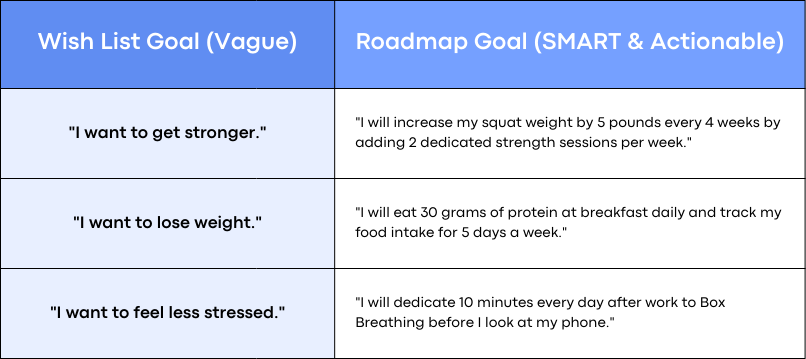
The difference is that the roadmap goal focuses on the consistent action you must take, not just the eventual outcome.
3 Essential Components of Your Fitness Roadmap
Your fitness plan needs three layers to be truly resilient and effective:
1. The Daily Checkpoint (Process Goals)
These are the small, daily actions you control 100%. These are the behaviors that, if done consistently, guarantee the bigger result.
Action: Identify 3 non-negotiable process goals for the first 30 days. These are habits, not outcomes.
Examples: Drink 60 ounces of water; Go to bed by 10 PM; Get a protein source in every meal.
Strategy: Focus 90% of your energy on winning the day by hitting these checkpoints. This builds confidence and momentum immediately.
2. The Quarterly Target (Performance Goals)
These are measurable steps that confirm you are moving in the right direction. They are big enough to be motivating but small enough to be reachable within a few months.
Action: Set a physical challenge for every three months.
Examples: Complete 10 perfect push-ups in a row by March 31st; Complete a 5K race by June 30th; Maintain a consistent sleeping average of 7.5 hours for 90 days.
Strategy: Quarterly targets keep you engaged and allow you to adjust your daily process goals based on real-time feedback.
3. The Fuel and Recovery Strategy (The Pit Stops)
The best roadmap also includes scheduled "pit stops" for fueling and maintenance. This recognizes that life isn't a straight line and that your body needs repair.
Action: Explicitly plan for rest, recovery, and nutrition management.
Examples: Schedule 2 non-negotiable rest days per week; Plan one healthy meal prep session every Sunday; Set a maximum cap on late nights (no more than one per week).
Strategy: By planning for recovery (see article, The 3 Rules of Recovery) and fueling (see article, “"Protein Power" for the New Year), you prevent the burnout and hormonal chaos (see article, Why You Can't "Out-Train" a Bad Sleep Schedule) that derail 90% of fitness journeys.
This January, don't just write a wish list. Sit down, create your detailed Fitness Roadmap, and set your GPS. Knowing the exact route gives you the power to overcome obstacles and guarantee that you arrive at your legacy destination.

Christmas Day: The Permission to Enjoy Without the Guilt
At Legacy Fitness & Nutrition, we want to give you clear, unequivocal permission to enjoy Christmas Day fully, without the guilt.

This image was created using AI to avoid copyright issues while still conveying the meaning of this article.
Christmas Day is a sacred holiday dedicated to family, connection, rest, and celebration. For those committed to a health and fitness legacy, however, this day can sometimes feel stressful. There is internal pressure to be "perfect," to track every calorie, and to avoid all treats.
At Legacy Fitness & Nutrition, we want to give you clear, unequivocal permission to enjoy Christmas Day fully, without the guilt.
A single day of enjoying rich food and resting will not derail the consistent habits you have built all year. In fact, fighting the day with extreme restriction and anxiety is far more damaging to your mental health and long-term consistency than simply enjoying the holiday.
Your health legacy is built on consistency over intensity. Christmas Day is a planned, intentional break that actually helps you recharge and build mental resilience for the New Year.
1. The Power of Intentional Indulgence
The biggest reason people feel guilty is because they approach the day with a mindset of "cheating" or "slipping up." This sets up a vicious cycle of shame.
The Mindset Shift: Approach the day with Intentional Indulgence. Say to yourself: "I am choosing to enjoy this meal with my family because it is a holiday, and this memory and connection are more valuable than one day of perfect tracking."
Why it Works: This removes the guilt because it turns an emotional "slip" into a conscious, thoughtful decision. You are in control of the decision; the food is not controlling you. This mindset is crucial for long-term psychological health.
2. Anchor to the "Core 3" (Not the Food)
Christmas is about connection and tradition, not the calories in the dessert. Shift your focus off the food and onto the emotional anchors of the day.
The Action: Focus on your Core 3 Non-Food Anchors:
Connection: Have three meaningful conversations with family members.
Movement: Take one small walk or perform a light mobility routine.
Gratitude: Spend five minutes quietly reflecting on the things you are grateful for this year.
Why it Works: By prioritizing these non-food activities, you ensure the day is successful regardless of what you ate. You reduce the mental space that food and counting can occupy.
3. The 90/10 Rule: One Day of Joy
Remember that your entire health year is built on the 90/10 Rule: If you execute your healthy habits and smart nutrition choices 90% of the time, the 10% (the holidays, birthdays, vacations) simply do not matter.
Christmas Day is a wonderful, planned part of that 10%. Your body is incredibly resilient. Your metabolism is robust. It is far more likely that a day of true rest and joy will help reduce stress hormones (cortisol) than it is to cause permanent weight gain.
The Action: Choose your favorite food or drink and enjoy it slowly, savoring the taste and the moment. Stop eating when you feel satisfied, not stuffed.
Why it Works: Savoring the moment enhances the pleasure, reducing the impulse to mindlessly overeat. By eating until satisfied, you honor your body's natural fullness cues.
4. The January 1st Promise
The only way Christmas Day can truly derail your goals is if it becomes Christmas Week, or Christmas Month.
The Promise: When the holiday is over, the indulgence is over. The next meal you eat is your next healthy, on-plan meal. Do not wait until Monday or feel like you have to "fix" Christmas with an extreme detox (remember our article, The Myth of "Detox").
Why it Works: This simple commitment to returning to your routine immediately maintains your streak of consistency. It proves that you are in charge of your habits, not the other way around.
Enjoy your Christmas Day. Embrace the rest, cherish the family, and savor the food. You have earned this day, and by intentionally choosing to enjoy it without guilt, you are reinforcing the strength and resilience of your long-term health legacy.

Beyond the Marathon: Why Mobility Training is the New Foundation of Fitness
A body that is mobile is a body that is durable. Investing in mobility training now is not just about avoiding future injury; it is about building the foundation for a lifetime of pain-free, active living.

Image courtesy of Federico Faccipieri via Unsplash
When you think of fitness foundations, your mind probably goes to cardio endurance or strength training. While those are essential parts of the picture, a massive piece is often overlooked: Mobility.
Mobility is the ability to move a joint actively through its full range of motion with control. It is the core reason you can squat without knee pain, pick up a dropped object without straining your back, or reach overhead without shoulder stiffness.
At Legacy Fitness & Nutrition, we view Mobility Training as the new foundation of fitness. It is the difference between a body that can simply move and a body that can move well, without pain, for a lifetime. Mobility is the ultimate injury prevention tool and the key to true longevity.
Mobility vs. Flexibility: Understanding the Difference
These two terms are often used interchangeably, but they are not the same:
Flexibility: The length of a muscle (how far you can stretch it). This is passive. (e.g., You can touch your toes, but you are not actively controlling the movement.)
Mobility: The combination of flexibility and strength. It is the usable range of motion in your joints. (e.g., You can actively lower yourself into a deep, controlled squat and return without pain.)
If you have great flexibility but poor control, you are weak at the ends of your range of motion, which is a major setup for injury. Mobility training strengthens your joints through their full range, making movement safe and reliable.
The 3 Pillars of a Mobile Legacy
Mobility work does not need to be complicated. It needs to be consistent and strategic.
1. Daily Joint Priming (The 5-Minute Habit)
If you sit for long periods, your joints start to become "sticky" and weak from lack of use. Taking 5 minutes to actively move your joints daily is the most effective defense.
Action: Dedicate 5 minutes to actively rotating your ankles, knees, hips, and shoulders. Focus on slow, controlled circles and movements, trying to move each joint through its largest comfortable range of motion.
Why it Works: This simple movement lubricates the joints with synovial fluid, improving their function and reducing the "cranky" feeling of stiffness.
2. The Hip and T-Spine Imperative
For most people, two areas are the biggest limiting factors for functional movement and the source of most pain: the Hips and the Thoracic Spine (T-Spine), or your mid-back.
Action: Incorporate daily hip flexor stretches (like the half-kneeling stretch) and T-spine rotation movements (like the "thread the needle" stretch or foam roller extensions).
Why it Works: Tight hips cause lower back pain when you try to bend or lift. Stiff T-spines force your shoulders to overwork, leading to shoulder and neck issues. Opening up these two areas fixes a chain reaction of pain throughout the body.
3. Mobility as a Warm-Up
Stop thinking of mobility as something you do only when you are injured. Mobility work is the perfect preparation for your workout.
Action: Replace passive stretching (holding a stretch) with dynamic mobility exercises before you lift.
Example: Perform light squats, arm circles, leg swings, and bodyweight lunges.
Why it Works: Dynamic movement raises your core temperature and activates the muscles that stabilize the joints you are about to use, preventing injury during the workout itself.
A body that is mobile is a body that is durable. Investing in mobility training now is not just about avoiding future injury; it is about building the foundation for a lifetime of pain-free, active living. That is the definition of a lasting legacy.
The "Metabolic Reset": Simple Steps to Get Your Engine Ready for January
Before you jump into an intense new diet or workout routine, it is critical to address your body's engine: your metabolism.
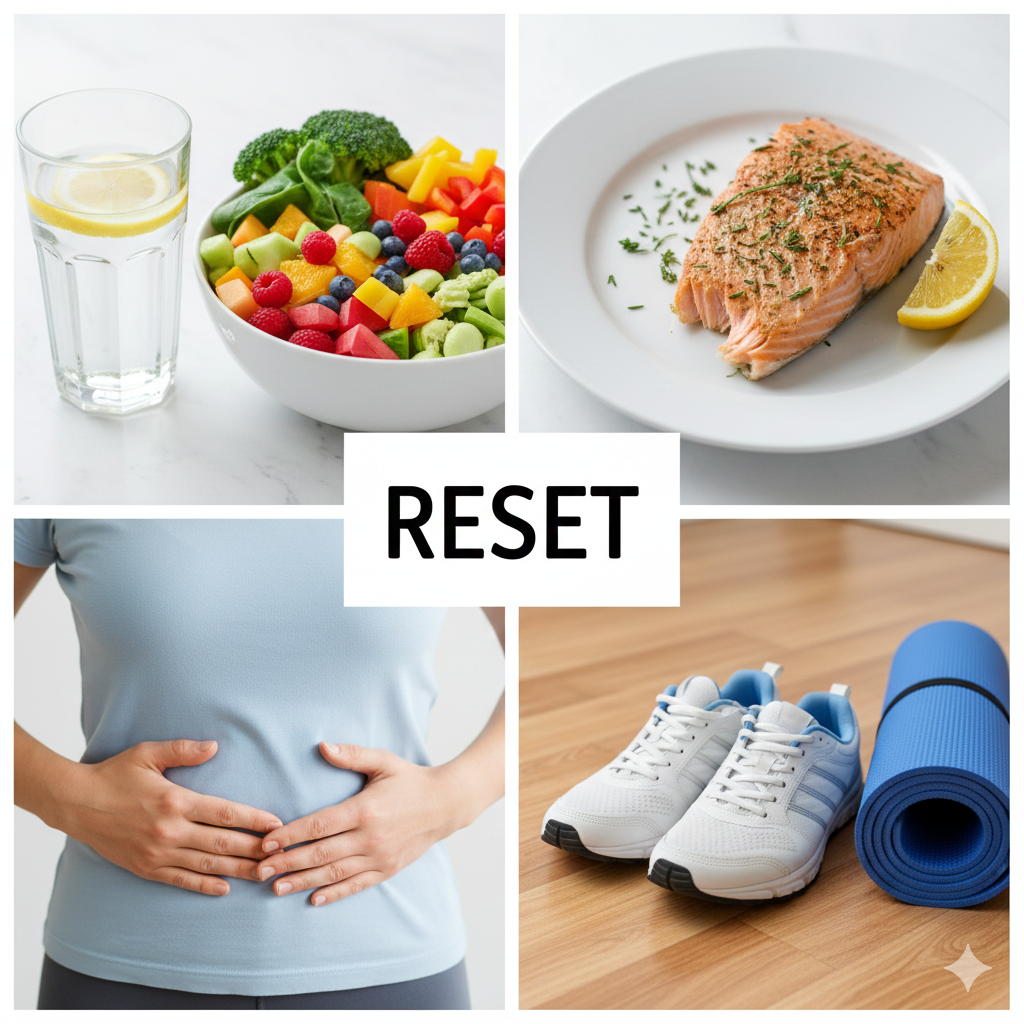
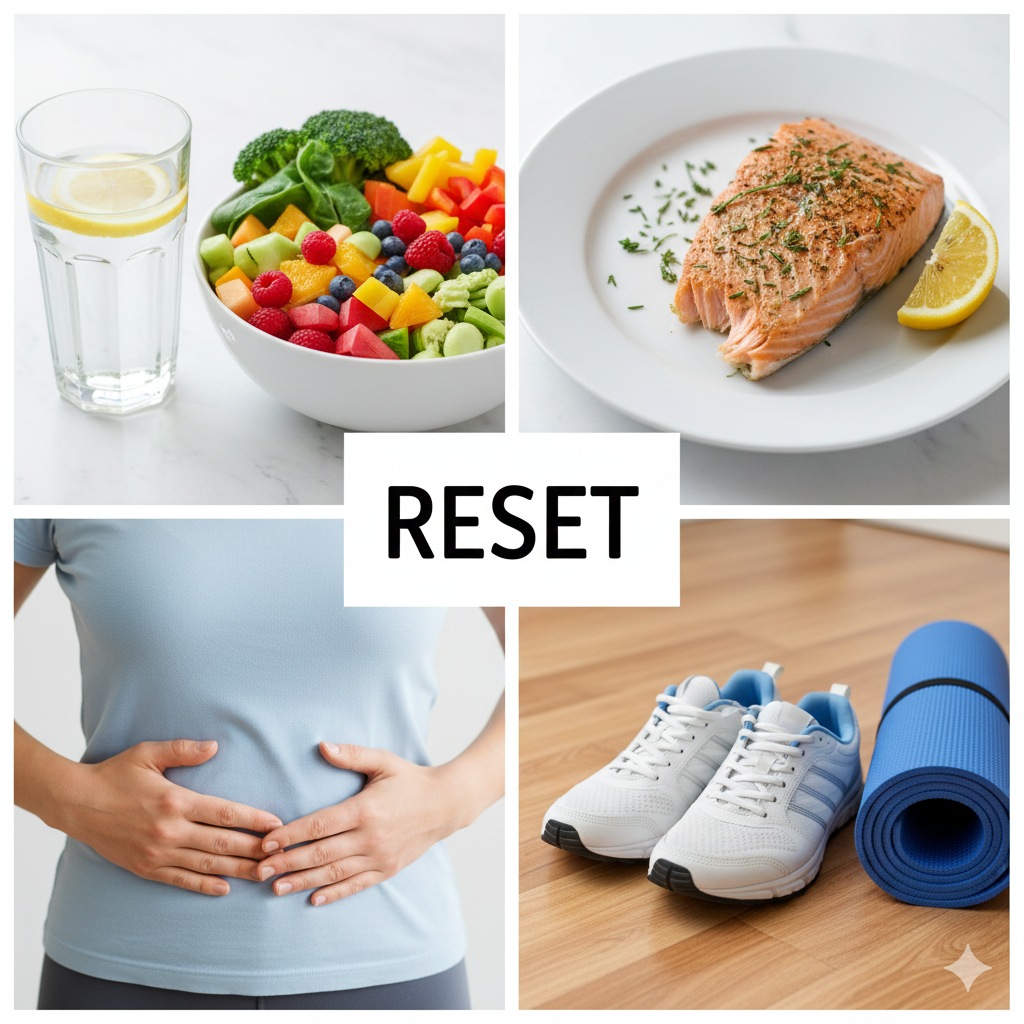
This image was created using AI to avoid copyright issues while still conveying the context of this article.
The end of December and the start of January always bring a massive focus on weight loss and fitness. Before you jump into an intense new diet or workout routine, it is critical to address your body's engine: your metabolism.
If you have spent December dealing with extra stress, inconsistent sleep, and richer foods, your metabolism might be running sluggishly. Trying to launch an intense new plan on a slow-running engine is a recipe for quick burnout and disappointment.
At Legacy Fitness & Nutrition, we recommend a simple "Metabolic Reset" in the final days of the year. This isn't a restrictive detox; it is a supportive, four-step strategy to naturally boost your body's fat-burning and energy processes, getting your engine primed and ready for the successful habits you plan to build in January.
1. Prime the Engine with Water and Fiber
The metabolism is a chemical process that requires two things to run smoothly: a catalyst (water) and clean fuel (fiber).
The Action: Focus on two non-negotiables for three days leading up to January 1st:
Water Loading: Drink at least half your body weight in ounces of water daily.
Fiber First: Every meal should include a substantial serving of fiber-rich vegetables (broccoli, spinach, bell peppers) or complex carbohydrates (oats, beans).
Why it Works: Water is essential for digestion and nutrient transport. Fiber supports gut health (which is crucial for metabolism) and helps your body flush waste, reducing bloating and the feeling of heaviness that slows you down.
2. The Power of Protein Density
Your metabolism is largely dependent on the amount of muscle tissue you have. To maintain that muscle and boost the energy required for digestion, you need to ramp up your protein intake.
The Action: Make protein the main focus of every meal. (This reinforces the principles from our article, “Protein Power for the New Year”.)
Example: Prioritize eggs or Greek yogurt for breakfast, chicken or fish for lunch, and a lean steak or plant-based protein for dinner.
Why it Works: Protein requires the most energy to digest (a phenomenon called the Thermic Effect of Food, or TEF). This means your body naturally burns more calories just by processing the protein you eat. This is a simple, passive way to raise your metabolic rate.
3. Rebalance Your Stress Hormones
As discussed in the Stress Management article (“Your Secret Fitness Weapon”), chronic stress and high cortisol actively signal your body to slow down fat burning and store energy. A key part of the reset is intentionally lowering cortisol.
The Action: Incorporate two daily 10-minute sessions of intentional stress reduction:
Box Breathing: 10 minutes of controlled breathing (inhale 4, hold 4, exhale 4, wait 4).
Digital Sunset: Begin winding down without screens 60 minutes before your ideal bedtime. (Reinforcing our article, “Why You Can't "Out-Train" a Bad Sleep Schedule”.)
Why it Works: This active intervention signals to your body's nervous system that the "crisis" is over, allowing cortisol levels to drop. When cortisol is low, your body is more willing to release stored fat for energy.
4. Light Movement: The Daily Ignition
If your body has been largely sedentary, jumping straight into a high-intensity workout can be a shock. The metabolic reset requires light movement to wake up your muscles without causing stress.
The Action: Commit to two 20-minute sessions of light movement daily: a morning walk and a light evening stretch or yoga flow.
Why it Works: This low-stress movement stimulates blood flow, wakes up muscle tissue, and prevents the stiff, heavy feeling of a sedentary lifestyle. It acts as the ignition switch that tells your body, "It's time to burn fuel again."
By dedicating the final days of December to this supportive Metabolic Reset, you ensure that when you start your New Year's goals, your body's engine is running clean, fast, and ready to go. You will start January with momentum, not metabolic resistance.

Christmas Eve Prep: Simple Swaps to Keep Your Holiday Meal Heart-Healthy
Many traditional holiday dishes are packed with hidden fats, sugars, and sodium, turning a wonderful meal into a metabolic shock that leaves you feeling sluggish for days. However, here at Legacy Fitness & Nutrition, we believe you can have both tradition and better health.

This image was created by AI to avoid copyright issues while still conveying the idea of this article.
The Christmas Eve meal is often one of the biggest and richest meals of the year. It's a time for family, celebration, and tradition, and the food should absolutely be enjoyed.
However, many traditional holiday dishes are packed with hidden fats, sugars, and sodium, turning a wonderful meal into a metabolic shock that leaves you feeling sluggish for days.
At Legacy Fitness & Nutrition, we believe you can have both tradition and better health. You don't have to throw out your favorite recipes; you just need to make a few strategic, simple swaps. These subtle changes will significantly lighten the load on your heart and digestive system, ensuring you wake up feeling energized for Christmas Day, not exhausted.
Here are four simple, effective swaps to keep your Christmas Eve meal delicious and heart-healthy.
1. Upgrade the Cream and Butter
Many holiday recipes rely heavily on cream, whole milk, and butter for richness. Think mashed potatoes, creamy soups, and gravies. These sources are often high in saturated fat.
The Swap: Substitute the heavy dairy where possible.
Instead of: Cream or whole milk in mashed potatoes and soups.
Use: Unsweetened almond milk or cashew milk (for soups and sauces) and Greek yogurt or blended cottage cheese (for mashed potatoes).
Why it Works: Greek yogurt provides a creamy texture plus a boost of protein while slashing saturated fat. The non-dairy milks reduce fat while still providing the necessary liquid base. You still get the creamy mouthfeel without the heavy, digestive burden.
2. Rethink the Roast: Leaner Protein, Richer Flavor
The main protein source is often the centerpiece of the meal. You can choose a leaner protein without sacrificing the festive feel.
The Swap:
Instead of: Heavy, marbled prime rib or dark-meat turkey.
Use: Lean cuts of pork tenderloin, turkey breast (white meat), or even a fish like salmon (which is rich in heart-healthy Omega-3 fats).
Why it Works: Leaner proteins are easier to digest, and salmon delivers Omega-3 fatty acids, which are known to reduce inflammation and support cardiovascular health. If you stick with turkey, simply focus on the white breast meat.
3. Boost Flavor with Herbs, Not Salt and Fat
A lot of the flavor we love in holiday food comes from heavy-handed use of butter and salt. You can achieve a richer, more complex taste using natural herbs and acids.
The Swap: Reduce added salt and fat in vegetable side dishes and stuffings.
Instead of: Butter or bacon grease to cook vegetables.
Use: Olive oil, fresh garlic, lemon juice, balsamic glaze, and fresh herbs like rosemary, thyme, and sage.
Why it Works: Herbs and spices add deep flavor complexity that tricks your palate into feeling satisfied, allowing you to cut back on sodium and fat without feeling deprived. Lemon juice or a vinegar-based dressing cuts through richness and aids in digestion.
4. Prioritize the Fiber in Dessert
Dessert is a sacred tradition. The goal is not to eliminate sugar, but to balance it with a little bit of fiber and whole ingredients to slow down the sugar spike.
The Swap: Choose desserts built around fruit, nuts, or whole grain crusts.
Instead of: Heavy cream pies or dense chocolate cakes.
Use: Pies based on pumpkin, apple, or pecan (or a lighter fruit tart).
Why it Works: Fruit and nuts contain fiber, which slows the absorption of sugar into your bloodstream, making the sugar easier for your body to manage and preventing a massive energy crash later in the evening.
These small, strategic swaps ensure that your Christmas Eve meal remains a delicious celebration, but one that actively supports your digestive system and your heart. Enjoy the tradition without the heavy metabolic hangover, allowing you to build a health legacy that celebrates balance and joy.

Strength Training for Longevity: Why Lifting Weights is Your Retirement Plan
Lifting weights is not just for bodybuilders or young athletes; it is a non-negotiable insurance policy against frailty, injury, and dependence in your later years.

Image courtesy of Vitaly Gariev via Unsplash
When most people think of retirement planning, they think of money, stocks, and savings accounts. They focus on financial legacy. But what good is a large bank account if you don't have the health or physical capacity to enjoy it?
At Legacy Fitness & Nutrition, we encourage a holistic view: Your strength training routine is your most powerful, essential physical retirement plan.
Lifting weights is not just for bodybuilders or young athletes; it is a non-negotiable insurance policy against frailty, injury, and dependence in your later years. In short, strength training is the key to longevity, independence, and an active healthspan.
If you want to maintain your ability to travel, play with grandchildren, carry groceries, or simply get up off the floor without assistance well into your 70s and 80s, you need to be lifting weights right now.
The Muscle Loss Crisis (Sarcopenia)
The single biggest threat to independence as we age is a process called sarcopenia; the natural, age-related loss of muscle mass.
Starting around age 30, we can begin to lose 3% to 5% of our muscle mass per decade if we do not actively train it. This loss is not just aesthetic; it is functional. Less muscle means:
Slower Metabolism: Muscle is metabolically active, burning calories even at rest. Less muscle means a slower metabolism, making weight management much harder.
Increased Fall Risk: Muscle acts as a shock absorber and stabilizer. Weak muscles lead to poor balance and coordination, making falls (which can be life-threatening later in life) much more likely.
Bone Density Loss: Muscle pulls on bone. This tension is the signal that tells the body to strengthen the bone. Without resistance training, bones become brittle (osteoporosis), and the risk of fracture is high.
Strength training is the only effective defense against sarcopenia and its dangers. It is the key to maintaining your physical independence.
Your Strength Retirement Strategy: 3 Pillars
You don't need to train like an Olympic powerlifter. You need a consistent routine that focuses on maintaining and building functional, foundational strength.
1. Focus on Compound Lifts
Compound lifts are exercises that use multiple joints and muscle groups simultaneously. These are the most efficient and functional exercises for longevity because they mimic real-life movements.
Actions: Squats (sitting and standing), Deadlifts or RDLs (bending and picking things up), Presses (pushing overhead or away from you), and Rows (pulling things toward you).
Strategy: Perform these movements using weights that challenge you, aiming for 8 to 12 repetitions per set.
2. Prioritize Lower Body Strength
Falls are the number one danger to aging independence. Falls are primarily prevented by strong legs, hips, and core.
Actions: Prioritize exercises like squats, lunges, and glute bridges. These build the stability and power needed to quickly react, maintain balance, and get up off the floor after a fall. Your legs are the engine of your independence.
3. Maintain Mobility and Flexibility
Muscle strength is useless if you do not have the range of motion to use it. A strong muscle that is also tight increases your risk of injury.
Actions: Dedicate 10 minutes before and after every session to dynamic and static stretching. Incorporate mobility movements like light hip circles, T-spine rotations, and ankle movements (as discussed in Article 4, The 3 Rules of Recovery).
Strategy: Strong and flexible is the goal. Never pursue strength at the expense of your range of motion.
Your future self will thank you for the health you invest in today. Stop viewing strength training as a way to get a six-pack, and start viewing it as the non-negotiable investment in a long, active, and independent life. Start funding your physical retirement plan today.
The "Failure Filter": How to Use Past Setbacks to Guarantee Future Success
Failure is not the opposite of success; it is a mandatory part of it. You do not need to avoid your past failures; you need to learn how to process them.
Image courtesy of Brett Jordan via Unsplash
As December comes to a close, many people look back at the resolutions they made last January and feel a pang of disappointment. Maybe they quit after a month, got injured, or simply drifted off track.
This feeling of failure is toxic because it often leads to the same outcome: making a huge, aggressive resolution on January 1st, then quitting by February because the memory of past failure haunts the new effort.
At Legacy Fitness & Nutrition, we believe failure is not the opposite of success; it is a mandatory part of it. You do not need to avoid your past failures; you need to learn how to process them. You need to run those setbacks through the Failure Filter.
The Failure Filter is a mindset tool that transforms disappointment into actionable, concrete data, allowing you to guarantee that your next attempt will be more successful.
Why We Must Analyze the Failure
Most people process failure through emotion: "I failed because I'm lazy," or "I failed because I lack willpower." This is a destructive, false narrative.
Success is rarely about willpower; it is about strategy and environment. When you fail, your system has simply given you highly specific data on where your strategy or environment broke down.
The Failure Filter has three simple questions to turn a setback into data:
1. Was the Plan Realistic? (The Scope Check)
Did you try to go from zero workouts to five 90-minute workouts a week? Did you go from eating highly processed foods to eating nothing but plain chicken and broccoli overnight?
Failure Data: The plan was too big, too fast, and too painful. It violated the principle of the Micro-Habit Playbook.
Future Strategy: Next time, start with an effort so small you cannot fail. For instance, put on your shoes for 5 minutes of movement, then build from there. Start with addition (more protein, more water) instead of drastic subtraction.
2. Was the Habit Stacked? (The Trigger Check)
Did you rely on willpower to start your workout or meal prep every single day? Willpower is weakest when we are stressed or tired. We need automatic triggers.
Failure Data: The habit didn't have an anchor. You relied on emotion rather than a system.
Future Strategy: Link your new action to an old, non-negotiable action. For example: "After I brush my teeth, I will drink a glass of water." Or, "As soon as I walk in the door, I will put on my workout clothes." You automate the start, making failure much harder.
3. Was the Recovery Honored? (The Sustainability Check)
Did you push through chronic fatigue? Did you ignore your body's pain signals? Did you try to cut too many calories while simultaneously ramping up intense exercise? (Remember our previous article, The 3 Rules of Recovery.)
Failure Data: You burned out because you treated your body like a machine, not a complex biological system.
Future Strategy: Schedule rest days first, and treat sleep (See our article, “Why You Can't "Out-Train" a Bad Sleep Schedule”) as the most important fitness component. If you are consistently exhausted, the plan needs to be cut in half, not pushed harder. Listen to the data your body is giving you.
The Resilience of Legacy
When you look back at past struggles through the lens of the Failure Filter, you see that you did not fail because of a personality flaw. You failed because of a solvable strategic flaw.
This knowledge gives you incredible power and resilience. You are not starting 2026 with a blind leap of hope; you are starting with a data-driven, tested plan based on knowing exactly what didn't work last time.
Use this strategic knowledge. Transform your past setbacks into your ultimate guarantee for future success. That is how you build a resilient, enduring legacy of health.

Year in Review: 5 Fitness Wins You Probably Took for Granted
Before you set your goals for January, take a moment to celebrate these five fitness wins you probably took for granted this year.

This image was created using AI to avoid copyright issues while still conveying the context of this article.
As the year winds down, it is natural to look ahead to New Year's resolutions. We focus on the big goals: the pounds we still want to lose, the races we haven't run, or the strength we still want to gain.
This forward-looking focus, while important, often blinds us to how far we have actually come. If you only measure success by the final, huge goal, you miss all the small, meaningful progress that happened every day.
At Legacy Fitness & Nutrition, we encourage you to pause for a moment of reflection and gratitude. Your fitness journey in the past year is full of small victories; things you now do easily that were hard or impossible 12 months ago. These small wins are the true foundation of your health legacy.
Before you set your goals for January, take a moment to celebrate these five fitness wins you probably took for granted this year.
1. You Became a Person Who Works Out
Think about the mental effort it took this time last year to decide to put on your workout clothes. If you are now consistently showing up, whether in the gym or at home, you have achieved the most important victory of all: You changed your identity.
You are no longer a person who wants to exercise; you are a person who exercises. This shift in identity is far more powerful than any weight lost or gained; it is the core of sustainable habit change. This is the biggest win.
2. You Don't Get Winded Doing Simple Things
Remember a time when running up the stairs left you gasping? Or when walking through the airport to catch a connection was stressful and exhausting?
Now, because of the work you have put in, you probably do those things without thinking. Your body has become more efficient; your heart and lungs are stronger. This quiet increase in endurance and functional capacity is a massive win for your longevity and quality of life. You have made life easier for your future self.
3. You Have More Resilience to Stress
If you managed a tough work deadline, handled a family crisis, or navigated the chaos of the holidays without completely collapsing, your exercise routine played a huge role.
As we discussed in the "Move for Mood" article, movement releases mood-boosting chemicals and helps your body process stress hormones. The fact that you handled a high-stress year is a testament to the mental and physical resilience you built with every single workout. That feeling of being capable under pressure is a win that money cannot buy.
4. You Are Eating to Fuel, Not Just to Comfort
A year ago, maybe every bad mood or stressful day immediately triggered a trip to the vending machine or a drive-thru. While we all slip up, the fact that you now think about fueling your next workout or prioritizing protein for satiety is a massive shift in mindset.
You have likely replaced emotional eating patterns with thoughtful nutrition strategies. This cognitive change, this ability to choose the long-term benefit over the short-term comfort, is a non-scale victory that guarantees a stronger future.
5. You Can Recover from a Setback
Everyone has a bad week, a skipped workout, or a splurge meal. The old you might have let one bad day turn into a full month of quitting. The new, healthier you now recognizes the slip, accepts it, and gets right back on track the next day.
This ability to restart quickly and without self-punishment is called resilience. This resilience is the "resolution insurance" you need for 2026. You now know that one bad day doesn't erase all your hard work, and that simple understanding is a true sign of a mature, sustainable fitness mindset.
As you look forward to the New Year, do not focus on the "new you." Take pride in the improved you who already showed up, already built resilience, and already changed their identity this past year. Celebrate your small wins; they are the most important part of your legacy.

The Power of the 15-Minute Home Workout: No Gym, No Problem
We want to destroy the myth that a workout needs to be long and complicated to be effective. The truth is, a high-quality, focused, 15-minute home workout can be a powerful engine for consistency, fat loss, and strength maintenance.

Image courtesy of Sunday II Sunday via Unsplash
The number one reason people struggle to stay consistent with fitness is simple: time.
The thought process goes like this: "I need 15 minutes to drive to the gym, 60 minutes for the workout, 15 minutes to drive home, plus shower time. That's two hours I don't have today." When you don't have two hours, the workout gets skipped entirely.
At Legacy Fitness & Nutrition, we want to destroy the myth that a workout needs to be long and complicated to be effective. The truth is, a high-quality, focused, 15-minute home workout can be a powerful engine for consistency, fat loss, and strength maintenance. It ensures you never have a "skipped day."
The goal is to eliminate every single excuse. When you realize that 15 minutes is all you need, your fitness legacy becomes unbreakable.
The Science of the "Too Short to Skip" Workout
Why is a 15-minute workout so effective, especially when consistency is the goal?
Consistency Over Intensity: As we discussed in the Micro-Habit Playbook, a short workout is "too small to fail." It builds the habit of showing up. Four consistent 15-minute workouts are always better than one exhausting 60-minute session followed by a week of rest.
The Afterburn Effect: When you use those 15 minutes for high-intensity, total-body movements, you trigger what is called EPOC (Excess Post-Exercise Oxygen Consumption), or the "afterburn." Your body continues to burn calories at an elevated rate long after the workout is finished; sometimes for hours.
Hormonal Response: Short, intense work is fantastic for spiking growth hormone and boosting your metabolism without the elevated, chronic cortisol that long, draining sessions can sometimes cause (especially when you are stressed).
The best workout is the one you actually do. If you have 15 minutes, you have time for a game-changing session.
Your 15-Minute, No-Equipment Playbook
You don't need a fancy gym or heavy weights to get a complete, full-body workout. Use your bodyweight and the space around you.
Phase 1: The 2-Minute Warm-Up (Total Body Activation)
The goal is to get the blood flowing and prepare your joints for movement.
Action: 30 seconds of High Knees (jogging in place), 30 seconds of Arm Circles, 30 seconds of hip rotations (opening and closing your hips), and 30 seconds of jumping jacks.
Phase 2: The 10-Minute Metabolic Circuit (Total Body Strength)
This is the work phase. We will use a circuit format, moving quickly from one exercise to the next with minimal rest. The goal is to maximize muscle engagement and keep your heart rate high.
Perform each exercise for 40 seconds of work, followed by 20 seconds of rest.
Once you complete the four exercises below, you have finished one round. Rest for 60 seconds, and then repeat the circuit again for a total of two full rounds.
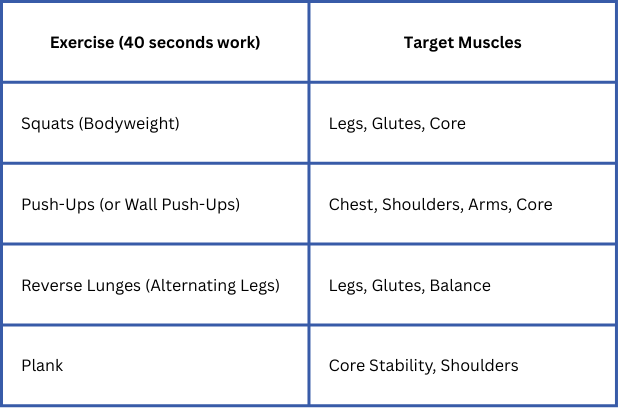
Total work time: 4 minutes per round x 2 rounds + 1 minute rest = 9 minutes.
Phase 3: The 3-Minute Cool-Down (Essential Recovery)
Never skip the cool-down. This brings your heart rate down and helps stretch the muscles you just worked, which aids in recovery and prevents stiffness.
Action: 30 seconds stretching your hamstrings (touching toes), 30 seconds for your quadriceps (pulling heel toward buttock), 30 seconds holding a low lunge (for hip flexors), and 30 seconds shoulder/arm stretches.
The Power of Consistency
The difference between successful fitness goals and resolutions that fail isn't found in a massive one-time effort. It is found in consistent effort, day after day.
This December, when the weather is cold and the schedule is chaotic, stop thinking you need to find an hour for the gym. Look at your calendar and ask yourself, "Can I find 15 minutes today?" The answer is always yes. Start today and build a legacy of health that always shows up.

"Protein Power" for the New Year: How to Use the Ultimate Macro to Stop Resolution Cravings
This New Year, forget the crash diets. Focus on empowering your body with the ultimate macro.

Image courtesy of Brett Wharton via Unsplash
As the calendar flips to January, millions of people will try to lose weight by cutting carbs, cutting fat, or simply cutting calories. While restriction can work temporarily, it often leads to intense cravings, fatigue, and the inevitable return of the weight.
At Legacy Fitness & Nutrition, we encourage a different approach for the New Year: Stop focusing on what you need to cut, and focus on what you need to add.
The single most powerful addition you can make to your diet for long-term weight management and successful resolutions is Protein. Protein is the ultimate macro-nutrient because it directly impacts your energy, muscle, and most importantly, your hunger.
If you are serious about stopping those resolution-killing cravings, you need to unleash the power of protein.
The 3-Way Craving Killer
Protein works on three different levels to stabilize your body and eliminate the craving cycle that derails most New Year's resolutions:
1. The Satiety Signal (Fullness)
Protein takes longer to digest than carbohydrates. When you eat protein, it sends powerful signals to your brain that you are full and satisfied.
Result: A meal high in protein means you will feel satisfied for hours. If you eat a carb-heavy breakfast (like a bagel), you crash fast and are hungry an hour later. If you eat a protein-heavy breakfast (like eggs), you stay full until lunch, eliminating the mid-morning snack craving.
2. Blood Sugar Stability
Cravings are often caused by blood sugar rollercoaster rides. When you eat refined sugar or high-starch carbs alone, your blood sugar spikes quickly, then crashes, leaving you exhausted and craving another quick sugar fix.
Result: Eating protein with carbohydrates slows down the absorption of sugar into your bloodstream. This keeps your energy and blood sugar levels steady, removing the extreme highs and lows that cause those frantic, urgent cravings.
3. Metabolism Maintenance
As we've discussed, muscle is metabolically active, meaning it burns calories even when you are resting. When you are trying to lose weight, you want to burn fat, not muscle.
Result: A high-protein diet helps your body maintain and even build lean muscle tissue, especially when paired with strength training. This protects your metabolism and ensures that the weight you lose is fat, not the muscle that helps keep the weight off for good.
Your New Year's "Protein Power" Playbook
You don't need to live on chicken breast. You just need to be strategic about how you add protein to every single meal.
1. The 30-Gram Breakfast Rule
Your first meal of the day is critical for controlling hunger for the next 12 hours. Aim for a target of 30 grams of protein at breakfast.
Example: 4 scrambled eggs and a piece of whole-wheat toast, or a large Greek yogurt with protein powder mixed in.
Why it Works: This big dose of protein sets your satiety hormones right for the entire day.
2. Protein as the Snack Foundation
If you need a snack, make protein the base, not the bonus.
Instead of: A handful of chips or pretzels (zero protein).
Do This: Cottage cheese, beef jerky, a small protein shake, or an apple with a tablespoon of peanut butter.
3. Eat Protein First at Every Meal
Whenever you sit down to eat, prioritize eating the protein source first before moving on to the carbohydrates or fats.
Why it Works: This ensures the protein hits your stomach first, maximizing the satiety signal and helping to blunt the blood sugar response from the other macros.
This New Year, forget the crash diets. Focus on empowering your body with the ultimate macro. By unleashing Protein Power, you gain control over your hunger, protect your metabolism, and build a lasting health legacy.

Why You Can't "Out-Train" a Bad Sleep Schedule (And How to Fix It)
You cannot out-train a bad sleep schedule. If you are struggling to see results, stop looking at your workout log or your food diary first. Look at your sleep log.

This image was created using AI to avoid copyright issues while conveying the meaning of this article.
We often see people who treat sleep like an optional luxury. They burn the candle at both ends; waking up early for a workout, staying up late to work or scroll, and running constantly on 5 or 6 hours of sleep. They think: "I'll just work out harder to make up for the lack of rest."
At Legacy Fitness & Nutrition, we have a clear, non-negotiable message: You cannot out-train a bad sleep schedule.
Sleep is not just "time off." It is the most critical component of your fitness and health legacy. Skipping sleep is not just making you tired; it is actively working against your goals for weight loss, muscle gain, and energy.
If you are struggling to see results, stop looking at your workout log or your food diary first. Look at your sleep log.
The Hormonal Disaster of Sleep Deprivation
When you consistently get less than 7 hours of quality sleep, your body goes into hormonal chaos that immediately sabotages the hard work you put in at the gym:
Sabotage Your Hunger: Lack of sleep immediately flips your hunger hormones into disaster mode. It increases Ghrelin (the "I'm starving" hormone) and decreases Leptin (the "I'm full" hormone). This makes you feel constantly hungry, especially for high-calorie, sugary foods, and you don't register fullness until you've overeaten.
Kills Muscle Growth: Sleep is when your body repairs and rebuilds. This is when Human Growth Hormone (HGH) is primarily released. If you cut sleep short, you cut off HGH production, directly stopping muscle growth. This means you aren't getting the metabolic benefit of the muscle you worked to build.
Increases Cortisol (Fat Storage): As we covered earlier (“Your Secret Fitness Weapon: Why Stress Management is the Ultimate Weight Loss Tool”), lack of sleep is a massive stressor. It raises your body's stress hormone, cortisol, which aggressively signals your body to store fat, particularly around the stomach. This makes fat loss nearly impossible, regardless of your diet.
Trying to build muscle or lose fat on little sleep is like trying to build a house when the foundation is constantly washed away.
The Legacy Sleep Playbook
Building a sleep legacy doesn't mean you need to sleep for 10 hours; it means creating a consistent, supportive environment for quality rest.
1. The 60-Minute "Digital Sunset"
Your biggest sleep killer is the blue light from screens (phones, tablets, TV). Blue light actively blocks the release of melatonin, the hormone that tells your body it's time to sleep.
Action: 60 minutes before your ideal bedtime, initiate a "Digital Sunset." Put all screens away, ideally in a separate room.
Alternative: Read a physical book, listen to a relaxing podcast, or write in a journal. This ritual allows melatonin to rise naturally.
2. Consistency is King (Even on Weekends)
Your body thrives on routine. Going to bed at 10 PM during the week and then staying up until 2 AM on Friday creates "social jetlag," which is just as disruptive to your hormones as flying across time zones.
Action: Try to keep your wake-up time within a 60-minute window every day, even on the weekends. Your body will naturally adjust its sleep rhythm, making it easier to fall asleep and wake up feeling refreshed.
3. Cool, Dark, and Quiet
Your bedroom environment should be an intentional cave dedicated only to sleep and intimacy.
Action: Keep the room as dark as possible (use blackout curtains). Keep it quiet (use earplugs or a white noise machine if needed). Most importantly, keep it cool, around 65° F is ideal.
Why it Works: A slightly cool room helps your body lower its core temperature, which is a key signal for the brain to initiate deep, restful sleep.
Make a promise to yourself this New Year: stop treating sleep like a luxury. Treat it like the powerful performance-enhancer, muscle-builder, and fat-burner that it is. Your fitness legacy depends on it.

Move for Mood: Using Exercise to Beat the Winter Blues and End-of-Year Fatigue
December can be a tricky month for mental health. This December, view movement as your mental medicine.

This image was created using AI to avoid copyright issues while conveying the meaning of this article.
December can be a tricky month for mental health. The excitement of the holidays often comes with increased stress, less sunlight, shorter days, and the general fatigue that comes from wrapping up a full year. Many people feel a slump, often called the "Winter Blues" or seasonal sadness.
When you feel this mental fatigue, the first thing that usually stops is exercise. You tell yourself, "I'm too tired," or "I'll feel better if I just rest."
At Legacy Fitness & Nutrition, we want to flip that idea on its head: Exercise is not just for your body; it's one of the most powerful and immediate tools for boosting your mood and combating end-of-year stress. When your mood dips, you need to Move for Mood.
The Chemical Connection: How Movement Lifts You Up
When you engage in physical activity, your brain does something incredible: it releases powerful chemicals that act as natural mood stabilizers and pain relievers.
Endorphins: These are your brain’s natural pain killers. They produce a feeling of well-being, often described as a "runner's high," though you don't have to run to get them. Even a brisk walk can trigger a release.
Dopamine: This chemical is part of your brain's reward system. It increases feelings of pleasure, focus, and motivation. Getting your body moving is a proven way to give yourself a natural dose of motivation when you need it most.
Serotonin: This helps regulate mood, sleep, and appetite. Low levels of serotonin are often linked to feelings of sadness, and regular movement helps keep those levels balanced.
When you feel mentally exhausted, these natural chemicals are exactly what your brain needs—and movement is the delivery system.
Your "Move for Mood" Playbook (No Gym Required)
You don't need a grueling hour-long workout to change your mental state. When your goal is mood, your intensity should be low to moderate (remembering what we learned about cortisol in “Your Secret Fitness Weapon: Why Stress Management is the Ultimate Weight Loss Tool”). Focus on consistency and joy.
1. The 10-Minute Outdoor Break
Lack of sunlight in winter is a key cause of the blues. Even on a cloudy day, the light outside is stronger than any light inside your house.
Action: Take a 10-minute walk outside, ideally in the morning or early afternoon. Leave your phone in your pocket and just look around.
Why it Works: This exposure helps regulate your body's circadian rhythm (sleep-wake cycle) and gives you a vital dose of natural light, which is critical for serotonin production.
2. Low-Intensity Movement for Body Awareness
Stress often causes us to hold tension in our bod: hunched shoulders, tight jaw, stiff neck. These physical signs feed back into your brain, reinforcing the feeling of stress.
Action: Try a gentle, non-competitive activity that forces you to focus on your body, like a restorative yoga flow or tai chi. If that’s not your style, put on your favorite upbeat music and simply dance in your kitchen for two songs.
Why it Works: These movements force you to breathe deeply and release physical tension. When your body relaxes, your mind follows.
3. The Social Movement Boost
Loneliness and isolation can contribute greatly to the Winter Blues. Combining movement with social connection amplifies the mood-boosting effect.
Action: Call a friend and ask them to meet you for a walk instead of meeting for coffee. Join a light exercise class once a week, even if it's just a beginner's stretching group.
Why it Works: Social interaction itself releases feel-good hormones. When you add movement, you get the double benefit of chemical release and connection, making the activity more enjoyable and highly effective against isolation.
This December, view movement as your mental medicine. When you feel tired, try a 10-minute walk instead of a 10-minute scroll on your phone. You'll not only be strengthening your body, but you'll be building a stronger, more resilient mind—the core of your enduring legacy.

The Myth of "Detox": What Your Body Actually Needs After a Rich Meal
The detox is a myth, and your body doesn't need a quick-fix cleanse.

Image courtesy of David Bruwer via Unsplash
The holidays are synonymous with rich food. You might have just finished a large meal—roasts, gravies, desserts, and now you feel heavy, sluggish, and maybe a little guilty.
The natural response marketed to us is the "detox." Companies sell teas, juices, and special cleanse plans, promising to flush out the "toxins" and reset your body after a big meal or a weekend of overindulgence.
At Legacy Fitness & Nutrition, we want to set the record straight: The detox is a myth, and your body doesn't need a quick-fix cleanse.
Your body is already equipped with the most powerful detoxification system ever created: your liver and kidneys. These organs work 24/7 to manage waste and toxins. What your body actually needs after a rich meal is not a drastic cleanse, but three simple, science-backed steps that support its natural function.
Why Detoxes Are Unnecessary (And Sometimes Harmful)
The idea behind most detoxes is that you have poisons built up that only expensive juices can fix. This is simply untrue. If your liver and kidneys stopped working, you would need immediate medical attention, not a juice fast.
Extreme juice cleanses and restrictive detox diets can actually hurt your long-term legacy:
They cause energy crashes: They strip away necessary protein and healthy fats, leaving you running on pure sugar water, leading to intense fatigue and sugar cravings.
They lead to muscle loss: Severe calorie cuts force your body to break down muscle tissue for fuel, slowing your metabolism in the long run.
They set up the Binge Cycle: Restriction creates intense physical and mental deprivation, leading to overeating the moment the cleanse is over.
Forget the quick fix. Focus on giving your body what it truly needs to recover and process that rich meal.
What Your Body ACTUALLY Needs: 3 Simple Steps
1. The Gentle Movement Reset
After a big meal, the urge might be to fall straight onto the couch. However, sitting still slows down the digestion process and can make you feel heavier and more bloated.
Action: Take a 10 to 15-minute slow, gentle walk after eating. This is not a workout; it's a stroll.
Why it Works: Light movement helps stimulate the muscles in your digestive tract. This encourages food to move through your system more efficiently, reducing bloating and aiding digestion. It also helps your body manage the blood sugar spike from the meal.
2. Fiber and Fermented Foods (The Gut Boost)
After a rich, heavy meal (often low in fiber), your gut bacteria (the tiny powerhouses that control your digestion and mood) need some support. The key is to add fiber and friendly bacteria.
Action: The day after the rich meal, make sure your breakfast and lunch are packed with fiber (oats, fruit, vegetables) and a serving of fermented food.
Examples: A small bowl of plain Greek yogurt, sauerkraut, or a glass of kefir.
Why it Works: Fiber acts like a scrub brush, cleaning out the digestive tract. Fermented foods provide probiotics (good bacteria) that help restore balance and keep your digestive system running smoothly.
3. Protein and Hydration (The Rebuilding Blocks)
Rich holiday meals are often heavy on fats and refined carbs but surprisingly low on high-quality, easily digestible protein.
Action: In the days following a big meal, make sure your water intake is high (as discussed in “The Forgotten Fuel: Why Water is the Key to Unlocking Holiday Energy”) and every meal includes a lean, easily digestible protein.
Examples: Eggs, chicken breast, or fish.
Why it Works: Water aids in flushing waste and managing salt intake. Protein is essential for rebuilding and maintaining muscle, ensuring your metabolism stays strong. By focusing on clean protein and fiber, you restore balance and stop the cycle of craving more sugar and rich foods.
When you've had a rich meal, don't punish yourself with a harsh cleanse. Instead, support your incredible body with gentle movement, targeted nutrition, and water. This is the simple, sustainable path to managing your health throughout the holidays and building a true legacy.

The "Pre-Game" Strategy: 3 Things to Do Before a Holiday Party to Stay on Track
December is a minefield of delicious, high-calorie food and drinks. You don't need to skip the holidays to stay healthy. You just need a strategy.

This image was created using AI to avoid copyright issues while still conveying the meaning of this article.
December is a minefield of delicious, high-calorie food and drinks. When you walk into a holiday party, the environment is perfectly designed to lead you off track. There are trays of treats, open bars, and people telling you, "Just have one!"
If you rely on willpower alone, you will fail. Willpower is a limited resource that gets drained quickly by stress and social pressure.
At Legacy Fitness & Nutrition, we recommend using a "Pre-Game" Strategy—a simple, proactive plan that stacks the odds in your favor before you even leave the house. This shifts your focus from reacting (and resisting temptation) to executing a simple, proven plan.
Here are the three non-negotiable steps in your Holiday Party Pre-Game Playbook:
1. The Fiber & Protein Armor
The biggest mistake people make is going to a party hungry, thinking, "I saved all my calories for this." As we discussed with the "Small Plate Trap" (Article 5), this guarantees a massive overeat.
The goal is to feel satisfied, not stuffed, before you arrive. This gives you the mental clarity and physical fullness required to be choosy.
Pre-Game Meal: 60 minutes before the party, eat a small snack that is high in fiber and protein.
Examples: A scoop of protein powder mixed with water, a Greek yogurt, or a handful of almonds with a piece of fruit.
Why it Works: This snack triggers the release of fullness hormones (leptin) and stabilizes your blood sugar. When you walk into the party, you are there to socialize, not to devour the snack table.
2. The Hydration Shield (The "One-to-One" Rule)
Holiday parties almost always involve alcohol or sugary drinks. As we covered in Article 7, alcohol is dehydrating and can rapidly lower your inhibitions, making it much harder to stick to your food plan.
Pre-Game Action: Before you leave, drink a full 16-ounce glass of water. If you plan to drink alcohol at the party, commit to the "One-to-One" Rule while you are there: for every alcoholic beverage you consume, you immediately follow it with one full glass of water.
Why it Works: The pre-game water provides a buffer against dehydration. The "One-to-One" rule forces you to slow down your drinking and keeps you hydrated, mitigating the negative effects of alcohol on your judgment and mood.
3. The Exit Strategy & Conversation Plan
Willpower often runs out about 90 minutes into a party. The longer you stay, the higher the chances of making poor choices. You need a behavioral plan for arrival and departure.
The Conversation Plan: Decide on your three talking points before you go. This focuses your brain on the social interaction rather than scanning the food table. Be ready with polite phrases if someone pushes food on you: "That looks amazing! I'm actually just finishing a small snack right now, but maybe later."
The Exit Strategy (The 90-Minute Rule): Decide on a specific time (e.g., 90 minutes after arrival) when you will leave, or a specific event (e.g., "After the gift exchange"). Tell someone you came with, "I have to leave at 8:30." This creates accountability.
Why it Works: You are shifting your focus from food to people. By knowing your exit time, you can be present, enjoy the party, and leave before the temptation becomes too strong.
You don't need to skip the holidays to stay healthy. You just need a strategy. By executing these three simple "Pre-Game" steps, you take control of the environment and build your legacy of consistent health, even during the chaos of December.

Your Secret Fitness Weapon: Why Stress Management is the Ultimate Weight Loss Tool
You are doing everything right. You are hitting your workouts, tracking your protein, and trying hard to get enough sleep. But the scale won’t budge, or worse, you keep gaining weight around your stomach. If so you might not be managing stress as well as you could.

Image courtesy of Bruce Mars via Unsplash
You are doing everything right. You are hitting your workouts, tracking your protein, and trying hard to get enough sleep. But the scale won’t budge, or worse, you keep gaining weight around your stomach.
If this sounds familiar, it’s a sign that you might be missing your most important fitness lever: Stress Management.
At Legacy Fitness & Nutrition, we teach a holistic approach because fitness isn't just about what happens in the gym. It's about what happens in your entire life. Right now, during the year-end push of work, shopping, and social pressure, stress is the single biggest hidden threat to your weight loss goals.
Understanding the connection between your mental stress and your physical body is the Secret Fitness Weapon for building a true, sustainable health legacy.
The Cortisol Connection: Your Body’s Survival Mode
Stress, whether it's an intense argument, a tight work deadline, or a lack of sleep, is viewed by your body as a threat. When you perceive a threat, your adrenal glands release a cascade of hormones, primarily cortisol, often called the "stress hormone."
Cortisol is essential for survival, it triggers your body's "fight or flight" response. But when stress becomes chronic (it lasts for days, weeks, or months), cortisol stays elevated, causing these specific weight-loss saboteurs:
Fat Storage: High, chronic cortisol tells your body, "There’s a crisis! Energy might run out!" So, it aggressively signals the body to store energy as fat, specifically targeting the visceral fat around your midsection. This is your body saving energy for the long "crisis."
Increased Cravings: Cortisol increases your appetite and specifically makes you crave sugar, fat, and comfort foods. This is your body trying to find a quick energy boost to fuel the "fight or flight" scenario.
Breaks Down Muscle: Chronic cortisol can break down muscle tissue (which is metabolically active) to convert it into quick energy (glucose). This means you lose the tissue that helps you burn calories, making weight management harder in the long run.
Your body cannot distinguish between the stress of being chased by a tiger and the stress of checking work emails at 10 PM. The cortisol response is the same.
3 Stress Management Strategies That Burn Fat
The fastest way to lower cortisol is not to do more cardio, but to actively manage your stress response. Here are three simple, effective tools:
1. The 10-Minute Boundary
Cortisol levels naturally rise in the morning and fall toward the evening. You want to help them fall. The most powerful way is to create clear boundaries between work/stress and rest.
Action: Create a 10-minute ritual between work and home. This could be a 10-minute quiet walk, sitting in your car with no music, or a 10-minute journaling session where you write down everything stressing you out. This simple mental separation signals to your brain that the crisis is over and it's time for cortisol to drop.
2. Strategic Breathing (The Instant Reset)
Breathing is the only part of your nervous system you can manually control. You can hack the stress response instantly with a simple technique: Box Breathing.
Action: Inhale slowly for a count of four. Hold your breath for a count of four. Exhale slowly for a count of four. Wait for a count of four. Repeat 5 times.
Result: This sends an immediate signal to your vagus nerve that you are safe, forcing the parasympathetic nervous system (the "rest and digest" mode) to take over, dropping cortisol fast. Use this before every meal or when you feel overwhelmed.
3. The Power of "Low-Intensity" Movement
If you are highly stressed, adding an intense HIIT workout or heavy weight session can actually increase cortisol. Your body perceives it as another stressor.
Action: On high-stress days, swap the intense workout for gentle movement: a restorative yoga class, a light walk, or gentle stretching. This helps burn off excess stress hormones without triggering the "crisis" response. Intense training is best saved for days when your stress level is low.
Stop fighting stress with more cardio. Start managing stress with simple boundaries, breathing, and strategic rest. When you control cortisol, you unlock the weight loss your body has been waiting for.

The Forgotten Fuel: Why Water is the Key to Unlocking Holiday Energy
You don't have to be sweating profusely to be dehydrated. Even mild dehydration (losing just 1-2% of your body weight in water) can trigger a host of nasty symptoms that steal your energy and sabotage your goals.

Image courtesy of Scott Elkins via Unsplash
December is famous for its energy slump. Between the extra shopping, late-night parties, rich food, and the general stress of year-end deadlines, most people feel drained.
When energy drops, the first reaction is often to grab another cup of coffee or reach for a sugary snack. But what if the solution to your holiday fatigue was simpler and cheaper than any quick fix?
At Legacy Fitness & Nutrition, we want to remind you of the Forgotten Fuel: Water.
Dehydration is arguably the number one overlooked cause of fatigue, cravings, and sluggish workouts, especially during the busy holiday season. Getting enough water isn't just about quenching thirst; it's the foundation for every single process your body relies on for energy.
The Sneaky Symptoms of Dehydration
You don't have to be sweating profusely to be dehydrated. Even mild dehydration (losing just 1-2% of your body weight in water) can trigger a host of nasty symptoms that steal your energy and sabotage your goals:
Sudden Fatigue and Brain Fog: Your brain is mostly water. When you're dehydrated, your brain tissue shrinks slightly. This can lead to headaches, difficulty concentrating, and that "heavy" feeling that makes you want to nap instead of work out.
Cranky Cravings: The body sometimes mistakes thirst for hunger. When you feel a sudden, nagging urge for a sweet snack, it might just be your body crying out for water to help process the nutrients it already has.
Slow Metabolism: Water is essential for every chemical reaction in your body, including digestion and metabolism. If you're low on water, your body has to work harder to digest food and burn calories, slowing down your engine.
Sore Muscles and Slow Recovery: Water helps transport nutrients to your muscles and flushes out the waste products that cause soreness. Poor hydration means longer recovery, making it harder to stick to your workout routine.
The Holiday Dehydration Trap
In December, several factors make hydration much harder:
Heated Air: Spending time indoors with central heating constantly running dries out your skin and respiratory system faster than normal.
Salty/Rich Foods: Holiday meals are often heavy in salt and processed sugars, which require your body to pull extra water to manage and digest them.
Alcohol and Caffeine: These are diuretics, meaning they make you pee more, actively depleting your body's water stores. If you enjoy coffee or a cocktail, you need to deliberately overcompensate with pure water.
The Legacy Hydration Strategy: The "Three Sips" Rule
You don't need a gallon-a-day goal that makes you feel like you're constantly chugging water. You need a simple, consistent strategy that turns hydration into a micro-habit (which you learned about in our article last week):
The Morning Flush: Before you have coffee, drink one full glass of water with a slice of lemon. This immediately rehydrates you after 7-9 hours of sleep and kickstarts your metabolism.
The Meal Anchor: Take three large sips of water before you eat anything and three large sips after you finish eating. This is a simple mental trigger that ensures you are hydrating consistently around your fuel intake.
The Workout Requirement: If you are working out, your water intake is non-negotiable. Aim to drink 8-10 ounces of water before your workout, small sips during your workout, and another large glass immediately after to replace lost fluids.
This December, don't reach for the sugar and caffeine as your first fix for fatigue. Reach for the glass of water. It's the simplest, most effective step you can take to unlock genuine energy and build a resilient health legacy.

Training for Life: How to Make Your Workout Functional and Not Just Flashy
Your workout should not be a separate event from your life. It should be practice for life.

This image was created using AI to avoid copyright issues while still conveying the meaning of this article.
When you scroll through social media or walk into a modern gym, it’s easy to get lost in the noise. You see people lifting massive weights, doing complicated moves, or using machines you’ve never seen before. It all looks impressive, and the goal seems to be: look good and lift heavy.
But here’s the key question we ask at Legacy Fitness & Nutrition: Does your gym routine actually help you live your life?
If your training makes you look great in the mirror but leaves you too sore to pick up a heavy suitcase, or if you can squat 400 pounds but can't bend down to tie your shoe without pain, you might be falling into the "Flashy, Not Functional" Trap.
The goal of building a legacy of health is functional fitness, training your body to perform the movements of everyday life easily, safely, and without pain for decades to come.
What is Functional Fitness?
Functional fitness means training your muscles to work together, just like they do in real life. Real life doesn’t involve sitting on a machine isolating one muscle. Real life involves:
Lifting: Picking up your kids, carrying groceries, moving furniture. (A squat or a deadlift)
Pushing/Pulling: Opening a heavy door, pushing a lawnmower, pulling a suitcase. (A push-up or a row)
Carrying: Walking while holding heavy bags. (A farmer’s carry)
Twisting/Bending: Looking over your shoulder, reaching for something on the top shelf, bending to garden. (Mobility exercises)
A flashy workout is designed to make one muscle group pop. A functional workout is designed to make your entire body cooperate.
The 3 Pillars of a Functional Legacy
You don't need fancy equipment to train functionally. You just need to change how you think about movement. Focus on these three pillars:
1. Master the Foundational Movements
Before you try any complicated move, master the five basic human movement patterns. Training these consistently builds the foundation for long-term independence and strength:
Squat: Getting up and down from a chair (or toilet).
Hinge: Picking something up off the floor safely (like a toddler or a box).
Push: Pushing yourself up from the floor.
Pull: Pulling open a door or climbing a rope (or pulling a stubborn weed).
Carry: Carrying heavy things while remaining balanced.
Focus on the quality of the movement, not the weight. A perfect bodyweight squat that you can perform pain-free is 100 times more valuable than a heavy, sloppy squat that injures your back.
2. Prioritize Core Stability Over Six-Packs
A visible six-pack is usually about low body fat, but true core stability is about preventing injury. Your core is the control center for all functional movement.
When you carry groceries, your core stabilizes your spine so your arms and legs can move. When you stand up, your core keeps you balanced.
Functional Core Moves: Planks, Farmer's Carries (walking with heavy weights), Bird-Dogs, and suitcase carries.
Flashy Core Moves (less useful for function): Hundreds of crunches (which mostly just train one plane of motion).
A stable core means you can tie your shoe without falling over. That's a legacy worth having.
3. Move in 3D (Mobility is Key)
Real life isn't a straight line. We reach, twist, and bend. If you only train up and down (like on many machines), you lose the ability to move safely in other directions. This leads to higher injury risk.
Functional training requires full range of motion and mobility exercises. Include movements that require rotation and lateral (side-to-side) movement.
Example: Instead of always doing a straight leg press, try step-ups or reverse lunges, which challenge your balance and coordination. Spend time doing simple exercises like shoulder rotations and ankle circles.
Your workout should not be a separate event from your life. It should be practice for life. By prioritizing functional training, you are ensuring that you can remain strong, active, and independent well into your later years. That is the definition of a fitness legacy.

The "Small Plate" Trap: Why Restricting Food Now Makes January Harder
The belief is that restriction now will lead to success later. The reality is that extreme or sudden restriction in usually does two things that actively work against your success.

Photo by Loija Nguyen on Unsplash
As December begins, you might be thinking: "I’m going to eat light now to ‘save’ calories for the holiday parties," or "I need to start restricting my portions now so I can kick off my diet hard in January."
This is a very common approach, but it is one of the biggest pitfalls we see at Legacy Fitness & Nutrition. We call it the "Small Plate" Trap.
The belief is that restriction now will lead to success later. The reality is that extreme or sudden restriction in December usually does two things that actively work against your New Year's success:
It cranks up your cravings: You create an emotional and physical hunger that makes you more likely to overeat when you finally see that holiday buffet.
It sets a terrible precedent for January: You are teaching your body that the only way to manage weight is through severe restriction, which is a miserable and unsustainable approach.
If you want to build a lasting legacy of health, you need to focus on addition and quality right now, not subtraction and starvation.
The Physical Fallout: Why You Get Hungrier
When you suddenly cut your food intake too low, your body reacts with survival mechanisms that are much stronger than your willpower:
Hormone Shift: Your body releases ghrelin (the "hunger hormone") and drops leptin (the "fullness hormone"). This makes you feel constantly starving, not just physically, but mentally preoccupied with food.
Energy Crash: Too few calories, especially carbs, means your brain is running low on fuel. You feel tired, irritable, and completely unable to focus on work, family, or your workouts.
The Binge Trigger: When you feel deprived, the sight of a holiday cookie or a rich dish triggers an intense, primal urge to eat everything you restricted yourself from. The restriction leads directly to the loss of control.
You are essentially showing up to the holiday party with a starved brain, guaranteed to overeat.
Focus on Addition, Not Subtraction
The successful strategy for December is to maintain consistent eating habits centered around high-quality foods that provide maximum satiety (the feeling of being full and satisfied).
Here are three ways to focus on addition instead of the "Small Plate" Trap:
1. Add Protein to Every Meal (The Satiety Shield)
Protein is the single most important nutrient for controlling hunger. It takes longer to digest and signals to your brain that you are full. Instead of taking less of everything, make a point of adding a solid source of protein to breakfast, lunch, and dinner.
Instead of: Toast for breakfast.
Do This: Eggs or Greek yogurt with your toast.
Result: You stay full for hours, reducing the chance of grazing on holiday treats between meals.
2. Add Fiber-Rich Vegetables (The Volume Boost)
Fiber adds volume to your meals with minimal calories, helping you feel full and supporting healthy digestion. Before you worry about the size of your plate, worry about the content.
Instead of: Just rice and meat for dinner.
Do This: Fill half your plate with salad, steamed broccoli, or roasted greens first.
Result: You eat a large volume of filling, nutrient-dense food, leaving less space and less desire for extra heavy portions.
3. Add Movement (The Energy Generator)
If you restrict food, you feel too tired to move. If you focus on quality nutrition and feel energized, you naturally want to be more active. Instead of using food restriction to manage your weight, use a consistent movement routine. That consistency will naturally lead to better food choices because you won't want to "waste" your workout.
Building a Legacy of Balance
The Small Plate Trap is based on the idea of suffering now for a reward later. The Legacy Fitness philosophy is about creating sustainable balance now for a healthy life forever.
By focusing on adding high-quality protein and fiber, you manage hunger, boost energy, and teach your body that consistency means quality fuel, not starvation. This sets you up for an empowering, balanced, and highly successful January.