
The "Spring Clean" for Your Pantry: A Fresh Start for Your Health
Cleaning out your pantry is a symbolic act. It shows that you are serious about your legacy and your health.
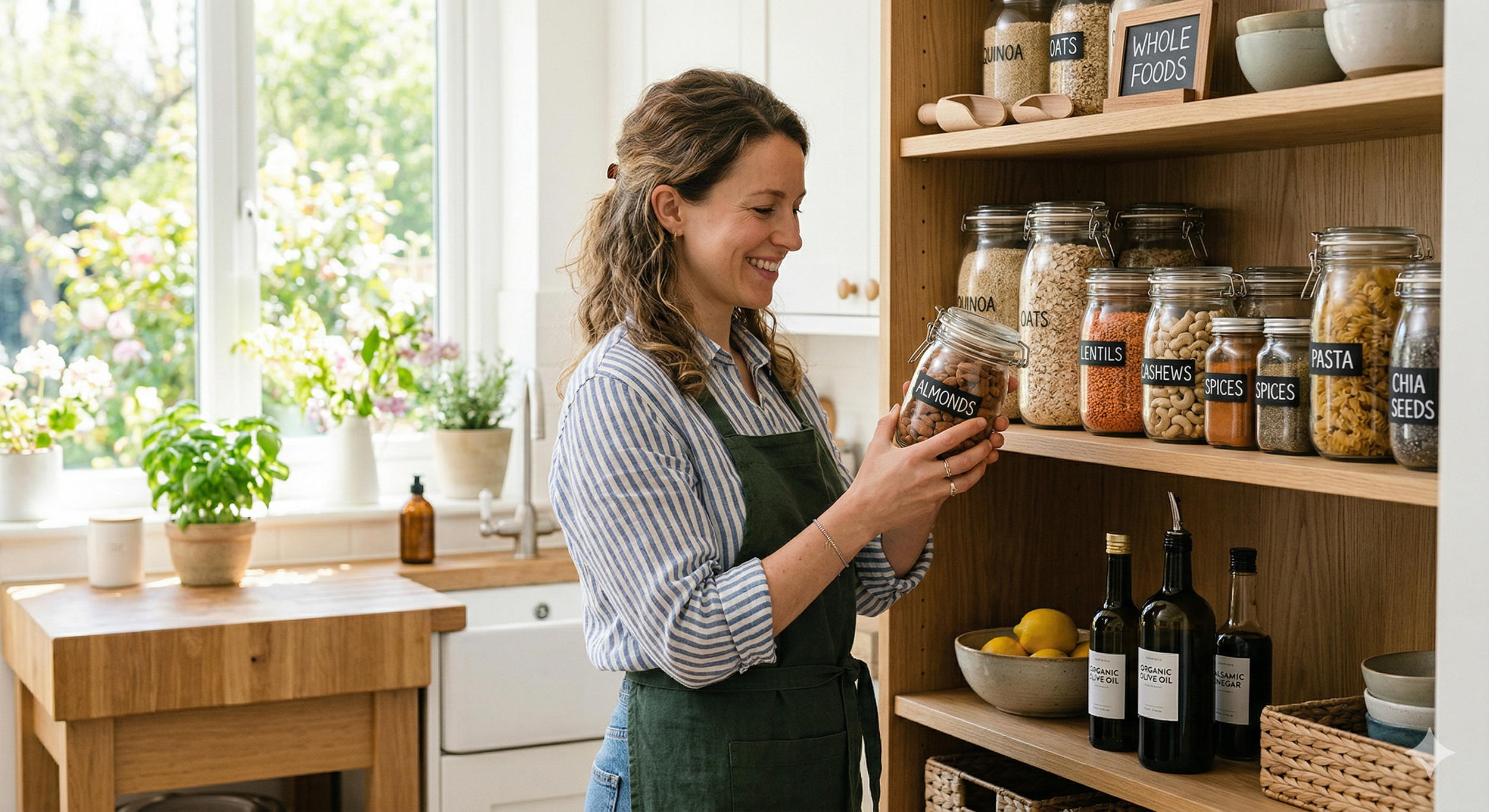
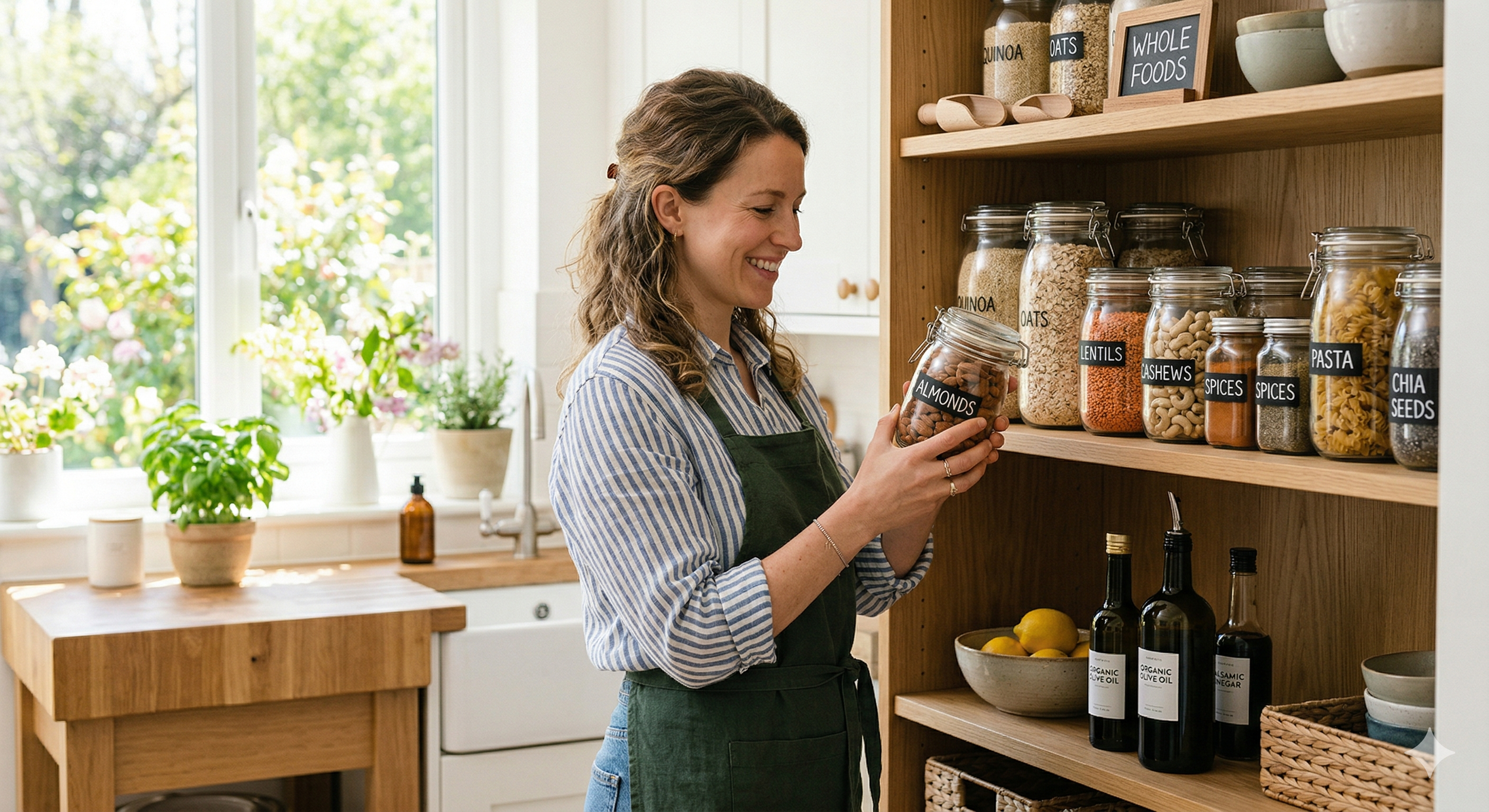
This image was created using AI to avoid copyright issues while conveying the context of this article.
Spring is finally here. It is the time of year when we open the windows, let in the fresh air, and clean out the garage or the spare closet. We feel better when our physical space is organized, but we often forget about the most important "space" in our home: the kitchen pantry.
If you are trying to reach a fitness goal, your environment is your greatest ally or your worst enemy. It is much harder to make a bad choice when that choice isn't sitting on your shelf staring at you. A pantry "spring clean" isn't about being perfect; it is about setting yourself up for success. By auditing your kitchen for hidden sugars and processed oils, you make the healthy choice the easy choice.
Why the Pantry Audit Matters
Most of us think we eat pretty well. However, many modern food products are designed to stay on a shelf for a long time. To make this happen, companies often use ingredients that are not great for our energy levels or our waistlines. Two of the biggest culprits are hidden sugars and highly processed seed oils.
When you eat these ingredients daily, they can cause inflammation and energy crashes. They also make you crave more of the same food. By clearing them out, you reset your palate and your body.
Step 1: The Sugar Hunt
Sugar is a master of disguise. It goes by over 60 different names on food labels. You might not see the word "sugar," but you might see "maltodextrin," "high fructose corn syrup," or "barley malt."
Start by looking at your condiments and "healthy" snacks. Salad dressings, pasta sauces, and granola bars are common hiding places. Check the "Added Sugars" line on the nutrition label. If a single serving has more than 5 to 8 grams of added sugar, it might be time to find a better version.
When you remove these items, you stop the blood sugar roller coaster. You will notice that you have more steady energy throughout the afternoon, and those "cravings" for sweets will start to fade away.
Step 2: Spotting the Processed Oils
The next thing to look for are highly processed vegetable and seed oils. These include soybean oil, corn oil, cottonseed oil, and canola oil. These oils are often high in Omega-6 fatty acids. While we need some Omega-6, the modern diet usually has way too much of it, which can lead to inflammation.
Flip over your boxes of crackers, chips, and even some "healthy" nut milks. You will likely see these oils listed. They are cheap for companies to use, but they aren't the best fuel for your body.
Instead, try to move toward "stable" fats. Extra virgin olive oil, avocado oil, and coconut oil are great options. Butter or ghee are also good choices for cooking. These fats help you feel full and support your brain health without the inflammatory side effects of processed seed oils.
Step 3: Out with the Old, In with the New
Once you have cleared out the items that don't serve your goals, don't just leave the shelves empty. Fill them with "bridge foods." These are healthy items that are just as easy to grab as the processed ones.
Swap the sugary granola for raw nuts and seeds.
Swap the processed crackers for canned tuna or sardines.
Swap the vegetable oil for a high-quality bottle of extra virgin olive oil.
Swap the sugary soda for sparkling water with a squeeze of lime.
The Power of the "First Line of Defense"
Think of your pantry as your first line of defense. When you are tired after a long day at work, you are going to eat whatever is easiest to grab. If your pantry is filled with high-protein snacks and whole foods, you will stay on track even when your willpower is low.
Cleaning out your pantry is a symbolic act. It shows that you are serious about your legacy and your health. It tells your brain that you are a person who values quality fuel.
Make It a Habit
You don't have to do this all in one day. Start with one shelf or one category. Maybe today you just look at your salad dressings. Tomorrow, look at your snack bin.
The goal is progress, not perfection. Every time you replace a processed item with a whole food, you are making a deposit into your long-term health account. Spring is the season of new beginnings. Start yours in the kitchen, and watch how much easier it becomes to hit your goals in the gym.

The Finish Line is Just a New Starting Blocks: Setting Your Intentions for April
The finish line of March is just the starting blocks for April.

This image was created using AI to avoid copyright issues while conveying the context of this article.
We have reached the end of March. Over the last 31 days, we have built a Bridge of Consistency. We’ve talked about the "ROI of Health," the importance of the "Launchpad Ritual," and how to navigate the "Mid-Month Slump."
If you followed along, you are a different person today than you were on March 1st. You are more aware of your data, more intentional with your recovery, and more professional in your approach to your health.
But as we look toward tomorrow, it’s important to remember one thing: The finish line of March is just the starting blocks for April.
The Danger of the "Reset"
Many people view the end of a month as a place to stop. They think, "I did it! I finished the challenge," and then they take a week off to "celebrate." This is how momentum dies.
Your legacy isn't built in 30-day sprints; it is built in 30-day increments that never stop. We aren't "resetting" in April; we are reloading. We are taking the habits that worked this month and refining them for the next level.
The End-of-Month Audit
Before you close the book on March, I want you to perform a quick "CEO Review" of your month. Look at your logs and ask:
What was my "Biggest Win"? (Maybe it was a new Personal Best in the gym, or finally hitting your protein goal on a busy travel day).
What was my "Greatest Friction"? (Where did you struggle most? Was it late-night stress? Weekend social events? Use this as data, not as a reason for guilt).
What is my "April Objective"? (Pick one specific area you want to master next month).
Setting Your Intentions
Intentionality is the difference between a person who wants to be fit and a person who is fit.
As you head into April, don't just "hope" it goes well. Set your intentions now.
Decide on your check-in days.
Pre-plan your first week of meals.
Schedule your workouts into your calendar as non-negotiable meetings.
Thank You for Moving the Needle
It has been an incredible month of growth. Whether you hit 100% of your goals or 50%, the fact that you stayed engaged and kept looking at the data means you are winning.
At Legacy Fitness, we don't believe in "finished." We believe in "forward." Let’s take the bridge we built in March and walk right over it into an even stronger April.
The work continues tomorrow.
Spring Cleaning Your Pantry: Out with the Processed, in with the Fuel
You don't win your fitness journey in the gym; you win it in the kitchen.
This image was created using AI to avoid copyright issues while conveying the context of this article.
As the flowers begin to bloom and the days get longer, "Spring Cleaning" is likely on your mind. You might be scrubbing the baseboards or organizing the garage, but there is one area of your house that has a much bigger impact on your legacy than a dusty shelf: your pantry.
Your environment dictates your behavior. If your pantry is filled with "highly palatable" processed snacks that are easy to grab when you’re stressed, you are forcing yourself to rely on willpower every single evening. And as we know, willpower is a finite resource.
In the final week of March, it’s time to audit your kitchen. Here is how to spring clean your pantry to ensure your home environment supports the version of you that we are building.
1. The "Logic vs. Impulse" Audit
Go through your pantry and look at every item. Ask yourself: "Does this food help me reach my goal, or is it a trap for my future self?"
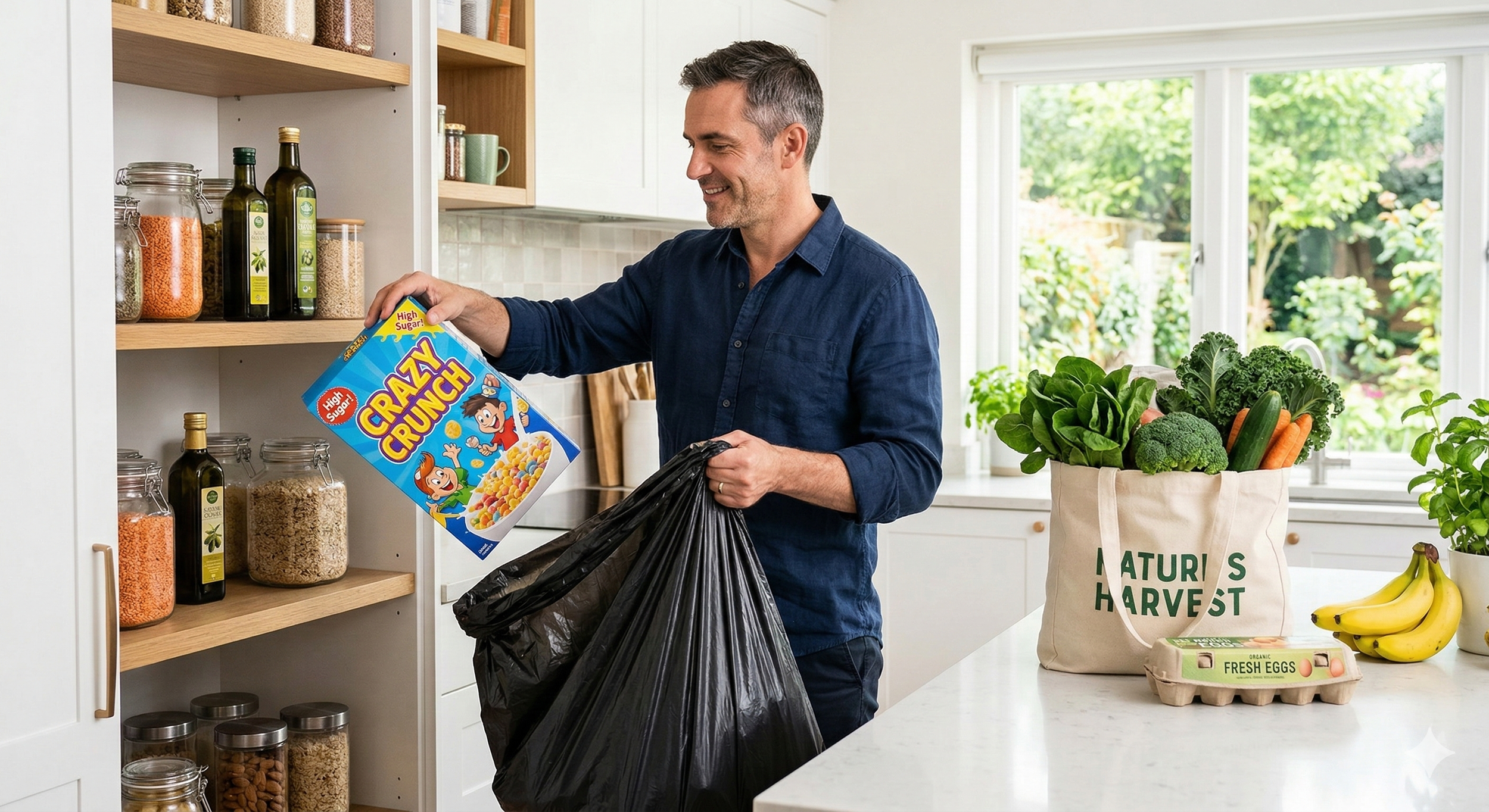
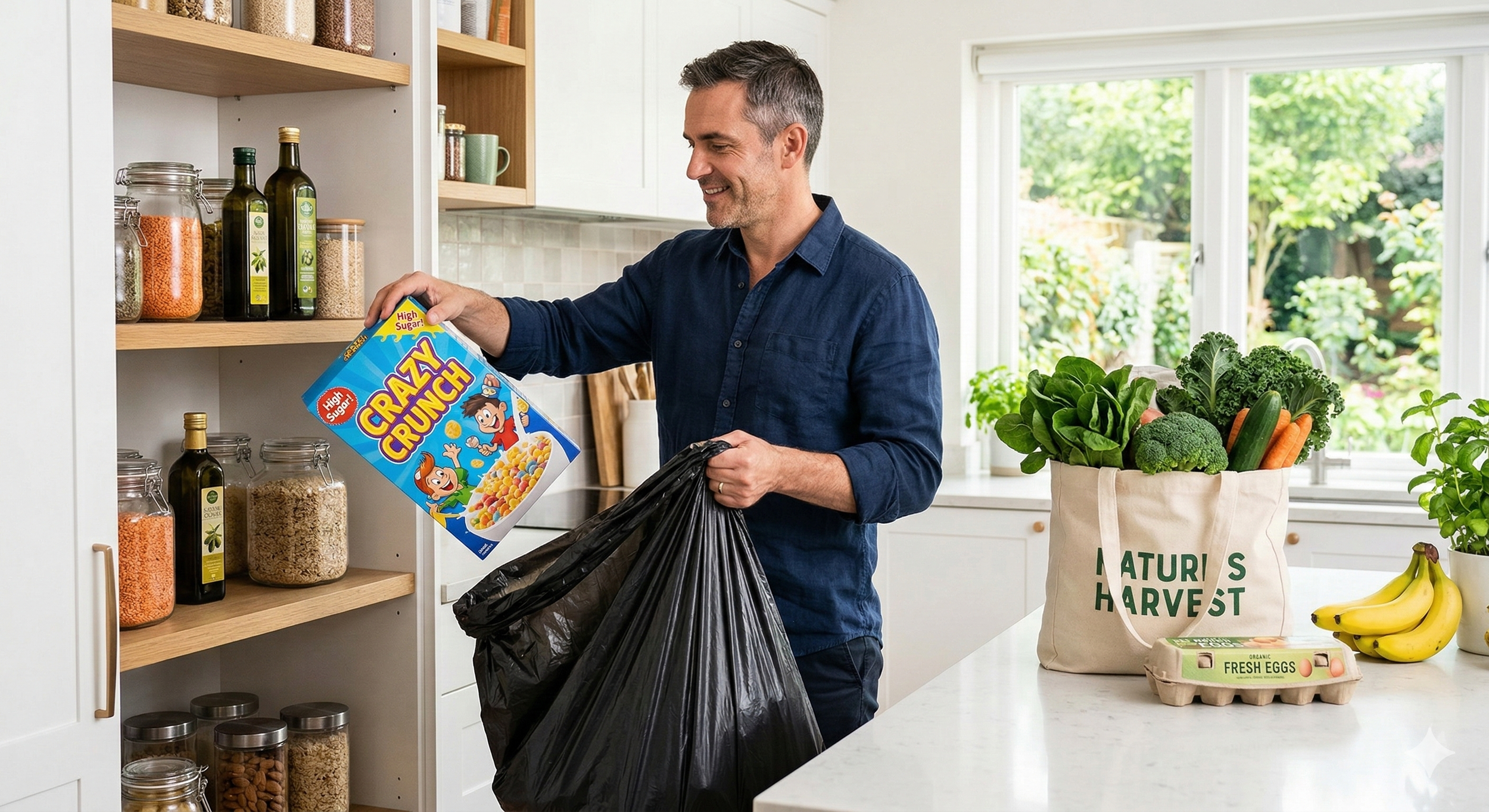
If it’s a food that you consistently "lose control" with, like a specific type of chip or sugary cereal, it doesn't belong in the house. You aren't "wasting money" by throwing it away; you are protecting your health. If you don't want to toss it, donate unopened items to a local food bank.
2. Check the "Hidden" Ingredients
Processed foods are masters of disguise. Take a moment to read the labels of your condiments, dressings, and "healthy" bars. Look specifically for:
Added Sugars: Often hidden as high fructose corn syrup, maltodextrin, or dextrose.
Seed Oils: Highly processed oils that can contribute to systemic inflammation.
Artificial Fillers: If the ingredient list looks like a chemistry textbook, your body probably doesn't know how to use it as fuel.
3. Restock with "First-Line" Fuel
Once you’ve cleared the clutter, restock your shelves with items that make hitting your goals easy. Your "new" pantry should include:
High-Quality Proteins: Canned tuna, wild-caught sardines, or high-quality jerky for quick snacks.
Complex Carbs: Quinoa, oats, and legumes.
Healthy Fats: Raw nuts, seeds, and high-quality olive oil.
4. The "Eye-Level" Strategy
The "out of sight, out of mind" rule is real. Put your most supportive foods, like your protein powder and healthy staples, at eye level. Hide the "treats" (the ones you decided to keep for the kids or spouse) in an opaque bin on the highest shelf. If you have to work to find it, you’re much less likely to eat it mindlessly.
The Kitchen is Your Training Ground
You don't win your fitness journey in the gym; you win it in the kitchen. By cleaning out the "junk" and restocking with fuel, you are making the right choice the easy choice.
This week, take 30 minutes to open your cabinets and be honest about what’s inside. Let’s finish March with an environment that reflects your commitment to your legacy.
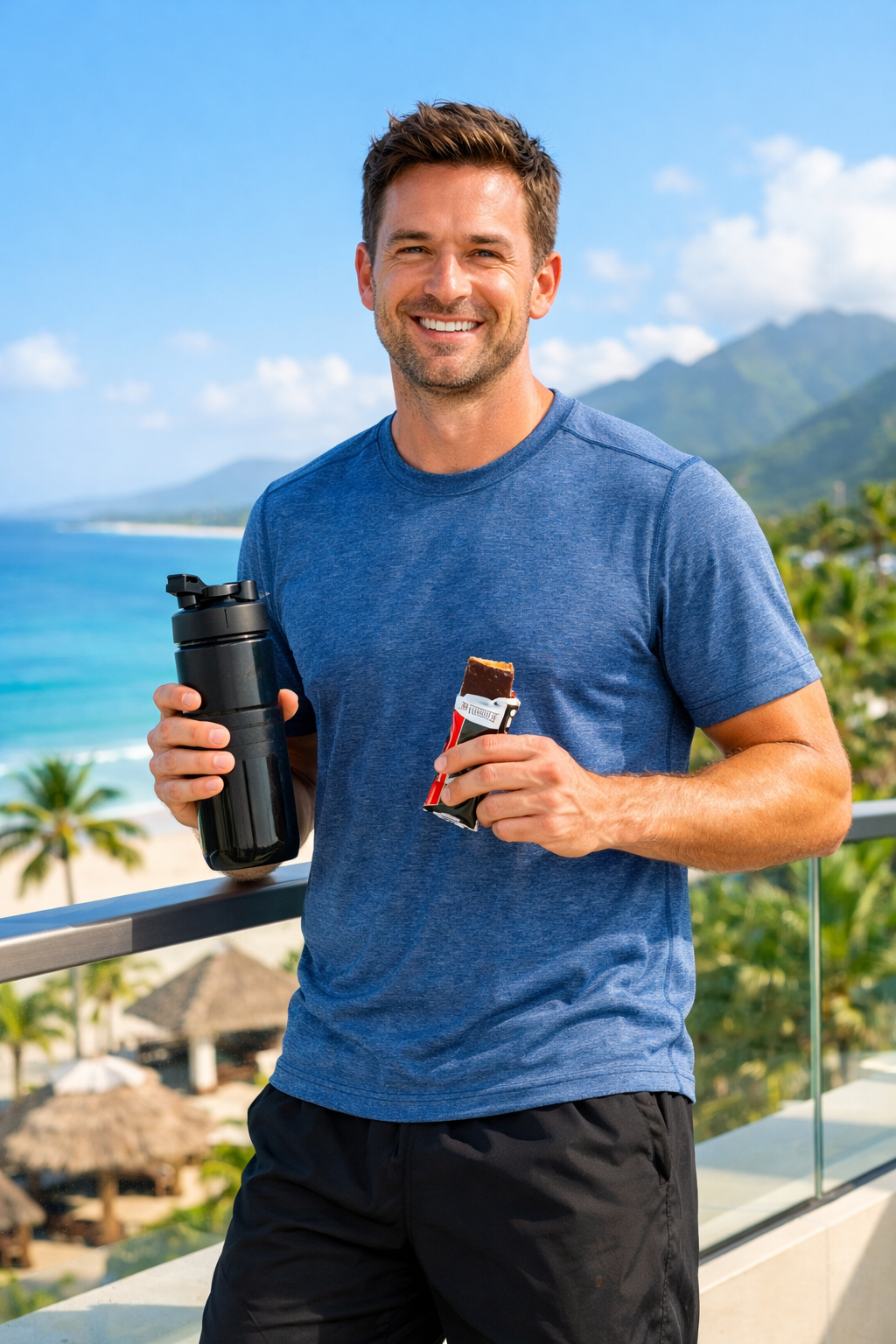
Training Through Travel: Stay on Track During Spring Break
Your body doesn't have a "Vacation Mode." Here is your tactical guide to staying on track while enjoying your Spring Break.
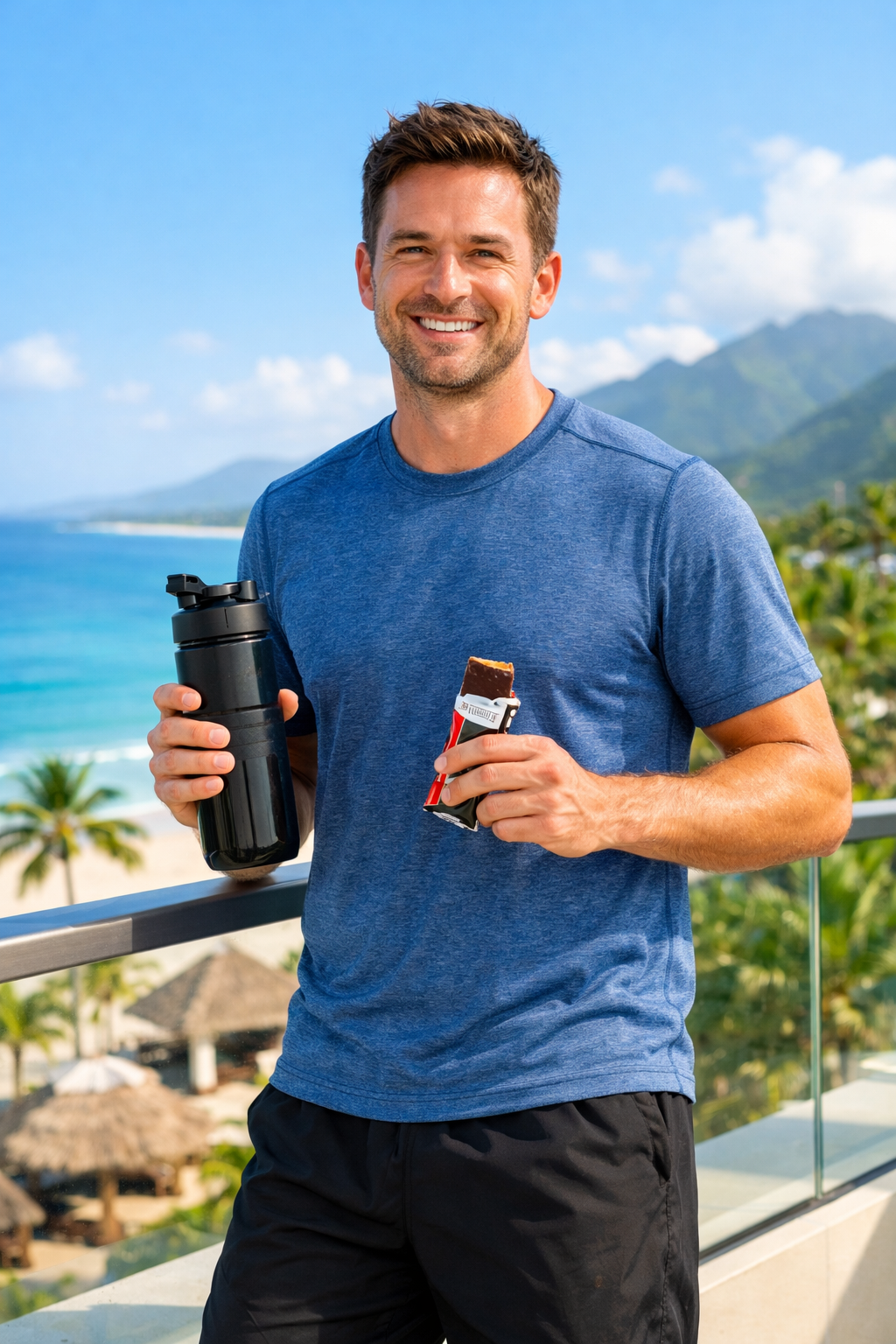
This image was created using AI to avoid copyright issues while conveying the context of this article.
It is that time of year. The suitcases are coming out, the flights are booked, and Spring Break is finally here. For many, travel feels like a mandatory "pause" button on fitness goals. You might think, "I’m on vacation, so the diet and the workouts don't count." But here is the reality: your body doesn't have a "Vacation Mode." The calories you eat in a different zip code still impact your energy, and the muscles you don't use will still begin to lose their edge.
Traveling doesn't have to mean starting over on April 1st. In March, we’ve built a "Bridge of Consistency," and that bridge can travel with you. Here is your tactical guide to staying on track while enjoying your Spring Break.
1. The "Hotel Room" Minimum
Don't wait to see if the hotel gym is nice (or if it even exists). Assume it won't be. Instead, commit to a "15-Minute Minimum" every morning before the family activities start.
The Routine: 3 rounds of 20 body squats, 15 push-ups, and a 60-second plank.
The Goal: It’s not about hitting a personal record; it’s about maintaining the "habit of movement." When you start your vacation day with a win, you are much more likely to make better food choices at lunch.
2. The "One-Meal" Rule
Vacation food is one of the best parts of travel. You should absolutely enjoy the local cuisine. To do this without the "weight-gain hangover," follow the One-Meal Rule:
Eat a high-protein, low-calorie breakfast (think eggs or Greek yogurt).
Have a high-protein, veggie-heavy lunch (like a grilled chicken salad).
Then, enjoy your dinner. By staying disciplined for two meals, you create a "calorie buffer" that allows you to enjoy a nice dinner and a drink without going over your daily limit.
3. Become a "Walking Tourist"
The easiest way to burn extra calories without "working out" is to walk everywhere. Skip the Uber when the destination is less than a mile away. Explore the city, the beach, or the trails on foot. Aim for 12,000 steps a day. You’ll see more of your destination, and you’ll keep your metabolism humming along while you do it.
4. Pack Your "Emergency" Protein
The hardest part of traveling is finding protein on the go. Airport snacks and gas station stops are usually 100% carbohydrates and fats.
The Fix: Pack a few protein bars, some beef jerky, or individual protein powder servings in your carry-on. Having a high-protein snack available means you won't be forced to eat a processed muffin just because you’re hungry at the gate.
5. Hydration is Non-Negotiable
Travel, especially flying, is incredibly dehydrating. And as we learned earlier this month, dehydration often feels like hunger. Carry a reusable water bottle and finish it before every meal. This will keep your energy high, your digestion moving, and your "false hunger" at bay.
Enjoy the Trip, Keep the Legacy
Spring Break is about making memories, not about being perfect. If you have a day where you eat too much or skip the movement, don't sweat it. Just get back to the "One-Meal Rule" the next morning.
You aren't a "gym person" only when you are at home. You are a fit person everywhere you go. Pack your discipline along with your sunscreen, and you’ll return from vacation feeling refreshed instead of defeated.

Hydration and Hunger: Are You Actually Hungry, or Are You Just Thirsty?
Have you ever finished a meal and, only 30 minutes later, felt like you needed to snack again?

This image was created using AI to avoid copyright issues while conveying the context of this article.
Have you ever finished a meal and, only 30 minutes later, felt like you needed to snack again? Or perhaps you find yourself wandering toward the pantry in the middle of a busy afternoon, even though you had a solid lunch.
Before you reach for the chips or a second serving, you need to ask yourself a very important question: Are you actually hungry, or is your body just crying out for water?
In the world of fitness and nutrition, thirst is a master of disguise. Because the signals for hunger and thirst are controlled by the same part of your brain, the hypothalamus, it is incredibly easy to confuse the two. In March, as we focus on discipline and data, mastering your hydration is one of the "low-hanging fruits" that can change your results almost overnight.
The Great Masquerade
Your body is about 60% water. Every single process, from burning fat to repairing muscle after a workout, requires hydration. When you are even slightly dehydrated, your body sends a signal to the brain that it needs "energy."
Because food provides both energy and a small amount of water, your brain often defaults to a "hunger" signal. You feel an empty sensation in your stomach, a dip in energy, or even a slight headache. These are all classic signs of dehydration, but we have been conditioned to treat them with food instead of a glass of water.
Three Signs It’s Actually Thirst
How do you tell the difference? Look for these three clues before you eat:
The Timing: If you ate a balanced, high-protein meal less than two hours ago, it is physically unlikely that you are truly hungry. It takes longer than that for your stomach to empty. This is a primary signal that you are likely thirsty.
The Type of Craving: True hunger is patient; it will settle for a healthy meal. "Thirst-hunger" is usually impulsive. It wants sugar or salt. This is because your body is looking for a quick hit of energy to compensate for the fatigue caused by dehydration.
The Concentration Check: This is the most honest data point we have. If you aren't sure, check the color of your urine. If it is dark yellow, you are dehydrated. Your "hunger" is almost certainly a plea for water.
The "Water First" Rule
To stop the cycle of accidental overeating, implement the Water First Rule.
Whenever you feel a "snack attack" coming on, drink 16 ounces of cool water and wait 15 minutes. Use this time to finish a task at work or tidy up a room.
If, after 15 minutes, you are still genuinely hungry, then go ahead and have a planned, high-protein snack. But more often than not, you will find that the "hunger" has vanished. You’ve satisfied your body’s actual need, saved yourself 300 calories, and improved your metabolic function all at once.
Hydration for Performance
Beyond just stopping cravings, staying hydrated is a "superpower" for your workouts. A muscle that is only 3% dehydrated can lose up to 10% of its strength. If you want to hit those "Micro-Victories" we talked about earlier this month, you have to be hydrated.
In March, don't let a simple glass of water be the thing that stands between you and your goals. Keep a bottle with you at all times, follow the Water First Rule, and start listening to what your body is really asking for.
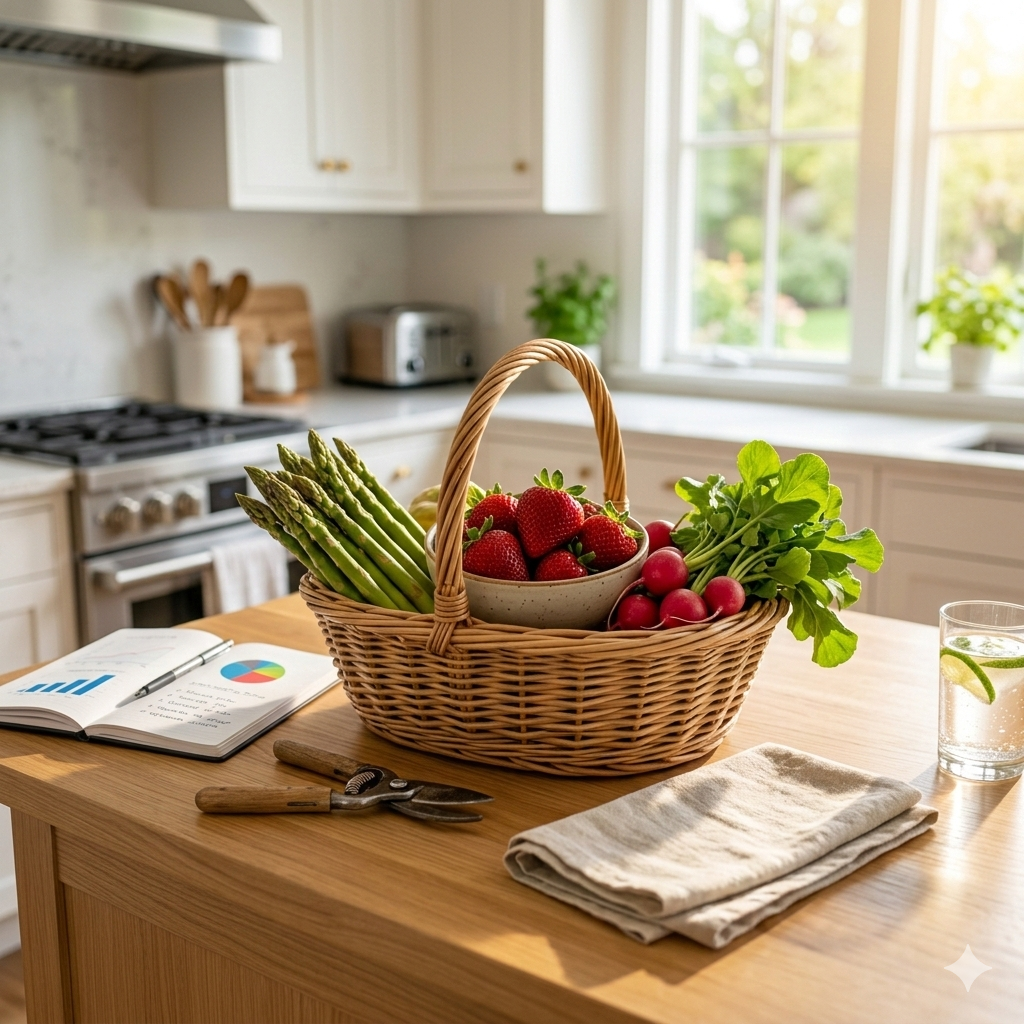
Spring Equinox: Seasonal Produce to Add to Your Grocery List This Week
One of the easiest ways to keep your diet exciting and nutrient-dense is to eat with the seasons.
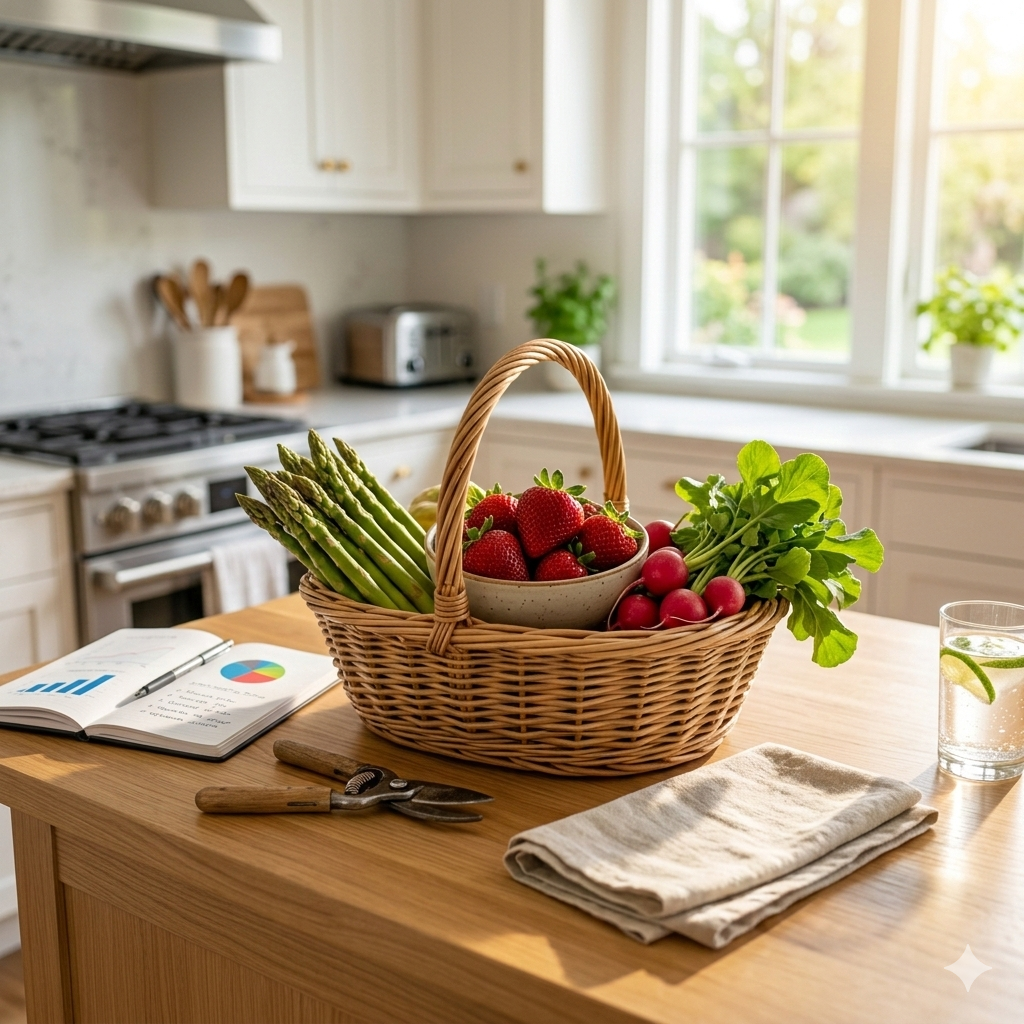
This image was created using AI to avoid copyright issues while conveying the context of this article.
Today marks the Spring Equinox, the official first day of spring! As the days get longer and the weather begins to turn, it is the perfect time to "spring clean" your nutrition.
One of the easiest ways to keep your diet exciting and nutrient-dense is to eat with the seasons. When you buy produce that is in season, it hasn't traveled thousands of miles to get to your plate. This means it tastes better, costs less, and contains more of the vitamins and minerals your body needs to recover from your workouts.
As we move into this new season, here are five spring power-foods you should add to your grocery list this week to fuel your Legacy Fitness goals.
Asparagus: The Natural Diuretic
Asparagus is the king of spring vegetables. It is packed with Vitamin K (great for bone health) and folate. More importantly for those focusing on fat loss, asparagus is a natural diuretic. It helps your body flush out excess water and salt, which can help reduce that "bloated" feeling after a high-stress week.
Pro Tip: Grill it or roast it with a little olive oil and sea salt for a crunchy, high-volume side dish.
Strawberries: The Low-Calorie Sweetener
March is when the first real strawberries start to hit the shelves. As we discussed in our "Volume Eating" guide, berries are your best friend for weight loss. They are high in fiber and water but low in sugar.
Pro Tip: Add them to your Greek yogurt or morning protein smoothie to satisfy your sweet tooth without the calorie spike of processed snacks.
Spinach and Spring Greens: The Iron Foundation
While spinach is available year-round, it thrives in the cool, moist weather of early spring. These greens are loaded with iron and magnesium, which are essential for muscle contraction and energy production.
Pro Tip: Use a "power green" mix as the base for a giant volume-eating salad. The more color on your plate, the more micronutrients you’re getting.
Radishes: The Spicy Crunch
If you crave crunch but are tired of carrots and celery, try radishes. They have a unique, peppery bite and are almost entirely water. They provide a great "mouthfeel" for snacks without adding significant calories.
Pro Tip: Slice them thin and put them on top of a protein-packed avocado toast or eat them raw with a little bit of hummus.
Peas and Snap Peas: The Plant Protein Boost
Fresh peas are a great source of plant-based protein and fiber. Sugar snap peas, in particular, are a fantastic snack because you can eat the whole pod. They provide a satisfying "snap" that helps with the psychological side of snacking.
Pro Tip: Keep a bag of snap peas in your fridge for those afternoon moments when you feel like mindlessly munching.
Why Seasonal Eating Matters
In March, we are focused on building sustainable habits. Eating seasonally prevents "palate fatigue," the boredom that comes from eating the same five meals every single week. By rotating your vegetables and fruits based on what is growing right now, you keep your body healthy and your meals interesting.
This week, take a walk through the produce section and look for what’s fresh. Your body (and your coach) will thank you for the variety!

The Cortisol Connection: How Stress Leads to Late-Night Binging
Late-night eating isn't a sign of weakness; it’s a sign that your stress management system needs an upgrade.

This image was created using AI to avoid copyright issues while conveying the context of this article.
For many high-performers, the day is a masterpiece of discipline. You handle difficult clients, manage complex budgets, and navigate high-stakes meetings with total control. But the moment the house gets quiet and the laptop closes, that discipline seems to vanish. You find yourself standing in the kitchen, eating foods you didn’t even want, wondering why you can’t just "willpower" your way through the evening.
If this sounds familiar, I have some news that might surprise you: Your late-night binging isn't a character flaw. It is a biological response to the stress you carried all day. Specifically, it is driven by a hormone called cortisol.
Understanding the "Cortisol Connection" is the first step toward reclaiming your evenings and your health.
The Role of the "Stress Hormone"
Cortisol is your body’s built-in alarm system. It is produced by your adrenal glands and is designed to help you handle "fight or flight" situations. In the modern world, your body can’t tell the difference between a tiger chasing you and a stressful email from your boss. To your biology, stress is stress.
When your cortisol levels stay high for too long, your body looks for ways to bring them back down. Food, specifically sugar and processed fats, is the fastest way to get a hit of dopamine, which temporarily counteracts the feeling of stress. Essentially, your brain is using food as a drug to "self-medicate" a stressful day.
The "Willpower Battery" and Decision Fatigue
Think of your willpower like a battery. Every decision you make at work from what to say in a meeting to which email to answer first, drains that battery. This is known as Decision Fatigue.
By 8pm, your battery is on 1%. When you combine a drained battery with high cortisol levels, you are in the "Danger Zone." Your logical brain (the part that wants to reach your fitness goals) goes offline, and your impulsive brain (the part that wants comfort and safety) takes over. This is why you don't binge on broccoli; you binge on things that give you an immediate energy spike.
How to Break the Connection
To stop the late-night cycle, we have to address the stress before it reaches the kitchen.
Implement a "Transition Ritual"
Most professionals jump straight from the "work brain" to "home life" without a buffer. This keeps your cortisol levels peaked. Create a 15-minute ritual to signal to your body that the day is over. This could be a short walk, a breathing exercise, or even just changing out of your work clothes the second you get home.
Front-Load Your Nutrition
High cortisol levels increase your appetite. If you under-eat during the day while your stress is high, you are pouring gasoline on a fire. By eating a high-protein, high-fiber lunch, you keep your blood sugar stable, which prevents your body from sending "emergency" hunger signals later that night.
Address the "Why"
Before you grab a snack, ask yourself: "Am I hungry, or am I just trying to turn off my brain?" If the answer is the latter, food won't solve it. Try a non-food relaxation method, like a hot shower or five minutes of stretching. You are teaching your body that it can relax without needing a sugar hit.
Leadership Includes Self-Care
In business, we know that an overworked system eventually breaks. Your body is no different. If you want to sustain your high performance, you have to manage your biological stress as carefully as you manage your calendar.
Late-night eating isn't a sign of weakness; it’s a sign that your stress management system needs an upgrade. By lowering your cortisol and protecting your "willpower battery," you can finish your day with the same excellence you brought to the morning.

Volume Eating: How to Feel "Stuffed" While Staying in a Calorie Deficit
What if I told you that you could eat a massive, plate-filling meal and still lose weight?

This image was created using AI to avoid copyright issues while conveying the context of this article.
If you are trying to lose fat, the biggest fear is usually hunger. We have been told for years that "dieting" means small portions, tiny salads, and walking away from the table still feeling empty. For many people, that constant feeling of deprivation is exactly why they quit their programs.
But what if I told you that you could eat a massive, plate-filling meal and still lose weight?
This is the secret of Volume Eating. It is a strategy that focuses on the quantity of food relative to its calorie density. By choosing the right foods, you can trick your brain and stomach into feeling completely full while actually eating fewer calories than you did before.
The "Stretch Receptor" Secret
Your stomach has "stretch receptors" that send signals to your brain when it is physically full. Your brain doesn't necessarily count every single calorie as it goes down; it mostly cares about the physical volume of the food in your stomach.
Think about it this way: One tablespoon of peanut butter has about 100 calories. It is delicious, but it won't make you feel full. On the other hand, two entire pounds of raw spinach also have about 100 calories. You would be physically unable to finish the spinach because your stomach would be too full.
Volume eating is about finding the balance between these two extremes.
The Volume Eating Toolkit
To master this strategy, you want to fill at least half of your plate with "high-volume, low-calorie" foods. Here are the best tools in the kit:
The "Green Foundation"
Vegetables like spinach, kale, zucchini, cucumbers, and bell peppers are mostly water and fiber. You can eat massive amounts of these for almost zero impact on your calorie goals.
The Hack: Use "zoodles" (zucchini noodles) or spaghetti squash instead of traditional pasta. You can eat three times as much for a fraction of the calories.
Popcorn: The Ultimate Snack
If you are a "crunchy" snacker, swap chips for air-popped popcorn. Three cups of popped popcorn have about 90 calories. To get that same 90 calories from potato chips, you only get about 8 to 10 chips.
Lean Protein "Bulkers"
Protein is already the most satiating nutrient, but some proteins offer more volume than others. Egg whites are a classic volume-eating staple. You can add a half-cup of egg whites to one whole egg to double the size of your breakfast omelet without adding much fat or many calories.
Berries Over Bananas
When it comes to fruit, berries (strawberries, raspberries, blackberries) are the volume kings. Because they are packed with water and fiber, you can eat a whole bowl of strawberries for the same amount of sugar and calories found in just half a large banana.
The Mental Advantage
The real benefit of volume eating is psychological. When you sit down to a tiny portion of food, your brain immediately enters "starvation mode." You feel restricted before you even take a bite.
But when you sit down to a giant bowl of stir-fry packed with broccoli, peppers, onions, and lean chicken, your brain sees an abundance. You enjoy the act of eating longer, and you finish the meal feeling physically satisfied. This makes it much easier to stay consistent with your plan over the long haul.
Don’t Forget the Flavor
A common mistake in volume eating is eating "bland" food. Just because you are eating a giant bowl of cabbage doesn't mean it should taste like cardboard. Use low-calorie seasonings, hot sauce, mustard, or lemon juice to keep your meals exciting.
In March, let's stop trying to "starve" the fat off. Let's eat more of the right things so we can feel full, stay energized, and reach our goals with a smile on our faces.

Strategic Snacking: The Best Pre-Bedtime Snacks If You Are Actually Hungry
If you need a late-night snack, you want something that stabilizes your blood sugar, supports muscle recovery, and helps you drift off to sleep.

This image was created using AI to avoid copyright issues while conveying the context of this article.
We just talked about how to stop the "midnight raid" on the kitchen. We covered how to tell the difference between emotional cravings and actual physical hunger. But what happens when you do the "H.A.L.T." check and the answer is a resounding "Yes, I am actually hungry"?
Going to bed with a growling stomach is not the answer. If your hunger is loud enough to keep you awake, it can lead to poor sleep quality. Since sleep is when your body repairs muscle and burns fat, being too hungry to sleep can actually hurt your progress.
The goal isn't to starve yourself; it is to fuel yourself strategically. If you need a late-night snack, you want something that stabilizes your blood sugar, supports muscle recovery, and helps you drift off to sleep. Here is how to pick the right fuel for the late-night shift.
The Golden Rule: Protein First
If you reach for a bowl of cereal or a bag of chips, you are asking for trouble. Those are simple carbohydrates. They cause a quick spike in your blood sugar, followed by a "crash" while you are sleeping. That crash can cause you to wake up in the middle of the night or feel incredibly groggy in the morning.
Instead, your late-night snack should be built around protein. Protein takes longer to digest, which means it provides a steady stream of nutrients to your muscles while you sleep. Specifically, many athletes look for casein protein. Unlike whey, which is fast-acting, casein is a "slow-release" protein that acts like a timed-release fertilizer for your muscles.
Three Perfect Late-Night Options
If you have room in your daily calorie goal and you are truly hungry, reach for one of these three options.
Low-Fat Greek Yogurt or Cottage Cheese
These are the kings of nighttime snacks. Both are packed with casein protein. If you find the taste a bit plain, you can add a small handful of berries. The fiber in the berries combined with the protein in the dairy will keep you full until breakfast without making you feel heavy or bloated.A Small Protein Shake
If you don't feel like chewing, a protein shake is a great choice. Use a scoop of protein powder with water or unsweetened almond milk. It is quick, easy to track, and gives your body exactly what it needs to repair tissue from your afternoon or evening workout.A Piece of String Cheese and a Few Almonds
This is a great "grab and go" option. The cheese provides the protein, and the almonds provide a small amount of healthy fat. Fats slow down digestion even further, ensuring you don't wake up hungry at 3:00 AM. Plus, almonds contain magnesium, which is a mineral that helps your muscles relax.
What to Avoid
While these snacks help, some foods act like an alarm clock for your body. Avoid these three things before bed:
Dark Chocolate: Even though it has health benefits, it contains caffeine. If you are sensitive to stimulants, even a small square can keep you tossing and turning.
Spicy Foods: Hot sauce or spicy peppers can cause indigestion or heartburn when you lie down, which ruins sleep quality.
Large Meals: A "snack" should be around 150 to 250 calories. If you eat a full meal right before bed, your body has to work hard to digest it, which raises your internal body temperature and makes it harder to reach deep sleep.
The Bottom Line
Eating at night isn't a "sin" in the world of fitness, as long as it fits into your total daily goals and consists of the right nutrients. If you find yourself hungry every single night, it is a sign you need to eat more during your breakfast and lunch. But for those nights where you just need a little extra fuel, choose protein and keep it light.
By snacking strategically, you aren't just satisfying hunger; you are giving your body the tools it needs to wake up stronger tomorrow.

The Midnight Kitchen Raid: Why We Crave Snacks at Night and How to Stop
Late-night snacking is one of the biggest hurdles for fitness clients. But here is the secret: late-night eating usually isn't about a lack of willpower.

This image was created using AI to avoid copyright issues while conveying the context of this article.
We have all been there. You ate a healthy breakfast, a balanced lunch, and a solid dinner. You followed your plan perfectly all day. But then, around 9:00 PM, while sitting on the couch, it hits you. Suddenly, the pantry is calling your name. You find yourself standing in front of the open refrigerator, wondering how you ended up here.
Late-night snacking is one of the biggest hurdles for fitness clients. It is frustrating because it feels like you are "undoing" all your hard work from the day. But here is the secret: late-night eating usually isn't about a lack of willpower. It is often a physical or emotional response to how you handled the rest of your day.
The "Why" Behind the Craving
To beat the habit, we first have to understand why it happens. Usually, it comes down to three main things:
Under-eating during the day: If you skip breakfast or have a tiny lunch to "save calories," your body will fight back at night. By the time evening rolls around, your hunger hormones, specifically one called ghrelin, are screaming for energy. Your brain wants the fastest energy possible, which usually means sugar or simple carbs.
The Stress Connection: After a long day of work and making decisions, your "willpower battery" is drained. This is called decision fatigue. Additionally, if your stress levels (cortisol) stayed high all day, your body looks for a way to relax. For many, food is the easiest way to get a quick hit of dopamine, the "feel-good" brain chemical.
The Reward Habit: Sometimes, snacking is just a ritual. You have taught your brain that "TV time" equals "snack time." It becomes an automatic loop that you do without even thinking.
Strategies to Win the Night
If you want to stop the raid on the kitchen, you need a game plan. Here are four proven strategies to help you stay on track.
Front-Load Your Calories
The best way to stop nighttime hunger is to eat more during the day. Make sure your breakfast and lunch are packed with protein and fiber. Protein keeps you full longer than anything else. If you are properly fueled by 4:00 PM, you won't feel like a starving bear by 8:00 PM.Close the Kitchen
Create a physical signal that the "eating day" is over. For many, this is as simple as brushing your teeth immediately after dinner. The taste of mint makes most snacks taste terrible, and it sends a signal to your brain that the "kitchen is closed." You can also try turning off the kitchen lights and staying out of that room once dinner is cleaned up.The "H.A.L.T." Check
Before you grab a snack, stop and ask yourself: Am I Hungry, Angry, Lonely, or Tired? If you aren't actually hungry, a snack won't fix the problem. If you are tired, go to bed. If you are stressed, try five minutes of deep breathing or a hot shower. Addressing the real emotion is the only way to make the craving go away.Change the Environment
If you always snack while watching a certain show, your brain expects it. Try changing your routine for a week. Read a book in a different room, go for a short evening walk, or work on a hobby that keeps your hands busy. If you aren't sitting in the "snack zone," the urge to eat will be much weaker.
What If You Are Truly Hungry?
Sometimes, you actually need a little something. If your stomach is growling and you can't sleep, don't reach for the cookies. Choose a high-protein snack like Greek yogurt, a small protein shake, or a piece of string cheese. These will satisfy your body without causing a massive spike in blood sugar that disrupts your sleep.
Remember, one night of snacking doesn't define your fitness journey. But by understanding your triggers and planning ahead, you can take control of your evenings and see the progress you’ve been working so hard for.

The Launchpad Ritual: Making Your Weekly Check-in a Non-Negotiable Habit
By showing up every single week, you are proving to yourself that you are committed to the long-term legacy of your health.

This image was created using AI to avoid copyright issues while conveying the context of this article.
We’ve talked about the "Black Box" problem and why skipping your data stalls your progress. We know that honesty is the best policy. But knowing why you should do something and actually doing it are two different things.
Most people skip their weekly check-in because they treat it as an afterthought. They wait until the last minute, and suddenly it feels like a chore. At Legacy Fitness, I often schedule check-ins for the middle of the week (like Wednesday or Thursday) to ensure I can give you my full attention and feedback before the weekend begins.
Whatever your assigned day is, we have to change the way you look at the 24 hours leading up to it. That day isn’t just another day on the calendar; it is the "Launchpad" for your success. If you want to stay consistent, you need to make your weekly check-in a non-negotiable ritual.
1. The "Anchor" Mindset
If you wait for a "good time" to check in, you’ll never find it. You have to create the time. Look at your assigned check-in day and pick a specific anchor in your routine for that day or the evening before.
By anchoring the check-in to a task you already do, you remove the "mental load" of remembering. It becomes a natural part of your weekly flow.
The Stack: "After I finish my Wednesday morning coffee, I will open my app and complete my check-in."
The Stack: "Before I sit down for dinner on Tuesday night, I will send my data to my coach."
2. Prepare Your "Launchpad"
A good check-in requires data. If you have to spend 20 minutes hunting for your weight, looking up your sleep scores, and trying to remember how your workouts felt, you are going to get frustrated.
Keep your "Launchpad" ready throughout the week:
Daily Logging: Log as you go. Remember, five minutes a day saves you an hour of guessing later.
The "Notes" App: If you had a particularly high-stress day or a great win on a Tuesday, jot it down in your phone right then.
The "Pre-Check" Habits: Take your measurements or photos the morning of your check-in so the information is fresh and ready to go.
3. Review, Reflect, and Reset
The check-in isn't just for me; it is for you. This is your time to be the CEO of your own body. As you fill out the form, ask yourself three questions:
Review: What did I actually do this week? (Look at your logs).
Reflect: How did I feel? Was I hungry? Was I tired?
Reset: What is one thing I will do better starting tomorrow?
This process "resets" your brain. Even if you had a rough few days, the act of checking in draws a line in the sand. It closes the door on the past and opens the door to a fresh start.
4. The "No-Matter-What" Rule
In March, we are building "Musts." Your check-in is a "Must."
If you had a terrible few days and ate off-plan, check in anyway. If you didn't lose any weight, check in anyway. If you are busy and stressed, check in anyway. The only "bad" check-in is the one that doesn't happen. By showing up every single week, you are proving to yourself that you are committed to the long-term legacy of your health.
When we keep the lines of communication open, we take the guesswork out of the equation. Let’s use your Launchpad to keep the momentum moving.

Building a Support System: How to Tell Your Family and Friends About Your Fitness Goals
Fitness can feel like a lonely path, but it doesn't have to be.

This image was created using AI to avoid copyright issues while conveying the context of this article.
One of the hardest parts of a fitness journey doesn't happen in the gym or the kitchen. It happens at the dinner table, the backyard BBQ, or the Friday night happy hour.
When you decide to change your life, you are changing the "unspoken rules" of your social circle. If you were always the person who ordered the extra appetizers or the second round of drinks, your friends and family might feel a little uncomfortable when you suddenly say "no thanks."
Without a plan, this social pressure can lead to "sabotage," not because your loved ones don't want you to succeed, but because your change makes them look at their own habits. In March, we want to build a bridge of support, not a wall of isolation. Here is how to communicate your goals so your "tribe" helps you win.
1. Own the "Why," Not Just the "What"
If you tell your friends, "I’m on a diet," they will likely try to talk you out of it. They’ll say things like, "It’s just one night," or "You look fine, you don't need to lose weight." Instead, tell them why it matters. Move the conversation from "restriction" to "performance."
Instead of: "I can't eat that."
Try: "I’ve been working with a coach to get my energy back so I don't crash every afternoon. I’m really focused on how I feel right now, so I’m sticking to my plan tonight."
When you frame it as an investment in your health and energy, it is much harder for people to argue with you. You aren't "missing out"; you are "leveling up."
2. Ask for a Specific Type of Help
Most people actually want to be supportive, but they don't know how. If you don't give them a role, they might try to "help" by encouraging you to "relax" and eat the cake.
Give them a specific job.
To a spouse: "I’m really trying to hit my protein goals this week. It would be a huge help if we could keep the high-protein snacks on the middle shelf where I can see them."
To a friend: "I’m committed to my 7am workout tomorrow. Can we grab an early dinner so I can get to bed on time?"
When you ask for help, you turn your support system into teammates rather than obstacles.
3. The "Non-Negotiable" Announcement
If you are attending a big social event, don't wait until you are standing in front of the buffet to decide what to do. Mention it ahead of time.
A simple text to the host can save a lot of awkwardness: "Hey, I'm really looking forward to seeing everyone! Just a heads up, I’m following a specific nutrition plan right now, so I’ll probably stick to the lean proteins and veggies, or I might bring a dish to share that fits my goals."
By announcing it early, you remove the "surprise" factor. You’ve already made the decision, so there is nothing to debate when you arrive.
4. Lead by Example, Not by Lecture
The best way to get people on your side is to show them how good you feel. You don't need to explain why processed sugar is bad or why they should be lifting weights. Just show up with high energy, a positive attitude, and a clear sense of purpose.
Eventually, the people who used to pressure you to "just have one" will start asking you, "Hey, what have you been doing? You look like you have so much energy lately." That is the moment your support system truly solidifies.
Building a Legacy Together
Fitness can feel like a lonely path, but it doesn't have to be. By being clear, kind, and firm about your boundaries, you teach people how to support the new version of you.
In March, let's stop hiding our goals and start sharing our vision. When your inner circle knows what you are striving for, they become the wind at your back instead of the weight on your shoulders.
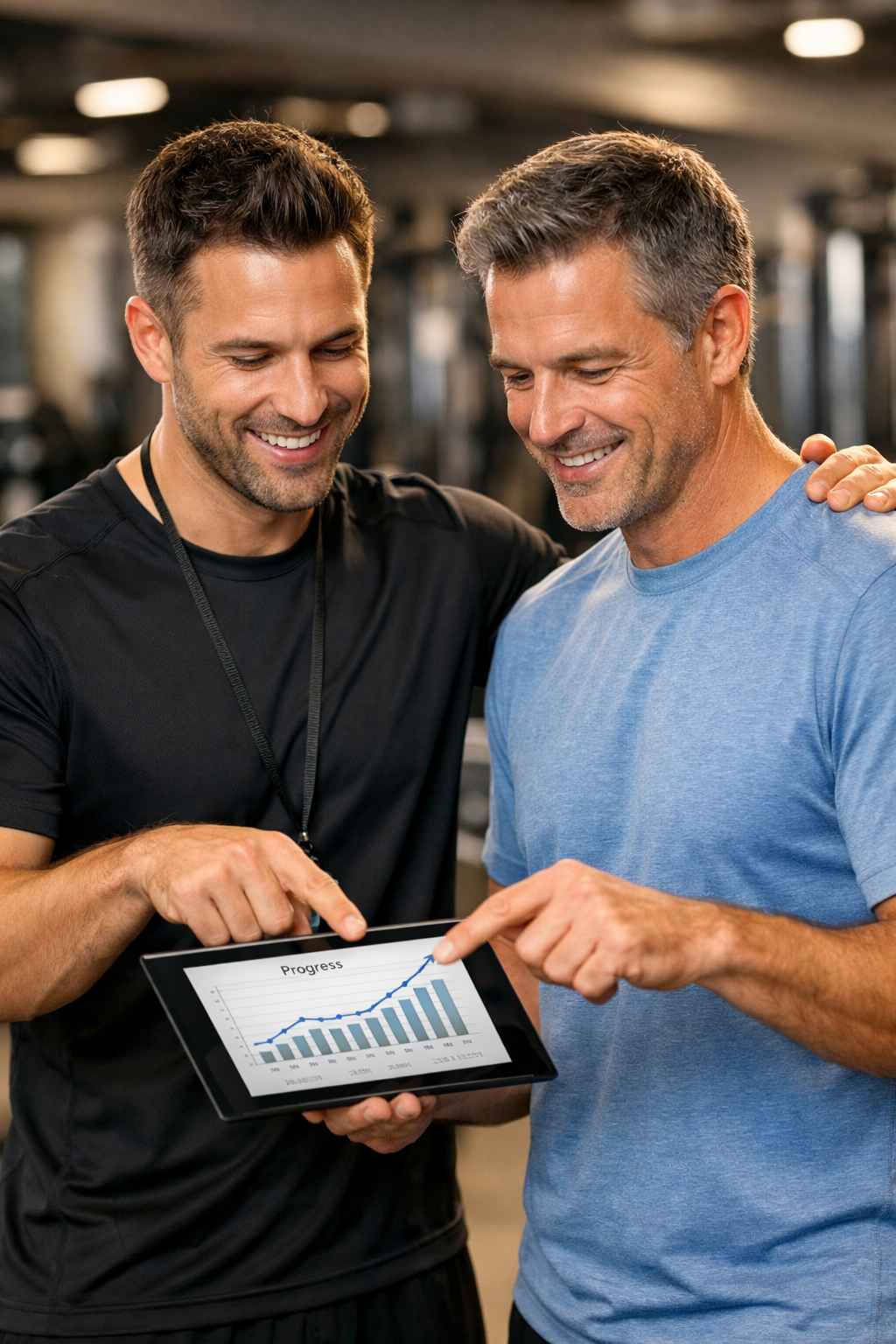
The Science of Accountability: Why Human Coaching Beats AI Apps Every Time
Apps don’t care if you fail.
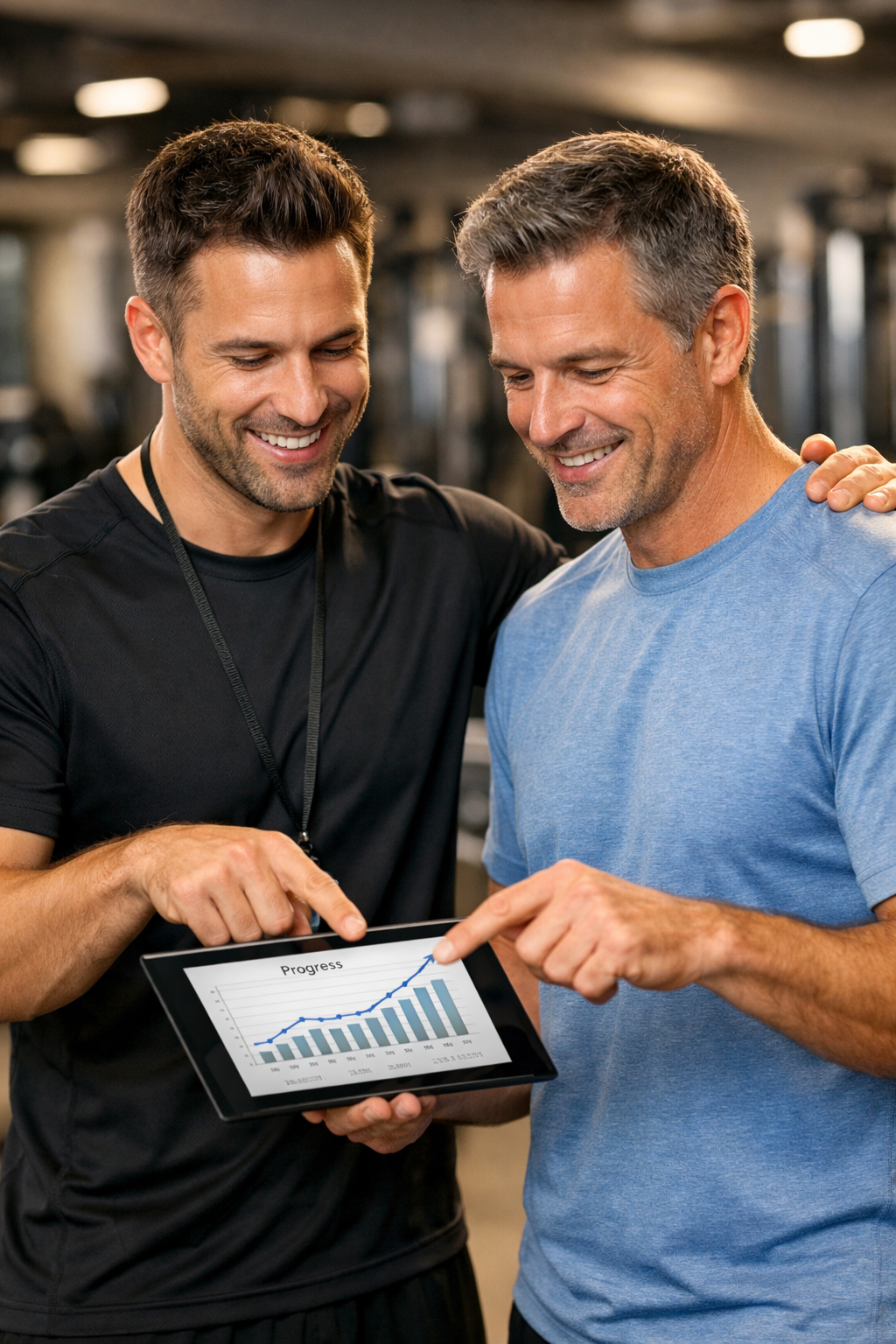
Ironically, this image was created using AI to avoid copyright issues while conveying the context of this article.
In 2026, it seems like there is an app for everything. You can find an AI "coach" that will write your workouts, track your macros, and even send you a "motivational" text at 6am. On paper, it sounds perfect. It is cheap, it is fast, and it lives right on your phone.
But there is a major problem: Apps don’t care if you fail.
If you skip a workout on an app, the app doesn’t feel disappointed. It doesn’t wonder why your stress levels are high. It just sends another automated notification that you will probably swipe away and ignore. This is why, despite the thousands of fitness apps available, the obesity rate continues to climb and most people quit their programs within three weeks.
To see real, lasting change, you don’t need more "artificial" intelligence. You need human accountability. Here is the science behind why a human coach will always outperform an algorithm.
1. The "Observer Effect"
There is a well-known concept in psychology called the Hawthorne Effect. It suggests that individuals modify their behavior when they know they are being observed.
When you log your food into an app that no one sees, there is no social "cost" to eating a box of cookies. But when you know that a real person, your coach, is going to look at that log on Monday morning, your behavior changes. You stop and think before you act. That "pause" is where your discipline is built. Knowing that someone is "watching the scoreboard" makes you play the game differently.
2. Context vs. Calculation
An AI app is a calculator. If you tell an app you had a "bad" day, it might suggest you eat 500 fewer calories tomorrow to "make up for it."
A human coach does the opposite. A human looks at the context. I might see that you had a high-stress meeting, only slept four hours, and were dealing with a family emergency. I know that cutting your calories even further would be a disaster for your metabolism and your mental health. A human coach knows when to push you and, more importantly, when to tell you to rest. AI sees numbers; humans see lives.
3. The Empathy Gap
Algorithms cannot provide empathy. When you hit a plateau (and everyone does) an app can only give you a new set of numbers. It can’t talk you through the frustration. It can’t remind you of how far you’ve come when you feel like a failure.
Human coaching provides a psychological safety net. When you struggle, I am there to help you navigate the "why" behind the struggle. We solve the problem together. An app just waits for you to input data; a coach actively helps you create the data you want.
4. Hard-Wired for Connection
Humans are social creatures. We are biologically wired to seek approval and connection within our "tribe." For thousands of years, we have achieved difficult goals by working in small, committed groups.
When you hire a coach, you aren’t just buying a workout plan. You are entering into a partnership. You are much less likely to let down a partner than you are to let down a piece of software. That sense of "not wanting to let the team down" is a powerful fuel that carries you through the months when motivation is low.
The Bottom Line
Technology is a great tool, but it is a terrible master. Use your apps to track your data, but use a human coach to change your life. If you are tired of the "start-stop" cycle of fitness apps, it might be time to invest in the science of human accountability.
Data tells us what happened. Coaching tells us what to do next.

The Mid-Month Slump: How to Refresh Your Motivation When the "New Year" Feeling Is Gone
Don't panic about the slump. Expect it. Acknowledge it. And then, use your systems to walk right through it.

This image was created using AI to avoid copyright issues while conveying the context of this article.
It is officially the middle of March. If you made it this far with your new fitness routine, congratulations. You are ahead of about 80% of the population.
But let's be honest: the "New Year, New Me" energy from January is gone. The excitement of starting a new program in February has faded. Now, you are just in the "grind." The workouts feel a little heavier. The meal prep feels like a little more work. The initial "quick wins" on the scale might be slowing down.
This is the Mid-Month Slump. It is the danger zone where many people start to skip a workout here, or "forget" to log a meal there, until the whole program quietly fades away.
In March, we built a "Bridge of Consistency." Now, we need to make sure you have the mental power to cross it. Here is how to refresh your motivation when the hype is gone and the real work begins.
1. Shift from "Motivation" to "Identity"
Motivation is a feeling. It comes and goes like the weather. If you only exercise when you feel like it, you will never be consistent.
To beat the slump, you have to stop relying on motivation and start relying on identity. You have to stop asking, "Do I want to go to the gym?" and start stating, "I am a person who goes to the gym." When your fitness is part of who you are, just like brushing your teeth or showing up for your job, you don't need a blast of motivation to do it. You just do it because it is on your "Must-List" for the day.
2. Reconnect with Your "Deep Why"
Take a look back at your goals from January. Many people write things like, "I want to lose 20 pounds."
That is a "shallow why." It isn't strong enough to pull you out of bed on a Tuesday when you are tired. To refresh your dedication, you need to find your "deep why."
Why do you want to lose 20 pounds? So I can fit into my clothes again.
Why do you want to fit into your clothes again? So I can feel confident when I make presentations at work.
Why do you want to feel confident at work? So I can get that promotion and build a better future for my kids.
Now that is a why that can beat the slump. When you connect your daily workout to the future you are trying to build, it stops feeling like a chore and starts feeling like an investment.
3. Set a "Micro-Challenge" for this Week
Sometimes, you are in a slump because the long-term goal feels too far away. Your body transformation is a marathon. To keep your head in the game, you need to set up a few "sprints."
Set a micro-challenge just for this week. Pick something you have total control over:
The Logging Sprint: I will log 100% of my meals, including snacks, for seven days straight.
The Protein Peak: I will hit my exact protein target, every day.
The Step Sprint: I will hit 12,000 steps every day this week, no matter what.
By setting a small, seven-day goal, you can get a quick win that reminds you of what you are capable of. It gives you a blast of accomplishment that can carry you through the rest of the month.
Discipline Starts When Motivation Ends
In March, the hype is gone, and that is a good thing. The hype was a temporary engine. Now, you are fueled by something stronger: your discipline, your identity, and your "deep why."
Don't panic about the slump. Expect it. Acknowledge it. And then, use your systems to walk right through it. You are building something that lasts, and the work you do now is what matters the most.

The "I’m Too Busy to Log" Myth: Time-Saving Hacks for Tracking Your Progress
We lead busy lives. Between demanding careers, family commitments, and trying to squeeze in a workout, adding "data entry" to the list can feel like the straw that breaks the camel's back.

This image was created using AI to avoid copyright issues while conveying the context of this article.
"I just don't have the time."
In the world of fitness coaching, this is the most common reason given for skipping nutrition and workout logs. We lead busy lives. Between demanding careers, family commitments, and trying to squeeze in a workout, adding "data entry" to the list can feel like the straw that breaks the camel's back.
But here is the reality: logging doesn't take as much time as you think it does. In fact, most people spend more time scrolling through social media in a single morning than they would need to log an entire day of food and training. The "busy" excuse is usually less about time and more about a lack of a system.
If we want to reach your goals in March, we have to stop viewing logging as a chore and start seeing it as a high-speed tool. Here are five time-saving hacks to help you log your data in less than five minutes a day.
1. Use the "Recent" and "Copy" Functions
Most people are "creatures of habit." You likely eat the same four or five breakfasts and lunches on a rotating basis. You don't need to search for "eggs" and "spinach" every single morning.
In almost every tracking app, there is a "Recent" or "Frequent" list. Better yet, use the "Copy from Yesterday" function. If you ate the same chicken salad today that you had yesterday, logging it should take exactly two taps of your thumb. Total time: 5 seconds.
2. The "Barcode Scanner" is Your Best Friend
Stop typing. If your food comes in a package, even a healthy one like a bag of frozen vegetables or a container of Greek yogurt, use the barcode scanner on your phone. It automatically pulls in the calories and macronutrients without you having to search through a database of ten thousand different brands. Total time: 10 seconds.
3. Log Your Workout During Your Rest Periods
Some people try to remember their whole workout and log it when they get home. By then, they’ve forgotten the weight they used on the third set or how many reps they actually finished.
Instead, log your set immediately after you finish it while you are resting. You have 60 to 90 seconds of downtime anyway. Use 15 of those seconds to input your numbers. This ensures 100% accuracy and means that when you walk out of the gym, your "work" is already done. Total time: 0 extra minutes.
4. Pre-Log Your Day
If you know what you are going to eat for lunch and dinner, log it in the morning (or even the night before). This does two things:
It saves you from having to think about it later when you are tired.
It acts as a "budget." If you see that your planned dinner leaves you with 30 grams of protein to fill, you’ll know exactly what to grab for a snack in the afternoon.
5. Don’t Let "Perfect" Be the Enemy of "Done"
If you are at a restaurant and can't find the exact dish in your app, don't give up and skip the day. Find something close, or just log the main components (e.g., "6oz Grilled Chicken" and "Side Salad").
As your coach, I would much rather see a "close guess" than a blank page. A blank page tells me nothing. A "close guess" keeps your habit alive and gives us a ballpark figure to work with.
The ROI on Five Minutes
Think about the "Return on Investment" (ROI) here. If spending five minutes a day logging ensures that the 60 minutes you spend in the gym actually produces results, isn't that a smart use of time?
Logging isn't about adding a new job to your day. It’s about making sure your hard work actually pays off. In March, let's stop saying we are "too busy" and start being too smart to guess.

Why Data is Your Friend: The Hidden Psychology of Logging Your Food and Workouts
If you want to change your body, you have to change your relationship with the truth.

This image was created using AI to avoid copyright issues while conveying the context of this article.
If you want to change your body, you have to change your relationship with the truth. Most people think they know how much they eat and how hard they train. But research shows that, on average, people underestimate their calorie intake by about 30% and overestimate their physical activity by nearly the same amount.
This isn't because people are lying. It’s because our brains are designed to be efficient, not accurate. We remember the salad we had for lunch, but we forget the three handfuls of almonds we grabbed while making dinner. We remember the heavy set of squats, but we forget the extra-long rest periods spent scrolling on our phones.
This is where logging comes in. Logging your nutrition and workouts isn't just about "counting numbers." It is about creating a clear, honest picture of your reality so that we can actually make progress.
The Psychology of the Log
When you write something down, it changes how you think about it. This is a psychological concept called "self-monitoring." By tracking your food and gym sessions, you move your actions from your subconscious mind to your conscious mind.
Awareness precedes change: You cannot fix a problem you haven’t identified. When you log your food, you start to see patterns. You might notice that every Tuesday you are starving by 4:00 PM, or that you always skip your last exercise on leg day.
The "Pause" Button: The act of opening an app or a notebook to log a snack creates a "micro-pause." In that moment, you move from impulsive eating to intentional eating. It gives you a second to ask: "Does this actually help me reach my goal?"
The "Why" for the Coach
As your coach, I am essentially a pilot trying to fly a plane. Your workout and nutrition logs are my instrument panel. If the dials are blank, I am flying blind.
If you tell me, "I’m eating healthy but not losing weight," I don't have enough information to help you. Are you eating too much "healthy" fat? Are you missing your protein targets? Is your "healthy" lunch secretly packed with hidden calories?
When you log, I can see the whole story. I can see if your energy is dipping because you aren't eating enough carbs before your workout. I can see if your strength is stalling because you haven't increased your weights in three weeks. Data allows us to make small, surgical adjustments instead of wild guesses.
Getting Over the "I Don't Want to See It" Phase
Many clients stop logging when they have a "bad" day. They feel guilty, so they hide the evidence. But that is exactly when you should log.
A log is not a judge; it is a map. If you get lost on a road trip, you don't throw away the GPS. You use it to find your way back to the main road. If you eat a meal that wasn't on the plan, log it anyway. It takes the power away from the "slip-up" and turns it into a simple data point.
Start Small
If logging feels overwhelming, remember that it doesn't have to be perfect to be effective. Start by logging just your protein and your main lifts. As you get faster at it, add the rest.
In March, let's commit to the data. Let’s stop guessing and start knowing. When we have the facts, we have the power to change the outcome.

Sweet Rewards: Healthier Valentine’s Treats for Your Legacy
Valentine’s Day is often seen as the ultimate "diet buster." Between the heart-shaped boxes of chocolate and the decadent multi-course dinners, it is easy to feel like you have to choose between celebrating with your loved ones and staying on track with your fitness goals.

This image was created using AI to avoid copyright issues while conveying the context of this article.
Valentine’s Day is often seen as the ultimate "diet buster." Between the heart-shaped boxes of chocolate and the decadent multi-course dinners, it is easy to feel like you have to choose between celebrating with your loved ones and staying on track with your fitness goals.
But at Legacy Fitness, we believe that health is not about deprivation; it is about making better choices that actually make you feel good. You can absolutely enjoy a "sweet reward" without the sugar crash, the brain fog, or the regret the next morning.
The secret lies in shifting your focus from processed sugars to high-quality ingredients that honor our 4:1 protein-to-fiber goal, even when we are indulging.
The Sugar Crash Cycle
Most Valentine’s treats are a combination of refined sugar and unhealthy fats. When you eat these, your blood sugar spikes (remember the "Glucose Curve" we discussed earlier?), causing a massive release of insulin. This is usually followed by a "crash" that leaves you tired, irritable, and craving even more sugar.
By choosing "smarter" sweets, we can keep those pleasure centers in the brain happy while keeping our energy levels stable.
Three Strategies for Healthy Indulgence
1. The Darker, The Better
If you are a chocolate lover, the simplest upgrade is to move toward dark chocolate (at least 70% cocoa or higher). Dark chocolate is actually a fermented food that contains significant amounts of fiber and antioxidants called polyphenols.
The Bonus: High-quality dark chocolate has much less sugar than milk chocolate, meaning you can satisfy your craving with just one or two squares rather than the whole bar.
2. Protein-Powered Puddings
One of the most popular healthy treats right now is "Pro-Yo" (Protein Yogurt) or blended cottage cheese bark. By mixing a high-quality protein source with a natural sweetener like stevia or a handful of berries, you are hitting that satiety double-whammy. You get the "sweet" fix your brain wants, while the protein and fiber keep your hunger hormones quiet.
3. Nature’s Candy with a Twist
Fruits like raspberries and strawberries are low in sugar and high in fiber. To make them feel like a Valentine’s treat, try dipping them in melted dark chocolate and topping them with crushed walnuts or hemp hearts. This adds healthy fats and a bit of protein, creating a "clothed carb" that won't wreck your energy.
Valentine’s Recipes for Two
The "Legacy" Lava Cake: Instead of flour and sugar, use a base of mashed black beans (trust us!), cocoa powder, and eggs. The beans provide the fiber and structure, while the cocoa provides the rich flavor. It’s a high-fiber, high-protein dessert that tastes like a decadent brownie.
Chia Seed Parfait: Mix chia seeds with almond milk and a touch of vanilla. Let it set overnight to create a pudding-like texture. Top it with raspberries and a few cacao nibs. With 10g of fiber per serving, this is a "Fibermaxxing" dream that feels like a reward.
The Mindful Indulgence
The most important part of Valentine’s Day isn't the food; it's the connection. If you do decide to have a traditional treat, practice mindful eating. Don't eat while watching a movie or scrolling on your phone. Sit down, look at your partner (or enjoy your own company), and savor every single bite. When you eat mindfully, you’ll find that a small portion is often more than enough to satisfy you.
The Legacy View
We want you to build a life you don't need a "vacation" or a "cheat day" from. True health is being able to navigate a holiday like Valentine’s Day with confidence. You don't need to be perfect; you just need to be intentional.
Choose a treat that loves you back, one that tastes great in the moment and makes you feel energetic the next day. That is the ultimate act of self-love.
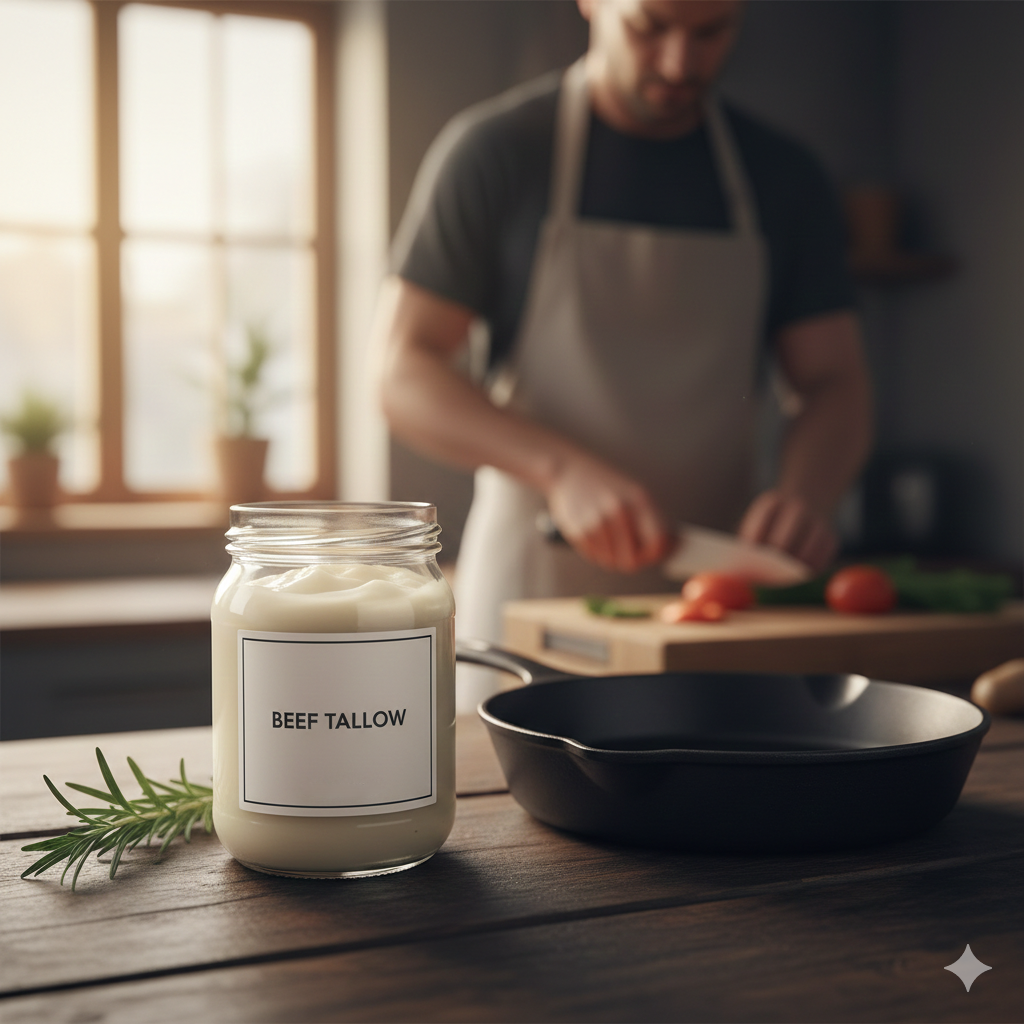
The "Tallow" Comeback: Why Traditional Fats are Trending
This February, consider a pantry audit. Swap out the plastic bottle of yellow vegetable oil for a jar of high-quality, grass-fed tallow.
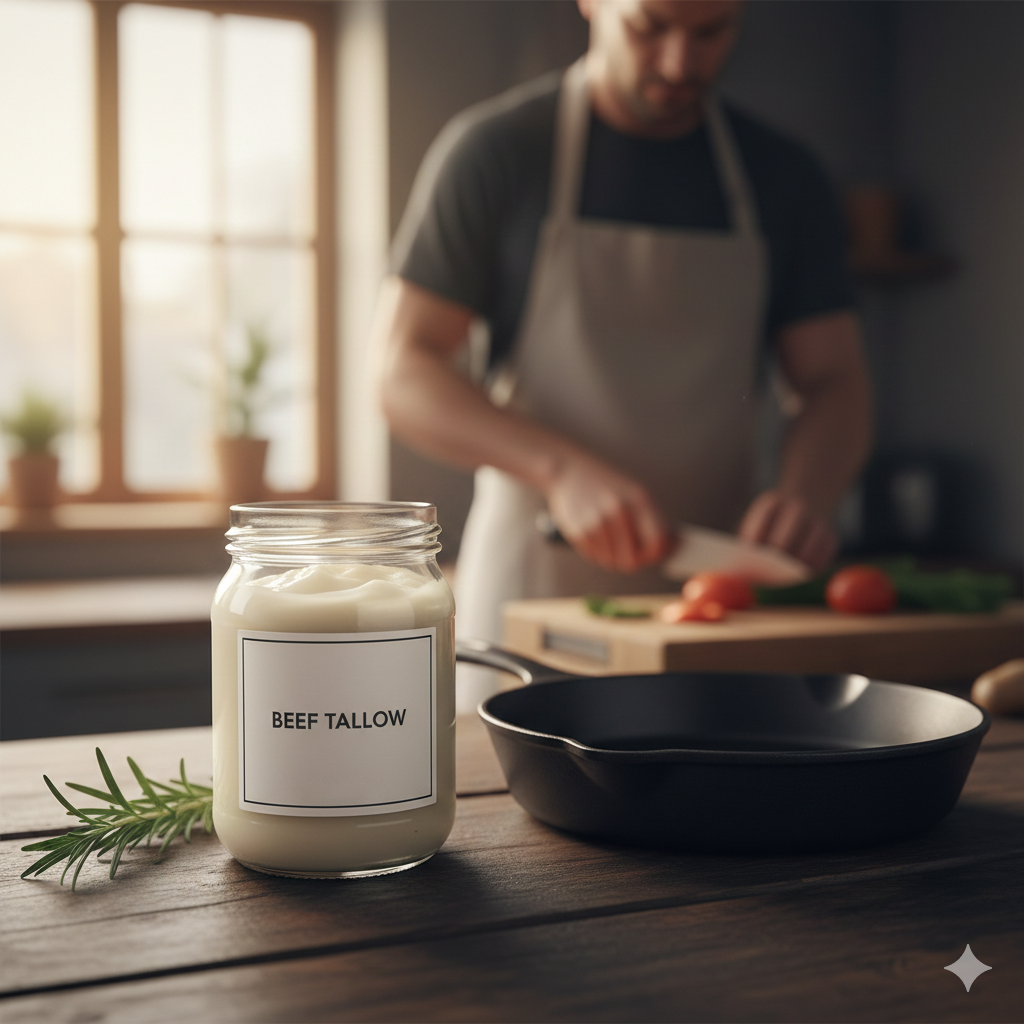
This image was created using AI to avoid copyright issues while conveying the context of this article.
If you walked into a health food store twenty years ago, you would have seen shelves lined with "fat-free" cookies and vegetable oil spreads. Fat was the enemy, and animal fats like lard and tallow were considered the worst of the bunch. But as our understanding of nutrition has evolved, the tide has turned.
In recent months, one of the most surprising trends in the fitness and "ancestral health" space is the return of beef tallow. From professional athletes to home cooks looking for stable cooking oils, people are ditching the highly processed seed oils and returning to the traditional fats our ancestors used for generations.
But is this just a social media fad, or is there a real benefit to bringing tallow back into your kitchen?
What Exactly is Tallow?
Tallow is rendered beef fat. To make it, the fat (usually the "suet" found around the kidneys) is cooked down slowly to remove impurities. What remains is a shelf-stable, nutrient-dense fat that is solid at room temperature.
Unlike lard, which comes from pigs, tallow has a very high smoke point (around 400°F). This makes it one of the safest fats to cook with, as it doesn't break down or become toxic when exposed to high heat.
The Science of Saturated Fat
For decades, we were told that saturated fat was the primary cause of heart disease. However, modern research has shown that the relationship between fat and heart health is much more complex than we once thought. While we still want to avoid "trans fats" (the man-made fats found in fried fast foods), naturally occurring saturated fats like those in tallow play several vital roles in the body:
Hormone Production: Your body needs fat to produce essential hormones, including testosterone and estrogen.
Vitamin Absorption: Vitamins A, D, E, and K are "fat-soluble." If you don't eat enough healthy fats, your body cannot absorb these vitamins, no matter how many vegetables or supplements you take.
Brain Health: Your brain is roughly 60% fat. Saturated fats provide the structural integrity your brain cells need to communicate effectively.
Why Tallow is Winning Over Vegetable Oils
The main reason tallow is making a comeback is the growing concern over highly processed vegetable oils (like soybean, corn, and canola oil). These oils are often high in Omega-6 fatty acids, which can be pro-inflammatory when eaten in large amounts.
Because tallow is mostly saturated and monounsaturated fat, it is much more stable. When you cook with it, you aren't dealing with the oxidation (damage) that happens to fragile vegetable oils. Furthermore, tallow contains Conjugated Linoleic Acid (CLA), a type of fat that has been linked in some studies to improved fat burning and immune function.
Tallow for Your Skin?
The comeback isn't just happening in the kitchen. "Tallow balm" has become a massive trend in the skincare world. Because the fatty acid profile of tallow is very similar to the "sebum" (the oil our own skin produces), it is incredibly moisturizing and soothing for people with sensitive skin or eczema. It is a "whole food" approach to beauty that avoids the chemicals found in modern lotions.
How to Use Tallow at Home
If you want to try tallow, you don't need to overthink it. It has a very mild, slightly savory flavor that enhances almost anything it touches.
Roasting Veggies: Toss your Brussels sprouts or broccoli in melted tallow before roasting. The high smoke point gives them a perfect crunch.
Searing Steak: Use a small amount of tallow in a cast-iron skillet to get a restaurant-quality crust on your protein.
The "Legacy" Breakfast: Fry your eggs in tallow instead of butter or oil for a nutrient-dense start to your day.
The Legacy View
At Legacy Fitness, we often find that the "old ways" were better than the "modern fixes." We moved away from traditional fats in favor of processed oils, and our collective health suffered. Bringing tallow back into your routine isn't about eating a high-fat "keto" diet; it’s about choosing stable, natural, and nutrient-dense fuel for your body.
This February, consider a pantry audit. Swap out the plastic bottle of yellow vegetable oil for a jar of high-quality, grass-fed tallow. It’s a small change that honors the traditions of the past while building a stronger future.
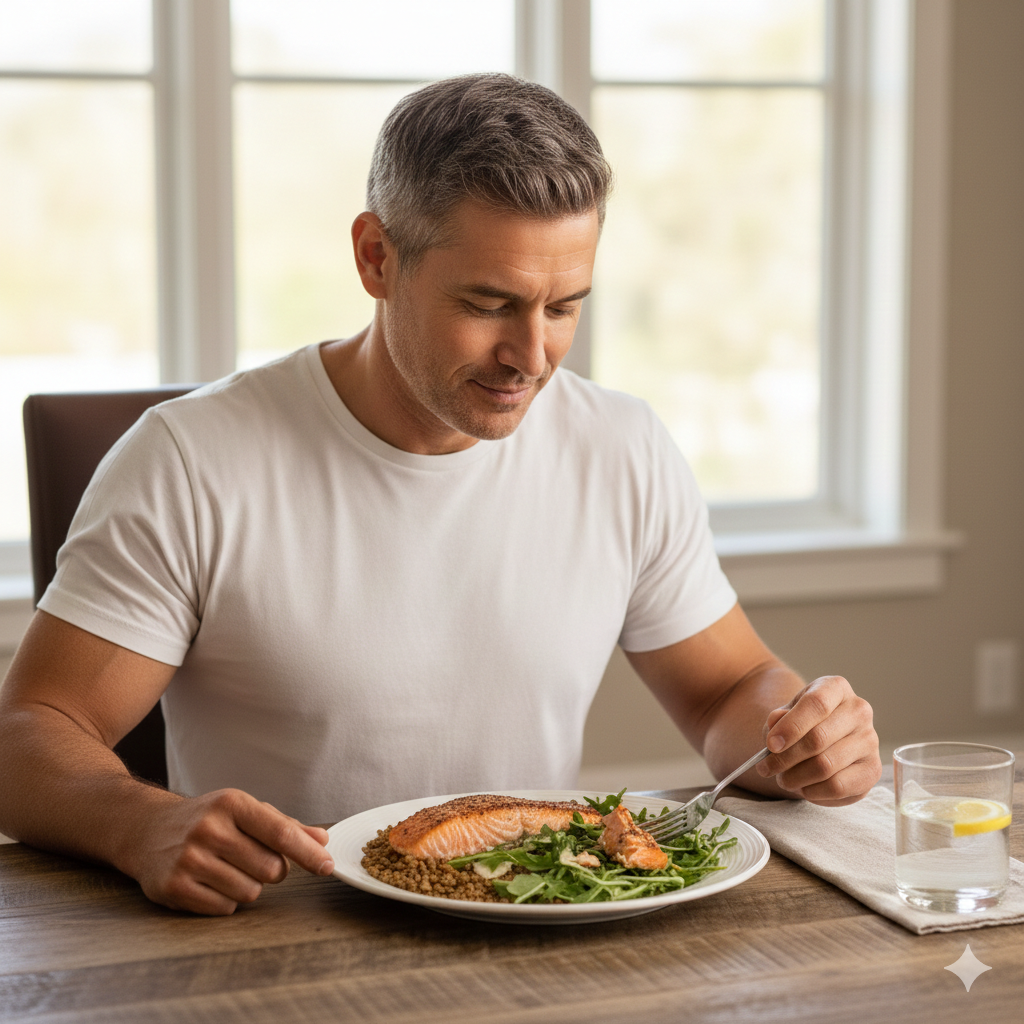
GLP-1 Style Eating: How to Trigger Natural Fullness
When you feed your body the right combination of protein, fermentable fibers, and healthy fats, you are essentially "hacking" your own internal system for success.
Medical Disclaimer: The following information is for educational and informational purposes only and is not intended as medical advice. Always consult with a qualified healthcare professional before making significant changes to your diet or lifestyle, especially if you are taking prescription medications or have a pre-existing medical condition. This article is not a substitute for professional medical treatment for weight loss or metabolic disorders.
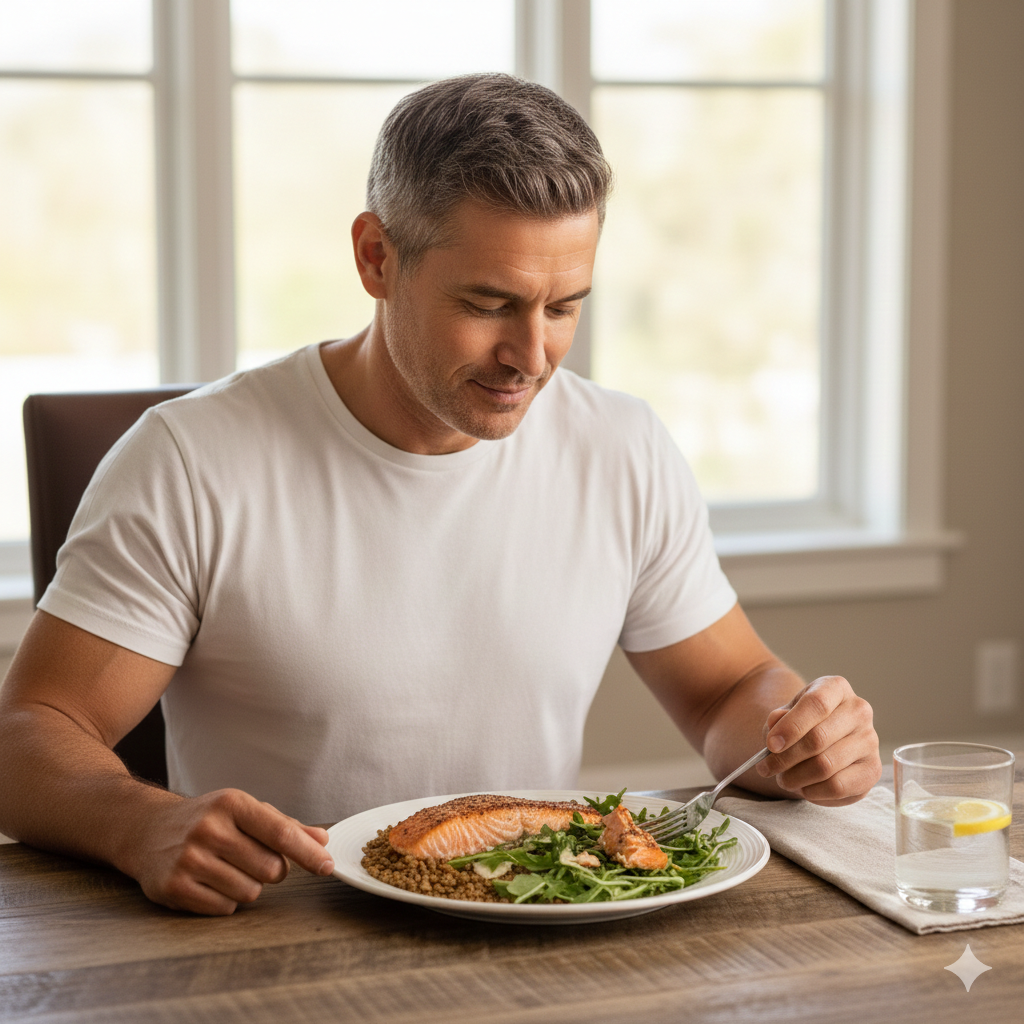
This image was created using AI to avoid copyright issues while conveying the context of this article.
If you have watched the news or scrolled through social media lately, you have likely heard of medications like Ozempic or Wegovy. These drugs have changed the conversation around weight loss by mimicking a hormone in your body called GLP-1 (Glucagon-like Peptide-1). This hormone tells your brain that you are full and tells your stomach to slow down digestion.
While these medications are important tools for many people, there is a fascinating side to the story that often gets ignored. You can actually influence your body’s own production of GLP-1 through the way you eat. By choosing specific foods and following a few simple habits, you can trigger these "fullness signals" naturally.
What is GLP-1 and Why Does It Matter?
GLP-1 is a hormone produced in your gut in response to food. It has three main jobs:
Brain Signal: It tells your hypothalamus (the hunger center of your brain) that you have had enough to eat.
Stomach Speed: It slows down "gastric emptying," meaning food stays in your stomach longer so you feel satisfied for a greater amount of time.
Insulin Response: It helps your pancreas release the right amount of insulin to manage your blood sugar.
When people say they have a "raging appetite" or can't stop snacking, it is often because their GLP-1 signals are quiet. The goal of "GLP-1 style eating" is to turn the volume up on those signals using whole foods.
The Three Pillars of Natural Fullness
1. High-Quality Protein
Protein is the strongest trigger for GLP-1. When you eat protein, your gut cells recognize the amino acids and immediately begin releasing satiety hormones. This is why a breakfast of eggs or Greek yogurt keeps you full much longer than a bagel. To maximize this effect, aim for the 4:1 protein-to-fiber ratio we have been practicing.
2. Fermentable Fibers
Not all fiber is created equal when it comes to GLP-1. "Fermentable" fibers are those that your gut bacteria love to eat. When these bacteria break down fiber, they produce short-chain fatty acids (SCFAs) like butyrate. These SCFAs are direct triggers for your gut to release GLP-1.
Top sources: Oats, barley, beans, lentils, leeks, and slightly under-ripe bananas.
3. Healthy Fats
Specific types of fats, particularly oleic acid (found in olive oil and avocados), have been shown to stimulate GLP-1 release. Adding a healthy fat to your meal acts like an "anchor," keeping the food in your stomach longer and signaling to your brain that the "hunt" for food is over.
The "Fullness" Routine
It isn't just what you eat, but how you eat it. To give your body time to release these hormones, you have to slow down. It takes about 20 minutes for the GLP-1 signal to travel from your gut to your brain. If you finish your entire meal in five minutes, you will finish before your brain even knows you are full.
Try the "Chew and Pause" method. Take a bite, put your fork down, and actually taste your food. This simple habit allows your natural chemistry to catch up with your appetite.
Bitters and Digestion
In many cultures, it is common to start a meal with something bitter, like a small salad of arugula or radicchio. There is science behind this! Bitter compounds can stimulate "bitter taste receptors" in the gut, which have been linked to an increase in GLP-1 secretion. Starting your dinner with a few bitter greens might be the secret to naturally eating less during the main course.
The Legacy View
At Legacy Fitness, we are all about working with your biology instead of against it. You don't have to rely on sheer willpower to reach your goals. When you feed your body the right combination of protein, fermentable fibers, and healthy fats, you are essentially "hacking" your own internal system for success.
This week, focus on these natural signals. Slow down your meals, prioritize your fiber-protein "Power Couple," and listen to your body. When you learn to trigger your own fullness, the "struggle" of dieting starts to disappear.
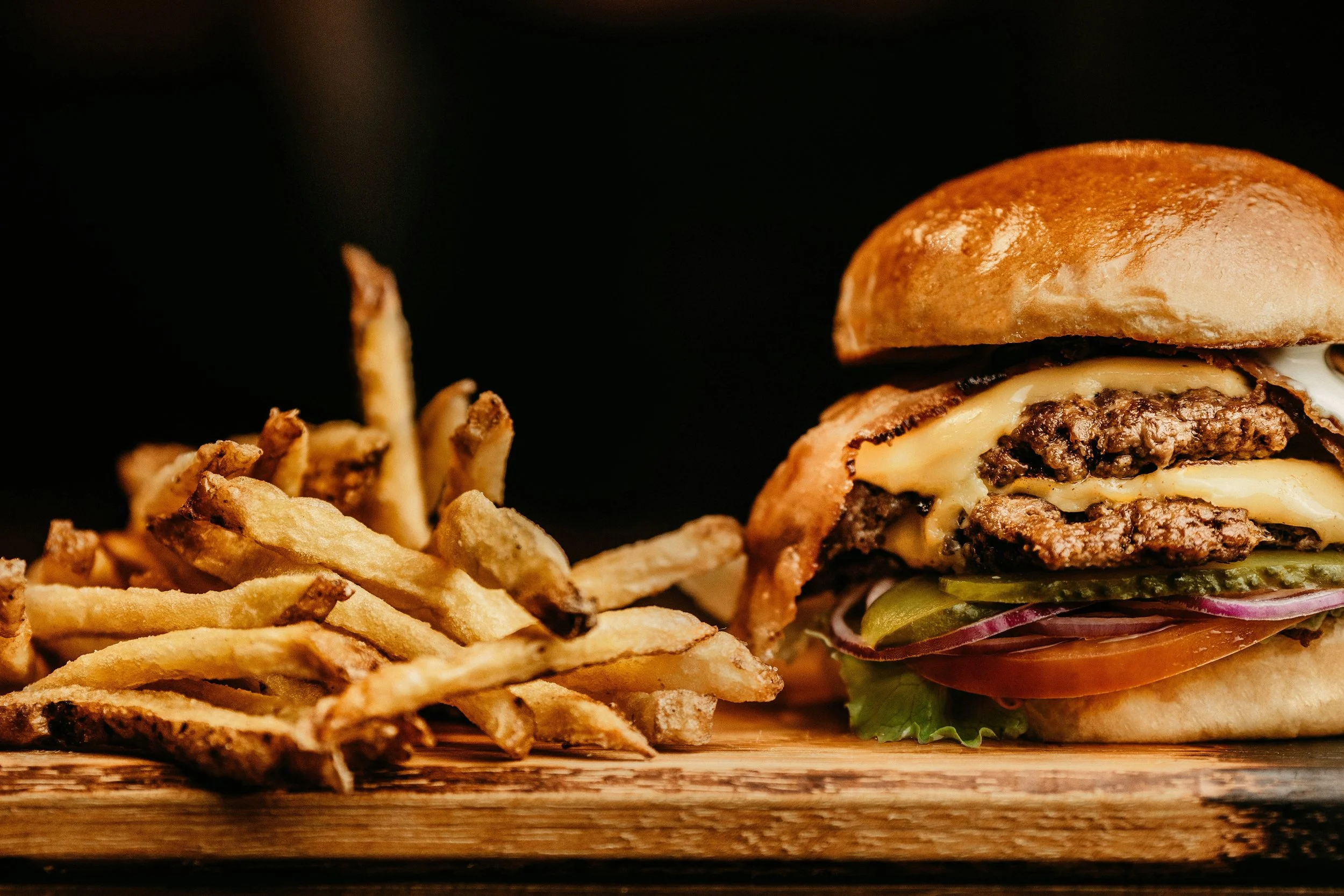
The Glucose Spiking Myth: Understanding the "Carb Curve"
You don't need a monitor on your arm to tell you that you feel better when you eat balanced meals. Don't let the "glucose myth" make you afraid of healthy foods.
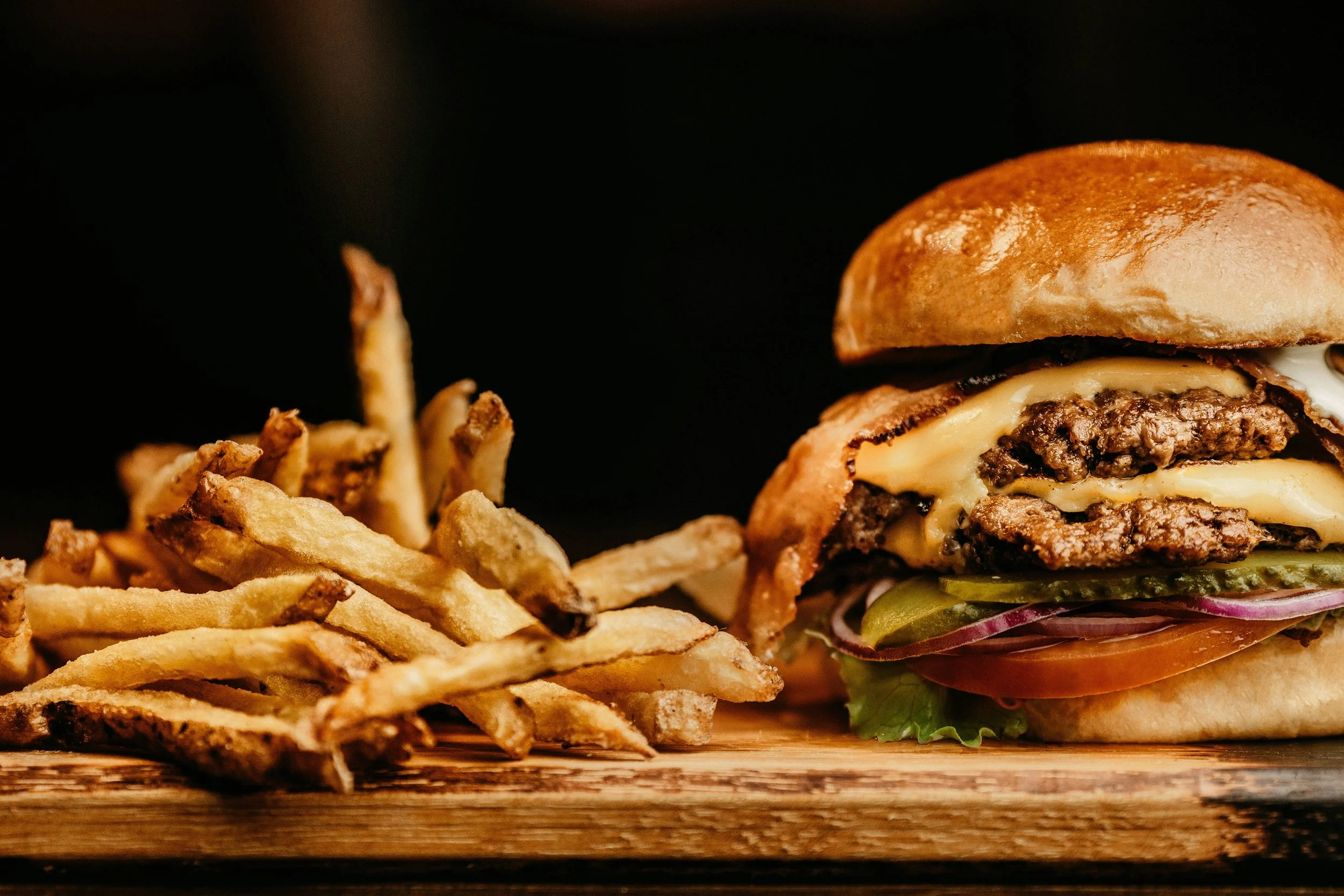
Photo by Jonathan Borba on Unsplash
If you have spent any time on social media lately, you have probably seen people wearing small white circles on their arms. These are Continuous Glucose Monitors (CGMs). Originally designed for people with diabetes, they are now being used by fitness enthusiasts to track how their blood sugar reacts to different foods.
This has led to a lot of fear around "glucose spikes." Many people are now afraid to eat an apple or a bowl of oatmeal because they are worried a spike in blood sugar will lead to instant fat storage or health problems. But it is time to clear the air: glucose spikes are not always the villain.
What is a Glucose Spike, Anyway?
When you eat carbohydrates, your body breaks them down into glucose (sugar), which enters your bloodstream to provide energy. A "spike" is simply a rapid rise in that sugar level. This is a natural, healthy process. If your blood sugar never rose, you would have no energy to walk, think, or lift weights.
The problem isn't the spike itself; it is the uncontrolled roller coaster. When you eat "naked" carbs, like a sugary soda or a piece of white bread on its own, your blood sugar shoots up too fast and then crashes. This crash is what leaves you feeling shaky, hungry, and irritable.
The "Clothed Carb" Strategy
The secret to a healthy metabolism isn't avoiding carbs; it’s learning how to "clothe" them. Think of your carbohydrates as the "fuel" and your protein and fiber as the "insulation."
When you eat a carbohydrate by itself, the fuel burns hot and fast (a spike). But when you pair that carb with protein and fiber (the 4:1 ratio we’ve been discussing), you slow down the absorption. The fuel burns slowly and steadily, giving you energy for hours without the crash.
Why Context Matters
A glucose spike isn't a "one size fits all" event. Your body’s reaction depends on what you are doing.
The Sedentary Spike: If you eat a large bowl of pasta and then sit on the couch for four hours, that glucose has nowhere to go. Your body will likely store it as fat.
The Active Spike: If you eat that same pasta before a heavy lifting session or a long run, your muscles will soak up that glucose like a sponge and use it for performance.
In this case, the spike is actually your friend. It powers your workout and helps with recovery.
Three Ways to Flatten the Curve (Without Cutting Carbs)
Change the Order: Research shows that if you eat your vegetables (fiber) and your protein first, and save your carbohydrates for the end of the meal, you can reduce the glucose spike by up to 70%.
Add Acid: Adding a little vinegar to your salad or lemon juice to your water before a meal can help improve how your body handles the incoming sugar.
The Post-Meal Walk: Remember our talk about NEAT? A simple 10-minute walk after you eat allows your muscles to use that glucose immediately, preventing a massive spike and the subsequent "food coma."
Don’t Fear the Fruit
Lately, fruit has been getting a bad reputation because it contains sugar. But fruit is a whole food. It comes with built-in fiber and water, which naturally slows down the sugar absorption. Unless you are drinking fruit juice (which removes the fiber), an apple or a bowl of berries is a fantastic, healthy choice that your body knows exactly how to handle.
The Legacy View
At Legacy Fitness, we believe in using data to empower you, not to scare you. You don't need a monitor on your arm to tell you that you feel better when you eat balanced meals. Don't let the "glucose myth" make you afraid of healthy foods.
Focus on the 4:1 ratio. Pair your carbs with protein and fiber. Move your body after you eat. When you stop worrying about the "spikes" and start focusing on the "balance," you create a metabolism that is flexible, strong, and built to last.