

The Power of Personal Best: Why Competing With Yourself is the Only Way to Win
Comparison is the thief of progress.

This image was created using AI to avoid copyright issues while conveying the context of this article.
In a world dominated by social media, it is easier than ever to fall into the "Comparison Trap." You scroll through your feed and see people who seem to have the perfect physique, the perfect diet, and the perfect workout routine. You look at where they are and then look at where you are, and suddenly, your progress feels small.
But here is the reality: Comparison is the thief of progress. When you compete against someone else, you are chasing a ghost. You don't know their genetics, their history, or the sacrifices they’ve made behind the scenes. In the Legacy Fitness model, we only care about one metric of comparison: You vs. Yesterday.
The Trap of Social Comparison
When you compare yourself to others, one of two things usually happens:
Discouragement: You see someone "ahead" of you and decide that you'll never get there, so you stop trying.
Complacency: You see someone "behind" you and decide you’re doing "good enough," so you stop pushing.
Both paths lead to a plateau. Your journey isn't a race against the person on the next treadmill; it’s a mission to discover your own potential.
The "Personal Best" Mindset
A "Personal Best" (PB) isn't just about how much weight you can lift once. It is a mindset that applies to every area of your health.
The PB in Consistency: Can you hit your protein goal 5 days in a row instead of 4?
The PB in Recovery: Can you get 7.5 hours of sleep instead of 6?
The PB in Resilience: Can you get back on track within 4 hours of a "bad" meal instead of waiting 4 days?
When you focus on these micro-victories, you create a "positive feedback loop." Every time you beat your previous self, your brain releases dopamine, making you want to do it again. This is how you build a momentum that lasts for years, not just weeks.
Data: Your Shield Against Doubt
The reason we track your weights, your steps, and your macros is to give you a "Record of Truth."
On the days when you feel like you aren't making progress, you can look back at your logs from March 1st. You can see that you are lifting 10% more weight, or that you are more consistent with your water intake. The data proves that you are winning the battle against your former self.
March Reflection: The Version 2.0 You
As we wrap up this month, take a moment to look at your "Personal Bests" from the last 30 days. Forget what anyone else is doing.
Are you more disciplined than you were in February?
Is your "Bridge of Consistency" stronger than it was four weeks ago?
Have you honored your "Must-List" more often than not?
If the answer is yes, then you have won. You are building a legacy, one day and one personal best at a time. Let’s finish the month with one final win.

Training Through Travel: Stay on Track During Spring Break
Your body doesn't have a "Vacation Mode." Here is your tactical guide to staying on track while enjoying your Spring Break.

This image was created using AI to avoid copyright issues while conveying the context of this article.
It is that time of year. The suitcases are coming out, the flights are booked, and Spring Break is finally here. For many, travel feels like a mandatory "pause" button on fitness goals. You might think, "I’m on vacation, so the diet and the workouts don't count." But here is the reality: your body doesn't have a "Vacation Mode." The calories you eat in a different zip code still impact your energy, and the muscles you don't use will still begin to lose their edge.
Traveling doesn't have to mean starting over on April 1st. In March, we’ve built a "Bridge of Consistency," and that bridge can travel with you. Here is your tactical guide to staying on track while enjoying your Spring Break.
1. The "Hotel Room" Minimum
Don't wait to see if the hotel gym is nice (or if it even exists). Assume it won't be. Instead, commit to a "15-Minute Minimum" every morning before the family activities start.
The Routine: 3 rounds of 20 body squats, 15 push-ups, and a 60-second plank.
The Goal: It’s not about hitting a personal record; it’s about maintaining the "habit of movement." When you start your vacation day with a win, you are much more likely to make better food choices at lunch.
2. The "One-Meal" Rule
Vacation food is one of the best parts of travel. You should absolutely enjoy the local cuisine. To do this without the "weight-gain hangover," follow the One-Meal Rule:
Eat a high-protein, low-calorie breakfast (think eggs or Greek yogurt).
Have a high-protein, veggie-heavy lunch (like a grilled chicken salad).
Then, enjoy your dinner. By staying disciplined for two meals, you create a "calorie buffer" that allows you to enjoy a nice dinner and a drink without going over your daily limit.
3. Become a "Walking Tourist"
The easiest way to burn extra calories without "working out" is to walk everywhere. Skip the Uber when the destination is less than a mile away. Explore the city, the beach, or the trails on foot. Aim for 12,000 steps a day. You’ll see more of your destination, and you’ll keep your metabolism humming along while you do it.
4. Pack Your "Emergency" Protein
The hardest part of traveling is finding protein on the go. Airport snacks and gas station stops are usually 100% carbohydrates and fats.
The Fix: Pack a few protein bars, some beef jerky, or individual protein powder servings in your carry-on. Having a high-protein snack available means you won't be forced to eat a processed muffin just because you’re hungry at the gate.
5. Hydration is Non-Negotiable
Travel, especially flying, is incredibly dehydrating. And as we learned earlier this month, dehydration often feels like hunger. Carry a reusable water bottle and finish it before every meal. This will keep your energy high, your digestion moving, and your "false hunger" at bay.
Enjoy the Trip, Keep the Legacy
Spring Break is about making memories, not about being perfect. If you have a day where you eat too much or skip the movement, don't sweat it. Just get back to the "One-Meal Rule" the next morning.
You aren't a "gym person" only when you are at home. You are a fit person everywhere you go. Pack your discipline along with your sunscreen, and you’ll return from vacation feeling refreshed instead of defeated.

Professionalism in Fitness: Treating Your Health Like Your Career
Treat your coach like a consultant. Treat your workouts like a standing meeting with a VIP client. Treat your nutrition like a high-budget project that requires precision.

This image was created with AI to avoid copyright issues while conveying the context of this article.
If you missed a high-stakes board meeting because you "didn't feel motivated," your career would suffer. If you consistently failed to track your department's budget because it was "too much work," you would be replaced. In the professional world, we understand that results are driven by systems, standards, and a commitment to showing up—regardless of how we feel.
Yet, many of the same high-performers who are elite in the office treat their health like an optional hobby. They rely on "inspiration" to get to the gym. They "wing it" with their nutrition. They treat their physical body, the very vehicle that allows them to lead, as a secondary priority.
To reach the next level of your transformation, you have to bridge the gap. It is time to apply the same level of professionalism to your fitness that you apply to your career.
The Standard of "Non-Negotiables"
In your professional life, you have a set of standards. You answer certain emails within 24 hours. You show up for meetings five minutes early. You hit your deadlines. These are your non-negotiables.
In fitness, most people have "negotiable" goals. They hope to work out. They try to eat protein. The moment a work project gets difficult, these goals are the first thing to be sacrificed.
A professional approach means setting a floor, not just a ceiling. Your "floor" is the minimum amount of work you do even on your busiest day. Whether it’s a 15-minute mobility session or hitting a specific protein target, these are the appointments with yourself that you simply do not cancel.
Data and Reporting: Your Personal KPI
Imagine trying to run a company without looking at a profit and loss statement. You would be flying blind.
Your workout and nutrition logs are the "Key Performance Indicators" (KPIs) of your health. When you skip logging, you are failing to report on the most important asset you own. Professionalism in fitness means:
Accurate Tracking: Not "guessing" your intake, but measuring it.
Regular Audits: Using your weekly check-in to review what worked and what didn't.
Objective Analysis: Looking at a "bad" day as a data point to be corrected, not a moral failure.
Managing the "Physical Business"
Every CEO knows that you have to invest in your infrastructure to prevent a collapse. Your heart, your lungs, your muscles, and your brain are your infrastructure.
When you prioritize sleep, hydration, and resistance training, you aren't "taking time away" from work. You are performing essential maintenance. A leader who is well-rested and physically strong makes better decisions, has higher emotional intelligence, and possesses the stamina to outlast the competition.
The Executive Summary
Stop waiting for a "fitness spark." You don't need a spark; you need a schedule.
Treat your coach like a consultant. Treat your workouts like a standing meeting with a VIP client. Treat your nutrition like a high-budget project that requires precision. When you bring the same level of professionalism to the gym that you bring to the office, the results aren't just better, they are inevitable.

The 10-Minute Rule: What to Do When You Have Zero Motivation
When motivation fails, most people simply stay on the couch. If you want to build a legacy of health, you need a strategy that works even when your mood doesn't.

This image was created using AI to avoid copyright issues while conveying the context of this article.
We have all had those days. The alarm goes off, but your body feels like lead. Or you finish a long day at the office, and the very thought of driving to the gym feels like a physical burden. You search for that spark of motivation you had on March 1st, but it is nowhere to be found.
When motivation fails, most people simply stay on the couch. They tell themselves they will "wait until they feel like it" to train. But as we’ve discussed this month, feelings are unreliable. If you want to build a legacy of health, you need a strategy that works even when your mood doesn't.
This is where the 10-Minute Rule comes in. It is the ultimate "emergency brake" for your fitness goals.
The Psychology of the Starting Line
The hardest part of any workout isn't the heavy lifting or the final mile of a run. The hardest part is the first ten minutes.
Our brains are wired for comfort. When you think about a 60-minute workout, your brain sees a huge, painful task. It tries to protect you by making you feel tired or distracted. But your brain has a weakness: it is much easier to negotiate with a small task than a large one.
How the 10-Minute Rule Works
The rule is simple: Tell yourself you only have to do ten minutes.
Put on your gym clothes, drive to the gym, and start your warm-up. Tell yourself that if, after ten minutes of movement, you still feel exhausted and want to quit, you have 100% permission to stop and go home. No guilt. No shame. You showed up and did ten minutes.
Here is what almost always happens:
The Blood Flow Effect: Once you start moving, your heart rate increases and oxygen begins to reach your brain and muscles. This naturally wakes you up.
The Momentum Shift: By the time the ten minutes are up, the "mountain" of the workout feels like a "hill." You’ve already done the hardest part (starting), so you might as well finish.
The Identity Win: Even if you do decide to go home after ten minutes, you still win. You proved to yourself that you are the kind of person who honors their commitments, even when it’s hard.
A Strategy for "Low-Power" Days
Some days, you really are physically drained. Maybe you didn't sleep well or your stress is at a 10/10. On those days, the 10-Minute Rule allows you to "check the box" without burning out.
Instead of a heavy lifting session, use your ten minutes for:
Mobility and stretching.
A brisk walk on the treadmill.
A bodyweight circuit in your living room.
As your coach, I would much rather see a "low-power" ten-minute session in your log than a blank space. It keeps the habit alive and ensures that the next day, when your energy is back, you don't have to fight the "Snowball Effect" to get started again.
Finish March Strong
We are entering the final stretch of the month. The "New Year" energy is a distant memory. This is where the 10-Minute Rule becomes your best friend.
Next time you feel like skipping, don't argue with your brain. Just give me ten minutes. You’ll be surprised at how often that small start leads to your best finish.

The Snowball Effect: How One Missed Workout Leads to a "Lost" Week
A legacy isn't built on a series of perfect weeks. It is built on the ability to get back on the horse after a fall.

This image was created using AI to avoid copyright issues while conveying the context of this article.
It starts with a simple excuse. You have a late meeting, you’re feeling a bit tired, or the weather is gloomy. You tell yourself, "I’ll just skip today and make it up tomorrow." But tomorrow comes, and you feel a strange sense of "heavy" momentum. Because you missed yesterday, the "streak" is broken. Suddenly, it feels easier to skip Tuesday, too. By Wednesday, you feel like the whole week is a wash, so you decide to "just start fresh on Monday."
This is the Snowball Effect. In the world of fitness, momentum is your most valuable asset. When you have it, everything feels easy. When you lose it, even the smallest task feels like climbing a mountain. In March, we want to learn how to stop the snowball before it turns into an avalanche.
The Psychology of the "Broken Streak"
There is a psychological phenomenon called the "What the Heck" effect. It happens when we perceive that we have failed a goal, so we decide to fail "all the way."
If you miss one workout, your brain tells you that your "perfect" week is ruined. Since it’s no longer perfect, your brain decides there is no point in trying at all. You stop logging your food, you stay up late, and you stop drinking your water. You aren't just missing a gym session; you are abandoning your identity as a fit person for seven days.
How to Stop the Snowball
If you want to reach your long-term goals, you have to get comfortable with being "imperfect." Here are three strategies to stop a single miss from ruining your entire week.
The "Never Miss Twice" Rule
This is the golden rule of consistency. Life happens. You will miss a workout eventually. But the goal is to never let one miss turn into two. One miss is an accident; two misses is the start of a new habit. If you miss Monday, your only job on Tuesday is to show up, even if it’s just for twenty minutes.
The "Short-Session" Pivot
Most people skip their workout because they think, "If I can't do the full hour, it isn't worth it." This is a lie. If you are short on time or energy, don't skip, pivot. Do ten minutes of bodyweight movements in your living room. Go for a 15-minute brisk walk. By doing something, you keep the "neural pathway" of exercise alive. You are telling your brain: "I am still the kind of person who moves every day."
Separate Your Habits
Just because you missed a workout doesn't mean you have to miss your nutrition goals. Your gym sessions and your kitchen habits are two separate departments in the business of your health. If the "Gym Department" is closed for the day, make sure the "Nutrition Department" is working overtime.
Log your food, hit your protein, and drink your water. When you stay on track with your food, you feel better, which makes it much easier to get back to the gym the following day.
Building a "Resilient" Legacy
A legacy isn't built on a series of perfect weeks. It is built on the ability to get back on the horse after a fall.
In March, expect that things won't always go according to plan. But instead of letting a missed workout snowball into a lost week, draw a line in the sand. Every "next decision" is a chance to restart. Don't wait for Monday. The best time to stop the snowball is right now.

The Launchpad Ritual: Making Your Weekly Check-in a Non-Negotiable Habit
By showing up every single week, you are proving to yourself that you are committed to the long-term legacy of your health.

This image was created using AI to avoid copyright issues while conveying the context of this article.
We’ve talked about the "Black Box" problem and why skipping your data stalls your progress. We know that honesty is the best policy. But knowing why you should do something and actually doing it are two different things.
Most people skip their weekly check-in because they treat it as an afterthought. They wait until the last minute, and suddenly it feels like a chore. At Legacy Fitness, I often schedule check-ins for the middle of the week (like Wednesday or Thursday) to ensure I can give you my full attention and feedback before the weekend begins.
Whatever your assigned day is, we have to change the way you look at the 24 hours leading up to it. That day isn’t just another day on the calendar; it is the "Launchpad" for your success. If you want to stay consistent, you need to make your weekly check-in a non-negotiable ritual.
1. The "Anchor" Mindset
If you wait for a "good time" to check in, you’ll never find it. You have to create the time. Look at your assigned check-in day and pick a specific anchor in your routine for that day or the evening before.
By anchoring the check-in to a task you already do, you remove the "mental load" of remembering. It becomes a natural part of your weekly flow.
The Stack: "After I finish my Wednesday morning coffee, I will open my app and complete my check-in."
The Stack: "Before I sit down for dinner on Tuesday night, I will send my data to my coach."
2. Prepare Your "Launchpad"
A good check-in requires data. If you have to spend 20 minutes hunting for your weight, looking up your sleep scores, and trying to remember how your workouts felt, you are going to get frustrated.
Keep your "Launchpad" ready throughout the week:
Daily Logging: Log as you go. Remember, five minutes a day saves you an hour of guessing later.
The "Notes" App: If you had a particularly high-stress day or a great win on a Tuesday, jot it down in your phone right then.
The "Pre-Check" Habits: Take your measurements or photos the morning of your check-in so the information is fresh and ready to go.
3. Review, Reflect, and Reset
The check-in isn't just for me; it is for you. This is your time to be the CEO of your own body. As you fill out the form, ask yourself three questions:
Review: What did I actually do this week? (Look at your logs).
Reflect: How did I feel? Was I hungry? Was I tired?
Reset: What is one thing I will do better starting tomorrow?
This process "resets" your brain. Even if you had a rough few days, the act of checking in draws a line in the sand. It closes the door on the past and opens the door to a fresh start.
4. The "No-Matter-What" Rule
In March, we are building "Musts." Your check-in is a "Must."
If you had a terrible few days and ate off-plan, check in anyway. If you didn't lose any weight, check in anyway. If you are busy and stressed, check in anyway. The only "bad" check-in is the one that doesn't happen. By showing up every single week, you are proving to yourself that you are committed to the long-term legacy of your health.
When we keep the lines of communication open, we take the guesswork out of the equation. Let’s use your Launchpad to keep the momentum moving.

Building a Support System: How to Tell Your Family and Friends About Your Fitness Goals
Fitness can feel like a lonely path, but it doesn't have to be.

This image was created using AI to avoid copyright issues while conveying the context of this article.
One of the hardest parts of a fitness journey doesn't happen in the gym or the kitchen. It happens at the dinner table, the backyard BBQ, or the Friday night happy hour.
When you decide to change your life, you are changing the "unspoken rules" of your social circle. If you were always the person who ordered the extra appetizers or the second round of drinks, your friends and family might feel a little uncomfortable when you suddenly say "no thanks."
Without a plan, this social pressure can lead to "sabotage," not because your loved ones don't want you to succeed, but because your change makes them look at their own habits. In March, we want to build a bridge of support, not a wall of isolation. Here is how to communicate your goals so your "tribe" helps you win.
1. Own the "Why," Not Just the "What"
If you tell your friends, "I’m on a diet," they will likely try to talk you out of it. They’ll say things like, "It’s just one night," or "You look fine, you don't need to lose weight." Instead, tell them why it matters. Move the conversation from "restriction" to "performance."
Instead of: "I can't eat that."
Try: "I’ve been working with a coach to get my energy back so I don't crash every afternoon. I’m really focused on how I feel right now, so I’m sticking to my plan tonight."
When you frame it as an investment in your health and energy, it is much harder for people to argue with you. You aren't "missing out"; you are "leveling up."
2. Ask for a Specific Type of Help
Most people actually want to be supportive, but they don't know how. If you don't give them a role, they might try to "help" by encouraging you to "relax" and eat the cake.
Give them a specific job.
To a spouse: "I’m really trying to hit my protein goals this week. It would be a huge help if we could keep the high-protein snacks on the middle shelf where I can see them."
To a friend: "I’m committed to my 7am workout tomorrow. Can we grab an early dinner so I can get to bed on time?"
When you ask for help, you turn your support system into teammates rather than obstacles.
3. The "Non-Negotiable" Announcement
If you are attending a big social event, don't wait until you are standing in front of the buffet to decide what to do. Mention it ahead of time.
A simple text to the host can save a lot of awkwardness: "Hey, I'm really looking forward to seeing everyone! Just a heads up, I’m following a specific nutrition plan right now, so I’ll probably stick to the lean proteins and veggies, or I might bring a dish to share that fits my goals."
By announcing it early, you remove the "surprise" factor. You’ve already made the decision, so there is nothing to debate when you arrive.
4. Lead by Example, Not by Lecture
The best way to get people on your side is to show them how good you feel. You don't need to explain why processed sugar is bad or why they should be lifting weights. Just show up with high energy, a positive attitude, and a clear sense of purpose.
Eventually, the people who used to pressure you to "just have one" will start asking you, "Hey, what have you been doing? You look like you have so much energy lately." That is the moment your support system truly solidifies.
Building a Legacy Together
Fitness can feel like a lonely path, but it doesn't have to be. By being clear, kind, and firm about your boundaries, you teach people how to support the new version of you.
In March, let's stop hiding our goals and start sharing our vision. When your inner circle knows what you are striving for, they become the wind at your back instead of the weight on your shoulders.

The Science of Accountability: Why Human Coaching Beats AI Apps Every Time
Apps don’t care if you fail.

Ironically, this image was created using AI to avoid copyright issues while conveying the context of this article.
In 2026, it seems like there is an app for everything. You can find an AI "coach" that will write your workouts, track your macros, and even send you a "motivational" text at 6am. On paper, it sounds perfect. It is cheap, it is fast, and it lives right on your phone.
But there is a major problem: Apps don’t care if you fail.
If you skip a workout on an app, the app doesn’t feel disappointed. It doesn’t wonder why your stress levels are high. It just sends another automated notification that you will probably swipe away and ignore. This is why, despite the thousands of fitness apps available, the obesity rate continues to climb and most people quit their programs within three weeks.
To see real, lasting change, you don’t need more "artificial" intelligence. You need human accountability. Here is the science behind why a human coach will always outperform an algorithm.
1. The "Observer Effect"
There is a well-known concept in psychology called the Hawthorne Effect. It suggests that individuals modify their behavior when they know they are being observed.
When you log your food into an app that no one sees, there is no social "cost" to eating a box of cookies. But when you know that a real person, your coach, is going to look at that log on Monday morning, your behavior changes. You stop and think before you act. That "pause" is where your discipline is built. Knowing that someone is "watching the scoreboard" makes you play the game differently.
2. Context vs. Calculation
An AI app is a calculator. If you tell an app you had a "bad" day, it might suggest you eat 500 fewer calories tomorrow to "make up for it."
A human coach does the opposite. A human looks at the context. I might see that you had a high-stress meeting, only slept four hours, and were dealing with a family emergency. I know that cutting your calories even further would be a disaster for your metabolism and your mental health. A human coach knows when to push you and, more importantly, when to tell you to rest. AI sees numbers; humans see lives.
3. The Empathy Gap
Algorithms cannot provide empathy. When you hit a plateau (and everyone does) an app can only give you a new set of numbers. It can’t talk you through the frustration. It can’t remind you of how far you’ve come when you feel like a failure.
Human coaching provides a psychological safety net. When you struggle, I am there to help you navigate the "why" behind the struggle. We solve the problem together. An app just waits for you to input data; a coach actively helps you create the data you want.
4. Hard-Wired for Connection
Humans are social creatures. We are biologically wired to seek approval and connection within our "tribe." For thousands of years, we have achieved difficult goals by working in small, committed groups.
When you hire a coach, you aren’t just buying a workout plan. You are entering into a partnership. You are much less likely to let down a partner than you are to let down a piece of software. That sense of "not wanting to let the team down" is a powerful fuel that carries you through the months when motivation is low.
The Bottom Line
Technology is a great tool, but it is a terrible master. Use your apps to track your data, but use a human coach to change your life. If you are tired of the "start-stop" cycle of fitness apps, it might be time to invest in the science of human accountability.
Data tells us what happened. Coaching tells us what to do next.

The Mid-Month Slump: How to Refresh Your Motivation When the "New Year" Feeling Is Gone
Don't panic about the slump. Expect it. Acknowledge it. And then, use your systems to walk right through it.

This image was created using AI to avoid copyright issues while conveying the context of this article.
It is officially the middle of March. If you made it this far with your new fitness routine, congratulations. You are ahead of about 80% of the population.
But let's be honest: the "New Year, New Me" energy from January is gone. The excitement of starting a new program in February has faded. Now, you are just in the "grind." The workouts feel a little heavier. The meal prep feels like a little more work. The initial "quick wins" on the scale might be slowing down.
This is the Mid-Month Slump. It is the danger zone where many people start to skip a workout here, or "forget" to log a meal there, until the whole program quietly fades away.
In March, we built a "Bridge of Consistency." Now, we need to make sure you have the mental power to cross it. Here is how to refresh your motivation when the hype is gone and the real work begins.
1. Shift from "Motivation" to "Identity"
Motivation is a feeling. It comes and goes like the weather. If you only exercise when you feel like it, you will never be consistent.
To beat the slump, you have to stop relying on motivation and start relying on identity. You have to stop asking, "Do I want to go to the gym?" and start stating, "I am a person who goes to the gym." When your fitness is part of who you are, just like brushing your teeth or showing up for your job, you don't need a blast of motivation to do it. You just do it because it is on your "Must-List" for the day.
2. Reconnect with Your "Deep Why"
Take a look back at your goals from January. Many people write things like, "I want to lose 20 pounds."
That is a "shallow why." It isn't strong enough to pull you out of bed on a Tuesday when you are tired. To refresh your dedication, you need to find your "deep why."
Why do you want to lose 20 pounds? So I can fit into my clothes again.
Why do you want to fit into your clothes again? So I can feel confident when I make presentations at work.
Why do you want to feel confident at work? So I can get that promotion and build a better future for my kids.
Now that is a why that can beat the slump. When you connect your daily workout to the future you are trying to build, it stops feeling like a chore and starts feeling like an investment.
3. Set a "Micro-Challenge" for this Week
Sometimes, you are in a slump because the long-term goal feels too far away. Your body transformation is a marathon. To keep your head in the game, you need to set up a few "sprints."
Set a micro-challenge just for this week. Pick something you have total control over:
The Logging Sprint: I will log 100% of my meals, including snacks, for seven days straight.
The Protein Peak: I will hit my exact protein target, every day.
The Step Sprint: I will hit 12,000 steps every day this week, no matter what.
By setting a small, seven-day goal, you can get a quick win that reminds you of what you are capable of. It gives you a blast of accomplishment that can carry you through the rest of the month.
Discipline Starts When Motivation Ends
In March, the hype is gone, and that is a good thing. The hype was a temporary engine. Now, you are fueled by something stronger: your discipline, your identity, and your "deep why."
Don't panic about the slump. Expect it. Acknowledge it. And then, use your systems to walk right through it. You are building something that lasts, and the work you do now is what matters the most.

Micro-Victories: Finding the Small Wins in Your Workout Logs When the Scale Isn't Moving
Here is the truth about body transformation: the scale is a "lagging indicator." It is often the last thing to move.

This image was created using AI to avoid copyright issues while conveying the context of this article
It is a Tuesday morning. You have been working hard for two weeks. You have logged every meal, hit every workout, and prioritized your sleep. You step on the scale, expecting a big reward, but the number is exactly the same as it was last Monday.
For many people, this is the moment they quit. They think, "Why am I doing all this work if nothing is changing?"
But here is the truth about body transformation: the scale is a "lagging indicator." It is often the last thing to move. If you only look at that one number, you are missing the most exciting part of your journey. To stay motivated in March, you have to learn how to hunt for Micro-Victories. These are the small, measurable wins hidden inside your workout logs that prove you are getting better, even when the scale is being stubborn.
The Problem with Scale Obsession
Your weight can fluctuate by three to five pounds in a single day based on water retention, salt intake, stress, and even how well you slept. The scale doesn't know the difference between fat, muscle, and water.
If you are lifting weights and eating high protein, you are likely losing fat and building muscle at the same time. Because muscle is more dense than fat, the scale might stay the same even though your clothes are fitting better and your body is changing shape. This is why we look at your logs for the "real" proof.
Where to Find Your Micro-Victories
When the scale won't budge, open your workout app and look for these three things. These are the signs that you are winning.
Increased Strength (The "Power" Win)
Did you lift five pounds more on your bench press than you did last week? Did you manage to do eight reps of squats instead of six? These are Micro-Victories. Every time you add a pound or a rep, you are forcing your body to adapt. That adaptation requires energy, which eventually comes from your fat stores. If you are getting stronger, you are changing your metabolism.
Improved Density (The "Efficiency" Win)
Look at your rest periods. Did you finish your workout five minutes faster than usual? Or did you feel less "winded" between sets? This means your cardiovascular system and your recovery ability are improving. You are becoming a more efficient machine. That is a massive victory that the scale will never show you.
Better Form (The "Skill" Win)
Maybe the weight didn't go up, but the movement felt "smoother." Maybe you stayed more upright during your lunges or felt your muscles working harder. Mastering the skill of exercise is a prerequisite for long-term growth. When you move better, you can eventually lift heavier, which leads to better results.
The "Non-Scale" Journal
In addition to your workout numbers, I want you to look at your life. Ask yourself these questions:
Is my energy more stable throughout the afternoon?
Am I sleeping through the night without waking up?
Is my "brain fog" starting to clear up at work?
Is my wedding ring feeling a little looser on my finger?
These are all signs that your internal health is improving. These wins are actually more important than the scale because they are the foundation for a life that lasts.
Celebrate the Process
In March, I want to challenge you to stop being a "scale slave." Every time you log a workout where you did one thing better than before, I want you to count that as a win.
When you accumulate enough Micro-Victories, the scale eventually has no choice but to follow. Focus on the work, celebrate the small gains, and trust the data. You are getting better every single day, the log proves it.

The "I’m Too Busy to Log" Myth: Time-Saving Hacks for Tracking Your Progress
We lead busy lives. Between demanding careers, family commitments, and trying to squeeze in a workout, adding "data entry" to the list can feel like the straw that breaks the camel's back.

This image was created using AI to avoid copyright issues while conveying the context of this article.
"I just don't have the time."
In the world of fitness coaching, this is the most common reason given for skipping nutrition and workout logs. We lead busy lives. Between demanding careers, family commitments, and trying to squeeze in a workout, adding "data entry" to the list can feel like the straw that breaks the camel's back.
But here is the reality: logging doesn't take as much time as you think it does. In fact, most people spend more time scrolling through social media in a single morning than they would need to log an entire day of food and training. The "busy" excuse is usually less about time and more about a lack of a system.
If we want to reach your goals in March, we have to stop viewing logging as a chore and start seeing it as a high-speed tool. Here are five time-saving hacks to help you log your data in less than five minutes a day.
1. Use the "Recent" and "Copy" Functions
Most people are "creatures of habit." You likely eat the same four or five breakfasts and lunches on a rotating basis. You don't need to search for "eggs" and "spinach" every single morning.
In almost every tracking app, there is a "Recent" or "Frequent" list. Better yet, use the "Copy from Yesterday" function. If you ate the same chicken salad today that you had yesterday, logging it should take exactly two taps of your thumb. Total time: 5 seconds.
2. The "Barcode Scanner" is Your Best Friend
Stop typing. If your food comes in a package, even a healthy one like a bag of frozen vegetables or a container of Greek yogurt, use the barcode scanner on your phone. It automatically pulls in the calories and macronutrients without you having to search through a database of ten thousand different brands. Total time: 10 seconds.
3. Log Your Workout During Your Rest Periods
Some people try to remember their whole workout and log it when they get home. By then, they’ve forgotten the weight they used on the third set or how many reps they actually finished.
Instead, log your set immediately after you finish it while you are resting. You have 60 to 90 seconds of downtime anyway. Use 15 of those seconds to input your numbers. This ensures 100% accuracy and means that when you walk out of the gym, your "work" is already done. Total time: 0 extra minutes.
4. Pre-Log Your Day
If you know what you are going to eat for lunch and dinner, log it in the morning (or even the night before). This does two things:
It saves you from having to think about it later when you are tired.
It acts as a "budget." If you see that your planned dinner leaves you with 30 grams of protein to fill, you’ll know exactly what to grab for a snack in the afternoon.
5. Don’t Let "Perfect" Be the Enemy of "Done"
If you are at a restaurant and can't find the exact dish in your app, don't give up and skip the day. Find something close, or just log the main components (e.g., "6oz Grilled Chicken" and "Side Salad").
As your coach, I would much rather see a "close guess" than a blank page. A blank page tells me nothing. A "close guess" keeps your habit alive and gives us a ballpark figure to work with.
The ROI on Five Minutes
Think about the "Return on Investment" (ROI) here. If spending five minutes a day logging ensures that the 60 minutes you spend in the gym actually produces results, isn't that a smart use of time?
Logging isn't about adding a new job to your day. It’s about making sure your hard work actually pays off. In March, let's stop saying we are "too busy" and start being too smart to guess.

Why Data is Your Friend: The Hidden Psychology of Logging Your Food and Workouts
If you want to change your body, you have to change your relationship with the truth.

This image was created using AI to avoid copyright issues while conveying the context of this article.
If you want to change your body, you have to change your relationship with the truth. Most people think they know how much they eat and how hard they train. But research shows that, on average, people underestimate their calorie intake by about 30% and overestimate their physical activity by nearly the same amount.
This isn't because people are lying. It’s because our brains are designed to be efficient, not accurate. We remember the salad we had for lunch, but we forget the three handfuls of almonds we grabbed while making dinner. We remember the heavy set of squats, but we forget the extra-long rest periods spent scrolling on our phones.
This is where logging comes in. Logging your nutrition and workouts isn't just about "counting numbers." It is about creating a clear, honest picture of your reality so that we can actually make progress.
The Psychology of the Log
When you write something down, it changes how you think about it. This is a psychological concept called "self-monitoring." By tracking your food and gym sessions, you move your actions from your subconscious mind to your conscious mind.
Awareness precedes change: You cannot fix a problem you haven’t identified. When you log your food, you start to see patterns. You might notice that every Tuesday you are starving by 4:00 PM, or that you always skip your last exercise on leg day.
The "Pause" Button: The act of opening an app or a notebook to log a snack creates a "micro-pause." In that moment, you move from impulsive eating to intentional eating. It gives you a second to ask: "Does this actually help me reach my goal?"
The "Why" for the Coach
As your coach, I am essentially a pilot trying to fly a plane. Your workout and nutrition logs are my instrument panel. If the dials are blank, I am flying blind.
If you tell me, "I’m eating healthy but not losing weight," I don't have enough information to help you. Are you eating too much "healthy" fat? Are you missing your protein targets? Is your "healthy" lunch secretly packed with hidden calories?
When you log, I can see the whole story. I can see if your energy is dipping because you aren't eating enough carbs before your workout. I can see if your strength is stalling because you haven't increased your weights in three weeks. Data allows us to make small, surgical adjustments instead of wild guesses.
Getting Over the "I Don't Want to See It" Phase
Many clients stop logging when they have a "bad" day. They feel guilty, so they hide the evidence. But that is exactly when you should log.
A log is not a judge; it is a map. If you get lost on a road trip, you don't throw away the GPS. You use it to find your way back to the main road. If you eat a meal that wasn't on the plan, log it anyway. It takes the power away from the "slip-up" and turns it into a simple data point.
Start Small
If logging feels overwhelming, remember that it doesn't have to be perfect to be effective. Start by logging just your protein and your main lifts. As you get faster at it, add the rest.
In March, let's commit to the data. Let’s stop guessing and start knowing. When we have the facts, we have the power to change the outcome.

The Bridge from February: How to Turn Last Month’s "Tries" into This Month’s "Musts"
We made it to March. For many people, this is the month where the "New Year" excitement finally starts to fade.

We made it to March. For many people, this is the month where the "New Year" excitement finally starts to fade. In January, everyone is motivated. In February, most people try their best to keep up. But March is often where the wheels fall off. The weather might still be cold, the initial "spark" is gone, and life starts to get in the way.
However, at Legacy Fitness, we look at March differently. March is not the end of a resolution; it is the "bridge" month. It is the time when we move from "trying" to "doing." It is the month where we take the habits we practiced in February and turn them into non-negotiable parts of who we are.
If you want to make sure your progress doesn’t stall, you need to change your mindset. You have to stop treating your fitness like a temporary project and start treating it like a professional commitment.
The Problem with "Trying"
Think about the language we use. When we say, "I’m trying to get to the gym," we are giving ourselves an out. We are saying that if something else comes up, it is okay to skip. "Trying" is based on how we feel in the moment.
"Musts," on the other hand, are based on your identity. You don’t "try" to brush your teeth in the morning; you just do it because that is who you are. You don't "try" to show up for your job; you go because it is a requirement. To see real, lasting change in your body and your energy levels, your fitness habits need to move into that "must" category.
Building the Bridge: Three Steps to Consistency
How do we actually make that jump? It comes down to three specific strategies to bridge the gap between February and the rest of your year.
Review Your February Wins (And Your Misses)
You cannot improve what you do not measure. Take a look back at your logs from last month. Which workouts did you enjoy the most? Which days were the hardest to stay on track?
Don't judge yourself for the days you missed. Instead, look at them like a scientist. If you missed every Tuesday workout, maybe Tuesday isn't the right day for the gym. If you ate great until 3:00 PM and then crashed, maybe your lunch wasn't big enough. Use that data to build a better plan for March.The "Non-Negotiable" List
In March, I want you to pick three things that are "musts." These should be simple enough that you can do them even on your worst day. For example:
► I will hit my protein goal every single day.
► I will walk for 20 minutes, no matter what.
► I will log every meal in my tracker.
When these become "musts," you stop debating with yourself. You don't ask, "Should I log this?" You just do it because it’s on the list.Focus on the "Next Best Decision"
A lot of people quit in March because they have one "bad" day and feel like they ruined everything. They think the bridge is broken.
The bridge isn't broken; you just took a step back. Your only job is to make the "next best decision." If you ate a doughnut at the office, the next best decision is a high-protein lunch, not giving up on the whole day. Discipline is simply the act of stacking good decisions on top of each other, one at a time.
Why March Matters for Your Future Self
The habits you solidify this month are the ones that will carry you into the summer and beyond. If you can stay disciplined when the "newness" has worn off, you are building a version of yourself that is resilient and strong.
You aren't just working for the body you want in April; you are building the health you need for the next twenty years. Let’s stop "trying" to be fit and start being the person who never misses a "must."

The Power of Perspective: Measuring Success Beyond the Scale
Many people make the mistake of letting one single number determine if they "succeeded" or "failed" this month: The Scale.

This image was created using AI to avoid copyright issues while conveying the context of this article.
As we reach the final days of February, many people make the mistake of letting one single number determine if they "succeeded" or "failed" this month: The Scale. If the weight hasn't moved as much as you hoped, it’s easy to feel defeated. But at Legacy Fitness, we know that the scale is the least reliable narrator of your fitness story. It cannot measure the muscle you’ve built, the metabolic flexibility you’ve gained, or the mental resilience you’ve developed.
To build a legacy, you have to shift your perspective and look at the "Non-Scale Victories" (NSVs) that truly dictate your long-term health.
The Scale's Blind Spots
Your weight is a measurement of everything in your body: water, bone, muscle, organs, and the food you ate last night. It doesn't distinguish between "fat loss" and "weight loss."
Water Fluctuations: One high-sodium meal or a stressful day can cause your body to hold onto 3–5 pounds of water. This isn't fat, yet it can ruin your mood if you're scale-obsessed.
Body Recomposition: As we’ve pushed our Strength-First approach this month, you may be losing fat and gaining muscle simultaneously. Since muscle is denser than fat, the scale might stay the same even though you are physically smaller and metabolically healthier.
The Metrics That Actually Matter
This week, I want you to audit your progress using these four "High-Value" metrics instead:
Clothing Fit: Are your pants looser? Does your favorite shirt feel different in the shoulders? This is a much better indicator of body composition changes than a digital readout.
Energy and Mood: How do you feel at 3:00 PM? Are you still reaching for a third coffee, or has your 4:1 P:F ratio stabilized your energy? Success is having the vitality to play with your kids or focus through a long meeting.
Strength and Stamina: Did you lift more this week than you did on Feb 1st? Can you walk up a flight of stairs without getting winded? These functional wins are the "Biological Age" markers that determine your longevity.
Consistency Score: How many "B-grade" workouts did you show up for when you didn't want to? Building the habit of showing up is a more significant win than any five-pound weight loss.
The "Long-View" Mindset
A legacy isn't built in 28 days. It is built over decades. If you have improved your relationship with food, understood the power of fiber, and moved your body more than you did in January, you have won February.
Perspective is the difference between quitting on March 1st and entering the new month with momentum. When you stop looking at the scale as a judge and start looking at your habits as a foundation, the results become inevitable.
The Legacy View
At Legacy Fitness, we celebrate the person who keeps going. We celebrate the person who finds joy in the movement and strength in the struggle.
This week, step off the scale. Look in the mirror, check your energy, and acknowledge the work you’ve put in. You are building a stronger, more resilient version of yourself—and no scale can measure that.

Pre-Spring Strength Phase: Priming the Engine for March
We don't believe in "quick fixes." We believe in phases. This phase is about becoming the most capable version of yourself.

Photo by Soumitra Sengupta on Unsplash
As February winds down, many people make the mistake of looking toward March and thinking only about "leaning out" or "toning up" for the warmer weather. But at Legacy Fitness, we know that the most aesthetic and functional results come from a foundation of power.
Before we shift gears into the high-activity months of spring, we are entering the Pre-Spring Strength Phase. This is a dedicated window to push your limits, increase your lifting intensity, and ensure that your metabolic "engine" is as large as possible. If you want to look different in April, you have to build the strength in February.
Why a Strength Phase Now?
March and April usually bring more outdoor activities, more travel, and more social commitments. That often means our training becomes more "random." By dedicating the end of February to a structured strength phase, you are accomplishing two things:
Metabolic Priming: We've discussed how muscle burns more calories than fat. By building more muscle now, you make the fat-loss phase of spring infinitely easier.
Neuromuscular Efficiency: This phase teaches your brain to recruit more muscle fibers. This "wakes up" your body, making every future movement, from a hike to a HIIT class, more effective.
The "Big 3" Focus
During this phase, we move away from complex accessory work and return to the foundational movements that provide the biggest "bang for your buck."
The Squat (Lower Body Power): Building the glutes and quads for metabolic demand.
The Press (Upper Body Structure): Developing the shoulders and chest for postural integrity.
The Pull (Back and Core Stability): Balancing out "Tech Neck" and building a strong posterior chain.
The 4:1 Fueling Strategy for Strength
You cannot build strength in a deep calorie deficit. To see progress in this phase, your 4:1 Protein-to-Fiber ratio is your protective shield.
The Protein Buffer: When you lift heavy, you create significant muscle breakdown. You need high-quality protein at every meal to ensure you are repairing that tissue rather than just "burning out."
The Fiber Anchor: Heavy lifting can increase systemic inflammation. High fiber intake from cruciferous vegetables and beans acts as an anti-inflammatory, keeping your joints feeling good even as the weights get heavier.
How to Execute the Pre-Spring Phase
Lower the Reps, Raise the Weight: Instead of doing 12–15 reps, move into the 5–8 rep range. This challenges your central nervous system and triggers muscle growth.
Rest More: Strength training requires recovery between sets. Give yourself 2–3 minutes of rest so you can perform each set with maximum quality.
Track Everything: A legacy is built on data. If you lifted 100lbs last week, try for 105lbs this week. Small, incremental wins lead to massive transformations.
The Legacy View
At Legacy Fitness, we don't believe in "quick fixes." We believe in phases. This phase is about becoming the most capable version of yourself. When the sun starts staying out longer in March, you won't just be "thinner," you’ll be stronger, faster, and more resilient.
This week, step up to the rack with intention. The work you do in the dark days of February will be exactly what you see in the mirror come spring.

The Pelvic Floor & Power: The Missing Link in Your Core
Pelvic floor health is about dignity, power, and long-term spinal safety.

This image was created using AI to avoid copyright issues while conveying the context of this article.
When we talk about "core strength," most people immediately think of a six-pack. We picture sit-ups, planks, and leg raises. But your core is actually a 3D canister, and the most important part of that canister isn't the front, it’s the bottom.
Welcome to the Pelvic Floor. For a long time, pelvic floor health was only discussed in the context of women’s health after pregnancy. But in the world of high-performance fitness, we now know that a strong, functional pelvic floor is the secret to true power for both men and women. If you want to lift heavier, run faster, and protect your spine, you need to stop ignoring the floor of your core.
The Canister Concept
Think of your torso as a soda can.
The Top: Your diaphragm (your breathing muscle).
The Sides: Your abdominal muscles and back muscles.
The Bottom: Your pelvic floor.
If the bottom of that can is weak or "leaky," you cannot create internal pressure. Without that pressure, your spine isn't stable. When you go to lift a heavy grocery bag or a barbell, a weak pelvic floor can lead to lower back pain, hernia issues, or even "accidents" during high-impact movements like jumping or heavy squatting.
Power Starts from the Bottom Up
Your pelvic floor muscles are responsible for supporting your organs and controlling internal pressure. When you brace your core for a big movement, the pelvic floor should lift and contract to meet the pressure coming down from your diaphragm.
If this timing is off, your power "leaks" out. You might find that your strength has plateaued, or that you feel "unstable" even when your abs feel tight. By learning to engage the pelvic floor, you create a solid foundation that allows your bigger muscles (like your glutes and legs) to produce maximum force.
How to Train Your Floor
Training the pelvic floor isn't about doing a thousand "Kegels" while sitting at a red light. It’s about integration.
360-Degree Breathing: Instead of breathing into your chest, practice breathing into your ribs and belly. As you inhale, feel your pelvic floor relax and drop. As you exhale, feel a gentle lift.
The "Pre-Lift" Engagement: Before you start a heavy lift, exhale slightly and imagine "lifting" the muscles between your sit-bones. This creates a solid base before the weight even moves.
Core Integration: Movements like Dead Bugs or Bird-Dogs are perfect for learning how to keep the pelvic floor active while your arms and legs are moving.
Nutrition for Muscle Integrity
Just like every other muscle we’ve discussed this February, your pelvic floor requires the right fuel. The 4:1 Protein-to-Fiber ratio is vital here.
Protein: Provides the collagen and amino acids needed for the connective tissues and muscles of the pelvic bowl to stay resilient.
Fiber: This is a secret pelvic floor hack! Chronic constipation and straining are the #1 enemies of pelvic floor health. By hitting your fiber goals, you ensure smooth digestion, which prevents the unnecessary pressure that weakens these muscles over time.
The Legacy View
At Legacy Fitness, we don't just care about the muscles people can see. We care about the muscles that keep you functional for life. Pelvic floor health is about dignity, power, and long-term spinal safety.
This week, stop thinking of your core as just your "abs." Start thinking of it as a complete system. Breathe deep, lift from the bottom, and build a foundation that is truly unbreakable.

The "Strength-First" Fat Loss Secret: Why Muscle is Your Metabolic Engine
Step off the treadmill for a moment and head to the weight rack. Build the engine that burns fat for you.

Photo by Anastase Maragos on Unsplash
When most people decide they want to lose weight, their first instinct is to head straight for the treadmill. They think of fat loss as a simple math problem: "How many calories can I burn in this hour?" While cardio is great for your heart, if you want to change your body composition and keep the weight off forever, you need to flip the script. You need a Strength-First approach.
In the fitness world, we often say that "cardio burns calories while you're doing it, but muscle burns calories while you're sleeping." As we move into the third week of February, it’s time to understand why lifting weights is the most efficient way to "fix" a slow metabolism and achieve lasting fat loss.
The Engine Analogy
Think of your metabolism like the engine of a car. A small, four-cylinder car doesn't need much gas to sit idling in the driveway. But a large, powerful V8 engine burns a lot of fuel even when it isn't moving.
Muscle tissue is metabolically "expensive." It takes a lot of energy just to maintain muscle on your frame. By lifting weights and building even a small amount of lean muscle, you are essentially "upgrading your engine." You increase your Basal Metabolic Rate (BMR), which means you burn more calories every single hour of the day, whether you are at your desk or watching TV.
The Cardio Trap
The problem with a cardio-only approach to fat loss is that your body is incredibly adaptive. If you do the same 30-minute run every day, your body becomes more efficient at it. Eventually, you burn fewer calories doing the same amount of work.
Even worse, if you are in a large calorie deficit and only doing cardio, your body may actually break down muscle tissue for energy. You might weigh less on the scale, but you end up with a higher body fat percentage and a slower metabolism. This is the "skinny fat" trap that leads to the inevitable weight regain.
EPOC: The Afterburn Effect
When you lift heavy weights or perform intense resistance training, you create a state called Excess Post-exercise Oxygen Consumption (EPOC).
Because strength training causes micro-tears in the muscle and stresses your central nervous system, your body has to work overtime for hours, sometimes even days, to repair itself and return to balance. This "afterburn" means your metabolism stays elevated long after you’ve left the gym.
The Strength-First Nutrition Strategy
To build the "metabolic engine" of muscle, you have to feed it. This is where our 4:1 Protein-to-Fiber ratio becomes your best friend.
Protein: Provides the amino acids necessary to repair and build the muscle tissue you challenged during your workout.
Fiber: Keeps your digestion efficient and prevents the inflammation that can sometimes come with a high-intensity lifting program.
By prioritizing strength, you stop "dieting" and start "fueling." You'll find that you can actually eat more food while getting leaner, because your new muscle mass is using those calories for repair instead of storing them as fat.
How to Transition to Strength-First
Prioritize the Lift: If you have 60 minutes, spend 45 minutes on resistance training (squats, presses, rows) and 15 minutes on cardio.
Focus on Progressive Overload: Don't just pick up the same pink dumbbells every week. You must give your body a reason to change. Try to add a little more weight or do one more rep than you did last time.
Don't Fear "Bulking": For most people, building enough muscle to look "bulky" takes years of dedicated, specific effort. For the average person, strength training simply leads to a tighter, firmer, and more "toned" appearance.
The Legacy View
At Legacy Fitness, we want you to be strong and capable. Strength is the foundation of longevity. It protects your joints, improves your bone density, and keeps your metabolism young.
This February, step off the treadmill for a moment and head to the weight rack. Build the engine that burns fat for you. When you put strength first, the fat loss becomes a side effect of becoming a more powerful version of yourself.
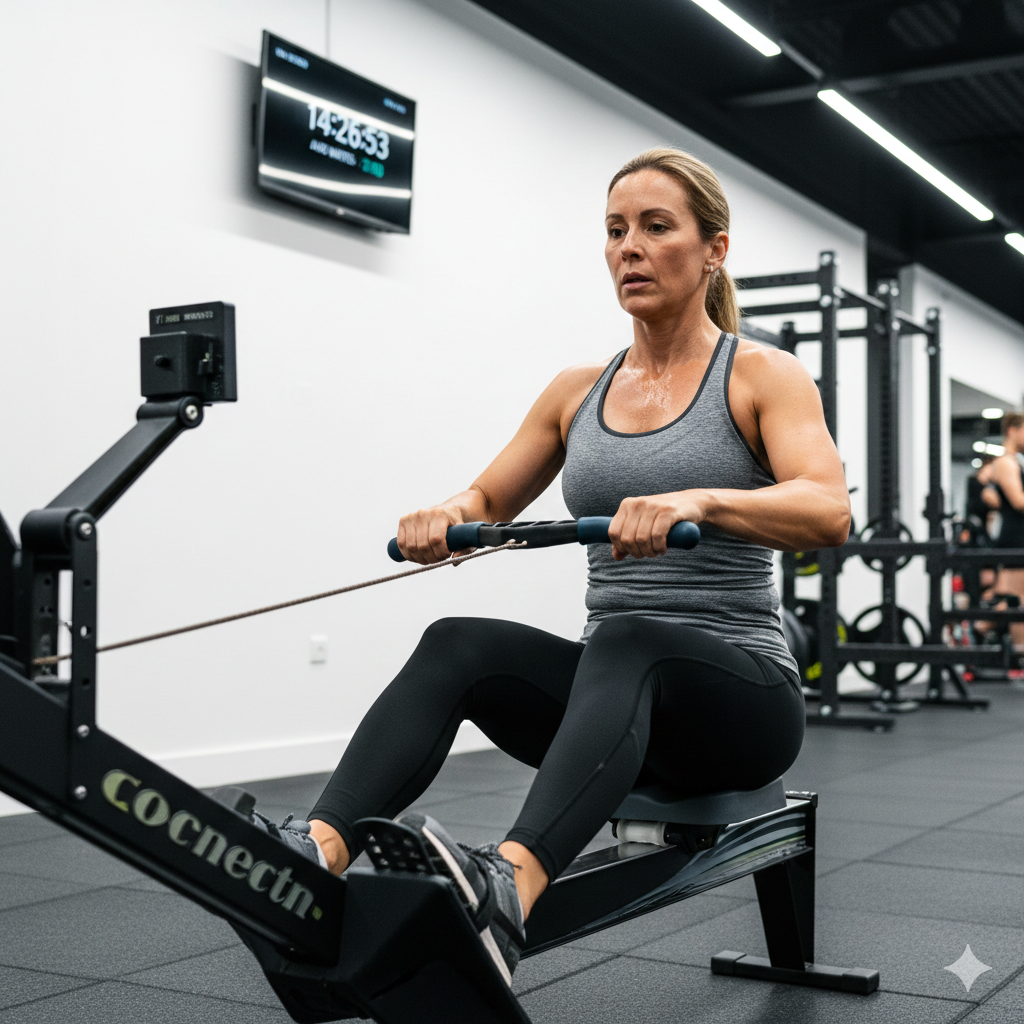
Zone 4 "VO2 Max" Training: The Longevity Secret
This week, find your "top gear." Push yourself for just a few minutes, feel your heart beat, and know that you are building a legacy of a strong, capable heart.
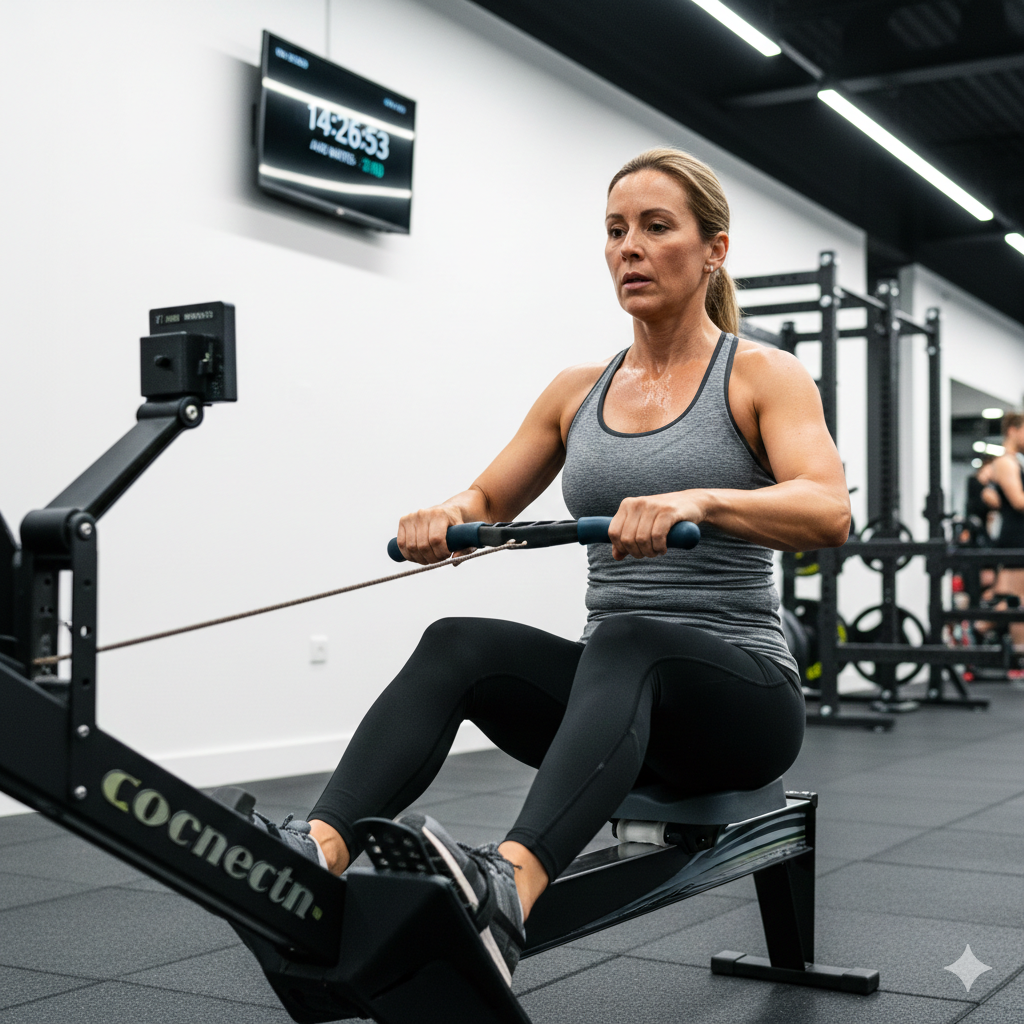
This image was created using AI to avoid copyright issues while conveying the context of this article.
When we talk about cardio, we usually think of two extremes. There is the slow, steady pace of a long walk (Zone 2) or the all-out, heart-pounding sprint of a HIIT class. But there is a specific type of training that falls right in the middle, at the edge of your comfort zone, that is becoming the gold standard for long-term health.
This is Zone 4 training, and its primary goal is to improve your VO2 Max.
If you want to live a long, vibrant life, your VO2 Max is perhaps the most important number you’ve never tracked. In the fitness world today, we view it as a "crystal ball" for longevity. Here is why you need to find your "top gear" once a week.
What is VO2 Max?
VO2 Max is a measurement of the maximum amount of oxygen your body can use during intense exercise. Think of it like the engine size of a car. A car with a larger engine can go faster and handle hills with less strain than a car with a tiny engine.
As we age, our VO2 Max naturally declines. However, the higher your starting point is, the more "functional reserve" you have as you get older. Research has shown that individuals with a high VO2 Max have a significantly lower risk of nearly all chronic diseases. It isn't just about being a better runner; it is about being a more resilient human.
Entering Zone 4
To improve this "engine size," you have to push into Zone 4. This is an intensity level where you are breathing hard, hard enough that you can only speak in one or two-word bursts. You aren't sprinting as fast as you can, but you are moving with purpose.
In Zone 4, your heart is beating at roughly 80% to 90% of its maximum. This level of stress forces your heart to become more efficient at pumping blood and your muscles to become better at extracting oxygen.
The "One Hard Session" Rule
The best part about VO2 Max training is that you don't need to do it every day. In fact, you shouldn't. Because it is high-intensity, it requires significant recovery time.
For most people, one "hard" session per week is enough to see incredible gains. This fits perfectly into a busy February schedule. You do your strength training, you get your daily NEAT, and once a week, you open up the throttle for a short period.
How to Do a VO2 Max Workout
You don't need a track or a fancy treadmill. You can do this on a bike, a rowing machine, or even a steep hill. A classic, proven protocol is the "4x4" method:
Warm-up: 5-10 minutes of easy movement.
The Work: 4 minutes of Zone 4 effort (hard but sustainable for the full 4 minutes).
The Rest: 3 minutes of very easy walking or pedaling.
Repeat: Do this for a total of 4 rounds.
This workout takes less than 40 minutes, but the impact on your cardiovascular age is massive.
Nutrition for the High-Intensity Hit
High-intensity work like Zone 4 training burns through glycogen (the sugar stored in your muscles). This is the one time when having a "clothed carb" meal about 90 minutes before your session is incredibly helpful.
Afterward, return to your 4:1 protein-to-fiber ratio to help your heart and muscles recover. The protein repairs the tissue, while the fiber ensures your blood sugar stays stable after the intense effort.
The Legacy View
At Legacy Fitness, we aren't just training for how you look next month; we are training for how you move twenty years from now. Improving your VO2 Max is like putting money into a high-interest savings account for your future self.
This week, find your "top gear." Push yourself for just a few minutes, feel your heart beat, and know that you are building a legacy of a strong, capable heart.

Consistency Over Intensity: Why the "B Grade" Workout Wins
At Legacy Fitness, we aren't looking for a six-week transformation. We are looking for a sixty-year legacy.

This image was created using AI to avoid copyright issues while conveying the context of this article.
In the world of fitness, we are often sold the image of the "perfect" workout. We see videos of people drenched in sweat, pushing their absolute limits, and collapsing on the floor after an hour of high-intensity training. While that kind of intensity has its place, it is actually the biggest reason people quit in February.
When you believe that a workout only "counts" if it is a 10 out of 10 in intensity, you set yourself up for failure. Life is messy. Some days you are tired, some days the kids are sick, and some days work runs late. If your only option is "perfect intensity" or "nothing," you will eventually choose nothing.
At Legacy Fitness, we advocate for a different path: The "B Grade" Workout.
The Math of the Long Game
Let’s look at the math. If you do a "perfect" 10/10 workout once a week because that is all the energy you have, but you skip the other six days, your total volume is low.
However, if you do a "B Grade" workout—maybe a 6/10 or 7/10 effort—four or five times a week, you win. Consistency creates a compounding effect. Just like saving money, it isn't the one big deposit that builds wealth; it is the small, frequent deposits made over decades. In fitness, a 20-minute walk on a day you "don't feel like it" is worth more than a 90-minute gym session once a month.
The "All-or-Nothing" Trap
The "All-or-Nothing" mindset is a psychological trap. In January, your motivation is high enough to climb over that wall. But by February 6th, that motivation starts to dip. If you feel like you can't give 100%, you might feel like there is no point in trying at all.
This is where the "Consistency" mindset saves you. Your goal shouldn't be to have the best workout ever; your goal should be to not break the chain. If you planned to lift weights for an hour but only have twenty minutes, do ten minutes of squats and push-ups. You kept the habit alive. You proved to your brain that you are the kind of person who shows up, regardless of the circumstances.
Intensity is the Topping, Consistency is the Cake
Think of your fitness journey like a cake. Consistency is the actual cake: the foundation, the substance, and the part that actually feeds you. Intensity is the frosting. Frosting is great, and it makes the cake better, but you cannot have a meal made of only frosting. You will get sick and burn out.
If you focus on showing up consistently, your "base level" of fitness rises. Eventually, your "easy" days will be more productive than your "hard" days used to be. But this only happens if you stay in the game long enough to see the results.
How to Practice Consistency This Week
Lower the Bar: If you are feeling overwhelmed, give yourself permission to do a "half-workout." Just get to the gym or put on your shoes. Usually, once you start, you’ll do more than you planned.
Focus on the "Show Up" Goal: Make your goal for the week "I will move for 20 minutes every day," rather than "I will burn 500 calories."
Celebrate the "B Grade": Be proud of the days you worked out even when you were tired. Those are the workouts that actually build your character and your legacy.
Maintaining the Momentum
We’ve spent the last few days talking about NEAT and the P:F Ratio. These are tools designed to help you stay consistent. NEAT keeps you moving without the stress of a "workout," and the 4:1 P:F ratio keeps your energy stable so you don't feel too exhausted to train.
When you combine smart nutrition with the habit of simply showing up, you become unstoppable. You stop being a "seasonal" athlete and start becoming a "lifetime" athlete.
The Legacy View
At Legacy Fitness, we aren't looking for a six-week transformation. We are looking for a sixty-year legacy. That legacy is built on the days when you did a "mediocre" workout instead of sitting on the couch. It is built on the walks you took when it was cold outside.
This February, stop chasing perfection. Chase the streak. Stay consistent, stay moving, and let the intensity take care of itself when the time is right.

The Longevity Walk: Putting Your 10,000 Steps to Work
The "Longevity Walk" isn't just about moving from point A to point B. It’s about using specific techniques to turn a simple walk into a full-body health treatment.

Photo by Caspar Rae on Unsplash
As January comes to a close, you might be feeling the urge to "level up" your fitness. We’ve talked about the "Zone 2" trend in Walking for Longevity: The 2026 'Zone 2' Trend, but now it is time to look at how to make every single step count toward your future self. For years, we’ve been told that "10,000 steps" is the magic number for health. While that is a great goal, the quality of those steps matters just as much as the quantity.
In 2026, the "Longevity Walk" isn't just about moving from point A to point B. It’s about using specific techniques to turn a simple walk into a full-body health treatment. To build a legacy of mobility and independence, you need to treat your daily walk with the same intention as a session in the gym. When done correctly, walking is the ultimate "maintenance" tool for your heart, your joints, and your mind.
The "Power Stride" Technique
Most people walk with a "shuffling" gait, especially when they are tired or looking at their phones. Shuffling doesn't engage your muscles and can actually lead to tight hips and back pain. The "Longevity Walk" requires a Power Stride.
Heel-to-Toe: Focus on landing softly on your heel and "rolling" the foot forward to push off with your toes. This engages the muscles in your arches and calves.
The Glute Squeeze: As your leg goes back, give your glute a small squeeze. This helps open up the front of your hips, which get tight from sitting.
The Arm Swing: Don't keep your hands in your pockets. Swing your arms from the shoulders. This cross-body movement helps "massage" your spine and increases the calories you burn.
The "Interval" Secret
You don't have to walk at a fast pace the entire time. In fact, research shows that "intermittent" walking is even better for your metabolism. Try the 3-2-1 Method during your next 20-minute walk:
3 Minutes: Normal, comfortable pace.
2 Minutes: Brisk walk (you should be breathing a little harder).
1 Minute: As fast as you can walk without running.
Repeating this cycle three or four times "wakes up" your heart and forces your body to adapt to different levels of stress. It turns a boring walk into a mini-cardio session that is easy on your joints but great for your heart.
Walking for Brain Health
One of the most powerful benefits of the Longevity Walk is what it does for your head. Walking has been shown to increase "BDNF" (Brain-Derived Neurotrophic Factor). Think of BDNF like "Miracle-Gro" for your brain cells. It helps you learn faster and protects against memory loss as you age.
To get the most brain benefit, try to walk in a "complex" environment like a park or a trail rather than a treadmill. Navigating uneven ground and looking at nature forces your brain to stay "engaged" and improves your balance. In a world where we spend so much time looking at screens (as we discussed in Why Your 'Smart Ring' Might Be Lying to You), this "unplugged" movement is vital for your mental health.
The Consistency Milestone
As we move into February, the Longevity Walk is your "safety net." Even on the days when you can't get to the gym or your meal prep falls apart, you can always walk. It is the one habit that requires no equipment and no cost, but pays the highest dividends for your health. This January, don't just "get your steps in." Put them to work. Walk with purpose, walk with power, and walk for the person you want to be thirty years from now.