

Pre-Spring Strength Phase: Priming the Engine for March
We don't believe in "quick fixes." We believe in phases. This phase is about becoming the most capable version of yourself.

Photo by Soumitra Sengupta on Unsplash
As February winds down, many people make the mistake of looking toward March and thinking only about "leaning out" or "toning up" for the warmer weather. But at Legacy Fitness, we know that the most aesthetic and functional results come from a foundation of power.
Before we shift gears into the high-activity months of spring, we are entering the Pre-Spring Strength Phase. This is a dedicated window to push your limits, increase your lifting intensity, and ensure that your metabolic "engine" is as large as possible. If you want to look different in April, you have to build the strength in February.
Why a Strength Phase Now?
March and April usually bring more outdoor activities, more travel, and more social commitments. That often means our training becomes more "random." By dedicating the end of February to a structured strength phase, you are accomplishing two things:
Metabolic Priming: We've discussed how muscle burns more calories than fat. By building more muscle now, you make the fat-loss phase of spring infinitely easier.
Neuromuscular Efficiency: This phase teaches your brain to recruit more muscle fibers. This "wakes up" your body, making every future movement, from a hike to a HIIT class, more effective.
The "Big 3" Focus
During this phase, we move away from complex accessory work and return to the foundational movements that provide the biggest "bang for your buck."
The Squat (Lower Body Power): Building the glutes and quads for metabolic demand.
The Press (Upper Body Structure): Developing the shoulders and chest for postural integrity.
The Pull (Back and Core Stability): Balancing out "Tech Neck" and building a strong posterior chain.
The 4:1 Fueling Strategy for Strength
You cannot build strength in a deep calorie deficit. To see progress in this phase, your 4:1 Protein-to-Fiber ratio is your protective shield.
The Protein Buffer: When you lift heavy, you create significant muscle breakdown. You need high-quality protein at every meal to ensure you are repairing that tissue rather than just "burning out."
The Fiber Anchor: Heavy lifting can increase systemic inflammation. High fiber intake from cruciferous vegetables and beans acts as an anti-inflammatory, keeping your joints feeling good even as the weights get heavier.
How to Execute the Pre-Spring Phase
Lower the Reps, Raise the Weight: Instead of doing 12–15 reps, move into the 5–8 rep range. This challenges your central nervous system and triggers muscle growth.
Rest More: Strength training requires recovery between sets. Give yourself 2–3 minutes of rest so you can perform each set with maximum quality.
Track Everything: A legacy is built on data. If you lifted 100lbs last week, try for 105lbs this week. Small, incremental wins lead to massive transformations.
The Legacy View
At Legacy Fitness, we don't believe in "quick fixes." We believe in phases. This phase is about becoming the most capable version of yourself. When the sun starts staying out longer in March, you won't just be "thinner," you’ll be stronger, faster, and more resilient.
This week, step up to the rack with intention. The work you do in the dark days of February will be exactly what you see in the mirror come spring.
The Pelvic Floor & Power: The Missing Link in Your Core
Pelvic floor health is about dignity, power, and long-term spinal safety.
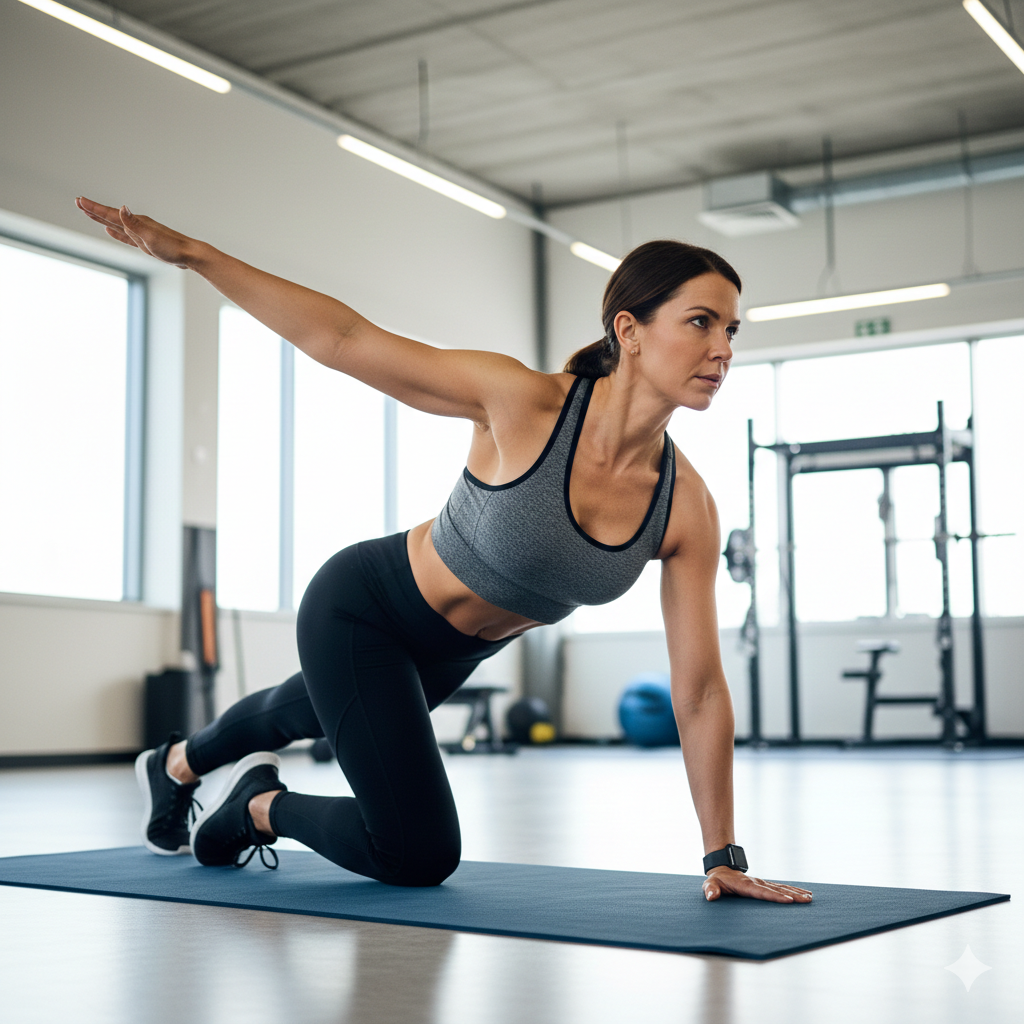
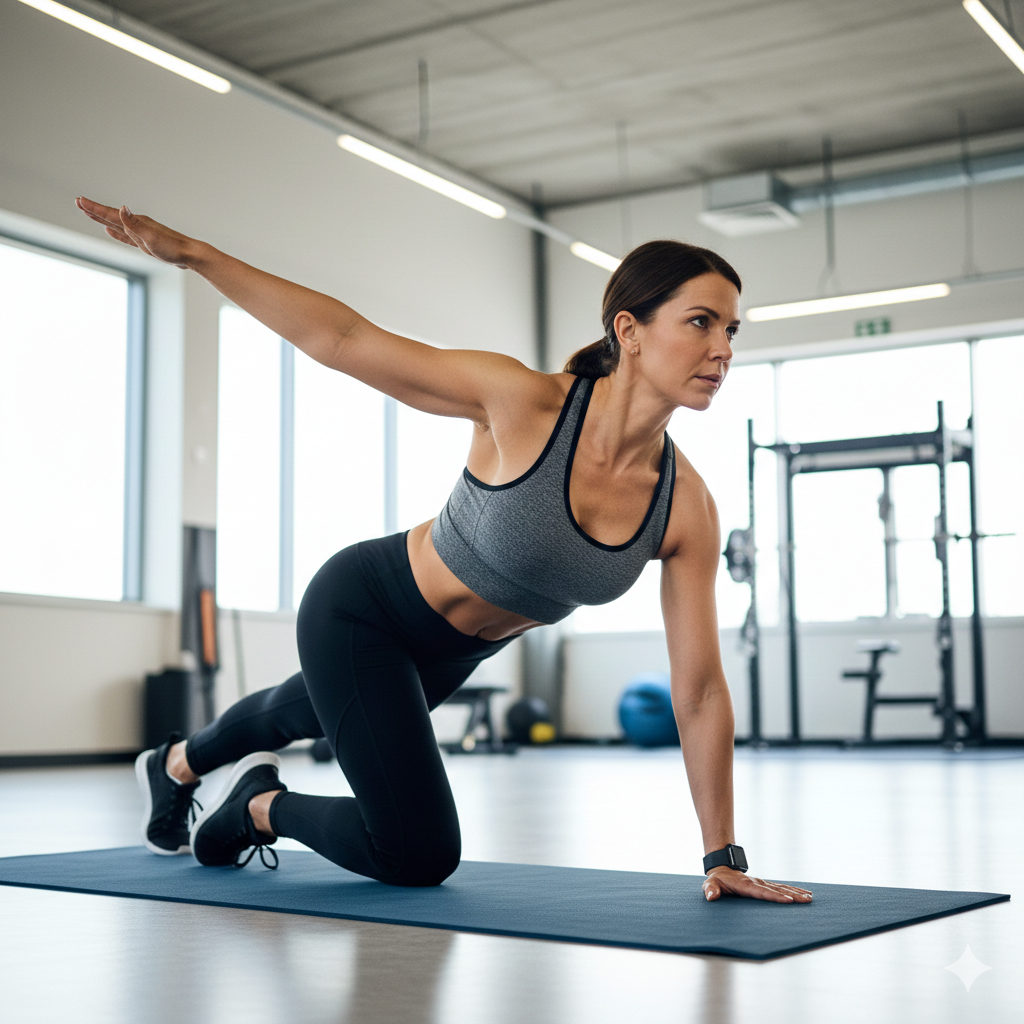
This image was created using AI to avoid copyright issues while conveying the context of this article.
When we talk about "core strength," most people immediately think of a six-pack. We picture sit-ups, planks, and leg raises. But your core is actually a 3D canister, and the most important part of that canister isn't the front, it’s the bottom.
Welcome to the Pelvic Floor. For a long time, pelvic floor health was only discussed in the context of women’s health after pregnancy. But in the world of high-performance fitness, we now know that a strong, functional pelvic floor is the secret to true power for both men and women. If you want to lift heavier, run faster, and protect your spine, you need to stop ignoring the floor of your core.
The Canister Concept
Think of your torso as a soda can.
The Top: Your diaphragm (your breathing muscle).
The Sides: Your abdominal muscles and back muscles.
The Bottom: Your pelvic floor.
If the bottom of that can is weak or "leaky," you cannot create internal pressure. Without that pressure, your spine isn't stable. When you go to lift a heavy grocery bag or a barbell, a weak pelvic floor can lead to lower back pain, hernia issues, or even "accidents" during high-impact movements like jumping or heavy squatting.
Power Starts from the Bottom Up
Your pelvic floor muscles are responsible for supporting your organs and controlling internal pressure. When you brace your core for a big movement, the pelvic floor should lift and contract to meet the pressure coming down from your diaphragm.
If this timing is off, your power "leaks" out. You might find that your strength has plateaued, or that you feel "unstable" even when your abs feel tight. By learning to engage the pelvic floor, you create a solid foundation that allows your bigger muscles (like your glutes and legs) to produce maximum force.
How to Train Your Floor
Training the pelvic floor isn't about doing a thousand "Kegels" while sitting at a red light. It’s about integration.
360-Degree Breathing: Instead of breathing into your chest, practice breathing into your ribs and belly. As you inhale, feel your pelvic floor relax and drop. As you exhale, feel a gentle lift.
The "Pre-Lift" Engagement: Before you start a heavy lift, exhale slightly and imagine "lifting" the muscles between your sit-bones. This creates a solid base before the weight even moves.
Core Integration: Movements like Dead Bugs or Bird-Dogs are perfect for learning how to keep the pelvic floor active while your arms and legs are moving.
Nutrition for Muscle Integrity
Just like every other muscle we’ve discussed this February, your pelvic floor requires the right fuel. The 4:1 Protein-to-Fiber ratio is vital here.
Protein: Provides the collagen and amino acids needed for the connective tissues and muscles of the pelvic bowl to stay resilient.
Fiber: This is a secret pelvic floor hack! Chronic constipation and straining are the #1 enemies of pelvic floor health. By hitting your fiber goals, you ensure smooth digestion, which prevents the unnecessary pressure that weakens these muscles over time.
The Legacy View
At Legacy Fitness, we don't just care about the muscles people can see. We care about the muscles that keep you functional for life. Pelvic floor health is about dignity, power, and long-term spinal safety.
This week, stop thinking of your core as just your "abs." Start thinking of it as a complete system. Breathe deep, lift from the bottom, and build a foundation that is truly unbreakable.
The "Strength-First" Fat Loss Secret: Why Muscle is Your Metabolic Engine
Step off the treadmill for a moment and head to the weight rack. Build the engine that burns fat for you.
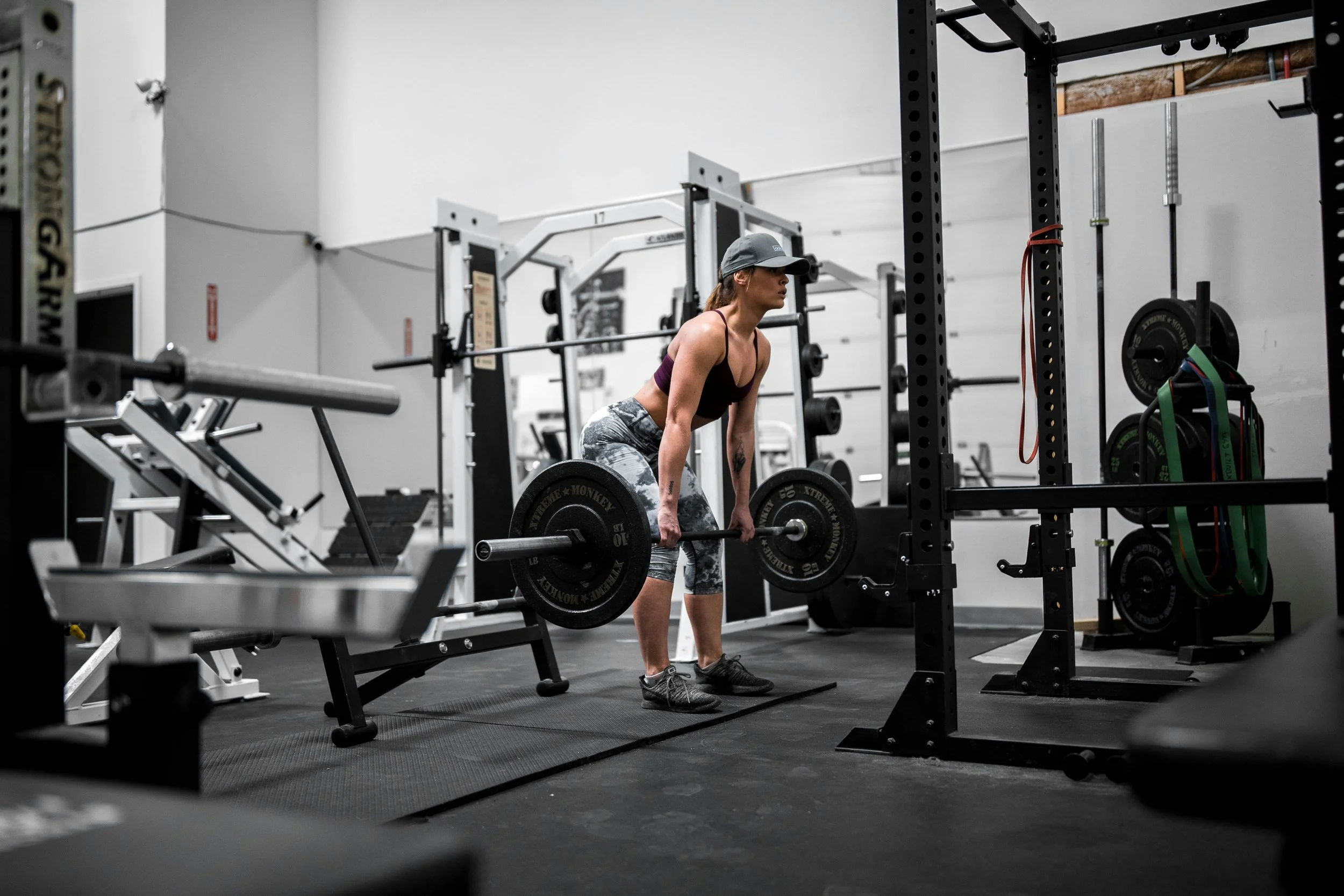
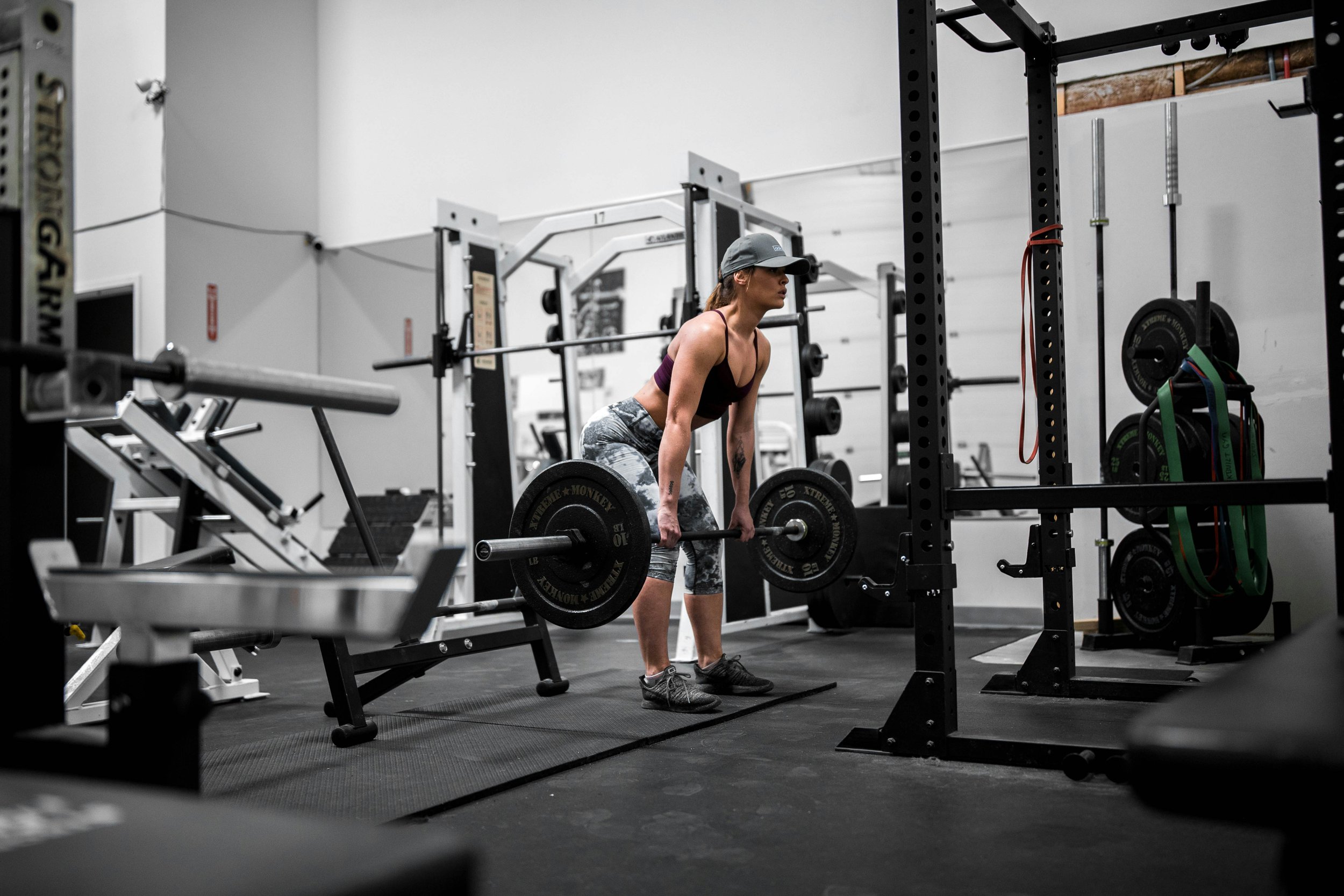
Photo by Anastase Maragos on Unsplash
When most people decide they want to lose weight, their first instinct is to head straight for the treadmill. They think of fat loss as a simple math problem: "How many calories can I burn in this hour?" While cardio is great for your heart, if you want to change your body composition and keep the weight off forever, you need to flip the script. You need a Strength-First approach.
In the fitness world, we often say that "cardio burns calories while you're doing it, but muscle burns calories while you're sleeping." As we move into the third week of February, it’s time to understand why lifting weights is the most efficient way to "fix" a slow metabolism and achieve lasting fat loss.
The Engine Analogy
Think of your metabolism like the engine of a car. A small, four-cylinder car doesn't need much gas to sit idling in the driveway. But a large, powerful V8 engine burns a lot of fuel even when it isn't moving.
Muscle tissue is metabolically "expensive." It takes a lot of energy just to maintain muscle on your frame. By lifting weights and building even a small amount of lean muscle, you are essentially "upgrading your engine." You increase your Basal Metabolic Rate (BMR), which means you burn more calories every single hour of the day, whether you are at your desk or watching TV.
The Cardio Trap
The problem with a cardio-only approach to fat loss is that your body is incredibly adaptive. If you do the same 30-minute run every day, your body becomes more efficient at it. Eventually, you burn fewer calories doing the same amount of work.
Even worse, if you are in a large calorie deficit and only doing cardio, your body may actually break down muscle tissue for energy. You might weigh less on the scale, but you end up with a higher body fat percentage and a slower metabolism. This is the "skinny fat" trap that leads to the inevitable weight regain.
EPOC: The Afterburn Effect
When you lift heavy weights or perform intense resistance training, you create a state called Excess Post-exercise Oxygen Consumption (EPOC).
Because strength training causes micro-tears in the muscle and stresses your central nervous system, your body has to work overtime for hours, sometimes even days, to repair itself and return to balance. This "afterburn" means your metabolism stays elevated long after you’ve left the gym.
The Strength-First Nutrition Strategy
To build the "metabolic engine" of muscle, you have to feed it. This is where our 4:1 Protein-to-Fiber ratio becomes your best friend.
Protein: Provides the amino acids necessary to repair and build the muscle tissue you challenged during your workout.
Fiber: Keeps your digestion efficient and prevents the inflammation that can sometimes come with a high-intensity lifting program.
By prioritizing strength, you stop "dieting" and start "fueling." You'll find that you can actually eat more food while getting leaner, because your new muscle mass is using those calories for repair instead of storing them as fat.
How to Transition to Strength-First
Prioritize the Lift: If you have 60 minutes, spend 45 minutes on resistance training (squats, presses, rows) and 15 minutes on cardio.
Focus on Progressive Overload: Don't just pick up the same pink dumbbells every week. You must give your body a reason to change. Try to add a little more weight or do one more rep than you did last time.
Don't Fear "Bulking": For most people, building enough muscle to look "bulky" takes years of dedicated, specific effort. For the average person, strength training simply leads to a tighter, firmer, and more "toned" appearance.
The Legacy View
At Legacy Fitness, we want you to be strong and capable. Strength is the foundation of longevity. It protects your joints, improves your bone density, and keeps your metabolism young.
This February, step off the treadmill for a moment and head to the weight rack. Build the engine that burns fat for you. When you put strength first, the fat loss becomes a side effect of becoming a more powerful version of yourself.
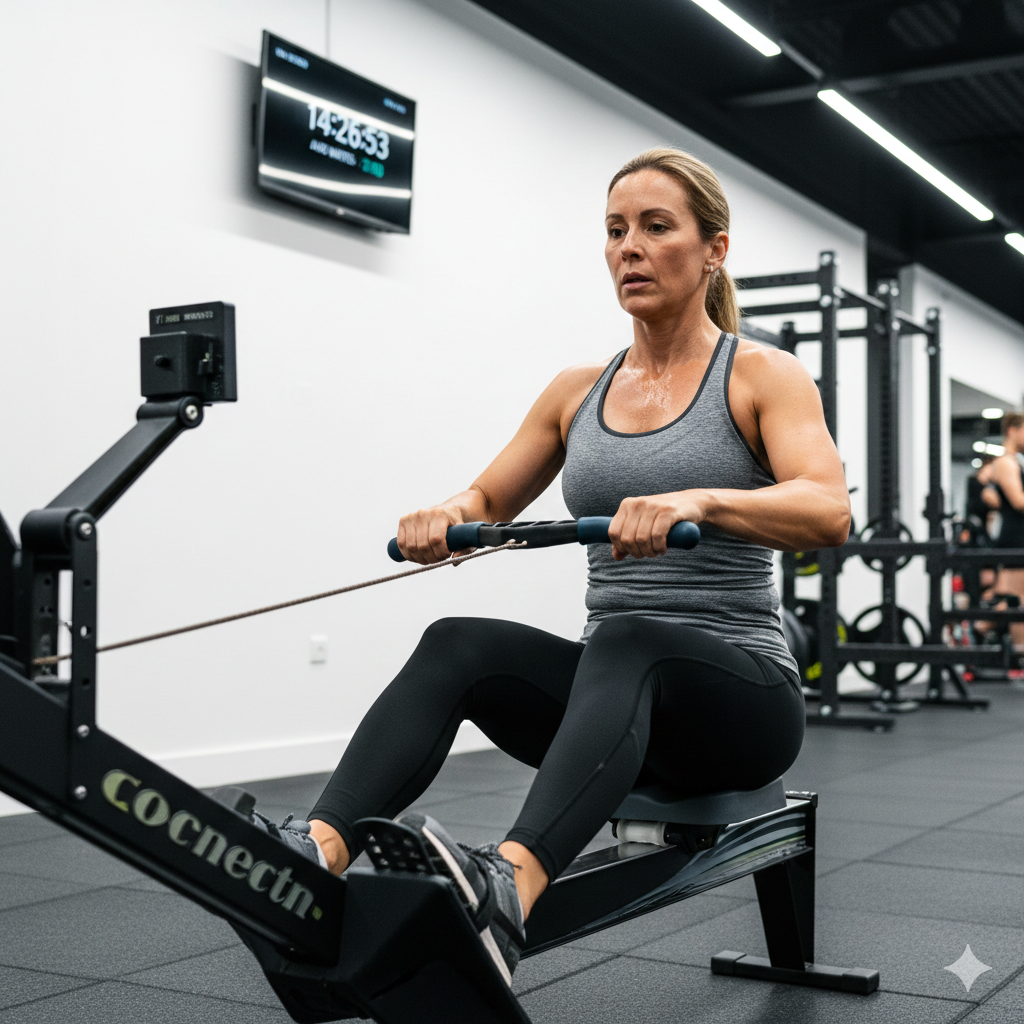
Zone 4 "VO2 Max" Training: The Longevity Secret
This week, find your "top gear." Push yourself for just a few minutes, feel your heart beat, and know that you are building a legacy of a strong, capable heart.
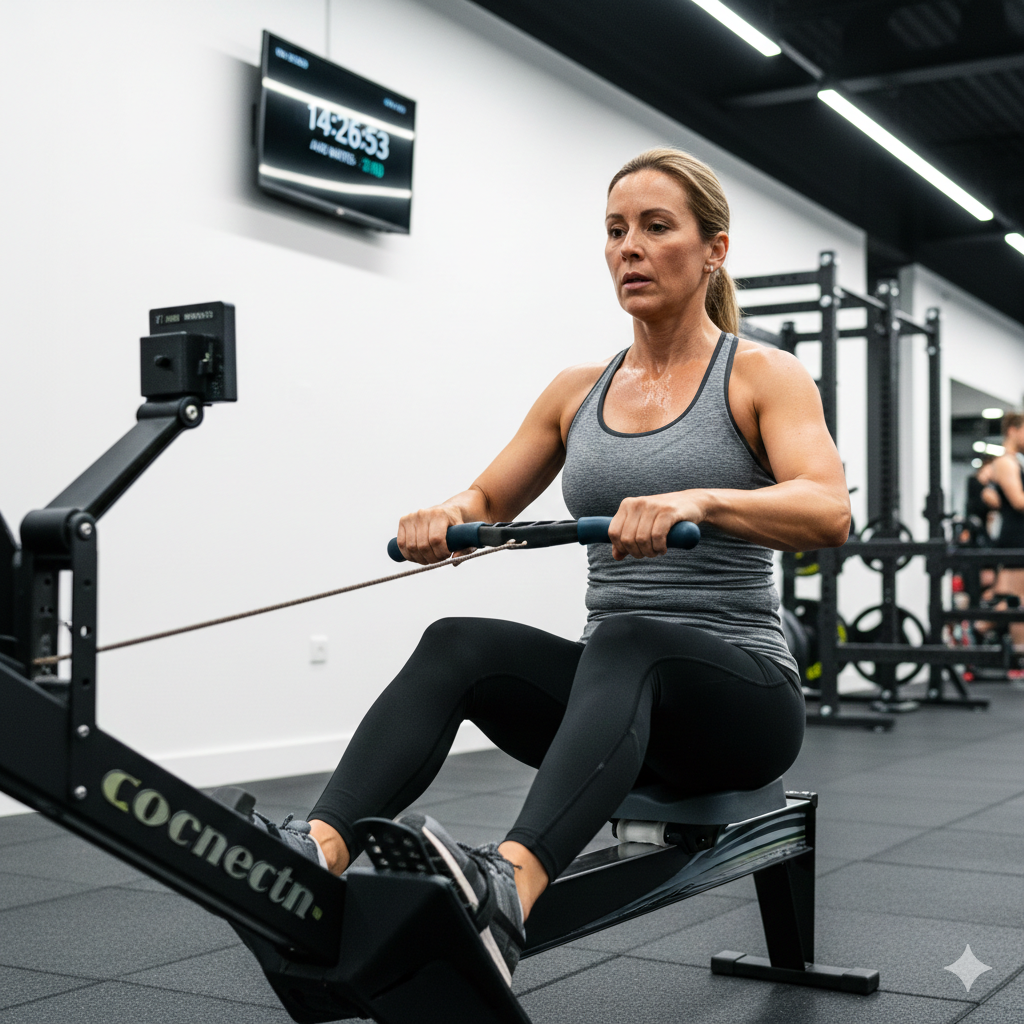
This image was created using AI to avoid copyright issues while conveying the context of this article.
When we talk about cardio, we usually think of two extremes. There is the slow, steady pace of a long walk (Zone 2) or the all-out, heart-pounding sprint of a HIIT class. But there is a specific type of training that falls right in the middle, at the edge of your comfort zone, that is becoming the gold standard for long-term health.
This is Zone 4 training, and its primary goal is to improve your VO2 Max.
If you want to live a long, vibrant life, your VO2 Max is perhaps the most important number you’ve never tracked. In the fitness world today, we view it as a "crystal ball" for longevity. Here is why you need to find your "top gear" once a week.
What is VO2 Max?
VO2 Max is a measurement of the maximum amount of oxygen your body can use during intense exercise. Think of it like the engine size of a car. A car with a larger engine can go faster and handle hills with less strain than a car with a tiny engine.
As we age, our VO2 Max naturally declines. However, the higher your starting point is, the more "functional reserve" you have as you get older. Research has shown that individuals with a high VO2 Max have a significantly lower risk of nearly all chronic diseases. It isn't just about being a better runner; it is about being a more resilient human.
Entering Zone 4
To improve this "engine size," you have to push into Zone 4. This is an intensity level where you are breathing hard, hard enough that you can only speak in one or two-word bursts. You aren't sprinting as fast as you can, but you are moving with purpose.
In Zone 4, your heart is beating at roughly 80% to 90% of its maximum. This level of stress forces your heart to become more efficient at pumping blood and your muscles to become better at extracting oxygen.
The "One Hard Session" Rule
The best part about VO2 Max training is that you don't need to do it every day. In fact, you shouldn't. Because it is high-intensity, it requires significant recovery time.
For most people, one "hard" session per week is enough to see incredible gains. This fits perfectly into a busy February schedule. You do your strength training, you get your daily NEAT, and once a week, you open up the throttle for a short period.
How to Do a VO2 Max Workout
You don't need a track or a fancy treadmill. You can do this on a bike, a rowing machine, or even a steep hill. A classic, proven protocol is the "4x4" method:
Warm-up: 5-10 minutes of easy movement.
The Work: 4 minutes of Zone 4 effort (hard but sustainable for the full 4 minutes).
The Rest: 3 minutes of very easy walking or pedaling.
Repeat: Do this for a total of 4 rounds.
This workout takes less than 40 minutes, but the impact on your cardiovascular age is massive.
Nutrition for the High-Intensity Hit
High-intensity work like Zone 4 training burns through glycogen (the sugar stored in your muscles). This is the one time when having a "clothed carb" meal about 90 minutes before your session is incredibly helpful.
Afterward, return to your 4:1 protein-to-fiber ratio to help your heart and muscles recover. The protein repairs the tissue, while the fiber ensures your blood sugar stays stable after the intense effort.
The Legacy View
At Legacy Fitness, we aren't just training for how you look next month; we are training for how you move twenty years from now. Improving your VO2 Max is like putting money into a high-interest savings account for your future self.
This week, find your "top gear." Push yourself for just a few minutes, feel your heart beat, and know that you are building a legacy of a strong, capable heart.
Consistency Over Intensity: Why the "B Grade" Workout Wins
At Legacy Fitness, we aren't looking for a six-week transformation. We are looking for a sixty-year legacy.
This image was created using AI to avoid copyright issues while conveying the context of this article.
In the world of fitness, we are often sold the image of the "perfect" workout. We see videos of people drenched in sweat, pushing their absolute limits, and collapsing on the floor after an hour of high-intensity training. While that kind of intensity has its place, it is actually the biggest reason people quit in February.
When you believe that a workout only "counts" if it is a 10 out of 10 in intensity, you set yourself up for failure. Life is messy. Some days you are tired, some days the kids are sick, and some days work runs late. If your only option is "perfect intensity" or "nothing," you will eventually choose nothing.
At Legacy Fitness, we advocate for a different path: The "B Grade" Workout.
The Math of the Long Game
Let’s look at the math. If you do a "perfect" 10/10 workout once a week because that is all the energy you have, but you skip the other six days, your total volume is low.
However, if you do a "B Grade" workout—maybe a 6/10 or 7/10 effort—four or five times a week, you win. Consistency creates a compounding effect. Just like saving money, it isn't the one big deposit that builds wealth; it is the small, frequent deposits made over decades. In fitness, a 20-minute walk on a day you "don't feel like it" is worth more than a 90-minute gym session once a month.
The "All-or-Nothing" Trap
The "All-or-Nothing" mindset is a psychological trap. In January, your motivation is high enough to climb over that wall. But by February 6th, that motivation starts to dip. If you feel like you can't give 100%, you might feel like there is no point in trying at all.
This is where the "Consistency" mindset saves you. Your goal shouldn't be to have the best workout ever; your goal should be to not break the chain. If you planned to lift weights for an hour but only have twenty minutes, do ten minutes of squats and push-ups. You kept the habit alive. You proved to your brain that you are the kind of person who shows up, regardless of the circumstances.
Intensity is the Topping, Consistency is the Cake
Think of your fitness journey like a cake. Consistency is the actual cake: the foundation, the substance, and the part that actually feeds you. Intensity is the frosting. Frosting is great, and it makes the cake better, but you cannot have a meal made of only frosting. You will get sick and burn out.
If you focus on showing up consistently, your "base level" of fitness rises. Eventually, your "easy" days will be more productive than your "hard" days used to be. But this only happens if you stay in the game long enough to see the results.
How to Practice Consistency This Week
Lower the Bar: If you are feeling overwhelmed, give yourself permission to do a "half-workout." Just get to the gym or put on your shoes. Usually, once you start, you’ll do more than you planned.
Focus on the "Show Up" Goal: Make your goal for the week "I will move for 20 minutes every day," rather than "I will burn 500 calories."
Celebrate the "B Grade": Be proud of the days you worked out even when you were tired. Those are the workouts that actually build your character and your legacy.
Maintaining the Momentum
We’ve spent the last few days talking about NEAT and the P:F Ratio. These are tools designed to help you stay consistent. NEAT keeps you moving without the stress of a "workout," and the 4:1 P:F ratio keeps your energy stable so you don't feel too exhausted to train.
When you combine smart nutrition with the habit of simply showing up, you become unstoppable. You stop being a "seasonal" athlete and start becoming a "lifetime" athlete.
The Legacy View
At Legacy Fitness, we aren't looking for a six-week transformation. We are looking for a sixty-year legacy. That legacy is built on the days when you did a "mediocre" workout instead of sitting on the couch. It is built on the walks you took when it was cold outside.
This February, stop chasing perfection. Chase the streak. Stay consistent, stay moving, and let the intensity take care of itself when the time is right.

The Longevity Walk: Putting Your 10,000 Steps to Work
The "Longevity Walk" isn't just about moving from point A to point B. It’s about using specific techniques to turn a simple walk into a full-body health treatment.

Photo by Caspar Rae on Unsplash
As January comes to a close, you might be feeling the urge to "level up" your fitness. We’ve talked about the "Zone 2" trend in Walking for Longevity: The 2026 'Zone 2' Trend, but now it is time to look at how to make every single step count toward your future self. For years, we’ve been told that "10,000 steps" is the magic number for health. While that is a great goal, the quality of those steps matters just as much as the quantity.
In 2026, the "Longevity Walk" isn't just about moving from point A to point B. It’s about using specific techniques to turn a simple walk into a full-body health treatment. To build a legacy of mobility and independence, you need to treat your daily walk with the same intention as a session in the gym. When done correctly, walking is the ultimate "maintenance" tool for your heart, your joints, and your mind.
The "Power Stride" Technique
Most people walk with a "shuffling" gait, especially when they are tired or looking at their phones. Shuffling doesn't engage your muscles and can actually lead to tight hips and back pain. The "Longevity Walk" requires a Power Stride.
Heel-to-Toe: Focus on landing softly on your heel and "rolling" the foot forward to push off with your toes. This engages the muscles in your arches and calves.
The Glute Squeeze: As your leg goes back, give your glute a small squeeze. This helps open up the front of your hips, which get tight from sitting.
The Arm Swing: Don't keep your hands in your pockets. Swing your arms from the shoulders. This cross-body movement helps "massage" your spine and increases the calories you burn.
The "Interval" Secret
You don't have to walk at a fast pace the entire time. In fact, research shows that "intermittent" walking is even better for your metabolism. Try the 3-2-1 Method during your next 20-minute walk:
3 Minutes: Normal, comfortable pace.
2 Minutes: Brisk walk (you should be breathing a little harder).
1 Minute: As fast as you can walk without running.
Repeating this cycle three or four times "wakes up" your heart and forces your body to adapt to different levels of stress. It turns a boring walk into a mini-cardio session that is easy on your joints but great for your heart.
Walking for Brain Health
One of the most powerful benefits of the Longevity Walk is what it does for your head. Walking has been shown to increase "BDNF" (Brain-Derived Neurotrophic Factor). Think of BDNF like "Miracle-Gro" for your brain cells. It helps you learn faster and protects against memory loss as you age.
To get the most brain benefit, try to walk in a "complex" environment like a park or a trail rather than a treadmill. Navigating uneven ground and looking at nature forces your brain to stay "engaged" and improves your balance. In a world where we spend so much time looking at screens (as we discussed in Why Your 'Smart Ring' Might Be Lying to You), this "unplugged" movement is vital for your mental health.
The Consistency Milestone
As we move into February, the Longevity Walk is your "safety net." Even on the days when you can't get to the gym or your meal prep falls apart, you can always walk. It is the one habit that requires no equipment and no cost, but pays the highest dividends for your health. This January, don't just "get your steps in." Put them to work. Walk with purpose, walk with power, and walk for the person you want to be thirty years from now.

Core Stability vs. Six-Pack Abs: What Really Matters
When you prioritize a stable core, you are building a foundation that will last for the rest of your life. A six-pack might look good on the beach, but a stable core feels good every single day.

Photo by Anes Hamzic on Unsplash
If you look at fitness magazines or social media, you would think that the only reason to train your "core" is to get a visible six-pack. We are bombarded with "10-minute ab shred" workouts and promises of flat stomachs. But in 2026, we are finally moving past the idea that "abs" are a sign of health. In reality, a person can have a visible six-pack and still have a weak, unstable core that leads to chronic back pain.
To build a legacy of strength, you need to understand the difference between Aesthetics (how you look) and Stability (how you move). Your core is not just your "stomach muscles"; it is a complex system of muscles that wrap around your entire midsection like a corset. Its main job isn't to help you do sit-ups; its main job is to resist movement and protect your spine.
What is Your "Core" Exactly?
Think of your core as the bridge between your upper body and your lower body. It includes your "rectus abdominis" (the six-pack), but also your obliques (the sides), your lower back muscles, and even your diaphragm and pelvic floor.
When you walk, run, or lift a heavy box, your core should act like a solid pillar. If that pillar is weak, your spine has to take the weight, which is why so many people suffer from lower back pain. True core training is about learning how to keep that pillar steady while your arms and legs are moving.
The Problem with Crunches
Traditional sit-ups and crunches only train one small part of your core—the part that flexes your spine. But in real life, you rarely need to "crunch." You need to stand tall, carry heavy things, and stay upright. Doing too many crunches can actually pull your posture forward and put unnecessary pressure on your spinal discs.
In 2026, the best core workouts focus on "Anti-Movement." This means you are training your muscles to prevent your spine from bending or twisting when it shouldn't.
Anti-Extension: Movements like the Plank or the Deadbug, where you fight to keep your back from arching.
Anti-Rotation: Movements like the Pallof Press, where you resist a weight that is trying to pull you to the side.
Anti-Lateral Flexion: Movements like the Suitcase Carry (which we mentioned in our Functional Fitness article!), where you resist bending to the side.
Abs are Made in the Kitchen, Stability is Made in the Gym
There is an old saying that "abs are made in the kitchen." This is true. Having visible muscles in your midsection is mostly a result of having low body fat. You can have the strongest core in the world, but if it is covered by a layer of fat, you won't see the six-pack.
This is why "training for abs" can be so frustrating. However, training for stability is always rewarding. When your core is stable, your squats get stronger, your running gets faster, and you stop waking up with a stiff back. Stability is what allows you to pick up your kids or grandkids without worrying about "throwing your back out."
The Legacy of a Strong Center
This January, stop chasing the "shred" and start chasing the "brace." Learn how to breathe into your belly (remember our Mindful Muscle article?) and how to keep your ribs tucked down. When you prioritize a stable core, you are building a foundation that will last for the rest of your life. A six-pack might look good on the beach, but a stable core feels good every single day. Focus on the function, and the health of your legacy will follow.
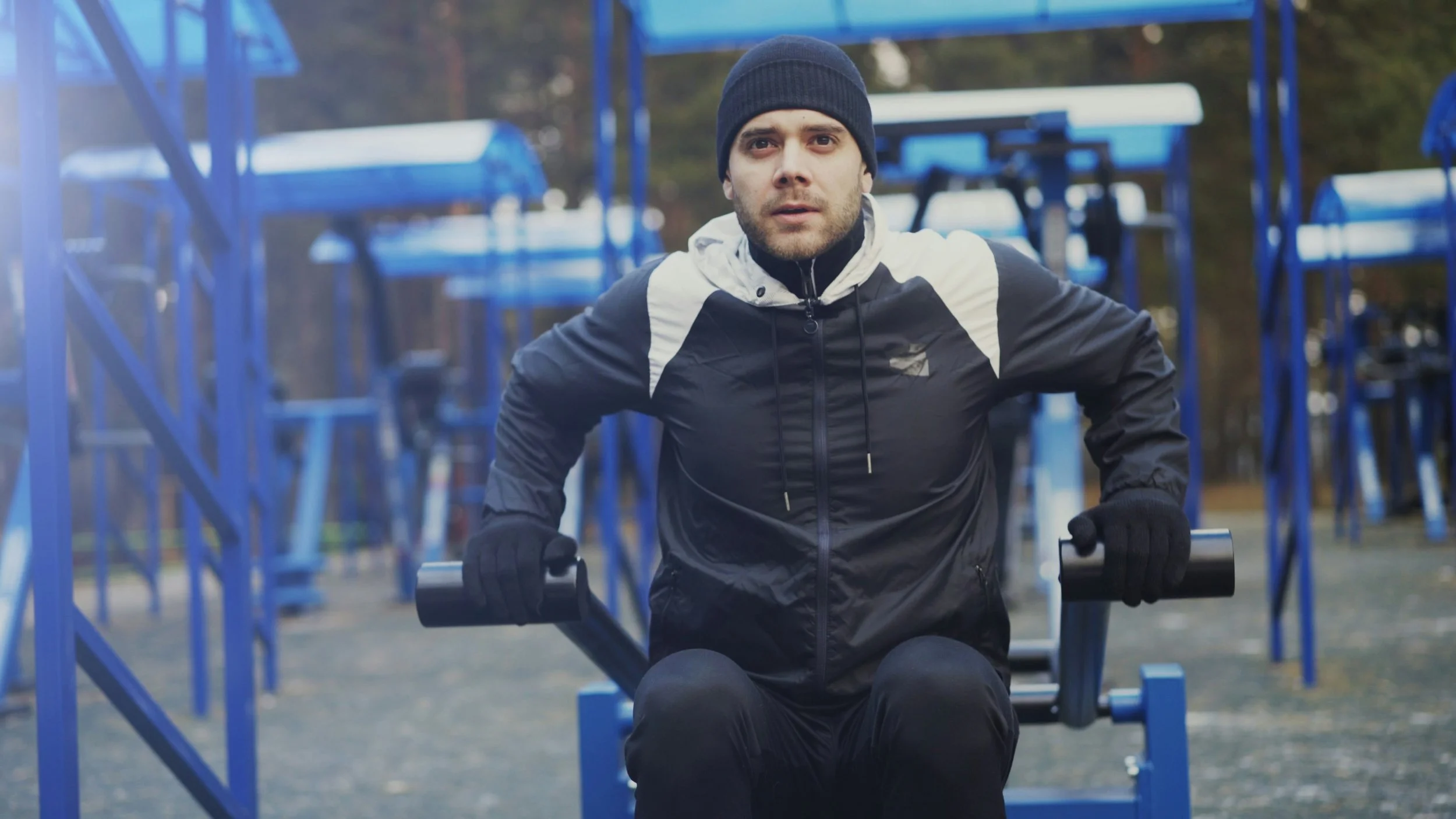
Outdoor Fitness in Winter: Staying Active in the Cold
Put on your layers, step outside, and show the world that your commitment to your health doesn't change when the seasons do.
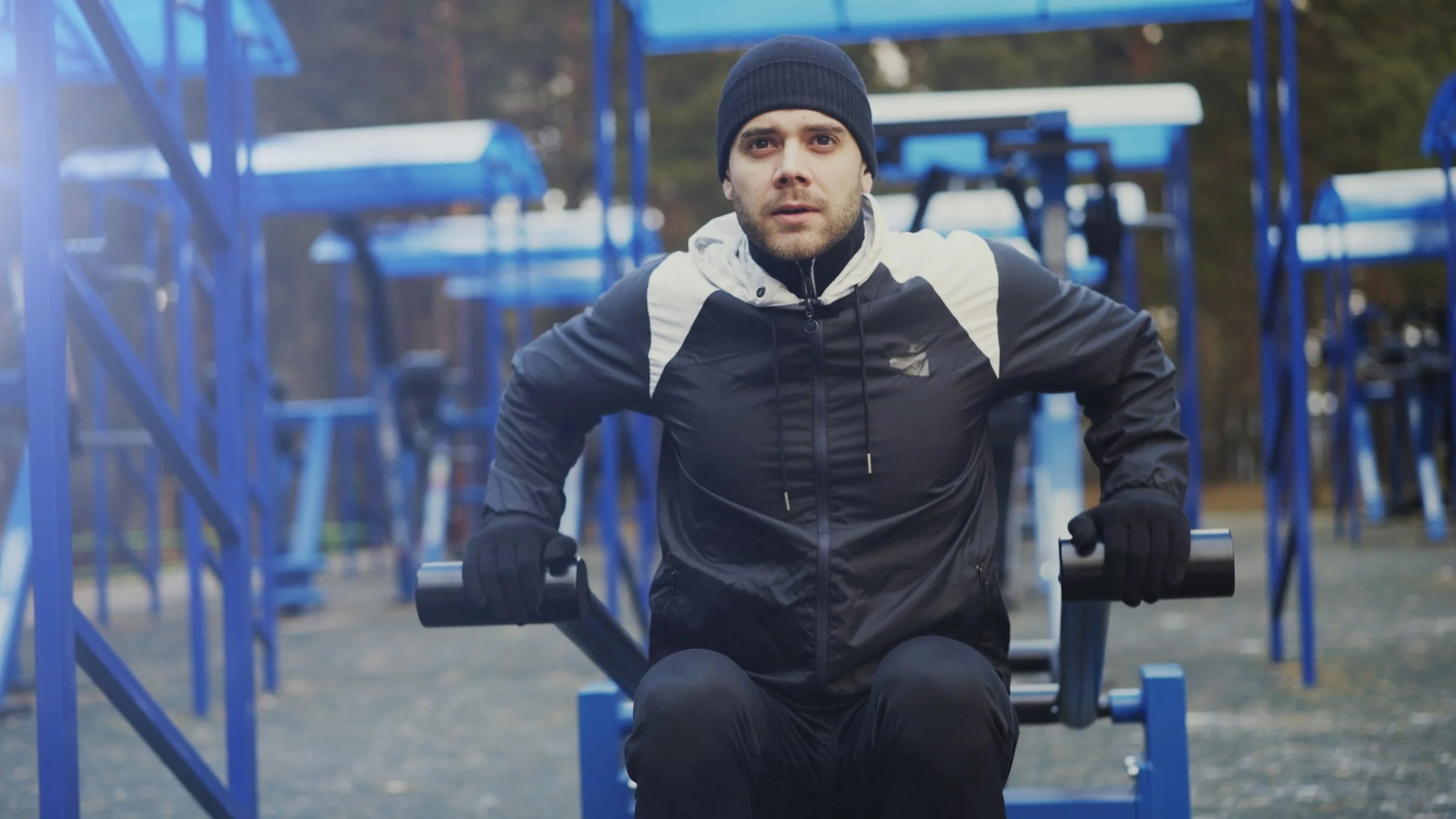
Photo by Vitaly Gariev on Unsplash
When the temperature drops and the sun starts setting at 4:30 PM, the last thing most people want to do is head outside for a workout. It is much easier to stay under a warm blanket or stick to the treadmill in a heated gym. However, in 2026, we are seeing a massive rise in "Green Exercise", the practice of working out in nature, regardless of the weather. There is something incredibly rewarding about conquering the cold. It builds a type of mental toughness and physical resilience that you simply cannot get in a climate-controlled room.
Training outdoors in the winter isn't just about "being tough"; it actually offers some unique biological benefits. Because your body has to work harder to keep your internal temperature stable, you may find that your heart rate stays higher even during moderate movements. This can lead to a boost in metabolic health. Furthermore, getting natural sunlight on your face during the winter months is one of the best ways to regulate your mood and keep your Vitamin D levels from crashing. To build a true health legacy, you have to be a person who can thrive in any environment.
The Science of "Brown Fat"
One of the most interesting reasons to embrace the winter air is a special type of tissue called brown adipose tissue, or "brown fat." Unlike regular white fat, which stores energy, brown fat burns energy to create heat. When you expose your body to cold temperatures during a walk or a run, you "activate" this brown fat. This process helps improve your insulin sensitivity and can make your body more efficient at burning fuel. Think of it as a natural way to turn up your internal furnace.
Layering for Success: The 10-Degree Rule
The biggest barrier to winter fitness is usually being under-dressed or over-dressed. If you dress so that you feel warm the moment you step outside, you will be overheating ten minutes into your workout. The "10-Degree Rule" suggests that you should dress as if it is 10 to 20 degrees warmer than it actually is.
You want to use a three-layer system:
The Base Layer: This should be a moisture-wicking fabric (like wool or synthetic blends) that pulls sweat away from your skin. Avoid cotton, as it stays wet and will make you freeze.
The Mid Layer: This is your insulation. A light fleece or a specialized running jacket helps trap heat near your body.
The Outer Layer: This should be windproof and water-resistant. In the winter, the wind is often what makes you feel the coldest, so a good "shell" is vital.
Safety and Visibility
Because it gets dark so early in January, safety is a priority. If you are running or walking near roads, you must use reflective gear or a headlamp. Additionally, pay attention to the ground. Winter "Zone 2" walking is great, but "black ice" is a real danger. Choose paths that are well-maintained or consider using "traction cleats" that slip over your shoes to give you a better grip on snow and ice.
The Mental "Green" Boost
Winter can be a lonely time, and many people struggle with Seasonal Affective Disorder (SAD). Getting outside for just 20 minutes a day can break the cycle of "winter blues." The combination of fresh air, movement, and the natural landscape acts as a reset button for your brain. This January, don't let the weather dictate your results. Put on your layers, step outside, and show the world that your commitment to your health doesn't change when the seasons do.
Mastering the Deadlift: The Ultimate Functional Move
In the world of strength training, few movements are as respected, or as feared, as the deadlift.
In the world of strength training, few movements are as respected, or as feared, as the deadlift. To many, the deadlift looks like a dangerous way to hurt your back. To the experienced athlete, however, it is the most important movement in the gym. At its simplest, a deadlift is just picking something heavy up off the floor with perfect form. Because we do this every day in real life, mastering the deadlift is the ultimate way to build a resilient, "bulletproof" body.
In the video tutorial above, you can see the exact mechanics of a safe lift. We are moving away from the idea that deadlifting is only for bodybuilders. We are embracing it as a "Legacy" move. When you deadlift, you aren't just working one muscle. You are training your "posterior chain," which includes your hamstrings, glutes, and your entire back. By learning how to move heavy weight safely, you are protecting yourself from the injuries that often happen during everyday tasks like lifting a suitcase or moving furniture.
The "Hinge" vs. The "Squat"
As demonstrated in the video, the biggest mistake people make is trying to squat their deadlift. In a squat, your knees move forward and your hips go down. In a deadlift, the primary movement is a hinge. Imagine there is a wall about a foot behind you. To hinge, you push your hips back toward that wall while keeping your shins vertical. Your chest stays up, and your back stays as flat as a tabletop.
This hinge movement is what loads your hamstrings and glutes. These are the biggest, most powerful muscles in your body. When you learn to use your "glute engine" to lift things, you take the pressure off your lower back. This is the secret to a pain-free life as you get older.
Setup for Success: Following the Tutorial
To perform a safe deadlift, your setup is everything. You can follow along with my cues in the video for these four critical steps:
The Stance: Stand with your feet about hip-width apart. The bar should be directly over the middle of your feet. If the bar is too far forward, it puts unnecessary stress on your spine.
The Grip: Reach down and grab the bar just outside your legs. As I mention in the video, you can use a double overhand grip, or a mixed grip if the weight is very heavy.
Pulling the "Slack": This is a pro tip. Before you lift, pull your shoulders back and down. Imagine you are trying to squeeze an orange in your armpits. This creates "tension" throughout your body so your spine is protected before the weight ever leaves the floor.
The Drive: Don't "pull" with your arms. Instead, think about "pushing the floor away" with your feet. Stand up tall, squeeze your glutes at the top, and hold that "power position" for two seconds to ensure full muscle contraction.
Common Myths and Safety
"Will it hurt my back?" This is the number one question. The answer is: a bad deadlift will hurt your back, but a good deadlift will make your back stronger than ever. The key is to keep the bar close to your body the entire time. As you see in the video, the bar should almost "shave" your shins on the way up.
Consistency is more important than the amount of weight on the bar. If you practice the deadlift twice a week with the form shown in our tutorial, you will notice that your posture improves, your core feels tighter, and your everyday movements feel lighter.
The Mental Edge
There is something uniquely empowering about picking up a heavy weight. It builds a type of mental "grit" that carries over into your professional life. When you know you can lift something heavy, you approach challenges with more confidence. This January, don't fear the deadlift. Watch the tutorial, master the hinge, and build the foundation of your physical legacy one rep at a time.

Gamified Fitness: Turning Your Workout into a Win
If you can turn your workout into a "game" with levels, rewards, and "wins," you won't need willpower to stay consistent. You’ll do it because it’s fun.

By the time the third or fourth week of January rolls around, the "newness" of the gym has often worn off. Your muscles might be a little tired, the alarm clock feels a bit louder, and the excitement of the "New Year" has faded into a routine. This is the danger zone. This is when most people start making excuses to skip a day, and then a week, and then they disappear until next year.
To beat this slump, we need to tap into a powerful part of the human brain: the part that loves to play. This is known as Gamified Fitness. In 2026, we are using the same psychology that keeps people addicted to video games or social media to help them get addicted to their health instead. If you can turn your workout into a "game" with levels, rewards, and "wins," you won't need willpower to stay consistent. You’ll do it because it’s fun.
The Dopamine of Progress
Video games are addictive because they provide "instant feedback." When you beat a level, you get a trophy or a new skill. In the gym, results take time. You might work hard for weeks before you see a change in the mirror. This "delay" in rewards is why people quit.
Gamification fixes this by giving you small, immediate wins. This could be a "badge" on your fitness app for hitting your step goal five days in a row, or a "streak" counter that shows you haven't missed a workout in two weeks. Every time you see that streak grow, your brain releases a tiny hit of dopamine. You don't want to "break the chain," so you show up even on the days you feel tired.
Ways to Gamify Your 2026 Routine
You don't need a fancy headset to gamify your life. Here are three simple ways to start today:
The "Level Up" Method: Treat your lifts like levels. If you can do 10 squats with perfect form, you have "cleared Level 1." Next time, add 5 pounds to "unlock Level 2." Writing this down makes your progress feel like a game you are winning.
Community Challenges: Join a group challenge with friends or coworkers. Whether it is a "10,000 Step Challenge" or a "January Plank Challenge," having a leaderboard adds a healthy sense of competition. We are social creatures; we work harder when someone is watching!
Avatar Identity: Remember our first article about the Identity Shift? Think of your fitness journey like building a character in a game. Every healthy meal is an "XP boost" (experience points) for your character’s health. Every workout increases your "strength stat."
The Power of Play
When we were kids, we didn't "exercise" we played. We ran because it was fun to chase our friends. We climbed trees because we wanted to see what was at the top. As adults, we’ve made fitness a chore. Gamification brings that sense of play back into the equation.
This January, stop looking at the gym as a place of work. Look at it as a place where you go to beat your high score. When you focus on the "win" of today, the extra rep, the faster walk, the completed streak, the long-term results happen as a side effect. You aren't just working out; you are winning the game of your life.
The Mid-Life Muscle Gap: Fitness for Men and Women 40+
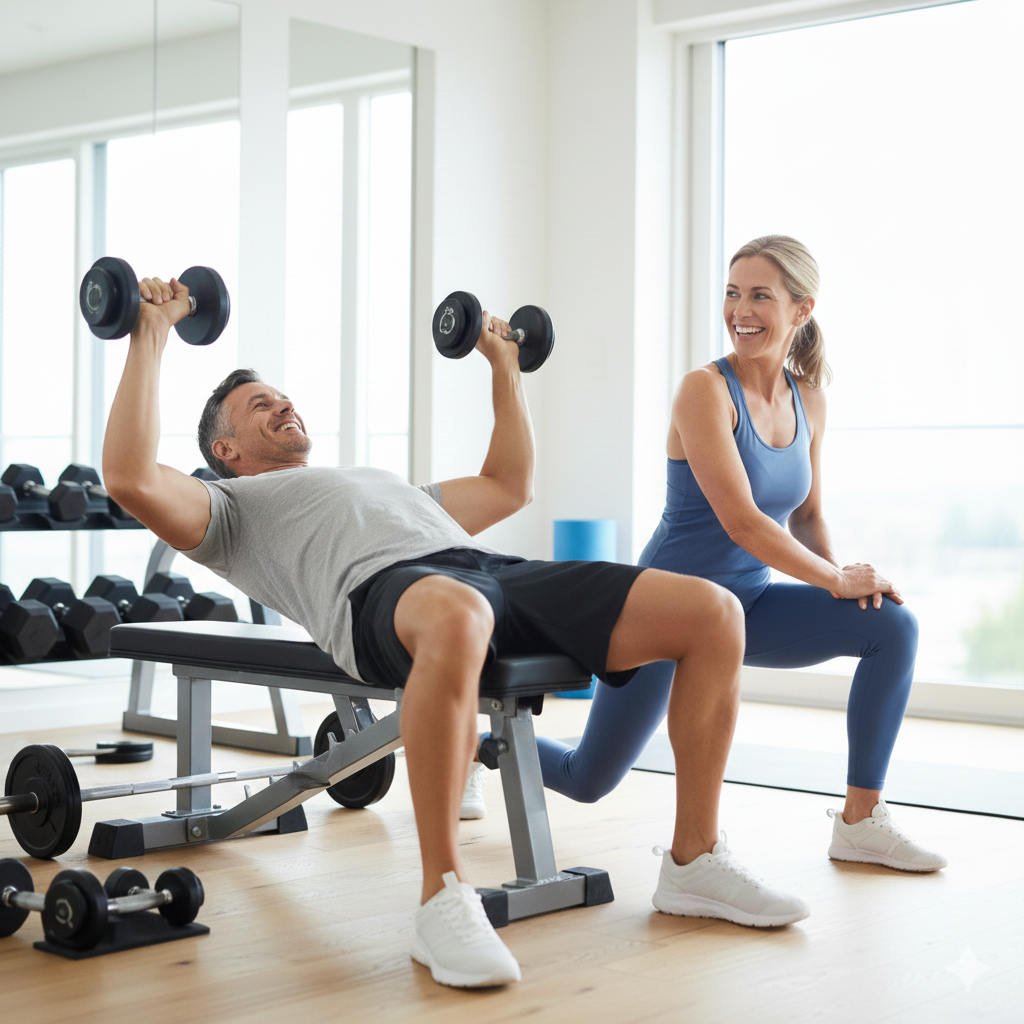
If you are over the age of 40, you have probably noticed that things feel a little different than they did in your 20s. The best reason to train in your 40s isn't how you look in the mirror today, it’s how you will feel 20 years from now.
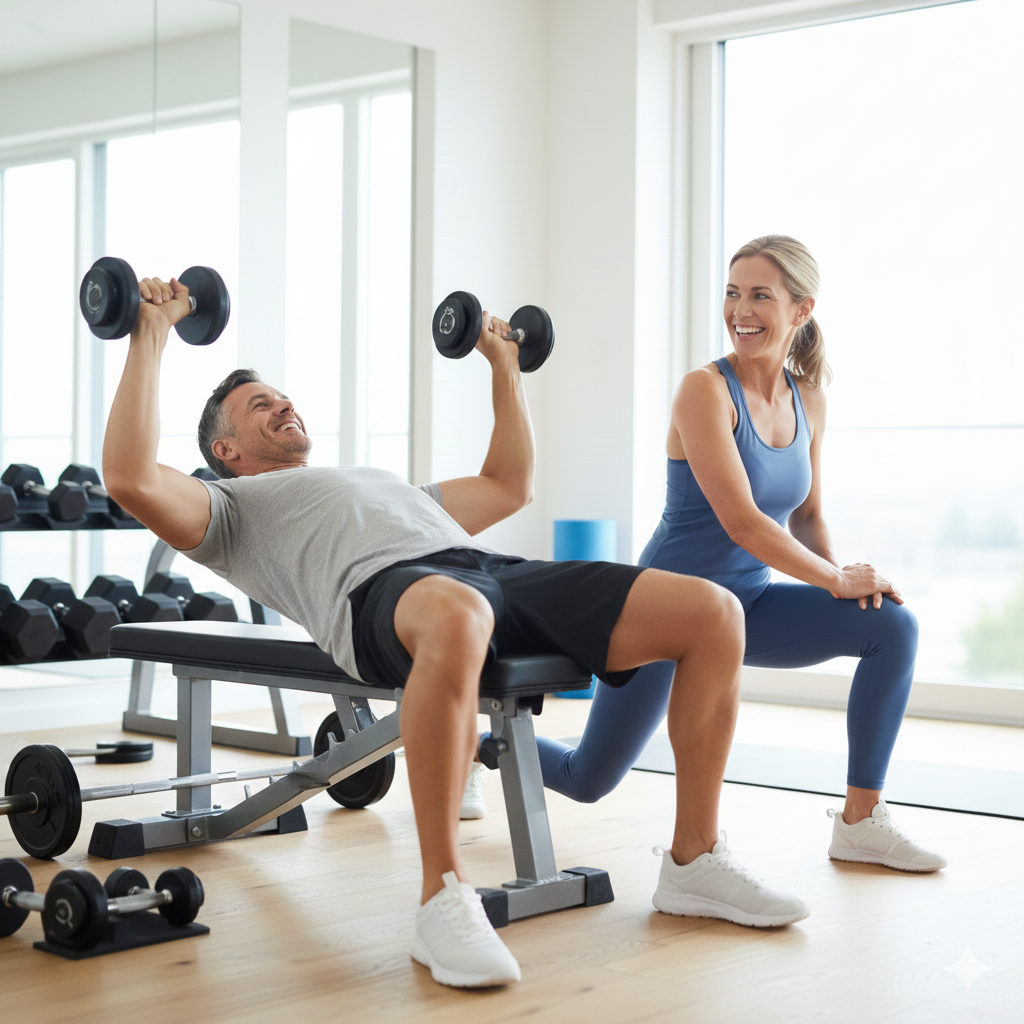
This image was created using AI to avoid copyright issues while conveying the context of this article.
If you are over the age of 40, you have probably noticed that things feel a little different than they did in your 20s. Maybe your back is a bit stiffer in the morning, or perhaps you’ve noticed that it is harder to lose those five extra pounds. Many people assume this is just an unavoidable part of "getting old." They start to believe that they should "slow down" or avoid heavy weights to stay safe.
In 2026, the science tells us the exact opposite. If you are over 40, you don't need less exercise; you need smarter exercise. This stage of life is where the "Muscle Gap" begins to happen. If you don't actively work to keep your muscle, your body will naturally start to lose it. But with the right strategy, your 40s, 50s, and 60s can actually be the strongest years of your life.
The Science of Sarcopenia
Starting around age 30, we begin to lose 3% to 5% of our muscle mass every decade. This is called sarcopenia. By the time someone reaches 60, they may have lost a significant amount of the strength they need to stay active and independent.
But here is the good news: muscle is "plastic," which means it can be built at any age. Strength training is the only "medicine" that can stop and even reverse this process. For the 40+ athlete, lifting weights isn't about getting "bulky" for a bodybuilding stage; it is about protecting your joints, keeping your metabolism high, and ensuring you can stay active for decades to come.
The "Perennial" Athlete
In 2026, we call this the "Perennial" movement. Just like a perennial flower that blooms year after year, you can stay vibrant and strong regardless of your age. The key is to shift your focus from "exhaustion" to "stimulation."
When you were 22, you could probably recover from a workout that left you feeling crushed. At 45, your goal is to stimulate the muscle enough to grow, but leave enough energy to recover.
Prioritize Protein: As we age, our bodies become less efficient at using protein. This means a 50-year-old actually needs more protein than a 20-year-old to build the same amount of muscle. Aim for a high-quality protein source at every single meal.
Focus on Mobility, Not Just Stretching: Tightness in your 40s often comes from joints that haven't moved through their full range in a long time. Use "active" mobility moves like the ones we’ve discussed in previous articles to keep your "oil" flowing.
Lift Heavy-ish: Don't be afraid of weights. You need enough resistance to tell your bones and muscles to stay strong. You don't need to be a powerlifter, but you should be challenged.
The Mental Shift: Training for Your Future Self
The best reason to train in your 40s isn't how you look in the mirror today, it’s how you will feel 20 years from now. Every squat you do now is an investment in your ability to stand up from a chair when you’re 80. Every row you do is an investment in your posture.
This January, don't let your age be an excuse to do less. Let it be the reason you do more of the right things. Your 40s are the perfect time to double down on your health legacy. You aren't "getting old"; you are getting stronger, wiser, and more resilient.

Functional Fitness for Everyday Life: The Squat & Carry
Why do we go to the gym? For the "Legacy" athlete, the gym is a training ground for real life.

This image was created using AI to avoid copyright issues while conveying the context of this article.
Why do we go to the gym? For some, it is to look better in a t-shirt. For others, it is to hit a specific number on a lift. But for the "Legacy" athlete, the gym is a training ground for real life. There is no point in being able to bench press 225lbs if you throw your back out trying to lift a heavy bag of mulch in your garden. There is no point in having "six-pack abs" if you can't carry your toddler up a flight of stairs without getting out of breath.
This is the core of Functional Fitness. It is about training movements, not just muscles. In 2026, we are moving away from fancy machines that isolate one muscle at a time. Instead, we are focusing on the two most important movements for human survival and independence: The Squat and The Carry.
The Squat: Your Body’s Foundation
The squat is often called the "King of Exercises," but it is much more than a leg workout. It is a fundamental human movement. Think about how many times a day you squat: getting out of a chair, sitting down on the toilet, or bending down to pick up a dropped set of keys.
As we age, the ability to squat is the difference between independence and needing help. When you practice squats in the gym, whether with a kettlebell or just your bodyweight, you are strengthening your hips, knees, and ankles. But more importantly, you are teaching your core how to stabilize your spine. A functional squat isn't about how deep you can go; it’s about how well you can move under control so that you can navigate the world with confidence.
The Carry: The "Missing Link" of Fitness
If the squat is the king, the "Loaded Carry" is the secret weapon. A loaded carry is exactly what it sounds like: picking up something heavy and walking with it. This might be a pair of dumbbells (called a Farmer’s Carry), a single weight held at your chest (a Goblet Carry), or even just a heavy suitcase.
Why is this so important? Because life is a series of loaded carries. You carry groceries from the car. You carry a laptop bag through an airport. You carry a child to bed. Carrying heavy things builds "functional core strength" that a sit-up can never match. It teaches your body how to stay upright and stable while you are moving. It also builds incredible grip strength, which scientists have found is one of the best predictors of how long you will live.
Blending Gym Work with Real Life
To build a functional body this January, you don't need a complicated program. You just need to prioritize these "Big Two" movements.
The "Grocery Bag" Challenge: Next time you have to carry bags into the house, try to stand as tall as possible. Keep your shoulders back and down. Don't let the bags pull you to one side. This is a workout!
The "Chair Squat": If you work at a desk, every time you stand up, do it without using your hands. Then, sit back down halfway, hold it for three seconds, and stand back up. You’ve just done a functional rep.
The "Suitcase Carry": Pick up a heavy kettlebell or a gallon of water in one hand. Walk 50 feet. Switch hands and walk back. This trains the muscles on the sides of your body that protect your spine from twisting injuries.
The Legacy of Movement
The goal of functional fitness is to make your "outside life" easier. When you are strong in the squat and the carry, you stop worrying about getting injured during daily tasks. You move with more grace, more power, and less pain. This January, don't just train to look a certain way. Train so that you can say "yes" to every adventure, whether it is a hiking trip or just playing with your grandkids on the floor. Your body was built to move; make sure you’re giving it the right practice.

Mindful Muscle: Using Breathwork During Your Lift
"Mindful Muscle" is changing how we think about strength training. It is the practice of connecting your internal state, your nervous system, to your external movements.

This image was created using AI to avoid copyright issues while conveying the context of this article.
When you walk into a crowded gym, the atmosphere is usually loud and chaotic. You hear the clanging of metal, the thumping of music, and the sounds of people grunting through heavy repetitions. From the outside, it looks like a test of pure "will" and physical force. But if you look closely at the most elite athletes in the room, you will notice something different. They are calm. They are focused. And most importantly, they are in total control of their breath.
In 2026, a new trend called "Mindful Muscle" is changing how we think about strength training. It is the practice of connecting your internal state, your nervous system, to your external movements. If you have been holding your breath while you exercise or gasping for air between sets, you are missing out on a massive amount of strength and safety. Your breath is the "remote control" for your body, and it is time to learn how to use it.
The Physics of the "Human Soda Can"
To understand why breathing matters for lifting, think about an unopened can of soda. Because it is full of liquid and pressurized gas, you can stand on that can and it won't crush. It is incredibly strong. Now, imagine opening that can and pouring the soda out. If you step on it now, it collapses instantly.
Your torso is exactly like that soda can. Your spine is the structure, but your core muscles and your breath provide the "internal pressure" that keeps the structure safe. Many people make the mistake of "sucking in" their stomach when they lift. This is like emptying the soda can! Instead, you want to use a technique called "bracing." By breathing deep into your belly and holding that air against your abdominal wall, you create a "shield" for your lower back. This allows you to lift heavier weights with much less risk of injury.
The "360-Degree" Breath
Most of us are "chest breathers." When we take a deep breath, our shoulders shrug up toward our ears. This is a "stress breath." It tells your brain that you are in a "fight or flight" situation, which can make your muscles feel tight and guarded.
In the "Mindful Muscle" approach, we practice the "360-degree breath." Instead of the air going up into your chest, imagine it going down into your waistband. You should feel your belly move forward, but you should also feel your sides and your lower back expand outward. This creates total pressure all the way around your spine. Before you start a squat, a deadlift, or even a heavy overhead press, take this 360-degree breath. "Pack" the air down, perform the move, and then exhale as you finish the hardest part.
Breathing for Maximum Power
There is a specific rhythm to "Mindful Muscle" that helps you generate more power. As a general rule, you want to Inhale during the "eccentric" phase (the lowering of the weight) and Exhale during the "concentric" phase (the pushing or pulling of the weight).
For example, if you are doing a chest press:
Inhale slowly as you lower the bar to your chest, creating that "internal pressure" we talked about.
Pause for a split second at the bottom.
Exhale sharply as you push the bar back up.
This sharp exhale acts like a "release valve" that allows your muscles to contract with more force. It also keeps your blood pressure from spiking too high, which can happen if you hold your breath for too long during a heavy lift.
The Nasal Recovery Reset
What you do between your sets is just as important as what you do during them. After a hard set of exercises, most people stand around with their mouths open, gasping for air. This keeps your heart rate high and keeps your body in a "stressed" state.
To recover faster, try the "Nasal Reset." As soon as you finish your set, close your mouth and breathe only through your nose. It might feel difficult at first, but nasal breathing sends a signal to your "Vagus Nerve" (the body's internal brake pedal) to calm down. By lowering your heart rate faster, you ensure that you have more energy for your next set. This allows you to do more work in less time, which is the key to seeing results in January.
The Mind-Muscle Connection
The final benefit of "Mindful Muscle" is mental. When you focus on your breath, you cannot worry about your emails, your chores, or your stress. You are forced to be "present" in your body. This connection allows you to actually feel the muscles you are trying to work. Instead of just "moving the weight from point A to point B," you are intentionally contracting your chest, your glutes, or your back.
This January, don't just go through the motions. Stop being a passive observer of your workout and start being an active participant. Your breath is the bridge between your mind and your muscles. Master the bridge, and you will master your legacy.
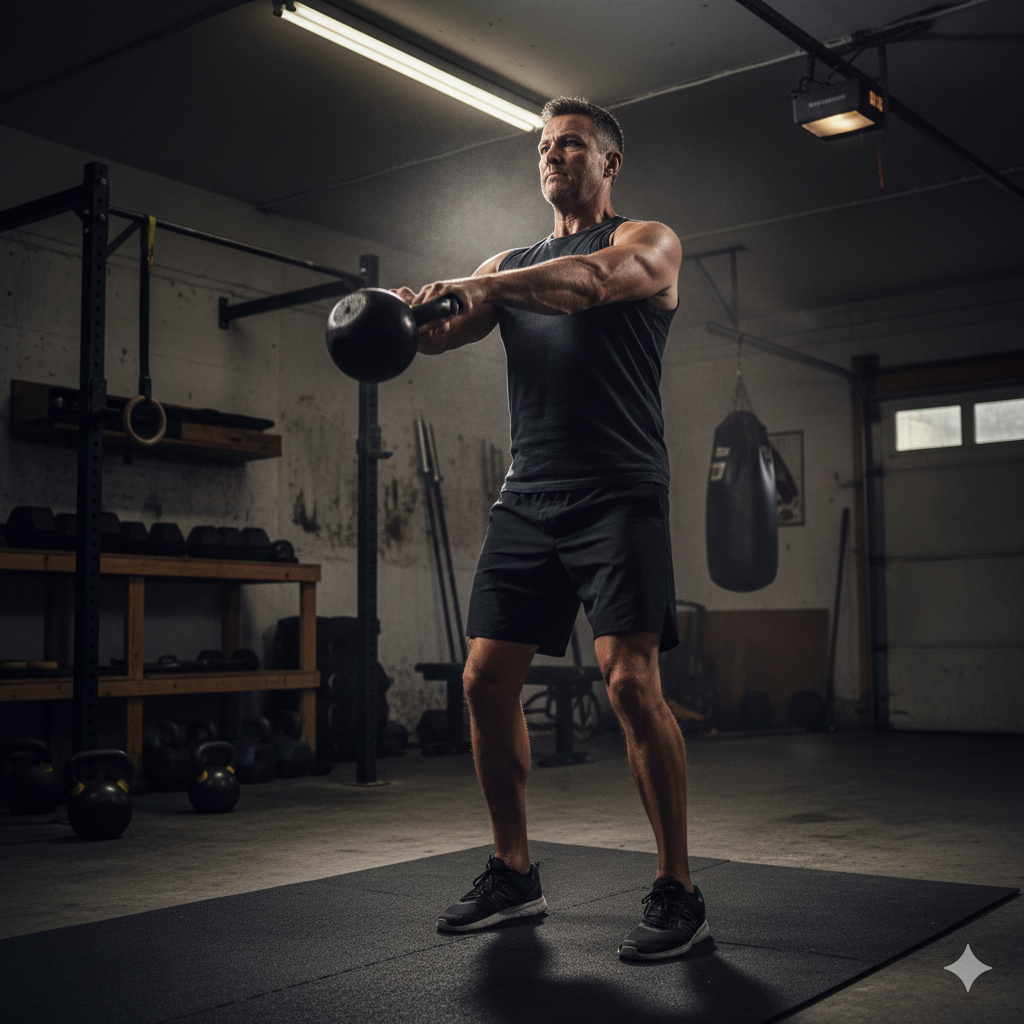
Strength Training for Longevity (The 'Power' Phase)
Train for how you want to move when you’re 80. Your future self is counting on you to build that strength now.
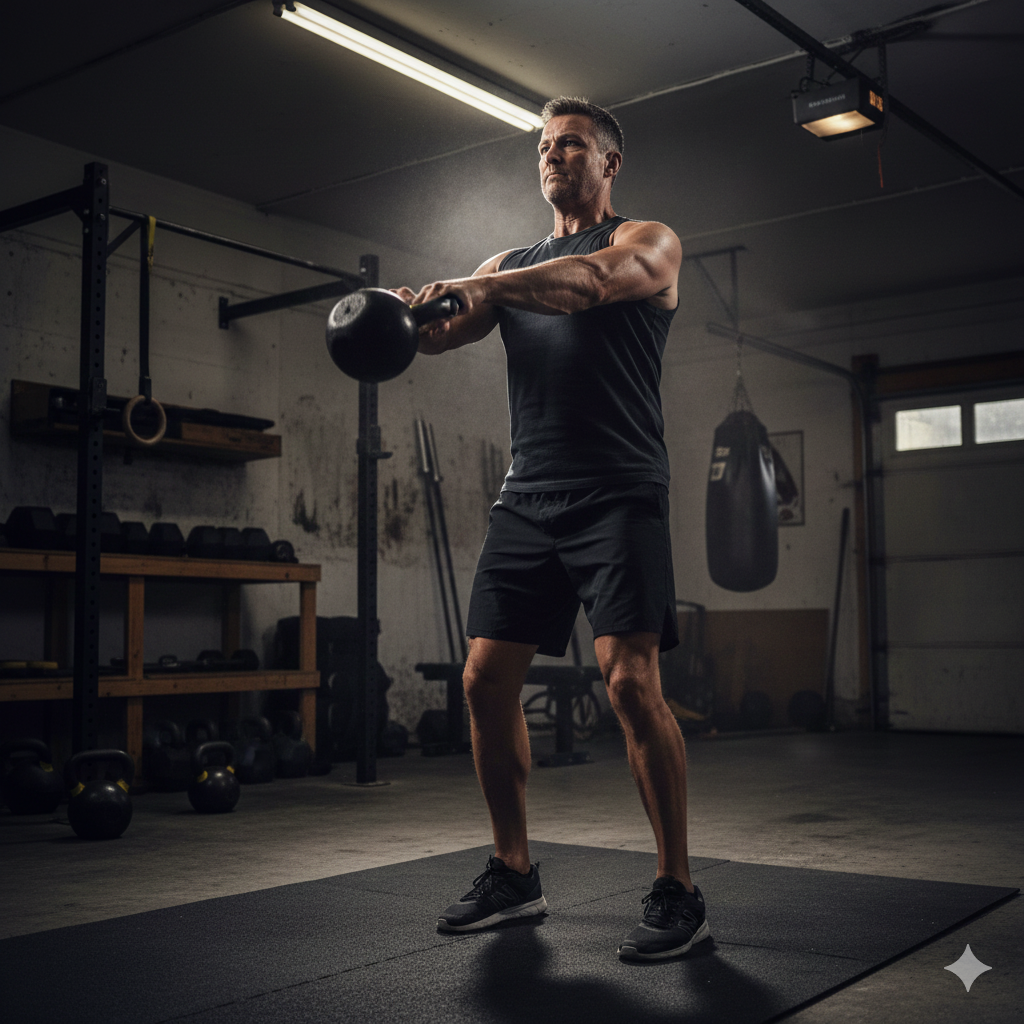
This image was created using AI to avoid copyright issues while conveying the context of this article.
When we think about aging, we often think about slowing down. We imagine getting "frail" or losing our balance. But what if I told you that you have more control over that process than you think?
As we get older, we naturally lose muscle mass, a process called sarcopenia. But even more important than muscle "size" is muscle power. Power is your ability to move a weight quickly. It’s what helps you catch yourself if you trip on a curb or stand up quickly from a low chair. In 2026, the best way to protect your future self is through a specific type of strength training focused on longevity.
Use It or Lose It
Your body is very efficient. If you don't use your "fast-twitch" muscle fibers (the ones responsible for power and speed) your body will stop maintaining them. Strength training isn't just for bodybuilders; it is the "fountain of youth" for your skeletal system.
Lifting weights puts a healthy stress on your bones, making them denser and stronger. It also improves your "insulin sensitivity," which means your body is better at processing the food you eat.
The Power Move: Multi-Joint Exercises
You don't need to spend hours doing "bicep curls." For longevity, you want to focus on "compound movements" that use multiple joints at once. These moves mimic how you move in real life:
The Squat: Sitting down and standing up.
The Hinge: Picking a heavy bag up off the floor (like a deadlift).
The Push/Pull: Opening a heavy door or pushing a grocery cart.
How to Train for the Long Haul
You don't have to lift the heaviest weight in the gym. The key to the "Power Phase" is controlled speed. When you stand up from a squat, try to do it with a bit of "pop" or speed. When you lower the weight, do it slowly. This combination trains your nervous system to stay sharp and your muscles to stay responsive.
Consistency Over Intensity
The goal of longevity training isn't to be "sore" every day. It’s to be able to train again in two days. If you can lift weights twice a week for the rest of your life, you will be ahead of 90% of the population.
This January, don't just train for how you look in the mirror today. Train for how you want to move when you’re 80. Your future self is counting on you to build that strength now.
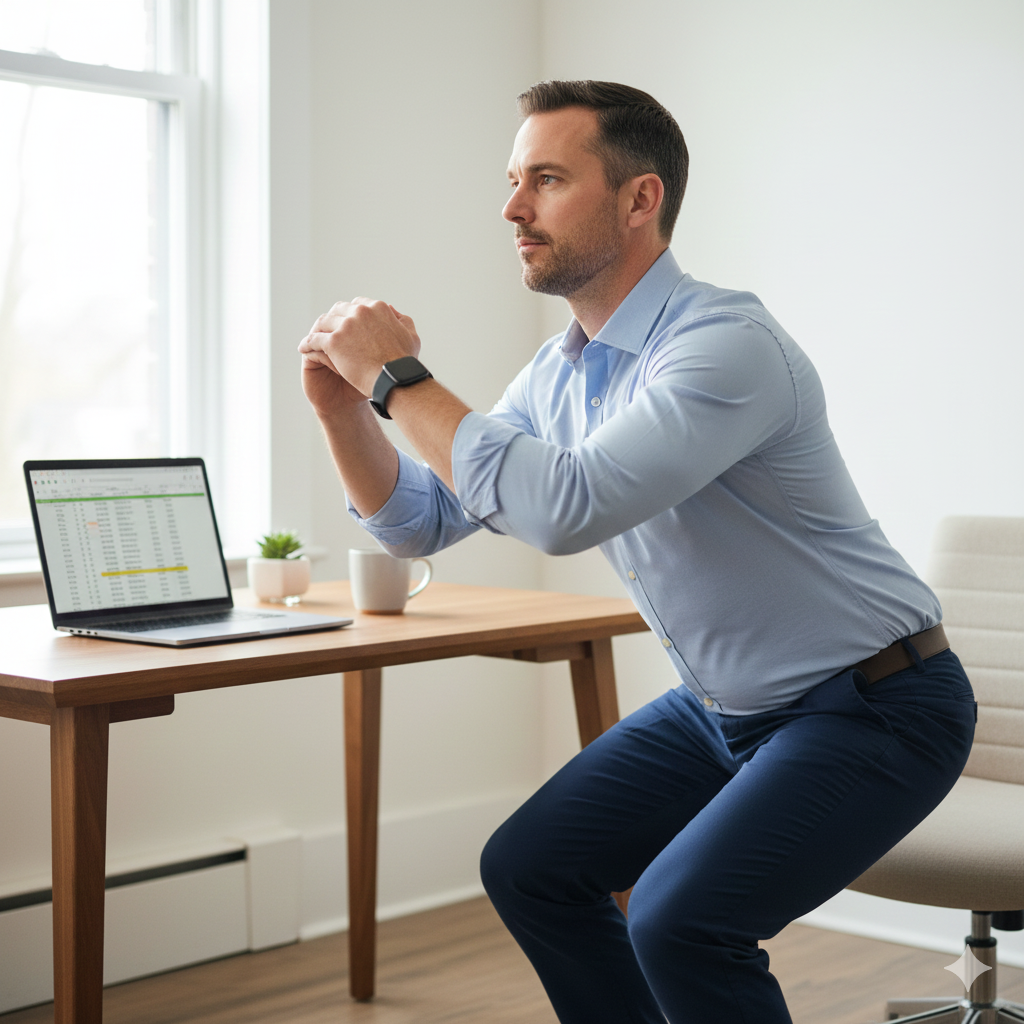
Micro-Workouts: How 10 Minutes Saves Your Day
If your plan requires 60 perfect minutes to be successful, your plan is fragile. The secret to January success isn't intensity; it's consistency.
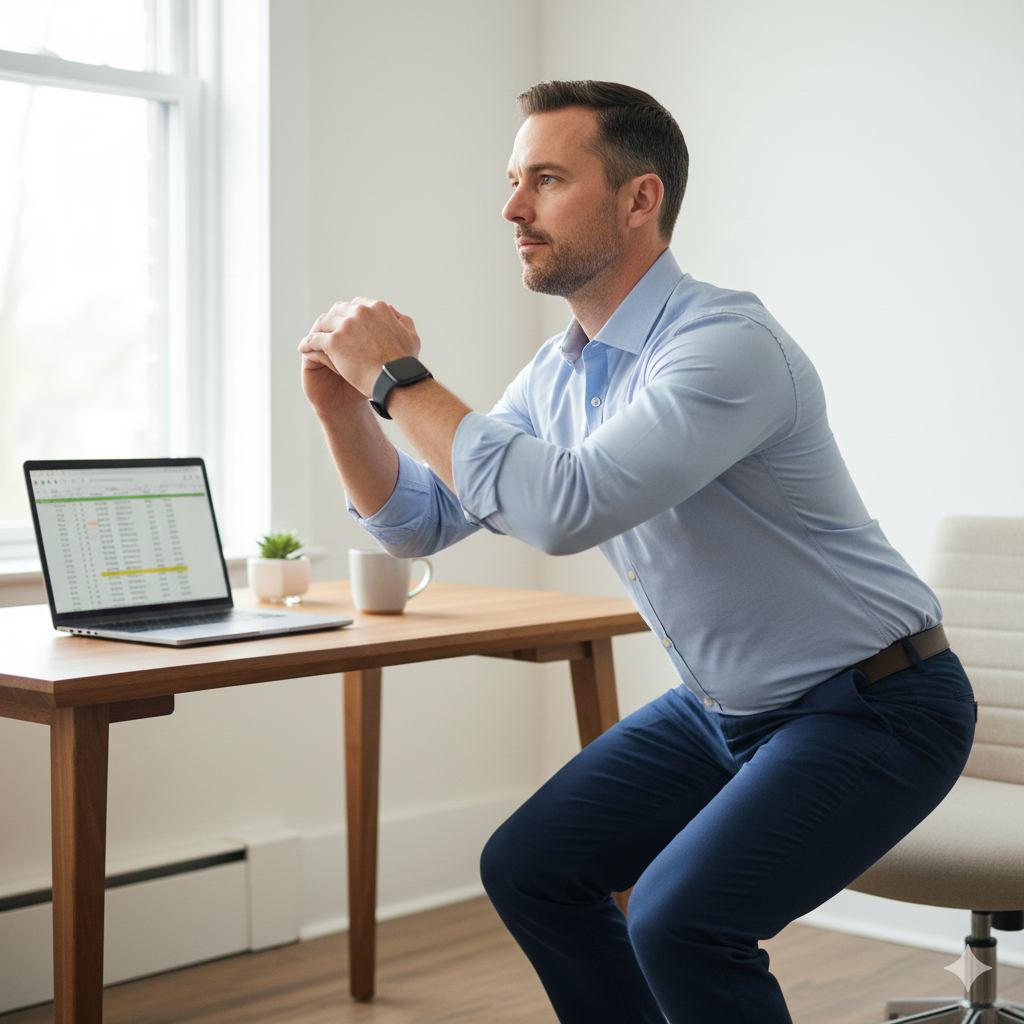
This image was created using AI to avoid copyright issues while still conveying the context of this article.
One of the biggest lies we tell ourselves is: "If I don't have an hour to work out, it isn't worth doing." This "all or nothing" mindset is the reason most people quit their fitness journey by February. Life happens. Meetings run late, kids get sick, and traffic jams occur.
If your plan requires 60 perfect minutes to be successful, your plan is fragile. To build a lasting legacy, your fitness needs to be "anti-fragile." It needs to work even when your day is falling apart. Enter the Micro-Workout.
What is a Micro-Workout?
A micro-workout is a short burst of physical activity, usually lasting between 5 and 10 minutes. It is not meant to replace your long gym sessions entirely, but it is meant to "save the day" when a full session isn't possible.
Think of it like a "fitness snack." While a full meal is better, a snack keeps you going until you can sit down for that meal. Recent studies show that these small "snacks" of exercise can improve your metabolism, lower your blood pressure, and—most importantly—keep your habit streak alive.
The Power of "Greasing the Groove"
In the fitness world, there is a concept called "Greasing the Groove." This means that doing a movement frequently makes your body more efficient at that movement.
If you do 10 push-ups every time you go to the kitchen to get water, you will have done 50-60 push-ups by the end of the day. You never got sweaty, and you never had to change your clothes, but you did more work than the person who planned to go to the gym for an hour but never made it out the door.
Three Ways to Use Micro-Workouts
The "Meeting Reset": After a long Zoom call, set a timer for 5 minutes. Do 2 minutes of bodyweight squats and 3 minutes of stretching. This clears the "stale" feeling in your legs and resets your brain.
The "Commercial Break": If you are watching TV in the evening, use the breaks to do a plank or some lunges.
The "Commuter Walk": Park at the very back of the parking lot or get off the bus one stop early. That 7-minute brisk walk counts as a micro-workout.
Why "Small" is Actually "Big"
The secret to January success isn't intensity; it's consistency. When you use micro-workouts, you stop being a person who "misses" workouts. Even on your busiest day, you can find 5 minutes.
By the end of the month, those 5-minute sessions add up to hours of extra movement. More importantly, they reinforce your identity as an active person. You are proving to yourself that your health is a priority, no matter what. Don't let the "perfect" hour get in the way of a "good" ten minutes.
The Hybrid Athlete: Balancing Strength and Running
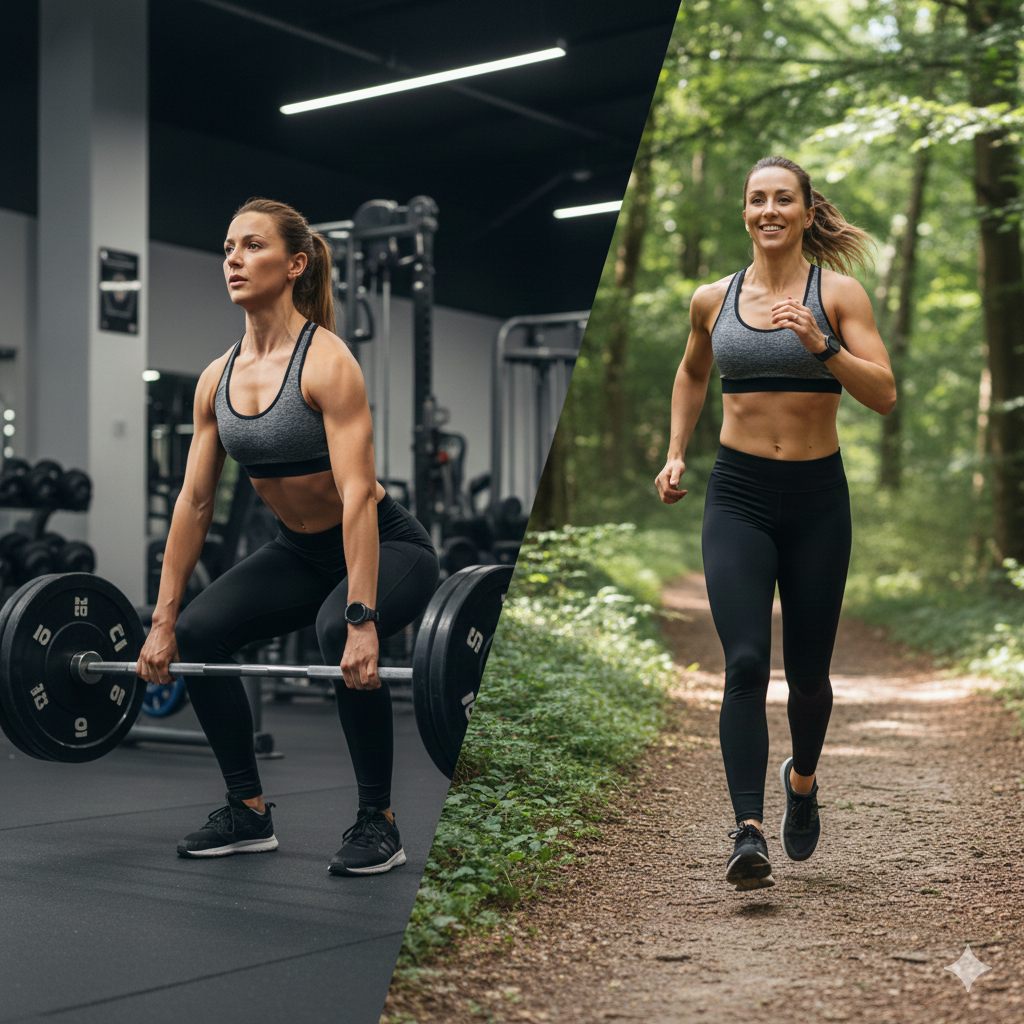
A hybrid athlete is someone who wants the best of both worlds: the strength of a lifter and the endurance of a runner. This isn't just about looking good; it is about building a body that is truly "functional" for the real world.
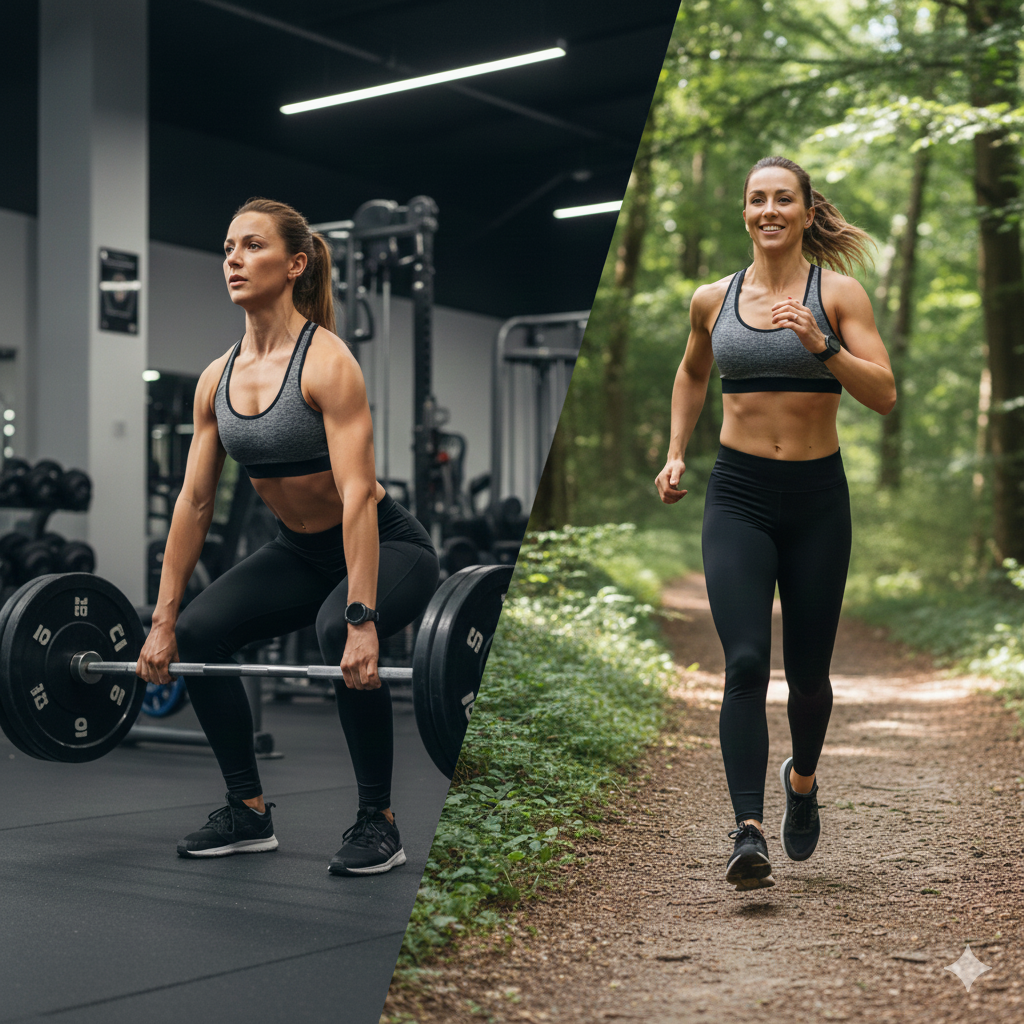
This image was created using AI to avoid copyright issues while still conveying the context of this article.
For a long time, the fitness world was divided into two camps. You were either a "weightlifter" who stayed in the gym, or you were a "runner" who stayed on the road. The lifters were afraid that running would "burn off" their muscle, and the runners were afraid that lifting would make them too "bulky" and slow.
In 2026, those walls have crumbled. The most popular trend in fitness is the "Hybrid Athlete." A hybrid athlete is someone who wants the best of both worlds: the strength of a lifter and the endurance of a runner. This isn't just about looking good; it is about building a body that is truly "functional" for the real world.
Why You Should Be Hybrid
Life doesn't ask you to pick one. You might need to lift a heavy box into the attic one day and chase your dog down the street the next. When you only train one way, you leave "gaps" in your physical legacy.
Strength training protects your bones and keeps your metabolism high. Cardio, like running or cycling, strengthens your heart and improves your lung capacity. When you combine them, you become harder to "break." You are building a body that is as resilient as it is strong.
The Myth of "Muscle Loss"
Let’s clear up a big fear: running will not make your muscles disappear. Unless you are running ultra-marathons every day while not eating enough, your body is very good at keeping its muscle. In fact, having a stronger heart helps you recover faster between sets of heavy squats. The two types of training actually help each other.
How to Build a Hybrid Schedule
The key to being a hybrid athlete is "recovery management." You can't go 100% on a heavy leg day and then try to run a personal best the next morning. Your body needs time to adapt.
Here is a simple way to structure your week:
Monday: Heavy Strength (Upper Body)
Tuesday: Moderate Run (Zone 2)
Wednesday: Heavy Strength (Lower Body)
Thursday: Rest or Light Walk
Friday: Full Body Strength / Functional Move
Saturday: Long, Easy Run or Hike
Sunday: Rest
Eat for the Work
Hybrid training requires more "fuel" than just lifting alone. You need protein to repair your muscles and carbohydrates to power your runs. This is not the time for a low-carb diet. Think of your body like a high-performance engine; you wouldn't put cheap fuel in a race car, and you shouldn't under-fuel a hybrid body.
Whether you want to compete in a "Hyrox" event or you just want to be able to carry all the groceries in one trip and not be out of breath, the hybrid approach is the future. It’s about being a "Jack of all trades" and a master of your own health.
Walking for Longevity: The 2026 'Zone 2' Trend
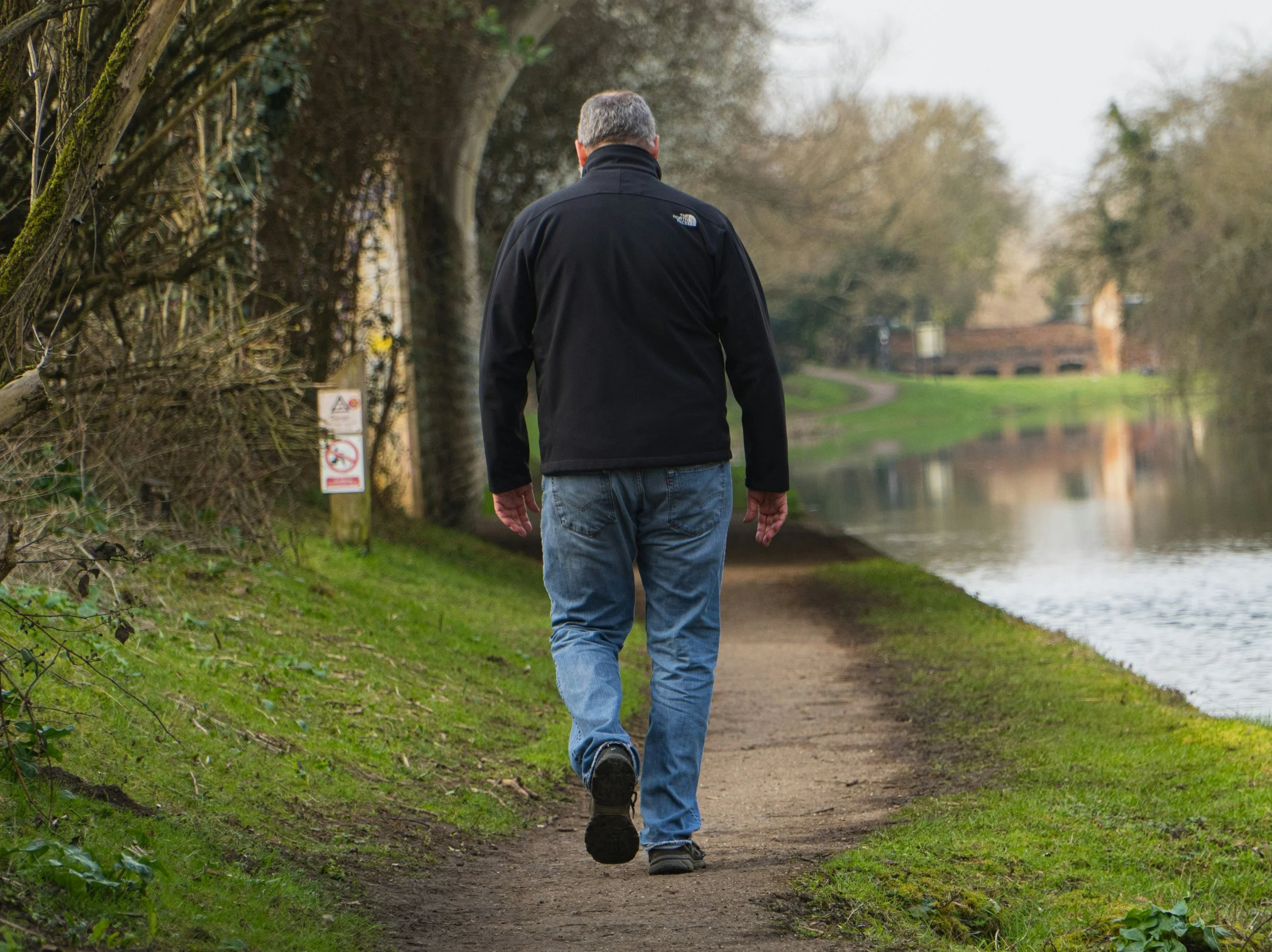
This January, don't feel like you have to punish yourself with a workout you hate. Put on your shoes, step outside, and start walking.
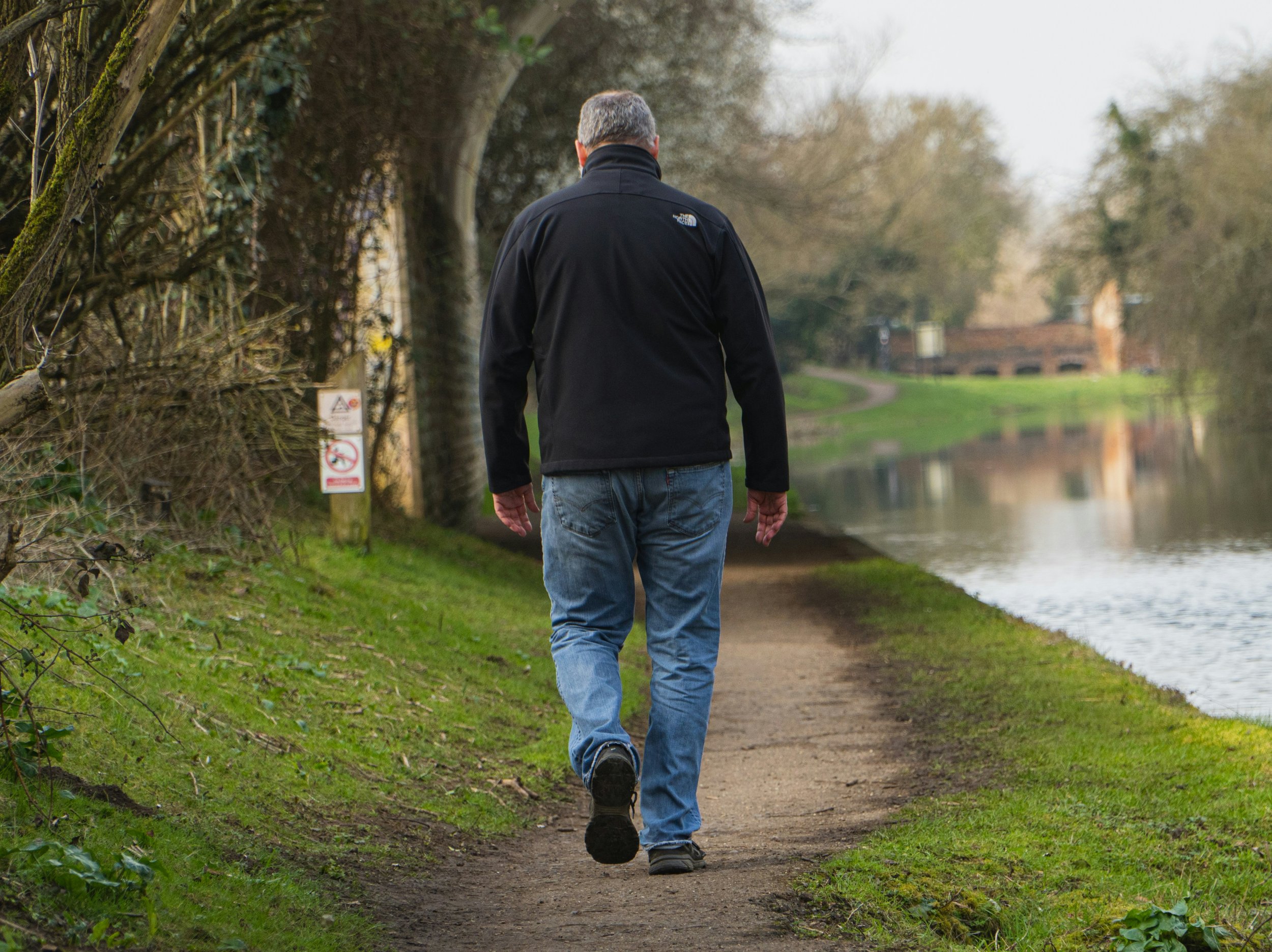
Image courtesy of Caspar Rae via Unsplash
If I told you there was a "miracle drug" that could lower your risk of heart disease, improve your mood, and help you live longer, you would probably want to buy it. What if I told you that this drug is free and you already know how to do it?
I’m talking about walking. But not just a slow stroll to the mailbox. I’m talking about a specific type of movement called "Zone 2 Training." In 2026, the biggest trend in fitness isn't a new high-intensity bootcamp. It is the return to simple, steady walking.
What is Zone 2?
Your heart rate can be divided into five zones. Zone 1 is sitting on the couch. Zone 5 is sprinting as fast as you can. Zone 2 is that "sweet spot" in the middle. It is a pace where you are moving fast enough to breathe a little harder, but you can still hold a full conversation without gasping for air.
Scientists love Zone 2 because it is the best way to train your "mitochondria." You might remember from school that mitochondria are the powerhouses of your cells. When they are healthy, you burn fat more efficiently and have more energy. As we get older, our mitochondria tend to get "rusty." Walking in Zone 2 is like polishing them so they work like new.
Why Walking is Better Than Running (Sometimes)
Many people think that if a workout isn't "hard," it isn't working. This is a myth. While high-intensity interval training (HIIT) is great for power, it puts a lot of stress on your joints and your nervous system.
Walking in Zone 2 gives you all the heart-health benefits without the "wear and tear." It is something you can do every single day without needing a long recovery time. This is why walking is the ultimate "longevity" exercise. It is the type of movement that allows you to stay active well into your 80s and 90s.
How to Do It Right
You don't need a fancy heart rate monitor to find Zone 2, though a smart watch can help. Use the "Talk Test." If you are walking and you can speak in full sentences, but you couldn't sing a song, you are in Zone 2.
To see the best results for your health legacy, try to get at least 150 minutes of this type of walking per week. That sounds like a lot, but it is just 22 minutes a day. You can break it up! A 10-minute brisk walk after lunch and another 10 minutes after dinner is a perfect way to start.
The Mental Health Bonus
Walking isn't just for your heart; it is for your head. Walking outdoors—what some call "Green Exercise"—has been proven to lower cortisol (the stress hormone). In a world that is always "on," a 20-minute walk is often the only time we have to unplug and let our brains rest.
This January, don't feel like you have to punish yourself with a workout you hate. Put on your shoes, step outside, and start walking. You aren't just burning calories; you are building a longer, healthier life, one step at a time.
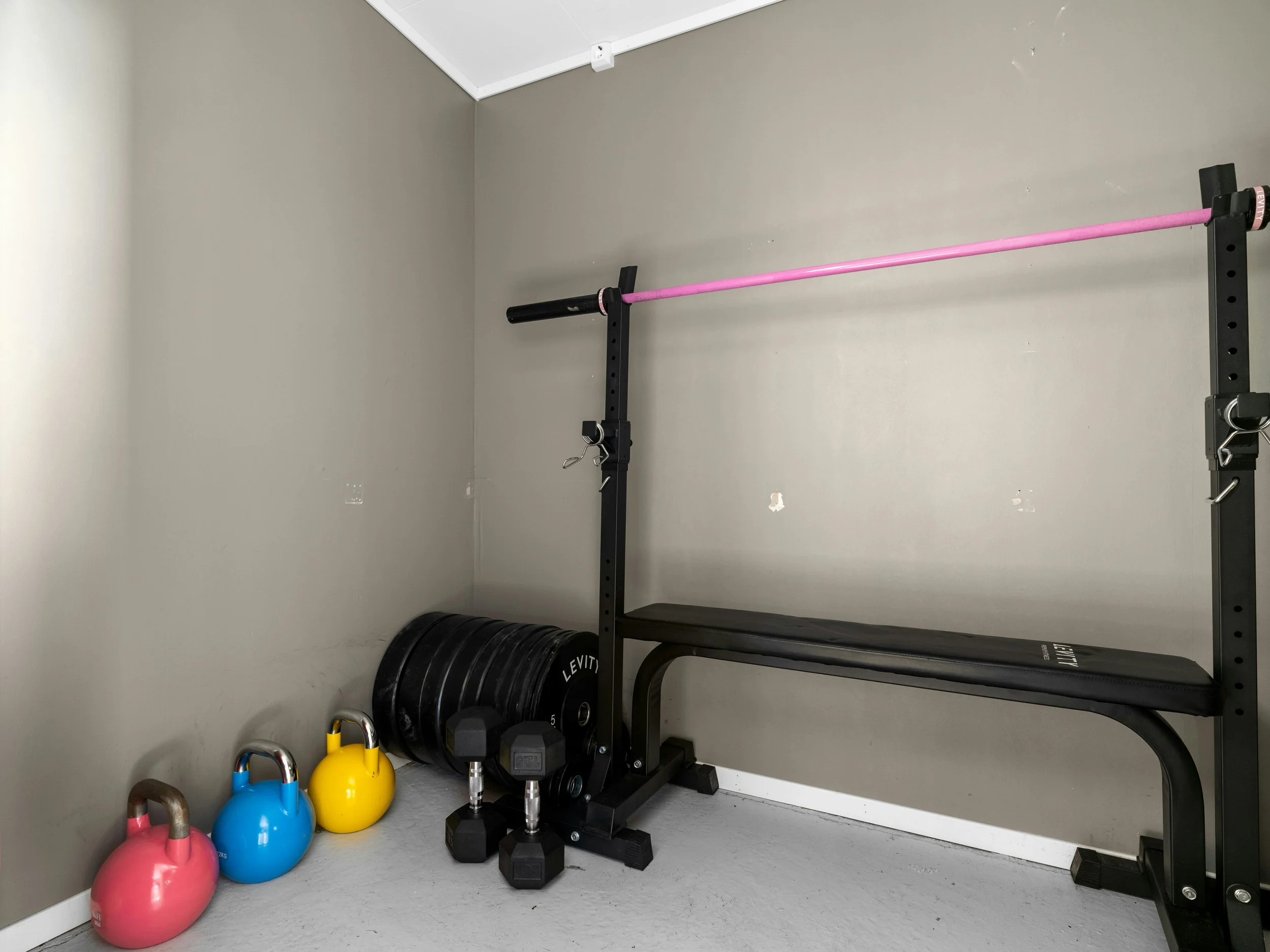
Home Gym Essentials for Under $100
You don't need a $2,000 treadmill or a smart mirror to see results. You need a plan and a few simple tools.
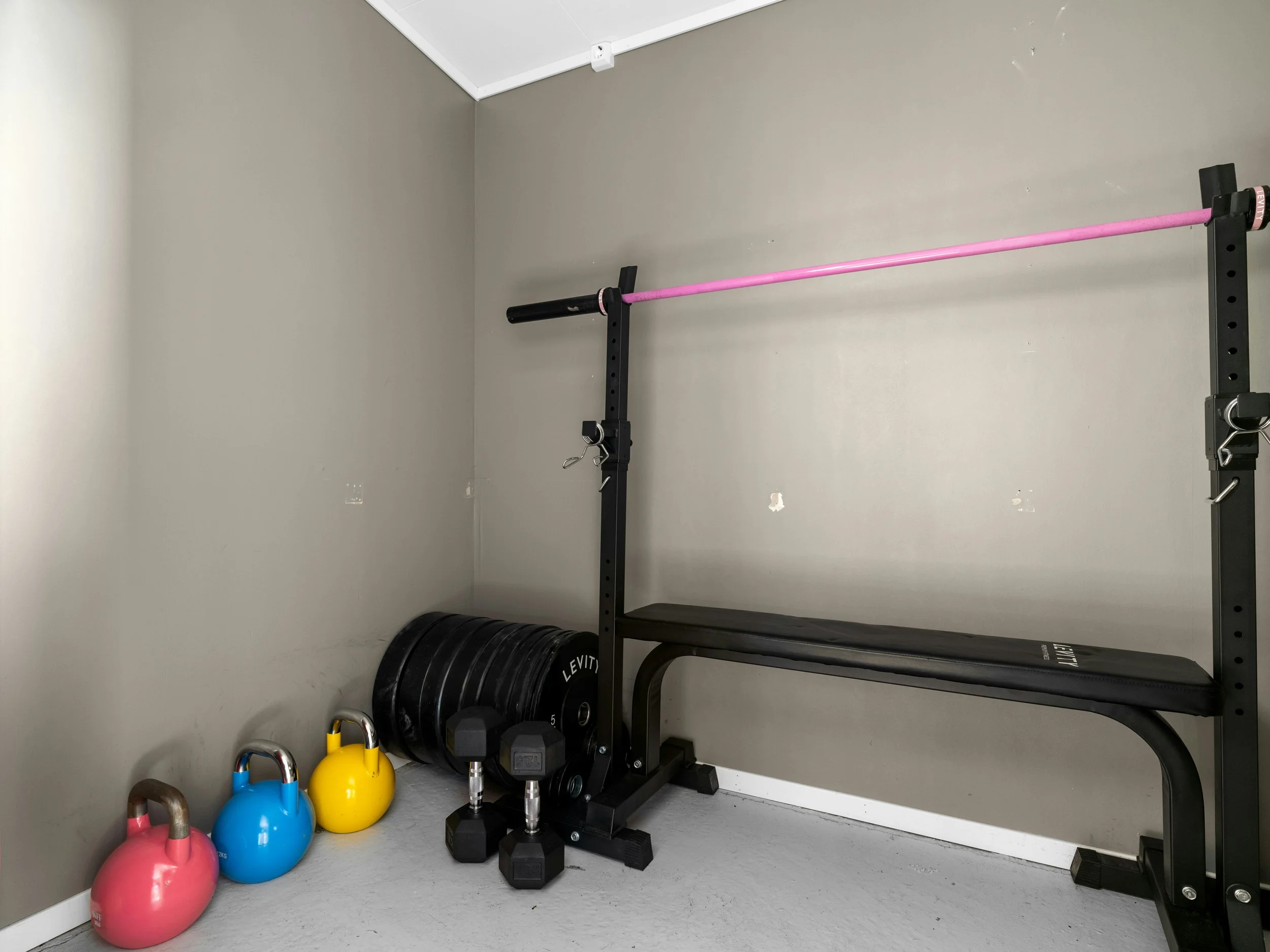
Image courtesy of Alex Tyson via Unsplash
January is the busiest month for big-box gyms. The parking lots are full, there is a line for every treadmill, and the weight room can feel a bit overwhelming. Many people decide to stay home instead, but they worry they can’t get a "real" workout without expensive machines.
I have some good news for you. You can build a highly effective "Legacy Home Gym" for less than the cost of a single pair of high-end sneakers. If you have $100 and a small corner of your living room, you have everything you need to get into the best shape of your life.
The "Big Three" of Budget Equipment
When you are on a budget, you want tools that are "versatile." This means you can use them for dozens of different exercises. Here are the three things I recommend for every home setup:
A Set of Resistance Bands ($25 - $35): These are the most underrated tool in fitness. Unlike weights, bands provide tension through the entire movement. You can use them for squats, rows, chest presses, and even stretching. They weigh almost nothing and can be tucked into a drawer when you’re done.
A Single Kettlebell ($35 - $50): If you can only buy one "heavy" thing, make it a kettlebell. The off-balance handle makes your core work harder than a standard dumbbell. A 15-pound or 25-pound kettlebell is enough to start with for swings, lunges, and overhead presses.
A Doorway Pull-Up Bar ($20 - $30): Building a strong back is hard with just bodyweight. A simple bar that hooks onto your doorframe allows you to do pull-ups or "dead hangs," which are great for shoulder health and grip strength.
Using What You Already Have
You don't have to buy everything. Your home is already full of "gym equipment" if you look closely.
The Bench: A sturdy kitchen chair or the edge of your couch is perfect for tricep dips or elevated lunges.
The Weights: A backpack filled with books or a gallon jug of water (which weighs about 8 pounds) can serve as extra resistance for squats.
The Floor: Never underestimate the power of a push-up. It is one of the best upper-body exercises ever invented, and it costs zero dollars.
Why Home Workouts Win in January
The biggest barrier to fitness is "friction." Friction is anything that makes it harder to start. Having to drive 20 minutes to a crowded gym is high friction. Rolling out of bed and grabbing a kettlebell in your pajamas is low friction.
When you remove the excuses, you increase your consistency. You don't need a $2,000 treadmill or a smart mirror to see results. You need a plan and a few simple tools. Start small, build your collection over time, and focus on the work. Your body doesn't know how much you spent on your equipment; it only knows that you showed up.

The Identity Shift: Why This Year is Different
This year, don't just set a resolution. When you trust yourself to show up, your identity changes. When your identity changes, your life changes.

Image courtesy of Alex Avalos via Unsplash
Every January, millions of people make the same mistake. They set a goal to "lose weight" or "go to the gym five times a week." These are good goals, but they are missing the most important piece of the puzzle. They focus on what you want to do, rather than who you want to be.
This is what experts call an "Identity Shift." If you want your fitness results to last longer than a few weeks, you have to change how you see yourself. Most people see themselves as someone who is "trying" to be healthy. When life gets busy or they have a bad day, they go back to their old self. This year, we are going to change the operating system of your life.
What is an Identity Shift?
Think about two people who are offered a cigarette. The first person says, "No thanks, I’m trying to quit." The second person says, "No thanks, I’m not a smoker."
Do you see the difference? The first person still believes they are a smoker who is trying to change. The second person has changed their identity. Being a non-smoker is now part of who they are. In 2026, we want you to stop being someone who is "trying to get fit" and start being someone who "values their health."
Why Habits Snap Back
Your brain loves patterns. It wants to keep you doing what you have always done because it is safe and easy. This is why you might start strong in January but find yourself back on the couch by February. Your habits are snapping back to match the identity you believe is true.
If you believe "I am just not a morning person," it won't matter how many alarms you set. You will eventually hit snooze. To make a change stick, you have to prove to yourself that your new identity is real. You do this with small wins.
How to Build Your New Identity
You don't change your identity by thinking about it. You change it through your actions. Every time you choose a healthy snack, you are casting a vote for the person you want to become. Every time you put on your walking shoes, you are reinforcing the idea that you are an active person.
Here is how to start your shift this January:
Pick a Word: Choose one word that describes who you want to be. It could be "Athlete," "Resilient," or "Consistent."
Lower the Stakes: Don't try to be perfect. If your goal is to be a "Runner," and you only have ten minutes, go run for ten minutes. A runner is someone who runs, even if it is just a little bit.
Audit Your Language: Stop saying "I'm lazy" or "I have no willpower." Start saying "I am learning to prioritize my energy" or "I am someone who follows through on my promises."
The Power of the Identity Bridge
An identity bridge is a small behavior that connects your old self to your new self. It should be so easy that you can't fail. If you want to be someone who eats well, your bridge might be "drinking one full glass of water before my morning coffee."
These small acts are not just about the water or the walk. They are about building trust with yourself. When you trust yourself to show up, your identity changes. When your identity changes, your life changes. This year, don't just set a resolution. Build a legacy by becoming the person who makes those results happen naturally.

Happy New Year! Start with a Single, Perfect Push-Up (The Power of 1)
Happy New Year! Today, you do not need to do two hours of exercise. You do not need to cut every single thing you love. You simply need to execute The Power of 1.

Image courtesy of Soumitra Sengupta via Unsplash
Happy New Year! The calendar flips to to January 1st tomorrow. The pressure is on, the gyms will be packed, and the enthusiasm for change is high.
Many people feel they must launch their new routine with a massive, punishing two-hour workout, an immediate, drastic diet overhaul, or an aggressive five-mile run. They believe the sheer size of the effort must match the size of the goal.
At Legacy Fitness & Nutrition, we encourage the opposite approach for the single most important day of the year: Start with a single, perfect action.
Today, you do not need to do two hours of exercise. You do not need to cut every single thing you love. You simply need to execute The Power of 1. That first small, perfect action is the signal that you are committed, in control, and ready for a consistent year.
The Power of 1: Momentum Beats Effort
The goal of January 1st is not to prove how strong you are; it is to prove how consistent you can be. Consistency is the true currency of a lasting health legacy.
The first action of the year should be so easy that you cannot logically skip it.
1. The Single, Perfect Push-Up
The push-up is a great, foundational functional movement. It is a full-body exercise that requires core stability, arm strength, and chest engagement.
The Action: Perform one perfect push-up. If you cannot do a floor push-up yet, do one perfect push-up against a wall or an elevated surface (like a kitchen counter).
The Goal: The goal is not exhaustion; the goal is perfection and completion. You are not trying to build muscle in that one rep; you are sending a powerful signal to your brain: "The year has started, and the workout is done." This creates immediate momentum.
2. The Single, Perfect Meal
Do not use January 1st for extreme fasting or cutting. Use it to establish a strong nutritional anchor for the day.
The Action: Eat one meal that is perfectly structured: high in protein, packed with fiber-rich vegetables, and clean. (See article, Protein Power for the New Year).
The Goal: You are demonstrating control and intention. That one clean meal proves that your system is back online and that the indulgence of the holidays is over. You are establishing the baseline for the rest of the week.
3. The Single, Perfect Habit Stack
As we discussed in The Micro-Habit Playbook, habits need an anchor. The first day of the year is when you set that anchor firmly in the ground.
The Action: Commit to starting one single micro-habit that you will attach to an existing routine.
Example: "Right after I finish my first cup of coffee, I will drink a full glass of water."
The Goal: This creates immediate structure. You are automating a positive action so it is not reliant on willpower. This small action will carry you through the rest of the year.
Forget the Overhaul, Focus on the Launch
The trap of the New Year is feeling overwhelmed by the size of the challenge ahead. A single, perfect action breaks that feeling of overwhelm into manageable chunks.
When you finish that one perfect push-up, you have already won the day. You have proven that you are in control. You have built immediate momentum that makes the second action easier, and the third even easier.
Today, forget the resolutions that require massive effort. Focus on The Power of 1. Start small, start perfect, and build your legacy of health one powerful, consistent action at a time. Happy New Year from Legacy Fitness & Nutrition!