
Travel & Training: How to Stay on Track Away from Home
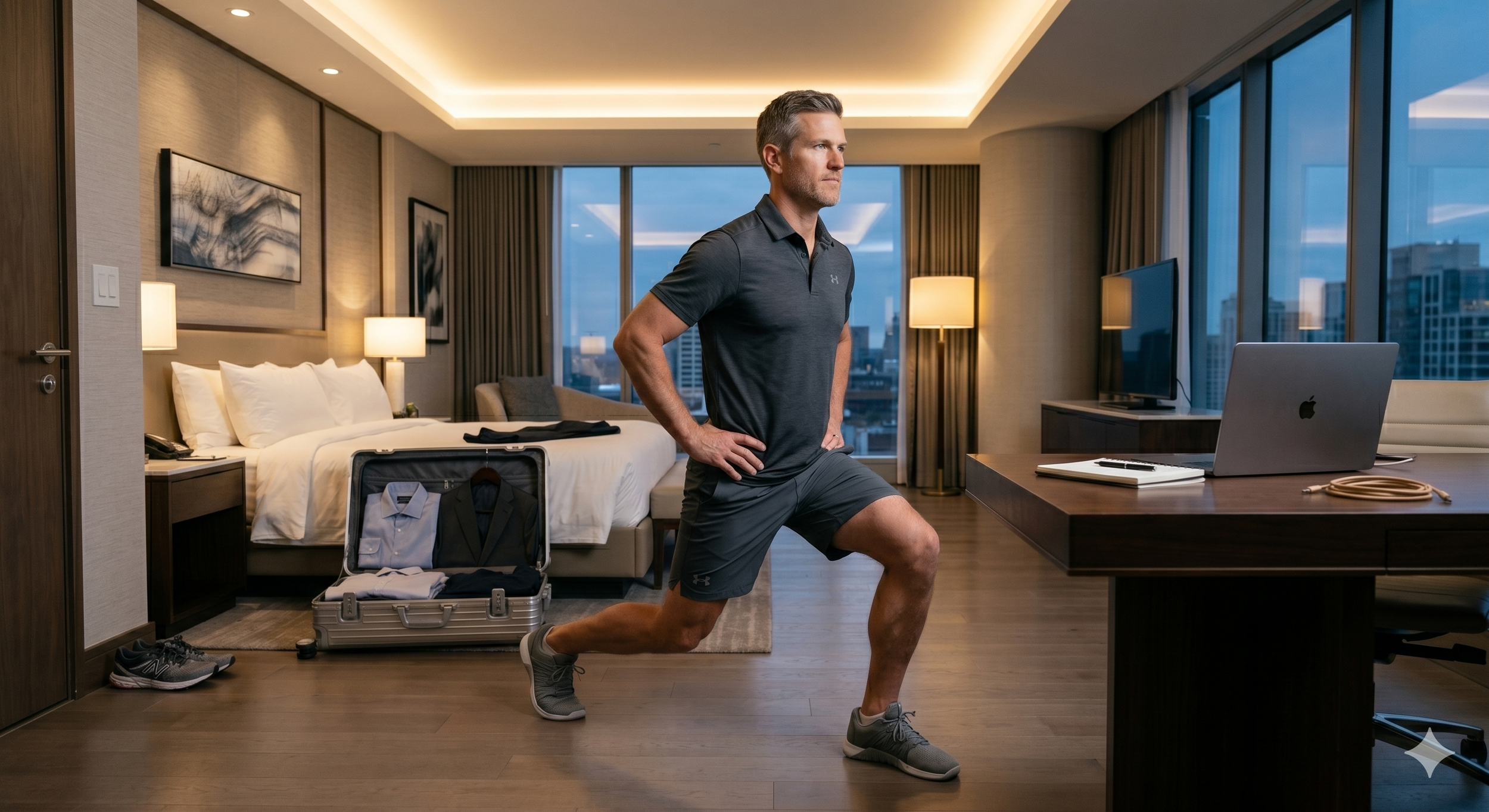
This image was created using AI to avoid copyright issues while conveying the context of this article.
For many high-performers, travel is a regular part of the job. Whether it is a cross-country flight for a conference or a week of back-to-back meetings in a new city, being away from home can easily disrupt your health systems. Many people fall into the trap of thinking that because they aren't in their "home" environment, their fitness goals have to go on pause. They treat travel like a "get out of jail free" card for their nutrition and training.
The problem with this mindset is that for a busy professional, travel isn't a rare event; it is a consistent part of life. If you "pause" your health every time you board a plane, you are spending a large portion of your year moving backward. The secret to staying fit while traveling is not about finding the perfect hotel gym or the healthiest restaurant in town. It is about having a portable system that allows you to maintain your momentum no matter where you wake up.
The "Maintenance" Mindset
The first thing to understand is that travel is usually not the time to try and set new personal records in the weight room. The goal of training while traveling is maintenance. You want to send a loud enough signal to your body to keep its muscle and stay metabolically active.
If you can't get in your full 60-minute session, don't throw away the whole day. A 15-minute "Micro-Workout" in your hotel room is infinitely better than doing nothing. It keeps the habit alive and prevents the "stiffness" that comes from sitting in airplanes and boardrooms. Think of it like keeping a pilot light lit; it’s much easier to turn the heat back up when you get home if the flame never went out.
The Hotel Room Strength Strategy
You do not need a rack of dumbbells to protect your muscle mass. Your body weight and the environment around you provide plenty of resistance if you know how to use them. If your hotel gym is lacking (or non-existent), you can use a "Time-Under-Tension" strategy to make simple movements much harder.
Focus on the big movement patterns:
The Squat: Perform slow, controlled bodyweight squats or "split squats" with one foot on the edge of the bed.
The Push: Use elevated push-ups off the desk or standard push-ups on the floor.
The Pull: This is often the hardest to do without equipment. You can use a heavy suitcase for rows or look for a sturdy door frame to perform "doorway rows."
The Core: Planks and "dead bugs" require zero space and help counteract the effects of sitting in cramped seats all day.
The key is intensity. If you are doing bodyweight movements, perform them slowly and focus on the "squeeze" of the muscle. Ten slow, perfect reps are more effective than 20 fast, sloppy ones.
Navigating the "Road Food" Challenge
Nutrition is often where travel goes off the rails. Airport terminals and hotel room service menus are designed for convenience and comfort, not for protein density. However, you can manage your "calorie budget" on the road by following two simple rules: Protein First and Hydration Always.
When looking at a menu, look for the leanest protein source available: grilled chicken, salmon, or even a lean steak. Make that the centerpiece of your meal. If you prioritize your protein, you will feel more satisfied and be less likely to overeat on the high-calorie "filler" foods like bread baskets or pasta sides.
Additionally, travel is incredibly dehydrating. The "fatigue" you feel after a flight is often just severe dehydration. Carry a reusable water bottle and consider using an electrolyte mix. Proper hydration keeps your brain sharp for your meetings and prevents your body from mistaking thirst for hunger.
Packing Your Success
Successful travel training starts before you leave the house. A little bit of "strategic packing" can save your week.
Resistance Bands: These take up almost no room in a carry-on but can add significant challenge to your hotel room workouts.
Portable Protein: Pack a few servings of high-quality protein powder or jerky. This ensures you have a "safety net" when you’re stuck in a meeting that runs through lunch.
The "Uniform": Pack your gym clothes on top. It’s a visual reminder of your commitment the moment you open your suitcase.
Leading Yourself on the Road
Managing your health while traveling is the ultimate test of your systems. It requires you to be the CEO of your own body when the environment is working against you. By choosing to move and fuel yourself intentionally, you aren't just protecting your muscle; you are building the mental resilience that makes you a better leader.
At Legacy Fitness, we help our clients design "Travel Protocols" that fit their specific itineraries. We don't want your progress to stall just because you’re at 30,000 feet. With a few simple shifts in mindset and a portable strength strategy, you can return home feeling stronger and more energized than when you left.
