
Breaking the All-or-Nothing Mindset After a Weekend Off-Track
The all-or-nothing mindset is one of the biggest reasons people struggle to stay consistent with their fitness and health goals.
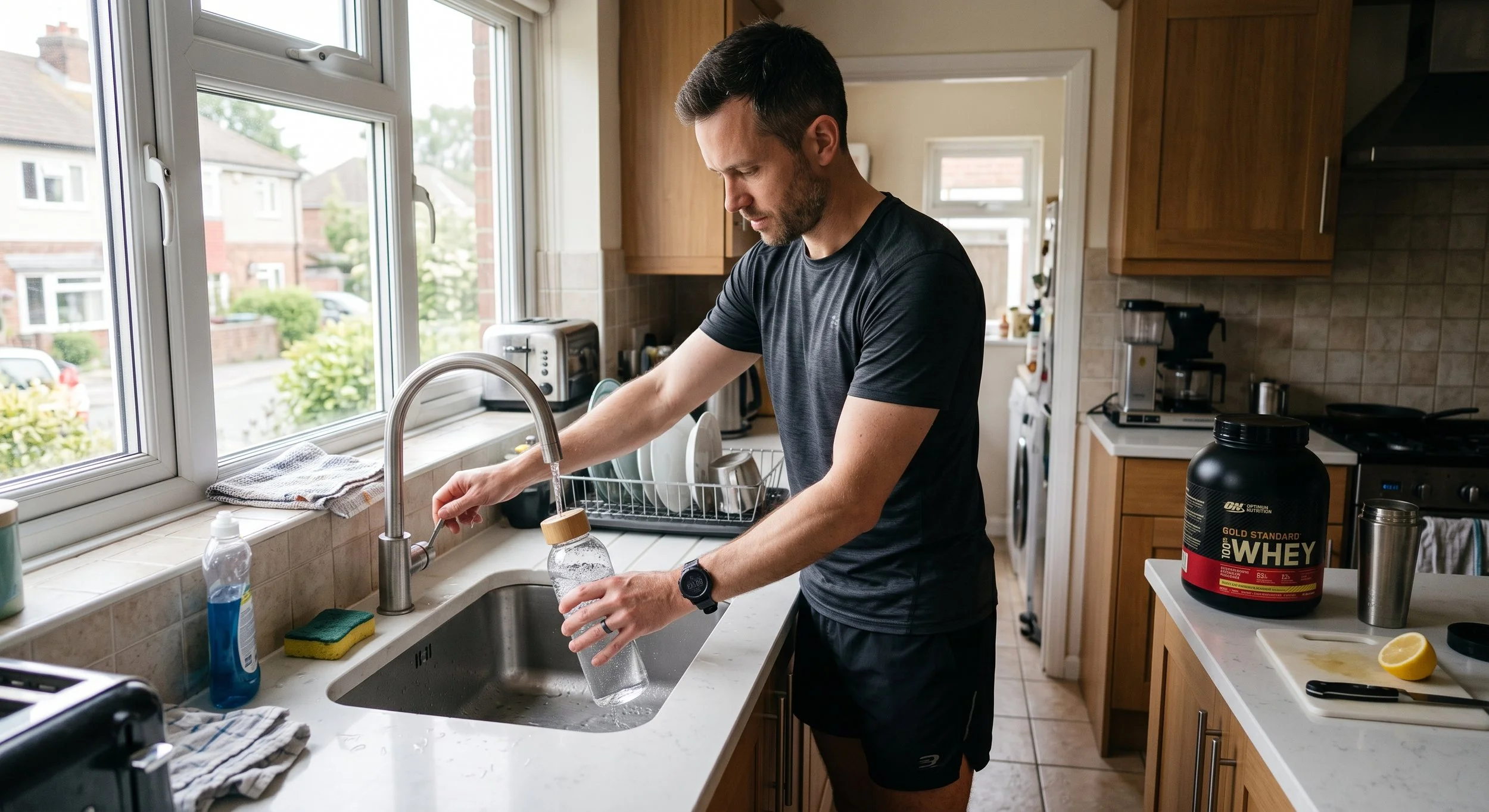
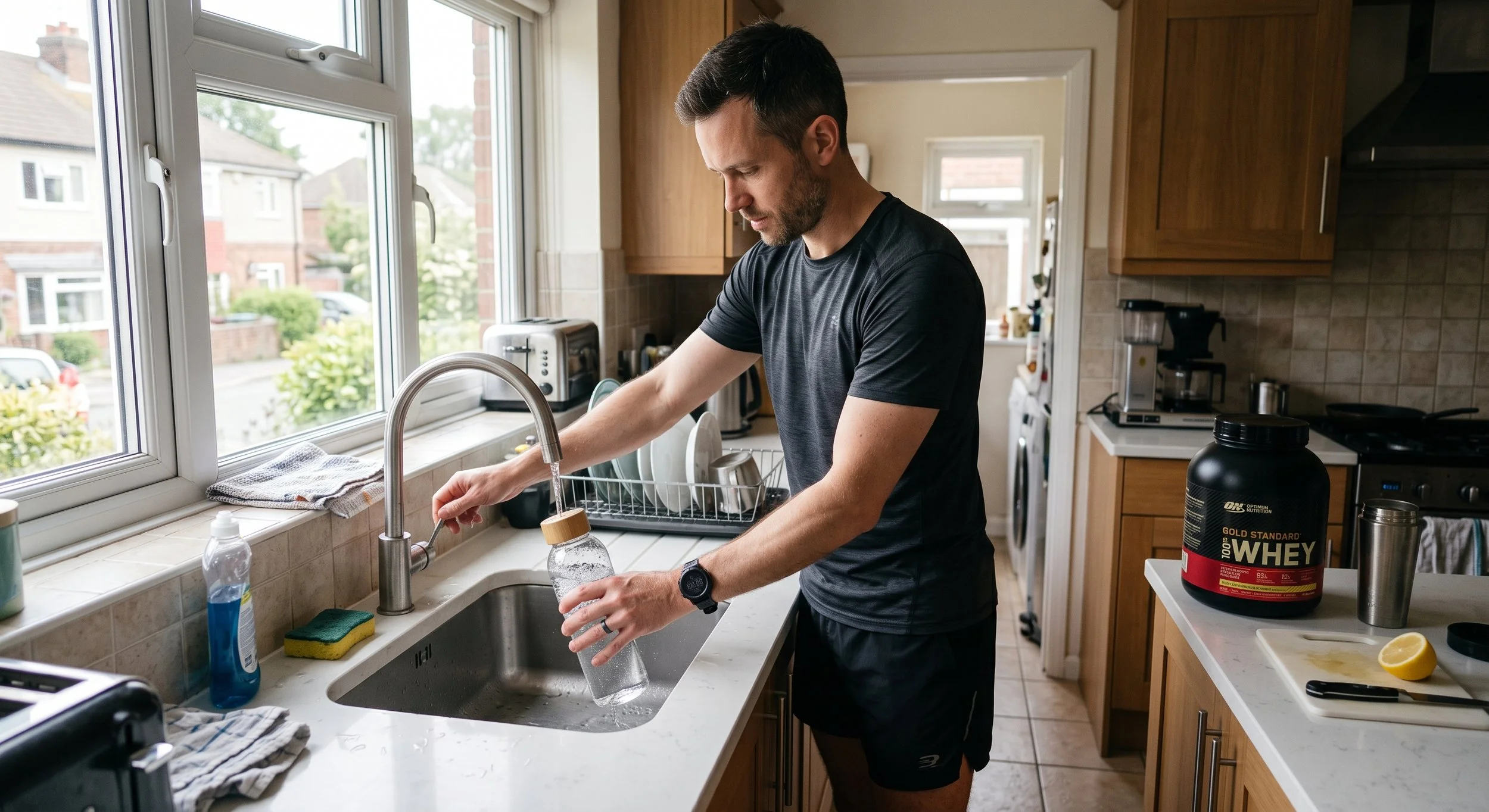
This image was created using AI to avoid copyright issues while conveying the context of this article.
Picture this: It is Sunday night. You look back at the last 48 hours and realize things did not go according to plan. Friday night brought extra pizza slices. Saturday included a few drinks with friends and a missed workout. Sunday turned into a lazy morning with a heavy brunch.
Suddenly, a familiar thought creeps into your head: "I ruined my whole week. I might as well eat whatever I want tonight and start over on Monday."
This is the all-or-nothing mindset in action. It is one of the biggest reasons people struggle to stay consistent with their fitness and health goals. But here is the truth that most extreme fitness gurus will not tell you: One off-track weekend will not destroy your progress, but the belief that you ruined everything absolutely will.
The Science of the "What the Hell" Effect
Psychologists have a name for this cycle. They call it the "What the Hell" effect. It happens when you set a strict rule for yourself, accidentally break it, and then decide that because you broke the rule, you might as well completely blow past all your limits.
Think about it like this: If you dropped your cell phone on the floor and noticed a small scratch on the screen, would you pick it up and smash it with a hammer until it was shattered? Of course not. That would be absurd. Yet, that is exactly what we do to our diet and exercise habits when we let one heavy meal turn into three days of overeating.
Your body does not run on a 24-hour clock that resets every Monday morning. Your progress is built over weeks, months, and years. One weekend off-track is simply a tiny blip on a very long timeline.
Step 1: Ditch the Guilt and Extra Cardio
When Monday morning rolls around after a heavy weekend, the most common reaction is panic. People try to punish themselves. They sign up for two cardio classes in one day. They cut their food intake in half to "make up for" the calories they ate over the weekend.
This approach almost always backfires.
When you starve yourself or over-exercise to punish your body, you create intense hunger and fatigue. By Wednesday or Thursday, your energy crashes, your cravings spike, and you end up overeating all over again. The cycle repeats, and you stay stuck in the same place for months.
Instead of trying to undo the weekend, accept it. You had some fun, ate some good food, and took a break. Now, simply return to your normal routine. Eat a balanced breakfast with plenty of protein. Drink a glass of water. Go for a brisk walk or hit your planned workout. Do not try to do extra. Just do what was already on your schedule.
Step 2: Use the "Next Decision" Rule
You do not need a fresh week, a new month, or a clean Monday morning to get back on track. You only need one good decision.
The next time you catch yourself overeating or missing a workout, stop and ask yourself a simple question: "What is the single best decision I can make right now?"
If you ate a heavy lunch, the next decision is to have a lean protein and vegetable dinner.
If you missed your morning workout, the next decision is to go for a 15-minute walk after work.
If you slept in on Saturday, the next decision is to drink a full bottle of water and prep a healthy meal.
Progress is not about perfection. It is about momentum. Making one good choice immediately stops the slide and builds your confidence back up.
Step 3: Stop Creating Rules You Hate
The all-or-nothing mindset thrives on rules that are too strict. If your fitness plan requires you to eat chicken and plain rice six times a day and train seven days a week, you are setting yourself up to fail. Life happens. Social events come up. Work gets busy.
A sustainable plan accounts for real life. It allows you to enjoy a meal out with your family without feeling like you failed. When your baseline routine is flexible, a fun weekend is no longer a crisis; it is just part of living a balanced life.
Focus on mastering the basics:
Aim for three to four solid strength training sessions each week.
Eat a palm-sized portion of protein with every main meal.
Get seven to eight hours of sleep each night.
Walk 7,000 to 10,000 steps daily.
When these habits become your baseline, an off-track weekend will not shake your confidence or stop your momentum. You do not need to restart your journey every Monday. You just need to keep moving forward, one choice at a time.

Personalized Fitness Plans for Long-Term Weight Loss in 2026
Long-term weight loss, the kind that doesn't reverse the moment you stop paying close attention, comes from building a system that fits your life rather than a plan you temporarily tolerate.

This image was created using AI to avoid copyright issues while conveying the context of this article.
You've probably tried the plan that worked for your coworker. Or the one your college roommate swore by. Maybe you downloaded a popular app, followed the macros to the letter for three weeks, and got nowhere. You weren't doing it wrong. You were doing someone else's plan.
That's the central problem with weight loss in 2026: there's more information available than ever, and most of it isn't designed for you. Generic programs are built for averages. You are not average. You have a specific schedule, a specific stress load, a specific hormonal profile, and a specific history with food and training. When those factors go unaddressed, no plan survives contact with your actual life.
Why Generic Programs Keep Failing Busy Professionals
Most commercial fitness plans are built for someone with unlimited time, low stress, and a body that hasn't been through 20 years of desk work, travel, poor sleep, and the inevitable metabolic shifts that come with being in your 40s or early 50s. That's not a criticism of those programs. It's just math.
When you're a busy professional or entrepreneur, your training window might be 35 minutes on a good day. Your cortisol levels run high because deadlines are real. Your sleep is inconsistent because life is inconsistent. A plan that calls for six days a week of structured training and aggressive caloric restriction doesn't account for any of that. It sets you up to fail within two weeks, then blames your willpower.
The shift that changes everything is moving from compliance-based thinking to systems-based thinking. Instead of asking "can I stick to this plan," start asking "is this plan built for the conditions I actually live in."
What Personalization Actually Means
Personalization isn't picking your favorite exercises or swapping chicken for salmon. It means building a program around the variables that actually drive your results.
Start with your schedule. Not your ideal schedule; your real one. If you can reliably train three times per week for 40 minutes, that's your foundation. A good plan works within that window, not despite it. Consistency at 80 percent effort beats perfection at 20 percent adherence every single time.
Next, account for your recovery capacity. Stress from your job is physiological stress. Your body doesn't distinguish between a brutal board meeting and a hard conditioning session. Both draw from the same recovery pool. If your workload spikes for two weeks, your training load needs to flex. Rigid programs don't do that. Personalized ones do.
Your nutrition plan needs to reflect how you actually eat, not how a fitness influencer eats. If you travel four days a month, your calorie targets and food strategies need a travel protocol. If you skip breakfast because you're genuinely not hungry until noon, forcing an early meal because "breakfast is important" may work against your natural appetite cues. The goal is a structure you can maintain across seasons, not just a six-week sprint.
The Role of Tracking in 2026
Wearables have gotten remarkably accurate. Heart rate variability, sleep staging, resting heart rate trends, and even body temperature data now give coaches and clients a real-time window into recovery and readiness. In 2026, ignoring this data is like navigating without GPS when you have it in your pocket.
That said, tracking is a tool, not a verdict. Your HRV being low on a Monday doesn't mean you're broken. It means you adjust. You do the lighter session. You prioritize sleep. You hold the harder training day for Wednesday. Personalized programming uses this data to make smart pivots, not to create anxiety.
For weight loss specifically, tracking your actual food intake, even loosely, remains one of the highest-leverage habits you can build. You don't need obsessive precision. But knowing your rough calorie range and protein intake gives you data to work with when progress stalls, which it will at some point. When that happens, adjusting becomes a math problem, not a mystery.
Building a Plan That Lasts
Long-term weight loss, the kind that doesn't reverse the moment you stop paying close attention, comes from building a system that fits your life rather than a plan you temporarily tolerate.
That means your training format matches your energy patterns. Your nutrition strategy accounts for social meals, travel, and high-stress weeks. Your recovery protocols, whether that's sleep hygiene, active rest, or stress management, are built in, not treated as extras.
Progress checkpoints matter too. A personalized plan isn't static. It evolves as you do. What works in month one will need to shift in month four as your fitness improves, your body adapts, and your schedule changes. Building in regular reassessments, every four to six weeks is a solid rhythm, keeps the plan aligned with where you actually are.
The Coaching Advantage
You can build a decent personalized plan on your own if you're willing to learn the principles and honest about your data. Most people, though, benefit enormously from having an experienced set of eyes on their situation. A coach doesn't just write workouts. They help you see what you're too close to see yourself: the inconsistency pattern, the nutrition blind spot, the training load that's subtly too high for your current recovery capacity.
At Legacy Fitness, we build plans around your actual life, not a fictional version of it. Our clients are busy people who need a system that works when things get hard, not just when conditions are ideal. If that's the kind of structure you're looking for, we'd like to show you what that looks like for you specifically.

The "Travel-Proof" Plan: Staying Fit on the Road
The sign of a solid travel plan isn't that you came home exactly where you left off. It's that you came home without needing a week to undo the damage.

This image was created using AI to avoid copyright issues while conveying the context of this article.
You finally get ahead of your training, your nutrition feels dialed in, and then a business trip blows everything up. Sound familiar? Travel is one of the most reliable consistency-killers for busy professionals, but it doesn't have to be. The goal isn't to maintain a perfect routine when you're on the road. The goal is to maintain enough of one that you come home without losing ground.
Here's how to build a plan that actually holds up when your schedule doesn't.
Start With a Non-Negotiable Minimum
Most people fail at travel fitness because they approach it as all-or-nothing. If they can't do their full workout, they do nothing. That mindset is expensive. A two-week trip with zero movement adds up fast, especially for people over 40 whose bodies respond more aggressively to detraining.
Before your next trip, decide on one non-negotiable minimum. This could be 20 minutes of movement every morning, a daily step count, or three resistance training sessions per week regardless of location. The bar should be low enough that skipping it feels like a choice rather than a scheduling conflict.
One rule works better than a complex system. Keep it simple enough to execute in a hotel room, an airport layover, or a schedule that's been hijacked by a dinner that ran two hours long.
Treat the Hotel Room as Your Gym
Most hotel gyms are underwhelming. A single cable machine, two dumbbells, and a treadmill that's been out of calibration since 2019. Stop expecting the facility to carry your workout. Your body is the equipment.
A bodyweight circuit built around push-up variations, hip hinges, single-leg work, and core stability will maintain strength and muscle far better than skipping sessions because the gym wasn't what you hoped for. If you have resistance bands in your bag (they weigh nothing, take up no space), you can add meaningful load to rows, presses, and hip work without a single barbell.
A sample travel session that takes 25 minutes: three rounds of push-ups, Romanian deadlifts with a band, reverse lunges, inverted rows using a desk or countertop, and a plank hold. That's a full-body stimulus that requires no equipment beyond what you packed for work.
Protein First, Every Meal
Nutrition is where travel tends to do the most damage, and it usually comes down to two things: skipped meals that lead to poor choices later, and meals where protein is an afterthought.
The simplest travel nutrition rule is this: anchor every meal with protein first. When you're at a restaurant, scan for the protein option before anything else. At the airport, Greek yogurt, string cheese, a rotisserie chicken, or a turkey wrap is always available if you look. At the hotel breakfast buffet, eggs exist. Build your plate around them.
When you anchor to protein, the rest of the meal becomes easier to manage. You're more satisfied, less likely to graze at the snack table during a conference session, and more likely to stay in a reasonable calorie range without tracking anything.
Stay Ahead of Dehydration
Flights are dehydrating. Client dinners come with open bars. Cities you don't know well mean you're less likely to have water within reach. Dehydration compounds fatigue, impairs decision-making, and makes the bad food choices feel much more appealing.
The fix is mechanical, not motivational. Carry a water bottle through every airport. Set a phone reminder if needed. Before any meal where alcohol is likely, drink a full glass of water first. These aren't complicated strategies; they just need to be deliberate rather than accidental.
Sleep Is the Recovery You're Not Protecting
You can get the workout in. You can eat the right protein. But if you're staying up until midnight on back-to-back client nights and flying on five hours of sleep, your body is not recovering. Sleep is where the adaptation from training actually happens. Shortchange it consistently and you'll come home feeling like you've moved backward regardless of how many sessions you got in.
On the road, sleep is the hardest variable to control but also the one with the biggest payoff. Blackout curtains, a travel sleep mask, keeping your room cold, and avoiding screens in the last 30 minutes before bed are all small investments that compound over a four-night trip.
Come Home Ready to Re-Enter, Not Recover
The sign of a solid travel plan isn't that you came home exactly where you left off. It's that you came home without needing a week to undo the damage. You're not bloated from five days of restaurant food, you're not undertrained from doing nothing, and you're not exhausted from sleeping poorly every night.
That's the bar. Not perfection. Continuity.
At Legacy Fitness, we work with busy professionals who travel frequently and need a structure that bends without breaking. Our coaching programs are designed around real schedules, not ideal ones. If your travel schedule is the biggest thing standing between you and consistent progress, we can help you build a plan that accounts for it before it derails you again.

The Science of the 30-Minute Window: Why Intensity Beats Duration
For a busy executive, brevity is not a compromise. It is a biological strategy.

This image was created using AI to avoid copyright issues while conveying the context of this article.
Many professionals carry a lingering sense of guilt when they cannot spend an hour in the gym. You have likely been conditioned to believe that a truly effective workout requires a massive investment of time. If you only have 30 minutes between a late-afternoon board meeting and a family obligation, a voice in your head says, "Why bother? Half an hour isn't enough time to get a real result."
So, you skip the session entirely. You treat fitness as an all-or-nothing proposition.
This mindset is based on an outdated, unscientific view of human physiology. Your body does not possess a time clock that activates results only after the 60-minute mark. Your muscles respond to biological triggers, structural tension, and metabolic stress. When you understand the science of human performance, you realize that a highly calculated, dense 30-minute training block can easily outperform a casual, distraction-filled hour in a commercial gym.
For a busy executive, brevity is not a compromise. It is a biological strategy. By shifting your focus from the duration of your workout to the quality of your physical stimulus, you can unlock massive fat loss, accelerate muscle retention, and protect your schedule.
The Power of Density and Tension
To understand why a short workout can be superior, you must understand the concept of training density. Density is the amount of physical work you perform relative to the total time you spend in the environment.
Most people spend an hour in the gym, but their actual training density is incredibly low. They perform a set of an exercise, scroll through their smartphone notifications for three minutes, wander over to a water fountain, and casually chat with a peer. Out of a 60-minute visit, their muscles are under actual tension for less than ten minutes. The rest of the block is simply administrative waste.
A time-boxed, 30-minute routine removes the fluff. By utilizing structured pairing techniques, such as supersets or alternating push-and-pull movements, we keep your body in a state of continuous, managed output. You perform an upper-body pressing movement, and while those specific muscle fibers recover, you immediately transition into a lower-body pulling movement. Your rest periods are calculated with a stopwatch. This approach ensures your muscles experience optimal structural tension in half the time, maximizing your physical return on investment.
Triggering the Metabolic Afterburn
A major benefit of high-efficiency training is a physiological phenomenon known as Excess Post-Exercise Oxygen Consumption, or EPOC. In the fitness world, this is frequently referred to as the "metabolic afterburn."
When you perform a long, slow cardio session or a low-intensity workout, your body only burns energy while you are actively moving. The moment you step off the treadmill, your metabolic rate drops back to its baseline.
However, when you condense high-yield compound movements like squats, rows, and presses into a tight, intense 30-minute time box, you disrupt your body's cellular homeostasis. You create an oxygen deficit that your body must actively repair over the next 24 to 48 hours. Long after you have closed your coaching application, showered, and walked into a high-stakes business dinner, your metabolism remains elevated. Your body is continuously consuming energy simply to restore its biological balance, turning a brief time window into a multi-day fat loss engine.
Recruiting the Right Muscle Fibers
Your body houses different types of muscle tissue designed for distinct tasks. Slow-twitch fibers are built for endurance, like walking or sitting in an office chair. Fast-twitch fibers, or high-threshold motor units, are built for power, lean appearance, and metabolic output. These are the specific fibers that create a dense, capable, and athletic physique.
To recruit these high-yield fast-twitch fibers, you do not need long, exhausting sessions. You need a specific threshold of physical intensity. By choosing weights that challenge your technique within 8 to 12 repetitions and keeping your rest transitions tight, you force your central nervous system to activate those high-priority fibers immediately.
At Legacy Fitness, we map out your routines using milestone data from your initial Demotu movement screens. This ensures that when we increase the density of your 30-minute window, your joint alignment remains flawless. You get all the biological benefits of high-intensity neural recruitment without the systemic wear-and-tear that leads to injury or chronic executive fatigue.
Stop Managing Time, Start Managing Stimulus
Your calendar is always going to be a competitive environment. If your health requires you to find massive, open-ended gaps in your day, it will always remain a variable liability. Stop measuring the success of your fitness journey by how long you sit inside a gym facility. Focus on the science of the time box. When you maximize density, control your recovery transitions, and trigger the metabolic afterburn, thirty minutes isn't just enough time—it is the optimal window for a high-performance life.

Travel & Training: How to Stay on Track Away from Home
Managing your health while traveling is the ultimate test of your systems. It requires you to be the CEO of your own body when the environment is working against you.

This image was created using AI to avoid copyright issues while conveying the context of this article.
For many high-performers, travel is a regular part of the job. Whether it is a cross-country flight for a conference or a week of back-to-back meetings in a new city, being away from home can easily disrupt your health systems. Many people fall into the trap of thinking that because they aren't in their "home" environment, their fitness goals have to go on pause. They treat travel like a "get out of jail free" card for their nutrition and training.
The problem with this mindset is that for a busy professional, travel isn't a rare event; it is a consistent part of life. If you "pause" your health every time you board a plane, you are spending a large portion of your year moving backward. The secret to staying fit while traveling is not about finding the perfect hotel gym or the healthiest restaurant in town. It is about having a portable system that allows you to maintain your momentum no matter where you wake up.
The "Maintenance" Mindset
The first thing to understand is that travel is usually not the time to try and set new personal records in the weight room. The goal of training while traveling is maintenance. You want to send a loud enough signal to your body to keep its muscle and stay metabolically active.
If you can't get in your full 60-minute session, don't throw away the whole day. A 15-minute "Micro-Workout" in your hotel room is infinitely better than doing nothing. It keeps the habit alive and prevents the "stiffness" that comes from sitting in airplanes and boardrooms. Think of it like keeping a pilot light lit; it’s much easier to turn the heat back up when you get home if the flame never went out.
The Hotel Room Strength Strategy
You do not need a rack of dumbbells to protect your muscle mass. Your body weight and the environment around you provide plenty of resistance if you know how to use them. If your hotel gym is lacking (or non-existent), you can use a "Time-Under-Tension" strategy to make simple movements much harder.
Focus on the big movement patterns:
The Squat: Perform slow, controlled bodyweight squats or "split squats" with one foot on the edge of the bed.
The Push: Use elevated push-ups off the desk or standard push-ups on the floor.
The Pull: This is often the hardest to do without equipment. You can use a heavy suitcase for rows or look for a sturdy door frame to perform "doorway rows."
The Core: Planks and "dead bugs" require zero space and help counteract the effects of sitting in cramped seats all day.
The key is intensity. If you are doing bodyweight movements, perform them slowly and focus on the "squeeze" of the muscle. Ten slow, perfect reps are more effective than 20 fast, sloppy ones.
Navigating the "Road Food" Challenge
Nutrition is often where travel goes off the rails. Airport terminals and hotel room service menus are designed for convenience and comfort, not for protein density. However, you can manage your "calorie budget" on the road by following two simple rules: Protein First and Hydration Always.
When looking at a menu, look for the leanest protein source available: grilled chicken, salmon, or even a lean steak. Make that the centerpiece of your meal. If you prioritize your protein, you will feel more satisfied and be less likely to overeat on the high-calorie "filler" foods like bread baskets or pasta sides.
Additionally, travel is incredibly dehydrating. The "fatigue" you feel after a flight is often just severe dehydration. Carry a reusable water bottle and consider using an electrolyte mix. Proper hydration keeps your brain sharp for your meetings and prevents your body from mistaking thirst for hunger.
Packing Your Success
Successful travel training starts before you leave the house. A little bit of "strategic packing" can save your week.
Resistance Bands: These take up almost no room in a carry-on but can add significant challenge to your hotel room workouts.
Portable Protein: Pack a few servings of high-quality protein powder or jerky. This ensures you have a "safety net" when you’re stuck in a meeting that runs through lunch.
The "Uniform": Pack your gym clothes on top. It’s a visual reminder of your commitment the moment you open your suitcase.
Leading Yourself on the Road
Managing your health while traveling is the ultimate test of your systems. It requires you to be the CEO of your own body when the environment is working against you. By choosing to move and fuel yourself intentionally, you aren't just protecting your muscle; you are building the mental resilience that makes you a better leader.
At Legacy Fitness, we help our clients design "Travel Protocols" that fit their specific itineraries. We don't want your progress to stall just because you’re at 30,000 feet. With a few simple shifts in mindset and a portable strength strategy, you can return home feeling stronger and more energized than when you left.
Stop "Dieting," Start Managing: The Power of Health Systems
Dieting is almost always about what you can't have. Management is about allocation.
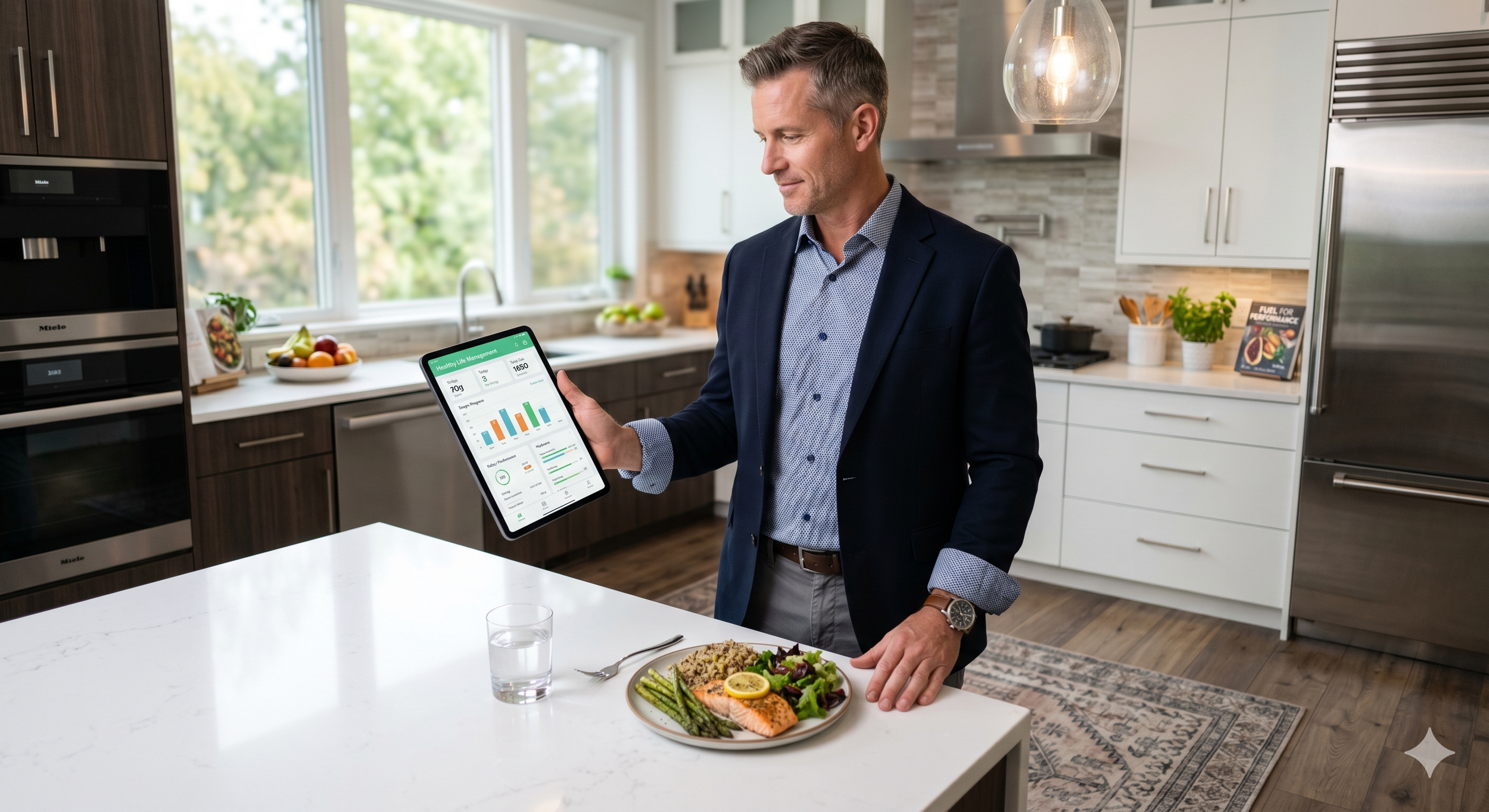
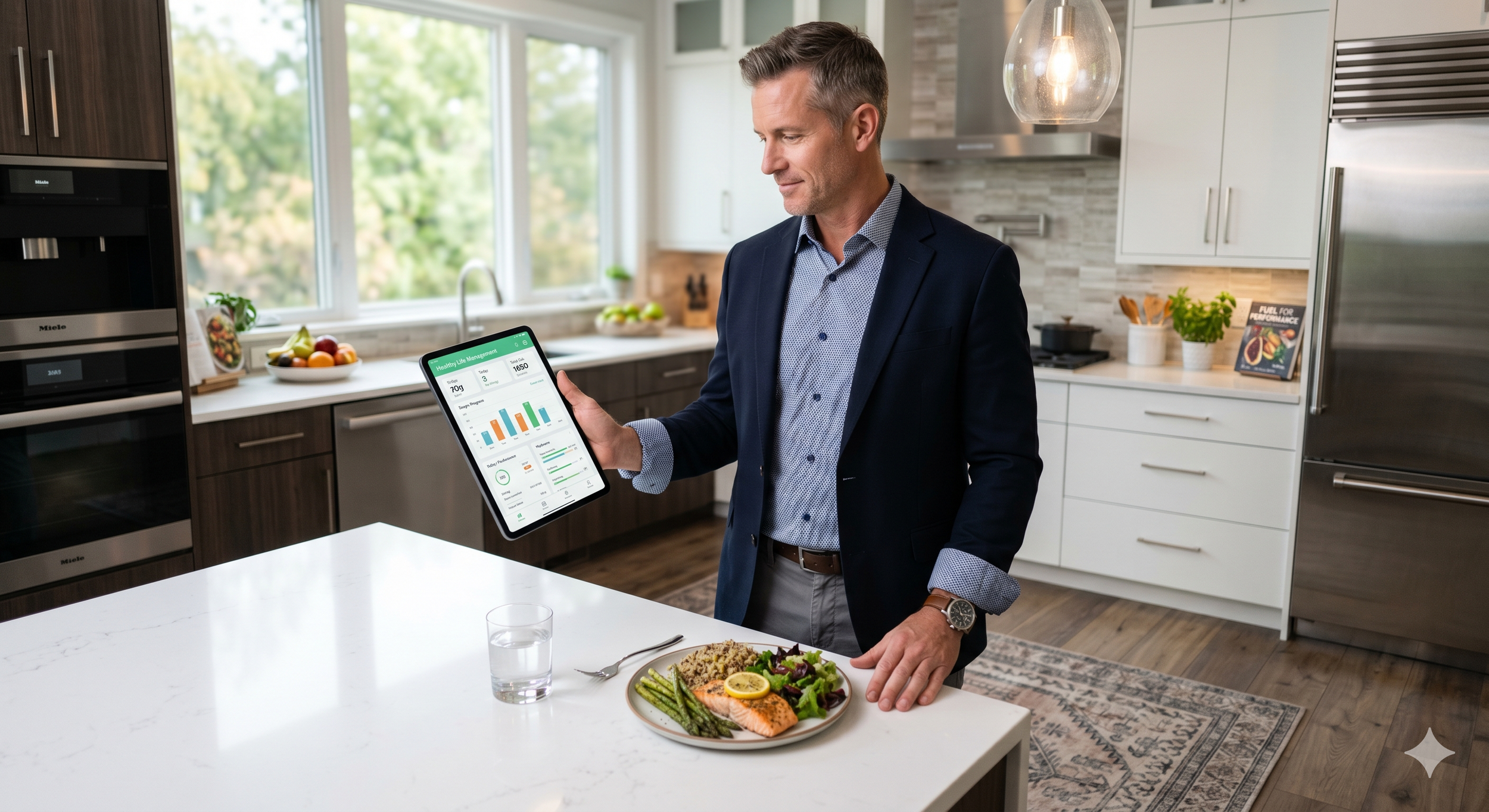
This image was created using AI to avoid copyright issues while conveying the context of this article.
The word "diet" has a branding problem. For most people, it brings up images of restriction, hunger, and a "countdown" to the day they can finally stop. We have been conditioned to think that a diet is something you go on, which unfortunately means it is something you eventually go off.
This "on-and-off" cycle is the primary reason people struggle to keep weight off long-term. They are relying on willpower, which is a finite and unreliable resource. As we move into a more sophisticated era of health, the most successful people are ditching the willpower model. They have stopped "dieting" and started "managing." They realize that sustainable health isn't about trying harder; it’s about building better systems.
Willpower vs. Systems
Most people approach a diet like a military operation. They use sheer force of will to avoid the foods they love and drag themselves to the gym. This works for a week or two, but eventually, life happens. A stressful day at work, a poor night's sleep, or a family emergency drains your willpower "battery," and the diet collapses.
Managing your health through systems is different. A system is a repeatable process that produces a predictable result without requiring constant decision-making. When you have a system, you don't have to "decide" to be healthy every morning; your environment and your routines make the healthy choice the default choice. Successful executives don't manage their companies by hoping everyone works hard; they build systems that ensure work gets done. Your body is no different.
The Budgeting System: From Restriction to Allocation
Dieting is almost always about what you can't have. Management is about allocation. Think of your daily calories like a financial budget.
A manager doesn't say, "I can't spend money." They say, "I have 2,000 dollars to spend today. I’m going to spend 1,200 on my 'fixed costs', the protein and fiber that keep the lights on, and I have 800 left for 'discretionary spending.'"
When you treat your nutrition like a budget, you remove the guilt. If you want a slice of pizza, you don't "cheat"; you simply adjust your "spending" elsewhere in the day. This system allows for flexibility, which is the key to long-term sustainability. It moves you from a state of deprivation to a state of executive control.
Building Your "Health Infrastructure"
To move from a dieter to a manager, you need to build the infrastructure that supports your goals. This is where systems-thinking truly shines.
The Automated Kitchen: If you have to decide what to eat for lunch every day at 12:00 PM when you are already hungry, you’ve already lost. A management system involves "decision-batching", preparing protein sources ahead of time or having a "go-to" meal list that requires zero thought.
The Friction System: Managers look at where their systems are failing and fix the friction. If you find yourself snacking on junk food at night, the "system" problem is that junk food is in the house. A good manager changes the environment to make the "bad" choice difficult and the "good" choice easy.
The Data Feedback Loop: You wouldn't run a business without looking at your P&L statements. A health manager uses data whether that’s tracking macros, monitoring steps, or checking body composition to see if the system is working. If the data shows a plateau, the manager doesn't "punish" themselves; they simply tweak the system.
Managing the Modern Landscape
With the rise of new weight-loss tools and medications, the management mindset is more important than ever. These tools are like bringing in a consultant to help your business; they can help lower the "noise" and make things run smoother, but they don't replace the need for a solid internal system.
If you use a tool like a GLP-1 to lose weight but never build the systems of protein-first eating and resistance training, you haven't actually "managed" your health; you’ve just taken out a temporary loan. The goal at Legacy Fitness is to help you become the CEO of your own body. We want to give you the blueprint to manage your health so that you never have to "go on a diet" again.
The CEO of Your Body
Management isn't about being perfect; it’s about being effective. Some days the "business" of your health will be booming, and other days you’ll be in a deficit. The key is that you stay in the game because your systems are still running in the background. By shifting your focus from a 12-week diet to a lifetime of management systems, you ensure that the results you work so hard for stay with you forever.
Get Your Metabolic "Profit and Loss" Statement
You can't manage what you don't measure. If you're ready to stop guessing and start managing your nutrition like a pro, you need to know your baseline.
Use our free BMR and Macro Calculator to find your daily "budget" and start building your system today.

Circadian Coaching: Why the Sun is Your Best Pre-Workout
One of the most powerful tools for your physical performance doesn't come in a tub or a cup; it’s actually 93 million miles away.

This image was created using AI to avoid copyright issues while conveying the context of this article.
When we think about preparing for a workout, we usually think about drinking a cup of coffee, putting on our favorite playlist, or taking a pre-workout supplement. However, one of the most powerful tools for your physical performance doesn't come in a tub or a cup. It’s actually 93 million miles away: the sun.
In 2026, we are learning that when you do things is often just as important as what you do. This is the heart of Circadian Coaching. Every cell in your body has a "clock." When these clocks are in sync with the natural cycle of light and dark, your body works like a well-oiled machine. When they are out of sync, your fat loss stalls, your energy dips, and your workouts feel like a chore.
The Morning Signal: Setting Your Metabolic Clock
Your circadian rhythm, your body's internal 24-hour clock, is primarily set by light. When blue light from the sun hits your eyes early in the morning, it sends a signal to your brain to stop producing melatonin (the sleep hormone) and start producing cortisol (the "get up and go" hormone).
This morning light exposure does more than just wake you up; it sets a timer for your metabolism. By getting outside for just 10 to 15 minutes of natural light shortly after waking, you are telling your body to start burning energy efficiently. This "morning signal" helps regulate your blood sugar throughout the day and ensures that you have the energy required for your training session later on.
The Afternoon Peak: When to Lift for Results
While morning light is great for setting the clock, research suggests that for many people, the "sweet spot" for physical strength happens in the late afternoon or early evening.
Between 4:00 PM and 6:00 PM, your core body temperature is at its highest, and your protein synthesis (the process of building muscle) is most active. By aligning your hardest "Micro-Workouts" or heavy lifting sessions with this natural peak, you can often lift more weight and recover faster than you would at 5:00 AM. Circadian coaching isn't about forcing your body to perform; it's about working with your body's natural peaks.
The Blue Light Trap: Why Your Screen is Killing Your Gains
The biggest enemy of a healthy circadian rhythm is the artificial blue light from our phones, laptops, and TVs. In 2026, we spend more time in front of screens than ever before. When you look at a bright screen late at night, your brain thinks the sun is still up.
This confuses your internal clock and prevents your body from entering "repair mode." Most of your muscle growth and fat burning happens while you are in deep sleep. If your blue light exposure is high at night, your sleep quality drops, and your body stays in a state of stress. This can lead to higher levels of belly fat and slower recovery from your workouts.
Practical Tips for Circadian Success
You don't need to live in a cave to benefit from circadian coaching. Here are three simple steps to get in sync:
Seek Early Light: Get outside within 30 minutes of waking. Even if it’s cloudy, natural light is much stronger than indoor bulbs.
Time Your Intensity: If your schedule allows, try to schedule your heaviest lifts in the late afternoon when your body is naturally primed for performance.
Dim the Lights at Night: Two hours before bed, lower the lights in your house and put your phone away. This allows your body to start the "cleaning and repair" process that makes your fitness efforts actually show up in the mirror.
The Environmental Advantage
At Legacy Fitness, we look at the whole person. We know that if your environment is working against you, your progress will be twice as hard. By aligning your lifestyle with the natural rhythms of the day, you make fat loss easier and muscle gain more consistent. Stop fighting your biology and start using the sun as your ultimate pre-workout.
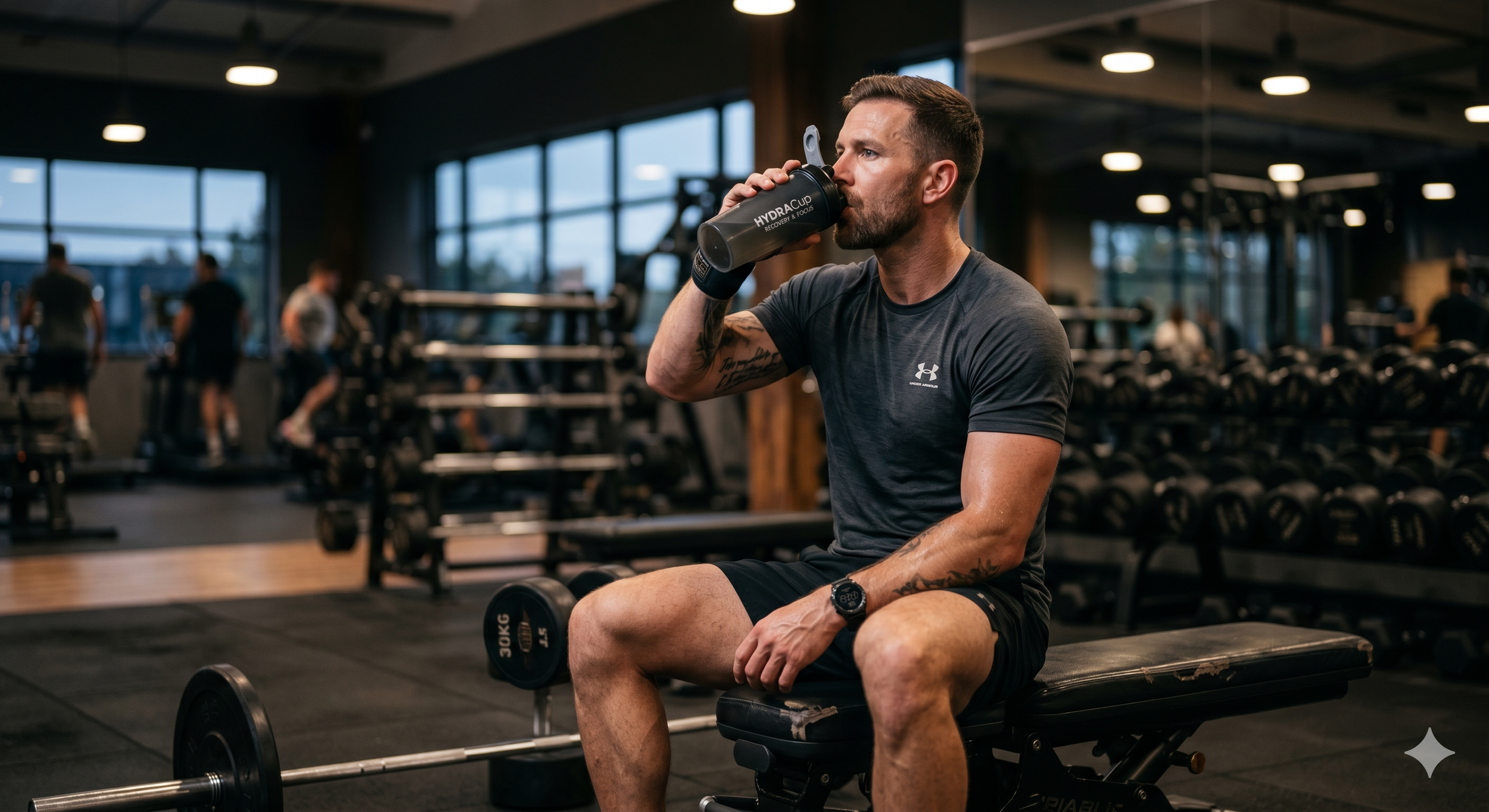
The Energy Audit: Fueling Your Workouts on Low Calories
You want to hit the gym and get your workout done, but your "battery" feels like it is at 5%.
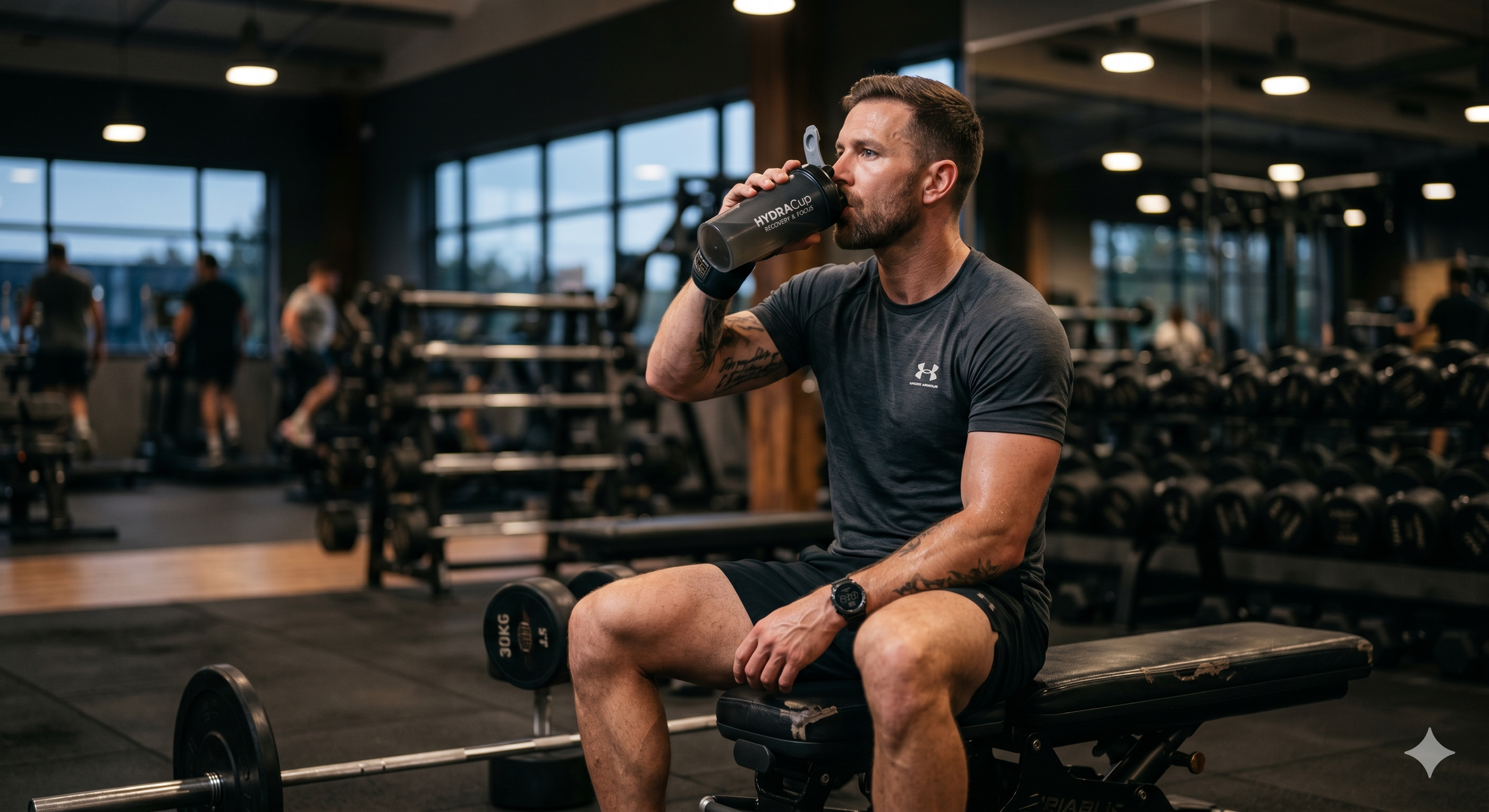
This image was created using AI to avoid copyright issues while conveying the context of this article.
One of the most common complaints people have when they start a new nutrition plan is a sudden drop in energy. This is especially true for those using GLP-1 medications or anyone in a significant calorie deficit. You want to hit the gym and get your workout done, but your "battery" feels like it is at 5%.
This is often referred to as the "energy gap." When you consume fewer calories and carbohydrates, your body has less immediate "fuel" in the bloodstream to power high-intensity movement. However, skipping your workouts will only slow down your progress. To stay on track, you need to perform an "Energy Audit" and adjust how you fuel your body.
Understanding Your Fuel Sources
Your body primarily uses two types of fuel for exercise: fats and carbohydrates.
Fats are like a giant log on a campfire. They burn slowly and provide energy for a long time (like during a long walk).
Carbohydrates are like kindling or paper. They burn hot and fast, providing the "explosion" you need to lift heavy weights or do a sprint.
When you are on a low-calorie plan, your "kindling" is low. This is why a heavy set of squats might feel twice as hard as it used to. Your body is trying to figure out how to do "expensive" work on a "budget" income.
Timing is Everything
When calories are limited, timing becomes your best friend. Since you don't have a lot of fuel to go around, you need to make sure it is in your system right when you need it most.
Instead of spreading your small amount of carbohydrates evenly throughout the day, try "clustering" them around your workout. Eating a small amount of easy-to-digest carbs (like a piece of fruit or a rice cake) about 30 to 60 minutes before you lift can provide just enough "kindling" to get you through the session without feeling like you’re dragging.
The Role of Electrolytes and Hydration
Sometimes, what feels like "low energy" is actually a lack of minerals. When you eat fewer processed foods and lower carbs, your body tends to flush out water and salt more quickly. This can lead to brain fog, muscle cramps, and a general feeling of weakness.
Before you reach for a third cup of coffee, try adding a high-quality electrolyte mix to your water. Ensuring your sodium, potassium, and magnesium levels are balanced can often "wake up" your nervous system more effectively than caffeine ever could.
Adjusting the Volume
If your energy is low, you might need to change how you train, not if you train. On low-calorie days, focus on "Quality over Quantity."
Instead of doing five sets of ten reps, you might do three sets of five reps with a bit more rest in between. The goal is to keep the intensity high enough to protect your muscle, but the total "volume" low enough that you don't burn out. Remember, the goal of training during a fat-loss phase is muscle preservation, not necessarily setting a world record in endurance.
Listen to the "Check Engine" Light
There is a difference between being "diet tired" and being "system exhausted." If you are consistently feeling dizzy, cold, or unable to recover between sessions, your calorie deficit might be too steep.
As coaches, we look for the "Sweet Spot", the place where you are losing body fat but still have enough vigor to live your life and lift your weights. If you find yourself consistently hitting a wall, it’s time to audit your intake and perhaps add a small amount of "functional fuel" to keep the engine running.

Fiber: The Unsung Hero of Weight Management: Why 30g a Day is the Magic Number
There is a nutrient that is important for your health, your hunger, and your waistline, yet it is often completely ignored.

This image was created using AI to avoid copyright issues while conveying the context of this article.
In the world of fitness and nutrition, protein usually gets all the glory. We talk about it constantly; how much we need, when to eat it, and which sources are best. But there is another nutrient that is just as important for your health, your hunger, and your waistline, yet it is often completely ignored.
That nutrient is fiber.
Most people think of fiber as something only their grandparents need to worry about for "regularity." But at Legacy Fitness, we view fiber as a secret weapon for weight management and metabolic health. If you are struggling with hunger, energy crashes, or stubborn body fat, there is a high probability that you are not hitting the "magic number" for fiber: 30 grams per day.
What is Fiber, Exactly?
Fiber is a type of carbohydrate found in plant foods, vegetables, fruits, beans, and whole grains, that your body cannot digest. Unlike sugar or starch, which are broken down into energy, fiber passes through your system relatively intact.
Because your body can't "use" it for calories, fiber acts like a broom for your digestive tract. But its benefits go far beyond just keeping things moving.
The "Volume" Secret to Weight Loss
One of the biggest hurdles to losing weight is hunger. This is where fiber shines. Fiber adds "bulk" or "volume" to your meals without adding extra calories.
When you eat high-fiber foods, they take up more space in your stomach. This triggers the stretch receptors in your stomach wall, which send a signal to your brain that says, "I am full." This is why it is very easy to overeat on a bag of low-fiber chips, but nearly impossible to overeat on a giant plate of roasted broccoli or a large bowl of berries.
By hitting your 30g goal, you are essentially "crowding out" the junk food and making it much easier to stay in a calorie deficit without feeling deprived.
Stabilizing Your Energy and Mood
For the busy professional, the most important benefit of fiber might be its ability to regulate blood sugar. When you eat carbohydrates (like fruit or a piece of whole-grain toast), the fiber acts like a "speed bump." It slows down the absorption of sugar into your bloodstream.
Instead of a massive spike in energy followed by a "foggy" crash an hour later, fiber provides a slow, steady release of energy. This keeps your brain sharp and your mood stable throughout a long day of meetings. If you find yourself reaching for a third cup of coffee at 3:00 PM, you might actually just need more fiber in your lunch.
The Gut-Health Connection
As we’ve discussed before, your gut microbiome is a major player in your overall health. Your healthy gut bacteria feed on fiber. When you don't eat enough of it, you are essentially "starving" your internal army.
A fiber-rich diet supports a diverse microbiome, which reduces inflammation, improves your immune system, and even helps regulate your hormones. A healthy gut is a prerequisite for a healthy, lean body.
How to Hit the "30g Goal"
The average adult gets only 10 to 15 grams of fiber per day. Jumping to 30g overnight can be a shock to your system, so it is best to increase your intake gradually. Here is how to do it:
The "Two-Cup" Rule: Aim to have at least two cups of non-starchy vegetables (like spinach, peppers, or broccoli) at both lunch and dinner.
Switch Your Snacks: Replace processed snacks with high-fiber options like raspberries, blackberries, or a handful of almonds. Berries are particularly powerful because they are very high in fiber but low in sugar.
Beans and Legumes: Adding just a half-cup of black beans or lentils to a salad can add 7 to 8 grams of fiber in one shot.
Hydrate: Fiber needs water to work. As you increase your fiber, make sure you are following our mineral-rich hydration strategies!
Building Your Legacy
At Legacy Fitness, we believe that true health is found in the "unsexy" fundamentals. You don't need a complicated supplement stack to lose weight; you need protein, movement, and fiber.
Hitting your 30g of fiber per day is a simple, measurable habit that pays massive dividends for your energy and your longevity. It is about building a body that is fueled, efficient, and resilient from the inside out.
Wondering how many calories you actually burn?
Mastering your nutrition starts with knowing your numbers. Use my BMR Calculator to find your personalized daily calorie and macro targets so you can hit your fiber goals with precision. Use the BMR Calculator Here
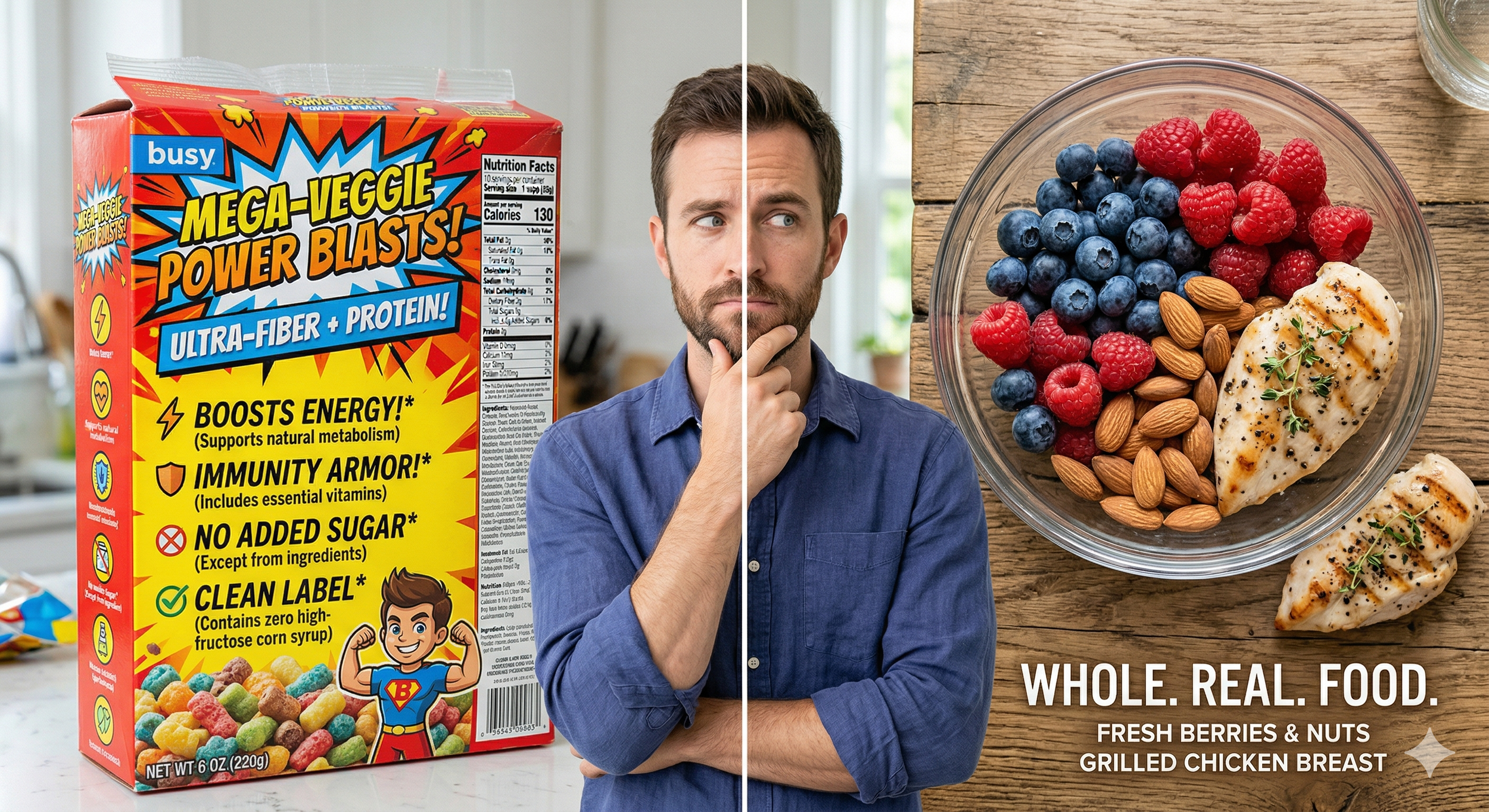
Ultra-Processed Foods, The "Hidden" Addiction: How to Spot "Healthy" Labels That Lie
The quality of your fuel determines the quality of your life.
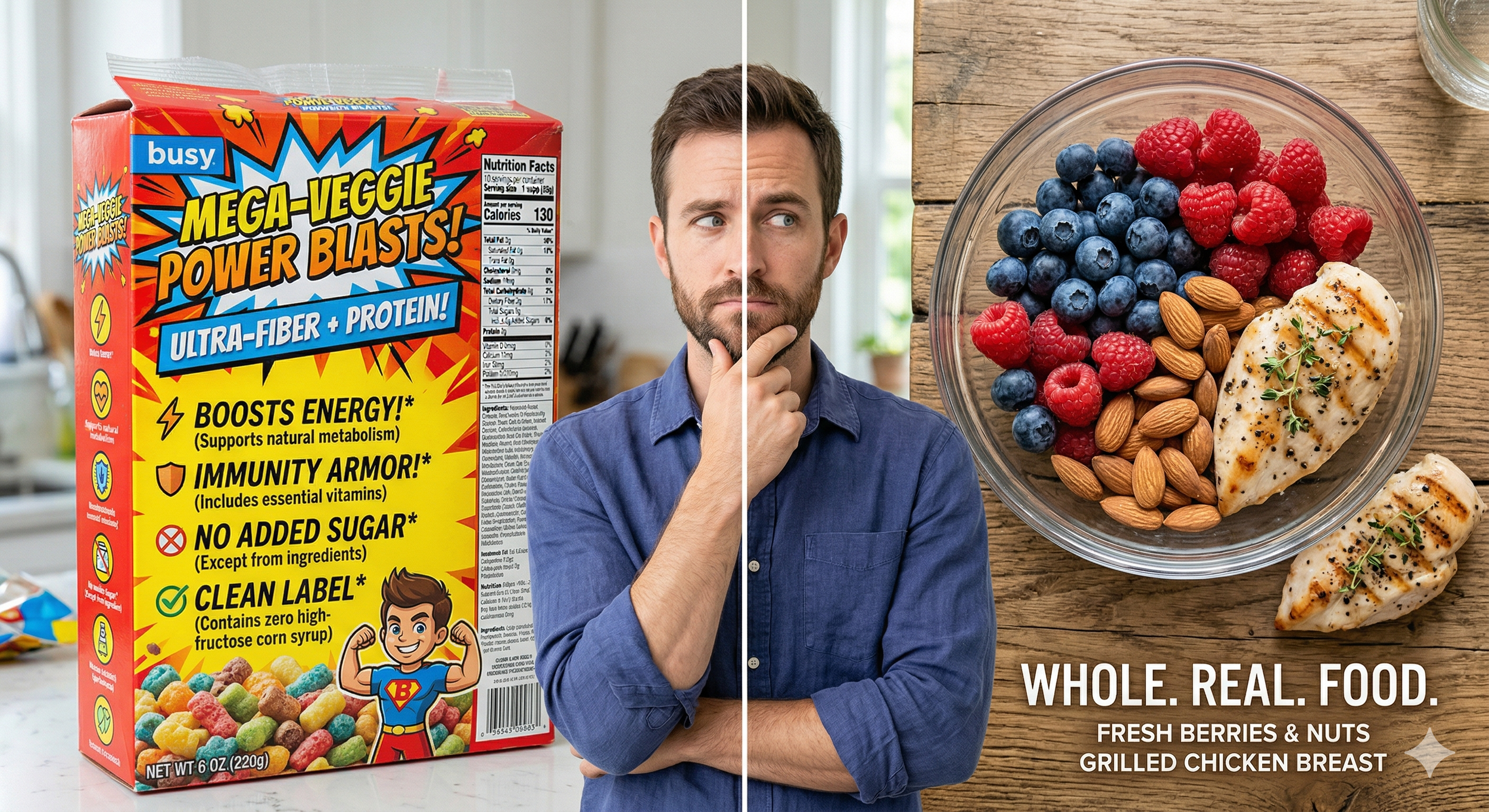
This image was created using AI to avoid copyright issues while conveying the context of this article. (Personally I think the image is hilariously AI, but I’m keeping it. 🤣)
When you walk down the aisles of a modern grocery store, you are surrounded by thousands of products designed to make your life "easier." Boxes of crackers, rows of colorful granola bars, and "healthy" frozen meals promise to save you time while keeping you fit. But beneath the bright packaging and the bold health claims, many of these products are actually ultra-processed foods (UPFs).
In recent years, scientists have begun to realize that these foods are doing more than just providing calories. They are engineered to bypass your body’s natural "fullness" signals and keep you coming back for more. In fact, many experts now believe that UPFs are closer to an addictive substance than they are to actual food. If you want to build a legacy of health, you have to learn how to see past the marketing and spot the ingredients that are holding you back.
What is an Ultra-Processed Food?
To be clear, almost all food is "processed" in some way. Cutting a head of lettuce or cooking a piece of chicken is processing. The problem arises with ultra-processed foods. These are items that are made mostly from substances extracted from foods, such as fats, starches, added sugars, and hydrogenated fats.
They often contain additives like flavor enhancers, colors, and emulsifiers that you would never find in a home kitchen. A simple rule of thumb: if you look at the ingredient list and it looks like a chemistry experiment, it is likely ultra-processed.
The "Hyper-Palatable" Trap
Have you ever wondered why it’s easy to eat an entire bag of flavored chips but impossible to eat ten plain boiled potatoes? It is because UPFs are "hyper-palatable."
Food scientists work in labs to find the perfect combination of salt, sugar, and fat—often called the "bliss point." This combination triggers a massive release of dopamine in your brain, the same chemical associated with reward and addiction. Because these foods are so soft and easy to chew, you can eat them very quickly. By the time your stomach realizes it’s full, you have already consumed twice as many calories as you needed.
Don't Fall for the "Healthy" Label
The most dangerous UPFs are the ones that pretend to be healthy. Companies use specific words on the front of the box to make you feel safe:
"All Natural" (This has no legal definition and means very little.)
"Heart Healthy" (Often found on sugary cereals that are highly processed.)
"High Protein" (Look closely, it might have 10g of protein but 25g of sugar and processed oils.)
"Gluten-Free" (Many gluten-free snacks are more processed than the original versions to make up for the change in texture.)
If you want the truth, ignore the front of the box. Flip it over and look at the ingredient list and the "Added Sugars" line. If the first three ingredients are a type of sugar or a refined oil (like soybean or corn oil), put it back on the shelf.
The Impact on Your Energy and Focus
For the busy professional, the biggest cost of a diet high in UPFs isn't just weight gain, it is the loss of cognitive performance. These foods cause rapid spikes and crashes in your blood sugar. This leads to that "foggy" feeling in your brain by 2:00 PM.
Furthermore, the chemicals and emulsifiers in these foods can disrupt your gut health. As we discussed in our article on the Gut-Muscle Axis, a damaged gut leads to chronic inflammation, which makes it harder for your muscles to recover and harder for your brain to stay sharp.
How to "De-Process" Your Life
You don't have to be perfect, but you should aim to get at least 80% of your calories from "whole" foods, things that had a face or grew out of the ground.
The 5-Ingredient Rule: Try to avoid products with more than five ingredients, especially if you can’t pronounce half of them.
Shop the Perimeter: Most whole foods (meat, produce, eggs, dairy) are found on the outer edges of the grocery store. The middle aisles are where the UPFs live.
Cook Once, Eat Twice: The best way to avoid processed "convenience" food is to have your own whole-food leftovers ready to go.
Building Your Legacy
At Legacy Fitness, we believe that the quality of your fuel determines the quality of your life. You are building a body that needs to last for decades. Feeding it highly engineered, addictive chemicals is a short-term solution that leads to long-term problems.
This week, take a closer look at your "healthy" snacks. Are they really supporting your legacy, or are they just a hidden addiction in a shiny wrapper? Real food doesn't need a marketing department. Start choosing the ingredients that actually choose you back.

The Executive’s Guide to Eating Out: How to Stay Social and Stay Lean
Building a legacy means being a leader in every room you enter including the dining room.

This image was created using AI to avoid copyright issues while conveying the context of this article.
In the world of business, some of the most important work happens away from a desk. Client dinners, networking lunches, and celebratory drinks are part of the job. But for many high performers, these social obligations feel like a trap for their fitness goals.
You want to close the deal and enjoy the meal, but you don't want to wake up the next morning feeling sluggish or seeing the scale move in the wrong direction.
The good news is that you don't have to choose between your career and your health. At Legacy Fitness, we teach our clients that "perfection" isn't the goal; "navigation" is. Here is how to navigate any menu like a pro.
1. The "Protein First" Rule
When the waiter arrives, your mission is simple: find the protein foundation. Whether it is a steak, a piece of grilled fish, or roasted chicken, make that the star of your plate.
Protein is the most satiating macronutrient, meaning it tells your brain you are full faster than anything else. By prioritizing a high-quality protein source, you naturally reduce the urge to overeat on the bread basket or the appetizers.
Pro Tip: Look for words like "grilled," "blackened," "roasted," or "poached." Avoid words like "breaded," "crispy," or "creamy," as these are usually code for hidden fats and calories.
2. Negotiate Your Sides
Most restaurant meals are designed for "palatability," which usually means they come with a heavy side of fries or pasta. You are the customer; don't be afraid to ask for a swap.
Ask the server to replace the fries with a double serving of steamed vegetables or a side salad. Most high-end restaurants are happy to accommodate this. This simple switch can save you 400 to 600 calories without making you feel like you are "depriving" yourself.
3. Navigate the "Liquid Calories"
Alcohol is often the biggest "hidden" hurdle during business dinners. It lowers your inhibitions, which makes you more likely to reach for the dessert menu later.
If you choose to drink, stick to "clean" options. A glass of dry wine or a spirit with soda water and lime is a much better choice than a sugary cocktail or a heavy beer.
The 1-for-1 Rule: For every alcoholic drink you have, drink one full glass of water. This keeps you hydrated and slows down your pace, keeping you sharp for the conversation.
4. The Power of "Half-Way"
Restaurant portions are often twice as large as what you actually need. A great strategy is to decide how much you are going to eat before you take the first bite.
Eat slowly, engage in the conversation, and stop when you are 80% full. You don't have to clean the plate to show respect to your host. In fact, leaving a bit behind shows that you are a person of discipline and intentionality.
5. Research the "Venue" Ahead of Time
If you are the one picking the restaurant, choose one that you know has healthy options. If someone else is picking, look at the menu online an hour before you go.
When you make your decision while you are calm and not hungry, you are much more likely to stick to it than when you are smelling the bread basket and feeling the pressure of the moment.
Leading Your Own Health
Building a legacy means being a leader in every room you enter including the dining room. When you make healthy choices at a business lunch, you aren't just taking care of your body; you are demonstrating the same discipline and clarity that makes you successful in business.
Staying lean doesn't mean staying home. It means having a plan.

Sunday Reset: Planning for a Week of Nutritional Wins
Every healthy choice you make on Sunday is one less choice you have to make on Wednesday afternoon when your brain is tired.

This image was created using AI to avoid copyright issues while conveying the context of this article.
We have all had those weeks. You start Monday with the best intentions. You plan to eat healthy, stay energized, and avoid the drive-thru. But then, Wednesday hits. A meeting runs late, the kids have practice, and you realize you have nothing prepared for dinner. By 6pm, you are tired, hungry, and making a choice based on convenience rather than your goals.
At Legacy Fitness, we know that willpower is a limited resource. You only have so much "discipline" to use each day. If you have to make a difficult choice every single time you are hungry, eventually, you will make a bad one. The secret to winning the week isn't having more willpower; it is having a better plan. That is where the Sunday Reset comes in.
What is the Sunday Reset?
The Sunday Reset is a small block of time, usually just 60 to 90 minutes, dedicated to setting yourself up for success. It is not about spending five hours in the kitchen making 21 identical tupperware meals. In fact, most people hate eating the same thing every day.
Instead, the Sunday Reset is about "component prepping." You aren't making full meals; you are preparing the building blocks that make healthy eating fast and easy during the week.
Step 1: The Protein Foundation
Protein is the hardest thing to "grab and go." It usually requires thawing, seasoning, and cooking. This is where most people fail. If you have cooked protein ready to go, a healthy meal is only five minutes away.
On Sunday, pick two or three protein sources and cook them in bulk.
Grill a pack of chicken breasts or thighs.
Brown two pounds of lean ground beef or turkey.
Hard-boil a dozen eggs for quick snacks or breakfast additions.
Once these are in the fridge, you can easily throw them onto a salad, into a wrap, or mix them with some frozen veggies for a quick stir-fry.
Step 2: Pre-Cut the "Speed Bumps"
Have you ever noticed that you’re more likely to eat a bag of chips than a bell pepper? That is because the chips are already "prepared." The pepper requires washing, seeding, and slicing. Those extra steps are "speed bumps" that stop you from making a good choice when you are tired.
During your Sunday Reset, wash and chop your vegetables. Put them in clear glass containers at eye level in your fridge. When you are looking for a snack, the healthy option is now just as easy to grab as the bag of chips.
Step 3: Audit Your Calendar
This is the part most people skip. Take five minutes to look at your upcoming week.
Do you have a late meeting on Tuesday?
Is there a lunch out with a client on Thursday?
Does your child have a game on Wednesday night?
By identifying the "danger zones" ahead of time, you can plan for them. If you know Tuesday will be a late night, that is the perfect day to plan for a slow-cooker meal or a pre-made salad. When you aren't surprised by your schedule, you aren't forced to make emergency food choices.
Step 4: The "Emergency" Stash
Even with a great plan, life happens. A "Reset" also includes making sure your pantry and freezer have "safety net" foods. These are shelf-stable or frozen items that can be turned into a healthy meal in minutes.
Frozen vegetables (steam-in-the-bag are great).
Canned tuna or salmon.
Pre-cooked rice or quinoa pouches.
If you have these on hand, you never have an excuse to call for pizza.
Small Wins Lead to a Big Legacy
The goal of the Sunday Reset is to reduce "decision fatigue." Every healthy choice you make on Sunday is one less choice you have to make on Wednesday afternoon when your brain is tired.
A "Legacy Body" is built on consistency, not perfection. By spending a little bit of time today, you are giving yourself the gift of a stress-free week. You are making it easy to stay fueled, focused, and on track toward your long-term goals.
Start small this Sunday. You don't have to change your whole life at once. Just prep one protein, chop one vegetable, and look at your calendar. You will be amazed at how much better your Monday feels.
The Myth of "Busy": How the World’s Most Successful People Find Time for Fitness
"I don't have time" is just code for "It isn't a priority."
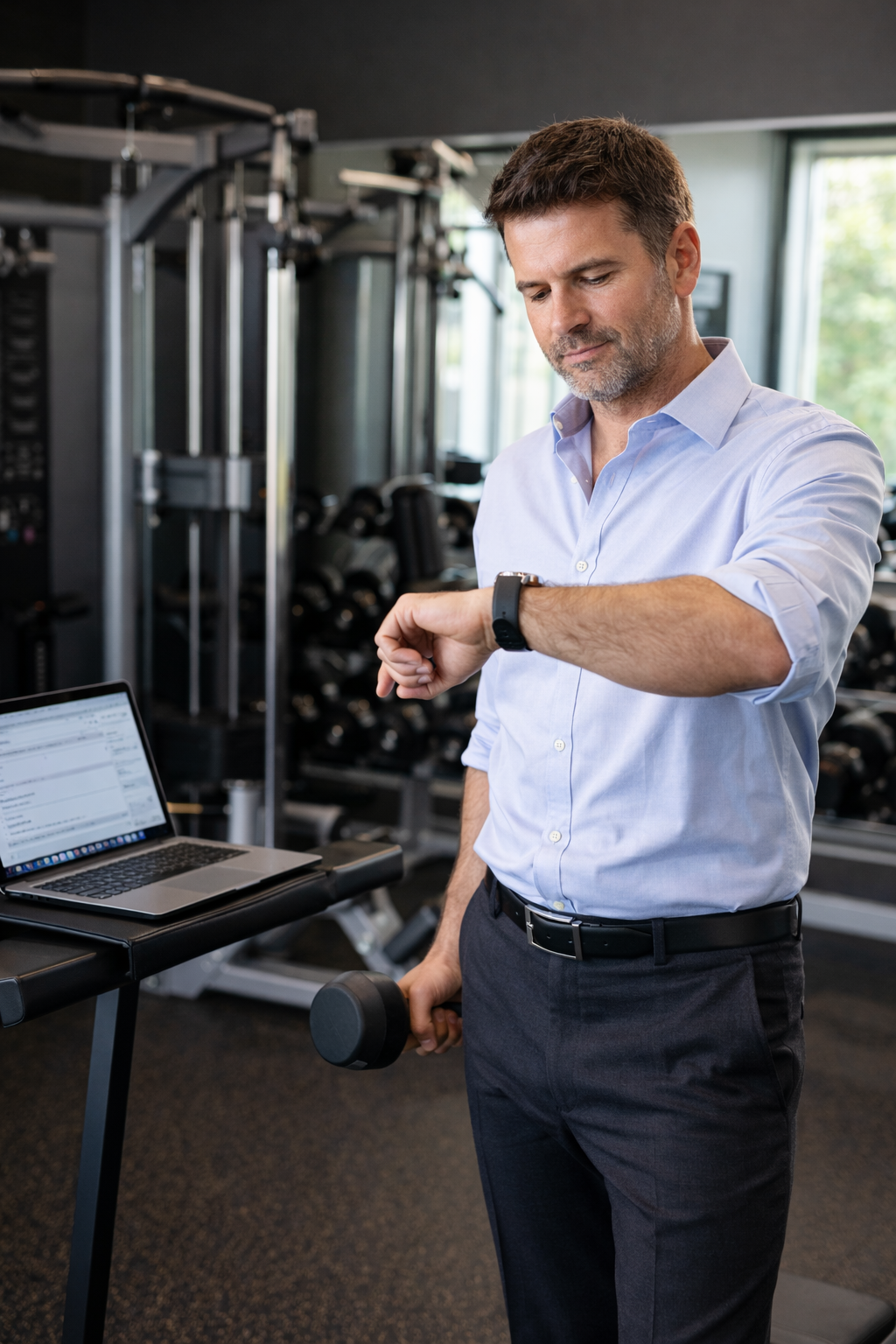
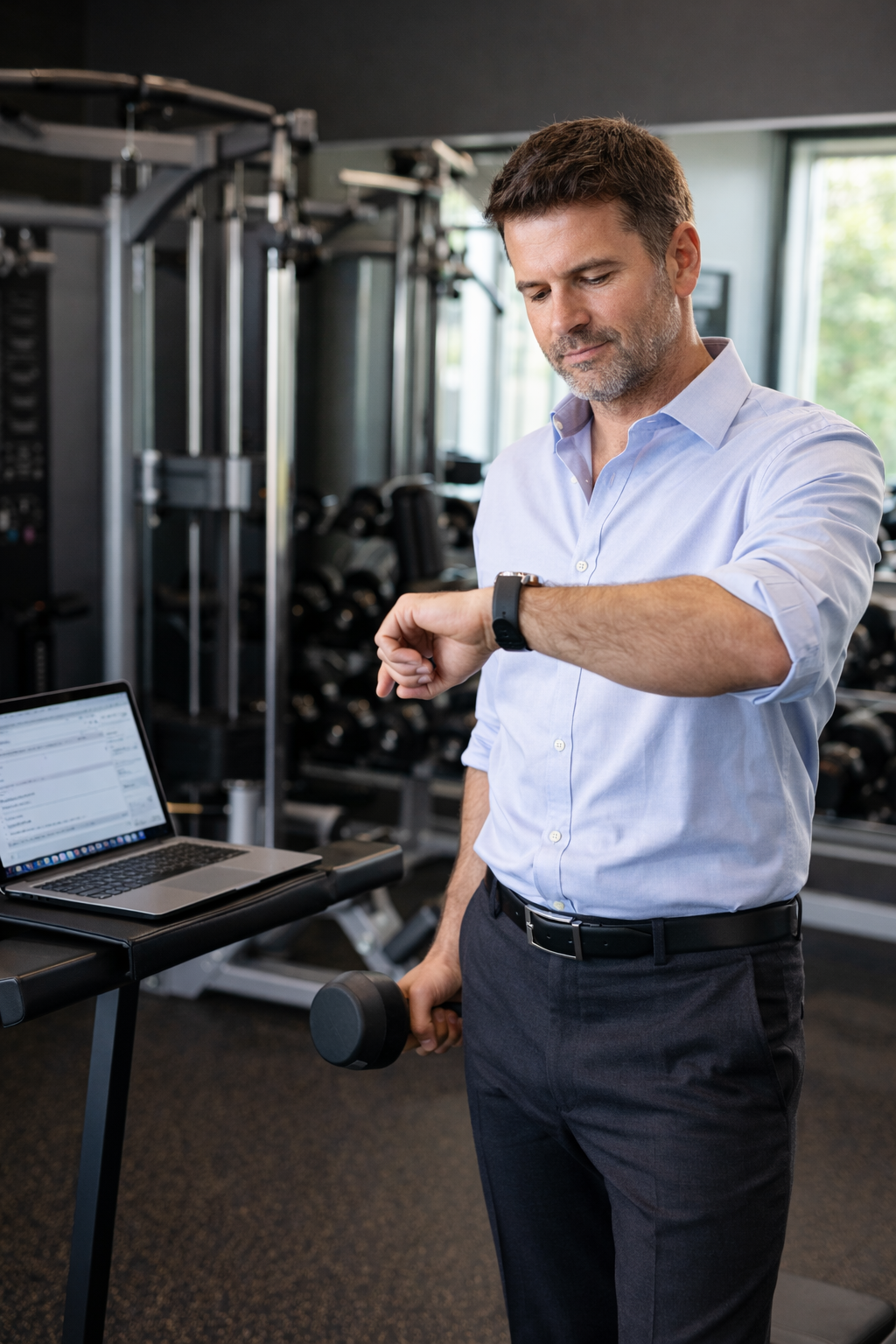
This image was created using AI to avoid copyright issues while conveying the context of this article.
In my years practicing and teaching martial arts, and now as a fitness coach, I have heard every excuse in the book. But there is one that stands above the rest: 'I’m just too busy right now.
It’s a phrase used by CEOs, founders, and executives alike. And while it feels like a valid reason, it is almost always a myth. We all have the same 168 hours in a week. The difference between those who stay fit and those who "stall out" isn't the number of meetings on their calendar; it’s how they view their time.
If you have time to check your email 50 times a day, scroll through social media, or watch a Netflix series, you aren't "too busy." You are simply prioritizing other things over your health. Here is how the world’s highest performers find the time to train, and why you can, too.
1. They Stop "Finding" Time and Start "Scheduling" It
You don't "find" time for a board meeting or a doctor's appointment; you schedule it. Successful people treat their health with the same level of respect. They don't wait for a gap in their day to see if they can fit in a workout. They put it on the calendar as a non-negotiable event.
If it’s on the calendar, it’s real. If it’s just a "hope," it’s a hobby.
2. The "Minimum Effective Dose" Strategy
The "too busy" myth is often fueled by the belief that a workout has to be 90 minutes of grueling effort to count. High-performers understand the principle of the Minimum Effective Dose.
If you have an hour, take the hour. But if you only have 20 minutes between calls, a focused, high-intensity circuit is infinitely better than doing nothing. They don't let the "perfect" workout get in the way of the "possible" one.
3. Decision Stacking
The most efficient leaders look for ways to stack their habits. Need to have a one-on-one with a direct report? Make it a walking meeting. Have to catch up on an industry podcast? Do it while you’re on the treadmill. By integrating movement into their existing workday, they eliminate the need to "carve out" extra time.
4. They View Fitness as a Productivity Tool
This is the most critical shift. Most people see exercise as something that takes energy. Successful people know that exercise generates energy.
Research shows that employees who exercise during the workday report better time management, increased mental sharpness, and higher resilience to stress. When you spend 45 minutes in the gym, you aren't "losing" 45 minutes of work; you are upgrading the quality of the other 10 hours you spend in the office.
The Executive Summary
"I don't have time" is just code for "It isn't a priority."
In March, as we focus on our "Must-Lists," I challenge you to look at your calendar with total honesty. Your body is the engine that drives your career, your family, and your legacy. You don't "owe" it to yourself to find time; you owe it to the people who depend on your leadership to make the time.
Stop being "busy" and start being effective.

Training Through Travel: Stay on Track During Spring Break
Your body doesn't have a "Vacation Mode." Here is your tactical guide to staying on track while enjoying your Spring Break.

This image was created using AI to avoid copyright issues while conveying the context of this article.
It is that time of year. The suitcases are coming out, the flights are booked, and Spring Break is finally here. For many, travel feels like a mandatory "pause" button on fitness goals. You might think, "I’m on vacation, so the diet and the workouts don't count." But here is the reality: your body doesn't have a "Vacation Mode." The calories you eat in a different zip code still impact your energy, and the muscles you don't use will still begin to lose their edge.
Traveling doesn't have to mean starting over on April 1st. In March, we’ve built a "Bridge of Consistency," and that bridge can travel with you. Here is your tactical guide to staying on track while enjoying your Spring Break.
1. The "Hotel Room" Minimum
Don't wait to see if the hotel gym is nice (or if it even exists). Assume it won't be. Instead, commit to a "15-Minute Minimum" every morning before the family activities start.
The Routine: 3 rounds of 20 body squats, 15 push-ups, and a 60-second plank.
The Goal: It’s not about hitting a personal record; it’s about maintaining the "habit of movement." When you start your vacation day with a win, you are much more likely to make better food choices at lunch.
2. The "One-Meal" Rule
Vacation food is one of the best parts of travel. You should absolutely enjoy the local cuisine. To do this without the "weight-gain hangover," follow the One-Meal Rule:
Eat a high-protein, low-calorie breakfast (think eggs or Greek yogurt).
Have a high-protein, veggie-heavy lunch (like a grilled chicken salad).
Then, enjoy your dinner. By staying disciplined for two meals, you create a "calorie buffer" that allows you to enjoy a nice dinner and a drink without going over your daily limit.
3. Become a "Walking Tourist"
The easiest way to burn extra calories without "working out" is to walk everywhere. Skip the Uber when the destination is less than a mile away. Explore the city, the beach, or the trails on foot. Aim for 12,000 steps a day. You’ll see more of your destination, and you’ll keep your metabolism humming along while you do it.
4. Pack Your "Emergency" Protein
The hardest part of traveling is finding protein on the go. Airport snacks and gas station stops are usually 100% carbohydrates and fats.
The Fix: Pack a few protein bars, some beef jerky, or individual protein powder servings in your carry-on. Having a high-protein snack available means you won't be forced to eat a processed muffin just because you’re hungry at the gate.
5. Hydration is Non-Negotiable
Travel, especially flying, is incredibly dehydrating. And as we learned earlier this month, dehydration often feels like hunger. Carry a reusable water bottle and finish it before every meal. This will keep your energy high, your digestion moving, and your "false hunger" at bay.
Enjoy the Trip, Keep the Legacy
Spring Break is about making memories, not about being perfect. If you have a day where you eat too much or skip the movement, don't sweat it. Just get back to the "One-Meal Rule" the next morning.
You aren't a "gym person" only when you are at home. You are a fit person everywhere you go. Pack your discipline along with your sunscreen, and you’ll return from vacation feeling refreshed instead of defeated.

Professionalism in Fitness: Treating Your Health Like Your Career
Treat your coach like a consultant. Treat your workouts like a standing meeting with a VIP client. Treat your nutrition like a high-budget project that requires precision.

This image was created with AI to avoid copyright issues while conveying the context of this article.
If you missed a high-stakes board meeting because you "didn't feel motivated," your career would suffer. If you consistently failed to track your department's budget because it was "too much work," you would be replaced. In the professional world, we understand that results are driven by systems, standards, and a commitment to showing up—regardless of how we feel.
Yet, many of the same high-performers who are elite in the office treat their health like an optional hobby. They rely on "inspiration" to get to the gym. They "wing it" with their nutrition. They treat their physical body, the very vehicle that allows them to lead, as a secondary priority.
To reach the next level of your transformation, you have to bridge the gap. It is time to apply the same level of professionalism to your fitness that you apply to your career.
The Standard of "Non-Negotiables"
In your professional life, you have a set of standards. You answer certain emails within 24 hours. You show up for meetings five minutes early. You hit your deadlines. These are your non-negotiables.
In fitness, most people have "negotiable" goals. They hope to work out. They try to eat protein. The moment a work project gets difficult, these goals are the first thing to be sacrificed.
A professional approach means setting a floor, not just a ceiling. Your "floor" is the minimum amount of work you do even on your busiest day. Whether it’s a 15-minute mobility session or hitting a specific protein target, these are the appointments with yourself that you simply do not cancel.
Data and Reporting: Your Personal KPI
Imagine trying to run a company without looking at a profit and loss statement. You would be flying blind.
Your workout and nutrition logs are the "Key Performance Indicators" (KPIs) of your health. When you skip logging, you are failing to report on the most important asset you own. Professionalism in fitness means:
Accurate Tracking: Not "guessing" your intake, but measuring it.
Regular Audits: Using your weekly check-in to review what worked and what didn't.
Objective Analysis: Looking at a "bad" day as a data point to be corrected, not a moral failure.
Managing the "Physical Business"
Every CEO knows that you have to invest in your infrastructure to prevent a collapse. Your heart, your lungs, your muscles, and your brain are your infrastructure.
When you prioritize sleep, hydration, and resistance training, you aren't "taking time away" from work. You are performing essential maintenance. A leader who is well-rested and physically strong makes better decisions, has higher emotional intelligence, and possesses the stamina to outlast the competition.
The Executive Summary
Stop waiting for a "fitness spark." You don't need a spark; you need a schedule.
Treat your coach like a consultant. Treat your workouts like a standing meeting with a VIP client. Treat your nutrition like a high-budget project that requires precision. When you bring the same level of professionalism to the gym that you bring to the office, the results aren't just better, they are inevitable.

The 10-Minute Rule: What to Do When You Have Zero Motivation
When motivation fails, most people simply stay on the couch. If you want to build a legacy of health, you need a strategy that works even when your mood doesn't.

This image was created using AI to avoid copyright issues while conveying the context of this article.
We have all had those days. The alarm goes off, but your body feels like lead. Or you finish a long day at the office, and the very thought of driving to the gym feels like a physical burden. You search for that spark of motivation you had on March 1st, but it is nowhere to be found.
When motivation fails, most people simply stay on the couch. They tell themselves they will "wait until they feel like it" to train. But as we’ve discussed this month, feelings are unreliable. If you want to build a legacy of health, you need a strategy that works even when your mood doesn't.
This is where the 10-Minute Rule comes in. It is the ultimate "emergency brake" for your fitness goals.
The Psychology of the Starting Line
The hardest part of any workout isn't the heavy lifting or the final mile of a run. The hardest part is the first ten minutes.
Our brains are wired for comfort. When you think about a 60-minute workout, your brain sees a huge, painful task. It tries to protect you by making you feel tired or distracted. But your brain has a weakness: it is much easier to negotiate with a small task than a large one.
How the 10-Minute Rule Works
The rule is simple: Tell yourself you only have to do ten minutes.
Put on your gym clothes, drive to the gym, and start your warm-up. Tell yourself that if, after ten minutes of movement, you still feel exhausted and want to quit, you have 100% permission to stop and go home. No guilt. No shame. You showed up and did ten minutes.
Here is what almost always happens:
The Blood Flow Effect: Once you start moving, your heart rate increases and oxygen begins to reach your brain and muscles. This naturally wakes you up.
The Momentum Shift: By the time the ten minutes are up, the "mountain" of the workout feels like a "hill." You’ve already done the hardest part (starting), so you might as well finish.
The Identity Win: Even if you do decide to go home after ten minutes, you still win. You proved to yourself that you are the kind of person who honors their commitments, even when it’s hard.
A Strategy for "Low-Power" Days
Some days, you really are physically drained. Maybe you didn't sleep well or your stress is at a 10/10. On those days, the 10-Minute Rule allows you to "check the box" without burning out.
Instead of a heavy lifting session, use your ten minutes for:
Mobility and stretching.
A brisk walk on the treadmill.
A bodyweight circuit in your living room.
As your coach, I would much rather see a "low-power" ten-minute session in your log than a blank space. It keeps the habit alive and ensures that the next day, when your energy is back, you don't have to fight the "Snowball Effect" to get started again.
Finish March Strong
We are entering the final stretch of the month. The "New Year" energy is a distant memory. This is where the 10-Minute Rule becomes your best friend.
Next time you feel like skipping, don't argue with your brain. Just give me ten minutes. You’ll be surprised at how often that small start leads to your best finish.

The Snowball Effect: How One Missed Workout Leads to a "Lost" Week
A legacy isn't built on a series of perfect weeks. It is built on the ability to get back on the horse after a fall.

This image was created using AI to avoid copyright issues while conveying the context of this article.
It starts with a simple excuse. You have a late meeting, you’re feeling a bit tired, or the weather is gloomy. You tell yourself, "I’ll just skip today and make it up tomorrow." But tomorrow comes, and you feel a strange sense of "heavy" momentum. Because you missed yesterday, the "streak" is broken. Suddenly, it feels easier to skip Tuesday, too. By Wednesday, you feel like the whole week is a wash, so you decide to "just start fresh on Monday."
This is the Snowball Effect. In the world of fitness, momentum is your most valuable asset. When you have it, everything feels easy. When you lose it, even the smallest task feels like climbing a mountain. In March, we want to learn how to stop the snowball before it turns into an avalanche.
The Psychology of the "Broken Streak"
There is a psychological phenomenon called the "What the Heck" effect. It happens when we perceive that we have failed a goal, so we decide to fail "all the way."
If you miss one workout, your brain tells you that your "perfect" week is ruined. Since it’s no longer perfect, your brain decides there is no point in trying at all. You stop logging your food, you stay up late, and you stop drinking your water. You aren't just missing a gym session; you are abandoning your identity as a fit person for seven days.
How to Stop the Snowball
If you want to reach your long-term goals, you have to get comfortable with being "imperfect." Here are three strategies to stop a single miss from ruining your entire week.
The "Never Miss Twice" Rule
This is the golden rule of consistency. Life happens. You will miss a workout eventually. But the goal is to never let one miss turn into two. One miss is an accident; two misses is the start of a new habit. If you miss Monday, your only job on Tuesday is to show up, even if it’s just for twenty minutes.
The "Short-Session" Pivot
Most people skip their workout because they think, "If I can't do the full hour, it isn't worth it." This is a lie. If you are short on time or energy, don't skip, pivot. Do ten minutes of bodyweight movements in your living room. Go for a 15-minute brisk walk. By doing something, you keep the "neural pathway" of exercise alive. You are telling your brain: "I am still the kind of person who moves every day."
Separate Your Habits
Just because you missed a workout doesn't mean you have to miss your nutrition goals. Your gym sessions and your kitchen habits are two separate departments in the business of your health. If the "Gym Department" is closed for the day, make sure the "Nutrition Department" is working overtime.
Log your food, hit your protein, and drink your water. When you stay on track with your food, you feel better, which makes it much easier to get back to the gym the following day.
Building a "Resilient" Legacy
A legacy isn't built on a series of perfect weeks. It is built on the ability to get back on the horse after a fall.
In March, expect that things won't always go according to plan. But instead of letting a missed workout snowball into a lost week, draw a line in the sand. Every "next decision" is a chance to restart. Don't wait for Monday. The best time to stop the snowball is right now.

Hydration and Hunger: Are You Actually Hungry, or Are You Just Thirsty?
Have you ever finished a meal and, only 30 minutes later, felt like you needed to snack again?

This image was created using AI to avoid copyright issues while conveying the context of this article.
Have you ever finished a meal and, only 30 minutes later, felt like you needed to snack again? Or perhaps you find yourself wandering toward the pantry in the middle of a busy afternoon, even though you had a solid lunch.
Before you reach for the chips or a second serving, you need to ask yourself a very important question: Are you actually hungry, or is your body just crying out for water?
In the world of fitness and nutrition, thirst is a master of disguise. Because the signals for hunger and thirst are controlled by the same part of your brain, the hypothalamus, it is incredibly easy to confuse the two. In March, as we focus on discipline and data, mastering your hydration is one of the "low-hanging fruits" that can change your results almost overnight.
The Great Masquerade
Your body is about 60% water. Every single process, from burning fat to repairing muscle after a workout, requires hydration. When you are even slightly dehydrated, your body sends a signal to the brain that it needs "energy."
Because food provides both energy and a small amount of water, your brain often defaults to a "hunger" signal. You feel an empty sensation in your stomach, a dip in energy, or even a slight headache. These are all classic signs of dehydration, but we have been conditioned to treat them with food instead of a glass of water.
Three Signs It’s Actually Thirst
How do you tell the difference? Look for these three clues before you eat:
The Timing: If you ate a balanced, high-protein meal less than two hours ago, it is physically unlikely that you are truly hungry. It takes longer than that for your stomach to empty. This is a primary signal that you are likely thirsty.
The Type of Craving: True hunger is patient; it will settle for a healthy meal. "Thirst-hunger" is usually impulsive. It wants sugar or salt. This is because your body is looking for a quick hit of energy to compensate for the fatigue caused by dehydration.
The Concentration Check: This is the most honest data point we have. If you aren't sure, check the color of your urine. If it is dark yellow, you are dehydrated. Your "hunger" is almost certainly a plea for water.
The "Water First" Rule
To stop the cycle of accidental overeating, implement the Water First Rule.
Whenever you feel a "snack attack" coming on, drink 16 ounces of cool water and wait 15 minutes. Use this time to finish a task at work or tidy up a room.
If, after 15 minutes, you are still genuinely hungry, then go ahead and have a planned, high-protein snack. But more often than not, you will find that the "hunger" has vanished. You’ve satisfied your body’s actual need, saved yourself 300 calories, and improved your metabolic function all at once.
Hydration for Performance
Beyond just stopping cravings, staying hydrated is a "superpower" for your workouts. A muscle that is only 3% dehydrated can lose up to 10% of its strength. If you want to hit those "Micro-Victories" we talked about earlier this month, you have to be hydrated.
In March, don't let a simple glass of water be the thing that stands between you and your goals. Keep a bottle with you at all times, follow the Water First Rule, and start listening to what your body is really asking for.

Volume Eating: How to Feel "Stuffed" While Staying in a Calorie Deficit
What if I told you that you could eat a massive, plate-filling meal and still lose weight?

This image was created using AI to avoid copyright issues while conveying the context of this article.
If you are trying to lose fat, the biggest fear is usually hunger. We have been told for years that "dieting" means small portions, tiny salads, and walking away from the table still feeling empty. For many people, that constant feeling of deprivation is exactly why they quit their programs.
But what if I told you that you could eat a massive, plate-filling meal and still lose weight?
This is the secret of Volume Eating. It is a strategy that focuses on the quantity of food relative to its calorie density. By choosing the right foods, you can trick your brain and stomach into feeling completely full while actually eating fewer calories than you did before.
The "Stretch Receptor" Secret
Your stomach has "stretch receptors" that send signals to your brain when it is physically full. Your brain doesn't necessarily count every single calorie as it goes down; it mostly cares about the physical volume of the food in your stomach.
Think about it this way: One tablespoon of peanut butter has about 100 calories. It is delicious, but it won't make you feel full. On the other hand, two entire pounds of raw spinach also have about 100 calories. You would be physically unable to finish the spinach because your stomach would be too full.
Volume eating is about finding the balance between these two extremes.
The Volume Eating Toolkit
To master this strategy, you want to fill at least half of your plate with "high-volume, low-calorie" foods. Here are the best tools in the kit:
The "Green Foundation"
Vegetables like spinach, kale, zucchini, cucumbers, and bell peppers are mostly water and fiber. You can eat massive amounts of these for almost zero impact on your calorie goals.
The Hack: Use "zoodles" (zucchini noodles) or spaghetti squash instead of traditional pasta. You can eat three times as much for a fraction of the calories.
Popcorn: The Ultimate Snack
If you are a "crunchy" snacker, swap chips for air-popped popcorn. Three cups of popped popcorn have about 90 calories. To get that same 90 calories from potato chips, you only get about 8 to 10 chips.
Lean Protein "Bulkers"
Protein is already the most satiating nutrient, but some proteins offer more volume than others. Egg whites are a classic volume-eating staple. You can add a half-cup of egg whites to one whole egg to double the size of your breakfast omelet without adding much fat or many calories.
Berries Over Bananas
When it comes to fruit, berries (strawberries, raspberries, blackberries) are the volume kings. Because they are packed with water and fiber, you can eat a whole bowl of strawberries for the same amount of sugar and calories found in just half a large banana.
The Mental Advantage
The real benefit of volume eating is psychological. When you sit down to a tiny portion of food, your brain immediately enters "starvation mode." You feel restricted before you even take a bite.
But when you sit down to a giant bowl of stir-fry packed with broccoli, peppers, onions, and lean chicken, your brain sees an abundance. You enjoy the act of eating longer, and you finish the meal feeling physically satisfied. This makes it much easier to stay consistent with your plan over the long haul.
Don’t Forget the Flavor
A common mistake in volume eating is eating "bland" food. Just because you are eating a giant bowl of cabbage doesn't mean it should taste like cardboard. Use low-calorie seasonings, hot sauce, mustard, or lemon juice to keep your meals exciting.
In March, let's stop trying to "starve" the fat off. Let's eat more of the right things so we can feel full, stay energized, and reach our goals with a smile on our faces.

St. Patrick’s Day Special: How to Enjoy the Festivities Without Derailing Your Progress
May your heart be light and your protein be high this St. Patrick's Day!

This image was created using AI to avoid copyright issues while conveying the context of this article.
St. Patrick’s Day is a celebration known for parades, parties, and, most notably, plenty of green beer and heavy comfort food. For someone working hard on a fitness journey, holidays like this can feel like a minefield. You want to celebrate with your friends, but you don't want to wake up on March 18th feeling like you’ve lost a week of progress.
The good news is that fitness is about what you do most of the time, not what you do once in a while. You can enjoy the "luck of the Irish" without needing a miracle to stay on track. Here is your game plan for a fun, fit, and guilt-free St. Patrick’s Day.
1. The "Protein Shield" Strategy
The biggest mistake people make on holidays is "saving their appetite" by not eating all day. By the time they get to the party, they are starving. Their blood sugar is low, and their willpower is non-existent. This leads to overeating bangers and mash or mindlessly snacking on anything in sight.
Instead, use the Protein Shield. Eat a high-protein breakfast and a light, protein-heavy lunch (like a turkey breast salad or Greek yogurt). Protein is incredibly filling and stabilizes your blood sugar. When you show up to the festivities with a "shield" of satiety, you are much more likely to make intentional choices rather than impulsive ones.
2. Manage the "Green" Liquid Calories
Alcohol is the primary source of hidden calories on St. Patrick’s Day. Beyond the calories themselves, alcohol lowers your inhibitions, which usually leads to making poor food choices later in the night.
To enjoy a drink while protecting your goals, follow these two rules:
The One-to-One Rule: For every alcoholic beverage you have, drink one 16-ounce glass of water. This keeps you hydrated, slows down your drinking pace, and helps prevent a hangover the next day.
Choose "Leaner" Drinks: If you’re going to have a drink, skip the heavy, creamy liqueurs or sugary mixers. Opt for a dry stout (like Guinness, which is surprisingly lower in calories than many craft ales) or a clear spirit with soda water and lime.
3. Be a "Selective" Celebrator
You don't have to eat every "festive" food offered to you. Pick the one thing you truly love, maybe it’s a slice of soda bread or a small serving of corned beef, and enjoy it mindfully.
Skip the things you don't actually care about. Do you really need the green-dyed sugar cookies from the grocery store? Probably not. By being selective, you satisfy the urge to celebrate without the "calorie baggage" of foods you didn't even want.
4. Get Your "Green" in the Gym
Start your holiday with a "St. Paddy’s Punch" in the gym. Getting a solid lifting session or a brisk morning walk in before the festivities start does two things:
It boosts your metabolism and improves how your body handles the extra carbohydrates you might eat later.
It reinforces your identity as a fit person. When you’ve already put in the work, you’re less likely to want to "throw it all away" later that afternoon.
5. The "No-Guilt" Next Day
If you do end up eating or drinking more than you planned, the worst thing you can do is let it spiral into a "bad week." One day of celebration will not ruin your body. However, three days of "I already messed up, so I might as well keep eating" will.
Wake up on March 18th, drink a large glass of water, log your weight (even if it’s up from salt and water retention), and get right back to your "Must-List" habits. No punishment, no extra cardio, just a return to the plan.
May your heart be light and your protein be high this St. Patrick's Day!