
The "Travel-Proof" Plan: Staying Fit on the Road
The sign of a solid travel plan isn't that you came home exactly where you left off. It's that you came home without needing a week to undo the damage.
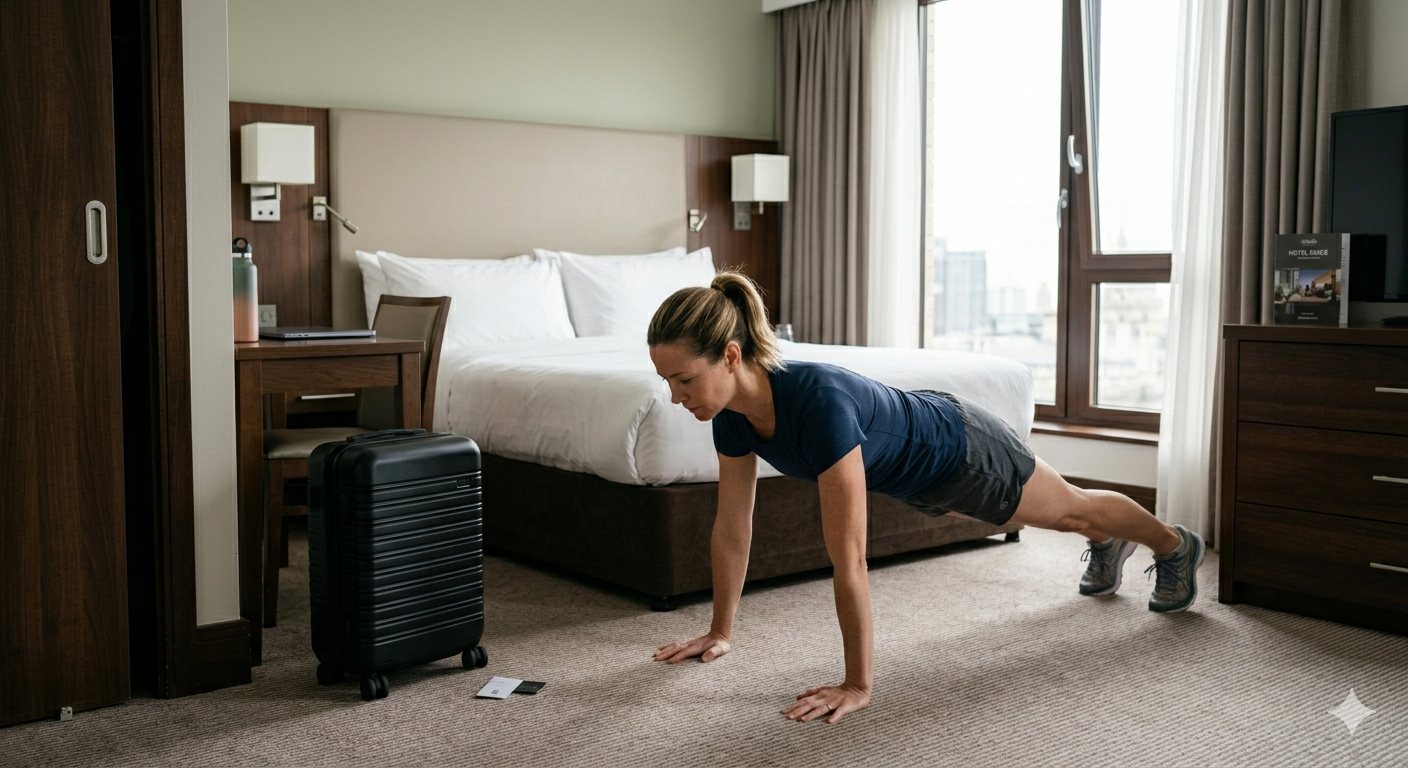
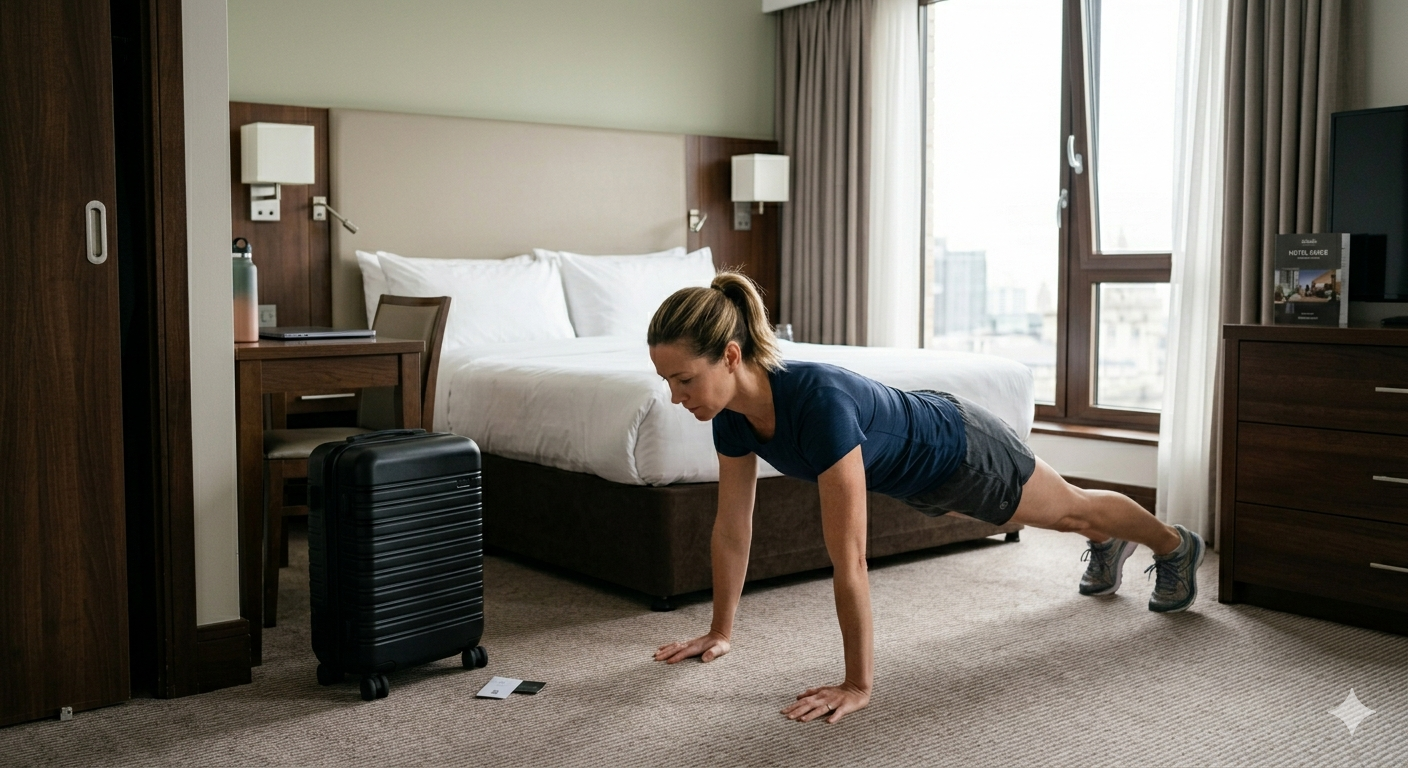
This image was created using AI to avoid copyright issues while conveying the context of this article.
You finally get ahead of your training, your nutrition feels dialed in, and then a business trip blows everything up. Sound familiar? Travel is one of the most reliable consistency-killers for busy professionals, but it doesn't have to be. The goal isn't to maintain a perfect routine when you're on the road. The goal is to maintain enough of one that you come home without losing ground.
Here's how to build a plan that actually holds up when your schedule doesn't.
Start With a Non-Negotiable Minimum
Most people fail at travel fitness because they approach it as all-or-nothing. If they can't do their full workout, they do nothing. That mindset is expensive. A two-week trip with zero movement adds up fast, especially for people over 40 whose bodies respond more aggressively to detraining.
Before your next trip, decide on one non-negotiable minimum. This could be 20 minutes of movement every morning, a daily step count, or three resistance training sessions per week regardless of location. The bar should be low enough that skipping it feels like a choice rather than a scheduling conflict.
One rule works better than a complex system. Keep it simple enough to execute in a hotel room, an airport layover, or a schedule that's been hijacked by a dinner that ran two hours long.
Treat the Hotel Room as Your Gym
Most hotel gyms are underwhelming. A single cable machine, two dumbbells, and a treadmill that's been out of calibration since 2019. Stop expecting the facility to carry your workout. Your body is the equipment.
A bodyweight circuit built around push-up variations, hip hinges, single-leg work, and core stability will maintain strength and muscle far better than skipping sessions because the gym wasn't what you hoped for. If you have resistance bands in your bag (they weigh nothing, take up no space), you can add meaningful load to rows, presses, and hip work without a single barbell.
A sample travel session that takes 25 minutes: three rounds of push-ups, Romanian deadlifts with a band, reverse lunges, inverted rows using a desk or countertop, and a plank hold. That's a full-body stimulus that requires no equipment beyond what you packed for work.
Protein First, Every Meal
Nutrition is where travel tends to do the most damage, and it usually comes down to two things: skipped meals that lead to poor choices later, and meals where protein is an afterthought.
The simplest travel nutrition rule is this: anchor every meal with protein first. When you're at a restaurant, scan for the protein option before anything else. At the airport, Greek yogurt, string cheese, a rotisserie chicken, or a turkey wrap is always available if you look. At the hotel breakfast buffet, eggs exist. Build your plate around them.
When you anchor to protein, the rest of the meal becomes easier to manage. You're more satisfied, less likely to graze at the snack table during a conference session, and more likely to stay in a reasonable calorie range without tracking anything.
Stay Ahead of Dehydration
Flights are dehydrating. Client dinners come with open bars. Cities you don't know well mean you're less likely to have water within reach. Dehydration compounds fatigue, impairs decision-making, and makes the bad food choices feel much more appealing.
The fix is mechanical, not motivational. Carry a water bottle through every airport. Set a phone reminder if needed. Before any meal where alcohol is likely, drink a full glass of water first. These aren't complicated strategies; they just need to be deliberate rather than accidental.
Sleep Is the Recovery You're Not Protecting
You can get the workout in. You can eat the right protein. But if you're staying up until midnight on back-to-back client nights and flying on five hours of sleep, your body is not recovering. Sleep is where the adaptation from training actually happens. Shortchange it consistently and you'll come home feeling like you've moved backward regardless of how many sessions you got in.
On the road, sleep is the hardest variable to control but also the one with the biggest payoff. Blackout curtains, a travel sleep mask, keeping your room cold, and avoiding screens in the last 30 minutes before bed are all small investments that compound over a four-night trip.
Come Home Ready to Re-Enter, Not Recover
The sign of a solid travel plan isn't that you came home exactly where you left off. It's that you came home without needing a week to undo the damage. You're not bloated from five days of restaurant food, you're not undertrained from doing nothing, and you're not exhausted from sleeping poorly every night.
That's the bar. Not perfection. Continuity.
At Legacy Fitness, we work with busy professionals who travel frequently and need a structure that bends without breaking. Our coaching programs are designed around real schedules, not ideal ones. If your travel schedule is the biggest thing standing between you and consistent progress, we can help you build a plan that accounts for it before it derails you again.
Travel & Training: How to Stay on Track Away from Home
Managing your health while traveling is the ultimate test of your systems. It requires you to be the CEO of your own body when the environment is working against you.
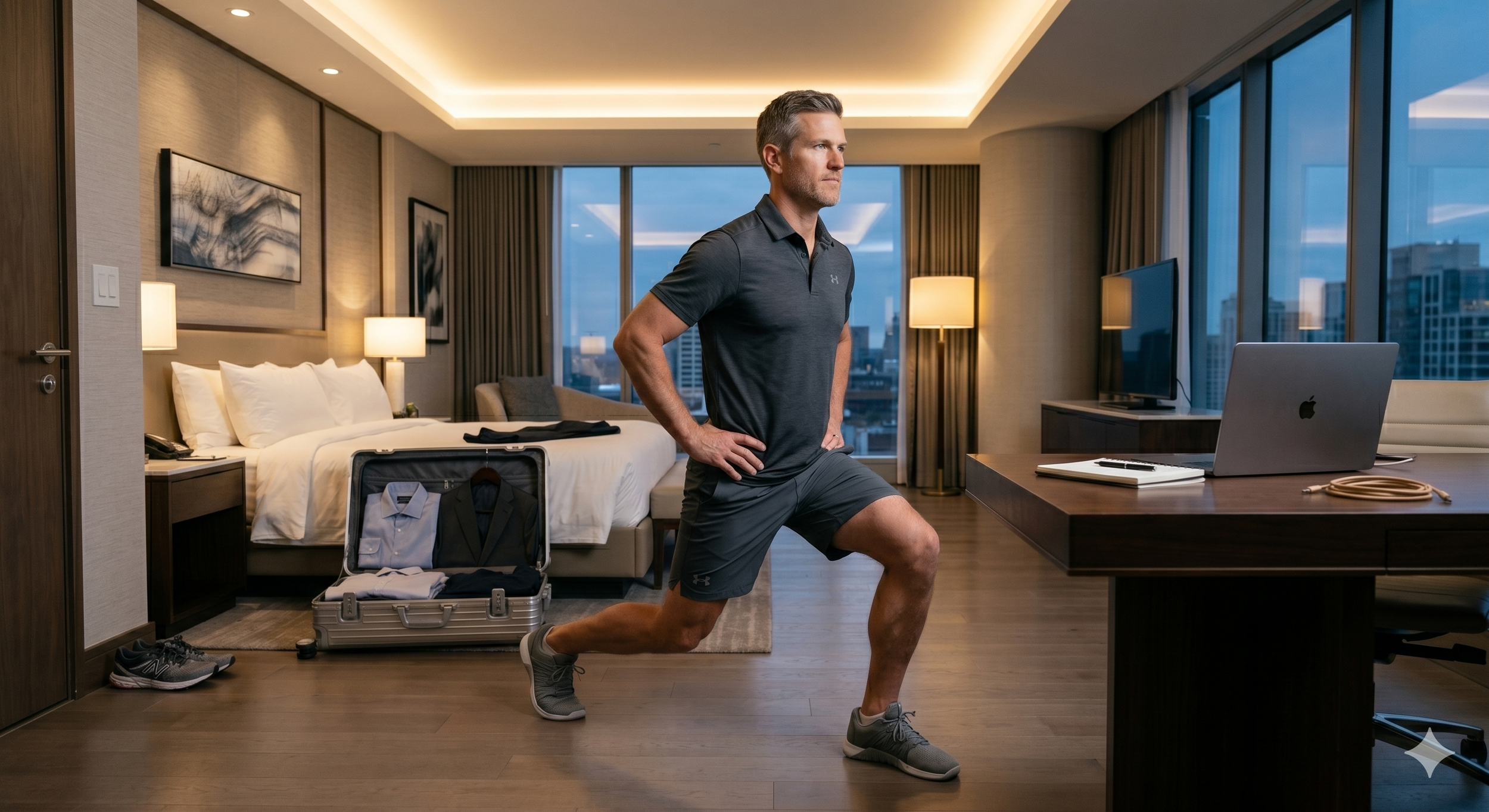
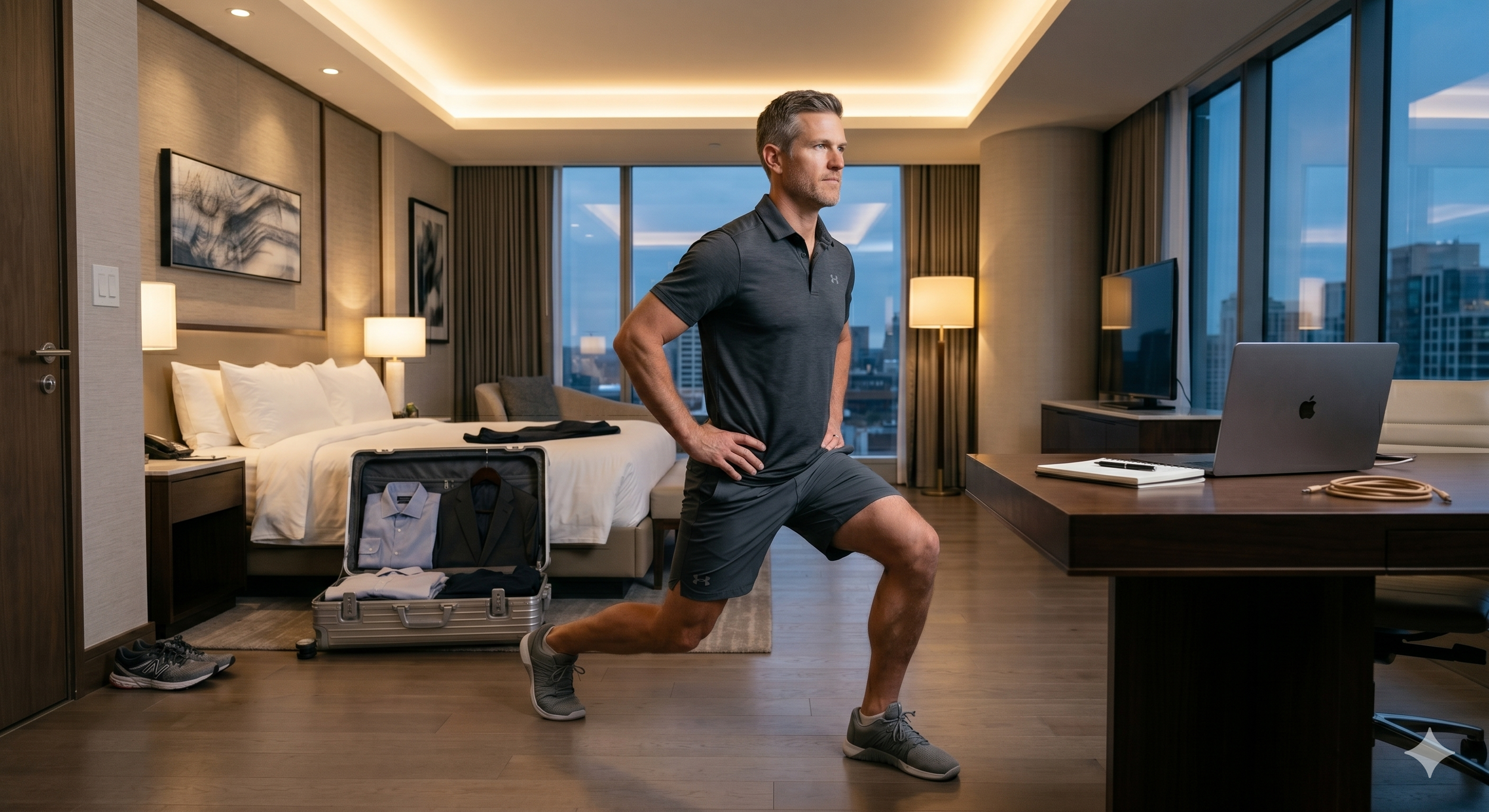
This image was created using AI to avoid copyright issues while conveying the context of this article.
For many high-performers, travel is a regular part of the job. Whether it is a cross-country flight for a conference or a week of back-to-back meetings in a new city, being away from home can easily disrupt your health systems. Many people fall into the trap of thinking that because they aren't in their "home" environment, their fitness goals have to go on pause. They treat travel like a "get out of jail free" card for their nutrition and training.
The problem with this mindset is that for a busy professional, travel isn't a rare event; it is a consistent part of life. If you "pause" your health every time you board a plane, you are spending a large portion of your year moving backward. The secret to staying fit while traveling is not about finding the perfect hotel gym or the healthiest restaurant in town. It is about having a portable system that allows you to maintain your momentum no matter where you wake up.
The "Maintenance" Mindset
The first thing to understand is that travel is usually not the time to try and set new personal records in the weight room. The goal of training while traveling is maintenance. You want to send a loud enough signal to your body to keep its muscle and stay metabolically active.
If you can't get in your full 60-minute session, don't throw away the whole day. A 15-minute "Micro-Workout" in your hotel room is infinitely better than doing nothing. It keeps the habit alive and prevents the "stiffness" that comes from sitting in airplanes and boardrooms. Think of it like keeping a pilot light lit; it’s much easier to turn the heat back up when you get home if the flame never went out.
The Hotel Room Strength Strategy
You do not need a rack of dumbbells to protect your muscle mass. Your body weight and the environment around you provide plenty of resistance if you know how to use them. If your hotel gym is lacking (or non-existent), you can use a "Time-Under-Tension" strategy to make simple movements much harder.
Focus on the big movement patterns:
The Squat: Perform slow, controlled bodyweight squats or "split squats" with one foot on the edge of the bed.
The Push: Use elevated push-ups off the desk or standard push-ups on the floor.
The Pull: This is often the hardest to do without equipment. You can use a heavy suitcase for rows or look for a sturdy door frame to perform "doorway rows."
The Core: Planks and "dead bugs" require zero space and help counteract the effects of sitting in cramped seats all day.
The key is intensity. If you are doing bodyweight movements, perform them slowly and focus on the "squeeze" of the muscle. Ten slow, perfect reps are more effective than 20 fast, sloppy ones.
Navigating the "Road Food" Challenge
Nutrition is often where travel goes off the rails. Airport terminals and hotel room service menus are designed for convenience and comfort, not for protein density. However, you can manage your "calorie budget" on the road by following two simple rules: Protein First and Hydration Always.
When looking at a menu, look for the leanest protein source available: grilled chicken, salmon, or even a lean steak. Make that the centerpiece of your meal. If you prioritize your protein, you will feel more satisfied and be less likely to overeat on the high-calorie "filler" foods like bread baskets or pasta sides.
Additionally, travel is incredibly dehydrating. The "fatigue" you feel after a flight is often just severe dehydration. Carry a reusable water bottle and consider using an electrolyte mix. Proper hydration keeps your brain sharp for your meetings and prevents your body from mistaking thirst for hunger.
Packing Your Success
Successful travel training starts before you leave the house. A little bit of "strategic packing" can save your week.
Resistance Bands: These take up almost no room in a carry-on but can add significant challenge to your hotel room workouts.
Portable Protein: Pack a few servings of high-quality protein powder or jerky. This ensures you have a "safety net" when you’re stuck in a meeting that runs through lunch.
The "Uniform": Pack your gym clothes on top. It’s a visual reminder of your commitment the moment you open your suitcase.
Leading Yourself on the Road
Managing your health while traveling is the ultimate test of your systems. It requires you to be the CEO of your own body when the environment is working against you. By choosing to move and fuel yourself intentionally, you aren't just protecting your muscle; you are building the mental resilience that makes you a better leader.
At Legacy Fitness, we help our clients design "Travel Protocols" that fit their specific itineraries. We don't want your progress to stall just because you’re at 30,000 feet. With a few simple shifts in mindset and a portable strength strategy, you can return home feeling stronger and more energized than when you left.

Training Through Travel: Stay on Track During Spring Break
Your body doesn't have a "Vacation Mode." Here is your tactical guide to staying on track while enjoying your Spring Break.

This image was created using AI to avoid copyright issues while conveying the context of this article.
It is that time of year. The suitcases are coming out, the flights are booked, and Spring Break is finally here. For many, travel feels like a mandatory "pause" button on fitness goals. You might think, "I’m on vacation, so the diet and the workouts don't count." But here is the reality: your body doesn't have a "Vacation Mode." The calories you eat in a different zip code still impact your energy, and the muscles you don't use will still begin to lose their edge.
Traveling doesn't have to mean starting over on April 1st. In March, we’ve built a "Bridge of Consistency," and that bridge can travel with you. Here is your tactical guide to staying on track while enjoying your Spring Break.
1. The "Hotel Room" Minimum
Don't wait to see if the hotel gym is nice (or if it even exists). Assume it won't be. Instead, commit to a "15-Minute Minimum" every morning before the family activities start.
The Routine: 3 rounds of 20 body squats, 15 push-ups, and a 60-second plank.
The Goal: It’s not about hitting a personal record; it’s about maintaining the "habit of movement." When you start your vacation day with a win, you are much more likely to make better food choices at lunch.
2. The "One-Meal" Rule
Vacation food is one of the best parts of travel. You should absolutely enjoy the local cuisine. To do this without the "weight-gain hangover," follow the One-Meal Rule:
Eat a high-protein, low-calorie breakfast (think eggs or Greek yogurt).
Have a high-protein, veggie-heavy lunch (like a grilled chicken salad).
Then, enjoy your dinner. By staying disciplined for two meals, you create a "calorie buffer" that allows you to enjoy a nice dinner and a drink without going over your daily limit.
3. Become a "Walking Tourist"
The easiest way to burn extra calories without "working out" is to walk everywhere. Skip the Uber when the destination is less than a mile away. Explore the city, the beach, or the trails on foot. Aim for 12,000 steps a day. You’ll see more of your destination, and you’ll keep your metabolism humming along while you do it.
4. Pack Your "Emergency" Protein
The hardest part of traveling is finding protein on the go. Airport snacks and gas station stops are usually 100% carbohydrates and fats.
The Fix: Pack a few protein bars, some beef jerky, or individual protein powder servings in your carry-on. Having a high-protein snack available means you won't be forced to eat a processed muffin just because you’re hungry at the gate.
5. Hydration is Non-Negotiable
Travel, especially flying, is incredibly dehydrating. And as we learned earlier this month, dehydration often feels like hunger. Carry a reusable water bottle and finish it before every meal. This will keep your energy high, your digestion moving, and your "false hunger" at bay.
Enjoy the Trip, Keep the Legacy
Spring Break is about making memories, not about being perfect. If you have a day where you eat too much or skip the movement, don't sweat it. Just get back to the "One-Meal Rule" the next morning.
You aren't a "gym person" only when you are at home. You are a fit person everywhere you go. Pack your discipline along with your sunscreen, and you’ll return from vacation feeling refreshed instead of defeated.

Workout on the Road: Your Guide to Staying Fit While Traveling
Whether it's a family vacation or a busy work trip, travel can often throw a wrench into your fitness routine. By being prepared, getting creative with your workouts, and making smart food choices, you can truly enjoy your travels without losing sight of your fitness goals.

This image was created with AI to avoid copyright issues while conveying the idea of this article.
Whether it's a family vacation or a busy work trip, travel can often throw a wrench into your fitness routine. Suddenly, your regular gym is gone, your favorite healthy foods aren't readily available, and the temptation to relax (or overindulge) is everywhere. It's easy to feel like you have to put your health goals on hold until you get back home.
But staying fit while traveling doesn't have to be a struggle. With a little planning and a willingness to be flexible, you can keep your momentum going and return feeling refreshed, not regretful. The key is to shift your mindset: instead of aiming for your perfect, at-home routine, focus on making the best choices you can, enjoying the experience, and finding creative ways to move your body.
1. Plan Ahead (But Don't Over-Plan)
Before you even pack your bags, do a quick check of your destination.
Check the hotel: Does it have a gym? A pool? Are there walking paths nearby? Many hotels now list their fitness facilities online.
Pack smart: Bring versatile workout clothes and good walking shoes. Consider packing resistance bands; they're lightweight and great for a full-body workout anywhere.
Research local activities: Is there a hiking trail, a city park, or a walking tour you can join? Incorporate activity into your sightseeing.
2. Embrace Bodyweight Workouts (No Gym Needed!)
No gym? No problem! Your body is your best piece of equipment. Hotel rooms, parks, or even an empty corner of a conference room are all you need for a great workout.
Quick Circuit Ideas:
Warm-up: 5 minutes of jumping jacks or high knees.
Circuit (3-4 rounds): 10-15 push-ups, 15-20 squats, 10-15 lunges (each leg), 20-30 second plank, 10-15 tricep dips (using a chair).
Cool-down: Gentle stretches.
Time it: Even 15-20 minutes of these exercises can make a big difference in maintaining your strength and energy.
3. Make Movement Part of Your Day
Traveling often involves a lot of sitting, whether in a car, plane, or meeting. Actively look for ways to integrate movement.
Walk everywhere: Explore new cities on foot. Take the stairs instead of the elevator. Walk to dinner instead of taking a cab.
Breaks on long journeys: If you're driving, stop every couple of hours to stretch and walk around for 10-15 minutes. On a flight, stand up and stretch in the aisle when appropriate.
Morning walks/jogs: Start your day with some fresh air. It’s a great way to see a new place and wake up your body.
4. Navigate Restaurant Menus Wisely
Eating out is a big part of travel, and you should enjoy it! But you can make healthier choices without feeling deprived.
Look ahead: Check menus online before you go to the restaurant.
Portion control: Restaurant portions are often huge. Consider sharing a main dish, or ask for a to-go box and put half your meal away immediately.
Smart swaps: Ask for dressings and sauces on the side. Choose grilled, baked, or steamed options over fried. Load up on vegetables.
Hydrate: Drink plenty of water throughout the day and with your meals.
5. Prioritize Sleep and Stress Management
Travel can be tiring and stressful. Giving your body enough rest and managing stress will help you stay on track.
Aim for consistent sleep: Try to stick to a regular sleep schedule as much as possible, even with time zone changes.
Relax: Don't stress if you miss a workout or have an indulgent meal. Focus on consistency over perfection. Enjoy your trip!
Staying fit while traveling isn't about being perfect; it's about being present and making conscious choices to support your well-being. By being prepared, getting creative with your workouts, and making smart food choices, you can truly enjoy your travels without losing sight of your fitness goals.
Ready to build a routine that works for you, no matter where life takes you? A fitness coach can help you create a personalized plan that fits seamlessly into your busy life and travel schedule. At Legacy Fitness & Nutrition, we specialize in helping people build strength and confidence wherever you are, with or without a gym, on your schedule not your trainer’s schedule.