
The "Travel-Proof" Plan: Staying Fit on the Road
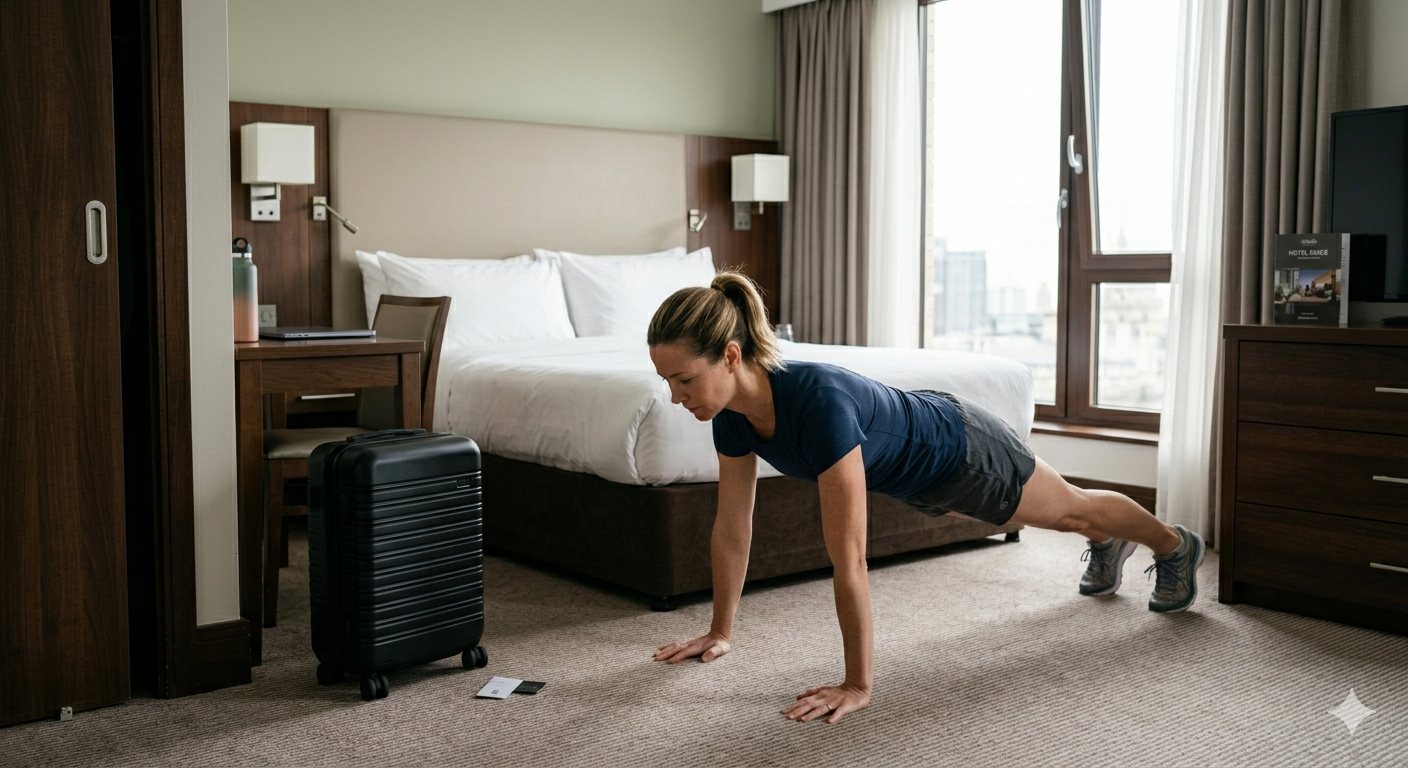
This image was created using AI to avoid copyright issues while conveying the context of this article.
You finally get ahead of your training, your nutrition feels dialed in, and then a business trip blows everything up. Sound familiar? Travel is one of the most reliable consistency-killers for busy professionals, but it doesn't have to be. The goal isn't to maintain a perfect routine when you're on the road. The goal is to maintain enough of one that you come home without losing ground.
Here's how to build a plan that actually holds up when your schedule doesn't.
Start With a Non-Negotiable Minimum
Most people fail at travel fitness because they approach it as all-or-nothing. If they can't do their full workout, they do nothing. That mindset is expensive. A two-week trip with zero movement adds up fast, especially for people over 40 whose bodies respond more aggressively to detraining.
Before your next trip, decide on one non-negotiable minimum. This could be 20 minutes of movement every morning, a daily step count, or three resistance training sessions per week regardless of location. The bar should be low enough that skipping it feels like a choice rather than a scheduling conflict.
One rule works better than a complex system. Keep it simple enough to execute in a hotel room, an airport layover, or a schedule that's been hijacked by a dinner that ran two hours long.
Treat the Hotel Room as Your Gym
Most hotel gyms are underwhelming. A single cable machine, two dumbbells, and a treadmill that's been out of calibration since 2019. Stop expecting the facility to carry your workout. Your body is the equipment.
A bodyweight circuit built around push-up variations, hip hinges, single-leg work, and core stability will maintain strength and muscle far better than skipping sessions because the gym wasn't what you hoped for. If you have resistance bands in your bag (they weigh nothing, take up no space), you can add meaningful load to rows, presses, and hip work without a single barbell.
A sample travel session that takes 25 minutes: three rounds of push-ups, Romanian deadlifts with a band, reverse lunges, inverted rows using a desk or countertop, and a plank hold. That's a full-body stimulus that requires no equipment beyond what you packed for work.
Protein First, Every Meal
Nutrition is where travel tends to do the most damage, and it usually comes down to two things: skipped meals that lead to poor choices later, and meals where protein is an afterthought.
The simplest travel nutrition rule is this: anchor every meal with protein first. When you're at a restaurant, scan for the protein option before anything else. At the airport, Greek yogurt, string cheese, a rotisserie chicken, or a turkey wrap is always available if you look. At the hotel breakfast buffet, eggs exist. Build your plate around them.
When you anchor to protein, the rest of the meal becomes easier to manage. You're more satisfied, less likely to graze at the snack table during a conference session, and more likely to stay in a reasonable calorie range without tracking anything.
Stay Ahead of Dehydration
Flights are dehydrating. Client dinners come with open bars. Cities you don't know well mean you're less likely to have water within reach. Dehydration compounds fatigue, impairs decision-making, and makes the bad food choices feel much more appealing.
The fix is mechanical, not motivational. Carry a water bottle through every airport. Set a phone reminder if needed. Before any meal where alcohol is likely, drink a full glass of water first. These aren't complicated strategies; they just need to be deliberate rather than accidental.
Sleep Is the Recovery You're Not Protecting
You can get the workout in. You can eat the right protein. But if you're staying up until midnight on back-to-back client nights and flying on five hours of sleep, your body is not recovering. Sleep is where the adaptation from training actually happens. Shortchange it consistently and you'll come home feeling like you've moved backward regardless of how many sessions you got in.
On the road, sleep is the hardest variable to control but also the one with the biggest payoff. Blackout curtains, a travel sleep mask, keeping your room cold, and avoiding screens in the last 30 minutes before bed are all small investments that compound over a four-night trip.
Come Home Ready to Re-Enter, Not Recover
The sign of a solid travel plan isn't that you came home exactly where you left off. It's that you came home without needing a week to undo the damage. You're not bloated from five days of restaurant food, you're not undertrained from doing nothing, and you're not exhausted from sleeping poorly every night.
That's the bar. Not perfection. Continuity.
At Legacy Fitness, we work with busy professionals who travel frequently and need a structure that bends without breaking. Our coaching programs are designed around real schedules, not ideal ones. If your travel schedule is the biggest thing standing between you and consistent progress, we can help you build a plan that accounts for it before it derails you again.
