
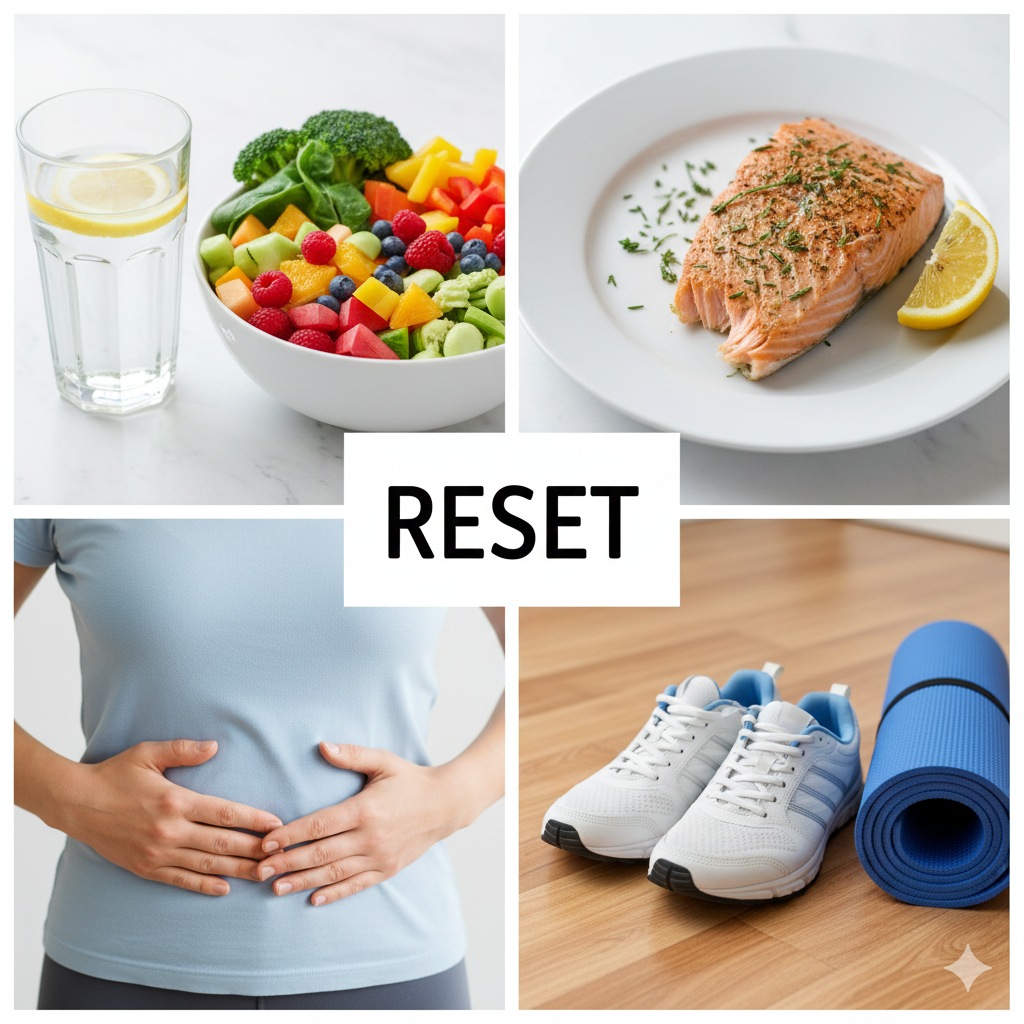
The "Metabolic Reset": Simple Steps to Get Your Engine Ready for January
Before you jump into an intense new diet or workout routine, it is critical to address your body's engine: your metabolism.
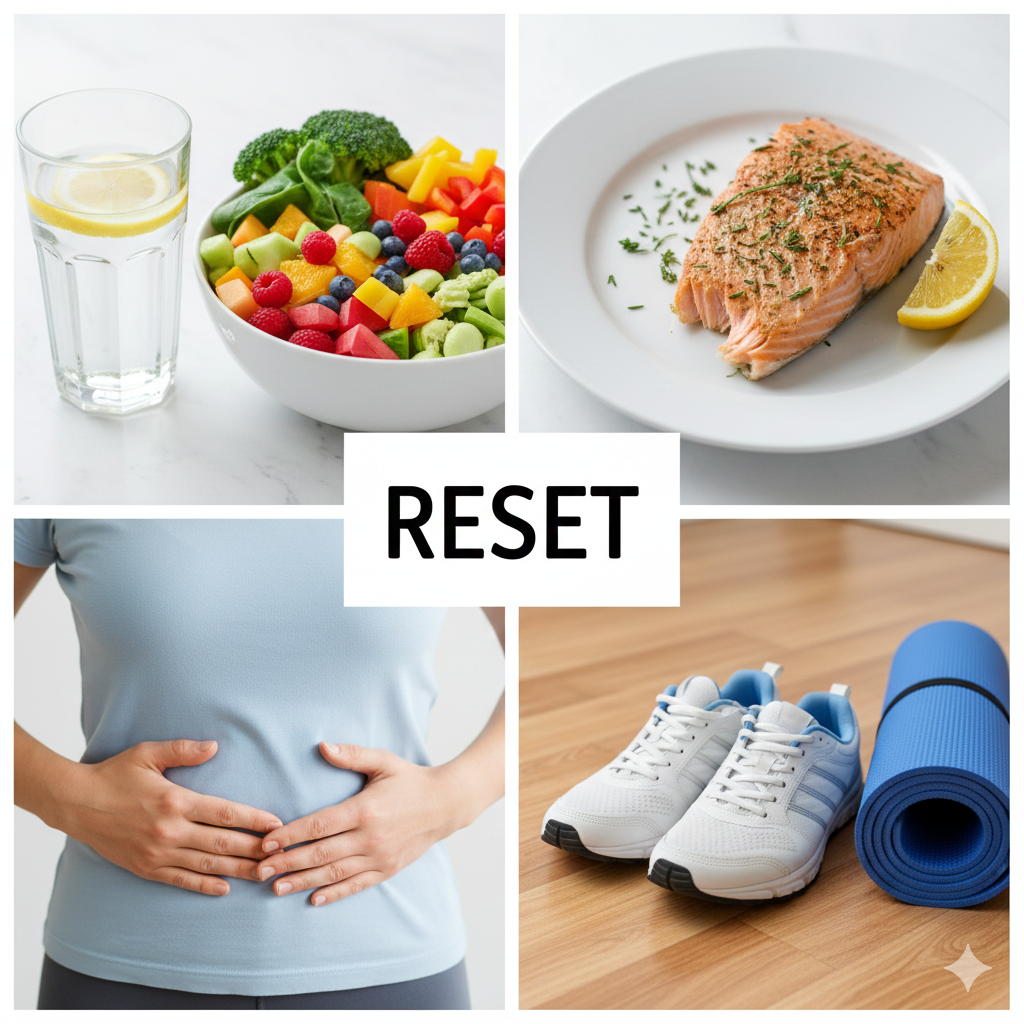
This image was created using AI to avoid copyright issues while still conveying the context of this article.
The end of December and the start of January always bring a massive focus on weight loss and fitness. Before you jump into an intense new diet or workout routine, it is critical to address your body's engine: your metabolism.
If you have spent December dealing with extra stress, inconsistent sleep, and richer foods, your metabolism might be running sluggishly. Trying to launch an intense new plan on a slow-running engine is a recipe for quick burnout and disappointment.
At Legacy Fitness & Nutrition, we recommend a simple "Metabolic Reset" in the final days of the year. This isn't a restrictive detox; it is a supportive, four-step strategy to naturally boost your body's fat-burning and energy processes, getting your engine primed and ready for the successful habits you plan to build in January.
1. Prime the Engine with Water and Fiber
The metabolism is a chemical process that requires two things to run smoothly: a catalyst (water) and clean fuel (fiber).
The Action: Focus on two non-negotiables for three days leading up to January 1st:
Water Loading: Drink at least half your body weight in ounces of water daily.
Fiber First: Every meal should include a substantial serving of fiber-rich vegetables (broccoli, spinach, bell peppers) or complex carbohydrates (oats, beans).
Why it Works: Water is essential for digestion and nutrient transport. Fiber supports gut health (which is crucial for metabolism) and helps your body flush waste, reducing bloating and the feeling of heaviness that slows you down.
2. The Power of Protein Density
Your metabolism is largely dependent on the amount of muscle tissue you have. To maintain that muscle and boost the energy required for digestion, you need to ramp up your protein intake.
The Action: Make protein the main focus of every meal. (This reinforces the principles from our article, “Protein Power for the New Year”.)
Example: Prioritize eggs or Greek yogurt for breakfast, chicken or fish for lunch, and a lean steak or plant-based protein for dinner.
Why it Works: Protein requires the most energy to digest (a phenomenon called the Thermic Effect of Food, or TEF). This means your body naturally burns more calories just by processing the protein you eat. This is a simple, passive way to raise your metabolic rate.
3. Rebalance Your Stress Hormones
As discussed in the Stress Management article (“Your Secret Fitness Weapon”), chronic stress and high cortisol actively signal your body to slow down fat burning and store energy. A key part of the reset is intentionally lowering cortisol.
The Action: Incorporate two daily 10-minute sessions of intentional stress reduction:
Box Breathing: 10 minutes of controlled breathing (inhale 4, hold 4, exhale 4, wait 4).
Digital Sunset: Begin winding down without screens 60 minutes before your ideal bedtime. (Reinforcing our article, “Why You Can't "Out-Train" a Bad Sleep Schedule”.)
Why it Works: This active intervention signals to your body's nervous system that the "crisis" is over, allowing cortisol levels to drop. When cortisol is low, your body is more willing to release stored fat for energy.
4. Light Movement: The Daily Ignition
If your body has been largely sedentary, jumping straight into a high-intensity workout can be a shock. The metabolic reset requires light movement to wake up your muscles without causing stress.
The Action: Commit to two 20-minute sessions of light movement daily: a morning walk and a light evening stretch or yoga flow.
Why it Works: This low-stress movement stimulates blood flow, wakes up muscle tissue, and prevents the stiff, heavy feeling of a sedentary lifestyle. It acts as the ignition switch that tells your body, "It's time to burn fuel again."
By dedicating the final days of December to this supportive Metabolic Reset, you ensure that when you start your New Year's goals, your body's engine is running clean, fast, and ready to go. You will start January with momentum, not metabolic resistance.

Christmas Eve Prep: Simple Swaps to Keep Your Holiday Meal Heart-Healthy
Many traditional holiday dishes are packed with hidden fats, sugars, and sodium, turning a wonderful meal into a metabolic shock that leaves you feeling sluggish for days. However, here at Legacy Fitness & Nutrition, we believe you can have both tradition and better health.

This image was created by AI to avoid copyright issues while still conveying the idea of this article.
The Christmas Eve meal is often one of the biggest and richest meals of the year. It's a time for family, celebration, and tradition, and the food should absolutely be enjoyed.
However, many traditional holiday dishes are packed with hidden fats, sugars, and sodium, turning a wonderful meal into a metabolic shock that leaves you feeling sluggish for days.
At Legacy Fitness & Nutrition, we believe you can have both tradition and better health. You don't have to throw out your favorite recipes; you just need to make a few strategic, simple swaps. These subtle changes will significantly lighten the load on your heart and digestive system, ensuring you wake up feeling energized for Christmas Day, not exhausted.
Here are four simple, effective swaps to keep your Christmas Eve meal delicious and heart-healthy.
1. Upgrade the Cream and Butter
Many holiday recipes rely heavily on cream, whole milk, and butter for richness. Think mashed potatoes, creamy soups, and gravies. These sources are often high in saturated fat.
The Swap: Substitute the heavy dairy where possible.
Instead of: Cream or whole milk in mashed potatoes and soups.
Use: Unsweetened almond milk or cashew milk (for soups and sauces) and Greek yogurt or blended cottage cheese (for mashed potatoes).
Why it Works: Greek yogurt provides a creamy texture plus a boost of protein while slashing saturated fat. The non-dairy milks reduce fat while still providing the necessary liquid base. You still get the creamy mouthfeel without the heavy, digestive burden.
2. Rethink the Roast: Leaner Protein, Richer Flavor
The main protein source is often the centerpiece of the meal. You can choose a leaner protein without sacrificing the festive feel.
The Swap:
Instead of: Heavy, marbled prime rib or dark-meat turkey.
Use: Lean cuts of pork tenderloin, turkey breast (white meat), or even a fish like salmon (which is rich in heart-healthy Omega-3 fats).
Why it Works: Leaner proteins are easier to digest, and salmon delivers Omega-3 fatty acids, which are known to reduce inflammation and support cardiovascular health. If you stick with turkey, simply focus on the white breast meat.
3. Boost Flavor with Herbs, Not Salt and Fat
A lot of the flavor we love in holiday food comes from heavy-handed use of butter and salt. You can achieve a richer, more complex taste using natural herbs and acids.
The Swap: Reduce added salt and fat in vegetable side dishes and stuffings.
Instead of: Butter or bacon grease to cook vegetables.
Use: Olive oil, fresh garlic, lemon juice, balsamic glaze, and fresh herbs like rosemary, thyme, and sage.
Why it Works: Herbs and spices add deep flavor complexity that tricks your palate into feeling satisfied, allowing you to cut back on sodium and fat without feeling deprived. Lemon juice or a vinegar-based dressing cuts through richness and aids in digestion.
4. Prioritize the Fiber in Dessert
Dessert is a sacred tradition. The goal is not to eliminate sugar, but to balance it with a little bit of fiber and whole ingredients to slow down the sugar spike.
The Swap: Choose desserts built around fruit, nuts, or whole grain crusts.
Instead of: Heavy cream pies or dense chocolate cakes.
Use: Pies based on pumpkin, apple, or pecan (or a lighter fruit tart).
Why it Works: Fruit and nuts contain fiber, which slows the absorption of sugar into your bloodstream, making the sugar easier for your body to manage and preventing a massive energy crash later in the evening.
These small, strategic swaps ensure that your Christmas Eve meal remains a delicious celebration, but one that actively supports your digestive system and your heart. Enjoy the tradition without the heavy metabolic hangover, allowing you to build a health legacy that celebrates balance and joy.

"Protein Power" for the New Year: How to Use the Ultimate Macro to Stop Resolution Cravings
This New Year, forget the crash diets. Focus on empowering your body with the ultimate macro.

Image courtesy of Brett Wharton via Unsplash
As the calendar flips to January, millions of people will try to lose weight by cutting carbs, cutting fat, or simply cutting calories. While restriction can work temporarily, it often leads to intense cravings, fatigue, and the inevitable return of the weight.
At Legacy Fitness & Nutrition, we encourage a different approach for the New Year: Stop focusing on what you need to cut, and focus on what you need to add.
The single most powerful addition you can make to your diet for long-term weight management and successful resolutions is Protein. Protein is the ultimate macro-nutrient because it directly impacts your energy, muscle, and most importantly, your hunger.
If you are serious about stopping those resolution-killing cravings, you need to unleash the power of protein.
The 3-Way Craving Killer
Protein works on three different levels to stabilize your body and eliminate the craving cycle that derails most New Year's resolutions:
1. The Satiety Signal (Fullness)
Protein takes longer to digest than carbohydrates. When you eat protein, it sends powerful signals to your brain that you are full and satisfied.
Result: A meal high in protein means you will feel satisfied for hours. If you eat a carb-heavy breakfast (like a bagel), you crash fast and are hungry an hour later. If you eat a protein-heavy breakfast (like eggs), you stay full until lunch, eliminating the mid-morning snack craving.
2. Blood Sugar Stability
Cravings are often caused by blood sugar rollercoaster rides. When you eat refined sugar or high-starch carbs alone, your blood sugar spikes quickly, then crashes, leaving you exhausted and craving another quick sugar fix.
Result: Eating protein with carbohydrates slows down the absorption of sugar into your bloodstream. This keeps your energy and blood sugar levels steady, removing the extreme highs and lows that cause those frantic, urgent cravings.
3. Metabolism Maintenance
As we've discussed, muscle is metabolically active, meaning it burns calories even when you are resting. When you are trying to lose weight, you want to burn fat, not muscle.
Result: A high-protein diet helps your body maintain and even build lean muscle tissue, especially when paired with strength training. This protects your metabolism and ensures that the weight you lose is fat, not the muscle that helps keep the weight off for good.
Your New Year's "Protein Power" Playbook
You don't need to live on chicken breast. You just need to be strategic about how you add protein to every single meal.
1. The 30-Gram Breakfast Rule
Your first meal of the day is critical for controlling hunger for the next 12 hours. Aim for a target of 30 grams of protein at breakfast.
Example: 4 scrambled eggs and a piece of whole-wheat toast, or a large Greek yogurt with protein powder mixed in.
Why it Works: This big dose of protein sets your satiety hormones right for the entire day.
2. Protein as the Snack Foundation
If you need a snack, make protein the base, not the bonus.
Instead of: A handful of chips or pretzels (zero protein).
Do This: Cottage cheese, beef jerky, a small protein shake, or an apple with a tablespoon of peanut butter.
3. Eat Protein First at Every Meal
Whenever you sit down to eat, prioritize eating the protein source first before moving on to the carbohydrates or fats.
Why it Works: This ensures the protein hits your stomach first, maximizing the satiety signal and helping to blunt the blood sugar response from the other macros.
This New Year, forget the crash diets. Focus on empowering your body with the ultimate macro. By unleashing Protein Power, you gain control over your hunger, protect your metabolism, and build a lasting health legacy.

The "Pre-Game" Strategy: 3 Things to Do Before a Holiday Party to Stay on Track
December is a minefield of delicious, high-calorie food and drinks. You don't need to skip the holidays to stay healthy. You just need a strategy.

This image was created using AI to avoid copyright issues while still conveying the meaning of this article.
December is a minefield of delicious, high-calorie food and drinks. When you walk into a holiday party, the environment is perfectly designed to lead you off track. There are trays of treats, open bars, and people telling you, "Just have one!"
If you rely on willpower alone, you will fail. Willpower is a limited resource that gets drained quickly by stress and social pressure.
At Legacy Fitness & Nutrition, we recommend using a "Pre-Game" Strategy—a simple, proactive plan that stacks the odds in your favor before you even leave the house. This shifts your focus from reacting (and resisting temptation) to executing a simple, proven plan.
Here are the three non-negotiable steps in your Holiday Party Pre-Game Playbook:
1. The Fiber & Protein Armor
The biggest mistake people make is going to a party hungry, thinking, "I saved all my calories for this." As we discussed with the "Small Plate Trap" (Article 5), this guarantees a massive overeat.
The goal is to feel satisfied, not stuffed, before you arrive. This gives you the mental clarity and physical fullness required to be choosy.
Pre-Game Meal: 60 minutes before the party, eat a small snack that is high in fiber and protein.
Examples: A scoop of protein powder mixed with water, a Greek yogurt, or a handful of almonds with a piece of fruit.
Why it Works: This snack triggers the release of fullness hormones (leptin) and stabilizes your blood sugar. When you walk into the party, you are there to socialize, not to devour the snack table.
2. The Hydration Shield (The "One-to-One" Rule)
Holiday parties almost always involve alcohol or sugary drinks. As we covered in Article 7, alcohol is dehydrating and can rapidly lower your inhibitions, making it much harder to stick to your food plan.
Pre-Game Action: Before you leave, drink a full 16-ounce glass of water. If you plan to drink alcohol at the party, commit to the "One-to-One" Rule while you are there: for every alcoholic beverage you consume, you immediately follow it with one full glass of water.
Why it Works: The pre-game water provides a buffer against dehydration. The "One-to-One" rule forces you to slow down your drinking and keeps you hydrated, mitigating the negative effects of alcohol on your judgment and mood.
3. The Exit Strategy & Conversation Plan
Willpower often runs out about 90 minutes into a party. The longer you stay, the higher the chances of making poor choices. You need a behavioral plan for arrival and departure.
The Conversation Plan: Decide on your three talking points before you go. This focuses your brain on the social interaction rather than scanning the food table. Be ready with polite phrases if someone pushes food on you: "That looks amazing! I'm actually just finishing a small snack right now, but maybe later."
The Exit Strategy (The 90-Minute Rule): Decide on a specific time (e.g., 90 minutes after arrival) when you will leave, or a specific event (e.g., "After the gift exchange"). Tell someone you came with, "I have to leave at 8:30." This creates accountability.
Why it Works: You are shifting your focus from food to people. By knowing your exit time, you can be present, enjoy the party, and leave before the temptation becomes too strong.
You don't need to skip the holidays to stay healthy. You just need a strategy. By executing these three simple "Pre-Game" steps, you take control of the environment and build your legacy of consistent health, even during the chaos of December.
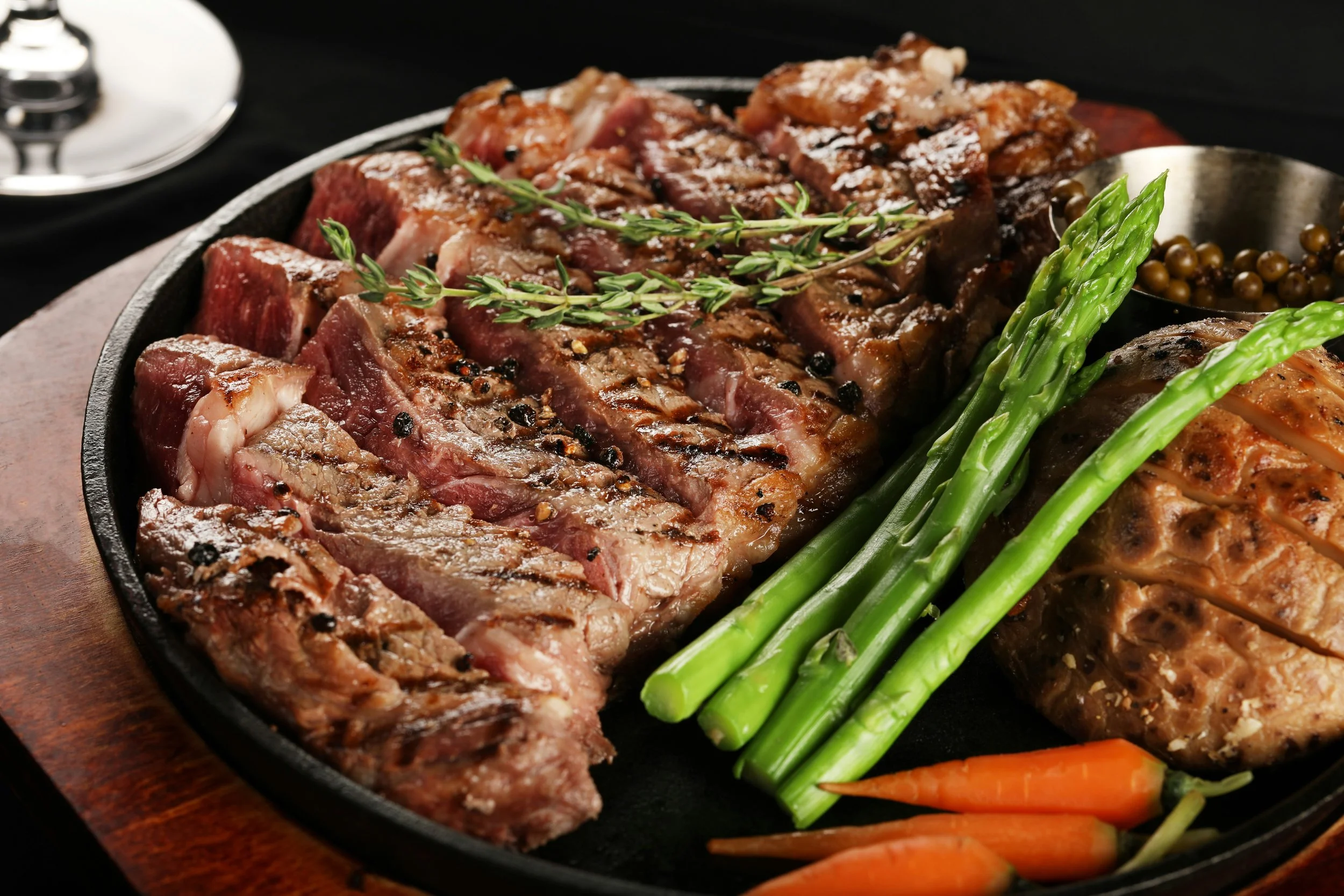
The "Small Plate" Trap: Why Restricting Food Now Makes January Harder
The belief is that restriction now will lead to success later. The reality is that extreme or sudden restriction in usually does two things that actively work against your success.
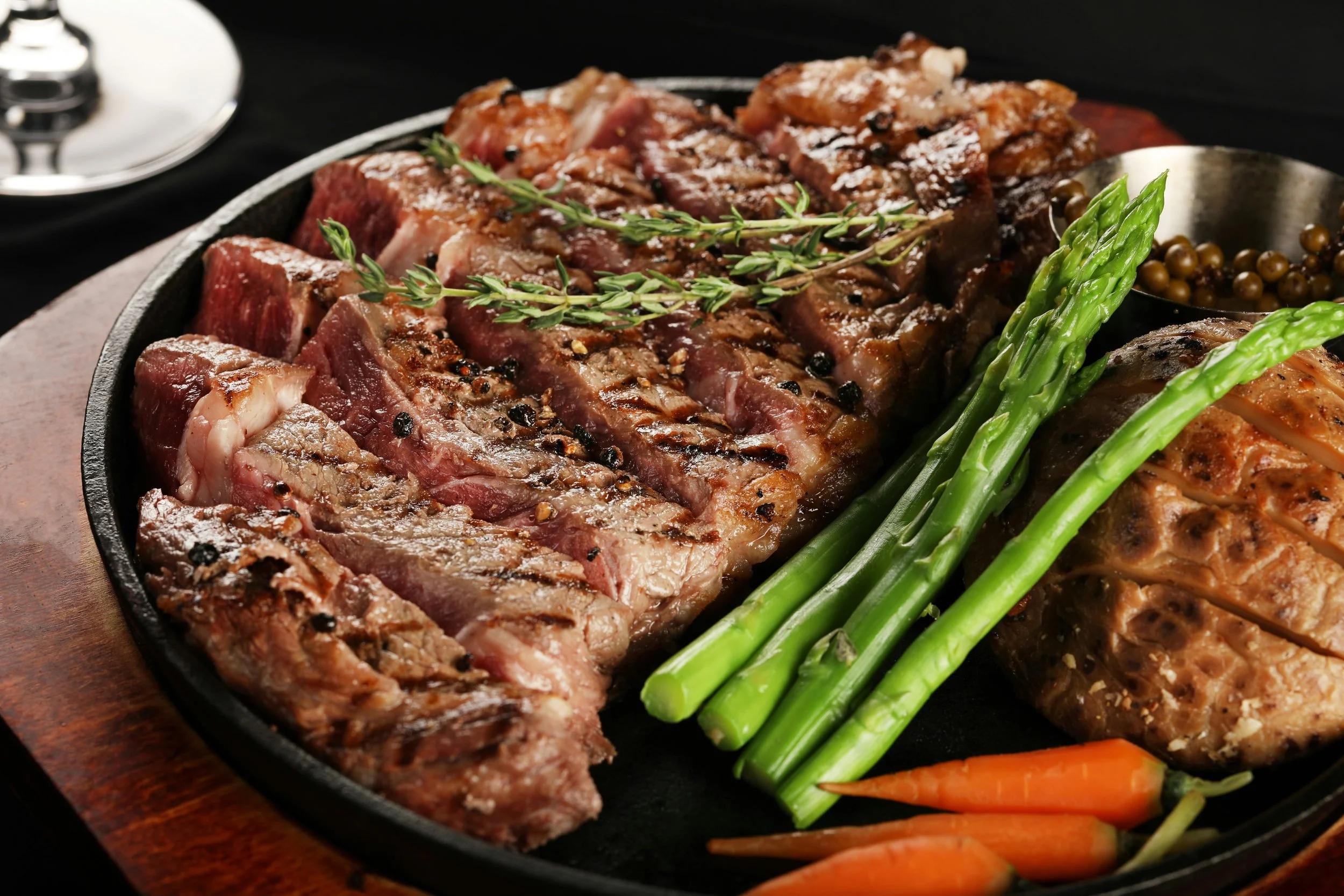
Photo by Loija Nguyen on Unsplash
As December begins, you might be thinking: "I’m going to eat light now to ‘save’ calories for the holiday parties," or "I need to start restricting my portions now so I can kick off my diet hard in January."
This is a very common approach, but it is one of the biggest pitfalls we see at Legacy Fitness & Nutrition. We call it the "Small Plate" Trap.
The belief is that restriction now will lead to success later. The reality is that extreme or sudden restriction in December usually does two things that actively work against your New Year's success:
It cranks up your cravings: You create an emotional and physical hunger that makes you more likely to overeat when you finally see that holiday buffet.
It sets a terrible precedent for January: You are teaching your body that the only way to manage weight is through severe restriction, which is a miserable and unsustainable approach.
If you want to build a lasting legacy of health, you need to focus on addition and quality right now, not subtraction and starvation.
The Physical Fallout: Why You Get Hungrier
When you suddenly cut your food intake too low, your body reacts with survival mechanisms that are much stronger than your willpower:
Hormone Shift: Your body releases ghrelin (the "hunger hormone") and drops leptin (the "fullness hormone"). This makes you feel constantly starving, not just physically, but mentally preoccupied with food.
Energy Crash: Too few calories, especially carbs, means your brain is running low on fuel. You feel tired, irritable, and completely unable to focus on work, family, or your workouts.
The Binge Trigger: When you feel deprived, the sight of a holiday cookie or a rich dish triggers an intense, primal urge to eat everything you restricted yourself from. The restriction leads directly to the loss of control.
You are essentially showing up to the holiday party with a starved brain, guaranteed to overeat.
Focus on Addition, Not Subtraction
The successful strategy for December is to maintain consistent eating habits centered around high-quality foods that provide maximum satiety (the feeling of being full and satisfied).
Here are three ways to focus on addition instead of the "Small Plate" Trap:
1. Add Protein to Every Meal (The Satiety Shield)
Protein is the single most important nutrient for controlling hunger. It takes longer to digest and signals to your brain that you are full. Instead of taking less of everything, make a point of adding a solid source of protein to breakfast, lunch, and dinner.
Instead of: Toast for breakfast.
Do This: Eggs or Greek yogurt with your toast.
Result: You stay full for hours, reducing the chance of grazing on holiday treats between meals.
2. Add Fiber-Rich Vegetables (The Volume Boost)
Fiber adds volume to your meals with minimal calories, helping you feel full and supporting healthy digestion. Before you worry about the size of your plate, worry about the content.
Instead of: Just rice and meat for dinner.
Do This: Fill half your plate with salad, steamed broccoli, or roasted greens first.
Result: You eat a large volume of filling, nutrient-dense food, leaving less space and less desire for extra heavy portions.
3. Add Movement (The Energy Generator)
If you restrict food, you feel too tired to move. If you focus on quality nutrition and feel energized, you naturally want to be more active. Instead of using food restriction to manage your weight, use a consistent movement routine. That consistency will naturally lead to better food choices because you won't want to "waste" your workout.
Building a Legacy of Balance
The Small Plate Trap is based on the idea of suffering now for a reward later. The Legacy Fitness philosophy is about creating sustainable balance now for a healthy life forever.
By focusing on adding high-quality protein and fiber, you manage hunger, boost energy, and teach your body that consistency means quality fuel, not starvation. This sets you up for an empowering, balanced, and highly successful January.
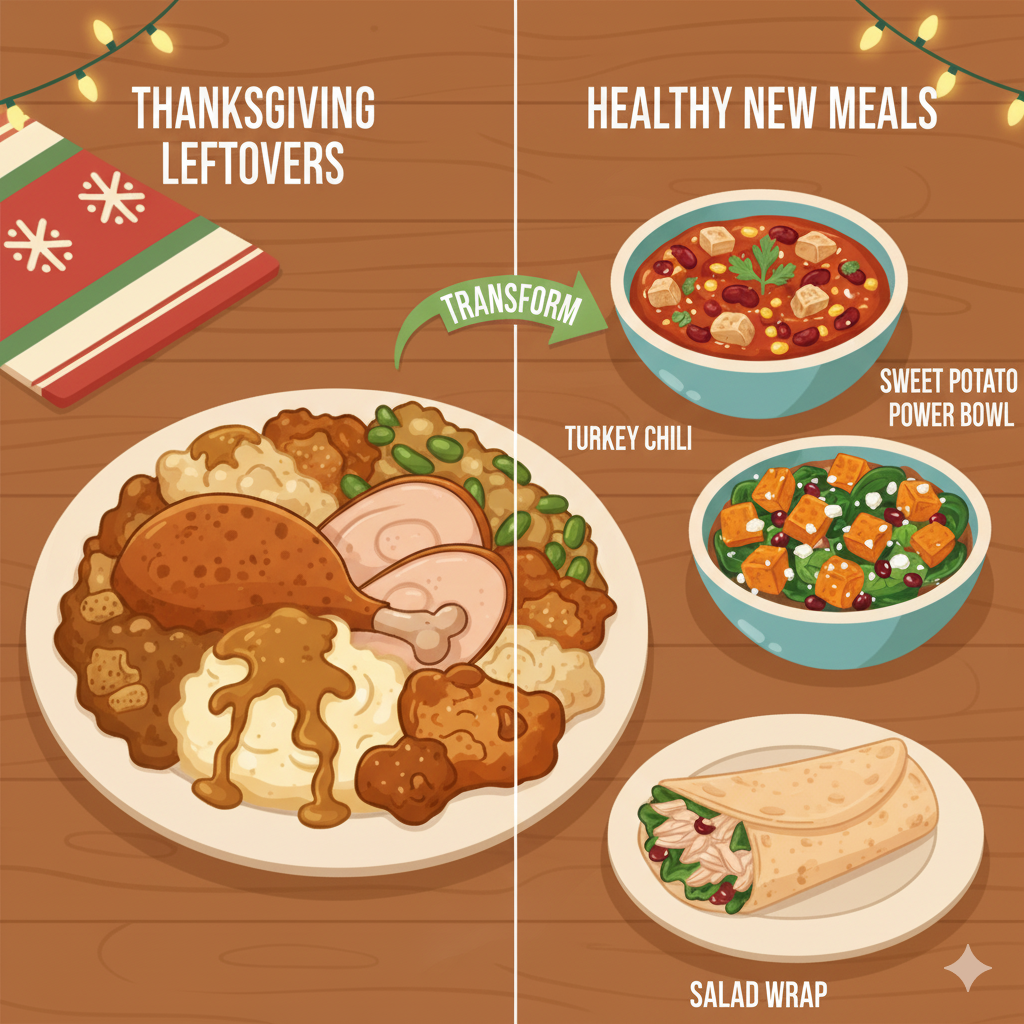
Leftovers Lighter: Quick, Healthy Recipes for Thanksgiving Day 2 Leftovers
The day after Thanksgiving is often called "Black Friday," but it could also be called "Leftovers Day."
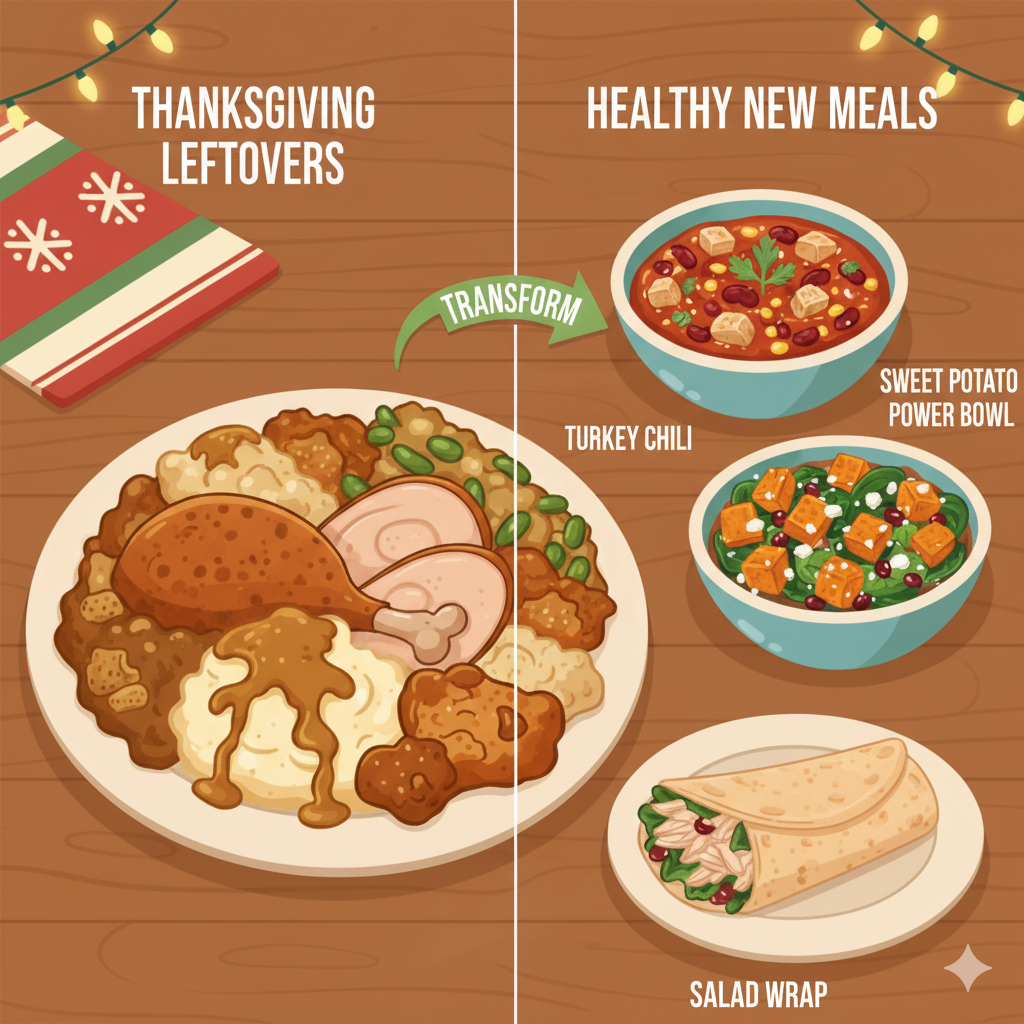
The day after Thanksgiving is often called "Black Friday," but it could also be called "Leftovers Day." You've got massive containers of turkey, mashed potatoes, and stuffing filling your fridge. While the initial holiday meal was a joyful indulgence, eating heavy, high-calorie leftovers for three days straight can derail your energy and make you feel sluggish.
The good news is you don't have to waste food. You can transform those rich holiday leftovers into lighter, protein-packed, and healthy meals that are ready in minutes. The key is to deconstruct the heavy meal and repurpose the components.
Here are three quick, healthy ways to use your Thanksgiving leftovers for meals that feel fresh and light.
1. The Protein-Packed Turkey Chili (The Clean-Out Meal)
This recipe instantly transforms dense, buttery turkey into a healthy, fiber-rich meal that’s perfect for a chilly late-November evening.
Deconstruct: The leftover turkey meat is pure, lean protein.
Repurpose: Turkey Chili Base.
Ingredients: 1 can crushed tomatoes, 1 can diced tomatoes, 1 can kidney or black beans (rinsed well), 1 cup frozen corn (optional), chili seasoning.
The Assembly (15 minutes): Sauté half an onion and a bell pepper in a pot. Add the canned ingredients and seasoning. Bring to a simmer. Shred your leftover turkey and add it to the pot. Let it simmer for 15 minutes to soak up the flavors.
The Hack: Skip the heavy cheese and sour cream. Top with fresh cilantro, a squeeze of lime juice, and a spoonful of Greek yogurt for a protein boost.
2. The Sweet Potato & Egg Power Bowl (The Metabolism Booster)
This is a fantastic, protein-heavy breakfast or brunch option that takes advantage of your leftover carbs while boosting your morning metabolism.
Deconstruct: Leftover sweet potatoes (or even mashed white potatoes).
Repurpose: Sweet Potato Hash.
The Assembly (10 minutes): Dice any leftover sweet potatoes (or use leftover mashed sweet potatoes). Sauté a handful of chopped spinach or kale in a skillet with a tiny bit of olive oil. Add the diced sweet potatoes and warm through.
The Hack: Push the sweet potato and greens mixture to the side and fry or scramble 2 eggs in the same pan. Serve the eggs on top of the hash. The combination of protein and complex carbs is perfect for sustained energy without the crash.
3. The Turkey & Cranberry Salad Wrap (The Quick Lunch)
This simple meal uses the turkey as a lean protein base and adds crunch and fiber for a completely fresh flavor profile.
Deconstruct: Leftover turkey and cranberry sauce.
Repurpose: High-Protein Lunch Wrap.
Ingredients: Whole-wheat tortillas or large lettuce wraps, Greek yogurt, celery, slivered almonds (optional).
The Assembly (5 minutes): In a bowl, mix shredded turkey with 1–2 tablespoons of plain Greek yogurt (instead of mayonnaise), some chopped celery for crunch, and a small spoonful of cranberry sauce for flavor. Mix well.
The Hack: Place the mixture in a whole-wheat tortilla with a handful of fresh spinach, or wrap it in large lettuce leaves for a low-carb, high-fiber option.
By getting creative with your leftovers, you honor the abundance of the holiday while making conscious choices that support your fitness goals. A little planning means you can enjoy the food and feel great all weekend long.
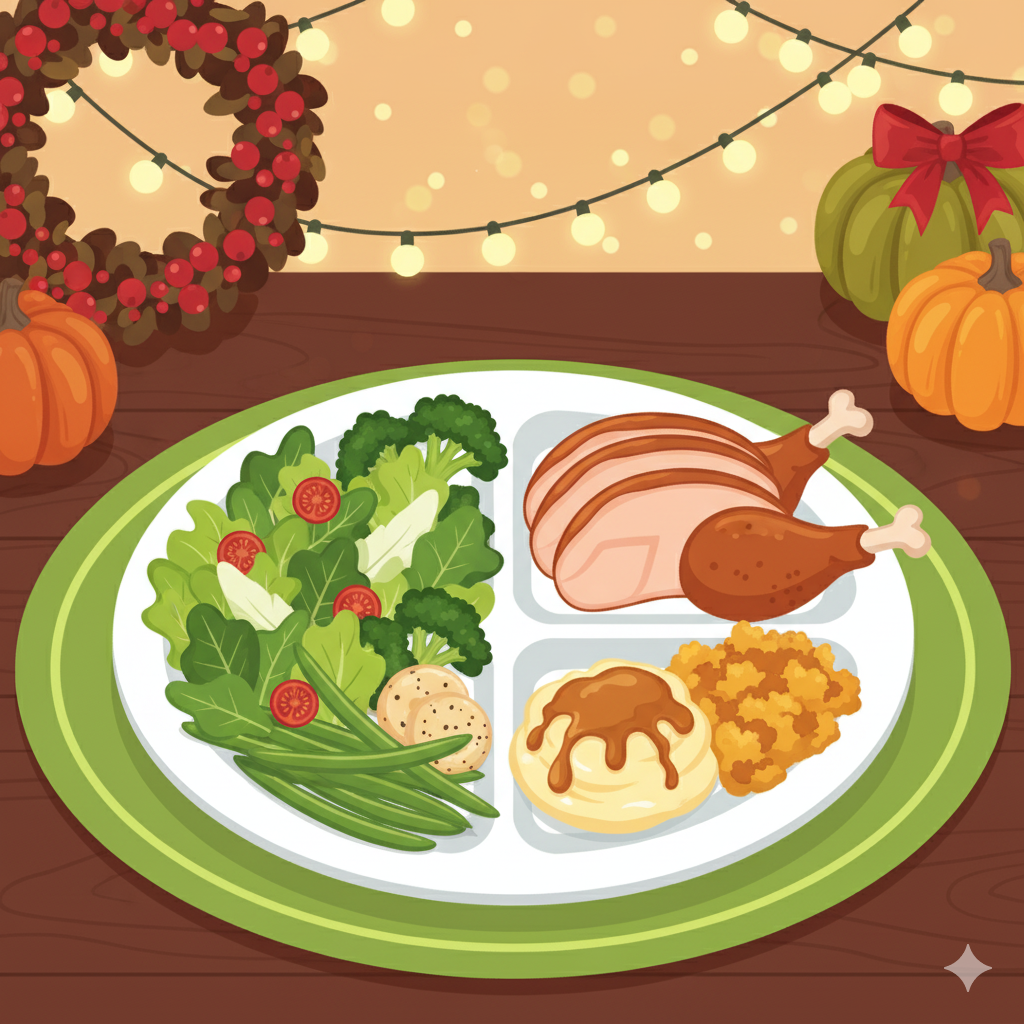
How to Hack Your Plate: The 3:1 Rule for Balanced Holiday Meals
Holiday plates are famous for being overloaded, usually with a mountain of carbohydrates (mashed potatoes, stuffing, yams) and very little else.
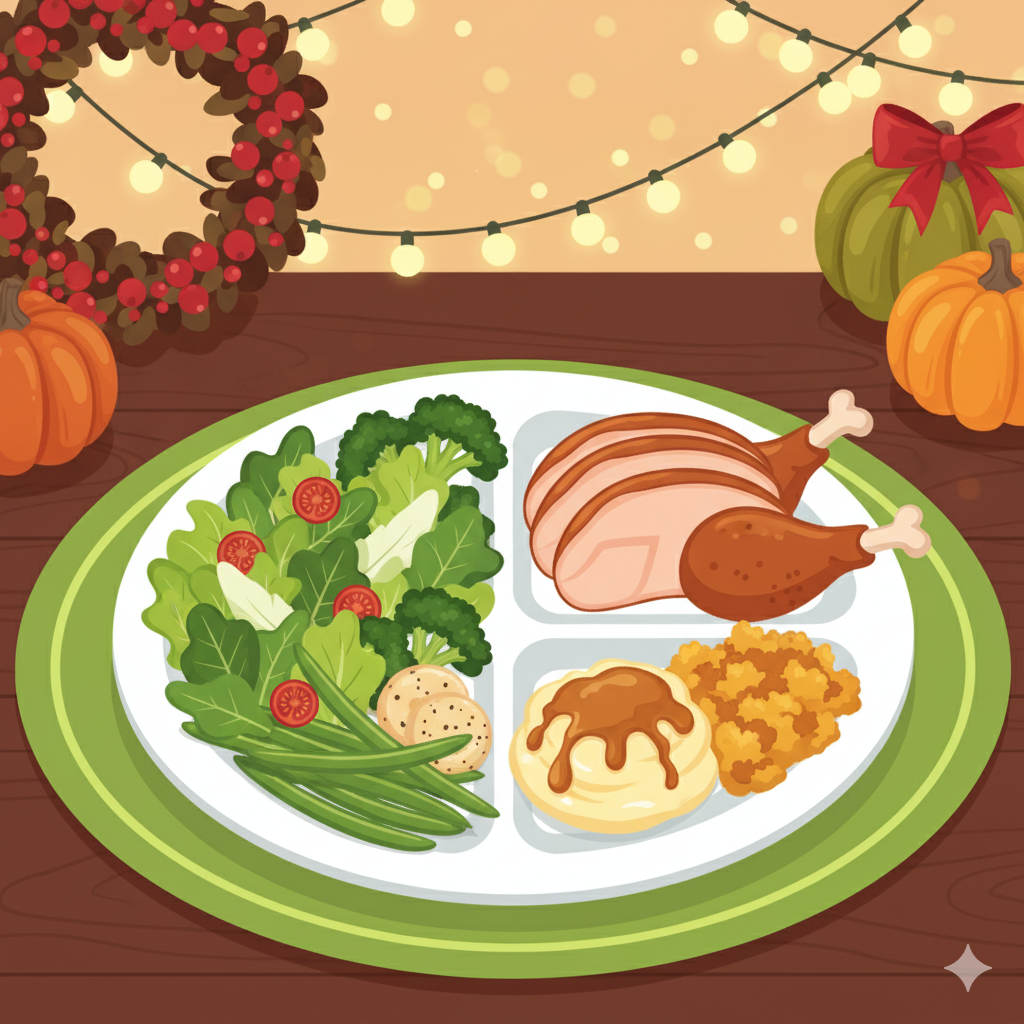
Holiday plates are famous for being overloaded, usually with a mountain of carbohydrates (mashed potatoes, stuffing, yams) and very little else. This imbalance is the real culprit behind the heavy, sleepy feeling you get after a big meal.
To combat the chaos of the holiday buffet, you need a simple, visual guide that ensures your plate stays balanced. The best way to do this is with the 3:1 Rule for Plate Hacking.
The 3:1 Rule is simple: For every 3 parts of starchy food you take, you must take 1 part of protein.
This isn't a restrictive rule; it's a strategic one. It forces you to build the structural foundation of your meal first (protein and fiber) before you indulge in the delicious but heavy starches.
The Three-Step Plate Hacking Method
When you approach the buffet, follow this order to build a balanced plate that supports stable energy and good digestion.
Step 1: The Foundation (The First Half of Your Plate)
Focus on filling half of your plate with non-starchy vegetables and greens. These foods are low in calories and high in fiber, which helps slow down the digestion of everything else you eat.
Holiday Hacks: Green beans (skip the fried onions on top), side salad, roasted carrots, or raw veggie sticks.
The Goal: Make fiber your priority. If you start here, you'll naturally be too full for a second plate of heavy food.
Step 2: The Structure (The Protein Anchor)
Fill one-quarter of your plate with your main protein source. Protein is essential for satiety and keeping your blood sugar steady.
Holiday Hacks: Focus on the leanest cuts of turkey breast. Avoid or limit dark meat or heavily buttered ham, which add unnecessary fat and calories.
The Goal: Make this a substantial serving. Protein should be the densest food on your plate.
Step 3: The Reward (The Last Quarter)
Only now do you address the starches and sauces. Use the final quarter of your plate for the heavy, higher-calorie holiday items. This is where the 3:1 Rule comes into play.
The 3:1 Rule in Action: For a scoop of mashed potatoes (3 parts), make sure you have a balanced amount of turkey (1 part) to follow it. This encourages you to enjoy the starches in moderation.
Holiday Hacks: Choose your absolute favorite, stuffing, mashed potatoes, or yams, and take a moderate portion. Don't feel obligated to try every single dish.
The Psychology of the Small Plate
Beyond the 3:1 ratio, use a smaller dinner plate if one is available. This is a simple visual hack:
Small Plate, Big Impact: A moderate portion size looks generous on a small plate, satisfying the psychological need to feel full. The same portion size looks skimpy on a large plate.
Take One Trip: Commit to taking one trip to the buffet. If you still want more 20 minutes after you finish, take a second trip, but often, the physical feeling of fullness will have caught up, and the craving will be gone.
The holidays are about celebrating abundance, not restriction. By using the simple 3:1 Rule and strategic plate hacking, you ensure that abundance is focused on the foods that fuel your body—leaving you feeling energized and strong, not sluggish and guilty.

Mindful Indulgence: A Guilt-Free Guide to Enjoying Holiday Treats
Mindful indulgence means accepting that treats are part of the holiday experience and deciding how you will enjoy them before you take the first bite.

Image courtesy of Nadiia Shuran via Unsplash
The weeks between Thanksgiving and New Year's Day often turn into an all-or-nothing eating pattern. We tell ourselves, "I can't eat that cookie!" or "I'll start over in January." This mindset leads to a cycle of restriction, followed by guilt-ridden bingeing, followed by more restriction.
This year, let's replace the guilt with a strategy of Mindful Indulgence. This approach is based on the idea that health isn't measured by one day or one meal, but by consistent habits over time. It gives you permission to fully enjoy the unique treats of the holiday season while keeping your long-term goals firmly in view.
Mindful indulgence means accepting that treats are part of the holiday experience and deciding how you will enjoy them before you take the first bite.
Rule 1: Pre-Decide the Treat, Not the Restriction
The moment you see a plate of your favorite holiday cookies, the emotional brain takes over. Don't wait until that moment to decide.
The Strategy: The 2-Treat Rule. Before you walk into a party or start a holiday dinner, look at the menu (or the dessert table) and decide, "I will enjoy two of my absolute favorite treats tonight."
Why it works: This removes the emotional fight ("Should I or shouldn't I?") and replaces it with a calm decision ("Which one should I choose?"). It shifts your focus from avoidance to selection, making the experience feel intentional and enjoyable, not accidental and guilty.
Rule 2: Engage All Five Senses
When you mindlessly eat a handful of treats while doing something else (like watching a movie or talking), you don't actually register the taste, but you still absorb the calories.
The Strategy: The Slow-Down Test. When you indulge, do so fully. Put your chosen treat on a small plate, sit down, and focus only on the food for a few minutes.
How to do it: Look at the treat, notice the color and texture. Smell the treat, notice the spices and warmth. Take a small bite and chew it slowly, focusing on the flavor profile (sweet, spicy, salty). The goal is to get 100% satisfaction from 25% of the food. When the satisfaction drops below 100%, put it down.
Rule 3: Build the Buffer Zone
Mindful indulgence doesn't mean ignoring your habits; it means strengthening them to support your indulgences. You build a "buffer zone" of healthy choices around the occasional treat.
Prioritize Protein First: Every day, ensure you hit your protein target (around 0.7g/lb of bodyweight). Protein keeps you full, supports your metabolism, and stabilizes blood sugar. If you fill up on protein and fiber first, you'll naturally have less room and less desire for simple sugars.
Don't Skip the Workout: The minute you decide to indulge, commit to your workout the next morning. Knowing you have a workout planned reinforces your identity as an active person and prevents the guilty feeling of "giving up." The workout is not punishment; it's a non-negotiable part of your routine.
Rule 4: Embrace the 80/20 Rule for the Whole Season
No one single meal or single treat will derail your goals. It is the continuous stream of "little cheats" that turns a week into a setback.
The Mindset Shift: Focus on controlling the 80% of your time that is not a holiday party. This means returning to your core habits (protein, veggies, water, sleep) immediately after the holiday event is over.
The Legacy Lesson: Think of the season as a marathon, not a sprint. The goal is to cross the finish line feeling good. By being intentional with your treats and consistent with your core habits, you eliminate the need for a frantic "January detox." You prove that healthy living is flexible enough to include joy, celebration, and tradition.
This holiday season, give yourself the gift of presence and peace. Replace the guilt with intentionality, and enjoy your holiday treats mindfully.

Meal Sequencing: The Simple Trick to Better Blood Sugar Control at Your Holiday Table
The holidays are a wonderful time for celebration, but they often come with a side of worry about heavy meals and blood sugar spikes.

Image courtesy of Megan Watson via Unsplash
The holidays are a wonderful time for celebration, but they often come with a side of worry about heavy meals and blood sugar spikes. When you’re faced with a lavish holiday spread complete with starches, desserts, and rich gravies, it’s easy to feel sluggish afterward, a common sign of a big blood sugar roller coaster.
But what if you could enjoy the food you love and dramatically reduce that post-meal crash without dieting or cutting carbs?
The secret lies in meal sequencing: simply changing the order in which you eat your foods. This powerful, simple trick leverages science to protect your blood sugar, reduce insulin spikes, and keep your energy stable, allowing you to enjoy your holiday meal without the guilt or the crash.
The Science: Why Order Matters
When you eat food, your body breaks down carbohydrates into glucose (sugar), which enters your bloodstream. The faster this happens, the higher the spike.
The key players in meal sequencing are fiber, fat, and protein. These three nutrients slow down digestion and create a physical barrier in your stomach and small intestine.
If you eat carbs first (like a roll or mashed potatoes), they hit your system fast. If you eat fiber, protein, and fat before those carbs, they coat the intestinal walls, acting like a traffic jam to slow the absorption of glucose.
The Best Sequence: Veggies ➔ Protein ➔ Starches
To use meal sequencing effectively at the holiday table, simply apply this proven order:
Step 1: The Starter: Veggies and Salad (The Fiber Barrier)
Begin your meal with the non-starchy vegetables (like green beans, salad, or raw carrots) and a protein-rich appetizer.
Action: Eat your fiber first! A high-fiber start helps create that viscous, gel-like barrier in your gut that slows down the entire digestive process.
Holiday Application: Start with a small salad, green bean casserole (focus on the beans, not the crunchy topping), or even a few stalks of celery.
Step 2: The Main Event: Protein and Healthy Fats (The Speed Bump)
Move on to the turkey, ham, or any other protein source, along with healthy fats (like avocado or nuts, if available).
Action: Protein requires more complex digestion and dramatically slows down gastric emptying (how fast food leaves your stomach). This provides the major braking action for the incoming glucose.
Holiday Application: Focus on a generous serving of turkey breast or your main protein, savoring it before moving on.
Step 3: The Finale: Starches and Sugars (The Slow Release)
Finish your plate with the heavier starches, breads, and desserts.
Action: Because the carbs are entering an environment already rich in protein and fiber, the glucose from the mashed potatoes, stuffing, or pie will be absorbed over a longer, gentler period. This flattens the blood sugar curve.
Holiday Application: Take a moderate portion of your favorite starch, but eat it last. This is not about restriction; it's about strategic placement.
Simple Rules for the Holiday Table
Don't Load the Plate All at Once: If you put everything on your fork at the same time, you negate the sequencing effect. Take a few bites of turkey, then a few bites of green beans, and finish with a small scoop of potatoes.
Take Your Time: Meal sequencing works hand-in-hand with mindful eating. Slow down and chew your food thoroughly. This aids digestion and gives your body's satiety hormones time to kick in.
Stay Hydrated: Drink water throughout the meal, but avoid sugary drinks, which deliver glucose straight into your system without the benefit of fiber or protein.
This year, treat your holiday meal as a simple science experiment. By using the secret of meal sequencing, you can enjoy all the wonderful flavors of the season while giving your body the stability it needs to keep your energy high and your focus sharp, all the way to dessert.
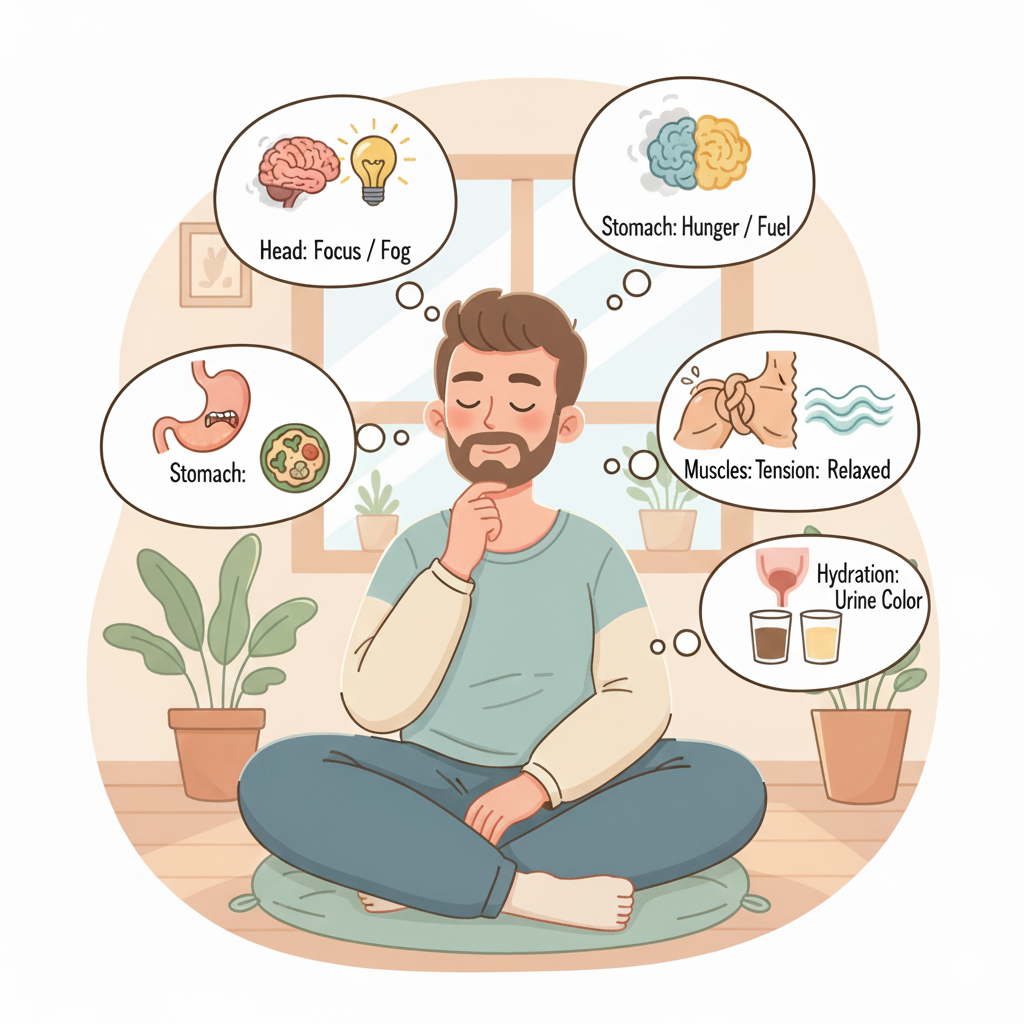
How to Read Your Own Body: Tuning in to Your Hunger, Energy, and Thirst Cues
The skill of tuning in, or listening to your own internal cues, is the foundation of intuitive eating, smarter training, and living a truly balanced, high-energy life.

In our fast-paced, screen-obsessed world, we often live "outside" our bodies. We rely on apps to tell us when to sleep, social media to tell us what to eat, and complicated formulas to tell us when to drink water.
But your body is actually a genius. It gives you constant, subtle feedback on exactly what it needs, when it needs it. The skill of tuning in, or listening to your own internal cues, is the foundation of intuitive eating, smarter training, and living a truly balanced, high-energy life.
Learning to interpret the signals your body is sending about hunger, energy, and thirst will empower you to stop following rigid external rules and start following your body’s true, deep wisdom.
1. Decoding Hunger: Beyond the Growl
We've already talked about the three types of hunger (physical, emotional, sensory). Mastering this skill means recognizing the subtler signals of true physical hunger before you reach the point of "hanger."
Early Signal: A slight drop in focus or mental sharpness. Your brain is the most energy-demanding organ, so mental fog is often the very first sign of needing fuel.
The Best Response: When you notice mental fog or a subtle, hollow feeling, eat a balanced snack or a meal (protein + fiber). Don't wait until you're ravenous and have lost all control over your food choices.
The Legacy Lesson: Eating when moderately hungry, and stopping when satisfied (not stuffed), keeps your energy stable and optimizes your digestion.
2. Decoding Energy: Understanding Fatigue
If you're constantly relying on coffee or sugary snacks to get through the day, you're masking a deeper message your body is sending you about energy management.
Signal 1: The Crash (Post-Lunch Slump): This is usually a sign that your last meal was unbalanced—too high in fast carbs and too low in protein/fiber.
The Best Response: Next time, build your plate around protein and vegetables first. If the crash hits, don't eat; instead, stand up and move for 5 minutes (a micro-workout!) to get blood flowing.
Signal 2: Morning Sluggishness: This is often a sign of poor sleep quality (not just duration).
The Legacy Lesson: Recognize that if you feel tired despite 8 hours of sleep, you need to focus on sleep quality (dark, cool room, less screen time before bed), not just duration.
3. Decoding Thirst: The Hidden Headache
Most people wait until they are genuinely thirsty before drinking, but thirst is often one of the last signals of dehydration. By the time you feel parched, your energy and performance are already suffering.
Early Signal: Headaches or irritability. Mild dehydration is one of the most common, overlooked causes of tension headaches and a sour mood.
The Next Signal: Dark or highly yellow urine. Pale straw color is the goal. If your urine is dark, you need water immediately.
The Legacy Lesson: Stop drinking just water. Drink water because you’ve created a visual cue (a water bottle on your desk) or linked it to a habit (after every bathroom break, drink a full glass). Staying properly hydrated boosts metabolism, flushes toxins, and keeps your mental clarity sharp.
The Body Check-In: Your Daily Practice
Learning to read your body takes practice. Use this quick check-in several times a day to tune in:

Your body is constantly telling you what it needs to perform optimally. By simply pausing, observing, and responding to these cues, you take back control from external noise and commit to a sustainable, self-aware path to lifelong wellness.

Cooking Once, Eating Thrice: Your Weekend Guide to Effortless Meal Prep for the Week
The biggest enemy of healthy eating isn't a lack of knowledge; it's a lack of time.

Image courtesy of Ella Olsson via Unsplash
The biggest enemy of healthy eating isn't a lack of knowledge; it's a lack of time. When you’re exhausted after a long workday, ordering takeout or heating up something highly processed is just easier than cooking a healthy meal from scratch.
This is where the strategy of "Cooking Once, Eating Thrice" saves the day. Instead of spending your valuable time cooking every single night, you dedicate a few hours on a weekend afternoon to preparing large batches of simple building blocks. This small investment of time acts as an insurance policy against poor food choices all week long, ensuring you have healthy, satisfying meals ready to assemble in minutes.
This guide will show you how to focus your weekend prep on three versatile components that can be mixed and matched into multiple meals throughout the week.
The Weekend Warrior Prep Strategy
Aim for about two hours of focused time on Sunday afternoon. You're going to prep one main protein, one versatile carb, and one large batch of vegetables.
1. The Protein Anchor (The Muscle Fuel)
Protein is the most important component for satiety (feeling full) and muscle maintenance. Make a large batch of a neutral, versatile protein that can fit into any meal.
Prep: Cook 3–4 pounds of a single protein source.
Chicken Breast/Thighs: Bake, grill, or shred in a slow cooker with minimal seasoning (salt, pepper, garlic powder).
Ground Turkey/Beef: Cook in a large skillet, drain the fat, and leave it mostly unseasoned.
Lentils or Chickpeas: Cook a large batch on the stovetop or use canned options (rinsed well).
Storage: Divide the cooked protein into individual portion containers (e.g., 4–6 ounces per portion) and store in the fridge.
2. The Versatile Carb (The Energy Base)
These ingredients are your energy sources. Choose a complex carbohydrate that reheats well and provides good fiber.
Prep: Cook 6–8 cups of a grain.
Quinoa: Cooks quickly and is high in protein and fiber.
Brown Rice or Farro: Great for salads and bowls.
Sweet Potatoes: Bake 5–6 whole sweet potatoes, then mash or cube them for easy reheating.
Storage: Keep the cooked grains/potatoes in a large, sealed container. They will last 4–5 days in the fridge.
3. The Bulk Veggies (The Fiber & Volume)
This is where you add volume, color, and essential nutrients. Focus on vegetables that are easy to prep or cook in large batches.
Prep:
Roast: Toss a large tray of sturdy vegetables like broccoli florets, Brussels sprouts, carrots, and onions with a little olive oil, salt, and pepper. Roast at 400°F until tender-crisp.
Chop Raw: Chop a large bowl of fresh veggies like cucumbers, bell peppers, carrots, and celery sticks. These are perfect for snacking or quick salad additions.
Storage: Store roasted veggies in their own container. Keep chopped raw veggies separated or bagged for easy grabbing.
The "Eating Thrice" Assembly Method
By Monday morning, you have three large containers: Protein, Carbs, and Veggies. Now, you can assemble three distinct meals with minimal effort.

Bonus Tip: Embrace the Freezer
If you worry about food going bad, especially protein, dedicate a portion to the freezer immediately after cooking. Cooked chicken breast or ground meat freezes beautifully in portion-sized bags. That way, you ensure you always have emergency protein available later in the week or the following week.
Meal prepping is less about being a gourmet chef and more about being a smart strategist. By focusing on simple, mix-and-match components, you eliminate decision fatigue, save money, and ensure that when hunger strikes, health is the easiest option available.

The Power of Consistency: Turning Motivation into a Lifelong Habit
Motivation is like a lightning strike, powerful and exciting, but it rarely lasts. If you rely on motivation to stay fit, you're setting yourself up for a failure cycle.
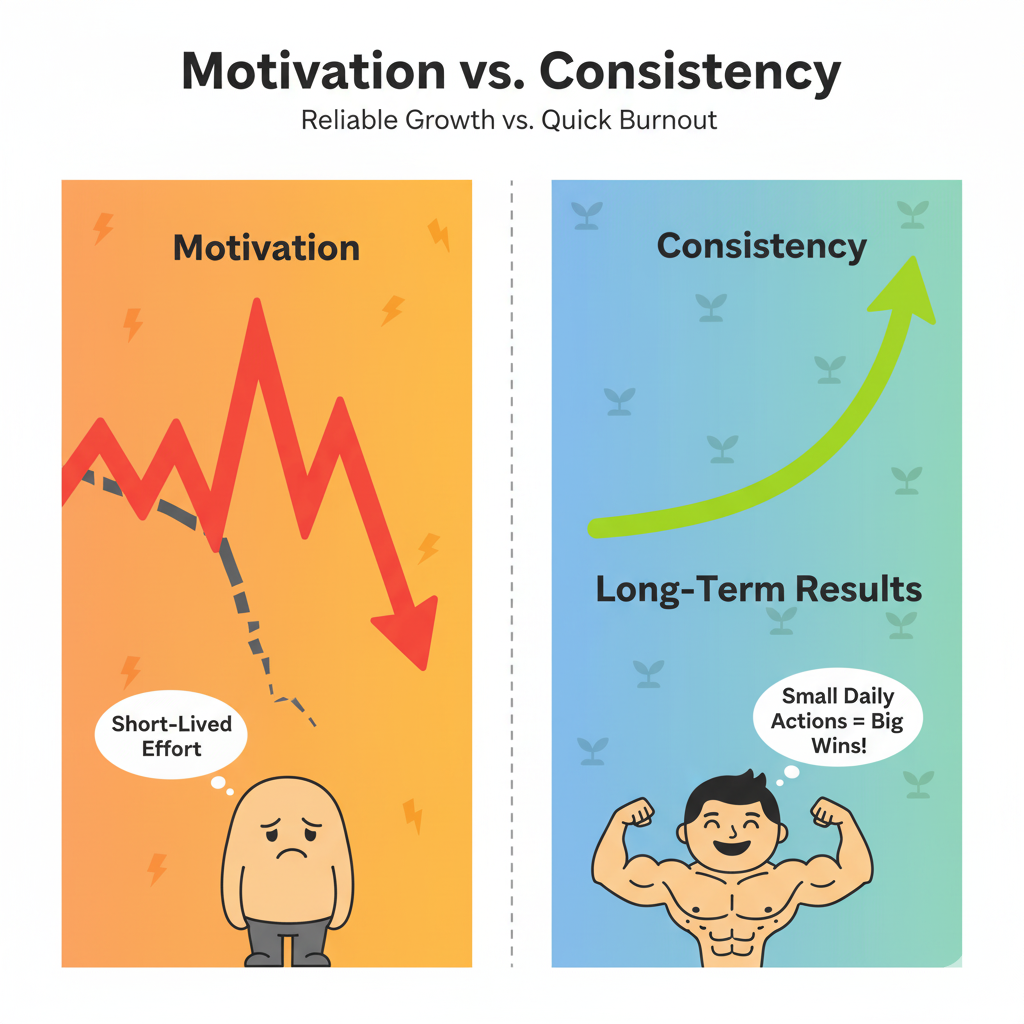
We've all been there: January 1st hits, you're bursting with motivation, you buy new gear, and you hit the gym hard for two weeks. Then, life gets in the way. Work piles up, you miss one day, and suddenly two months have gone by.
Motivation is like a lightning strike, powerful and exciting, but it rarely lasts. If you rely on motivation to stay fit, you're setting yourself up for a failure cycle. The secret to fitness that lasts, the kind that builds your legacy of health, isn't motivation. It's consistency.
Consistency is the quiet, reliable foundation that allows your effort to compound over time. Here is how to stop chasing motivation and start building the powerful habit of consistency.
1. Lower the Bar (The Five-Minute Rule)
The number one reason people break consistency is that their minimum expectation is too high. If you set a goal of "I must do an hour at the gym," and you only have 30 minutes, you often skip the workout entirely because you feel like you "failed."
The Habit Hack: Lower your minimum requirement until it's almost impossible to fail. Tell yourself, "I just need to put on my workout shoes," or "I just need to do 5 minutes of stretching."
Why it works: Showing up is the hardest part. Once you start that 5-minute task, you'll often find the motivation to continue for 20 or 30 minutes. If you still stop after 5 minutes, you still win because you maintained your habit streak. Consistency trumps intensity every time.
2. Use the 'Habit Stack' Principle
Consistency thrives on routine. You shouldn't try to cram a new workout habit into an already busy day; instead, you should attach it to an existing habit you already do automatically.
The Formula: [After I do X, I will do Y.]
Instead of: "I need to work out tonight."
Try: "After I finish brushing my teeth in the morning, I will do 10 bodyweight squats."
Why it works: Your brain uses less energy when a habit is linked to a strong cue. The automatic action (X) cues the desired action (Y), making it feel less like a choice and more like the next logical step.
3. Stop Seeking Perfection
Perfection is the enemy of consistency. If you believe your diet needs to be 100% clean every day, one cookie can make you feel like the whole day is ruined, leading to a downward spiral. The same goes for the gym: if you miss one day, don't let that one miss turn into a week of misses.
The Strategy: The 80/20 Rule: Aim for consistency 80% of the time, and give yourself grace for the other 20%. If you miss a workout, don't punish yourself. Just make sure you do the 5-minute minimum tomorrow.
Focus on the Streak: Track your consistency on a calendar. Your goal is to maintain the streak. If you have to break it, keep the break short. Never miss twice in a row.
4. Connect to Your 'Why' (The Legacy)
Motivation focuses on the immediate reward ("I want to look good for vacation"). Consistency focuses on the long-term identity ("I am the type of person who stays healthy and strong").
The Shift: When you feel unmotivated, don't ask yourself, "Do I feel like working out?" Ask yourself, "What kind of person do I want to be in 10 years?"
The Legacy: Your actions today are building your health legacy. Every time you show up (even for 5 minutes), you are reinforcing your identity as a dedicated, strong, and healthy individual. That powerful, future-focused reason is far stronger than any fleeting burst of motivation.
Consistency is the ultimate compounding factor in fitness. Small, repeatable actions, performed reliably over a long period, generate massive results that motivation alone can never achieve. Commit to showing up every day, and your lifelong results will take care of themselves.

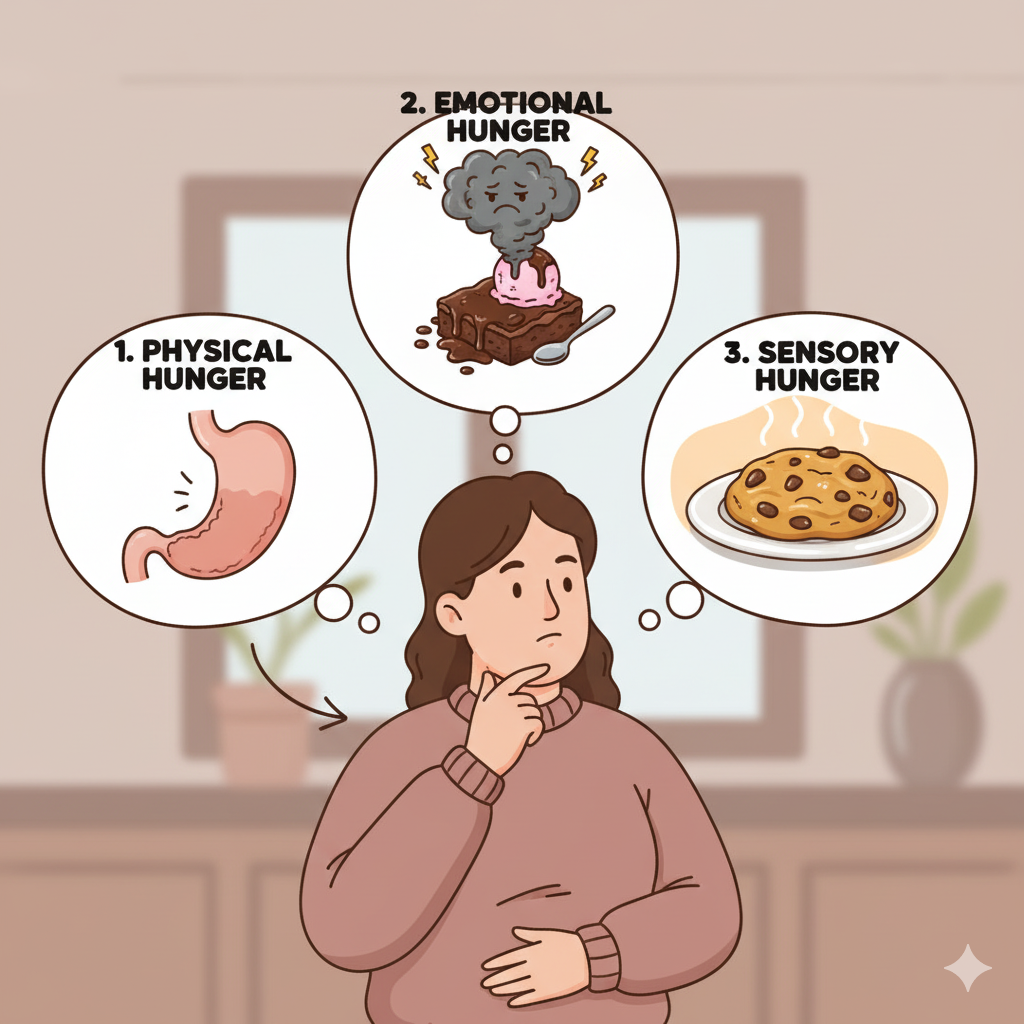
The 3 Types of Hunger: How to Tell if You're Truly Hungry or Just Bored
Have you ever finished a full meal and then, 30 minutes later, found yourself staring into the fridge? Understanding hunger is a core skill for mastering your nutrition and achieving lasting weight management.
Have you ever finished a full meal and then, 30 minutes later, found yourself staring into the fridge? Or maybe you eat dinner, sit down to watch TV, and suddenly realize you want a snack, even though your stomach doesn't feel empty.
Understanding hunger is a core skill for mastering your nutrition and achieving lasting weight management. Most people only recognize one kind of hunger (stomach pangs), but there are actually three distinct types of hunger. Learning to identify them allows you to choose the right response—eating when you need fuel, or using a different tool when you need comfort or distraction.
Here is your guide to understanding the three types of hunger and how to manage each one.
1. Physical Hunger (The Real Fuel Light)
This is the kind of hunger your body uses to signal a genuine need for energy. It's slow and gradual, like a fuel light coming on in a car.
What it feels like:
Stomach signals: Mild gurgling, a hollow feeling, or a slight discomfort that grows over time.
Body signals: Slight lack of focus, low energy, mild headache, or a feeling of true weakness.
Satisfaction: It is satisfied by any type of food whether it’s a salad, a sandwich, or a piece of chicken.
The Right Response: EAT. When your body signals true physical hunger, it needs fuel. Honor this signal by eating a balanced meal or snack containing protein, fiber, and healthy fats. This is your chance to nourish your body and maintain stable energy.
2. Emotional Hunger (The Craving for Comfort)
Emotional hunger is the urge to eat that is triggered by feelings, not by an empty stomach. It's often related to stress, boredom, loneliness, or happiness.
What it feels like:
Speed: It hits suddenly and urgently, like flipping a switch. You feel like you need food right now.
Specific cravings: It often targets specific, highly palatable foods like chips, cookies, ice cream, or pizza—rarely does it make you crave broccoli.
Guilt: After eating, it often leaves you with feelings of guilt or shame because it didn't solve the underlying problem (the emotion).
The Right Response: PAUSE AND ADDRESS. Food cannot fix an emotional problem. When this hits, pause for 5 minutes and ask yourself: "What am I truly hungry for?"
If bored: Get up and move (walk, do a chore).
If stressed: Do a calming activity (deep breathing, calling a friend, listening to music).
If tired: Take a short nap or step away from your screen.
3. Sensory Hunger (The Smell/Sight Trigger)
Sensory hunger is triggered by your senses: seeing, smelling, or hearing food. This is the hunger you feel when you walk past a bakery or watch a commercial for your favorite food.
What it feels like:
External cues: The hunger is triggered entirely by something outside your body. Your stomach might be full, but the smell of coffee and a donut makes you feel like you must have one.
Short-lived: The feeling is often intense but fades quickly once the cue is removed.
The Right Response: DISTRACT AND WAIT. This type of hunger is usually the easiest to manage with a short distraction.
Try this: Brush your teeth, chew a piece of gum, grab a glass of water, or simply walk away from the sight or smell of the food. Since this hunger is based on external stimulation, removing that stimulation often makes the craving disappear in 10-15 minutes.
Mastering Your Hunger
Learning to listen to your body and correctly identify which "fuel light" is on is one of the most powerful steps you can take toward mindful eating.
When you feel the urge to eat, take a slow, deep breath and use this quick check:
Is it gradual? (Physical: EAT)
Is it urgent and specific? (Emotional: ADDRESS THE FEELING)
Is it triggered by a sight or smell? (Sensory: DISTRACT)
By giving your body what it truly needs, whether that's calories, comfort, or just a 15-minute distraction, you take control of your plate and move closer to your long-term health goals.

Fueling the Fight: Essential Nutrition for a Stronger Immune System in Winter
As the weather gets colder and the holidays approach, your immune system suddenly has a bigger job to do. By consciously choosing nutrient-dense foods, you aren't just eating well, you are actively preparing your body to fight off the season's inevitable challenges.

Image courtesy of Abhishek Umrao via Unsplash
As the weather gets colder and the holidays approach, your immune system suddenly has a bigger job to do. While you can't stop every cold or flu, your diet is one of the most powerful tools you have to build a strong defense. Simply put, good nutrition is the foundation of a resilient immune system.
Think of your immune system as a highly trained army. Without the right supplies (nutrients), that army can't fight effectively. When you focus on specific vitamins, minerals, and proteins, you give your body the ammo it needs to stay healthy all winter long.
Here are the essential nutritional components your immune system relies on and where to find them.
1. Protein: The Army's Building Blocks
Your immune cells (like antibodies and white blood cells) are literally made of protein. Without enough protein, your body can't manufacture and deploy its defensive forces when a threat appears.
Why it works: Protein provides the amino acids necessary for T-cells and B-cells to function and multiply.
Where to find it: Lean meats (chicken, turkey), fish (especially salmon), eggs, dairy (yogurt, cottage cheese), and plant sources like beans, lentils, and tofu. Focus on getting a serving of protein at every meal.
2. Vitamin C: The Classic Cold Fighter
Vitamin C is probably the most famous immune booster, and for good reason. It’s a powerful antioxidant that protects immune cells from damage and helps them do their job better.
Why it works: It’s critical for white blood cell function, helping them quickly surround and destroy invading germs.
Where to find it: Don't just think oranges! Bell peppers (especially red and yellow), kiwi, strawberries, broccoli, and dark leafy greens are often higher in Vitamin C than citrus. Aim for a mix of colorful fruits and vegetables daily.
3. Vitamin D: The Sunlight Vitamin (Crucial in Winter)
Vitamin D is unique because your body mostly makes it from sun exposure. In November, when daylight is shorter and we spend more time inside, levels often drop, leaving the immune system vulnerable. Low Vitamin D levels are linked to a higher risk of respiratory infections.
Why it works: Vitamin D helps the immune system communicate and regulates the body's inflammatory response.
Where to find it: Fatty fish (salmon, tuna), fortified milk and cereals, and eggs. Since it's hard to get enough from food, supplementation is often recommended in the darker months. Consult with your doctor to find the right dosage.
4. Zinc: The Immune Regulator
Zinc is a mineral that acts like a traffic cop for your immune system, regulating how and when the immune cells respond. If you are deficient, your immune response can slow down significantly.
Why it works: It is involved in the development and function of immune cells. Taking zinc at the very start of a cold may help shorten its duration.
Where to find it: Oysters (the best source), red meat, poultry, beans, nuts, and whole grains.
5. The Power of the Gut (The First Line of Defense)
Around 70% of your immune system is located in your gut. A healthy gut lining and a diverse microbiome (the good bacteria) act as a major barrier against germs and keep your immune cells alert and balanced.
Why it works: A strong gut lining prevents unwanted substances from crossing into the bloodstream, which reduces overall inflammation and helps the immune system focus on real threats.
Where to find it:
Probiotics: Fermented foods like yogurt (with live and active cultures), kimchi, sauerkraut, and kefir.
Prebiotics (Fiber): Foods that feed the good bacteria, like oats, bananas, garlic, and onions.
Simple Winter Strategy
You don't need a complicated plan to boost your immune system. Just focus on consistency:
Eat the Rainbow: Make sure half your plate is filled with a variety of colorful vegetables and fruits to ensure you get a broad mix of vitamins (C, A, E).
Prioritize Protein: Ensure you hit your protein goals to literally build your immune defenses.
Consider a D: Talk to your healthcare provider about a Vitamin D supplement during the fall and winter months.
By consciously choosing nutrient-dense foods, you aren't just eating well, you are actively preparing your body to fight off the season's inevitable challenges, allowing you to stay strong and healthy for the holidays.

The Truth About Supplements: Which Ones are Worth Your Money (and Which are Just Hype)
The world of health and fitness supplements is a jungle.
The world of health and fitness supplements is a jungle. The shelves are packed with colorful containers promising everything from instant fat loss to massive muscle gains. It’s estimated that consumers spend billions every year on pills, powders, and potions, often without seeing any real benefit.
For anyone committed to long-term health, it’s important to understand the hierarchy of results:
Diet and Lifestyle: This is the foundation (sleep, real food, consistent training). This is 90% of your results.
Supplements: These are the finishing touches, designed to fill small gaps or slightly enhance performance. This is the remaining 10%.
If your foundation is shaky, no amount of supplements will save you. But once your core diet and training are solid, a few key supplements can provide real, evidence-based benefits.
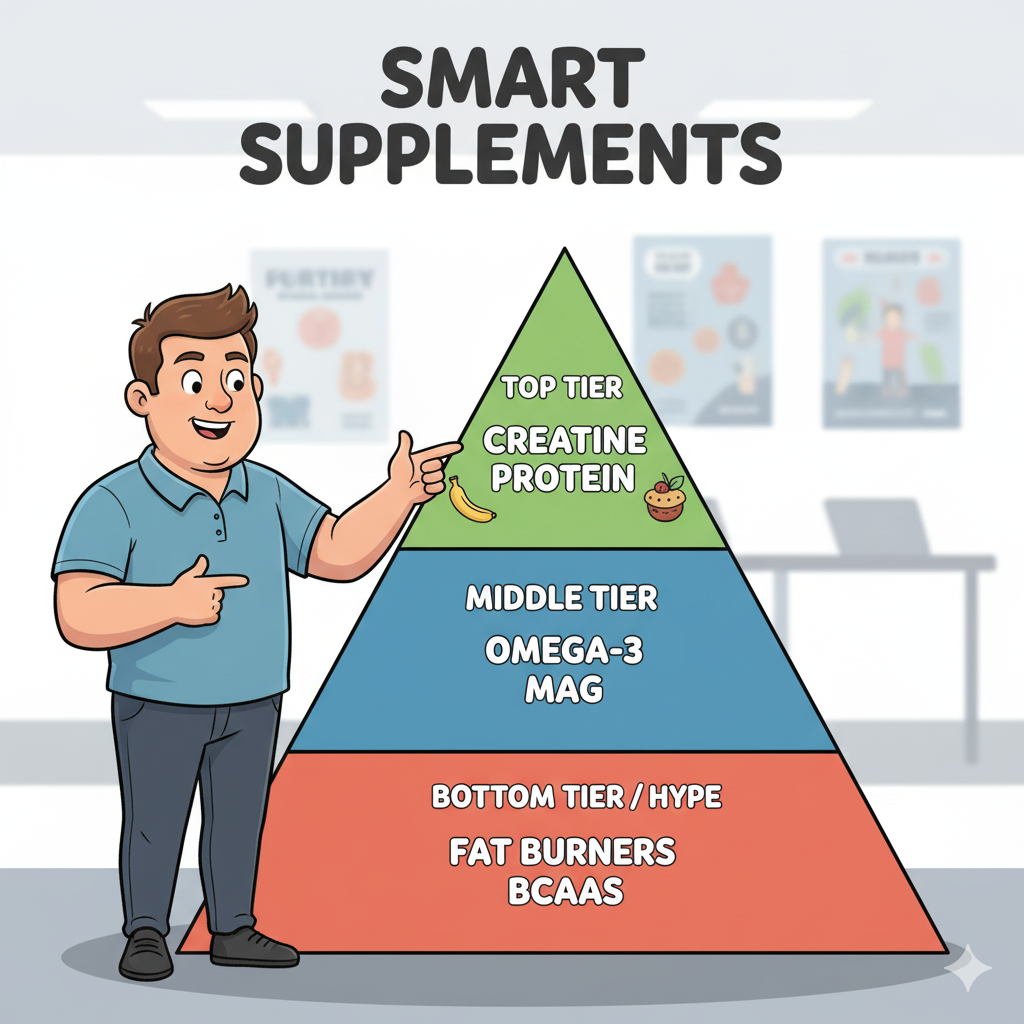
Here is an honest breakdown of which supplements are genuinely worth your money and which ones are mostly marketing hype.
The Tried-and-True (The Essentials)
These supplements have the most scientific evidence and are generally safe and effective for filling common nutritional gaps or boosting performance.
1. Protein Powder (Whey, Casein, or Plant-Based)
What it does: Provides a quick, convenient source of protein to support muscle repair and recovery (especially useful after a workout or when you need a high-protein snack).
When it's worth it: When you struggle to hit your daily protein goal (aim for about 0.7–1 gram per pound of body weight).
The Hype Check: Skip the fancy "muscle-building blends" and focus on a simple, high-quality powder with minimal added sugars.
2. Creatine
What it does: This is the most studied and proven supplement for athletic performance. It helps your muscles generate more energy during short bursts of high-intensity exercise, leading to greater strength, power, and muscle mass over time.
When it's worth it: If you do any type of resistance training (lifting weights). It works for almost everyone and is very safe.
The Hype Check: You only need 3–5 grams per day. Don't worry about "loading" phases; consistency is key.
3. Vitamin D
What it does: Essential for bone health, immune function, and mood regulation. Many people, especially those who live in northern climates or spend a lot of time indoors, are deficient.
When it's worth it: If your blood work shows you are deficient, or if you get very little direct sun exposure (which is common, especially in the winter months).
The Hype Check: Check with your doctor to find the right dosage for you, as taking too much can be harmful.
The "Maybe Worth It" (Depends on Your Diet)
These supplements are useful if your diet is lacking in a specific area, but they aren't necessary for everyone.
1. Omega-3 Fatty Acids (Fish Oil)
What it does: Provides EPA and DHA, essential fats that reduce inflammation, support heart health, and contribute to brain function.
When it's worth it: If you don't eat oily fish (like salmon, mackerel, or sardines) at least two times per week. The anti-inflammatory benefits can be great for recovery.
The Hype Check: Look for a supplement that clearly lists the amounts of EPA and DHA on the label, and ensure the product is third-party tested for purity (to check for heavy metals).
2. Magnesium
What it does: Helps relax muscles, supports hundreds of chemical reactions in the body, and promotes better sleep (as we discussed in a previous article!).
When it's worth it: If you frequently experience muscle cramps, have high stress, or struggle with sleep (choose magnesium glycinate before bed).
The Hype Check: Magnesium oxide is cheap but poorly absorbed. Choose glycinate or malate for better results.
The Hype Zone (The Budget Killers)
These supplements usually aren't worth the money for the average person and often make huge claims that the science simply doesn't support.
1. BCAA (Branched-Chain Amino Acids)
The Reality: These three specific amino acids are important, but if you are already consuming enough protein (especially whey, which is rich in BCAAs), taking extra BCAAs won't provide any added benefit. They are mostly expensive, flavored water. Eat protein instead.
2. Fat Burners / Metabolism Boosters
The Reality: These usually contain a huge dose of caffeine and various herbal extracts. They might make you feel jittery (like you're burning fat), but they do little to actually boost your metabolism or cause significant, lasting weight loss. They often carry risks like increased heart rate and anxiety. Focus on clean eating and consistent training.
3. Detox Teas / Cleanses
The Reality: Your body has its own detox system: your liver and kidneys. These supplements are often just expensive laxatives and diuretics that cause temporary weight loss (water weight) and can be harmful to your digestive system. Focus on fiber and hydration.
The Final Word: Food First
No pill or powder can outsmart a poor diet. Supplements are exactly what the word implies: they are meant to supplement, or complete, a healthy, whole-food diet. If you are sleeping well, eating enough protein and vegetables, and training consistently, then consider adding one or two evidence-based supplements. If you aren't doing the basics, save your money and invest it in high-quality groceries instead.

Navigating the Food Aisle: How to Spot 'Health Halo' Foods and Find Truly Healthy Options
As an informed shopper, your job is to look past the large print on the front of the box and become an expert detective. Here is your guide to navigating the food aisle like an expert, focusing on what matters most.

Walk down any grocery store aisle today, and you’ll see words shouting at you: "Natural!" "Gluten-Free!" "Low-Fat!" "Made with Whole Grains!" These words are designed to make you feel good about putting a product in your cart. This is called a "health halo," where a product seems healthy because of one or two buzzwords, even if the rest of the ingredients tell a different story.
As an informed shopper, your job is to look past the large print on the front of the box and become an expert detective. Understanding how to spot these "health halo" foods is key to truly eating well and reaching your fitness goals.
Here is your guide to navigating the food aisle like an expert, focusing on what matters most.
Rule 1: Ignore the Claims on the Front (They Are Marketing)
The front of the package is a marketing tool, not a nutrition guide. Companies want you to focus on the one "good" thing they added, not the five "bad" things they left in.
"Made with Whole Grains!" This often means a small amount of whole grains was added to a base of highly refined white flour. Unless the first ingredient on the back label is "whole wheat," "whole oats," or another whole grain, treat this claim with suspicion.
"Natural." This is one of the trickiest terms because it has almost no legal meaning. It generally means the food doesn't contain artificial colors or flavors, but "natural" cane sugar is still sugar, and a bag of "natural" potato chips is still fried and salted.
"Low-Fat" or "Fat-Free." When fat is taken out of a food, the flavor usually goes with it. To make the food taste good, manufacturers often dump in large amounts of sugar, sodium, or artificial sweeteners. You might be avoiding one problem (fat) only to introduce a new, often worse one (sugar overload).
Rule 2: Focus on the Back (The Two Critical Areas)
Your real work happens when you flip the box over. There are two places where you should spend most of your time: the Ingredients List and the Nutrition Facts panel.
The Ingredients List: Keep It Short and Simple
The list of ingredients is a pure list of everything that went into the food, ordered by weight (the first ingredient is the most abundant).
Look for Short Lists: If a food has 20+ ingredients, and you can’t pronounce half of them, it’s highly processed. Choose foods with shorter ingredient lists.
Prioritize Whole Foods: The first few ingredients should be identifiable whole foods. For cereal, you want "whole oats" or "whole wheat," not "sugar," "corn syrup," or "refined flour."
Spot Hidden Sugars: Sugar goes by many names. If you see multiple types listed—like cane sugar, brown rice syrup, maltodextrin, high-fructose corn syrup, honey, or agave—they all count as added sugar. A food with three different sugar types listed is likely a sugar bomb.
The Nutrition Facts: Look at Sugar and Fiber
While calories are important, these two numbers give you the best picture of a product's true health value.
Added Sugars: Look specifically for the "Added Sugars" line. This tells you how much sugar was added by the manufacturer, separate from the natural sugars found in milk or fruit. Keep this number as close to zero as possible for processed foods.
Fiber Check: Remember fiber is your friend! Look for foods that have 3 grams of fiber or more per serving. A high fiber count helps counteract the negative effects of any remaining processed carbs and helps keep you full.
Rule 3: Choose Whole Foods First (The Easiest Aisle)
The absolute best way to avoid falling for "health halos" is to spend most of your time in the parts of the grocery store that don't need labels.
The Produce Section: Whole fruits and vegetables are always the best choice. They have a single ingredient: the food itself!
The Butcher/Fish Counter: Lean cuts of meat and fish, unseasoned, are pure protein sources.
The Dairy/Egg Section: Eggs, plain Greek yogurt, and plain milk are simple, nutrient-dense foods.
The goal isn't to be perfect, but to be informed. By ignoring the catchy marketing on the front of the package and becoming a smart shopper who checks the ingredients and nutrition facts, you empower yourself to make truly healthy choices that support your energy, your body composition, and your long-term fitness goals.

Fiber: The Unsung Hero of Weight Loss, Gut Health, and Stable Energy
There's one nutrient that often gets overlooked, yet plays a massive role in your weight, how your gut feels, and how much energy you have: fiber.

When you think about healthy eating, you probably focus on protein, healthy fats, and avoiding too much sugar. All important! But there's one nutrient that often gets overlooked, yet plays a massive role in your weight, how your gut feels, and how much energy you have: fiber.
Fiber is a type of carbohydrate found in plants that your body can't digest. Unlike other carbs that get broken down into sugar, fiber passes through your system mostly intact. And that's exactly why it's so powerful. It acts like a scrub brush, a sponge, and a feeding ground for healthy gut bugs, all rolled into one.
Most adults in the US only get about half of the recommended daily fiber (which is around 25-38 grams). This "fiber gap" can lead to all sorts of issues, from digestive problems to difficulty managing weight. Let's uncover why fiber is truly the unsung hero of your diet.
Fiber for Weight Loss: The Fullness Factor
If you're trying to manage your weight, fiber should be your best friend.
Keeps You Full Longer: Fiber adds bulk to your meals without adding many calories. When you eat fiber-rich foods, they fill up your stomach and slow down how fast food empties, making you feel satisfied and fuller for a longer time. This means you're less likely to reach for unhealthy snacks between meals.
Slows Sugar Absorption: When fiber is present with other carbs, it slows down the digestion and absorption of sugar into your bloodstream. This prevents rapid spikes in blood sugar (and then crashes), which can trigger hunger and cravings. Stable blood sugar means stable energy and fewer urges to overeat.
Less Calorie Absorption: Some types of fiber can even bind with fat and sugar molecules, reducing the amount of calories your body actually absorbs from your food.
Fiber for Gut Health: Feeding Your Inner Garden
Your gut is home to trillions of bacteria, a complex ecosystem known as your gut microbiome. These bacteria play a huge role in your overall health, from your immune system to your mood. And guess what they love to eat? Fiber!
Prebiotic Power: Certain types of fiber are called prebiotics. They are the food source for the good bacteria in your gut. When these good bacteria feed on fiber, they produce beneficial compounds (like short-chain fatty acids) that strengthen your gut lining, reduce inflammation, and can even influence your mood and metabolism.
Regularity: This is probably fiber's most well-known role. Soluble fiber (which dissolves in water) forms a gel that softens stool, while insoluble fiber (which doesn't dissolve) adds bulk. Together, they help keep things moving smoothly, preventing constipation and promoting regular bowel movements. A healthy, regular gut is a happy gut!
Fiber for Stable Energy: Ditching the Rollercoaster
Tired of energy crashes in the afternoon? Fiber can help.
Balanced Blood Sugar: As mentioned earlier, fiber acts like a speed bump for sugar. By slowing down how quickly glucose enters your bloodstream, it helps avoid those sharp peaks and valleys that leave you feeling tired and craving more sugar.
Sustained Fuel: When your blood sugar is stable, your body has a more consistent supply of energy. This means fewer jitters, less brain fog, and more consistent focus throughout your day, whether you're at work or hitting the gym.
Where to Find Your Fiber Heroes
Adding more fiber doesn't have to be complicated. Focus on incorporating these foods into your daily diet:
Fruits: Berries (raspberries, blackberries), apples (with skin!), pears, oranges.
Vegetables: Broccoli, Brussels sprouts, leafy greens, carrots, artichokes, sweet potatoes.
Legumes: Lentils, black beans, chickpeas (garbanzo beans), kidney beans.
Whole Grains: Oats (especially steel-cut or rolled), whole wheat bread, brown rice, quinoa, barley.
Nuts and Seeds: Chia seeds, flax seeds, almonds, walnuts.
Tips for Boosting Your Fiber Intake:
Start Slow: If you're not used to a high-fiber diet, increase your intake gradually to avoid gas and bloating.
Drink Water: Fiber needs water to work its magic. Make sure you're well-hydrated!
Choose Whole Foods: Opt for whole fruits over juice, and whole grains over refined white grains.
Add a Little Extra: Sprinkle chia seeds into your yogurt, add lentils to soup, or swap white pasta for whole-wheat.
Don't underestimate the power of this humble nutrient. Making fiber a priority in your diet is one of the easiest and most effective ways to support sustainable weight loss, optimize your gut health, and keep your energy levels humming all day long. It's time to give fiber the spotlight it deserves!

The Magic of Magnesium: Why This Mineral Is Key to Better Sleep and Muscle Relaxation
Magnesium is a mineral that your body uses in over 300 different reactions. It plays a huge role in energy creation and, most importantly for athletes and busy people, recovery and relaxation.

When you think about health and fitness, you probably focus on protein, carbs, and maybe big minerals like calcium. But there's a quiet superhero that's essential for almost every function in your body: magnesium.
Magnesium is a mineral that your body uses in over 300 different reactions. Think of it as the "spark plug" that powers everything from your nerves and muscles to your bones and heart. It plays a huge role in energy creation and, most importantly for athletes and busy people, recovery and relaxation.
Unfortunately, many people aren't getting enough magnesium from their diet—some studies suggest up to two-thirds of the population is deficient. Even if you eat healthy, modern farming practices have sometimes led to less magnesium in the soil, meaning less in your food.
If you’re having trouble sleeping, getting muscle cramps, or feeling stressed and tense, low magnesium might be part of the problem. Here’s why this mineral is so magical for your fitness and well-being.
Magnesium: The Ultimate Muscle and Nerve Relaxer
When you work out, your muscles contract (tighten) to lift weights or move your body. After the workout is done, those muscles need to relax and release the tension. This is where magnesium steps in.
Countering Calcium: When a muscle contracts, it’s often triggered by the mineral calcium. Magnesium works like a dimmer switch, blocking calcium from doing its job so the muscle can finally relax. Without enough magnesium, your muscles can stay slightly contracted, which can lead to cramps, tightness, and restlessness.
Fighting Aches: Magnesium helps control inflammation in the body. By reducing the overall stress response, it can help cut down on the everyday aches and pains that come from hard training or just a busy life.
If you’ve ever had a painful Charley horse or unexplained muscle twitching, a lack of magnesium could be the culprit.
Magnesium: Your Natural Sleep Aid
Sleep is when your body does all its heavy lifting for recovery, and magnesium is a powerful tool for getting deeper, more restful sleep.
Calming the Brain: Magnesium helps regulate neurotransmitters (chemical messengers) in your brain. Specifically, it helps activate the parasympathetic nervous system, which is the body’s "rest and digest" system. This calms your brain down and gets you ready for sleep.
The GABA Connection: Magnesium binds to GABA receptors in the brain. GABA is the main calming neurotransmitter, it's what tells your brain to slow down. By boosting GABA activity, magnesium acts like a natural sedative, helping you fall asleep faster and stay asleep longer.
Fixing Restless Legs: Many people who suffer from restless leg syndrome (that twitchy feeling that keeps you up) find relief with magnesium, allowing for a quieter, more still night's sleep.
Magnesium in Your Diet: Where to Find It
Before reaching for a supplement, the best place to get magnesium is from whole foods. Focus on these powerhouses:
Dark Leafy Greens: Spinach and kale are kings of magnesium. One cup of cooked spinach can provide nearly 40% of your daily needs.
Nuts and Seeds: Pumpkin seeds, chia seeds, and almonds are excellent sources. A small handful makes a perfect high-protein, high-magnesium snack.
Legumes: Black beans, lentils, and chickpeas are budget-friendly and nutrient-dense.
Whole Grains: Buckwheat and whole wheat are good sources, making whole-grain bread or oatmeal a smart choice.
Dark Chocolate: Yes, a little bit of high-quality dark chocolate (70% cocoa or higher) is a delicious source of magnesium!
Should You Supplement?
If your sleep is poor, your stress levels are high, or you train intensely, a supplement might be a good idea. However, it’s important to know the different types of magnesium, as they do different things:
Magnesium Glycinate: This is the most popular form for sleep and relaxation. It's easily absorbed and tends to be gentler on the stomach. Take it an hour before bed.
Magnesium Citrate: This is best known for helping with constipation, as it draws water into the bowels. It's not typically recommended as the primary form for daily muscle or sleep support.
Magnesium Malate: This form is often suggested for energy production and muscle pain. It may be better taken earlier in the day.
Like any essential ingredient, the magic of magnesium isn't in taking a huge dose, but in getting a consistent, healthy amount every day. When your magnesium levels are balanced, you’ll feel the difference: less muscle tension, a calmer mind, and deeper, more restorative sleep—all leading to better workouts and a healthier life.

Beyond Water: The New Hydration Strategy that Optimizes Electrolytes, Energy, and Performance
If you’re exercising consistently, managing high stress, and drinking gallons of plain water every day, you might actually be missing a critical piece of the performance puzzle.

You know you need to drink water. It’s the most basic rule of health and fitness. But if you’re exercising consistently, managing high stress, and drinking gallons of plain water every day, you might actually be missing a critical piece of the performance puzzle.
The new focus in sports and wellness is moving beyond water to a smarter approach called "Electrolyte Optimization." If you want steady energy through your mid-week slump and faster recovery from your fall workouts, you need to understand that hydration is about more than just volume, it's about balance.
The Problem with Just Drinking Water
When you sweat during a workout, in a high-stress meeting, or even while sleeping, you don't just lose water; you lose electrolytes. These are essential minerals (like sodium, potassium, and magnesium) that carry electrical signals your body needs to function.
If you drink massive amounts of plain water without replacing those lost electrolytes, you can dilute the ones you have left. This can lead to:
Cramps and Muscle Spasms: Especially during or after a workout.
Fatigue and Brain Fog: Your brain needs electrolytes for proper function.
Poor Recovery: Muscle repair slows down without the right mineral balance.
To truly hydrate, you need a strategy that puts back what you lose, especially as you increase your physical activity this fall.
The Electrolyte Power Trio
To optimize your energy and recovery, focus on getting these three key electrolytes:
1. Sodium (The Key Conductor)
Salt is often demonized, but it’s crucial for athletes and active people. It regulates fluid balance in and out of your cells and drives your thirst mechanism. Without enough sodium, your body can’t hold onto the water you drink.
Action: For hard, sweaty workouts, add a pinch of high-quality sea salt or a small amount of electrolyte powder to your water bottle.
2. Potassium (The Muscle Regulator)
Potassium works with sodium to balance the fluids inside your cells. It's essential for nerve signaling, muscle contraction, and preventing cramps.
Action: Don’t rely on supplements; eat potassium-rich foods like bananas, spinach, sweet potatoes, and avocados. These also provide great nutrients.
3. Magnesium (The Relaxation Mineral)
Magnesium is a powerhouse involved in over 300 body processes, including muscle relaxation and energy production. It is a vital tool for stress management and sleep quality (key for your October goals).
Action: Snack on almonds and cashews, or make sure to include dark leafy greens and dark chocolate (in moderation) in your diet.
Your Daily Hydration Game Plan
Don’t wait until you're thirsty to drink; thirst is already a sign you’re behind. Use this simple daily strategy:
Start Strong: Drink a large glass of water with a pinch of sea salt and lemon juice immediately upon waking. This kick-starts your hydration and electrolyte balance after hours of sleep.
During Workouts: If you sweat heavily for more than 45 minutes, use an electrolyte mix (like LMNT, and no I’m not sponsored, yet…lol) or a homemade solution (water, small amount of salt, and a dash of fruit juice).
Post-Workout Snack: Combine hydration with recovery. A glass of low-fat milk, a banana, or coconut water are all excellent sources of natural electrolytes and necessary nutrients.
By focusing on a smarter, electrolyte-optimized approach, you will maximize your energy, reduce the risk of cramps, and ensure your body is fully ready to take on the demands of a busy autumn.

The Anti-Inflammatory Diet: Simple Fall Recipes to Reduce Aches, Boost Recovery, and Sharpen Your Mind
Persistent aches and slowness are often signs of too much inflammation in your body. Following an Anti-Inflammatory Diet is a powerful step you can take this fall to recover faster, feel more energetic, and protect your long-term health.
Disclaimer: The information in this article is for educational purposes only and is not intended to treat, diagnose, or cure any medical condition. Please consult with your doctor or a registered dietitian before making significant changes to your diet, especially if you have a pre-existing medical condition or are taking medication.

This image was created with AI to avoid copyright issues while conveying the content of this article.
If you're training hard and living a busy life, you probably deal with muscle soreness, stiff joints, or a nagging feeling of mental fog. While some of this is normal, persistent aches and slowness are often signs of too much inflammation in your body.
Inflammation is your body's immune response to stress. When you train, your body gets inflamed to repair the muscle. But when your diet is poor, your stress is high, and your sleep is low, that inflammation never fully goes away. It becomes a constant, low-grade fire that slows down your recovery, makes your joints ache, and even makes it harder to think clearly.
The good news? You can fight this fire with your fork! Following an Anti-Inflammatory Diet is a powerful step you can take this fall to recover faster, feel more energetic, and protect your long-term health.
The Three Rules of Anti-Inflammatory Eating
You don't need a complicated plan. Start by focusing on adding these powerful foods while reducing the ones that fuel the fire:
Rule 1: Prioritize Omega-3 Fats (The Firefighters)
Omega-3 fatty acids are the single most powerful anti-inflammatory nutrients. They actively go into your body and turn down the dial on inflammation.
Action: Eat two servings of fatty fish (salmon, tuna, sardines) per week. If you don't eat fish, focus on walnuts, flaxseeds, and chia seeds.
Rule 2: Eat the Rainbow (The Antioxidants)
Antioxidants are compounds in plants that neutralize the harmful particles that cause damage and inflammation in your body. The brighter the color of the fruit or vegetable, the more antioxidants it usually has.
Action: Focus on deeply colored produce: leafy greens (spinach, kale), bright berries, and orange/yellow vegetables (squash, carrots). Aim to get a variety of colors in every meal.
Rule 3: Cut the Inflammatory Accelerants
If you want to put out a fire, you have to stop adding fuel to it. Certain foods actively cause inflammation in the body and should be limited:
Processed meats (sausage, hot dogs)
Refined white sugar (soda, candy, cakes)
Deep-fried foods
Refined vegetable oils (like partially hydrogenated oils)
Two Simple Fall Recipes for Rapid Recovery
This season is the perfect time to add warming, soothing, and inflammation-fighting recipes to your routine:
1. Anti-Inflammatory Recovery Bowl
Base: 1 cup of cooked quinoa (Smart Carb, fiber).
Protein: 4 oz of baked salmon (Omega-3s, protein).
Veggies: A large handful of steamed broccoli and some chopped red bell pepper (Antioxidants, Vitamin C).
Topping: Drizzle with a dressing made of olive oil, lemon juice, and a sprinkle of turmeric (a powerful anti-inflammatory spice).
2. Cozy Anti-Inflammatory Soup
Ingredients: Butternut squash, chopped carrots, chopped onions, and chicken or vegetable broth.
The Power: Butternut squash is rich in beta-carotene (an antioxidant). Sauté the onions and carrots in olive oil first, then blend everything until creamy.
Pro Tip: Add a dollop of plain Greek yogurt or kefir (fermented foods for gut health) when serving, along with a dash of black pepper (which helps your body absorb the healing compounds in turmeric).
By making these small, intentional shifts in your kitchen, you transform your food into powerful medicine. You'll move better, think faster, and feel stronger this fall, setting a foundation for long-term health that lasts well beyond the holidays.