
The Executive's Guide to "Micro-Workouts"
In the corporate world, we are obsessed with efficiency.
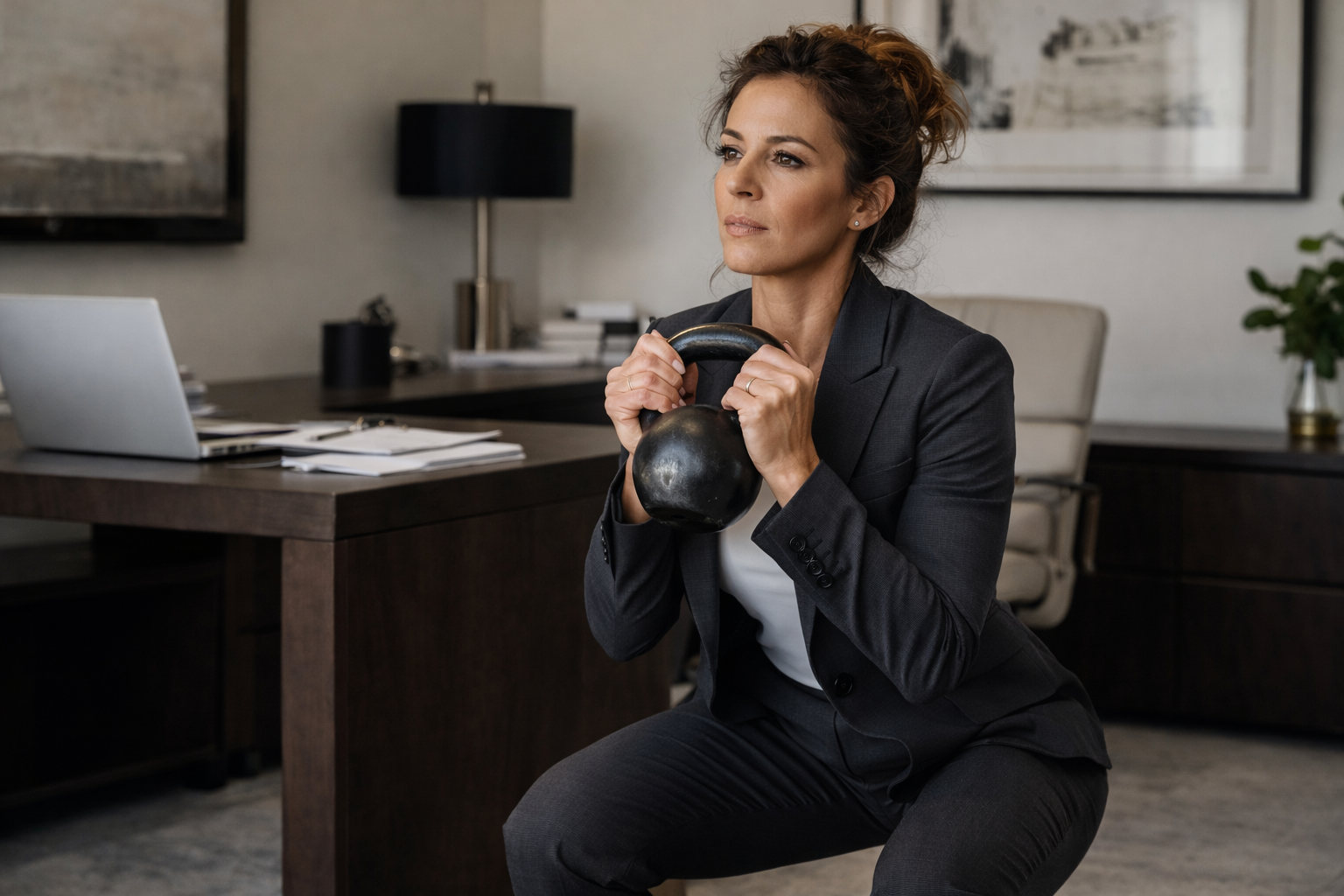
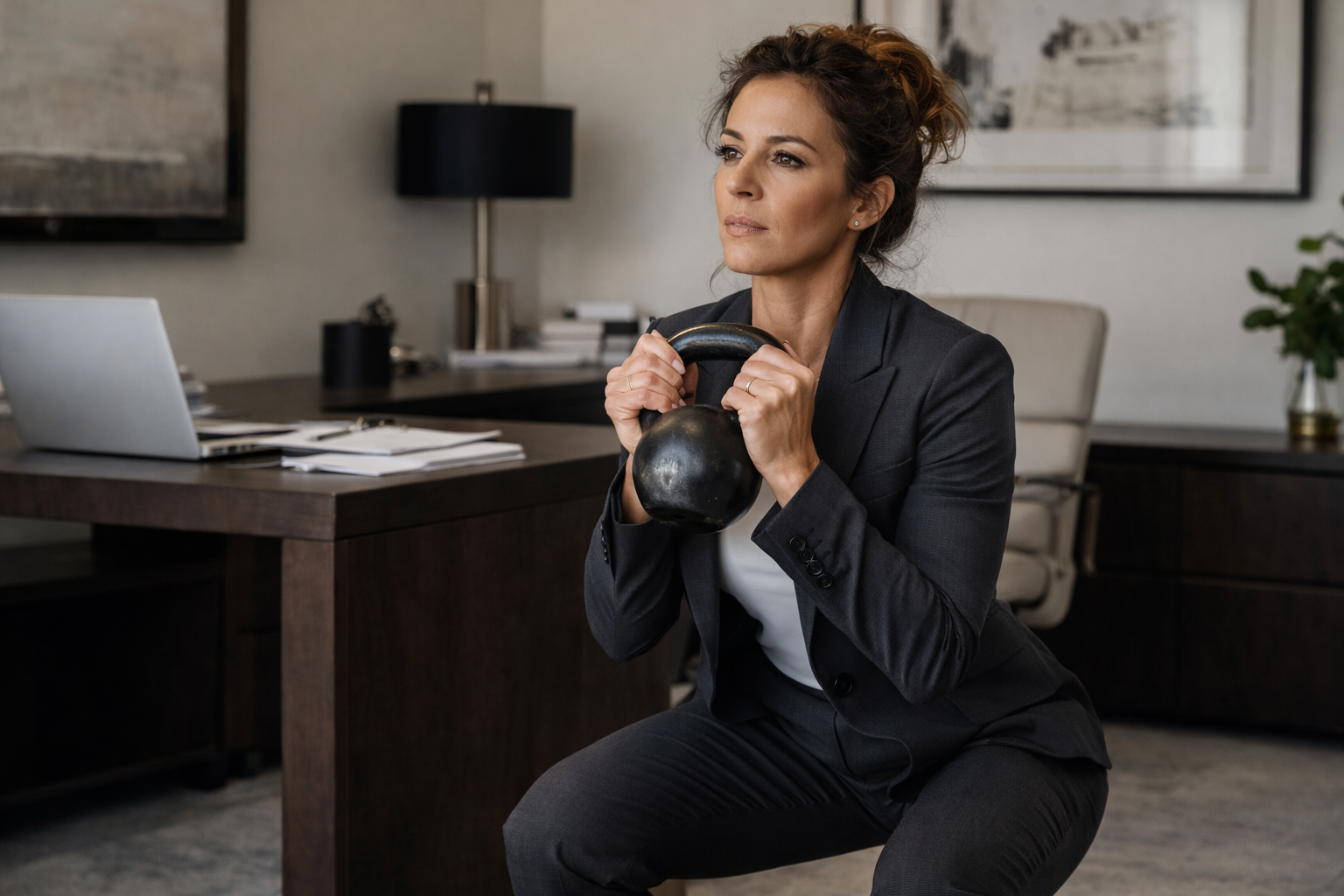
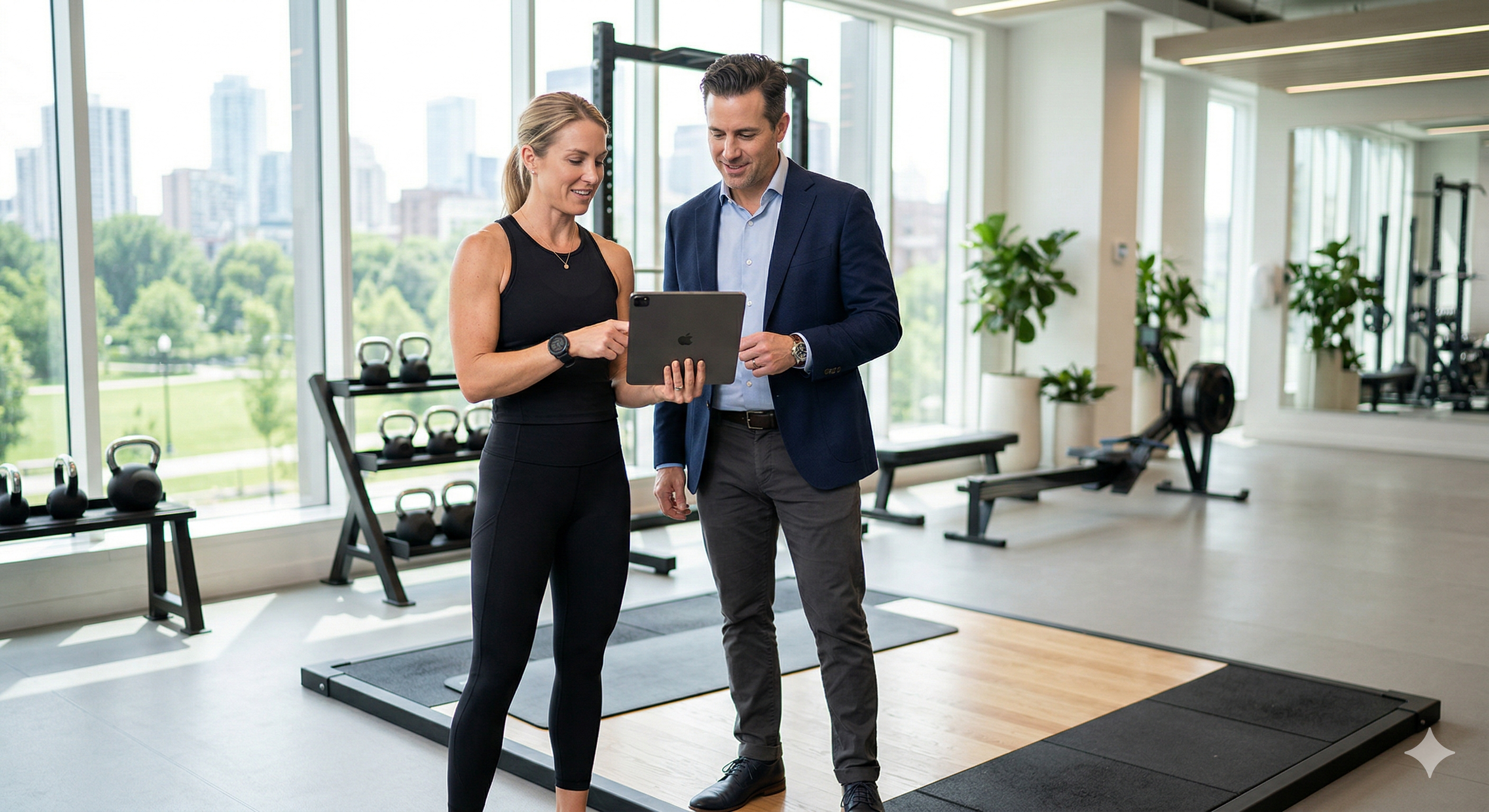
This image was created using AI to avoid copyright issues while conveying the context of this article.
In the corporate world, we are obsessed with efficiency. We look for the most effective way to manage our teams, our budgets, and our quarterly targets. We speak the language of ROI and optimization. Yet, when it comes to personal physical health, many high-performers still operate on an outdated "all or nothing" model. They believe that if they cannot carve out 90 minutes for a commute, a high-intensity workout, and a shower, the day is a wash.
As we move through 2026, the data is clear: the most successful leaders are ditching the marathon gym sessions in favor of "Micro-Workouts." These short, high-intensity bursts of resistance training are designed to fit into the cracks of a demanding schedule. They aren't just a "backup plan," they are a strategic tool for maintaining metabolic health, cognitive function, and physical resilience. For the modern executive, the goal isn't just to be "fit"; it is to be physically capable of handling the cognitive and emotional demands of high-stakes leadership.
The Myth of the "Hour-Long" Requirement
The idea that you need an hour to get a "real" workout is a relic of the past, born out of 1980s fitness culture. From a biological perspective, your muscles do not have a clock; they have a threshold for tension. Your body does not count minutes; it counts the quality of the stimulus you provide to your nervous system.
If you can push your muscles to a high level of effort in 15 minutes, you can trigger the same muscle-saving signals as a much longer, slower session. For the busy professional, Micro-Workouts solve the primary barrier to entry: time friction. By breaking the daily requirement into 10 or 15-minute blocks, you eliminate the mental weight of "finding time." You don't find time for Micro-Workouts; you insert them into the transition periods of your day, the gap between back-to-back meetings, the time before a commute, or the window during a lunch break.
The Biological "Compound Interest" of Movement
Think of Micro-Workouts like a small daily investment in a high-yield account. A single 10-minute set of heavy squats or push-ups might not seem like a significant event in isolation. However, the cumulative effect over months and years is massive. In finance, we know that small, consistent contributions outperform occasional large deposits (think dollar cost averaging for you investor types). Fitness is no different.
This is especially critical for leaders who spend long hours in sedentary roles. Sitting for extended periods leads to "metabolic stalls" where your insulin sensitivity drops, and your body’s ability to process glucose efficiently slows down. This is the physiological root of the "afternoon slump." A "micro-burst" of movement acts as a manual override. It restarts your metabolic engine and clears "brain fog" by increasing blood flow to the prefrontal cortex, the part of the brain responsible for executive function and complex decision-making.
The 2026 "Minimum Effective Dose" Protocol
So, how do you execute this at a professional level? It isn't about running in place or doing frantic jumping jacks in a suit. It is about Mechanical Tension. The goal is to challenge your muscles enough to signal the body to keep its lean tissue and stay metabolically active.
A standard Executive Micro-Workout focuses on a "Minimum Effective Dose" of intensity. It might look like this:
The Preparation (2 Minutes): Focus on dynamic mobility. If you’ve been sitting, your hip flexors are tight and your shoulders are rounded. Perform simple movements like "world’s greatest stretches" or arm circles to signal to your nervous system that you are moving out of "desk mode."
The Work (10 Minutes): Choose one "Core" compound movement and perform it with high intensity. This could be a set of heavy goblet squats, overhead presses, or weighted rows. The goal is to reach a level of effort where the last two reps of each set are difficult to complete.
The Transition (3 Minutes): Deep breathing to lower cortisol and transition back into a state of "Deep Work."
By focusing on one major movement pattern per "micro-session," you ensure that every muscle group is hit throughout the week. You are building a body that is durable without ever feeling overwhelmed by a long to-do list.
The Cost of Inaction: Cognitive and Metabolic Decline
For the executive, the cost of neglecting physical health isn't just a larger waistline; it is a decrease in "Executive Stamina." As we age, our natural muscle mass declines through a process called sarcopenia. This decline is accelerated by stress and sedentary behavior. When you lose muscle, you lose the primary organ responsible for glucose disposal. This leads to erratic energy levels, decreased focus, and a lower threshold for stress.
Furthermore, high-level leadership often involves high levels of cortisol. If you are constantly "on" without a physical outlet, that cortisol remains elevated, leading to systemic inflammation and burnout. Micro-workouts provide a "cortisol dump," allowing you to physically process the stress of the day. You are essentially using movement to reset your biological baseline, allowing you to return to your tasks with a "cool" nervous system.
Integrating Health as a Business Strategy
Health is not a hobby; it is a business asset. A leader who is physically resilient is a leader who can maintain focus under pressure, recover faster from the demands of travel, and lead with a presence that inspires confidence. In the same way that you wouldn't let your company's infrastructure crumble through neglect, you cannot let your own physical infrastructure fail.
At Legacy Fitness & Nutrition, we help professionals build these systems. We understand that your time is your most valuable resource. Our goal is to ensure you get the maximum metabolic return on every minute you spend training. You don't need more time; you need a better strategy.
Optimize Your Most Valuable Asset: Your Capability
You wouldn't accept a low ROI in your business; don't accept one in your fitness. At Legacy Fitness & Nutrition, we specialize in high-efficiency protocols that integrate seamlessly with a demanding professional life.
For the Individual Leader: Ready to stop "finding time" and start building a high-yield physical strategy? Let’s design your roadmap. Book My Individual Strategy Call
For the Organization: Want to equip your executive team with the tools to maintain focus and stamina under pressure? Explore Executive Performance Packages
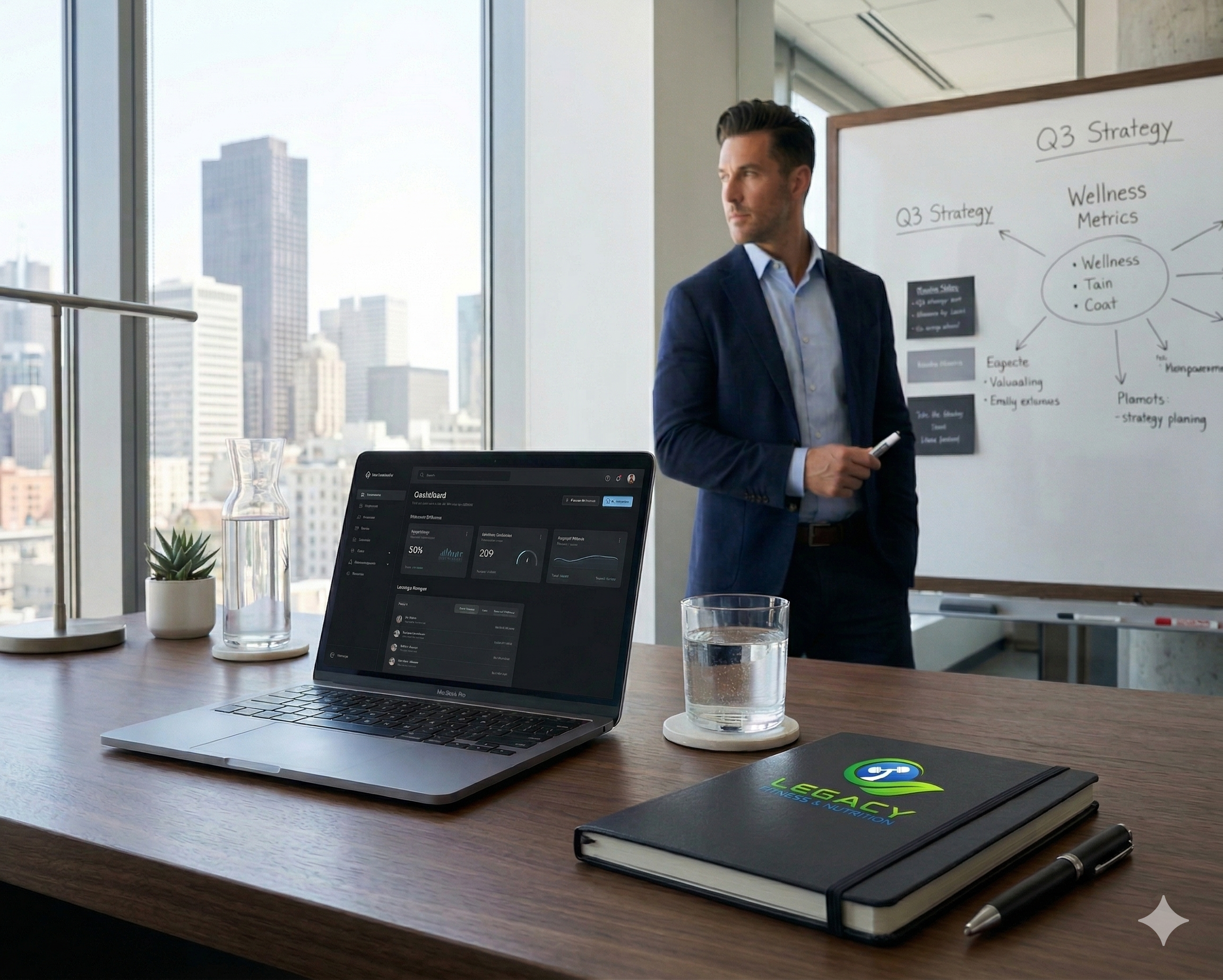
Scaling Your Health Like a Business: Systems, Metrics, and Consistency
By applying the principles of systems, metrics, and consistency, you ensure that your body remains your greatest asset, not your biggest liability.
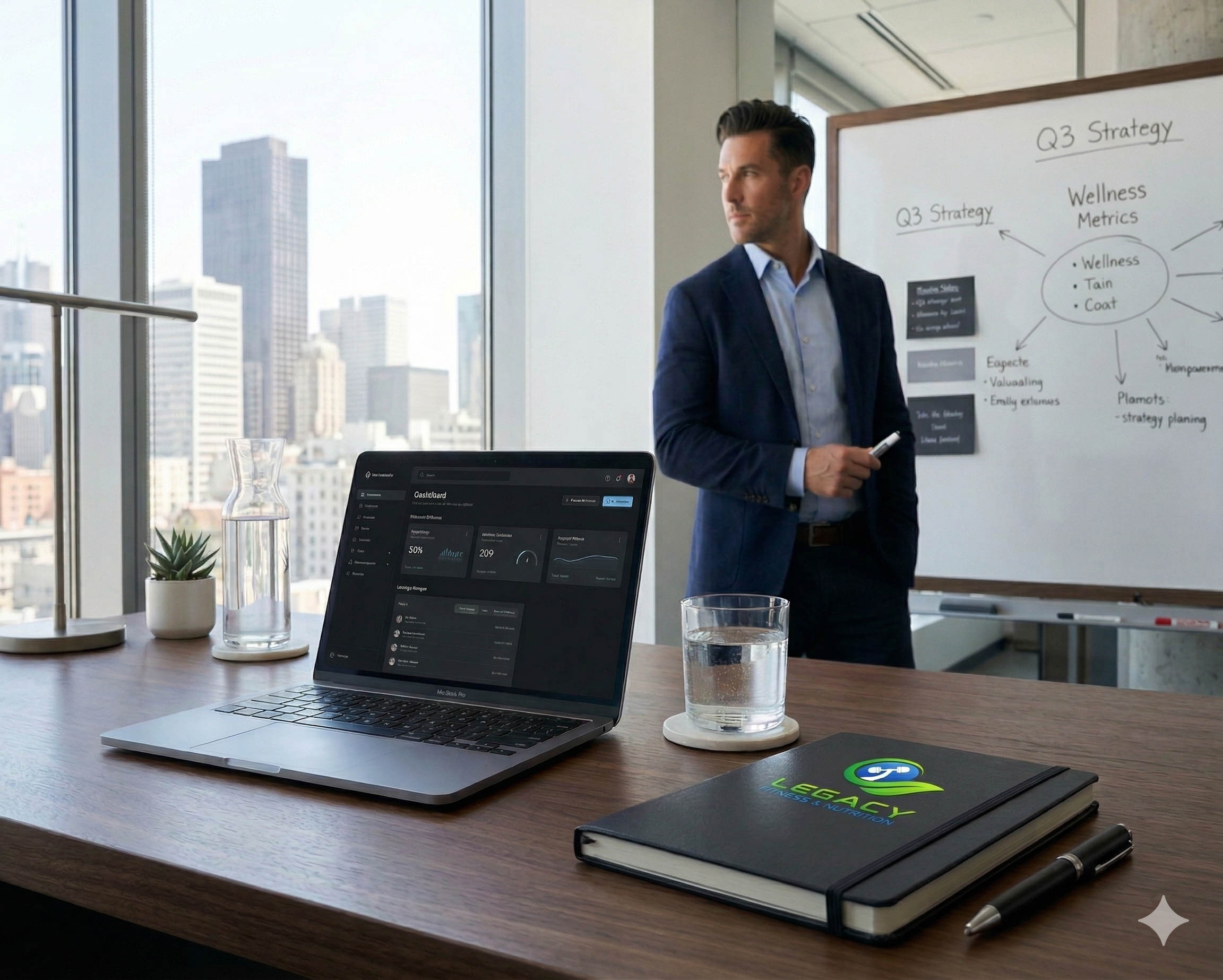
This image was created using AI to avoid copyright issues while conveying the context of this article.
As an executive, you know that a business cannot grow on "vibes" or "good intentions." To scale a company, you need robust systems, reliable metrics, and absolute consistency. You wouldn't manage your P&L by "guessing" how much revenue came in, yet this is exactly how most people manage their health. They guess their calorie intake, they guess their effort in the gym, and they wonder why they aren't seeing an ROI.
At Legacy Fitness, we believe that your health is the ultimate business venture. It is the infrastructure that allows every other part of your life to function. If you want to achieve elite-level fitness without sacrificing your professional output, you have to stop treating your health like a hobby and start treating it like a high-growth organization.
Here is how to scale your physical performance using the same logic you use in the boardroom.
1. Build Systems, Not Just Goals
In business, a goal without a system is just a dream. If you want to increase revenue by 20%, you build a sales funnel, a marketing strategy, and a CRM. You don't just "hope" it happens.
The same applies to your body. "Losing 20 pounds" is a goal; having a pre-planned meal delivery service, a blocked-out 7:00 AM training slot, and a "sleep hygiene" checklist is a system. Systems remove the need for willpower. When your healthy choices are automated, just like your payroll, you stop making emotional decisions based on how "tired" or "busy" you feel.
A scaled health system ensures that even on your most stressful days, your baseline habits remain intact.
2. Identify Your Key Performance Indicators (KPIs)
You cannot manage what you do not measure. In the weight room and the kitchen, we need to identify the lead measures that actually drive results.
Most people focus only on the "lag measure," the number on the scale. But by the time the scale moves, the work has already been done. To scale your health, you need to track your Lead Measures:
Protein Intake: Are you hitting your daily target to protect your metabolic insurance?
Step Count (NEAT): Are you maintaining a baseline level of movement?
Training Volume: Are you progressively getting stronger over time?
Sleep Quality: Is your recovery keeping pace with your output?
When these KPIs are in the green, the lag measure (fat loss/muscle gain) takes care of itself.
3. The Power of "Marginal Gains"
In the 1990s, the British Cycling team was mediocre at best. They changed their trajectory by focusing on "the aggregation of marginal gains," the idea that if they improved every tiny detail by just 1%, the cumulative effect would be massive.
When scaling your health, don't look for a "magic pill." Look for the 1% improvements.
Can you improve your hydration by adding minerals?
Can you improve your sleep by 15 minutes?
Can you improve your "Mind-Muscle Connection" by slowing down your reps?
In business and in biology, small, consistent improvements compound into a legacy of success.
4. Delegate to Experts
The most successful CEOs know when to hire a specialist. They don't try to be their own CFO, CTO, and Head of HR. They delegate those roles to experts so they can focus on their "Zone of Genius."
The "DIY" approach to fitness is often the most expensive choice an executive can make. It costs you time spent in "analysis paralysis" and energy spent on ineffective strategies. Scaling your health means hiring a "Chief Health Officer," a coach who manages the strategy, analyzes the data, and provides the accountability. This allows you to stay focused on your professional legacy while your physical legacy is built in the background.
The Annual Report: Looking Back to Move Forward
As we wrap up April, it is time for your "Monthly Health Review."
What systems worked this month?
Which KPIs moved in the right direction?
Where did the "operational friction" occur?
Your health is not a project with a finish line; it is a company that requires constant optimization. By applying the principles of systems, metrics, and consistency, you ensure that your body remains your greatest asset, not your biggest liability.
Wondering how many calories you actually burn?
You can't manage what you don't measure. Mastering your health starts with knowing your baseline. Use my BMR Calculator to find your personalized daily calorie and macro targets so you can scale your health with the precision of a business plan. Use the BMR Calculator Here

Building a "Legacy" Body: Why the Goal is Health for the Next 40 Years, Not 4 Weeks
Build a body that reflects the strength of your character and the depth of your ambition. Build a Legacy Body.

This image was created using AI to avoid copyright issues while conveying the context of this article.
In the world of business, we are taught to think in decades. We build five-year plans, we consider the long-term sustainability of our models, and we ask ourselves what our organizations will look like long after we are gone. We understand that "short-termism," chasing a quarterly spike at the expense of long-term stability, is a recipe for failure.
Yet, when most people approach their fitness, they do the exact opposite. They fall into the trap of the "six-week challenge" or the "beach body" deadline. they push themselves to the point of injury or burnout just to hit a number on the scale by a certain date.
At Legacy Fitness, we believe this approach is fundamentally flawed. Your body is not a short-term project; it is the most important piece of biological infrastructure you will ever own. If you want to be a high-performer in your 60s, 70s, and 80s, you have to stop training for the next 4 weeks and start building for the next 40 years. This is the shift from "fitness" to "Legacy."
The Danger of the "Sprint" Mentality
Sprinting has its place, but you cannot live your life in a constant state of emergency. Many high-performers treat their health like a crisis management task. They ignore their bodies for months, realize they feel terrible, and then embark on an extreme, unsustainable regime to "fix" it.
The problem with the sprint mentality is that it often leads to "System Failure." Extreme calorie deficits, excessive cardio, and lifting without a foundational plan create chronic stress. You might lose ten pounds in a month, but if you lose five pounds of muscle and wreck your sleep in the process, you haven't moved closer to health. You have simply mortgaged your future for a short-term win.
Defining the 40-Year Metric
When we shift our focus to the next 40 years, our metrics for "success" change. We stop obsessing over daily fluctuations in weight and start looking at the markers of long-term vitality:
Skeletal Muscle Mass: Muscle is your longevity currency. It protects your joints, manages your blood sugar, and keeps you independent. A Legacy Body prioritizes muscle maintenance over rapid weight loss.
Functional Mobility: Can you still get off the floor without using your hands? Can you reach overhead without pain? Longevity is about the quality of your movement, not just the absence of disease.
Metabolic Flexibility: Can your body easily switch between burning fat and burning carbohydrates? A resilient metabolism allows you to navigate social dinners and high-stress workdays without crashing.
Structural Integrity: Are your tendons, ligaments, and bones strong enough to handle the demands of your life? Building a Legacy Body means training in a way that strengthens your "chassis," not just the "engine."
The "Compound Interest" of Health
In finance, we know that the earlier you start and the more consistent you are, the more your wealth compounds. Health works the same way. A 30-minute walk today might not feel like much, but when done 300 days a year for 20 years, it is the difference between a healthy heart and a surgical bill.
Consistency is the "interest rate" of your fitness. It is better to do a moderate workout three times a week for a decade than it is to do a perfect workout five times a week for three months and then quit. A Legacy Leader values the "boring" basics: protein, steps, sleep, and strength, because he knows they are the only things that compound.
Training for the "Grandkid" Standard
I often ask my clients to visualize their "Ultimate Goal." For many, it isn't a certain weight; it’s a specific activity. It’s being 75 years old and being able to pick up a grandchild without thinking about their back. It’s being 80 and being the person who can still carry their own luggage through an airport.
This is the "Grandkid Standard." When you train with this vision in mind, your workouts become more intentional. You stop doing "ego reps" that might hurt your shoulders, and you start focusing on the foundational movements, the squats, hinges, and presses, that will keep you capable for life.
Beyond the Physical
Building a Legacy Body isn't just about the physical tissues. it’s about the mindset. It’s about viewing yourself as an elite athlete in the game of life. An athlete doesn't just train to "be thin"; he or she trains to perform.
When you treat your body with respect, your career, your relationships, and your leadership all improve. You become a person of higher capacity. You become a person who can lead others because you have successfully led yourself.
Your Health is Your Greatest Legacy
At the end of the day, your professional achievements will be recorded in ledgers and LinkedIn profiles, but your personal legacy will be felt by the people who love you. Being present, energized, and capable for your family is the highest ROI you can achieve.
Don't settle for a 4-week transformation. Build a body that reflects the strength of your character and the depth of your ambition. Build a Legacy Body.
Stop Chasing Deadlines. Start Building a Legacy.
Most fitness programs are designed to end. We design our programs to last. Whether you are an individual executive or a leader looking to transform your organization, we provide the systems for lifelong performance.
For the Individual: Ready for a strategic approach to your health that lasts for decades? Book My Individual Discovery Call
For the Organization: Empower your leadership team with the durability of a Legacy Body. Explore Corporate Wellness Packages
Mentorship in Health: Why a Coach is an Investment, not an Expense
Your health deserves the same level of strategic investment as your business.
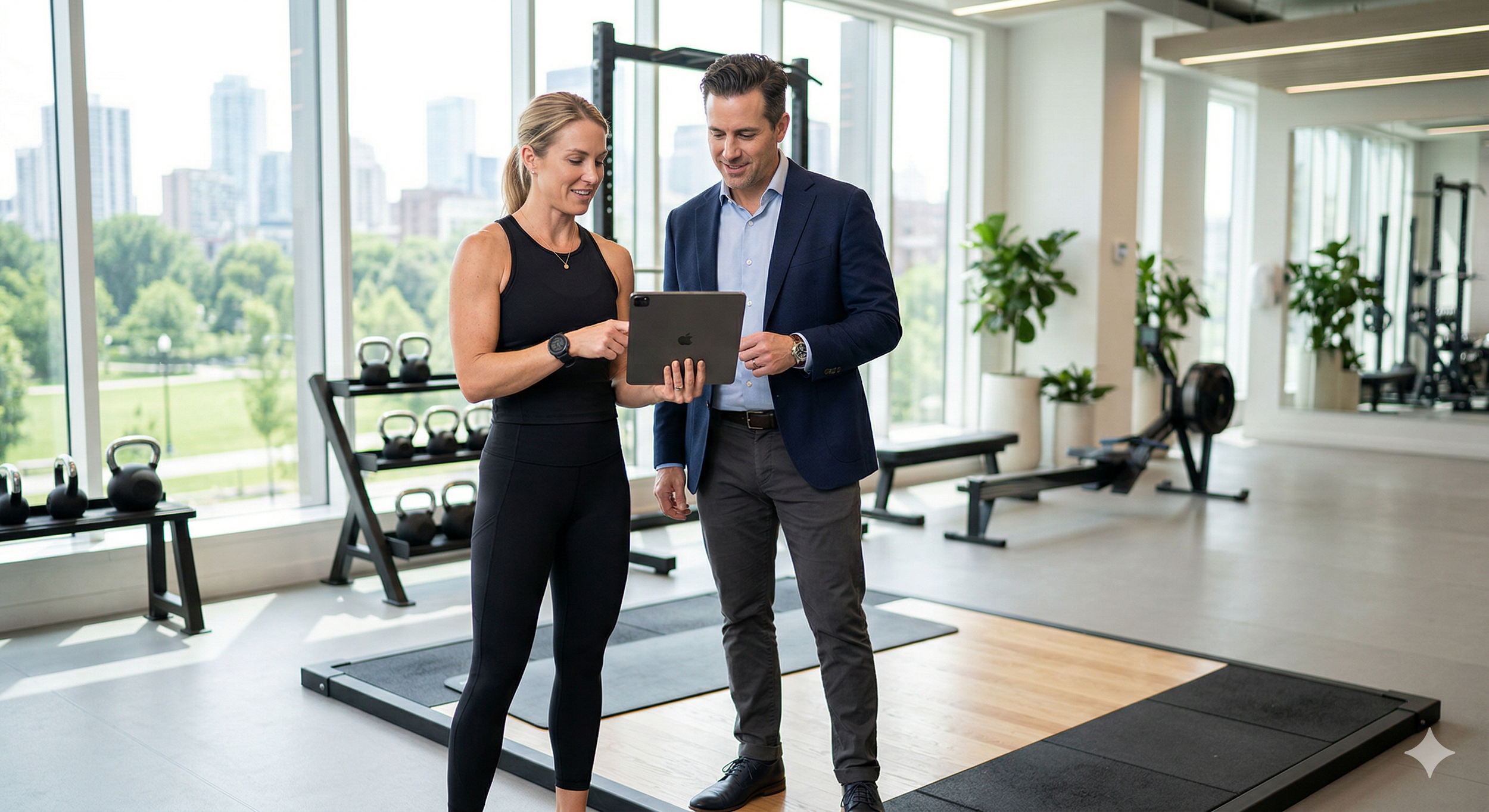
This image was created using AI to avoid copyright issues while conveying the context of this article.
In the world of business, we understand the value of a mentor. We seek out advisors, consultants, and executive coaches because we know that a single piece of expert advice can save us years of trial and error. We don't view these professional services as a "cost" that drains our bank account; we view them as an investment that multiplies our time and our results.
Yet, when it comes to the most important asset we own, our physical health, many people revert to a "DIY" (Do It Yourself) mindset. They try to piece together a fitness plan from random social media posts, or they jump from one fad diet to the next, hoping something finally sticks.
The reality is that your health deserves the same level of strategic investment as your business. A health coach or mentor isn't an "expense" like a luxury car or a high-end watch. A coach is a strategic partner who ensures your biological infrastructure can support your professional ambitions. Here is why mentorship is the missing link in your long-term health legacy.
The Problem with "Information Overload"
We live in an age where information is free and infinite. You can find ten different "perfect" workout plans and twenty "ideal" diets in a five-minute search. The problem isn't a lack of information; it is a lack of clarity.
When you try to go it alone, you spend your mental energy trying to decide which information is correct. Is coffee good for you today? Should you be doing keto or low-fat? Are you lifting too heavy or not heavy enough? This "decision fatigue" is the number one reason why high-performers quit their health routines. They are already making thousands of decisions a day at work; they don't have the "bandwidth" to manage the complexity of their own biology.
A coach removes the guesswork. A mentor provides a filtered, direct path to your goals based on your specific life, your specific stress levels, and your specific body. You aren't paying for "information"; you are paying for the curation of that information.
The Value of "Outside-In" Perspective
Even the best athletes in the world have coaches. It isn't because they don't know how to play the game; it’s because they cannot see their own "blind spots."
In business, you hire an auditor to find the holes in your finances. In fitness, a coach is the auditor for your lifestyle. You might think you are eating enough protein, but a coach looks at the data and sees that you are consistently falling short. You might think your squat form is perfect, but a coach sees the slight shift in your hips that is going to lead to a back injury in six months.
That "outside-in" perspective is what prevents plateaus and injuries. It ensures that every minute you spend in the gym is actually moving the needle. For a busy executive, wasting time on an ineffective workout is more than just frustrating, it is a poor use of a valuable resource.
Accountability: The Secret to Consistency
We have all had a "Monday Morning" where we were supposed to hit the gym, but a late-night email or a stressful meeting made it easy to hit the snooze button. When you are only accountable to yourself, it is easy to negotiate with yourself. You tell yourself you'll "make it up tomorrow."
But when you have a mentor, the dynamic changes. Accountability is the "force multiplier" of consistency. Knowing that someone is waiting for your check-in or looking at your data creates a level of psychological commitment that "willpower" alone cannot match.
A mentor doesn't just tell you what to do; they hold the standard for who you said you wanted to become. They are the guardian of your goals when your motivation is low.
Collapsing the Timeframe
The most valuable asset an executive has is time. You can always make more money, but you can never get back a year spent in "mediocre" health.
Mentorship "collapses" the timeframe. A journey that might take you three years of trial and error to figure out on your own can often be accomplished in six months with an expert guide. A coach has already seen the pitfalls, the common mistakes, and the metabolic "potholes" that stop most people. By following their lead, you are buying back your time. You are choosing the fast lane to a body that performs.
The ROI of Energy
Finally, we must look at the Return on Investment. If a coach helps you improve your sleep, optimize your nutrition, and build a stronger body, your "output" in every other area of life increases.
You are more patient with your family.
You are more focused during high-stakes meetings.
You have the energy to work a full day and still have "gas in the tank" for your personal life.
When you view it through this lens, the "cost" of a coach is actually one of the highest-yielding investments you can make. It is an investment in your career longevity and your personal happiness.
Building Your Team
No great legacy was ever built alone. Success is a team sport. Whether it is in the boardroom or the weight room, the right mentorship changes everything.
At Legacy Fitness, we aren't just trainers; we are strategic partners in your health. We provide the systems, the accountability, and the expertise so that you can focus on what you do best: leading.
Ready to Invest in Your Most Important Asset?
The DIY approach to health is the most expensive path you can take because it costs you time and energy. It’s time to move toward a strategic, expert-led plan.
For the Individual Leader: Ready to stop the guesswork and start the transformation? Let’s talk about your roadmap. Book My Discovery Call
For the Organization: Give your high-performers the support they need to stay at the top of their game. Explore Corporate Wellness Packages

The ROI of Employee Wellness: Why Fit Leaders Make Better Decisions
We believe that fitness is the foundation of leadership.

This image was created using AI to avoid copyright issues while conveying the context of this article.
In the world of business, we obsess over metrics. We track quarterly growth, customer acquisition costs, and profit margins. We look for every possible edge to stay ahead of the competition. However, many executives overlook the most important asset in their company: the physical health of their leadership team and their employees.
If a piece of high-end machinery in a factory was poorly maintained, we would expect it to break down. We would not be surprised when its output dropped. Yet, we often treat our bodies, the very "machinery" that generates our best ideas and toughest decisions, with neglect.
The data is becoming clear: Fitness is not just a personal hobby; it is a professional competitive advantage.
The Brain-Body Connection
For a long time, we viewed the "mind" and the "body" as two separate things. We thought that as long as our brain was working, it didn't matter if we were sitting on a couch for 12 hours a day. Modern science has proven this wrong.
When you exercise, your body produces a protein called Brain-Derived Neurotrophic Factor (BDNF). Scientists often call this "Miracle-Gro for the brain." BDNF helps repair brain cells and grow new ones. It improves memory, speeds up learning, and, most importantly for leaders, improves executive function.
Executive function is what allows you to stay calm under pressure, juggle multiple complex tasks, and make logical decisions when things go wrong. A fit leader isn't just stronger in the gym; they are sharper in the boardroom.
Stress Resilience and the Corporate Athlete
Leadership is inherently stressful. High-stakes negotiations, tight deadlines, and the responsibility of managing a team can take a toll. This stress creates a hormone called cortisol. In small doses, cortisol is fine. In chronic, high doses, it leads to burnout, irritability, and poor judgment.
Physical training acts as a "controlled stressor." When you lift weights or go for a run, you are teaching your nervous system how to handle stress and then recover from it. Fit leaders have a higher "stress threshold." They can stay cool and collected while others are panicking. This emotional regulation is the hallmark of a great leader, and it is built through consistent physical movement.
Leading by Example: The Culture of Health
A company's culture starts at the top. If a CEO stays up until 3am, survives on caffeine, and never leaves their desk, the rest of the team will feel pressured to do the same. This leads to a workforce that is exhausted, prone to illness, and prone to making mistakes.
When a leader prioritizes their health, they give their employees "permission" to do the same. This creates a "Legacy Culture" where health is valued. The result?
Lower Absenteeism: Fit employees get sick less often and recover faster.
Higher Retention: People want to work for companies that value their long-term well-being.
Increased Productivity: A team that is well-rested and physically active can accomplish more in 6 hours than an exhausted team can in 10.
The Long-Term Investment
In finance, we look for investments that compound over time. Health is the ultimate compounding asset. A leader who invests 30 minutes a day in their fitness today is ensuring they will still have the cognitive energy to lead 10 or 20 years from now.
Physical fitness prevents the "executive decline" that often happens in middle age. It ensures that when you finally reach the pinnacle of your career, you actually have the health to enjoy the fruits of your labor.
Your Professional Duty
We often feel "guilty" for taking time away from our desks to go to the gym. We feel like we are being selfish. In reality, the most selfish thing a leader can do is neglect their health. If you are tired, brain-fogged, and irritable because you aren't taking care of your body, you are doing a disservice to your employees, your shareholders, and your family.
At Legacy Fitness, we help professionals transition from "accidental health" to "intentional wellness." We believe that fitness is the foundation of leadership.
The next time you look at your calendar, don't view your workout as an "extra" task. View it as a high-priority strategy meeting with your most important business partner: yourself.
Ready to Build Your Legacy?
At Legacy Fitness & Nutrition, we specialize in turning high-performers into "Corporate Athletes" who have the energy to lead and the health to enjoy their success. We offer two ways to partner with us:
For the Individual Leader: If you are ready to personally reclaim your energy, sharpen your focus, and build a body that lasts, let’s talk.
For the Organization: If you want to boost your team’s productivity, reduce burnout, and create a culture of health that lasts, we offer tailored Corporate Wellness coaching.
The ROI of Health: Why Fitness is the Best Investment a Leader Can Make
Many "spend" their health to gain wealth, only to spend their wealth later trying to buy back their health.
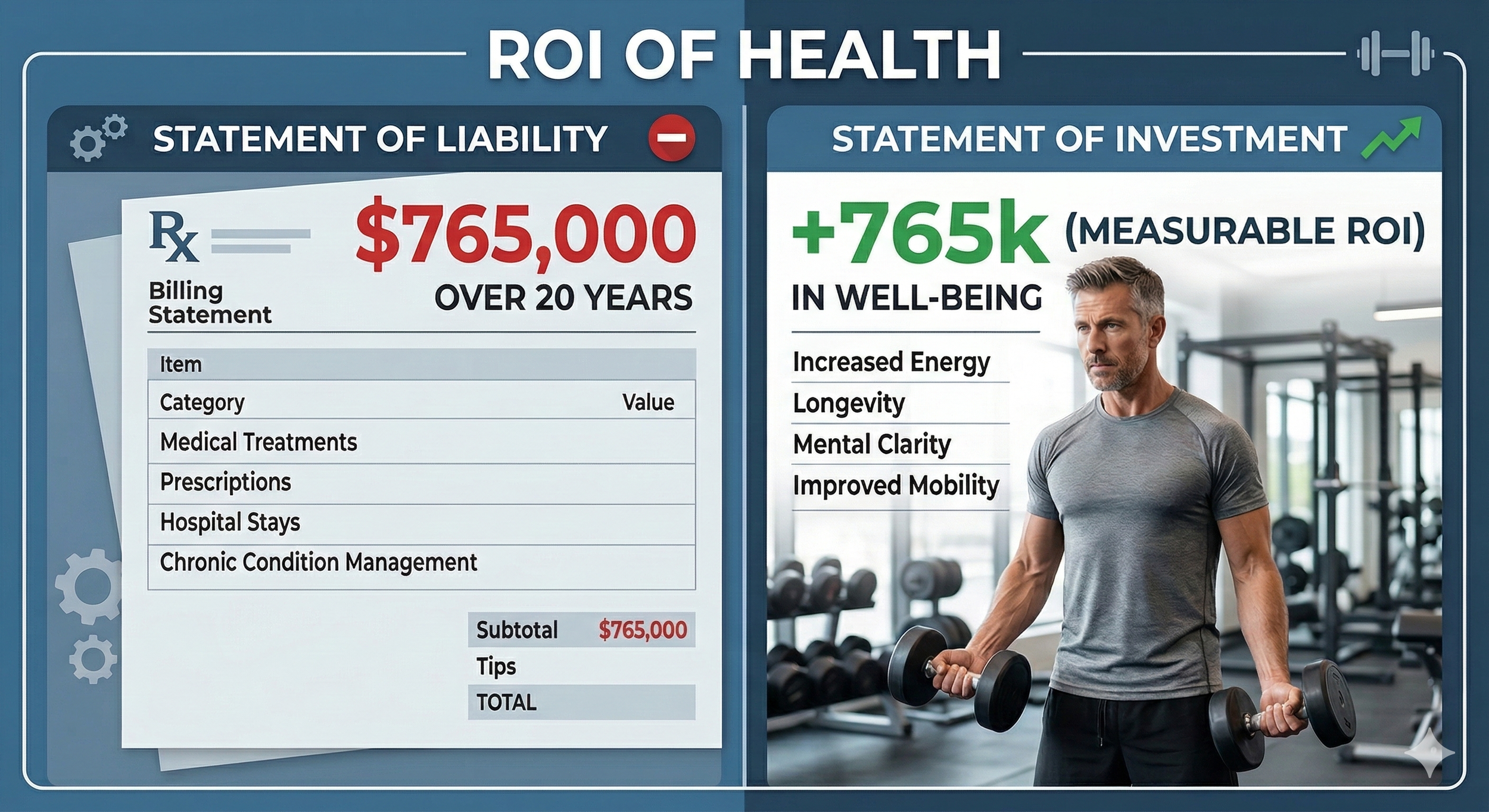
This image was created using AI to avoid copyright issues while conveying the context of this article.
In the corporate world, we are obsessed with Return on Investment (ROI). We scrutinize every software subscription, every new hire, and every marketing campaign to ensure it yields a positive result. We look for assets that appreciate and minimize liabilities that drain our resources.
Yet, many leaders overlook the most critical asset in their entire portfolio: their physical body.
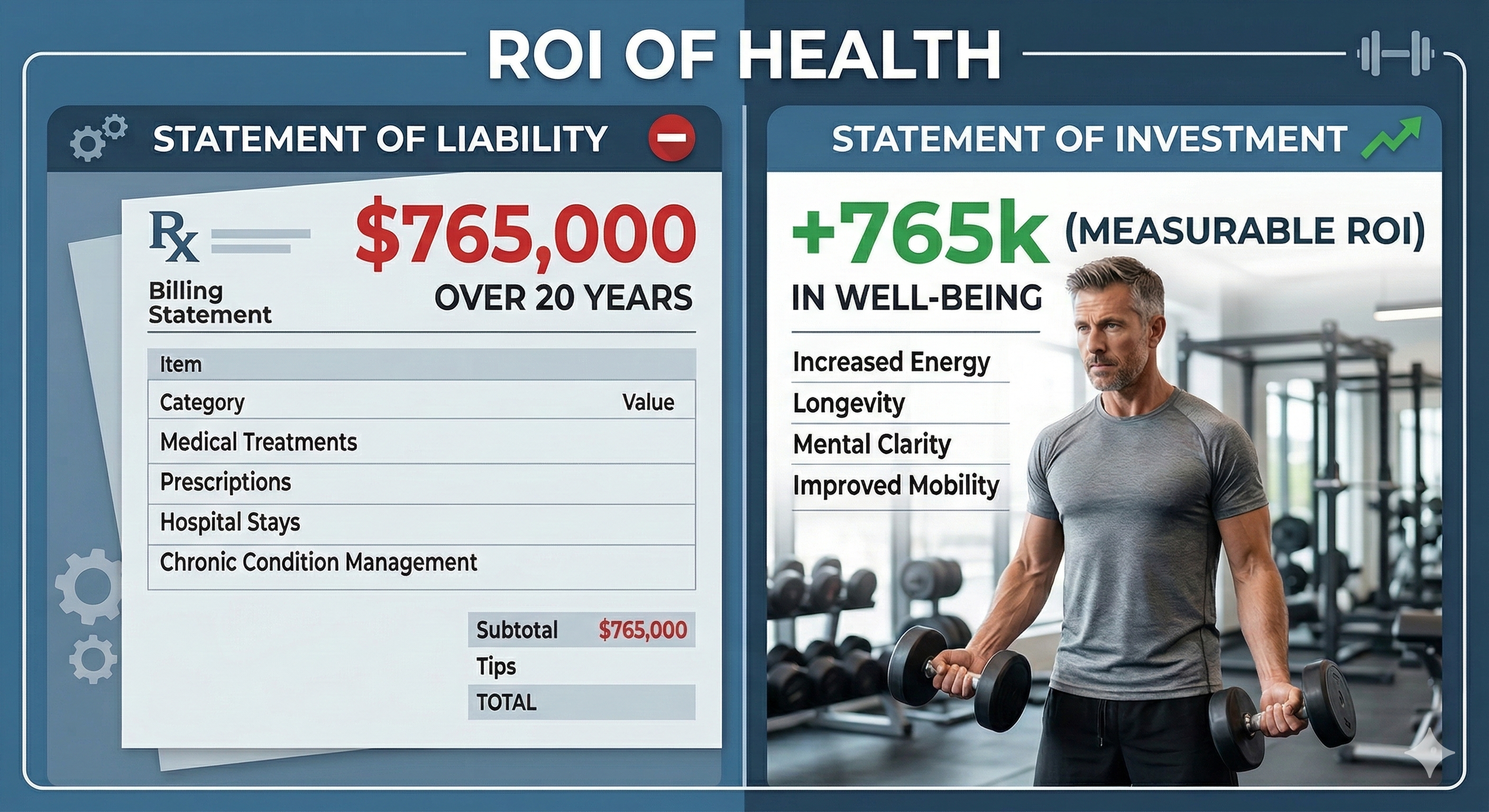
At Legacy Fitness, we recently performed a 20-year cost-benefit analysis comparing a proactive healthy lifestyle against the reality of living with metabolic syndrome. The results were staggering. To be a truly effective leader, you must stop viewing fitness as a "time-cost" and start viewing it as a high-yield investment.
1. The Financial Data: Investing vs. Reacting
Most people hesitate at the cost of quality whole foods, gym memberships, and coaching. However, our "Health is Wealth" report shows that these are actually cost-saving measures.
The Liability: A male living with metabolic syndrome (high blood pressure, cholesterol, and diabetes) faces an estimated annual cost of $38,262 in healthcare, insurance surcharges, and medications. Over 20 years, that is a $765,000 liability.
The Asset: A male investing in a proactive healthy lifestyle, including a personal trainer and high-quality food, saves hundreds of thousands of dollars over that same period by avoiding escalating medical expenses.
In business terms: Would you rather spend $15,000 a year on "maintenance" (fitness and food) or $40,000 a year on "repairs" (healthcare)?
2. Increased Cognitive Performance
Your brain is a biological organ. Regular resistance training increases blood flow to the prefrontal cortex, the area responsible for executive function, decision-making, and emotional regulation.
A fit leader doesn't just have more energy; they have more clarity. When you are physically healthy, you can navigate a high-pressure boardroom with a level head, while your less-healthy competitors are struggling with "brain fog" and mid-afternoon fatigue.
3. Stress Resilience and Emotional Intelligence
Leadership is essentially the management of stress. Exercise is "controlled stress." When you push through a difficult set of squats, you are training your nervous system to stay calm under pressure.
This translates directly to your professional life. A leader who has mastered their physical discipline is far less likely to make an impulsive, stress-based decision. You are building a "buffer" of resilience that allows you to lead with a steady hand when the stakes are high.
4. Protecting Your Life Expectancy
Data shows that metabolic syndrome and obesity-related conditions can reduce life expectancy by 3 to 10 years. What is the value of your career if you are forced to retire early due to a preventable health crisis? We spend decades building a professional "legacy," yet many "spend" their health to gain wealth, only to spend their wealth later trying to buy back their health. Investing in your strength now is like contributing to a biological 401(k).
The Executive Summary
Stop waiting for a "fitness spark." You don't need a spark; you need a strategy.
Treat your coach like a consultant. Treat your nutrition like a high-budget project that requires precision. As the "Health is Wealth" report concludes, individual health status is a critical component of economic stability. When you bring the same level of professionalism to the gym that you bring to the office, the ROI isn't just better, it’s life-changing.