

Why Your Smartwatch is Lying to You (and How to Use it Anyway)
At Legacy Fitness, we encourage our clients to use technology, but we teach them not to be slaves to it.

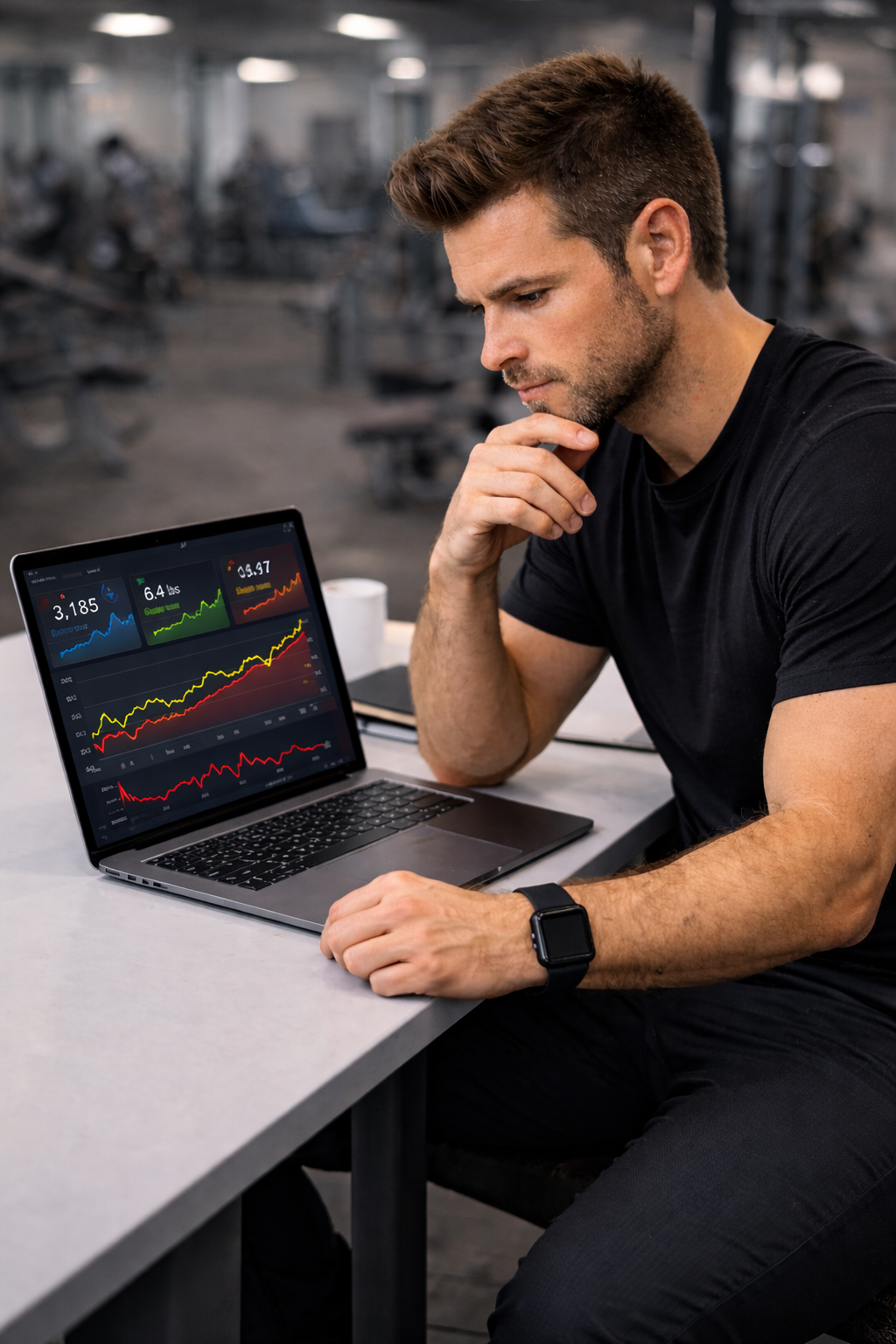
This image was created using AI to avoid copyright issues while conveying the context of this article.
We live in an age of data. If you look around any boardroom or gym, you will see a variety of smartwatches and fitness trackers. These devices promise to tell us everything about our health; from how many steps we have taken to exactly how many calories we burned during a morning run. For a high-performer who values efficiency and precision, this data feels like a superpower. It feels like we finally have a dashboard for our bodies.
However, there is a significant problem with this dashboard. Much of the data your smartwatch gives you is, quite frankly, a lie. While these devices are incredible pieces of technology, they are not medical-grade laboratories. If you rely too heavily on the specific numbers they show you, you might actually be sabotaging your progress. To use these tools effectively, you have to understand where they fail and how to use the "trends" instead of the "truths."
The Calorie Burning Myth
The most common way people use their smartwatches is to track "calories burned." You finish a hard workout, look down at your wrist, and see a satisfying number like "650 calories." It feels like a massive win. You might even use that number to justify eating an extra snack later in the day. After all, your watch said you earned it.
The reality is that smartwatches are notoriously inaccurate at estimating calorie expenditure. Studies have shown that these devices can be off by as much as 40% or more. They use heart rate and motion to guess how much energy you are using, but they cannot account for your specific metabolic efficiency or the "afterburn" effect of resistance training. If you eat back the calories your watch says you burned, you will almost certainly end up in a calorie surplus. In the world of health management, this is like making business decisions based on a financial report that is 40% wrong. It is a recipe for a plateau.
The Heart Rate and Sleep Trap
Smartwatches are also heavily marketed as tools for monitoring heart rate and sleep quality. While they are generally good at tracking your resting heart rate, they often struggle during high-intensity exercise. Rapid changes in heart rate, like those seen during a heavy set of squats or a sprint, are difficult for wrist-based sensors to track accurately.
Similarly, "Sleep Scores" should be taken with a grain of salt. Your watch uses movement and heart rate variability to guess which stage of sleep you are in. While it can tell if you were restless, it cannot truly measure your brain waves to determine the exact quality of your deep sleep. If you wake up feeling refreshed but your watch gives you a "poor" sleep score, you might start feeling tired simply because the data told you that you should be. This is a "nocebo" effect where the data actually creates a negative outcome.
If It Lies, Why Wear It?
If the data is inaccurate, you might wonder why you should bother wearing a tracker at all. The value of a smartwatch isn't in the specific number it gives you for a single day; the value is in the trend over time.
Think of your smartwatch like a compass, not a GPS. A GPS tells you exactly where you are, down to the inch. A compass simply tells you if you are heading in the right direction. Your smartwatch is excellent at showing you relative changes in your behavior.
If your resting heart rate is trending down over three months, your cardiovascular health is improving.
If your average daily step count is higher this month than last month, your baseline activity is increasing.
If your "Ready" score is consistently low on days after you have a late-night drink, you have clear data on how alcohol affects your recovery.
Using the Data as a "CEO"
To be the CEO of your own health, you have to manage your data with a critical eye. You should use your smartwatch as a tool for Accountability, not as a tool for Permission.
Don't use your watch to give yourself permission to eat more. Instead, use it to hold yourself accountable to a baseline of movement. A goal of 10,000 steps is a great system because it ensures a minimum level of "Non-Exercise Activity." It doesn't matter if the watch is exactly right about the distance; what matters is that you are consistently hitting the target you set for yourself.
The most powerful metric on most modern trackers is Heart Rate Variability (HRV). This is a measure of the variation in time between each heartbeat, and it is a fantastic indicator of how your nervous system is handling stress. If your HRV is trending downward, it is a signal from your "dashboard" that you may need to prioritize recovery or manage your work stress more effectively. This is "actionable data" that helps you make better executive decisions for your body.
The Legacy Approach: Systems over Sensors
At Legacy Fitness, we encourage our clients to use technology, but we teach them not to be slaves to it. We want you to develop "internal awareness" alongside your external data. You should know how your body feels when it is well-fueled and well-rested, regardless of what the screen on your wrist says.
We use the data from your wearables to help us "course-correct" your systems. If we see your activity levels dropping or your recovery scores stalling, we don't panic. We simply look at the system and make an adjustment. Technology is a brilliant servant but a terrible master. By learning how to interpret the trends and ignore the "lies," you can use your smartwatch to build a more resilient, high-performing version of yourself.
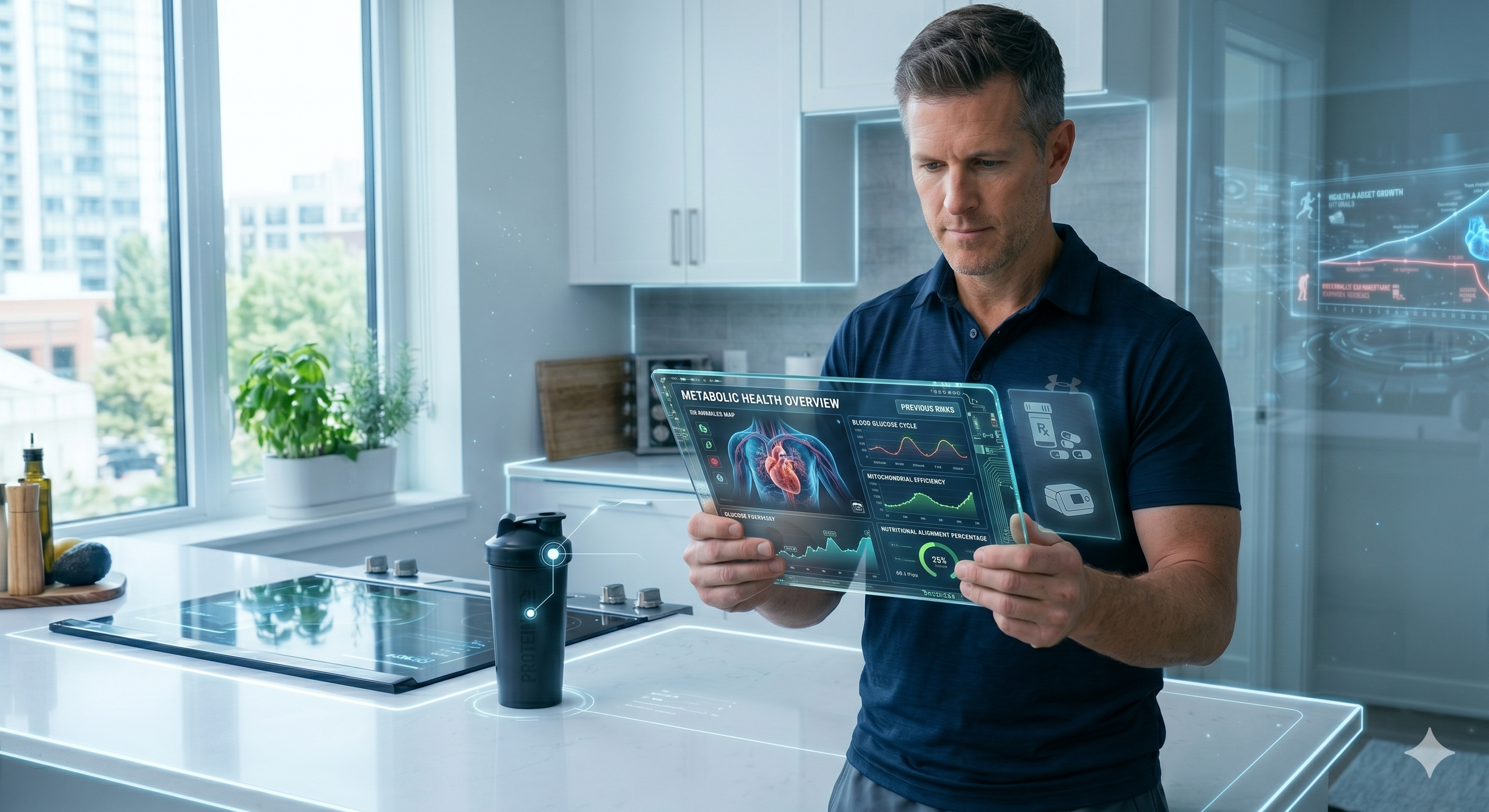
The Future of Personalized Nutrition: AI and Your Plate
The future of nutrition is personal, it is data-driven, and it is highly efficient.
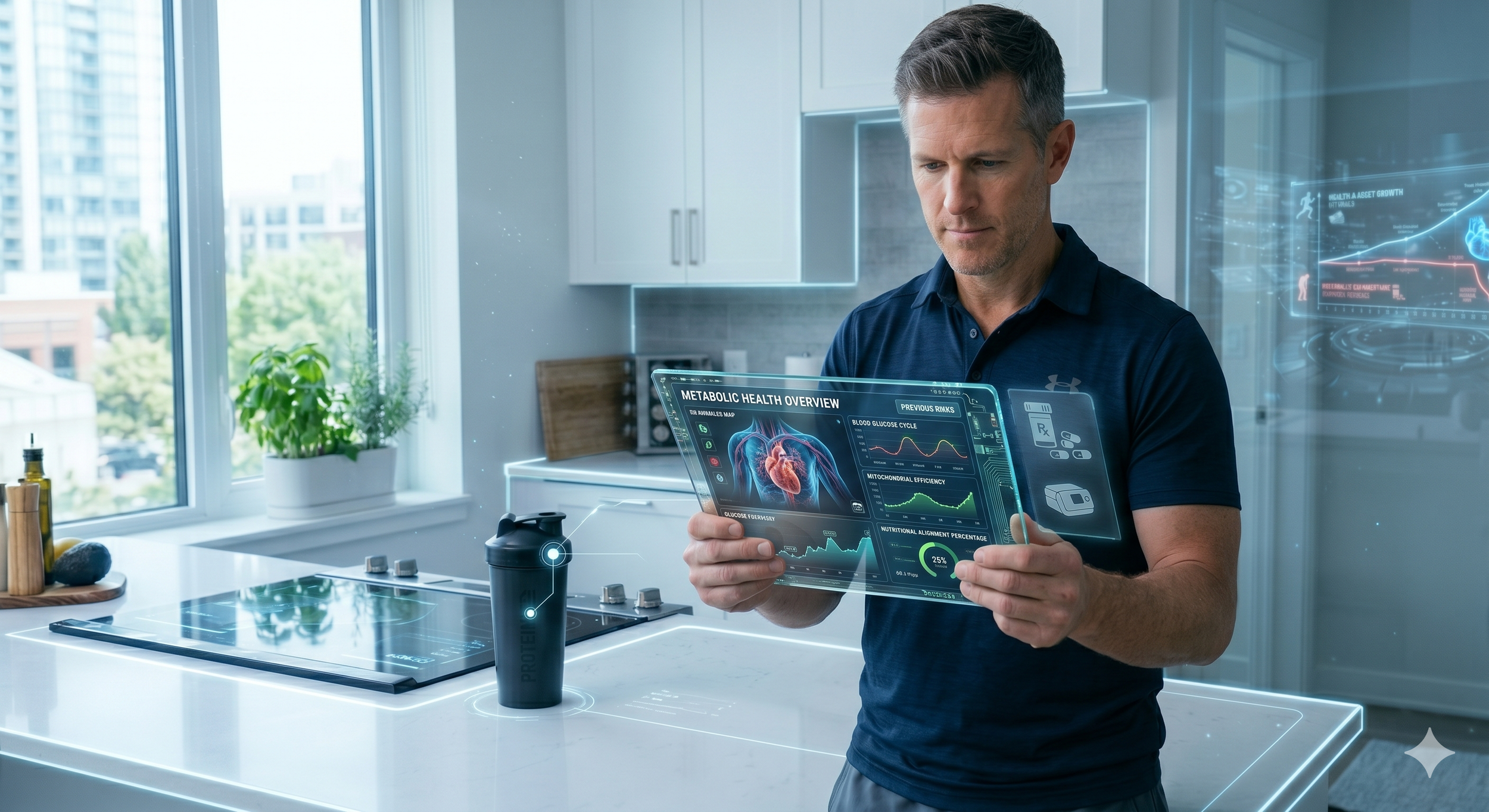
This image was created using AI to avoid copyright issues while conveying the context of this article.
For decades, the world of nutrition has been dominated by "generalizations." We were told to follow the food pyramid, to count basic calories, or to try whatever the latest celebrity diet happened to be. The problem with these methods is that they treat every human being like a standardized unit. They ignore the vast differences in our genetics, our gut microbiomes, and our daily activity levels.
As we move through 2026, we are witnessing a massive shift. We are entering the era of Personalized Nutrition. This isn’t just a buzzword; it is a technological revolution driven by Artificial Intelligence. For the busy executive or business owner, this is a game-changer. It means we are moving away from "trial and error" and toward a high-precision health management system.
The End of the "Average" Diet
The reason most diets fail is that they are designed for the "average" person. But in reality, nobody is average. One person might thrive on a higher-carbohydrate intake, while another might experience significant brain fog and energy crashes from the exact same meal.
AI is changing this by processing massive amounts of personal data in real-time. By integrating data from wearable devices, blood glucose monitors, and even DNA testing, AI can create a nutritional blueprint that is unique to your specific biology. We are no longer guessing what works; we are using data to prove it. This is the same level of precision we expect in our business analytics, and it is finally available for our bodies.
Real-Time Decision Support
One of the greatest challenges for high-performers is "decision fatigue." Throughout a typical workday, you make hundreds of critical choices. By the time dinner rolls around, your ability to make a disciplined nutritional choice is often depleted.
This is where the next generation of AI tools comes in. Instead of just "tracking" what you already ate, these systems act as a real-time "Health GPS." Imagine an AI assistant that looks at your schedule, sees that you have a high-stress meeting at 2:00 PM, and suggests a specific protein-to-carb ratio for lunch to ensure your cognitive focus stays sharp. It removes the friction of choice, allowing you to maintain your peak performance without using up your mental energy.
From Monitoring to Predicting
The true power of AI in nutrition isn't just looking at the past; it is predicting the future. We are reaching a point where your health system can predict how a specific food will affect your sleep quality or your recovery from a workout before you ever take a bite.
For example, if your wearable data shows that your "Readiness Score" is low due to poor sleep, an AI-driven system can adjust your nutritional targets for the day to prioritize anti-inflammatory foods and specific micronutrients. It turns your nutrition from a static "plan" into a dynamic, living system that adapts to the stresses of your life. At Legacy Fitness, we view this as "Dynamic Allocation," adjusting your fuel to match your output.
The Human Element in a Tech-Driven World
While AI provides the data and the precision, it does not replace the need for high-level strategy and accountability. Technology is a powerful tool, but it still requires a "CEO" to make the final decisions. This is where the partnership between advanced tech and professional coaching becomes essential.
Data without direction is just noise. A coach helps you interpret that AI-driven data and integrate it into a sustainable lifestyle. We use the technology to find the "blind spots" in your nutrition, but we use coaching to build the habits and the mindset that allow you to stay consistent for the long haul.
Investing in Precision
In business, we know that the companies with the best data and the most efficient systems are the ones that win. Your health is no different. Relying on outdated, generalized advice is a low-ROI strategy.
The future of nutrition is personal, it is data-driven, and it is highly efficient. By embracing these tools, you are not just "going on a diet"; you are upgrading your biological operating system. You are ensuring that you have the energy, the focus, and the longevity required to build your legacy.
Are You Ready to Upgrade Your Biological Operating System?
The era of guessing is over. At Legacy Fitness & Nutrition, we combine high-level coaching with data-driven strategy to help you perform at your peak.
For the Individual Leader: Ready to see what personalized nutrition looks like for your body? Book My Individual Discovery Call
For the Organization: Want to equip your team with the tools of high-performance health? Explore Corporate Wellness Packages

Honesty is the Best Policy: Why Your Coach Needs to See the "Bad" Days, Not Just the "Good" Ones
One of the biggest hurdles in fitness is the "drama" we attach to food.

This image was created using AI to avoid copyright issues while conveying the context of this article.
We have all been there. You had a stressful day at work, the kids were acting up, and by 7pm, you found yourself at the bottom of a bag of chips or ordering a large pizza. Your plan for the day was perfect, but the execution was not.
When the time comes to log that food or fill out your daily check-in, a common instinct kicks in: The Urge to Hide.
You might think, "I’ll just skip logging today and start fresh tomorrow," or "I don't want my coach to see how much I messed up." You want to present the "best version" of yourself to your coach. But here is the truth: If you only show me your highlights, I can only give you half the coaching you need.
The "Filter" Problem
When you only log the days you eat chicken and broccoli, you are essentially putting a social media filter on your life. It looks great, but it isn't real.
As your coach, my job is to help you navigate your real life; the one with birthday parties, late meetings, and high-stress cravings. If I only see your "perfect" days, I might assume the plan is easy for you. I might even make the plan harder because I think you have mastered the current level.
But if I see that you are struggling every Thursday night, we can look at why. Maybe Thursday is your longest day at work. Maybe you aren't eating enough lunch that day. If you are honest about the "bad" days, we can find a solution together. If you hide them, the problem stays a secret.
Data Over Drama
One of the biggest hurdles in fitness is the "drama" we attach to food. We label ourselves as "good" or "bad" based on what we ate.
I want to challenge you to look at your logs differently. A log is just data. A pizza is not a moral failure; it is a certain amount of carbohydrates, fats, and calories. When you log a "bad" day, you take the emotional power away from the food. You move from saying, "I am a failure," to saying, "I ate 3,000 calories yesterday, and here is how I felt afterward."
When we have the data, we can make an adjustment. We can see if that extra food caused a spike in your weight (water retention) or if it actually helped you hit a personal record in the gym the next day.
The "Safe Space" of Coaching
At Legacy Fitness, there is no judgment. I have seen it all, and I have had "bad" days myself. My only goal is to help you get from Point A to Point B.
Think of me like a doctor. If you go to the doctor with a broken arm, you don't try to hide the x-ray because you are embarrassed about how you fell. You show them exactly where it hurts so they can set the bone and help you heal.
Your fitness journey is the same. The "bad" days are the "broken" parts of your routine where the most growth can happen.
March Challenge: Total Transparency
This week, I want you to make a pact with yourself. Log everything. The "clean" meals, the office donuts, and the late-night snacks.
When you are 100% honest in your logs, you are giving me the keys to your success. You are saying, "Here is my reality, now help me change it." That is where the real transformation begins.
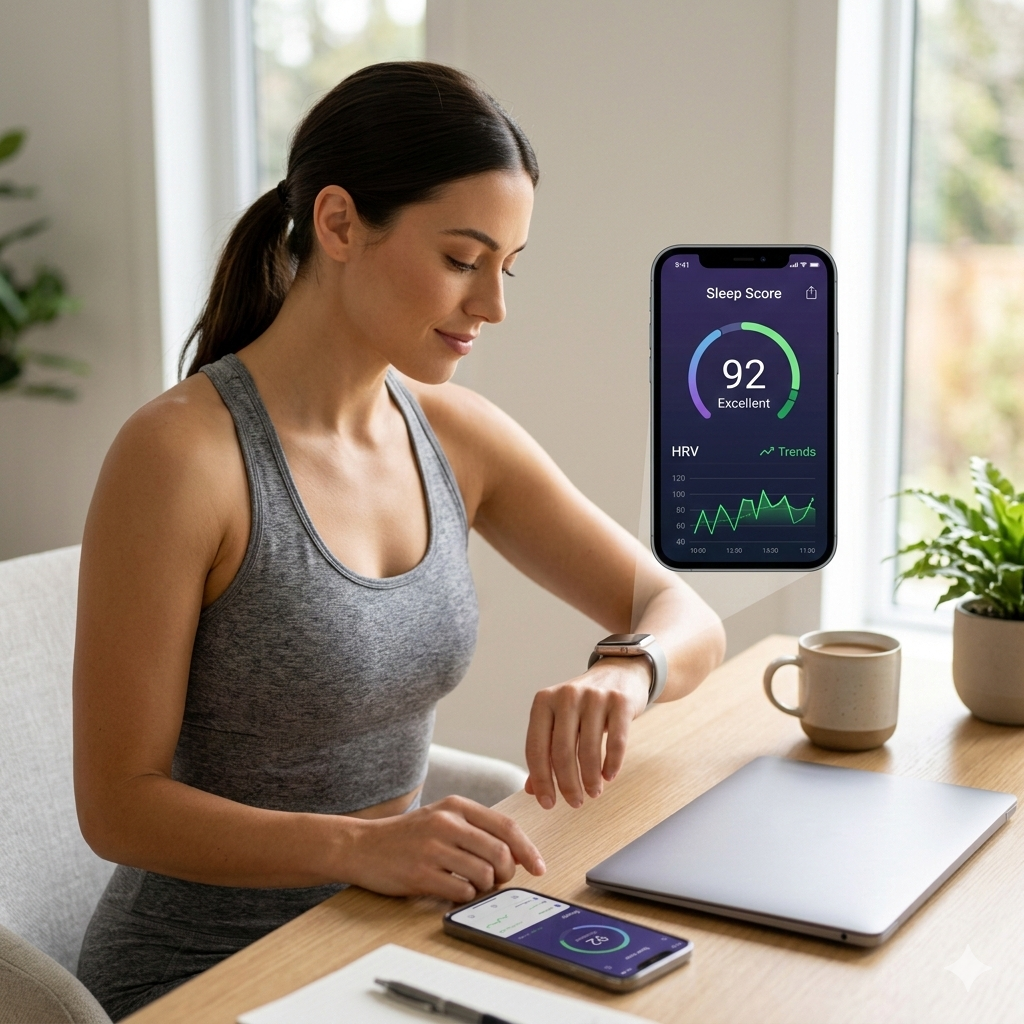
Beyond the Scale: What We Learn from Tracking Your Sleep, Energy and Stress
The scale is a single data point. Your biofeedback is the whole story.
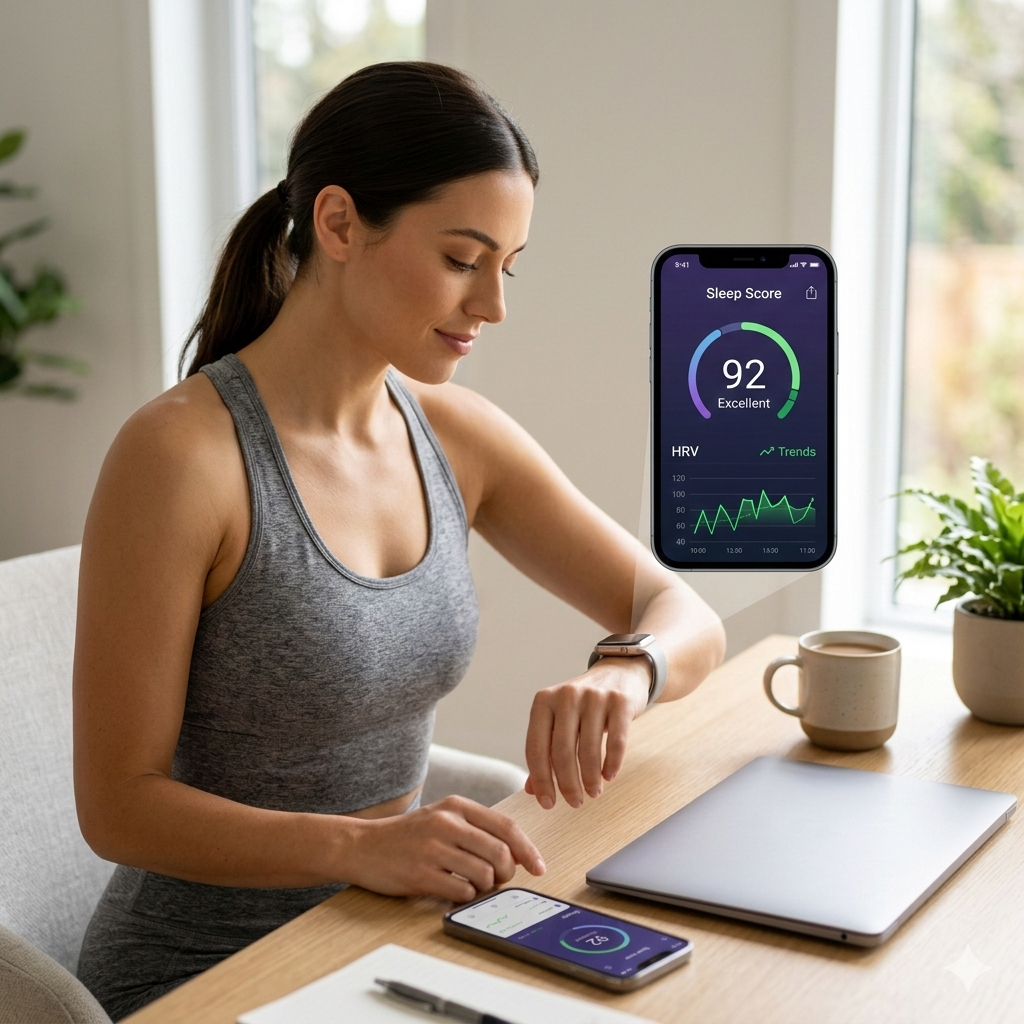
This image was created using AI to avoid copyright issues while conveying the context of this article.
If you have ever had a week where you followed your meal plan perfectly and hit every workout, only to see the scale go up by a pound, you know how frustrating fitness can be. Your first instinct is usually to eat less or run more. But often, the problem isn't your food or your exercise. The problem is everything else.
In the Legacy Fitness coaching model, we look at more than just calories and deadlifts. We track your "Biofeedback." These are the internal signals your body sends you every day, specifically your sleep, your energy levels, and your stress.
When you track these three things, you give us a "weather report" for your metabolism. It allows us to see why the scale might be stuck and, more importantly, how to fix it without burning you out.
Sleep: The Fat-Burning Foundation
Think of sleep as the "cleanup crew" for your body. While you sleep, your body repairs muscle tissue and regulates the hormones that control hunger.
If you consistently get less than seven hours of sleep, two things happen:
►Hunger Spikes: Your level of ghrelin (the hunger hormone) goes up, and leptin (the fullness hormone) goes down. You will feel hungrier all day, especially for sugar.
►Cortisol Rises: Lack of sleep is a physical stressor. High cortisol tells your body to hold onto water and protect its energy stores (fat).
If I see your sleep dropping in your logs, I know exactly why your weight isn't moving. We don't need a harder diet; we need a better bedtime.
Energy: The "Fuel Gauge" of Your Metabolism
Do you have a "3pm crash" every day? Or do you wake up feeling like you were hit by a truck even after eight hours of sleep?
Your energy levels tell me how well you are recovering and how your body is handling its fuel. If your energy is consistently low, it’s a sign that:
►You might be in too large of a calorie deficit.
►You might not be eating enough carbohydrates to fuel your brain and muscles.
►You might be overtraining.By tracking your energy on a scale of 1 to 10, we can find your "sweet spot." We want you to feel focused at work and powerful in the gym. If the data shows your energy is tanking, we make an adjustment before you hit a wall.
Stress: The Silent Progress Killer
Stress isn't just "in your head." It is a physical event in your body. Whether the stress comes from a deadline at work, an argument with a spouse, or a heavy set of squats, your body reacts the same way by releasing hormones.
If your stress levels are at a 9/10 all week, your body is in "survival mode." In survival mode, fat loss is not a priority for your biology; staying alive is.
By tracking your stress, we can decide when to "push" and when to "pivot." On a high-stress week, the best thing for your fat loss might actually be a lighter "deload" week in the gym or a few extra calories to help your body feel safe again.
The Big Picture
The scale is a single data point. Your biofeedback is the whole story. When you log your sleep, energy, and stress, you are helping me build a plan that works with your life, not against it.
In March, pay attention to these signals. They are the keys to a body that doesn't just look good, but feels incredible. When we master the "hidden" metrics, the visible ones, like your reflection in the mirror, take care of themselves.
The Feedback Loop: How Your Coach Uses Your Data to Find Your "Superpowers"
In the world of fitness, data is the difference between a "guess" and a "guarantee."
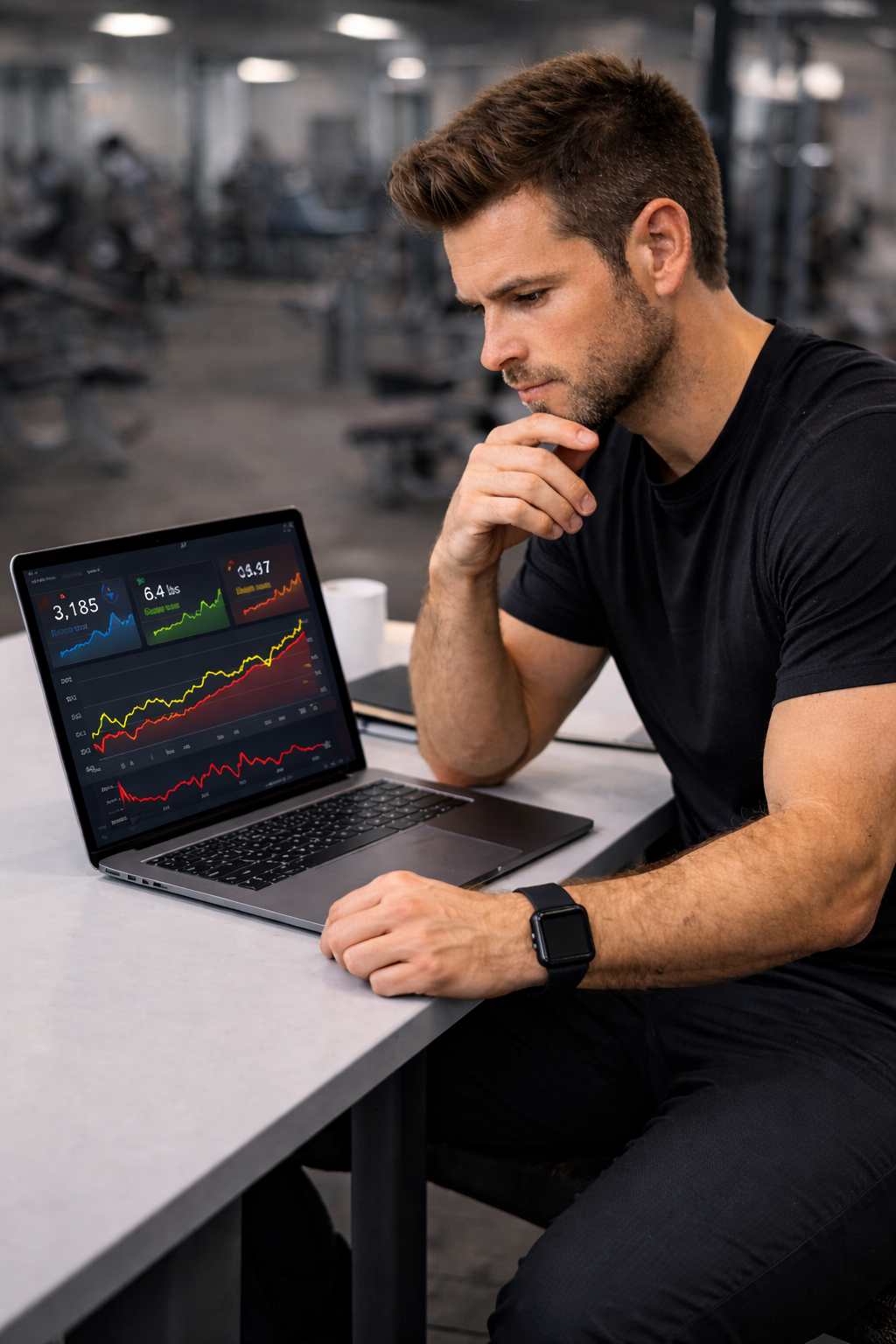
This image was created using AI to avoid copyright issues while conveying the context of this article.
By now, you have been logging your food and your workouts for a few days. You might feel like you are just sending numbers into a void. You might even wonder, "Does my coach actually look at all this?"
The answer is a resounding yes.
In the world of fitness, data is the difference between a "guess" and a "guarantee." When you log your metrics, your protein, your weights, your sleep, and even your mood, you aren't just doing homework. You are participating in a Feedback Loop. This loop is the most powerful tool we have to unlock your "superpowers," those specific dietary and training styles that make you feel unstoppable.
What is a Feedback Loop?
A feedback loop is a cycle where we take an action, measure the result, and then adjust the next action based on what we learned.
Imagine you are trying to find the perfect temperature for a shower. You turn the handle (Action), feel the water (Result), and then move the handle slightly (Adjustment). You keep doing this until the water is perfect.
Fitness coaching works the exact same way. Without your data, I am just standing outside the shower, guessing which way to turn the handle. With your data, we can find your "sweet spot" for fat loss and muscle gain much faster.
Hunting for Your "Superpowers"
Everyone’s body reacts differently to various inputs. Some people feel like superheroes when they eat a high-carb breakfast. Others feel sluggish and find they perform better on higher fats. Some people recover best with three heavy lifting days, while others thrive on five moderate days.
By looking at your logs over time, I can identify patterns that even you might not notice. I am looking for your "superpowers":
The Energy Sweet Spot: I look at the meals you logged before your best workouts. Did you have a specific amount of carbs? Did you eat two hours prior? Once we find what fuels your best performance, we can replicate it.
The Recovery Threshold: I look at your sleep data alongside your lifting volume. If your strength starts to drop after four days of training, we’ve found your limit. We can then adjust your schedule so you are always training at 100% capacity.
The Hunger Fix: If I see that you consistently "fall off the wagon" on Wednesday nights, I look at your protein intake on Tuesday and Wednesday mornings. Often, we find that increasing protein earlier in the week completely kills those late-night cravings.
The Danger of the "Silent" Week
The feedback loop only works if the loop stays closed. When a client stops logging or skips a weekly check-in, the loop breaks.
If I don't see your data, I can't see the "red flags" before they become problems. I can't tell if you are plateauing because of your metabolism or because of a lack of sleep. A "silent" week is a week where we lose the ability to move forward. We end up just treading water.
Your Data is a Conversation
Think of your logs as a conversation between us that happens even when we aren't talking. Every time you input a weight or a meal, you are telling me: "This is working," or "This is a struggle."
In March, I want you to view your data as a tool for empowerment. You aren't being monitored; you are being studied. We are scientists, and your body is the lab. The more information you give me, the more I can help you find the version of yourself that is the strongest, leanest, and most energized.
Let’s keep the loop closed and find out what you are truly capable of.

The "I’m Too Busy to Log" Myth: Time-Saving Hacks for Tracking Your Progress
We lead busy lives. Between demanding careers, family commitments, and trying to squeeze in a workout, adding "data entry" to the list can feel like the straw that breaks the camel's back.

This image was created using AI to avoid copyright issues while conveying the context of this article.
"I just don't have the time."
In the world of fitness coaching, this is the most common reason given for skipping nutrition and workout logs. We lead busy lives. Between demanding careers, family commitments, and trying to squeeze in a workout, adding "data entry" to the list can feel like the straw that breaks the camel's back.
But here is the reality: logging doesn't take as much time as you think it does. In fact, most people spend more time scrolling through social media in a single morning than they would need to log an entire day of food and training. The "busy" excuse is usually less about time and more about a lack of a system.
If we want to reach your goals in March, we have to stop viewing logging as a chore and start seeing it as a high-speed tool. Here are five time-saving hacks to help you log your data in less than five minutes a day.
1. Use the "Recent" and "Copy" Functions
Most people are "creatures of habit." You likely eat the same four or five breakfasts and lunches on a rotating basis. You don't need to search for "eggs" and "spinach" every single morning.
In almost every tracking app, there is a "Recent" or "Frequent" list. Better yet, use the "Copy from Yesterday" function. If you ate the same chicken salad today that you had yesterday, logging it should take exactly two taps of your thumb. Total time: 5 seconds.
2. The "Barcode Scanner" is Your Best Friend
Stop typing. If your food comes in a package, even a healthy one like a bag of frozen vegetables or a container of Greek yogurt, use the barcode scanner on your phone. It automatically pulls in the calories and macronutrients without you having to search through a database of ten thousand different brands. Total time: 10 seconds.
3. Log Your Workout During Your Rest Periods
Some people try to remember their whole workout and log it when they get home. By then, they’ve forgotten the weight they used on the third set or how many reps they actually finished.
Instead, log your set immediately after you finish it while you are resting. You have 60 to 90 seconds of downtime anyway. Use 15 of those seconds to input your numbers. This ensures 100% accuracy and means that when you walk out of the gym, your "work" is already done. Total time: 0 extra minutes.
4. Pre-Log Your Day
If you know what you are going to eat for lunch and dinner, log it in the morning (or even the night before). This does two things:
It saves you from having to think about it later when you are tired.
It acts as a "budget." If you see that your planned dinner leaves you with 30 grams of protein to fill, you’ll know exactly what to grab for a snack in the afternoon.
5. Don’t Let "Perfect" Be the Enemy of "Done"
If you are at a restaurant and can't find the exact dish in your app, don't give up and skip the day. Find something close, or just log the main components (e.g., "6oz Grilled Chicken" and "Side Salad").
As your coach, I would much rather see a "close guess" than a blank page. A blank page tells me nothing. A "close guess" keeps your habit alive and gives us a ballpark figure to work with.
The ROI on Five Minutes
Think about the "Return on Investment" (ROI) here. If spending five minutes a day logging ensures that the 60 minutes you spend in the gym actually produces results, isn't that a smart use of time?
Logging isn't about adding a new job to your day. It’s about making sure your hard work actually pays off. In March, let's stop saying we are "too busy" and start being too smart to guess.

Why Data is Your Friend: The Hidden Psychology of Logging Your Food and Workouts
If you want to change your body, you have to change your relationship with the truth.

This image was created using AI to avoid copyright issues while conveying the context of this article.
If you want to change your body, you have to change your relationship with the truth. Most people think they know how much they eat and how hard they train. But research shows that, on average, people underestimate their calorie intake by about 30% and overestimate their physical activity by nearly the same amount.
This isn't because people are lying. It’s because our brains are designed to be efficient, not accurate. We remember the salad we had for lunch, but we forget the three handfuls of almonds we grabbed while making dinner. We remember the heavy set of squats, but we forget the extra-long rest periods spent scrolling on our phones.
This is where logging comes in. Logging your nutrition and workouts isn't just about "counting numbers." It is about creating a clear, honest picture of your reality so that we can actually make progress.
The Psychology of the Log
When you write something down, it changes how you think about it. This is a psychological concept called "self-monitoring." By tracking your food and gym sessions, you move your actions from your subconscious mind to your conscious mind.
Awareness precedes change: You cannot fix a problem you haven’t identified. When you log your food, you start to see patterns. You might notice that every Tuesday you are starving by 4:00 PM, or that you always skip your last exercise on leg day.
The "Pause" Button: The act of opening an app or a notebook to log a snack creates a "micro-pause." In that moment, you move from impulsive eating to intentional eating. It gives you a second to ask: "Does this actually help me reach my goal?"
The "Why" for the Coach
As your coach, I am essentially a pilot trying to fly a plane. Your workout and nutrition logs are my instrument panel. If the dials are blank, I am flying blind.
If you tell me, "I’m eating healthy but not losing weight," I don't have enough information to help you. Are you eating too much "healthy" fat? Are you missing your protein targets? Is your "healthy" lunch secretly packed with hidden calories?
When you log, I can see the whole story. I can see if your energy is dipping because you aren't eating enough carbs before your workout. I can see if your strength is stalling because you haven't increased your weights in three weeks. Data allows us to make small, surgical adjustments instead of wild guesses.
Getting Over the "I Don't Want to See It" Phase
Many clients stop logging when they have a "bad" day. They feel guilty, so they hide the evidence. But that is exactly when you should log.
A log is not a judge; it is a map. If you get lost on a road trip, you don't throw away the GPS. You use it to find your way back to the main road. If you eat a meal that wasn't on the plan, log it anyway. It takes the power away from the "slip-up" and turns it into a simple data point.
Start Small
If logging feels overwhelming, remember that it doesn't have to be perfect to be effective. Start by logging just your protein and your main lifts. As you get faster at it, add the rest.
In March, let's commit to the data. Let’s stop guessing and start knowing. When we have the facts, we have the power to change the outcome.