
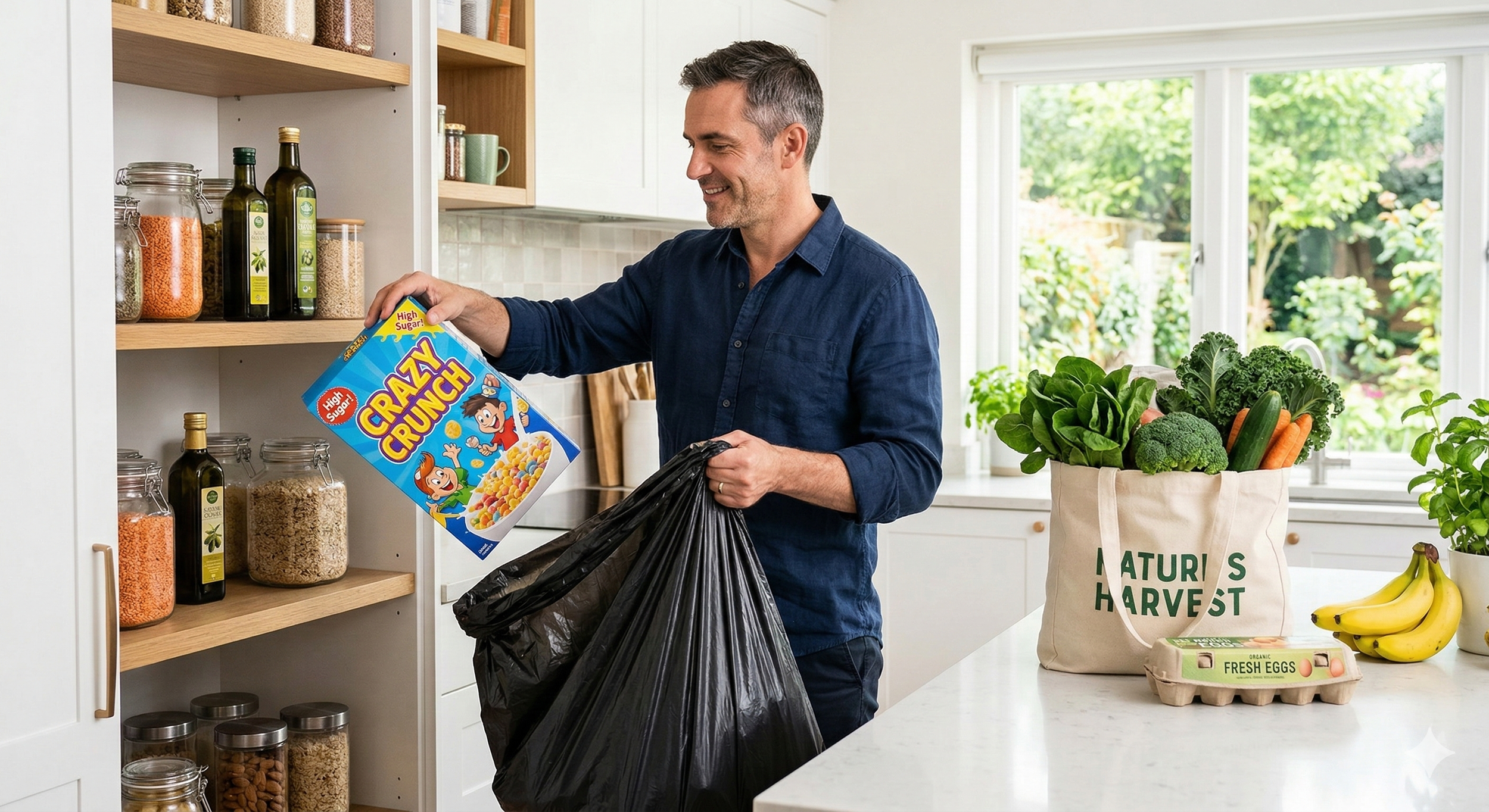
Spring Cleaning Your Pantry: Out with the Processed, in with the Fuel
You don't win your fitness journey in the gym; you win it in the kitchen.
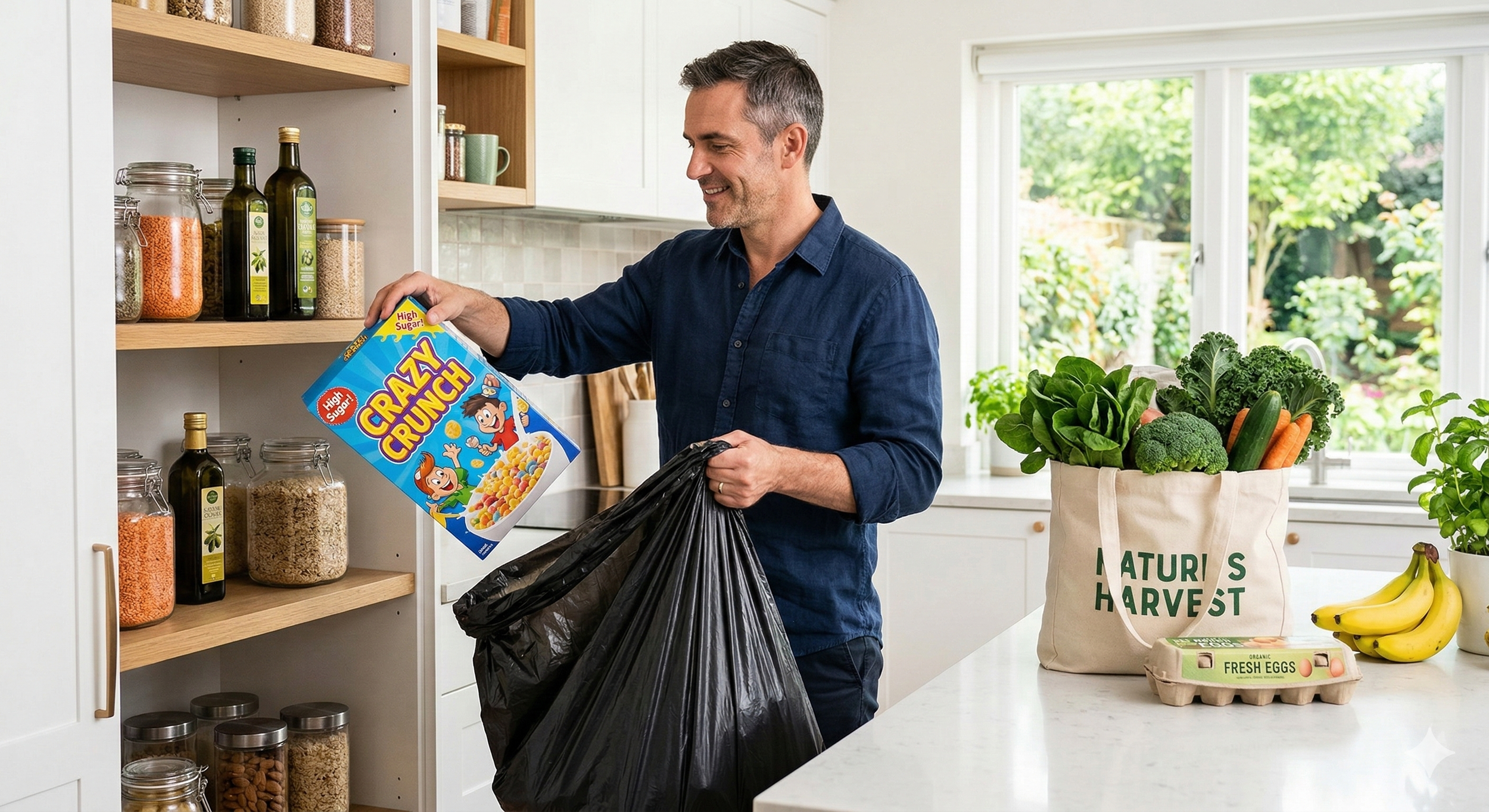
This image was created using AI to avoid copyright issues while conveying the context of this article.
As the flowers begin to bloom and the days get longer, "Spring Cleaning" is likely on your mind. You might be scrubbing the baseboards or organizing the garage, but there is one area of your house that has a much bigger impact on your legacy than a dusty shelf: your pantry.
Your environment dictates your behavior. If your pantry is filled with "highly palatable" processed snacks that are easy to grab when you’re stressed, you are forcing yourself to rely on willpower every single evening. And as we know, willpower is a finite resource.
In the final week of March, it’s time to audit your kitchen. Here is how to spring clean your pantry to ensure your home environment supports the version of you that we are building.
1. The "Logic vs. Impulse" Audit
Go through your pantry and look at every item. Ask yourself: "Does this food help me reach my goal, or is it a trap for my future self?"
If it’s a food that you consistently "lose control" with, like a specific type of chip or sugary cereal, it doesn't belong in the house. You aren't "wasting money" by throwing it away; you are protecting your health. If you don't want to toss it, donate unopened items to a local food bank.
2. Check the "Hidden" Ingredients
Processed foods are masters of disguise. Take a moment to read the labels of your condiments, dressings, and "healthy" bars. Look specifically for:
Added Sugars: Often hidden as high fructose corn syrup, maltodextrin, or dextrose.
Seed Oils: Highly processed oils that can contribute to systemic inflammation.
Artificial Fillers: If the ingredient list looks like a chemistry textbook, your body probably doesn't know how to use it as fuel.
3. Restock with "First-Line" Fuel
Once you’ve cleared the clutter, restock your shelves with items that make hitting your goals easy. Your "new" pantry should include:
High-Quality Proteins: Canned tuna, wild-caught sardines, or high-quality jerky for quick snacks.
Complex Carbs: Quinoa, oats, and legumes.
Healthy Fats: Raw nuts, seeds, and high-quality olive oil.
4. The "Eye-Level" Strategy
The "out of sight, out of mind" rule is real. Put your most supportive foods, like your protein powder and healthy staples, at eye level. Hide the "treats" (the ones you decided to keep for the kids or spouse) in an opaque bin on the highest shelf. If you have to work to find it, you’re much less likely to eat it mindlessly.
The Kitchen is Your Training Ground
You don't win your fitness journey in the gym; you win it in the kitchen. By cleaning out the "junk" and restocking with fuel, you are making the right choice the easy choice.
This week, take 30 minutes to open your cabinets and be honest about what’s inside. Let’s finish March with an environment that reflects your commitment to your legacy.
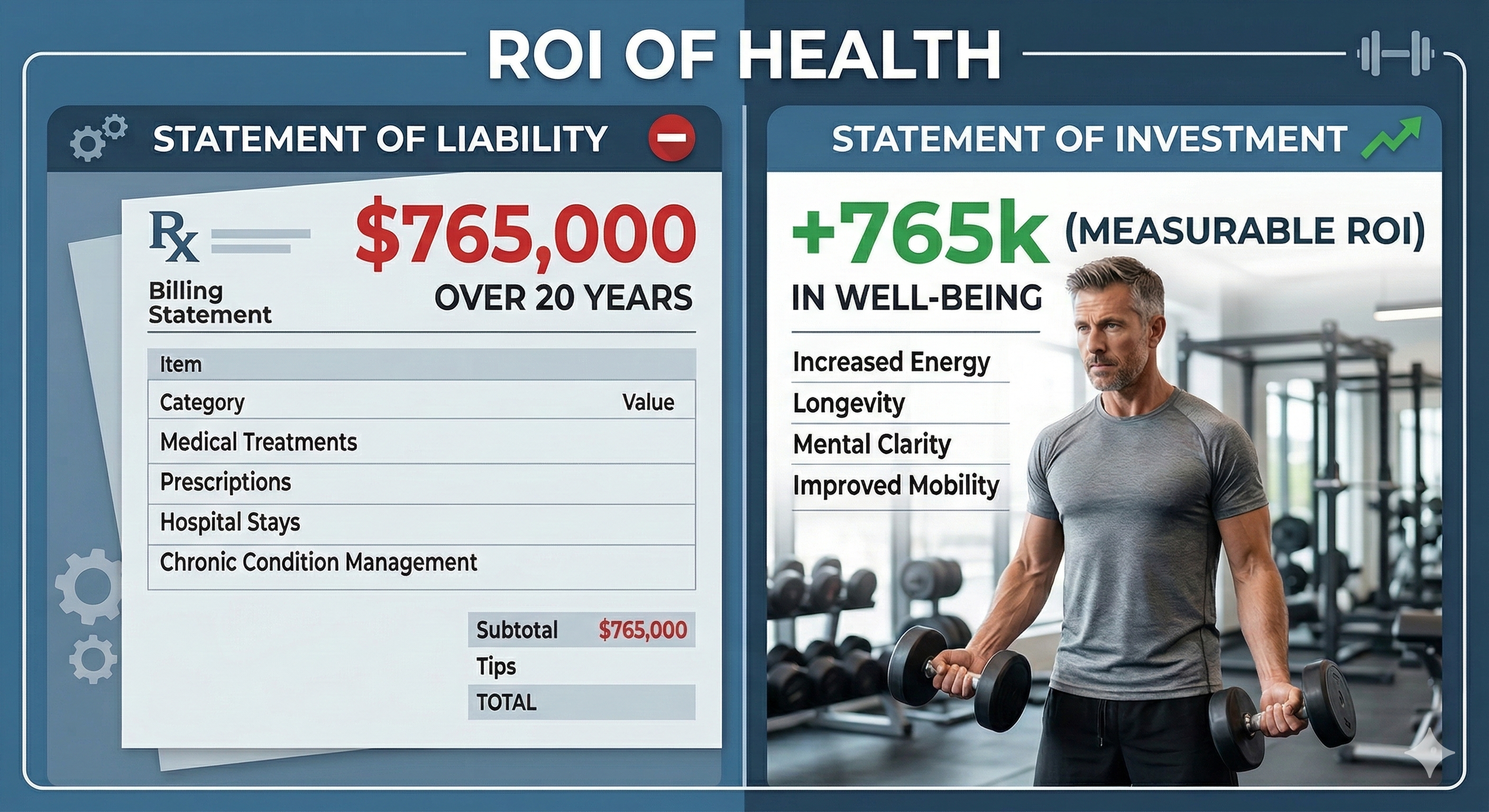
The ROI of Health: Why Fitness is the Best Investment a Leader Can Make
Many "spend" their health to gain wealth, only to spend their wealth later trying to buy back their health.
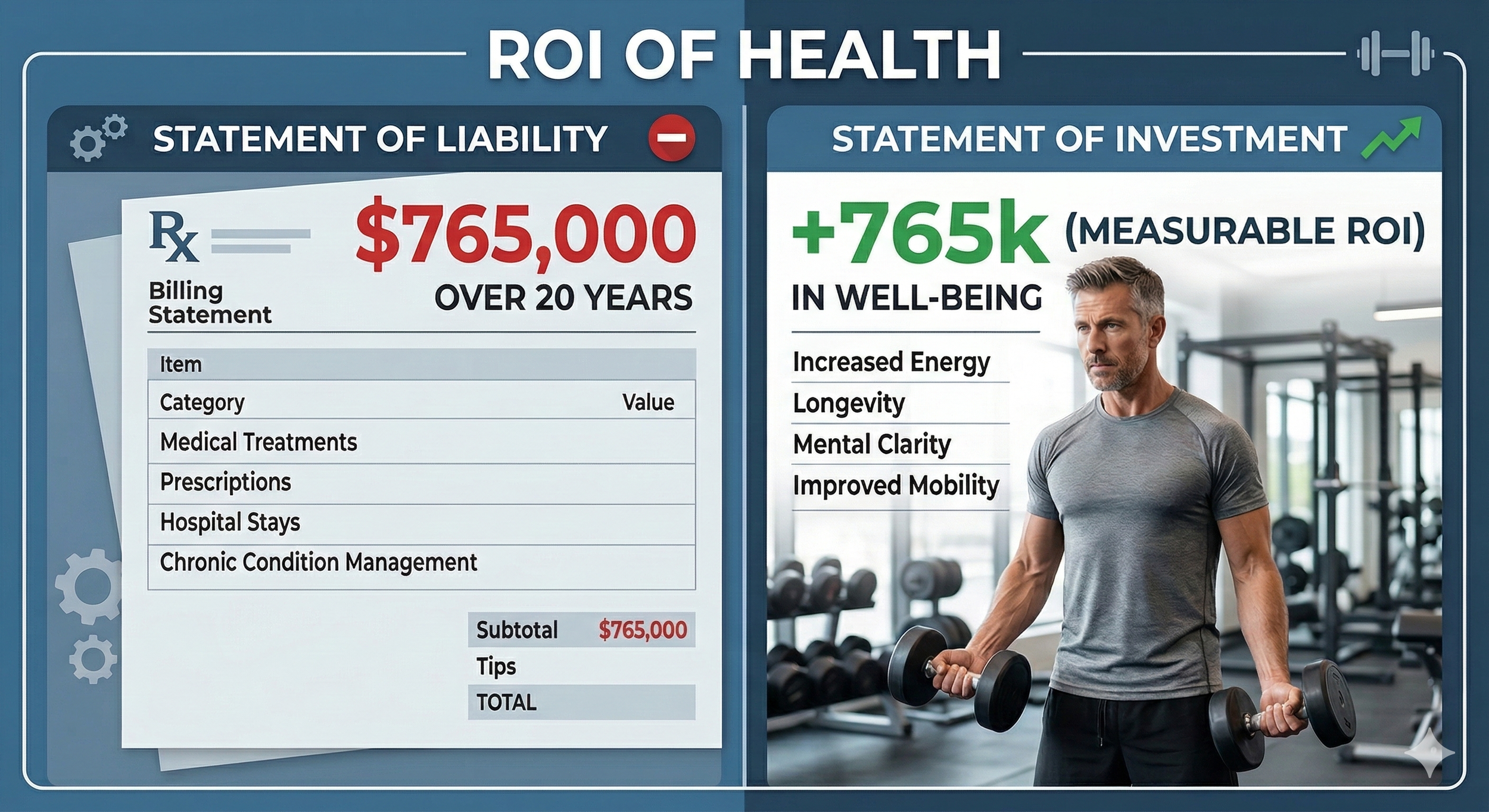
This image was created using AI to avoid copyright issues while conveying the context of this article.
In the corporate world, we are obsessed with Return on Investment (ROI). We scrutinize every software subscription, every new hire, and every marketing campaign to ensure it yields a positive result. We look for assets that appreciate and minimize liabilities that drain our resources.
Yet, many leaders overlook the most critical asset in their entire portfolio: their physical body.
At Legacy Fitness, we recently performed a 20-year cost-benefit analysis comparing a proactive healthy lifestyle against the reality of living with metabolic syndrome. The results were staggering. To be a truly effective leader, you must stop viewing fitness as a "time-cost" and start viewing it as a high-yield investment.
1. The Financial Data: Investing vs. Reacting
Most people hesitate at the cost of quality whole foods, gym memberships, and coaching. However, our "Health is Wealth" report shows that these are actually cost-saving measures.
The Liability: A male living with metabolic syndrome (high blood pressure, cholesterol, and diabetes) faces an estimated annual cost of $38,262 in healthcare, insurance surcharges, and medications. Over 20 years, that is a $765,000 liability.
The Asset: A male investing in a proactive healthy lifestyle, including a personal trainer and high-quality food, saves hundreds of thousands of dollars over that same period by avoiding escalating medical expenses.
In business terms: Would you rather spend $15,000 a year on "maintenance" (fitness and food) or $40,000 a year on "repairs" (healthcare)?
2. Increased Cognitive Performance
Your brain is a biological organ. Regular resistance training increases blood flow to the prefrontal cortex, the area responsible for executive function, decision-making, and emotional regulation.
A fit leader doesn't just have more energy; they have more clarity. When you are physically healthy, you can navigate a high-pressure boardroom with a level head, while your less-healthy competitors are struggling with "brain fog" and mid-afternoon fatigue.
3. Stress Resilience and Emotional Intelligence
Leadership is essentially the management of stress. Exercise is "controlled stress." When you push through a difficult set of squats, you are training your nervous system to stay calm under pressure.
This translates directly to your professional life. A leader who has mastered their physical discipline is far less likely to make an impulsive, stress-based decision. You are building a "buffer" of resilience that allows you to lead with a steady hand when the stakes are high.
4. Protecting Your Life Expectancy
Data shows that metabolic syndrome and obesity-related conditions can reduce life expectancy by 3 to 10 years. What is the value of your career if you are forced to retire early due to a preventable health crisis? We spend decades building a professional "legacy," yet many "spend" their health to gain wealth, only to spend their wealth later trying to buy back their health. Investing in your strength now is like contributing to a biological 401(k).
The Executive Summary
Stop waiting for a "fitness spark." You don't need a spark; you need a strategy.
Treat your coach like a consultant. Treat your nutrition like a high-budget project that requires precision. As the "Health is Wealth" report concludes, individual health status is a critical component of economic stability. When you bring the same level of professionalism to the gym that you bring to the office, the ROI isn't just better, it’s life-changing.
Training Through Travel: Stay on Track During Spring Break
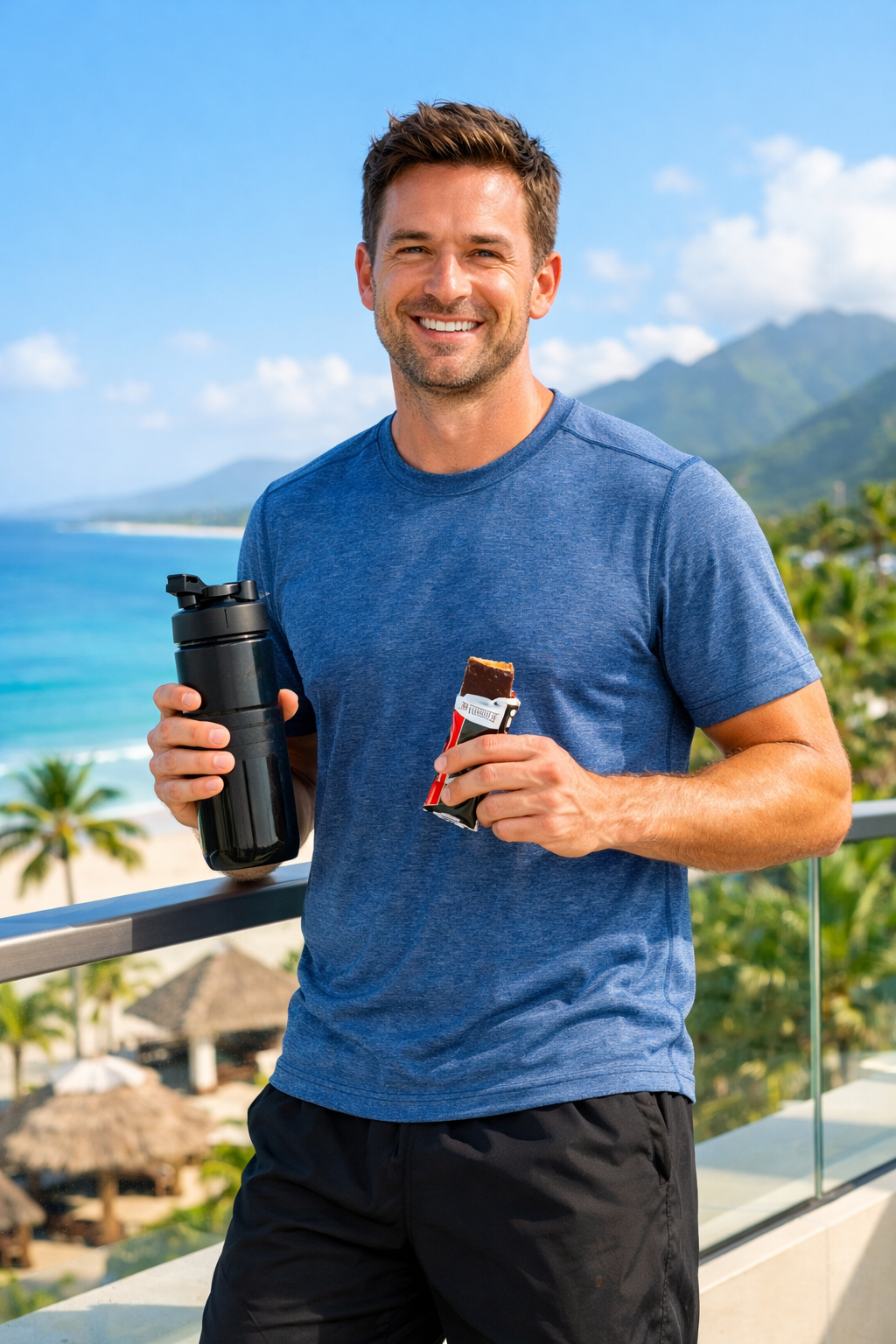
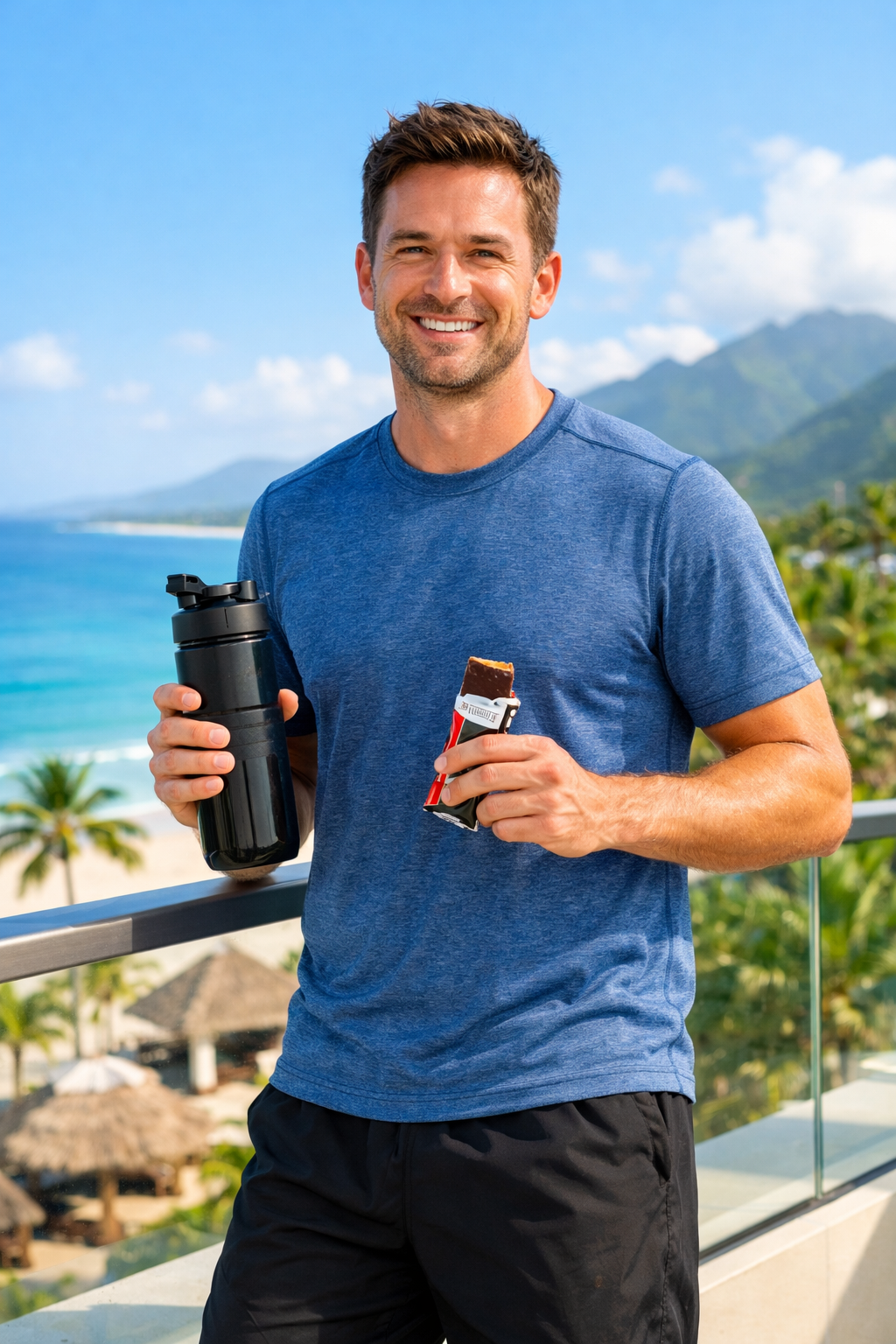
Your body doesn't have a "Vacation Mode." Here is your tactical guide to staying on track while enjoying your Spring Break.
This image was created using AI to avoid copyright issues while conveying the context of this article.
It is that time of year. The suitcases are coming out, the flights are booked, and Spring Break is finally here. For many, travel feels like a mandatory "pause" button on fitness goals. You might think, "I’m on vacation, so the diet and the workouts don't count." But here is the reality: your body doesn't have a "Vacation Mode." The calories you eat in a different zip code still impact your energy, and the muscles you don't use will still begin to lose their edge.
Traveling doesn't have to mean starting over on April 1st. In March, we’ve built a "Bridge of Consistency," and that bridge can travel with you. Here is your tactical guide to staying on track while enjoying your Spring Break.
1. The "Hotel Room" Minimum
Don't wait to see if the hotel gym is nice (or if it even exists). Assume it won't be. Instead, commit to a "15-Minute Minimum" every morning before the family activities start.
The Routine: 3 rounds of 20 body squats, 15 push-ups, and a 60-second plank.
The Goal: It’s not about hitting a personal record; it’s about maintaining the "habit of movement." When you start your vacation day with a win, you are much more likely to make better food choices at lunch.
2. The "One-Meal" Rule
Vacation food is one of the best parts of travel. You should absolutely enjoy the local cuisine. To do this without the "weight-gain hangover," follow the One-Meal Rule:
Eat a high-protein, low-calorie breakfast (think eggs or Greek yogurt).
Have a high-protein, veggie-heavy lunch (like a grilled chicken salad).
Then, enjoy your dinner. By staying disciplined for two meals, you create a "calorie buffer" that allows you to enjoy a nice dinner and a drink without going over your daily limit.
3. Become a "Walking Tourist"
The easiest way to burn extra calories without "working out" is to walk everywhere. Skip the Uber when the destination is less than a mile away. Explore the city, the beach, or the trails on foot. Aim for 12,000 steps a day. You’ll see more of your destination, and you’ll keep your metabolism humming along while you do it.
4. Pack Your "Emergency" Protein
The hardest part of traveling is finding protein on the go. Airport snacks and gas station stops are usually 100% carbohydrates and fats.
The Fix: Pack a few protein bars, some beef jerky, or individual protein powder servings in your carry-on. Having a high-protein snack available means you won't be forced to eat a processed muffin just because you’re hungry at the gate.
5. Hydration is Non-Negotiable
Travel, especially flying, is incredibly dehydrating. And as we learned earlier this month, dehydration often feels like hunger. Carry a reusable water bottle and finish it before every meal. This will keep your energy high, your digestion moving, and your "false hunger" at bay.
Enjoy the Trip, Keep the Legacy
Spring Break is about making memories, not about being perfect. If you have a day where you eat too much or skip the movement, don't sweat it. Just get back to the "One-Meal Rule" the next morning.
You aren't a "gym person" only when you are at home. You are a fit person everywhere you go. Pack your discipline along with your sunscreen, and you’ll return from vacation feeling refreshed instead of defeated.

Professionalism in Fitness: Treating Your Health Like Your Career
Treat your coach like a consultant. Treat your workouts like a standing meeting with a VIP client. Treat your nutrition like a high-budget project that requires precision.

This image was created with AI to avoid copyright issues while conveying the context of this article.
If you missed a high-stakes board meeting because you "didn't feel motivated," your career would suffer. If you consistently failed to track your department's budget because it was "too much work," you would be replaced. In the professional world, we understand that results are driven by systems, standards, and a commitment to showing up—regardless of how we feel.
Yet, many of the same high-performers who are elite in the office treat their health like an optional hobby. They rely on "inspiration" to get to the gym. They "wing it" with their nutrition. They treat their physical body, the very vehicle that allows them to lead, as a secondary priority.
To reach the next level of your transformation, you have to bridge the gap. It is time to apply the same level of professionalism to your fitness that you apply to your career.
The Standard of "Non-Negotiables"
In your professional life, you have a set of standards. You answer certain emails within 24 hours. You show up for meetings five minutes early. You hit your deadlines. These are your non-negotiables.
In fitness, most people have "negotiable" goals. They hope to work out. They try to eat protein. The moment a work project gets difficult, these goals are the first thing to be sacrificed.
A professional approach means setting a floor, not just a ceiling. Your "floor" is the minimum amount of work you do even on your busiest day. Whether it’s a 15-minute mobility session or hitting a specific protein target, these are the appointments with yourself that you simply do not cancel.
Data and Reporting: Your Personal KPI
Imagine trying to run a company without looking at a profit and loss statement. You would be flying blind.
Your workout and nutrition logs are the "Key Performance Indicators" (KPIs) of your health. When you skip logging, you are failing to report on the most important asset you own. Professionalism in fitness means:
Accurate Tracking: Not "guessing" your intake, but measuring it.
Regular Audits: Using your weekly check-in to review what worked and what didn't.
Objective Analysis: Looking at a "bad" day as a data point to be corrected, not a moral failure.
Managing the "Physical Business"
Every CEO knows that you have to invest in your infrastructure to prevent a collapse. Your heart, your lungs, your muscles, and your brain are your infrastructure.
When you prioritize sleep, hydration, and resistance training, you aren't "taking time away" from work. You are performing essential maintenance. A leader who is well-rested and physically strong makes better decisions, has higher emotional intelligence, and possesses the stamina to outlast the competition.
The Executive Summary
Stop waiting for a "fitness spark." You don't need a spark; you need a schedule.
Treat your coach like a consultant. Treat your workouts like a standing meeting with a VIP client. Treat your nutrition like a high-budget project that requires precision. When you bring the same level of professionalism to the gym that you bring to the office, the results aren't just better, they are inevitable.

The 10-Minute Rule: What to Do When You Have Zero Motivation
When motivation fails, most people simply stay on the couch. If you want to build a legacy of health, you need a strategy that works even when your mood doesn't.

This image was created using AI to avoid copyright issues while conveying the context of this article.
We have all had those days. The alarm goes off, but your body feels like lead. Or you finish a long day at the office, and the very thought of driving to the gym feels like a physical burden. You search for that spark of motivation you had on March 1st, but it is nowhere to be found.
When motivation fails, most people simply stay on the couch. They tell themselves they will "wait until they feel like it" to train. But as we’ve discussed this month, feelings are unreliable. If you want to build a legacy of health, you need a strategy that works even when your mood doesn't.
This is where the 10-Minute Rule comes in. It is the ultimate "emergency brake" for your fitness goals.
The Psychology of the Starting Line
The hardest part of any workout isn't the heavy lifting or the final mile of a run. The hardest part is the first ten minutes.
Our brains are wired for comfort. When you think about a 60-minute workout, your brain sees a huge, painful task. It tries to protect you by making you feel tired or distracted. But your brain has a weakness: it is much easier to negotiate with a small task than a large one.
How the 10-Minute Rule Works
The rule is simple: Tell yourself you only have to do ten minutes.
Put on your gym clothes, drive to the gym, and start your warm-up. Tell yourself that if, after ten minutes of movement, you still feel exhausted and want to quit, you have 100% permission to stop and go home. No guilt. No shame. You showed up and did ten minutes.
Here is what almost always happens:
The Blood Flow Effect: Once you start moving, your heart rate increases and oxygen begins to reach your brain and muscles. This naturally wakes you up.
The Momentum Shift: By the time the ten minutes are up, the "mountain" of the workout feels like a "hill." You’ve already done the hardest part (starting), so you might as well finish.
The Identity Win: Even if you do decide to go home after ten minutes, you still win. You proved to yourself that you are the kind of person who honors their commitments, even when it’s hard.
A Strategy for "Low-Power" Days
Some days, you really are physically drained. Maybe you didn't sleep well or your stress is at a 10/10. On those days, the 10-Minute Rule allows you to "check the box" without burning out.
Instead of a heavy lifting session, use your ten minutes for:
Mobility and stretching.
A brisk walk on the treadmill.
A bodyweight circuit in your living room.
As your coach, I would much rather see a "low-power" ten-minute session in your log than a blank space. It keeps the habit alive and ensures that the next day, when your energy is back, you don't have to fight the "Snowball Effect" to get started again.
Finish March Strong
We are entering the final stretch of the month. The "New Year" energy is a distant memory. This is where the 10-Minute Rule becomes your best friend.
Next time you feel like skipping, don't argue with your brain. Just give me ten minutes. You’ll be surprised at how often that small start leads to your best finish.

The Snowball Effect: How One Missed Workout Leads to a "Lost" Week
A legacy isn't built on a series of perfect weeks. It is built on the ability to get back on the horse after a fall.

This image was created using AI to avoid copyright issues while conveying the context of this article.
It starts with a simple excuse. You have a late meeting, you’re feeling a bit tired, or the weather is gloomy. You tell yourself, "I’ll just skip today and make it up tomorrow." But tomorrow comes, and you feel a strange sense of "heavy" momentum. Because you missed yesterday, the "streak" is broken. Suddenly, it feels easier to skip Tuesday, too. By Wednesday, you feel like the whole week is a wash, so you decide to "just start fresh on Monday."
This is the Snowball Effect. In the world of fitness, momentum is your most valuable asset. When you have it, everything feels easy. When you lose it, even the smallest task feels like climbing a mountain. In March, we want to learn how to stop the snowball before it turns into an avalanche.
The Psychology of the "Broken Streak"
There is a psychological phenomenon called the "What the Heck" effect. It happens when we perceive that we have failed a goal, so we decide to fail "all the way."
If you miss one workout, your brain tells you that your "perfect" week is ruined. Since it’s no longer perfect, your brain decides there is no point in trying at all. You stop logging your food, you stay up late, and you stop drinking your water. You aren't just missing a gym session; you are abandoning your identity as a fit person for seven days.
How to Stop the Snowball
If you want to reach your long-term goals, you have to get comfortable with being "imperfect." Here are three strategies to stop a single miss from ruining your entire week.
The "Never Miss Twice" Rule
This is the golden rule of consistency. Life happens. You will miss a workout eventually. But the goal is to never let one miss turn into two. One miss is an accident; two misses is the start of a new habit. If you miss Monday, your only job on Tuesday is to show up, even if it’s just for twenty minutes.
The "Short-Session" Pivot
Most people skip their workout because they think, "If I can't do the full hour, it isn't worth it." This is a lie. If you are short on time or energy, don't skip, pivot. Do ten minutes of bodyweight movements in your living room. Go for a 15-minute brisk walk. By doing something, you keep the "neural pathway" of exercise alive. You are telling your brain: "I am still the kind of person who moves every day."
Separate Your Habits
Just because you missed a workout doesn't mean you have to miss your nutrition goals. Your gym sessions and your kitchen habits are two separate departments in the business of your health. If the "Gym Department" is closed for the day, make sure the "Nutrition Department" is working overtime.
Log your food, hit your protein, and drink your water. When you stay on track with your food, you feel better, which makes it much easier to get back to the gym the following day.
Building a "Resilient" Legacy
A legacy isn't built on a series of perfect weeks. It is built on the ability to get back on the horse after a fall.
In March, expect that things won't always go according to plan. But instead of letting a missed workout snowball into a lost week, draw a line in the sand. Every "next decision" is a chance to restart. Don't wait for Monday. The best time to stop the snowball is right now.

Hydration and Hunger: Are You Actually Hungry, or Are You Just Thirsty?
Have you ever finished a meal and, only 30 minutes later, felt like you needed to snack again?

This image was created using AI to avoid copyright issues while conveying the context of this article.
Have you ever finished a meal and, only 30 minutes later, felt like you needed to snack again? Or perhaps you find yourself wandering toward the pantry in the middle of a busy afternoon, even though you had a solid lunch.
Before you reach for the chips or a second serving, you need to ask yourself a very important question: Are you actually hungry, or is your body just crying out for water?
In the world of fitness and nutrition, thirst is a master of disguise. Because the signals for hunger and thirst are controlled by the same part of your brain, the hypothalamus, it is incredibly easy to confuse the two. In March, as we focus on discipline and data, mastering your hydration is one of the "low-hanging fruits" that can change your results almost overnight.
The Great Masquerade
Your body is about 60% water. Every single process, from burning fat to repairing muscle after a workout, requires hydration. When you are even slightly dehydrated, your body sends a signal to the brain that it needs "energy."
Because food provides both energy and a small amount of water, your brain often defaults to a "hunger" signal. You feel an empty sensation in your stomach, a dip in energy, or even a slight headache. These are all classic signs of dehydration, but we have been conditioned to treat them with food instead of a glass of water.
Three Signs It’s Actually Thirst
How do you tell the difference? Look for these three clues before you eat:
The Timing: If you ate a balanced, high-protein meal less than two hours ago, it is physically unlikely that you are truly hungry. It takes longer than that for your stomach to empty. This is a primary signal that you are likely thirsty.
The Type of Craving: True hunger is patient; it will settle for a healthy meal. "Thirst-hunger" is usually impulsive. It wants sugar or salt. This is because your body is looking for a quick hit of energy to compensate for the fatigue caused by dehydration.
The Concentration Check: This is the most honest data point we have. If you aren't sure, check the color of your urine. If it is dark yellow, you are dehydrated. Your "hunger" is almost certainly a plea for water.
The "Water First" Rule
To stop the cycle of accidental overeating, implement the Water First Rule.
Whenever you feel a "snack attack" coming on, drink 16 ounces of cool water and wait 15 minutes. Use this time to finish a task at work or tidy up a room.
If, after 15 minutes, you are still genuinely hungry, then go ahead and have a planned, high-protein snack. But more often than not, you will find that the "hunger" has vanished. You’ve satisfied your body’s actual need, saved yourself 300 calories, and improved your metabolic function all at once.
Hydration for Performance
Beyond just stopping cravings, staying hydrated is a "superpower" for your workouts. A muscle that is only 3% dehydrated can lose up to 10% of its strength. If you want to hit those "Micro-Victories" we talked about earlier this month, you have to be hydrated.
In March, don't let a simple glass of water be the thing that stands between you and your goals. Keep a bottle with you at all times, follow the Water First Rule, and start listening to what your body is really asking for.

Spring Equinox: Seasonal Produce to Add to Your Grocery List This Week
One of the easiest ways to keep your diet exciting and nutrient-dense is to eat with the seasons.

This image was created using AI to avoid copyright issues while conveying the context of this article.
Today marks the Spring Equinox, the official first day of spring! As the days get longer and the weather begins to turn, it is the perfect time to "spring clean" your nutrition.
One of the easiest ways to keep your diet exciting and nutrient-dense is to eat with the seasons. When you buy produce that is in season, it hasn't traveled thousands of miles to get to your plate. This means it tastes better, costs less, and contains more of the vitamins and minerals your body needs to recover from your workouts.
As we move into this new season, here are five spring power-foods you should add to your grocery list this week to fuel your Legacy Fitness goals.
Asparagus: The Natural Diuretic
Asparagus is the king of spring vegetables. It is packed with Vitamin K (great for bone health) and folate. More importantly for those focusing on fat loss, asparagus is a natural diuretic. It helps your body flush out excess water and salt, which can help reduce that "bloated" feeling after a high-stress week.
Pro Tip: Grill it or roast it with a little olive oil and sea salt for a crunchy, high-volume side dish.
Strawberries: The Low-Calorie Sweetener
March is when the first real strawberries start to hit the shelves. As we discussed in our "Volume Eating" guide, berries are your best friend for weight loss. They are high in fiber and water but low in sugar.
Pro Tip: Add them to your Greek yogurt or morning protein smoothie to satisfy your sweet tooth without the calorie spike of processed snacks.
Spinach and Spring Greens: The Iron Foundation
While spinach is available year-round, it thrives in the cool, moist weather of early spring. These greens are loaded with iron and magnesium, which are essential for muscle contraction and energy production.
Pro Tip: Use a "power green" mix as the base for a giant volume-eating salad. The more color on your plate, the more micronutrients you’re getting.
Radishes: The Spicy Crunch
If you crave crunch but are tired of carrots and celery, try radishes. They have a unique, peppery bite and are almost entirely water. They provide a great "mouthfeel" for snacks without adding significant calories.
Pro Tip: Slice them thin and put them on top of a protein-packed avocado toast or eat them raw with a little bit of hummus.
Peas and Snap Peas: The Plant Protein Boost
Fresh peas are a great source of plant-based protein and fiber. Sugar snap peas, in particular, are a fantastic snack because you can eat the whole pod. They provide a satisfying "snap" that helps with the psychological side of snacking.
Pro Tip: Keep a bag of snap peas in your fridge for those afternoon moments when you feel like mindlessly munching.
Why Seasonal Eating Matters
In March, we are focused on building sustainable habits. Eating seasonally prevents "palate fatigue," the boredom that comes from eating the same five meals every single week. By rotating your vegetables and fruits based on what is growing right now, you keep your body healthy and your meals interesting.
This week, take a walk through the produce section and look for what’s fresh. Your body (and your coach) will thank you for the variety!

The Cortisol Connection: How Stress Leads to Late-Night Binging
Late-night eating isn't a sign of weakness; it’s a sign that your stress management system needs an upgrade.

This image was created using AI to avoid copyright issues while conveying the context of this article.
For many high-performers, the day is a masterpiece of discipline. You handle difficult clients, manage complex budgets, and navigate high-stakes meetings with total control. But the moment the house gets quiet and the laptop closes, that discipline seems to vanish. You find yourself standing in the kitchen, eating foods you didn’t even want, wondering why you can’t just "willpower" your way through the evening.
If this sounds familiar, I have some news that might surprise you: Your late-night binging isn't a character flaw. It is a biological response to the stress you carried all day. Specifically, it is driven by a hormone called cortisol.
Understanding the "Cortisol Connection" is the first step toward reclaiming your evenings and your health.
The Role of the "Stress Hormone"
Cortisol is your body’s built-in alarm system. It is produced by your adrenal glands and is designed to help you handle "fight or flight" situations. In the modern world, your body can’t tell the difference between a tiger chasing you and a stressful email from your boss. To your biology, stress is stress.
When your cortisol levels stay high for too long, your body looks for ways to bring them back down. Food, specifically sugar and processed fats, is the fastest way to get a hit of dopamine, which temporarily counteracts the feeling of stress. Essentially, your brain is using food as a drug to "self-medicate" a stressful day.
The "Willpower Battery" and Decision Fatigue
Think of your willpower like a battery. Every decision you make at work from what to say in a meeting to which email to answer first, drains that battery. This is known as Decision Fatigue.
By 8pm, your battery is on 1%. When you combine a drained battery with high cortisol levels, you are in the "Danger Zone." Your logical brain (the part that wants to reach your fitness goals) goes offline, and your impulsive brain (the part that wants comfort and safety) takes over. This is why you don't binge on broccoli; you binge on things that give you an immediate energy spike.
How to Break the Connection
To stop the late-night cycle, we have to address the stress before it reaches the kitchen.
Implement a "Transition Ritual"
Most professionals jump straight from the "work brain" to "home life" without a buffer. This keeps your cortisol levels peaked. Create a 15-minute ritual to signal to your body that the day is over. This could be a short walk, a breathing exercise, or even just changing out of your work clothes the second you get home.
Front-Load Your Nutrition
High cortisol levels increase your appetite. If you under-eat during the day while your stress is high, you are pouring gasoline on a fire. By eating a high-protein, high-fiber lunch, you keep your blood sugar stable, which prevents your body from sending "emergency" hunger signals later that night.
Address the "Why"
Before you grab a snack, ask yourself: "Am I hungry, or am I just trying to turn off my brain?" If the answer is the latter, food won't solve it. Try a non-food relaxation method, like a hot shower or five minutes of stretching. You are teaching your body that it can relax without needing a sugar hit.
Leadership Includes Self-Care
In business, we know that an overworked system eventually breaks. Your body is no different. If you want to sustain your high performance, you have to manage your biological stress as carefully as you manage your calendar.
Late-night eating isn't a sign of weakness; it’s a sign that your stress management system needs an upgrade. By lowering your cortisol and protecting your "willpower battery," you can finish your day with the same excellence you brought to the morning.

Volume Eating: How to Feel "Stuffed" While Staying in a Calorie Deficit
What if I told you that you could eat a massive, plate-filling meal and still lose weight?

This image was created using AI to avoid copyright issues while conveying the context of this article.
If you are trying to lose fat, the biggest fear is usually hunger. We have been told for years that "dieting" means small portions, tiny salads, and walking away from the table still feeling empty. For many people, that constant feeling of deprivation is exactly why they quit their programs.
But what if I told you that you could eat a massive, plate-filling meal and still lose weight?
This is the secret of Volume Eating. It is a strategy that focuses on the quantity of food relative to its calorie density. By choosing the right foods, you can trick your brain and stomach into feeling completely full while actually eating fewer calories than you did before.
The "Stretch Receptor" Secret
Your stomach has "stretch receptors" that send signals to your brain when it is physically full. Your brain doesn't necessarily count every single calorie as it goes down; it mostly cares about the physical volume of the food in your stomach.
Think about it this way: One tablespoon of peanut butter has about 100 calories. It is delicious, but it won't make you feel full. On the other hand, two entire pounds of raw spinach also have about 100 calories. You would be physically unable to finish the spinach because your stomach would be too full.
Volume eating is about finding the balance between these two extremes.
The Volume Eating Toolkit
To master this strategy, you want to fill at least half of your plate with "high-volume, low-calorie" foods. Here are the best tools in the kit:
The "Green Foundation"
Vegetables like spinach, kale, zucchini, cucumbers, and bell peppers are mostly water and fiber. You can eat massive amounts of these for almost zero impact on your calorie goals.
The Hack: Use "zoodles" (zucchini noodles) or spaghetti squash instead of traditional pasta. You can eat three times as much for a fraction of the calories.
Popcorn: The Ultimate Snack
If you are a "crunchy" snacker, swap chips for air-popped popcorn. Three cups of popped popcorn have about 90 calories. To get that same 90 calories from potato chips, you only get about 8 to 10 chips.
Lean Protein "Bulkers"
Protein is already the most satiating nutrient, but some proteins offer more volume than others. Egg whites are a classic volume-eating staple. You can add a half-cup of egg whites to one whole egg to double the size of your breakfast omelet without adding much fat or many calories.
Berries Over Bananas
When it comes to fruit, berries (strawberries, raspberries, blackberries) are the volume kings. Because they are packed with water and fiber, you can eat a whole bowl of strawberries for the same amount of sugar and calories found in just half a large banana.
The Mental Advantage
The real benefit of volume eating is psychological. When you sit down to a tiny portion of food, your brain immediately enters "starvation mode." You feel restricted before you even take a bite.
But when you sit down to a giant bowl of stir-fry packed with broccoli, peppers, onions, and lean chicken, your brain sees an abundance. You enjoy the act of eating longer, and you finish the meal feeling physically satisfied. This makes it much easier to stay consistent with your plan over the long haul.
Don’t Forget the Flavor
A common mistake in volume eating is eating "bland" food. Just because you are eating a giant bowl of cabbage doesn't mean it should taste like cardboard. Use low-calorie seasonings, hot sauce, mustard, or lemon juice to keep your meals exciting.
In March, let's stop trying to "starve" the fat off. Let's eat more of the right things so we can feel full, stay energized, and reach our goals with a smile on our faces.

St. Patrick’s Day Special: How to Enjoy the Festivities Without Derailing Your Progress
May your heart be light and your protein be high this St. Patrick's Day!

This image was created using AI to avoid copyright issues while conveying the context of this article.
St. Patrick’s Day is a celebration known for parades, parties, and, most notably, plenty of green beer and heavy comfort food. For someone working hard on a fitness journey, holidays like this can feel like a minefield. You want to celebrate with your friends, but you don't want to wake up on March 18th feeling like you’ve lost a week of progress.
The good news is that fitness is about what you do most of the time, not what you do once in a while. You can enjoy the "luck of the Irish" without needing a miracle to stay on track. Here is your game plan for a fun, fit, and guilt-free St. Patrick’s Day.
1. The "Protein Shield" Strategy
The biggest mistake people make on holidays is "saving their appetite" by not eating all day. By the time they get to the party, they are starving. Their blood sugar is low, and their willpower is non-existent. This leads to overeating bangers and mash or mindlessly snacking on anything in sight.
Instead, use the Protein Shield. Eat a high-protein breakfast and a light, protein-heavy lunch (like a turkey breast salad or Greek yogurt). Protein is incredibly filling and stabilizes your blood sugar. When you show up to the festivities with a "shield" of satiety, you are much more likely to make intentional choices rather than impulsive ones.
2. Manage the "Green" Liquid Calories
Alcohol is the primary source of hidden calories on St. Patrick’s Day. Beyond the calories themselves, alcohol lowers your inhibitions, which usually leads to making poor food choices later in the night.
To enjoy a drink while protecting your goals, follow these two rules:
The One-to-One Rule: For every alcoholic beverage you have, drink one 16-ounce glass of water. This keeps you hydrated, slows down your drinking pace, and helps prevent a hangover the next day.
Choose "Leaner" Drinks: If you’re going to have a drink, skip the heavy, creamy liqueurs or sugary mixers. Opt for a dry stout (like Guinness, which is surprisingly lower in calories than many craft ales) or a clear spirit with soda water and lime.
3. Be a "Selective" Celebrator
You don't have to eat every "festive" food offered to you. Pick the one thing you truly love, maybe it’s a slice of soda bread or a small serving of corned beef, and enjoy it mindfully.
Skip the things you don't actually care about. Do you really need the green-dyed sugar cookies from the grocery store? Probably not. By being selective, you satisfy the urge to celebrate without the "calorie baggage" of foods you didn't even want.
4. Get Your "Green" in the Gym
Start your holiday with a "St. Paddy’s Punch" in the gym. Getting a solid lifting session or a brisk morning walk in before the festivities start does two things:
It boosts your metabolism and improves how your body handles the extra carbohydrates you might eat later.
It reinforces your identity as a fit person. When you’ve already put in the work, you’re less likely to want to "throw it all away" later that afternoon.
5. The "No-Guilt" Next Day
If you do end up eating or drinking more than you planned, the worst thing you can do is let it spiral into a "bad week." One day of celebration will not ruin your body. However, three days of "I already messed up, so I might as well keep eating" will.
Wake up on March 18th, drink a large glass of water, log your weight (even if it’s up from salt and water retention), and get right back to your "Must-List" habits. No punishment, no extra cardio, just a return to the plan.
May your heart be light and your protein be high this St. Patrick's Day!

Strategic Snacking: The Best Pre-Bedtime Snacks If You Are Actually Hungry
If you need a late-night snack, you want something that stabilizes your blood sugar, supports muscle recovery, and helps you drift off to sleep.

This image was created using AI to avoid copyright issues while conveying the context of this article.
We just talked about how to stop the "midnight raid" on the kitchen. We covered how to tell the difference between emotional cravings and actual physical hunger. But what happens when you do the "H.A.L.T." check and the answer is a resounding "Yes, I am actually hungry"?
Going to bed with a growling stomach is not the answer. If your hunger is loud enough to keep you awake, it can lead to poor sleep quality. Since sleep is when your body repairs muscle and burns fat, being too hungry to sleep can actually hurt your progress.
The goal isn't to starve yourself; it is to fuel yourself strategically. If you need a late-night snack, you want something that stabilizes your blood sugar, supports muscle recovery, and helps you drift off to sleep. Here is how to pick the right fuel for the late-night shift.
The Golden Rule: Protein First
If you reach for a bowl of cereal or a bag of chips, you are asking for trouble. Those are simple carbohydrates. They cause a quick spike in your blood sugar, followed by a "crash" while you are sleeping. That crash can cause you to wake up in the middle of the night or feel incredibly groggy in the morning.
Instead, your late-night snack should be built around protein. Protein takes longer to digest, which means it provides a steady stream of nutrients to your muscles while you sleep. Specifically, many athletes look for casein protein. Unlike whey, which is fast-acting, casein is a "slow-release" protein that acts like a timed-release fertilizer for your muscles.
Three Perfect Late-Night Options
If you have room in your daily calorie goal and you are truly hungry, reach for one of these three options.
Low-Fat Greek Yogurt or Cottage Cheese
These are the kings of nighttime snacks. Both are packed with casein protein. If you find the taste a bit plain, you can add a small handful of berries. The fiber in the berries combined with the protein in the dairy will keep you full until breakfast without making you feel heavy or bloated.A Small Protein Shake
If you don't feel like chewing, a protein shake is a great choice. Use a scoop of protein powder with water or unsweetened almond milk. It is quick, easy to track, and gives your body exactly what it needs to repair tissue from your afternoon or evening workout.A Piece of String Cheese and a Few Almonds
This is a great "grab and go" option. The cheese provides the protein, and the almonds provide a small amount of healthy fat. Fats slow down digestion even further, ensuring you don't wake up hungry at 3:00 AM. Plus, almonds contain magnesium, which is a mineral that helps your muscles relax.
What to Avoid
While these snacks help, some foods act like an alarm clock for your body. Avoid these three things before bed:
Dark Chocolate: Even though it has health benefits, it contains caffeine. If you are sensitive to stimulants, even a small square can keep you tossing and turning.
Spicy Foods: Hot sauce or spicy peppers can cause indigestion or heartburn when you lie down, which ruins sleep quality.
Large Meals: A "snack" should be around 150 to 250 calories. If you eat a full meal right before bed, your body has to work hard to digest it, which raises your internal body temperature and makes it harder to reach deep sleep.
The Bottom Line
Eating at night isn't a "sin" in the world of fitness, as long as it fits into your total daily goals and consists of the right nutrients. If you find yourself hungry every single night, it is a sign you need to eat more during your breakfast and lunch. But for those nights where you just need a little extra fuel, choose protein and keep it light.
By snacking strategically, you aren't just satisfying hunger; you are giving your body the tools it needs to wake up stronger tomorrow.

The Midnight Kitchen Raid: Why We Crave Snacks at Night and How to Stop
Late-night snacking is one of the biggest hurdles for fitness clients. But here is the secret: late-night eating usually isn't about a lack of willpower.

This image was created using AI to avoid copyright issues while conveying the context of this article.
We have all been there. You ate a healthy breakfast, a balanced lunch, and a solid dinner. You followed your plan perfectly all day. But then, around 9:00 PM, while sitting on the couch, it hits you. Suddenly, the pantry is calling your name. You find yourself standing in front of the open refrigerator, wondering how you ended up here.
Late-night snacking is one of the biggest hurdles for fitness clients. It is frustrating because it feels like you are "undoing" all your hard work from the day. But here is the secret: late-night eating usually isn't about a lack of willpower. It is often a physical or emotional response to how you handled the rest of your day.
The "Why" Behind the Craving
To beat the habit, we first have to understand why it happens. Usually, it comes down to three main things:
Under-eating during the day: If you skip breakfast or have a tiny lunch to "save calories," your body will fight back at night. By the time evening rolls around, your hunger hormones, specifically one called ghrelin, are screaming for energy. Your brain wants the fastest energy possible, which usually means sugar or simple carbs.
The Stress Connection: After a long day of work and making decisions, your "willpower battery" is drained. This is called decision fatigue. Additionally, if your stress levels (cortisol) stayed high all day, your body looks for a way to relax. For many, food is the easiest way to get a quick hit of dopamine, the "feel-good" brain chemical.
The Reward Habit: Sometimes, snacking is just a ritual. You have taught your brain that "TV time" equals "snack time." It becomes an automatic loop that you do without even thinking.
Strategies to Win the Night
If you want to stop the raid on the kitchen, you need a game plan. Here are four proven strategies to help you stay on track.
Front-Load Your Calories
The best way to stop nighttime hunger is to eat more during the day. Make sure your breakfast and lunch are packed with protein and fiber. Protein keeps you full longer than anything else. If you are properly fueled by 4:00 PM, you won't feel like a starving bear by 8:00 PM.Close the Kitchen
Create a physical signal that the "eating day" is over. For many, this is as simple as brushing your teeth immediately after dinner. The taste of mint makes most snacks taste terrible, and it sends a signal to your brain that the "kitchen is closed." You can also try turning off the kitchen lights and staying out of that room once dinner is cleaned up.The "H.A.L.T." Check
Before you grab a snack, stop and ask yourself: Am I Hungry, Angry, Lonely, or Tired? If you aren't actually hungry, a snack won't fix the problem. If you are tired, go to bed. If you are stressed, try five minutes of deep breathing or a hot shower. Addressing the real emotion is the only way to make the craving go away.Change the Environment
If you always snack while watching a certain show, your brain expects it. Try changing your routine for a week. Read a book in a different room, go for a short evening walk, or work on a hobby that keeps your hands busy. If you aren't sitting in the "snack zone," the urge to eat will be much weaker.
What If You Are Truly Hungry?
Sometimes, you actually need a little something. If your stomach is growling and you can't sleep, don't reach for the cookies. Choose a high-protein snack like Greek yogurt, a small protein shake, or a piece of string cheese. These will satisfy your body without causing a massive spike in blood sugar that disrupts your sleep.
Remember, one night of snacking doesn't define your fitness journey. But by understanding your triggers and planning ahead, you can take control of your evenings and see the progress you’ve been working so hard for.

The Launchpad Ritual: Making Your Weekly Check-in a Non-Negotiable Habit
By showing up every single week, you are proving to yourself that you are committed to the long-term legacy of your health.

This image was created using AI to avoid copyright issues while conveying the context of this article.
We’ve talked about the "Black Box" problem and why skipping your data stalls your progress. We know that honesty is the best policy. But knowing why you should do something and actually doing it are two different things.
Most people skip their weekly check-in because they treat it as an afterthought. They wait until the last minute, and suddenly it feels like a chore. At Legacy Fitness, I often schedule check-ins for the middle of the week (like Wednesday or Thursday) to ensure I can give you my full attention and feedback before the weekend begins.
Whatever your assigned day is, we have to change the way you look at the 24 hours leading up to it. That day isn’t just another day on the calendar; it is the "Launchpad" for your success. If you want to stay consistent, you need to make your weekly check-in a non-negotiable ritual.
1. The "Anchor" Mindset
If you wait for a "good time" to check in, you’ll never find it. You have to create the time. Look at your assigned check-in day and pick a specific anchor in your routine for that day or the evening before.
By anchoring the check-in to a task you already do, you remove the "mental load" of remembering. It becomes a natural part of your weekly flow.
The Stack: "After I finish my Wednesday morning coffee, I will open my app and complete my check-in."
The Stack: "Before I sit down for dinner on Tuesday night, I will send my data to my coach."
2. Prepare Your "Launchpad"
A good check-in requires data. If you have to spend 20 minutes hunting for your weight, looking up your sleep scores, and trying to remember how your workouts felt, you are going to get frustrated.
Keep your "Launchpad" ready throughout the week:
Daily Logging: Log as you go. Remember, five minutes a day saves you an hour of guessing later.
The "Notes" App: If you had a particularly high-stress day or a great win on a Tuesday, jot it down in your phone right then.
The "Pre-Check" Habits: Take your measurements or photos the morning of your check-in so the information is fresh and ready to go.
3. Review, Reflect, and Reset
The check-in isn't just for me; it is for you. This is your time to be the CEO of your own body. As you fill out the form, ask yourself three questions:
Review: What did I actually do this week? (Look at your logs).
Reflect: How did I feel? Was I hungry? Was I tired?
Reset: What is one thing I will do better starting tomorrow?
This process "resets" your brain. Even if you had a rough few days, the act of checking in draws a line in the sand. It closes the door on the past and opens the door to a fresh start.
4. The "No-Matter-What" Rule
In March, we are building "Musts." Your check-in is a "Must."
If you had a terrible few days and ate off-plan, check in anyway. If you didn't lose any weight, check in anyway. If you are busy and stressed, check in anyway. The only "bad" check-in is the one that doesn't happen. By showing up every single week, you are proving to yourself that you are committed to the long-term legacy of your health.
When we keep the lines of communication open, we take the guesswork out of the equation. Let’s use your Launchpad to keep the momentum moving.

Building a Support System: How to Tell Your Family and Friends About Your Fitness Goals
Fitness can feel like a lonely path, but it doesn't have to be.

This image was created using AI to avoid copyright issues while conveying the context of this article.
One of the hardest parts of a fitness journey doesn't happen in the gym or the kitchen. It happens at the dinner table, the backyard BBQ, or the Friday night happy hour.
When you decide to change your life, you are changing the "unspoken rules" of your social circle. If you were always the person who ordered the extra appetizers or the second round of drinks, your friends and family might feel a little uncomfortable when you suddenly say "no thanks."
Without a plan, this social pressure can lead to "sabotage," not because your loved ones don't want you to succeed, but because your change makes them look at their own habits. In March, we want to build a bridge of support, not a wall of isolation. Here is how to communicate your goals so your "tribe" helps you win.
1. Own the "Why," Not Just the "What"
If you tell your friends, "I’m on a diet," they will likely try to talk you out of it. They’ll say things like, "It’s just one night," or "You look fine, you don't need to lose weight." Instead, tell them why it matters. Move the conversation from "restriction" to "performance."
Instead of: "I can't eat that."
Try: "I’ve been working with a coach to get my energy back so I don't crash every afternoon. I’m really focused on how I feel right now, so I’m sticking to my plan tonight."
When you frame it as an investment in your health and energy, it is much harder for people to argue with you. You aren't "missing out"; you are "leveling up."
2. Ask for a Specific Type of Help
Most people actually want to be supportive, but they don't know how. If you don't give them a role, they might try to "help" by encouraging you to "relax" and eat the cake.
Give them a specific job.
To a spouse: "I’m really trying to hit my protein goals this week. It would be a huge help if we could keep the high-protein snacks on the middle shelf where I can see them."
To a friend: "I’m committed to my 7am workout tomorrow. Can we grab an early dinner so I can get to bed on time?"
When you ask for help, you turn your support system into teammates rather than obstacles.
3. The "Non-Negotiable" Announcement
If you are attending a big social event, don't wait until you are standing in front of the buffet to decide what to do. Mention it ahead of time.
A simple text to the host can save a lot of awkwardness: "Hey, I'm really looking forward to seeing everyone! Just a heads up, I’m following a specific nutrition plan right now, so I’ll probably stick to the lean proteins and veggies, or I might bring a dish to share that fits my goals."
By announcing it early, you remove the "surprise" factor. You’ve already made the decision, so there is nothing to debate when you arrive.
4. Lead by Example, Not by Lecture
The best way to get people on your side is to show them how good you feel. You don't need to explain why processed sugar is bad or why they should be lifting weights. Just show up with high energy, a positive attitude, and a clear sense of purpose.
Eventually, the people who used to pressure you to "just have one" will start asking you, "Hey, what have you been doing? You look like you have so much energy lately." That is the moment your support system truly solidifies.
Building a Legacy Together
Fitness can feel like a lonely path, but it doesn't have to be. By being clear, kind, and firm about your boundaries, you teach people how to support the new version of you.
In March, let's stop hiding our goals and start sharing our vision. When your inner circle knows what you are striving for, they become the wind at your back instead of the weight on your shoulders.

The Science of Accountability: Why Human Coaching Beats AI Apps Every Time
Apps don’t care if you fail.

Ironically, this image was created using AI to avoid copyright issues while conveying the context of this article.
In 2026, it seems like there is an app for everything. You can find an AI "coach" that will write your workouts, track your macros, and even send you a "motivational" text at 6am. On paper, it sounds perfect. It is cheap, it is fast, and it lives right on your phone.
But there is a major problem: Apps don’t care if you fail.
If you skip a workout on an app, the app doesn’t feel disappointed. It doesn’t wonder why your stress levels are high. It just sends another automated notification that you will probably swipe away and ignore. This is why, despite the thousands of fitness apps available, the obesity rate continues to climb and most people quit their programs within three weeks.
To see real, lasting change, you don’t need more "artificial" intelligence. You need human accountability. Here is the science behind why a human coach will always outperform an algorithm.
1. The "Observer Effect"
There is a well-known concept in psychology called the Hawthorne Effect. It suggests that individuals modify their behavior when they know they are being observed.
When you log your food into an app that no one sees, there is no social "cost" to eating a box of cookies. But when you know that a real person, your coach, is going to look at that log on Monday morning, your behavior changes. You stop and think before you act. That "pause" is where your discipline is built. Knowing that someone is "watching the scoreboard" makes you play the game differently.
2. Context vs. Calculation
An AI app is a calculator. If you tell an app you had a "bad" day, it might suggest you eat 500 fewer calories tomorrow to "make up for it."
A human coach does the opposite. A human looks at the context. I might see that you had a high-stress meeting, only slept four hours, and were dealing with a family emergency. I know that cutting your calories even further would be a disaster for your metabolism and your mental health. A human coach knows when to push you and, more importantly, when to tell you to rest. AI sees numbers; humans see lives.
3. The Empathy Gap
Algorithms cannot provide empathy. When you hit a plateau (and everyone does) an app can only give you a new set of numbers. It can’t talk you through the frustration. It can’t remind you of how far you’ve come when you feel like a failure.
Human coaching provides a psychological safety net. When you struggle, I am there to help you navigate the "why" behind the struggle. We solve the problem together. An app just waits for you to input data; a coach actively helps you create the data you want.
4. Hard-Wired for Connection
Humans are social creatures. We are biologically wired to seek approval and connection within our "tribe." For thousands of years, we have achieved difficult goals by working in small, committed groups.
When you hire a coach, you aren’t just buying a workout plan. You are entering into a partnership. You are much less likely to let down a partner than you are to let down a piece of software. That sense of "not wanting to let the team down" is a powerful fuel that carries you through the months when motivation is low.
The Bottom Line
Technology is a great tool, but it is a terrible master. Use your apps to track your data, but use a human coach to change your life. If you are tired of the "start-stop" cycle of fitness apps, it might be time to invest in the science of human accountability.
Data tells us what happened. Coaching tells us what to do next.

The Mid-Month Slump: How to Refresh Your Motivation When the "New Year" Feeling Is Gone
Don't panic about the slump. Expect it. Acknowledge it. And then, use your systems to walk right through it.

This image was created using AI to avoid copyright issues while conveying the context of this article.
It is officially the middle of March. If you made it this far with your new fitness routine, congratulations. You are ahead of about 80% of the population.
But let's be honest: the "New Year, New Me" energy from January is gone. The excitement of starting a new program in February has faded. Now, you are just in the "grind." The workouts feel a little heavier. The meal prep feels like a little more work. The initial "quick wins" on the scale might be slowing down.
This is the Mid-Month Slump. It is the danger zone where many people start to skip a workout here, or "forget" to log a meal there, until the whole program quietly fades away.
In March, we built a "Bridge of Consistency." Now, we need to make sure you have the mental power to cross it. Here is how to refresh your motivation when the hype is gone and the real work begins.
1. Shift from "Motivation" to "Identity"
Motivation is a feeling. It comes and goes like the weather. If you only exercise when you feel like it, you will never be consistent.
To beat the slump, you have to stop relying on motivation and start relying on identity. You have to stop asking, "Do I want to go to the gym?" and start stating, "I am a person who goes to the gym." When your fitness is part of who you are, just like brushing your teeth or showing up for your job, you don't need a blast of motivation to do it. You just do it because it is on your "Must-List" for the day.
2. Reconnect with Your "Deep Why"
Take a look back at your goals from January. Many people write things like, "I want to lose 20 pounds."
That is a "shallow why." It isn't strong enough to pull you out of bed on a Tuesday when you are tired. To refresh your dedication, you need to find your "deep why."
Why do you want to lose 20 pounds? So I can fit into my clothes again.
Why do you want to fit into your clothes again? So I can feel confident when I make presentations at work.
Why do you want to feel confident at work? So I can get that promotion and build a better future for my kids.
Now that is a why that can beat the slump. When you connect your daily workout to the future you are trying to build, it stops feeling like a chore and starts feeling like an investment.
3. Set a "Micro-Challenge" for this Week
Sometimes, you are in a slump because the long-term goal feels too far away. Your body transformation is a marathon. To keep your head in the game, you need to set up a few "sprints."
Set a micro-challenge just for this week. Pick something you have total control over:
The Logging Sprint: I will log 100% of my meals, including snacks, for seven days straight.
The Protein Peak: I will hit my exact protein target, every day.
The Step Sprint: I will hit 12,000 steps every day this week, no matter what.
By setting a small, seven-day goal, you can get a quick win that reminds you of what you are capable of. It gives you a blast of accomplishment that can carry you through the rest of the month.
Discipline Starts When Motivation Ends
In March, the hype is gone, and that is a good thing. The hype was a temporary engine. Now, you are fueled by something stronger: your discipline, your identity, and your "deep why."
Don't panic about the slump. Expect it. Acknowledge it. And then, use your systems to walk right through it. You are building something that lasts, and the work you do now is what matters the most.

Honesty is the Best Policy: Why Your Coach Needs to See the "Bad" Days, Not Just the "Good" Ones
One of the biggest hurdles in fitness is the "drama" we attach to food.

This image was created using AI to avoid copyright issues while conveying the context of this article.
We have all been there. You had a stressful day at work, the kids were acting up, and by 7pm, you found yourself at the bottom of a bag of chips or ordering a large pizza. Your plan for the day was perfect, but the execution was not.
When the time comes to log that food or fill out your daily check-in, a common instinct kicks in: The Urge to Hide.
You might think, "I’ll just skip logging today and start fresh tomorrow," or "I don't want my coach to see how much I messed up." You want to present the "best version" of yourself to your coach. But here is the truth: If you only show me your highlights, I can only give you half the coaching you need.
The "Filter" Problem
When you only log the days you eat chicken and broccoli, you are essentially putting a social media filter on your life. It looks great, but it isn't real.
As your coach, my job is to help you navigate your real life; the one with birthday parties, late meetings, and high-stress cravings. If I only see your "perfect" days, I might assume the plan is easy for you. I might even make the plan harder because I think you have mastered the current level.
But if I see that you are struggling every Thursday night, we can look at why. Maybe Thursday is your longest day at work. Maybe you aren't eating enough lunch that day. If you are honest about the "bad" days, we can find a solution together. If you hide them, the problem stays a secret.
Data Over Drama
One of the biggest hurdles in fitness is the "drama" we attach to food. We label ourselves as "good" or "bad" based on what we ate.
I want to challenge you to look at your logs differently. A log is just data. A pizza is not a moral failure; it is a certain amount of carbohydrates, fats, and calories. When you log a "bad" day, you take the emotional power away from the food. You move from saying, "I am a failure," to saying, "I ate 3,000 calories yesterday, and here is how I felt afterward."
When we have the data, we can make an adjustment. We can see if that extra food caused a spike in your weight (water retention) or if it actually helped you hit a personal record in the gym the next day.
The "Safe Space" of Coaching
At Legacy Fitness, there is no judgment. I have seen it all, and I have had "bad" days myself. My only goal is to help you get from Point A to Point B.
Think of me like a doctor. If you go to the doctor with a broken arm, you don't try to hide the x-ray because you are embarrassed about how you fell. You show them exactly where it hurts so they can set the bone and help you heal.
Your fitness journey is the same. The "bad" days are the "broken" parts of your routine where the most growth can happen.
March Challenge: Total Transparency
This week, I want you to make a pact with yourself. Log everything. The "clean" meals, the office donuts, and the late-night snacks.
When you are 100% honest in your logs, you are giving me the keys to your success. You are saying, "Here is my reality, now help me change it." That is where the real transformation begins.
Beyond the Scale: What We Learn from Tracking Your Sleep, Energy and Stress
The scale is a single data point. Your biofeedback is the whole story.
This image was created using AI to avoid copyright issues while conveying the context of this article.
If you have ever had a week where you followed your meal plan perfectly and hit every workout, only to see the scale go up by a pound, you know how frustrating fitness can be. Your first instinct is usually to eat less or run more. But often, the problem isn't your food or your exercise. The problem is everything else.
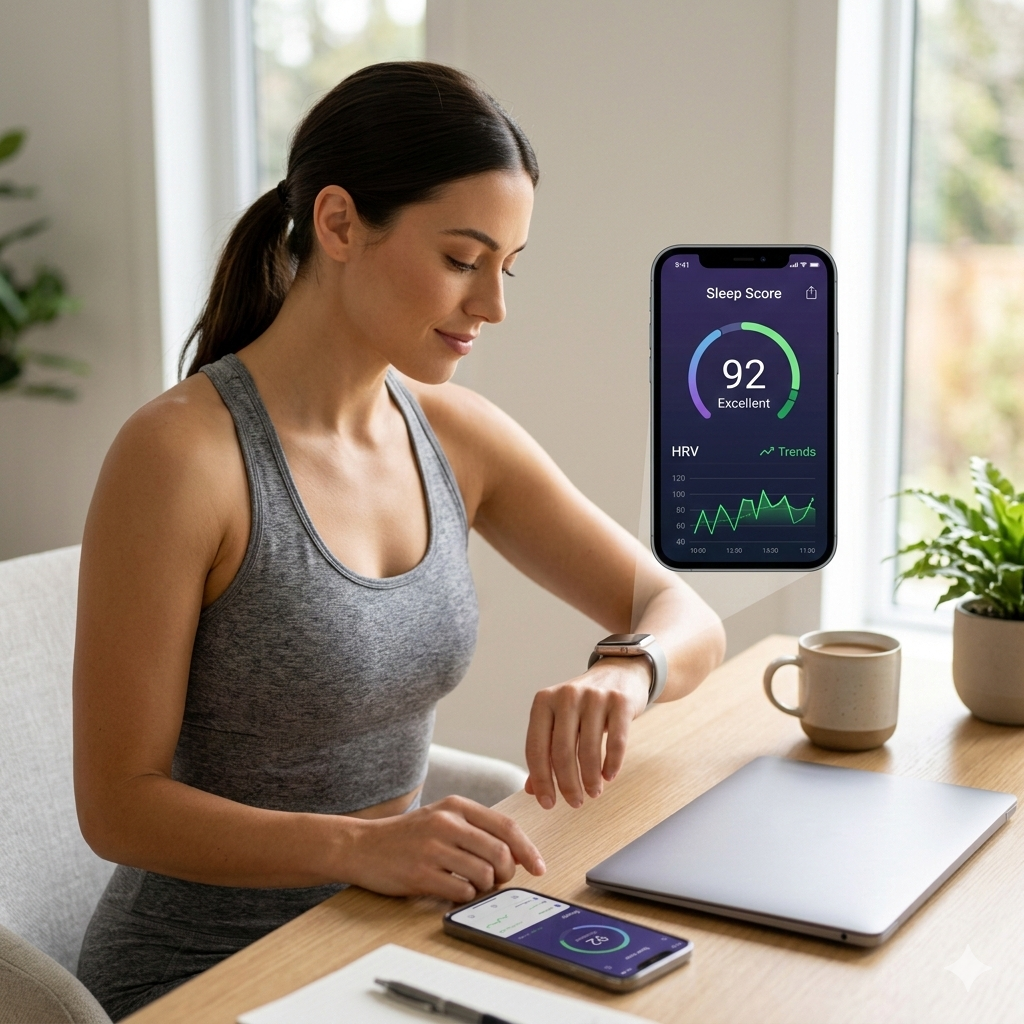
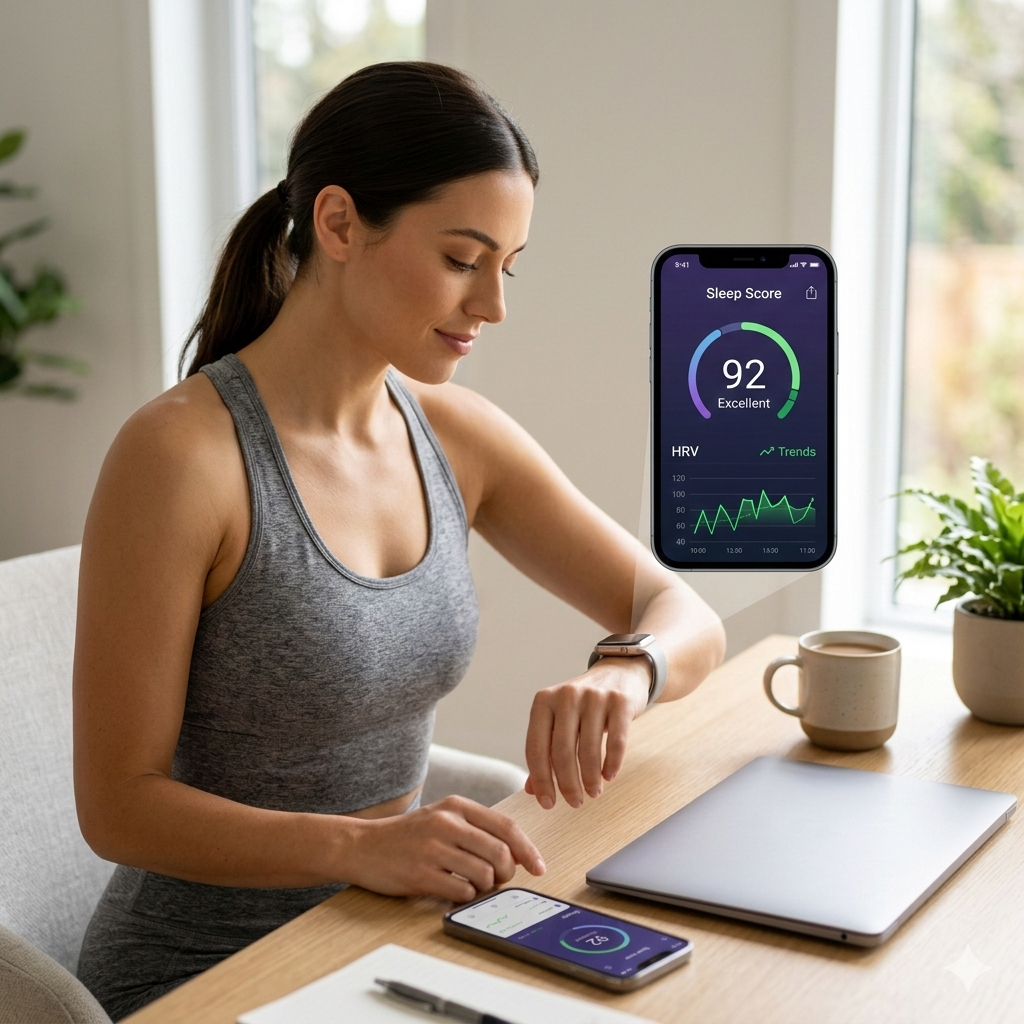
In the Legacy Fitness coaching model, we look at more than just calories and deadlifts. We track your "Biofeedback." These are the internal signals your body sends you every day, specifically your sleep, your energy levels, and your stress.
When you track these three things, you give us a "weather report" for your metabolism. It allows us to see why the scale might be stuck and, more importantly, how to fix it without burning you out.
Sleep: The Fat-Burning Foundation
Think of sleep as the "cleanup crew" for your body. While you sleep, your body repairs muscle tissue and regulates the hormones that control hunger.
If you consistently get less than seven hours of sleep, two things happen:
►Hunger Spikes: Your level of ghrelin (the hunger hormone) goes up, and leptin (the fullness hormone) goes down. You will feel hungrier all day, especially for sugar.
►Cortisol Rises: Lack of sleep is a physical stressor. High cortisol tells your body to hold onto water and protect its energy stores (fat).
If I see your sleep dropping in your logs, I know exactly why your weight isn't moving. We don't need a harder diet; we need a better bedtime.
Energy: The "Fuel Gauge" of Your Metabolism
Do you have a "3pm crash" every day? Or do you wake up feeling like you were hit by a truck even after eight hours of sleep?
Your energy levels tell me how well you are recovering and how your body is handling its fuel. If your energy is consistently low, it’s a sign that:
►You might be in too large of a calorie deficit.
►You might not be eating enough carbohydrates to fuel your brain and muscles.
►You might be overtraining.By tracking your energy on a scale of 1 to 10, we can find your "sweet spot." We want you to feel focused at work and powerful in the gym. If the data shows your energy is tanking, we make an adjustment before you hit a wall.
Stress: The Silent Progress Killer
Stress isn't just "in your head." It is a physical event in your body. Whether the stress comes from a deadline at work, an argument with a spouse, or a heavy set of squats, your body reacts the same way by releasing hormones.
If your stress levels are at a 9/10 all week, your body is in "survival mode." In survival mode, fat loss is not a priority for your biology; staying alive is.
By tracking your stress, we can decide when to "push" and when to "pivot." On a high-stress week, the best thing for your fat loss might actually be a lighter "deload" week in the gym or a few extra calories to help your body feel safe again.
The Big Picture
The scale is a single data point. Your biofeedback is the whole story. When you log your sleep, energy, and stress, you are helping me build a plan that works with your life, not against it.
In March, pay attention to these signals. They are the keys to a body that doesn't just look good, but feels incredible. When we master the "hidden" metrics, the visible ones, like your reflection in the mirror, take care of themselves.

The "Black Box" Problem: Why Skipping Check-ins Stalls Your Fat Loss
When a client stops doing their weekly check-ins, their fitness journey becomes a black box.

This image was created using AI to avoid copyright issues while conveying the context of this article.
In the world of engineering, a "Black Box" is a system where you can see what goes in and what comes out, but you have no idea what is happening inside. When a client stops doing their weekly check-ins, their fitness journey becomes a black box.
You might still be hitting the gym. You might even still be eating mostly healthy. But without the weekly check-in, neither you nor I can see the "internal gears" of your progress. We lose sight of your stress levels, your sleep quality, and your hunger signals. And as soon as the data stops flowing, fat loss almost always stalls out.
In March, we are focusing on transparency. If you want to see the best results possible, we have to open the box.
Why "Just Training" Isn't Enough
Most people think that as long as they do the workouts, they are doing enough. But your body is a complex biological system, not a simple calculator.
If you are training hard but only sleeping five hours a night, your body will be in a state of high stress (elevated cortisol). This can cause you to hold onto water weight and make your cravings feel impossible to ignore. If you skip your check-in, I can’t see that your sleep is poor. I might assume the plan is working, when in reality, your body is screaming for a rest day or more calories.
The Psychology of Avoidance
Be honest: Have you ever skipped a check-in because you had a "bad" week?
Maybe you missed two workouts or ate a whole pizza on Friday night. You feel a sense of shame, so you decide to skip the check-in and "wait until next week" when things are better.
This is the exact moment when you need the check-in the most. My job as your coach isn't to judge you; it is to help you navigate the hard weeks. When you avoid the check-in, you are essentially hiding from your own goals. By facing the data, even the "bad" data, you take the power back. You move from being a victim of your week to being the boss of your next one.
What We Find in a Great Check-in
A weekly check-in is about much more than just your weight. Here are three things I look for to ensure your fat loss stays on track:
Biofeedback Trends: How is your energy? If you are exhausted every afternoon, we might need to adjust your carbohydrate timing.
Digestion and Bloat: If you are eating "clean" but feel bloated, we might have a food sensitivity. We can only catch this if you tell me how you feel.
Mental Load: If your work stress is at a 10/10, we need to adjust your training intensity so you don't burn out.
The 10-Minute Investment
A check-in usually takes less than ten minutes to complete. That ten-minute investment is what ensures the other ten hours you spent exercising and meal prepping this week actually pay off.
Think of it like a weekly business meeting. You wouldn't run a company for a month without checking your bank statements and employee performance. Don't run your body that way either.
March Challenge: No More Black Boxes
This week, commit to the check-in regardless of how the week went. If it was a "perfect" week, great, let’s see why! If it was a "disaster" week, even better, let’s fix it together.
When we keep the lines of communication open, we take the guesswork out of the equation. Let’s open the box, look at the gears, and keep the momentum moving toward April.