
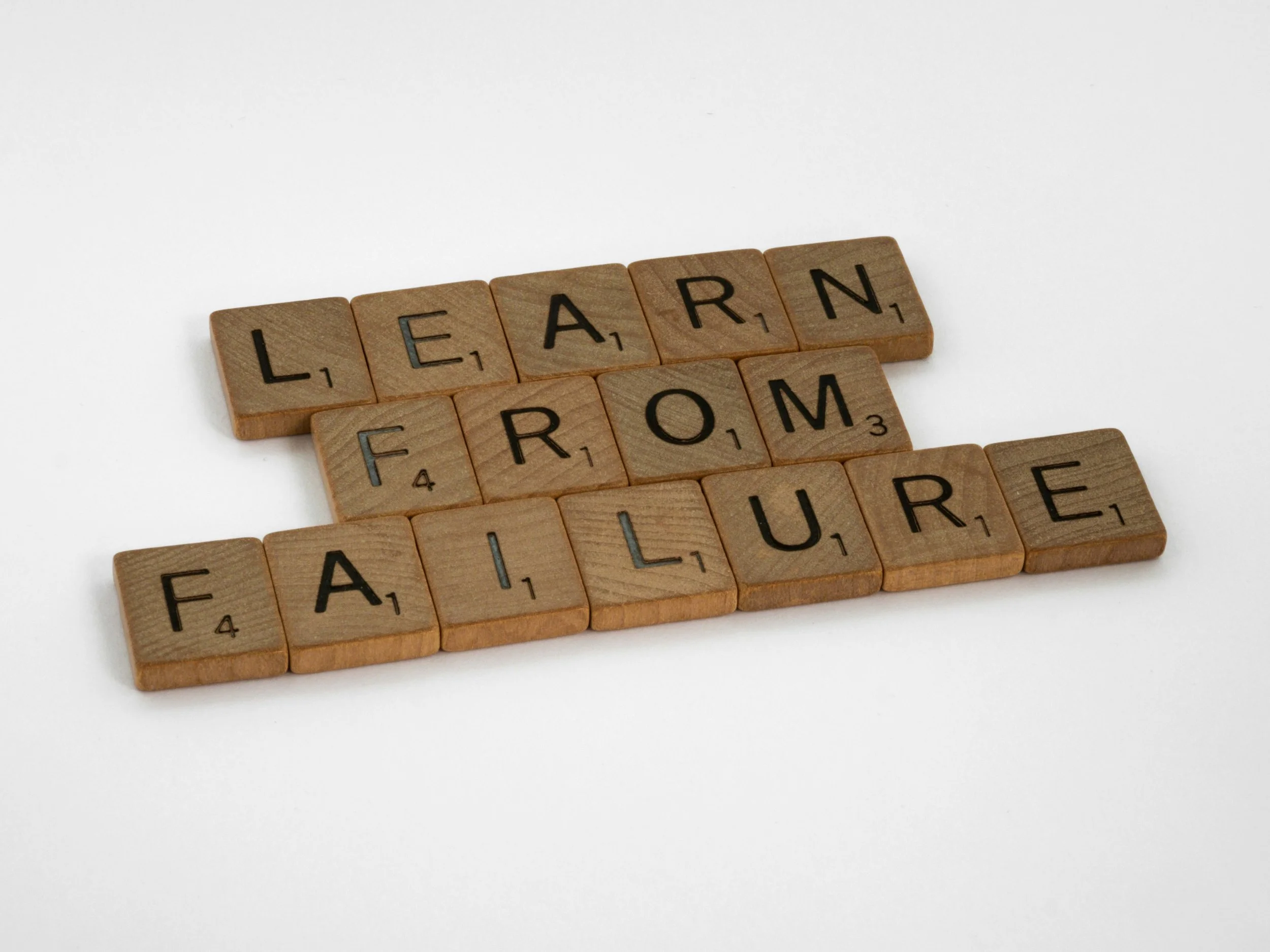
The "Failure Filter": How to Use Past Setbacks to Guarantee Future Success
Failure is not the opposite of success; it is a mandatory part of it. You do not need to avoid your past failures; you need to learn how to process them.
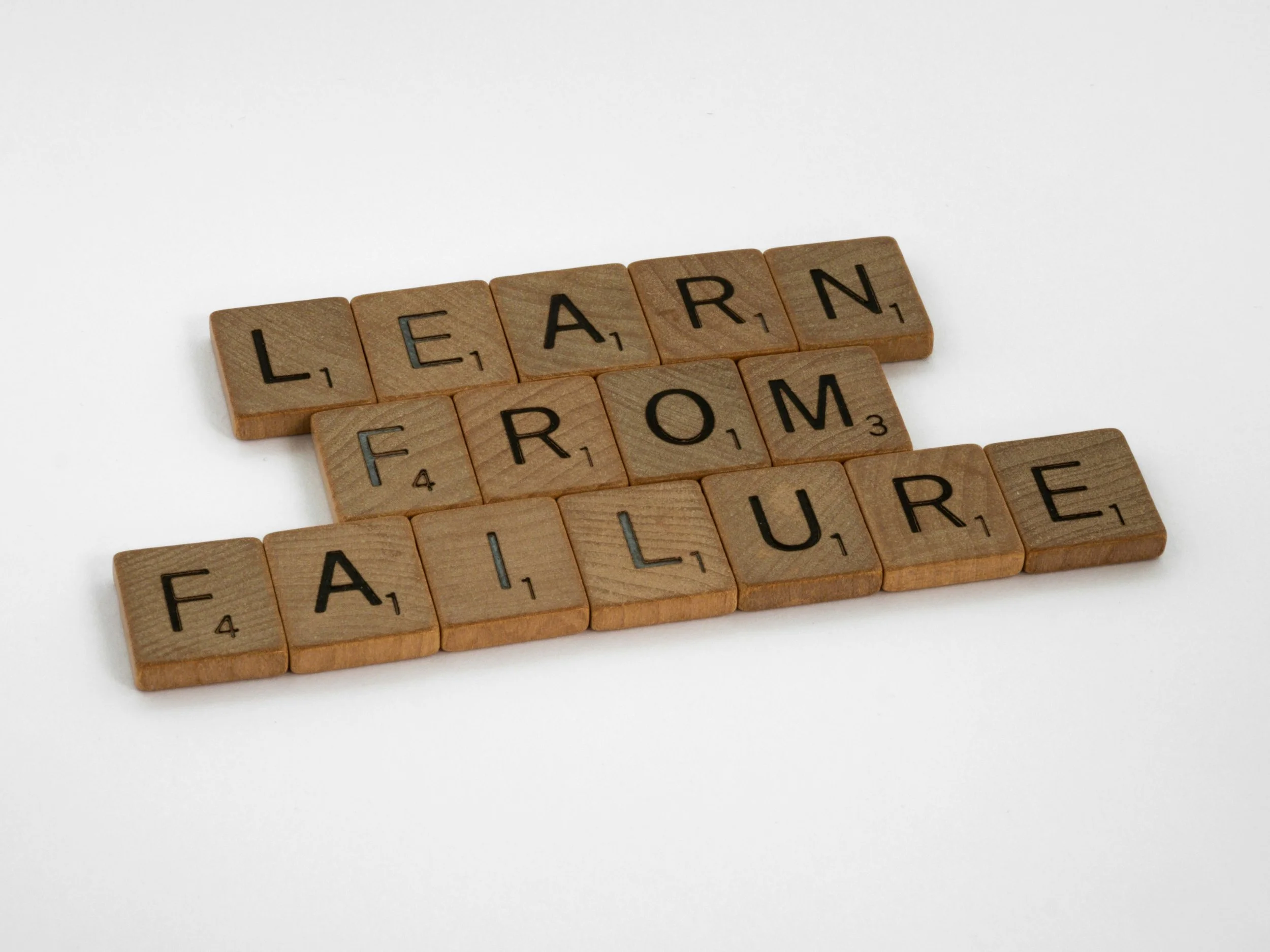
Image courtesy of Brett Jordan via Unsplash
As December comes to a close, many people look back at the resolutions they made last January and feel a pang of disappointment. Maybe they quit after a month, got injured, or simply drifted off track.
This feeling of failure is toxic because it often leads to the same outcome: making a huge, aggressive resolution on January 1st, then quitting by February because the memory of past failure haunts the new effort.
At Legacy Fitness & Nutrition, we believe failure is not the opposite of success; it is a mandatory part of it. You do not need to avoid your past failures; you need to learn how to process them. You need to run those setbacks through the Failure Filter.
The Failure Filter is a mindset tool that transforms disappointment into actionable, concrete data, allowing you to guarantee that your next attempt will be more successful.
Why We Must Analyze the Failure
Most people process failure through emotion: "I failed because I'm lazy," or "I failed because I lack willpower." This is a destructive, false narrative.
Success is rarely about willpower; it is about strategy and environment. When you fail, your system has simply given you highly specific data on where your strategy or environment broke down.
The Failure Filter has three simple questions to turn a setback into data:
1. Was the Plan Realistic? (The Scope Check)
Did you try to go from zero workouts to five 90-minute workouts a week? Did you go from eating highly processed foods to eating nothing but plain chicken and broccoli overnight?
Failure Data: The plan was too big, too fast, and too painful. It violated the principle of the Micro-Habit Playbook.
Future Strategy: Next time, start with an effort so small you cannot fail. For instance, put on your shoes for 5 minutes of movement, then build from there. Start with addition (more protein, more water) instead of drastic subtraction.
2. Was the Habit Stacked? (The Trigger Check)
Did you rely on willpower to start your workout or meal prep every single day? Willpower is weakest when we are stressed or tired. We need automatic triggers.
Failure Data: The habit didn't have an anchor. You relied on emotion rather than a system.
Future Strategy: Link your new action to an old, non-negotiable action. For example: "After I brush my teeth, I will drink a glass of water." Or, "As soon as I walk in the door, I will put on my workout clothes." You automate the start, making failure much harder.
3. Was the Recovery Honored? (The Sustainability Check)
Did you push through chronic fatigue? Did you ignore your body's pain signals? Did you try to cut too many calories while simultaneously ramping up intense exercise? (Remember our previous article, The 3 Rules of Recovery.)
Failure Data: You burned out because you treated your body like a machine, not a complex biological system.
Future Strategy: Schedule rest days first, and treat sleep (See our article, “Why You Can't "Out-Train" a Bad Sleep Schedule”) as the most important fitness component. If you are consistently exhausted, the plan needs to be cut in half, not pushed harder. Listen to the data your body is giving you.
The Resilience of Legacy
When you look back at past struggles through the lens of the Failure Filter, you see that you did not fail because of a personality flaw. You failed because of a solvable strategic flaw.
This knowledge gives you incredible power and resilience. You are not starting 2026 with a blind leap of hope; you are starting with a data-driven, tested plan based on knowing exactly what didn't work last time.
Use this strategic knowledge. Transform your past setbacks into your ultimate guarantee for future success. That is how you build a resilient, enduring legacy of health.

Year in Review: 5 Fitness Wins You Probably Took for Granted
Before you set your goals for January, take a moment to celebrate these five fitness wins you probably took for granted this year.

This image was created using AI to avoid copyright issues while still conveying the context of this article.
As the year winds down, it is natural to look ahead to New Year's resolutions. We focus on the big goals: the pounds we still want to lose, the races we haven't run, or the strength we still want to gain.
This forward-looking focus, while important, often blinds us to how far we have actually come. If you only measure success by the final, huge goal, you miss all the small, meaningful progress that happened every day.
At Legacy Fitness & Nutrition, we encourage you to pause for a moment of reflection and gratitude. Your fitness journey in the past year is full of small victories; things you now do easily that were hard or impossible 12 months ago. These small wins are the true foundation of your health legacy.
Before you set your goals for January, take a moment to celebrate these five fitness wins you probably took for granted this year.
1. You Became a Person Who Works Out
Think about the mental effort it took this time last year to decide to put on your workout clothes. If you are now consistently showing up, whether in the gym or at home, you have achieved the most important victory of all: You changed your identity.
You are no longer a person who wants to exercise; you are a person who exercises. This shift in identity is far more powerful than any weight lost or gained; it is the core of sustainable habit change. This is the biggest win.
2. You Don't Get Winded Doing Simple Things
Remember a time when running up the stairs left you gasping? Or when walking through the airport to catch a connection was stressful and exhausting?
Now, because of the work you have put in, you probably do those things without thinking. Your body has become more efficient; your heart and lungs are stronger. This quiet increase in endurance and functional capacity is a massive win for your longevity and quality of life. You have made life easier for your future self.
3. You Have More Resilience to Stress
If you managed a tough work deadline, handled a family crisis, or navigated the chaos of the holidays without completely collapsing, your exercise routine played a huge role.
As we discussed in the "Move for Mood" article, movement releases mood-boosting chemicals and helps your body process stress hormones. The fact that you handled a high-stress year is a testament to the mental and physical resilience you built with every single workout. That feeling of being capable under pressure is a win that money cannot buy.
4. You Are Eating to Fuel, Not Just to Comfort
A year ago, maybe every bad mood or stressful day immediately triggered a trip to the vending machine or a drive-thru. While we all slip up, the fact that you now think about fueling your next workout or prioritizing protein for satiety is a massive shift in mindset.
You have likely replaced emotional eating patterns with thoughtful nutrition strategies. This cognitive change, this ability to choose the long-term benefit over the short-term comfort, is a non-scale victory that guarantees a stronger future.
5. You Can Recover from a Setback
Everyone has a bad week, a skipped workout, or a splurge meal. The old you might have let one bad day turn into a full month of quitting. The new, healthier you now recognizes the slip, accepts it, and gets right back on track the next day.
This ability to restart quickly and without self-punishment is called resilience. This resilience is the "resolution insurance" you need for 2026. You now know that one bad day doesn't erase all your hard work, and that simple understanding is a true sign of a mature, sustainable fitness mindset.
As you look forward to the New Year, do not focus on the "new you." Take pride in the improved you who already showed up, already built resilience, and already changed their identity this past year. Celebrate your small wins; they are the most important part of your legacy.

The Power of the 15-Minute Home Workout: No Gym, No Problem
We want to destroy the myth that a workout needs to be long and complicated to be effective. The truth is, a high-quality, focused, 15-minute home workout can be a powerful engine for consistency, fat loss, and strength maintenance.

Image courtesy of Sunday II Sunday via Unsplash
The number one reason people struggle to stay consistent with fitness is simple: time.
The thought process goes like this: "I need 15 minutes to drive to the gym, 60 minutes for the workout, 15 minutes to drive home, plus shower time. That's two hours I don't have today." When you don't have two hours, the workout gets skipped entirely.
At Legacy Fitness & Nutrition, we want to destroy the myth that a workout needs to be long and complicated to be effective. The truth is, a high-quality, focused, 15-minute home workout can be a powerful engine for consistency, fat loss, and strength maintenance. It ensures you never have a "skipped day."
The goal is to eliminate every single excuse. When you realize that 15 minutes is all you need, your fitness legacy becomes unbreakable.
The Science of the "Too Short to Skip" Workout
Why is a 15-minute workout so effective, especially when consistency is the goal?
Consistency Over Intensity: As we discussed in the Micro-Habit Playbook, a short workout is "too small to fail." It builds the habit of showing up. Four consistent 15-minute workouts are always better than one exhausting 60-minute session followed by a week of rest.
The Afterburn Effect: When you use those 15 minutes for high-intensity, total-body movements, you trigger what is called EPOC (Excess Post-Exercise Oxygen Consumption), or the "afterburn." Your body continues to burn calories at an elevated rate long after the workout is finished; sometimes for hours.
Hormonal Response: Short, intense work is fantastic for spiking growth hormone and boosting your metabolism without the elevated, chronic cortisol that long, draining sessions can sometimes cause (especially when you are stressed).
The best workout is the one you actually do. If you have 15 minutes, you have time for a game-changing session.
Your 15-Minute, No-Equipment Playbook
You don't need a fancy gym or heavy weights to get a complete, full-body workout. Use your bodyweight and the space around you.
Phase 1: The 2-Minute Warm-Up (Total Body Activation)
The goal is to get the blood flowing and prepare your joints for movement.
Action: 30 seconds of High Knees (jogging in place), 30 seconds of Arm Circles, 30 seconds of hip rotations (opening and closing your hips), and 30 seconds of jumping jacks.
Phase 2: The 10-Minute Metabolic Circuit (Total Body Strength)
This is the work phase. We will use a circuit format, moving quickly from one exercise to the next with minimal rest. The goal is to maximize muscle engagement and keep your heart rate high.
Perform each exercise for 40 seconds of work, followed by 20 seconds of rest.
Once you complete the four exercises below, you have finished one round. Rest for 60 seconds, and then repeat the circuit again for a total of two full rounds.
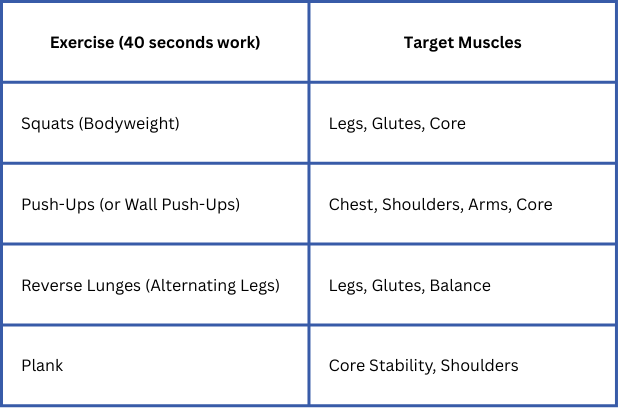
Total work time: 4 minutes per round x 2 rounds + 1 minute rest = 9 minutes.
Phase 3: The 3-Minute Cool-Down (Essential Recovery)
Never skip the cool-down. This brings your heart rate down and helps stretch the muscles you just worked, which aids in recovery and prevents stiffness.
Action: 30 seconds stretching your hamstrings (touching toes), 30 seconds for your quadriceps (pulling heel toward buttock), 30 seconds holding a low lunge (for hip flexors), and 30 seconds shoulder/arm stretches.
The Power of Consistency
The difference between successful fitness goals and resolutions that fail isn't found in a massive one-time effort. It is found in consistent effort, day after day.
This December, when the weather is cold and the schedule is chaotic, stop thinking you need to find an hour for the gym. Look at your calendar and ask yourself, "Can I find 15 minutes today?" The answer is always yes. Start today and build a legacy of health that always shows up.

"Protein Power" for the New Year: How to Use the Ultimate Macro to Stop Resolution Cravings
This New Year, forget the crash diets. Focus on empowering your body with the ultimate macro.

Image courtesy of Brett Wharton via Unsplash
As the calendar flips to January, millions of people will try to lose weight by cutting carbs, cutting fat, or simply cutting calories. While restriction can work temporarily, it often leads to intense cravings, fatigue, and the inevitable return of the weight.
At Legacy Fitness & Nutrition, we encourage a different approach for the New Year: Stop focusing on what you need to cut, and focus on what you need to add.
The single most powerful addition you can make to your diet for long-term weight management and successful resolutions is Protein. Protein is the ultimate macro-nutrient because it directly impacts your energy, muscle, and most importantly, your hunger.
If you are serious about stopping those resolution-killing cravings, you need to unleash the power of protein.
The 3-Way Craving Killer
Protein works on three different levels to stabilize your body and eliminate the craving cycle that derails most New Year's resolutions:
1. The Satiety Signal (Fullness)
Protein takes longer to digest than carbohydrates. When you eat protein, it sends powerful signals to your brain that you are full and satisfied.
Result: A meal high in protein means you will feel satisfied for hours. If you eat a carb-heavy breakfast (like a bagel), you crash fast and are hungry an hour later. If you eat a protein-heavy breakfast (like eggs), you stay full until lunch, eliminating the mid-morning snack craving.
2. Blood Sugar Stability
Cravings are often caused by blood sugar rollercoaster rides. When you eat refined sugar or high-starch carbs alone, your blood sugar spikes quickly, then crashes, leaving you exhausted and craving another quick sugar fix.
Result: Eating protein with carbohydrates slows down the absorption of sugar into your bloodstream. This keeps your energy and blood sugar levels steady, removing the extreme highs and lows that cause those frantic, urgent cravings.
3. Metabolism Maintenance
As we've discussed, muscle is metabolically active, meaning it burns calories even when you are resting. When you are trying to lose weight, you want to burn fat, not muscle.
Result: A high-protein diet helps your body maintain and even build lean muscle tissue, especially when paired with strength training. This protects your metabolism and ensures that the weight you lose is fat, not the muscle that helps keep the weight off for good.
Your New Year's "Protein Power" Playbook
You don't need to live on chicken breast. You just need to be strategic about how you add protein to every single meal.
1. The 30-Gram Breakfast Rule
Your first meal of the day is critical for controlling hunger for the next 12 hours. Aim for a target of 30 grams of protein at breakfast.
Example: 4 scrambled eggs and a piece of whole-wheat toast, or a large Greek yogurt with protein powder mixed in.
Why it Works: This big dose of protein sets your satiety hormones right for the entire day.
2. Protein as the Snack Foundation
If you need a snack, make protein the base, not the bonus.
Instead of: A handful of chips or pretzels (zero protein).
Do This: Cottage cheese, beef jerky, a small protein shake, or an apple with a tablespoon of peanut butter.
3. Eat Protein First at Every Meal
Whenever you sit down to eat, prioritize eating the protein source first before moving on to the carbohydrates or fats.
Why it Works: This ensures the protein hits your stomach first, maximizing the satiety signal and helping to blunt the blood sugar response from the other macros.
This New Year, forget the crash diets. Focus on empowering your body with the ultimate macro. By unleashing Protein Power, you gain control over your hunger, protect your metabolism, and build a lasting health legacy.

Why You Can't "Out-Train" a Bad Sleep Schedule (And How to Fix It)
You cannot out-train a bad sleep schedule. If you are struggling to see results, stop looking at your workout log or your food diary first. Look at your sleep log.

This image was created using AI to avoid copyright issues while conveying the meaning of this article.
We often see people who treat sleep like an optional luxury. They burn the candle at both ends; waking up early for a workout, staying up late to work or scroll, and running constantly on 5 or 6 hours of sleep. They think: "I'll just work out harder to make up for the lack of rest."
At Legacy Fitness & Nutrition, we have a clear, non-negotiable message: You cannot out-train a bad sleep schedule.
Sleep is not just "time off." It is the most critical component of your fitness and health legacy. Skipping sleep is not just making you tired; it is actively working against your goals for weight loss, muscle gain, and energy.
If you are struggling to see results, stop looking at your workout log or your food diary first. Look at your sleep log.
The Hormonal Disaster of Sleep Deprivation
When you consistently get less than 7 hours of quality sleep, your body goes into hormonal chaos that immediately sabotages the hard work you put in at the gym:
Sabotage Your Hunger: Lack of sleep immediately flips your hunger hormones into disaster mode. It increases Ghrelin (the "I'm starving" hormone) and decreases Leptin (the "I'm full" hormone). This makes you feel constantly hungry, especially for high-calorie, sugary foods, and you don't register fullness until you've overeaten.
Kills Muscle Growth: Sleep is when your body repairs and rebuilds. This is when Human Growth Hormone (HGH) is primarily released. If you cut sleep short, you cut off HGH production, directly stopping muscle growth. This means you aren't getting the metabolic benefit of the muscle you worked to build.
Increases Cortisol (Fat Storage): As we covered earlier (“Your Secret Fitness Weapon: Why Stress Management is the Ultimate Weight Loss Tool”), lack of sleep is a massive stressor. It raises your body's stress hormone, cortisol, which aggressively signals your body to store fat, particularly around the stomach. This makes fat loss nearly impossible, regardless of your diet.
Trying to build muscle or lose fat on little sleep is like trying to build a house when the foundation is constantly washed away.
The Legacy Sleep Playbook
Building a sleep legacy doesn't mean you need to sleep for 10 hours; it means creating a consistent, supportive environment for quality rest.
1. The 60-Minute "Digital Sunset"
Your biggest sleep killer is the blue light from screens (phones, tablets, TV). Blue light actively blocks the release of melatonin, the hormone that tells your body it's time to sleep.
Action: 60 minutes before your ideal bedtime, initiate a "Digital Sunset." Put all screens away, ideally in a separate room.
Alternative: Read a physical book, listen to a relaxing podcast, or write in a journal. This ritual allows melatonin to rise naturally.
2. Consistency is King (Even on Weekends)
Your body thrives on routine. Going to bed at 10 PM during the week and then staying up until 2 AM on Friday creates "social jetlag," which is just as disruptive to your hormones as flying across time zones.
Action: Try to keep your wake-up time within a 60-minute window every day, even on the weekends. Your body will naturally adjust its sleep rhythm, making it easier to fall asleep and wake up feeling refreshed.
3. Cool, Dark, and Quiet
Your bedroom environment should be an intentional cave dedicated only to sleep and intimacy.
Action: Keep the room as dark as possible (use blackout curtains). Keep it quiet (use earplugs or a white noise machine if needed). Most importantly, keep it cool, around 65° F is ideal.
Why it Works: A slightly cool room helps your body lower its core temperature, which is a key signal for the brain to initiate deep, restful sleep.
Make a promise to yourself this New Year: stop treating sleep like a luxury. Treat it like the powerful performance-enhancer, muscle-builder, and fat-burner that it is. Your fitness legacy depends on it.

Move for Mood: Using Exercise to Beat the Winter Blues and End-of-Year Fatigue
December can be a tricky month for mental health. This December, view movement as your mental medicine.

This image was created using AI to avoid copyright issues while conveying the meaning of this article.
December can be a tricky month for mental health. The excitement of the holidays often comes with increased stress, less sunlight, shorter days, and the general fatigue that comes from wrapping up a full year. Many people feel a slump, often called the "Winter Blues" or seasonal sadness.
When you feel this mental fatigue, the first thing that usually stops is exercise. You tell yourself, "I'm too tired," or "I'll feel better if I just rest."
At Legacy Fitness & Nutrition, we want to flip that idea on its head: Exercise is not just for your body; it's one of the most powerful and immediate tools for boosting your mood and combating end-of-year stress. When your mood dips, you need to Move for Mood.
The Chemical Connection: How Movement Lifts You Up
When you engage in physical activity, your brain does something incredible: it releases powerful chemicals that act as natural mood stabilizers and pain relievers.
Endorphins: These are your brain’s natural pain killers. They produce a feeling of well-being, often described as a "runner's high," though you don't have to run to get them. Even a brisk walk can trigger a release.
Dopamine: This chemical is part of your brain's reward system. It increases feelings of pleasure, focus, and motivation. Getting your body moving is a proven way to give yourself a natural dose of motivation when you need it most.
Serotonin: This helps regulate mood, sleep, and appetite. Low levels of serotonin are often linked to feelings of sadness, and regular movement helps keep those levels balanced.
When you feel mentally exhausted, these natural chemicals are exactly what your brain needs—and movement is the delivery system.
Your "Move for Mood" Playbook (No Gym Required)
You don't need a grueling hour-long workout to change your mental state. When your goal is mood, your intensity should be low to moderate (remembering what we learned about cortisol in “Your Secret Fitness Weapon: Why Stress Management is the Ultimate Weight Loss Tool”). Focus on consistency and joy.
1. The 10-Minute Outdoor Break
Lack of sunlight in winter is a key cause of the blues. Even on a cloudy day, the light outside is stronger than any light inside your house.
Action: Take a 10-minute walk outside, ideally in the morning or early afternoon. Leave your phone in your pocket and just look around.
Why it Works: This exposure helps regulate your body's circadian rhythm (sleep-wake cycle) and gives you a vital dose of natural light, which is critical for serotonin production.
2. Low-Intensity Movement for Body Awareness
Stress often causes us to hold tension in our bod: hunched shoulders, tight jaw, stiff neck. These physical signs feed back into your brain, reinforcing the feeling of stress.
Action: Try a gentle, non-competitive activity that forces you to focus on your body, like a restorative yoga flow or tai chi. If that’s not your style, put on your favorite upbeat music and simply dance in your kitchen for two songs.
Why it Works: These movements force you to breathe deeply and release physical tension. When your body relaxes, your mind follows.
3. The Social Movement Boost
Loneliness and isolation can contribute greatly to the Winter Blues. Combining movement with social connection amplifies the mood-boosting effect.
Action: Call a friend and ask them to meet you for a walk instead of meeting for coffee. Join a light exercise class once a week, even if it's just a beginner's stretching group.
Why it Works: Social interaction itself releases feel-good hormones. When you add movement, you get the double benefit of chemical release and connection, making the activity more enjoyable and highly effective against isolation.
This December, view movement as your mental medicine. When you feel tired, try a 10-minute walk instead of a 10-minute scroll on your phone. You'll not only be strengthening your body, but you'll be building a stronger, more resilient mind—the core of your enduring legacy.

The Myth of "Detox": What Your Body Actually Needs After a Rich Meal
The detox is a myth, and your body doesn't need a quick-fix cleanse.

Image courtesy of David Bruwer via Unsplash
The holidays are synonymous with rich food. You might have just finished a large meal—roasts, gravies, desserts, and now you feel heavy, sluggish, and maybe a little guilty.
The natural response marketed to us is the "detox." Companies sell teas, juices, and special cleanse plans, promising to flush out the "toxins" and reset your body after a big meal or a weekend of overindulgence.
At Legacy Fitness & Nutrition, we want to set the record straight: The detox is a myth, and your body doesn't need a quick-fix cleanse.
Your body is already equipped with the most powerful detoxification system ever created: your liver and kidneys. These organs work 24/7 to manage waste and toxins. What your body actually needs after a rich meal is not a drastic cleanse, but three simple, science-backed steps that support its natural function.
Why Detoxes Are Unnecessary (And Sometimes Harmful)
The idea behind most detoxes is that you have poisons built up that only expensive juices can fix. This is simply untrue. If your liver and kidneys stopped working, you would need immediate medical attention, not a juice fast.
Extreme juice cleanses and restrictive detox diets can actually hurt your long-term legacy:
They cause energy crashes: They strip away necessary protein and healthy fats, leaving you running on pure sugar water, leading to intense fatigue and sugar cravings.
They lead to muscle loss: Severe calorie cuts force your body to break down muscle tissue for fuel, slowing your metabolism in the long run.
They set up the Binge Cycle: Restriction creates intense physical and mental deprivation, leading to overeating the moment the cleanse is over.
Forget the quick fix. Focus on giving your body what it truly needs to recover and process that rich meal.
What Your Body ACTUALLY Needs: 3 Simple Steps
1. The Gentle Movement Reset
After a big meal, the urge might be to fall straight onto the couch. However, sitting still slows down the digestion process and can make you feel heavier and more bloated.
Action: Take a 10 to 15-minute slow, gentle walk after eating. This is not a workout; it's a stroll.
Why it Works: Light movement helps stimulate the muscles in your digestive tract. This encourages food to move through your system more efficiently, reducing bloating and aiding digestion. It also helps your body manage the blood sugar spike from the meal.
2. Fiber and Fermented Foods (The Gut Boost)
After a rich, heavy meal (often low in fiber), your gut bacteria (the tiny powerhouses that control your digestion and mood) need some support. The key is to add fiber and friendly bacteria.
Action: The day after the rich meal, make sure your breakfast and lunch are packed with fiber (oats, fruit, vegetables) and a serving of fermented food.
Examples: A small bowl of plain Greek yogurt, sauerkraut, or a glass of kefir.
Why it Works: Fiber acts like a scrub brush, cleaning out the digestive tract. Fermented foods provide probiotics (good bacteria) that help restore balance and keep your digestive system running smoothly.
3. Protein and Hydration (The Rebuilding Blocks)
Rich holiday meals are often heavy on fats and refined carbs but surprisingly low on high-quality, easily digestible protein.
Action: In the days following a big meal, make sure your water intake is high (as discussed in “The Forgotten Fuel: Why Water is the Key to Unlocking Holiday Energy”) and every meal includes a lean, easily digestible protein.
Examples: Eggs, chicken breast, or fish.
Why it Works: Water aids in flushing waste and managing salt intake. Protein is essential for rebuilding and maintaining muscle, ensuring your metabolism stays strong. By focusing on clean protein and fiber, you restore balance and stop the cycle of craving more sugar and rich foods.
When you've had a rich meal, don't punish yourself with a harsh cleanse. Instead, support your incredible body with gentle movement, targeted nutrition, and water. This is the simple, sustainable path to managing your health throughout the holidays and building a true legacy.

The "Pre-Game" Strategy: 3 Things to Do Before a Holiday Party to Stay on Track
December is a minefield of delicious, high-calorie food and drinks. You don't need to skip the holidays to stay healthy. You just need a strategy.

This image was created using AI to avoid copyright issues while still conveying the meaning of this article.
December is a minefield of delicious, high-calorie food and drinks. When you walk into a holiday party, the environment is perfectly designed to lead you off track. There are trays of treats, open bars, and people telling you, "Just have one!"
If you rely on willpower alone, you will fail. Willpower is a limited resource that gets drained quickly by stress and social pressure.
At Legacy Fitness & Nutrition, we recommend using a "Pre-Game" Strategy—a simple, proactive plan that stacks the odds in your favor before you even leave the house. This shifts your focus from reacting (and resisting temptation) to executing a simple, proven plan.
Here are the three non-negotiable steps in your Holiday Party Pre-Game Playbook:
1. The Fiber & Protein Armor
The biggest mistake people make is going to a party hungry, thinking, "I saved all my calories for this." As we discussed with the "Small Plate Trap" (Article 5), this guarantees a massive overeat.
The goal is to feel satisfied, not stuffed, before you arrive. This gives you the mental clarity and physical fullness required to be choosy.
Pre-Game Meal: 60 minutes before the party, eat a small snack that is high in fiber and protein.
Examples: A scoop of protein powder mixed with water, a Greek yogurt, or a handful of almonds with a piece of fruit.
Why it Works: This snack triggers the release of fullness hormones (leptin) and stabilizes your blood sugar. When you walk into the party, you are there to socialize, not to devour the snack table.
2. The Hydration Shield (The "One-to-One" Rule)
Holiday parties almost always involve alcohol or sugary drinks. As we covered in Article 7, alcohol is dehydrating and can rapidly lower your inhibitions, making it much harder to stick to your food plan.
Pre-Game Action: Before you leave, drink a full 16-ounce glass of water. If you plan to drink alcohol at the party, commit to the "One-to-One" Rule while you are there: for every alcoholic beverage you consume, you immediately follow it with one full glass of water.
Why it Works: The pre-game water provides a buffer against dehydration. The "One-to-One" rule forces you to slow down your drinking and keeps you hydrated, mitigating the negative effects of alcohol on your judgment and mood.
3. The Exit Strategy & Conversation Plan
Willpower often runs out about 90 minutes into a party. The longer you stay, the higher the chances of making poor choices. You need a behavioral plan for arrival and departure.
The Conversation Plan: Decide on your three talking points before you go. This focuses your brain on the social interaction rather than scanning the food table. Be ready with polite phrases if someone pushes food on you: "That looks amazing! I'm actually just finishing a small snack right now, but maybe later."
The Exit Strategy (The 90-Minute Rule): Decide on a specific time (e.g., 90 minutes after arrival) when you will leave, or a specific event (e.g., "After the gift exchange"). Tell someone you came with, "I have to leave at 8:30." This creates accountability.
Why it Works: You are shifting your focus from food to people. By knowing your exit time, you can be present, enjoy the party, and leave before the temptation becomes too strong.
You don't need to skip the holidays to stay healthy. You just need a strategy. By executing these three simple "Pre-Game" steps, you take control of the environment and build your legacy of consistent health, even during the chaos of December.

Your Secret Fitness Weapon: Why Stress Management is the Ultimate Weight Loss Tool
You are doing everything right. You are hitting your workouts, tracking your protein, and trying hard to get enough sleep. But the scale won’t budge, or worse, you keep gaining weight around your stomach. If so you might not be managing stress as well as you could.

Image courtesy of Bruce Mars via Unsplash
You are doing everything right. You are hitting your workouts, tracking your protein, and trying hard to get enough sleep. But the scale won’t budge, or worse, you keep gaining weight around your stomach.
If this sounds familiar, it’s a sign that you might be missing your most important fitness lever: Stress Management.
At Legacy Fitness & Nutrition, we teach a holistic approach because fitness isn't just about what happens in the gym. It's about what happens in your entire life. Right now, during the year-end push of work, shopping, and social pressure, stress is the single biggest hidden threat to your weight loss goals.
Understanding the connection between your mental stress and your physical body is the Secret Fitness Weapon for building a true, sustainable health legacy.
The Cortisol Connection: Your Body’s Survival Mode
Stress, whether it's an intense argument, a tight work deadline, or a lack of sleep, is viewed by your body as a threat. When you perceive a threat, your adrenal glands release a cascade of hormones, primarily cortisol, often called the "stress hormone."
Cortisol is essential for survival, it triggers your body's "fight or flight" response. But when stress becomes chronic (it lasts for days, weeks, or months), cortisol stays elevated, causing these specific weight-loss saboteurs:
Fat Storage: High, chronic cortisol tells your body, "There’s a crisis! Energy might run out!" So, it aggressively signals the body to store energy as fat, specifically targeting the visceral fat around your midsection. This is your body saving energy for the long "crisis."
Increased Cravings: Cortisol increases your appetite and specifically makes you crave sugar, fat, and comfort foods. This is your body trying to find a quick energy boost to fuel the "fight or flight" scenario.
Breaks Down Muscle: Chronic cortisol can break down muscle tissue (which is metabolically active) to convert it into quick energy (glucose). This means you lose the tissue that helps you burn calories, making weight management harder in the long run.
Your body cannot distinguish between the stress of being chased by a tiger and the stress of checking work emails at 10 PM. The cortisol response is the same.
3 Stress Management Strategies That Burn Fat
The fastest way to lower cortisol is not to do more cardio, but to actively manage your stress response. Here are three simple, effective tools:
1. The 10-Minute Boundary
Cortisol levels naturally rise in the morning and fall toward the evening. You want to help them fall. The most powerful way is to create clear boundaries between work/stress and rest.
Action: Create a 10-minute ritual between work and home. This could be a 10-minute quiet walk, sitting in your car with no music, or a 10-minute journaling session where you write down everything stressing you out. This simple mental separation signals to your brain that the crisis is over and it's time for cortisol to drop.
2. Strategic Breathing (The Instant Reset)
Breathing is the only part of your nervous system you can manually control. You can hack the stress response instantly with a simple technique: Box Breathing.
Action: Inhale slowly for a count of four. Hold your breath for a count of four. Exhale slowly for a count of four. Wait for a count of four. Repeat 5 times.
Result: This sends an immediate signal to your vagus nerve that you are safe, forcing the parasympathetic nervous system (the "rest and digest" mode) to take over, dropping cortisol fast. Use this before every meal or when you feel overwhelmed.
3. The Power of "Low-Intensity" Movement
If you are highly stressed, adding an intense HIIT workout or heavy weight session can actually increase cortisol. Your body perceives it as another stressor.
Action: On high-stress days, swap the intense workout for gentle movement: a restorative yoga class, a light walk, or gentle stretching. This helps burn off excess stress hormones without triggering the "crisis" response. Intense training is best saved for days when your stress level is low.
Stop fighting stress with more cardio. Start managing stress with simple boundaries, breathing, and strategic rest. When you control cortisol, you unlock the weight loss your body has been waiting for.

The Forgotten Fuel: Why Water is the Key to Unlocking Holiday Energy
You don't have to be sweating profusely to be dehydrated. Even mild dehydration (losing just 1-2% of your body weight in water) can trigger a host of nasty symptoms that steal your energy and sabotage your goals.

Image courtesy of Scott Elkins via Unsplash
December is famous for its energy slump. Between the extra shopping, late-night parties, rich food, and the general stress of year-end deadlines, most people feel drained.
When energy drops, the first reaction is often to grab another cup of coffee or reach for a sugary snack. But what if the solution to your holiday fatigue was simpler and cheaper than any quick fix?
At Legacy Fitness & Nutrition, we want to remind you of the Forgotten Fuel: Water.
Dehydration is arguably the number one overlooked cause of fatigue, cravings, and sluggish workouts, especially during the busy holiday season. Getting enough water isn't just about quenching thirst; it's the foundation for every single process your body relies on for energy.
The Sneaky Symptoms of Dehydration
You don't have to be sweating profusely to be dehydrated. Even mild dehydration (losing just 1-2% of your body weight in water) can trigger a host of nasty symptoms that steal your energy and sabotage your goals:
Sudden Fatigue and Brain Fog: Your brain is mostly water. When you're dehydrated, your brain tissue shrinks slightly. This can lead to headaches, difficulty concentrating, and that "heavy" feeling that makes you want to nap instead of work out.
Cranky Cravings: The body sometimes mistakes thirst for hunger. When you feel a sudden, nagging urge for a sweet snack, it might just be your body crying out for water to help process the nutrients it already has.
Slow Metabolism: Water is essential for every chemical reaction in your body, including digestion and metabolism. If you're low on water, your body has to work harder to digest food and burn calories, slowing down your engine.
Sore Muscles and Slow Recovery: Water helps transport nutrients to your muscles and flushes out the waste products that cause soreness. Poor hydration means longer recovery, making it harder to stick to your workout routine.
The Holiday Dehydration Trap
In December, several factors make hydration much harder:
Heated Air: Spending time indoors with central heating constantly running dries out your skin and respiratory system faster than normal.
Salty/Rich Foods: Holiday meals are often heavy in salt and processed sugars, which require your body to pull extra water to manage and digest them.
Alcohol and Caffeine: These are diuretics, meaning they make you pee more, actively depleting your body's water stores. If you enjoy coffee or a cocktail, you need to deliberately overcompensate with pure water.
The Legacy Hydration Strategy: The "Three Sips" Rule
You don't need a gallon-a-day goal that makes you feel like you're constantly chugging water. You need a simple, consistent strategy that turns hydration into a micro-habit (which you learned about in our article last week):
The Morning Flush: Before you have coffee, drink one full glass of water with a slice of lemon. This immediately rehydrates you after 7-9 hours of sleep and kickstarts your metabolism.
The Meal Anchor: Take three large sips of water before you eat anything and three large sips after you finish eating. This is a simple mental trigger that ensures you are hydrating consistently around your fuel intake.
The Workout Requirement: If you are working out, your water intake is non-negotiable. Aim to drink 8-10 ounces of water before your workout, small sips during your workout, and another large glass immediately after to replace lost fluids.
This December, don't reach for the sugar and caffeine as your first fix for fatigue. Reach for the glass of water. It's the simplest, most effective step you can take to unlock genuine energy and build a resilient health legacy.

Training for Life: How to Make Your Workout Functional and Not Just Flashy
Your workout should not be a separate event from your life. It should be practice for life.

This image was created using AI to avoid copyright issues while still conveying the meaning of this article.
When you scroll through social media or walk into a modern gym, it’s easy to get lost in the noise. You see people lifting massive weights, doing complicated moves, or using machines you’ve never seen before. It all looks impressive, and the goal seems to be: look good and lift heavy.
But here’s the key question we ask at Legacy Fitness & Nutrition: Does your gym routine actually help you live your life?
If your training makes you look great in the mirror but leaves you too sore to pick up a heavy suitcase, or if you can squat 400 pounds but can't bend down to tie your shoe without pain, you might be falling into the "Flashy, Not Functional" Trap.
The goal of building a legacy of health is functional fitness, training your body to perform the movements of everyday life easily, safely, and without pain for decades to come.
What is Functional Fitness?
Functional fitness means training your muscles to work together, just like they do in real life. Real life doesn’t involve sitting on a machine isolating one muscle. Real life involves:
Lifting: Picking up your kids, carrying groceries, moving furniture. (A squat or a deadlift)
Pushing/Pulling: Opening a heavy door, pushing a lawnmower, pulling a suitcase. (A push-up or a row)
Carrying: Walking while holding heavy bags. (A farmer’s carry)
Twisting/Bending: Looking over your shoulder, reaching for something on the top shelf, bending to garden. (Mobility exercises)
A flashy workout is designed to make one muscle group pop. A functional workout is designed to make your entire body cooperate.
The 3 Pillars of a Functional Legacy
You don't need fancy equipment to train functionally. You just need to change how you think about movement. Focus on these three pillars:
1. Master the Foundational Movements
Before you try any complicated move, master the five basic human movement patterns. Training these consistently builds the foundation for long-term independence and strength:
Squat: Getting up and down from a chair (or toilet).
Hinge: Picking something up off the floor safely (like a toddler or a box).
Push: Pushing yourself up from the floor.
Pull: Pulling open a door or climbing a rope (or pulling a stubborn weed).
Carry: Carrying heavy things while remaining balanced.
Focus on the quality of the movement, not the weight. A perfect bodyweight squat that you can perform pain-free is 100 times more valuable than a heavy, sloppy squat that injures your back.
2. Prioritize Core Stability Over Six-Packs
A visible six-pack is usually about low body fat, but true core stability is about preventing injury. Your core is the control center for all functional movement.
When you carry groceries, your core stabilizes your spine so your arms and legs can move. When you stand up, your core keeps you balanced.
Functional Core Moves: Planks, Farmer's Carries (walking with heavy weights), Bird-Dogs, and suitcase carries.
Flashy Core Moves (less useful for function): Hundreds of crunches (which mostly just train one plane of motion).
A stable core means you can tie your shoe without falling over. That's a legacy worth having.
3. Move in 3D (Mobility is Key)
Real life isn't a straight line. We reach, twist, and bend. If you only train up and down (like on many machines), you lose the ability to move safely in other directions. This leads to higher injury risk.
Functional training requires full range of motion and mobility exercises. Include movements that require rotation and lateral (side-to-side) movement.
Example: Instead of always doing a straight leg press, try step-ups or reverse lunges, which challenge your balance and coordination. Spend time doing simple exercises like shoulder rotations and ankle circles.
Your workout should not be a separate event from your life. It should be practice for life. By prioritizing functional training, you are ensuring that you can remain strong, active, and independent well into your later years. That is the definition of a fitness legacy.
The "Small Plate" Trap: Why Restricting Food Now Makes January Harder
The belief is that restriction now will lead to success later. The reality is that extreme or sudden restriction in usually does two things that actively work against your success.
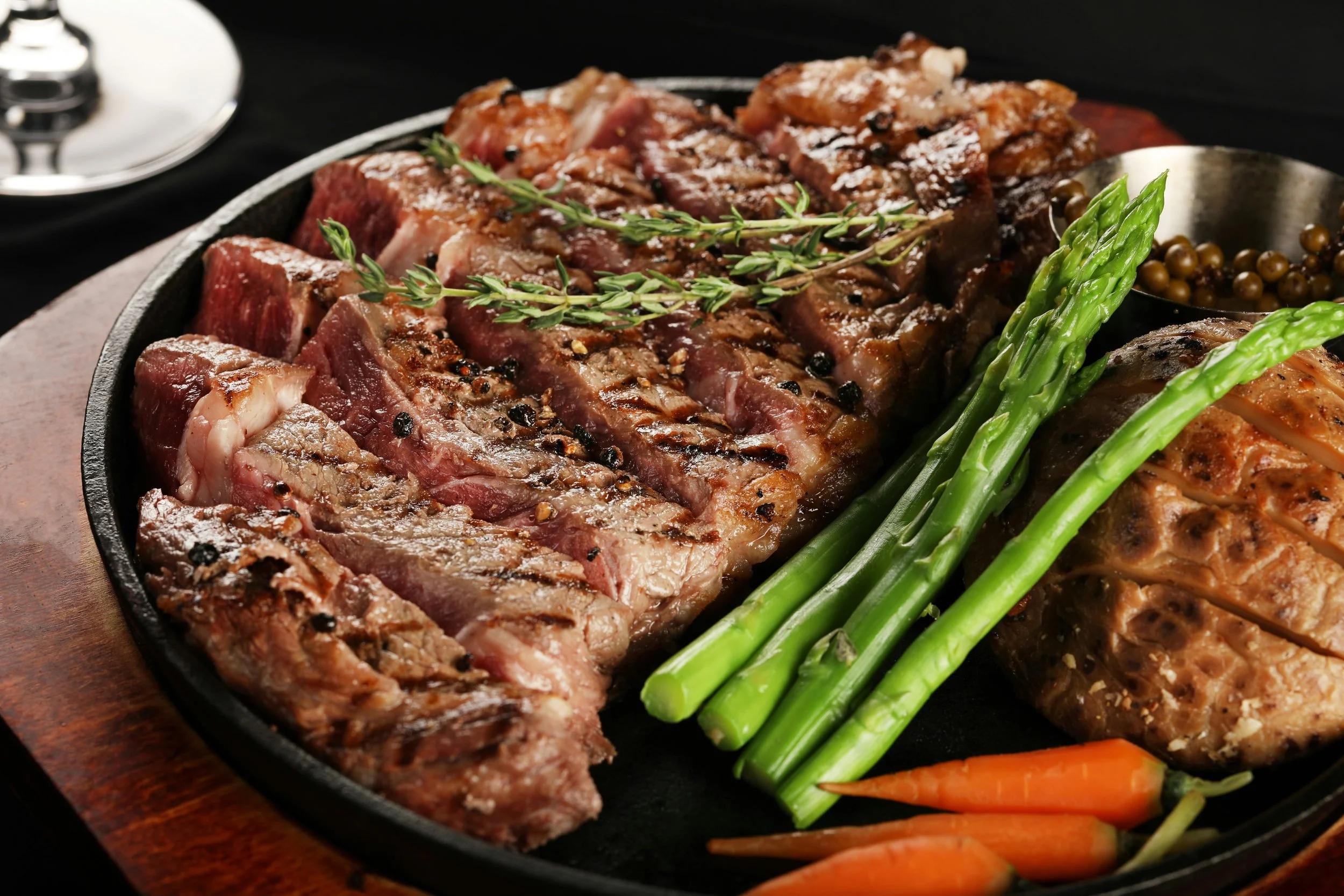
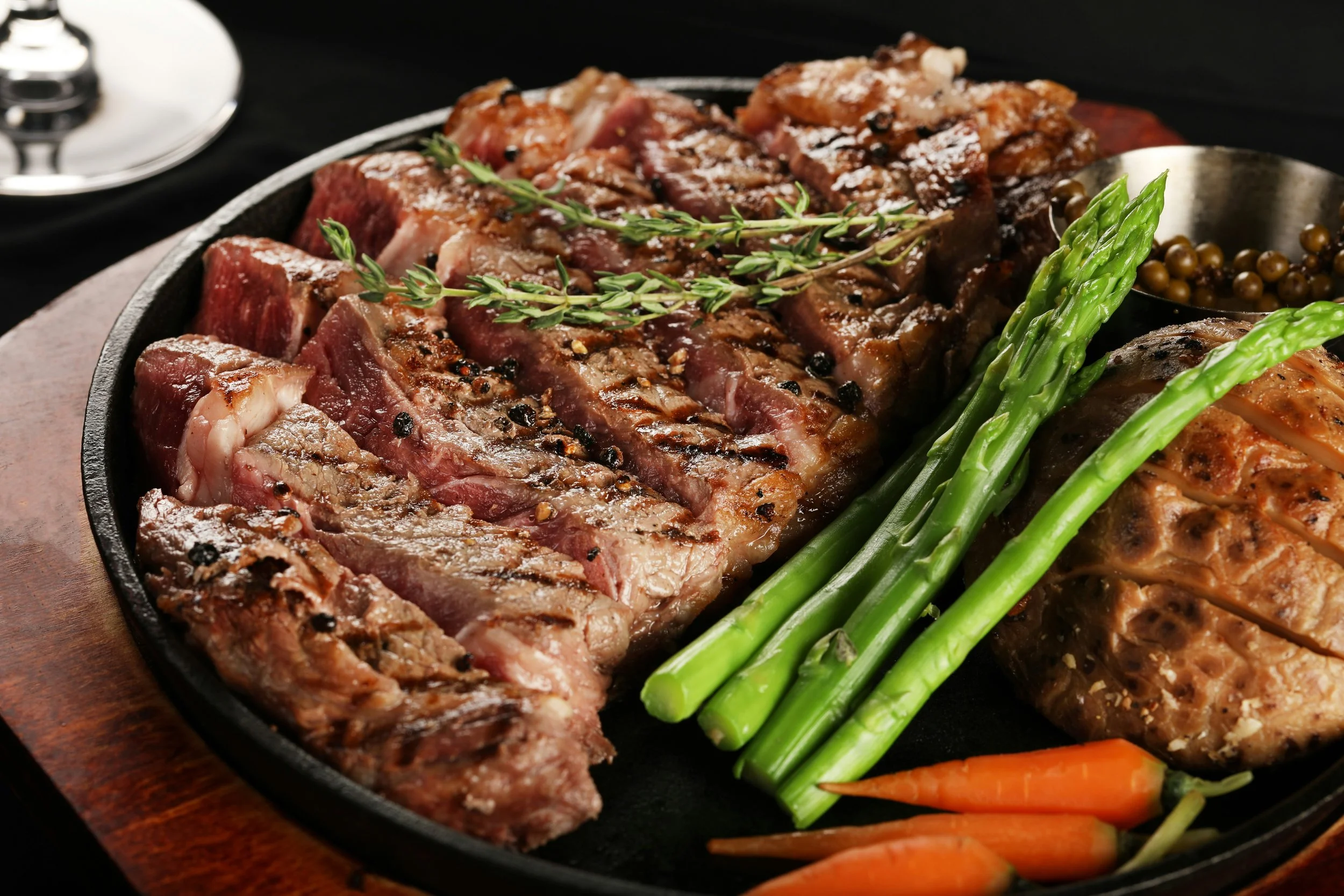
Photo by Loija Nguyen on Unsplash
As December begins, you might be thinking: "I’m going to eat light now to ‘save’ calories for the holiday parties," or "I need to start restricting my portions now so I can kick off my diet hard in January."
This is a very common approach, but it is one of the biggest pitfalls we see at Legacy Fitness & Nutrition. We call it the "Small Plate" Trap.
The belief is that restriction now will lead to success later. The reality is that extreme or sudden restriction in December usually does two things that actively work against your New Year's success:
It cranks up your cravings: You create an emotional and physical hunger that makes you more likely to overeat when you finally see that holiday buffet.
It sets a terrible precedent for January: You are teaching your body that the only way to manage weight is through severe restriction, which is a miserable and unsustainable approach.
If you want to build a lasting legacy of health, you need to focus on addition and quality right now, not subtraction and starvation.
The Physical Fallout: Why You Get Hungrier
When you suddenly cut your food intake too low, your body reacts with survival mechanisms that are much stronger than your willpower:
Hormone Shift: Your body releases ghrelin (the "hunger hormone") and drops leptin (the "fullness hormone"). This makes you feel constantly starving, not just physically, but mentally preoccupied with food.
Energy Crash: Too few calories, especially carbs, means your brain is running low on fuel. You feel tired, irritable, and completely unable to focus on work, family, or your workouts.
The Binge Trigger: When you feel deprived, the sight of a holiday cookie or a rich dish triggers an intense, primal urge to eat everything you restricted yourself from. The restriction leads directly to the loss of control.
You are essentially showing up to the holiday party with a starved brain, guaranteed to overeat.
Focus on Addition, Not Subtraction
The successful strategy for December is to maintain consistent eating habits centered around high-quality foods that provide maximum satiety (the feeling of being full and satisfied).
Here are three ways to focus on addition instead of the "Small Plate" Trap:
1. Add Protein to Every Meal (The Satiety Shield)
Protein is the single most important nutrient for controlling hunger. It takes longer to digest and signals to your brain that you are full. Instead of taking less of everything, make a point of adding a solid source of protein to breakfast, lunch, and dinner.
Instead of: Toast for breakfast.
Do This: Eggs or Greek yogurt with your toast.
Result: You stay full for hours, reducing the chance of grazing on holiday treats between meals.
2. Add Fiber-Rich Vegetables (The Volume Boost)
Fiber adds volume to your meals with minimal calories, helping you feel full and supporting healthy digestion. Before you worry about the size of your plate, worry about the content.
Instead of: Just rice and meat for dinner.
Do This: Fill half your plate with salad, steamed broccoli, or roasted greens first.
Result: You eat a large volume of filling, nutrient-dense food, leaving less space and less desire for extra heavy portions.
3. Add Movement (The Energy Generator)
If you restrict food, you feel too tired to move. If you focus on quality nutrition and feel energized, you naturally want to be more active. Instead of using food restriction to manage your weight, use a consistent movement routine. That consistency will naturally lead to better food choices because you won't want to "waste" your workout.
Building a Legacy of Balance
The Small Plate Trap is based on the idea of suffering now for a reward later. The Legacy Fitness philosophy is about creating sustainable balance now for a healthy life forever.
By focusing on adding high-quality protein and fiber, you manage hunger, boost energy, and teach your body that consistency means quality fuel, not starvation. This sets you up for an empowering, balanced, and highly successful January.

The 3 Rules of Recovery: Why Rest Days Are Your Fastest Route to Gains
Recovery is not lazy, it's strategic!

This image was created using AI to avoid copyright issues while still conveying the meaning of this article.
Everyone knows that to get stronger or lose weight, you have to hit the gym and put in the work. You need to sweat, push hard, and feel the burn. This part is easy to understand.
But here is the truth that separates the people who build a lasting fitness legacy from those who burn out fast: You do not get stronger when you are lifting; you get stronger when you are resting.
At Legacy Fitness & Nutrition, we teach that recovery is not lazy, it's strategic! If you treat rest days as a bonus or something you squeeze in if you have time, you are actively blocking your own progress. You are stopping your body from making the gains you worked so hard for.
Here are the 3 Rules of Recovery that transform your rest day from a day off into your fastest route to real strength and lasting results.
Rule 1: Recovery Is Where Muscle Growth Happens
When you lift weights or do an intense workout, you are not actually making your muscles bigger or stronger. You are creating tiny tears in the muscle fibers. This process is called stress.
It is only after the workout, when you are sleeping or resting, that your body sends resources (like protein) to repair those tears. When the body repairs them, it overcompensates and makes the muscle fiber thicker and stronger than before. This is the gain.
If you skip your rest day and hit the same muscle group again, you are tearing down a wall before your body has had a chance to fully rebuild it. You are constantly breaking even, leading to fatigue, injury, and stalled results (a plateau).
The Action: Schedule your rest days like you schedule your workouts. Non-negotiable.
Rule 2: Active Recovery Beats Sitting on the Couch
A rest day doesn't always mean lying on the sofa watching TV. In fact, total inactivity can sometimes slow down recovery by reducing blood flow. This is where Active Recovery comes in.
Active recovery means moving your body in a way that increases blood flow to flush out waste products (like lactic acid) from your muscles, without causing new stress or tears. It should be light, easy, and feel good.
Great Active Recovery Examples:
A 20-minute slow walk with your dog.
Light stretching or foam rolling to improve flexibility.
A 30-minute bike ride at a very easy, conversational pace.
A restorative yoga session.
The key word is light. If you break a sweat, if your heart rate jumps up, or if you feel muscle burn, it is no longer active recovery, it's a workout, and you broke Rule 1.
Rule 3: Sleep and Fuel Are Non-Negotiable Recovery Tools
You can't recover if your body doesn't have the time and materials it needs for repairs. These two elements are more critical than any supplement:
A. The Sleep Requirement
While you sleep, your body releases Human Growth Hormone (HGH), which is essential for repairing tissue and burning fat. Getting 7–9 hours of quality sleep is the ultimate, non-negotiable recovery tool. A late night is just as damaging to your muscle growth as an extra workout. Prioritize sleep, especially after a heavy lifting day.
B. The Protein Promise
Protein is the building block your body uses to repair those muscle tears we talked about. If you lift heavy and then don't eat enough high-quality protein, your body doesn't have the materials it needs to build stronger muscle. All that hard work was wasted.
Make sure you are consistently fueling your body with enough protein every single day, especially on rest days. This turns your rest day into a full-scale rebuilding day.
Don't let the idea of resting feel like failure. Rest is productive. It is where the hard work of the gym turns into actual, visible results. By embracing the 3 Rules of Recovery, you stop overtraining and start creating a stronger, healthier legacy.

Your "Why" is Not a Number: Redefining Success Beyond the Scale
This December, as you plan for the New Year, change your focus. Don't chase a number that fluctuates daily. Chase the feeling of confidence, the energy to live your life, and the strength to build your lasting legacy.

Image courtesy of Tamara Govedarovic via Unsplash
When you set a New Year's goal, where does your mind go first?
"I want to lose 20 pounds."
"I want to fit into my old jeans."
"I want to hit a certain number on the scale."
At Legacy Fitness & Nutrition, we understand the power of numbers. They are easy to track, and they give a clear, simple goal. But here is the major trap people fall into: If your goal is only a number, your motivation will disappear the second that number moves in the wrong direction.
A successful fitness legacy is built on something much stronger than pounds or minutes. It's built on your "Why." And your "Why" is not a number.
The Flaw in the Number-Only Goal
Imagine you’re trying to lose 10 pounds. You eat perfectly for five days, you work out hard, and you jump on the scale. You’re up a pound!
Immediately, your brain goes: "This doesn't work. I failed. Why bother?" You throw in the towel, thinking you've ruined your progress.
What you didn’t account for is that the scale is a terrible tracker of daily effort. That single pound could be:
Water weight from a higher-sodium meal.
Glycogen (stored carbs) from a tough workout.
Muscle gain (which is denser than fat).
Focusing only on the number blinds you to the real successes happening every day. You need to redefine what "winning" means.
Finding the Deeper "Why" (The Legacy)
Your true "Why" is the reason you want to be healthy in the first place. It is what keeps you going when the scale won't move. It is your Legacy.
To find your true "Why," ask yourself, "If I achieve that number goal, what will I actually do with that result?"
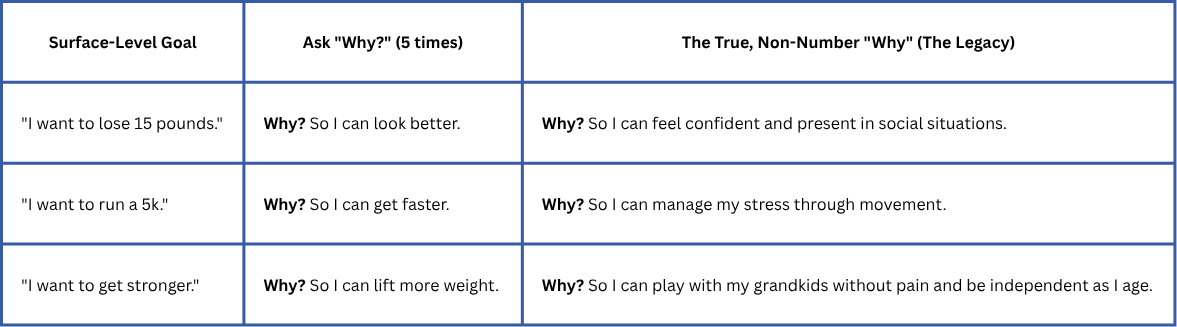
The true "Why" is always about feeling, functioning, and lasting.
The Three Non-Scale Victories (NSVs) to Track
To build a stronger "Why," start tracking these three Non-Scale Victories (NSVs) every week. These prove your habits are working, even if the scale is stuck:
1. Functional Strength and Energy
Win: You carried all the groceries in one trip instead of two.
Win: You walked up two flights of stairs and weren't out of breath.
Win: You got through the 3 PM slump without needing a coffee or sugar fix.
This tells you your cardio and strength are improving. Your body is functioning better in daily life.
2. Mood and Sleep Quality
Win: You felt calmer during a stressful work meeting.
Win: You fell asleep faster and woke up feeling truly rested (not just awake).
Win: You handled a difficult family conversation without relying on comfort food.
This shows your fitness is benefiting your mental health and hormones. You are building resilience.
3. Consistency and Recovery
Win: You nailed all three of your planned workouts this week.
Win: You felt good enough on Monday to work out again after a tough Sunday session.
Win: Your clothes fit more comfortably, even if the scale hasn't changed.
This is the ultimate win: you are building the identity of a healthy person. This consistency is the only way to guarantee the number goals follow later.
This December, as you plan for the New Year, change your focus. Don't chase a number that fluctuates daily. Chase the feeling of confidence, the energy to live your life, and the strength to build your lasting legacy. Your motivation will become unshakable.

Don't Wait for January 1st: The Power of the "Resolution Head Start"
January 1st is the worst day to start your resolution. Stop waiting for the perfect day. The perfect day to start building your legacy is right now.

This image was created using AI to avoid copyright issues while conveying the meaning of this article.
Every year, the calendar promises a magical reset button on January 1st. We load up our goals: eat better, exercise more, stress less and wait for the clock to strike midnight.
But here’s a crucial piece of advice from Legacy Fitness & Nutrition: January 1st is the worst day to start your resolution.
Think about it: January 1st is often a day of recovering, cleaning up, or easing back into work after a busy holiday period. It’s a day packed with pressure and distraction. If you start your biggest life change on a chaotic day, you set yourself up for failure.
The most successful people don't wait for the magic date. They start when they decide to start. And right now, in December, you have the biggest strategic advantage of the whole year: The Resolution Head Start.
Why December is Your Secret Weapon
December is usually when we throw up our hands and say, "I'll just enjoy the cookies now and fix everything later." This mindset is your enemy. Instead of viewing December as a write-off, see it as a low-pressure practice field.
When you start small now, you accomplish two major things:
You build momentum: Starting with a few small, consistent wins in December gives you energy and proof of success. You don't have to rely on sheer willpower on January 1st; you rely on habit.
You lower the pressure: When you start now, the stakes are lower. If you miss a day, it’s not the end of your resolution; it’s a practice stumble. This low-stress environment is where true, lasting habits are formed.
Think of it like training for a race. You don't start the marathon on race day. You start training weeks before, building your endurance slowly.
The 3-Step Head Start Plan
A head start doesn’t mean you launch into extreme dieting or 7-day-a-week training. It means choosing two or three small, non-negotiable actions that you practice consistently before the holiday rush.
Step 1: Choose Your Core 3
Identify the three simplest things you want to anchor your New Year to, and make them your December non-negotiables. They should be easy enough to do even on the busiest days.
Example 1 (Movement): 10 push-ups every morning before showering.
Example 2 (Nutrition): Eat one serving of green vegetables with dinner every night.
Example 3 (Mind/Rest): Get into bed 15 minutes earlier than usual.
That’s it. These are your Core 3. You are practicing the feeling of success and consistency without the pressure of a massive goal.
Step 2: Anchor the Habit
Connect your Core 3 habits to something you already do without fail. This is called habit stacking.
After I brew my coffee, I will do 10 push-ups.
After I sit down for dinner, I will immediately eat my serving of green vegetables.
When the 9 PM news starts, I will get ready for bed.
By linking a new, small habit to an old, established action, you take the decision-making out of the process. The coffee triggers the push-ups; the dinner table triggers the veggies. This is the mechanism that keeps momentum going through the chaos of holiday travel and parties.
Step 3: Accept Imperfection (The December Advantage)
December is messy. There will be nights when you eat an extra cookie or skip your walk because of snow. The December advantage is that these slips don't matter! They are part of the practice.
When you slip up in January, people often quit entirely. When you slip up in December, you simply say, "Oops, I missed it," and you start fresh tomorrow. You learn how to recover and restart without shame.
By January 1st, you won’t be starting a new resolution; you’ll be continuing a successful habit. You'll look back at December and realize you already built your momentum, confidence, and system.
Stop waiting for the perfect day. The perfect day to start building your legacy is right now.

The Micro-Habit Playbook: Why 5-Minute Changes Beat The 1-Day Overhaul
This December, forget the crushing weight of the "New Year, New Me" overhaul. Start small. Stay consistent. Build your legacy.

This image was created using AI to avoid copyright issues while conveying the meaning of this article.
The calendar is about to flip to a new year. You know what that means: time for the massive, life-changing, "new me" resolutions.
You promise yourself: “Starting January 1st, I will wake up at 5 AM, work out for 90 minutes, cook every meal from scratch, and never touch a soda again!”
It sounds great, doesn't it? It sounds like the key to a better you. But here's the truth most people ignore: The bigger the overhaul, the faster the fail.
If you’ve ever felt like your New Year's resolution was like trying to climb Mount Everest in a single jump, you're not alone. The problem isn't your motivation; it's your strategy. The biggest changes stick when they start small, so small in fact, that they feel almost silly.
Welcome to the Micro-Habit Playbook. This is the secret to building a fitness legacy that lasts.
The Problem with the "All or Nothing" Mentality
Why do most resolutions fail by February? Because we try to change our entire life at once. We go from 0 to 100 mph overnight.
Think of it like this: If you decide to save money, you don't instantly put $10,000 in your savings account. You start by saving $10 a week, then $20. It becomes a habit first.
Your brain and body hate sudden, painful changes. When you suddenly force yourself into a brutal, hour-and-a-half workout every day, your body screams: "Danger! Too much effort! Stop!" Your brain looks for an easy out. This is why you feel motivated on January 1st but completely burned out by January 15th.
The Micro-Habit Strategy: Too Small to Fail
A micro-habit is a behavior that is so easy and so quick that you cannot logically skip it. It usually takes five minutes or less and requires very little willpower.
The goal is not to get a workout in; the goal is to build consistency. You aren't building muscle; you are building the identity of a person who is consistent with their health.
Here’s how to apply the Micro-Habit Playbook to three common fitness goals:
Goal 1: Moving Your Body More
Instead of the big, scary goal ("I will exercise for 60 minutes every day"), try these micro-habits:
The "One Song" Rule: When you get home from work, play one song and walk, jog, or dance around the living room. (About 3–4 minutes).
The "Commercial Break" Challenge: Every time a commercial comes on while you're watching TV, do 10 squats or 10 standing push-ups against the wall. (About 2 minutes).
The "Alarm Clock Anchor": Place your shoes and socks right next to your bed. When the alarm goes off, the micro-habit is simply putting on the socks and shoes. That's it. Once the shoes are on, the full workout becomes much easier to start.
The key here is that you can always do more than the micro-habit, but the rule is you must at least do the minimum. Most days, once you have your shoes on, you’ll likely go for the walk. You’ve tricked your brain into overcoming the toughest part: starting.
Goal 2: Eating Healthier and Controlling Cravings
Nutrition goals often fail because we make the healthy choice too difficult and the unhealthy choice too easy.
The "Water First" Rule: Before you reach for any snack or start a meal, drink a full 8-ounce glass of water. (About 1 minute). This helps you check if you’re actually hungry or just thirsty, and it creates a feeling of fullness.
The "Veggies-First Bite": Before you touch anything else on your plate, take two bites of the vegetable part of the meal. (About 30 seconds). This small win prioritizes nutrient density and signals to your body that a healthy meal is coming.
The "Protein Prep": Every Sunday, cook three large chicken breasts or hard-boil six eggs. The micro-habit is just opening the fridge and slicing a piece off the pre-cooked protein anytime you feel a craving. (About 2 minutes). By having healthy protein ready, you make the healthy choice the path of least resistance.
Goal 3: Getting Better Sleep
Sleep is the engine of your fitness journey. If you skimp on sleep, you make losing weight and building muscle much harder because of hormones like cortisol.
The "Plug-In and Step Away": 1 hour before bed, plug your phone/tablet into a charger in a room other than your bedroom. The micro-habit is simply putting it on the charger. (1 minute). This separates your bedroom from your work/social life.
The "Journal Line": Before getting into bed, write one sentence, just one, about your day in a journal. (1 minute). This small act helps stop your brain from racing and prepares your mind for rest.
Building Your Legacy, Five Minutes at a Time
A small change done consistently is a mountain compared to a massive change done twice.
When you use the Micro-Habit Playbook, you aren't just achieving a goal; you are changing who you are. You are transforming into a person who consistently exercises, eats well, and prioritizes rest.
This December, forget the crushing weight of the "New Year, New Me" overhaul. Focus on the simple, repeatable actions that take five minutes or less. By the time January 1st rolls around, you won't need a resolution; you'll already have a legacy of healthy habits in place.
Start small. Stay consistent. Build your legacy.

Your December Action Plan: How to Keep Your Fitness Goals Strong Through the Year-End Holidays
Congratulations! You successfully crushed November's content goals and, more importantly, you built strong habits through the Thanksgiving holiday.

Image courtesy of Jonathan Borba via Unsplash
Congratulations! You successfully crushed November's content goals and, more importantly, you built strong habits through the Thanksgiving holiday.
Now comes the toughest test of the year: December. The final month is a whirlwind of holiday parties, family gatherings, travel, and non-stop distractions. If you try to stick to your rigid January plan, you will likely fail and feel defeated.
The secret to winning December is to shift your mindset from a focus on "making gains" to a focus on damage control and non-negotiables. This is your three-part action plan to finish the year strong and step into January feeling ahead of the game, not behind it.
Part 1: The Training Non-Negotiable (The "Anchor" Workout)
During chaotic times, your training should be about consistency, not volume.
The Strategy: The 15-Minute Anchor. Commit to one single, non-negotiable movement routine that you will do every single day of the month, regardless of where you are. This should be a 15-minute bodyweight or mobility routine that requires zero equipment.
The Why: This "anchor" workout maintains your habit streak. Even if you miss your long gym sessions, you never break the habit of movement. You are reinforcing your identity as a fit person every single day.
Action: Write down your 15-minute routine (e.g., 5 sets of 20 squats, 10 push-ups, and a plank). Schedule it first thing in the morning before life gets in the way.
Part 2: The Nutrition Damage Control (The 2-Meal Rule)
It’s unrealistic to expect perfect eating during a month full of celebratory dinners and parties. Instead of worrying about every meal, control the moments you can control.
The Strategy: The 2-Meal Rule. For every holiday party, celebratory dinner, or day off, commit to making the other two meals of that day high in protein and fiber.
Example: If you know you have a party dinner tonight, your breakfast and lunch must be simple: eggs, Greek yogurt, or a protein shake.
The Why: Protein and fiber boost satiety and stabilize blood sugar. By maximizing these at two meals, you create a metabolic "buffer" that prevents overeating and mitigates the damage of the heavy meal or party snacks. You control 80% of the day's intake.
Part 3: The Recovery Commitment (The Sleep Target)
When schedules get busy, the first thing people sacrifice is sleep. This is a fatal flaw for fitness because poor sleep elevates stress hormones, increases cravings, and destroys recovery.
The Strategy: The 7-Hour Minimum. Decide on a non-negotiable minimum number of sleep hours (e.g., 7 hours). Treat this commitment with the same importance as a work deadline.
The Why: Better sleep is your ultimate weight management and recovery tool. It naturally reduces junk food cravings and lowers cortisol. When your sleep is strong, your willpower is strong.
Action: Set a "wind-down" alarm 30 minutes before your target bedtime. Stop scrolling, turn off bright screens, and read a book or practice deep breathing.
Step into January a Winner
December is not the time to start a new, challenging goal. It is the time to protect the great habits you've already built. By committing to your 15-Minute Anchor workout, using the 2-Meal Rule, and protecting your Sleep Target, you eliminate the need for a frantic "New Year, New Me" panic.
You will step into January feeling rested, strong, and ready to immediately accelerate your progress because you never truly stopped. That is the definition of a strong health legacy.
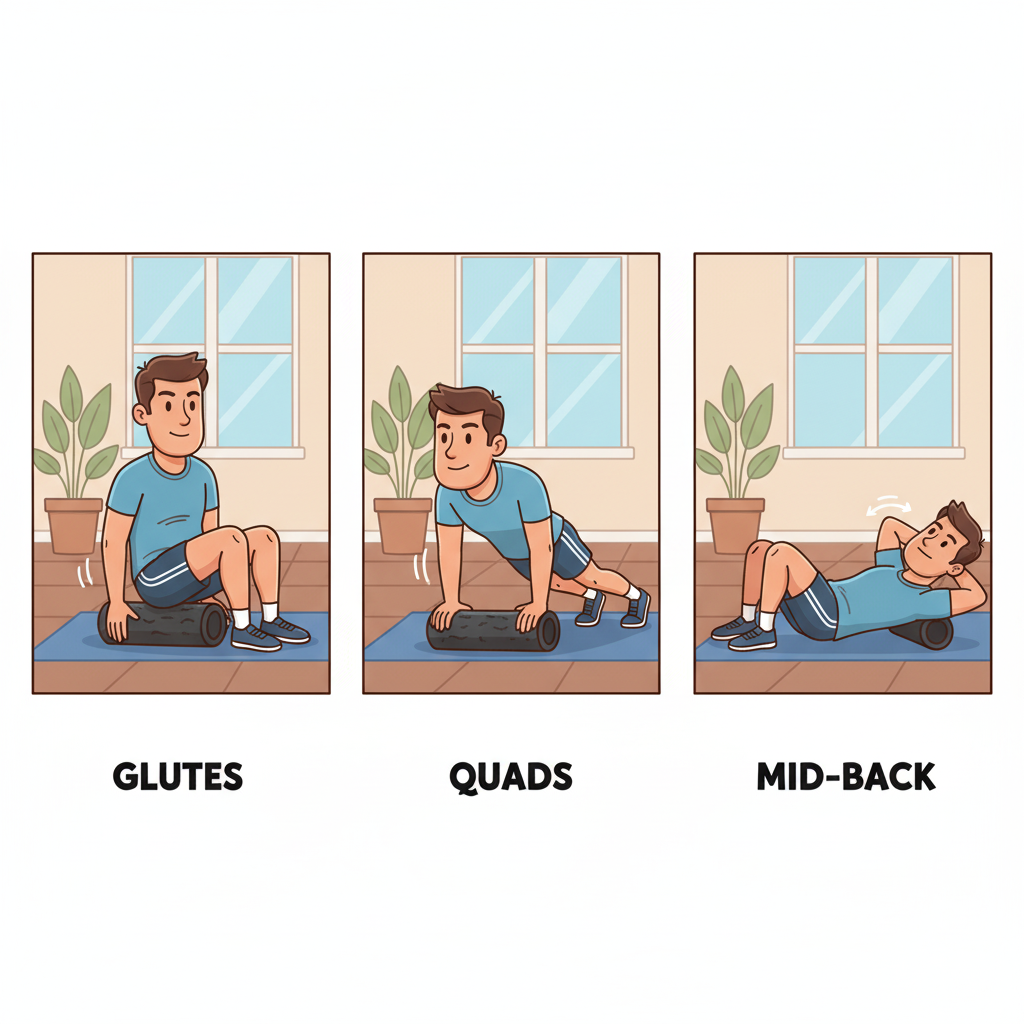
The 5-Minute Foam Rolling Routine to Soothe Post-Holiday Aches and Tightness
The Thanksgiving weekend is often filled with activity that our bodies aren't used to: long hours of travel, sleeping in a different bed, standing while cooking, and maybe even that quick Turkey Trot! Just five minutes of self-massage with a foam roller is a powerful investment in pain-free movement.
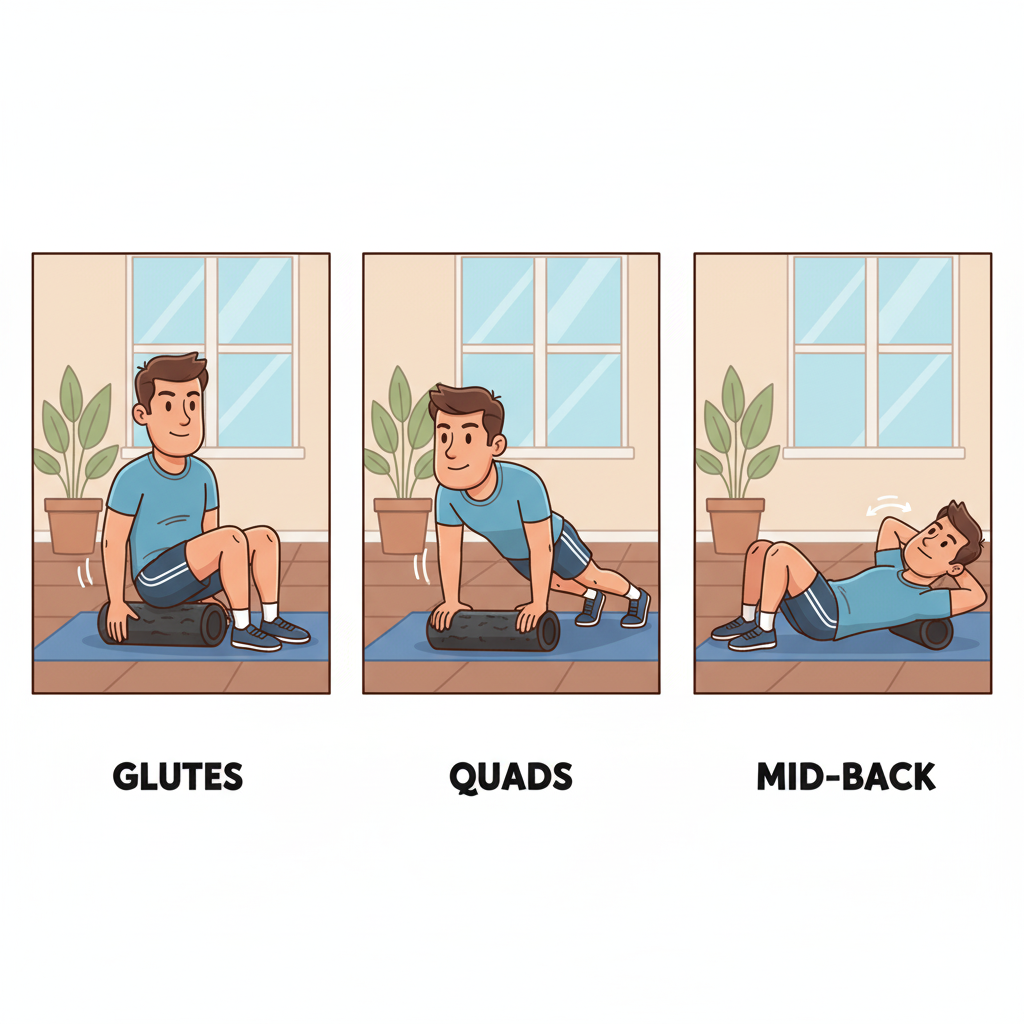
The Thanksgiving weekend is often filled with activity that our bodies aren't used to: long hours of travel, sleeping in a different bed, standing while cooking, and maybe even that quick Turkey Trot! All of this can leave you with unexplained stiffness, especially in your lower back, hips, and shoulders.
Foam rolling is your simple, five-minute solution to soothe those post-holiday aches. It's often called "poor man's massage," and for good reason; it’s a powerful way to release muscle tension, improve blood flow, and speed up recovery, all for the cost of a simple foam cylinder.
This quick, effective 5-minute routine targets the three areas most likely to seize up after a weekend of travel and holiday stress.
The 5-Minute Relief Flow
Perform each move for 60 seconds on each side or major muscle group. Move slowly and deliberately. When you find a spot that is particularly tender (a "trigger point"), pause and hold for 15–20 seconds, allowing the tissue to release.
1. The Thoracic Spine (Mid-Back Relief - 60 seconds)
The Area: The upper and middle back, often stiff from slouching on the couch or a long car ride.
The Move: Lie on your back with the roller placed horizontally just below your shoulder blades. Cross your arms over your chest (to pull your shoulder blades apart). Slowly roll up and down, keeping your hips lifted and supporting your neck with your hands if needed. This is great for undoing "hunching."
2. The Glutes (Low Back Protection - 60 seconds per side)
The Area: Your glutes and hips, which can tighten and cause lower back pain when sitting or standing too long.
The Move: Sit on the roller. Shift your weight onto one side (e.g., your left glute). Cross your left ankle over your right knee (like sitting cross-legged). Roll slowly from the bottom of your hip bone down to the top of your hamstrings.
The Hack: When you hit a tender spot, focus on breathing deeply to help the muscle release.
3. The Quads & Hip Flexors (Knee and Hip Relief - 60 seconds per side)
The Area: The front of your thighs, which get tight from sitting or from a sudden burst of running (like the Turkey Trot!).
The Move: Lie face down with the roller under your quads, supporting yourself on your hands/forearms. Slowly roll from the top of your hip down to just above your knee. Avoid rolling directly on the knee joint.
The Hack: If you find a very tight spot, turn your foot inward or outward slightly to hit the muscle from different angles.
4. The Calves (Foot and Leg Relief - 60 seconds per side)
The Area: Your calves and lower legs, often tight from walking, standing, or wearing different shoes.
The Move: Sit on the floor with one calf resting on the roller and the other foot on the floor for support. Use your hands to slowly push and pull your body, rolling the calf muscle.
The Hack: Roll your foot inward and outward slightly to ensure you hit both sides of the calf muscle.
5. The Lats (Shoulder & Upper Back - 60 seconds per side)
The Area: The large muscles under your armpit and on the side of your back, which can get tight from carrying luggage or sleeping awkwardly.
The Move: Lie on your side with the roller just beneath your armpit. Extend the arm of that side straight out. Slowly roll up and down a few inches, easing into the pressure.
The Hack: This area can be intense! Keep the pressure gentle and focus on slow, small movements to release shoulder tension.
Just five minutes of self-massage with a foam roller is a powerful investment in pain-free movement. Make it a new habit to roll out the tension before the work week begins!
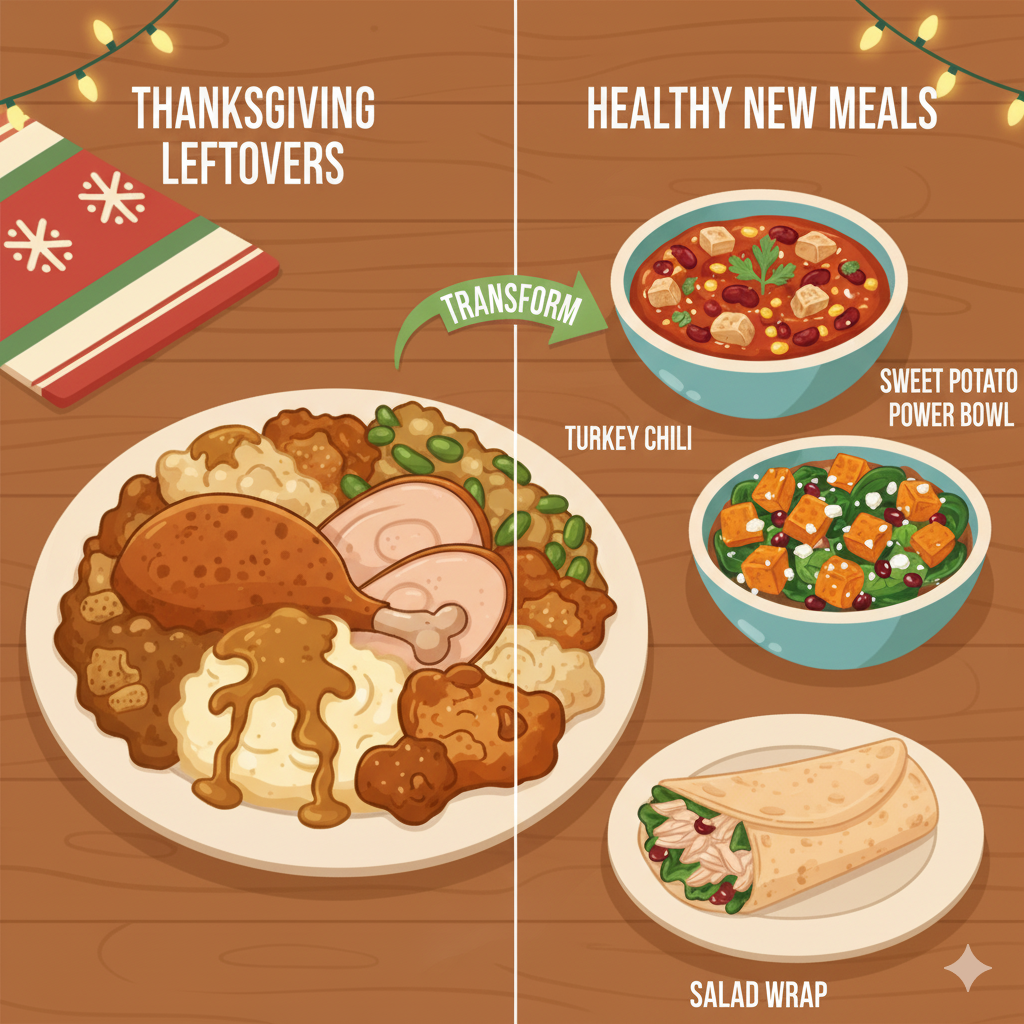
Leftovers Lighter: Quick, Healthy Recipes for Thanksgiving Day 2 Leftovers
The day after Thanksgiving is often called "Black Friday," but it could also be called "Leftovers Day."
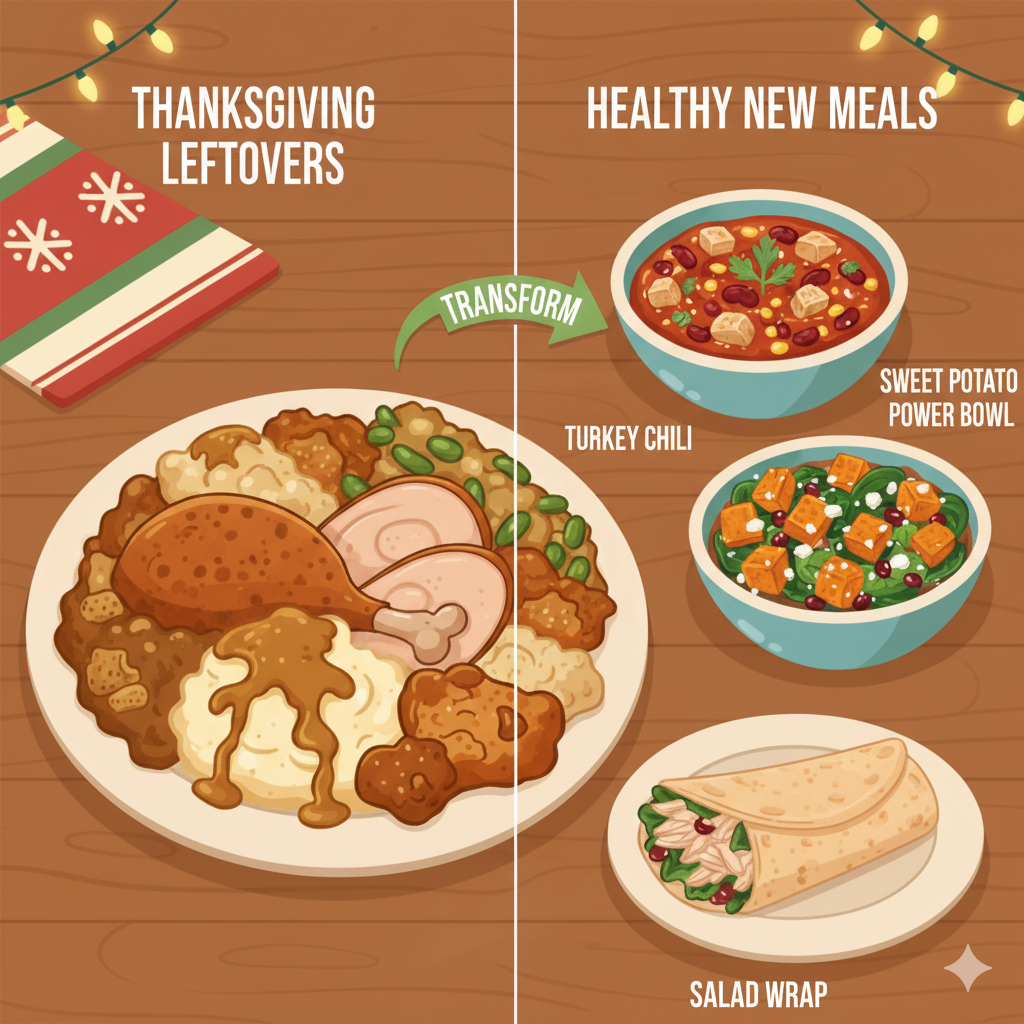
The day after Thanksgiving is often called "Black Friday," but it could also be called "Leftovers Day." You've got massive containers of turkey, mashed potatoes, and stuffing filling your fridge. While the initial holiday meal was a joyful indulgence, eating heavy, high-calorie leftovers for three days straight can derail your energy and make you feel sluggish.
The good news is you don't have to waste food. You can transform those rich holiday leftovers into lighter, protein-packed, and healthy meals that are ready in minutes. The key is to deconstruct the heavy meal and repurpose the components.
Here are three quick, healthy ways to use your Thanksgiving leftovers for meals that feel fresh and light.
1. The Protein-Packed Turkey Chili (The Clean-Out Meal)
This recipe instantly transforms dense, buttery turkey into a healthy, fiber-rich meal that’s perfect for a chilly late-November evening.
Deconstruct: The leftover turkey meat is pure, lean protein.
Repurpose: Turkey Chili Base.
Ingredients: 1 can crushed tomatoes, 1 can diced tomatoes, 1 can kidney or black beans (rinsed well), 1 cup frozen corn (optional), chili seasoning.
The Assembly (15 minutes): Sauté half an onion and a bell pepper in a pot. Add the canned ingredients and seasoning. Bring to a simmer. Shred your leftover turkey and add it to the pot. Let it simmer for 15 minutes to soak up the flavors.
The Hack: Skip the heavy cheese and sour cream. Top with fresh cilantro, a squeeze of lime juice, and a spoonful of Greek yogurt for a protein boost.
2. The Sweet Potato & Egg Power Bowl (The Metabolism Booster)
This is a fantastic, protein-heavy breakfast or brunch option that takes advantage of your leftover carbs while boosting your morning metabolism.
Deconstruct: Leftover sweet potatoes (or even mashed white potatoes).
Repurpose: Sweet Potato Hash.
The Assembly (10 minutes): Dice any leftover sweet potatoes (or use leftover mashed sweet potatoes). Sauté a handful of chopped spinach or kale in a skillet with a tiny bit of olive oil. Add the diced sweet potatoes and warm through.
The Hack: Push the sweet potato and greens mixture to the side and fry or scramble 2 eggs in the same pan. Serve the eggs on top of the hash. The combination of protein and complex carbs is perfect for sustained energy without the crash.
3. The Turkey & Cranberry Salad Wrap (The Quick Lunch)
This simple meal uses the turkey as a lean protein base and adds crunch and fiber for a completely fresh flavor profile.
Deconstruct: Leftover turkey and cranberry sauce.
Repurpose: High-Protein Lunch Wrap.
Ingredients: Whole-wheat tortillas or large lettuce wraps, Greek yogurt, celery, slivered almonds (optional).
The Assembly (5 minutes): In a bowl, mix shredded turkey with 1–2 tablespoons of plain Greek yogurt (instead of mayonnaise), some chopped celery for crunch, and a small spoonful of cranberry sauce for flavor. Mix well.
The Hack: Place the mixture in a whole-wheat tortilla with a handful of fresh spinach, or wrap it in large lettuce leaves for a low-carb, high-fiber option.
By getting creative with your leftovers, you honor the abundance of the holiday while making conscious choices that support your fitness goals. A little planning means you can enjoy the food and feel great all weekend long.

The Family Fun Turkey Trot: Creative Ways to Stay Active on the Big Day
Make this Thanksgiving a day for movement as much as it is for food. These creative, simple activities ensure that your entire family stays active, energized, and ready to enjoy every moment of the holiday season.
💪🦃 Happy Thanksgiving from everyone at Legacy Fitness & Nutrition! 🦃💪

Thanksgiving Day is centered on food, family, and relaxation. But it doesn't have to be a day spent entirely on the couch. Before the feast, or even after, finding creative ways to move as a family is a fantastic tradition that boosts your energy, helps regulate your metabolism, and creates fun, lasting memories.
While many cities host official "Turkey Trot" races, you don't need a formal event to get your steps in. The goal is simple: move together.
Here are three simple, low-pressure, and fun ways to incorporate activity into your Thanksgiving Day.
1. The Neighborhood Turkey Trot (The Classic)
This is the easiest way to incorporate movement and fresh air into your morning.
The Plan: Schedule a specific time (e.g., 9:00 AM) and announce it to the family. This creates a commitment.
The Pace: The goal is inclusivity. It doesn't matter if you jog, walk briskly, or push a stroller. Keep the pace conversational so everyone can enjoy the time together.
The Incentive: Make it fun! Wear silly hats, put on an old Thanksgiving-themed t-shirt, or set up a very simple finish line (like a scarf tied between two trees) back at the house. The person who finishes last gets to pour the coffee!
The Legacy Lesson: A brisk morning walk is a form of gentle exercise that aids digestion and sets a proactive tone for the rest of the day, reinforcing the importance of movement.
2. The Post-Feast Football or Yard Game (The Light After-Dinner Movement)
After the big meal, the urge to collapse on the couch is strong. Resist the urge with a short, easy activity that gets everyone moving before the inevitable afternoon nap.
The Plan: After the dishes are cleared (or while waiting for dessert), announce a 20-minute break for a light game.
The Activity: The famous post-feast backyard football game is great, but keep it light and gentle, no high-impact dives! Alternative, lower-impact games include:
Cornhole or Lawn Darts: Easy to stand and chat while playing.
Frisbee or Bocce Ball: Encourages walking and gentle bending/reaching.
The Dessert Walk: If games aren't your speed, simply take a 15-minute gentle walk around the block. This aids in digestion and helps lower the blood sugar spike from the meal.
The Legacy Lesson: Movement after a large meal is scientifically beneficial for digestion and blood sugar regulation. It prevents the complete shut-down that a sudden large meal can cause.
3. The Kitchen Dance Party (The Indoors Fun)
If the weather is bad or you can't get everyone outside, bring the movement indoors with some fun, low-pressure activity.
The Plan: While the cooks are cleaning the kitchen or while waiting for the next course, crank up some music.
The Activity: Put on a fun, upbeat playlist and start a spontaneous 10-minute dance party. This can be silly, low-effort, and highly engaging, especially for kids. Even gentle stretching and swaying to the music can work.
The Legacy Lesson: Moving and laughing are powerful stress relievers. This kind of spontaneous, non-intense movement reduces stiffness and releases endorphins, making everyone happier and more connected.
Make this Thanksgiving a day for movement as much as it is for food. These creative, simple activities ensure that your entire family, from the youngest to the oldest, stays active, energized, and ready to enjoy every moment of the holiday season.