

The Best Low-Impact Cardio for People Who Hate Running
Have you ever looked at a runner gliding past and thought, "That looks miserable"? The good news is that running is not the only way to get a great cardio workout. Low-impact doesn't mean low-effort.

Have you ever looked at a runner gliding past and thought, "That looks miserable"? You're not alone. Many people hate running (myself included), and for good reasons, it can be tough on the knees, boring, or just feel like a chore.
The good news is that running is not the only way to get a great cardio workout. Cardio simply means working your heart and lungs, and you can absolutely get a strong, calorie-burning, heart-healthy workout without pounding the pavement. Best of all, low-impact cardio is much kinder to your joints, which is key for staying fit for the long haul.
Low-impact doesn't mean low-effort. It just means at least one foot (or hand) stays connected to the ground or equipment at all times. This prevents the jarring shock that can bother your knees, hips, and back.
Here are the best ways to get your heart rate up and burn calories without ever taking a running stride.
1. The Underrated Power of Rucking
You might not know the term, but rucking is a growing fitness trend that’s as simple as it is effective. Rucking is just walking with a weighted backpack. It’s what soldiers have done for centuries, but for fitness, it’s a game-changer. Personally, I’ve been doing three 15-20 minute ruck walks, most days for the past couple years.
Why it works: By adding weight (start with 10–15 pounds of books, sandbags, or water bottles), you increase the work your muscles have to do to move forward. This boosts your calorie burn significantly, making a simple walk much more effective.
The benefits: It builds core strength, strengthens your back, improves posture (you have to stand up straight to carry the weight), and is totally low-impact. You can do it anywhere: your local park, neighborhood sidewalks, or a hiking trail.
How to start: Use a comfortable backpack that sits high on your back. Keep the weight snug and close to your body so it doesn't shift around. Start with a light load and stick to flat ground until your body gets used to the extra resistance.
2. Cycling: The Ultimate Joint Saver
Whether you're on a spin bike at the gym, a stationary bike at home, or cruising on a road bike outside, cycling is the gold standard of low-impact cardio. My own coach wanted to me increase my cardio a couple years ago, so I added 30 mins 5 days a week.
Why it works: Your feet are constantly connected to the pedals, so there’s zero impact. Cycling is excellent for building strength in your quads, hamstrings, and glutes, and you have total control over the intensity. You can make it easy with a leisurely pace or tough by increasing the resistance.
The benefits: Cycling is fantastic for heart health and building endurance. It allows you to push yourself to a very high intensity (which is great for calorie burn) without stressing your joints.
How to start: If you're using a stationary bike, focus on your cadence (how fast you pedal) and your resistance. Try a structured interval workout: pedal fast for 60 seconds with medium resistance, then slow down for 60 seconds. Repeat 8–10 times.
3. The Elliptical Machine: A Runner’s Dream, Without the Impact
The elliptical trainer, often called the cross-trainer, is an incredible machine that lets you use both your arms and legs. It mimics the motion of running or cross-country skiing, but the smooth, gliding movement means your joints never experience impact.
Why it works: The elliptical allows you to work your entire body at once—your legs push the pedals, and your arms pull the handles. Using more muscles means you burn more calories in less time.
The benefits: It’s customizable. You can adjust the resistance to focus on building leg strength, and you can change the incline to target your glutes (the biggest muscles in your body!).
How to start: Don’t just hold on for dear life! Use the handles to push and pull actively. Instead of steady-state cardio, try working backward for a few minutes—it works your hamstrings and calves in a unique way and helps keep your workout interesting.
4. Swimming and Water Aerobics: Zero Gravity Fitness
Nothing is gentler on the body than working out in water. Swimming is a classic full-body workout, but if you don't enjoy lap swimming, water aerobics or even just walking against the resistance of the water can be incredibly effective.
Why it works: Water supports about 90% of your body weight. This reduces the strain on every joint. The water itself provides resistance in every direction, which helps build muscle tone while you’re doing cardio.
The benefits: Swimming uses nearly every major muscle group in the body, making it a highly efficient workout. Water workouts are also incredibly relaxing, helping to clear your mind while you exercise.
How to start: If swimming laps is not your thing, try a water walking routine in the deep end. Wear a float belt and use the water resistance to push your arms and legs back and forth, like walking in slow motion.
5. The Step Machine or Stair Climber: Climb to Fitness
The stair climber is a beast of a machine. It mimics climbing stairs, which is an essential functional movement for life. This machine works your glutes, hamstrings, and calves like almost nothing else, all with a very controlled, low-impact motion.
Why it works: Climbing is a naturally harder movement than walking on a flat surface. Since you are stepping up, your biggest muscle groups (the glutes and quads) are constantly engaged, leading to a high calorie burn and better overall leg strength.
The benefits: It’s an incredible tool for strengthening the muscles that support your knees, which is a major win for long-term joint health. It also elevates your heart rate quickly.
How to start: To get the best results, avoid leaning heavily on the railings. If you need to hold on, use a light grip just for balance. Stand tall, keep your shoulders back, and push through your whole foot (not just your toes) to make those glutes do the heavy lifting.
Embrace Your Workout, Your Way
The biggest mistake people make is thinking that a good workout has to feel like punishment. If you hate running, forcing yourself to do it every day is the fastest way to quit.
The key to long-term fitness is consistency. Find the low-impact cardio option you genuinely enjoy—whether it's cycling through a scenic route, rucking in the park, or gliding on an elliptical—and stick with it. Your joints will thank you, and your heart will be stronger for it.

The Halloween Trick-or-Treat Survival Guide: 5 Pro Strategies to Savor Sweets Without Derailing Your Goals
It's here: Halloween night. At Legacy Fitness & Nutrition, we believe in balance, not burnout. You don't have to choose between your health goals and enjoying life. You just need a strategy.

This image was generated using AI to avoid copyright issues while conveying the meaning of the article. Happy (and safe) Halloween to you and your family!
It's here: Halloween night. For anyone focused on health and fitness, the season of endless candy can feel less like a fun holiday and more like an attack on your willpower. You want to enjoy the fun, but you fear that one night of treats will completely derail the hard work you put in all month.
At Legacy Fitness & Nutrition, we believe in balance, not burnout. You don't have to choose between your health goals and enjoying life. You just need a strategy.
Here are 5 pro-strategies: a mindset trick, a timing hack, and three tactical moves to help you savor the sweets, enjoy the holiday, and wake up on November 1st feeling in control.
Strategy 1: The Mindset Shift (Balance, Not Bank)
The biggest mistake people make is skipping meals all day to "save up" calories for the evening's candy. This is called "banking calories," and it backfires every time. When you arrive at the party or start handing out candy while hungry, your body loses all willpower and you inevitably overeat.
Pro Tip: Eat your normal, balanced meals. Make sure your breakfast and lunch are rich in protein and fiber (like eggs, oats, and vegetables). Being full and satisfied means you can enjoy a treat consciously, rather than letting hunger force you into a binge.
Strategy 2: The Timing Hack (Fuel Up First)
The best time to eat a little candy or treat is immediately after a balanced meal.
Why it works: When your stomach is full of healthy food, the fiber and protein slow down how fast sugar hits your bloodstream. This prevents the massive sugar spike and crash that leads to a headache and more cravings.
Action: Have a small, planned piece of your favorite candy right after your healthy, protein-rich dinner.
Strategy 3: The "Trolley Trick" (Buy Your Least Favorite)
If you are the one buying candy to hand out, this trick is a game-changer for your household.
Action: Buy a type of candy you genuinely dislike. If you are a chocolate lover, buy fruity, sour candies. If you love gummies, buy cheap chocolate bars.
Why it works: You remove the temptation entirely. The candy is there for the trick-or-treaters, not for you. You won't be picking through the bag for your favorites in the weeks leading up to Halloween.
Strategy 4: The Post-Treat Movement (Walk It Off)
Instead of using exercise to "punish" yourself for eating a treat, use it to boost your mood and aid digestion.
Action: If you are with the family, turn trick-or-treating into your exercise for the day. Walk briskly, take the long route, and don't stop for rest. If you are staying home, take a 15-minute walk around the block before you settle in for the night.
The Benefit: Movement improves digestion and helps your body process the sugar more effectively.
Strategy 5: The November 1st Reset
A single night of indulgence will not destroy your progress, but letting that indulgence carry over into November can. Don't let a party turn into a two-month holiday slide.
Action: Throw away, donate, or freeze the excess candy the morning after Halloween. The candy should leave the house.
Mindset: Wake up on November 1st, drink your water, and immediately return to your normal routine of protein, fiber, and movement. It’s a new month and a fresh start.
Embrace the joy of the holiday. Enjoy a planned treat mindfully, and then use your strong routine to maintain your healthy legacy straight through the end of the year.

Beyond Water: The New Hydration Strategy that Optimizes Electrolytes, Energy, and Performance
If you’re exercising consistently, managing high stress, and drinking gallons of plain water every day, you might actually be missing a critical piece of the performance puzzle.

You know you need to drink water. It’s the most basic rule of health and fitness. But if you’re exercising consistently, managing high stress, and drinking gallons of plain water every day, you might actually be missing a critical piece of the performance puzzle.
The new focus in sports and wellness is moving beyond water to a smarter approach called "Electrolyte Optimization." If you want steady energy through your mid-week slump and faster recovery from your fall workouts, you need to understand that hydration is about more than just volume, it's about balance.
The Problem with Just Drinking Water
When you sweat during a workout, in a high-stress meeting, or even while sleeping, you don't just lose water; you lose electrolytes. These are essential minerals (like sodium, potassium, and magnesium) that carry electrical signals your body needs to function.
If you drink massive amounts of plain water without replacing those lost electrolytes, you can dilute the ones you have left. This can lead to:
Cramps and Muscle Spasms: Especially during or after a workout.
Fatigue and Brain Fog: Your brain needs electrolytes for proper function.
Poor Recovery: Muscle repair slows down without the right mineral balance.
To truly hydrate, you need a strategy that puts back what you lose, especially as you increase your physical activity this fall.
The Electrolyte Power Trio
To optimize your energy and recovery, focus on getting these three key electrolytes:
1. Sodium (The Key Conductor)
Salt is often demonized, but it’s crucial for athletes and active people. It regulates fluid balance in and out of your cells and drives your thirst mechanism. Without enough sodium, your body can’t hold onto the water you drink.
Action: For hard, sweaty workouts, add a pinch of high-quality sea salt or a small amount of electrolyte powder to your water bottle.
2. Potassium (The Muscle Regulator)
Potassium works with sodium to balance the fluids inside your cells. It's essential for nerve signaling, muscle contraction, and preventing cramps.
Action: Don’t rely on supplements; eat potassium-rich foods like bananas, spinach, sweet potatoes, and avocados. These also provide great nutrients.
3. Magnesium (The Relaxation Mineral)
Magnesium is a powerhouse involved in over 300 body processes, including muscle relaxation and energy production. It is a vital tool for stress management and sleep quality (key for your October goals).
Action: Snack on almonds and cashews, or make sure to include dark leafy greens and dark chocolate (in moderation) in your diet.
Your Daily Hydration Game Plan
Don’t wait until you're thirsty to drink; thirst is already a sign you’re behind. Use this simple daily strategy:
Start Strong: Drink a large glass of water with a pinch of sea salt and lemon juice immediately upon waking. This kick-starts your hydration and electrolyte balance after hours of sleep.
During Workouts: If you sweat heavily for more than 45 minutes, use an electrolyte mix (like LMNT, and no I’m not sponsored, yet…lol) or a homemade solution (water, small amount of salt, and a dash of fruit juice).
Post-Workout Snack: Combine hydration with recovery. A glass of low-fat milk, a banana, or coconut water are all excellent sources of natural electrolytes and necessary nutrients.
By focusing on a smarter, electrolyte-optimized approach, you will maximize your energy, reduce the risk of cramps, and ensure your body is fully ready to take on the demands of a busy autumn.

Training "Micro-Cycles": Why Changing Up Your Workout Every 4-6 Weeks is Key to Long-Term Motivation
Doing the same set of exercises week after week is a major trap. It stops your body from growing and kills your motivation. The most successful athletes and busy professionals use Training Micro-Cycles: short, planned periods of time where they focus on a specific goal.

This image was created using AI to avoid copyright issues while conveying the meaning of this article.
If you’ve ever found a workout routine you love and then stuck with it for six months straight, you probably noticed two things happened around the same time:
Your progress slowed down.
You started getting bored.
Doing the same set of exercises week after week is a major trap. It stops your body from growing and kills your motivation. The secret to long-term success isn't finding one perfect workout; it's learning how to change your workout intelligently.
The most successful athletes and busy professionals use Training Micro-Cycles: short, planned periods of time where they focus on a specific goal. This strategy is the best way to keep your body guessing, avoid plateaus, and make sure your fitness journey lasts a lifetime.
The Science of Adaptation (Why Routine Kills Progress)
Your body is incredibly smart. When you start a new routine, it has to work hard to adapt. It breaks down muscle, repairs it stronger, and improves your ability to move. This is where you see fast results.
But after about 4 to 6 weeks, your body gets the memo. It says, "I know exactly what's coming. I've figured this out." When your body adapts, the stress from the workout isn't enough to force change anymore, and boom—you hit a plateau.
A micro-cycle is simply your plan to introduce a new kind of stress just before the plateau hits. It’s a powerful strategy that keeps your progress climbing upward, year after year.
Building Your 4-6 Week Micro-Cycle
Instead of aimlessly changing exercises, your micro-cycle should focus on changing a key training element. Here are three simple ideas for a four-week cycle that works perfectly for a busy schedule:
Cycle Idea 1: The Intensity Swap
Focus on two different styles of training back and forth.
Weeks 1-4 (Strength Focus): Lift heavier weights for fewer reps (e.g., 5 sets of 5 reps). Use longer rest periods (90-120 seconds). Goal: Build pure strength.
Weeks 5-8 (Endurance Focus): Use lighter weights for more reps (e.g., 3 sets of 15 reps). Use shorter rest periods (30-60 seconds). Goal: Build muscle endurance and tone.
Result: You hit your muscles in two completely different ways, forcing continuous adaptation.
Cycle Idea 2: The Push/Pull Swap
Change the type of equipment or movement pattern you use.
Weeks 1-4 (Barbell/Bilateral): Focus on two-sided movements with a barbell or two dumbbells (like Squats, Bench Press, Romanian Deadlifts). Goal: Maximize overall load and power.
Weeks 5-8 (Dumbbell/Unilateral): Focus on one-sided movements with dumbbells (like Split Squats, Single-Arm Rows, Single-Leg Deadlifts). Goal: Fix muscle imbalances and improve stability/core strength.
Result: You strengthen your core stabilizers and correct imbalances that can lead to injury later on.
Cycle Idea 3: The Time Crunch Swap
If your schedule changes, adjust your training style to match.
Weeks 1-4 (When Life is Slower): Focus on longer, time-based training (45-60 minute steady workouts).
Weeks 5-8 (When Life is Hectic): Switch to high-density, time-efficient training (like the 30-minute Supersets from our article on “Time-Saving Strength”).
Result: Your fitness plan adapts to your life, so you never have to quit just because you’re too busy.
The biggest benefit of using micro-cycles is mental. Knowing that a change is coming in a few weeks keeps you motivated during the tough parts of the cycle. This fall, use micro-cycles to turn inconsistency into a built-in plan for long-term health.
Tired of starting and stopping the same routine? Stop getting stuck in a fitness rut. A coach can design the perfect 4-6 week micro-cycles to match your schedule and your goals. Click here to book a free 15-minute consultation to learn how we can keep your progress moving forward.

The Anti-Inflammatory Diet: Simple Fall Recipes to Reduce Aches, Boost Recovery, and Sharpen Your Mind
Persistent aches and slowness are often signs of too much inflammation in your body. Following an Anti-Inflammatory Diet is a powerful step you can take this fall to recover faster, feel more energetic, and protect your long-term health.
Disclaimer: The information in this article is for educational purposes only and is not intended to treat, diagnose, or cure any medical condition. Please consult with your doctor or a registered dietitian before making significant changes to your diet, especially if you have a pre-existing medical condition or are taking medication.

This image was created with AI to avoid copyright issues while conveying the content of this article.
If you're training hard and living a busy life, you probably deal with muscle soreness, stiff joints, or a nagging feeling of mental fog. While some of this is normal, persistent aches and slowness are often signs of too much inflammation in your body.
Inflammation is your body's immune response to stress. When you train, your body gets inflamed to repair the muscle. But when your diet is poor, your stress is high, and your sleep is low, that inflammation never fully goes away. It becomes a constant, low-grade fire that slows down your recovery, makes your joints ache, and even makes it harder to think clearly.
The good news? You can fight this fire with your fork! Following an Anti-Inflammatory Diet is a powerful step you can take this fall to recover faster, feel more energetic, and protect your long-term health.
The Three Rules of Anti-Inflammatory Eating
You don't need a complicated plan. Start by focusing on adding these powerful foods while reducing the ones that fuel the fire:
Rule 1: Prioritize Omega-3 Fats (The Firefighters)
Omega-3 fatty acids are the single most powerful anti-inflammatory nutrients. They actively go into your body and turn down the dial on inflammation.
Action: Eat two servings of fatty fish (salmon, tuna, sardines) per week. If you don't eat fish, focus on walnuts, flaxseeds, and chia seeds.
Rule 2: Eat the Rainbow (The Antioxidants)
Antioxidants are compounds in plants that neutralize the harmful particles that cause damage and inflammation in your body. The brighter the color of the fruit or vegetable, the more antioxidants it usually has.
Action: Focus on deeply colored produce: leafy greens (spinach, kale), bright berries, and orange/yellow vegetables (squash, carrots). Aim to get a variety of colors in every meal.
Rule 3: Cut the Inflammatory Accelerants
If you want to put out a fire, you have to stop adding fuel to it. Certain foods actively cause inflammation in the body and should be limited:
Processed meats (sausage, hot dogs)
Refined white sugar (soda, candy, cakes)
Deep-fried foods
Refined vegetable oils (like partially hydrogenated oils)
Two Simple Fall Recipes for Rapid Recovery
This season is the perfect time to add warming, soothing, and inflammation-fighting recipes to your routine:
1. Anti-Inflammatory Recovery Bowl
Base: 1 cup of cooked quinoa (Smart Carb, fiber).
Protein: 4 oz of baked salmon (Omega-3s, protein).
Veggies: A large handful of steamed broccoli and some chopped red bell pepper (Antioxidants, Vitamin C).
Topping: Drizzle with a dressing made of olive oil, lemon juice, and a sprinkle of turmeric (a powerful anti-inflammatory spice).
2. Cozy Anti-Inflammatory Soup
Ingredients: Butternut squash, chopped carrots, chopped onions, and chicken or vegetable broth.
The Power: Butternut squash is rich in beta-carotene (an antioxidant). Sauté the onions and carrots in olive oil first, then blend everything until creamy.
Pro Tip: Add a dollop of plain Greek yogurt or kefir (fermented foods for gut health) when serving, along with a dash of black pepper (which helps your body absorb the healing compounds in turmeric).
By making these small, intentional shifts in your kitchen, you transform your food into powerful medicine. You'll move better, think faster, and feel stronger this fall, setting a foundation for long-term health that lasts well beyond the holidays.

The 4-Week Progressive Overload Plan: How to Adjust Your Routine to Crush a Plateau (Without Overtraining)
A plateau isn't a sign of failure; it’s a sign of success! But people often get frustrated and quit their fitness journey. Instead, use progressive overload to transform that frustrating plateau into your next big step forward.
We’ve all been there: You're hitting the gym consistently, eating well, and you see great results for a few weeks or months. Then, suddenly, your progress stops. The weights feel heavier, the scale won't budge, and your motivation starts to sink. This is called a plateau, and it's the number one reason people quit their fitness journey.
A plateau isn't a sign of failure; it’s a sign of success! It means your body has done exactly what it was supposed to do: it adapted to the challenge you gave it. Now, you need to give it a new challenge.
The solution is a foundational principle of training: Progressive Overload. This is the key to crushing plateaus, ensuring every workout counts, and building a truly lasting strength legacy.
What is Progressive Overload?
Simply put, progressive overload is the process of gradually increasing the stress placed on your body over time. If you do the same workout with the same weight for six months, your body has no reason to get stronger or build more muscle. It says, "I can handle this just fine."
To crush a plateau, you need to force your body to adapt again by making the exercise slightly harder.
The Three Ways to Apply Overload (The "Volume, Intensity, Density" Rule)
The mistake many people make is only trying to lift heavier weight. While that is one way to apply overload, it's not the only way. To stay consistent and injury-free, you need to use a 4-week cycle to vary how you challenge your body:

Your 4-Week Plateau-Crushing Cycle
The best way to use progressive overload is to plan it out in a 4-week "Micro-Cycle." This keeps your body guessing, drives continuous results, and prevents boredom and overtraining.
Week 1: The Base (Focus on Volume)
Goal: Re-establish great form and get your body used to the movements. Complete 4 sets of all your main lifts. Focus on perfect technique.
Week 2: The Push (Focus on Intensity)
Goal: Increase the weight. Try to lift 5–10 pounds more than you did in Week 1. Keep your sets and reps the same as Week 1.
Week 3: The Challenge (Focus on Density)
Goal: Maintain the heavier weight from Week 2, but use less rest time (cut rest by 30 seconds) or use a slower tempo (4 seconds down, 1 second up). This is your hardest week!
Week 4: Active Recovery (Focus on Quality)
Goal: Rest your joints and prepare for the next cycle. Go back to Week 1's weight, but cut the total number of sets (do 3 sets instead of 4). This low-stress week lets your body catch up and ensures you feel fresh for Week 1 of the next cycle.
By implementing this planned cycle, you turn your workout from a static routine into a dynamic, results-driven process. Stop doing the same thing every week and start training with intention. This October, use progressive overload to transform that frustrating plateau into your next big step forward.

Time-Saving Strength: Maximizing Muscle in 30 Minutes with Bilateral, Multi-Joint Movements
If you are a busy professional, you know that time is your most valuable resource. We often hear people say, "I wish I had an hour and a half to lift weights." But here’s the truth: you don't need it.

That’s me! 😁
If you are a busy professional, you know that time is your most valuable resource. We often hear people say, "I wish I had an hour and a half to lift weights." But here’s the truth: you don't need it. You can build significant muscle, boost your metabolism, and get stronger in just 30 minutes, as long as you use the right strategy.
The secret to powerful, time-saving strength training is focusing on bilateral, multi-joint movements (aka Compound Movements). If those terms sound complicated, don't worry—they simply mean choosing the most efficient exercises that work the largest amount of muscle mass at the same time. This strategy gives you the best return on your 30-minute investment.
What is a Bilateral, Multi-Joint Movement?
Let’s break down the jargon with two simple rules:
Multi-Joint: An exercise that causes movement at more than one joint. For example, a Squat involves your hip, knee, and ankle joints. A Bicep Curl only involves your elbow joint. Multi-joint movements engage more muscles and burn more calories.
Bilateral: An exercise that uses both sides of your body at the same time (both legs or both arms). This allows you to lift the most weight safely, creating a powerful signal to your body to build muscle.
By using these exercises, you stop wasting time isolating small muscles and start challenging your entire body efficiently.
The 30-Minute Power Plan: Your Core Exercises
You can build a full-body, high-impact strength workout using just four core movements. If you can perform these four exercises, you've hit every major muscle group in your body and laid a rock-solid foundation for ageless strength.
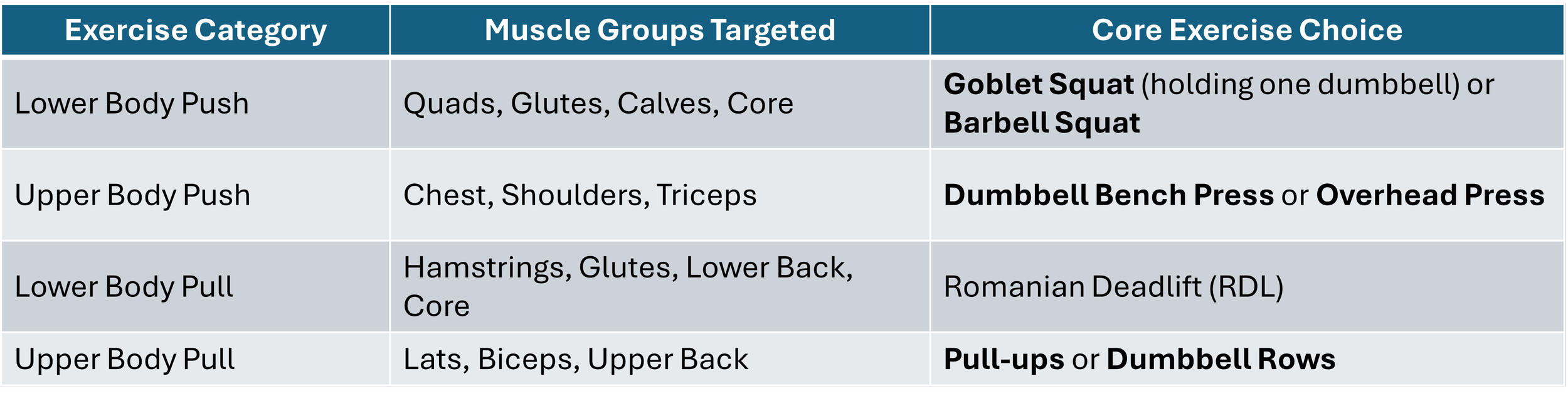
The 30-Minute Efficiency Method
To fit this into 30 minutes, you need to use a technique that keeps your rest periods short while still allowing you to lift heavy enough to be effective. We recommend Supersets and limiting your rest.
Warm-up (5 minutes): Light cardio (jogging, rowing) and dynamic stretching (arm circles, leg swings).
Workout (20 minutes): Complete all three supersets below. Perform the two exercises in a pair back-to-back (A1 and A2) with only 60 seconds of rest after A2.

Cool-down (5 minutes): Static stretching and foam rolling.
By using this 30-minute approach, you perform 12 powerful sets, a scientifically proven amount for muscle growth, using efficient movements that create total-body strength. This is not just a quick workout; it’s a smart, sustainable way to maintain a thriving fitness routine, no matter how busy your October schedule gets. Stop measuring your workout by the clock, and start measuring it by the intensity and the quality of your movements.

The Cold Shoulder: How to Keep Your Immune System Strong for Fall Workouts
Getting sick isn't just miserable; it can wreck your fitness routine, forcing you to take day (or even weeks!) off and lose momentum right before the holidays.

The calendar tells you it’s time to double down on your workouts, but the changing weather and back-to-school germs are trying to trip you up. Getting sick isn't just miserable; it can wreck your fitness routine, forcing you to take day (or even weeks!) off and lose momentum right before the holidays.
This fall, your goal is not just to be strong, it’s to be resilient. Building a strong immune system goes hand-in-hand with building a strong body. And guess what? Your gym routine and your nutrition are the two most powerful tools you have for keeping those autumn colds at bay.
The Three Pillars of Immune Resilience
If you want to stay in the gym and off the couch this fall, you need to focus on these three things:
Pillar 1: Fuel with "Immune Warriors"
Your immune system is a sophisticated army that runs on good fuel. You don't need expensive pills; you need consistent, nutrient-dense food. Focus on these warriors:
Protein (The Builders): Your immune cells are made of protein. If you are skimping on protein, you can't build or repair the cells needed to fight off germs. Make sure you hit your daily protein goal (this is one of the most common mistakes people make).
Vitamin C and Zinc (The Defenders): These are classic immune boosters. Look for vitamin C in bell peppers, citrus, and leafy greens. Get zinc from nuts, seeds (especially pumpkin seeds!), and lean meats.
Gut Health (The Headquarters): About 70% of your immune system is in your gut. Keep it healthy by eating fermented foods (yogurt, sauerkraut) and fiber-rich prebiotics (onions, garlic, oats) every single day.
Pillar 2: Train Smart (Don't Overload)
The biggest mistake active people make in the fall is thinking they can simply push through exhaustion. A hard workout temporarily weakens your immune system, making you more vulnerable to germs right after you leave the gym.
The "Open Window" Effect: For a few hours after a very intense workout (like a long run or a max-effort lift), your immune system takes a dip.
Action Plan: Don't overtrain. If you feel a scratchy throat or you’ve had a bad night's sleep, use that day for a low-impact walk or stretching (see our article “Moving Beyond HIIT”). Intense exercise on an already stressed body is the fastest way to get sick.
Pillar 3: Prioritize Recovery and Sleep
This is where your resilience is actually built. While you are sleeping, your body releases cytokines, small proteins that help your body fight inflammation and infection. Poor sleep prevents this from happening.
The Sleep Rule: Aim for 7–9 hours of quality sleep. If you miss a night, be kind to yourself and scale back your workout the next day. A great night of sleep does more for your strength and immune system than an extra hour in the gym.
Manage Cortisol: High stress (and high cortisol) suppresses your immune response. Use stress-reducing habits like meditation, reading, or quiet time to wind down before bed. This is not optional; it’s a critical part of your fall defense strategy.
This fall, don't let a cold derail your momentum. By feeding your body with immune warriors, training with a smart, balanced approach, and prioritizing your sleep, you can build a powerful fortress around your health, ensuring you stay strong, consistent, and ready for whatever the holidays throw your way.

The Budget-Friendly Kitchen: Nutrient-Dense Eating That Doesn't Break the Bank
As the cost of living continues to rise, many people assume that healthy eating is only for the wealthy. This simply isn't true. At Legacy Fitness & Nutrition, we believe that the best nutrition is sustainable, both for your body and your wallet.

As the cost of living continues to rise, many people assume that healthy eating is only for the wealthy. When you see grocery prices go up, it’s easy to think that choosing the "healthy option" means buying expensive superfoods and organic cuts of meat.
This simply isn't true. At Legacy Fitness & Nutrition, we believe that the best nutrition is sustainable, both for your body and your wallet. This fall, as you start budgeting for holiday travel and gifts, let’s talk about how to focus on nutrient-dense and budget-friendly staples that give you the biggest bang for your health dollar.
The key to affordable nutrition is shifting your focus from "expensive specialty foods" to "versatile staples."
The Fall Power Trio: Cheapest Muscle-Builders
You don't need fancy protein powders or gourmet ingredients to build muscle and stay full. These three categories are the foundation of affordable, high-quality nutrition:
1. Eggs: The Perfect Protein
Why they're great: Eggs are perhaps the most complete and affordable protein source on the planet. They are versatile and provide essential fats, vitamins, and minerals.
Budget Tip: Buy them in bulk (18-count) and always keep a batch of hard-boiled eggs in the fridge for a quick snack or meal addition. They are the ultimate fast food.
2. Dried Beans and Lentils: Fiber, Protein, and Iron
Why they're great: Beans and lentils are a perfect source of fiber and plant-based protein, which keeps you full for hours. They are incredibly cheap when purchased dried.
Budget Tip: Buy dried beans (black, kidney, pinto) and cook a huge batch in a slow cooker. Freeze them in smaller portions to use later. They are the base for chili, soups, and healthy sides.
3. Canned Fish (Tuna and Sardines): Omega-3 Fighters
Why they're great: We all need Omega-3 fatty acids for brain, joint, and heart health, but fresh fish is costly. Canned tuna, salmon, or sardines are affordable ways to get high-quality protein and Omega-3s.
Budget Tip: Mix tuna or canned salmon with Greek yogurt (another affordable protein source) and some chopped onions for a simple, high-protein sandwich filler or cracker spread.
Harnessing Fall's Natural Bounty (Seasonal Produce)
The easiest way to save money on produce is to buy what is in season. When fruits and vegetables are in season, they are more abundant, taste better, and are cheaper. Fall is the season of comfort, root vegetables, and filling, hearty foods:
Squash (Butternut, Acorn, Spaghetti): These are nutrient powerhouses, rich in vitamins A and C, and they store well for months. Roast them with a little olive oil and salt for a Smart Carb side dish.
Apples and Pears: Great for fiber and sweetness. They’re perfect for healthy snacking.
Root Vegetables (Carrots, Sweet Potatoes, Onions): These form the base of affordable, nutrient-dense soups and stews. They are great for batch cooking and meal prepping.
The Freezer and Pantry Are Your Friends
To make healthy eating budget-friendly, you need to think ahead.
Frozen Produce is Equal: Don't skip frozen fruits and vegetables! Frozen broccoli, spinach, and berries are often cheaper than fresh, are picked at peak nutrition, and are perfect for smoothies and stir-fries.
Batch Cooking is Budget Cooking: Dedicate one hour on a Sunday to preparing bulk items: cook all your rice or quinoa, make a large pot of chili or soup, and cook a chicken or pork shoulder. Having healthy food ready means you won't waste money on fast food or takeout when you’re tired.
Meal Planning Saves Money: Before you shop, plan your meals around the protein sources you already have (eggs, lentils, chicken). This stops you from impulse buying and keeps your list tight and efficient.
You can build a strong, healthy body, support your fall routine, and prepare for the financial demands of the holidays without overspending. The secret is simplicity, planning, and focusing on the core foods that deliver the most nutrition for every dollar.

Moving Beyond HIIT: Why Low-Impact Workouts Like Pilates and Walking Are Becoming the New Powerhouse for Hormone Health
While HIIT is great for burning a lot of calories quickly, experts are now realizing that doing too much intense exercise can actually work against your goals, especially as we get older and our lives get more stressful.
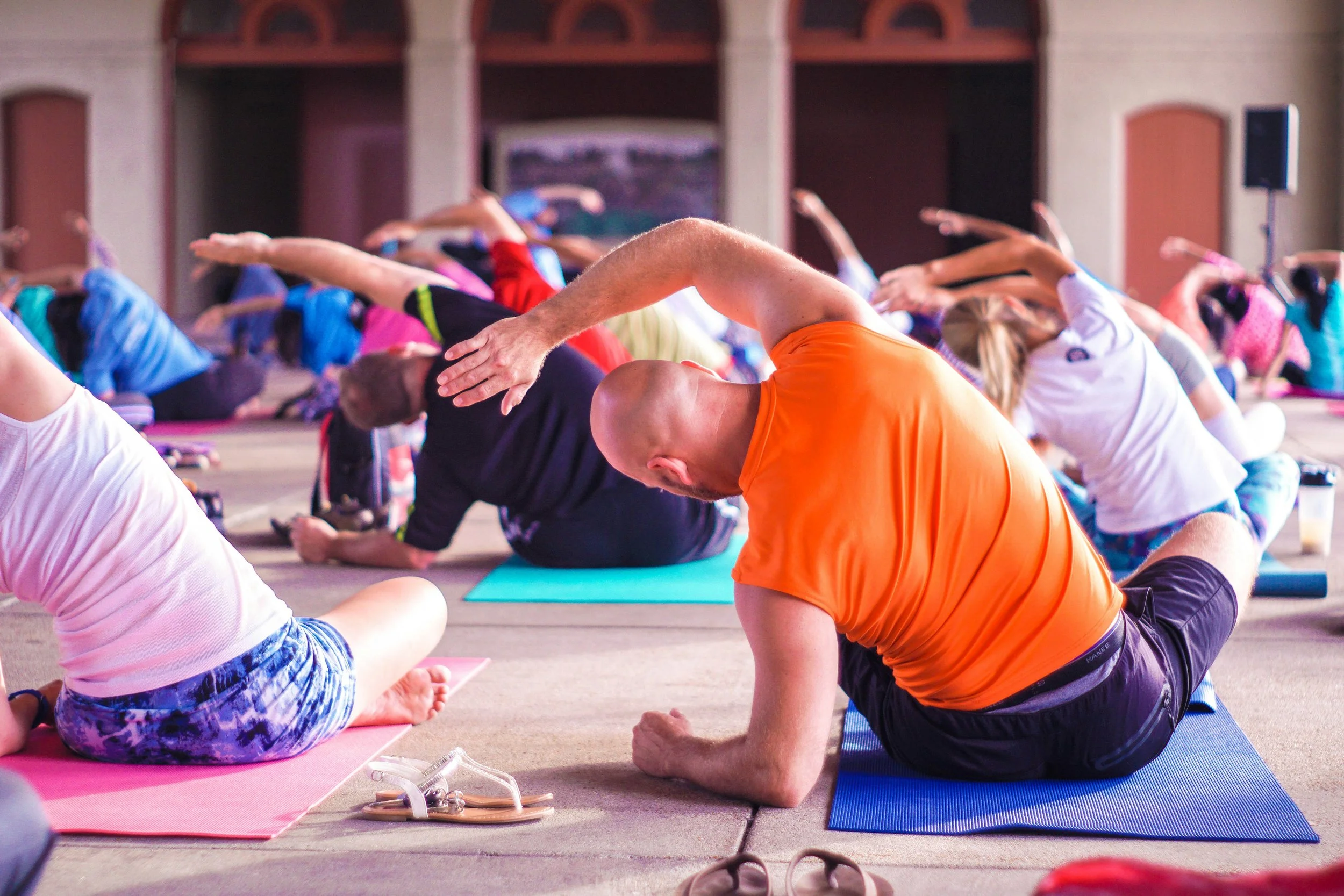
For the past decade, the fitness world was obsessed with HIIT (High-Intensity Interval Training). We were told to push ourselves to the limit, leaving the gym dripping in sweat and feeling completely exhausted. While HIIT is great for burning a lot of calories quickly, experts are now realizing that doing too much intense exercise can actually work against your goals, especially as we get older and our lives get more stressful.
The new focus is on low-impact workouts, and it's a huge step forward for long-term health, hormone balance, and mental well-being—all essential for navigating the stress of the fall season.
The Stress Hormone Problem
When you do a very intense workout (like a tough HIIT class or an hour of high-speed cardio), your body releases a stress hormone called cortisol. Cortisol is not a bad thing; it’s what gives you the burst of energy to push through a workout.
The problem is when you constantly push your body to its max every single day on top of life's regular stresses (work, family, lack of sleep). When cortisol levels stay high all the time:
It Wrecks Your Sleep: High cortisol at night makes it hard to wind down and get quality rest.
It Holds onto Weight: Your body can start storing fat, especially around the middle, as it prepares for a perceived crisis.
It Hinders Recovery: Constant stress prevents your muscles from fully repairing, leading to burnout and injury.
For busy people over 40, whose hormones are often already shifting, high-intensity overtraining can be counterproductive to the goal of building a lasting legacy of health.
The Rise of the Low-Impact Powerhouse
Low-impact workouts are exercises that put less stress on your joints and, crucially, less stress on your body's hormonal system. They still build incredible strength, but they do it in a way that supports your body, not tears it down.
Two workouts, in particular, are proving to be powerhouse options:
1. Pilates: Core Strength and Control
Pilates focuses on core strength, muscle control, posture, and stability. You don't need heavy weights or a racing heart rate to see major benefits.
Hormone Benefit: The focus on breathing and precise, controlled movements is calming. It improves the mind-body connection, which helps switch your body from its "fight or flight" stress mode to its "rest and digest" recovery mode.
Real-Life Benefit: It protects your joints and spine, making everyday activities—like picking up a grandkid or moving furniture—safer and easier.
2. Walking: The Original Wellness Tool
Walking is experiencing a massive comeback, and for good reason. It’s accessible, free, and incredibly effective.
Hormone Benefit: Studies show a brisk walk is one of the best activities for reducing cortisol and boosting feel-good hormones. It provides enough movement to burn fat and increase blood flow without causing the stress response of high-intensity exercise.
Mental Health Benefit: Walking, especially outdoors in the fall air, is a form of moving meditation. It clears the mind, reduces anxiety, and helps you process the day's events.
Building a Balanced Fall Schedule
This isn't about giving up all intensity. It's about being smarter about when and how you use it. To support your hormones and avoid burnout this fall:

Moving forward, embrace the idea that a quieter, more controlled workout can sometimes be the most powerful tool in your fitness arsenal. By choosing smart, low-impact activities, you're not just protecting your joints; you’re managing your stress and building a hormonal foundation for sustained health and energy through the holidays and beyond.
Feeling like your workouts are leaving you more drained than energized? You may be caught in the high-cortisol trap. If you're ready for a training plan that supports your hormones and your busy life, click here to book a free 15-minute consultation to chat with a Legacy Fitness coach about a personalized balance plan.

The Hidden Link Between Your Gut Health and Your Gains: Why Fermented Foods Are Your Muscles' Best Friend
We’ve all heard the phrase, "You are what you eat." But the newest science is refining that idea: You are what your gut bacteria eat.

This image was created using AI to avoid copyright issues while conveying the context of this article.
We’ve all heard the phrase, "You are what you eat." But the newest science is refining that idea: You are what your gut bacteria eat.
For a long time, the only link between your nutrition and your muscles was protein. You ate protein, you built muscle, simple, right? But now, experts are shining a spotlight on a hidden powerhouse: the trillions of tiny bacteria living in your digestive system, known as your gut microbiome.
Believe it or not, the health of your gut is directly tied to your energy, your recovery, and your ability to build a strong, lasting body. It's the secret weapon that can take your progress from good to great, and it’s the key to maintaining energy as the colder weather sets in.
The Gut-Muscle Connection
How can something in your stomach help your arms and legs? It happens in three major ways:
1. Better Protein Absorption
You can eat all the protein shakes and chicken breasts in the world, but if your gut isn't healthy, you won't break down and absorb that protein as well as you should. Healthy gut bacteria help your digestive system do its job more efficiently, pulling key nutrients and amino acids out of your food and sending them where they need to go: straight to your muscles for repair and growth.
2. Reduced Inflammation
Hard workouts create muscle damage, which causes inflammation. While some inflammation is needed for growth, too much slows down your recovery. An unhealthy gut is a major source of body-wide inflammation, making you feel more sore and sluggish for longer. A healthy gut helps manage this inflammation, allowing your body to recover faster and get back to the gym stronger.
3. The Energy Booster
The bacteria in your gut actually produce B vitamins, which are crucial for turning the food you eat (especially those Smart Carbs!) into usable energy. When your gut is happy, your energy is steady. This means less afternoon fatigue and more power for your evening workout.
Your Gut’s Best Friends: Fermented Foods
The best way to take care of your gut is to feed it more probiotics (the beneficial living bacteria) and prebiotics (the food that feeds those bacteria).
This is where the magic of fermented foods comes in. Fermentation is an ancient process that uses bacteria to preserve and change food. By eating fermented foods, you are directly adding billions of good, hard-working bacteria to your gut team.

The Prebiotic Power-Up
Probiotics are the army, and prebiotics are their fuel. Eating more prebiotics helps the good bacteria you already have to grow and thrive.
Prebiotic Foods to Add This Week: Garlic, onions, asparagus, green bananas, and oats.
This fall, as you build a strong foundation for your health legacy, look beyond just counting protein grams. Focus on feeding your entire system—starting with your gut. A healthy gut is a happy gut, and a happy gut is a powerful engine for a body that’s strong, energetic, and ready for anything.

Decoding Your Wearable: What Your Heart Rate Variability (HRV) and Sleep Score Really Mean for Your Training
You’re wearing one of the hottest fitness trends right now: a smart watch, a fitness tracker, or a smart ring. But let’s be honest, when that little app tells you your HRV is "low" or your sleep score is "poor," do you actually know what to do about it?

You’re wearing one of the hottest fitness trends right now: a smart watch, a fitness tracker, or a smart ring. These devices are amazing tools, constantly collecting data about your body. Every morning, you check the two numbers that promise to tell you everything: your Sleep Score and your Heart Rate Variability (HRV).
But let’s be honest, when that little app tells you your HRV is "low" or your sleep score is "poor," do you actually know what to do about it? If the data doesn't change your action, it’s just a fancy piece of jewelry.
As we move deeper into the busy fall season, learning to use this data is crucial. It’s the difference between guessing what your body needs and knowing for sure. You want to train hard, but you also need to recover even harder. Let’s decode your body’s dashboard.
The MVP of Recovery: Heart Rate Variability (HRV)
If you want to know how ready your body is to handle a tough workout, look at your HRV.
What it is:
HRV is the tiny, moment-to-moment difference in time between your heartbeats. It is not your heart rate. A higher HRV is usually better because it means your body is relaxed and flexible, ready to react to stress. A low HRV means your body is already under a lot of stress (from a hard workout, poor sleep, or an actual cold) and is working overtime just to keep things stable.
What the score is telling you:
High HRV: You are good to go! Your nervous system is balanced. Push hard in the gym today.
Low HRV: Your body is fighting something (sickness, stress, or you simply didn't recover from yesterday's workout). Today is a day for active recovery: go for a walk, do light stretching, or skip the heavy weights. Don't fight a low score; respect it.
Sleep Score: More Than Just Hours
Your sleep score is usually a single number (out of 100), but it’s a summary of several important factors. It’s more than just the total hours you spent in bed; it’s about the quality of those hours.
The score focuses on two key phases:
1. Deep Sleep (The Body’s Repair Shop)
This is the phase where your body does its physical heavy lifting. It’s when Human Growth Hormone (HGH) is released, which is essential for repairing muscle tissue and building strength from your last workout.
Actionable Takeaway: If your Deep Sleep is low, your muscles are not repairing well. This is a sign you need to put less stress on your body today.
2. REM Sleep (The Brain’s Cleaner)
REM (Rapid Eye Movement) sleep is when your brain does its most important work: learning, memory consolidation, and processing emotions. It is critical for mental resilience and handling the stress of a busy life.
Actionable Takeaway: If your REM sleep is low, you might feel more stressed, struggle with focus, or feel mentally foggy. This is a sign to prioritize stress management (like meditation or quiet time) and not overload your brain with complex tasks.
Bringing the Data Together: The Fall Training Routine
As you prepare for the hustle of the holidays, use your wearable data to build a sustainable routine:
Stop Guestimating: Don’t stick to a rigid "lift heavy on Mondays" rule. If your HRV is tanked on Monday morning, swap it for your light Wednesday cardio session. Flexibility is the key to consistency.
Focus on the Night Before: If you get a low score, ask yourself: What did I do yesterday? Did you have too much caffeine? Did you eat too late? Did you have a fight with a loved one? Your body is connecting the dots for you.
Use the Data to Justify Rest: For many driven people, taking a rest day feels like failure. Your wearable gives you objective proof: "My HRV is low because my body is repairing a big debt. Rest is not lazy; it's a strategic part of my training plan."
Your wearable is one of the best tools for building a lasting health legacy. It takes the guesswork out of training and recovery, making sure you push hard when your body is ready and pull back when it needs a break.

"Smart Carbs" are Back: The Truth About Ancient Grains, Resistant Starches, and Why You Shouldn't Fear Bread
As you prepare for the cooler months, your body naturally craves comfort and energy. Instead of fighting that feeling with strict, unhappy diets, it's time to learn how to choose the carbohydrates that will actually fuel your workouts, keep you full, and support your gut health.

This image was generated with AI to avoid copyright issues while conveying the meaning of this article.
For years, carbohydrates have been the bad guy in the nutrition world. You’ve probably heard all the warnings: “Carbs make you fat,” “Cut the bread,” or “Skip the pasta if you want to lose weight.” This has made many people fear an entire group of food that is actually essential for an active, energetic life.
But good news is on the menu: the "carb fear" is fading, and smart, science-backed nutrition is bringing back the right kind of carbs. We call them "Smart Carbs."
As you prepare for the cooler months, your body naturally craves comfort and energy. Instead of fighting that feeling with strict, unhappy diets, it's time to learn how to choose the carbohydrates that will actually fuel your workouts, keep you full, and support your gut health.
The Difference Between "Dumb" and "Smart"
Not all carbs are created equal. Think of it this way:
"Dumb Carbs": These are processed, refined foods that your body breaks down almost instantly. Think white bread, sugary sodas, most breakfast cereals, and chips. They cause a quick spike in your blood sugar, giving you a fast burst of energy followed by an even faster crash (the dreaded "food coma").
"Smart Carbs": These are foods that are rich in fiber and resistant starch. Your body takes a long time to break them down, which means they provide steady, long-lasting energy. They don’t spike your blood sugar as hard, and they keep you feeling full for hours.
Two Power Players You Need to Know
When we talk about Smart Carbs, we’re mostly talking about two kinds of fantastic nutrients:
1. Fiber-Rich Ancient Grains
Forget plain white rice and pasta. Ancient grains are called "ancient" because they haven't been changed much over time. They are packed with fiber and protein, which slow down digestion and stabilize your energy.
Why they matter this fall: They are warming, filling, and perfect for the heartier meals of the season.
Smart Carbs to Try:
Oats: A classic, high-fiber breakfast that releases energy slowly.
Quinoa: A complete protein and a Smart Carb. It’s perfect for adding to fall salads or as a side dish.
Farro/Barley: Hearty, chewy grains that are great in soups and stews.
2. Resistant Starch: The Carb That Acts Like Fiber
This is the real game-changer. Resistant starch is a type of carb that "resists" being digested in your small intestine. Instead, it travels to your large intestine, where it acts like a fiber and feeds the healthy bacteria in your gut (more on gut health in a future article!).
Why this is huge: When resistant starch feeds your gut bacteria, it creates something called short-chain fatty acids (SCFAs), which are proven to help with blood sugar control, improved immune health, and better weight management.
Sneaky Sources of Resistant Starch:
Cooked and Cooled Potatoes: When you cook a potato and then let it cool down (like in a potato salad or simply leftovers), the starch changes and becomes resistant.
Green Bananas/Plantains: They have much more resistant starch than fully ripe, yellow bananas.
Beans and Legumes: Another excellent source that doubles as protein.
Fueling Your Goals the Smart Way
For too long, people have tried to reach their fitness goals by cutting out carbs completely, which often leaves them feeling tired, grumpy, and unable to perform well in the gym.
As you plan your fall routine, remember that carbs are your body’s preferred source of energy for high-intensity movement. When you choose Smart Carbs, you are:
Fueling Your Strength: You have the energy to lift heavier and push harder in your workouts.
Staying Full Longer: The high fiber keeps hunger pangs away, making it easier to stick to your nutrition plan.
Boosting Your Mood: Stable blood sugar means stable energy and fewer mood swings or sugar cravings.
This fall, don’t fear the plate of wholesome food. Embrace Smart Carbs as the foundation for a sustainable, energetic, and successful fitness legacy. It's not about cutting food groups; it's about making smarter choices that power your body and your life.

The Power of "Exercise Snacks": How to Fit Micro-Workouts into Your Busiest Days
The biggest reason people stop exercising is not because they don't want to be healthy, but because they feel like they don't have enough time for a "real" workout. Enter “exercise snacks”. And here’s the really exciting part: research shows that these tiny bursts of intense effort can have major health benefits.

The calendar flips to October, and suddenly your busy life feels even busier. Maybe it’s the kids’ sports schedules ramping up, or maybe your work is hitting its "end of year" hustle. You look at your watch, then you look at your workout plan, and you just sigh. An hour-long gym session? That feels impossible.
If this sounds like your life, you’re not alone. The biggest reason people stop exercising is not because they don't want to be healthy, but because they feel like they don't have enough time for a "real" workout.
But what if I told you that you don't need a full hour to get results? What if the key to your health this fall isn't one huge meal, but a series of tiny, powerful snacks? Welcome to the world of the "Exercise Snack."
What is an Exercise Snack?
The term "Exercise Snack" is exactly what it sounds like. It’s a small, very short burst of activity—usually between 30 seconds and 5 minutes—that you sprinkle throughout your day. Think of it as fitness micro-dosing. Instead of trying to carve out a massive block of time, you use the small windows of downtime you already have.
And here’s the really exciting part: research shows that these tiny bursts of intense effort can have major health benefits, especially for heart health and blood sugar levels. A few minutes of hard work can boost your metabolism, clear your mind, and make you feel more energized than you would if you just sat there waiting for the next meeting.
The goal is to interrupt your sitting time. For the modern professional, one of the biggest silent threats to health is being glued to a chair all day. Exercise snacks break that chain, literally giving your body and brain a quick reset.
The Three Golden Rules of Snacking
To make these micro-workouts count, you can’t just stand up and stretch. You need to follow three simple rules:
Rule #1: Intensity is Key
Since you only have a few minutes, you need to work hard. The goal is to get your heart rate up quickly. You should feel a little breathless at the end of the snack. A 3-minute walk to the fridge won't cut it, but 3 minutes of high-knees or jumping jacks certainly will. Think of it as a quick, intense wake-up call for your whole system.
Rule #2: Focus on Compound Movements
A compound movement is any exercise that uses more than one muscle group at the same time. These are the most efficient exercises for burning calories and building strength. You get the most bang for your buck.
Good Exercise Snack Choices: Squats, push-ups, lunges, and plank variations.
Poor Exercise Snack Choices: Bicep curls (they only hit one small muscle group).
Rule #3: The "Trigger" is Everything
The best way to make exercise snacks a real habit is to attach them to something you already do every day, a trigger. Without a trigger, you'll forget.
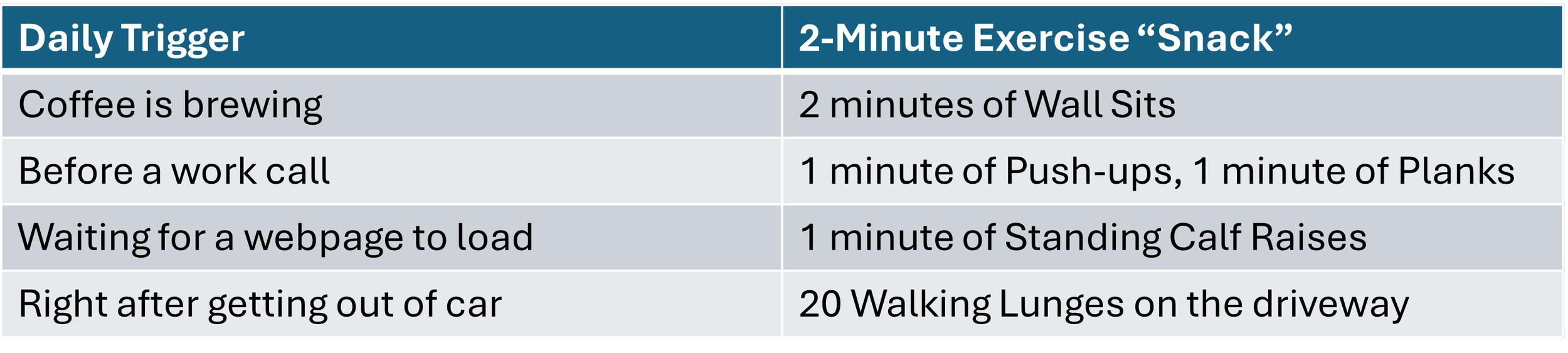
The goal for your fall routine should be 4–5 "exercise snacks" per day. That’s about 10–20 minutes of extra, high-quality movement that you would have otherwise missed.
Building Your Fall Fitness Routine (One Bite at a Time)
As you prepare for the busy holiday season, using exercise snacks is your secret weapon against the "winter weight creep."
Imagine this: you get up, hit the snooze button three times, and rush out the door. No time for the gym. But today is different.
7:00 AM (Trigger: Coffee): You do 30 deep squats while the kettle boils. Your legs feel awake.
10:30 AM (Trigger: Email break): You do 2 sets of push-ups against your desk (or the wall). Your shoulders feel looser.
1:00 PM (Trigger: Lunch break): Instead of sitting, you do 3 minutes of quick stair climbs. Your heart is pumping.
4:00 PM (Trigger: Energy dip): You do a 60-second plank to reset your core and focus.
7:00 PM (Trigger: Watching TV): You do 50 crunches during the commercial break.
By the end of the day, you’ve put in a solid 10–15 minutes of effective exercise without ever feeling like you had to "find the time." You used the time.
This isn't about replacing your main workouts (if you can still get them in). It's about filling the gaps, reducing the damaging effects of sitting, and teaching your body to be active all day long. This fall, you don’t need a massive time commitment, you just need a handful of powerful, smart, and sneaky "exercise snacks."
Ready to stop feeling like you don't have time for fitness? If figuring out which "snacks" are best for your body feels like too much work, let us help. Click here to book a free 15-minute consultation with a Legacy Fitness coach to design a custom "micro-dosing" plan that actually fits your schedule.

Carb Confusion: Separating Fact from Fiction on the Most Misunderstood Macronutrient
For years, carbs have been at the center of a big debate: are they good for you, or are they the enemy of a healthy waistline? But carbohydrates are not your enemy. They are a vital part of a balanced diet and an essential fuel source for an active lifestyle.
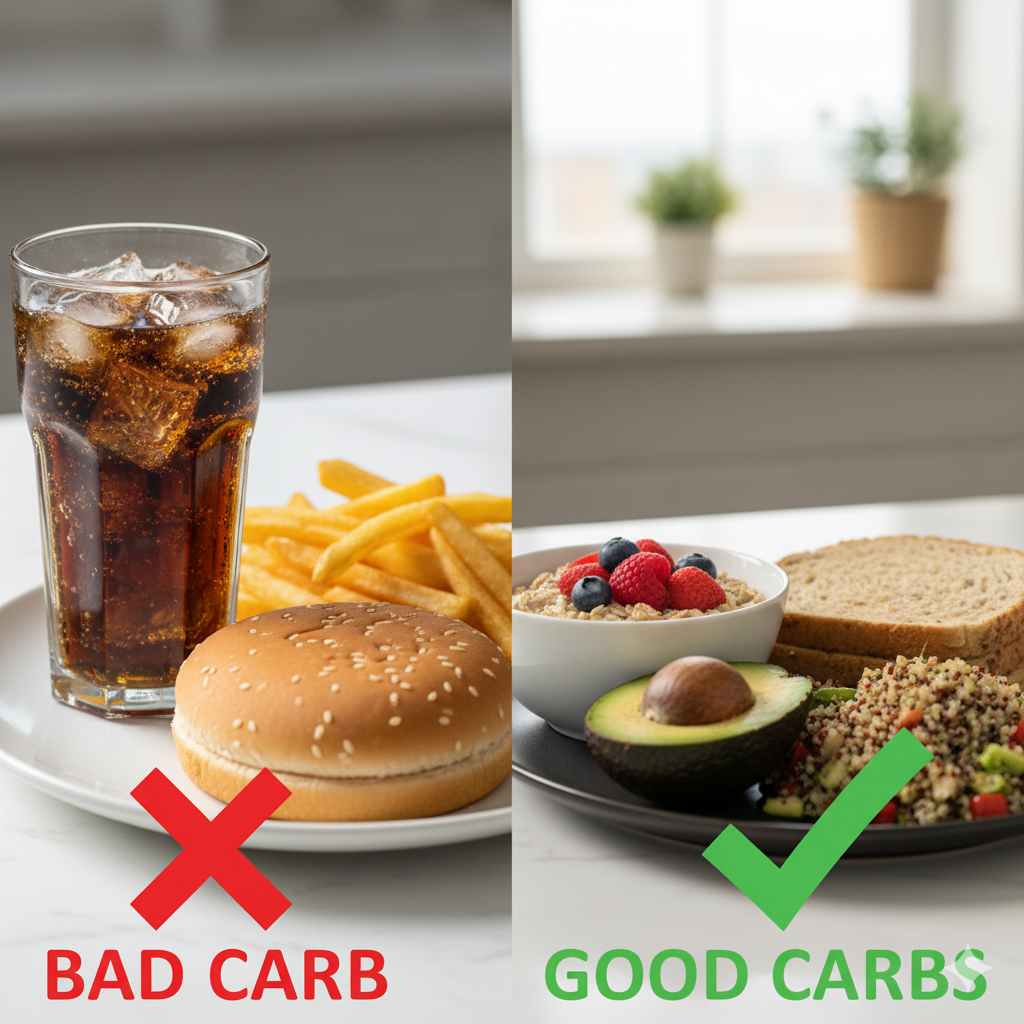
I’m reluctant to label carbs as “good” or “bad” but I believe this AI generated image best represents the concepts I’ve laid out in this article.
Walk into almost any conversation about diet and fitness, and sooner or later, carbohydrates will come up. For years, carbs have been at the center of a big debate: are they good for you, or are they the enemy of a healthy waistline? One diet plan might tell you to cut them out completely, while another emphasizes them as a main fuel source. It’s no wonder so many people feel confused.
This "carb confusion" has led to a lot of myths and misunderstandings. But it's time to clear the air. Carbs, or carbohydrates, are one of the three main macronutrients (along with protein and fats) that our bodies need to survive and thrive. Understanding their true role can help you make smarter food choices, enjoy your meals more, and power your workouts effectively.
What Exactly Are Carbs?
Simply put, carbohydrates are your body's primary source of energy. When you eat carbs, your body breaks them down into glucose, which is a type of sugar. This glucose then travels through your bloodstream, ready to be used by your cells for energy. Think of it like gasoline for your car, it's what makes everything go.
There are two main types of carbohydrates:
Simple Carbs: These are sugars that are quickly digested and give you a fast burst of energy. Think of things like fruit, milk, and also processed sugars found in sodas, candies, and white bread. While natural simple carbs (like those in fruit) come with vitamins and fiber, added sugars don't offer much nutritional value.
Complex Carbs: These are made up of longer chains of sugar molecules and take longer for your body to break down. This means they provide a more steady and sustained release of energy. Examples include whole grains (like oats, brown rice, and whole-wheat bread), legumes (like beans and lentils), and starchy vegetables (like potatoes and corn). Complex carbs are often packed with fiber, vitamins, and minerals.
Myth 1: Carbs Make You Fat
This is probably the biggest and most damaging myth about carbohydrates. Carbs themselves don't make you fat. Eating too many calories, from any source, is what leads to weight gain. The issue often comes when people eat too many processed simple carbs, which are usually high in calories but low in nutrients and fiber. These foods don't fill you up, making it easy to overeat.
The Reality: Healthy complex carbohydrates, especially those high in fiber, can actually help with weight management. They keep you feeling full for longer, which reduces the urge to snack. They also provide the energy you need for exercise, which is key for managing your weight.
Myth 2: All Carbs Are Bad
This myth leads people to cut out entire food groups, which can mean missing out on vital nutrients. While it's wise to limit added sugars and highly processed foods, cutting out all carbs would mean saying goodbye to fruits, vegetables, and whole grains – foods that are essential for good health.
The Reality: The quality of the carbohydrate matters most. Focus on "good" carbs: whole, unprocessed foods that are rich in fiber, vitamins, and minerals. These are the ones that fuel your body efficiently and support your overall well-being.
Myth 3: Low-Carb Diets Are Always Best for Weight Loss
Many people find success with low-carb diets in the short term. This is often because cutting out a major food group naturally reduces overall calorie intake. Also, when you reduce carbs, your body sheds a lot of water weight, which can make it seem like you're losing fat very quickly.
The Reality: For many, a very low-carb diet isn't sustainable long-term. And for active individuals, cutting too many carbs can leave you feeling sluggish and impact your workout performance. A balanced approach that includes healthy carbs is often more sustainable and provides better energy levels for a fitness lifestyle.
The Role of Carbs in Your Fitness Journey
For anyone who exercises regularly, carbohydrates are your friend. They provide the immediate energy your muscles need to perform during workouts, whether you're lifting weights, running, or playing sports. After a workout, healthy carbs help replenish your energy stores, which is vital for recovery and getting ready for your next session. Without enough carbs, you might feel tired and weak, making it harder to push yourself and see results.
Making Smart Carb Choices
Instead of fearing carbs, learn to choose them wisely:
Prioritize Whole Grains: Choose whole-wheat bread, brown rice, oats, quinoa, and other whole grains over white, refined versions.
Eat Your Fruits and Veggies: These are packed with fiber, vitamins, and minerals, and are excellent sources of healthy carbohydrates.
Limit Added Sugars: Be mindful of hidden sugars in processed foods, sugary drinks, and desserts. Read food labels carefully.
Portion Control: Even good carbs have calories. Pay attention to portion sizes to make sure you're eating the right amount for your energy needs.
Carbohydrates are not your enemy. They are a vital part of a balanced diet and an essential fuel source for an active lifestyle. By understanding the difference between good carbs and not-so-good carbs, you can make informed choices that support your energy levels, help with recovery, and contribute to your overall health and fitness goals. Don't fall for the confusion; embrace the power of smart carb choices.

More Than a Workout: How Exercise Is Your Secret Weapon for Better Mental Health
In today's fast-paced world, it's easy to feel stressed, anxious, or just plain worn out. Think of exercise as your partner on the journey to feeling your best. It’s a way to quiet your mind, reduce your stress, and remind you of how strong you really are.

In today's fast-paced world, it's easy to feel stressed, anxious, or just plain worn out. We often think of exercise as something we do to change the way our body looks, but what if its most powerful benefit has nothing to do with the scale? The truth is, moving your body is one of the best things you can do for your mind. It’s a powerful tool for fighting stress, boosting your mood, and building a stronger, more confident you from the inside out.
The connection between your body and mind is no secret. When you feel physically strong and capable, it has a ripple effect on your mental state. Exercise is a way to take back control, even when other parts of your life feel out of control. It’s a chance to focus on yourself, if only for a few minutes. Here’s a look at the science and how you can use this secret weapon to feel your best.
The Science Behind the Mood Boost
When you exercise, your brain releases a flood of chemicals. The most famous of these are endorphins, often called your body's "feel-good" chemicals. They create a sense of happiness and even reduce your perception of pain. You've probably heard of a "runner's high," that's endorphins at work.
But it’s not just about a temporary high. Regular exercise also helps your brain in the long run. It can reduce the levels of stress hormones like cortisol. Think of cortisol as your body’s alarm system; too much of it can leave you feeling on edge. Exercise helps turn down that alarm, leaving you feeling calmer and more in control. It also promotes the growth of new brain cells, which can improve your memory and learning.
Fighting Stress and Anxiety
Exercise is a fantastic way to handle stress. It gives you a healthy outlet for all that nervous energy. When you're running, lifting weights, or even just dancing to music, you're giving your mind a break from the things that are causing you stress. That time spent moving helps you clear your head, gives you a fresh perspective, and can make problems seem a little smaller.
For people with anxiety, a workout can be especially helpful. The physical effects of anxiety: a racing heart, sweaty palms, and rapid breathing, can feel scary. But when you get your heart rate up with exercise, you're training your body to handle those feelings in a healthy, controlled way. Over time, this can make you feel more resilient and less afraid of those physical sensations when they pop up.
Boosting Self-Confidence and Body Image
Fitness can do wonders for your confidence, and it’s not because of how you look in the mirror. It’s because of what you feel. When you lift a heavier weight than you did last week, or when you finish a workout you thought you couldn't do, you feel a sense of accomplishment. You prove to yourself that you are capable and strong.
This feeling of capability is what truly builds confidence. It shifts your focus from what your body looks like to what it can do. This can lead to a much healthier body image and a more positive relationship with yourself. Every small victory in your fitness journey is a reminder of your own strength and resilience.
How to Start (Without the Pressure)
If you're new to this, the thought of adding another thing to your busy life can feel overwhelming. The key is to start small and focus on what you enjoy. This isn't about being an athlete; it's about finding movement that makes you feel good.
Start with 10 minutes: Don't feel like you have to go for an hour. Just 10 or 15 minutes of brisk walking, stretching, or light jogging can get those feel-good chemicals flowing.
Find what you love: If running on a treadmill feels like a chore, don’t do it! Try a dance class, a yoga video on YouTube, a hike on a local trail, or a bike ride. The best workout is the one you'll actually do.
Consistency beats intensity: It's much better to do a little bit of something every day than to do one huge, intense workout and then stop for a month. A short, consistent routine will build stronger habits and deliver more lasting benefits for your mind.
Not a Cure, But a Tool
While exercise is a powerful tool for improving your mental health, it’s important to remember that it is not a cure-all. If you are struggling with serious anxiety, depression, or any other mental health condition, it is always a good idea to talk to a doctor or a mental health professional. Exercise can be an excellent addition to a treatment plan, but it is not a replacement for professional care. We've partnered with the licensed telehealth-based mental health providers at Proximity Wellness for those struggling with mental health conditions. Visit https://www.prxwellness.com/ for more information.
Think of exercise as your partner on the journey to feeling your best. It’s a way to quiet your mind, reduce your stress, and remind you of how strong you really are. It’s not just about a better body; it’s about a healthier, happier you.
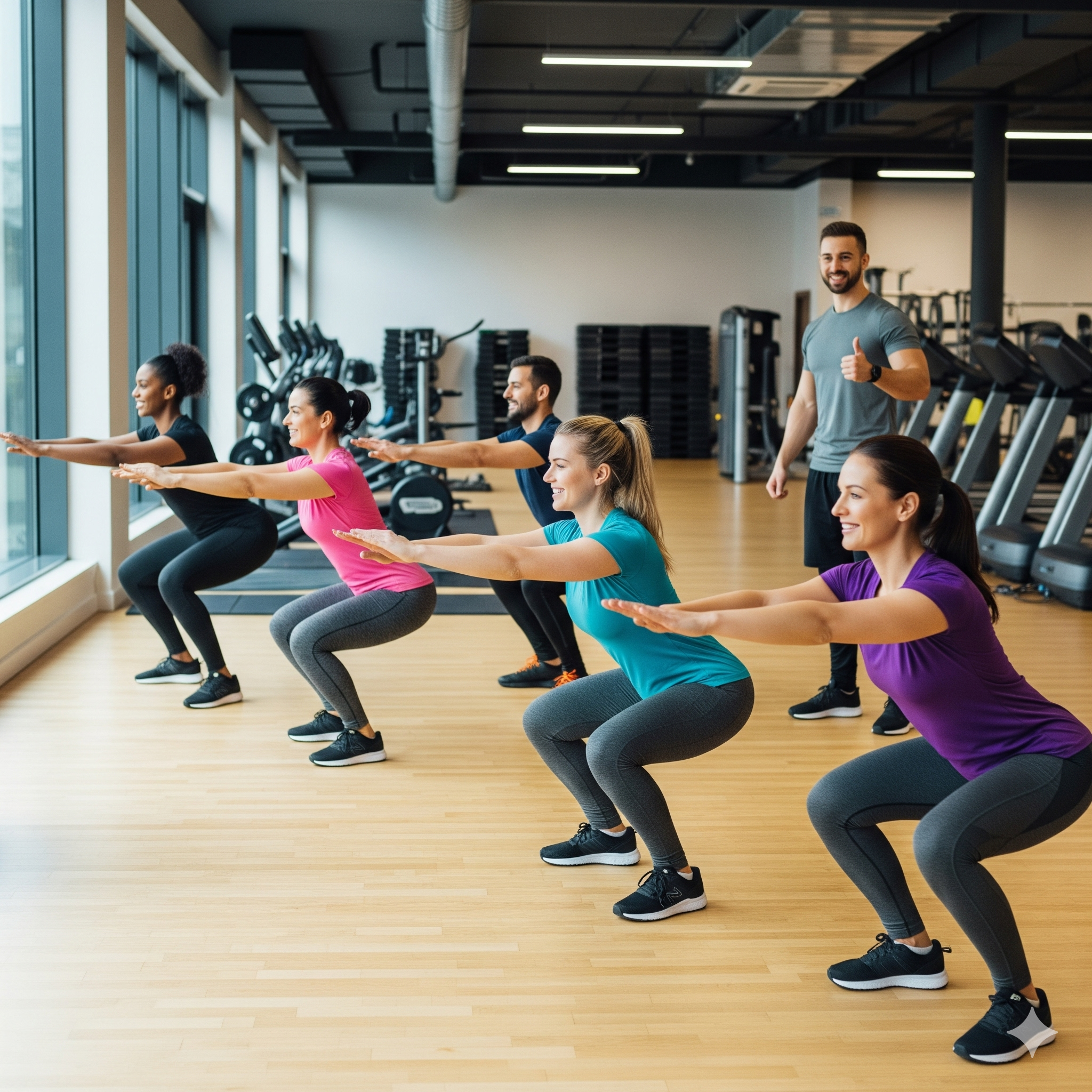
Functional Fitness: The Workout That Prepares You for Real Life
Functional fitness is a refreshing approach to working out because it connects your effort directly to your life. It’s not about training to be a bodybuilder or a marathon runner, but about training to be a stronger, more capable version of yourself.
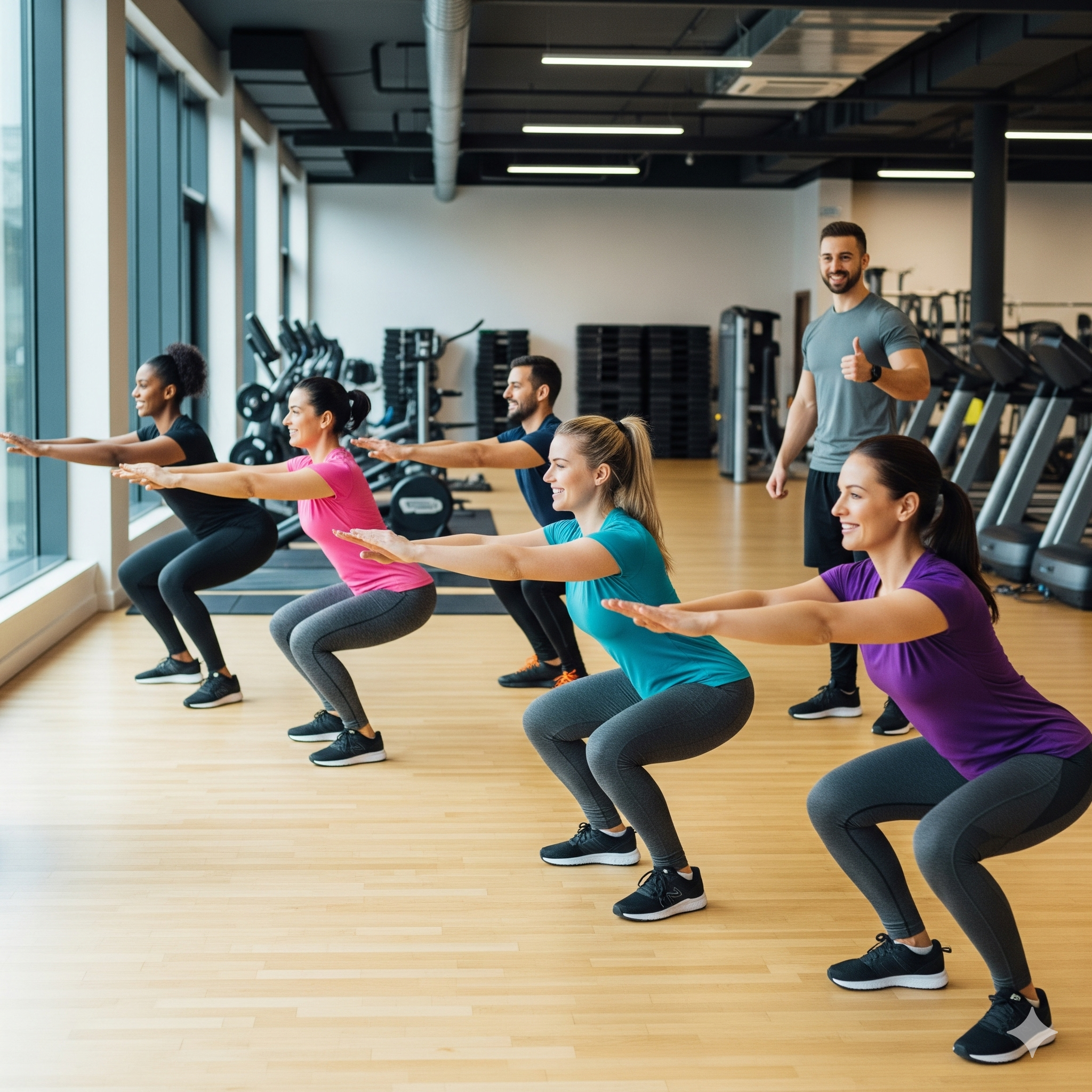
When you think about working out, what comes to mind? Is it lifting heavy weights, running on a treadmill, or doing countless crunches? For a long time, the world of fitness seemed to be about building muscles just for show or trying to burn as many calories as possible. But what if your workout could do more? What if it could make you stronger not just in the gym, but in your everyday life?
That's the idea behind functional fitness. It’s a way of training that focuses on movements that prepare your body for the tasks you do every single day. Think about it: a lot of what we do involves more than just one muscle. When you pick up a bag of groceries, you're not just using your arm; you're using your legs, your core, and your back to lift, stabilize, and carry. When you get up from a low chair, you're performing a movement very similar to a squat.
Functional fitness is all about making those kinds of everyday actions easier and safer. It’s about building a body that works as a complete system, with all its parts working together smoothly. This kind of training is a game-changer because it moves beyond simply looking good to helping you feel great and live a more capable life.
Why It Matters for You
So, why should you care about functional fitness? For starters, it’s one of the best ways to prevent injuries. Most injuries don't happen because you have weak muscles; they happen because your muscles don't know how to work together. By practicing movements that mirror real-life actions, you train your body to handle unexpected twists, turns, and loads without getting hurt.
It also dramatically improves your balance and stability. As we get older, these things become even more important. Functional movements help you develop the kind of stability that keeps you from stumbling on uneven ground or helps you stay upright if you trip.
Perhaps most importantly, functional fitness makes you more independent. Imagine being able to carry a heavy box, play with your kids or grandkids without getting winded, or stand up from the floor with ease. These are small victories that add up to a big difference in your quality of life.
The Core Principles of Functional Fitness
Functional fitness isn't a single exercise; it's a way of thinking about your entire workout. Here are the core ideas that make it so effective:
Multi-Joint Movements: Instead of doing exercises that target just one muscle (like a bicep curl), functional training uses movements that involve several joints at once. Squats, for example, use your hip, knee, and ankle joints. This is a much better way to train because real-life actions are rarely single-joint movements.
Full Range of Motion: To build a body that can handle anything, you need to train your joints through their full range of motion. This helps improve your flexibility and keeps your joints healthy and mobile.
Using Your Body as a Unit: Functional workouts focus on exercises that force your body to work as a team. This builds your "core" (the muscles that support your spine) and teaches your different muscle groups to communicate and coordinate with one another.
Real-World Resistance: Functional fitness often uses resistance that mimics real-life challenges. This could be your own body weight, a kettlebell, a sandbag, or even a medicine ball. The goal is to build strength in a way that is useful outside of the gym.
Examples of Functional Exercises
You might already be doing some of these, but understanding their purpose can make them even more powerful:
The Squat: This is the king of functional movements. It strengthens your legs, hips, and core, and it directly translates to getting up from a chair, picking something up from the ground, or even just walking up stairs.
The Lunge: A lunge is like a squat, but it helps you work on your balance and stability one leg at a time. Think of it as training for walking, running, or lunging forward to catch something that’s about to fall.
The Push-Up: This classic exercise works your chest, shoulders, and triceps, but it also engages your core to keep your body in a straight line. It's the functional equivalent of pushing something away from you or lifting yourself up from the ground.
The Row: Whether you use a resistance band, a dumbbell, or a cable machine, a row motion strengthens your back muscles. This is crucial for good posture and for pulling things toward you, like opening a stuck door or pulling a heavy bag.
How to Get Started
The great news about functional fitness is that you don’t need a fancy gym or expensive equipment to start. You can do a lot of it right at home with just your own body weight.
Start with the basics. Focus on mastering movements like squats, lunges, and push-ups. Practice them slowly with good form before adding any weight.
Focus on consistency. Aim for three workouts a week. A simple circuit could be 3 sets of 10-15 squats, lunges, and push-ups, with a short rest in between each set.
Listen to your body. Don’t push through pain. The goal is to feel better, not worse.
Try new things. Once you get comfortable, you can add new movements like plank variations to strengthen your core, or even incorporate simple tools like a kettlebell or resistance bands.
Functional fitness is a refreshing approach to working out because it connects your effort directly to your life. It’s not about training to be a bodybuilder or a marathon runner, but about training to be a stronger, more capable version of yourself. It’s about building a body that you can count on, both inside and outside of the gym.

Building a Better 'Core': It's More Than Just Crunches
For years, the word "core" in fitness has brought to mind one thing: six-pack abs. Building a strong core is about much more than just a visible six-pack. It's about building a solid foundation that supports you in every movement you make, both inside and outside the gym.

For years, the word "core" in fitness has brought to mind one thing: six-pack abs. We’ve all seen the magazine covers and videos promising a washboard stomach through hundreds of crunches. But if you’ve been doing sit-ups endlessly and still don't feel stronger, you’re not alone. The truth is, your "core" is so much more than just the muscles you can see in the mirror, and building real core strength goes far beyond a few crunches.
Your core is a group of muscles that form a cylinder around your midsection, from your diaphragm down to your pelvic floor. This includes not only your abs but also your side muscles (obliques), your lower back, and the deep muscles that wrap around your spine. Think of your core as the foundation of your entire body. It provides stability, allows for powerful movements, and protects your spine. When your core is weak, it can lead to poor posture, lower back pain, and a higher risk of injury in other exercises.
Why Crunches Aren’t the Answer
A crunch is a great exercise for targeting the main abdominal muscle (the rectus abdominis, or "six-pack muscle"). The problem is that it only works this muscle in a limited way and does nothing to strengthen the other crucial core muscles that support your spine and hips. It's like building the walls of a house without laying a solid foundation. You might have good-looking walls, but the whole structure will be wobbly and weak.
True core strength isn’t about how much you can crunch; it's about how well your core can keep your body stable and solid while you're moving. A strong core allows you to perform everyday tasks—like carrying groceries, lifting your child, or standing up from a chair—with ease and without pain.
The Core Exercises You Should Be Doing
The best core exercises are "functional," meaning they train your core to do what it’s meant to do: stabilize. Here are a few great exercises to build a truly strong and functional core:
The Plank: This classic exercise is a core-building powerhouse. A plank forces all of your core muscles to work together to keep your body in a straight line, just like they do when you're standing or walking. Hold it for 30-60 seconds, focusing on keeping your back flat and your hips from sagging.
The Bird-Dog: This exercise is great for improving balance and stability. Start on your hands and knees and extend your opposite arm and leg at the same time, keeping your back straight and your core tight. This trains your core to work with your arms and legs to maintain balance, a crucial skill for daily life.
The Farmer's Walk: One of the simplest and most effective core exercises. Just grab a heavy weight in each hand and walk! As you walk, your core muscles have to work hard to keep your body upright and stable. It’s a great way to build strength and stability throughout your entire body.
Glute Bridges: Your glutes and hamstrings are a key part of your core's support system. Glute bridges strengthen these muscles, helping to improve your hip stability and reduce the strain on your lower back.
Building a strong core is about much more than just a visible six-pack. It's about building a solid foundation that supports you in every movement you make, both inside and outside the gym. By focusing on these functional, stability-focused exercises, you’ll not only feel stronger and more confident, but you'll also be less likely to experience back pain and injury, giving you a better quality of life for years to come.

Hormones and Health: The Fitness Guide for Women in Their 30s, 40s, and Beyond
Navigating hormonal changes can feel frustrating, but it doesn't have to be. By adjusting your fitness routine to include more strength training and stress management, and by fueling your body with the right nutrients, you can feel strong, energized, and in control.

As women move through their 30s, 40s, and into their 50s, many start to notice a few changes. The workout that used to work so well for weight management might not seem as effective anymore. It might feel harder to build muscle or easier to gain a little weight around the middle. If you’ve experienced this, you’re not imagining things. These changes are often linked to shifts in your body’s hormones.
Your hormones are like messengers that tell your body what to do. As you get older, the levels of key hormones like estrogen and progesterone begin to change. These shifts can affect everything from your metabolism and muscle mass to your energy levels and sleep patterns. But this isn't a dead end! By understanding these changes, you can adjust your fitness routine and diet to work with your body, not against it.
The Hormone Connection
Estrogen: This hormone plays a role in where your body stores fat. As estrogen levels start to drop, fat storage tends to shift from your hips and thighs to your abdomen, which can be frustrating.
Progesterone: A key player in your monthly cycle, progesterone levels also begin to change. This can affect your sleep and stress levels, which in turn impacts your energy and recovery.
Cortisol: Often called the "stress hormone," cortisol levels can rise when you’re under pressure or not getting enough sleep. High cortisol can cause your body to hold on to fat, especially around your stomach.
The New Fitness Rules
Since the old rules don't always apply, here's how to build a routine that truly supports your body in this new phase of life.
Embrace Strength Training: This is the most important change you can make. As you age, your body naturally loses muscle mass, which slows down your metabolism. Lifting weights is the best way to fight this. Building and maintaining muscle will help you burn more calories, even when you’re resting. Aim for two to three strength training sessions per week, focusing on major muscle groups with exercises like squats, deadlifts, and rows.
Rethink Your Cardio: While cardio is still great for your heart, endless hours on the treadmill might not be the most effective for fat loss, especially if it's stressing your body out. Instead of long, slow cardio, consider mixing in some high-intensity interval training (HIIT). Short bursts of intense effort followed by rest can be more time-efficient and can help your body burn fat more effectively.
Prioritize Sleep: Sleep is when your body does its most important repair work. It helps regulate your hormones, especially cortisol. Aim for 7-9 hours of quality sleep each night. A consistent sleep schedule and a relaxing bedtime routine can make a big difference.
Manage Stress: Chronic stress can be a major roadblock to your fitness goals. High cortisol levels can slow your metabolism and increase cravings for unhealthy foods. Find ways to manage stress that work for you, whether it's through meditation, walking in nature, yoga, or simply taking a few minutes for yourself each day.
The Nutrition Piece of the Puzzle
What you eat is just as important as how you move. As your body changes, so should your diet.
Pump Up the Protein: Protein is essential for building and maintaining muscle mass. Make sure you’re getting enough protein at every meal. Lean sources like chicken, fish, eggs, and legumes are great choices.
Focus on Whole Foods: A diet rich in fruits, vegetables, and whole grains provides your body with the nutrients it needs to function at its best. These foods help manage blood sugar levels and keep your energy steady.
Stay Hydrated: Drinking enough water is crucial for a healthy metabolism, energy levels, and overall health.
Navigating hormonal changes can feel frustrating, but it doesn't have to be. By adjusting your fitness routine to include more strength training and stress management, and by fueling your body with the right nutrients, you can feel strong, energized, and in control. This is a journey of celebrating your body's strength and resilience at every stage of life.

The 'Mindful Munch': How Paying Attention to Your Food Can Change Your Relationship with Eating
Mindful eating isn't about being perfect; it's about building awareness.

How many times have you eaten a meal without really tasting it? Maybe you ate lunch at your desk while staring at a computer, or snacked in front of the TV without truly noticing what you were putting in your mouth. In our busy world, eating often becomes just another task to get through. We eat quickly, distracted, and then wonder why we still feel unsatisfied or why we sometimes overeat.
This is where "mindful eating" comes in. It’s not a diet plan; it’s a way of approaching food with all your senses. It’s about slowing down, paying attention to your body’s signals, and truly experiencing your food. This simple shift can totally change your relationship with eating, making it more enjoyable and helping you make healthier choices naturally.
What is Mindful Eating?
Mindful eating is rooted in the practice of mindfulness, which is about paying attention to the present moment without judgment. When it comes to food, it means:
Noticing your hunger and fullness cues: Are you truly hungry, or are you eating out of boredom, stress, or habit? When do you start to feel comfortably full?
Engaging all your senses: What does your food look like? What does it smell like? How does it feel in your mouth? What are the different flavors you can taste?
Eating slowly and without distraction: Putting away your phone, turning off the TV, and focusing solely on your meal.
Understanding your body's response: How does certain food make you feel physically and emotionally?
Why Does it Matter?
In our fast-paced society, many of us have lost touch with these basic body signals. We eat when the clock tells us to, or when we see food, rather than when our bodies actually need fuel. Mindful eating helps you reconnect.
Here are some big benefits:
Better Digestion: When you eat slowly and chew your food thoroughly, you help your digestive system do its job better. This can reduce bloating and discomfort.
Increased Enjoyment: When you truly taste and appreciate your food, the experience becomes much more satisfying. You might find that you enjoy your meals more and feel less deprived.
Natural Portion Control: By paying attention to when you’re comfortably full, you’re less likely to overeat. Your body has a natural "off switch," and mindful eating helps you hear it.
Reduced Emotional Eating: Often, we eat to cope with stress, sadness, or boredom. Mindful eating helps you identify these triggers and find healthier ways to deal with your emotions.
Improved Food Choices: When you pay attention to how certain foods make you feel, you naturally start gravitating towards foods that nourish your body and leave you feeling good.
How to Practice the 'Mindful Munch'
You don't need to change your entire diet overnight to start mindful eating. It's a practice, and you can begin with small steps:
Eliminate Distractions: For at least one meal a day, turn off the TV, put away your phone, and step away from your computer. Just focus on your food.
Observe Your Food: Before you take your first bite, pause. Look at the colors and textures. Smell the aromas.
Take a Small Bite: Don't just shovel it in. Take a small, manageable bite.
Chew Slowly and Thoroughly: Notice the texture changes as you chew. How many times do you chew before swallowing? Aim for at least 20-30 chews for solid foods.
Savor the Flavors: Let the food sit on your tongue for a moment. What spices do you taste? Is it sweet, salty, sour, or bitter?
Put Your Fork Down Between Bites: This is a simple but powerful trick to slow down. It forces you to pause and gives your body time to register fullness.
Listen to Your Body: Periodically check in with yourself. How hungry are you on a scale of 1 to 10? When you feel comfortably full (not stuffed), stop eating.
Appreciate Your Meal: Take a moment to think about where your food came from and all the effort it took to get it to your plate.
Mindful eating isn't about being perfect; it's about building awareness. Some meals you'll be more mindful than others, and that's completely okay. The goal is progress, not perfection. By bringing more attention and intention to your meals, you'll not only enjoy your food more, but you'll also build a healthier, more sustainable relationship with eating that serves your body and mind well. It's a journey of self-discovery, one mindful bite at a time.