
Ultra-Processed Foods, The "Hidden" Addiction: How to Spot "Healthy" Labels That Lie
The quality of your fuel determines the quality of your life.
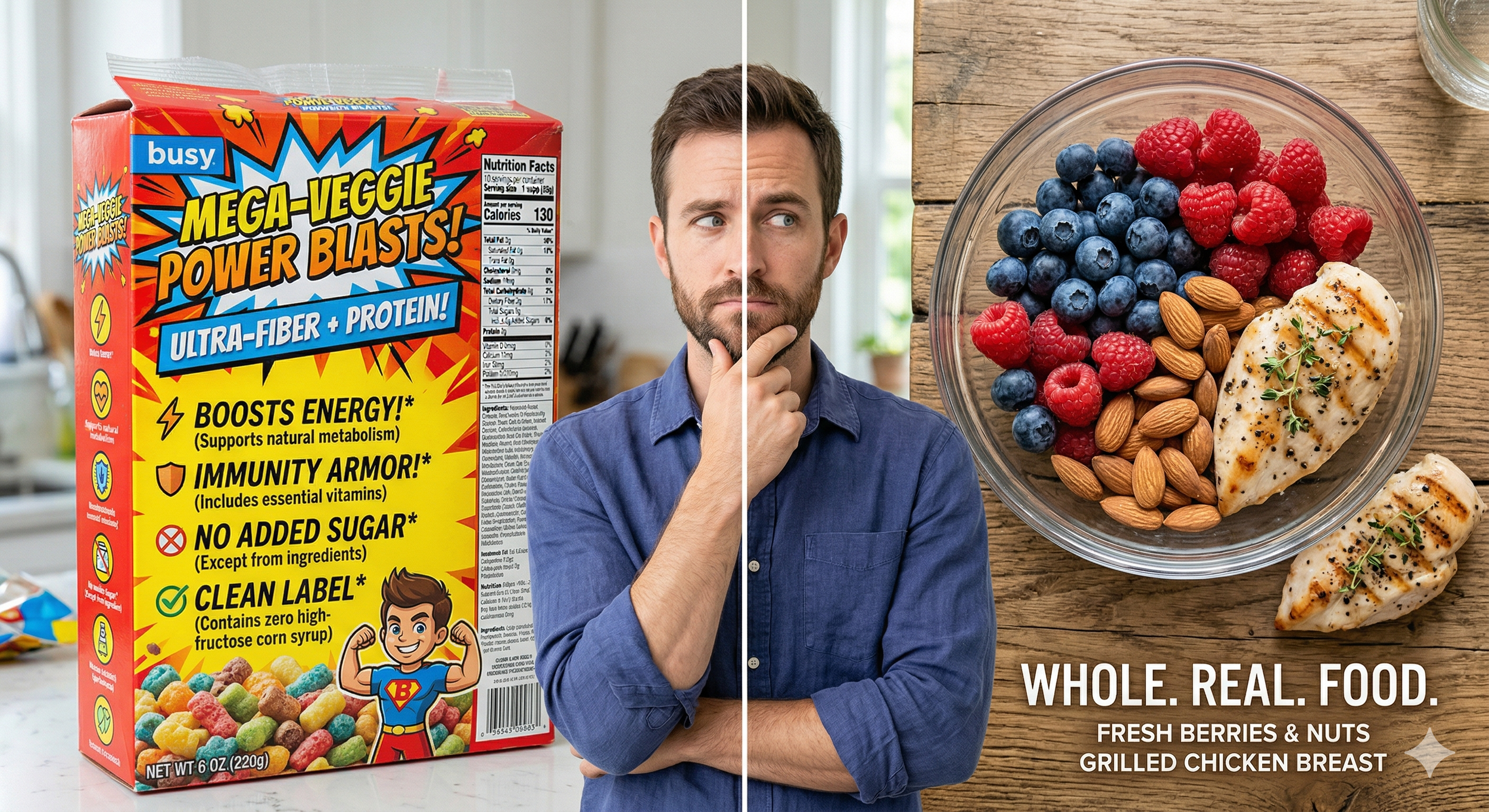
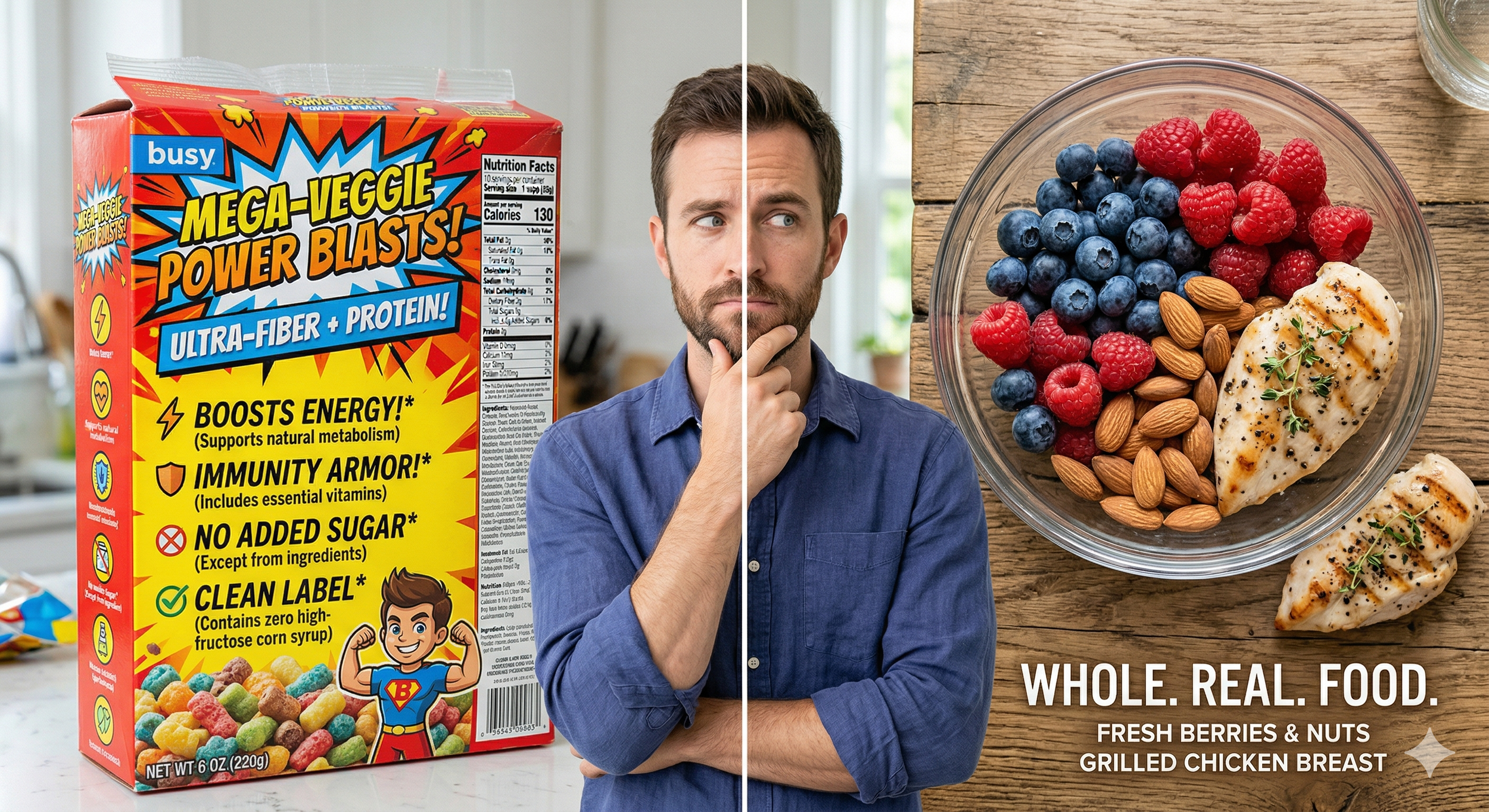
This image was created using AI to avoid copyright issues while conveying the context of this article. (Personally I think the image is hilariously AI, but I’m keeping it. 🤣)
When you walk down the aisles of a modern grocery store, you are surrounded by thousands of products designed to make your life "easier." Boxes of crackers, rows of colorful granola bars, and "healthy" frozen meals promise to save you time while keeping you fit. But beneath the bright packaging and the bold health claims, many of these products are actually ultra-processed foods (UPFs).
In recent years, scientists have begun to realize that these foods are doing more than just providing calories. They are engineered to bypass your body’s natural "fullness" signals and keep you coming back for more. In fact, many experts now believe that UPFs are closer to an addictive substance than they are to actual food. If you want to build a legacy of health, you have to learn how to see past the marketing and spot the ingredients that are holding you back.
What is an Ultra-Processed Food?
To be clear, almost all food is "processed" in some way. Cutting a head of lettuce or cooking a piece of chicken is processing. The problem arises with ultra-processed foods. These are items that are made mostly from substances extracted from foods, such as fats, starches, added sugars, and hydrogenated fats.
They often contain additives like flavor enhancers, colors, and emulsifiers that you would never find in a home kitchen. A simple rule of thumb: if you look at the ingredient list and it looks like a chemistry experiment, it is likely ultra-processed.
The "Hyper-Palatable" Trap
Have you ever wondered why it’s easy to eat an entire bag of flavored chips but impossible to eat ten plain boiled potatoes? It is because UPFs are "hyper-palatable."
Food scientists work in labs to find the perfect combination of salt, sugar, and fat—often called the "bliss point." This combination triggers a massive release of dopamine in your brain, the same chemical associated with reward and addiction. Because these foods are so soft and easy to chew, you can eat them very quickly. By the time your stomach realizes it’s full, you have already consumed twice as many calories as you needed.
Don't Fall for the "Healthy" Label
The most dangerous UPFs are the ones that pretend to be healthy. Companies use specific words on the front of the box to make you feel safe:
"All Natural" (This has no legal definition and means very little.)
"Heart Healthy" (Often found on sugary cereals that are highly processed.)
"High Protein" (Look closely, it might have 10g of protein but 25g of sugar and processed oils.)
"Gluten-Free" (Many gluten-free snacks are more processed than the original versions to make up for the change in texture.)
If you want the truth, ignore the front of the box. Flip it over and look at the ingredient list and the "Added Sugars" line. If the first three ingredients are a type of sugar or a refined oil (like soybean or corn oil), put it back on the shelf.
The Impact on Your Energy and Focus
For the busy professional, the biggest cost of a diet high in UPFs isn't just weight gain, it is the loss of cognitive performance. These foods cause rapid spikes and crashes in your blood sugar. This leads to that "foggy" feeling in your brain by 2:00 PM.
Furthermore, the chemicals and emulsifiers in these foods can disrupt your gut health. As we discussed in our article on the Gut-Muscle Axis, a damaged gut leads to chronic inflammation, which makes it harder for your muscles to recover and harder for your brain to stay sharp.
How to "De-Process" Your Life
You don't have to be perfect, but you should aim to get at least 80% of your calories from "whole" foods, things that had a face or grew out of the ground.
The 5-Ingredient Rule: Try to avoid products with more than five ingredients, especially if you can’t pronounce half of them.
Shop the Perimeter: Most whole foods (meat, produce, eggs, dairy) are found on the outer edges of the grocery store. The middle aisles are where the UPFs live.
Cook Once, Eat Twice: The best way to avoid processed "convenience" food is to have your own whole-food leftovers ready to go.
Building Your Legacy
At Legacy Fitness, we believe that the quality of your fuel determines the quality of your life. You are building a body that needs to last for decades. Feeding it highly engineered, addictive chemicals is a short-term solution that leads to long-term problems.
This week, take a closer look at your "healthy" snacks. Are they really supporting your legacy, or are they just a hidden addiction in a shiny wrapper? Real food doesn't need a marketing department. Start choosing the ingredients that actually choose you back.