

The "Spring Clean" for Your Pantry: A Fresh Start for Your Health
Cleaning out your pantry is a symbolic act. It shows that you are serious about your legacy and your health.

This image was created using AI to avoid copyright issues while conveying the context of this article.
Spring is finally here. It is the time of year when we open the windows, let in the fresh air, and clean out the garage or the spare closet. We feel better when our physical space is organized, but we often forget about the most important "space" in our home: the kitchen pantry.
If you are trying to reach a fitness goal, your environment is your greatest ally or your worst enemy. It is much harder to make a bad choice when that choice isn't sitting on your shelf staring at you. A pantry "spring clean" isn't about being perfect; it is about setting yourself up for success. By auditing your kitchen for hidden sugars and processed oils, you make the healthy choice the easy choice.
Why the Pantry Audit Matters
Most of us think we eat pretty well. However, many modern food products are designed to stay on a shelf for a long time. To make this happen, companies often use ingredients that are not great for our energy levels or our waistlines. Two of the biggest culprits are hidden sugars and highly processed seed oils.
When you eat these ingredients daily, they can cause inflammation and energy crashes. They also make you crave more of the same food. By clearing them out, you reset your palate and your body.
Step 1: The Sugar Hunt
Sugar is a master of disguise. It goes by over 60 different names on food labels. You might not see the word "sugar," but you might see "maltodextrin," "high fructose corn syrup," or "barley malt."
Start by looking at your condiments and "healthy" snacks. Salad dressings, pasta sauces, and granola bars are common hiding places. Check the "Added Sugars" line on the nutrition label. If a single serving has more than 5 to 8 grams of added sugar, it might be time to find a better version.
When you remove these items, you stop the blood sugar roller coaster. You will notice that you have more steady energy throughout the afternoon, and those "cravings" for sweets will start to fade away.
Step 2: Spotting the Processed Oils
The next thing to look for are highly processed vegetable and seed oils. These include soybean oil, corn oil, cottonseed oil, and canola oil. These oils are often high in Omega-6 fatty acids. While we need some Omega-6, the modern diet usually has way too much of it, which can lead to inflammation.
Flip over your boxes of crackers, chips, and even some "healthy" nut milks. You will likely see these oils listed. They are cheap for companies to use, but they aren't the best fuel for your body.
Instead, try to move toward "stable" fats. Extra virgin olive oil, avocado oil, and coconut oil are great options. Butter or ghee are also good choices for cooking. These fats help you feel full and support your brain health without the inflammatory side effects of processed seed oils.
Step 3: Out with the Old, In with the New
Once you have cleared out the items that don't serve your goals, don't just leave the shelves empty. Fill them with "bridge foods." These are healthy items that are just as easy to grab as the processed ones.
Swap the sugary granola for raw nuts and seeds.
Swap the processed crackers for canned tuna or sardines.
Swap the vegetable oil for a high-quality bottle of extra virgin olive oil.
Swap the sugary soda for sparkling water with a squeeze of lime.
The Power of the "First Line of Defense"
Think of your pantry as your first line of defense. When you are tired after a long day at work, you are going to eat whatever is easiest to grab. If your pantry is filled with high-protein snacks and whole foods, you will stay on track even when your willpower is low.
Cleaning out your pantry is a symbolic act. It shows that you are serious about your legacy and your health. It tells your brain that you are a person who values quality fuel.
Make It a Habit
You don't have to do this all in one day. Start with one shelf or one category. Maybe today you just look at your salad dressings. Tomorrow, look at your snack bin.
The goal is progress, not perfection. Every time you replace a processed item with a whole food, you are making a deposit into your long-term health account. Spring is the season of new beginnings. Start yours in the kitchen, and watch how much easier it becomes to hit your goals in the gym.
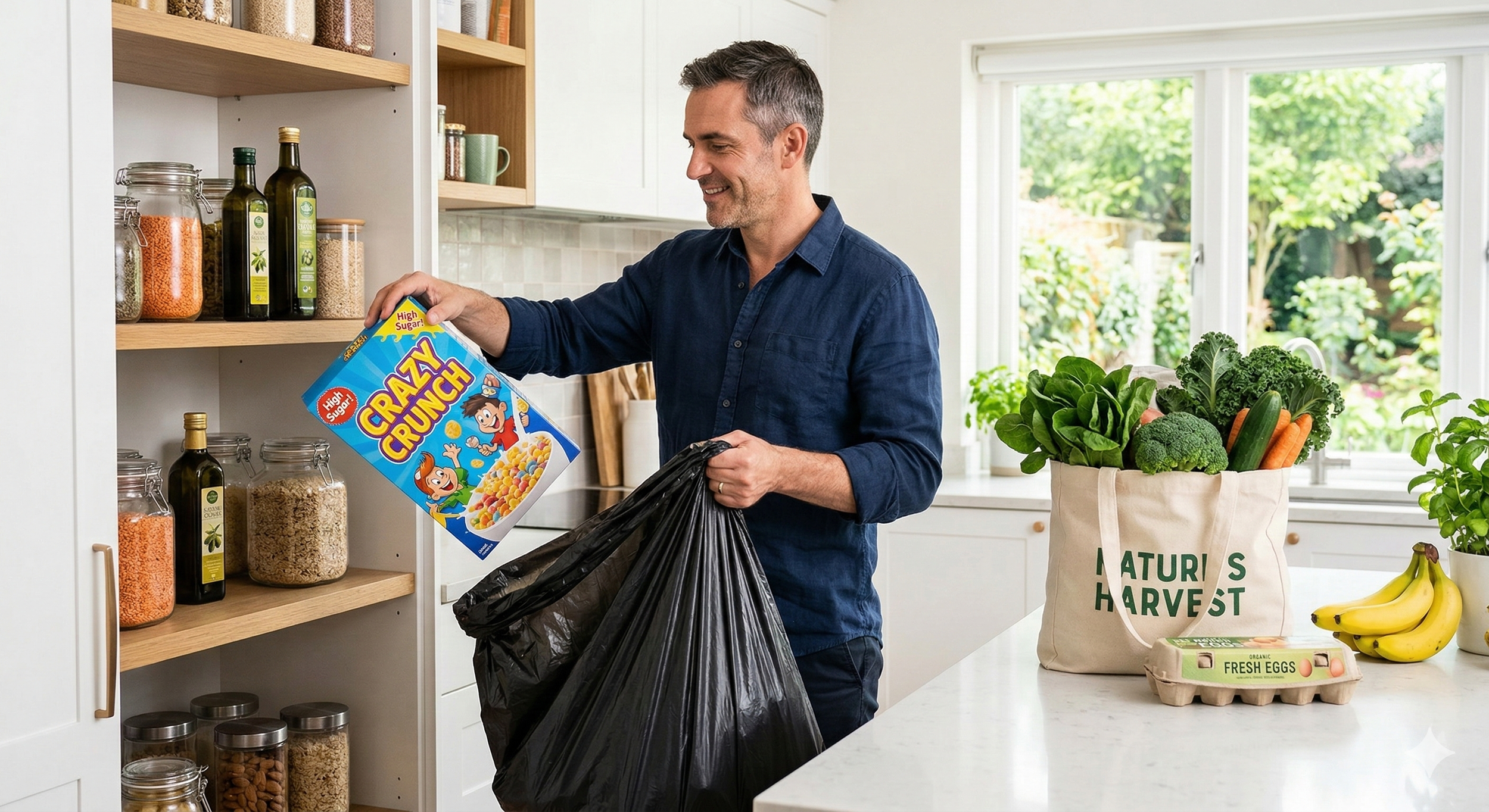
Spring Cleaning Your Pantry: Out with the Processed, in with the Fuel
You don't win your fitness journey in the gym; you win it in the kitchen.
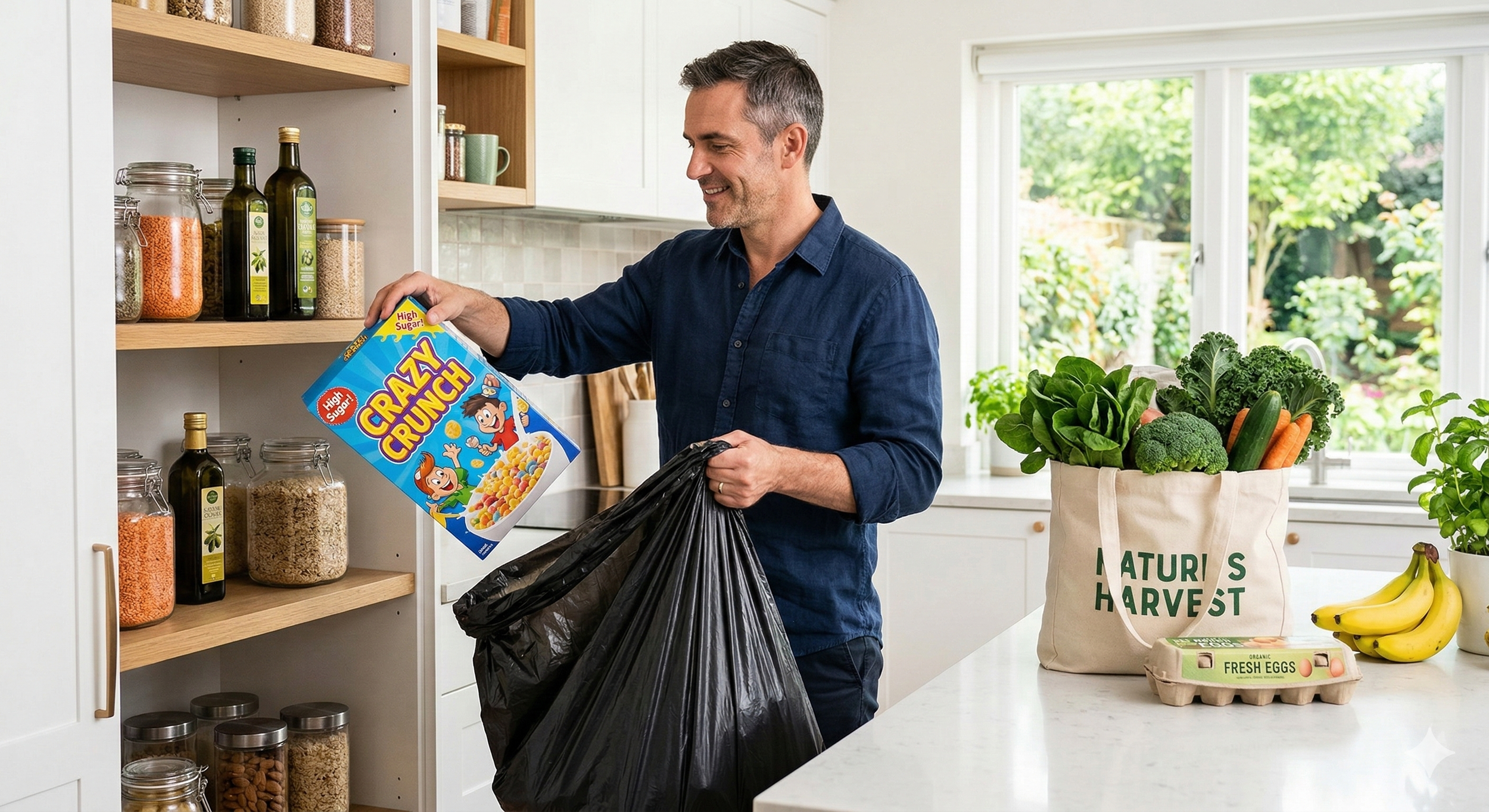
This image was created using AI to avoid copyright issues while conveying the context of this article.
As the flowers begin to bloom and the days get longer, "Spring Cleaning" is likely on your mind. You might be scrubbing the baseboards or organizing the garage, but there is one area of your house that has a much bigger impact on your legacy than a dusty shelf: your pantry.
Your environment dictates your behavior. If your pantry is filled with "highly palatable" processed snacks that are easy to grab when you’re stressed, you are forcing yourself to rely on willpower every single evening. And as we know, willpower is a finite resource.
In the final week of March, it’s time to audit your kitchen. Here is how to spring clean your pantry to ensure your home environment supports the version of you that we are building.
1. The "Logic vs. Impulse" Audit
Go through your pantry and look at every item. Ask yourself: "Does this food help me reach my goal, or is it a trap for my future self?"
If it’s a food that you consistently "lose control" with, like a specific type of chip or sugary cereal, it doesn't belong in the house. You aren't "wasting money" by throwing it away; you are protecting your health. If you don't want to toss it, donate unopened items to a local food bank.
2. Check the "Hidden" Ingredients
Processed foods are masters of disguise. Take a moment to read the labels of your condiments, dressings, and "healthy" bars. Look specifically for:
Added Sugars: Often hidden as high fructose corn syrup, maltodextrin, or dextrose.
Seed Oils: Highly processed oils that can contribute to systemic inflammation.
Artificial Fillers: If the ingredient list looks like a chemistry textbook, your body probably doesn't know how to use it as fuel.
3. Restock with "First-Line" Fuel
Once you’ve cleared the clutter, restock your shelves with items that make hitting your goals easy. Your "new" pantry should include:
High-Quality Proteins: Canned tuna, wild-caught sardines, or high-quality jerky for quick snacks.
Complex Carbs: Quinoa, oats, and legumes.
Healthy Fats: Raw nuts, seeds, and high-quality olive oil.
4. The "Eye-Level" Strategy
The "out of sight, out of mind" rule is real. Put your most supportive foods, like your protein powder and healthy staples, at eye level. Hide the "treats" (the ones you decided to keep for the kids or spouse) in an opaque bin on the highest shelf. If you have to work to find it, you’re much less likely to eat it mindlessly.
The Kitchen is Your Training Ground
You don't win your fitness journey in the gym; you win it in the kitchen. By cleaning out the "junk" and restocking with fuel, you are making the right choice the easy choice.
This week, take 30 minutes to open your cabinets and be honest about what’s inside. Let’s finish March with an environment that reflects your commitment to your legacy.