

The ROI of Employee Wellness: Fitness as a Business Asset
For too long, employee wellness has been treated as a "soft" benefit or a secondary perk.

In the world of corporate finance, we are meticulous about how we manage our physical assets. We track the depreciation of our machinery, we invest in the latest software to stay ahead of the curve, and we ensure our office spaces are optimized for productivity. However, many organizations still overlook their most valuable, and most volatile, asset: the physical health of their people.
For too long, employee wellness has been treated as a "soft" benefit or a secondary perk. It is often the first budget item to be cut during a lean quarter. But as we look at the data in 2026, it is becoming clear that wellness is not a luxury; it is a high-yield business strategy. When an organization treats the fitness of its team as a business asset, it sees a direct return on investment (ROI) in the form of increased productivity, lower healthcare costs, and higher employee retention.
The True Cost of "Presenteeism"
Most business leaders focus on absenteeism; the cost of employees being away from their desks due to illness. While absenteeism is expensive, there is a much larger and more invisible drain on resources called "presenteeism." This happens when employees are physically present at work but are operating at a fraction of their capacity due to poor health, low energy, or chronic pain.
An employee who is struggling with poor metabolic health or high stress is not capable of high-level creative problem-solving. Their cognitive stamina is limited. They are more prone to errors and less likely to engage in the collaborative efforts that drive innovation. By investing in the physical durability of your workforce, you are essentially "upgrading the hardware" of your company. A physically fit team has more focus, more resilience, and a higher capacity for sustained effort.
Resilience as a Competitive Advantage
In a rapidly changing market, resilience is the ultimate competitive advantage. A resilient company is one that can handle stress without breaking. That organizational resilience is built from the ground up, starting with the individuals on the team.
Physical fitness, specifically resistance training, is one of the most effective ways to build mental and emotional durability. When an employee engages in a structured fitness program, they are practicing the ability to handle stress and overcome challenges. They are learning to focus under pressure. These skills translate directly to the boardroom. A workforce that is physically strong is a workforce that does not panic when a deadline looms or a project goes off track.
Reducing Healthcare Volatility
From a purely financial standpoint, the ROI of wellness is most visible in healthcare savings. Chronic diseases, many of which are related to lifestyle choices, are the primary drivers of rising insurance premiums. By providing employees with the tools to manage their nutrition and build muscle, a company can significantly lower its long-term liability.
However, the 2026 approach to wellness goes beyond just "not being sick." It is about optimizing health. When you provide your team with professional coaching and a system for health management, you are reducing the volatility of your human capital. You are ensuring that your key players stay in the game longer and perform better throughout their careers.
Building a Culture of High Performance
An employee wellness program is also a powerful signal to your team. It says that you value them as people, not just as line items on a spreadsheet. In an era where top talent can work anywhere, a culture that prioritizes the health and longevity of its employees is a culture that wins the war for talent.
When a company integrates fitness into its identity, it attracts a certain type of high-performer. It attracts people who value discipline, consistency, and long-term thinking. These are the same traits that lead to business success. By investing in wellness, you are fostering an environment where high performance is the natural byproduct of a healthy culture.
A Strategic Partnership
At Legacy Fitness & Nutrition, we don't provide generic step challenges or “feel good” webinars that feel like another meeting to fit in . We provide a strategic partnership for organizations that want to lead from a position of strength. We help you build the physical infrastructure required to support your business goals.
Investing in the health of your team is not an expense; it is a capital improvement. It is time to stop viewing wellness as a checkbox and start viewing it as a core business strategy. When your people thrive, your business thrives.
Are You Ready to Lead from a Position of Strength?
Resilience is built, not born. At Legacy Fitness & Nutrition, we provide the roadmap for high-performers to build the physical and mental durability required for long-term success.
For the Individual Leader: Ready to stop reacting to stress and start leading through it? Let’s talk about your physical roadmap. Book My Individual Discovery Call
For the Organization: Want to build a culture of resilience and high performance in your team? Explore Corporate Wellness Packages

Resilience: Lessons from the Weight Room for the Boardroom
A strong body is the foundation for a strong mind and a successful career.

This image was created using AI to avoid copyright issues while conveying the context of this article.
In the business world, we talk about "resilience" as a mental trait. We define it as the ability to bounce back from a lost contract, a failed product launch, or a difficult quarter. We read books on grit and attend seminars on mindset, searching for the "secret" to staying calm under pressure.
But as someone who has spent years both in the corporate trenches and under a heavy barbell, I have come to realize that resilience isn't something you just "think" into existence. It is something you build.
The weight room is the ultimate laboratory for leadership. The lessons we learn when we are pushing through a difficult set or carrying a weighted pack around the block are the exact same lessons required to lead a company through a crisis. Here is why the "Physical Lead" is the most resilient leader.
1. The Skill of Voluntary Discomfort
Modern life is designed for comfort. We have climate-controlled offices, food delivered to our doors, and chairs that support us for eight hours a day. While this is convenient, it makes us "soft" to stress. When a professional crisis hits, we feel overwhelmed because our bodies and minds have forgotten how to handle discomfort.
When you step into the weight room or put on a rucking pack for a three-mile walk, you are choosing voluntary discomfort. You are intentionally placing a stressor on your body and forcing it to adapt.
This practice builds a "stress threshold." When you are used to the physical strain of a heavy deadlift, a difficult email or a tense negotiation doesn't feel like an emergency anymore. Your nervous system has been "tempered" by the iron. You have learned that you can be uncomfortable and still perform. That is the definition of resilience.
2. The Logic of Incremental Progress
In the gym, you don't walk in on day one and squat 405 pounds. You start with the bar. You add a plate. Then another another plate. You learn that success is the result of "boring" consistency and small wins that compound over time.
Many leaders fail because they look for "Quantum Leaps." They want the massive win today. But the weight room teaches you that the "Legacy" is built in the increments.
When you apply this to the boardroom, you stop panicking during slow quarters. You realize that as long as the "plan" is sound and the "reps" are being done, the result is inevitable. Physical training removes the emotional "highs and lows" of business and replaces them with a steady, disciplined focus on the process.
3. Recovery is a Professional Requirement
In fitness, we know that if you train at 100% intensity every single day without rest, you will eventually break. You will get injured, your hormones will crash, and your progress will stop. This is a law of biology.
Yet, in the corporate world, we often praise the person who works 80 hours a week without a break. We view "burnout" as a badge of honor.
A resilient leader knows that recovery is not a luxury; it is a requirement. Just as a muscle grows during the rest period after a workout, your best ideas and clearest strategies emerge during periods of recovery. Whether it’s a walk around the block during a meeting or a dedicated "reset" on the weekend, the ability to step away and recharge is what allows you to stay in the game for the long haul.
4. Integrity Under Tension
When you have a heavy weight on your back, your "form" matters more than anything. If your technique breaks down under tension, you get hurt. You have to maintain your integrity, your physical alignment, to complete the rep.
Leadership is the same. It is easy to have "values" and "integrity" when things are going well. The real test of a leader’s character is when the pressure is high.
Physical training teaches you how to maintain your "center" when things get heavy. It teaches you to breathe, to stay focused, and to hold your ground. If you can keep your form during a grueling set of squats, you are much more likely to keep your values during a grueling business negotiation.
Building the Resilient Leader
At Legacy Fitness, we don't just coach "fitness." We coach durability. We believe that a strong body is the foundation for a strong mind and a successful career.
Your health is not a "hobby" that you do in your spare time. It is the very infrastructure that allows you to lead. When you invest in your physical resilience, you are investing in your professional future. You are building a body—and a legacy—that can withstand anything.
Are You Ready to Lead from a Position of Strength?
Resilience is built, not born. At Legacy Fitness & Nutrition, we provide the roadmap for high-performers to build the physical and mental durability required for long-term success.
For the Individual Leader: Ready to stop reacting to stress and start leading through it? Let’s talk about your physical roadmap. Book My Individual Discovery Call
For the Organization: Want to build a culture of resilience and high performance in your team? Explore Corporate Wellness Packages
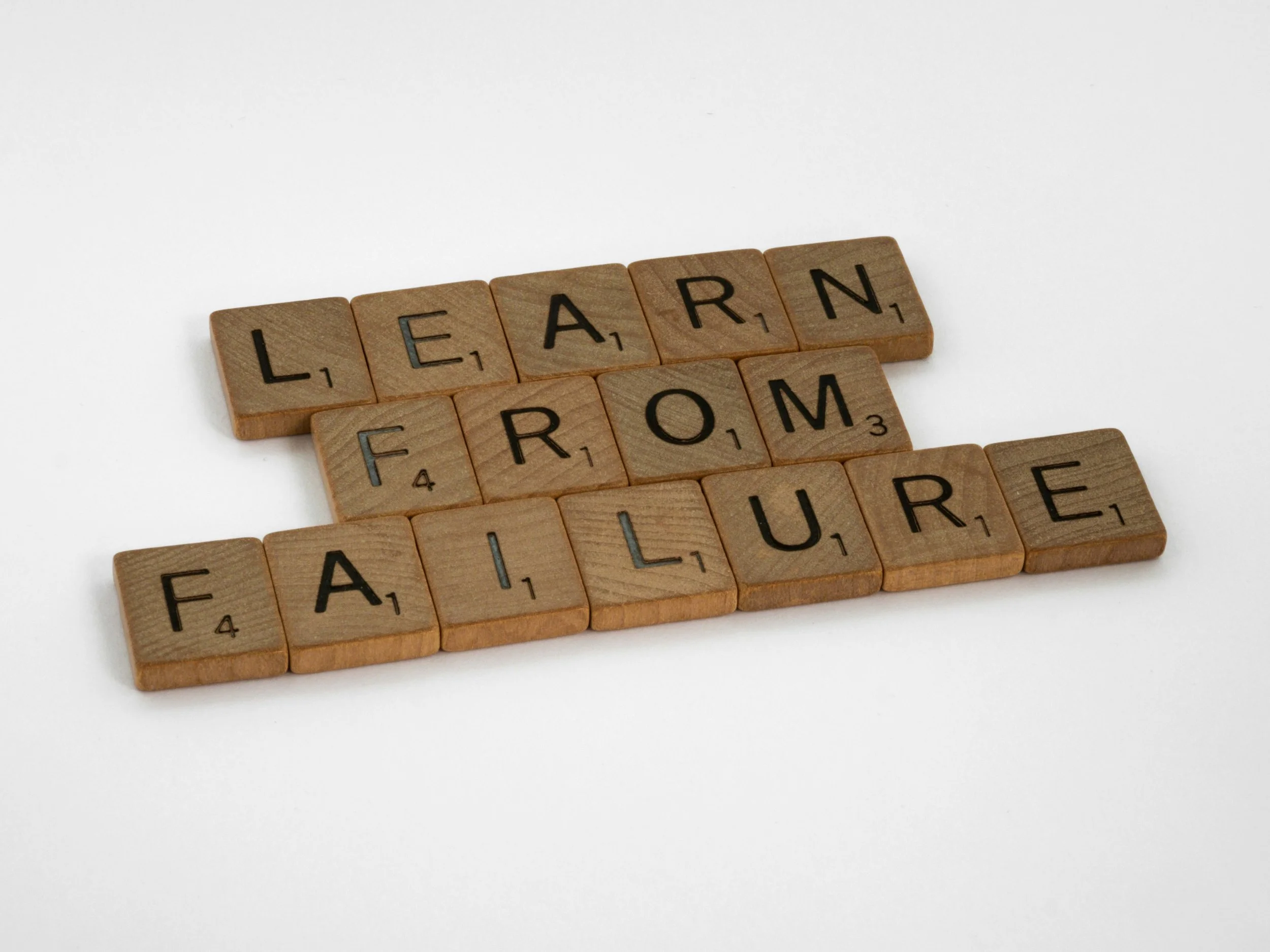
The "Failure Filter": How to Use Past Setbacks to Guarantee Future Success
Failure is not the opposite of success; it is a mandatory part of it. You do not need to avoid your past failures; you need to learn how to process them.
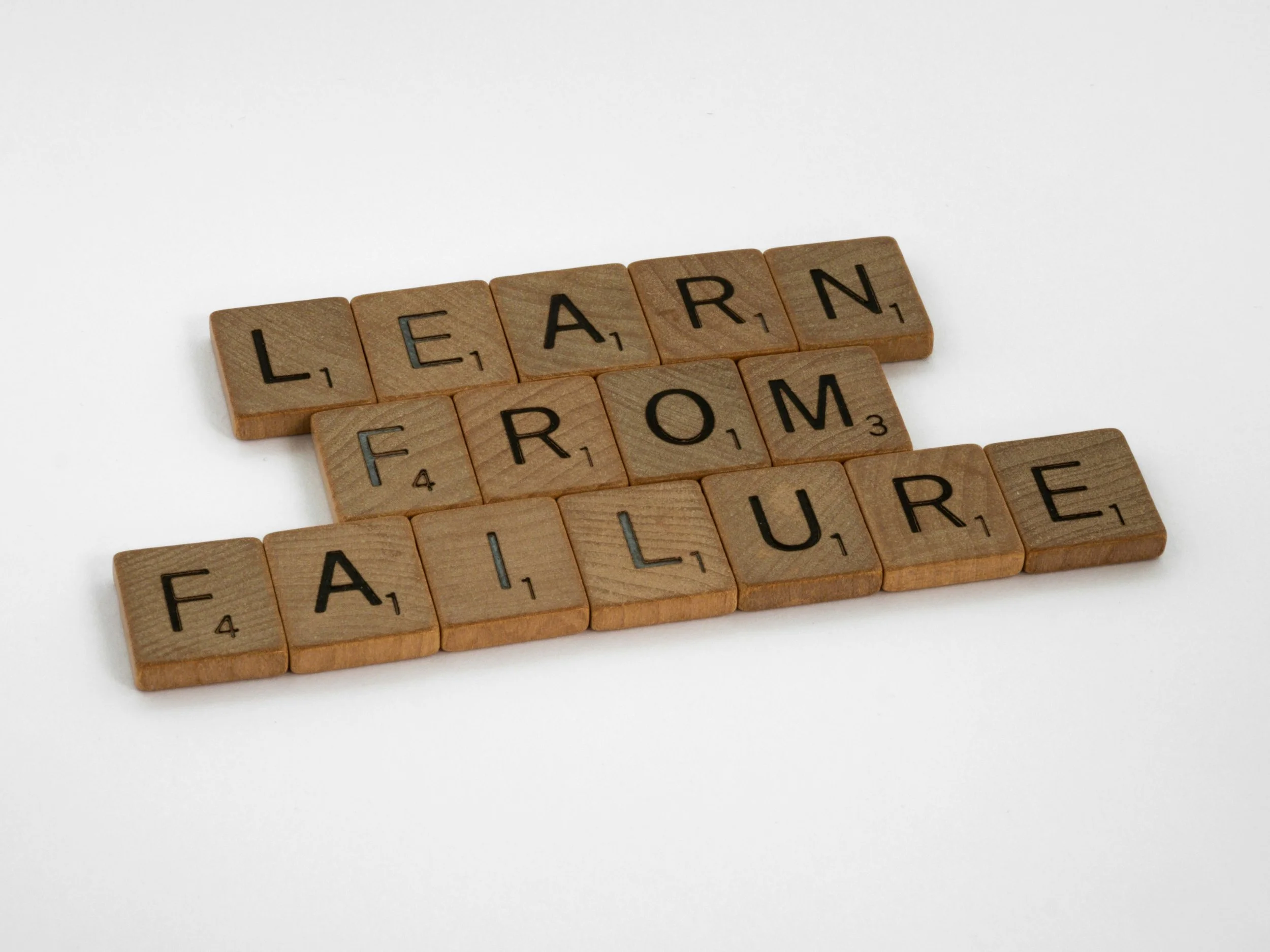
Image courtesy of Brett Jordan via Unsplash
As December comes to a close, many people look back at the resolutions they made last January and feel a pang of disappointment. Maybe they quit after a month, got injured, or simply drifted off track.
This feeling of failure is toxic because it often leads to the same outcome: making a huge, aggressive resolution on January 1st, then quitting by February because the memory of past failure haunts the new effort.
At Legacy Fitness & Nutrition, we believe failure is not the opposite of success; it is a mandatory part of it. You do not need to avoid your past failures; you need to learn how to process them. You need to run those setbacks through the Failure Filter.
The Failure Filter is a mindset tool that transforms disappointment into actionable, concrete data, allowing you to guarantee that your next attempt will be more successful.
Why We Must Analyze the Failure
Most people process failure through emotion: "I failed because I'm lazy," or "I failed because I lack willpower." This is a destructive, false narrative.
Success is rarely about willpower; it is about strategy and environment. When you fail, your system has simply given you highly specific data on where your strategy or environment broke down.
The Failure Filter has three simple questions to turn a setback into data:
1. Was the Plan Realistic? (The Scope Check)
Did you try to go from zero workouts to five 90-minute workouts a week? Did you go from eating highly processed foods to eating nothing but plain chicken and broccoli overnight?
Failure Data: The plan was too big, too fast, and too painful. It violated the principle of the Micro-Habit Playbook.
Future Strategy: Next time, start with an effort so small you cannot fail. For instance, put on your shoes for 5 minutes of movement, then build from there. Start with addition (more protein, more water) instead of drastic subtraction.
2. Was the Habit Stacked? (The Trigger Check)
Did you rely on willpower to start your workout or meal prep every single day? Willpower is weakest when we are stressed or tired. We need automatic triggers.
Failure Data: The habit didn't have an anchor. You relied on emotion rather than a system.
Future Strategy: Link your new action to an old, non-negotiable action. For example: "After I brush my teeth, I will drink a glass of water." Or, "As soon as I walk in the door, I will put on my workout clothes." You automate the start, making failure much harder.
3. Was the Recovery Honored? (The Sustainability Check)
Did you push through chronic fatigue? Did you ignore your body's pain signals? Did you try to cut too many calories while simultaneously ramping up intense exercise? (Remember our previous article, The 3 Rules of Recovery.)
Failure Data: You burned out because you treated your body like a machine, not a complex biological system.
Future Strategy: Schedule rest days first, and treat sleep (See our article, “Why You Can't "Out-Train" a Bad Sleep Schedule”) as the most important fitness component. If you are consistently exhausted, the plan needs to be cut in half, not pushed harder. Listen to the data your body is giving you.
The Resilience of Legacy
When you look back at past struggles through the lens of the Failure Filter, you see that you did not fail because of a personality flaw. You failed because of a solvable strategic flaw.
This knowledge gives you incredible power and resilience. You are not starting 2026 with a blind leap of hope; you are starting with a data-driven, tested plan based on knowing exactly what didn't work last time.
Use this strategic knowledge. Transform your past setbacks into your ultimate guarantee for future success. That is how you build a resilient, enduring legacy of health.