
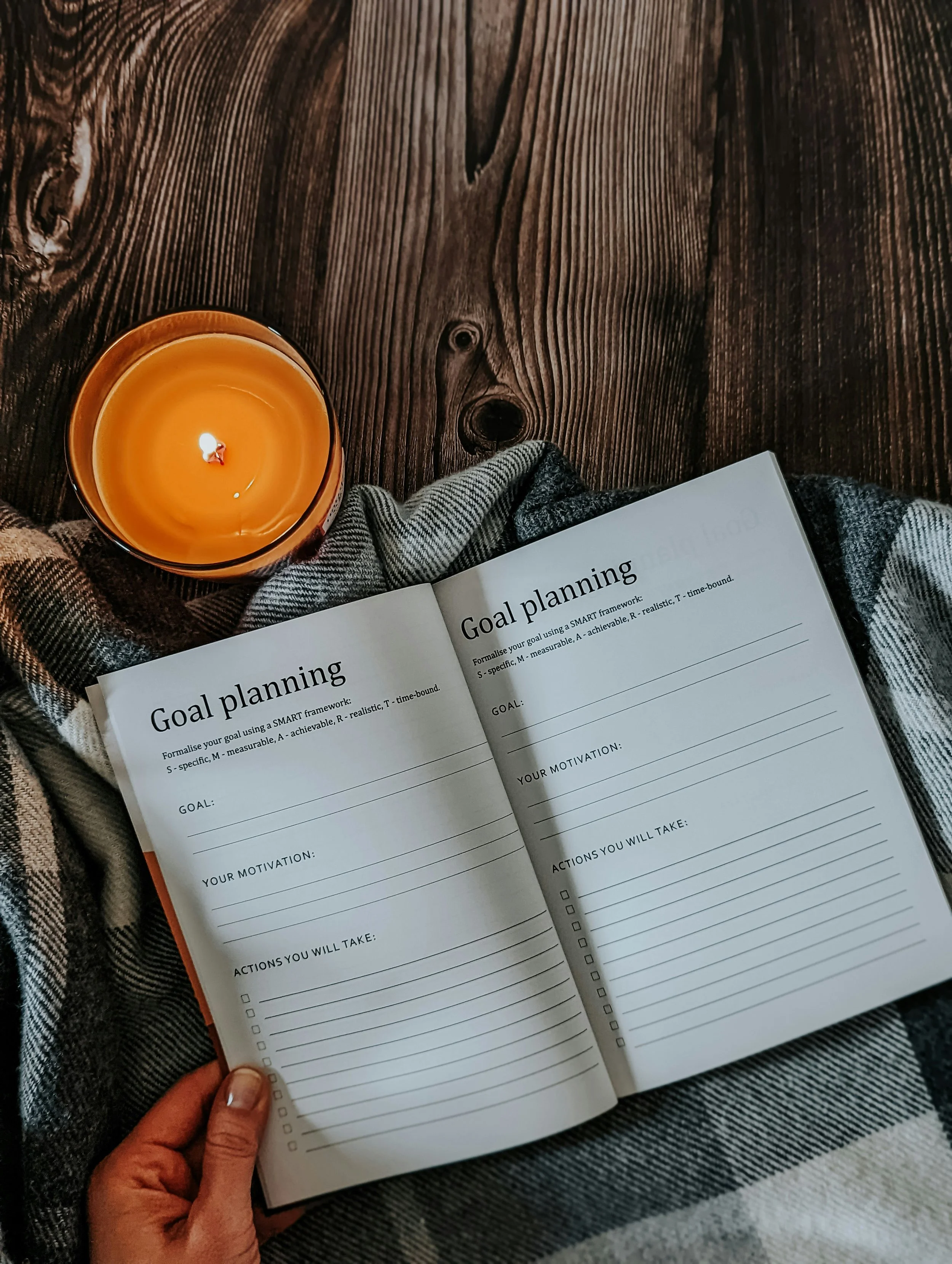
Reflect & Pivot: Setting Your February Goals
We have officially reached the end of January. For many people, this is the most dangerous time in their fitness journey.
We have officially reached the end of January. For many people, this is the most dangerous time in their fitness journey. The initial excitement of the New Year has worn off. The gym is starting to feel a little less crowded, and the "perfect" diet you planned on January 1st might have had a few bumps along the way. This is usually the point where people either double down on their habits or give up entirely.
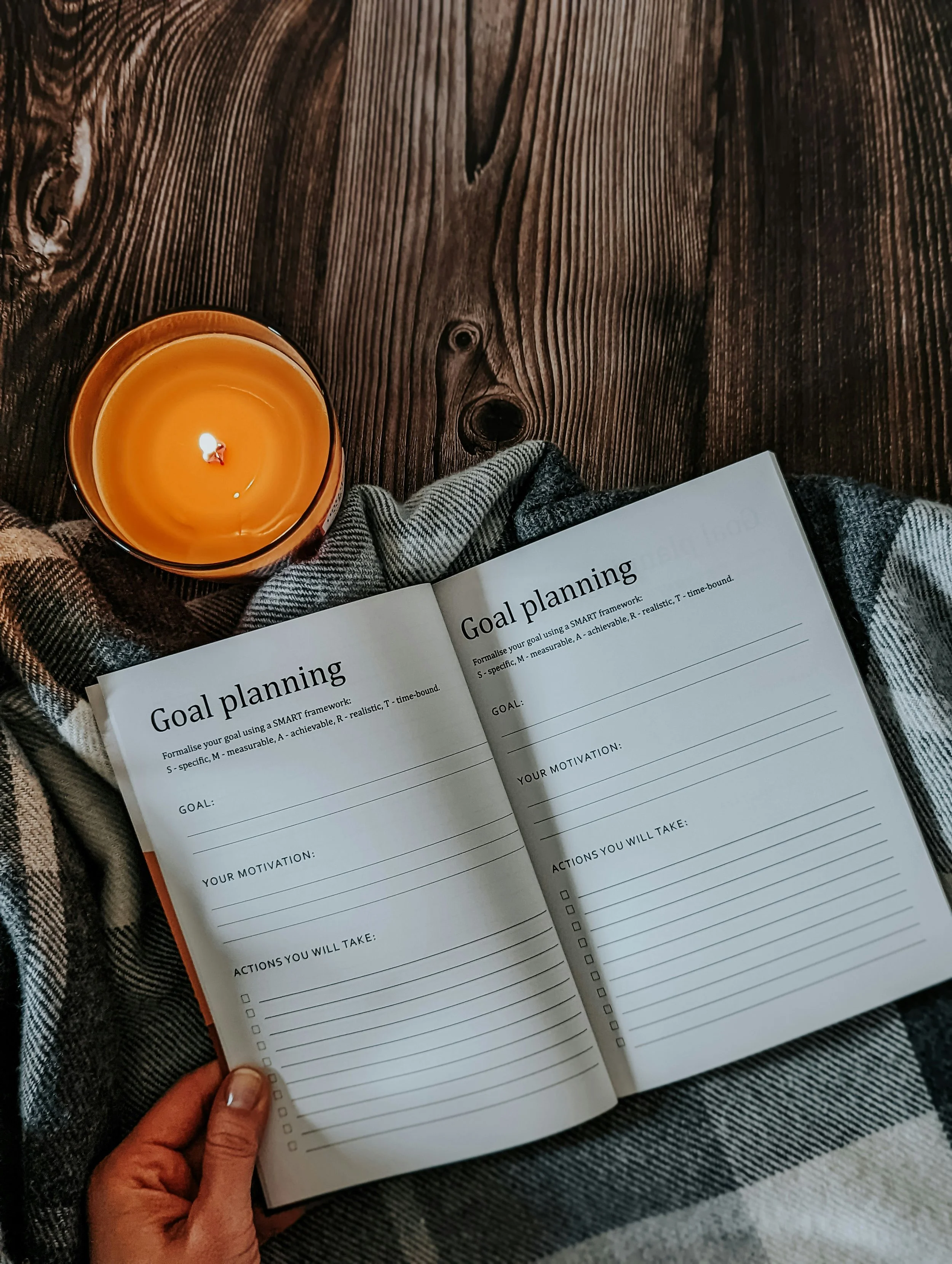
To build a lasting legacy, you have to move past the "all or nothing" mindset. In 2026, we don't just set resolutions and hope for the best; we use a process called Reflect & Pivot. This is a mid-term audit where you look at what worked, what didn't, and how you can adjust your plan for February. Success isn't about being perfect for 31 days; it is about being able to adjust your course when life gets in the way.
The Power of the Monthly Audit
Think of your health journey like a business. A successful company doesn't just wait until the end of the year to see if they made a profit. They check their numbers every month. They look at their "Identity Shift" (from our very first article this month) and ask if their actions are matching the person they want to become.
Taking thirty minutes at the end of the month to reflect helps you catch small problems before they become big ones. If you realized that you struggled with morning workouts, don't try to "force" it again in February. Pivot! Try a "Micro-Workout" (see our previous article) during your lunch break instead. The goal is to find the path of least resistance to your best self.
How to Reflect: Three Key Questions
Before you set your February goals, ask yourself these three honest questions:
What was my "easiest" win? Maybe you found that hitting your "Longevity Walk" was easy because you did it after dinner. This tells you that your evening routine is a strong foundation.
Where did I hit "friction"? If you planned to cook every night but ended up ordering takeout three times, your "friction" is evening meal prep. This is a sign you need to lean more into "The Art of the Sunday Meal Prep".
How do I actually feel? Ignore your "Smart Ring" for a moment. Do you have more energy? Is your brain fog lifting thanks to your "Protein-First Breakfasts"? These "internal" wins are more important than the scale.
The Pivot: Setting February Goals
In February, the "New Year" energy is gone, so your goals should shift from "intensity" to "sustainability." If January was about starting new things, February is about protecting them.
Instead of setting a goal like "I will lose 10 pounds," try setting Action Goals:
The Consistency Goal: "I will not miss two days in a row of my 'Zone 2' walking."
The Nutrition Goal: "I will include a 'Savory Snack' every afternoon to avoid the sugar crash."
The Recovery Goal: "I will prioritize the 'Sleep-Muscle Connection' by having a Digital Sunset at 9:00 PM."
Avoiding the "February Slump"
The "February Slump" happens when people feel like they haven't made enough progress in January, so they stop trying. But remember: a legacy is built over decades, not days. If you only hit 50% of your January goals, that is still 50% more than you did in December!
Use this final day of the month to celebrate how far you’ve come. You’ve learned about the "Gut-Brain Connection," mastered the Deadlift, and explored the "Anti-Inflammatory Kitchen". You now have a toolbox of skills that most people don't have. Don't throw the toolbox away just because you missed a few reps.
The Pivot into Spring
February is a short month, which makes it perfect for a "sprint." Pick one habit you want to master this month and give it your full attention. By the time March rolls around, that habit will be automatic. You aren't just "trying to get fit" anymore; you are living your legacy. Reflect on your wins, pivot away from your frustrations, and let’s make February the month where your new identity truly takes root.

Mastering the 'Pantry Audit'
Your environment should reflect the person you are becoming, not the person you used to be. A clean pantry leads to a clean plate and a clear mind.

Photo by Annie Spratt on Unsplash
Willpower is a finite resource. It’s like a phone battery; it starts full in the morning, but as you make decisions throughout the day, it drains. By 8:00 PM, after a long day of work and stress, your "willpower battery" is at 5%. If you open your pantry and the first thing you see is a bag of cookies, you are probably going to eat them.
The secret to a successful fitness legacy isn't having more willpower than everyone else. It is about designing an environment where you don't need willpower. This is why we perform a Pantry Audit.
The "Visibility" Rule
Humans are visual creatures. We eat what we see. If your healthy foods, like nuts, seeds, and whole grains, are hidden in the back, and the processed snacks are at eye level, you are fighting a losing battle.
During your audit, move your "Legacy Foods" to the front. Put your fruit bowl on the counter. Hide the "indulgence" foods in a high cabinet or a drawer that is hard to reach. If you have to work for it, you are less likely to do it mindlessly.
Decoding the Label
A pantry audit is also about education. Take five minutes to look at the ingredients of your favorite snacks. Look for the "Big Three" disruptors:
Added Sugars: Often hidden under names like "high fructose corn syrup" or "maltodextrin."
Seed Oils: Highly processed oils (like soybean or canola) can increase inflammation.
Ultra-Processed Grains: Flour that has been stripped of all its fiber.
If a food has more than five ingredients and you can't pronounce half of them, it might be time to find a "Legacy Swap." For example, swap crackers for air-potted popcorn or swap sugary granola for raw walnuts.
Set Your Environment for Success
Don't think of this as "throwing away money" if you toss out junk food. Think of it as "investing in your health." If the food isn't in your house, you can't eat it at 9:00 PM when your battery is low.
This January, take 30 minutes to clean out the clutter. Your environment should reflect the person you are becoming, not the person you used to be. A clean pantry leads to a clean plate and a clear mind.
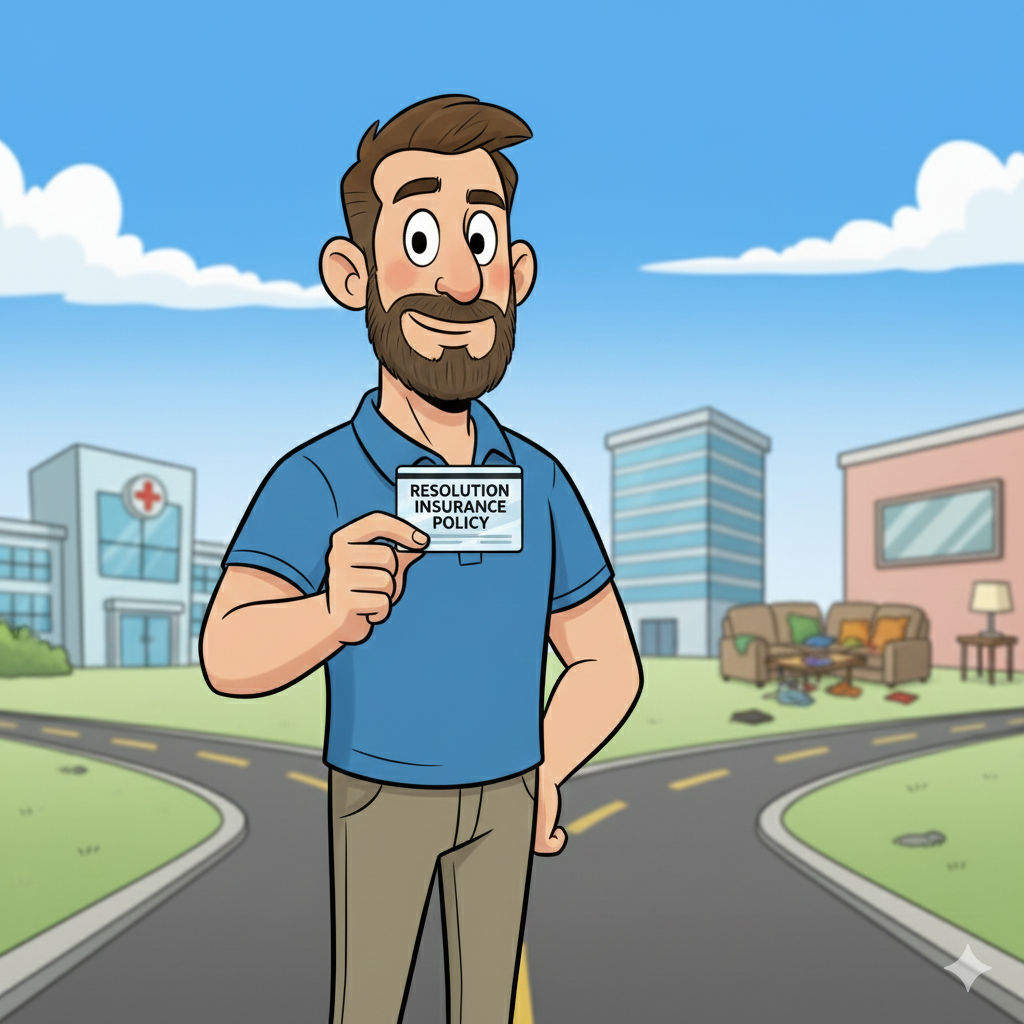
The "Resolution Insurance" Policy: How to Protect Your Goals from Life's Obstacles
Life happens. Being successful on your fitness journey is not avoiding these obstacles; it is having a plan for them. You need to put a "Resolution Insurance" Policy in place right now.
You've done the work. You've created your detailed Fitness Roadmap (see article, Setting Your GPS), you've focused on essential habits (as discussed in The Micro-Habit Playbook), and you're launching into the New Year feeling energized.
But here is the simple truth: Life happens. You will get sick, a child will need attention, a work project will demand late nights, or you will simply have a terrible, low-motivation day. These obstacles are not a sign of failure; they are an inevitable part of the journey.
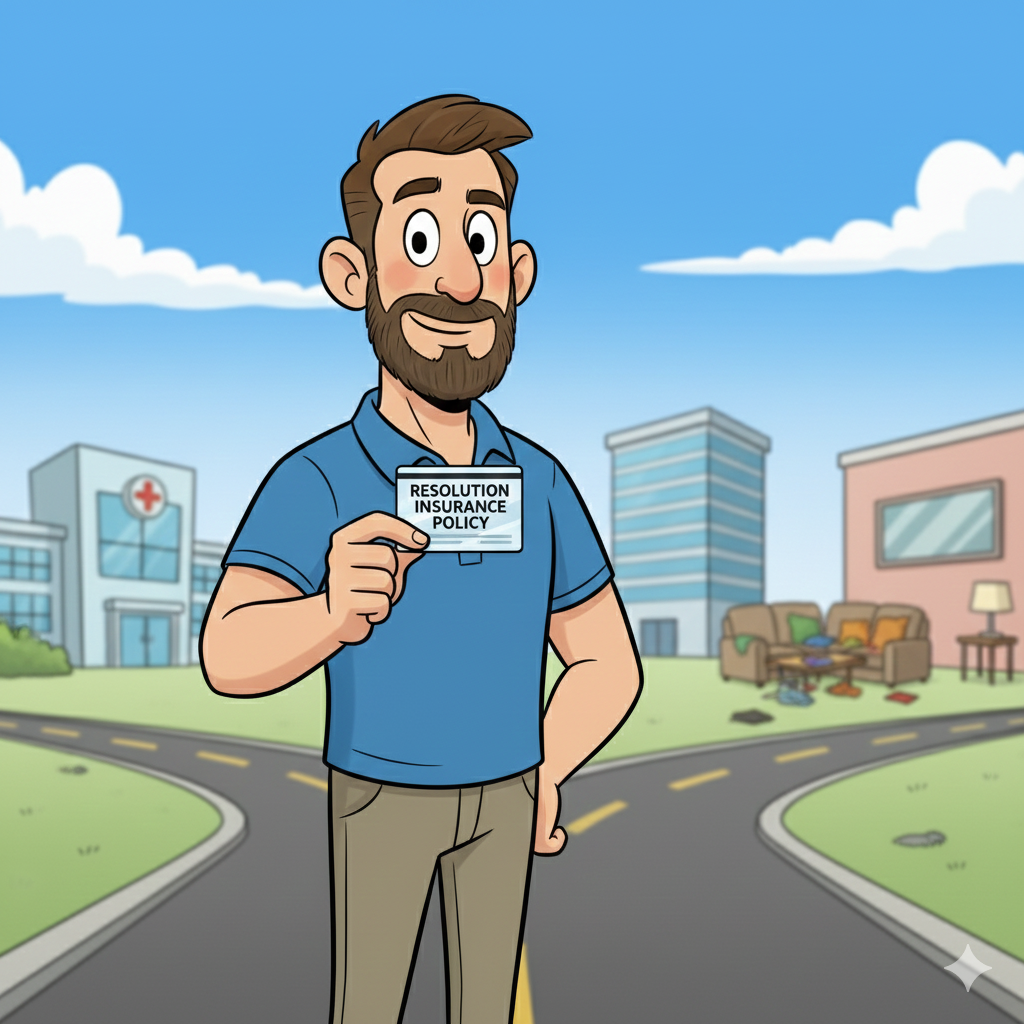
The difference between a successful, lasting fitness legacy and one that crashes in February is not avoiding these obstacles; it is having a plan for them. You need to put a "Resolution Insurance" Policy in place right now. This policy gives you clear, pre-planned actions to take when things go wrong, ensuring a detour never becomes a dead end.
The Three Policy Clauses (Pre-Planned Solutions)
Your insurance policy needs to cover the three main types of disruptions that derail most New Year's resolutions:
1. The Time and Energy Policy (When Life Is Chaotic)
This policy protects you when your schedule is shredded and you have zero mental energy for complex tasks.
The Problem: You have 15 minutes and you feel too mentally exhausted to figure out what to do.
The Policy Action: Implement the "Anchor 5." You commit to doing only the five easiest, most non-negotiable health habits.
Examples: 10 push-ups, 10 minutes of walking, preparing a protein shake, and drinking 2 glasses of water.
Why it Works: This action removes the friction of decision-making. You do not worry about the "perfect" workout or meal; you simply hit the Anchor 5. This maintains the streak of consistency, which is the most valuable thing you own. (This is a simplified version of the principles in The Power of the 15-Minute Home Workout).
2. The Nutritional Policy (When You're Forced to Eat Out)
This policy protects you from food environments that are designed to make you fail, like last-minute business dinners or unexpected travel.
The Problem: You are unexpectedly eating at a fast-food restaurant or a chain restaurant with a heavy menu.
The Policy Action: Apply the "Protein-Vegetable First" Rule.
Commitment: Always choose the leanest protein source on the menu (grilled chicken, fish, or sirloin), and order a double side of vegetables or salad to replace the fries or heavy starches.
Why it Works: By prioritizing protein and fiber, you ensure maximum satiety and nutrient density (as taught in Protein Power for the New Year). This simple rule gives you a clear win, regardless of the menu, and prevents the "well, I've already messed up" spiral.
3. The Mental Policy (When Motivation Disappears)
This is the most critical policy. It protects you when you feel emotionally low, physically sore, and have zero desire to continue.
The Problem: You've missed two workouts, the scale is up a pound, and you feel like quitting everything.
The Policy Action: Invoke the "Why Check." Immediately stop focusing on the missed workouts or the number on the scale. (See article, Your "Why" is Not a Number).
Commitment: Contact your accountability partner or coach (see article, The Power of Accountability). Spend 5 minutes reviewing your deeper "Why" (e.g., "I want to be strong enough to hike with my family when I'm 70").
Why it Works: This shifts your focus from the emotion of failure to the long-term purpose of the journey. A coach or partner can filter the setback as data (as outlined in The "Failure Filter"), not personal weakness, helping you adjust your roadmap and restart immediately.
Do not wait for January 1st to be perfect. Create your Resolution Insurance Policy now. By planning for the detours, you guarantee that you always have a simple, strategic path back to your legacy destination.
The 5-Year Fitness Plan: Building a True Legacy of Health
When most people set goals, they think in months; we encourage our clients to adopt a much longer vision: The 5-Year Fitness Plan.
When most people set goals, they think in months. They focus on the next 12 weeks of training or the next 6 pounds they need to lose. This short-term thinking often leads to short-term results: rapid changes followed by an inevitable crash when life intervenes.
At Legacy Fitness & Nutrition, we encourage our clients to adopt a much longer vision: The 5-Year Fitness Plan.
This long view changes the way you approach exercise, nutrition, and stress. It transforms your goals from a series of exhausting sprints into a sustainable, consistent journey. You are no longer just trying to look good this summer; you are building a Legacy of Health that ensures you have the vitality, strength, and independence to enjoy your life decades from now.
Why 5 Years Changes Everything
Focusing on a 5-year plan shifts your decision-making from reaction to investment.
It Forces Sustainable Habits: If you know you have to run for 5 years, you won't sprint the first month. You will prioritize the foundational habits (see article, The Micro-Habit Playbook) that can be maintained regardless of your schedule. This eliminates crash diets and exhausting, injury-prone workouts.
It Prioritizes Longevity: You start viewing your training as an investment in your future self (as discussed in Strength Training for Longevity). You worry less about the aesthetic number on the scale and more about the functional health of your joints, bone density, and metabolic resilience.
It Plans for Detours: Over 5 years, you are guaranteed to face job changes, injuries, illnesses, and family crises. A long-term plan accepts these detours as inevitable and builds in the strategy for recovery (see article, The Failure Filter), instead of viewing them as reasons to quit entirely.
The 3 Pillars of Your 5-Year Fitness Legacy
1. The Functional Foundation (Years 1-2)
The first two years are dedicated to mastering your body and eliminating long-term health risks. This phase is about quality and movement literacy.
Focus: Perfect your form on foundational movements (squat, hinge, push, pull). Prioritize mobility and flexibility (as discussed in Beyond the Marathon). Consistently hit the daily process goals for sleep and protein intake.
Goal: Establish an unbreakable, sustainable routine that you can maintain during high-stress periods. You should feel strong, move pain-free, and sleep consistently.
2. The Resilience Build (Years 3-4)
Once the foundation is set, you build resilience and push performance safely.
Focus: Challenge your strength (increase weight safely) and expand your cardiovascular capacity. Introduce specific, measurable performance goals (e.g., hitting a consistent running pace, achieving specific strength numbers). Crucially, this is the time to optimize your stress management (as outlined in Your Secret Fitness Weapon).
Goal: Your health habits are now automatic. You have the mental and physical resilience to quickly recover from a week-long business trip or a major life event without losing momentum.
3. The Active Maintenance Legacy (Year 5+)
This phase is about fine-tuning and ensuring you maintain the strength and energy you have gained.
Focus: Continued strength training for bone density and muscle maintenance. Regular focus on new mobility challenges and maintaining a high level of functional fitness (the ability to perform daily tasks easily).
Goal: Your health is no longer a goal; it is simply a byproduct of your established lifestyle. You are fully capable of doing whatever you want—traveling, playing sports, running—without physical limitation, ensuring a high quality of life.
Stop looking at January 1st as a single, monumental day. View it as the start of a 5-year journey. When you commit to the long-term vision, the daily decisions become simple investments in the strong, independent, and vital person you are building.

Setting Your GPS: Creating a Fitness Roadmap (Not Just a Wish List)
A wish list is a dream without instructions. A roadmap is a detailed plan that tells you exactly where to turn, what speed to maintain, and what obstacles to expect.

Image courtesy of Cathryn Lavery via Unsplash
Every January, people create a fitness "wish list." They write down vague goals like "I want to get healthy," "I want to lose weight," or "I want to feel better."
These statements are full of hope, but they are critically lacking one thing: A roadmap.
A wish list is a dream without instructions. A roadmap is a detailed plan that tells you exactly where to turn, what speed to maintain, and what obstacles to expect. Without a roadmap, you will quickly get lost, frustrated, and you will eventually pull over.
At Legacy Fitness & Nutrition, we teach you to set your Fitness GPS to ensure you not only reach your destination but know exactly how to get back on track when life throws a detour. A successful legacy is built on clear direction.
The Problem with Vague Goals
Why does "I want to lose 10 pounds" often fail? Because the goal is simply a destination, not a journey. It does not tell you the daily habits required to get there.
A successful fitness roadmap transforms the wish into a detailed, actionable plan using the SMART framework, but with a special focus on Actionable Habits.
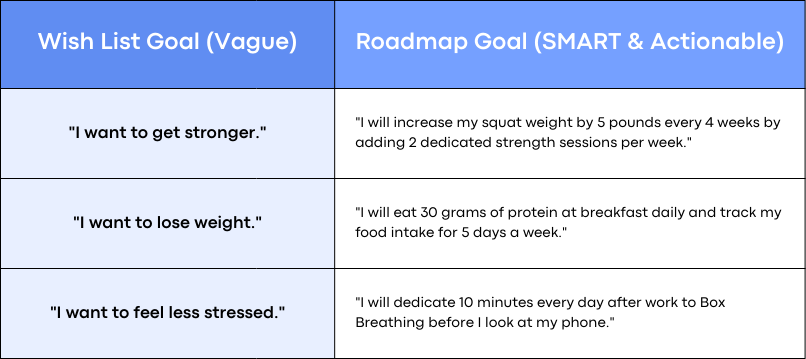
The difference is that the roadmap goal focuses on the consistent action you must take, not just the eventual outcome.
3 Essential Components of Your Fitness Roadmap
Your fitness plan needs three layers to be truly resilient and effective:
1. The Daily Checkpoint (Process Goals)
These are the small, daily actions you control 100%. These are the behaviors that, if done consistently, guarantee the bigger result.
Action: Identify 3 non-negotiable process goals for the first 30 days. These are habits, not outcomes.
Examples: Drink 60 ounces of water; Go to bed by 10 PM; Get a protein source in every meal.
Strategy: Focus 90% of your energy on winning the day by hitting these checkpoints. This builds confidence and momentum immediately.
2. The Quarterly Target (Performance Goals)
These are measurable steps that confirm you are moving in the right direction. They are big enough to be motivating but small enough to be reachable within a few months.
Action: Set a physical challenge for every three months.
Examples: Complete 10 perfect push-ups in a row by March 31st; Complete a 5K race by June 30th; Maintain a consistent sleeping average of 7.5 hours for 90 days.
Strategy: Quarterly targets keep you engaged and allow you to adjust your daily process goals based on real-time feedback.
3. The Fuel and Recovery Strategy (The Pit Stops)
The best roadmap also includes scheduled "pit stops" for fueling and maintenance. This recognizes that life isn't a straight line and that your body needs repair.
Action: Explicitly plan for rest, recovery, and nutrition management.
Examples: Schedule 2 non-negotiable rest days per week; Plan one healthy meal prep session every Sunday; Set a maximum cap on late nights (no more than one per week).
Strategy: By planning for recovery (see article, The 3 Rules of Recovery) and fueling (see article, “"Protein Power" for the New Year), you prevent the burnout and hormonal chaos (see article, Why You Can't "Out-Train" a Bad Sleep Schedule) that derail 90% of fitness journeys.
This January, don't just write a wish list. Sit down, create your detailed Fitness Roadmap, and set your GPS. Knowing the exact route gives you the power to overcome obstacles and guarantee that you arrive at your legacy destination.

Cooking Once, Eating Thrice: Your Weekend Guide to Effortless Meal Prep for the Week
The biggest enemy of healthy eating isn't a lack of knowledge; it's a lack of time.

Image courtesy of Ella Olsson via Unsplash
The biggest enemy of healthy eating isn't a lack of knowledge; it's a lack of time. When you’re exhausted after a long workday, ordering takeout or heating up something highly processed is just easier than cooking a healthy meal from scratch.
This is where the strategy of "Cooking Once, Eating Thrice" saves the day. Instead of spending your valuable time cooking every single night, you dedicate a few hours on a weekend afternoon to preparing large batches of simple building blocks. This small investment of time acts as an insurance policy against poor food choices all week long, ensuring you have healthy, satisfying meals ready to assemble in minutes.
This guide will show you how to focus your weekend prep on three versatile components that can be mixed and matched into multiple meals throughout the week.
The Weekend Warrior Prep Strategy
Aim for about two hours of focused time on Sunday afternoon. You're going to prep one main protein, one versatile carb, and one large batch of vegetables.
1. The Protein Anchor (The Muscle Fuel)
Protein is the most important component for satiety (feeling full) and muscle maintenance. Make a large batch of a neutral, versatile protein that can fit into any meal.
Prep: Cook 3–4 pounds of a single protein source.
Chicken Breast/Thighs: Bake, grill, or shred in a slow cooker with minimal seasoning (salt, pepper, garlic powder).
Ground Turkey/Beef: Cook in a large skillet, drain the fat, and leave it mostly unseasoned.
Lentils or Chickpeas: Cook a large batch on the stovetop or use canned options (rinsed well).
Storage: Divide the cooked protein into individual portion containers (e.g., 4–6 ounces per portion) and store in the fridge.
2. The Versatile Carb (The Energy Base)
These ingredients are your energy sources. Choose a complex carbohydrate that reheats well and provides good fiber.
Prep: Cook 6–8 cups of a grain.
Quinoa: Cooks quickly and is high in protein and fiber.
Brown Rice or Farro: Great for salads and bowls.
Sweet Potatoes: Bake 5–6 whole sweet potatoes, then mash or cube them for easy reheating.
Storage: Keep the cooked grains/potatoes in a large, sealed container. They will last 4–5 days in the fridge.
3. The Bulk Veggies (The Fiber & Volume)
This is where you add volume, color, and essential nutrients. Focus on vegetables that are easy to prep or cook in large batches.
Prep:
Roast: Toss a large tray of sturdy vegetables like broccoli florets, Brussels sprouts, carrots, and onions with a little olive oil, salt, and pepper. Roast at 400°F until tender-crisp.
Chop Raw: Chop a large bowl of fresh veggies like cucumbers, bell peppers, carrots, and celery sticks. These are perfect for snacking or quick salad additions.
Storage: Store roasted veggies in their own container. Keep chopped raw veggies separated or bagged for easy grabbing.
The "Eating Thrice" Assembly Method
By Monday morning, you have three large containers: Protein, Carbs, and Veggies. Now, you can assemble three distinct meals with minimal effort.

Bonus Tip: Embrace the Freezer
If you worry about food going bad, especially protein, dedicate a portion to the freezer immediately after cooking. Cooked chicken breast or ground meat freezes beautifully in portion-sized bags. That way, you ensure you always have emergency protein available later in the week or the following week.
Meal prepping is less about being a gourmet chef and more about being a smart strategist. By focusing on simple, mix-and-match components, you eliminate decision fatigue, save money, and ensure that when hunger strikes, health is the easiest option available.