

The "Spring Clean" for Your Pantry: A Fresh Start for Your Health
Cleaning out your pantry is a symbolic act. It shows that you are serious about your legacy and your health.

This image was created using AI to avoid copyright issues while conveying the context of this article.
Spring is finally here. It is the time of year when we open the windows, let in the fresh air, and clean out the garage or the spare closet. We feel better when our physical space is organized, but we often forget about the most important "space" in our home: the kitchen pantry.
If you are trying to reach a fitness goal, your environment is your greatest ally or your worst enemy. It is much harder to make a bad choice when that choice isn't sitting on your shelf staring at you. A pantry "spring clean" isn't about being perfect; it is about setting yourself up for success. By auditing your kitchen for hidden sugars and processed oils, you make the healthy choice the easy choice.
Why the Pantry Audit Matters
Most of us think we eat pretty well. However, many modern food products are designed to stay on a shelf for a long time. To make this happen, companies often use ingredients that are not great for our energy levels or our waistlines. Two of the biggest culprits are hidden sugars and highly processed seed oils.
When you eat these ingredients daily, they can cause inflammation and energy crashes. They also make you crave more of the same food. By clearing them out, you reset your palate and your body.
Step 1: The Sugar Hunt
Sugar is a master of disguise. It goes by over 60 different names on food labels. You might not see the word "sugar," but you might see "maltodextrin," "high fructose corn syrup," or "barley malt."
Start by looking at your condiments and "healthy" snacks. Salad dressings, pasta sauces, and granola bars are common hiding places. Check the "Added Sugars" line on the nutrition label. If a single serving has more than 5 to 8 grams of added sugar, it might be time to find a better version.
When you remove these items, you stop the blood sugar roller coaster. You will notice that you have more steady energy throughout the afternoon, and those "cravings" for sweets will start to fade away.
Step 2: Spotting the Processed Oils
The next thing to look for are highly processed vegetable and seed oils. These include soybean oil, corn oil, cottonseed oil, and canola oil. These oils are often high in Omega-6 fatty acids. While we need some Omega-6, the modern diet usually has way too much of it, which can lead to inflammation.
Flip over your boxes of crackers, chips, and even some "healthy" nut milks. You will likely see these oils listed. They are cheap for companies to use, but they aren't the best fuel for your body.
Instead, try to move toward "stable" fats. Extra virgin olive oil, avocado oil, and coconut oil are great options. Butter or ghee are also good choices for cooking. These fats help you feel full and support your brain health without the inflammatory side effects of processed seed oils.
Step 3: Out with the Old, In with the New
Once you have cleared out the items that don't serve your goals, don't just leave the shelves empty. Fill them with "bridge foods." These are healthy items that are just as easy to grab as the processed ones.
Swap the sugary granola for raw nuts and seeds.
Swap the processed crackers for canned tuna or sardines.
Swap the vegetable oil for a high-quality bottle of extra virgin olive oil.
Swap the sugary soda for sparkling water with a squeeze of lime.
The Power of the "First Line of Defense"
Think of your pantry as your first line of defense. When you are tired after a long day at work, you are going to eat whatever is easiest to grab. If your pantry is filled with high-protein snacks and whole foods, you will stay on track even when your willpower is low.
Cleaning out your pantry is a symbolic act. It shows that you are serious about your legacy and your health. It tells your brain that you are a person who values quality fuel.
Make It a Habit
You don't have to do this all in one day. Start with one shelf or one category. Maybe today you just look at your salad dressings. Tomorrow, look at your snack bin.
The goal is progress, not perfection. Every time you replace a processed item with a whole food, you are making a deposit into your long-term health account. Spring is the season of new beginnings. Start yours in the kitchen, and watch how much easier it becomes to hit your goals in the gym.
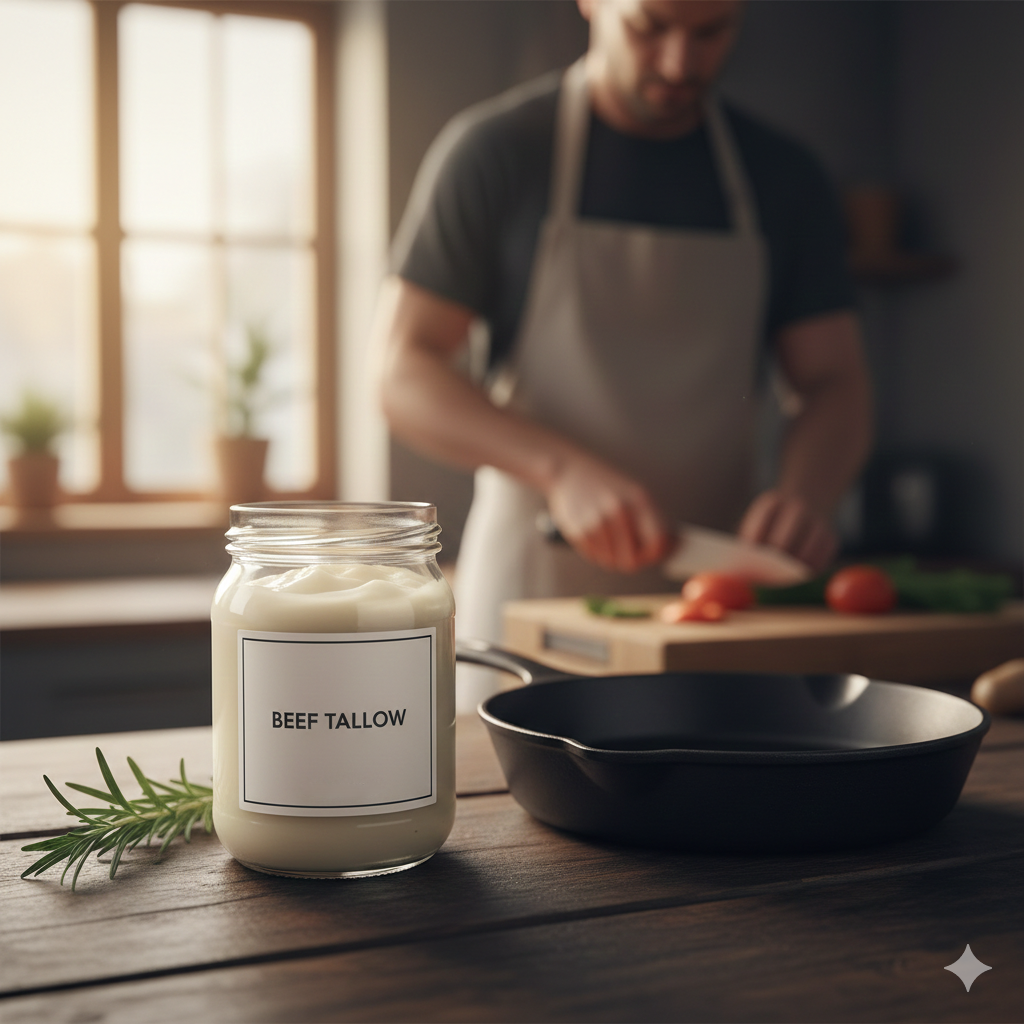
The "Tallow" Comeback: Why Traditional Fats are Trending
This February, consider a pantry audit. Swap out the plastic bottle of yellow vegetable oil for a jar of high-quality, grass-fed tallow.
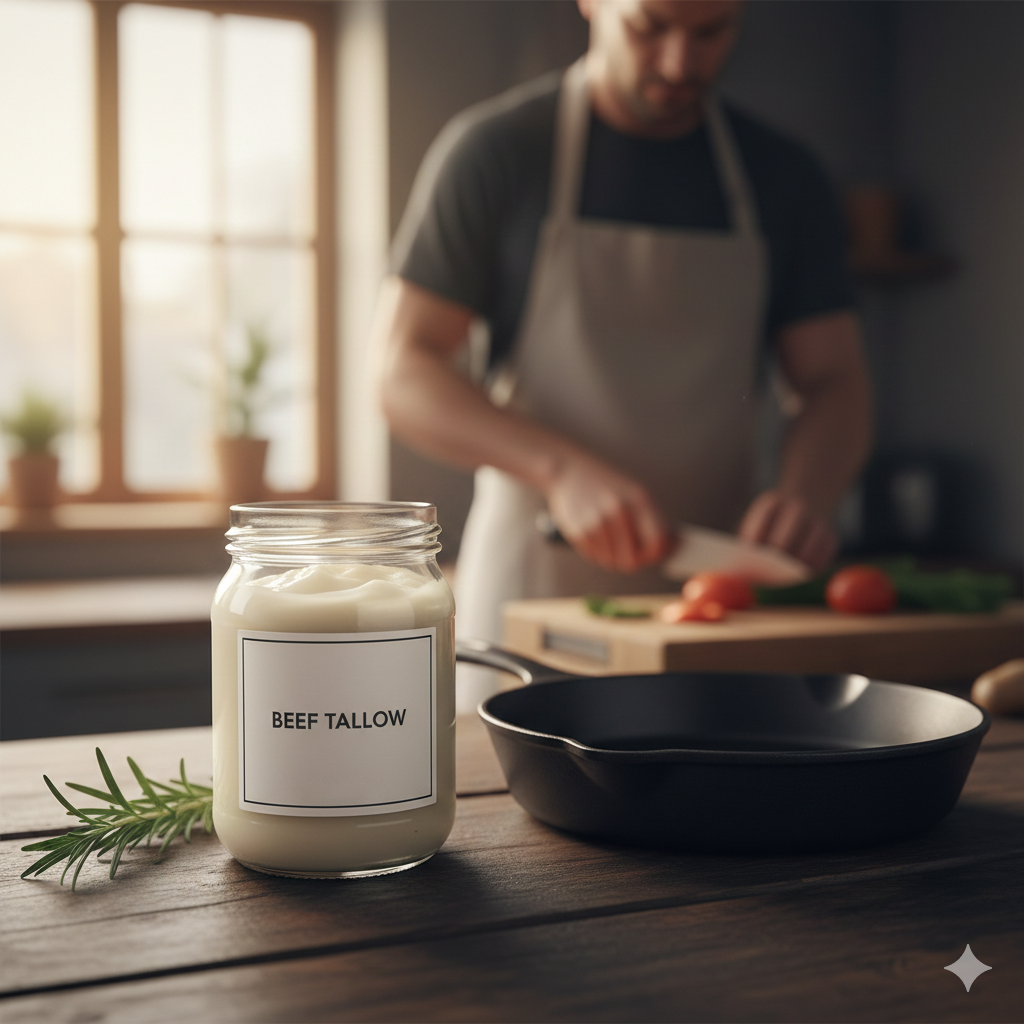
This image was created using AI to avoid copyright issues while conveying the context of this article.
If you walked into a health food store twenty years ago, you would have seen shelves lined with "fat-free" cookies and vegetable oil spreads. Fat was the enemy, and animal fats like lard and tallow were considered the worst of the bunch. But as our understanding of nutrition has evolved, the tide has turned.
In recent months, one of the most surprising trends in the fitness and "ancestral health" space is the return of beef tallow. From professional athletes to home cooks looking for stable cooking oils, people are ditching the highly processed seed oils and returning to the traditional fats our ancestors used for generations.
But is this just a social media fad, or is there a real benefit to bringing tallow back into your kitchen?
What Exactly is Tallow?
Tallow is rendered beef fat. To make it, the fat (usually the "suet" found around the kidneys) is cooked down slowly to remove impurities. What remains is a shelf-stable, nutrient-dense fat that is solid at room temperature.
Unlike lard, which comes from pigs, tallow has a very high smoke point (around 400°F). This makes it one of the safest fats to cook with, as it doesn't break down or become toxic when exposed to high heat.
The Science of Saturated Fat
For decades, we were told that saturated fat was the primary cause of heart disease. However, modern research has shown that the relationship between fat and heart health is much more complex than we once thought. While we still want to avoid "trans fats" (the man-made fats found in fried fast foods), naturally occurring saturated fats like those in tallow play several vital roles in the body:
Hormone Production: Your body needs fat to produce essential hormones, including testosterone and estrogen.
Vitamin Absorption: Vitamins A, D, E, and K are "fat-soluble." If you don't eat enough healthy fats, your body cannot absorb these vitamins, no matter how many vegetables or supplements you take.
Brain Health: Your brain is roughly 60% fat. Saturated fats provide the structural integrity your brain cells need to communicate effectively.
Why Tallow is Winning Over Vegetable Oils
The main reason tallow is making a comeback is the growing concern over highly processed vegetable oils (like soybean, corn, and canola oil). These oils are often high in Omega-6 fatty acids, which can be pro-inflammatory when eaten in large amounts.
Because tallow is mostly saturated and monounsaturated fat, it is much more stable. When you cook with it, you aren't dealing with the oxidation (damage) that happens to fragile vegetable oils. Furthermore, tallow contains Conjugated Linoleic Acid (CLA), a type of fat that has been linked in some studies to improved fat burning and immune function.
Tallow for Your Skin?
The comeback isn't just happening in the kitchen. "Tallow balm" has become a massive trend in the skincare world. Because the fatty acid profile of tallow is very similar to the "sebum" (the oil our own skin produces), it is incredibly moisturizing and soothing for people with sensitive skin or eczema. It is a "whole food" approach to beauty that avoids the chemicals found in modern lotions.
How to Use Tallow at Home
If you want to try tallow, you don't need to overthink it. It has a very mild, slightly savory flavor that enhances almost anything it touches.
Roasting Veggies: Toss your Brussels sprouts or broccoli in melted tallow before roasting. The high smoke point gives them a perfect crunch.
Searing Steak: Use a small amount of tallow in a cast-iron skillet to get a restaurant-quality crust on your protein.
The "Legacy" Breakfast: Fry your eggs in tallow instead of butter or oil for a nutrient-dense start to your day.
The Legacy View
At Legacy Fitness, we often find that the "old ways" were better than the "modern fixes." We moved away from traditional fats in favor of processed oils, and our collective health suffered. Bringing tallow back into your routine isn't about eating a high-fat "keto" diet; it’s about choosing stable, natural, and nutrient-dense fuel for your body.
This February, consider a pantry audit. Swap out the plastic bottle of yellow vegetable oil for a jar of high-quality, grass-fed tallow. It’s a small change that honors the traditions of the past while building a stronger future.