
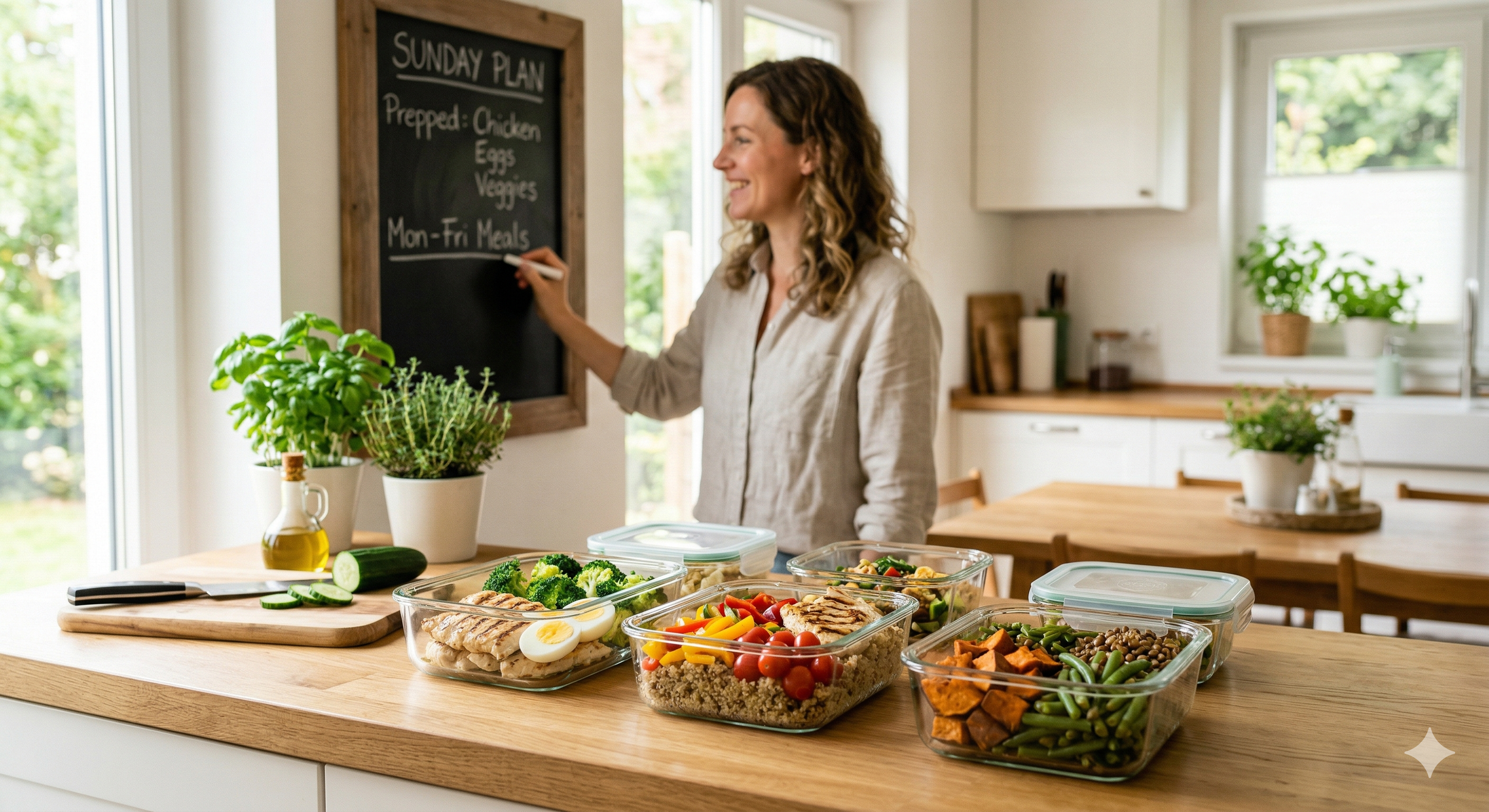
Sunday Reset: Planning for a Week of Nutritional Wins
Every healthy choice you make on Sunday is one less choice you have to make on Wednesday afternoon when your brain is tired.
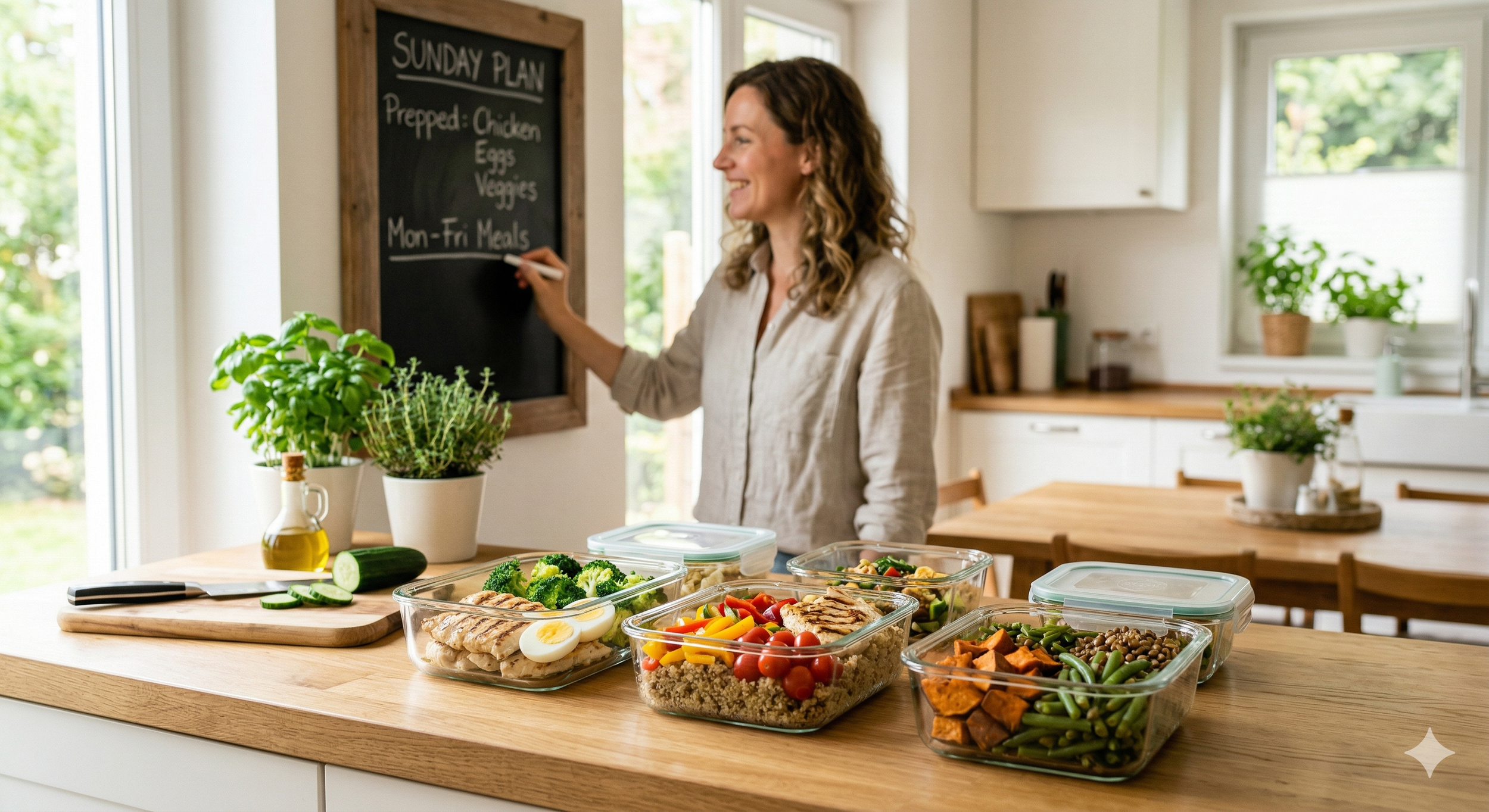
This image was created using AI to avoid copyright issues while conveying the context of this article.
We have all had those weeks. You start Monday with the best intentions. You plan to eat healthy, stay energized, and avoid the drive-thru. But then, Wednesday hits. A meeting runs late, the kids have practice, and you realize you have nothing prepared for dinner. By 6pm, you are tired, hungry, and making a choice based on convenience rather than your goals.
At Legacy Fitness, we know that willpower is a limited resource. You only have so much "discipline" to use each day. If you have to make a difficult choice every single time you are hungry, eventually, you will make a bad one. The secret to winning the week isn't having more willpower; it is having a better plan. That is where the Sunday Reset comes in.
What is the Sunday Reset?
The Sunday Reset is a small block of time, usually just 60 to 90 minutes, dedicated to setting yourself up for success. It is not about spending five hours in the kitchen making 21 identical tupperware meals. In fact, most people hate eating the same thing every day.
Instead, the Sunday Reset is about "component prepping." You aren't making full meals; you are preparing the building blocks that make healthy eating fast and easy during the week.
Step 1: The Protein Foundation
Protein is the hardest thing to "grab and go." It usually requires thawing, seasoning, and cooking. This is where most people fail. If you have cooked protein ready to go, a healthy meal is only five minutes away.
On Sunday, pick two or three protein sources and cook them in bulk.
Grill a pack of chicken breasts or thighs.
Brown two pounds of lean ground beef or turkey.
Hard-boil a dozen eggs for quick snacks or breakfast additions.
Once these are in the fridge, you can easily throw them onto a salad, into a wrap, or mix them with some frozen veggies for a quick stir-fry.
Step 2: Pre-Cut the "Speed Bumps"
Have you ever noticed that you’re more likely to eat a bag of chips than a bell pepper? That is because the chips are already "prepared." The pepper requires washing, seeding, and slicing. Those extra steps are "speed bumps" that stop you from making a good choice when you are tired.
During your Sunday Reset, wash and chop your vegetables. Put them in clear glass containers at eye level in your fridge. When you are looking for a snack, the healthy option is now just as easy to grab as the bag of chips.
Step 3: Audit Your Calendar
This is the part most people skip. Take five minutes to look at your upcoming week.
Do you have a late meeting on Tuesday?
Is there a lunch out with a client on Thursday?
Does your child have a game on Wednesday night?
By identifying the "danger zones" ahead of time, you can plan for them. If you know Tuesday will be a late night, that is the perfect day to plan for a slow-cooker meal or a pre-made salad. When you aren't surprised by your schedule, you aren't forced to make emergency food choices.
Step 4: The "Emergency" Stash
Even with a great plan, life happens. A "Reset" also includes making sure your pantry and freezer have "safety net" foods. These are shelf-stable or frozen items that can be turned into a healthy meal in minutes.
Frozen vegetables (steam-in-the-bag are great).
Canned tuna or salmon.
Pre-cooked rice or quinoa pouches.
If you have these on hand, you never have an excuse to call for pizza.
Small Wins Lead to a Big Legacy
The goal of the Sunday Reset is to reduce "decision fatigue." Every healthy choice you make on Sunday is one less choice you have to make on Wednesday afternoon when your brain is tired.
A "Legacy Body" is built on consistency, not perfection. By spending a little bit of time today, you are giving yourself the gift of a stress-free week. You are making it easy to stay fueled, focused, and on track toward your long-term goals.
Start small this Sunday. You don't have to change your whole life at once. Just prep one protein, chop one vegetable, and look at your calendar. You will be amazed at how much better your Monday feels.
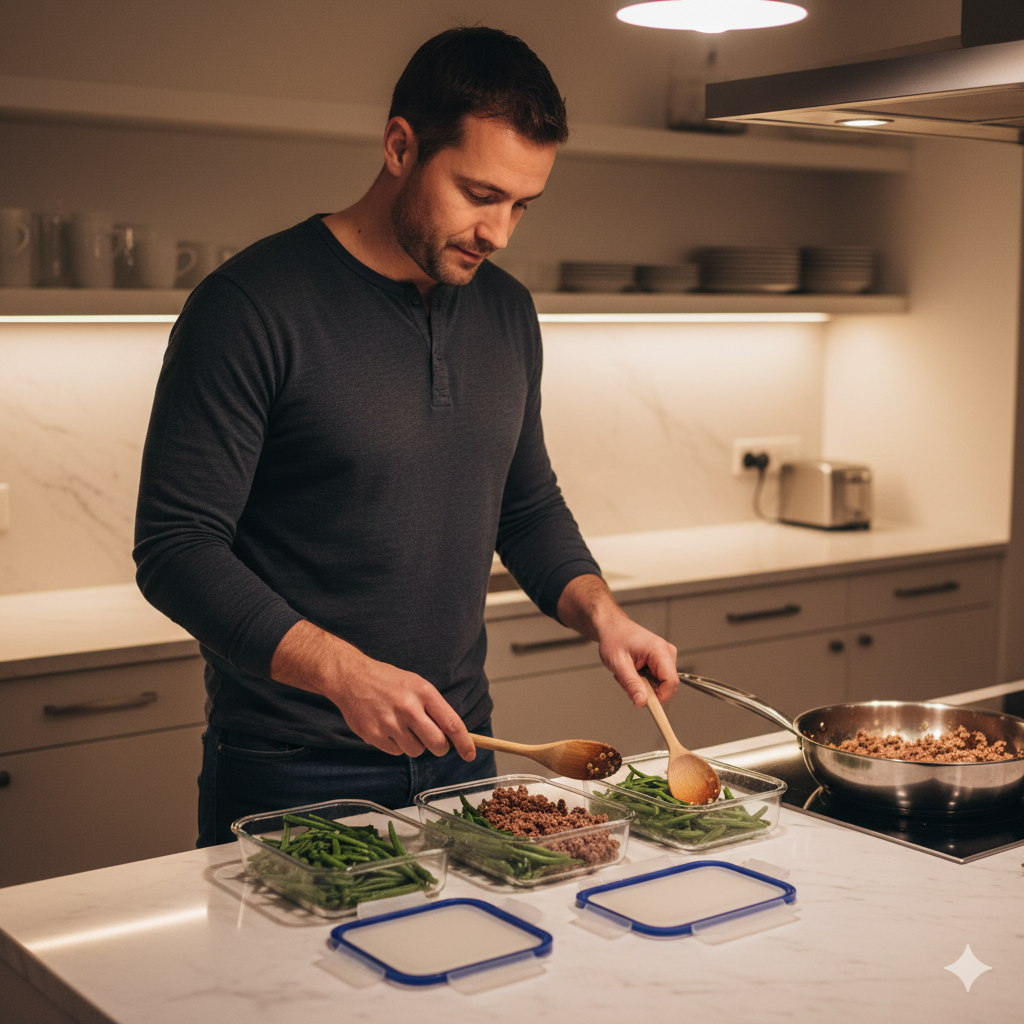
The Mid-Week "Hump" Meal Prep: Why Thursday is Your Most Important Day
We want you to be efficient. Sunday prep is for the strategy, but Thursday prep is for the win.
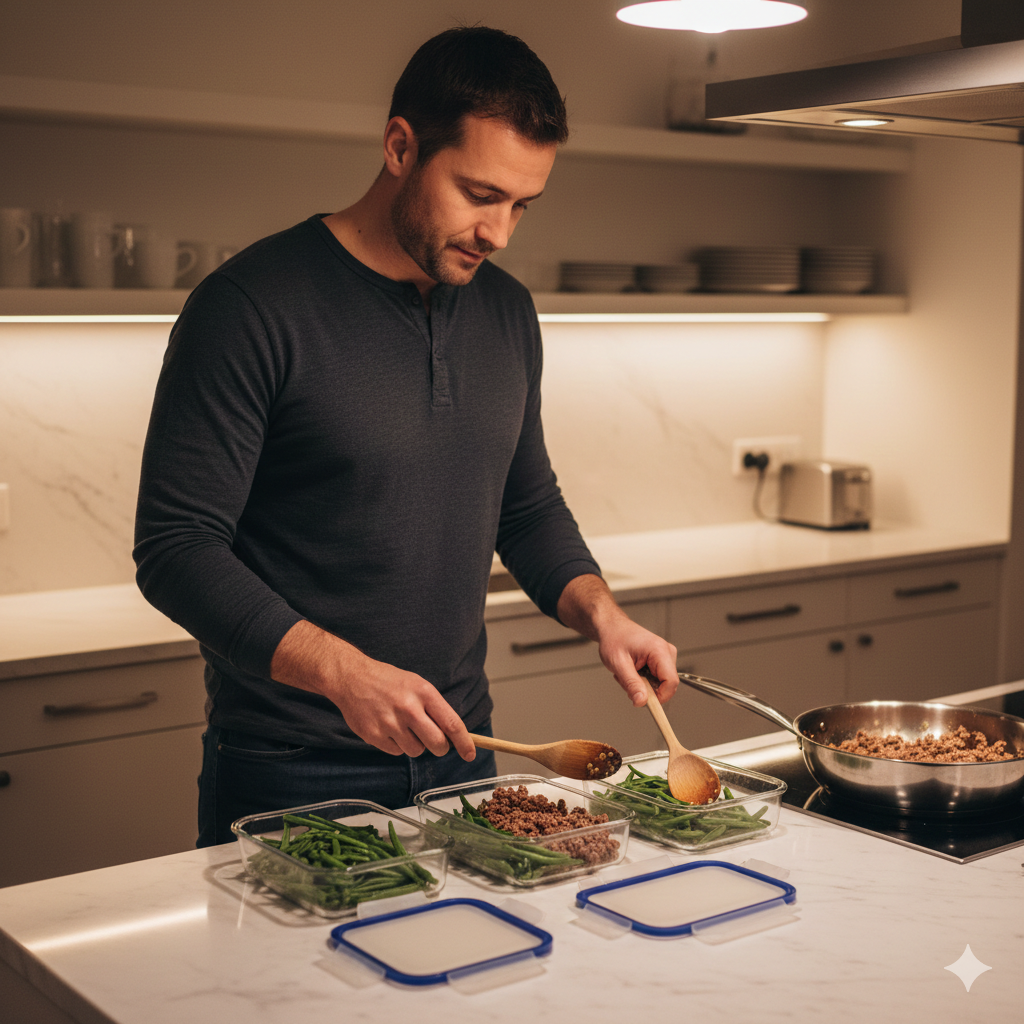
This image was created using AI to avoid copyright issues while conveying the context of this article.
By the time Wednesday night or Thursday morning rolls around, even the best-laid plans for February fitness can start to wobble. This is the "Mid-Week Hump." You probably spent Sunday afternoon prepping meals, but by now, the fridge is looking a little empty, the chicken is smelling a bit "leftover," and your willpower is starting to fade.
Most people think meal prepping is something you only do on Sundays. But at Legacy Fitness, we’ve found that the secret to a successful month isn’t a giant Sunday marathon; it is the Thursday Refresh.
The Psychology of the Thursday Fade
There is a reason why Friday night pizza and Saturday morning drive-thrus are so common. Decision fatigue is a real scientific phenomenon. By Thursday, you have made thousands of decisions at work, with your family, and in your workouts. Your brain is tired.
When you are tired, you don’t choose the meal that helps your goals; you choose the meal that is easiest. If the only thing in your fridge is a raw head of broccoli and a frozen block of meat, you are going to order takeout. The Thursday Refresh stops this cycle before it starts.
What is a "Mid-Week Hump" Prep?
Unlike a Sunday prep, which might take two hours, a Mid-Week Hump prep should take no more than 20 to 30 minutes. The goal isn't to cook five brand-new meals. The goal is to "bridge the gap" between Thursday and Monday morning.
Think of it as a pit stop. You aren't building a new car; you are just refilling the tank so you can finish the race.
The 3-Step Thursday Refresh
The Protein Pivot: Most Sunday meal preps run out of protein by Thursday. Take 15 minutes to air-fry some salmon, brown some lean ground beef, or grab a fresh rotisserie chicken from the store. Having a "ready-to-go" protein in the fridge for Thursday and Friday night is the difference between staying on track and giving up.
The "Crunch" Factor: By Thursday, pre-cut salads are often wilting. Spend 5 minutes chopping fresh peppers, cucumbers, or carrots. Having something crunchy and fresh makes a healthy meal feel more appealing when you are bored with your Sunday leftovers.
The Weekend Defense: Look at your calendar for Friday, Saturday, and Sunday. If you see a social event or a busy kids' sports schedule, prep one specific "emergency meal." This could be a high-protein, high-fiber wrap that you can eat in the car.
Building Your 4:1 Ratio on the Fly
In our previous discussion, we talked about the 4:1 Protein-to-Fiber ratio. Thursday is when this ratio usually falls apart. People start eating "protein-only" snacks or "carb-only" convenience foods.
During your Mid-Week Hump prep, make sure you have your anchors ready. If you have your protein (like that rotisserie chicken), make sure you also have a quick fiber source (like a bag of frozen cauliflower rice or pre-washed spinach). This ensures your blood sugar stays stable through the weekend.
Why the Weekend Matters More Than Monday
Most people treat Monday through Thursday like a "perfect" fitness window and then let Friday through Sunday become a free-for-all. This "on-again, off-again" cycle keeps you in a plateau.
By prepping on Thursday, you are sending a signal to your brain that the weekend is part of the plan, not an escape from it. You are choosing to be a person who stays consistent even when the "New Week" excitement has worn off.
The Legacy View
At Legacy Fitness, we don't expect you to be a kitchen slave. We want you to be efficient. Sunday prep is for the strategy, but Thursday prep is for the win. If you can master the 20-minute refresh, you will stop "restarting" your diet every Monday morning.
This Thursday, take thirty minutes. Refresh your protein, crisp up your veggies, and plan your weekend defense. Your Monday-morning self will thank you for the head start.
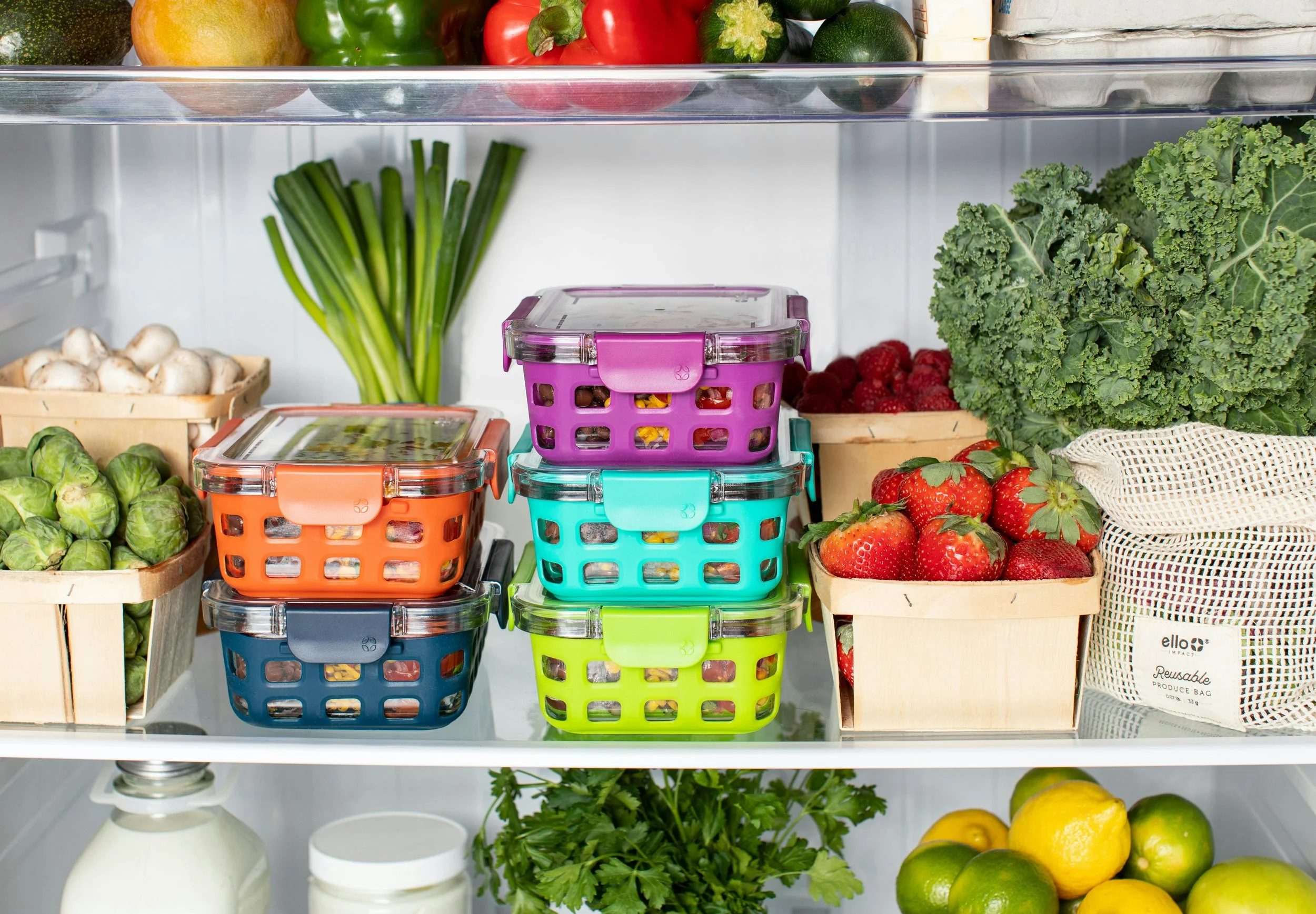
The Art of the Sunday Meal Prep (Without the Stress)
Stop trying to be a gourmet chef every night. Meal prep isn't about being perfect; it’s about being prepared.
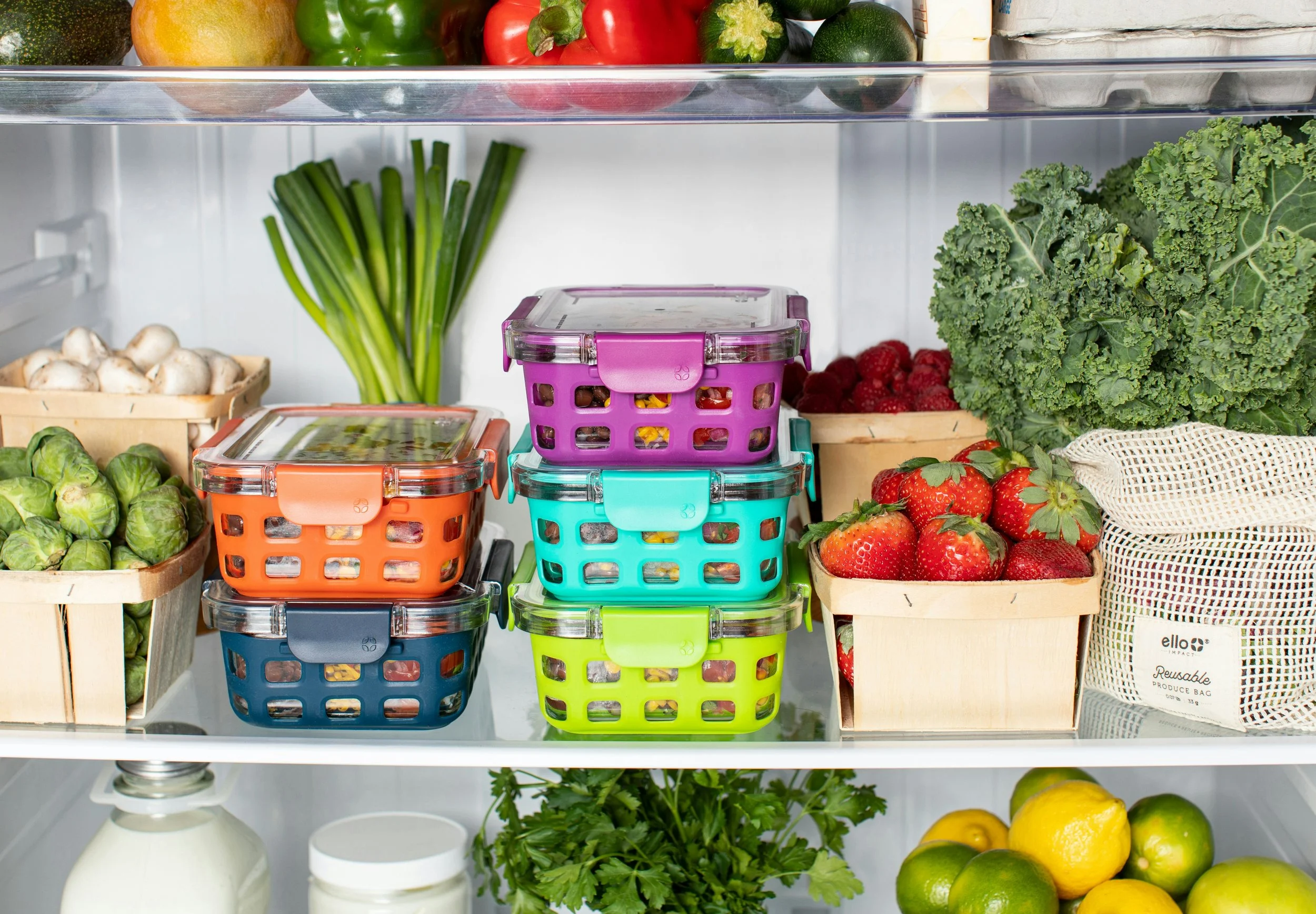
We have all seen the photos on social media: thirty identical plastic containers filled with chicken, broccoli, and brown rice, perfectly lined up on a kitchen counter. For many people, this version of "meal prep" looks like a nightmare. It looks like a whole Sunday spent in a hot kitchen and a whole week of eating boring, repetitive food. If that is what you think meal prep has to be, it is no wonder you haven’t started yet.
The truth is that meal prep is the single most powerful tool for fitness success, but it doesn't have to be stressful. In 2026, the trend is moving away from "The Batch Cook" and toward "The Component Prep." This method allows you to save hours of time during the week while still enjoying fresh, varied meals every single day. To build a legacy of health, you need a system that works for your busy life, not a second job as a chef.
Why Decision Fatigue is Your Enemy
The reason most people fail their diet on a Wednesday evening is "Decision Fatigue." Throughout the day, you use your brain to make hundreds of choices at work and with your family. By the time you get home at 6:00 PM, your "decision muscle" is exhausted. If you have to ask yourself, "What should I make for dinner?" you are much more likely to choose the easy path: takeout or a bowl of cereal.
Meal prep solves this by making the decision for you when your brain is still fresh. When the food is already partially ready, the "friction" of eating healthy disappears. You aren't "cooking dinner"; you are just "assembling" it.
The Component Method: How it Works
Instead of making full meals, you spend 60 to 90 minutes on Sunday preparing the building blocks of your week. Think of it like a "Lego set" for your nutrition. You want to prepare four main categories:
Two Proteins: Roast a large tray of chicken thighs and brown two pounds of lean ground beef or turkey. These are your "anchors" for the week.
Two Carbs: Boil a large pot of quinoa or roast a few pans of sweet potatoes. Having these ready prevents you from reaching for bread or pasta when you’re in a rush.
The "Veggie Wash": Chop your peppers, wash your spinach, and roast some broccoli. If the vegetables are ready to eat, you will actually eat them.
The "Flavor Booster": This is the secret to not getting bored. Make one or two simple sauces, like a lemon-tahini dressing or a fresh salsa. Using different sauces makes the same chicken and rice feel like a completely different meal every night.
The "Power Hour" Workflow
You don't need all day. You just need one focused hour. Start by putting your longest-cooking items in the oven (like potatoes). While those roast, start your grains on the stove. While the stove is humming, chop your vegetables. By the time the timer goes off for the potatoes, your kitchen is cleaned, and your fridge is stocked.
Winning the Week
This January, stop trying to be a gourmet chef every night. Give yourself the gift of a stocked fridge. When you remove the stress of "What's for dinner?" you gain back your time and your health. Meal prep isn't about being perfect; it’s about being prepared. Your future self on a tired Wednesday night will thank you.

Cooking Once, Eating Thrice: Your Weekend Guide to Effortless Meal Prep for the Week
The biggest enemy of healthy eating isn't a lack of knowledge; it's a lack of time.

Image courtesy of Ella Olsson via Unsplash
The biggest enemy of healthy eating isn't a lack of knowledge; it's a lack of time. When you’re exhausted after a long workday, ordering takeout or heating up something highly processed is just easier than cooking a healthy meal from scratch.
This is where the strategy of "Cooking Once, Eating Thrice" saves the day. Instead of spending your valuable time cooking every single night, you dedicate a few hours on a weekend afternoon to preparing large batches of simple building blocks. This small investment of time acts as an insurance policy against poor food choices all week long, ensuring you have healthy, satisfying meals ready to assemble in minutes.
This guide will show you how to focus your weekend prep on three versatile components that can be mixed and matched into multiple meals throughout the week.
The Weekend Warrior Prep Strategy
Aim for about two hours of focused time on Sunday afternoon. You're going to prep one main protein, one versatile carb, and one large batch of vegetables.
1. The Protein Anchor (The Muscle Fuel)
Protein is the most important component for satiety (feeling full) and muscle maintenance. Make a large batch of a neutral, versatile protein that can fit into any meal.
Prep: Cook 3–4 pounds of a single protein source.
Chicken Breast/Thighs: Bake, grill, or shred in a slow cooker with minimal seasoning (salt, pepper, garlic powder).
Ground Turkey/Beef: Cook in a large skillet, drain the fat, and leave it mostly unseasoned.
Lentils or Chickpeas: Cook a large batch on the stovetop or use canned options (rinsed well).
Storage: Divide the cooked protein into individual portion containers (e.g., 4–6 ounces per portion) and store in the fridge.
2. The Versatile Carb (The Energy Base)
These ingredients are your energy sources. Choose a complex carbohydrate that reheats well and provides good fiber.
Prep: Cook 6–8 cups of a grain.
Quinoa: Cooks quickly and is high in protein and fiber.
Brown Rice or Farro: Great for salads and bowls.
Sweet Potatoes: Bake 5–6 whole sweet potatoes, then mash or cube them for easy reheating.
Storage: Keep the cooked grains/potatoes in a large, sealed container. They will last 4–5 days in the fridge.
3. The Bulk Veggies (The Fiber & Volume)
This is where you add volume, color, and essential nutrients. Focus on vegetables that are easy to prep or cook in large batches.
Prep:
Roast: Toss a large tray of sturdy vegetables like broccoli florets, Brussels sprouts, carrots, and onions with a little olive oil, salt, and pepper. Roast at 400°F until tender-crisp.
Chop Raw: Chop a large bowl of fresh veggies like cucumbers, bell peppers, carrots, and celery sticks. These are perfect for snacking or quick salad additions.
Storage: Store roasted veggies in their own container. Keep chopped raw veggies separated or bagged for easy grabbing.
The "Eating Thrice" Assembly Method
By Monday morning, you have three large containers: Protein, Carbs, and Veggies. Now, you can assemble three distinct meals with minimal effort.

Bonus Tip: Embrace the Freezer
If you worry about food going bad, especially protein, dedicate a portion to the freezer immediately after cooking. Cooked chicken breast or ground meat freezes beautifully in portion-sized bags. That way, you ensure you always have emergency protein available later in the week or the following week.
Meal prepping is less about being a gourmet chef and more about being a smart strategist. By focusing on simple, mix-and-match components, you eliminate decision fatigue, save money, and ensure that when hunger strikes, health is the easiest option available.

Smart Nutrition for a Hectic Week: Healthy Eating Strategies for Busy Lifestyles
Life is busy. Between work, family, and everything else, finding time to eat healthy often feels like another chore. But eating well doesn't have to be complicated or take up hours of your precious time.

Life is busy. Between work, family, and everything else, finding time to eat healthy often feels like another chore. But eating well doesn't have to be complicated or take up hours of your precious time. With a few smart strategies, you can fuel your body right, even when your schedule is packed.
Why Healthy Eating Matters (Even When Busy):
It’s easy to grab fast food or skip meals when you're rushed. But this can leave you feeling tired, sluggish, and even stressed. Eating good, balanced meals gives you the energy you need to tackle your day, keeps your mind sharp, and helps your body stay strong and healthy in the long run.
Simple Strategies for Busy Lives:
Plan Ahead: The Weekend Warrior Prep:
Cook in Batches: Dedicate a couple of hours on a Sunday to cook large portions of protein (like chicken breast or ground turkey), grains (quinoa or rice), and roasted vegetables. You can mix and match these throughout the week.
Chop Produce: Wash and chop veggies like peppers, carrots, and celery. Store them in containers for quick snacks or to throw into meals.
Portion Snacks: Divide nuts, seeds, or whole-grain crackers into small bags or containers so you can grab them on the go.
Embrace Easy, Healthy Staples:
Eggs are Your Friend: Scrambled eggs, hard-boiled eggs, or an omelet are quick sources of protein that can be eaten any time of day.
Canned & Frozen Goods: Don't forget frozen vegetables (no chopping needed!), canned beans (rinse them!), and canned fish like tuna or salmon. They're ready to use and packed with nutrients.
Whole Grains: Oatmeal, whole-wheat bread, and whole-grain pasta cook quickly and offer lasting energy.
Smart Snacking is Key:
Always have healthy snacks on hand to avoid reaching for unhealthy options when hunger strikes. Good choices include:
Fruit (apples, bananas, oranges)
Greek yogurt
Handful of almonds or walnuts
Veggies and hummus
Cheese sticks
Hydrate, Hydrate, Hydrate:
Sometimes we confuse thirst with hunger. Keep a water bottle with you and sip throughout the day. It helps with energy and can prevent unnecessary snacking.
Master the "Assembly Meal":
These are meals that don't require much cooking, just putting ingredients together. Think:
Salad in a Jar: Layer dressing, hard veggies, protein, greens. Shake and eat.
Grain Bowls: Cooked grain + leftover protein + chopped veggies + a simple sauce.
Loaded Toast: Whole-grain toast with avocado, egg, or nut butter and banana.
Small Changes, Big Impact:
You don't have to completely change your diet overnight. Start with one or two of these tips this week. You'll likely find that with a little bit of planning and smart choices, healthy eating can fit right into your busy life, giving you more energy and helping you feel your best.