
The Future of Personalized Nutrition: AI and Your Plate
The future of nutrition is personal, it is data-driven, and it is highly efficient.
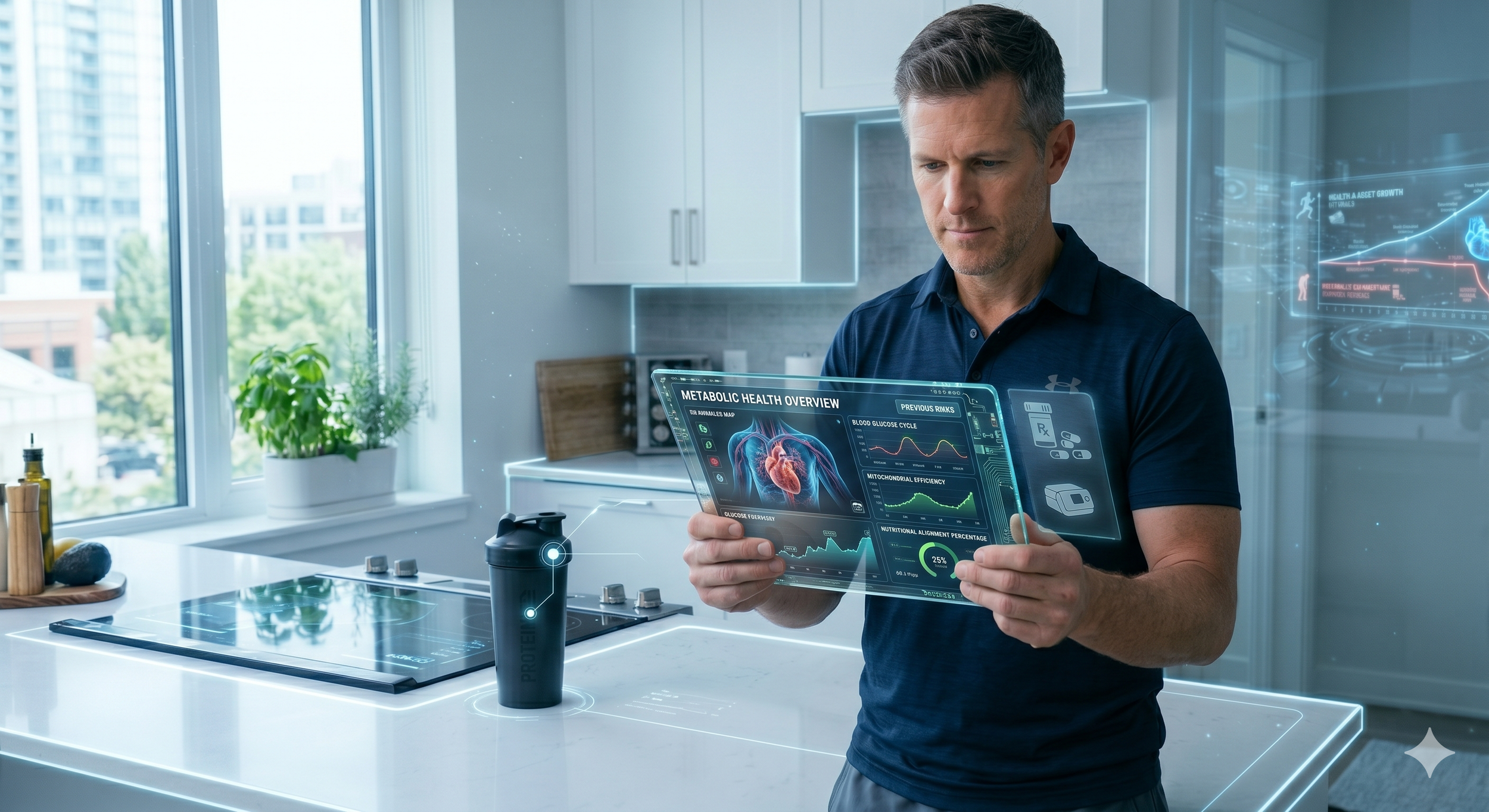
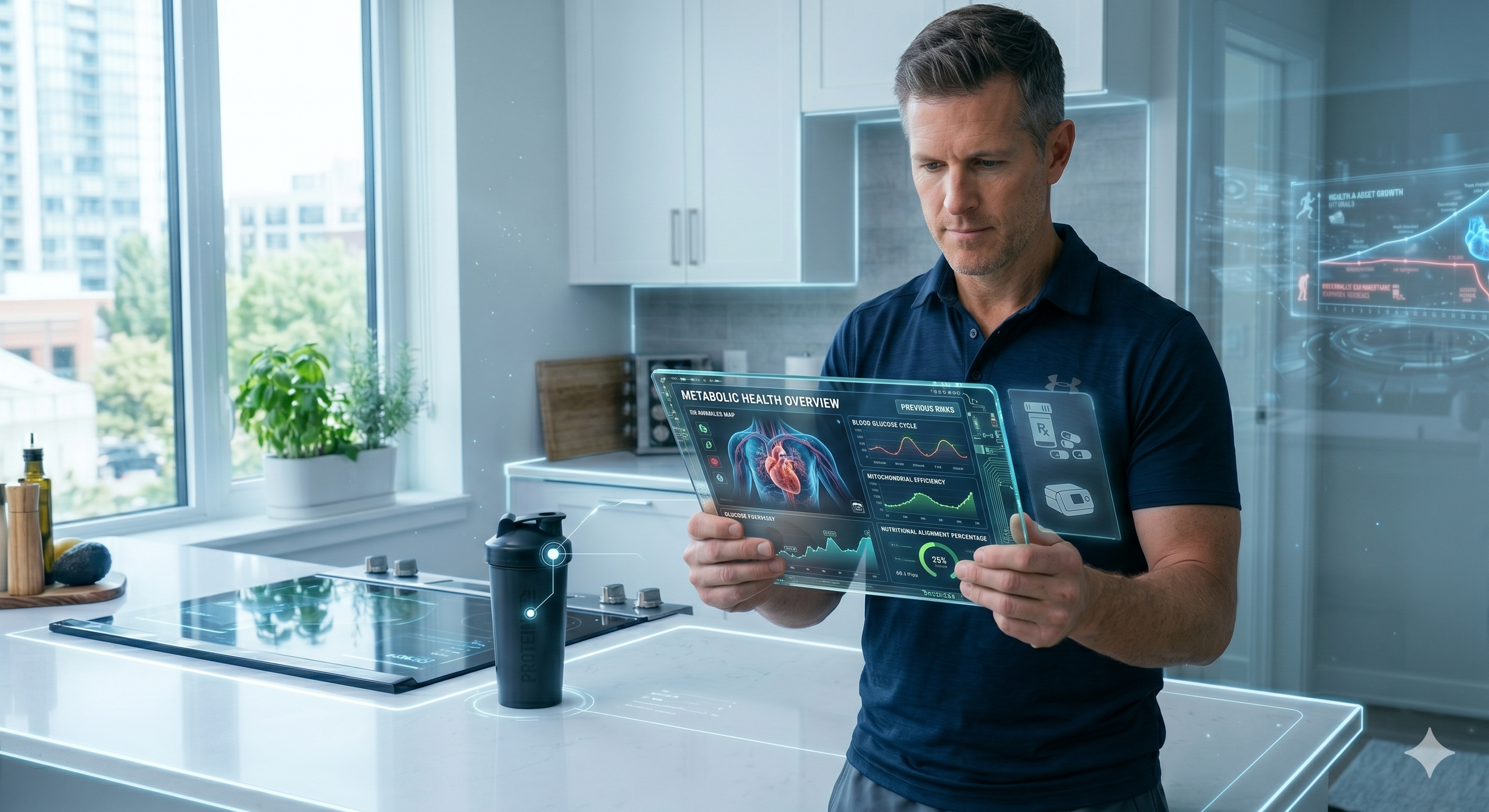
This image was created using AI to avoid copyright issues while conveying the context of this article.
For decades, the world of nutrition has been dominated by "generalizations." We were told to follow the food pyramid, to count basic calories, or to try whatever the latest celebrity diet happened to be. The problem with these methods is that they treat every human being like a standardized unit. They ignore the vast differences in our genetics, our gut microbiomes, and our daily activity levels.
As we move through 2026, we are witnessing a massive shift. We are entering the era of Personalized Nutrition. This isn’t just a buzzword; it is a technological revolution driven by Artificial Intelligence. For the busy executive or business owner, this is a game-changer. It means we are moving away from "trial and error" and toward a high-precision health management system.
The End of the "Average" Diet
The reason most diets fail is that they are designed for the "average" person. But in reality, nobody is average. One person might thrive on a higher-carbohydrate intake, while another might experience significant brain fog and energy crashes from the exact same meal.
AI is changing this by processing massive amounts of personal data in real-time. By integrating data from wearable devices, blood glucose monitors, and even DNA testing, AI can create a nutritional blueprint that is unique to your specific biology. We are no longer guessing what works; we are using data to prove it. This is the same level of precision we expect in our business analytics, and it is finally available for our bodies.
Real-Time Decision Support
One of the greatest challenges for high-performers is "decision fatigue." Throughout a typical workday, you make hundreds of critical choices. By the time dinner rolls around, your ability to make a disciplined nutritional choice is often depleted.
This is where the next generation of AI tools comes in. Instead of just "tracking" what you already ate, these systems act as a real-time "Health GPS." Imagine an AI assistant that looks at your schedule, sees that you have a high-stress meeting at 2:00 PM, and suggests a specific protein-to-carb ratio for lunch to ensure your cognitive focus stays sharp. It removes the friction of choice, allowing you to maintain your peak performance without using up your mental energy.
From Monitoring to Predicting
The true power of AI in nutrition isn't just looking at the past; it is predicting the future. We are reaching a point where your health system can predict how a specific food will affect your sleep quality or your recovery from a workout before you ever take a bite.
For example, if your wearable data shows that your "Readiness Score" is low due to poor sleep, an AI-driven system can adjust your nutritional targets for the day to prioritize anti-inflammatory foods and specific micronutrients. It turns your nutrition from a static "plan" into a dynamic, living system that adapts to the stresses of your life. At Legacy Fitness, we view this as "Dynamic Allocation," adjusting your fuel to match your output.
The Human Element in a Tech-Driven World
While AI provides the data and the precision, it does not replace the need for high-level strategy and accountability. Technology is a powerful tool, but it still requires a "CEO" to make the final decisions. This is where the partnership between advanced tech and professional coaching becomes essential.
Data without direction is just noise. A coach helps you interpret that AI-driven data and integrate it into a sustainable lifestyle. We use the technology to find the "blind spots" in your nutrition, but we use coaching to build the habits and the mindset that allow you to stay consistent for the long haul.
Investing in Precision
In business, we know that the companies with the best data and the most efficient systems are the ones that win. Your health is no different. Relying on outdated, generalized advice is a low-ROI strategy.
The future of nutrition is personal, it is data-driven, and it is highly efficient. By embracing these tools, you are not just "going on a diet"; you are upgrading your biological operating system. You are ensuring that you have the energy, the focus, and the longevity required to build your legacy.
Are You Ready to Upgrade Your Biological Operating System?
The era of guessing is over. At Legacy Fitness & Nutrition, we combine high-level coaching with data-driven strategy to help you perform at your peak.
For the Individual Leader: Ready to see what personalized nutrition looks like for your body? Book My Individual Discovery Call
For the Organization: Want to equip your team with the tools of high-performance health? Explore Corporate Wellness Packages
The Science of Accountability: Why Human Coaching Beats AI Apps Every Time
Apps don’t care if you fail.
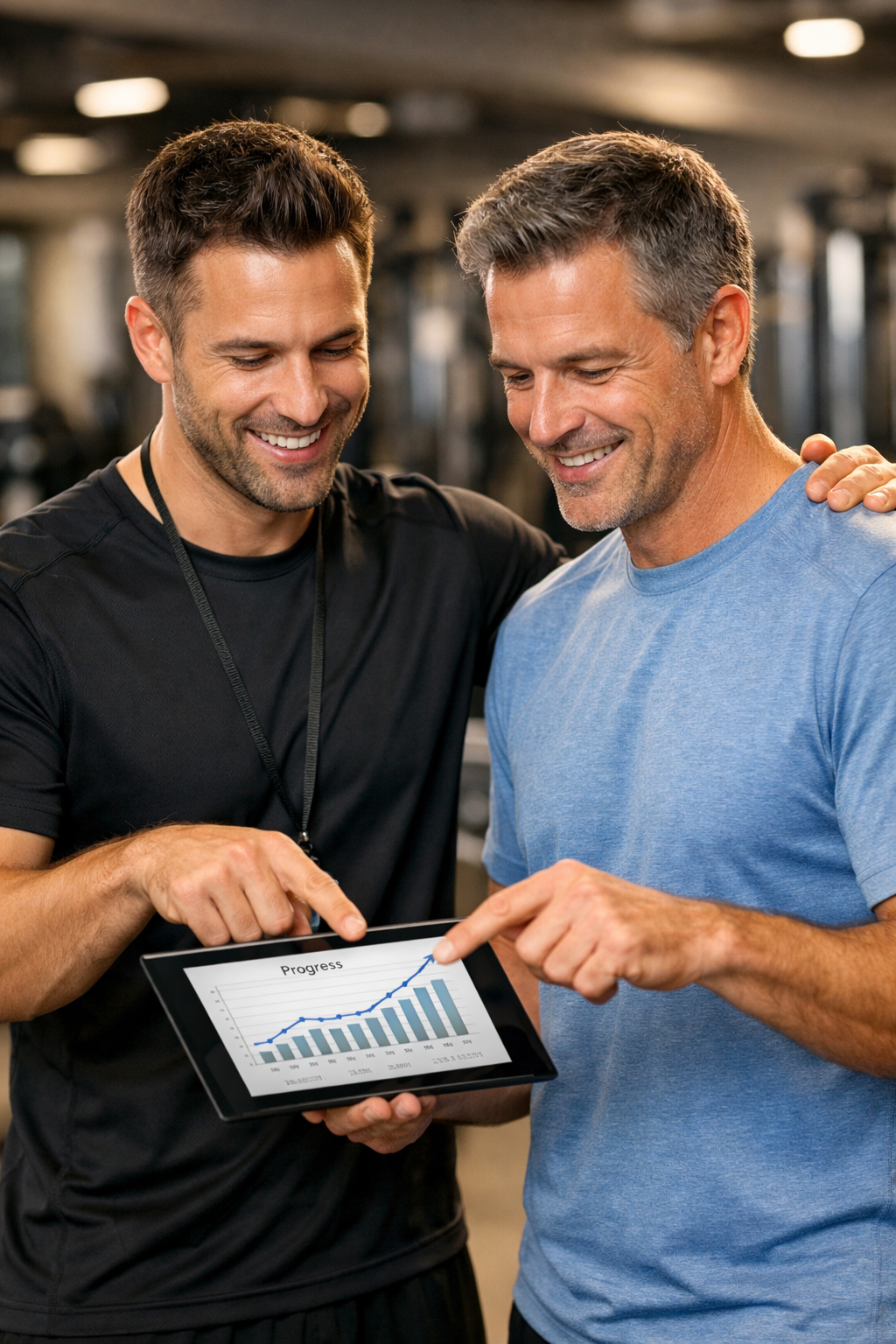
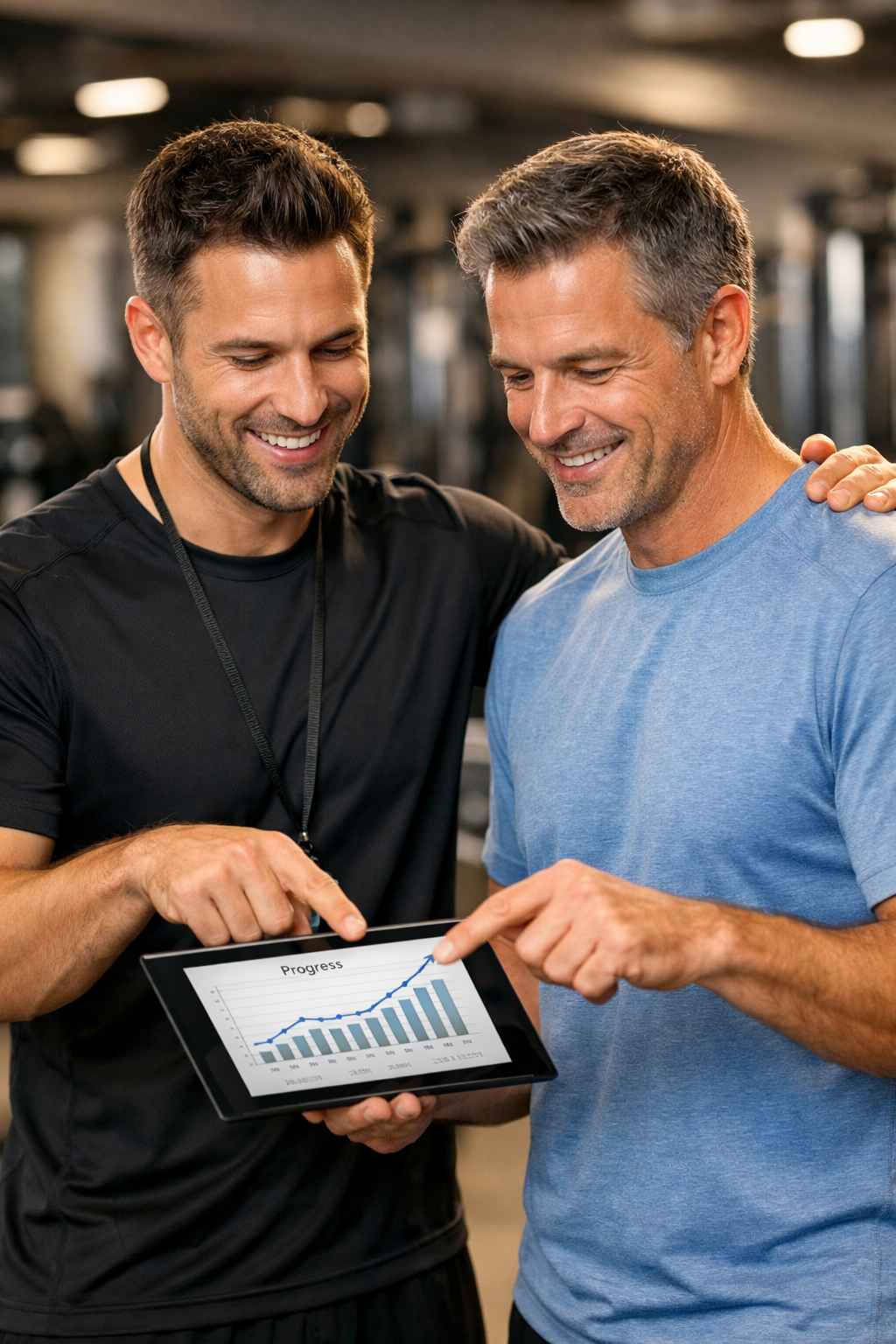
Ironically, this image was created using AI to avoid copyright issues while conveying the context of this article.
In 2026, it seems like there is an app for everything. You can find an AI "coach" that will write your workouts, track your macros, and even send you a "motivational" text at 6am. On paper, it sounds perfect. It is cheap, it is fast, and it lives right on your phone.
But there is a major problem: Apps don’t care if you fail.
If you skip a workout on an app, the app doesn’t feel disappointed. It doesn’t wonder why your stress levels are high. It just sends another automated notification that you will probably swipe away and ignore. This is why, despite the thousands of fitness apps available, the obesity rate continues to climb and most people quit their programs within three weeks.
To see real, lasting change, you don’t need more "artificial" intelligence. You need human accountability. Here is the science behind why a human coach will always outperform an algorithm.
1. The "Observer Effect"
There is a well-known concept in psychology called the Hawthorne Effect. It suggests that individuals modify their behavior when they know they are being observed.
When you log your food into an app that no one sees, there is no social "cost" to eating a box of cookies. But when you know that a real person, your coach, is going to look at that log on Monday morning, your behavior changes. You stop and think before you act. That "pause" is where your discipline is built. Knowing that someone is "watching the scoreboard" makes you play the game differently.
2. Context vs. Calculation
An AI app is a calculator. If you tell an app you had a "bad" day, it might suggest you eat 500 fewer calories tomorrow to "make up for it."
A human coach does the opposite. A human looks at the context. I might see that you had a high-stress meeting, only slept four hours, and were dealing with a family emergency. I know that cutting your calories even further would be a disaster for your metabolism and your mental health. A human coach knows when to push you and, more importantly, when to tell you to rest. AI sees numbers; humans see lives.
3. The Empathy Gap
Algorithms cannot provide empathy. When you hit a plateau (and everyone does) an app can only give you a new set of numbers. It can’t talk you through the frustration. It can’t remind you of how far you’ve come when you feel like a failure.
Human coaching provides a psychological safety net. When you struggle, I am there to help you navigate the "why" behind the struggle. We solve the problem together. An app just waits for you to input data; a coach actively helps you create the data you want.
4. Hard-Wired for Connection
Humans are social creatures. We are biologically wired to seek approval and connection within our "tribe." For thousands of years, we have achieved difficult goals by working in small, committed groups.
When you hire a coach, you aren’t just buying a workout plan. You are entering into a partnership. You are much less likely to let down a partner than you are to let down a piece of software. That sense of "not wanting to let the team down" is a powerful fuel that carries you through the months when motivation is low.
The Bottom Line
Technology is a great tool, but it is a terrible master. Use your apps to track your data, but use a human coach to change your life. If you are tired of the "start-stop" cycle of fitness apps, it might be time to invest in the science of human accountability.
Data tells us what happened. Coaching tells us what to do next.