

The Cortisol Connection: How Stress Leads to Late-Night Binging
Late-night eating isn't a sign of weakness; it’s a sign that your stress management system needs an upgrade.

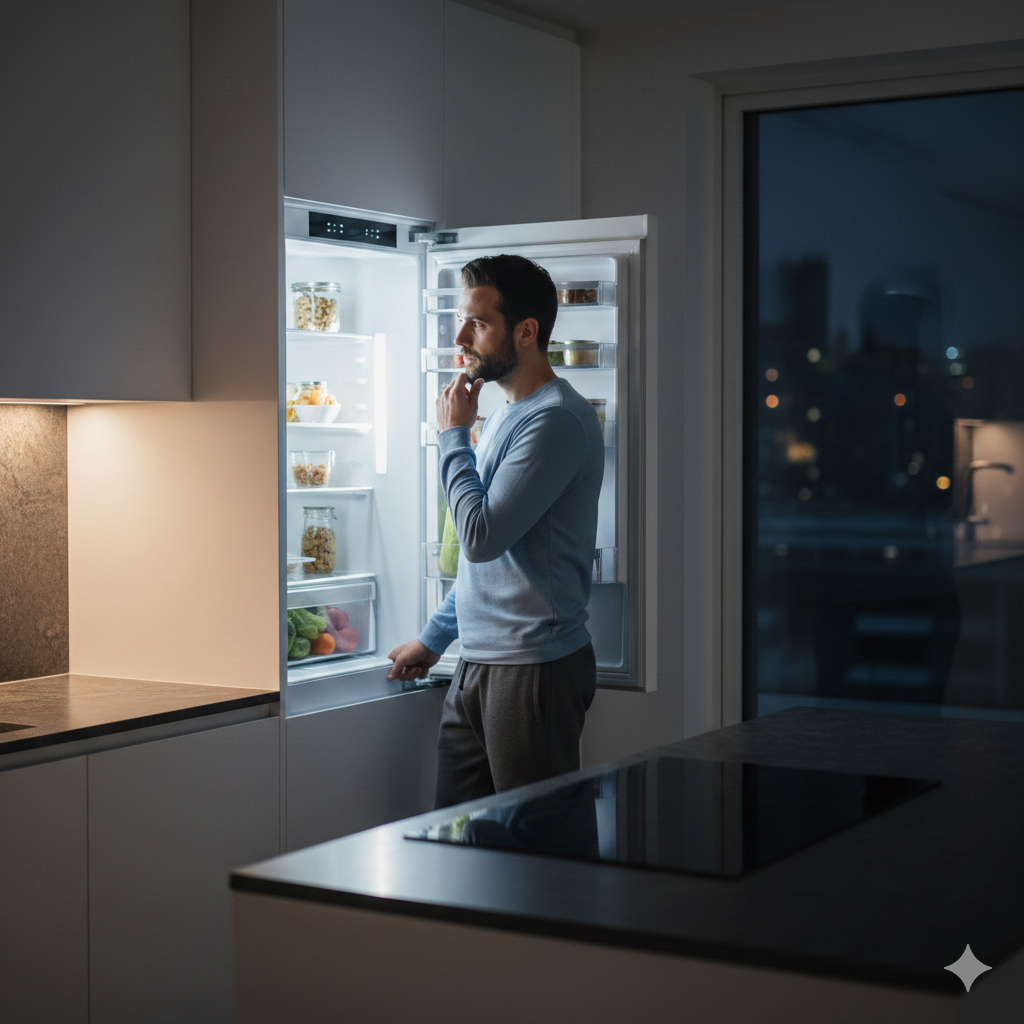
This image was created using AI to avoid copyright issues while conveying the context of this article.
For many high-performers, the day is a masterpiece of discipline. You handle difficult clients, manage complex budgets, and navigate high-stakes meetings with total control. But the moment the house gets quiet and the laptop closes, that discipline seems to vanish. You find yourself standing in the kitchen, eating foods you didn’t even want, wondering why you can’t just "willpower" your way through the evening.
If this sounds familiar, I have some news that might surprise you: Your late-night binging isn't a character flaw. It is a biological response to the stress you carried all day. Specifically, it is driven by a hormone called cortisol.
Understanding the "Cortisol Connection" is the first step toward reclaiming your evenings and your health.
The Role of the "Stress Hormone"
Cortisol is your body’s built-in alarm system. It is produced by your adrenal glands and is designed to help you handle "fight or flight" situations. In the modern world, your body can’t tell the difference between a tiger chasing you and a stressful email from your boss. To your biology, stress is stress.
When your cortisol levels stay high for too long, your body looks for ways to bring them back down. Food, specifically sugar and processed fats, is the fastest way to get a hit of dopamine, which temporarily counteracts the feeling of stress. Essentially, your brain is using food as a drug to "self-medicate" a stressful day.
The "Willpower Battery" and Decision Fatigue
Think of your willpower like a battery. Every decision you make at work from what to say in a meeting to which email to answer first, drains that battery. This is known as Decision Fatigue.
By 8pm, your battery is on 1%. When you combine a drained battery with high cortisol levels, you are in the "Danger Zone." Your logical brain (the part that wants to reach your fitness goals) goes offline, and your impulsive brain (the part that wants comfort and safety) takes over. This is why you don't binge on broccoli; you binge on things that give you an immediate energy spike.
How to Break the Connection
To stop the late-night cycle, we have to address the stress before it reaches the kitchen.
Implement a "Transition Ritual"
Most professionals jump straight from the "work brain" to "home life" without a buffer. This keeps your cortisol levels peaked. Create a 15-minute ritual to signal to your body that the day is over. This could be a short walk, a breathing exercise, or even just changing out of your work clothes the second you get home.
Front-Load Your Nutrition
High cortisol levels increase your appetite. If you under-eat during the day while your stress is high, you are pouring gasoline on a fire. By eating a high-protein, high-fiber lunch, you keep your blood sugar stable, which prevents your body from sending "emergency" hunger signals later that night.
Address the "Why"
Before you grab a snack, ask yourself: "Am I hungry, or am I just trying to turn off my brain?" If the answer is the latter, food won't solve it. Try a non-food relaxation method, like a hot shower or five minutes of stretching. You are teaching your body that it can relax without needing a sugar hit.
Leadership Includes Self-Care
In business, we know that an overworked system eventually breaks. Your body is no different. If you want to sustain your high performance, you have to manage your biological stress as carefully as you manage your calendar.
Late-night eating isn't a sign of weakness; it’s a sign that your stress management system needs an upgrade. By lowering your cortisol and protecting your "willpower battery," you can finish your day with the same excellence you brought to the morning.
The Midnight Kitchen Raid: Why We Crave Snacks at Night and How to Stop
Late-night snacking is one of the biggest hurdles for fitness clients. But here is the secret: late-night eating usually isn't about a lack of willpower.
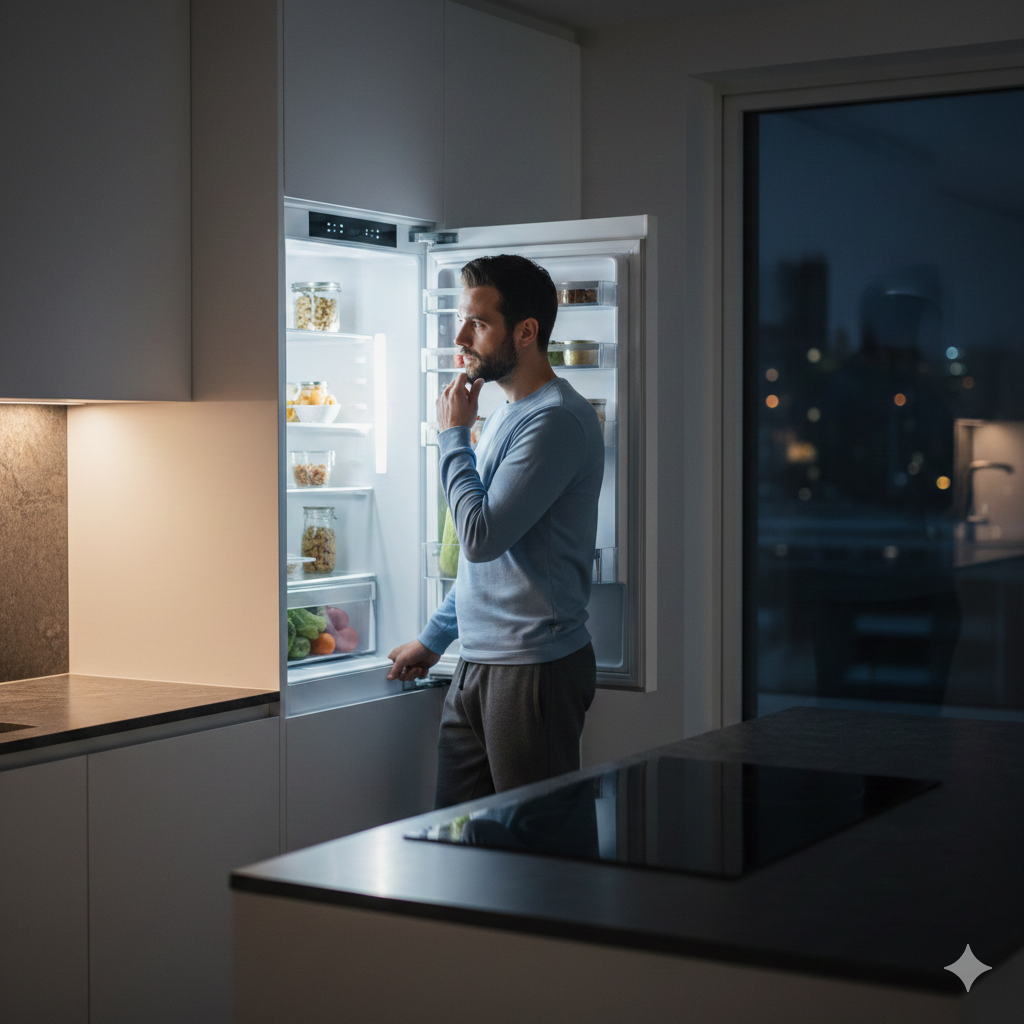
This image was created using AI to avoid copyright issues while conveying the context of this article.
We have all been there. You ate a healthy breakfast, a balanced lunch, and a solid dinner. You followed your plan perfectly all day. But then, around 9:00 PM, while sitting on the couch, it hits you. Suddenly, the pantry is calling your name. You find yourself standing in front of the open refrigerator, wondering how you ended up here.
Late-night snacking is one of the biggest hurdles for fitness clients. It is frustrating because it feels like you are "undoing" all your hard work from the day. But here is the secret: late-night eating usually isn't about a lack of willpower. It is often a physical or emotional response to how you handled the rest of your day.
The "Why" Behind the Craving
To beat the habit, we first have to understand why it happens. Usually, it comes down to three main things:
Under-eating during the day: If you skip breakfast or have a tiny lunch to "save calories," your body will fight back at night. By the time evening rolls around, your hunger hormones, specifically one called ghrelin, are screaming for energy. Your brain wants the fastest energy possible, which usually means sugar or simple carbs.
The Stress Connection: After a long day of work and making decisions, your "willpower battery" is drained. This is called decision fatigue. Additionally, if your stress levels (cortisol) stayed high all day, your body looks for a way to relax. For many, food is the easiest way to get a quick hit of dopamine, the "feel-good" brain chemical.
The Reward Habit: Sometimes, snacking is just a ritual. You have taught your brain that "TV time" equals "snack time." It becomes an automatic loop that you do without even thinking.
Strategies to Win the Night
If you want to stop the raid on the kitchen, you need a game plan. Here are four proven strategies to help you stay on track.
Front-Load Your Calories
The best way to stop nighttime hunger is to eat more during the day. Make sure your breakfast and lunch are packed with protein and fiber. Protein keeps you full longer than anything else. If you are properly fueled by 4:00 PM, you won't feel like a starving bear by 8:00 PM.Close the Kitchen
Create a physical signal that the "eating day" is over. For many, this is as simple as brushing your teeth immediately after dinner. The taste of mint makes most snacks taste terrible, and it sends a signal to your brain that the "kitchen is closed." You can also try turning off the kitchen lights and staying out of that room once dinner is cleaned up.The "H.A.L.T." Check
Before you grab a snack, stop and ask yourself: Am I Hungry, Angry, Lonely, or Tired? If you aren't actually hungry, a snack won't fix the problem. If you are tired, go to bed. If you are stressed, try five minutes of deep breathing or a hot shower. Addressing the real emotion is the only way to make the craving go away.Change the Environment
If you always snack while watching a certain show, your brain expects it. Try changing your routine for a week. Read a book in a different room, go for a short evening walk, or work on a hobby that keeps your hands busy. If you aren't sitting in the "snack zone," the urge to eat will be much weaker.
What If You Are Truly Hungry?
Sometimes, you actually need a little something. If your stomach is growling and you can't sleep, don't reach for the cookies. Choose a high-protein snack like Greek yogurt, a small protein shake, or a piece of string cheese. These will satisfy your body without causing a massive spike in blood sugar that disrupts your sleep.
Remember, one night of snacking doesn't define your fitness journey. But by understanding your triggers and planning ahead, you can take control of your evenings and see the progress you’ve been working so hard for.