

The 1-Week Taper: Getting Your Mind and Body Primed for January 1st
The 1-Week Taper is your final strategic advantage. Use this time to rest, recover, and prime your body and mind.

With January 1st right around the corner, this final week is the most important for your success. Instead of ramping up your effort, we recommend a strategic period of intentional rest and preparation: The 1-Week Taper.
In running, a taper is a reduction in training volume before a race. This allows the body to fully repair, store energy, and peak for the event. The first week of January, when everyone else is running on holiday exhaustion and anxiety, is your "race day."
At Legacy Fitness & Nutrition, we encourage you to use this final week to prime your mind and body. This strategic rest ensures you launch into the new year feeling fresh, energized, and mentally sharp, not already battling burnout.
Taper Rule 1: Dial Down Physical Intensity
The goal of the Taper is to fully recover from the stress of December and maximize muscle repair. You want to store energy, not deplete it.
The Action: Cut your high-intensity training (heavy lifting, HIIT cardio) by 50 to 75%.
Example: If you usually do three lifting sessions a week, cut it to one or two very light sessions focused on perfect form. Replace intensity with mobility and light, low-stress movement (see article, Beyond the Marathon: Why Mobility Training is the New Foundation of Fitness).
Why it Works: This allows your muscles to fully rest and the small micro-tears to repair. You will not lose strength in one week; in fact, you will likely be stronger and have more energy when January 1st arrives.
Taper Rule 2: Maximize Sleep and Water Intake
Recovery is not just physical; it is hormonal (as discussed in Why You Can't "Out-Train" a Bad Sleep Schedule). You want to actively lower cortisol and maximize the hormones that aid fat loss and repair.
The Action: Commit to 7.5 to 9 hours of quality sleep every night this week. Maintain consistent, optimal hydration (water intake).
Why it Works: Sleep is when your body dumps cortisol and releases Human Growth Hormone (HGH), which helps repair muscles and burn fat. By maximizing sleep now, you actively lower the stress burden on your system, setting your metabolism up for a faster launch.
Taper Rule 3: Launch with a Simple Action
The mental pressure of the "New Year, New Me" is immense. You need a simple, pre-planned action that removes all friction and confirms your return to consistency.
The Action: Plan one simple, non-negotiable activity for January 1st that you cannot fail to do. (This builds on the principles in The Micro-Habit Playbook).
Examples: Lay out your workout clothes the night before; Mix up your protein smoothie before you go to sleep; Take a 10-minute walk before checking social media.
Why it Works: The power of the Taper is not the absence of effort; it is the intentionality of the return. By making the first action so easy and pre-planned, you jump-start your momentum and eliminate the mental resistance that kills most resolutions.
The 1-Week Taper is your final strategic advantage. Use this time to rest, recover, and prime your body and mind. Stop the urge to push harder and launch yourself into the New Year feeling energized, not depleted.

Christmas Day: The Permission to Enjoy Without the Guilt
At Legacy Fitness & Nutrition, we want to give you clear, unequivocal permission to enjoy Christmas Day fully, without the guilt.

This image was created using AI to avoid copyright issues while still conveying the meaning of this article.
Christmas Day is a sacred holiday dedicated to family, connection, rest, and celebration. For those committed to a health and fitness legacy, however, this day can sometimes feel stressful. There is internal pressure to be "perfect," to track every calorie, and to avoid all treats.
At Legacy Fitness & Nutrition, we want to give you clear, unequivocal permission to enjoy Christmas Day fully, without the guilt.
A single day of enjoying rich food and resting will not derail the consistent habits you have built all year. In fact, fighting the day with extreme restriction and anxiety is far more damaging to your mental health and long-term consistency than simply enjoying the holiday.
Your health legacy is built on consistency over intensity. Christmas Day is a planned, intentional break that actually helps you recharge and build mental resilience for the New Year.
1. The Power of Intentional Indulgence
The biggest reason people feel guilty is because they approach the day with a mindset of "cheating" or "slipping up." This sets up a vicious cycle of shame.
The Mindset Shift: Approach the day with Intentional Indulgence. Say to yourself: "I am choosing to enjoy this meal with my family because it is a holiday, and this memory and connection are more valuable than one day of perfect tracking."
Why it Works: This removes the guilt because it turns an emotional "slip" into a conscious, thoughtful decision. You are in control of the decision; the food is not controlling you. This mindset is crucial for long-term psychological health.
2. Anchor to the "Core 3" (Not the Food)
Christmas is about connection and tradition, not the calories in the dessert. Shift your focus off the food and onto the emotional anchors of the day.
The Action: Focus on your Core 3 Non-Food Anchors:
Connection: Have three meaningful conversations with family members.
Movement: Take one small walk or perform a light mobility routine.
Gratitude: Spend five minutes quietly reflecting on the things you are grateful for this year.
Why it Works: By prioritizing these non-food activities, you ensure the day is successful regardless of what you ate. You reduce the mental space that food and counting can occupy.
3. The 90/10 Rule: One Day of Joy
Remember that your entire health year is built on the 90/10 Rule: If you execute your healthy habits and smart nutrition choices 90% of the time, the 10% (the holidays, birthdays, vacations) simply do not matter.
Christmas Day is a wonderful, planned part of that 10%. Your body is incredibly resilient. Your metabolism is robust. It is far more likely that a day of true rest and joy will help reduce stress hormones (cortisol) than it is to cause permanent weight gain.
The Action: Choose your favorite food or drink and enjoy it slowly, savoring the taste and the moment. Stop eating when you feel satisfied, not stuffed.
Why it Works: Savoring the moment enhances the pleasure, reducing the impulse to mindlessly overeat. By eating until satisfied, you honor your body's natural fullness cues.
4. The January 1st Promise
The only way Christmas Day can truly derail your goals is if it becomes Christmas Week, or Christmas Month.
The Promise: When the holiday is over, the indulgence is over. The next meal you eat is your next healthy, on-plan meal. Do not wait until Monday or feel like you have to "fix" Christmas with an extreme detox (remember our article, The Myth of "Detox").
Why it Works: This simple commitment to returning to your routine immediately maintains your streak of consistency. It proves that you are in charge of your habits, not the other way around.
Enjoy your Christmas Day. Embrace the rest, cherish the family, and savor the food. You have earned this day, and by intentionally choosing to enjoy it without guilt, you are reinforcing the strength and resilience of your long-term health legacy.

Your December Action Plan: How to Keep Your Fitness Goals Strong Through the Year-End Holidays
Congratulations! You successfully crushed November's content goals and, more importantly, you built strong habits through the Thanksgiving holiday.

Image courtesy of Jonathan Borba via Unsplash
Congratulations! You successfully crushed November's content goals and, more importantly, you built strong habits through the Thanksgiving holiday.
Now comes the toughest test of the year: December. The final month is a whirlwind of holiday parties, family gatherings, travel, and non-stop distractions. If you try to stick to your rigid January plan, you will likely fail and feel defeated.
The secret to winning December is to shift your mindset from a focus on "making gains" to a focus on damage control and non-negotiables. This is your three-part action plan to finish the year strong and step into January feeling ahead of the game, not behind it.
Part 1: The Training Non-Negotiable (The "Anchor" Workout)
During chaotic times, your training should be about consistency, not volume.
The Strategy: The 15-Minute Anchor. Commit to one single, non-negotiable movement routine that you will do every single day of the month, regardless of where you are. This should be a 15-minute bodyweight or mobility routine that requires zero equipment.
The Why: This "anchor" workout maintains your habit streak. Even if you miss your long gym sessions, you never break the habit of movement. You are reinforcing your identity as a fit person every single day.
Action: Write down your 15-minute routine (e.g., 5 sets of 20 squats, 10 push-ups, and a plank). Schedule it first thing in the morning before life gets in the way.
Part 2: The Nutrition Damage Control (The 2-Meal Rule)
It’s unrealistic to expect perfect eating during a month full of celebratory dinners and parties. Instead of worrying about every meal, control the moments you can control.
The Strategy: The 2-Meal Rule. For every holiday party, celebratory dinner, or day off, commit to making the other two meals of that day high in protein and fiber.
Example: If you know you have a party dinner tonight, your breakfast and lunch must be simple: eggs, Greek yogurt, or a protein shake.
The Why: Protein and fiber boost satiety and stabilize blood sugar. By maximizing these at two meals, you create a metabolic "buffer" that prevents overeating and mitigates the damage of the heavy meal or party snacks. You control 80% of the day's intake.
Part 3: The Recovery Commitment (The Sleep Target)
When schedules get busy, the first thing people sacrifice is sleep. This is a fatal flaw for fitness because poor sleep elevates stress hormones, increases cravings, and destroys recovery.
The Strategy: The 7-Hour Minimum. Decide on a non-negotiable minimum number of sleep hours (e.g., 7 hours). Treat this commitment with the same importance as a work deadline.
The Why: Better sleep is your ultimate weight management and recovery tool. It naturally reduces junk food cravings and lowers cortisol. When your sleep is strong, your willpower is strong.
Action: Set a "wind-down" alarm 30 minutes before your target bedtime. Stop scrolling, turn off bright screens, and read a book or practice deep breathing.
Step into January a Winner
December is not the time to start a new, challenging goal. It is the time to protect the great habits you've already built. By committing to your 15-Minute Anchor workout, using the 2-Meal Rule, and protecting your Sleep Target, you eliminate the need for a frantic "New Year, New Me" panic.
You will step into January feeling rested, strong, and ready to immediately accelerate your progress because you never truly stopped. That is the definition of a strong health legacy.
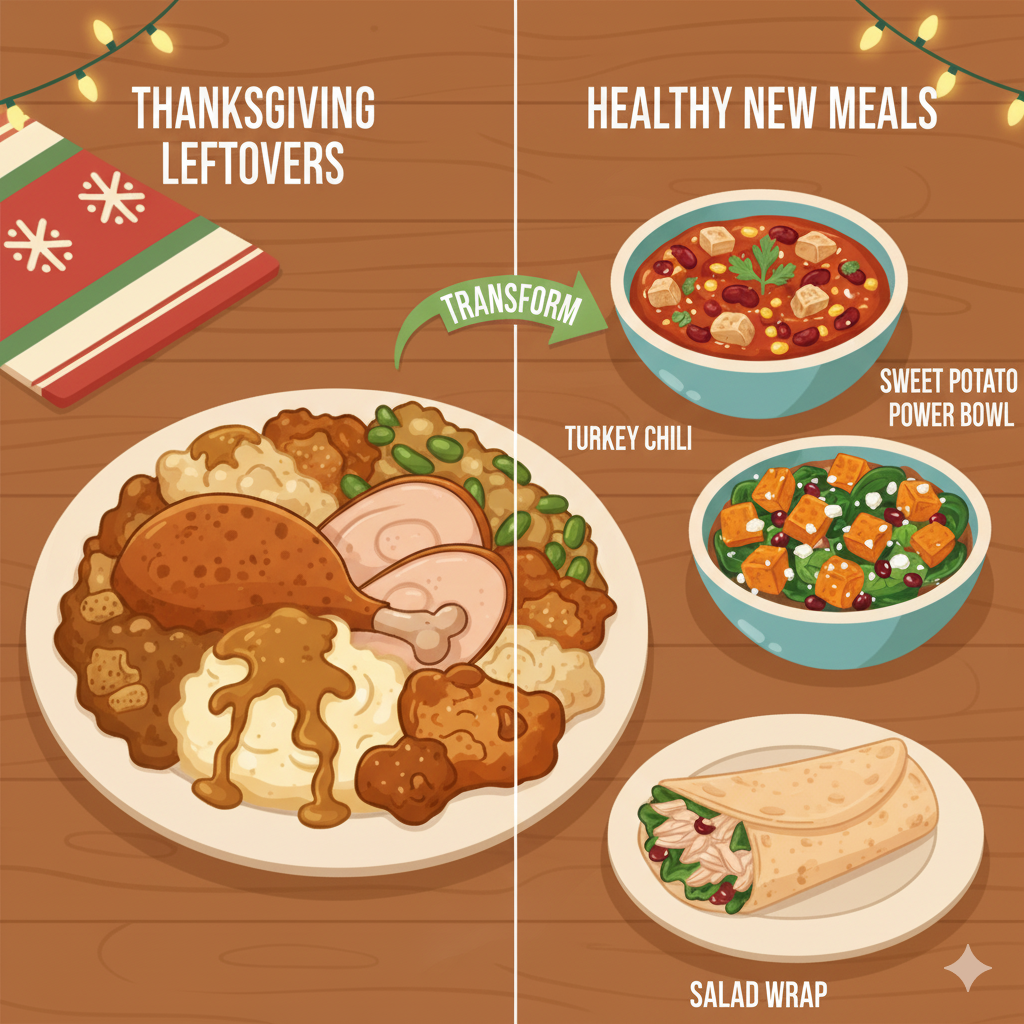
Leftovers Lighter: Quick, Healthy Recipes for Thanksgiving Day 2 Leftovers
The day after Thanksgiving is often called "Black Friday," but it could also be called "Leftovers Day."
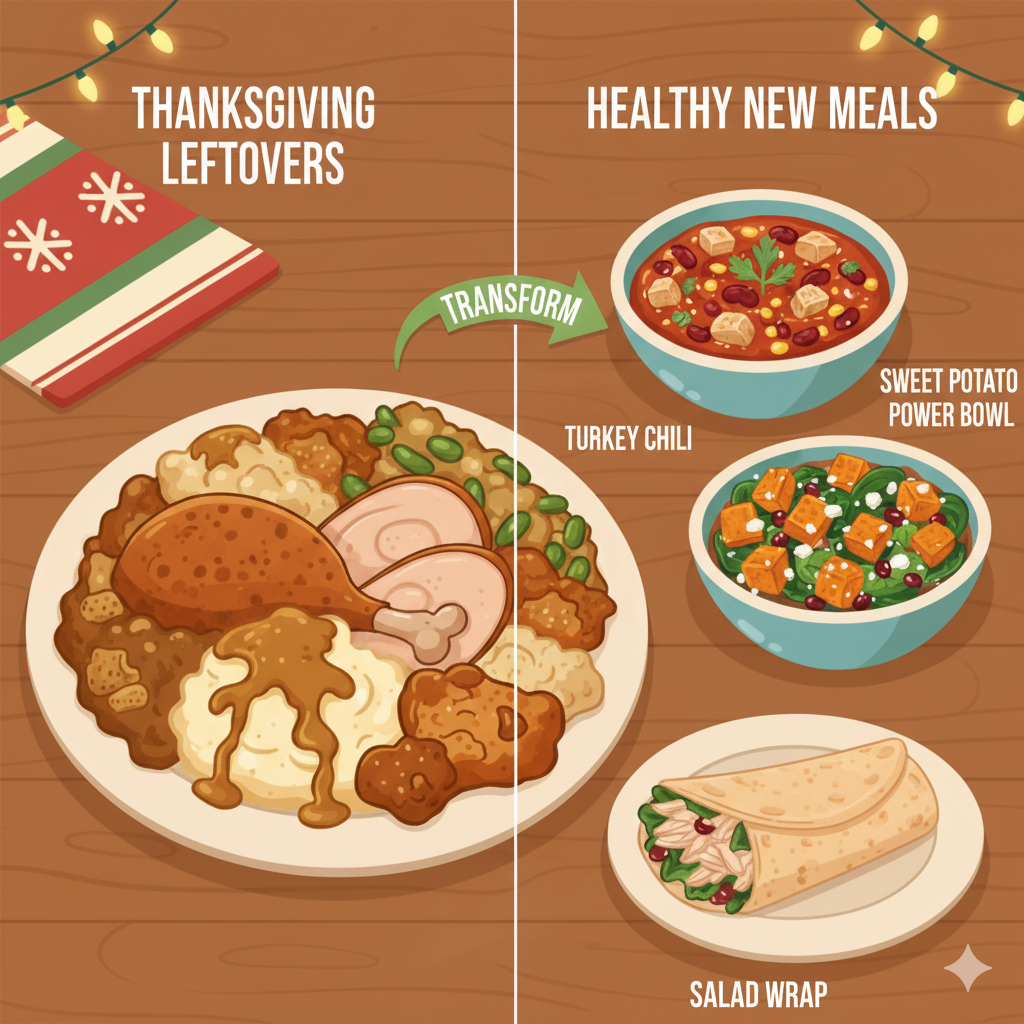
The day after Thanksgiving is often called "Black Friday," but it could also be called "Leftovers Day." You've got massive containers of turkey, mashed potatoes, and stuffing filling your fridge. While the initial holiday meal was a joyful indulgence, eating heavy, high-calorie leftovers for three days straight can derail your energy and make you feel sluggish.
The good news is you don't have to waste food. You can transform those rich holiday leftovers into lighter, protein-packed, and healthy meals that are ready in minutes. The key is to deconstruct the heavy meal and repurpose the components.
Here are three quick, healthy ways to use your Thanksgiving leftovers for meals that feel fresh and light.
1. The Protein-Packed Turkey Chili (The Clean-Out Meal)
This recipe instantly transforms dense, buttery turkey into a healthy, fiber-rich meal that’s perfect for a chilly late-November evening.
Deconstruct: The leftover turkey meat is pure, lean protein.
Repurpose: Turkey Chili Base.
Ingredients: 1 can crushed tomatoes, 1 can diced tomatoes, 1 can kidney or black beans (rinsed well), 1 cup frozen corn (optional), chili seasoning.
The Assembly (15 minutes): Sauté half an onion and a bell pepper in a pot. Add the canned ingredients and seasoning. Bring to a simmer. Shred your leftover turkey and add it to the pot. Let it simmer for 15 minutes to soak up the flavors.
The Hack: Skip the heavy cheese and sour cream. Top with fresh cilantro, a squeeze of lime juice, and a spoonful of Greek yogurt for a protein boost.
2. The Sweet Potato & Egg Power Bowl (The Metabolism Booster)
This is a fantastic, protein-heavy breakfast or brunch option that takes advantage of your leftover carbs while boosting your morning metabolism.
Deconstruct: Leftover sweet potatoes (or even mashed white potatoes).
Repurpose: Sweet Potato Hash.
The Assembly (10 minutes): Dice any leftover sweet potatoes (or use leftover mashed sweet potatoes). Sauté a handful of chopped spinach or kale in a skillet with a tiny bit of olive oil. Add the diced sweet potatoes and warm through.
The Hack: Push the sweet potato and greens mixture to the side and fry or scramble 2 eggs in the same pan. Serve the eggs on top of the hash. The combination of protein and complex carbs is perfect for sustained energy without the crash.
3. The Turkey & Cranberry Salad Wrap (The Quick Lunch)
This simple meal uses the turkey as a lean protein base and adds crunch and fiber for a completely fresh flavor profile.
Deconstruct: Leftover turkey and cranberry sauce.
Repurpose: High-Protein Lunch Wrap.
Ingredients: Whole-wheat tortillas or large lettuce wraps, Greek yogurt, celery, slivered almonds (optional).
The Assembly (5 minutes): In a bowl, mix shredded turkey with 1–2 tablespoons of plain Greek yogurt (instead of mayonnaise), some chopped celery for crunch, and a small spoonful of cranberry sauce for flavor. Mix well.
The Hack: Place the mixture in a whole-wheat tortilla with a handful of fresh spinach, or wrap it in large lettuce leaves for a low-carb, high-fiber option.
By getting creative with your leftovers, you honor the abundance of the holiday while making conscious choices that support your fitness goals. A little planning means you can enjoy the food and feel great all weekend long.

The Family Fun Turkey Trot: Creative Ways to Stay Active on the Big Day
Make this Thanksgiving a day for movement as much as it is for food. These creative, simple activities ensure that your entire family stays active, energized, and ready to enjoy every moment of the holiday season.
💪🦃 Happy Thanksgiving from everyone at Legacy Fitness & Nutrition! 🦃💪

Thanksgiving Day is centered on food, family, and relaxation. But it doesn't have to be a day spent entirely on the couch. Before the feast, or even after, finding creative ways to move as a family is a fantastic tradition that boosts your energy, helps regulate your metabolism, and creates fun, lasting memories.
While many cities host official "Turkey Trot" races, you don't need a formal event to get your steps in. The goal is simple: move together.
Here are three simple, low-pressure, and fun ways to incorporate activity into your Thanksgiving Day.
1. The Neighborhood Turkey Trot (The Classic)
This is the easiest way to incorporate movement and fresh air into your morning.
The Plan: Schedule a specific time (e.g., 9:00 AM) and announce it to the family. This creates a commitment.
The Pace: The goal is inclusivity. It doesn't matter if you jog, walk briskly, or push a stroller. Keep the pace conversational so everyone can enjoy the time together.
The Incentive: Make it fun! Wear silly hats, put on an old Thanksgiving-themed t-shirt, or set up a very simple finish line (like a scarf tied between two trees) back at the house. The person who finishes last gets to pour the coffee!
The Legacy Lesson: A brisk morning walk is a form of gentle exercise that aids digestion and sets a proactive tone for the rest of the day, reinforcing the importance of movement.
2. The Post-Feast Football or Yard Game (The Light After-Dinner Movement)
After the big meal, the urge to collapse on the couch is strong. Resist the urge with a short, easy activity that gets everyone moving before the inevitable afternoon nap.
The Plan: After the dishes are cleared (or while waiting for dessert), announce a 20-minute break for a light game.
The Activity: The famous post-feast backyard football game is great, but keep it light and gentle, no high-impact dives! Alternative, lower-impact games include:
Cornhole or Lawn Darts: Easy to stand and chat while playing.
Frisbee or Bocce Ball: Encourages walking and gentle bending/reaching.
The Dessert Walk: If games aren't your speed, simply take a 15-minute gentle walk around the block. This aids in digestion and helps lower the blood sugar spike from the meal.
The Legacy Lesson: Movement after a large meal is scientifically beneficial for digestion and blood sugar regulation. It prevents the complete shut-down that a sudden large meal can cause.
3. The Kitchen Dance Party (The Indoors Fun)
If the weather is bad or you can't get everyone outside, bring the movement indoors with some fun, low-pressure activity.
The Plan: While the cooks are cleaning the kitchen or while waiting for the next course, crank up some music.
The Activity: Put on a fun, upbeat playlist and start a spontaneous 10-minute dance party. This can be silly, low-effort, and highly engaging, especially for kids. Even gentle stretching and swaying to the music can work.
The Legacy Lesson: Moving and laughing are powerful stress relievers. This kind of spontaneous, non-intense movement reduces stiffness and releases endorphins, making everyone happier and more connected.
Make this Thanksgiving a day for movement as much as it is for food. These creative, simple activities ensure that your entire family, from the youngest to the oldest, stays active, energized, and ready to enjoy every moment of the holiday season.

Gratitude and Gains: Using Mindset to Reduce Holiday Stress and Stay Consistent
The holiday season, while joyful, is a marathon of added stress: travel logistics, financial worries, and the pressure to be "perfect."

Image courtesy of Aveedibya Dey via Unsplash
The holiday season, while joyful, is a marathon of added stress: travel logistics, financial worries, and the pressure to be "perfect." This mental stress can be just as damaging to your fitness and health goals as overeating, as it spikes cortisol (the stress hormone) and makes consistent action feel impossible.
This year, let's use the power of your mindset to not just cope with the holiday stress, but to actively reduce it and protect your precious routine. The strategy? Focusing on Gratitude and accepting "Good Enough" over perfection.
1. The Gratitude Grounding Technique
Stress thrives on fear, lack, and comparison. Gratitude is the direct antidote. Taking a few moments each day to focus on what you have (your "wins") can immediately lower your stress hormones and anchor you in a positive state.
The Strategy: Every morning, before you check your phone or start cooking, list three things you are genuinely grateful for.
Holiday Application: Be specific about your gratitude. Not: "I'm thankful for my family." Try: "I'm grateful my flight arrived safely," or "I'm thankful for the quiet 10 minutes I took for myself this morning."
Why it works: This simple practice interrupts the anxious "what if" thought loop. It reminds you of your resources and shifts your focus from external demands to internal appreciation. This stronger mental state makes you far more resilient against holiday pressures.
2. The Power of "Good Enough" Consistency
Holiday travel, hosting, and busy schedules are going to disrupt your normal routine. Trying to force a 60-minute workout or a perfect diet will only lead to stress and eventual burnout.
The Strategy: The 80% Rule. Accept that 80% effort during the holidays is a massive win. Your goal shifts from gaining to maintaining your strength and habits.
Holiday Application:
Workouts: A 15-minute bodyweight circuit in a hotel room is good enough. A brisk walk with family is good enough. Don't skip movement entirely just because you can't get to your preferred gym.
Nutrition: Hitting your protein goal at two meals a day is good enough. Drinking your full water intake is good enough. Focus on the few things that give you the biggest return (like protein, water, and sleep) and let the rest slide.
The Legacy Lesson: Consistency doesn't mean perfection; it means showing up in a way that is manageable, even during chaos. By accepting "good enough," you eliminate the stress of failure and ensure you keep your streak going strong into the New Year.
3. Set Boundaries: The Gift of "No"
Feeling overwhelmed often comes from over-committing your time and energy to others. To maintain your sanity and routine, you have to be able to say no.
The Strategy: Set clear boundaries around your personal health time. This is not selfish; it is essential.
Holiday Application: Politely decline one social invitation that adds too much stress, or firmly block out 30 minutes in the morning for your non-negotiable movement. For example: "I would love to help with breakfast, but I need a 30-minute walk first to clear my head."
The Legacy Lesson: Protecting your well-being serves everyone around you better. A rested, calm, and grounded you is a far better host, guest, and family member than a stressed-out, depleted one.
Use the powerful combo of gratitude and flexible consistency this holiday season. By managing your mindset first, you create a calm foundation that keeps your body and your goals perfectly aligned, ensuring your gains stick and your stress levels drop.