

Habit Design vs. Willpower: How We Build Consistency
Use your data trends to identify where your daily consistency tends to fracture. Partner with a coach to build clear, repeatable guardrails around your nutrition, your sleep, and your movement.

This image was created using AI to avoid copyright issues while conveying the context of this article.
If you rely on willpower to stay fit, you are playing a losing game.
It is a common cycle for high performers. You start a new fitness push on Monday morning with massive motivation. You vow to hit the gym at 6pm every day and completely cut out processed foods. For the first two days, your mental focus is high, and you power through the sessions on pure discipline.
Then, Wednesday happens. A high-stakes corporate project hits a major roadblock. You spend eight hours making intense structural decisions, managing client panic, and sitting through grueling board updates. By the time you close your laptop at 5:30pm, you are mentally exhausted. Your brain feels completely drained.
When you look at your calendar and see a heavy lifting session scheduled, a voice in your head instantly starts making excuses. Within minutes, you are on your couch ordering takeout, feeling like a failure because your "discipline" cracked.
This breakdown has nothing to do with your character or your desire to be healthy. The truth is that willpower is a finite emotional resource. It operates exactly like a phone battery. Every decision you make, every email you draft, and every stressful situation you navigate drains that battery. By the time evening arrives, your mental energy is in the red.
If your health system requires you to make excellent choices when your decision-making battery is completely empty, it is fundamentally engineered to fail. True consistency isn't built on willpower; it is built on deliberate habit architecture.
The Power of Behavioral Systems
In your professional career, you do not run operations by crossing your fingers and hoping your team feels motivated every morning. You build systems. You create standard operating procedures that remove guesswork and automate repetitive workflows.
Your personal health requires the exact same structural approach. Habit design is the art of building behavioral systems that make success the path of least resistance. Instead of forcing yourself to make a difficult choice every single day, you design your daily workflow so that the optimal choice is already made for you.
When you shift from a willpower-based mindset to a design-based system, staying healthy stops feeling like an exhausting second job. It simply becomes an automated routine that happens in the background of your life.
The Mechanics of Environmental Architecture
Human behavior is heavily dictated by convenience. If a task requires a massive amount of mental friction or logistical coordination, you will eventually skip it when you are tired. To fix this, you must change your environment to remove friction from your target habits, while adding friction to your distractions.
At Legacy Fitness, we help you build this architecture directly into your daily routine using your mobile dashboard. We don't just give you a list of guidelines; we help you stack micro-habits right alongside behaviors you already perform automatically.
For example, instead of relying on willpower to remember your hydration targets during a back-to-back meeting day, we tie your water intake to your calendar. Every time you open a new corporate meeting link, you take three sips from an insulated bottle sitting directly next to your keyboard. You are stacking a new, healthy habit onto an old, established prompt. By removing the need to think about the behavior, the friction completely disappears.
Automating the Travel Contingency
Nowhere does the willpower trap manifest more clearly than during business travel. When you step off a long flight into a chaotic new environment, your routine is immediately compromised. If you have to design a new workout on the spot using a subpar hotel fitness center, the mental effort required is too high. You will choose the hotel bar every single time.
A design-based approach removes the cognitive strain. Before you ever board the plane, your coach proactively uploads an alternate, minimal-equipment travel track directly into your profile. When you wake up, you do not have to deliberate, think, or plan. You simply open your dashboard, see the short, time-boxed sequence built for your specific hotel room or park space, and execute. You are running a pre-loaded script, completely bypassing the need for willpower.
Designing Your Success
Stop beating yourself up for a lack of discipline. The highest-performing executives who maintain lean, strong, and capable bodies into their 50s and 60s do not possess a magical reserve of willpower. They have simply spent time building better systems.
Use your data trends to identify where your daily consistency tends to fracture. Partner with a coach to build clear, repeatable guardrails around your nutrition, your sleep, and your movement. When you stop fighting your biology and start designing your environment, physical transformation becomes an inevitable byproduct of your daily life.

Habit Stacking for Spring: Adding New Goals to Your Existing Routines
Often when we try to add a new goal like increasing daily steps, drinking more water, or taking a daily supplement, it feels like one more ball to juggle. We try to rely on memory, but by 4:00 PM, we realize we haven't done any of it.

This image was created using AI to avoid copyright issues while conveying the context of this article.
As we move deeper into March, the initial energy of the new month is settling into a rhythm. You have your "musts" in place, and you are starting to see the value of your data. But often, when we try to add a new goal like increasing daily steps, drinking more water, or taking a daily supplement, it feels like one more ball to juggle. We try to rely on memory, but by 4:00 PM, we realize we haven't done any of it.
This is where a powerful psychological tool called Habit Stacking comes into play.
Coined by author S.J. Scott (Habit Stacking, Declutter Your Mind and many other books) and popularized by James Clear (Atomic Habits), habit stacking is the secret to making new behaviors feel automatic. Instead of trying to create a new habit out of thin air, you "stack" it on top of something you already do every single day.
The Science of the "Anchor"
Your brain is full of established neural pathways. These are things you do without thinking: brewing coffee, checking your email, or driving home from work. These are your "anchor habits."
When you pair a new habit with an anchor habit, you are essentially "hitchhiking" on a part of your brain that is already working perfectly. You don't have to remember to do the new thing; the anchor habit reminds you.
The formula is simple: After [Current Habit], I will [New Habit].
Three Spring Stacks to Try This Week
In March, we are focusing on efficiency and consistency. Here are three ways to use habit stacking to level up your fitness without adding mental stress.
The Hydration Stack
►The Goal: Drink more water throughout the day.
►The Stack: "After I pour my first cup of coffee, I will drink 16 ounces of water."
►Why it works: You never forget your coffee. By making the water a "requirement" for the coffee, you ensure you start your day hydrated before the caffeine even hits your system.The Movement Stack
►The Goal: Hit 10,000 steps a day.
►The Stack: "After I finish eating my lunch, I will walk for 10 minutes."
►Why it works: Lunch is a natural break in your day. Instead of sitting and scrolling on your phone after you finish eating, the act of putting your plate away becomes the trigger to put on your shoes and step outside.The Review Stack
►The Goal: Consistent logging and check-ins.
►The Stack: "After I plug my phone in for the night, I will open my fitness app and log any missing data."
►Why it works: Plugging in your phone is a universal "end of day" signal. By making this your trigger, you ensure you never go to bed with a "blank map" for your coach to look at the next morning.
Keep the Stack Small
The biggest mistake people make with habit stacking is trying to stack a giant habit onto a small anchor. If you say, "After I brush my teeth, I will do a 45-minute workout," it will fail. The new habit is too big for the trigger.
Start small. The new habit should take less than five minutes. Once that "stack" feels as natural as breathing, then you can increase the difficulty or add another small habit to the chain.
Building Your Spring Foundation
Spring is about growth and renewal. By using habit stacking, you are planting seeds of discipline that don't require constant willpower to maintain. You are making your environment work for you.
Look at your daily routine today. Where can you find an anchor? What small change can you "hitch" to it? When you master the stack, you master your day.

Launching into March: From Maintenance to Momentum
Most people treat the end of a month like an "end of a race" where they can finally stop running. But you are no longer the person who "starts and stops." You are the person who builds.

This image was created using AI to avoid copyright issues while conveying the context of this article.
We have officially crossed the finish line of February. You’ve navigated the "maintenance mindset," mastered the 4:1 Protein-to-Fiber ratio, found your Zone 4 top gear, and celebrated a milestone double-birthday for Legacy Fitness.
Most people treat the end of a month like an "end of a race" where they can finally stop running. But at Legacy Fitness, we view March 1st not as a reset, but as a launchpad. You aren't starting over; you are starting with experience, strength, and a fine-tuned metabolic engine.
The February Foundation
Think about where you were on February 1st. Perhaps you were still fighting the "all-or-nothing" mentality of January. Now, you have a toolkit of Minimum Viable Habits. You know that a "B-grade" workout is better than a missed one, and you understand that "clothing your carbs" is the secret to steady energy.
This month wasn't about being perfect; it was about building structural integrity. Like a house, you’ve spent the last 28 days pouring the concrete and framing the walls. In March, we start to see the architecture.
Setting Your March "Prime"
As the weather begins to shift, your body is naturally ready for more activity. To keep your momentum high, we are focusing on three "Spring Launch" pillars:
Increased NEAT: With more daylight, your opportunity for "movement snacks" increases. Aim to add 1,000 steps to your daily average in March.
Strength Progression: In February, we learned the moves. In March, we master them. Look at your training logs—aim to beat your February numbers by just 2-5%.
Refined Ratios: Now that the 4:1 ratio is a habit, look for more variety. Challenge yourself to try one new high-fiber plant and one new lean protein source every week.
The "March 1st" Mindset
The biggest trap of a new month is the "I'll start Monday" or "I'll start on the 1st" delay. Since tomorrow is March 1st, your goal is to make it the most "normal" day possible. Don't do a 3-hour workout to "kick things off." Just perform your habits.
Consistency is the ultimate "biohack." When your healthy choices become boring, they become permanent. That is when you stop "trying to get fit" and simply start being a fit person.
The Legacy View
A legacy is the compound interest of your daily decisions. You have put in the work during the shortest, and often hardest, month of the year. You’ve survived the winter slump and embraced the "joy of missing out."
You are no longer the person who "starts and stops." You are the person who builds. Let’s take this February foundation and launch into a March that is stronger, leaner, and more vibrant than ever before.
See you in the new month.

The 28-Day Habit Audit: What’s Staying and What’s Going?
Over the last four weeks, we’ve covered everything from NEAT and Fibermaxxing to VO2 Max and the 4:1 Protein-to-Fiber ratio. You’ve been flooded with information, strategies, and "biohacks."

This image was created using AI to avoid copyright issues while conveying the context of this article.
We have officially reached the home stretch of February. Over the last four weeks, we’ve covered everything from NEAT and Fibermaxxing to VO2 Max and the 4:1 Protein-to-Fiber ratio. You’ve been flooded with information, strategies, and "biohacks." But as we prepare to flip the calendar to March, it’s time for the most important part of any transformation: The Habit Audit.
A legacy isn't built by doing a hundred things for a month; it’s built by doing three things for a decade. Today, we are looking back at your February journey to decide which habits have earned a permanent spot in your lifestyle and which ones were just "trial runs."
The Audit Framework: Keep, Tweak, or Toss
Go through the strategies we’ve implemented this month and run them through this simple filter:
KEEP: Which habit felt the most natural? Maybe it was the post-meal walk or the 4:1 P:F ratio. If it made you feel better and didn't feel like a grueling chore, this is a "Legacy Habit." Lock it in.
TWEAK: Did you love the idea of something but struggle with the execution? Perhaps you enjoyed Strength-First training but found 4 days a week too difficult to manage. Tweak it to 2 or 3 days. Adaptation is the key to consistency.
TOSS: Was there something that caused you immense stress or just didn't align with your life? If Zone 4 training makes you miserable, don't force it. There are other ways to build a strong heart. If it’s not sustainable, it’s not part of your legacy.
The "Minimum Viable" Habit
In the fitness world, we often fall into the trap of "all or nothing." But the most successful people in 2026 are those who have mastered the Minimum Viable Habit. This is the version of your goal that you can do even on your worst, busiest, most stressful day.
The Goal: 10,000 steps. The Minimum: A 10-minute walk around the block.
The Goal: 4:1 P:F Ratio at every meal. The Minimum: One high-fiber vegetable with dinner.
When you define your minimums, you eliminate the "off-the-wagon" mentality. You never fail; you just scale.
Reviewing Your Metabolic Engine
Take a moment to look at your wins from the last 28 days.
Did your Non-Scale Victories (clothing fit, energy) improve?
Did you notice a difference in your hunger levels after Fibermaxxing?
Is your "Tech Neck" feeling a little more resilient?
These aren't just one-time wins. These are the indicators that your "biological engine" is running cleaner and more efficiently than it was on January 31st.
The Legacy View
At Legacy Fitness, we don't want you to be a "February Success Story." We want you to be a 2026 success story—and a 2036 one, too. The Habit Audit is how you ensure that the effort you put in this month pays dividends for years to come.
Tomorrow, we’ll talk about "Launching into March," but today is for reflection. Be honest with yourself about what worked. Celebrate the habits you’ve built, and give yourself permission to let go of the things that don't fit your path.

Year in Review: 5 Fitness Wins You Probably Took for Granted
Before you set your goals for January, take a moment to celebrate these five fitness wins you probably took for granted this year.

This image was created using AI to avoid copyright issues while still conveying the context of this article.
As the year winds down, it is natural to look ahead to New Year's resolutions. We focus on the big goals: the pounds we still want to lose, the races we haven't run, or the strength we still want to gain.
This forward-looking focus, while important, often blinds us to how far we have actually come. If you only measure success by the final, huge goal, you miss all the small, meaningful progress that happened every day.
At Legacy Fitness & Nutrition, we encourage you to pause for a moment of reflection and gratitude. Your fitness journey in the past year is full of small victories; things you now do easily that were hard or impossible 12 months ago. These small wins are the true foundation of your health legacy.
Before you set your goals for January, take a moment to celebrate these five fitness wins you probably took for granted this year.
1. You Became a Person Who Works Out
Think about the mental effort it took this time last year to decide to put on your workout clothes. If you are now consistently showing up, whether in the gym or at home, you have achieved the most important victory of all: You changed your identity.
You are no longer a person who wants to exercise; you are a person who exercises. This shift in identity is far more powerful than any weight lost or gained; it is the core of sustainable habit change. This is the biggest win.
2. You Don't Get Winded Doing Simple Things
Remember a time when running up the stairs left you gasping? Or when walking through the airport to catch a connection was stressful and exhausting?
Now, because of the work you have put in, you probably do those things without thinking. Your body has become more efficient; your heart and lungs are stronger. This quiet increase in endurance and functional capacity is a massive win for your longevity and quality of life. You have made life easier for your future self.
3. You Have More Resilience to Stress
If you managed a tough work deadline, handled a family crisis, or navigated the chaos of the holidays without completely collapsing, your exercise routine played a huge role.
As we discussed in the "Move for Mood" article, movement releases mood-boosting chemicals and helps your body process stress hormones. The fact that you handled a high-stress year is a testament to the mental and physical resilience you built with every single workout. That feeling of being capable under pressure is a win that money cannot buy.
4. You Are Eating to Fuel, Not Just to Comfort
A year ago, maybe every bad mood or stressful day immediately triggered a trip to the vending machine or a drive-thru. While we all slip up, the fact that you now think about fueling your next workout or prioritizing protein for satiety is a massive shift in mindset.
You have likely replaced emotional eating patterns with thoughtful nutrition strategies. This cognitive change, this ability to choose the long-term benefit over the short-term comfort, is a non-scale victory that guarantees a stronger future.
5. You Can Recover from a Setback
Everyone has a bad week, a skipped workout, or a splurge meal. The old you might have let one bad day turn into a full month of quitting. The new, healthier you now recognizes the slip, accepts it, and gets right back on track the next day.
This ability to restart quickly and without self-punishment is called resilience. This resilience is the "resolution insurance" you need for 2026. You now know that one bad day doesn't erase all your hard work, and that simple understanding is a true sign of a mature, sustainable fitness mindset.
As you look forward to the New Year, do not focus on the "new you." Take pride in the improved you who already showed up, already built resilience, and already changed their identity this past year. Celebrate your small wins; they are the most important part of your legacy.

Don't Wait for January 1st: The Power of the "Resolution Head Start"
January 1st is the worst day to start your resolution. Stop waiting for the perfect day. The perfect day to start building your legacy is right now.

This image was created using AI to avoid copyright issues while conveying the meaning of this article.
Every year, the calendar promises a magical reset button on January 1st. We load up our goals: eat better, exercise more, stress less and wait for the clock to strike midnight.
But here’s a crucial piece of advice from Legacy Fitness & Nutrition: January 1st is the worst day to start your resolution.
Think about it: January 1st is often a day of recovering, cleaning up, or easing back into work after a busy holiday period. It’s a day packed with pressure and distraction. If you start your biggest life change on a chaotic day, you set yourself up for failure.
The most successful people don't wait for the magic date. They start when they decide to start. And right now, in December, you have the biggest strategic advantage of the whole year: The Resolution Head Start.
Why December is Your Secret Weapon
December is usually when we throw up our hands and say, "I'll just enjoy the cookies now and fix everything later." This mindset is your enemy. Instead of viewing December as a write-off, see it as a low-pressure practice field.
When you start small now, you accomplish two major things:
You build momentum: Starting with a few small, consistent wins in December gives you energy and proof of success. You don't have to rely on sheer willpower on January 1st; you rely on habit.
You lower the pressure: When you start now, the stakes are lower. If you miss a day, it’s not the end of your resolution; it’s a practice stumble. This low-stress environment is where true, lasting habits are formed.
Think of it like training for a race. You don't start the marathon on race day. You start training weeks before, building your endurance slowly.
The 3-Step Head Start Plan
A head start doesn’t mean you launch into extreme dieting or 7-day-a-week training. It means choosing two or three small, non-negotiable actions that you practice consistently before the holiday rush.
Step 1: Choose Your Core 3
Identify the three simplest things you want to anchor your New Year to, and make them your December non-negotiables. They should be easy enough to do even on the busiest days.
Example 1 (Movement): 10 push-ups every morning before showering.
Example 2 (Nutrition): Eat one serving of green vegetables with dinner every night.
Example 3 (Mind/Rest): Get into bed 15 minutes earlier than usual.
That’s it. These are your Core 3. You are practicing the feeling of success and consistency without the pressure of a massive goal.
Step 2: Anchor the Habit
Connect your Core 3 habits to something you already do without fail. This is called habit stacking.
After I brew my coffee, I will do 10 push-ups.
After I sit down for dinner, I will immediately eat my serving of green vegetables.
When the 9 PM news starts, I will get ready for bed.
By linking a new, small habit to an old, established action, you take the decision-making out of the process. The coffee triggers the push-ups; the dinner table triggers the veggies. This is the mechanism that keeps momentum going through the chaos of holiday travel and parties.
Step 3: Accept Imperfection (The December Advantage)
December is messy. There will be nights when you eat an extra cookie or skip your walk because of snow. The December advantage is that these slips don't matter! They are part of the practice.
When you slip up in January, people often quit entirely. When you slip up in December, you simply say, "Oops, I missed it," and you start fresh tomorrow. You learn how to recover and restart without shame.
By January 1st, you won’t be starting a new resolution; you’ll be continuing a successful habit. You'll look back at December and realize you already built your momentum, confidence, and system.
Stop waiting for the perfect day. The perfect day to start building your legacy is right now.

The Micro-Habit Playbook: Why 5-Minute Changes Beat The 1-Day Overhaul
This December, forget the crushing weight of the "New Year, New Me" overhaul. Start small. Stay consistent. Build your legacy.

This image was created using AI to avoid copyright issues while conveying the meaning of this article.
The calendar is about to flip to a new year. You know what that means: time for the massive, life-changing, "new me" resolutions.
You promise yourself: “Starting January 1st, I will wake up at 5 AM, work out for 90 minutes, cook every meal from scratch, and never touch a soda again!”
It sounds great, doesn't it? It sounds like the key to a better you. But here's the truth most people ignore: The bigger the overhaul, the faster the fail.
If you’ve ever felt like your New Year's resolution was like trying to climb Mount Everest in a single jump, you're not alone. The problem isn't your motivation; it's your strategy. The biggest changes stick when they start small, so small in fact, that they feel almost silly.
Welcome to the Micro-Habit Playbook. This is the secret to building a fitness legacy that lasts.
The Problem with the "All or Nothing" Mentality
Why do most resolutions fail by February? Because we try to change our entire life at once. We go from 0 to 100 mph overnight.
Think of it like this: If you decide to save money, you don't instantly put $10,000 in your savings account. You start by saving $10 a week, then $20. It becomes a habit first.
Your brain and body hate sudden, painful changes. When you suddenly force yourself into a brutal, hour-and-a-half workout every day, your body screams: "Danger! Too much effort! Stop!" Your brain looks for an easy out. This is why you feel motivated on January 1st but completely burned out by January 15th.
The Micro-Habit Strategy: Too Small to Fail
A micro-habit is a behavior that is so easy and so quick that you cannot logically skip it. It usually takes five minutes or less and requires very little willpower.
The goal is not to get a workout in; the goal is to build consistency. You aren't building muscle; you are building the identity of a person who is consistent with their health.
Here’s how to apply the Micro-Habit Playbook to three common fitness goals:
Goal 1: Moving Your Body More
Instead of the big, scary goal ("I will exercise for 60 minutes every day"), try these micro-habits:
The "One Song" Rule: When you get home from work, play one song and walk, jog, or dance around the living room. (About 3–4 minutes).
The "Commercial Break" Challenge: Every time a commercial comes on while you're watching TV, do 10 squats or 10 standing push-ups against the wall. (About 2 minutes).
The "Alarm Clock Anchor": Place your shoes and socks right next to your bed. When the alarm goes off, the micro-habit is simply putting on the socks and shoes. That's it. Once the shoes are on, the full workout becomes much easier to start.
The key here is that you can always do more than the micro-habit, but the rule is you must at least do the minimum. Most days, once you have your shoes on, you’ll likely go for the walk. You’ve tricked your brain into overcoming the toughest part: starting.
Goal 2: Eating Healthier and Controlling Cravings
Nutrition goals often fail because we make the healthy choice too difficult and the unhealthy choice too easy.
The "Water First" Rule: Before you reach for any snack or start a meal, drink a full 8-ounce glass of water. (About 1 minute). This helps you check if you’re actually hungry or just thirsty, and it creates a feeling of fullness.
The "Veggies-First Bite": Before you touch anything else on your plate, take two bites of the vegetable part of the meal. (About 30 seconds). This small win prioritizes nutrient density and signals to your body that a healthy meal is coming.
The "Protein Prep": Every Sunday, cook three large chicken breasts or hard-boil six eggs. The micro-habit is just opening the fridge and slicing a piece off the pre-cooked protein anytime you feel a craving. (About 2 minutes). By having healthy protein ready, you make the healthy choice the path of least resistance.
Goal 3: Getting Better Sleep
Sleep is the engine of your fitness journey. If you skimp on sleep, you make losing weight and building muscle much harder because of hormones like cortisol.
The "Plug-In and Step Away": 1 hour before bed, plug your phone/tablet into a charger in a room other than your bedroom. The micro-habit is simply putting it on the charger. (1 minute). This separates your bedroom from your work/social life.
The "Journal Line": Before getting into bed, write one sentence, just one, about your day in a journal. (1 minute). This small act helps stop your brain from racing and prepares your mind for rest.
Building Your Legacy, Five Minutes at a Time
A small change done consistently is a mountain compared to a massive change done twice.
When you use the Micro-Habit Playbook, you aren't just achieving a goal; you are changing who you are. You are transforming into a person who consistently exercises, eats well, and prioritizes rest.
This December, forget the crushing weight of the "New Year, New Me" overhaul. Focus on the simple, repeatable actions that take five minutes or less. By the time January 1st rolls around, you won't need a resolution; you'll already have a legacy of healthy habits in place.
Start small. Stay consistent. Build your legacy.

Your December Action Plan: How to Keep Your Fitness Goals Strong Through the Year-End Holidays
Congratulations! You successfully crushed November's content goals and, more importantly, you built strong habits through the Thanksgiving holiday.

Image courtesy of Jonathan Borba via Unsplash
Congratulations! You successfully crushed November's content goals and, more importantly, you built strong habits through the Thanksgiving holiday.
Now comes the toughest test of the year: December. The final month is a whirlwind of holiday parties, family gatherings, travel, and non-stop distractions. If you try to stick to your rigid January plan, you will likely fail and feel defeated.
The secret to winning December is to shift your mindset from a focus on "making gains" to a focus on damage control and non-negotiables. This is your three-part action plan to finish the year strong and step into January feeling ahead of the game, not behind it.
Part 1: The Training Non-Negotiable (The "Anchor" Workout)
During chaotic times, your training should be about consistency, not volume.
The Strategy: The 15-Minute Anchor. Commit to one single, non-negotiable movement routine that you will do every single day of the month, regardless of where you are. This should be a 15-minute bodyweight or mobility routine that requires zero equipment.
The Why: This "anchor" workout maintains your habit streak. Even if you miss your long gym sessions, you never break the habit of movement. You are reinforcing your identity as a fit person every single day.
Action: Write down your 15-minute routine (e.g., 5 sets of 20 squats, 10 push-ups, and a plank). Schedule it first thing in the morning before life gets in the way.
Part 2: The Nutrition Damage Control (The 2-Meal Rule)
It’s unrealistic to expect perfect eating during a month full of celebratory dinners and parties. Instead of worrying about every meal, control the moments you can control.
The Strategy: The 2-Meal Rule. For every holiday party, celebratory dinner, or day off, commit to making the other two meals of that day high in protein and fiber.
Example: If you know you have a party dinner tonight, your breakfast and lunch must be simple: eggs, Greek yogurt, or a protein shake.
The Why: Protein and fiber boost satiety and stabilize blood sugar. By maximizing these at two meals, you create a metabolic "buffer" that prevents overeating and mitigates the damage of the heavy meal or party snacks. You control 80% of the day's intake.
Part 3: The Recovery Commitment (The Sleep Target)
When schedules get busy, the first thing people sacrifice is sleep. This is a fatal flaw for fitness because poor sleep elevates stress hormones, increases cravings, and destroys recovery.
The Strategy: The 7-Hour Minimum. Decide on a non-negotiable minimum number of sleep hours (e.g., 7 hours). Treat this commitment with the same importance as a work deadline.
The Why: Better sleep is your ultimate weight management and recovery tool. It naturally reduces junk food cravings and lowers cortisol. When your sleep is strong, your willpower is strong.
Action: Set a "wind-down" alarm 30 minutes before your target bedtime. Stop scrolling, turn off bright screens, and read a book or practice deep breathing.
Step into January a Winner
December is not the time to start a new, challenging goal. It is the time to protect the great habits you've already built. By committing to your 15-Minute Anchor workout, using the 2-Meal Rule, and protecting your Sleep Target, you eliminate the need for a frantic "New Year, New Me" panic.
You will step into January feeling rested, strong, and ready to immediately accelerate your progress because you never truly stopped. That is the definition of a strong health legacy.

The Power of Consistency: Turning Motivation into a Lifelong Habit
Motivation is like a lightning strike, powerful and exciting, but it rarely lasts. If you rely on motivation to stay fit, you're setting yourself up for a failure cycle.
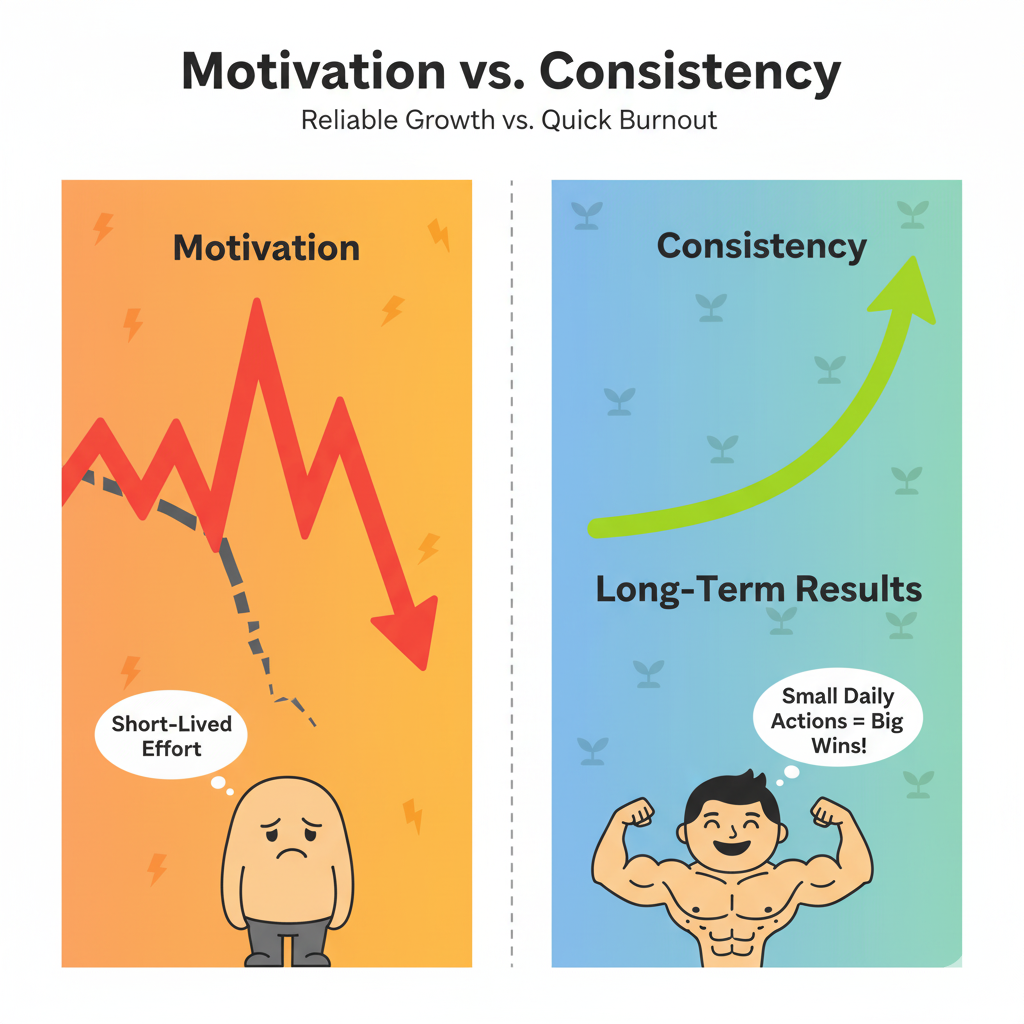
We've all been there: January 1st hits, you're bursting with motivation, you buy new gear, and you hit the gym hard for two weeks. Then, life gets in the way. Work piles up, you miss one day, and suddenly two months have gone by.
Motivation is like a lightning strike, powerful and exciting, but it rarely lasts. If you rely on motivation to stay fit, you're setting yourself up for a failure cycle. The secret to fitness that lasts, the kind that builds your legacy of health, isn't motivation. It's consistency.
Consistency is the quiet, reliable foundation that allows your effort to compound over time. Here is how to stop chasing motivation and start building the powerful habit of consistency.
1. Lower the Bar (The Five-Minute Rule)
The number one reason people break consistency is that their minimum expectation is too high. If you set a goal of "I must do an hour at the gym," and you only have 30 minutes, you often skip the workout entirely because you feel like you "failed."
The Habit Hack: Lower your minimum requirement until it's almost impossible to fail. Tell yourself, "I just need to put on my workout shoes," or "I just need to do 5 minutes of stretching."
Why it works: Showing up is the hardest part. Once you start that 5-minute task, you'll often find the motivation to continue for 20 or 30 minutes. If you still stop after 5 minutes, you still win because you maintained your habit streak. Consistency trumps intensity every time.
2. Use the 'Habit Stack' Principle
Consistency thrives on routine. You shouldn't try to cram a new workout habit into an already busy day; instead, you should attach it to an existing habit you already do automatically.
The Formula: [After I do X, I will do Y.]
Instead of: "I need to work out tonight."
Try: "After I finish brushing my teeth in the morning, I will do 10 bodyweight squats."
Why it works: Your brain uses less energy when a habit is linked to a strong cue. The automatic action (X) cues the desired action (Y), making it feel less like a choice and more like the next logical step.
3. Stop Seeking Perfection
Perfection is the enemy of consistency. If you believe your diet needs to be 100% clean every day, one cookie can make you feel like the whole day is ruined, leading to a downward spiral. The same goes for the gym: if you miss one day, don't let that one miss turn into a week of misses.
The Strategy: The 80/20 Rule: Aim for consistency 80% of the time, and give yourself grace for the other 20%. If you miss a workout, don't punish yourself. Just make sure you do the 5-minute minimum tomorrow.
Focus on the Streak: Track your consistency on a calendar. Your goal is to maintain the streak. If you have to break it, keep the break short. Never miss twice in a row.
4. Connect to Your 'Why' (The Legacy)
Motivation focuses on the immediate reward ("I want to look good for vacation"). Consistency focuses on the long-term identity ("I am the type of person who stays healthy and strong").
The Shift: When you feel unmotivated, don't ask yourself, "Do I feel like working out?" Ask yourself, "What kind of person do I want to be in 10 years?"
The Legacy: Your actions today are building your health legacy. Every time you show up (even for 5 minutes), you are reinforcing your identity as a dedicated, strong, and healthy individual. That powerful, future-focused reason is far stronger than any fleeting burst of motivation.
Consistency is the ultimate compounding factor in fitness. Small, repeatable actions, performed reliably over a long period, generate massive results that motivation alone can never achieve. Commit to showing up every day, and your lifelong results will take care of themselves.

The Secret to Staying on Track: How to Build Lasting Fitness Habits
How many times have you started a new fitness routine with a burst of excitement, only to find yourself falling off track a few weeks later? You’re not alone. Building lasting fitness habits isn't about willpower; it's about designing a system that makes healthy choices easier and more automatic.
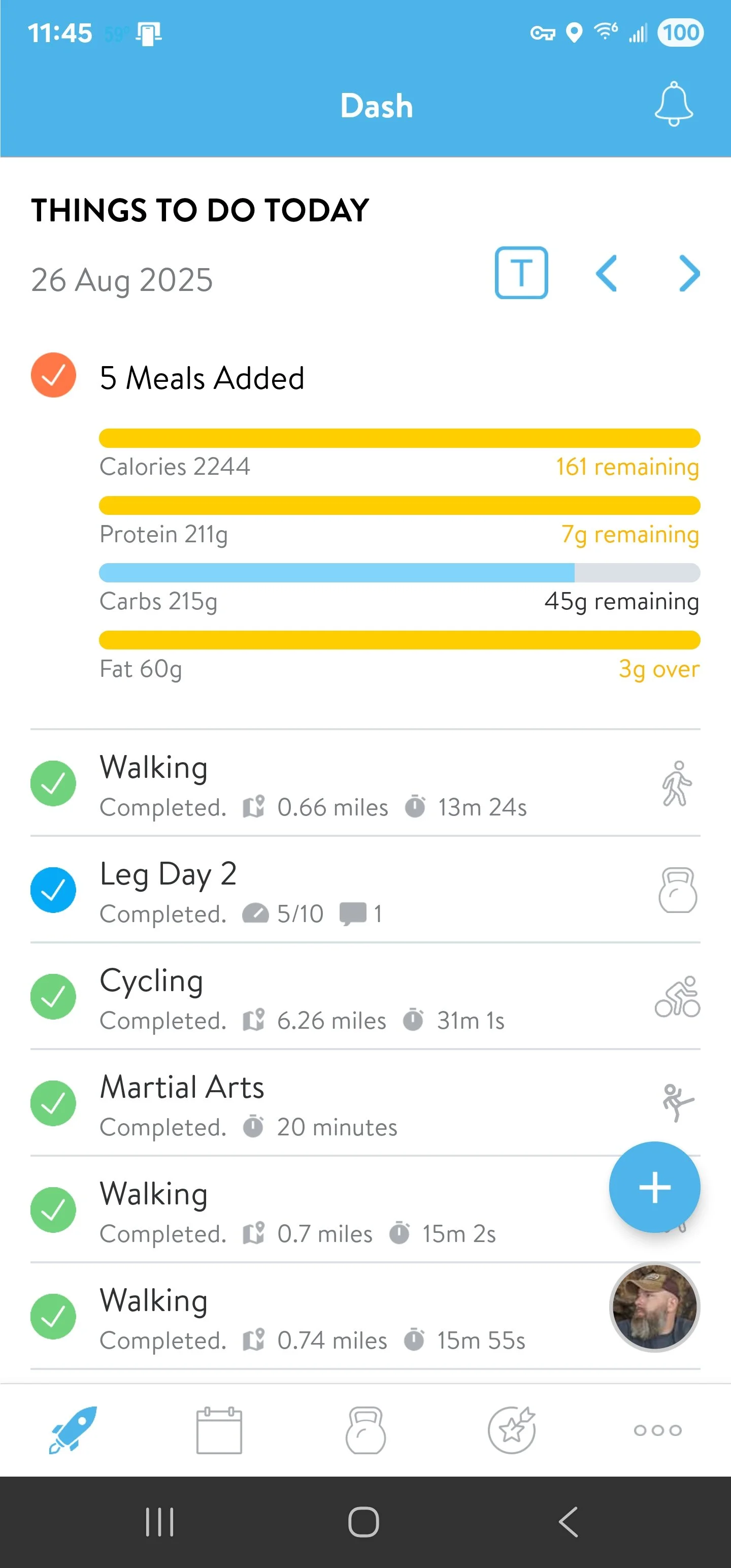
How many times have you started a new fitness routine with a burst of excitement, only to find yourself falling off track a few weeks later? You’re not alone. Many people struggle not with what to do, but with how to stick with it. The truth is, motivation is a fickle thing; it comes and goes. The real secret to long-term fitness success isn't about constant motivation, it's about building strong, lasting habits.
Habits are those things you do almost automatically, without having to think much about them. Brushing your teeth, making your morning coffee – these are habits. Imagine if working out or eating healthy felt just as natural and easy. The good news is, you can train your brain to make healthy choices a part of your daily routine. It takes a bit of effort at the start, but once those habits are built, they become your secret weapon for staying on track.
1. Start Small, Think Big
One of the biggest mistakes people make is trying to change everything at once. You decide to work out for an hour every day, cut out all sugar, and meal prep for the entire week, all starting tomorrow. This is a recipe for burnout.
The Fix: Instead, pick one tiny habit to focus on. Could you commit to just 10 minutes of walking every day? Or maybe swapping one sugary drink for water? Once that small habit feels easy and automatic, then you can add another. Small wins build confidence and momentum.
2. Make It Obvious
Our environment plays a huge role in our habits. If your running shoes are buried in the back of your closet, you're less likely to go for a run. If healthy snacks are out of sight, you're more likely to grab the chips.
The Fix: Make your desired habit easy to see and access. Lay out your workout clothes the night before. Keep a water bottle on your desk. Put healthy snacks at eye level in your fridge. Make the healthy choice the easy choice.
3. Stack Your Habits
This is a powerful trick. Habit stacking means attaching a new habit to an existing one. You already have routines in your day – use them!
The Fix: Think about something you already do every single day without fail. For example, "After I brush my teeth in the morning, I will do 10 squats." Or, "After I finish my morning coffee, I will review my meal prep for the day." By linking a new habit to an old one, you create a natural trigger.
4. Make It Enjoyable (or at Least Tolerable)
If you dread your workout, you won't stick with it. While not every part of fitness is always "fun," you can find ways to make it more appealing.
The Fix: Experiment with different types of exercise until you find something you genuinely like. This could be dancing, hiking, cycling, or a specific class. If you hate running, don't force yourself to run. For nutrition, find healthy recipes that you actually enjoy cooking and eating. Even adding a good playlist to your workout can make a big difference.
5. Reward Yourself (Sensibly)
Our brains love rewards. When you get a positive feeling after doing something, you're more likely to repeat it. But the reward should not undo your good work.
The Fix: For a small win (like completing your workout), your reward could be listening to your favorite podcast, taking a warm bath, or calling a friend. For bigger milestones (like sticking to a habit for a month), it could be new workout gear, a massage, or a fun experience.
6. Don't Break the Chain (Too Often)
Consistency is key. Try to hit your new habit every day, or most days. If you miss a day, don't let it derail you. One missed workout doesn't ruin your progress.
The Fix: The "never miss twice" rule. If you miss a day, make sure you get back on track the very next day. This prevents one slip-up from turning into a complete abandonment of your goals. Forgive yourself, learn from it, and restart.
Building lasting fitness habits isn't about willpower; it's about designing a system that makes healthy choices easier and more automatic. By starting small, making it obvious, stacking your habits, finding enjoyment, and being kind to yourself when you slip, you can transform your fitness journey from a temporary effort into a sustainable, lifelong lifestyle. Your future, fitter self will thank you for it.

The Science of Habit: How to Build a Sustainable Fitness Routine
By understanding the science of habits and using these simple strategies, you can stop relying on fleeting motivation and start building a fitness routine that will last a lifetime.

You've probably felt the excitement of starting a new fitness routine. You buy new workout clothes, set ambitious goals, and feel a burst of motivation that seems unstoppable. But then, a few weeks or months go by, and that motivation starts to fade. Life gets in the way, and suddenly, going to the gym feels like a chore.
The struggle to stay consistent is one of the biggest reasons people don't reach their fitness goals. But what if the problem isn't a lack of willpower? What if it's about understanding how your brain works? The secret to a lasting fitness routine isn't about being perfectly disciplined; it's about turning exercise into a habit. A habit is a behavior that your brain performs almost on autopilot, making it easy to do without a lot of thinking or effort.
This article will break down the simple science of habit formation and give you the tools to create a fitness routine that becomes a natural, non-negotiable part of your life.
Understanding the Habit Loop: Cue, Routine, Reward
All habits, good or bad, follow a simple three-part cycle. Understanding this "habit loop" is the first step to building a sustainable fitness routine.
Cue: This is the trigger that tells your brain to go into autopilot and start a specific behavior. For a fitness habit, a cue could be waking up in the morning, putting on your workout clothes, or getting home from work. It's the signal that says, "It's time to work out."
Routine: This is the behavior itself—the workout. It could be a 30-minute run, a 15-minute home workout, or a trip to the gym. The key is that the routine is simple enough that you can complete it without a lot of struggle.
Reward: This is the positive feeling or benefit you get from completing the routine. The reward is what makes your brain want to do the habit again. The reward could be the feeling of accomplishment, a surge of energy from endorphins, a post-workout smoothie, or even the feeling of a hot shower after a good sweat.
By intentionally setting up this loop, you can train your brain to associate exercise with a positive outcome, making it easier to stick with over the long haul.
Practical Strategies for Building Your Fitness Habit
Now that you understand the science, let's look at some simple strategies to put it into practice.
Start Small: This is one of the most important rules. Instead of aiming for an hour-long workout every day, start with something you can't possibly fail at. Try a 10-minute walk, 5 push-ups, or 2 minutes of stretching. The goal here isn't to get fit; it's to build consistency and reinforce the habit loop. Once your brain gets used to the small routine, you can slowly increase the time or intensity.
Habit Stacking: This technique involves "stacking" a new habit on top of an old, established one. The cue for your new habit becomes an existing habit you already do automatically. For example, you could say to yourself: "After I brush my teeth in the morning, I will do 10 squats." Or, "After I make my morning coffee, I will go for a 15-minute walk." This uses an existing cue to trigger your new fitness routine, making it much easier to remember.
Schedule It: Don't just hope you'll find time to work out—make time. Treat your workout like an important appointment and put it on your calendar. When you see it written down, you're more likely to follow through. Be specific with your schedule, noting the time and type of workout you will do. For example, "Tuesday at 6:00 PM: 30-minute strength training."
Make It Enjoyable: You are far more likely to stick with a habit if you actually enjoy it. If you hate running, don't force yourself to do it. Experiment with different activities until you find one that brings you joy. This could be dancing, hiking, cycling, or playing a sport. The reward from a workout you love will be much more powerful than one you dread.
Navigating Setbacks and Staying Motivated
Building a habit isn't about being perfect. Life happens, and you will miss a workout or two. The key is to not let a small slip-up become a total derailment.
Forgive Yourself: Acknowledge that you missed a workout and move on. Don't let guilt or shame take over.
Get Back on Track Immediately: If you miss a Monday workout, don't wait until next Monday to start again. Get back to your routine the very next day.
Remember Your "Why": Take a moment to think about why you started this journey in the first place. Is it to have more energy for your kids? To feel stronger? To live a longer, healthier life? Connecting back to your core motivation can give you the push you need to get back on track.
From Discipline to Second Nature
The first few weeks of building a new fitness habit will require some discipline and effort. But with consistent action, your brain will begin to create new neural pathways, and the behavior will start to feel more automatic. Eventually, your workout won't feel like a chore you have to do; it will feel like a natural part of your day.
By understanding the science of habits and using these simple strategies, you can stop relying on fleeting motivation and start building a fitness routine that will last a lifetime.