
Mastering the Deadlift: The Ultimate Functional Move
In the world of strength training, few movements are as respected, or as feared, as the deadlift.
In the world of strength training, few movements are as respected, or as feared, as the deadlift. To many, the deadlift looks like a dangerous way to hurt your back. To the experienced athlete, however, it is the most important movement in the gym. At its simplest, a deadlift is just picking something heavy up off the floor with perfect form. Because we do this every day in real life, mastering the deadlift is the ultimate way to build a resilient, "bulletproof" body.
In the video tutorial above, you can see the exact mechanics of a safe lift. We are moving away from the idea that deadlifting is only for bodybuilders. We are embracing it as a "Legacy" move. When you deadlift, you aren't just working one muscle. You are training your "posterior chain," which includes your hamstrings, glutes, and your entire back. By learning how to move heavy weight safely, you are protecting yourself from the injuries that often happen during everyday tasks like lifting a suitcase or moving furniture.
The "Hinge" vs. The "Squat"
As demonstrated in the video, the biggest mistake people make is trying to squat their deadlift. In a squat, your knees move forward and your hips go down. In a deadlift, the primary movement is a hinge. Imagine there is a wall about a foot behind you. To hinge, you push your hips back toward that wall while keeping your shins vertical. Your chest stays up, and your back stays as flat as a tabletop.
This hinge movement is what loads your hamstrings and glutes. These are the biggest, most powerful muscles in your body. When you learn to use your "glute engine" to lift things, you take the pressure off your lower back. This is the secret to a pain-free life as you get older.
Setup for Success: Following the Tutorial
To perform a safe deadlift, your setup is everything. You can follow along with my cues in the video for these four critical steps:
The Stance: Stand with your feet about hip-width apart. The bar should be directly over the middle of your feet. If the bar is too far forward, it puts unnecessary stress on your spine.
The Grip: Reach down and grab the bar just outside your legs. As I mention in the video, you can use a double overhand grip, or a mixed grip if the weight is very heavy.
Pulling the "Slack": This is a pro tip. Before you lift, pull your shoulders back and down. Imagine you are trying to squeeze an orange in your armpits. This creates "tension" throughout your body so your spine is protected before the weight ever leaves the floor.
The Drive: Don't "pull" with your arms. Instead, think about "pushing the floor away" with your feet. Stand up tall, squeeze your glutes at the top, and hold that "power position" for two seconds to ensure full muscle contraction.
Common Myths and Safety
"Will it hurt my back?" This is the number one question. The answer is: a bad deadlift will hurt your back, but a good deadlift will make your back stronger than ever. The key is to keep the bar close to your body the entire time. As you see in the video, the bar should almost "shave" your shins on the way up.
Consistency is more important than the amount of weight on the bar. If you practice the deadlift twice a week with the form shown in our tutorial, you will notice that your posture improves, your core feels tighter, and your everyday movements feel lighter.
The Mental Edge
There is something uniquely empowering about picking up a heavy weight. It builds a type of mental "grit" that carries over into your professional life. When you know you can lift something heavy, you approach challenges with more confidence. This January, don't fear the deadlift. Watch the tutorial, master the hinge, and build the foundation of your physical legacy one rep at a time.

The 'Fitness Fails' You Can Learn From: Common Workout Mistakes and How to Fix Them
Don't let these "fails" discourage you. The only real failure is giving up. The moment you recognize a mistake and decide to change it, you’ve already won. Remember, every expert was once a beginner.
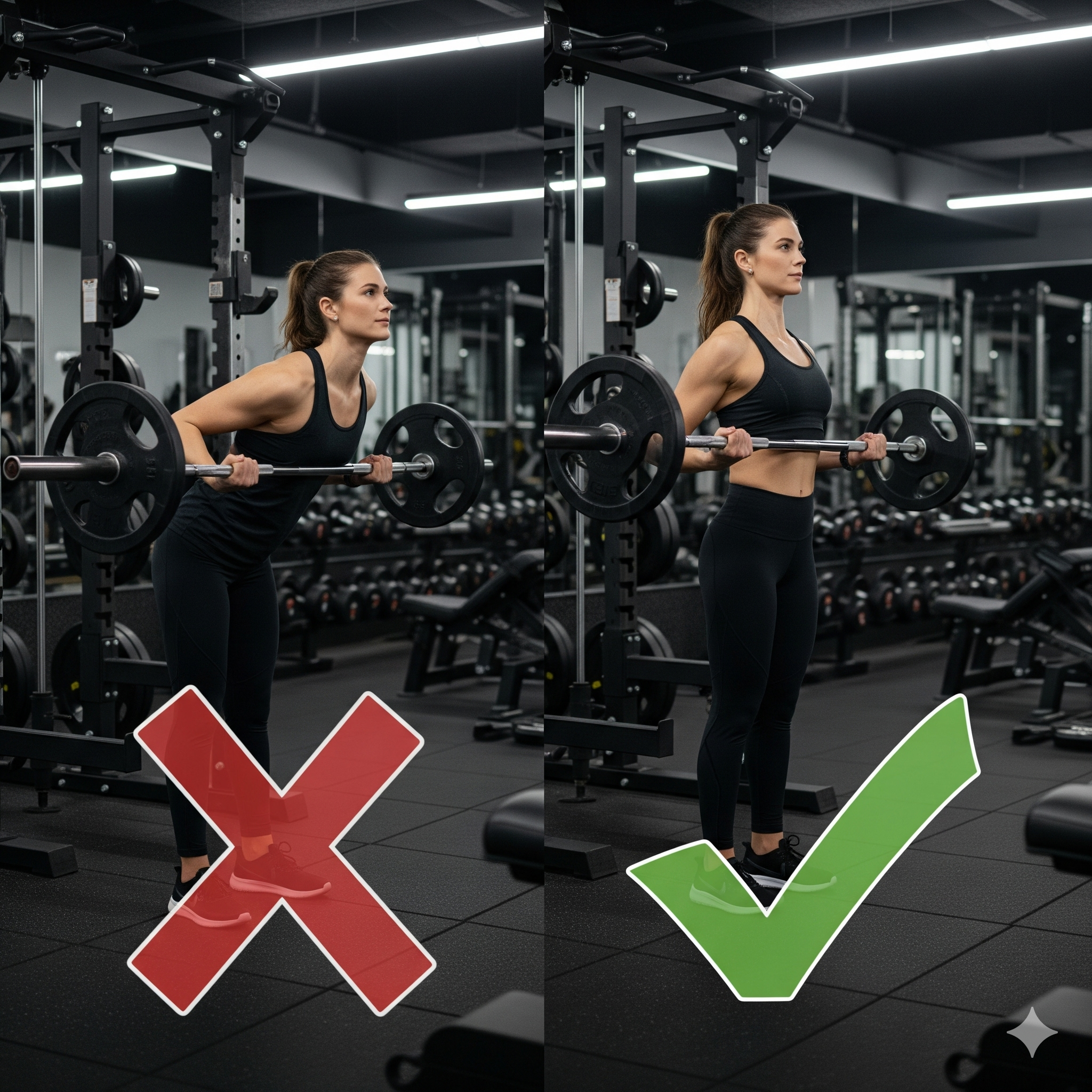
This image was created with AI to avoid copyright issue while conveying the idea of this article. :-)
We've all been there. You're at the gym, feeling good about yourself, when you see it happen. Maybe it's the person doing a bicep curl with their whole body, or the one trying to lift a weight that's way too heavy. We might even look back on our own early workout attempts and cringe a little. These moments, which we might call "fitness fails," aren't just funny stories; they are important lessons in disguise. Everyone makes mistakes when they're learning something new. What matters is that you learn from them and use them to get better.
Here are some of the most common workout "fails" that people make, and how you can easily fix them to see real progress and avoid injury.
Fail #1: Bad Form
This is probably the most common mistake. People often rush to lift heavier weights or go faster without paying attention to how they're moving. A squat with a hunched back or a push-up with your hips sagging can lead to serious injury and keeps you from working the right muscles.
The Fix: Before you add any weight or speed, focus on mastering the correct form. Watch videos from trusted experts, ask a trainer for help, or even record yourself on your phone to see what you're doing. It’s far better to do 5 perfect squats than 20 sloppy ones.
Fail #2: Skipping the Warm-Up
You walk into the gym and want to get right to it. You jump on the weights or the treadmill and start your workout cold. Just like a car engine needs to warm up, your muscles and joints need to get ready for exercise. Skipping this step can lead to muscle pulls and strains.
The Fix: Spend 5 to 10 minutes doing a warm-up. This can be as simple as light cardio (like a brisk walk or a slow jog) followed by some dynamic stretches (like leg swings or arm circles). This gets blood flowing to your muscles and prepares your body for the work ahead.
Fail #3: Not Taking Rest Days
You're motivated and want to work out every single day. While that's great for your mind, it's not so great for your body. Your muscles don't get stronger when you're working out; they get stronger when you're resting and recovering. Overworking yourself can lead to burnout, poor performance, and a higher risk of injury.
The Fix: Plan at least one or two rest days each week. On these days, you can still be active with light activities like a walk or gentle stretching, but you should avoid intense exercise. Think of rest days as an essential part of your training.
Fail #4: Obsessing Over the Scale
You weigh yourself every morning, and if the number doesn't go down, you feel defeated. The scale can be a very misleading tool. Your weight can change daily because of things like water retention, time of day, or the food you've eaten. Plus, if you're building muscle, the scale might not budge—or it could even go up!
The Fix: Put the scale away for a while. Focus on other signs of progress that are much more meaningful. Are your clothes fitting better? Do you have more energy? Are you able to lift heavier weights or run for longer? These are all much better ways to measure your success.
Fail #5: Getting Stuck in a Routine
You found a workout you like, and you do it every single time you're at the gym. While consistency is good, your body is smart. It will quickly get used to the same routine, and your progress will slow down. This is called a "plateau."
The Fix: Mix things up every few weeks. Try a new exercise, add more weight, increase your reps, or change the order of your workout. This "muscle confusion" will challenge your body in new ways and help you continue to see results.
Fail #6: Thinking Nutrition is a Separate Thing
Some people believe they can "out-train" a bad diet. They work out hard but then eat whatever they want, thinking the workout will cancel it out. The truth is, nutrition and exercise are two sides of the same coin. You can't reach your full potential if you're not fueling your body correctly.
The Fix: Think of food as fuel. Try to build your meals around whole foods: lean protein, fruits, vegetables, and whole grains. You don't have to be perfect all the time, but making smart food choices will greatly increase your results.
Don't let these "fails" discourage you. The only real failure is giving up. The moment you recognize a mistake and decide to change it, you’ve already won. Remember, every expert was once a beginner. By learning from these common mistakes, you're not just getting fitter; you're becoming a smarter, more capable version of yourself.