

Cold Plunge vs. Cold Shower: Is It Worth the Hype?
is it actually worth the hype? Or is it just another fitness fad? The best recovery tool is the one you will actually use.

This image was created using AI to avoid copyright issues alongside a photo by Tobias Oetiker on Unsplash
If you have spent any time on the internet lately, you have probably seen someone shivering in a tub full of ice. From professional athletes to tech CEOs, it seems like everyone is obsessed with "Cold Exposure." They claim it does everything from burning fat to curing brain fog. But if you’re standing in your bathroom in January, the last thing you probably want to do is jump into freezing water.
So, is it actually worth the hype? Or is it just another fitness fad that will disappear by next year? In 2026, the science is becoming very clear: cold exposure is a powerful tool, but you don't need a $5,000 ice tub to get the benefits. You can build your own recovery legacy right in your own shower.
The Science of the "Healthy Stress"
Cold water works through a process called "hormesis." This is the idea that a small amount of stress can actually make your body stronger. When you hit cold water, your body goes into a temporary state of shock. Your heart rate rises, your breath quickens, and your brain releases a massive flood of norepinephrine and dopamine.
This "chemical cocktail" is why people feel so amazing after a cold plunge. Dopamine levels can stay elevated for several hours, giving you a steady sense of focus and calm that a cup of coffee can't match. Over time, this practice trains your "Vagus Nerve" (your body’s internal stress manager) to stay calm even when things are difficult.
Cold Plunge: The Pro Version
A true cold plunge usually involves sitting in water that is between 40 and 55 degrees Fahrenheit for three to five minutes. Because you are totally submerged, the pressure of the water helps move blood from your limbs toward your heart. This is excellent for reducing inflammation after a heavy workout.
However, the cold plunge is intense. It requires a lot of mental toughness and, usually, a lot of ice or a specialized machine. For the average person, this can be a high "friction" habit that is hard to keep up during a busy work week.
The Cold Shower: The Practical Hero
If you aren't ready for an ice bath, the cold shower is your best friend. While it isn't as intense as a full plunge, it still provides about 70% to 80% of the mental benefits.
The best way to start is the "30-Second Blast." Take your normal warm shower, and for the last 30 seconds, turn the handle all the way to cold. Focus on your breathing. Don't gasp; try to take slow, deep breaths through your nose. This teaches your brain that you are safe even when you are uncomfortable. This mental "grit" translates directly to your workouts and your work life.
Which One Should You Choose?
The best recovery tool is the one you will actually use. If you have access to a cold plunge and love the challenge, go for it! But if you are a busy professional just looking for an edge, a daily cold shower is more than enough to see a difference in your mood and your recovery.
This January, don't be afraid of the cold. Use it as a tool to sharpen your mind and reset your body. Whether it is 30 seconds or five minutes, that bit of "healthy stress" is building a more resilient version of you.

Hot & Cold Recovery: The Simple Science Behind Ice Baths, Saunas, and Your Fitness
Recovery is a skill. By strategically using hot and cold exposure, you move beyond just resting and actively accelerate your body's ability to repair, adapt, and get stronger for your next session.
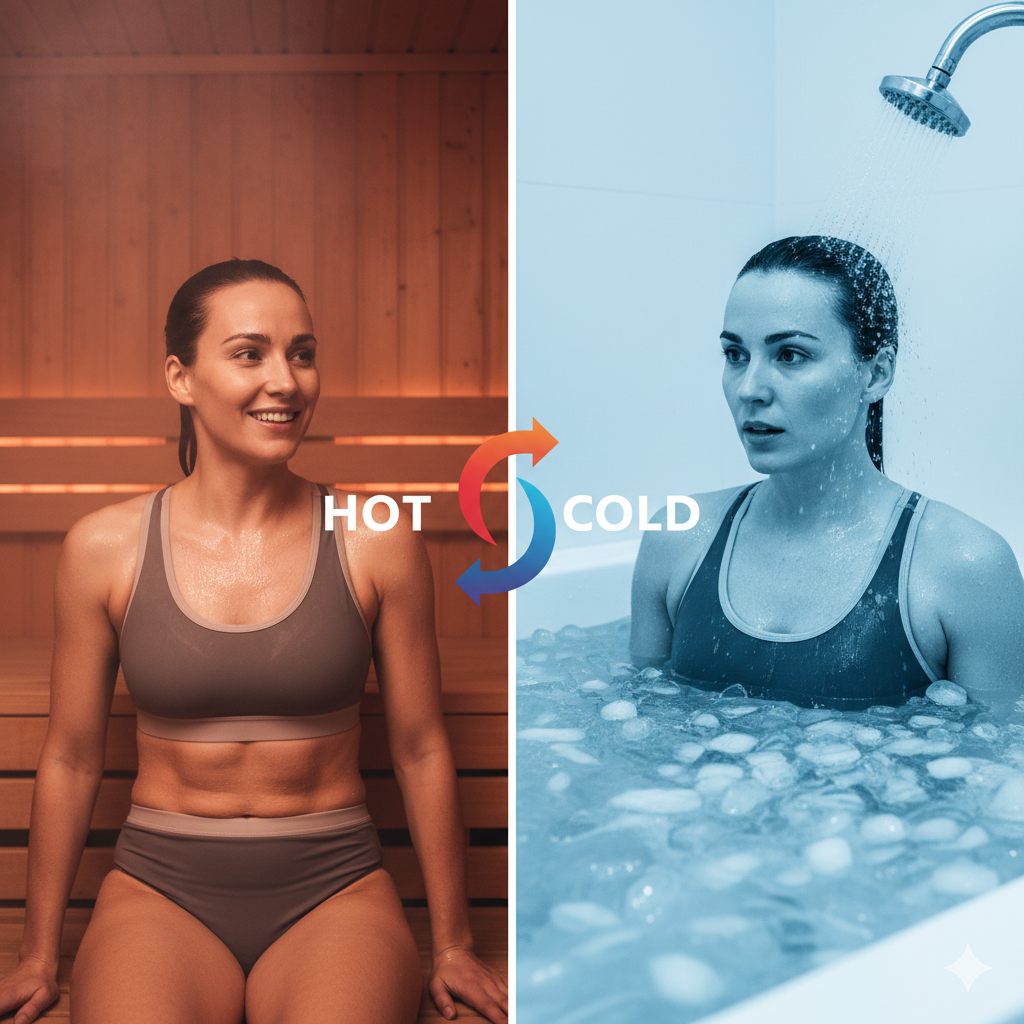
This image was created using AI to avoid copyright issues while conveying the context of this article.
In the world of recovery, two things have stood the test of time, moving from ancient rituals to modern athletic staples: heat (saunas) and cold (ice baths or cryotherapy). These two extremes, often used together, are not just painful or relaxing treatments; they are powerful tools that activate specific biological responses to help you recover faster, reduce soreness, and even boost your mood.
While you don't need to build a sauna in your backyard, understanding the science behind hot and cold exposure can help you use simple versions (like a cold shower or a warm bath) to dramatically improve your results.
Here is a breakdown of the simple science behind hot and cold recovery and how to use them effectively.
The Power of Cold (Ice Baths, Cold Showers)
Cold exposure works primarily by creating a temporary, controlled shock to your system.
1. Reduces Inflammation and Soreness
The Science: Cold causes your blood vessels to constrict (tighten). When you get out of the cold, the vessels rapidly dilate (open up), creating a strong "flush" that moves metabolic waste (the byproducts of hard exercise) out of the muscles and brings fresh, oxygenated blood back in.
The Benefit: This process is thought to dull pain signals and reduce the inflammation that causes Delayed Onset Muscle Soreness (DOMS).
2. Boosts Mood and Focus
The Science: The shock of cold water activates the sympathetic nervous system and triggers a release of mood-boosting hormones like norepinephrine and dopamine. It’s also a powerful vagus nerve stimulus (as discussed in an earlier article!), helping improve your stress response.
The Benefit: You feel alert, focused, and often experience an elevated mood immediately afterward.
How to Use Cold:
Best Time: Immediately or soon after a very intense, high-damage workout (like a long run or heavy leg day).
Duration: Start with a 30–60 second blast of cold water at the end of your usual shower. For a true ice bath (if you choose to try one), aim for 3–5 minutes at 40-59°F.
The Power of Heat (Saunas, Hot Baths)
Heat exposure works in the opposite way, focusing on promoting blood flow and relaxation.
1. Enhances Blood Flow and Relaxation
The Science: Heat causes blood vessels to dilate (open), significantly increasing blood flow. This carries vital nutrients and oxygen to tired muscles and helps flush out toxins.
The Benefit: The heat promotes muscle relaxation, reduces tension, and creates a calming effect on the nervous system.
2. Supports Endurance and Cellular Health
The Science: Consistent heat exposure (especially regular sauna use) can increase your body’s production of Heat Shock Proteins (HSPs), which help repair damaged proteins and fight cellular stress. Some studies suggest heat exposure can also improve blood plasma volume, which aids in endurance.
The Benefit: Better muscle recovery and potential endurance gains over time.
3. The Longevity Factor: Reduced All-Cause Mortality
The Science: A landmark 20-year study of Finnish men found a powerful association between sauna frequency and longevity. Those who used a sauna 4 to 7 times per week had a 40% lower risk of death from any cause (all-cause mortality) compared to those who used it only once a week. This benefit is thought to be tied to improved cardiovascular health and reduced inflammation.
The Benefit: Regular heat exposure, particularly through consistent sauna use, may be one of the simplest, most relaxing ways to protect your heart and support a longer, healthier lifespan.
How to Use Heat:
Best Time: 30 minutes to a few hours after your workout, or on a rest day. Caution: Avoid intense heat immediately after a strength workout, as the extreme heat may interfere with some muscle-building signals.
Duration: 15–30 minutes in a sauna (if available) or a warm bath. Always hydrate well before and after.
The Hot-Cold Contrast (The Best of Both Worlds)
Combining hot and cold (Contrast Therapy) is thought to create a powerful "pumping" effect—the vessels constrict in the cold, then dilate in the heat, driving fresh blood in and flushing waste out.
How to Try It: After your workout, alternate between 1–2 minutes in a cold shower (as cold as you can stand) and 2–3 minutes in a hot shower, repeating 3–4 times. Always finish on the cold cycle.
Recovery is a skill. By strategically using hot and cold exposure, you move beyond just resting and actively accelerate your body's ability to repair, adapt, and get stronger for your next session.