
The Human Element: Why AI Workouts Still Need a Human Coach
The fitness industry has spent years trying to turn health into a pure tech product. But information is rarely the bottleneck; consistency is. Leave the strategy, the empathy, and the execution to a human relationship.
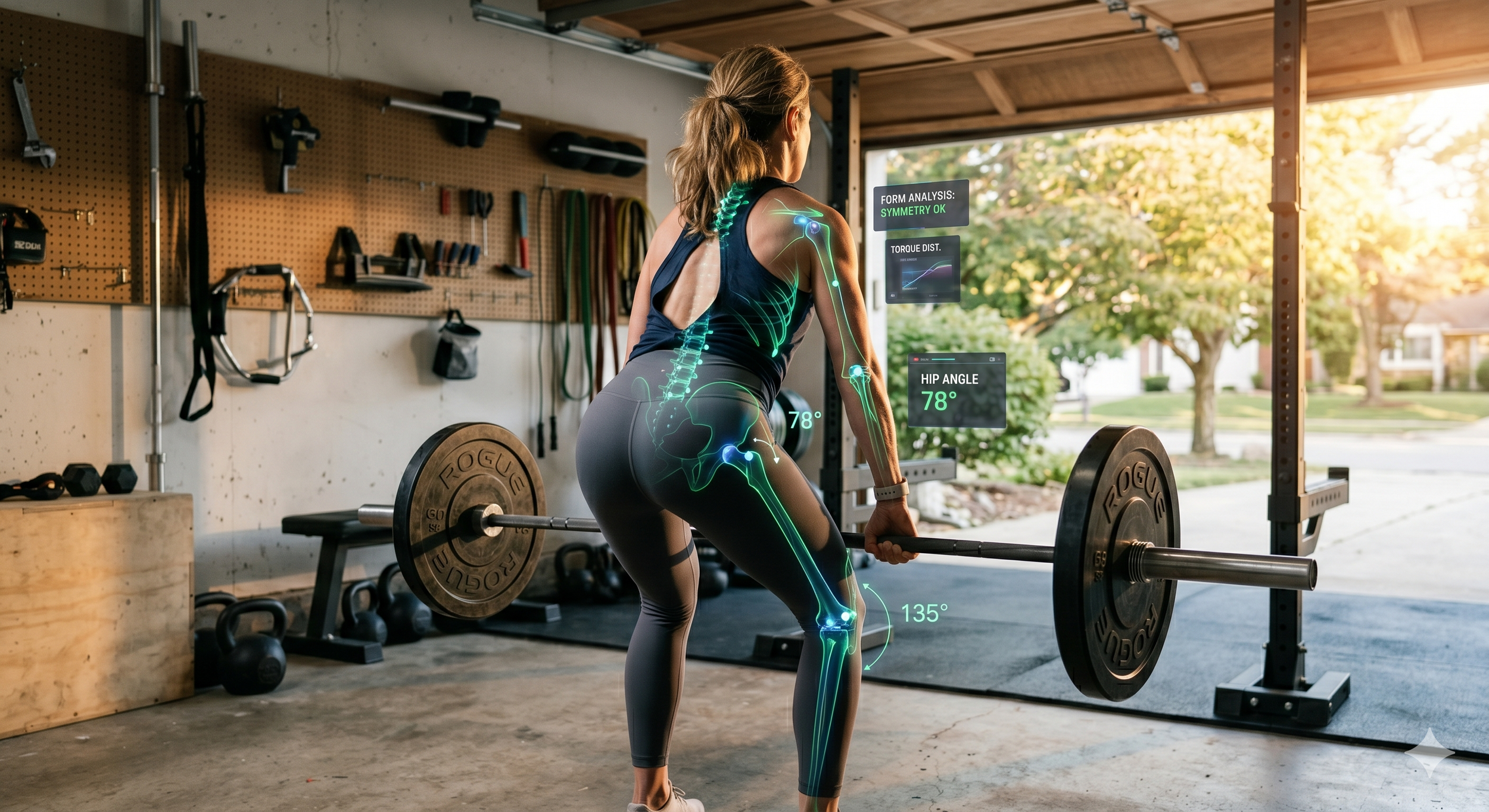
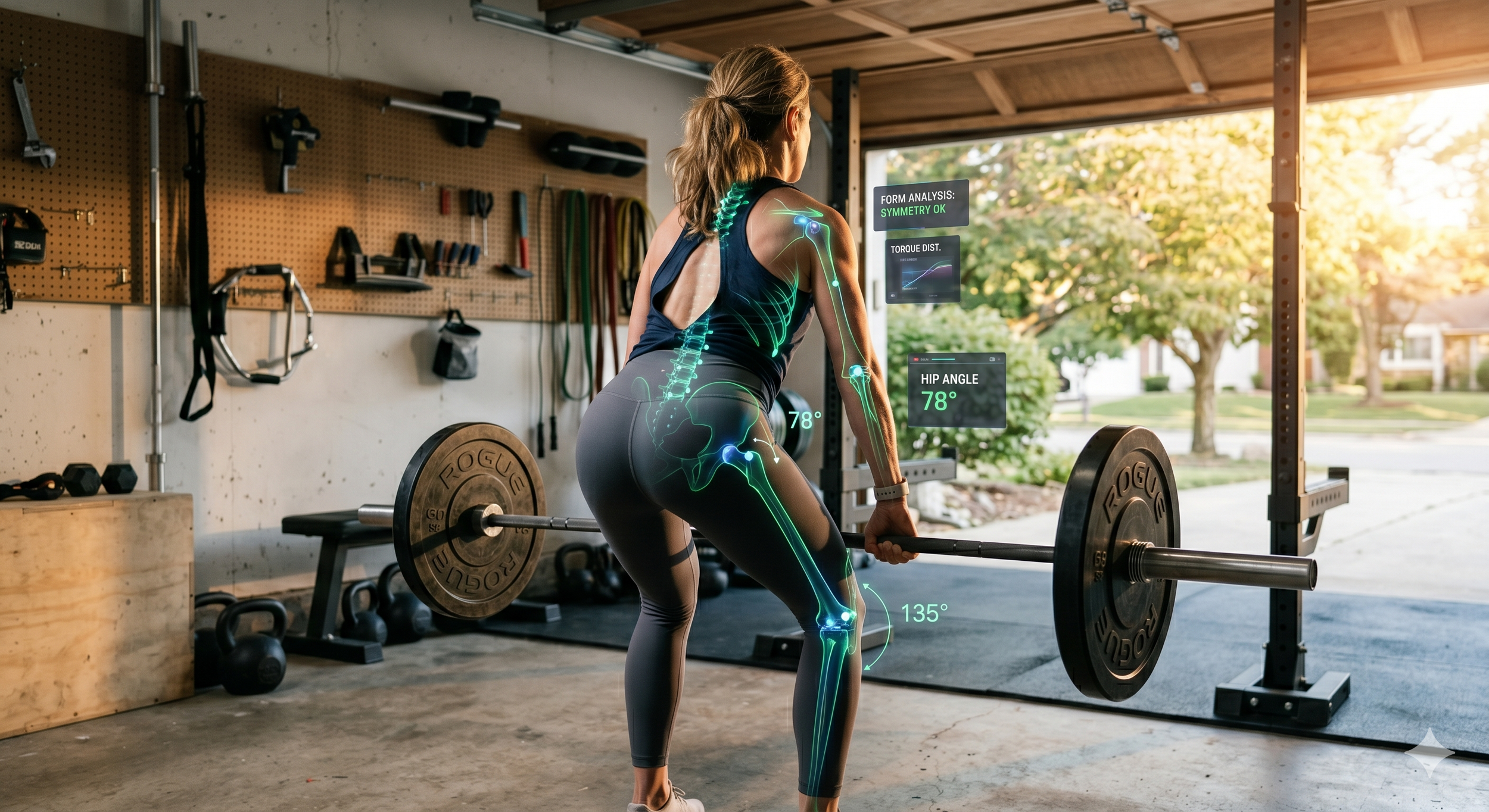
This image was created using AI to avoid copyright issues while conveying the context of this article.
Artificial intelligence can build a workout program in three seconds flat. If you log into any major AI tool and type, "Give me a three-day strength routine for a busy manager," it will instantly spit out a neatly formatted list of exercises, sets, and reps. It costs nothing, it happens immediately, and on paper, the workout looks completely reasonable.
Because of this seamless technology, many professionals are wondering if the traditional fitness coach is obsolete. If a computer can calculate your caloric needs and design your lifting blocks, why would you invest your hard-earned money in a human partnership?
The answer lies in the massive gap between information and execution. While software is exceptional at processing data, it is entirely blind to the human experience. For a busy executive navigating high-stakes career demands, a family, and a fluid schedule, information is rarely the bottleneck. Consistency is.
To understand why automated programs eventually fail high-performers, you must look at where the math of artificial intelligence collides with the messy reality of real life.
AI Cannot Read the Context of Stress
An algorithm views your body as a closed mathematical equation. It assumes that if you consume a specific number of calories and lift a specific amount of volume, a predictable physical result will occur. It operates under the assumption of a perfect, sterile environment.
But your life does not happen in a vacuum. Your body does not distinguish between the physical stress of a heavy barbell and the mental stress of a volatile market or a difficult corporate restructure. Stress is cumulative.
When you sit down with a high-stakes week ahead of you, your nervous system can easily enter a state of chronic fight-or-flight. If you open an automated app on a morning when your sleep is completely wrecked and your mental fatigue is at an all-time high, the app will still tell you to go break your personal record on the deadlift. It doesn't know context.
A human coach, however, looks at the macro picture. During your regular check-ins, a coach can look at your data trends, listen to the tone of your voice, and say, "Your career is demanding 100% of your energy right now. Pushing your body to the limit this week will only lead to burnout or injury. We are pivoting your track to focus on movement consistency, joint recovery, and stress management." That level of strategic nuance cannot be automated.
The Illusion of Algorithmic Accountability
A software notification is not accountability. When your phone flashes a pop-up alert at 6:00pm saying, "Time to log your dinner!" or "Did you complete your workout?", what do you do? You swipe it away. You mute the notification. You ignore it because there are zero social consequences to disappointing an app dashboard.
True accountability requires a relational contract. It relies on knowing that a real human being—someone who understands your goals, knows your name, and is genuinely invested in your legacy—is going to review your tracking trends at the end of the week.
When you know your coach is looking at your consistency metrics, your psychology changes. You don't make the decision to skip a workout based solely on your immediate mood; you make it based on the partnership you have established. A human coach provides the guardrails that prevent a stressful afternoon from turning into a three-month fitness hiatus.
Diagnostic Nuance vs. Automated Guesswork
Technology like Demotu allows us to map out your structural movement patterns with extreme digital precision. It gives us a beautiful roadmap of your joint mechanics, muscle imbalances, and physical baselines. But the data itself is only half the battle.
An automated tool can point out that your right hip drops during a bodyweight squat, but it cannot ask you about the old college football injury that caused you to favor that side for two decades. It cannot watch a video of your lifting form and notice that you are rushing through your reps because you are mentally distracted by an incoming email.
Interpretation requires human expertise. A real coach bridges the gap between what the technology measures and how you actually feel. They help you integrate the data into sustainable habits that respect your limitations, rather than forcing your body to adapt to a cold, unyielding code.
The Ultimate Competitive Advantage
The fitness industry has spent years trying to turn health into a pure tech product. But the high performers who maintain their physical capacity into their 40s, 50s, and 60s do not do it because they found a better app. They do it because they built a sustainable system backed by an expert human partner.
Use technology to organize your metrics, track your habits, and assess your movement. But leave the strategy, the empathy, and the execution to a human relationship. That is the only way to build a physical foundation that lasts.

Summer Kickoff: The 30-Day Foundation Plan
Summer isn't a reason to put your goals on hold; it is the perfect time to build the foundation that will support you for the next 30 years.

This image was created using AI to avoid copyright issues while conveying the context of this article.
As we approach the end of May, many people start to feel a sense of urgency. The arrival of summer usually brings a mix of excitement and anxiety. We think about upcoming vacations, family reunions, and warmer weather, and we realize that the fitness goals we set in January might have slipped through the cracks. The typical reaction is to look for a "30-day shred" or a crash diet to fix the problem as quickly as possible.
However, at Legacy Fitness, we do things differently. We aren't interested in a 30-day "sprint" that leaves you exhausted and right back where you started by July. Instead, we are using the month of June to launch our 30-Day Foundation Plan. This is not a temporary fix; it is a strategic on-ramp. It is a 30-day period designed to install the systems, habits, and mindset required to manage your health for the rest of your life.
Why a "Foundation" Matters
In construction, the foundation is the most critical part of the build, even though it is often invisible once the house is finished. If the foundation is weak, it doesn't matter how expensive the windows are or how beautiful the paint looks; the structure will eventually fail.
Most fitness journeys fail because they are built on the "sand" of willpower and temporary motivation. Our 30-Day Foundation Plan is built on the "concrete" of biology and systems management. During these first 30 days, we focus on three core pillars: Metabolic Baseline, Mechanical Tension, and Decision Automation.
Phase 1: Establishing Your Metabolic Baseline
You cannot manage what you do not measure. The first week of the Foundation Plan is about data. We move away from the guesswork of "eating healthy" and move toward the precision of knowing your numbers.
We help you establish your Basal Metabolic Rate (BMR) and determine your daily "calorie budget." We focus on one primary metric: Protein Density. By ensuring you are hitting your protein targets from day one, we protect your muscle mass and stabilize your hunger signals. This isn't about restriction; it is about proper allocation of your nutritional resources. When you know your baseline, the stress of "not knowing if this is working" disappears.
Phase 2: Installing Mechanical Tension
Once the nutrition system is in place, we focus on your training. For many of our clients, the barrier to exercise is a lack of time. In the Foundation Plan, we install the "Micro-Workout" system. These are short, high-intensity resistance training sessions that can be done anywhere, whether you are at home, in a hotel, or at the office.
The goal here isn't to spend hours in the gym. The goal is to send a consistent signal to your body that your muscle is an essential asset. We focus on the big, compound movements that provide the highest return on investment. By the end of thirty days, strength training becomes a "non-negotiable" part of your identity, rather than an item on your to-do list that keeps getting pushed to tomorrow.
Phase 3: Decision Automation
The final phase of the 30-day on-ramp is about removing friction. The reason people "fall off the wagon" is usually due to decision fatigue. They get busy, they get tired, and they make poor choices because those choices are the easiest.
We help you automate your health. This involves "batching" your nutritional decisions and setting up your environment for success. We help you create a "Travel Protocol" and a "Social Setting System" so that you never have to wonder what to do when life gets complicated. By the end of June, the healthy choice becomes the default choice. You are no longer "trying" to be fit; you are simply running a system that works.
The Power of the Cohort
One of the most effective parts of the 30-Day Foundation Plan is the Legacy Coaching Cohort. While our coaching is 100% online and personalized to you, being part of a group of like-minded high-performers adds a layer of accountability that is hard to find elsewhere.
You are surrounded by people who share your values and your challenges. You are all installing the same systems at the same time. This community provides the social "proof" that the system works, and it gives you a place to share wins and troubleshoot obstacles. It is the difference between trying to figure it out on your own and having a professional team and a peer group backing you up.
Your June ROI
If you start your 30-Day Foundation in June, your July will look completely different. You won't just be "lighter"; you will be more capable. You will have more energy for your family, more focus for your business, and a newfound confidence in your ability to lead your own body.
Most importantly, you will have moved past the "dieting" mindset forever. You will have the tools, the data, and the support to manage your health with the same excellence you bring to your career. Summer isn't a reason to put your goals on hold; it is the perfect time to build the foundation that will support you for the next 30 years.
Ready to Build Your Foundation?
Our June Coaching Cohort is now forming. We are looking for high-performers who are ready to stop the cycle of temporary fixes and start building a permanent legacy of health.

The "I’m Too Busy to Log" Myth: Time-Saving Hacks for Tracking Your Progress
We lead busy lives. Between demanding careers, family commitments, and trying to squeeze in a workout, adding "data entry" to the list can feel like the straw that breaks the camel's back.

This image was created using AI to avoid copyright issues while conveying the context of this article.
"I just don't have the time."
In the world of fitness coaching, this is the most common reason given for skipping nutrition and workout logs. We lead busy lives. Between demanding careers, family commitments, and trying to squeeze in a workout, adding "data entry" to the list can feel like the straw that breaks the camel's back.
But here is the reality: logging doesn't take as much time as you think it does. In fact, most people spend more time scrolling through social media in a single morning than they would need to log an entire day of food and training. The "busy" excuse is usually less about time and more about a lack of a system.
If we want to reach your goals in March, we have to stop viewing logging as a chore and start seeing it as a high-speed tool. Here are five time-saving hacks to help you log your data in less than five minutes a day.
1. Use the "Recent" and "Copy" Functions
Most people are "creatures of habit." You likely eat the same four or five breakfasts and lunches on a rotating basis. You don't need to search for "eggs" and "spinach" every single morning.
In almost every tracking app, there is a "Recent" or "Frequent" list. Better yet, use the "Copy from Yesterday" function. If you ate the same chicken salad today that you had yesterday, logging it should take exactly two taps of your thumb. Total time: 5 seconds.
2. The "Barcode Scanner" is Your Best Friend
Stop typing. If your food comes in a package, even a healthy one like a bag of frozen vegetables or a container of Greek yogurt, use the barcode scanner on your phone. It automatically pulls in the calories and macronutrients without you having to search through a database of ten thousand different brands. Total time: 10 seconds.
3. Log Your Workout During Your Rest Periods
Some people try to remember their whole workout and log it when they get home. By then, they’ve forgotten the weight they used on the third set or how many reps they actually finished.
Instead, log your set immediately after you finish it while you are resting. You have 60 to 90 seconds of downtime anyway. Use 15 of those seconds to input your numbers. This ensures 100% accuracy and means that when you walk out of the gym, your "work" is already done. Total time: 0 extra minutes.
4. Pre-Log Your Day
If you know what you are going to eat for lunch and dinner, log it in the morning (or even the night before). This does two things:
It saves you from having to think about it later when you are tired.
It acts as a "budget." If you see that your planned dinner leaves you with 30 grams of protein to fill, you’ll know exactly what to grab for a snack in the afternoon.
5. Don’t Let "Perfect" Be the Enemy of "Done"
If you are at a restaurant and can't find the exact dish in your app, don't give up and skip the day. Find something close, or just log the main components (e.g., "6oz Grilled Chicken" and "Side Salad").
As your coach, I would much rather see a "close guess" than a blank page. A blank page tells me nothing. A "close guess" keeps your habit alive and gives us a ballpark figure to work with.
The ROI on Five Minutes
Think about the "Return on Investment" (ROI) here. If spending five minutes a day logging ensures that the 60 minutes you spend in the gym actually produces results, isn't that a smart use of time?
Logging isn't about adding a new job to your day. It’s about making sure your hard work actually pays off. In March, let's stop saying we are "too busy" and start being too smart to guess.

Why Data is Your Friend: The Hidden Psychology of Logging Your Food and Workouts
If you want to change your body, you have to change your relationship with the truth.

This image was created using AI to avoid copyright issues while conveying the context of this article.
If you want to change your body, you have to change your relationship with the truth. Most people think they know how much they eat and how hard they train. But research shows that, on average, people underestimate their calorie intake by about 30% and overestimate their physical activity by nearly the same amount.
This isn't because people are lying. It’s because our brains are designed to be efficient, not accurate. We remember the salad we had for lunch, but we forget the three handfuls of almonds we grabbed while making dinner. We remember the heavy set of squats, but we forget the extra-long rest periods spent scrolling on our phones.
This is where logging comes in. Logging your nutrition and workouts isn't just about "counting numbers." It is about creating a clear, honest picture of your reality so that we can actually make progress.
The Psychology of the Log
When you write something down, it changes how you think about it. This is a psychological concept called "self-monitoring." By tracking your food and gym sessions, you move your actions from your subconscious mind to your conscious mind.
Awareness precedes change: You cannot fix a problem you haven’t identified. When you log your food, you start to see patterns. You might notice that every Tuesday you are starving by 4:00 PM, or that you always skip your last exercise on leg day.
The "Pause" Button: The act of opening an app or a notebook to log a snack creates a "micro-pause." In that moment, you move from impulsive eating to intentional eating. It gives you a second to ask: "Does this actually help me reach my goal?"
The "Why" for the Coach
As your coach, I am essentially a pilot trying to fly a plane. Your workout and nutrition logs are my instrument panel. If the dials are blank, I am flying blind.
If you tell me, "I’m eating healthy but not losing weight," I don't have enough information to help you. Are you eating too much "healthy" fat? Are you missing your protein targets? Is your "healthy" lunch secretly packed with hidden calories?
When you log, I can see the whole story. I can see if your energy is dipping because you aren't eating enough carbs before your workout. I can see if your strength is stalling because you haven't increased your weights in three weeks. Data allows us to make small, surgical adjustments instead of wild guesses.
Getting Over the "I Don't Want to See It" Phase
Many clients stop logging when they have a "bad" day. They feel guilty, so they hide the evidence. But that is exactly when you should log.
A log is not a judge; it is a map. If you get lost on a road trip, you don't throw away the GPS. You use it to find your way back to the main road. If you eat a meal that wasn't on the plan, log it anyway. It takes the power away from the "slip-up" and turns it into a simple data point.
Start Small
If logging feels overwhelming, remember that it doesn't have to be perfect to be effective. Start by logging just your protein and your main lifts. As you get faster at it, add the rest.
In March, let's commit to the data. Let’s stop guessing and start knowing. When we have the facts, we have the power to change the outcome.