
The Science of the 30-Minute Window: Why Intensity Beats Duration
For a busy executive, brevity is not a compromise. It is a biological strategy.
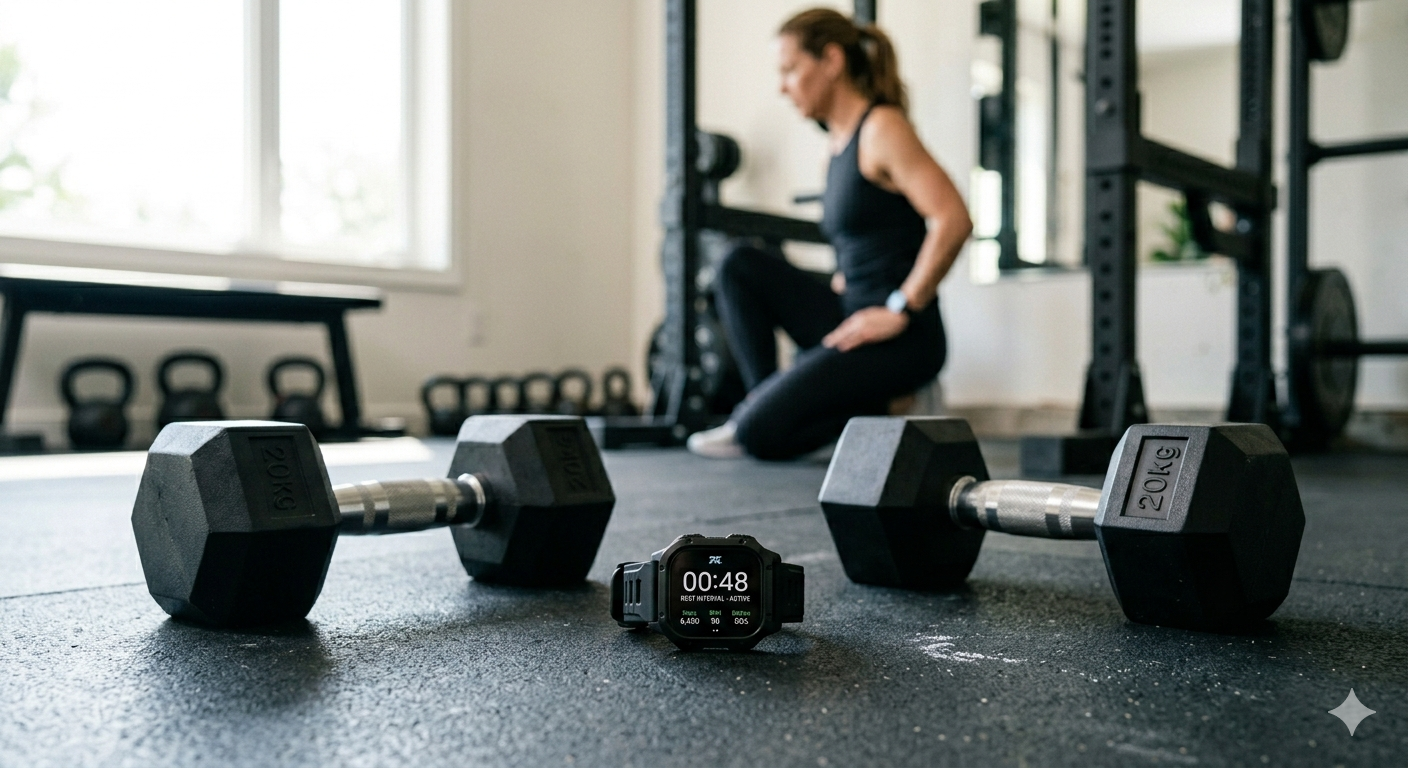
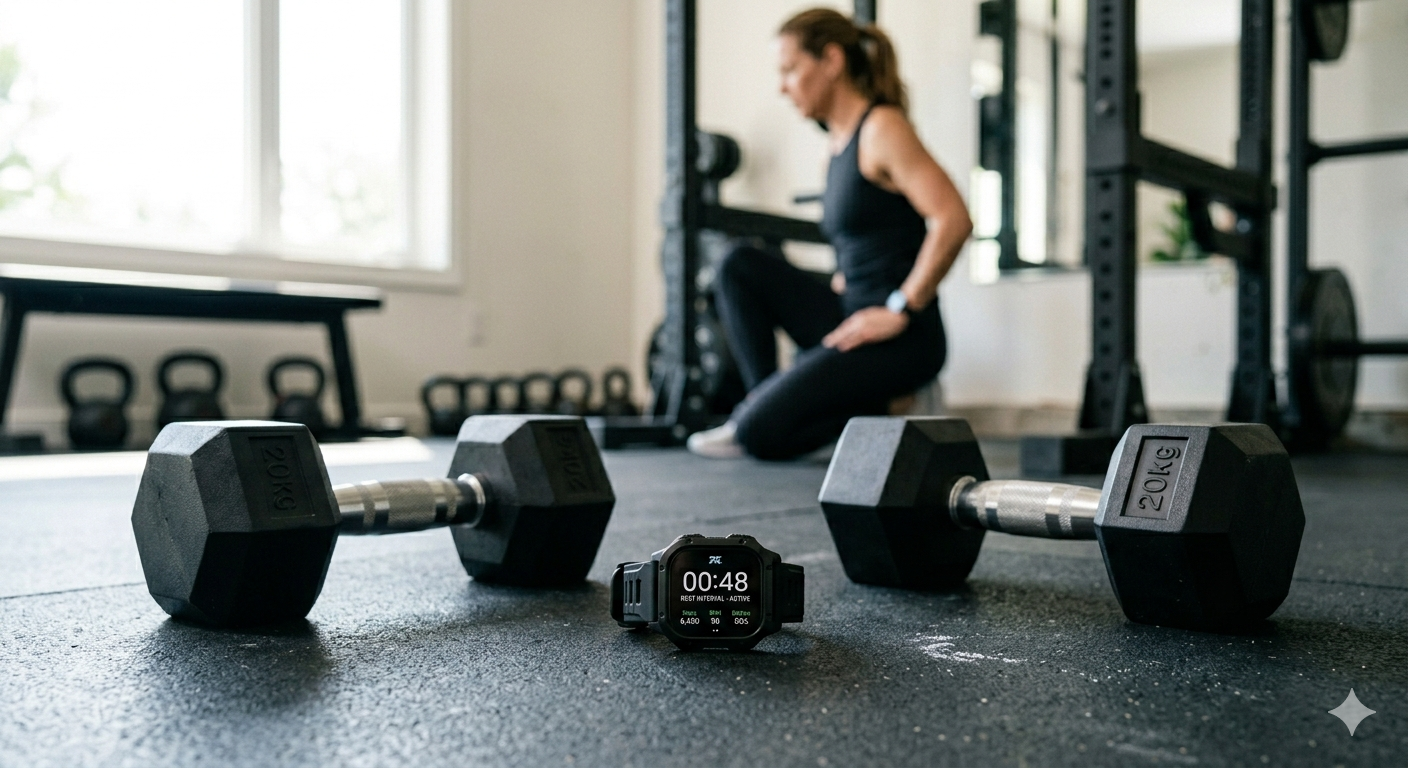
This image was created using AI to avoid copyright issues while conveying the context of this article.
Many professionals carry a lingering sense of guilt when they cannot spend an hour in the gym. You have likely been conditioned to believe that a truly effective workout requires a massive investment of time. If you only have 30 minutes between a late-afternoon board meeting and a family obligation, a voice in your head says, "Why bother? Half an hour isn't enough time to get a real result."
So, you skip the session entirely. You treat fitness as an all-or-nothing proposition.
This mindset is based on an outdated, unscientific view of human physiology. Your body does not possess a time clock that activates results only after the 60-minute mark. Your muscles respond to biological triggers, structural tension, and metabolic stress. When you understand the science of human performance, you realize that a highly calculated, dense 30-minute training block can easily outperform a casual, distraction-filled hour in a commercial gym.
For a busy executive, brevity is not a compromise. It is a biological strategy. By shifting your focus from the duration of your workout to the quality of your physical stimulus, you can unlock massive fat loss, accelerate muscle retention, and protect your schedule.
The Power of Density and Tension
To understand why a short workout can be superior, you must understand the concept of training density. Density is the amount of physical work you perform relative to the total time you spend in the environment.
Most people spend an hour in the gym, but their actual training density is incredibly low. They perform a set of an exercise, scroll through their smartphone notifications for three minutes, wander over to a water fountain, and casually chat with a peer. Out of a 60-minute visit, their muscles are under actual tension for less than ten minutes. The rest of the block is simply administrative waste.
A time-boxed, 30-minute routine removes the fluff. By utilizing structured pairing techniques, such as supersets or alternating push-and-pull movements, we keep your body in a state of continuous, managed output. You perform an upper-body pressing movement, and while those specific muscle fibers recover, you immediately transition into a lower-body pulling movement. Your rest periods are calculated with a stopwatch. This approach ensures your muscles experience optimal structural tension in half the time, maximizing your physical return on investment.
Triggering the Metabolic Afterburn
A major benefit of high-efficiency training is a physiological phenomenon known as Excess Post-Exercise Oxygen Consumption, or EPOC. In the fitness world, this is frequently referred to as the "metabolic afterburn."
When you perform a long, slow cardio session or a low-intensity workout, your body only burns energy while you are actively moving. The moment you step off the treadmill, your metabolic rate drops back to its baseline.
However, when you condense high-yield compound movements like squats, rows, and presses into a tight, intense 30-minute time box, you disrupt your body's cellular homeostasis. You create an oxygen deficit that your body must actively repair over the next 24 to 48 hours. Long after you have closed your coaching application, showered, and walked into a high-stakes business dinner, your metabolism remains elevated. Your body is continuously consuming energy simply to restore its biological balance, turning a brief time window into a multi-day fat loss engine.
Recruiting the Right Muscle Fibers
Your body houses different types of muscle tissue designed for distinct tasks. Slow-twitch fibers are built for endurance, like walking or sitting in an office chair. Fast-twitch fibers, or high-threshold motor units, are built for power, lean appearance, and metabolic output. These are the specific fibers that create a dense, capable, and athletic physique.
To recruit these high-yield fast-twitch fibers, you do not need long, exhausting sessions. You need a specific threshold of physical intensity. By choosing weights that challenge your technique within 8 to 12 repetitions and keeping your rest transitions tight, you force your central nervous system to activate those high-priority fibers immediately.
At Legacy Fitness, we map out your routines using milestone data from your initial Demotu movement screens. This ensures that when we increase the density of your 30-minute window, your joint alignment remains flawless. You get all the biological benefits of high-intensity neural recruitment without the systemic wear-and-tear that leads to injury or chronic executive fatigue.
Stop Managing Time, Start Managing Stimulus
Your calendar is always going to be a competitive environment. If your health requires you to find massive, open-ended gaps in your day, it will always remain a variable liability. Stop measuring the success of your fitness journey by how long you sit inside a gym facility. Focus on the science of the time box. When you maximize density, control your recovery transitions, and trigger the metabolic afterburn, thirty minutes isn't just enough time—it is the optimal window for a high-performance life.

Why Online Fitness Plans Fail Busy Professionals (and How to Fix It)
Most online fitness plans are fundamentally engineered to fail busy professionals.

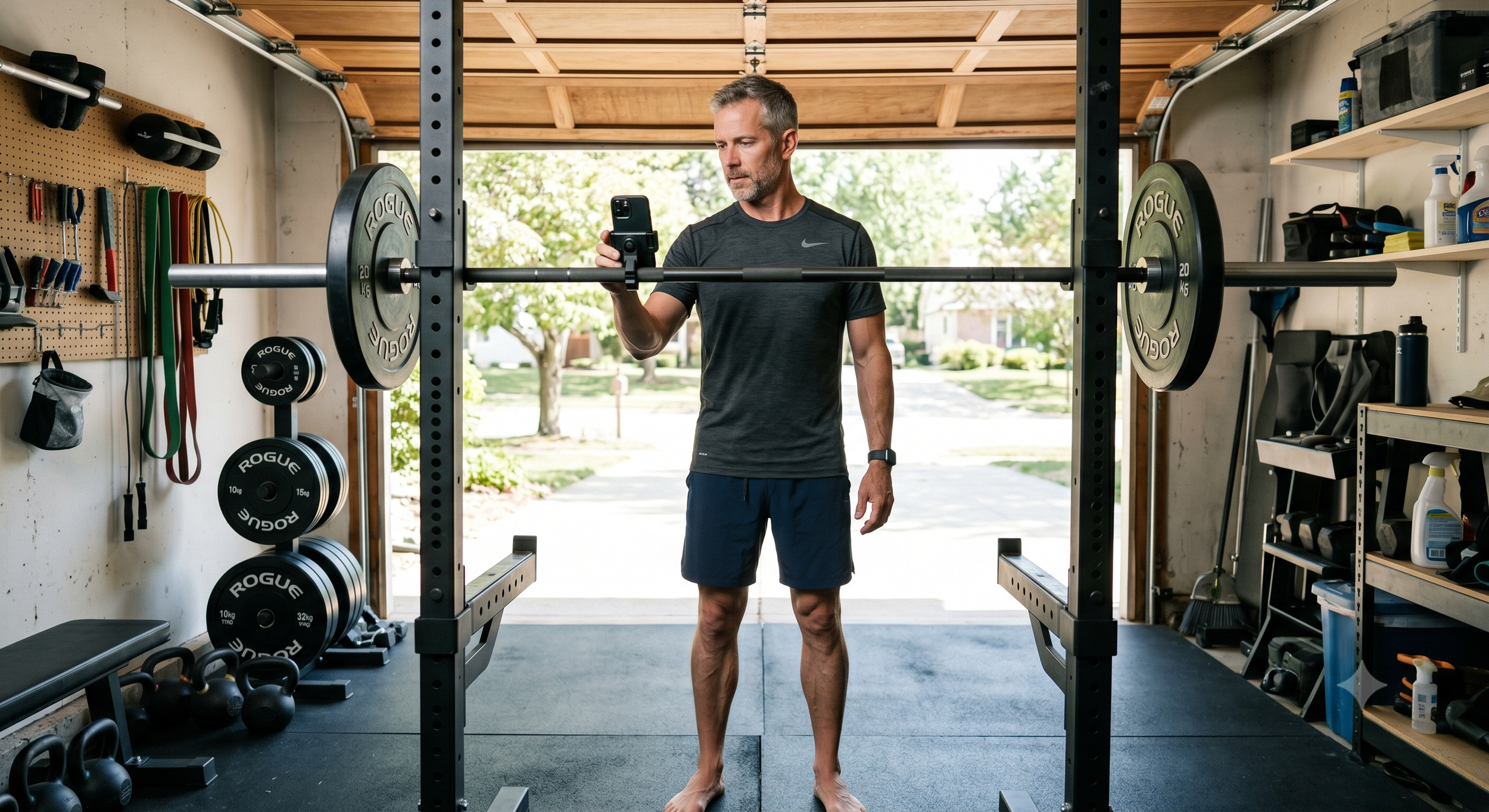
This image was created using AI to avoid copyright issues while conveying the context of this article. All screen images are simulated and may vary from actual interfaces.
Busy professionals are excellent at solving complex problems. In your career, you manage shifting timelines, allocate capital, and execute strategies under high pressure. You understand that success requires structure, systems, and clear operational frameworks.
Yet, when it comes to personal health, that systematic thinking often vanishes.
A professional decides it is time to optimize their body. They purchase a premium online fitness subscription, print out a beautiful PDF template, and log into a tracking dashboard. They start the week with massive momentum. But by Thursday, a project deadline slips. A client crisis forces a late-night dinner meeting. Flight delays scramble the calendar.
Within days, the fitness plan is abandoned. The professional defaults to a familiar mental narrative: "I just don't have the time to stick to a plan right now."
This failure has nothing to do with your willpower or your desire to be healthy. The truth is that most online fitness plans are fundamentally engineered to fail busy professionals. They are designed for a sterile life with unlimited time and zero external stress.
To build a physical foundation that lasts, you have to stop trying to force an unrealistic program into a complex life. You must address the three core operational breakdowns that destroy consistency, and implement a practical system to fix them.
Breakdown 1: The Failure of the Time Budget
Most online programs demand a massive, upfront time investment. They tell you that you must spend 60 minutes lifting weights four days a week, plus 30 minutes of cardio, plus meal prep.
This approach ignores the fundamental law of time management: you cannot spend time you do not have. For an executive, your time is already fully allocated. Forcing a rigid, 90-minute block into an already packed calendar creates immediate cognitive friction. The moment your schedule gets squeezed, the workout is the first item you cut.
The Fix: Minimum Effective Dose Time Boxing. You must shift your perspective from "ideal volume" to the "minimum effective dose." This means designing your physical routine around short, tightly managed time frames. A highly structured, thirty-minute strength session built around major multi-joint compound movements will yield eighty percent of your physical results in a fraction of the time. By treating your workouts like non-negotiable, time-boxed calendar appointments rather than open-ended tasks, you protect your consistency when your week becomes chaotic.
Breakdown 2: The Reliance on Willpower Instead of Architecture
Generic online plans provide information, but they completely ignore habit design. They give you a list of foods to eat and expect you to muster the daily discipline to resist corporate travel catering, high-stakes client dinners, and the fatigue of a 60-hour work week.
Willpower is a finite resource. By the time you reach 6pm after a day of intense decision-making, your mental energy is entirely depleted. If your fitness plan relies on you making optimal decisions when you are exhausted, it will fail every single time.
The Fix: Proactive Environmental Architecture. You must automate your decisions before the fatigue sets in. At Legacy Fitness, we help you build customized micro-habits natively into your daily workflow. This means using your coaching platform to track small, repeatable behaviors, like setting a strict evening wind-down routine to protect your sleep metrics, or pre-programming alternate minimal equipment travel tracks directly into your profile. By prepping your environment and having clear contingencies for hotel rooms and airport terminals, you remove the need for willpower. You simply execute a pre-loaded script.
Breakdown 3: The Void of Human Accountability
An app dashboard cannot care about you. When an automated program flashes a notification saying you missed a session, there are zero social or emotional consequences to closing the app. The digital void offers no resistance when you decide to quit.
Busy professionals are highly responsive to accountability in their careers; you report to boards, investors, and clients. But when you are left entirely alone with an automated app, you lack the core external feedback loop that human psychology requires to sustain a difficult behavioral change.
The Fix: Relational Strategic Partnership. True consistency requires a human connection. Technology like digital data dashboards and Demotu movement screening should be used to organize your metrics, but an expert human coach must drive the relationship. Knowing that a real strategist is looking at your weekly trends, analyzing your lifestyle compliance, and actively waiting for your check-in completely changes your psychological approach. A coach provides the objective mirror you need to navigate stressful quarters without letting your health disintegrate.
Systemize Your Health
You would never run a business by crossing your fingers and hoping for the best. Stop running your physical capacity that way. If past online programs have failed you, stop blaming your discipline. The system was broken, not the person. By shifting to a time-boxed, architected framework backed by deep human accountability, you turn fitness from an exhausting chore into a sustainable asset that fuels your life.
Why Your "Template" Workout is Why You’re Not Seeing Results
Legacy Fitness exists because we know that templates don't build legacies. Systems do. Habits do.
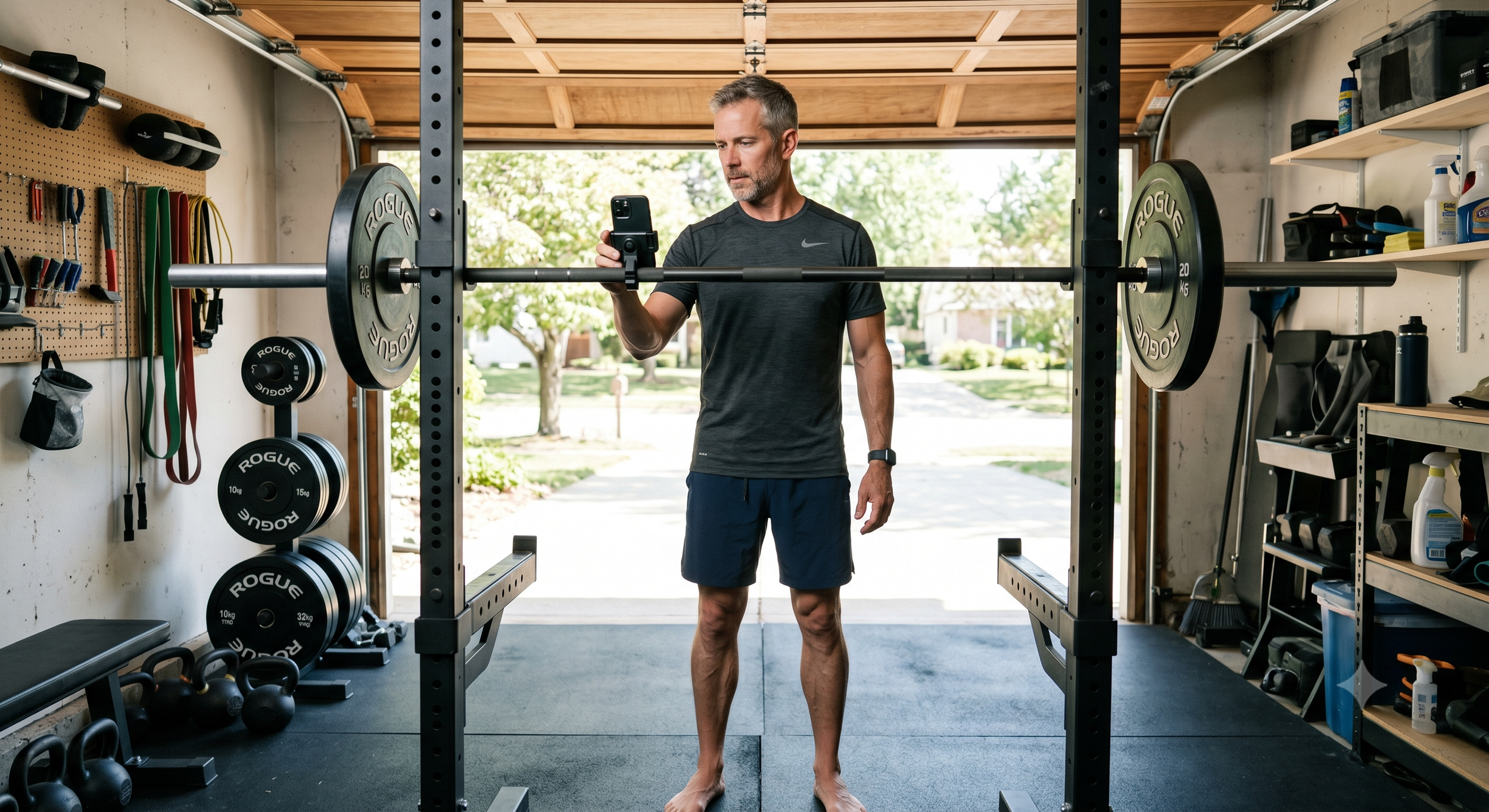
This image was created using AI to avoid copyright issues while conveying the context of this article.
You are a high performer. You have spent years building a career, managing a family, and navigating a schedule that would make most people’s heads spin. When you finally decide to invest time in your fitness, you want a return on that investment. Naturally, you go looking for a plan. You find a "6-Week Executive Shred" or a "High-Performance Muscle" program online. It looks sleek, it has thousands of downloads, and the person in the photos looks exactly how you want to look.
You follow it to the letter. You buy the gear, you clear the schedule, and you push through the sessions. But three weeks in, the cracks start to show. You’re exhausted, your shoulder has a nagging ache that wasn't there before, and despite your hard work, the scale hasn't moved an inch.
This is the "Template Trap." In 2026, we have more access to fitness information than ever before, yet people are more frustrated than ever. The reason is simple: A template is built for a ghost. It is built for a "standardized" human who does not exist. Your life is not a template, so your fitness plan shouldn't be either.
The Problem with One-Size-Fits-All
Most generic fitness plans operate on a dangerous assumption. they assume you have perfect recovery, zero stress, and no previous injuries. They assume you have exactly 60 minutes to spend in a commercial gym every single day. They are rigid. They are a "monologue" where the plan speaks and you simply listen.
But for a busy professional, life is a dialogue. Your body is constantly sending signals. If a template says you must do heavy back squats on Tuesday, but you just spent ten hours on a cross-country flight and your lower back feels like a coiled spring, the template does not care. If you follow it anyway, you get injured. If you skip it, you feel like a failure. This creates a cycle of "all or nothing" thinking that kills consistency.
At Legacy Fitness, we see this every day. A template cannot account for the fact that you have a high-stakes board meeting that ran late, or that your sleep was interrupted by a sick child. When a plan is too rigid to bend, it eventually breaks. And usually, the person following it is the one who suffers the consequences.
Your Life is a Moving Target
In 2026, personalization is about much more than just putting your name at the top of a PDF. It is about data integration and biofeedback. We now know that your "readiness" to train changes every single day. Factors like heart rate variability, sleep quality, and even caloric intake dictate what your body can actually handle on a Tuesday morning.
A generic plan is static. It stays the same regardless of what is happening in your life. But a personalized coaching approach is dynamic. It uses the tools we have in 2026, like wearable tech and real-time communication, to pivot when life gets in the way.
If your data shows that your recovery is "in the red," a real coach won't tell you to go crush a heavy lifting session. They will pivot. They might swap that session for a 20-minute mobility flow or a light Zone 2 walk. This keeps the habit of movement alive without digging you into a hole of chronic fatigue. This is how you stay in the game for decades, not just for six weeks.
Efficiency: The Professional’s Edge
The biggest lie in the fitness industry is that "more is better." For the busy professional, "effective" is better. A personalized plan is, by definition, the most efficient way to train.
When a plan is built specifically for your body, we remove the fluff. We don't have you doing "filler" exercises that don't serve your specific goals. If your goal is longevity and functional strength so you can keep up with your kids and lead your company, we don't need you doing four different types of bicep curls.
We focus on the "minimum effective dose." This means finding the exact amount of work required to trigger a result, and not a minute more. When your plan is built for your specific schedule, the friction disappears. You stop "trying" to find time to work out. You just execute the plan because the plan was built to fit inside the gaps of your real life.
The Human Element in a Digital World
While AI and apps are everywhere in 2026, they lack one thing: context. An app can tell you how many calories to eat, but it cannot understand the nuance of a social business dinner or the mental fatigue of a high-pressure week.
Personalization requires a human coach who understands your "why." It requires someone who can look at the data and the lifestyle and say, "I know the plan said X, but today we are going to do Y because that is what will keep you moving forward."
Legacy Fitness exists because we know that templates don't build legacies. Systems do. Habits do. And those habits must be sustainable. If you are tired of the cycle of starting and stopping, it is time to stop being a ghost in someone else's generic program. It is time to start a plan that was built for the person you actually are.

The Power of the 15-Minute Home Workout: No Gym, No Problem
We want to destroy the myth that a workout needs to be long and complicated to be effective. The truth is, a high-quality, focused, 15-minute home workout can be a powerful engine for consistency, fat loss, and strength maintenance.

Image courtesy of Sunday II Sunday via Unsplash
The number one reason people struggle to stay consistent with fitness is simple: time.
The thought process goes like this: "I need 15 minutes to drive to the gym, 60 minutes for the workout, 15 minutes to drive home, plus shower time. That's two hours I don't have today." When you don't have two hours, the workout gets skipped entirely.
At Legacy Fitness & Nutrition, we want to destroy the myth that a workout needs to be long and complicated to be effective. The truth is, a high-quality, focused, 15-minute home workout can be a powerful engine for consistency, fat loss, and strength maintenance. It ensures you never have a "skipped day."
The goal is to eliminate every single excuse. When you realize that 15 minutes is all you need, your fitness legacy becomes unbreakable.
The Science of the "Too Short to Skip" Workout
Why is a 15-minute workout so effective, especially when consistency is the goal?
Consistency Over Intensity: As we discussed in the Micro-Habit Playbook, a short workout is "too small to fail." It builds the habit of showing up. Four consistent 15-minute workouts are always better than one exhausting 60-minute session followed by a week of rest.
The Afterburn Effect: When you use those 15 minutes for high-intensity, total-body movements, you trigger what is called EPOC (Excess Post-Exercise Oxygen Consumption), or the "afterburn." Your body continues to burn calories at an elevated rate long after the workout is finished; sometimes for hours.
Hormonal Response: Short, intense work is fantastic for spiking growth hormone and boosting your metabolism without the elevated, chronic cortisol that long, draining sessions can sometimes cause (especially when you are stressed).
The best workout is the one you actually do. If you have 15 minutes, you have time for a game-changing session.
Your 15-Minute, No-Equipment Playbook
You don't need a fancy gym or heavy weights to get a complete, full-body workout. Use your bodyweight and the space around you.
Phase 1: The 2-Minute Warm-Up (Total Body Activation)
The goal is to get the blood flowing and prepare your joints for movement.
Action: 30 seconds of High Knees (jogging in place), 30 seconds of Arm Circles, 30 seconds of hip rotations (opening and closing your hips), and 30 seconds of jumping jacks.
Phase 2: The 10-Minute Metabolic Circuit (Total Body Strength)
This is the work phase. We will use a circuit format, moving quickly from one exercise to the next with minimal rest. The goal is to maximize muscle engagement and keep your heart rate high.
Perform each exercise for 40 seconds of work, followed by 20 seconds of rest.
Once you complete the four exercises below, you have finished one round. Rest for 60 seconds, and then repeat the circuit again for a total of two full rounds.
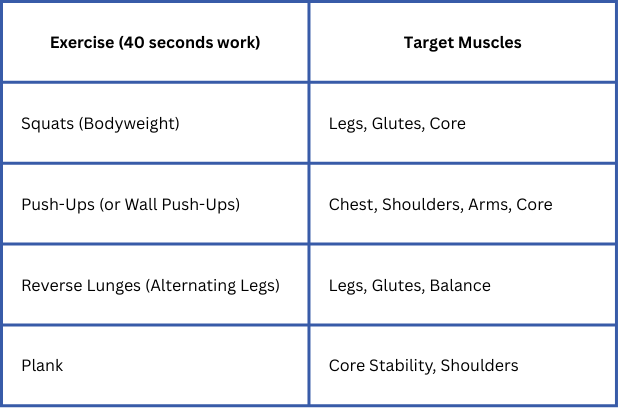
Total work time: 4 minutes per round x 2 rounds + 1 minute rest = 9 minutes.
Phase 3: The 3-Minute Cool-Down (Essential Recovery)
Never skip the cool-down. This brings your heart rate down and helps stretch the muscles you just worked, which aids in recovery and prevents stiffness.
Action: 30 seconds stretching your hamstrings (touching toes), 30 seconds for your quadriceps (pulling heel toward buttock), 30 seconds holding a low lunge (for hip flexors), and 30 seconds shoulder/arm stretches.
The Power of Consistency
The difference between successful fitness goals and resolutions that fail isn't found in a massive one-time effort. It is found in consistent effort, day after day.
This December, when the weather is cold and the schedule is chaotic, stop thinking you need to find an hour for the gym. Look at your calendar and ask yourself, "Can I find 15 minutes today?" The answer is always yes. Start today and build a legacy of health that always shows up.

Cooking Once, Eating Thrice: Your Weekend Guide to Effortless Meal Prep for the Week
The biggest enemy of healthy eating isn't a lack of knowledge; it's a lack of time.

Image courtesy of Ella Olsson via Unsplash
The biggest enemy of healthy eating isn't a lack of knowledge; it's a lack of time. When you’re exhausted after a long workday, ordering takeout or heating up something highly processed is just easier than cooking a healthy meal from scratch.
This is where the strategy of "Cooking Once, Eating Thrice" saves the day. Instead of spending your valuable time cooking every single night, you dedicate a few hours on a weekend afternoon to preparing large batches of simple building blocks. This small investment of time acts as an insurance policy against poor food choices all week long, ensuring you have healthy, satisfying meals ready to assemble in minutes.
This guide will show you how to focus your weekend prep on three versatile components that can be mixed and matched into multiple meals throughout the week.
The Weekend Warrior Prep Strategy
Aim for about two hours of focused time on Sunday afternoon. You're going to prep one main protein, one versatile carb, and one large batch of vegetables.
1. The Protein Anchor (The Muscle Fuel)
Protein is the most important component for satiety (feeling full) and muscle maintenance. Make a large batch of a neutral, versatile protein that can fit into any meal.
Prep: Cook 3–4 pounds of a single protein source.
Chicken Breast/Thighs: Bake, grill, or shred in a slow cooker with minimal seasoning (salt, pepper, garlic powder).
Ground Turkey/Beef: Cook in a large skillet, drain the fat, and leave it mostly unseasoned.
Lentils or Chickpeas: Cook a large batch on the stovetop or use canned options (rinsed well).
Storage: Divide the cooked protein into individual portion containers (e.g., 4–6 ounces per portion) and store in the fridge.
2. The Versatile Carb (The Energy Base)
These ingredients are your energy sources. Choose a complex carbohydrate that reheats well and provides good fiber.
Prep: Cook 6–8 cups of a grain.
Quinoa: Cooks quickly and is high in protein and fiber.
Brown Rice or Farro: Great for salads and bowls.
Sweet Potatoes: Bake 5–6 whole sweet potatoes, then mash or cube them for easy reheating.
Storage: Keep the cooked grains/potatoes in a large, sealed container. They will last 4–5 days in the fridge.
3. The Bulk Veggies (The Fiber & Volume)
This is where you add volume, color, and essential nutrients. Focus on vegetables that are easy to prep or cook in large batches.
Prep:
Roast: Toss a large tray of sturdy vegetables like broccoli florets, Brussels sprouts, carrots, and onions with a little olive oil, salt, and pepper. Roast at 400°F until tender-crisp.
Chop Raw: Chop a large bowl of fresh veggies like cucumbers, bell peppers, carrots, and celery sticks. These are perfect for snacking or quick salad additions.
Storage: Store roasted veggies in their own container. Keep chopped raw veggies separated or bagged for easy grabbing.
The "Eating Thrice" Assembly Method
By Monday morning, you have three large containers: Protein, Carbs, and Veggies. Now, you can assemble three distinct meals with minimal effort.

Bonus Tip: Embrace the Freezer
If you worry about food going bad, especially protein, dedicate a portion to the freezer immediately after cooking. Cooked chicken breast or ground meat freezes beautifully in portion-sized bags. That way, you ensure you always have emergency protein available later in the week or the following week.
Meal prepping is less about being a gourmet chef and more about being a smart strategist. By focusing on simple, mix-and-match components, you eliminate decision fatigue, save money, and ensure that when hunger strikes, health is the easiest option available.

Bodyweight Masterclass: The 5-Move Routine You Need to Stay Strong Anywhere
This 5-move routine is a full-body solution that can be done anywhere, anytime, in about 20 minutes!

Image courtesy of Rahul Gupta via Unsplash
Have you ever skipped a workout while traveling? Or felt stuck on the weekend because you couldn't get to the gym? The truth is, your body is the only piece of equipment you truly need. Bodyweight training: using your own resistance to build strength is the ultimate, zero-excuse workout.
Bodyweight exercises are not just for beginners; they are a masterclass in fundamental strength, stability, and movement control. They force you to engage your core, focus on perfect form, and build functional strength that translates directly to everyday life and better performance when you do hit the weights.
This 5-move routine is a full-body solution that can be done anywhere, anytime, in about 20 minutes. It's designed to build strength, mobility, and a lasting foundation of fitness.
The 5-Move Bodyweight Masterclass
Perform each exercise for 10–15 repetitions (per side, where applicable). Rest for 60–90 seconds after completing all five moves, then repeat the entire circuit 3–4 times.
1. The Perfect Squat (Lower Body Strength)
The squat is a foundational movement. This exercise strengthens your glutes, quads, and hamstrings, and improves mobility in your hips and ankles.
How to Master It: Stand with your feet shoulder-width apart. Imagine you are sitting back into a chair. Keep your chest up, drive your knees out, and sit down until your thighs are parallel to the floor (or as low as your mobility allows). Push through your whole foot to stand back up. Focus on keeping your back straight.
2. The Push-Up (Upper Body Pushing Strength)
The push-up is the king of upper body pressing exercises, building strength in your chest, shoulders, and triceps, all while demanding significant core stability.
How to Master It: Start in a plank position. Keep your body in a straight line from your head to your heels (no sagging hips!). Lower your chest toward the floor, keeping your elbows tucked back at about a 45-degree angle from your body. Push back up. Too hard? Place your hands on an elevated surface like a bench or a sturdy chair. Too easy? Move your hands closer together or elevate your feet.
3. The Reverse Lunge (Single-Leg Stability)
Single-leg exercises like the reverse lunge are essential for building balance, stability, and evening out strength imbalances between your legs.
How to Master It: Stand tall. Step back with one foot, lowering your body until both knees are bent at a 90-degree angle. Your back knee should hover just above the floor. Push off your back foot to return to the start. The reverse lunge is generally easier on the knees than a forward lunge. Focus on keeping your front knee aligned over your ankle.
4. The Plank (Core Stability and Endurance)
The plank isn't just a core move; it's a test of total body tension. It strengthens your entire core, back, and shoulders by forcing them to work together to maintain a rigid, straight line.
How to Master It: Get into a push-up position, or rest on your forearms. Squeeze your glutes hard and tuck your pelvis slightly to prevent your lower back from sagging. Pull your belly button in toward your spine. Hold this position for 30–60 seconds, or until you can no longer maintain perfect form.
5. The Super-Hero (Back and Glute Strength)
Often, people focus too much on the front of their body and forget about the back. The Super-Hero is a simple, effective way to strengthen your lower back, glutes, and hamstrings—all crucial for posture and injury prevention.
How to Master It: Lie face down on the floor with your arms extended forward. Keeping your head in a neutral position (look at the floor), simultaneously lift your arms, chest, and legs off the floor, squeezing your glutes as you lift. Hold the peak contraction for 1–2 seconds, then slowly lower. Perform 12–15 repetitions.
Consistency is Your Only Equipment
This 5-move routine hits every major muscle group in the body: pushing, pulling (implied by the reverse of the push-up), squatting, lunging, and core stabilization.
The biggest advantage of a bodyweight masterclass is that it removes all excuses. Whether you're at home on a Saturday, in a hotel room, or just want a quick, effective workout, your body is always ready to train. Make consistency your commitment, and watch your strength grow wherever life takes you.

The Power of "Exercise Snacks": How to Fit Micro-Workouts into Your Busiest Days
The biggest reason people stop exercising is not because they don't want to be healthy, but because they feel like they don't have enough time for a "real" workout. Enter “exercise snacks”. And here’s the really exciting part: research shows that these tiny bursts of intense effort can have major health benefits.

The calendar flips to October, and suddenly your busy life feels even busier. Maybe it’s the kids’ sports schedules ramping up, or maybe your work is hitting its "end of year" hustle. You look at your watch, then you look at your workout plan, and you just sigh. An hour-long gym session? That feels impossible.
If this sounds like your life, you’re not alone. The biggest reason people stop exercising is not because they don't want to be healthy, but because they feel like they don't have enough time for a "real" workout.
But what if I told you that you don't need a full hour to get results? What if the key to your health this fall isn't one huge meal, but a series of tiny, powerful snacks? Welcome to the world of the "Exercise Snack."
What is an Exercise Snack?
The term "Exercise Snack" is exactly what it sounds like. It’s a small, very short burst of activity—usually between 30 seconds and 5 minutes—that you sprinkle throughout your day. Think of it as fitness micro-dosing. Instead of trying to carve out a massive block of time, you use the small windows of downtime you already have.
And here’s the really exciting part: research shows that these tiny bursts of intense effort can have major health benefits, especially for heart health and blood sugar levels. A few minutes of hard work can boost your metabolism, clear your mind, and make you feel more energized than you would if you just sat there waiting for the next meeting.
The goal is to interrupt your sitting time. For the modern professional, one of the biggest silent threats to health is being glued to a chair all day. Exercise snacks break that chain, literally giving your body and brain a quick reset.
The Three Golden Rules of Snacking
To make these micro-workouts count, you can’t just stand up and stretch. You need to follow three simple rules:
Rule #1: Intensity is Key
Since you only have a few minutes, you need to work hard. The goal is to get your heart rate up quickly. You should feel a little breathless at the end of the snack. A 3-minute walk to the fridge won't cut it, but 3 minutes of high-knees or jumping jacks certainly will. Think of it as a quick, intense wake-up call for your whole system.
Rule #2: Focus on Compound Movements
A compound movement is any exercise that uses more than one muscle group at the same time. These are the most efficient exercises for burning calories and building strength. You get the most bang for your buck.
Good Exercise Snack Choices: Squats, push-ups, lunges, and plank variations.
Poor Exercise Snack Choices: Bicep curls (they only hit one small muscle group).
Rule #3: The "Trigger" is Everything
The best way to make exercise snacks a real habit is to attach them to something you already do every day, a trigger. Without a trigger, you'll forget.
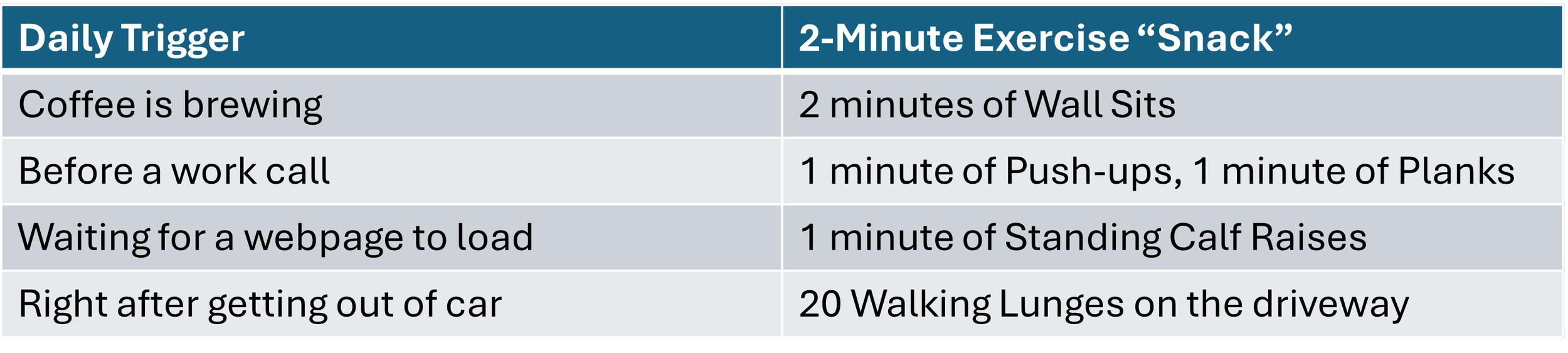
The goal for your fall routine should be 4–5 "exercise snacks" per day. That’s about 10–20 minutes of extra, high-quality movement that you would have otherwise missed.
Building Your Fall Fitness Routine (One Bite at a Time)
As you prepare for the busy holiday season, using exercise snacks is your secret weapon against the "winter weight creep."
Imagine this: you get up, hit the snooze button three times, and rush out the door. No time for the gym. But today is different.
7:00 AM (Trigger: Coffee): You do 30 deep squats while the kettle boils. Your legs feel awake.
10:30 AM (Trigger: Email break): You do 2 sets of push-ups against your desk (or the wall). Your shoulders feel looser.
1:00 PM (Trigger: Lunch break): Instead of sitting, you do 3 minutes of quick stair climbs. Your heart is pumping.
4:00 PM (Trigger: Energy dip): You do a 60-second plank to reset your core and focus.
7:00 PM (Trigger: Watching TV): You do 50 crunches during the commercial break.
By the end of the day, you’ve put in a solid 10–15 minutes of effective exercise without ever feeling like you had to "find the time." You used the time.
This isn't about replacing your main workouts (if you can still get them in). It's about filling the gaps, reducing the damaging effects of sitting, and teaching your body to be active all day long. This fall, you don’t need a massive time commitment, you just need a handful of powerful, smart, and sneaky "exercise snacks."
Ready to stop feeling like you don't have time for fitness? If figuring out which "snacks" are best for your body feels like too much work, let us help. Click here to book a free 15-minute consultation with a Legacy Fitness coach to design a custom "micro-dosing" plan that actually fits your schedule.